New kid on the block for holidays in the sun, SilverSpain.com, is launching its programme of healthy body, healthy mind, and healthy eating holidays for the over 55s, holidays that also focus on companionship and relationships. For people who want to improve their lifestyles, or who are in retirement and want to keep fit and healthy, these holidays for the more mature traveller, of 5 to 7 days duration with an option to extend the holiday, are a welcome addition to those currently on offer.
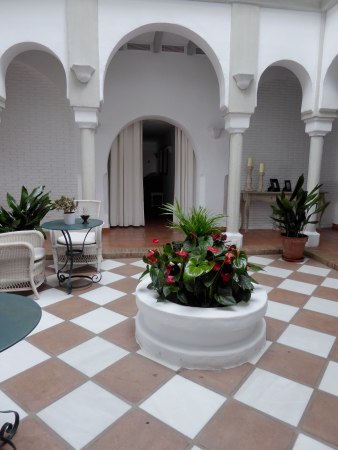
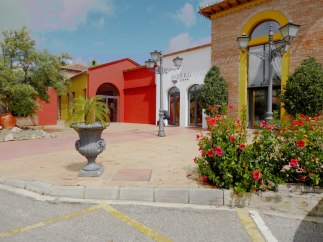
Based in Malaga on the Costa del Sol, SilverSpain is ideally placed for sussing out the perfect restaurants, walks, events and foodie trips that are included in the holidiay, and guests are based in a selection of luxury, top-end hotels both in Malaga itself and in stunning locations on the outskirts of the city, most with spas and flower-filled gardens.
I’ve just had a trip to Spain to sample what they are offering later in the year (at the moment, from October) and I absolutely loved it, from the early morning exercises to the specially made morning smoothie followed by the healthy buffet breakfasts. And, the smoothies were always luscious fresh local fruits with no green kale or spinach mixes in sight! Plus, eggs, cheeses, hams and other foods were on the buffet table.
Walking in the National Parks and valleys in the area I found to be a special treat as these are activities I wouldn’t normally be able to do by myself. Everyone walked at their own pace, some slowing down to take photographs, some striding out with vigour and others just ambling along and smelling the flowers, but it all served to keep us active and moving.
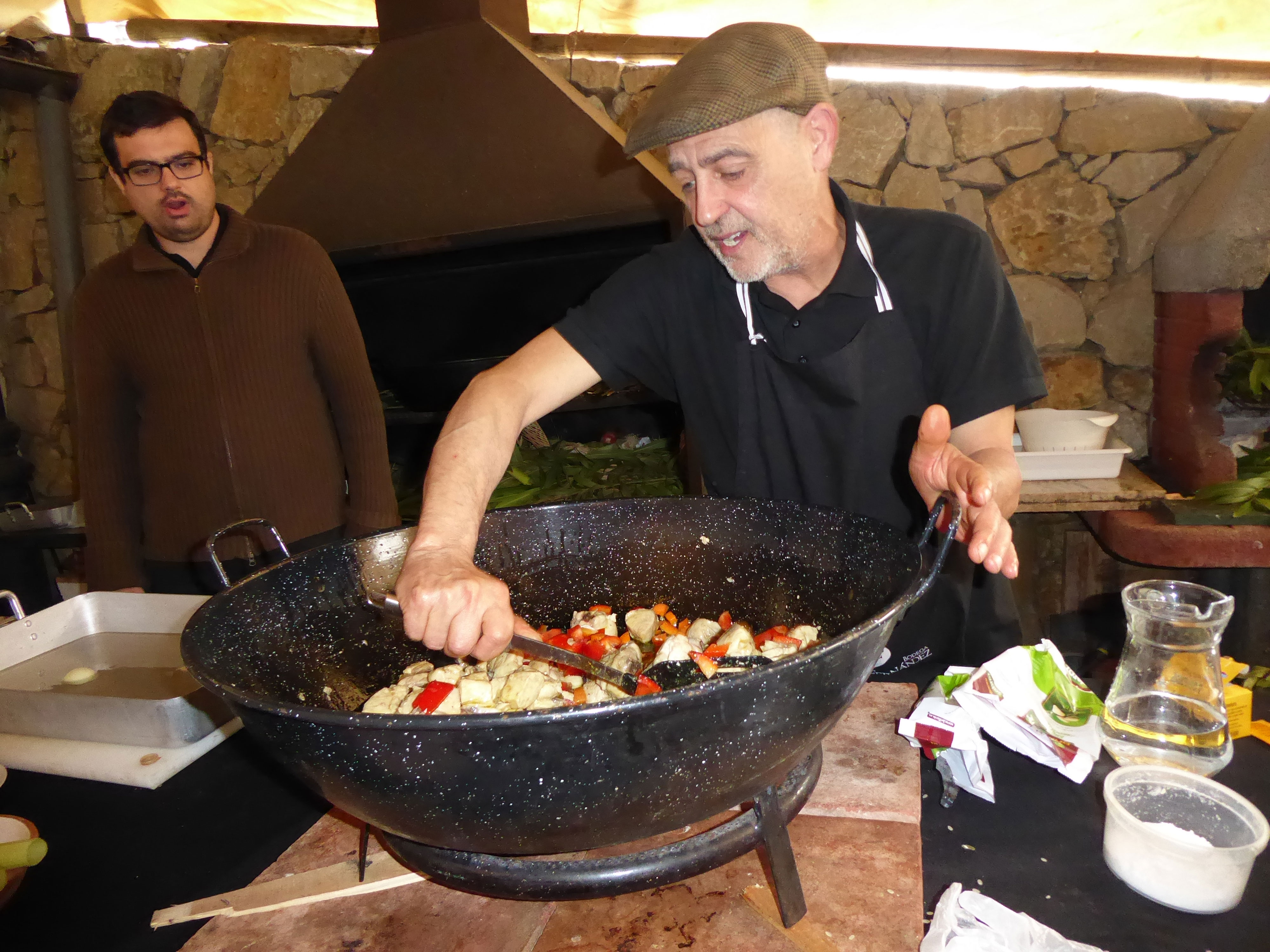
Other events consist of visiting vineyards, learning to cook paella and then having it for lunch,
bird-watching, a visit to a meditation centre, sight-seeing trips to places like Ronda, Nerja, and the famous white villages, a few hours spent in a Haman (with massage), seafood lunch on the beachfront at Malaga, and an Equestrian show with flamenco (this one not to be missed).
All these ‘extras’ are included in the price of the holiday and together, make up a very attractive package.
Although these trips and walks are all taken at a leisurely pace, if anyone feels like opting out of them they can do so – it is a holiday after all. Equally, for those who want more regular exercise, specialist breaks are planned, as well as specialist weeks for clients who may want to spend more time studying mindfulness and gaining insights into their life.
Life expectancy continues to increase and holidays like these, organized by people who are dedicated to the philosophy of a healthy, active life and happy relationships as we grow older, are a breakthrough in advancing the cause of living better while we live longer lives.
Don’t think this is some freakish ‘alternative’ lifestyle holiday where you deny yourself the good things of life. Great food and great wines, sunshine and blue skies are all there, just as you’d expect, but the added value is the feeling at the end when you find yourself fitter, healthier, and possibly happier, for the experience.
So, get ready for a Spanish-style pub crawl on a Tapas evening in Malaga when you will enjoy whitebait, anchovies, patatas bravas, and other Spanish delicacies, washed down with a few glasses of wine in a Bodega in operation since 1840. You don’t believe me? Ask SilverSpain about it.
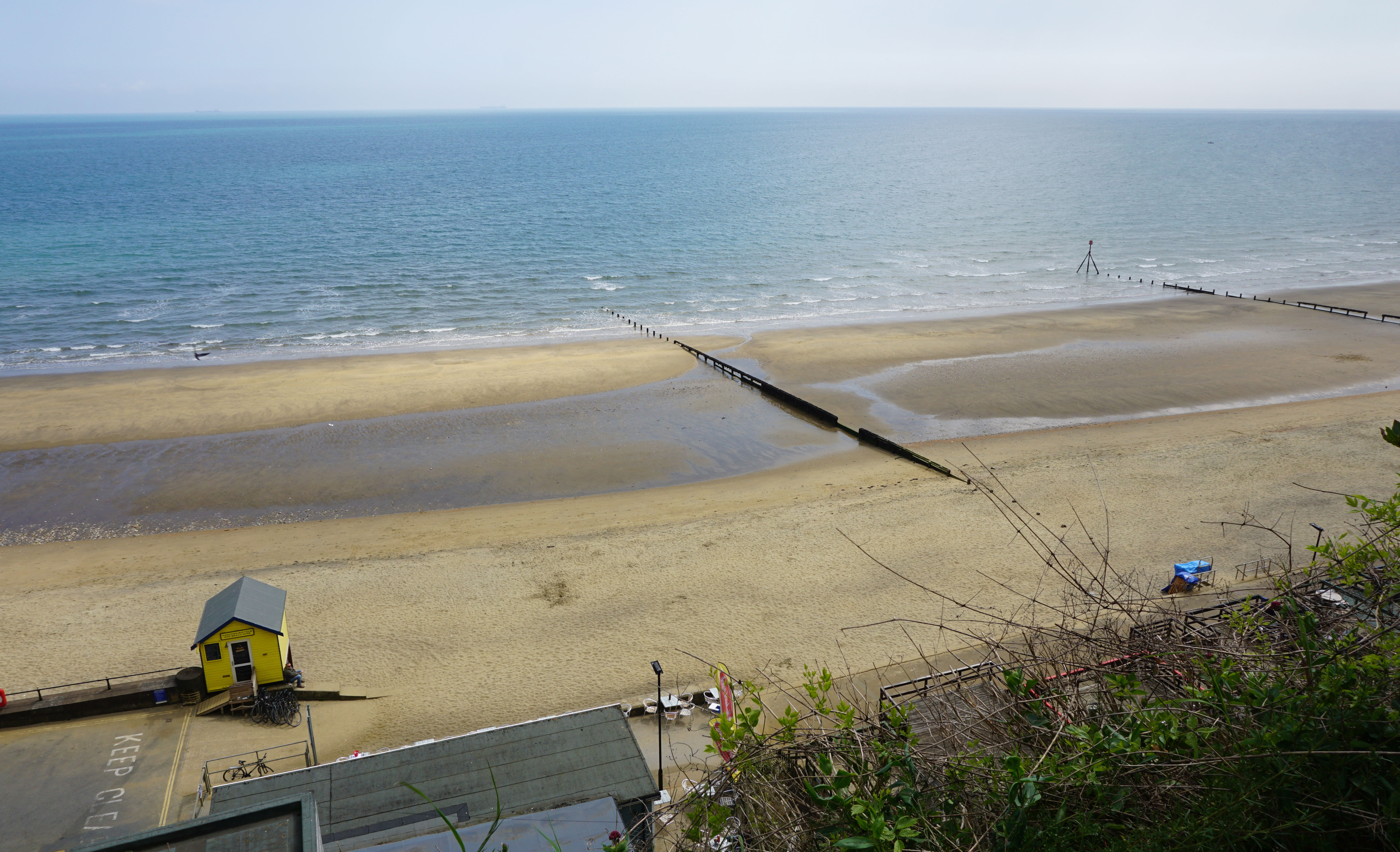
I thought I’d time my walk today for lunchtime and, as I thought, I had the place to myself. Being Sunday, I presume most people are eating out or at home tucking into ‘le rosbif’ or even pasta or pizza.
So this is Sandown, Isle of Wight, on a beautiful sunny day in April, looking down from the Cliff Path that runs between this town and the next town, Shanklin, then down a steep path on to the beach. I walked through to the Cliff Path from the main road, it looks quite woody and yes, it is, with hidden niches, wild flowers, primroses and bluebells sheltering under gnarled old trees, and the inevitable folly.
By now, the beach will be full of walkers, the ice-cream kiosks will be doing a roaring trade, and the Pier will be packed with children on the bouncy castle and various other amusements.
The tables that were empty at lunch-time will be occupied with people drinking teas and coffees, snacking on home-made cakes, and perhaps sitting back reading the Sunday papers.
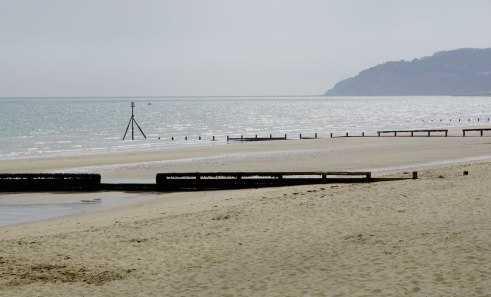
Culver Cliff, the massive white chalk cliff that curves around the edge of Sandown, hiding Whitecliff Bay and Bembridge, catches the light when the sun shines, and out on the horizon are cruise liners and cargo ships bound inward for Southampton, or outward for foreign parts.
Some have been here with me before, but the beaches around the island never fail to please me, and walking on the sands, or on the revetment that runs under the cliff, or even on the pavement where convenient benches make stopping to take in the view even more of a pleasure, makes this my favourite walk – always.
Surprises come in many forms and here are three of mine.
I was totally bowled over by the tame wild-life (well, rabbits, squirrels, peacocks and other birds) which allowed me to get up close and personal on one of Croatia’s islands. This was helped no doubt, by the fact that it was traffic-free. I fear however, that the hundreds of Game of Thrones fans who are invading the islands at the moment, may soon render this a thing of the past.
In Cyprus recently, I was surprised, and pleased, that the island wasn’t trying to hide its revolutionary past. This bronze grouping was perfectly placed to remind people of what the island had gone through to achieve it’s current tentative peace.
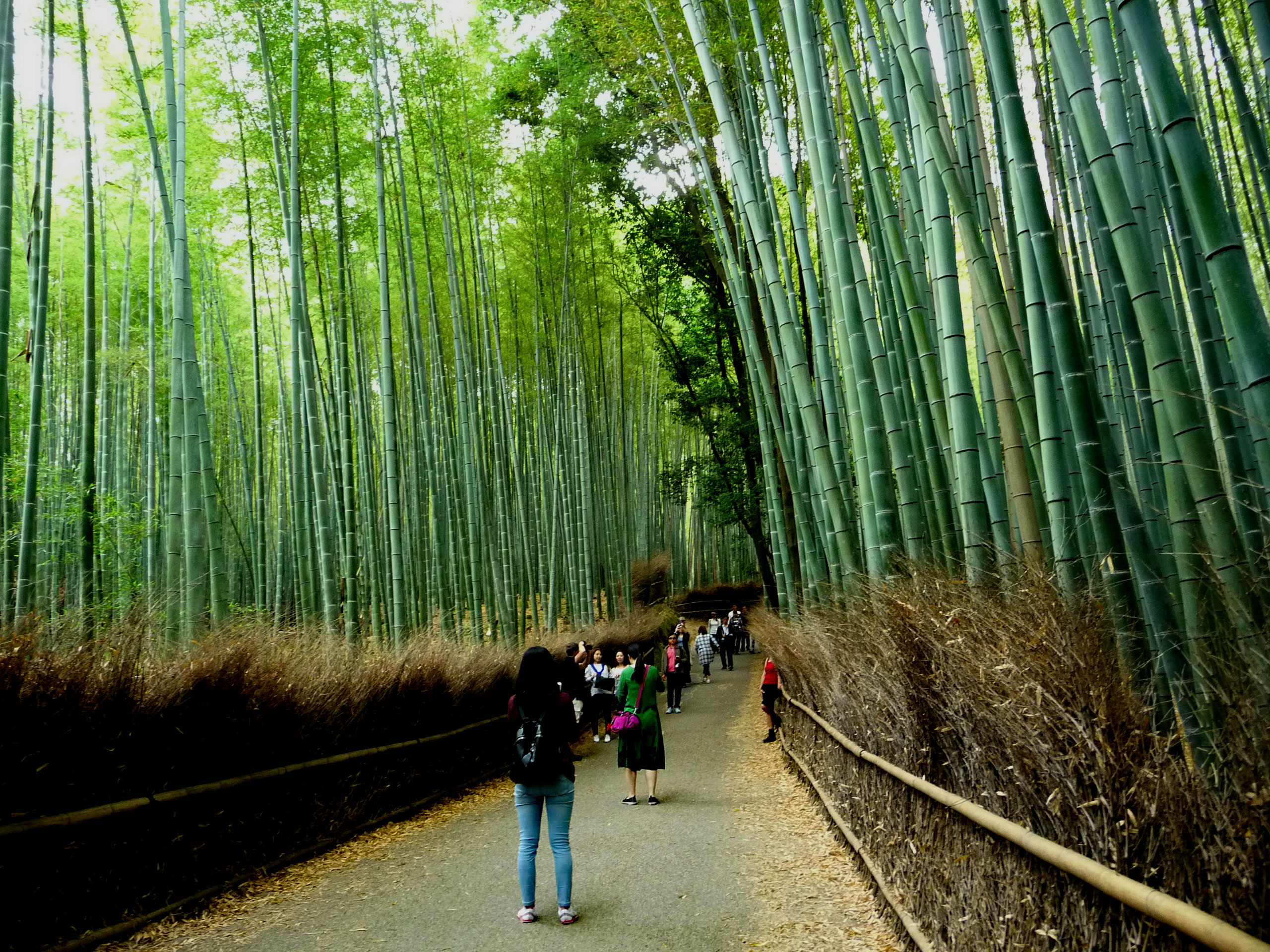
The beauty of the Arashiyama Bamboo Grove in Kyoto, Japan, should not have surprised me but it did. A cool, calm, oasis of tranquillity in the midst of a busy city it had a calming effect on everyone. I noticed that even mobile phones were less in use here than elsewhere – how’s that for peace!
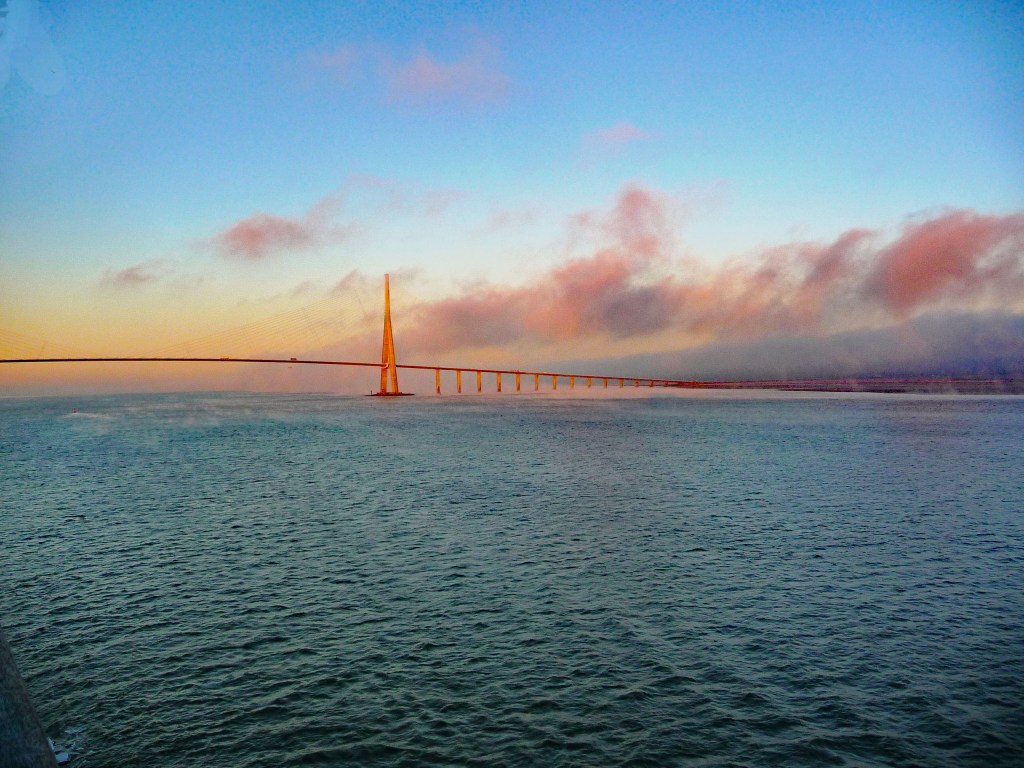
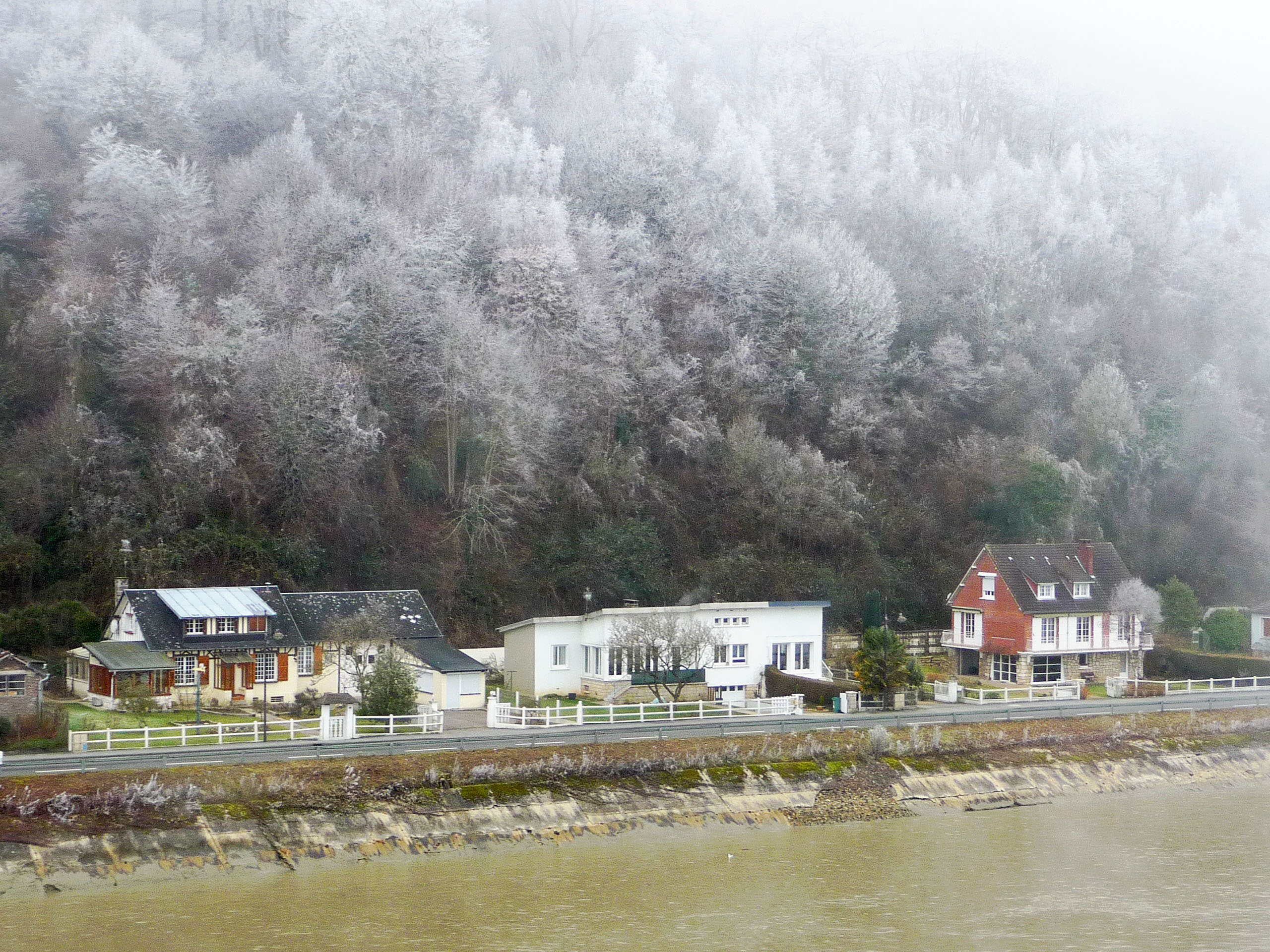
I’ve written before about Honfleur, my favourite French town, but before this year I’d only visited it in summer. I arrived in France on New Year’s Eve this time, not by car as I had done before, but on a ship which sailed down the Seine from L’Havre to Rouen.
So White it Looks Like Snow
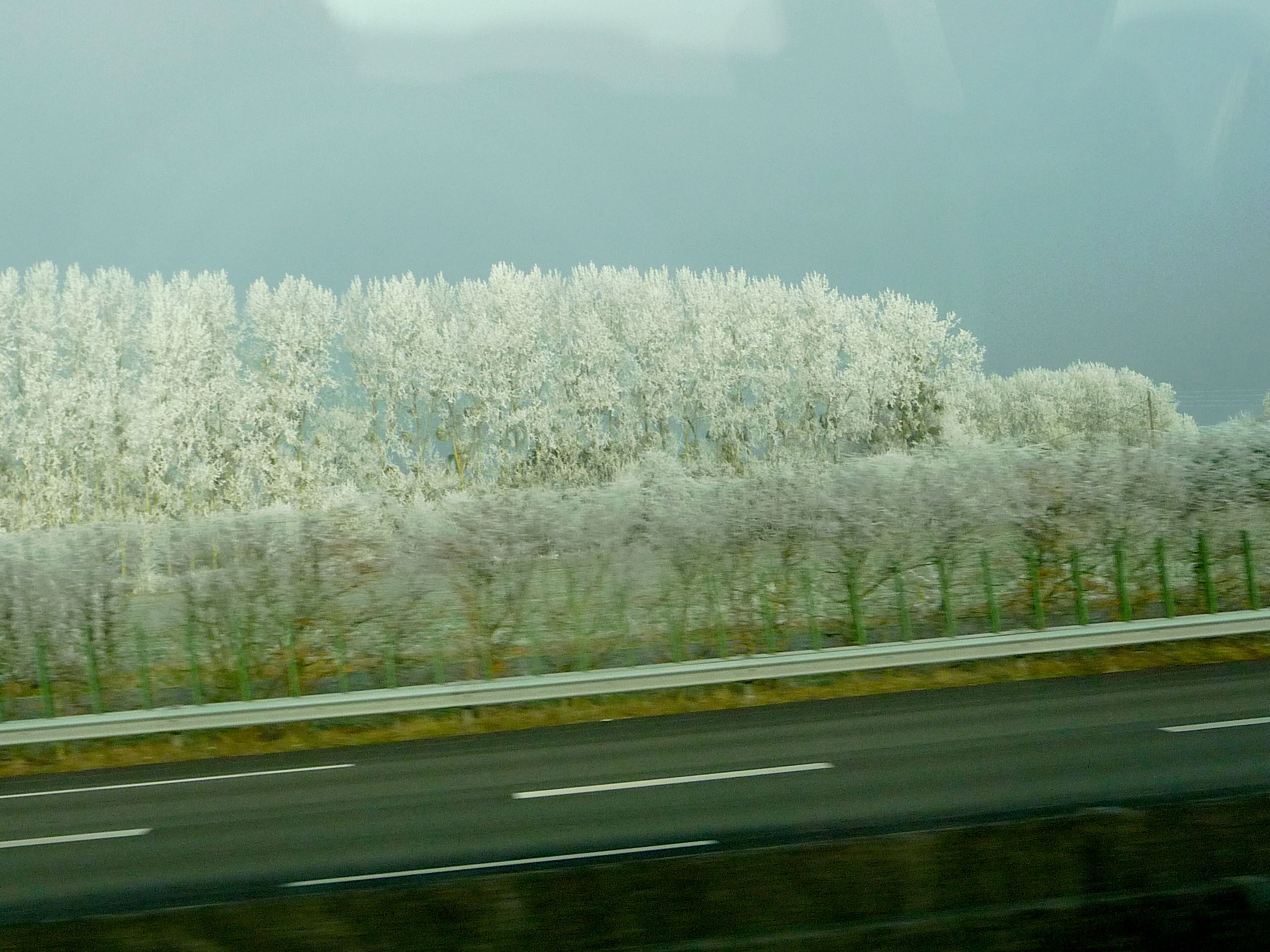
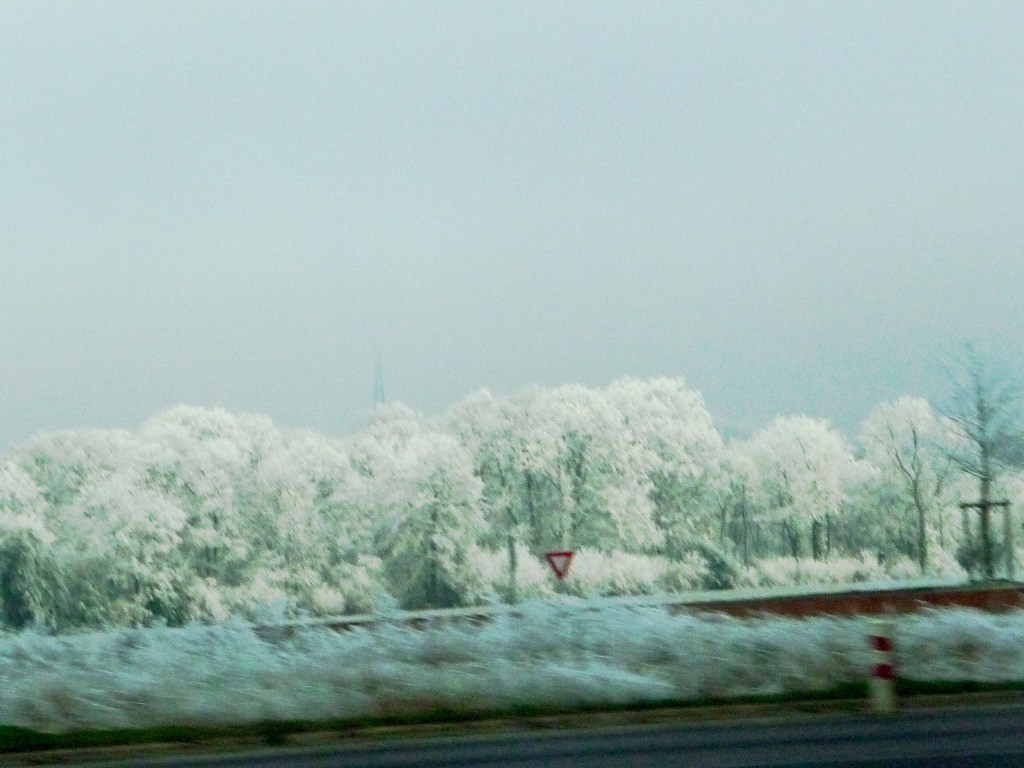
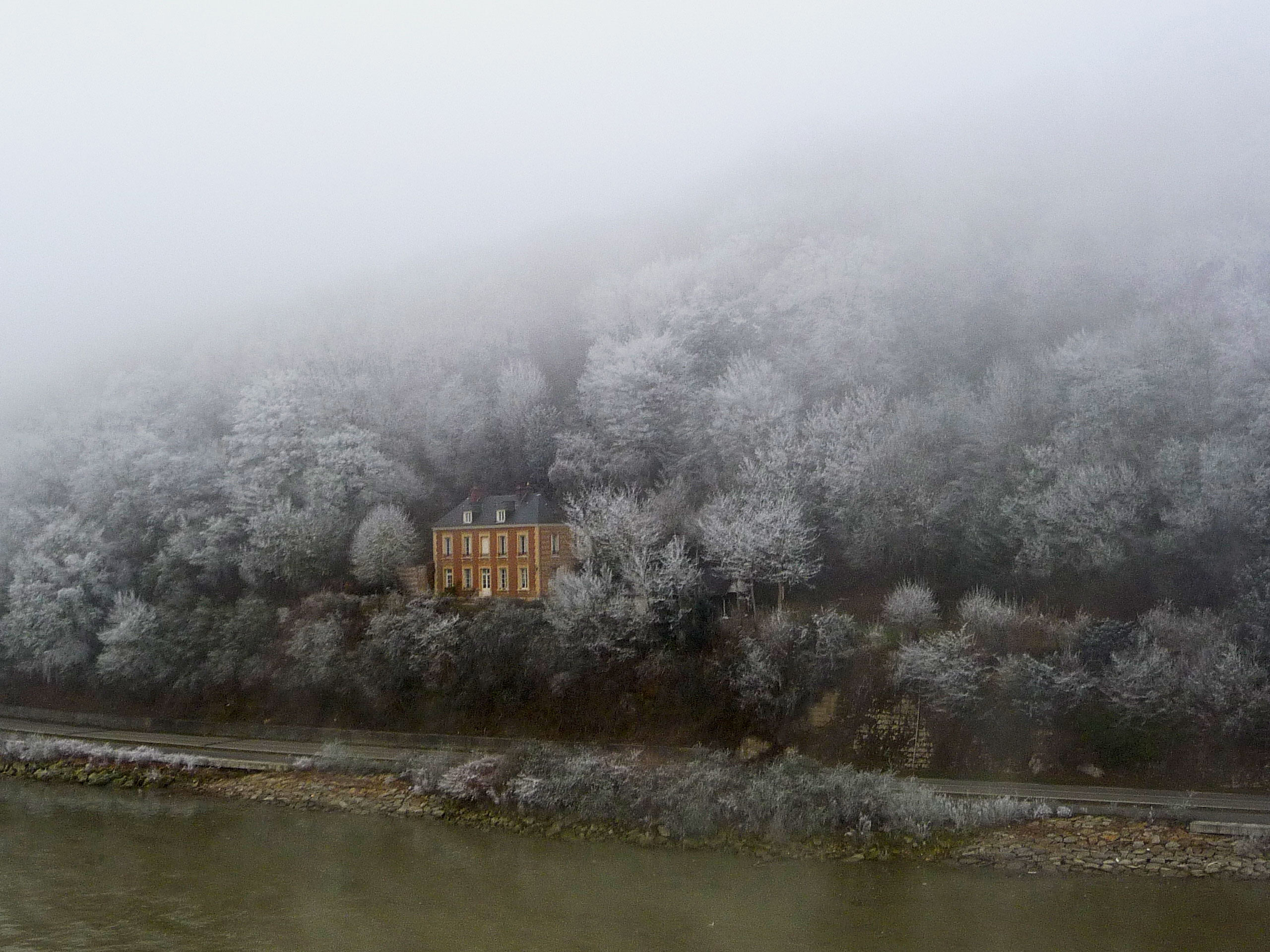
On the journey we looked out on a wondrous scene of frost-covered trees on the banks of the river, trees which at first I took to be silver birch, so thickly covered in frost were they.
In the midst of the frosted trees a mansion appears.
I had never seen anything like this before, and it was made more fascinating by the fact that there were also pockets of greenery where the frost had not reached.
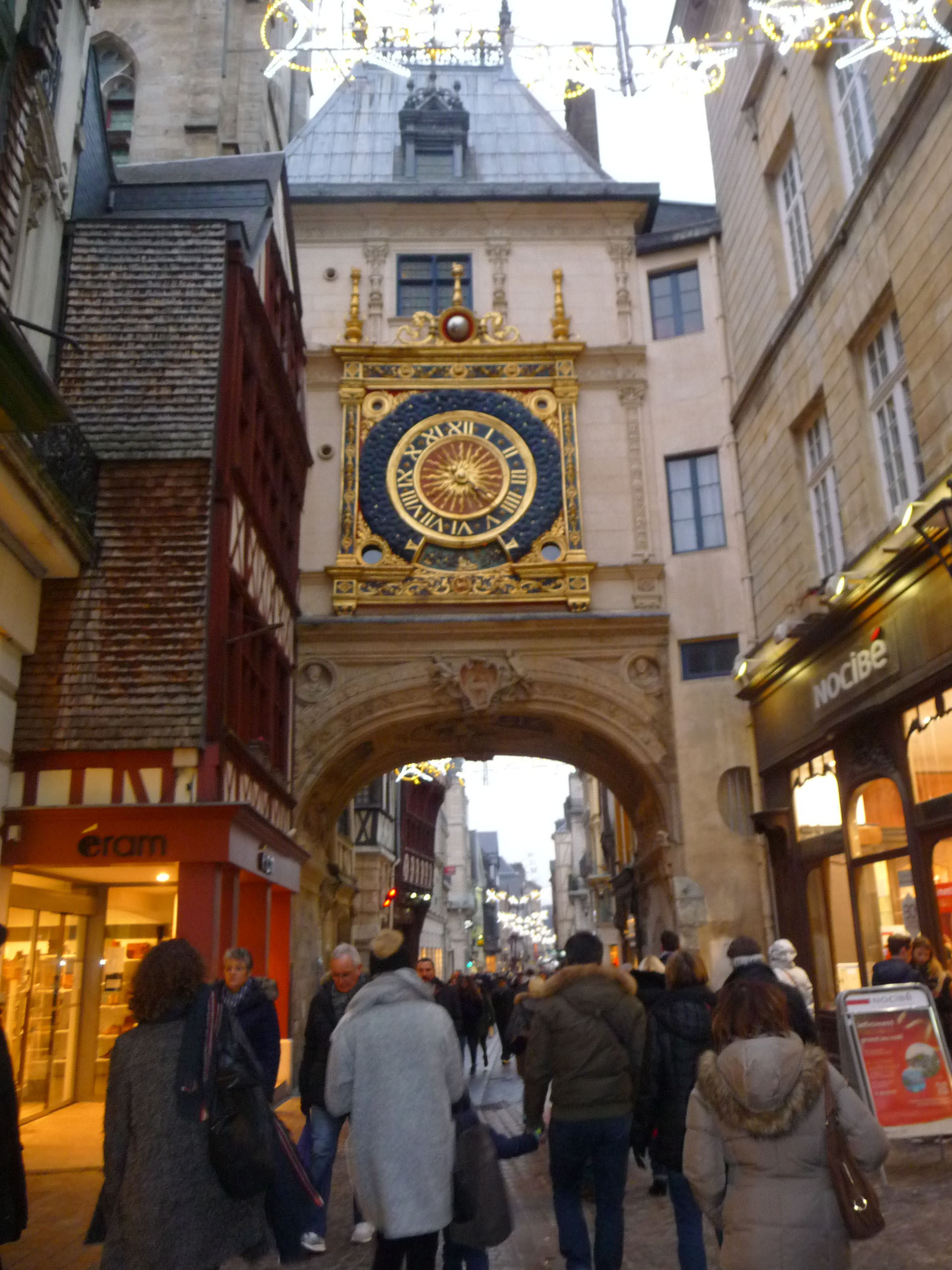
Rouen – the Great Clock
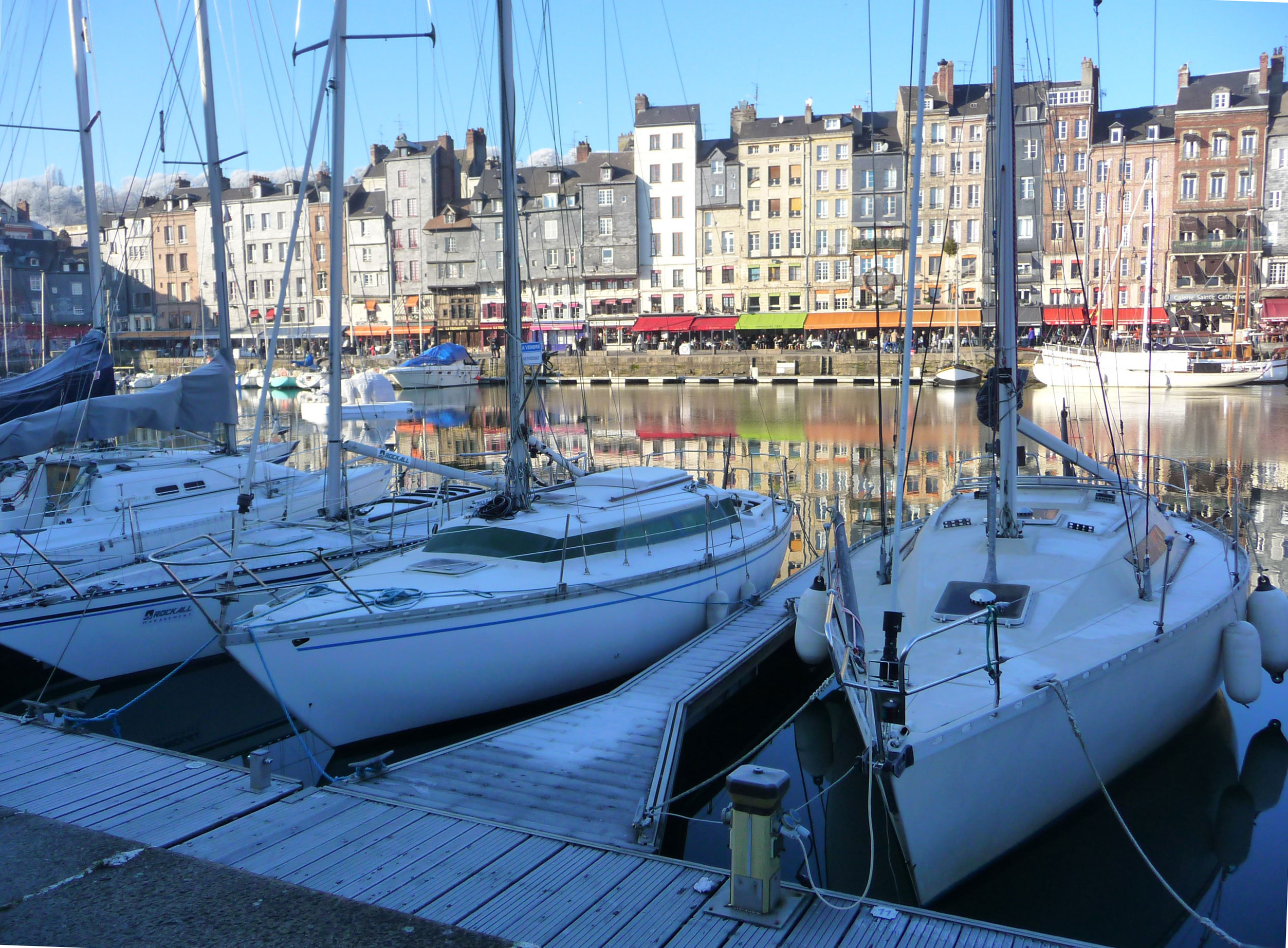
Honfleur is no far from Rouen so it seemed a good idea to take ourselves off there for the day, even though I had presumed the town would be mostly closed up for the winter. But no, the town was as busy as ever with cafés, restaurants and bars open and packed with visitors. As usual, the area around the marina, the Vieux Basin, was the most crowded and we had a problem finding a table at lunch time.
Honfleur, an essential stop on any Norman itinerary, is still a fishing port, and despite its sophisticated yacht harbour and fantastic high-rise houses surrounding it, the town has preserved its rich artistic and historic heritage in its traditional buildings and picturesque streets and squares. It is unlike any other part of Normandy, seeming to bear no relation to industrial Le Havre just across the Seine estuary or the Pays dAuge to the south.
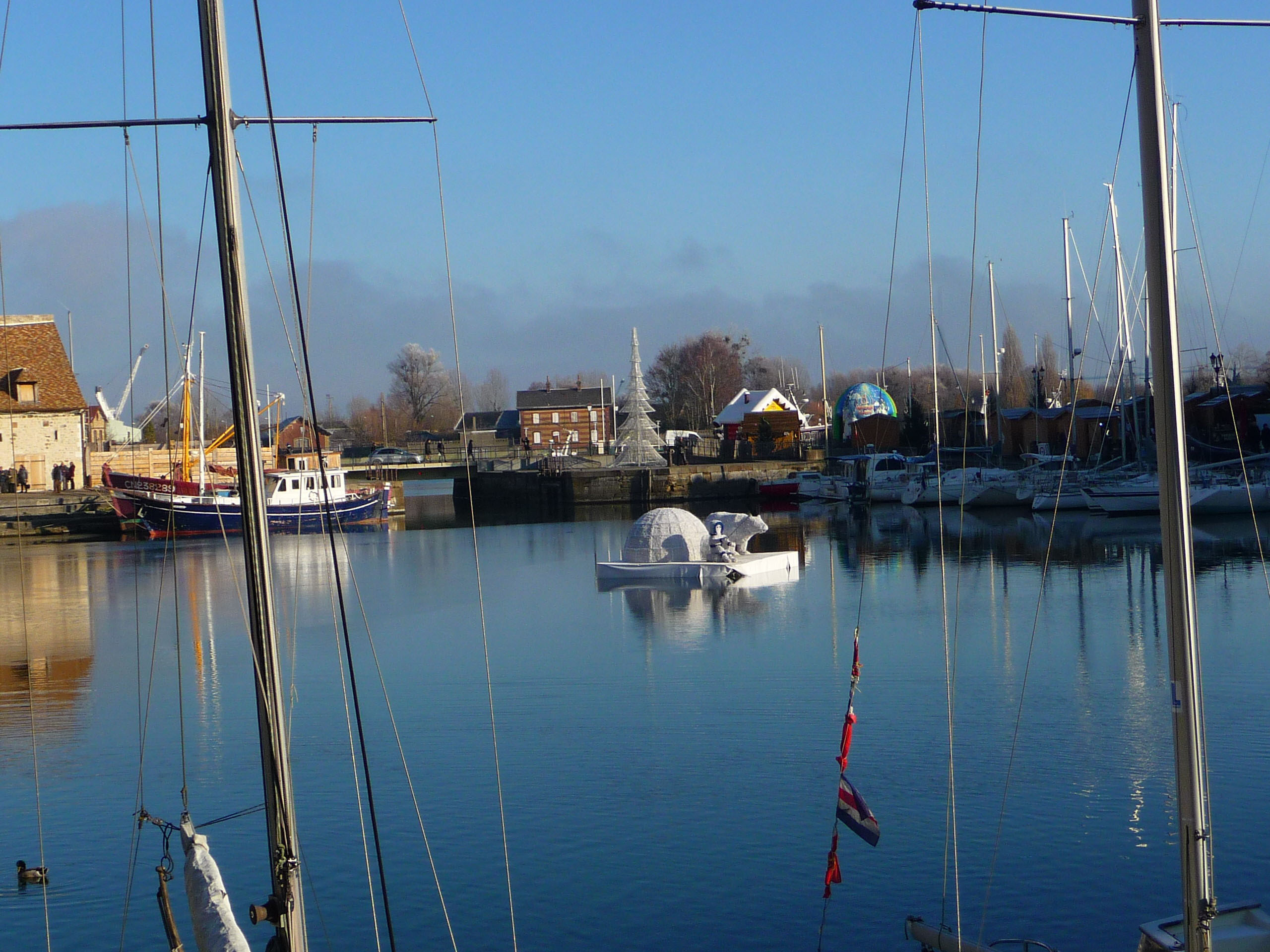
Hofleur – the MarinaSt. Catherine’s Quay
The oldest part of Honfleur lies in the area of the Vieux Bassin, a tangle of delightful cobbled streets and alleys known as L’Enclos, the original medieval town of Honfleur enclosed within the first town walls.
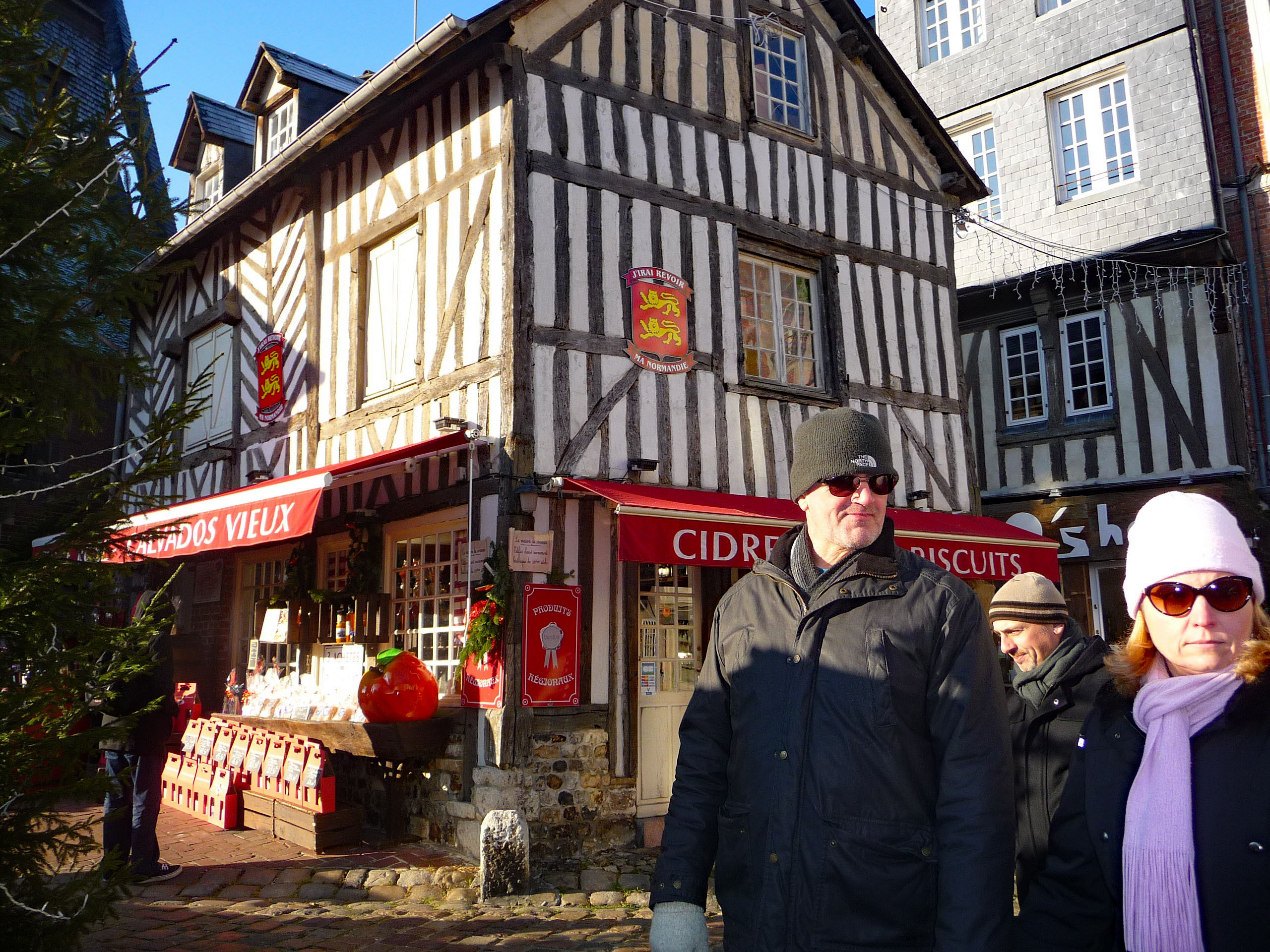
A Normandy Staple
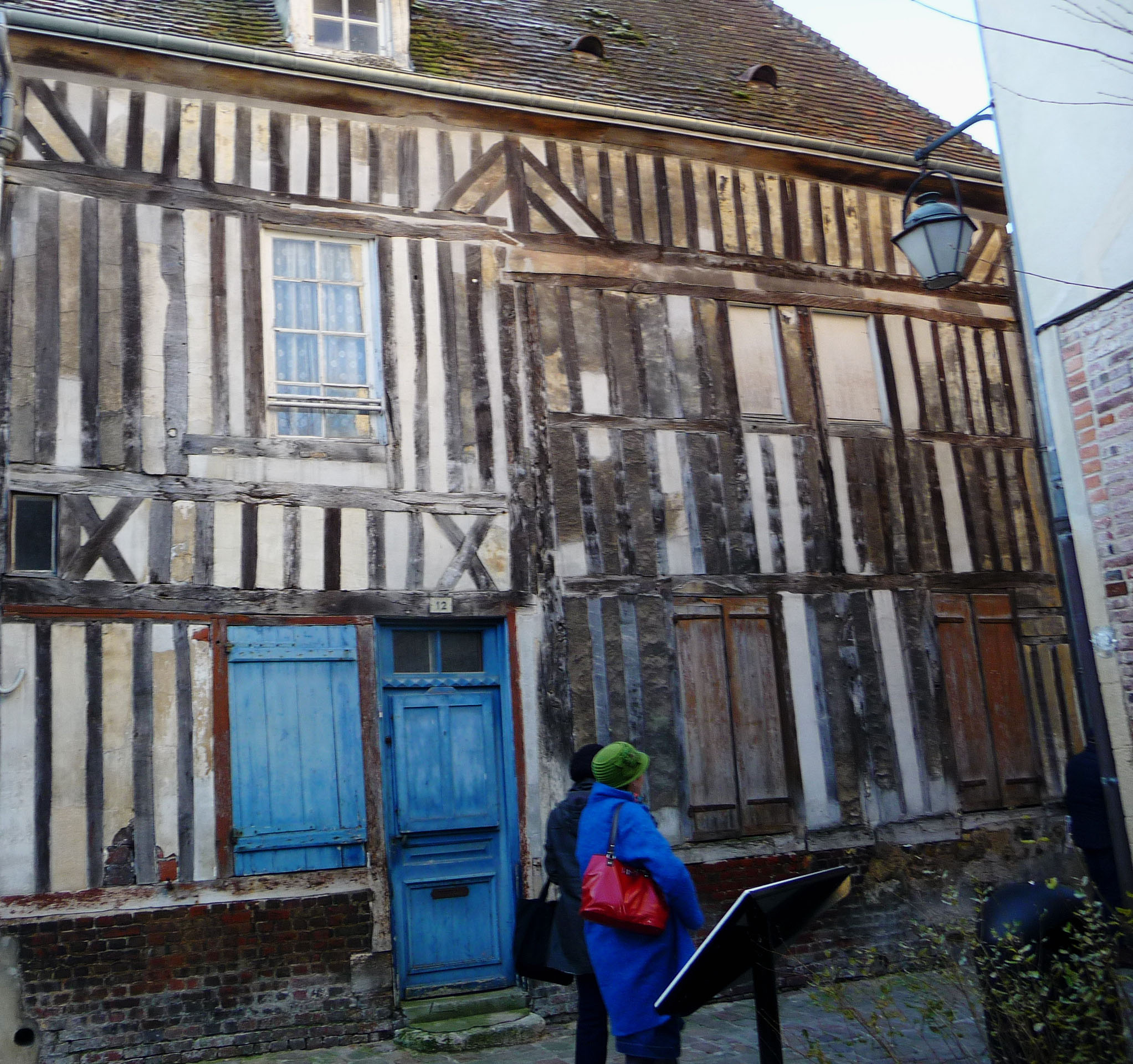
Here you will find the oldest church, the deconsecrated 14th and 15th century St. Etienne’s, a Gothic parish church constructed of chalk with flint and Caen stone. The bell tower is covered with a façade of chestnut wood in the local tradition, as indeed, are many of the old houses behind it.
A Street in Honfleur
Behind this is the original 17th-century Greniers a Sel (salt warehouses) the royal salt stores that once contained 11,000 tonnes of salt for preserving the locally caught fish and the Atlantic cod and herring which the fleets landed.
Honfleur Street
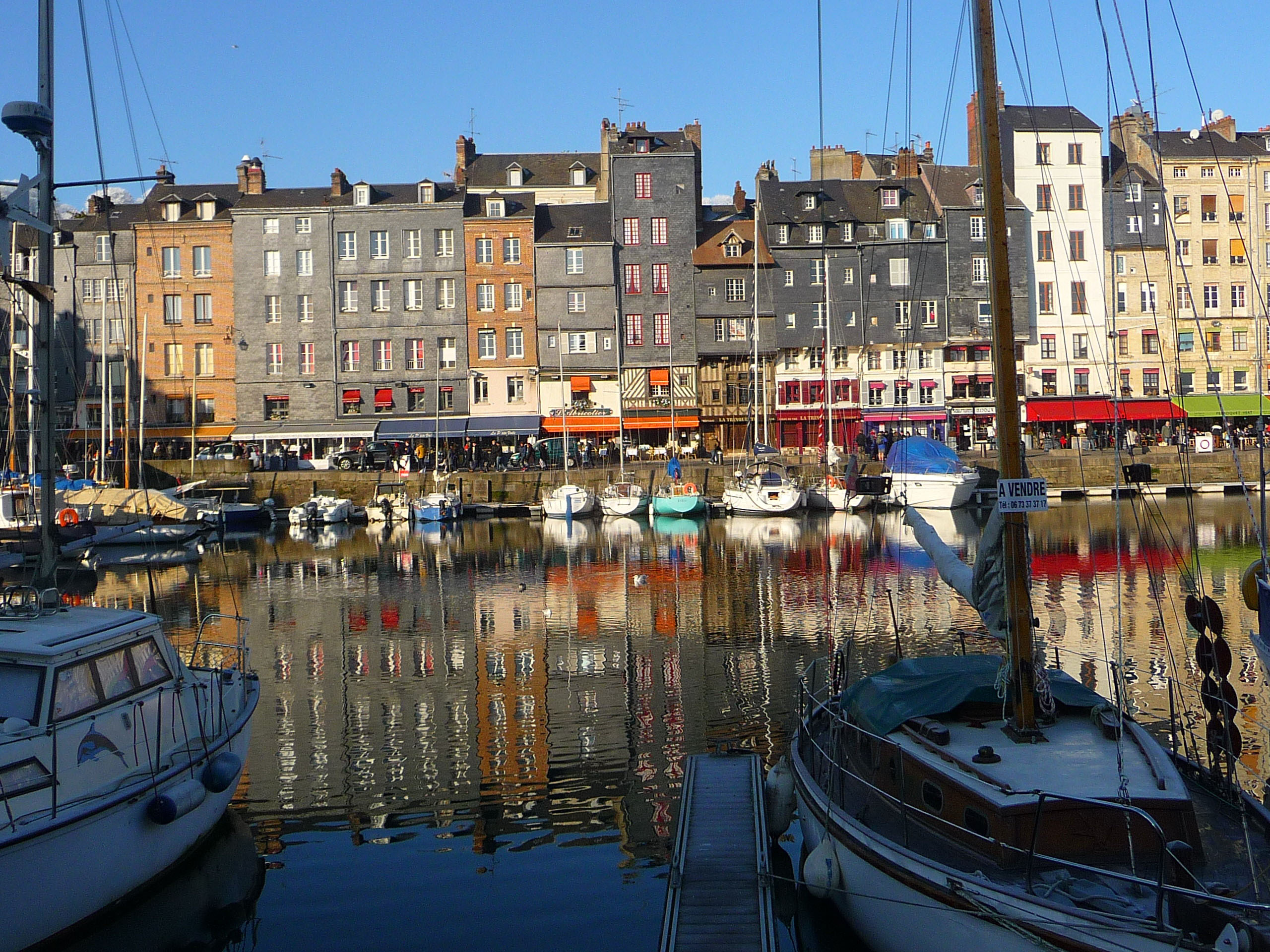
The Bassin is surrounded by picturesque narrow houses, and without doubt this is what catches the eye of every visitor upon their first visit to Honfleur. The real jewels (and looking like jewels too because each one is a different colour) are in the row along the Quai St. Catherine, some of the houses being 10-stories high, with slate roofs and half-timbered and slate façades looking as though they might topple over at any minute.
The Beautiful Vieux Bassin, present-day yacht Marina, of Honfleur
An interesting fact about these narrow 16th and 18th century houses that are squeezed against one another on St Catherine’s quay is that not only are they all different in size, shape, and colour, but that they also have two ground floors: one opening on to the quay and another one, half way up opening behind on to either Dauphin Street or Logettes Street. Because of this, each house is privately owned by two different householders.
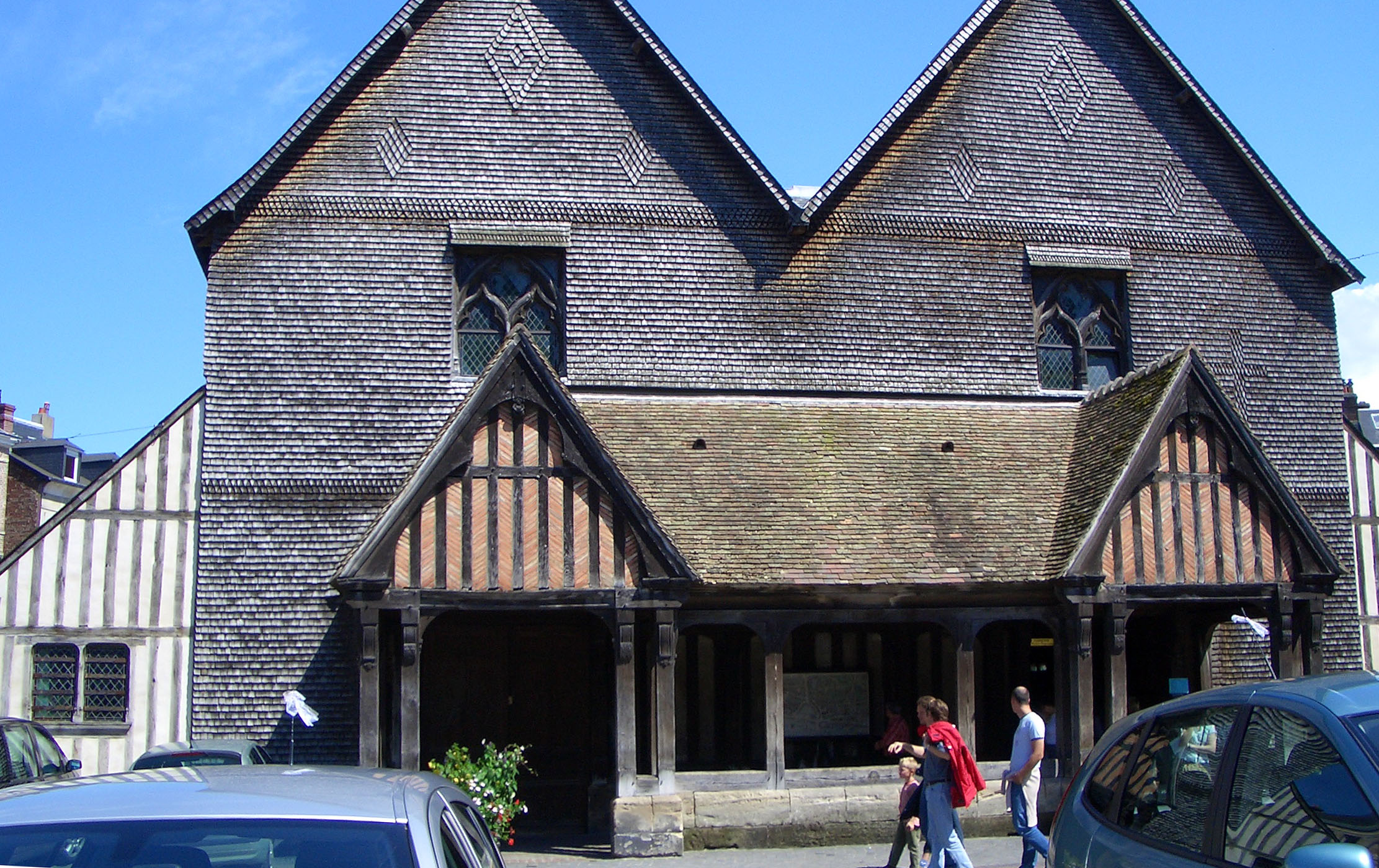
Honfleur’s finest architectural prize is the old wooden Church of St. Catherine which was built by shipwrights in the 15th and 16th century just outside the walls of the medieval town, using wood from the nearby forest.
Honfleur
This is the largest wooden church with a separate bell-tower in France. The interior architecture of the church is quite remarkable, as the shipwrights used their naval construction skills in the building of it (stone was scarce but timber was plentiful in the neighbouring forests) and in shape inside it resembles an overturned double hull. Look closely at the pillars and you will see many irregularities pointing to the crudeness of the tools used in the work. The separate bell tower, opposite the church, is an oak construction built above the bell-ringer’s house and this serves as an annexe to the Eugène Boudin Museum – a must for art lovers.
Wooden Bell Tower
Honfleur has been attracting painters to the area for generations. Boudin, known as the father of Impressionism, was born in Honfleur and painters such as Monet, Corot, Daubigny and Dufy were drawn to these parts by the beauty and quality of the light. Their work is well represented in the many galleries in the area. The painters usually stayed just outside the town at Ferme St. Simeon, then a rustic auberge, now a very grand and beautiful five-star hotel standing in magnificent grounds.
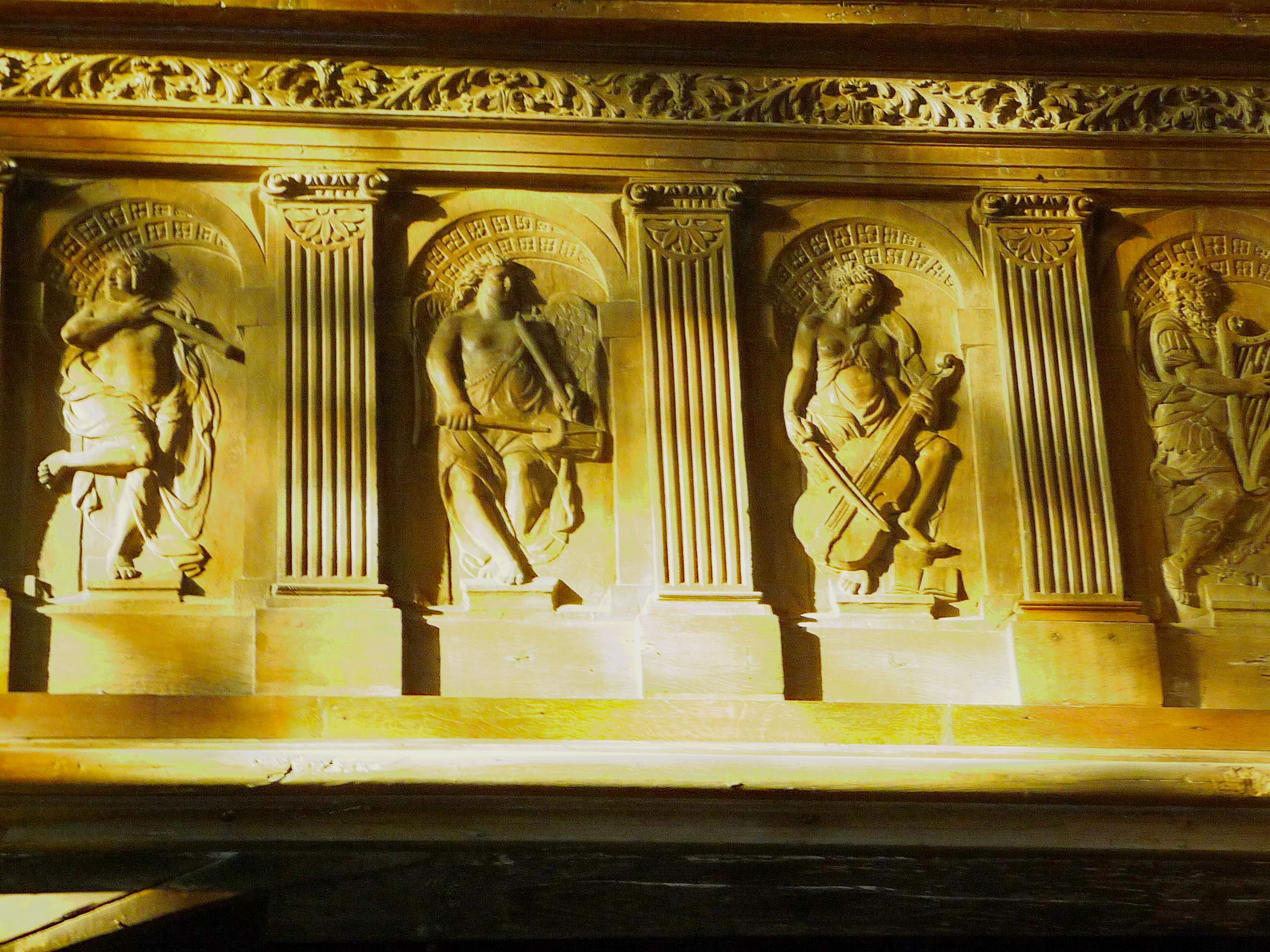
Carvings in Wooden Church
Honfleur was also the birthplace in 1886 of the avant-garde musician, artist and writer, Erik Satie, and there is a Museum dedicated to the man where you can immerse yourself in his quirky world. Unlike any other museum you’ve been to, this one takes you from room to room to the accompaniment of Satie’s music (via electronic headsets). stunning visual effects and extracts from his writing. Even if Satie is not one of your favourites, this is a very special experience which I’d highly recommend.
Street scene in Honfleur
It is very easy to walk around this small town and you won’t get lost. However, like many towns, Honfleur has a Petit Train Touristique, a tractor-drawn ‘train’ that trundles around the main tourist spots, operating May-September. If only there for a day, I’d recommend this.
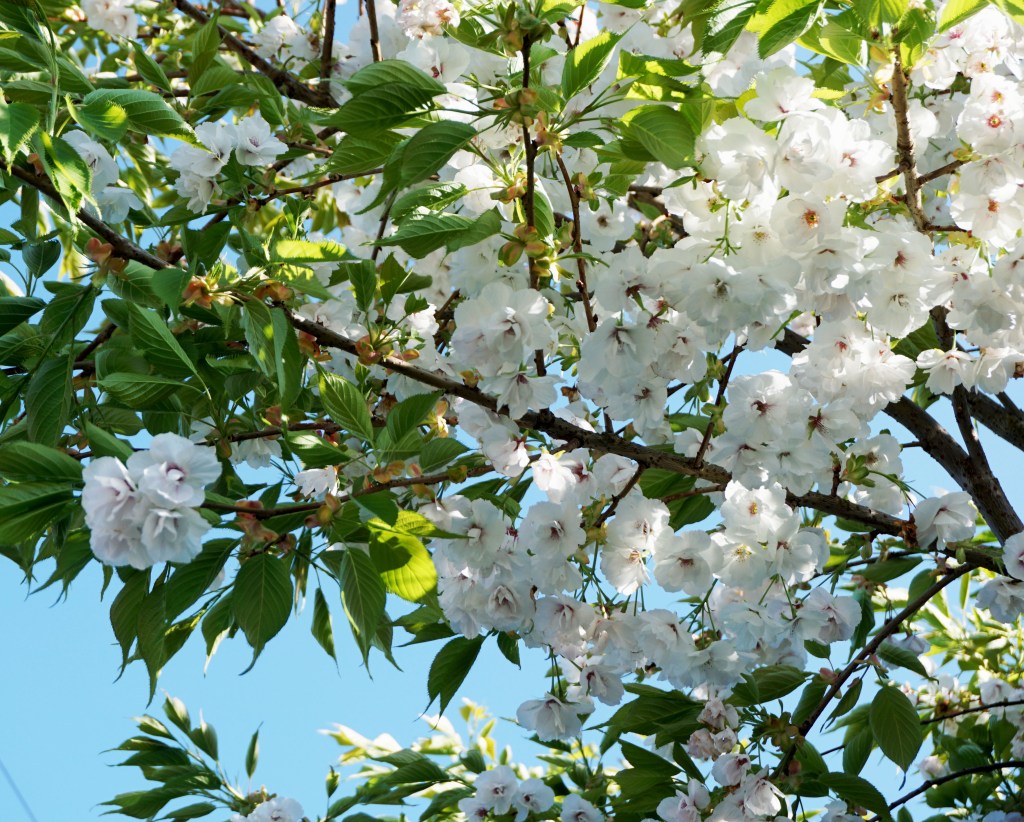
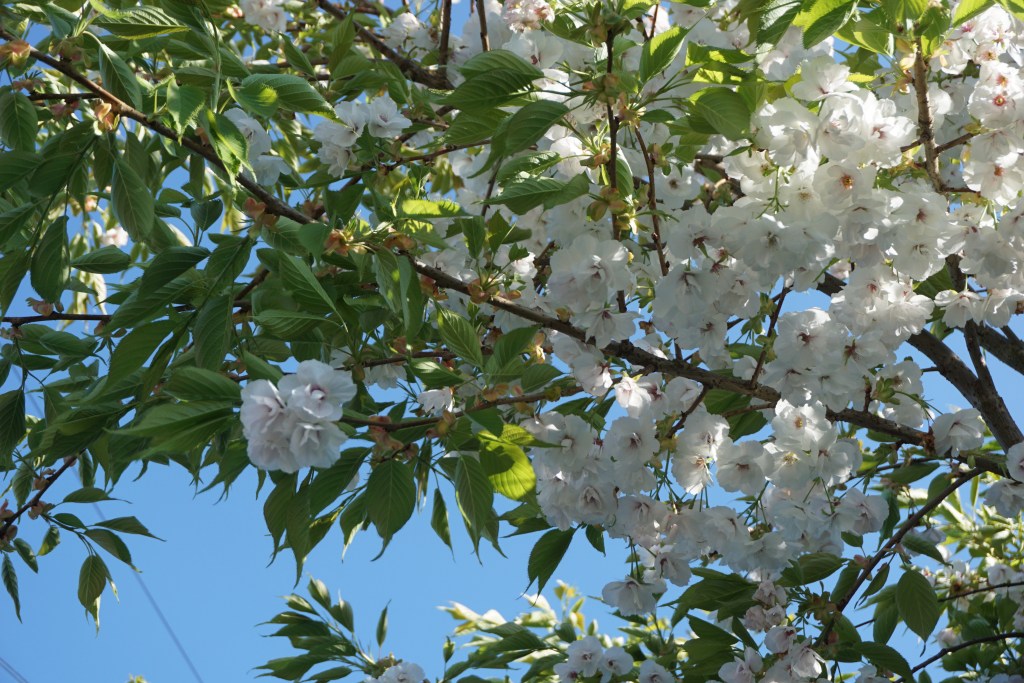
The blue sky through my cherry blossom is enough to put an idiotic smile on my face and make me feel really good. How beautiful is that sky and how perfect the flowers.
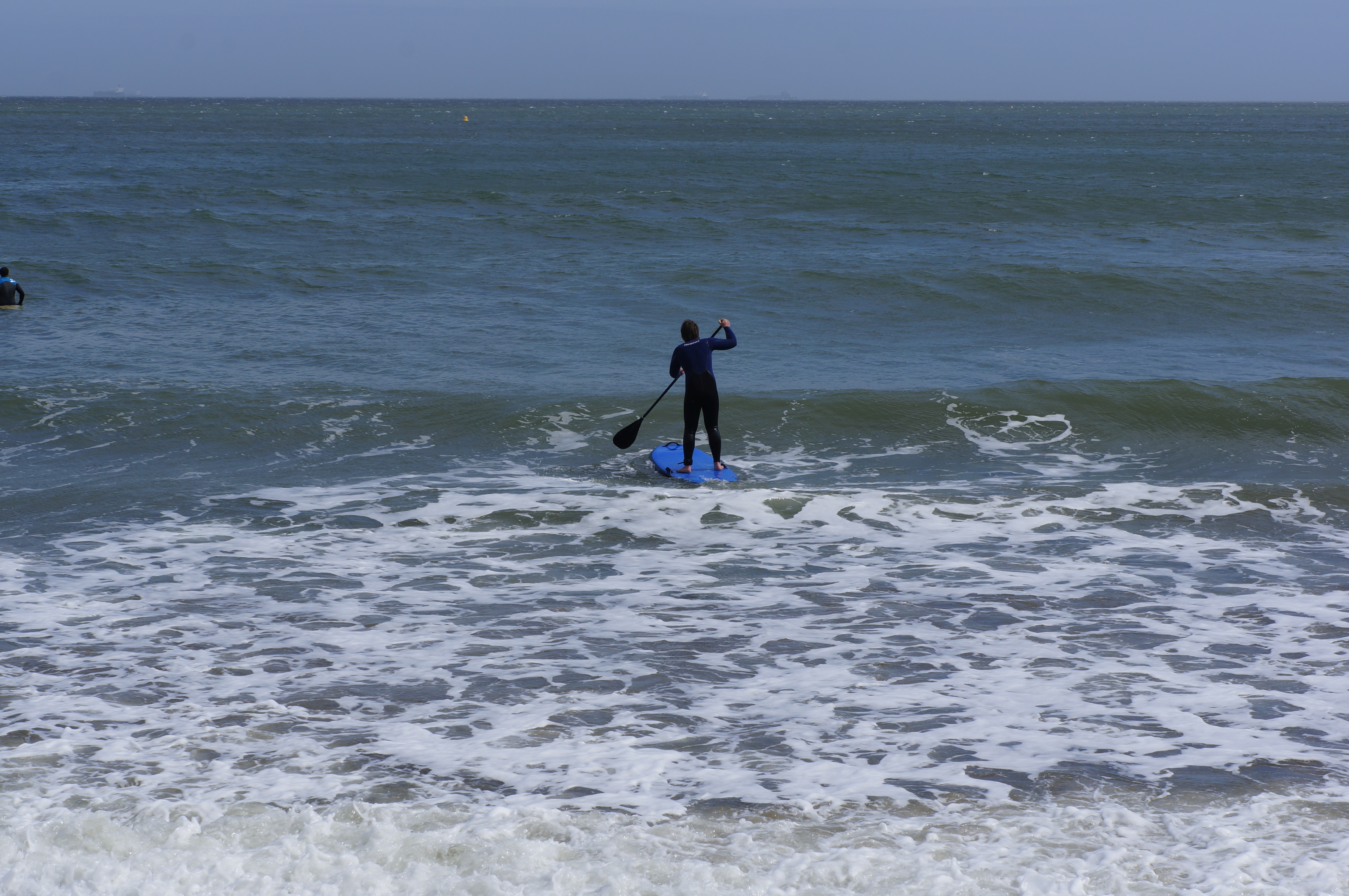
A walk along the seafront at Sandown, Isle of Wight, with my friend Steve from London, a brilliant photographer who has brought his camera with him, produced some great images that I’d like to share with you. Sandown shares with Shanklin, the next town, a marvellous crescent of golden beach, perfect for safe swimming – one of the reasons why both towns attract families with young children.
Sandown also has the Dinosaur Museum, this being Dinosaur Island, and Shanklin has a wonderful Chine that leads from the centre of the old town, down through ferny green walks, to the beach and the sea.
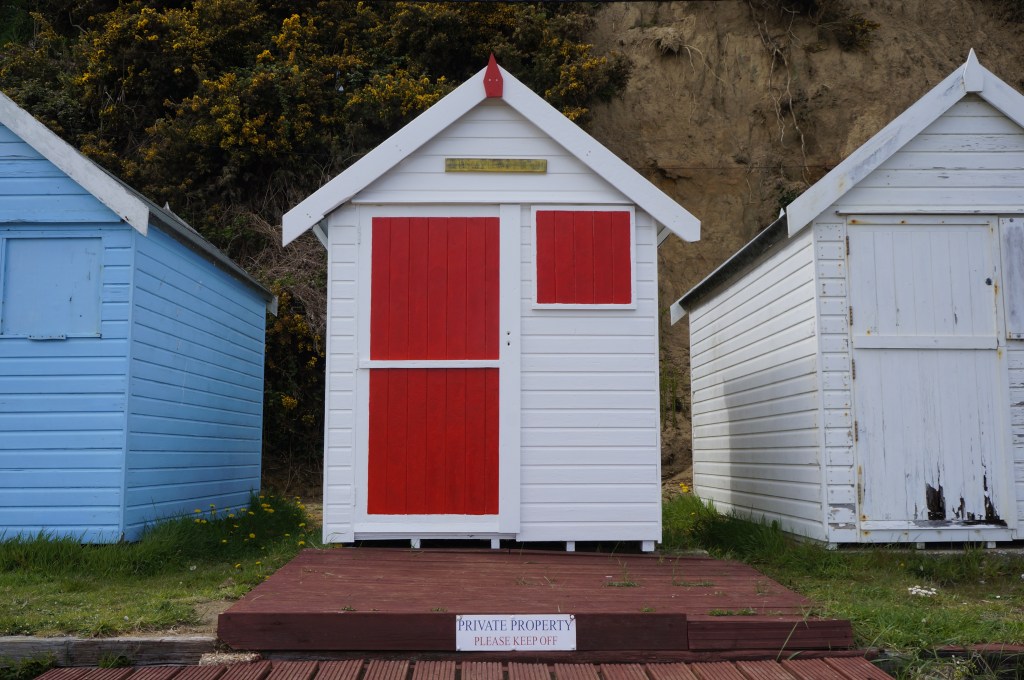
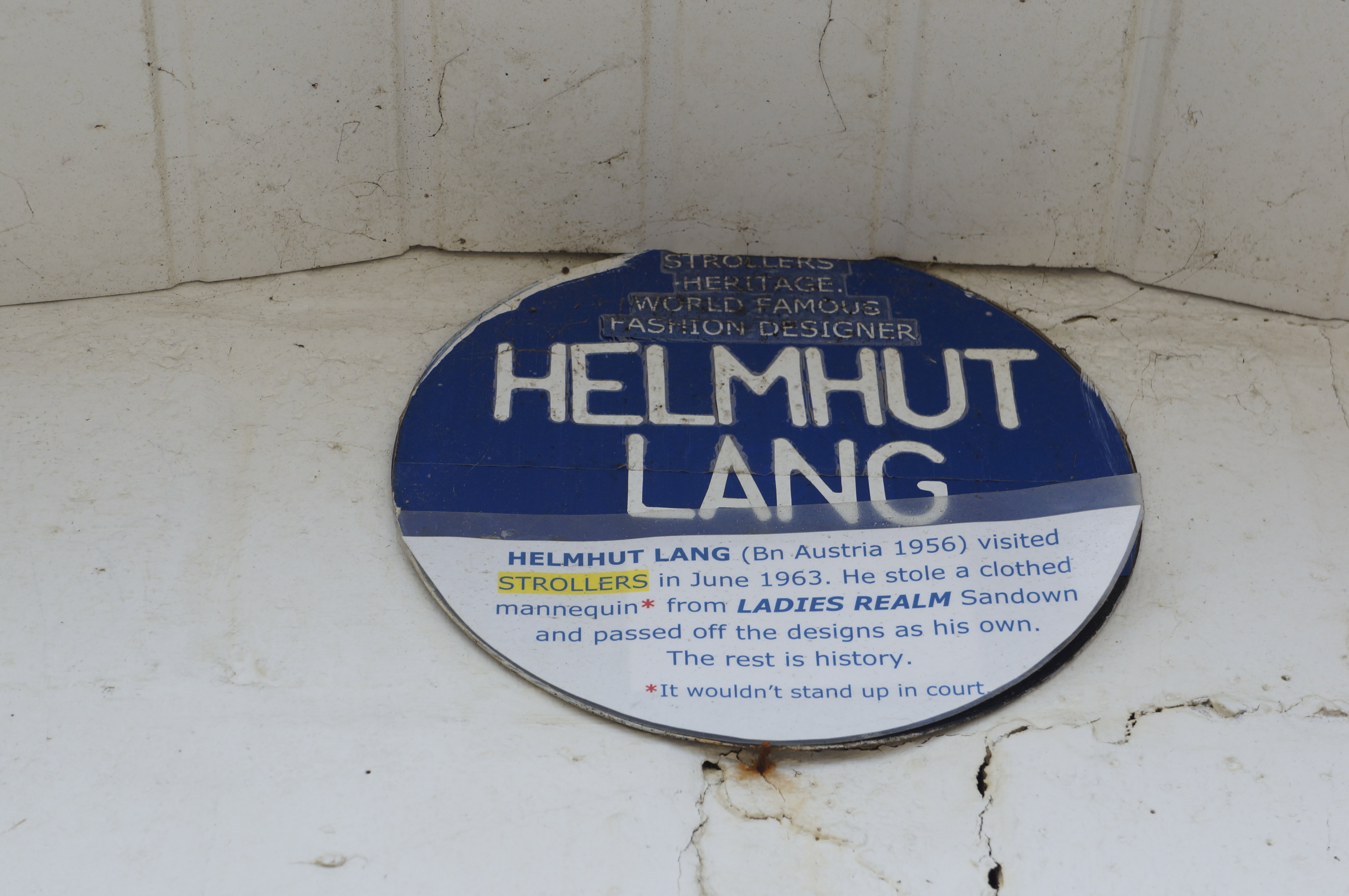
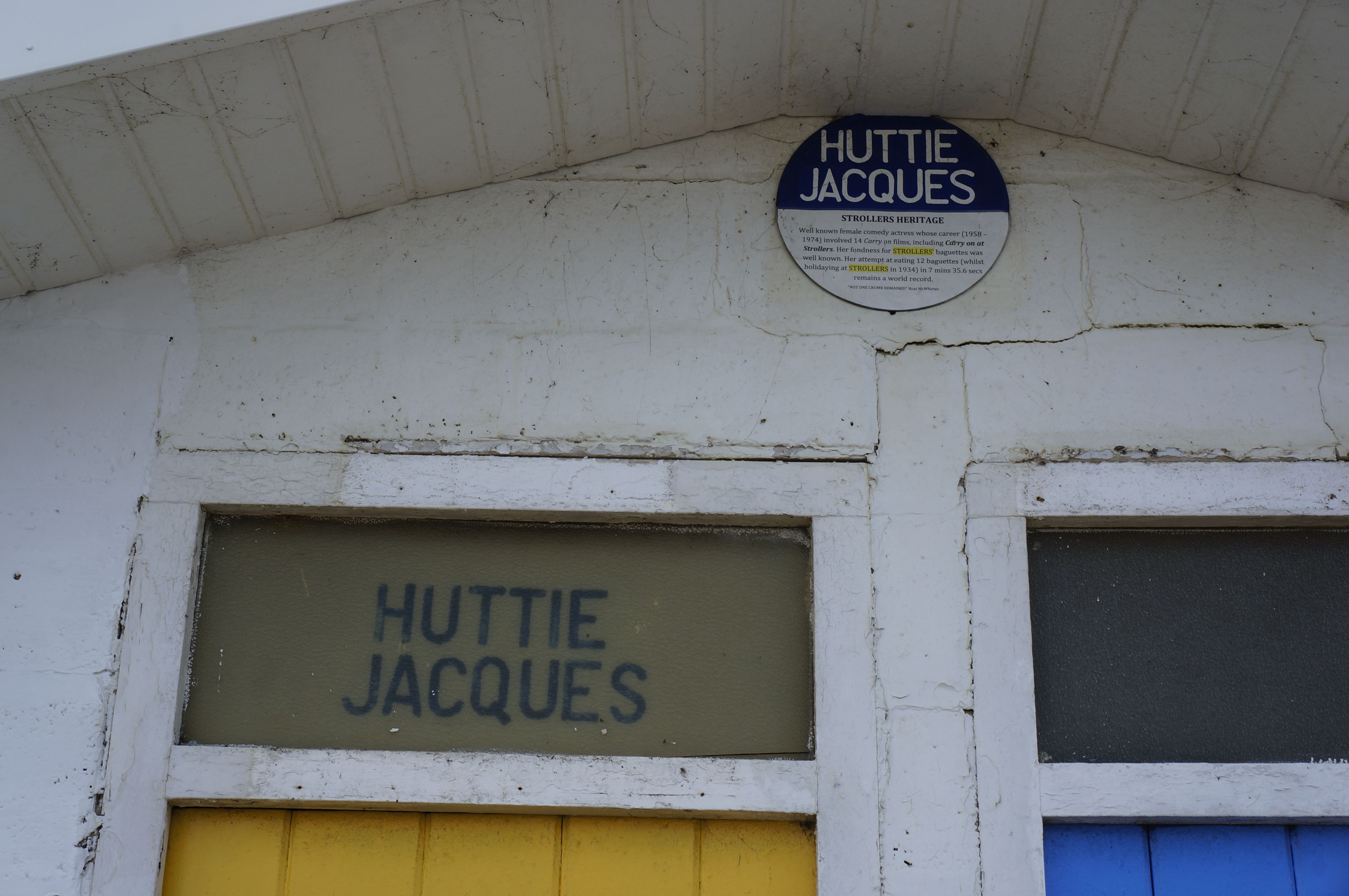
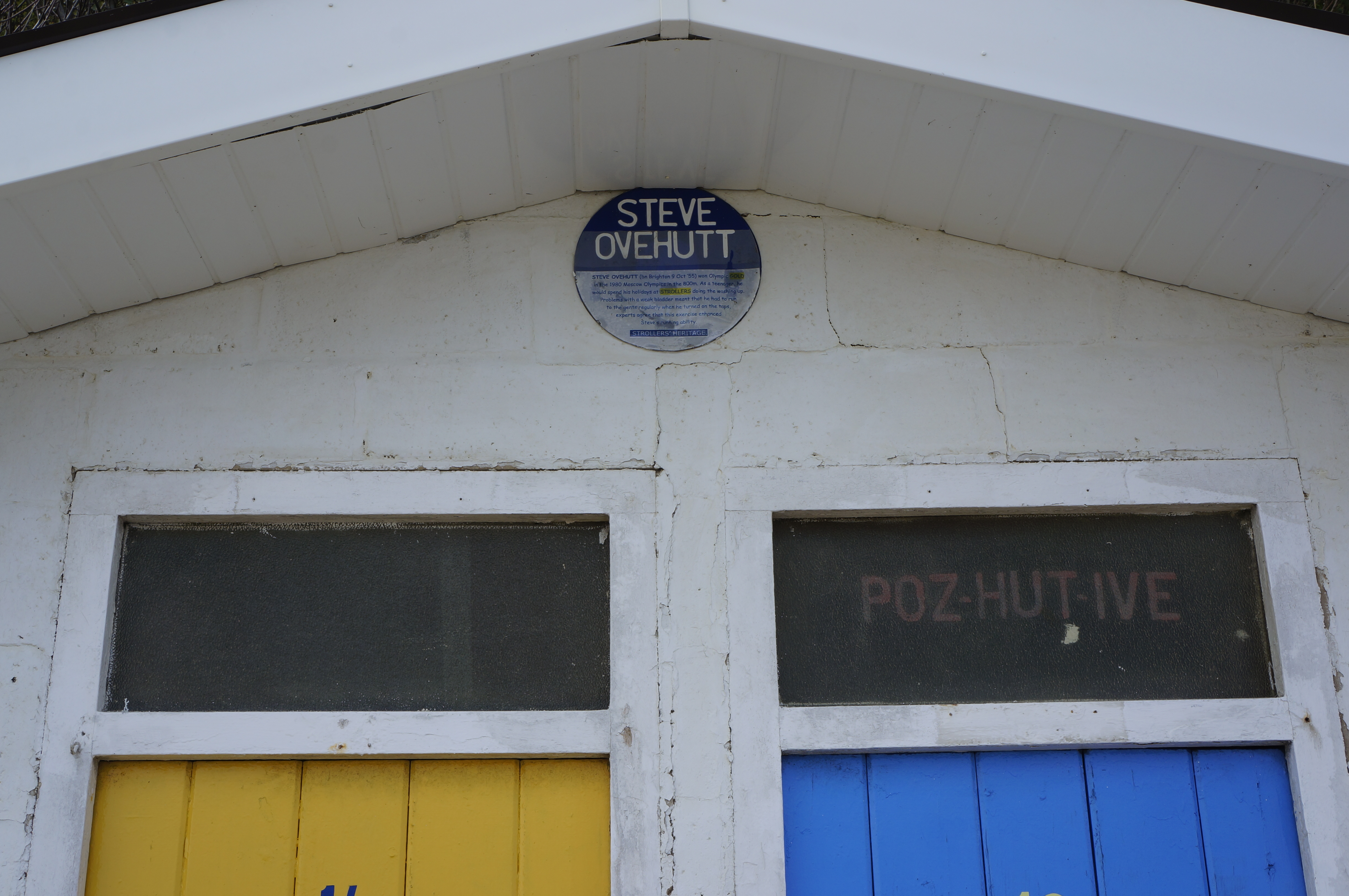
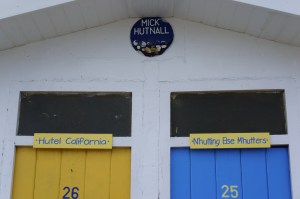
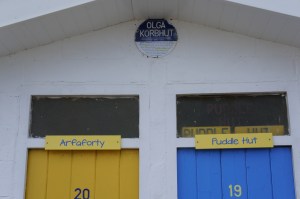
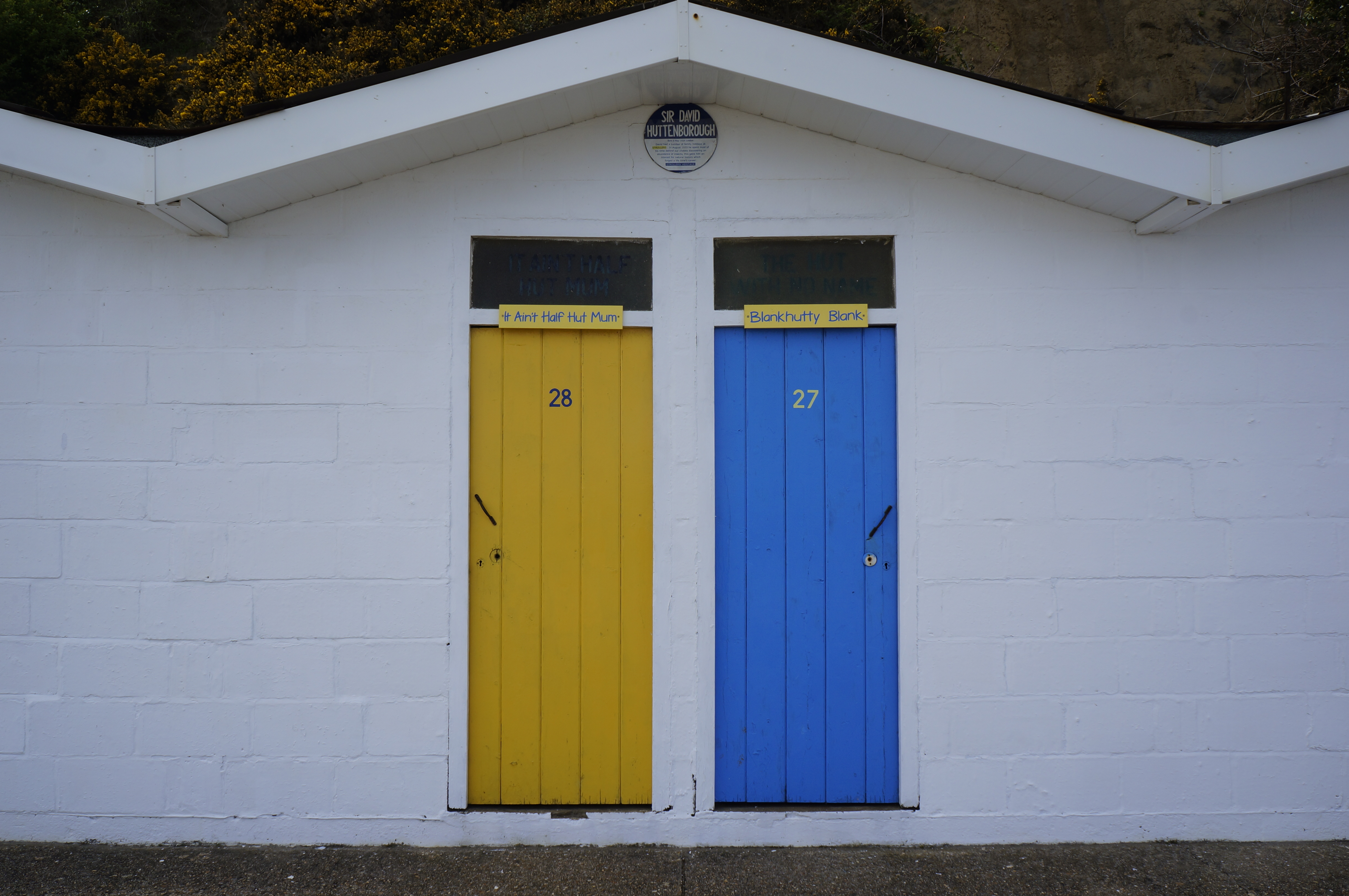
But Sandown has something more frivolous – beach huts that make one smile, because the custom here is to give them all peculiar, funny names, a play on the word ‘hut’ more than ‘funny’, clever, quirky, and guaranteed to make one smile.
Steve took these photos for me. I hope you like them too. You may have to click on the images to enlarge the name plaques.
So there you have it, Sandown Esplanade beneath the Cliff Path and along the beach on a delightful walk that leads to Shanklin (well lit during the evening as well) with cafes, life-guards, invigorating breezes and views of giant ships leaving Portsmouth and Southampton for foreign ports, as you walk along.
And for the last photo, well, it speaks for itself.
I admire the many photographs of gardens and flowers other people post on their sites and walking around my minute plot this afternoon I thought I’d do something similar. I think it’s a sort of displacement activity as I haven’t been in a writing mood for some time now, nor have I remembered to take my camera when I’ve gone out walking. If I did I could post something on Jo’s Monday Walk which I’ve been meaning to do for some time.
So here goes. First up is something I’m thrilled about, a blossom laden branch of my damson tree, one of my favourite fruits but one that is very hard to come by these days. The amount of blossom still on the tree after the March winds makes me think I may be blessed with a decent crop of fruit this summer. It’s only in its third year in my garden so, fingers crossed ….
Next up is a planter of tulips just struggling into the light and behind them is an azalea which is almost finished now. It was tempted out by a burst of almost summer weather a few weeks ago when it, along with my early lavender, gave pleasure to some bees who appeared to be in a drunk/druggy state as they careered into each other and tumbled from blossom to blossom.
Not far from this is this rampant yellow flowering bush/shrub whose name I have forgotten. I know it started life last year as a small cutting and like Topsy, it just growed and growed, now I shall have to take the secateurs to it as my garden is really small. But for now, its cheerful yellow colour brightens up my day.
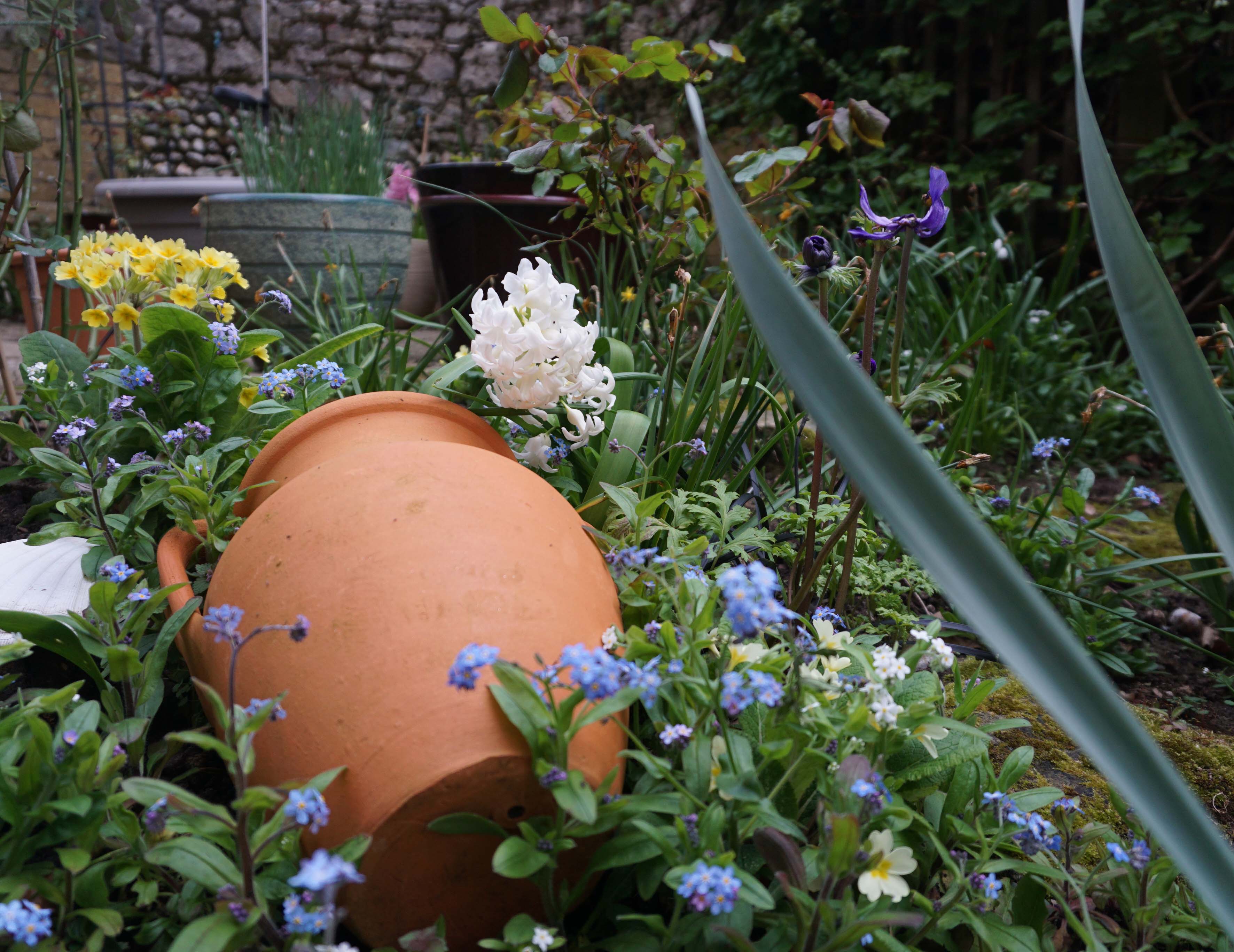
I liked this last one while I was taking it, but looking at it now it appears a bit sad. Definitely, an end of something, winter I hope, with the urn lying on its side, the background of dull containers without their jewel-like summer flowers, the lone crocus and the forget-me-nots struggling for a place. It’s even a bit blurred as I have a back problem and cannot position myself to get the best photographs, so am apt to aim the camera haphazardly when I can’t do ground shots.
Anyway, a glimpse of some flowers in my garden, in lieu of a travel piece.
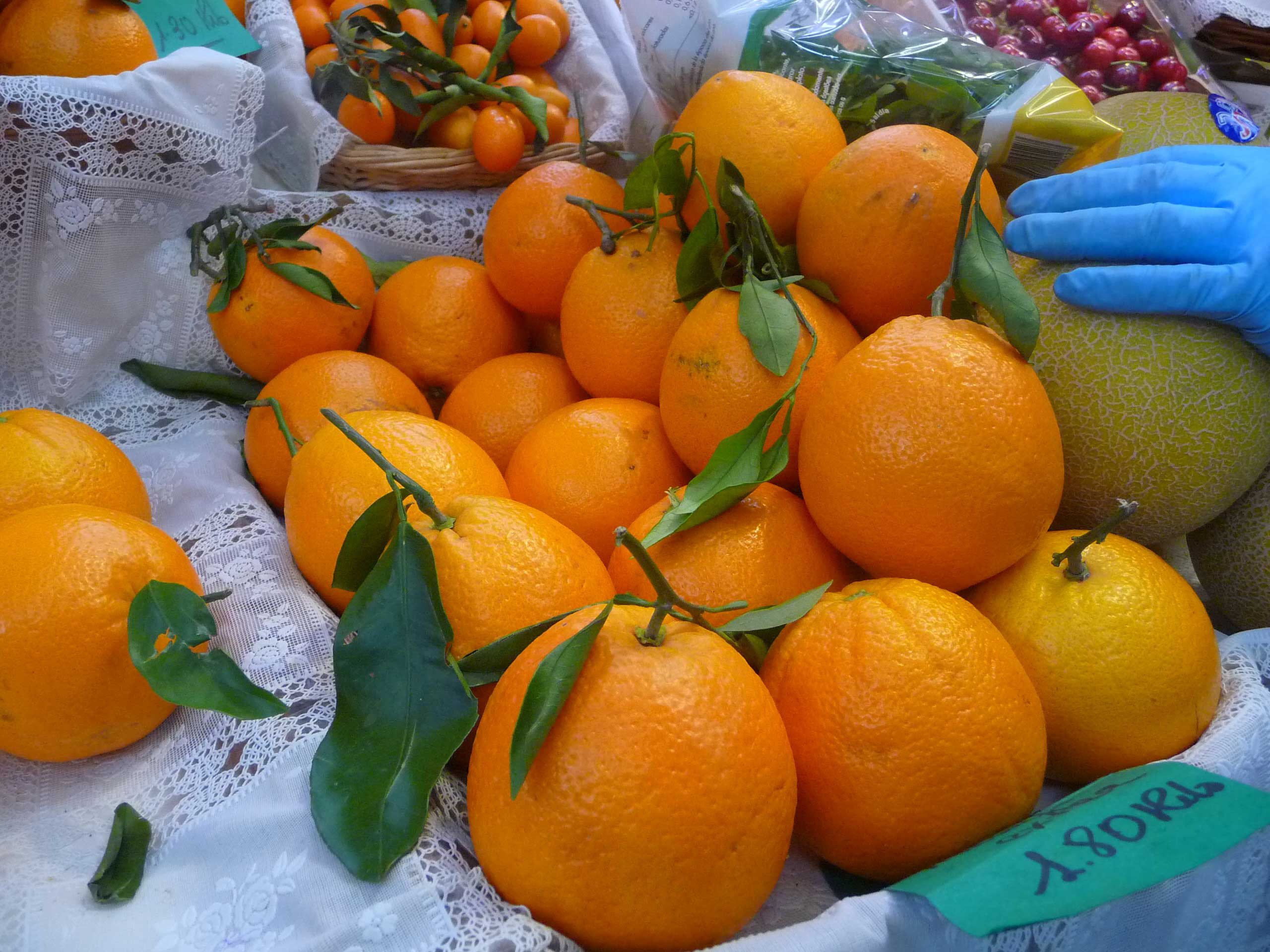
What cold be more orange that these gorgeous Spanish oranges. The very sight of them makes me salivate remembering how they tasted. How come we never seem to get really juicy oranges these days?
Young monks changing their robes – Photo Mari Nicholson
I never did find out why these young monks were changing their robes in the street by the Grand Palace in Bangkok, but they did it discreetly and looked decidedly pleased when they had accomplished the task.
Pottery for Sale on a Valencia street – Photo Mari Nicholson
I’m a sucker for anything that looks ‘local’ even though I know I shall never use it when I get home, but in my minds eye I can see me producing succulent food smelling of rosemary and garlic, mint and oregano, the whole resting on a bed of peppery olive oil and maybe some ciabbata. Dream on. I get home, realize it’s another foolish buy and it ends up at the back of the cupboard. But I love the orange colour of these dishes and yes, I did buy some.
I have just won third prize in a Travel Writing competition run by the Society of Women Writers & Journalists in the UK and I thought I’d put the piece up this week as my blog.
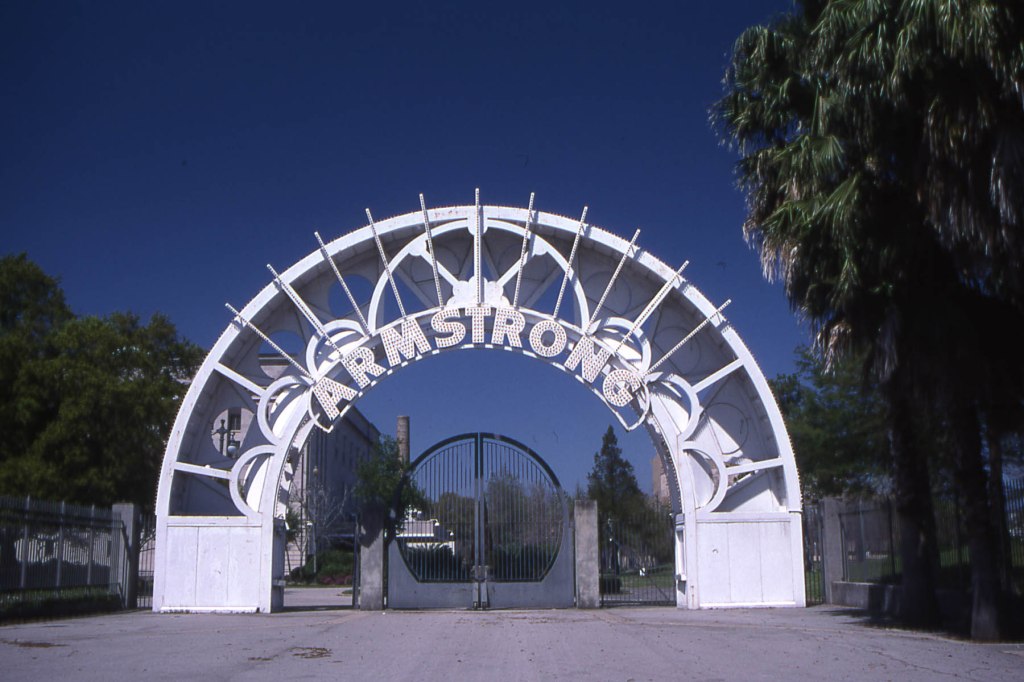
The article is about New Orleans‘ recovery after Huricane Katerina had nearly destroyed it. For some, it did totally destroy their homes and their way of life, but some survived to re-build the city and forge a new existence for themselves and their families. I’ve loved jazz and the city it hails from all my life: I love the easy-going rhythm of life and the people’s insouciance to the travails and troubles that beset them but I take my hat off now to their stoicism and their love of life which has restored New Orleans to something of its former glory.
Third Prize: Title as above
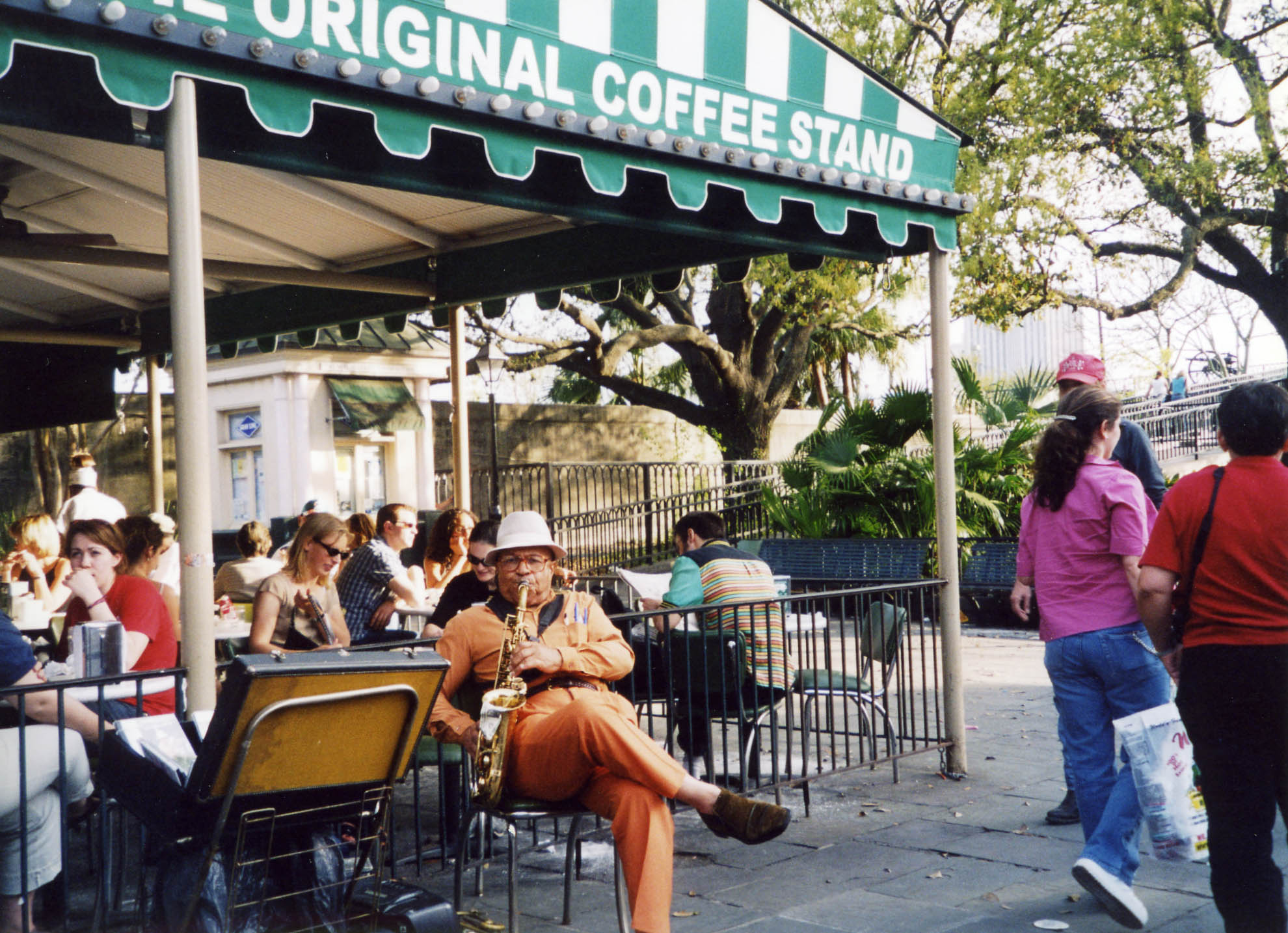
Lone Musician on Decatur – Mari Nicholson
The saxophonist in the too small trilby sits outside a café on Decatur, playing a soft, seductive blues. Just down the street, a trio runs through its repertoire while onlookers stand around in the sunshine and clap each solo. Behind us, on the muddy Mississippi the paddle boats make their way downstream, the sounds of ‘Oh, Didn’t he ramble’ drifting across from the onboard jazz band. Music is everywhere and everywhere it is good.
Mississippi Paddle Steamer – Mari Nicholson
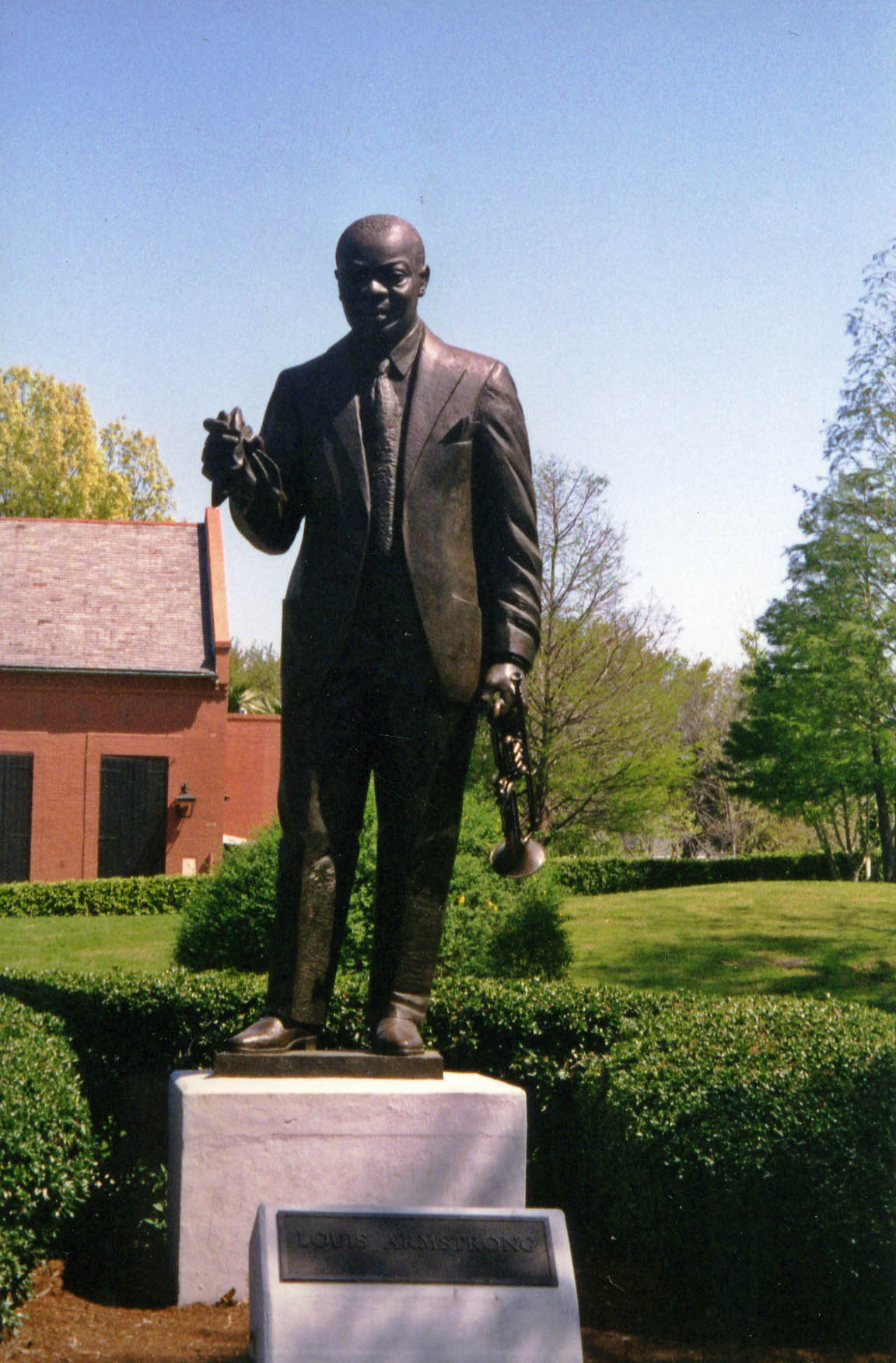
For this is New Orleans, cradled between the Mississippi and Lake Pontchartrain, a dizzying jumble of black and white where European cultures blend with Caribbean influences and where the world’s finest jazz musicians can be found busking on street corners or playing for tips in the magnolia hung Jackson Square.
The history of the city is embedded in the fading, peeling façades of the houses in the French Quarter their filigreed balconies overhung with lush greenery and fragrant jasmine.
Balconies in the French Quarter – Mari Nicholson
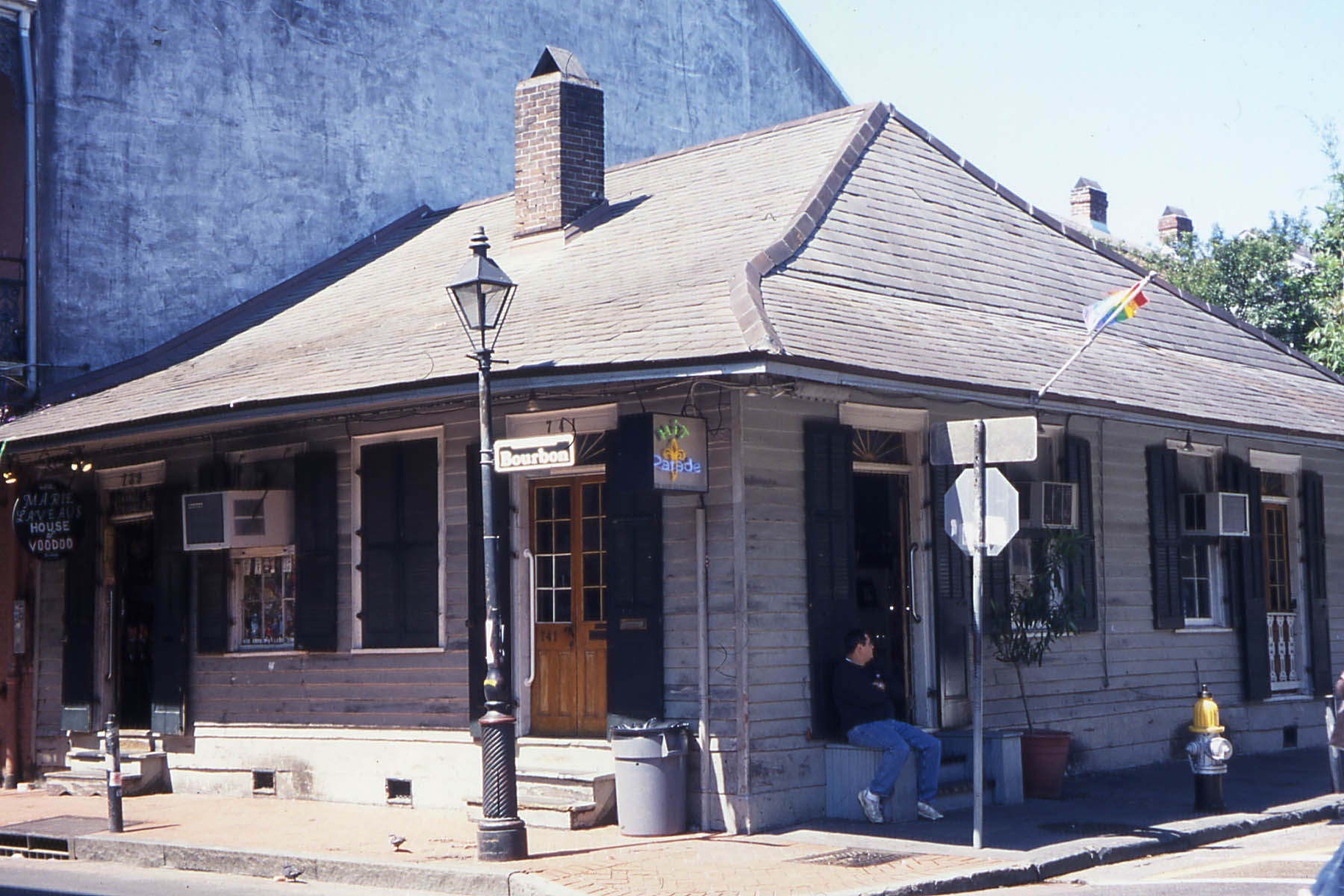
Cemeteries full of crumbling marble tombs, voodoo shops and houses selling magic potions called gris-gris should lend a feeling of melancholia but they don’t. This is a place where voodoo is a thriving religion an where a funeral brings people on to the streets to follow the coffin while as many jazz bands as can be mustered tag along on floats to add to the spirit of the day.
Voodoo House in New Orleans – Mari Nicholson
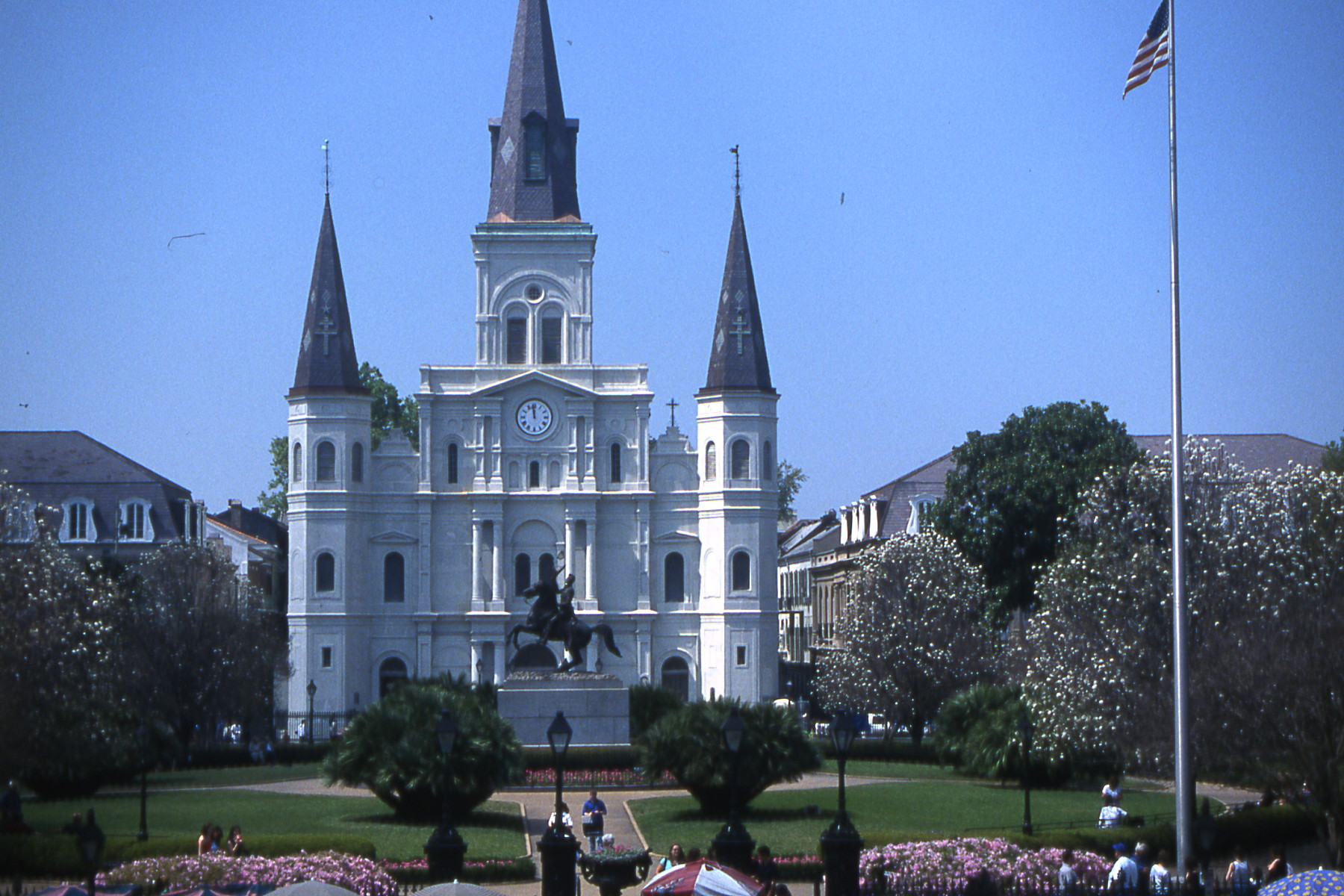
The French Quarter was the site of the original settlement and the heart of the city for 300 years and I start my stroll in Jackson Square, once the Plaza de Armes under Spanish rule in the 1700’s but now a green oasis in front of St. Louis cathedral, the oldest continuously active Catholic Church in the USA. The Square is bustling with jugglers, dancers, tarot card readers, and voodoo priestesses, the whole sound-tracked by groups of itinerant jazz musicians.
Zydecko Musicians in Street
Tarot Card Readers in Jackson – Mari
Following the map in my self-guided walking tour (available free from the Tourist Office) I check off The Cabilde, from which Spain, France, the Confederate states and the USA have each at one time ruled New Orleans, before continuing through some of the city’s most attractive streets. The leaflet illuminates important buildings from convents and haunted houses to the homes of writers Tennessee Williams and Frances Parkinson Keyes. I hop on the Riverfront streetcar and for $1.50 I ride the 2-mile route along the Mississippi to the famous French Market and the stalls of the Flea Market.
St. Louis Cathedral – Mari Nicholson
There are plenty of opportunities to stop for a snack or a meal and after a while I head for Café du Monde for coffee and beignets (doughnuts to die for, smothered in icing sugar). New Orleans is gastronomic heaven whether you chose the world’s most famous Cajun restaurant, K-Paul’s at 416 Chartres Street or the more budget range La Madeleine for a croissant and chicory flavoured coffee but the two dishes you must try are Gumbo, the ultimate Creole dish, made with local Gulf shrimps, crabs and crawfish, and the more basic Red Beans and Rice, once comfort food for the poor but now elevated to a specialty. Or chill out with a po’boy sandwich – crusty French bread filled with fried oysters, shrimps or soft shell crabs, roast beef, gravy and cheese. We’re talking BIG sandwiches here. Naw’lins don’t do small!
Most famous Jazz Club, Preservation Hall – Mari Nicholson
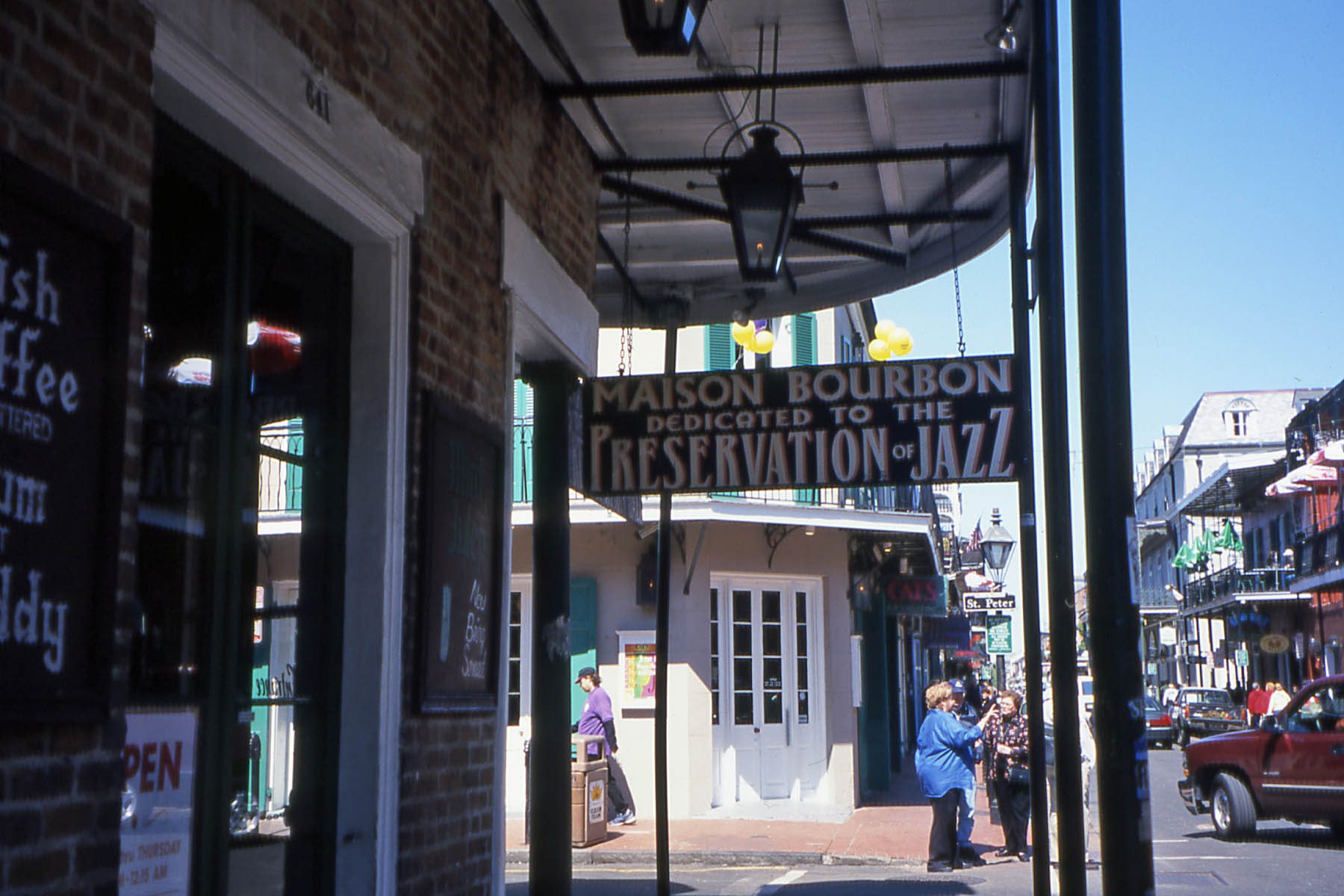
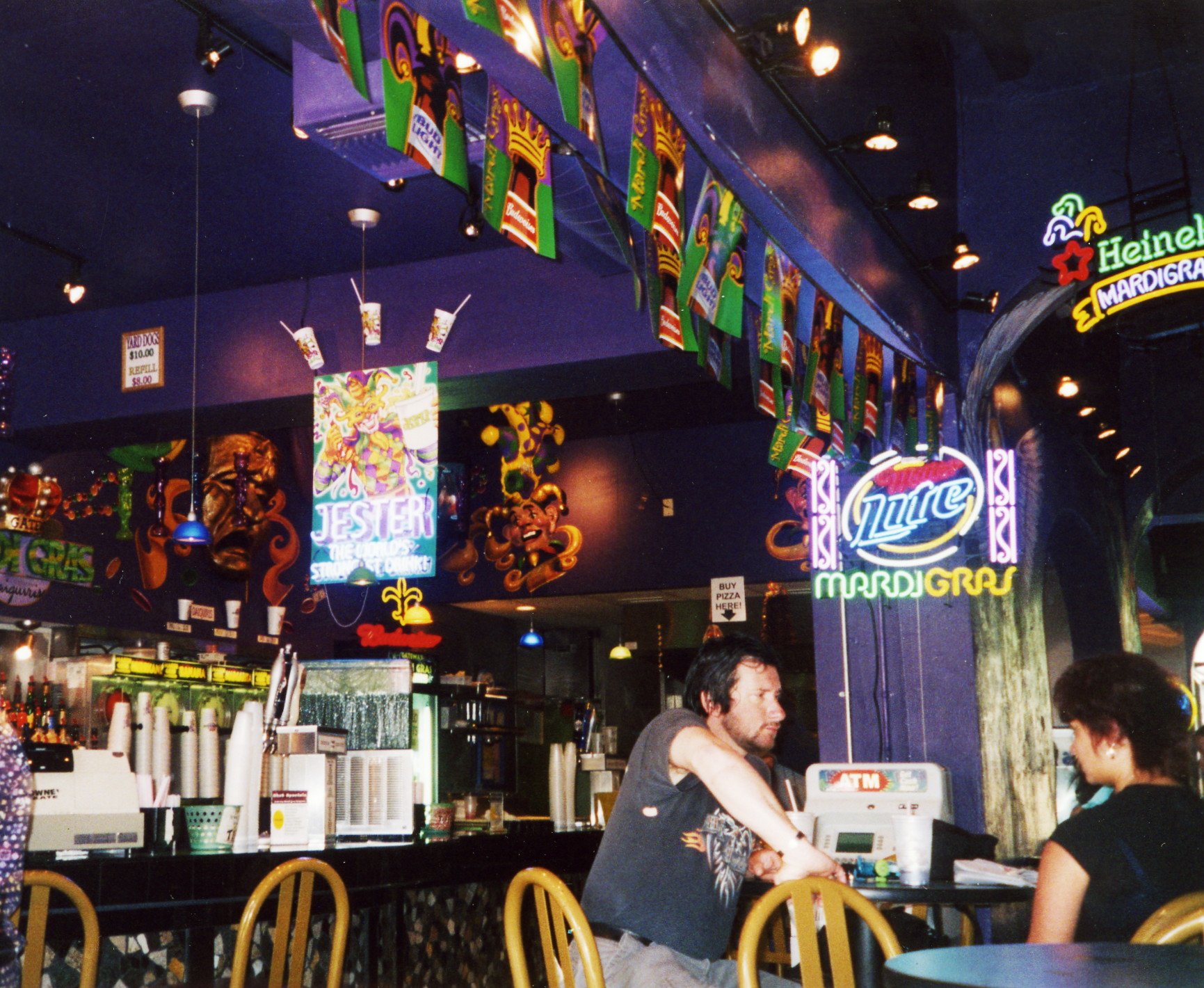
For many, the best time in New Orleans is after dark when the night beat of Bourbon Street starts up, when Preservation Hall hosts the oldest jazz musicians who play 30-minute sets, and the restaurants and bars fill up with customers. It may require a pre-emptive cocktail or two to cope with the astounding decibels that reverberate in the seven blocks of Bourbon and the even more ear-splitting noise from the dark bars that line the narrow street, so head for the atmospheric Napoleon House at 500 Chartres or Pat O’Brien’s on Bourbon for a Hurricane, or a Sazarac, Huey Long’s favourite tipple, a potent mix of whiskies, bitters, lemon juice and aniseed liqueur. Rumour has it that if you ask for a third the barman asks you to sign a waiver.
Inside a bar on Bourbon – Mari Nicholson
Bourbon Street is fun but for the authentic jazz experience, head away from the yelps and yells of the crowds that congregate here, towards places like Vaughan’s on Dauphine Street, Tipitinas at Napolean Aveue, the House of Blues on Decatur Street or Snug Harbour on Frenchman Street. If you are heading out of the French Quarter make sure you have the ‘phone number of a taxi company with you as you will find it impossible to pick up a taxi anywhere and, not to put too fine a point on it, you wouldn’t want to be wandering around New Orleans alone after dark.
If it’s Cajun music you’re after – washboards, corrugated tin, fiddles and accordions – or its faster variant, Zydeco, you can find this at Mulate’s on Julia Street where you can work off the fried catfish and dirty rice by two-stepping to the fast rhythms. Instructors are on hand to give neophytes a whirl around the floor.
It’s easy after only a few hours in The Big Easy to put life on hold and forget Museums and churches. There are shops to investigate, a horse and carriage ride around town to contemplae and a ride on the historic landmark that is the olive-green St. Charles’ Streetcar at Canal Street. For $1.25 you can ride for 13 miles from the Riverfront to the Lake and on to the Garden District, to view the mansions built by the rich merchants in the last century, the lush gardens surrounding them dotted with trees hung with gossamer-like grey streamers of Spanish moss.
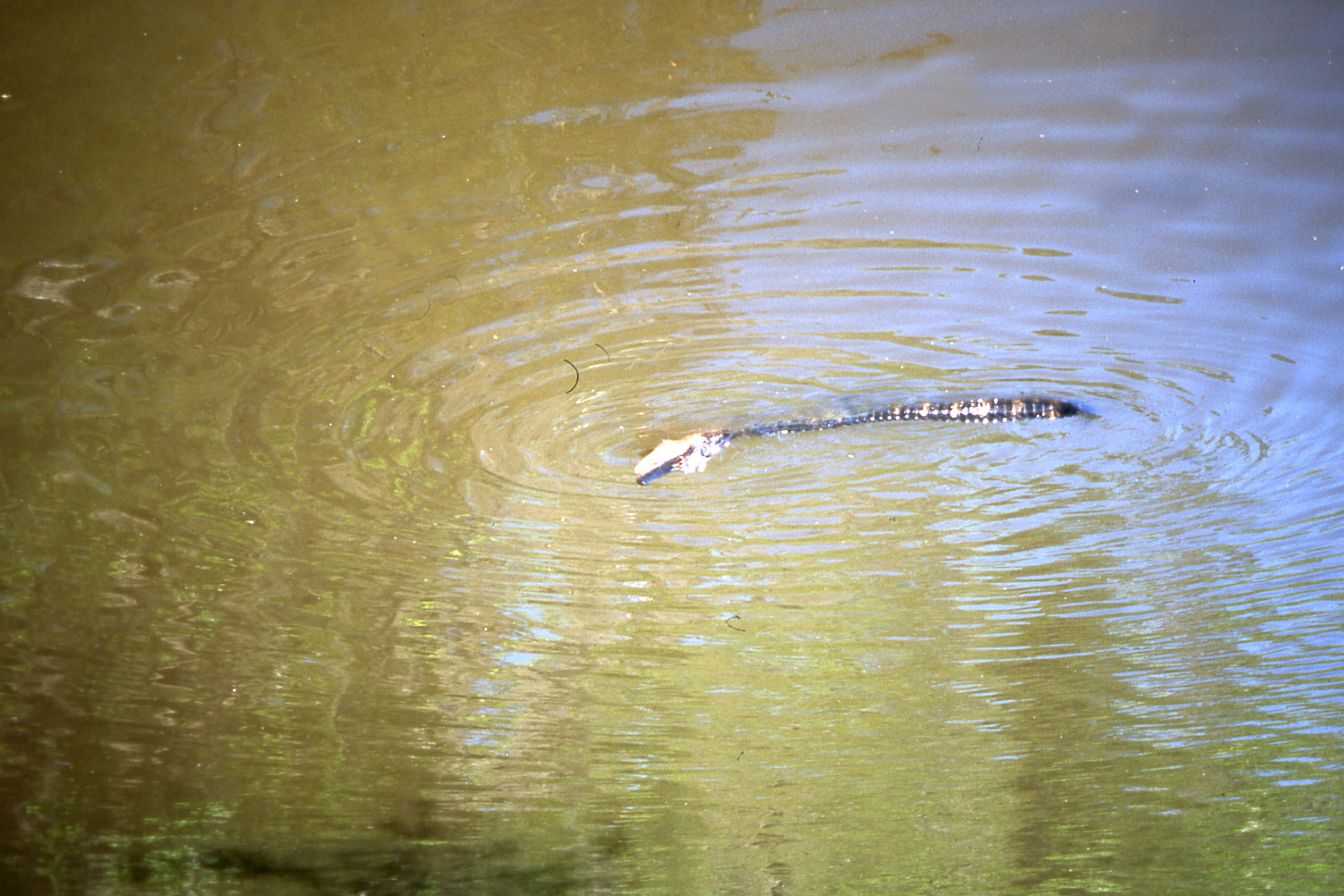
Alligator waits for the unwary – Mari Nicholson
Best of all is to take a trip on the bayous to observe Cajun life, so book up for a day’s tour through the swamps, either by kayak or cruise boat, and meet the trappers and fishermen, boat builders and farmers. In the tranquility of these Cypress Swamps where turtles and egrets share floating logs in the waters, the noise of the city seems a long way away. You can be lulled into a sense of non-danger but trail your hands in the water at your peril for the alligators move swiftly to snatch at anything that moves in these swamps. And if the alligators miss you, the nutrias, a sort of giant water rat on steroids, might get you.
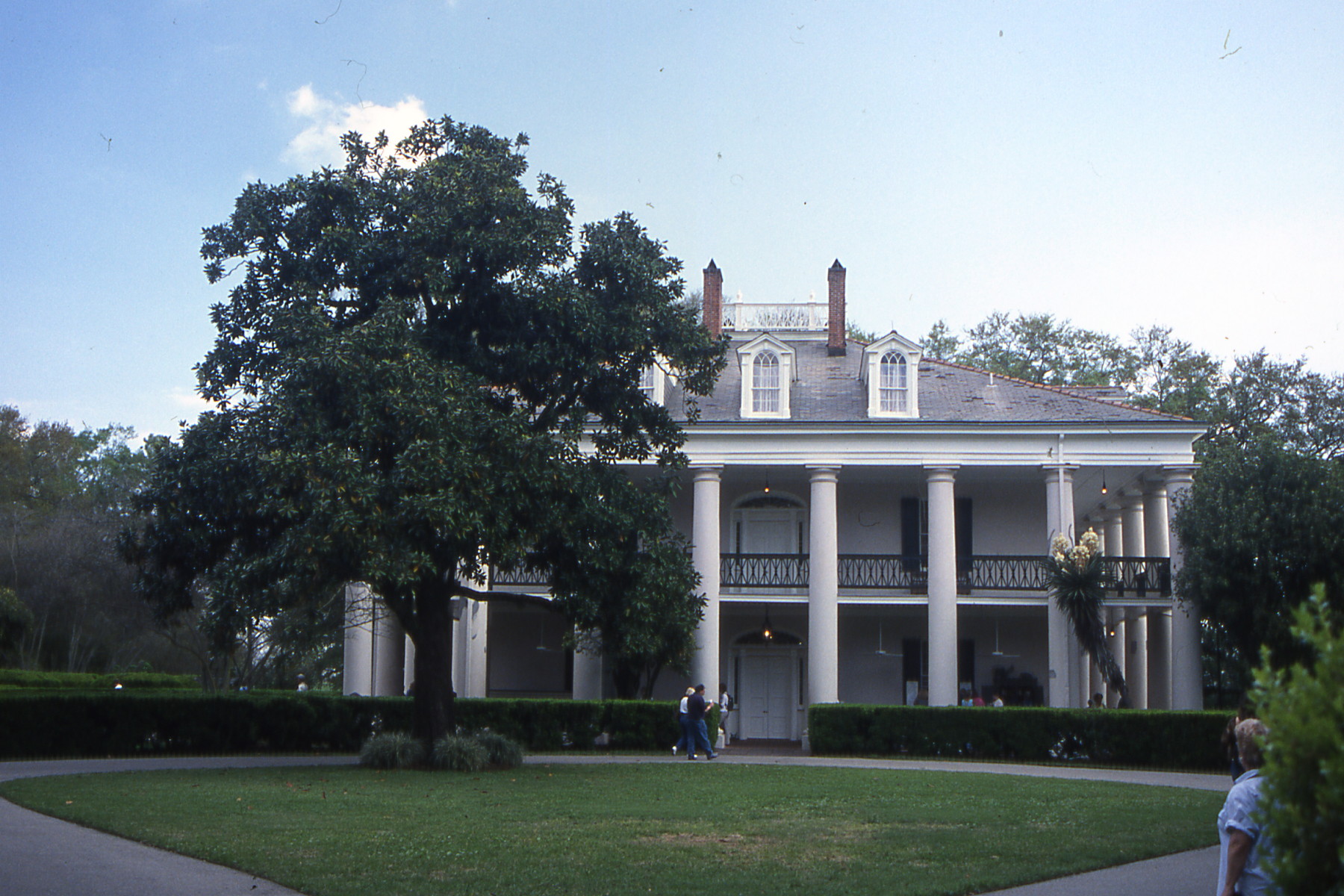
From the bayous to the grand houses of the plantation owners is like moving from one life to another, from “Cat on a Hot Tin Roof” to “Gone with the Wind”. Driving along the Mississippi River gazing at the antebellum dwellings will have you longing to sample a mint julep on one of the verandahs. If time is short, the best two houses to visit both in the lives lived by the inhabitants and in the architecture, are Laura Plantation and Oak Valley Plantation. The guides bring the houses to life with their tales of black slaves who laboured in the hot sun to cut the cane that made the owners rich and the claustrophobic life lived by the women of the house. And, at Oak Valley Plantation, you can have that Mint Julep sitting on the verandah of the house and for a few moments, you can be a character in a Tennessee Williams play – if you can forget that you’re drinking a mint julep from a plastic cup.
Plantation House – Mari Nicholson
The New Orleans motto is “Laissez les bon temps rouler” (Let the Good Times Roll) a maxim that took a knock after the Katerina floods, but along with the rest of Louisiana, the inhabitants of the city are doing their best to get the good times rolling again – and they are succeeding.
Despite the tragedy of Katerina, New Orleans is once more up and running and you can again enjoy a cocktail-to- go on Bourbon or Basin Streets -a lurid coloured concoction in a highball glass that you get to drink on the street.
Just over 13 years ago, on 26th December 2004, the Asian tsunami hit our television screens, brought to us by horrifying holiday videos showing the sea retreating, then towering up in a massive wave that swept up beaches, destroying hotels, houses, cars, boats and anything that stood in its way. We saw only the video footage shot by the few holidays makers who escaped its power, but on the Thai coastline that stretched across six provinces, Phuket, Krabi, Phang-nga, Ranong, Satun and Trang, it took 5,395 lives (among them 2,000 foreign tourists).
Hard to Imagine a giant wave surging towards this placid beach.
Khao Lak, the location for the Ewan McGregor film of the tsunami, The Impossible, is the Thai resort that recorded the most deaths in the disaster; the official death count of 3,950 is considered by some to be an underestimate with estimates reaching as high as 10,000 due to the large number of undocumented Burmese migrants who disappeared.
I was in Hua Hin in Thailand when it happened, waiting to meet up with a couple of close friends who were in Khao Lak at the time. I never saw them again: they were but two of the many foreign tourists whose bodies were never recovered. My most harrowing memory from that time, apart from the wall to wall tragedy that was unfolding daily on the TV screens, was standing alongside hundreds of Thais in utter silence by the roadside in Hua Hin as we watched the convoy of trucks carrying rough, wooden coffins to the disaster zone further south.
A Village that is Renewing Itself in Khao Lak
I made the journey back to Khao Lak a few weeks ago to see how it was faring and my heart sang as I saw how the people have managed to put this traumatic episode behind them, how the villages are renewing themselves, how the tourist trade on which so much depends has bounced back, better than it was before, and how the loveliest beaches in Thailand and Southern Thailand’s finest rainforest are once again open for business.
The magnificent beaches of Khao Lak
At the time of the tsunami it was a peaceful alternative to the brash resort of Phuket, some 55 miles to the south, and so it remains. But whereas before it had bungalows, now there are small low-lying hotels spread among the palm trees, the hardwoods, and the trailing lianas, that create a forest canopy that crackles with noise from the cicadas and the frogs.
Khao Lak’s inter-connected beaches extend for many miles and a small-town atmosphere still prevails. The town, if one can call it that, is a row of shop houses selling the essentials for locals and a few bits for tourists, like hats, sunscreen, sarongs etc. It is not a place to shop till you drop, but it is a place where you can soak up the pleasures of Thai life, the smells of durian, garlic and spices and where you can enjoy eye-wateringly hot street food as Thai children gather around you and stare. Then there are the giggling beach masseuses who’ll pummel you in bamboo shelters for one-tenth of what you will pay elsewhere in Europe, the sound of the sea lapping the sands being the only noise.
There are tsunami-related Memorials, of course. About a mile inland lies Motorboat 813 from the Thai Navy which had been providing protection to Princess Ubolratana Phannawadee and family when the tsunami struck. The 25-metre heavy boat was carried 1 kilometre inland and it was decided to leave it there after the clean-up, as a permanent reminder of what happened. The princess’s son, Bhumi Jensen, who had been out on a jet ski at the time, was one of those who died in the tsunami: his body was discovered the next day.
There is also a private tsunami museum whose exhibits are mainly videos on a loop, detailing the traumatic events, the grisly findings and the processing of victims’ bodies. One cannot walk through this museum without feeling moved, if not to tears, then to reflection on the tragedy. Then there is the Baan Nam Khem tsunami Memorial Park, right by the beach, consisting of two long walls curved like a big wave. One wall is covered in mosaic tiles, with name plaques set into the wall, some with photographs, some with fresh flowers. Most of the photographs are of smiling children, heart-breaking in their happiness and innocence before the wave struck.
But as I said, Khao Lak today is recovering well and the people are welcoming visitors once again to what must surely be one of the loveliest places in Thailand. Within easy reach are the Similan Islands for diving in pristine waters, Khao Sok National Park for a rainforest experience, hiking in green, forested hills, and a profusion of wildlife from monitor lizards to cobras to keep one interested!
I found the perfect hotel as well, the Manathai, set just back from the beach in a quiet area with an open-air bar perfect for taking in the dramatic sunsets that atracts everyone down to the beach for pre-dinner cocktails. The main restaurant served a fine International menu and the beachside Thai restaurant was just perfect. Rooms were large and exquisitely furnished, but best of all was the super-large balcony – perfect for the early morning coffee.


 bird-watching, a visit to a meditation centre, sight-seeing trips to places like Ronda, Nerja, and the famous white villages, a few hours spent in a Haman (with massage), seafood lunch on the beachfront at Malaga, and an Equestrian show with flamenco (this one not to be missed).

 Life expectancy continues to increase and holidays like these, organized by people who are dedicated to the philosophy of a healthy, active life and happy relationships as we grow older, are a breakthrough in advancing the cause of living better while we live longer lives.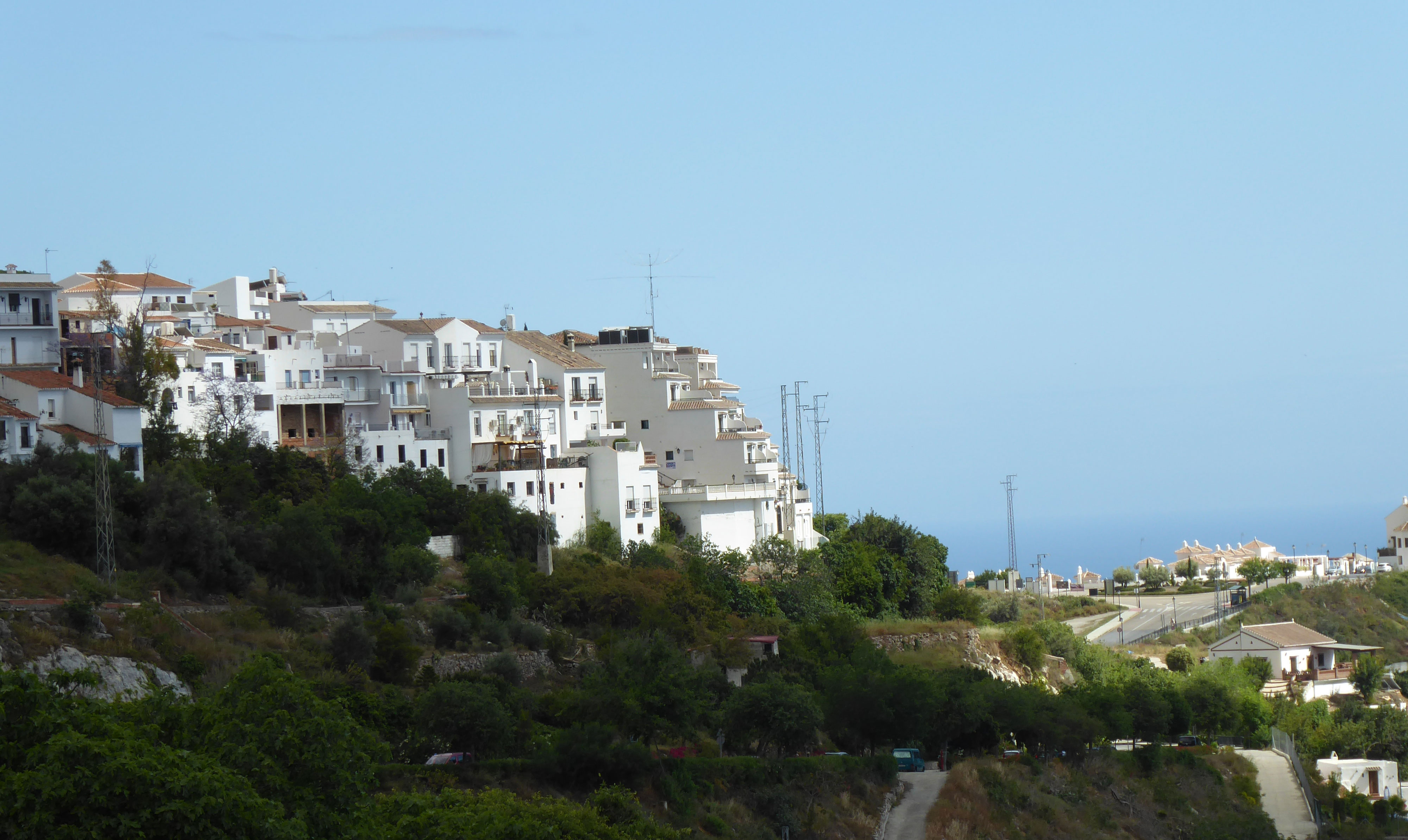

 I thought I’d time my walk today for lunchtime and, as I thought, I had the place to myself. Being Sunday, I presume most people are eating out or at home tucking into ‘le rosbif’ or even pasta or pizza.












 Not far from this is this rampant yellow flowering bush/shrub whose name I have forgotten. I know it started life last year as a small cutting and like Topsy, it just growed and growed, now I shall have to take the secateurs to it as my garden is really small. But for now, its cheerful yellow colour brightens up my day.









 But as I said, Khao Lak today is recovering well and the people are welcoming visitors once again to what must surely be one of the loveliest places in Thailand. Within easy reach are the Similan Islands for diving in pristine waters, Khao Sok National Park for a rainforest experience, hiking in green, forested hills, and a profusion of wildlife from monitor lizards to cobras to keep one interested!

 MARI'S TRAVELS WITH HER CAMERA