It’s no secret that I love Verona, and just two of the reasons for loving it are a) the city is highly walkable, and b) it is a place where tourists take second place to locals who live and work in its historic centre.
That’s not to say that visitors aren’t everywhere, but as you stroll through the medieval streets, charmed by faded frescoes and hidden gardens, or sit at the foot of an enigmatic marble statue in one of the huge piazzas, you never feel part of mass tourism.
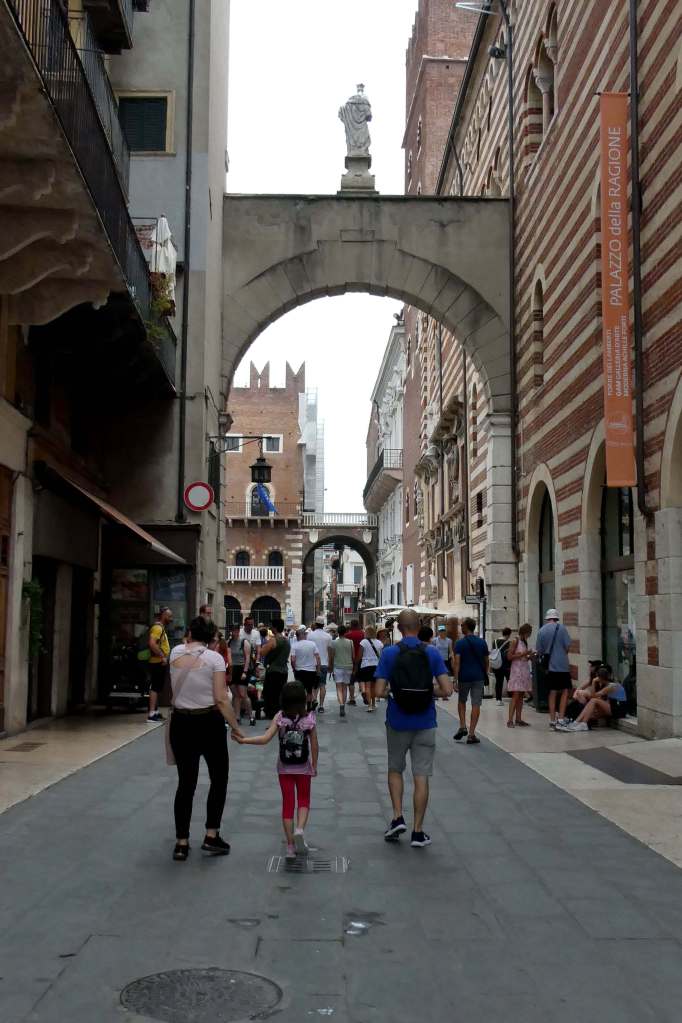
Simply strolling through Verona leads one to magical places, like the splendid Piazza del Signori. Italy’s most famous poet, Alighieri Dante, lodged nearby with the ruling Della Scala family during his exile from Florence in the 14th century, and so the square also answers to the name of Piazza Dante. Surrounded by ancient buildings which played an important role in Verona’s early civic life, whose façades, although faded, are still beautiful, the square still resonates with a sense of medieval life.
Scaligeri, Napoleon and Castelvecchio

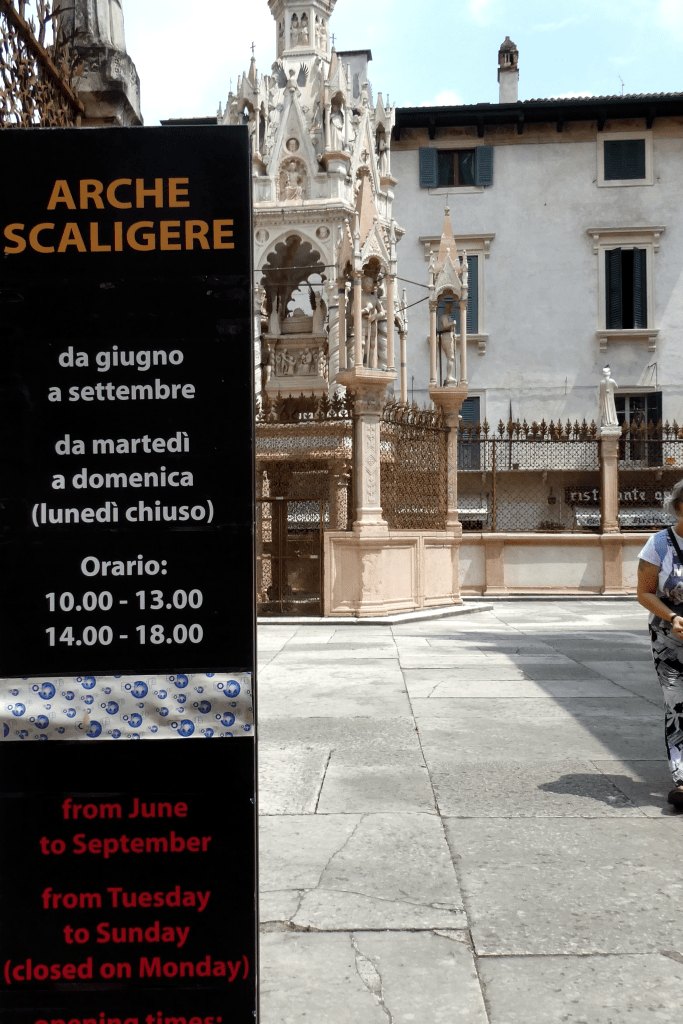

Church Door
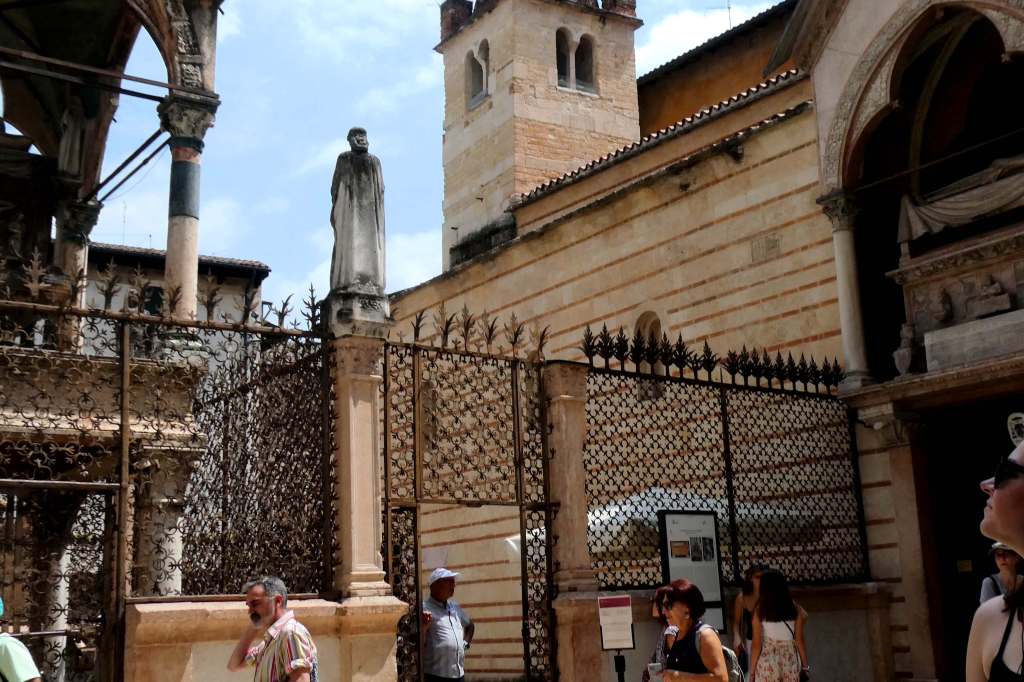
Nearby is another tiny square in which can be found the tombs of the Scaligeri family. They dominate the area, massive Gothic-like edifices, some behind a gated courtyard, and one above the church door. Intriguing, certainly, and something not to be mi
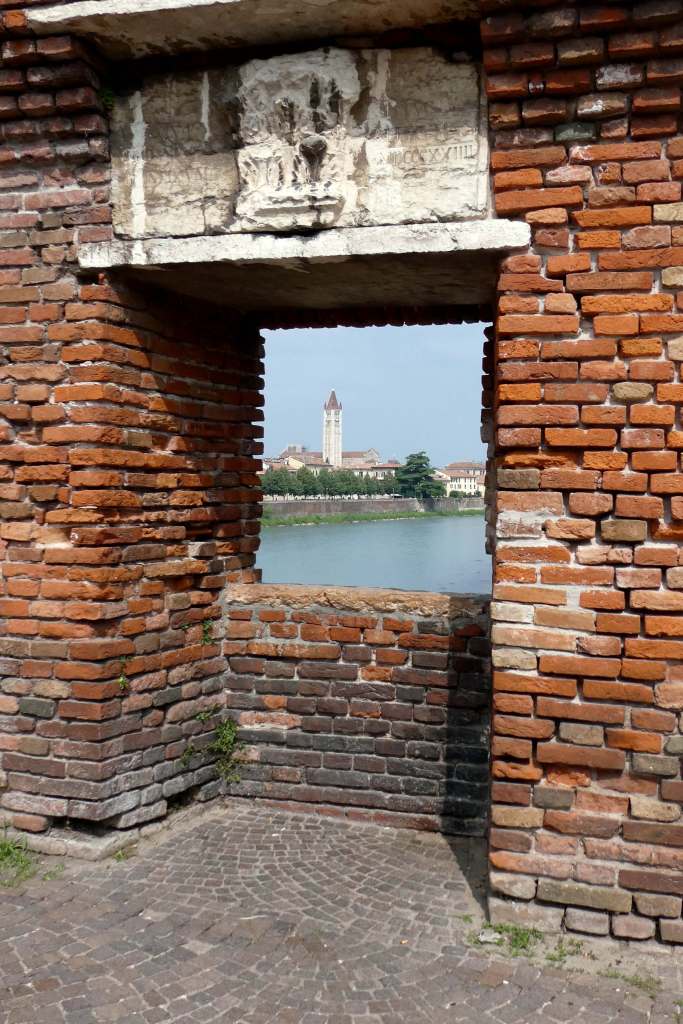
More Scaligeri family history can be found at Castelvecchio, best approached along the Adige River and across the bridge into the city proper. Castelvecchio (in Italian ‘the old castle), a red brick building with crenelated walls and square turrets was built by the ruthless Scaligeris in the 1350’s as a home and a fortress. A later ruler also used it as his residence, during his time in Verona – one Napoleon Bonaparte who had conquered most of Northern Italy in the early 1800’s.
During the 1920’s it was converted into a Museum and then in 1985, a renovation project to repair the damage done during the second world war was started by Italian architect Cala Scarpa. The result of that renovation is the splendid red brick castle one sees today the interior of which has been converted into one of the best Museums in Northern Italy.


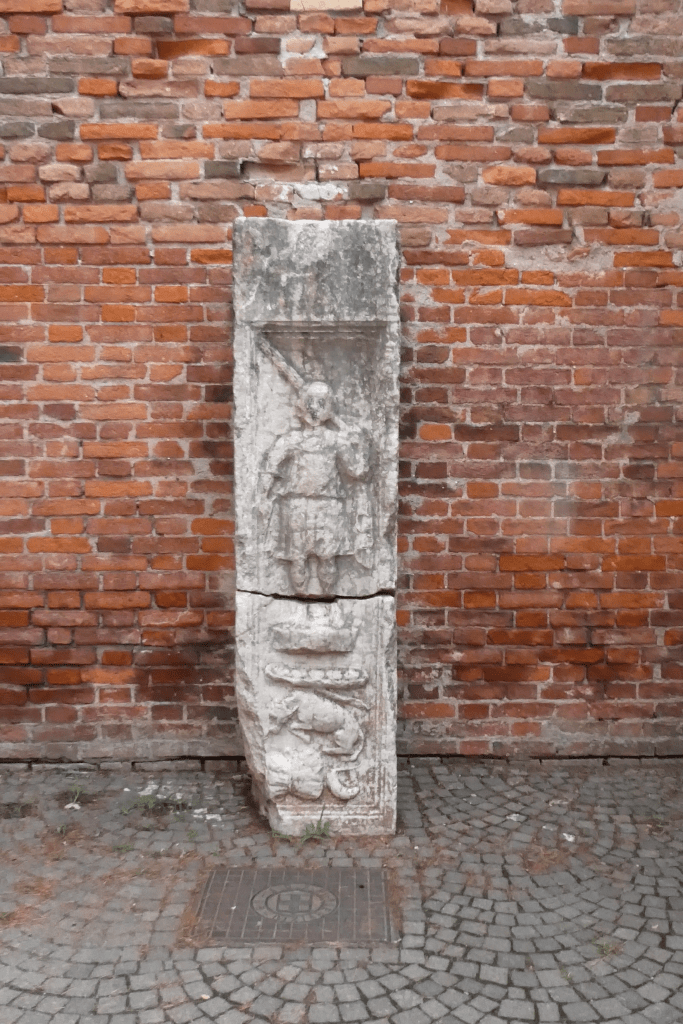
Romeo & Juliet
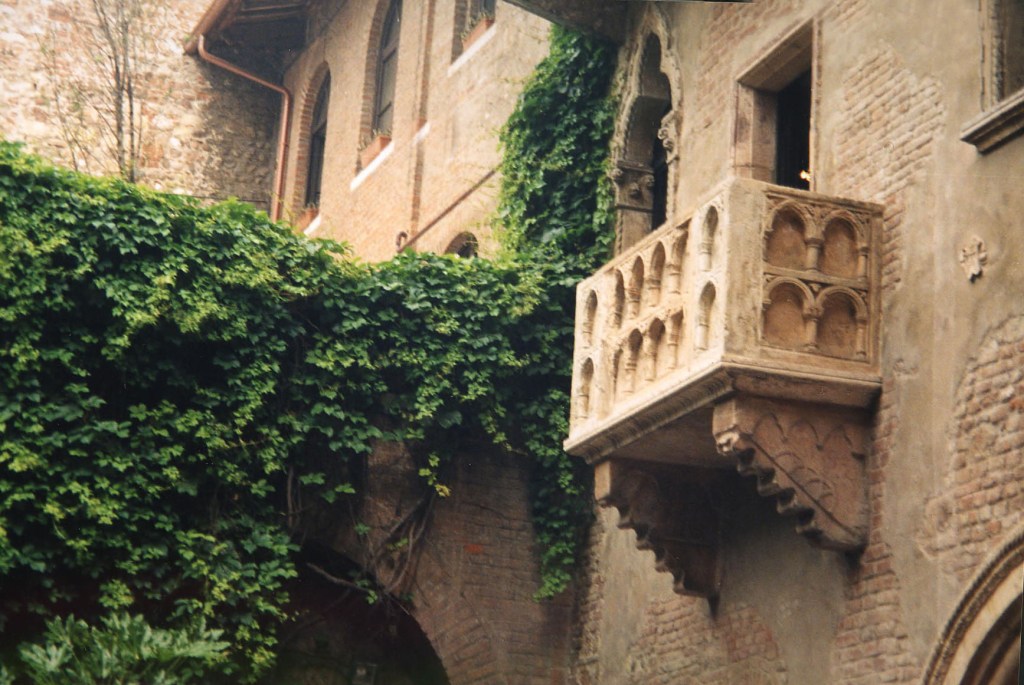
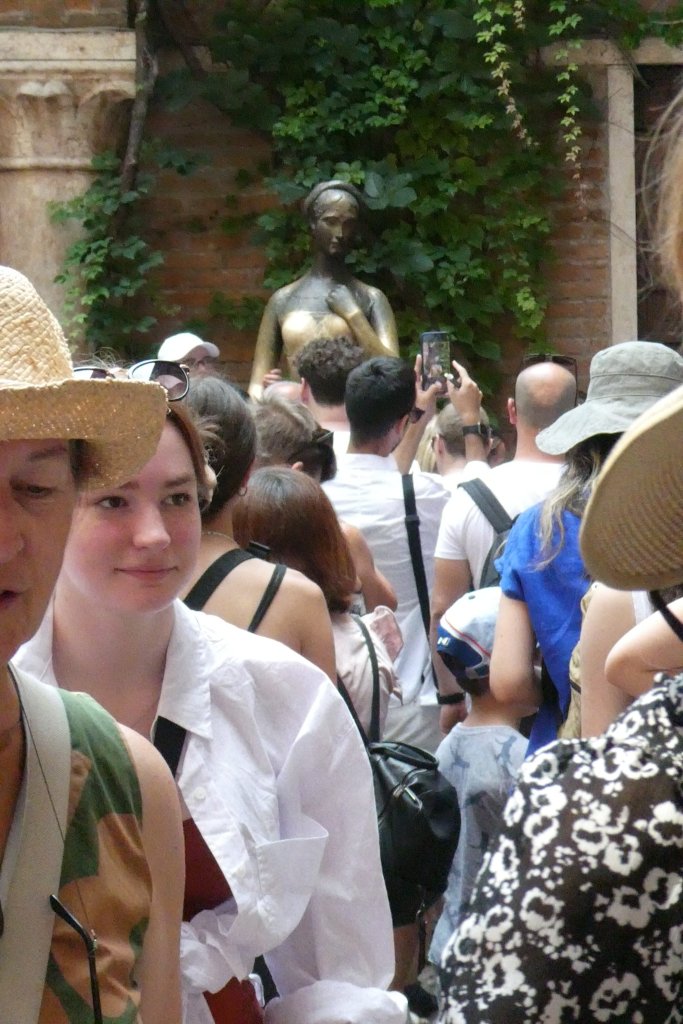
Everyone knows that Romeo & Juliet are fictitious characters dreamt up by William Shakespeare, but that doesn’t stop the crowds pouring into the courtyard of the supposed home of Juliet in Via Cappello, to touch the statue of the young heroine, and to pose on the balcony for a selfie. So many people have touched Nereo Costantini’s bronze statue that her right breast has now been burnished to gold. But even though the balcony you see today was erected only because tourists kept demanding to see the balcony, it is worth a visit even if you are in Verona for only one day. The house once belonged to the rich Veronese Dal Cappello family, and to visit the house and its courtyard gives an idea of how families lived in Verona in the 14th century.

My last visit was some 14 or so years ago, the courtyard then was almost empty, we had time to explore the house and surroundings and even read some of the letters received daily asking for advice. This time, however, the search for the ultimate selfie by the crowds queueing and surging into the small space under Juliet’s balcony was a major distraction, yet I would still return to feel the magic that the place possesses. It is but a short step away from the city’s two major Piazzas linked by its famous shopping street, Via Mazzini.
Lovers’ Locks
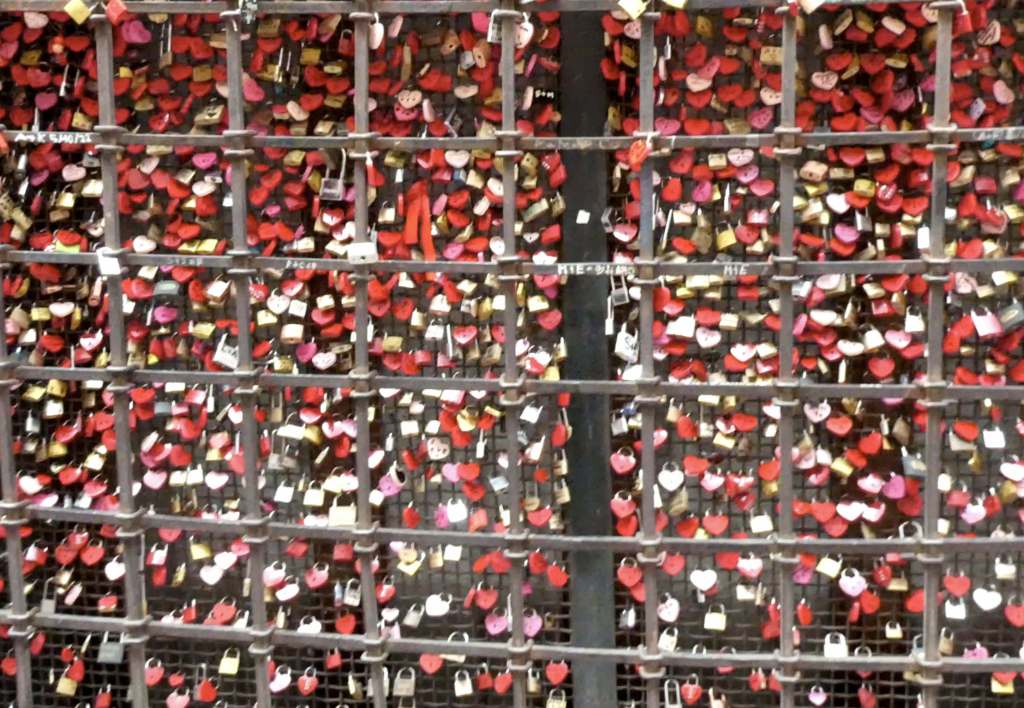
Piazza del Erbe and Piazza Bra
Piazza del Erbe, named after the spices that were once sold there, (erbe=spices in Italian), Verona’s most ancient piazza, was ‘the Forum’ during Roman times. It is now Verona’s commercial centre, a hub for shopping, café life, and people watching. Beautiful old buildings surround the Piazza in front of which lively market stalls sell food, spices and household goods, while the traders entertain the public as they have done since Roman times. It is around this area that you will find the prettiest streets and alleyways.

The Via Mazzini, a high-end shopping area where the shops all bear famous fashion names, from Chanel to Dolce & Gabbana, links Piazza del Erbe with Piazza Bra, home to the famous Amphitheatre of Verona, usually called The Arena. Elegant ladies with tiny dogs parade down this street which on Sundays can become very crowded when it is time for the passeggiata, the ritual Sunday evening parade when all Italy turns out to display la bella figura.
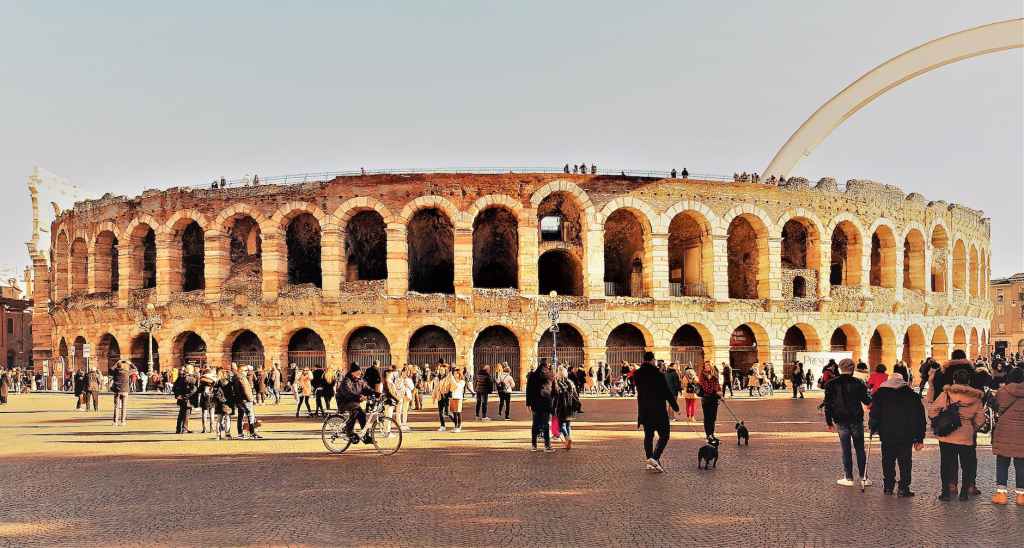
I kept the best till last. The impeccably preserved Amphitheatre in the heart of old Verona and the city’s most famous site, is deserving of that much abused word, awesome. Rows of arches and curves dominate the skyline and form a centrepiece in Piazza Bra, the city’s largest public square.
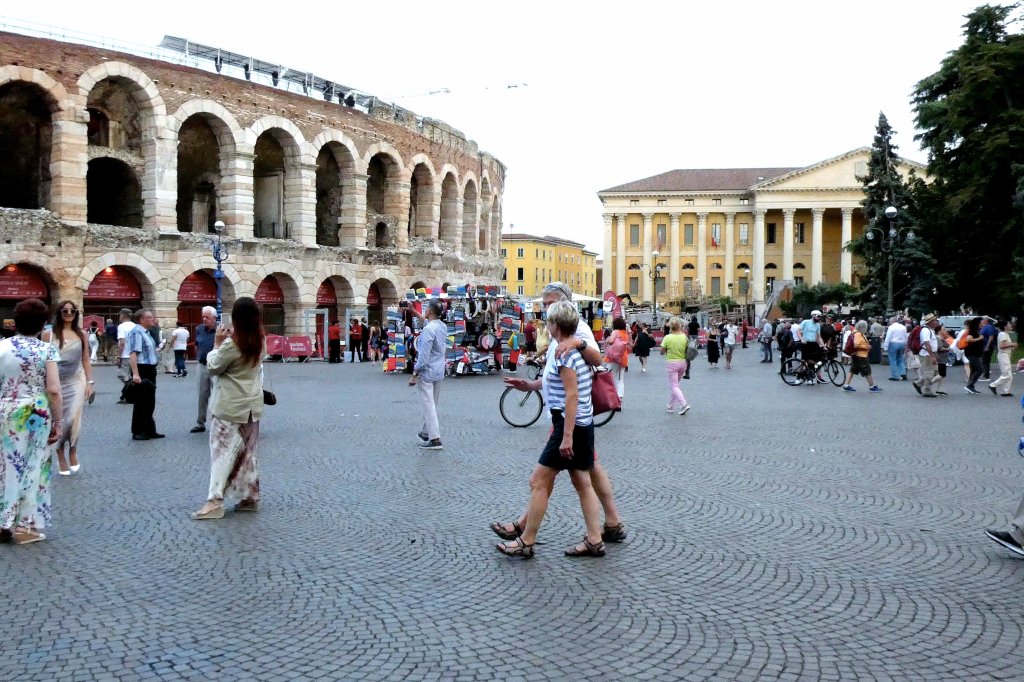
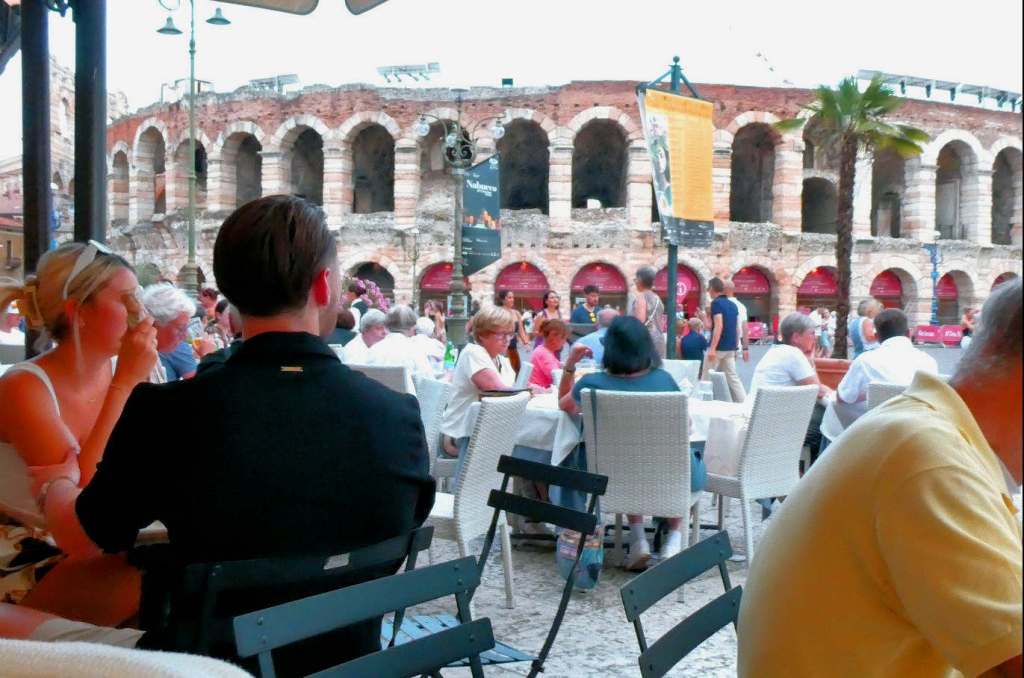
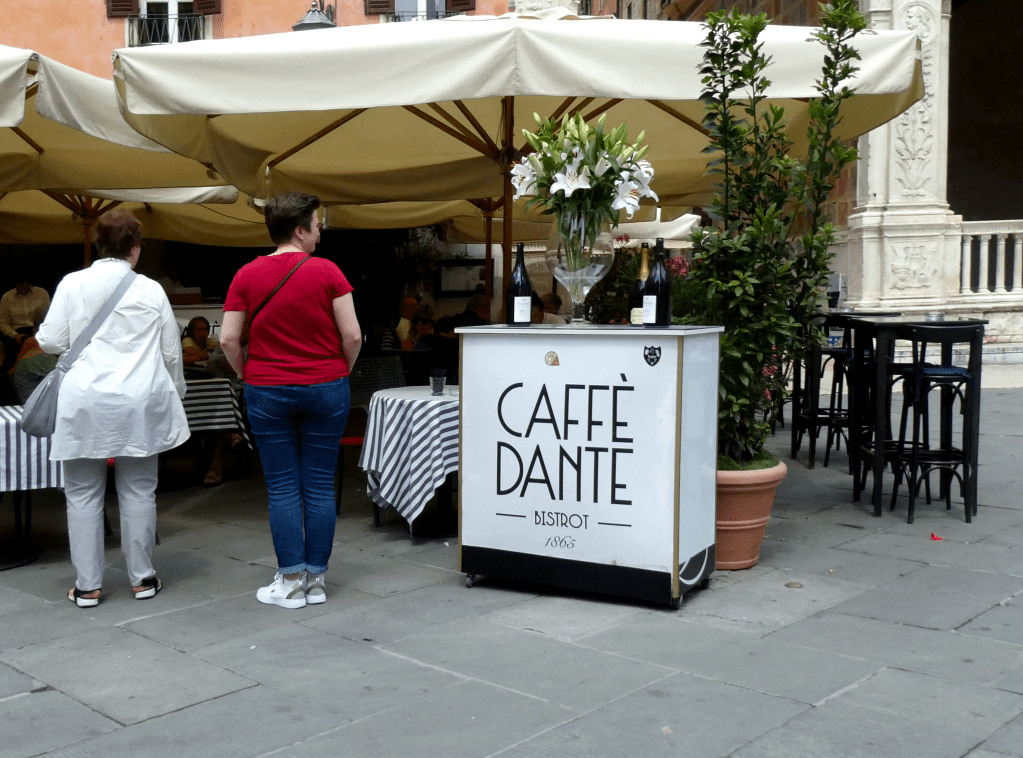
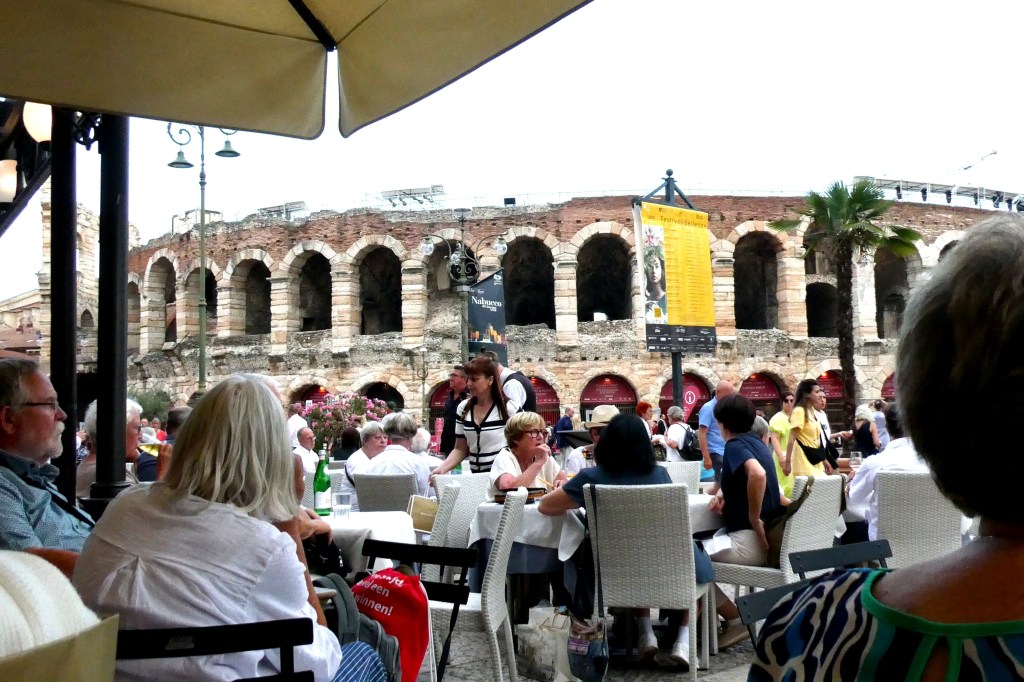
The square is lined with bustling restaurants and imposing buildings, notably the 19th century Palazzo Barbieri, a yellow building with a neoclassical façade that now serves as Verona’s Town Hall. Nearly two millennia old, the Colosseum used to hold up to 30,000 spectators at gladiatorial fights between men and men and men and beasts, who fought to the death on the sandy stage. And this glorious arena is not a dead relic of the past: it still entertains the masses although in a different way. No more are the crowds offered bread and circuses but performances of high art, most notably the world famous Verona Opera Festival which takes place every summer.


Verona is a city for all, young and old, the seeker after history & ancient cultures and lovers looking to re-kindle an old love or find a new one, opera lovers who fill the Arena night after night during the summer, and fans of William Shakespeare who watch his dramas play out under the stars. There’s a jazz festival, a festival of street games, and even a horse fair. As I said, Verona is a city for everyone.



 MARI'S TRAVELS WITH HER CAMERA