In the rush to Petra, Amman is often overlooked, but this is a pity because a day or two in Jordan’s capital reveals a wealth of historical sites, most of them dotted throughout the city, part of the daily life of the inhabitants.
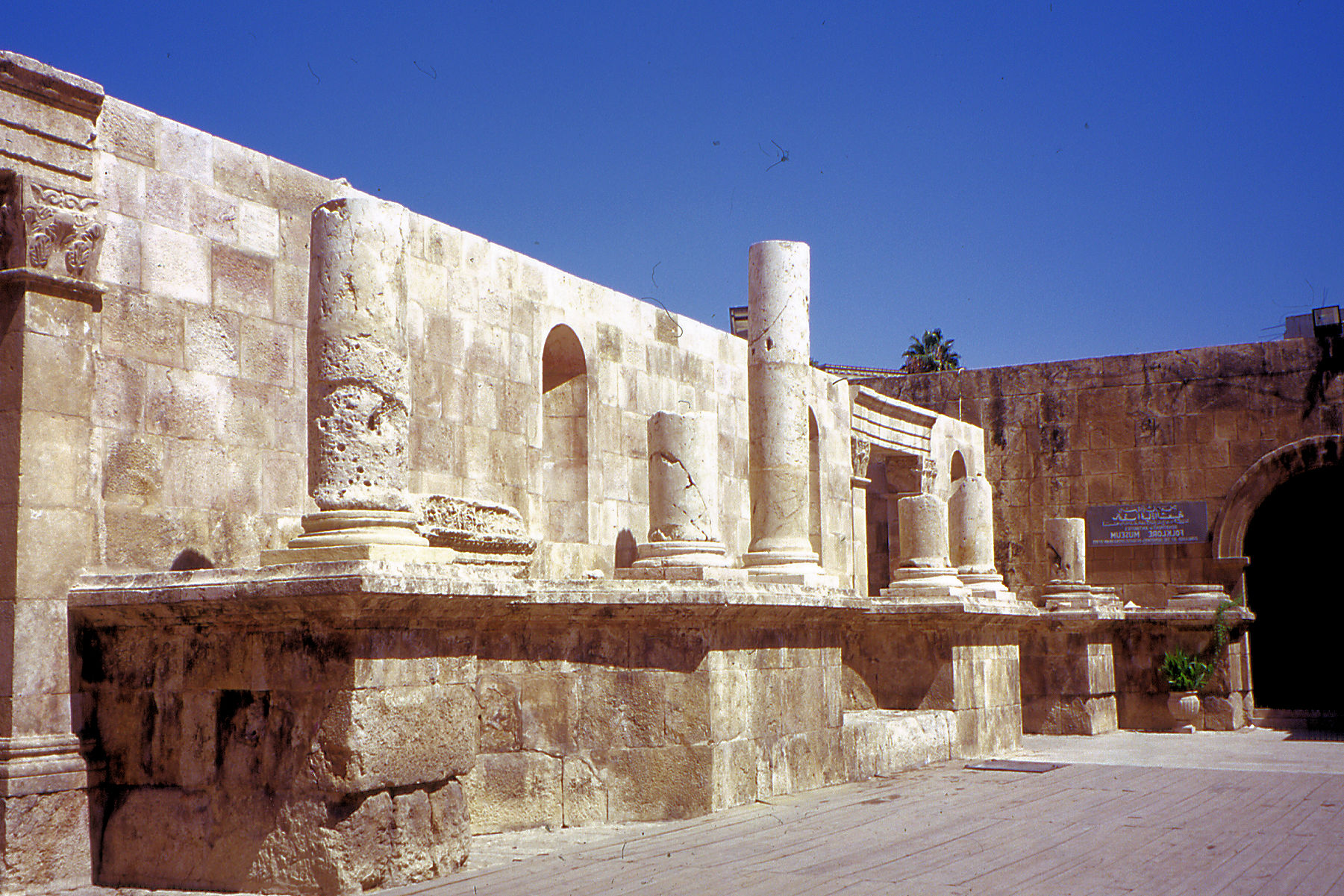
The city has a well preserved Roman Theatre, a colonnaded street and a Nymphaeum: the juxtaposition of the very ancient and the modern looks perfect. No painting in garish colours is allowed in Amman so the whole is soothing to the eye.
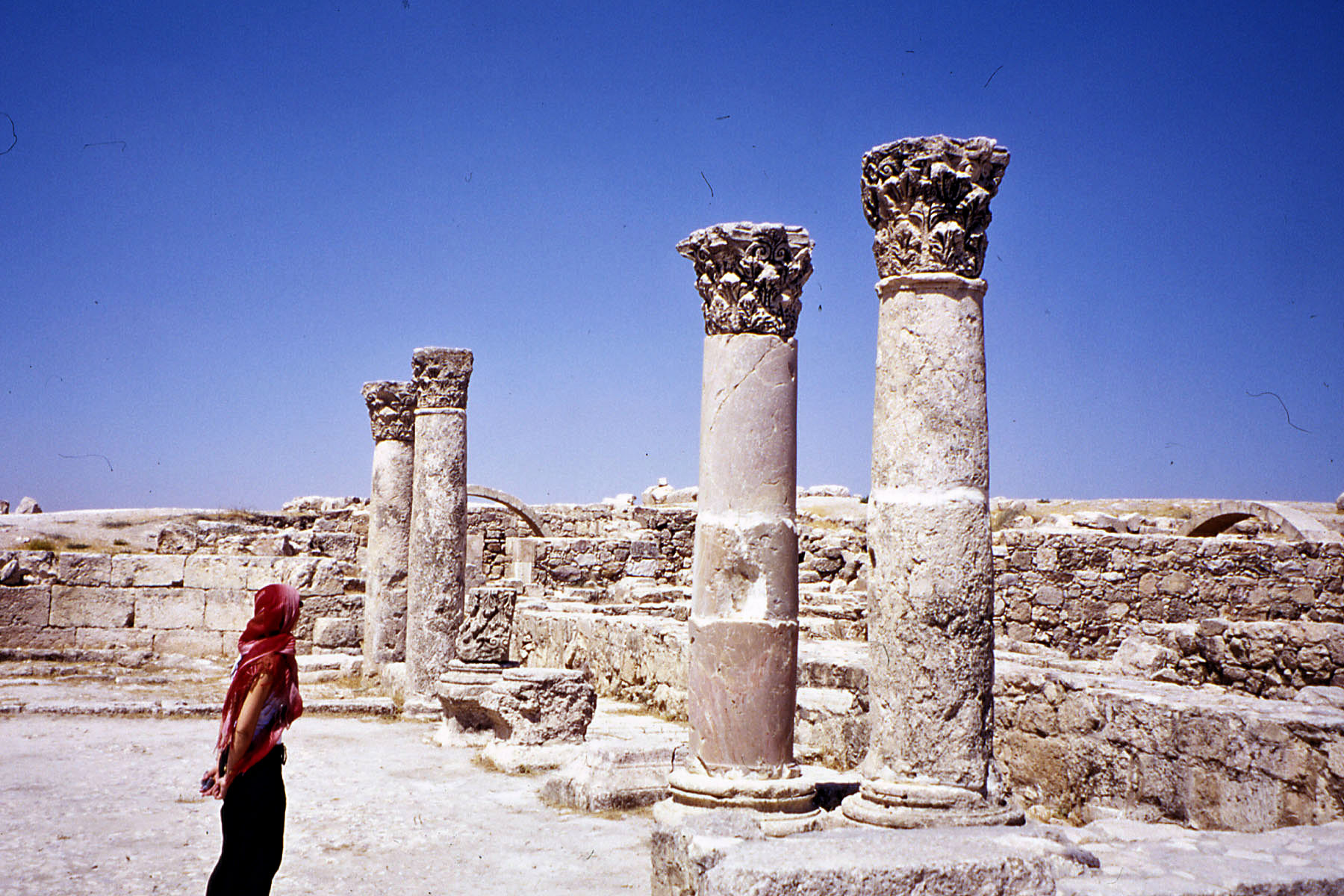
Amman is built on seven hills and you should take a taxi to the most ancient part of the city, Jabal al-Qal’a which translates as ‘Citadel Hill’. The most famous ruins here are the Roman Temple of Hercules, the Byzantine Church and the Umayyad Palace. The gigantic sandstone blocks of this Roman Temple, part of a vast complex erected in 1200 BC by the Ammonites who gave Amman its name, are being put back together by a team of international archaeologists. An extra bonus are the magnificent views across downtown Amman from the hill which is one of the highest points in the city.
The Temple of Hercules
In the nearby Archeological Museum, you’ll find the 3rd century Dead Sea Scrolls, rectangles of kidskin sewn end to end only discovered in 1947 by some Bedouin shepherds.
Downtown Amman from Citadel Hill
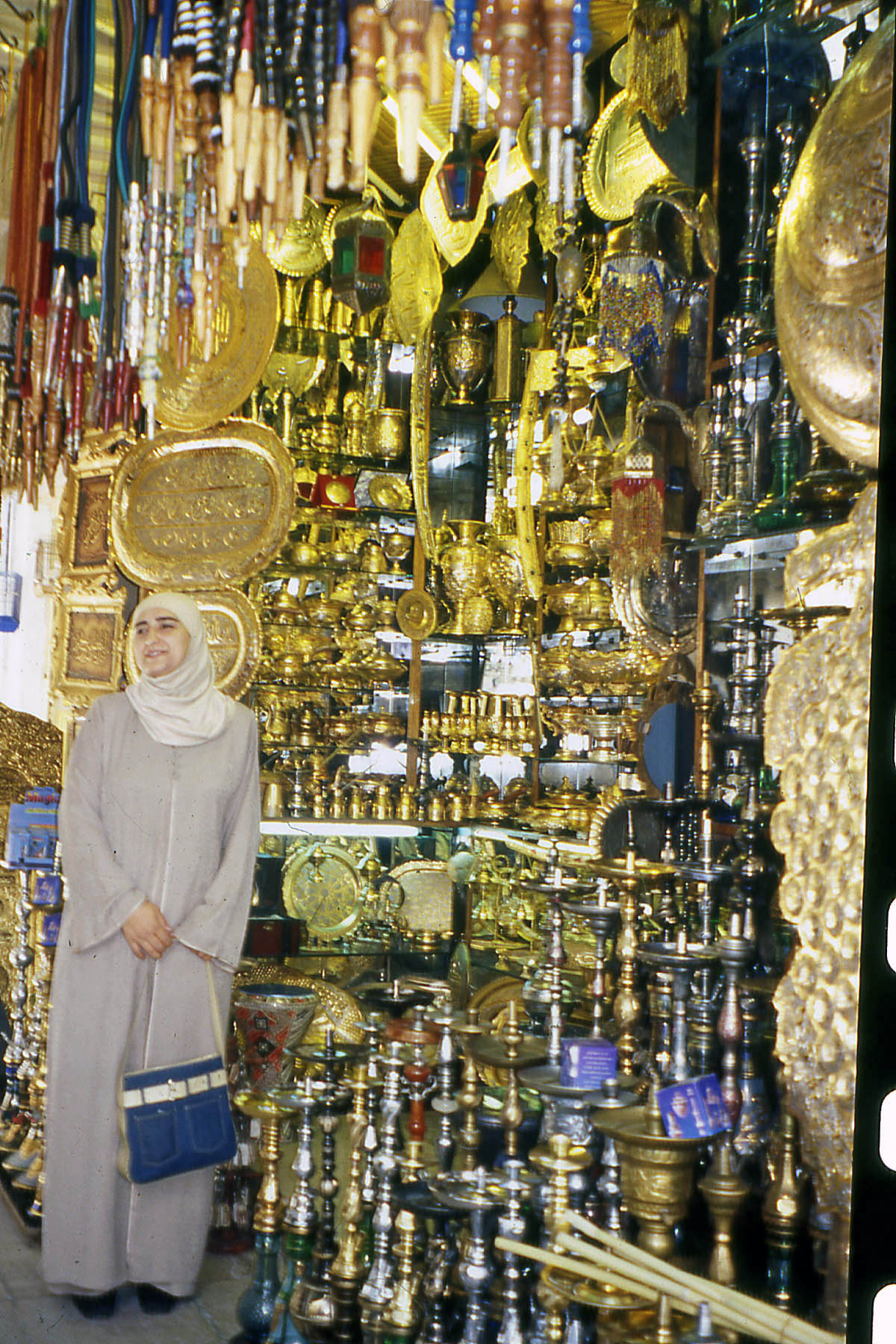
From a 3000 year old culture to modern nightlife, there’s something for everyone in Amman. You’ll find that the vendors are busier with their worry beads than with their calculators, and whether you shop in ancient souks or state of the art shopping malls, you will find no pressure on you to buy anything – a delightful change from Cairo.
What you will find is a pocket of traditional Arab hospitality and a people who want to extend the hand of friendship, for Jordan is a peace-loving nation and welcomes all visitors. Amman seems to be more of a collection of adjoining villages rather than one entity with downtown having a constant rumble of traffic, markets, and bustling people. Its highlight is the Roman Theatre where the seats are chiselled out of the mountain.
Roman Theatre viewed from Citadel Hill
And as for food, I can only say “Go try for yourself”. I never had a bad meal in two weeks in Jordan and I tried many different restaurants.
Looking through my images of Jordan I am struck by how much it offers the visitor in terms of not only historical sites, but scenery and serenity. Serenity may seem a strange word to use about any Middle Eastern country these days, but Jordan has always seemed to me to be like a peaceful house surrounded by warring neighbours.
The pink-hued cliffs of Petra will always be the absolute highlight of Jordan, but close behind comes the capital itself, Amman. Then a trip to Wadi Rum where maybe you can find time to stay overnight and sleep under the desert stars, an unforgettable experience, and a side trip to Aqaba, the Red Sea port.
Royal Jordanian Guard at The Treasury
You approach Petra through the Siq, or chasm, a winding defile hemmed in with towering red rocks that soar nearly 100 metres into the sky before it opens dramatically on to a square dominated by the pink sandstone of the façade, (used in the final scenes of the film Indiana Jones and the Last Crusades). To emerge into the light at the end of the long walk and be faced with the glory of the Treasury is something that is hard to describe.
Entry to the Treasury from the Siq
This 6th century BC world of temples, Roman theatres, monasteries and chambers carved into the red sandstone is Jordan’s best-known tourist attraction and a Unesco World Heritage Site. Here the original inhabitants, the Nabateans, set up their city-state, defending their home with ease until 106 AD when it fell to the Romans. After the Romans came the Byzantines, then the Crusaders, until by the 16th century Petra was all but lost to the west. A Swiss Explorer, Louis Burckhard, penetrated the hidden city in 1812 and the world became aware of the wondrous city that had once been the centre of a trading empire that stretched from Saudi Arabia to Damascus.
Votive Niche
Street of Tombs
Royal Tombs
Lower City near Tombs
Royal Tombs
Roman Theatre
The Treasury was built to impress and 2,000 years on it is still impressive. Protected from wind and rain, the detailing on the well preserved façade is still sharp and crisp. It is estimated that 3,000 visitors per day visit Petra during the peak season and visitors are advised to visit between 9.00–11.00 a.m. and 4.00 – 5.00 pm when there are fewer tourists and the walls of the Treasury are suffused with a reddish-pink glow. Although 3,000 may sound a lot of people, if you cannot visit between these hours Petra is large enough to hold that amount in reasonable comfort. However, if you are not on a tour, it will repay you to make a really early start in order to savour the utter peace and stillness of the area before the hordes descend from the cruise ships – 7.00 a.m. is perfect.
A whole day can be spent here, more than one if time allows because there is a lot to explore, the royal tombs, the 1st century AD Theatre, and the High Sacrificial Place which is reached by climbing 700 well-cut steps past extraordinary rock colourings. Your reward is breathtaking views over Petra from a peak 170m above Wadi Musa. No one knows for certain what took place here, whether the sacrifices were of animal or human, but evidence of some human sacrifices in surrounding towns/cities has been found.
It will be very hot, there is no shade, so carry plenty of water. For part of the way there is an option of taking a donkey ride or a carriage ride: the authorities discourage these because of the damage they do to the floor of Petra but they are available for those who need them.
It seems we can’t escape newspaper articles, radio reports and TV programmes about the border between the USA and Mexico, and all this has led me to think of my travels along that border some years ago. I wrote an article at the time for The Traveller magazine and I thought it might be interesting to use it as a Post on my Blog as when I was there the border seemed to benefit the American tourists almost as much as the Mexicans.
So, here it is.
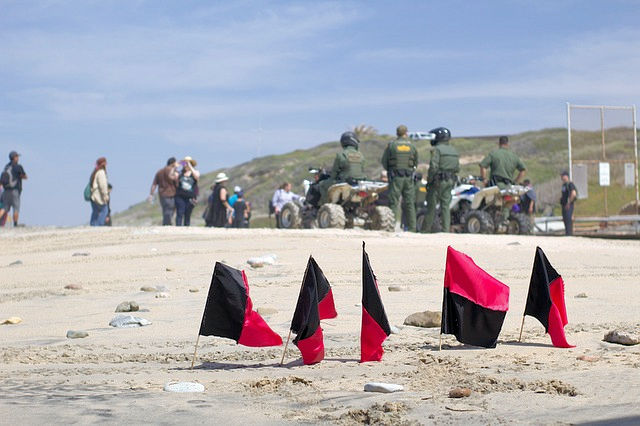
You’ll see them every evening, peering through the holes in the fence at the patrolling agents on the US side, or astride the wall, silently waiting for sundown and their chance to make that final spurt for freedom. These are the ‘chickens’ – illegal immigrants who nightly swarm across the high steel fence that snakes inland from Tijuana to San Diego. Like the old Berlin Wall, this one also has arc lights and guards equipped with night-vision cameras.
San Diego County, USA, borders Mexico for approximately 70 miles but the wall itself runs for only 14 of them. Further north, the immigrants risk a gruelling three or four day journey across tough, arid terrain, but from Tijuana to the suburbs of San Diego it is only a short run. Joselito spoke for them all. “If we don’t make it tonight, there is a chance of finding some sort of job while we wait for another day. So we stay”.
Tijuana is a tough place to live: it is noisy and dirty, the crime rate is high and drugs are easily available, but for the scores of people who arrive daily from all over Mexico, this frontier town is the gateway to new beginnings and new hopes, Many who come here to try their luck at crossing the border end up finding ways to support themselves and their families in Tijuana itself.
You will see them on the side-streets of the city: the brick-makers who squat by the streams, the farriers who tool and fashion the graceful Mexican saddles and boots, the touts who stand by the sidewalk, a damaged car door in one hand and a panel-beater in the other. Their customers are Americans who drive their cars across the border for high calibre work at one-tenth of what it would cost in California.
That’s not the only thing that attracts Americans to Tijuana. Drugs and dental treatments that are expensive in the United States are cheap and readily available in this border city. It is almost certain that the American matrons you see clutching pharmacy bags have just picked up a six-month supply of Prozac at giveaway prices, a supply of chemotherapy treatment or a mixed bag of sleeping pills and wake-up pills.
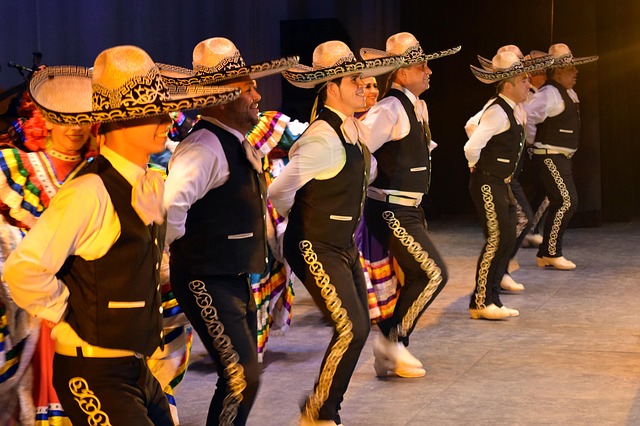
Rich and poor live in close proximity here. There are modest houses of concrete and metal alongside magnificent colonial-style mansions, interspersed with crazily leaning shacks. Plastic containers, splashed recklessly with scarlet and yellow paint and filled with scented red and pink geraniums, define the ‘garden’ space in front of these dwellings. Here and there on end walls are brilliant murals of darkly exotic flowers and oceans and skies of an impossible blue, a naive art that owes more to the capacity for gaiety and colour in the Mexican temperament than to any innate artistic talents. Even here, strolling groups of traditionally dressed Mariachi bands want to serenade you and if you have suffered six versions of Quantanamera in 30 minutes it may be prudent to know the title of one or two other Mexican songs.
Twenty years ago, Tijuana was little more than a clutch of ragged adobe houses and a few stores, a border town of such searing poverty and dirt that I was glad to leave it. Today it is a city in its own right, a city that has a future – of sorts. Above all, it has a young and vibrant population, one of the reasons why Samsung, Sanyo, General Electric, Ford and other multinationals have invested billions of dollars in the city and why they currently employ more than 100,000 workers here. The fact that there is work for thousands where before there was nothing will not halt the border crossings, but it makes the plight of the ‘chickens’ less hopeless and enables some of them to remain in their own country.
Meanwhile, the steel border, illuminated at night, adds a frisson of excitement, a charge, to life in Tijuana. And those gaunt figures that sit astride it today will be followed, inevitably, by others tomorrow.
After my earlier Post on the Greek and Roman theatres in Syracuse, I thought I’d like to show you a few of the more colourful parts of the city. I hope you’ll enjoy the photographs that follow of the transparent seas around the island, Piazza Archimede and its magnificent fountain, the food market, a few more ruins – for how could one not include them as they are part of the street furniture.
Just to recap. In the 5th century, when Dionysus reigned, Syracuse was one of the biggest and most powerful cities in the Mediterranean, embellished by gardens, fountains, palaces and temples. Plato called it “an ideal city”, one of enormous military power capable of withstanding the might of Athens and Carthage.
With your back to the sea, you can walk either straight ahead to the old town and the Duomo, or to the left through the Porto Marina and into the old town and Ortygia. Either way, strolling around Syracuse at your leisure is sheer pleasure.
This slideshow requires JavaScript.
Although the image of the fishermen mending their nets is captioned, I hope you notice the massive cruise ship in the background, the old and the new side by side, the old struggling to make a living, the new a disaster, or a dividend to a city? The jury is still out on that one in Sicily.
As you leave the ruins of the 7th-century Temple of Apollo you will find yourself in the Corso Matteotti with its 14th-century Greek palace, and from here it is a short walk to the Piazza Archimede, opened in 1878 and dedicated to the Greek mathematics and physics genius, Archimedes (287-212 BC), and one of Syracuse’s most illustrious sons.
In the centre of the Piazza is the beautiful Artemis Fountain by Giulio Moschetti (1906) dedicated to Diana the goddess of the Hunt (Diana was the Roman name of the Goddess, Artemis the Greek). Appalled by the erotic pursuit of Alpheus the river god, Arethusa had asked the Goddess Diana for help: Diana then transformed Arethusa into a fountain which emerged on the nearby island of Ortygia, the core and oldest part of the Sicilian city, where you will find the spring named after Arethusa. In the fountain, Alpheus peers from behind the goddess while the nymph is about to slip into the water below where, as the tale goes, she will blend with the stream before re-emerging in Ortygia. Charging horses, Tritons and nymphs splash in the waters of the fountain and a good hour can be spent just walking around the admiring the work.
This slideshow requires JavaScript.
If you choose to go through the Porta Marina you will find yourself surrounded by fading Baroque Villas and Palaces facing the sea and hidden in the narrow alleyways, secretive dwellings with shades of a once glorious past still clinging to them. Along this long, narrow promenade you will pass the Church of the Holy Spirit which is worth a visit if time allows (but remember you have the Duomo and Santa Lucia alle Badia to explore as well).
Despite the lack of beach facilities the area around here is popular with swimmers, and often you will see people diving off the rocks into the near transparent waters or sunbathing in what looks like dangerous places along this rocky foreshore.
This slideshow requires JavaScript.
And now, my favourite part of the city, after a day spent among the relics of the past, the food market which runs along two streets in the town. The market is full of noise and energy from the buyers and sellers of the dried fruits, the cheeses, the fish, the olives, the urns of capers of all sizes (an essential in Sicilian cooking), the many different varieties of tomatoes, the aubergines, the jewel-coloured peppers, and the huge hessian bags full of pistachios, walnuts, almonds, chestnuts, hazelnuts, cobnuts, you name it, they have it here, all fresh and all ready to use.
This slideshow requires JavaScript.
The modern part of town is less interesting to those seeking signs of the past, but it has something worth seeing in the lovely Basilica Sanctuario Madonna delle Lacrime, the Sanctuary of Our Lady of Tears, located across the street from the archaeological museum. It was originally built to house a mass-produced gypsum bas-relief of the Madonna that had miraculously wept for 3 days in 1953 in the home of a poor Siracusan family. Although often described as resembling an upside-down ice-cream cone, the building is actually meant to represent a teardrop
Inside, the building is quite spacious, and there is always a number of the faithful praying to the little Madonna who is credited with having performed several miracles, mostly of the healing the halt and lame and the curing the blind type. There is a large shop attached to the Santuario (so, what’s new?) but it does have a marvellous collection of books and postcards.
This slideshow requires JavaScript.
There is another church right by the Duomo, often missed by visitors because of the wonderful golden-coloured Duomo with its complex history which stands beside it, and this is the Santa Lucia alla Badia church which houses The Burial of Santa Lucia by Caravaggio, above the altar. Caravaggio had arrived in Messina from Malta in December 1608 where he was commissioned to paint the Burial of Santa Lucia for the church of the same name: he completed this in less than a month.
It is difficult to see this picture because the church is kept fairly dark – I presume to preserve the painting – and no photography is allowed.
Altar with Caravaggio Painting
Marble Christening Font
Street entertainers outside the church
Mosaic Floor in Foyer
Santa Lucia alla Badia
And with all the sight-seeing, don’t forget to stop occasionally for a snack at one of the many good cafes and restaurants around (very much cheaper in the modern part of the city, by the way), and make sure to have an ice-cream and that Sicilian favourite, a Granita.
My recent trip to Syracuse gave me lots of material for posts but as I have written before about this Sicilian city I thought that this time I would hone in on the Archaeological Park of Neapolis which holds Syracuse’s most important Greek and Roman remains. The Park covers approximately 240 square metres and the Greek and Roman periods are divided by a green, tranquil oasis in the midst of the ruins, called Viale Paradiso.
Between the two cultures, through the Viale Paradaiso.
The Park came into being between 1952 and 1955 with the idea of bringing together all the monuments, pillars and stones which previously had been located on various private properties and were not accessible to the public. The result has been an outstanding success.
The Roman part dates back to the 3rd century AD and the Amphitheatre (seen below) is the largest in Sicily at 140 x 190 metres, and it is recorded that the first performance of Aeschylus’ Etnean Women was performed here in 476 BC. To avoid this turning into a history lesson, I shall leave the images, with captions, to speak for themselves.
Not only was the amphitheatre used for drama: political life was played out here too, especially the assemblies in which all citizens participated.
A sleepless New Year’s Eve night led me to the BBC’s Radio 4 where the World News was describing scenes at Copacabana Beach in Rio de Janeiro. Over one million people were there, it said.
My mind flew back to my own New Year’s Eve on that beach, back in the late eighties or early nineties. We had gone down late afternoon to see the local scene, having booked our table, laid out our fancy clothes for the New Years Eve Gala Dinner and put some champagne on ice for later. We took only a few dollars with us, just enough for a coffee or two, because Rio then was a dangerous place and alcohol was flowing fairly freely. Nor did we take our cameras for the same reason. The bus drivers were all drunk and drinking as they drove, the conductors wouldn’t take money for the fare and insisted we join them in a drink, we met processions which would hold up the bus and demand a ransom from the driver who happily paid it from his takings – it was complete mayhem.
We didn’t return to the hotel until early next morning, at about 6 am, but I remember it as the most memorable and the best New Year’s Eve ever. No matter that we missed our New Year’s Eve dinner, champagne and party hats – what we had experienced was something raw and real: it was electrifying. Below is what I wrote shortly afterwards (published in both Wanderlust and The Lady). I’m sorry I have no photos to illustrate, but we didn’t carry cameras, for safety reasons.
The atmosphere was electric. Yesterday the city had felt like any other Latin city, but tonight was different. Tonight it was no longer Latin, familiar and accessible, but African and strange.
This pulsating city is home to two potent factors that combine to produce the drama that occurs on New Year’s Eve in Rio – a youth culture of music and carnival and an older one of belief in ancient Gods allied to the Catholic saints of the original Portuguese conquerors. These two cultures meet in Macumba, a powerful cult based on old beliefs and pagan rites, where the Christian saints are given attributes of the African deities brought to Brazil with the slaves. Described as the Brazilian voodoo, it’s a mistake to dismiss it lightly.
Macumba is a matriarchal religion with the officiating priests being women. They had been setting up their tents since midday ready for tonight when the five-mile stretch of beach would be converted to a canopied village of churches, counselling-chambers and sickrooms when they would be called upon to cast spells, cure sicknesses and console the sorrowful.
The priestesses were huge women dressed totally in white from their shoes to the white kerchiefs on their heads, Above the dresses, their black faces glowed in the light from the many candles. Men play a humble role in these ceremonies and tonight they were acting as servers, replenishing and lighting the huge, sweet-smelling cigars the priestesses chain-smoke in order to encourage the Gods to visit.
The beach had been filling up steadily since dusk, and now, an hour before midnight, there was standing room only. The musicians of the Samba Schools use this occasion as a dress rehearsal for the Carnival in February and the beat of the drums had been a constant throb in the air since noon. The pounding on goat skin got more insistent as the dancers from the samba schools wound their way along Copacabana Beach and the rhythm grew wilder to match the intensity in the air. From the favelas that swarmed up the mountainside, long lines of people were descending to join in the Macumba rituals.
Around me on the beach, magical powers were being invoked. Love potions were distilled, prayers said for sick relatives and friends, and secret desires were whispered in consultations with the priestesses. There were wild cries and faintings, the smell of incense mixed with that of cannabis, and wild eyes staring in the darkness at something I couldn’t see.
In the circle of brightness formed by the lights from one canopied area, a young man writhed convulsively in the grip of a strange power, the heavy beat of the drums adding to the frenzy of his movements. The heat from the burning candles, the press of bodies, the rhythmic chanting of the white-robed woman who circled the body in a spinning motion and the heady aroma of the sweet smoke from the cigars were hypnotic. The eyes of the young man glazed over as the slid to the ground in a trance. Two male acolytes picked him up and carried him to his family who sat outside the circle. They were smiling and happy as they sat waiting for him to recover. For them, the magic had worked.
A circle of light marked other petitioners whispering requests. A nod from the priestess and another votary entered. The priestess placed her hands on the woman’s head, took another cigar and began to spin around her. Round and round until the petitioner too started to move, her body circling from the waist until it seemed one half would divorce from the other. Faster and faster the priestess turned, her feet pounding the earth rhythmically, her whole body a crescendo of power.
The tempo quickened, the atmosphere became charged, bystanders became affected, fell into a trance and collapsed. One elegantly gowned and bejewelled lady, an onlooker from the hotel opposite the beach, fell crashing to the ground as a power beyond her took control and she too was reduced to a writhing, moaning bundle of Haute Couture. I felt the immense power of Macumba. I shifted nervously and kept my eyes studiously averted from the white figure, afraid of what she might do, afraid of what I might do.
Suddenly, there was a cry and a woman in the centre slumped to the ground. The priestess bent and spoke to her; she didn’t respond or move. A single wave of the hand and the helpers picked the woman up and carried her down to the sea where she was immersed in the cooling, restorative waters. The onlookers hardly took their eyes from the priestess.
The drums grew more frenzied as midnight approached but business continued unabated beside the canopied tents. Gangsters and grandmothers, transvestites and toddlers were all fervently dancing the samba. The beach was a heaving, pulsing mass of bodies moving to the same rhythm. Increasing in size were the groups by the water’s edge where the recovery of those who had succumbed to the spells went on.
And now the flower-sellers arrived, peddling their wares to the crowds on the beach, for by tradition white flowers are thrown into the waves at midnight to appease the Goddess. If the offerings are carried out to sea, then Iemanja, Goddess of the Sea, is pleased and the future will be good, but if the tide carries them back to land, then she is displeased and the coming year will be a bad one.
Friends and families had set themselves up and had staked out areas in which to lay out their food and drink, and the presents they would send Iemanja at midnight. Some were pathetically poor, some rich, but all had the same sense of what Iemanja wanted – cigars, wine, fruit and bread. Those from the favelas, the shanty-towns that crawl up the hillsides and surround the city, had less to offer – perhaps a half-smoked cheroot, a slice of papaya or a little wine in the bottom of a bottle, but this Goddess is not greedy.
There was a moment of panic when it looked as though the little boats wouldn’t sail and people rushed headlong into the sea to make an artificial tide on which they would float. Others jumped into full-sized boats which they had left ready and pushed their little gift-laden craft before them in the hope that once far enough out they would sail on. And now, as the candles flickered on the bobbing boats, thousands of white carnations came flying through the air their blossoms carpeting the sea like snow. The perfume of the flowers mixed with the smoke from the cigars was a rich and power opiate.
The drums played on until dawn. As the sun came up some little boats could be seen floating ominously back towards the shore. With that resilience that keeps the Cariocas forever optimistic they were re-launched by their owners immediately.
Later I learned there had been an estimated one million people on Copacabana Beach that night. I hope the Goddess answered some of their prayers: I hoped the magic worked.
========
Something worked for me though. A couple of hours ago I searched YouTube to see if last night’s spectacle had been caught. It had, but there was a lack, or rather, too much of something else. There were BIG screens, pounding music from electronic devices and everyone was taking selfies and jumping up and down. I know it sounds smug, but … no camera, no money, no ‘phone, no tablet, just total immersion is something otherworldly gave us something to treasure for the rest of our lives, images that are not on my phone but are burned on my mind.
It used to be the root that made people give that nudge and wink smile that relegated the Ginseng root to the realms of sexual innuendo, it’s popularity relying more on its reputation as an aphrodisiac than a health supplement. Promotions along the lines of Appeases the Thirst of Women and Activates Manly Functions kept the root firmly in the field of sexual problems.
Nowadays, however, ginseng is recognized as having qualities that stimulate all senses and it is even credited with preventing breakdowns in both health and the nervous system. These claims may sound outlandish but, to the believer, the root is the antidote to everything. Two grammes a day is the recommended dose to keep one healthy and this can be taken in many forms. However, the jury is still out on the efficacies claimed for the product.
Some buyers place great faith in the shape of the root
Geumsan, the Capital of Ginseng
Geumsan, a small town just three hours south of Seoul, is the undisputed ginseng capital of South Korea where the 10-day Ginseng Fair and Market is attended by thousands and tons of the root is sold. Here the emphasis is solely on the plant with hundreds of tons of the product on sale as well as by-products of the root – ginseng tea, chocolates, cereal bars, jam, shampoo, soap and face creams.
It can be bought bottled, dried, raw, peeled, sliced, shaved, or steamed. A big trade is also done in ginseng wine and chicken gingseng soup. The wine at 13% alcohol has the obvious effect of perking most people up very quickly, proof, to the believers, that the root is working.
Different types of Ginseng
The Ginseng Fair and Market at Geumsan, Korea
The emphasis at the fair is on health and well being and Geumsan is the place to snap up not only fresh raw ginseng but the processed products.
At the fair there is a doctor pavilion and visitors can experience traditional treatments – including acupuncture – and discuss the ginseng effect with specialists. Many oriental doctors are there to lecture on the medical effects of the root and there are special pavilions where they treat children for various childhood illnesses. South Koreans believe there is nothing that ginseng cannot cure.
The Best Ginseng
The Raw Roots of Ginseng
The best ginseng is considered to be South Korean, opinions that come from Hong Kong and China, major importers of the crop. This has a lot to do with the shape of the root which the Chinese take to resemble the human body (ginseng from other countries resembles a carrot). It is said that it is the acidic soil in Geumsan that contributes so much to the quality of the ginseng as well as the heavier than average rainfall.
The plant is quite pretty above ground
The people of Geumsan can convince you of anything – their
marketing skills are way above what anyone would expect from this
small town – but they emphasize that Ginseng should be taken over a
long period. So whether you take the root as an aphrodisiac, for its
health properties, or to cure some illness or disease, remember that
it does not have an immediate effect.
Ginseng is available in all countries from health shops and other specialist shops, but to find a variety of the root, seek out the Chinatowns of western countries where it will be found in abundance.
If life in Brighton becomes too hectic, then a few days in Steyning are guaranteed to put things back in perspective. Or so I found this week when the fine weather brought more people to Brighton than I’d anticipated and my ‘quiet’ time became distinctly unquiet, although I did enjoy some fine walks along Brighton beach and along Palace Pier.
One of the prettiest Sussex towns, the Saxon town of Steyning (its history dates back to the 8th century) has more or less everything – a meandering high street, historic buildings, good shops (including an Independent Bookshop) and magnificent countryside all around, the South Downs to be precise.
Steyning had been a trading powerhouse in the early middle ages as a river port for the downland wool trade, but the silting up of the River Adur left it up the creek, so to speak. The Black Death hit the village hard and the competition from other ports added to its economic woes, but the loss to the medieval folk of Steyning is our gain today.
The bypass has also been of benefit in this respect because, unlike many other small towns and villages in Sussex, the High Street has been spared the constant heavy traffic that makes a toll on the roads and creates noise and pollution.
Steyning is pretty well preserved, with many Tudor style half-timbered houses alongside some smart Georgian townhouses.
The preponderance of wood is especially noticeable, from the many old wooden doors to wooden fencing dividing the pavement from the road. Below are a few of the doorways that took my camera’s eye.
There is only one high-street grocery chain in the town and the many independent retailers offer an eclectic range of foodstuffs ranging from organic to exotic: the range of coffee shops/restaurants is truly amazing, many seeming to have a bakery shop as an add-on. Outstanding is the Independent Booksellers in which we whiled away a couple of hours, emerging later with bags full of wonderful books, some bought as Christmas presents. It was the sort of shop where one comes across books one just knows will suit someone, the sort one doesn’t find in the big bookstores anymore. As a consequence of the mix of old-fashioned and modern small shops, shopping in Steyning is easy paced and very enjoyable.
Steyning holds an Arts Festival every year, there is a Museum in Church Street, and in St Andrew’s Norman church in the nearby village of Bramber, where there is also an evocative ruined castle, there are some interesting carvings.
The South Downs Way passes just to the south of Steyning and climbs through the magnificent countryside around the Steyning Bowl, making this a perfect area for walking and cycling. Wonderful country pubs abound in this area.
It has now become my favourite place outside Brighton.
From the natural terrace built around the ruins of a Norman castle, you have a spectacular view of the Ionian coast, majestic Etna, Taormina, the Bay of Giardini-Naxos, the straits of Messina, and the Calabrian coast: on a clear day you can even see way beyond Catania, as far as Syracuse. You are nearly 2,000 feet above sea level, you are in Castelmola in Sicily.
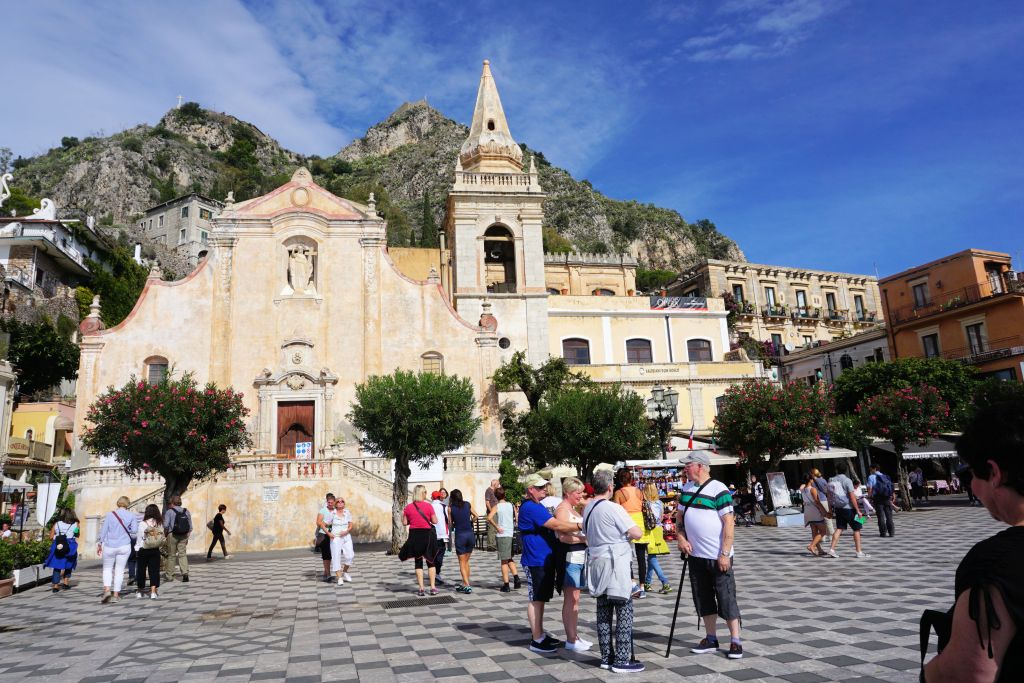
Part of the attraction of Castelmola is gazing up at it from Taormina (as in the featured photo taken from the main square in Taormina, and above from another part of the town) and wondering how on earth you can get up there. It looks like the top of the world, this tiny village perched on a craggy hilltop above Taormina. Not so long ago the village was inaccessible, visited only by a few intrepid travellers who hiked up the seriously uphill mountain paths for about 90 minutes, or drove up the curving, almost perpendicular road, to the top. Nowadays a bus makes the 15-minute journey every hour from Taormina and things are changing, although slowly.
The result of this remoteness is that the people of the village have kept their dialect, their customs and their lives entirely to themselves.
Founded in the 8th century BC it was first conquered by the Greeks and afterwards by Saracens and its interesting mix of customs and traditions reflect this history. The entrance to the village is marked by an ancient arch of Greek-Roman origin, built in 900 BC, and this dominates the Piazza S. Antonino, the main square of the village. In earlier times the entry was through a gate carved into the rock which was moved to the front of the castle in 1927.
This relatively modern Piazza Sant’Antonio, built in 1954, is one of the main squares of the town and attracts the local elders who like to sit on the benches in the square to watch the village activity and the arrival and departure of the buses. From this Piazza of white and black lava stone, bordered by a white balustrade and tree-lined sidewalks, there is a panoramic view of Taormina, its town, beaches and islands.
From the Piazza, roads lead off to other parts of the village, every corner offering more spectacular views whether it’s over the velvety green mountains with their trails delineated as though someone had poured them in swirling patterns on the slopes or the craggy peaks of the barren side. The street names, numbers and signs are locally crafted in stone and wrought iron, and the pastel-coloured houses range from palest primrose to sky blues and apple greens. In fact, it is a typical Sicilian village, better preserved than most, as it has not lost all its inhabitants as have most of those in the interior of the island.
That said, a fair number of the inhabitants depart in the winter for the slightly warmer temperature along the coast but during the rest of the year, they man the restaurants, bars and lace and embroidery shops for which the village is famed.
One of the most famous and most eccentric attractions is the Turrisi Bar which has a bizarre display of phalluses in wood, clay and ceramic – a sign of abundance and a good omen as per the Hellenic tradition – in every size, from large stone sculptures to bathroom taps, paintings and wooden carvings. This ancient emblem of fertility is celebrated here in flamboyant style, and among the gifts available from the shop is the locally produced almond wine in phallic-shaped bottles, referred to, of course, as the “elixir of love”.
As so often in Sicily one passes from the profane to the sacred in the blink of an eye and in just a few steps you arrive at the Cathedral which dates back to the 16th century (rebuilt in 1935), known otherwise as the Church of St. Nicholas of Bari, in the Piazza Duomo. There isn’t a lot to hold your attention here but it has a rather beautiful pulpit and a wooden statue of Mary Magdalene which, I am told, is of the school of Bagnasco. I confess I had no knowledge of this sculptor but I found a reference to one Rosario Bagnasco who worked mainly in wood, and who was active mainly in Palermo, so I presume it is his work. Before you leave, look to the beautiful bell tower which offers a wonderful frame for a photograph of Mount Etna in the distance behind it.
So if you find yourself with a day, or even a half day to spare when you are in Taormina, or if you want to see one of Sicily’s loveliest medieval villages, then be sure to visit Castelmola where you will find narrow streets and quiet solitude in a community of just over one thousand residents. In fact, if you visit out of season and find your way up the mountain to Castelmola you may feel that you have the entire town to yourself.
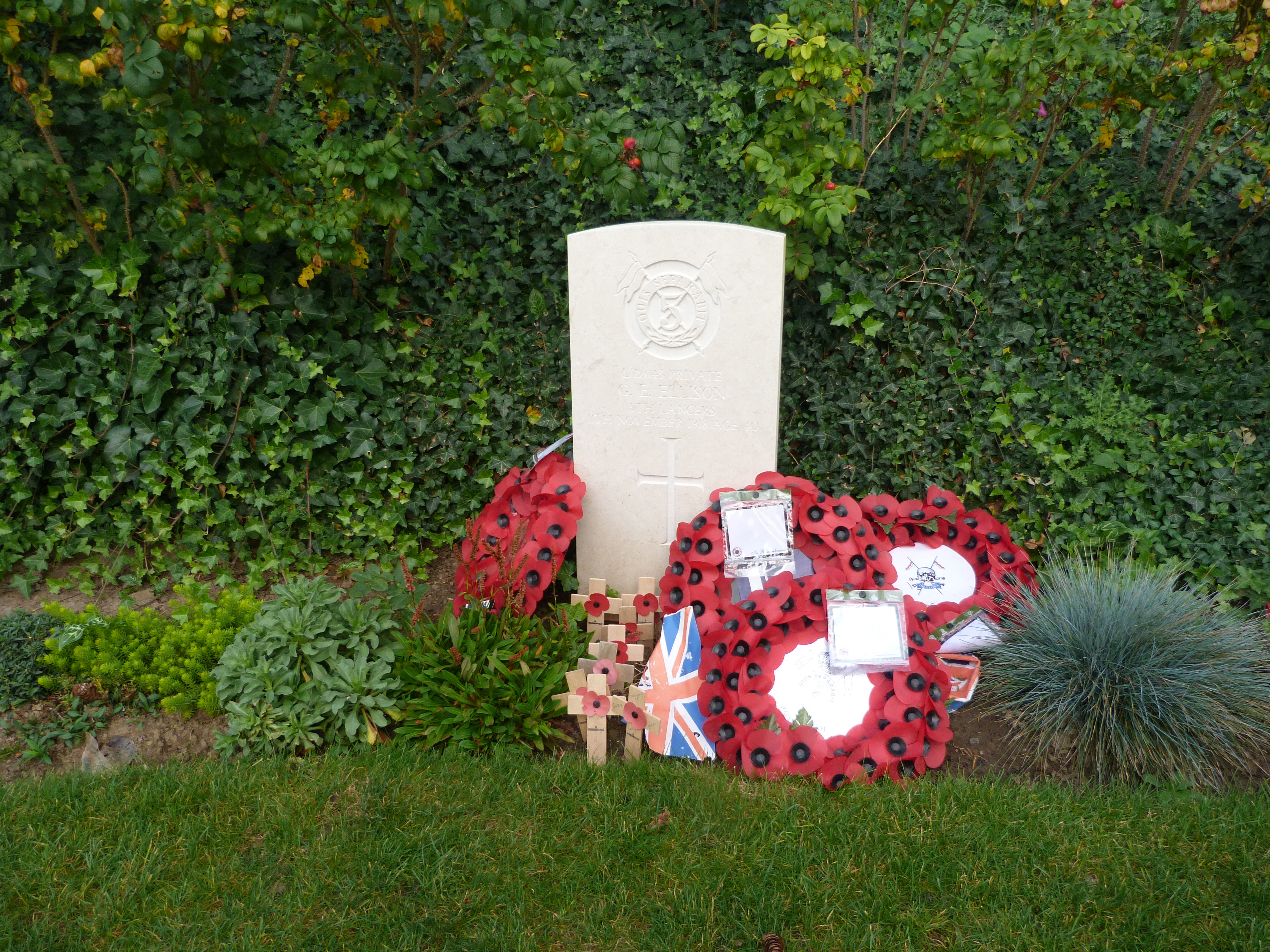
I read in the news that Theresa May, Prime Minister of Great Britain, is to travel to France to lay a wreath on the graves of two young British soldiers who were killed during World War 1. One of them was the first man to die in that ‘war to end all wars’ and the other was the last man to die. It reminded me that I had visited Saint-Symphorien cemetery where they are buried, a couple of years ago and I thought I would re-post my original piece but to my surprise either I hadn’t posted anything about that particular battlefield or I had somehow deleted it.
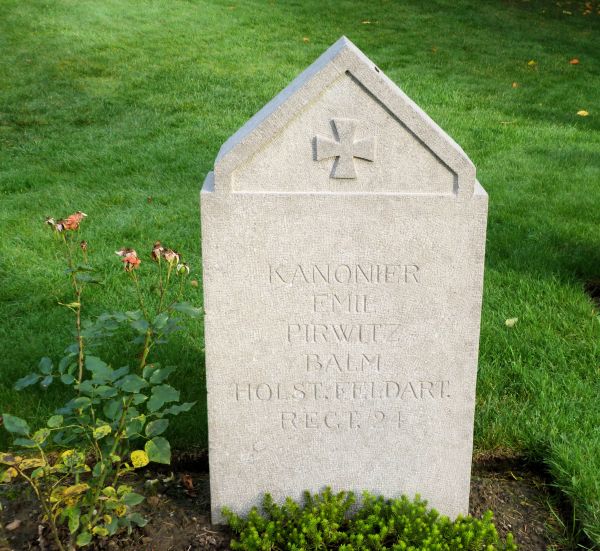
However, it is still in my mind now so I thought I would just put up a few photographs of the cemetery because it is so different from all the others in France, being in woodland, and having a more peaceful appearance. It is also the only cemetery, I believe, in which both British and German soldiers are buried together. My visit to Ypres last year was very different. There massive cemeteries like Tyne Cot just filled one with a deep, deep sadness as the ranks upon ranks of white gravestones spreading across the fields could not but remind one of the carnage of that war.
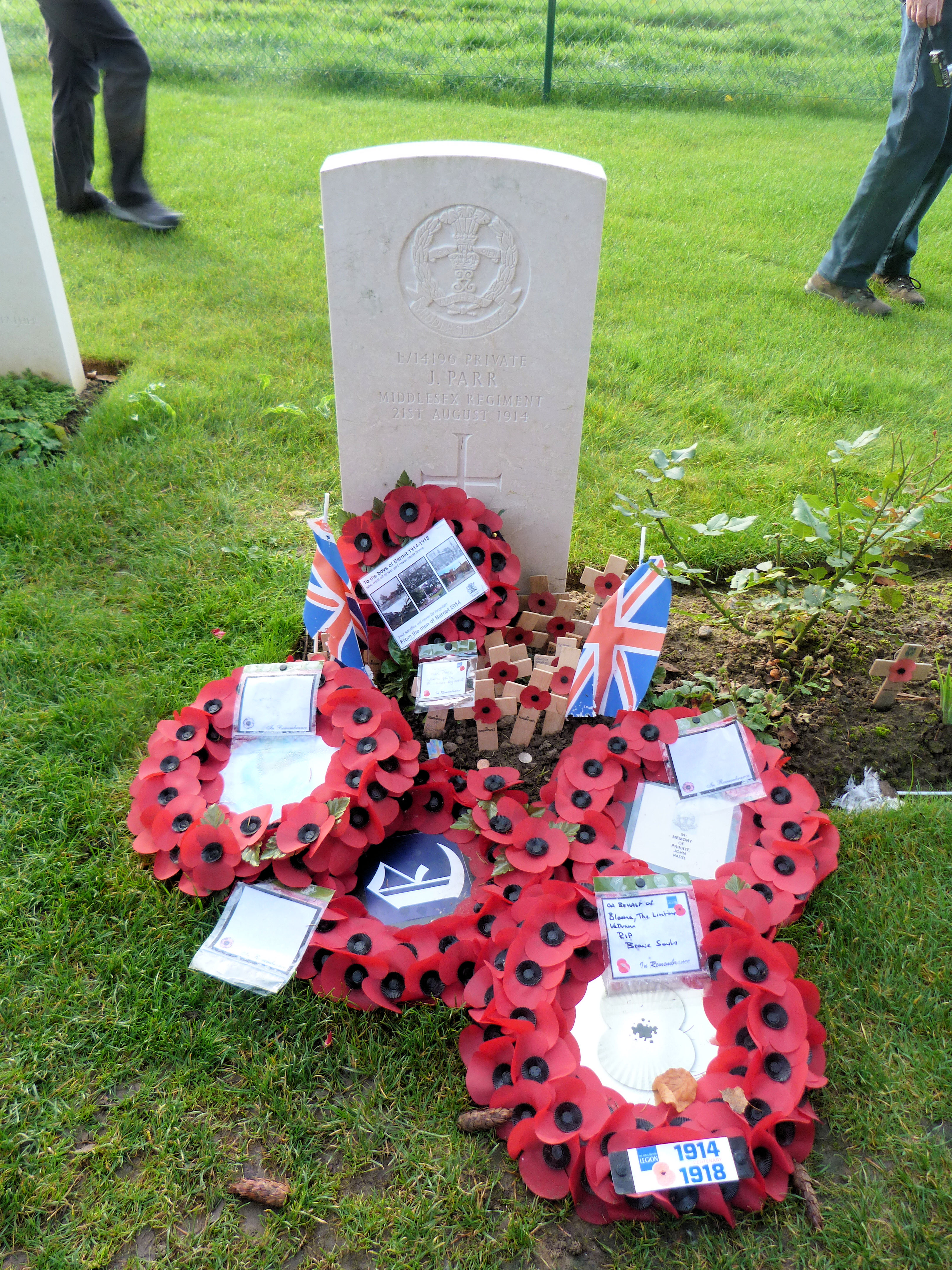
First though, the gravestone of the young James Parr of the Middlesex Regiment who was the first man to die, on the 21st August 1914.
And the gravestone of Private George Edwin Ellison of the 5th Royal Irish Lancers who was killed on the outskirts of Mons at 9.30 a.m. just 90 minutes before the Armistice came into force.
The cemetery:
A German Grave in Saint-Symphorien Cemetery, near Mons
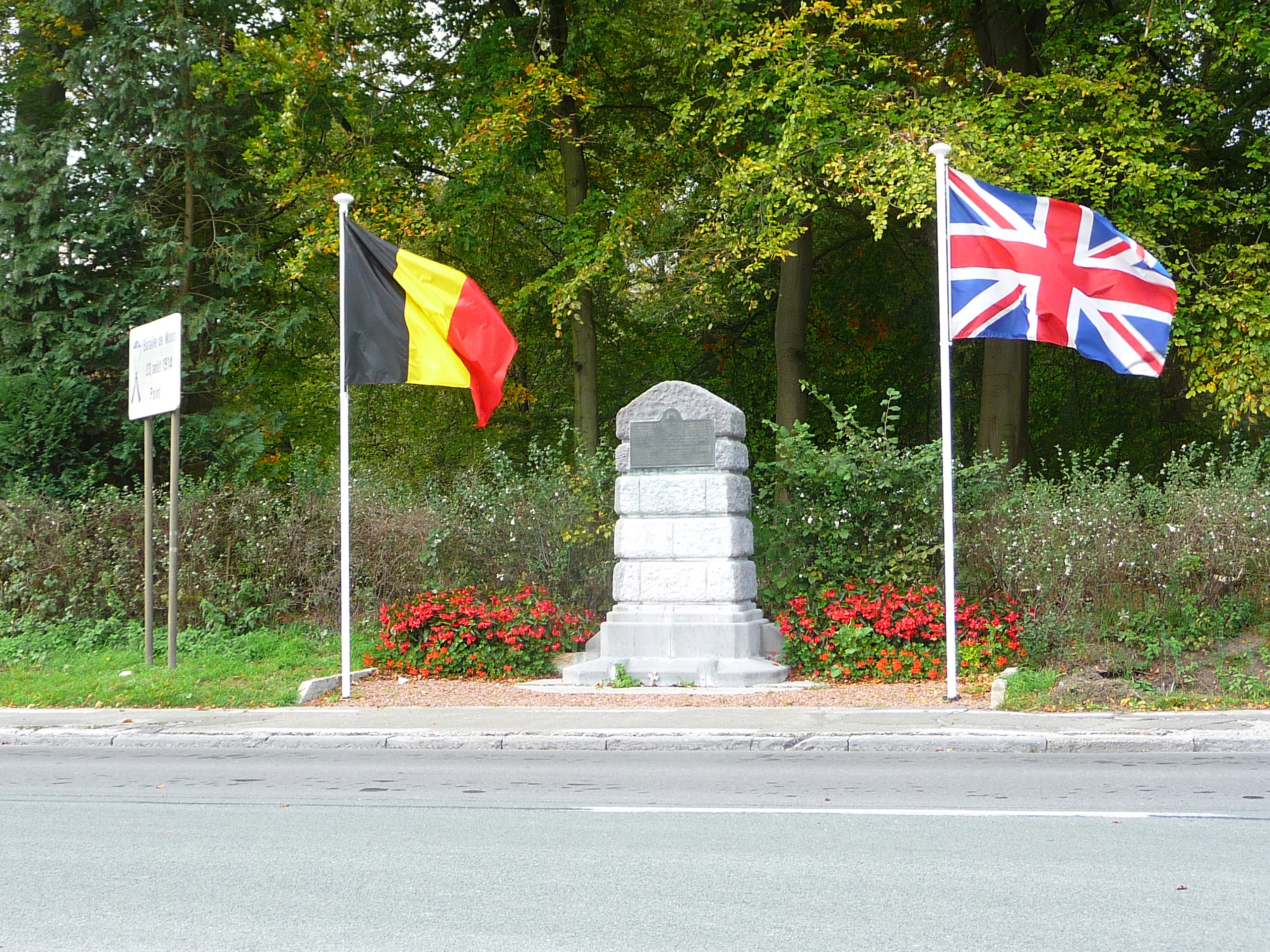
And just to finish on, not far from here is the spot where the first shot was fired in that war.
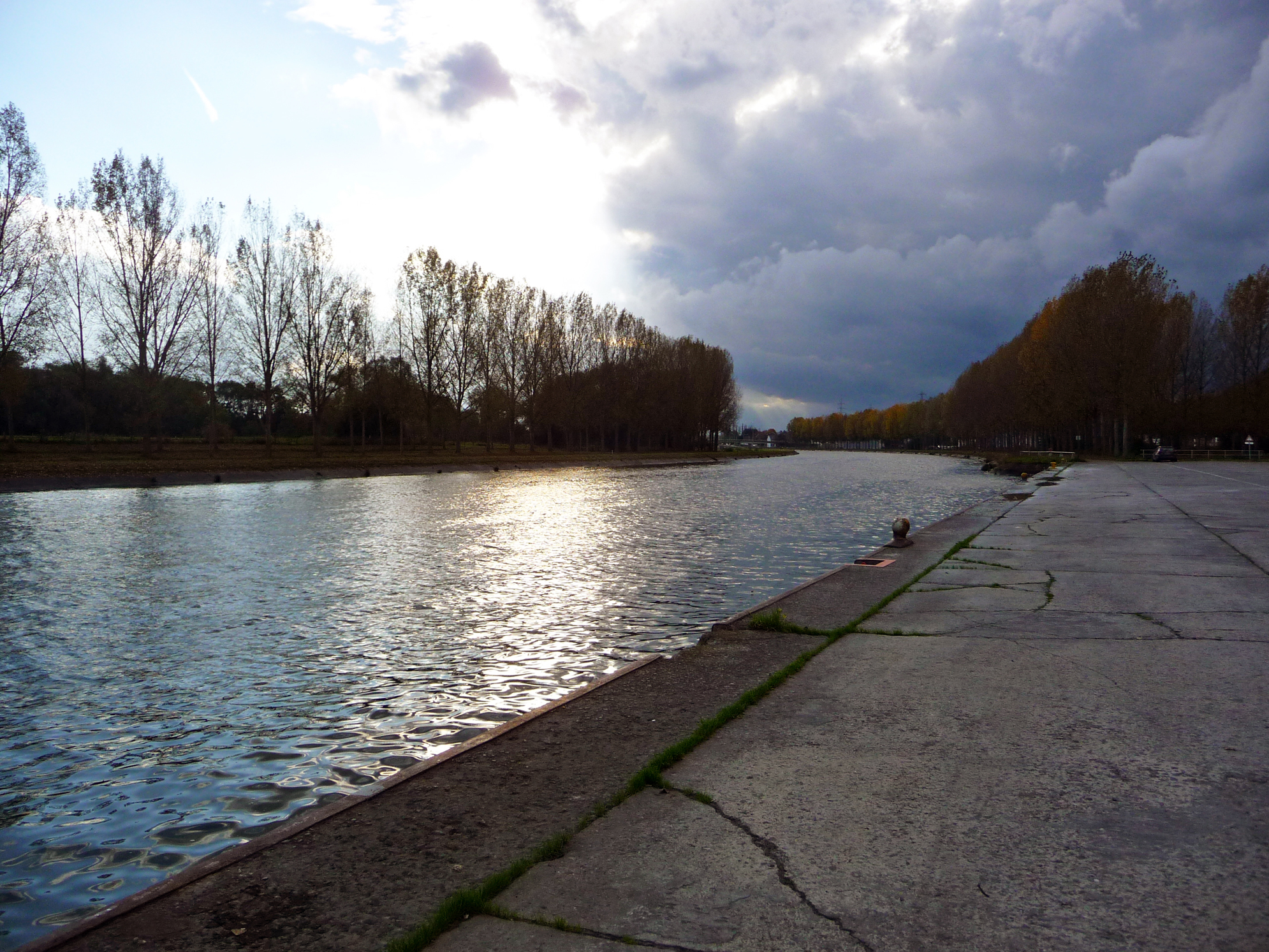
And the steely grey canal over which many battles were fought in this area.









 Before you leave, look to the beautiful bell tower which offers a wonderful frame for a photograph of Mount Etna in the distance behind it.




 MARI'S TRAVELS WITH HER CAMERA