On the principal that anything banned by a puritan like Oliver Cromwell has to be good, I should like Christmas Pudding: however, I find today’s offerings a bit too sweet and rich. When my mother was alive and cooked one for each member of the family (starting it in February and giving it time to mature instead of following tradition and making it on the Sunday before Advent) I used to love it, especially fried in butter on Christmas morning. I’m a lazy cook however and as I don’t like the store-bought versions, I usually serve something like a Pavlova for Christmas dessert.
Image by Linda Tacey from Pixabay
I once had the idea of cooking a Christmas pudding by usng the original receipe but I gave up on that as a) finding the origins of the pudding wasn’t easy and b) when I delved deeper it sounded revolting. It seems that at the end of the winter solstice (or towards the time of the pagan festival which had been co-opted into the Christian festival of Christmas) all the good things from the recent harvest were poured into a huge cauldron and boiled up, things like hulled wheat, milk, apples, spices, honey and whatever was left in the barns and the larders. The resulting concoction was called a porridge.
Image by Karen from Pixabay
The story has it that every member of the household had to stir the pudding to ensure good health in the coming year but I like to think that as stirring this enormous cauldron wasn’t easy for the cook of the house (always the woman) the ritual of everyone in the household from the youngest to the oldest, including servants, being required to stir the pot, was devised by her to reduce the work. This tradition is still adhered to in families where the pudding is still made – it certainly was in mine.
Image from OpenClipartVectors from Pixabay
Over the centuries the mixture was improved by the addition of dried fruits, meat and alcoholic spirits, although I would argue that meat may not necessarily have improved it. When the Elizabethans added prunes (dried plums) it became plum porridge but no one can say for certain when plum porridge became plum pudding. It may well have been when meat was dropped from the recipe in the late 18th/early 19th century.
Image by Gerd Altman from Pixabay
In its early incarnation it was boiled in a cloth dusted with flour which gave the pudding the traditional round ball shape, so familiar from Christmas card illustrations and Dickensian prints. Although my mother never baked one in a floured cloth, she always wrapped the pudding basin in a cloth which was loosely tied at the top to allow the pudding to rise and for the top to take on a round shape. Silver sixpences were always included in the pudding as a symbol of future wealth for the family, but we children were delighted with the ones we got in the here and now.
Charles Dickens immortalised it in A Christmas Carol the performance of which is now an essential part of Christmas: Queen Victoria and Prince Albert are said to have loved it: and along with Christmas cards, Christmas trees, tinsel and turkey, I think we can say that the Christmas pudding as part of the Christmas festivities, is here to stay.
For years now I’ve been totally in love with the region of Emilio-Romagna in Italy, mostly, I admit, because of its food, but my first flirtation with the area came when I visited Cesenatico. It was here that I discovered that the canal that runs through the centre of the town, was designed by Leonardo da Vinci and I was immediately charmed. That the genius who produced so much art could also put his mind to something so mundane, seemed so wonderful. Is there nothing he didn’t design? How had it escaped me?
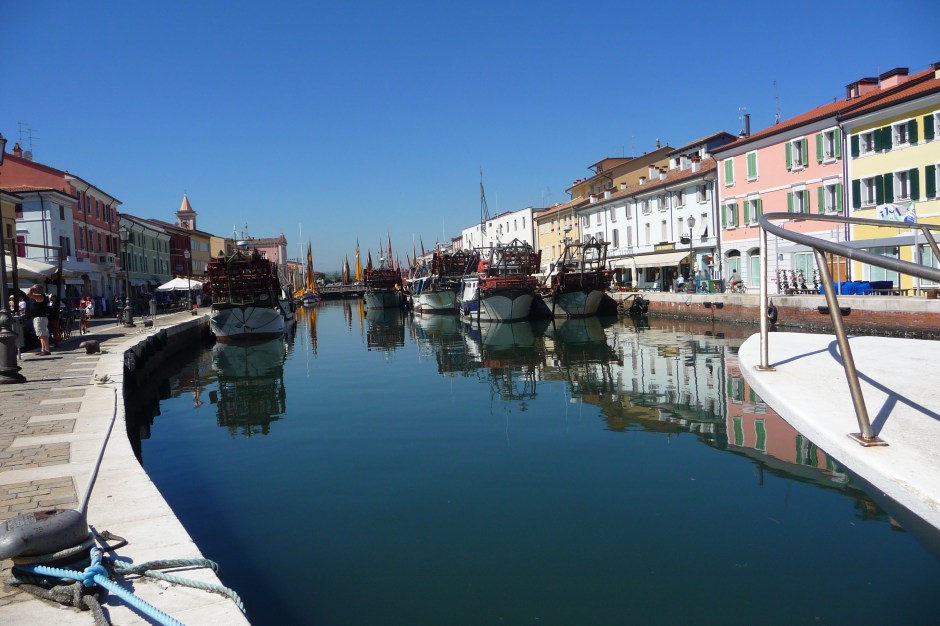
Canal and Port
Cesenatico has been a popular seaside resort for Italian visitors since the early 20th century, but it wasn’t until the end of the Second World War when people began to seek pleasure in sandy beaches and sun that its tourist trade really took off : Cesenatico’s beaches stretch for over five kilometres. More recently, the town has seen an influx of visitors attracted by the beaches and shallow waters of the Adriatic, the bars, bistros, elegant shops and gelateria that line the canalside, and the near perfect weather.
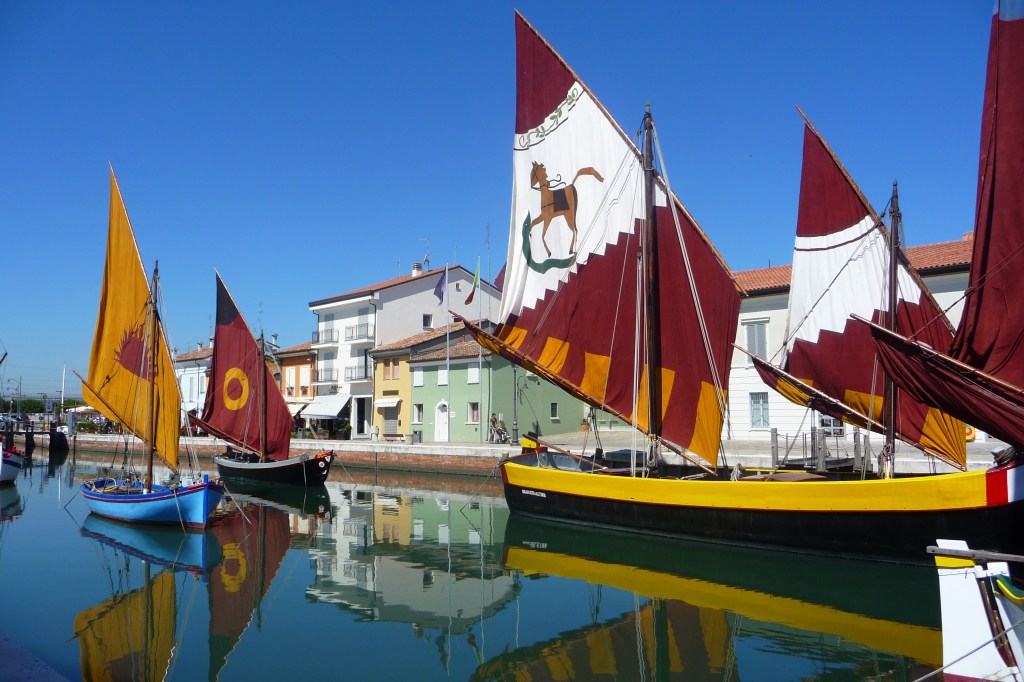
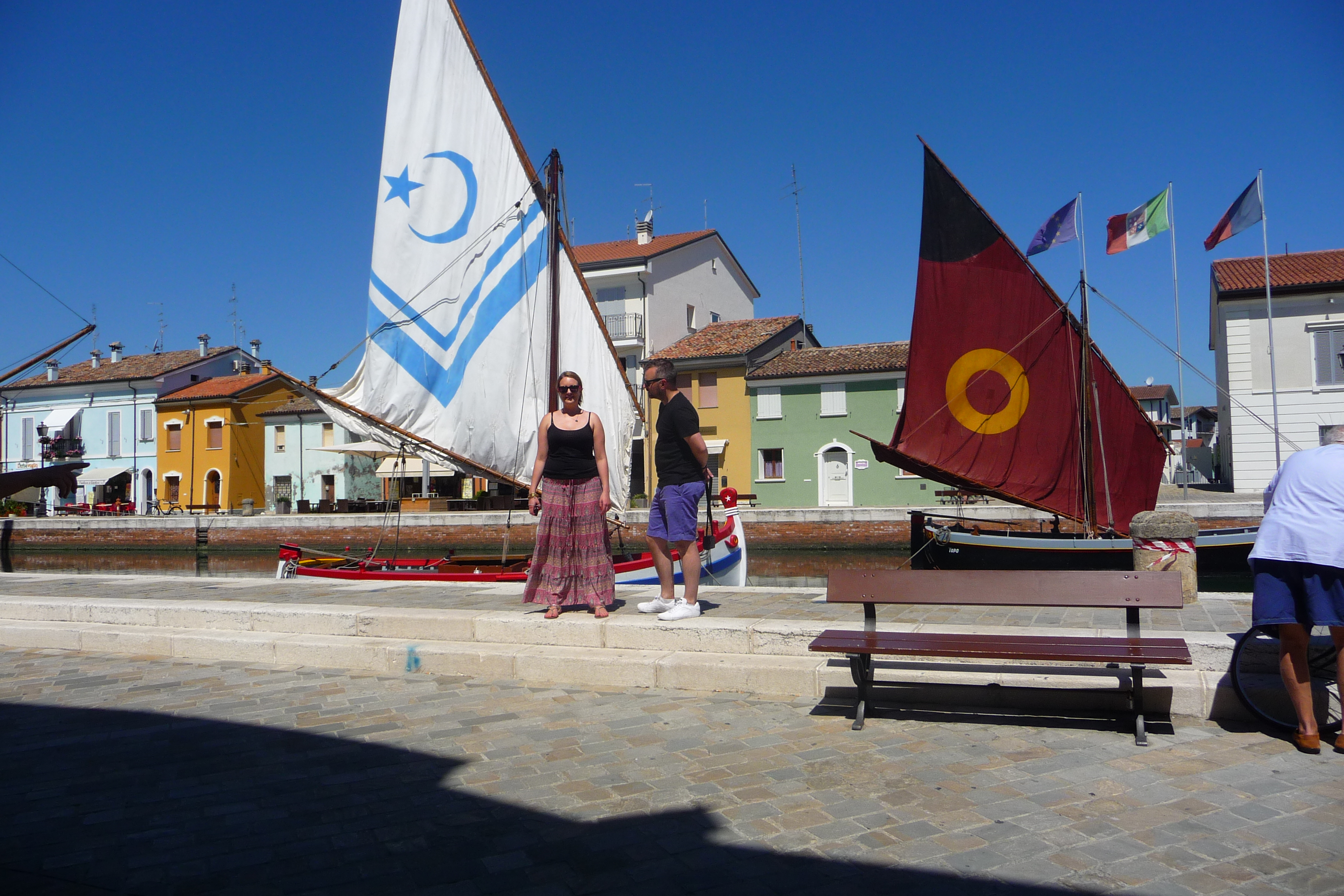
Outdoor Museum of Boats on the Canal
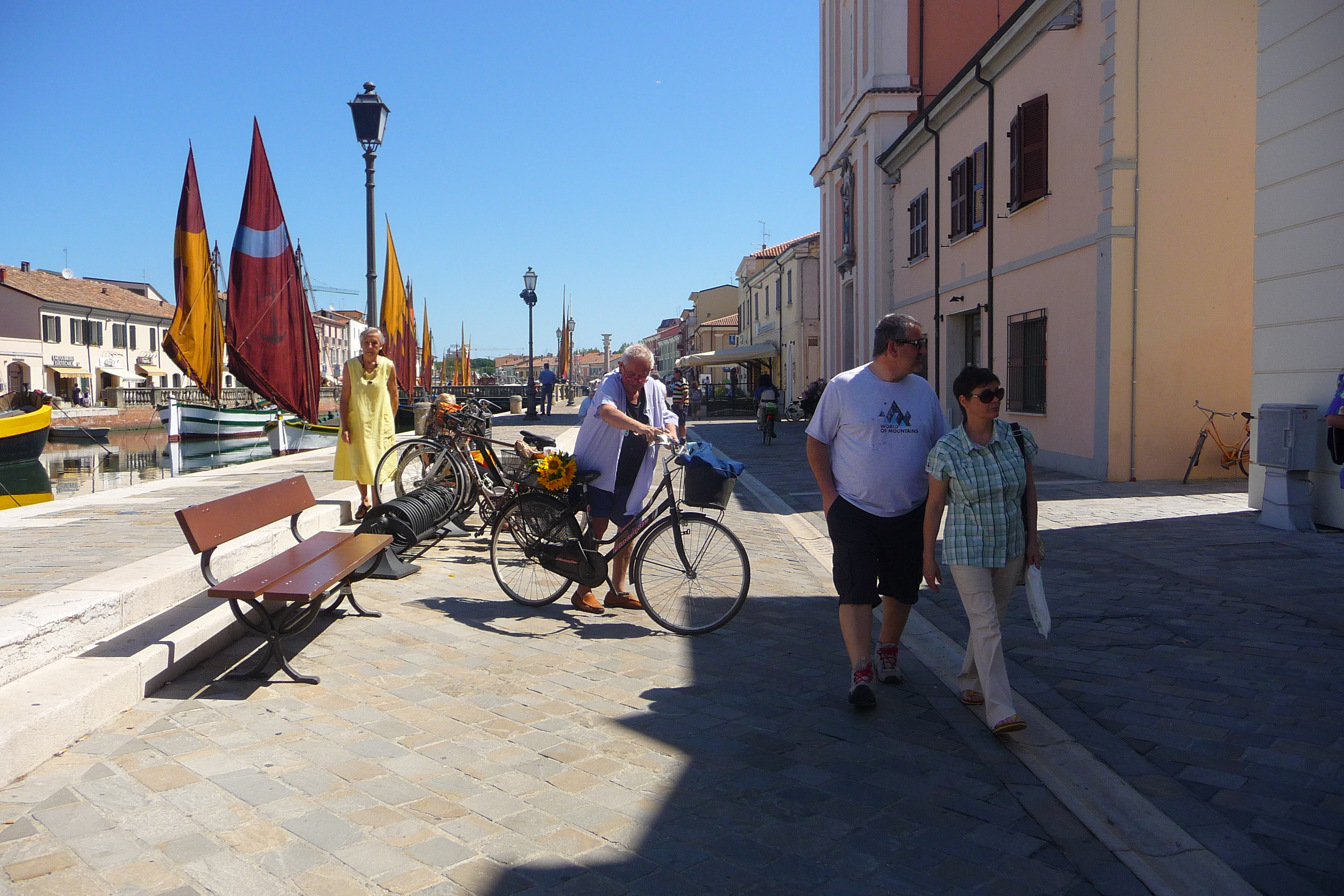
This is as medieval as it gets and it rings with names from history. The ancient fishing harbour was designed in 1502 by da Vinci on the orders of Cesare Borgia, two names to set the mind racing. One part of the canal has been closed off to accommodate the Floating Museum of Marine History in which eight perfectly restored boats of the type that were once used locally for trade in the upper and middle Adriatic are on display. Painted in the natural colours that were used in the past, each sail represents a different fishing family from the area. This was done originally so that the boats could be recognised at a distance: today they are a lesson in maritime history.
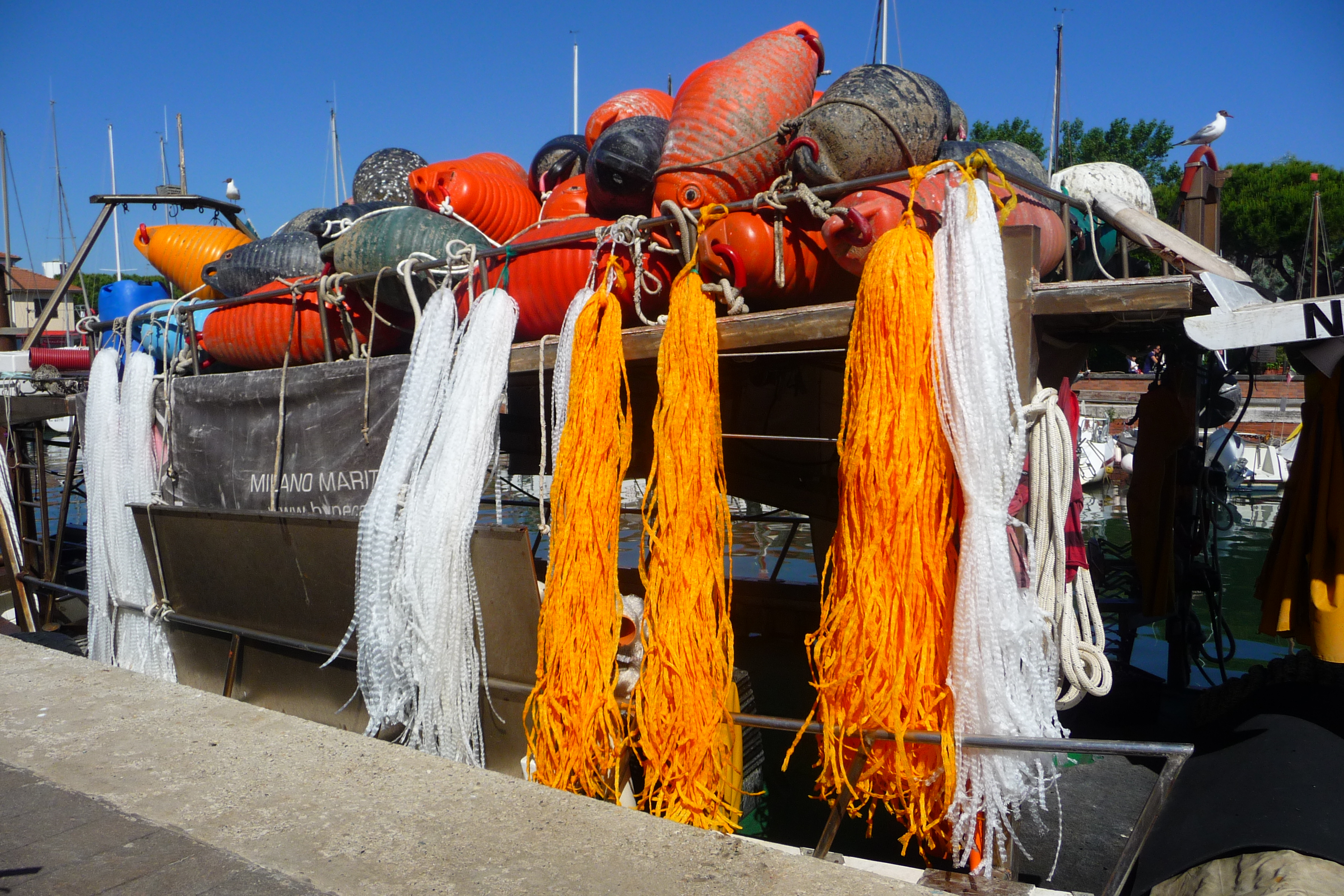
Alongside the canal the indoor Maritime Museum houses artefacts and documents dating back to the prehistory of navigation. As the port supports today’s fishing industry the canal bustles with working boats, many of which sell their catch from the boat. Weaving in and out are small yachts and leisure craft for the canal has an attraction for all who love messing about on boats.
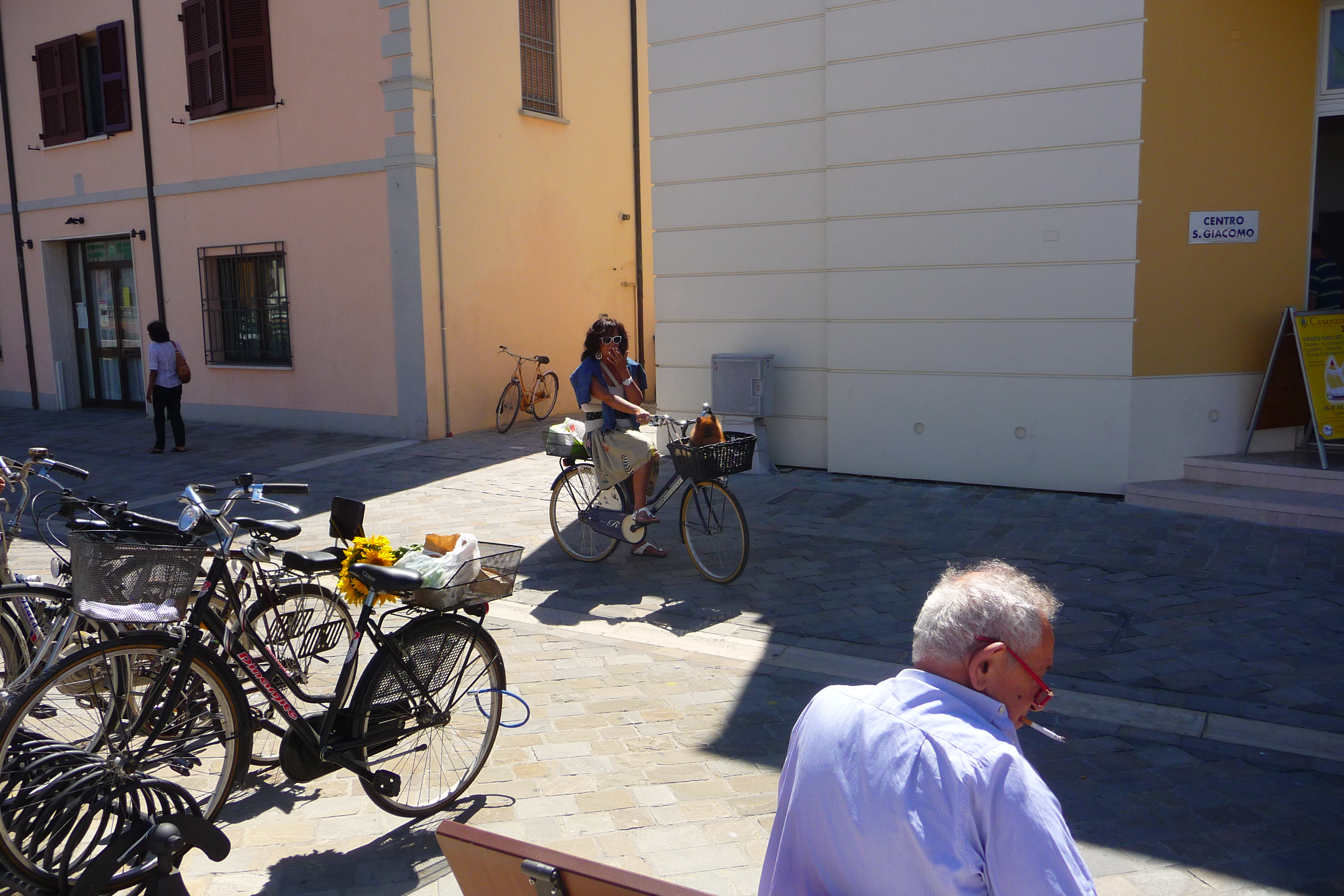
If it’s a sunny day and being indoors is not to your liking, then admire the collection of medieval boats on the canal while sitting at a nearby café with a glass of the delicious local wine. If you are there on a Sunday expect to see elegant ladies tottering about on their Louboutins, tiny dogs clutched in their arms, impeccably dressed young men making the passagieta with or without their girlfriends, and old men sitting outside the bars nursing espressos and smoking.
Cesenatico was the first Italian town to erect a monument in honour of the great Liberator of Italy, Giuseppe Garibaldi, to signify his connection to the town and this statue can be seen in Piazza Pisacane. In August of 1849, the great man, his wife, and other patriots fleeing from Rome were hunted down here.
There are a few other monuments to visit if you can drag yourself away from the port and its charms or the beach and the calm waters. The birthplace of the poet Moretti is now a centre for the study of 20th century Italian literature with a display of his books and papers, and the Theatre built by the architect Candido Panzani which, having survived damage sustained during the Second World War was restored in 1992, is architecturally very interesting.
But Cesenatico is really a place made for relaxation, for doing what the locals do, chill out with a coffee and grappa, lunch al fresco with local wines, or dine elegantly while watching the world go by.
The region of Emilia-Romagna in Italy has many lovely towns and villages but none, apart from Cesenatico, has a canal designed by Leonardo da Vinci, running through it.
The underground memorial site at Arras, the Wellington Quarry – Carrière Wellington – should be high on the list of things to see when visiting the historic town in northern France.
Most people are familiar with the Somme Battles, Passchendaele and Ypres, but fewer are aware of the sacrifices that were made at Arras: France alone lost 30,000 men. A visit to The Wellington Quarry, which is in the middle of the old city of Arras, reveals a little-known story of World War I and is a good place from which to try and understand the horrors of World War I.
Pill Box with Cut Out at Wellington Quarry
First, a little bit of history to set the scene.
The battles of Verdun which involved the French, and the battles of the Somme which involved the British and Commonwealth in 1916 had been disasters with terrible loss of life. Arras was strategic to the Allies and, uniquely in World War 1, was under British command from 1916-1918, but was under continual bombardment from German troops. To create a new offensive on the Vimy-Arras front, the Allied High Command decided to tunnel through the chalk quarries under Arras which had been dug out centuries before to provide building material for the town. The plan was to construct a sort of barracks, a series of rooms and passages in which 24,000 Allied troops could hide in readiness for the planned attack and for the tunnels to go right to the edge of the enemy’s front line which would allow them to burst out and surprise them.
The Wellington Quarry Museum tells this story of this quarrying, the lives of the townspeople and the troops, and the lead up to the battle of Arras on April 9th, 1917 and a walk through the tunnels lets you experience something of what it was like to live in these depths for two years.
In March 1916 the first of the skilled men required for this job arrived on the Western Front – 500 miners of the New Zealand Tunnelling Company, mostly Maori and Pacific Islanders, gold miners from Waihi and Karangahake, coal miners from the South Island and labourers from the Railways. Discouraged from enlisting due to the essential nature of their industry, they were now plunged right into the thick of it, working alongside experienced miners of the Royal Engineer tunnelling company, miners from the Yorkshire mines and tunnellers who had worked to dig out the London Underground.
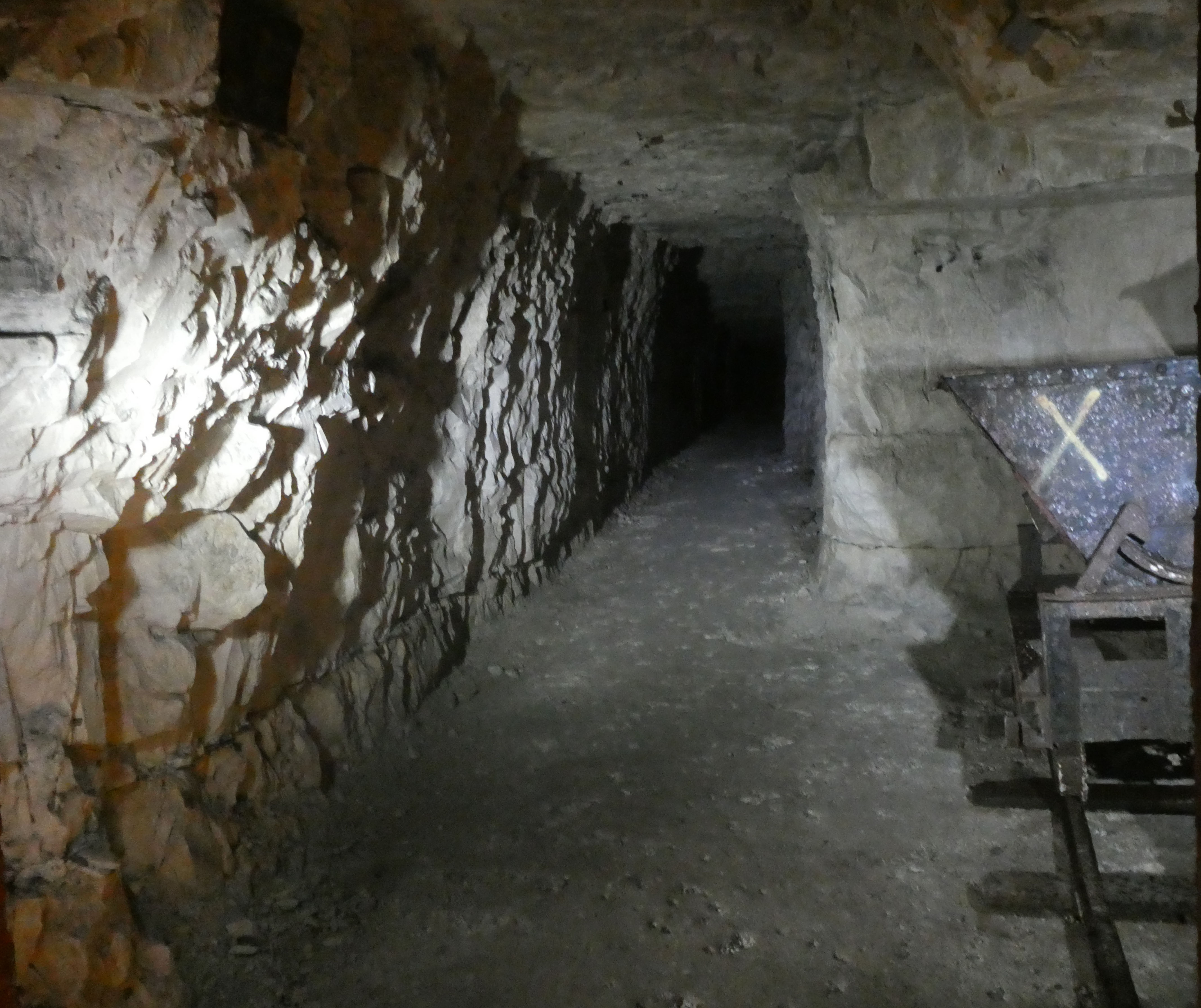
The first task was to create primitive underground living-quarters, and with superhuman effort they dug 80 metres per day to construct two interlinking labyrinths. They worked only with pick axes and shovels as the Germans were just above them so no explosives could be used . Conditions were primitive and dangerous and although the temperature was a regular 11 degrees, it was continually damp: there were many deaths, many injuries.
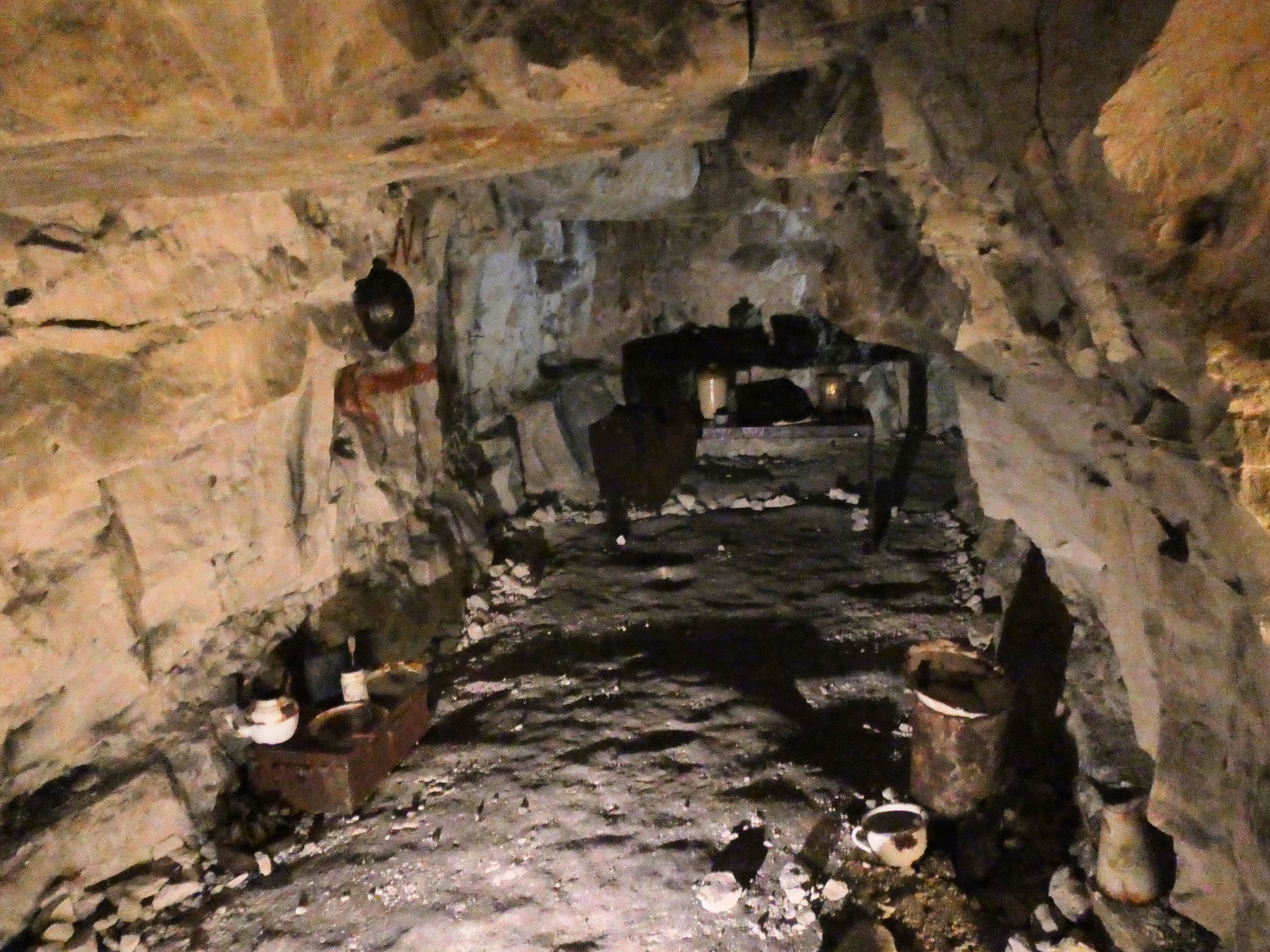
By April 1917 they had created a working underground city with running water, lighting, kitchens and latrines: a rail system and a hospital were up and running and space for 20,000 soldiers was found even if it was cramped. Completed in less than six months 25 kms of tunnels eventually accommodated 24,000 British and Commonwealth soldiers who, as with the battlefields above ground, gave their sectors the names of their home towns. For the British it was London, Liverpool and Manchester, for the New Zealanders it was Wellington, Nelson and Blenheim. Nowadays, Wellington is the only one of the quarries that can be visited, the others now mostly lost or covered over by buildings and car parks.
In dim light, a lift takes you 20 metres underground, during which the guide starts the extraordinary story of the Wellington Quarry tunnellers against a recorded background of men talking, pick axes hitting stone and the occasional explosion. In breaks in the tunnels small screens pop out with black and white images of soldiers working or at ease and disappear just as quickly.
You’re told about the one bucket of water to a dozen men. You feel the presence of the soldiers, and you hear voices. “Bonjour Tommy” says a Frenchman against footage of civilians and soldiers chatting in the streets. You hear letters written home, and poems from the war poets, like Siegfried Sassoon’s The General.
“Good morning. Good morning” the General said
When we met him last week on our way to the line.
Now the soldiers he smiled at are most of ‘em dead,
And we’re cursing his staff for incompetent swine.
“He’s a cheery old card”, grunted Harry to Jack
As they slogged up to Arras with rifle and pack
. . . . . . .
But he did for them both by his plan of attack.
Artefacts left behind by the soldiers are on display, helmets, dog tags, bottles, boots, electrical fittings, railway carts, bullets. Pictures scratched in the chalk of the walls are pointed out, names of sweethearts, and humourous signs like “Wanted, Housekeeper”.
Projected map on the wall of the tunnel
You are almost lulled into a false sense of normality as you listen to the sounds of men talking and laughing. Then you reach the end and your guide points to where the exits were dynamited to enable the men to go up the sloping passageway that led to the light, over the top and into battle at 05.30 on the morning of 9th April, 1917. It was snowing and deathly cold when the order was given to burst out of the quarries. It was Easter Monday.
Light at the end of the tunnel – up and over the top to the Battlefield
24,000 men erupted from the earth: initially the assault was a success. The Canadians seized Vimy Ridge; Monchy-le-Preux was taken; the soldiers of Australia, Britain and the Commonwealth fought hard and the Germans, taken by surprise, were pushed back 11 km. But then the Allied troops, on orders from above, were told to hold back, during which time the Germans, who had retreated, re-formed and called up re-inforcements. Every day, for two months after that, 4,000 commonwealth soldiers died, before the offensive was eventually called of.
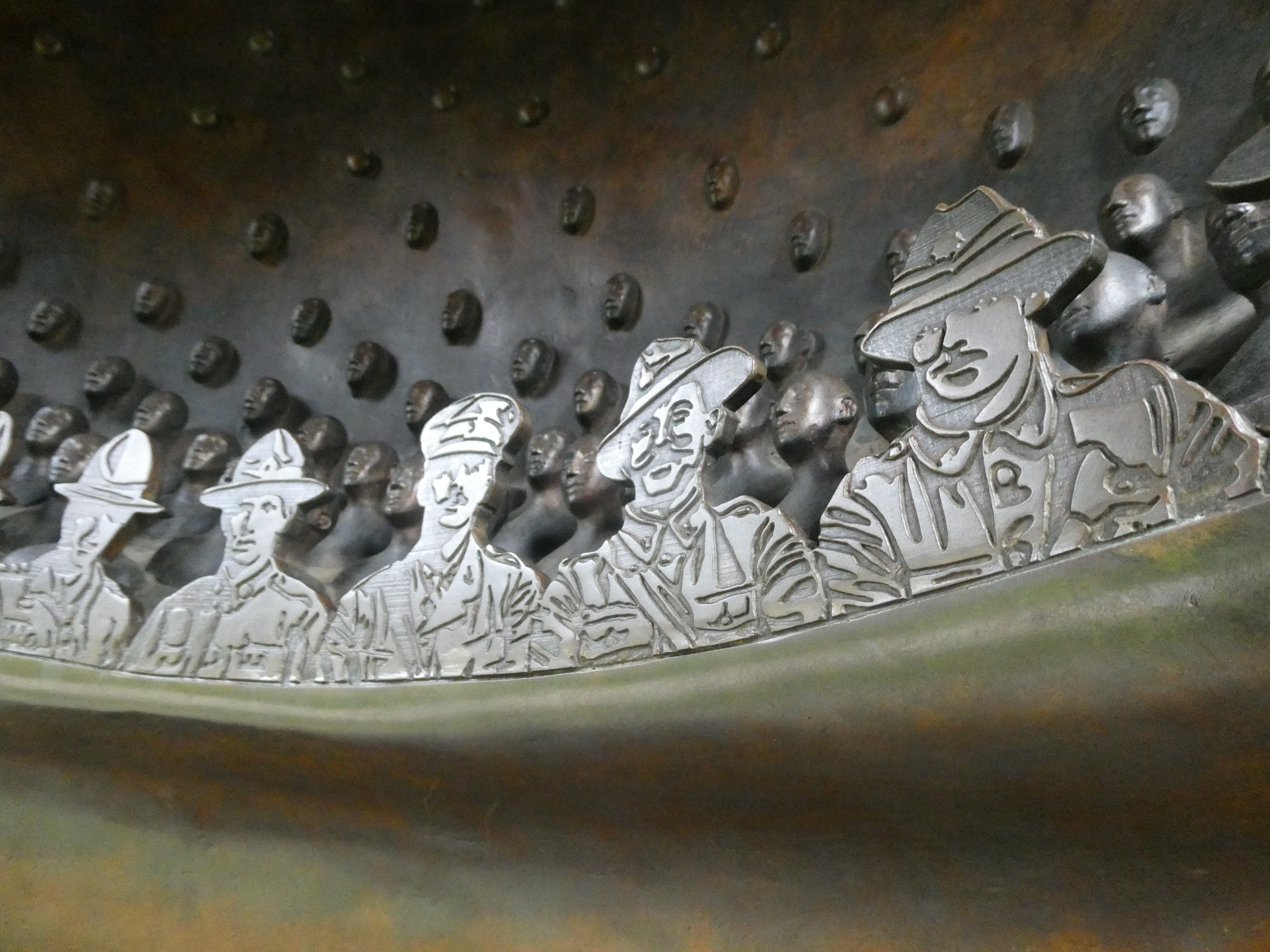
This is part of a brass surround that is inside the Pillbox above.
The film of the battle (which those in charge considered a success by the standards of the time) can be seen upstairs as you exit.
Facts:
Wellington Quarry,
Rue Deletoille
Arras
Tel.: 00 33 (0)3 21 51 26 95
Entrance adult 6.90 euros, child under 18 years 3.20 euros
Open Daily 10am-12:30pm, 1:30-6pm
Closed Jan 1st, Jan 4th-29th, 2016, Dec 25th, 2016
Everyone is familiar with the old wooden houses in the area known as Bryggen in the port city of Bergen, which was rebuilt on 12th century foundations after the fire that ravaged the city in 1702. Bryggen has a place on UNESCO’S World Heritage List, but the whole city of Bergen is a designated World Heritage City. It was the largest town in Scandinavia during the middle ages and because of its position as one of the Hanseatic League’s four most important trading centres, it dominated trade for almost 400 years from its incorporation in 1360.
The world heritage site consists of the old Hanseatic wharf and buildings, an attractive place for tourists and locals and a photographer’s delight. To stroll through Bryggen’s narrow alleyways is to wander back to a bygone age: many of the small wooden houses that line these streets date back to the 18th century and have been restored and refurbished in recent years to their current impeccable state. Not only is this a heritage site but it is a living, breathing one, part of a culture still active in this historical part of the city.
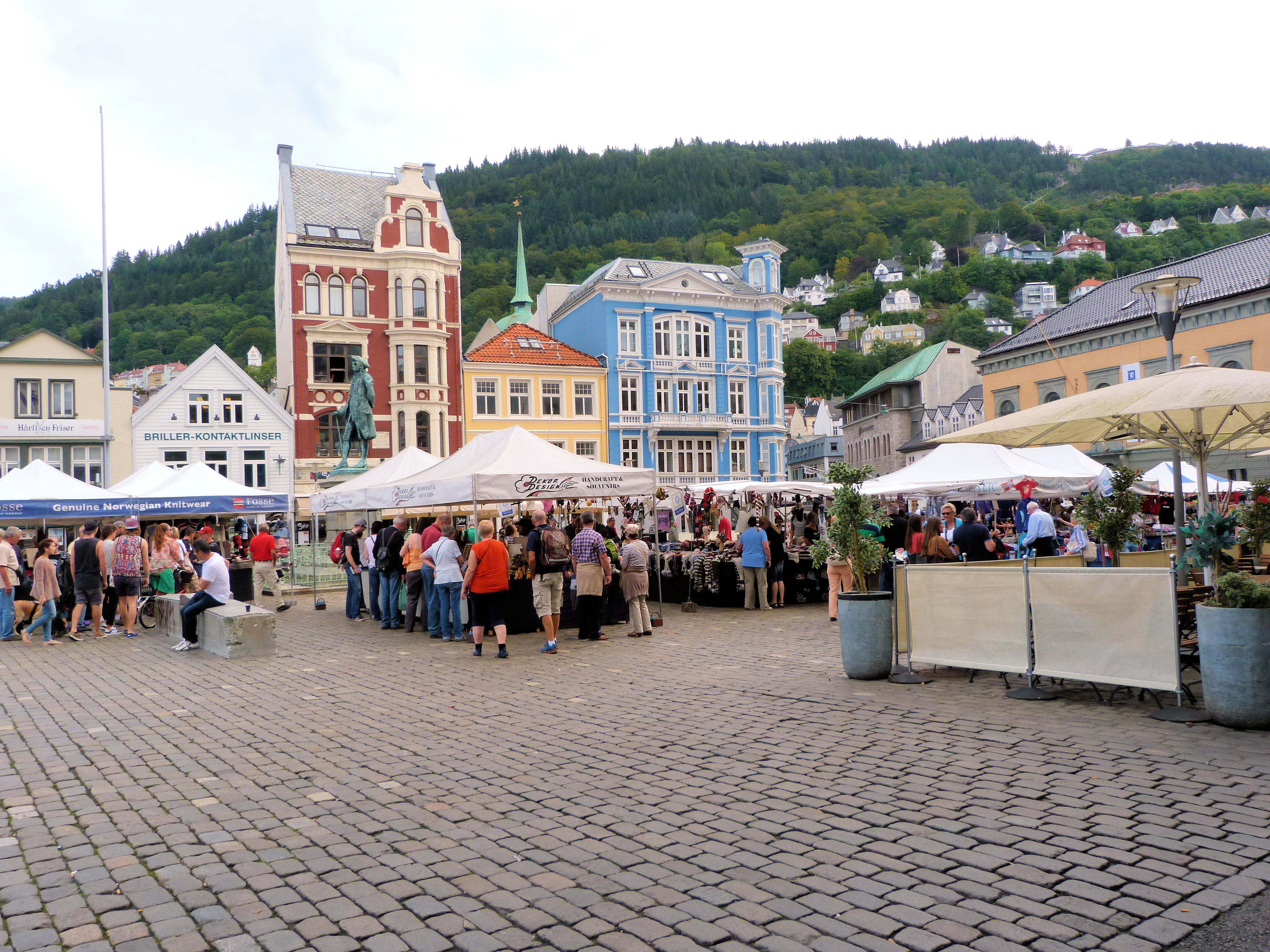
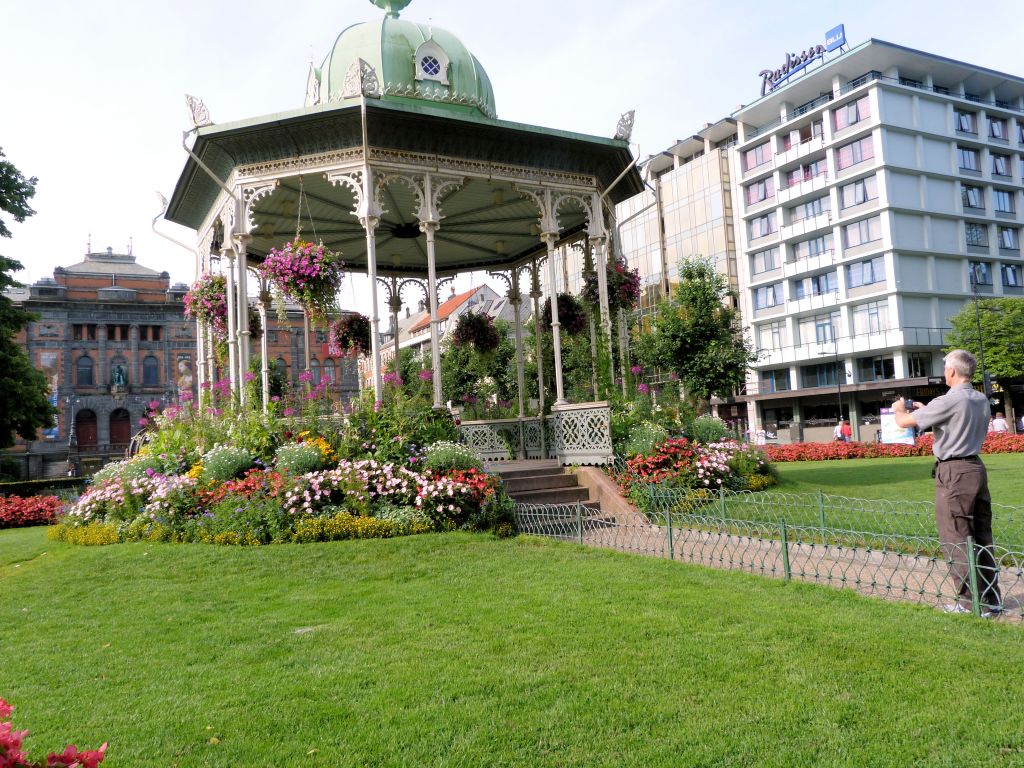
I can’t think of any other city that more deserves the designation of World Heritage City: it has a fairy-tale air with a charm and atmosphere not often found in busy places. Seven mountains form the backdrop to the city and everywhere are small wooden houses, their doorways flanked by pots of brightly-coloured flowers, old cobbled streets and alleyways, and of course, Bryggen.
Surrounded by fiords and a fantastic coastline with thousands of islands, Bergen is a base for active experiences such as fiord and river rafting, scuba diving, ocean rafting, sailing, kayaking, cycling and paragliding. Those whose liking is for mountains are spoiled for choice here as all seven of the mountains that surround the city have great walking trails (the tourist board will provide maps).
If the active life is not for you, then shopping could not be better in this city of traders, (take the hop-on hop-off bus), hop on the little sight-seeing train and be guided around the area, or take one of the many guided tours on land or by boat.
And it’s said that you’ve not seen Bergen until you’ve taken a trip on the Fløibanen funicular to the top of Mt. Fløyen to view the city from the spectacular viewing platform 200m above.
Cafes, restaurants, galleries and shops abound in the area, many of them selling traditional and unique crafts. Bryggen’s Museum is the place to learn about the history of the city and an impressive collection of art is housed in a row of galleries lining the picturesque Lille Lungegärdsvann Lake in the heart of the city (Art Street); or visit the Grieg Museum for a half-hour lunchtime concert and a visit to the site of the composer’s unique grave.
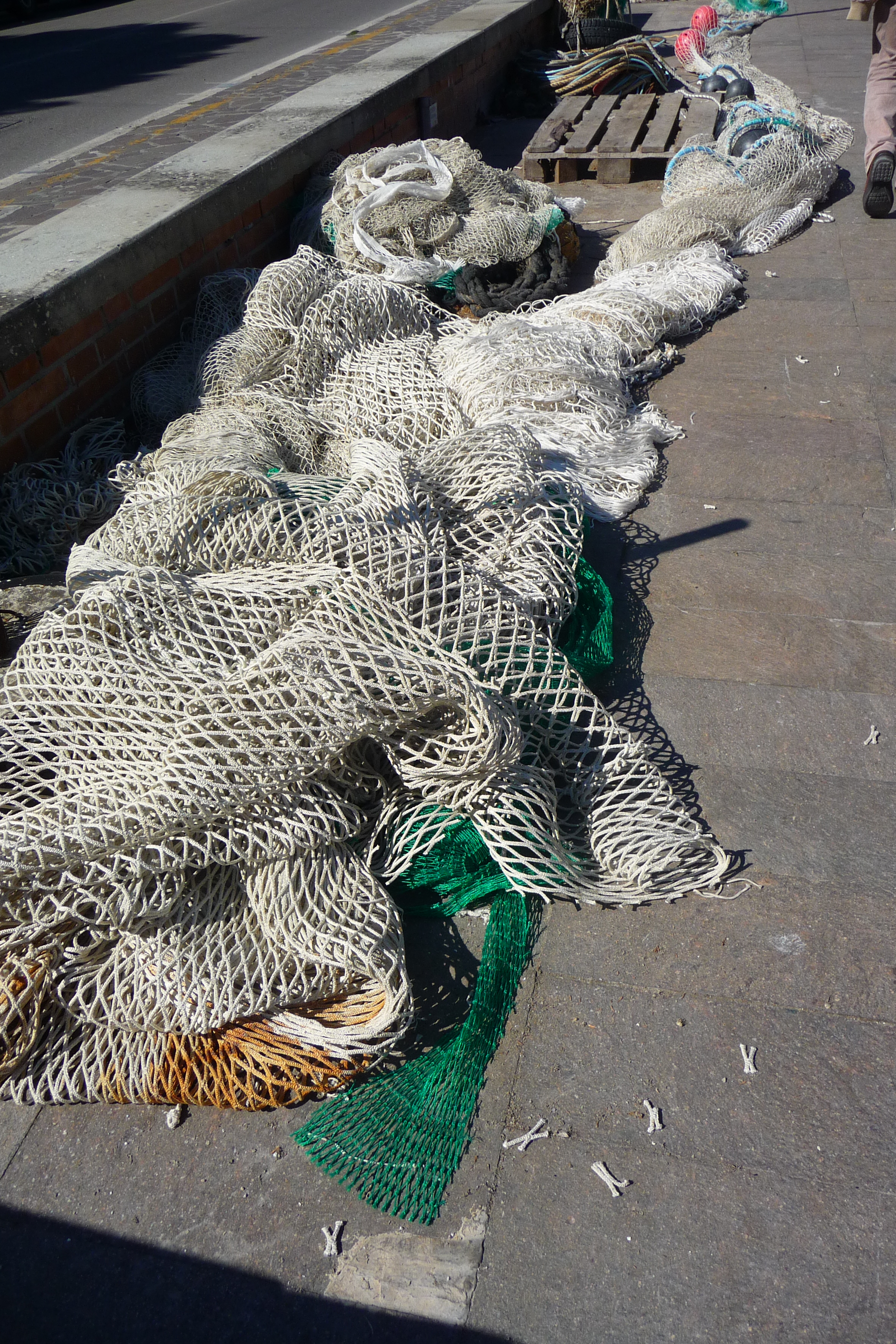
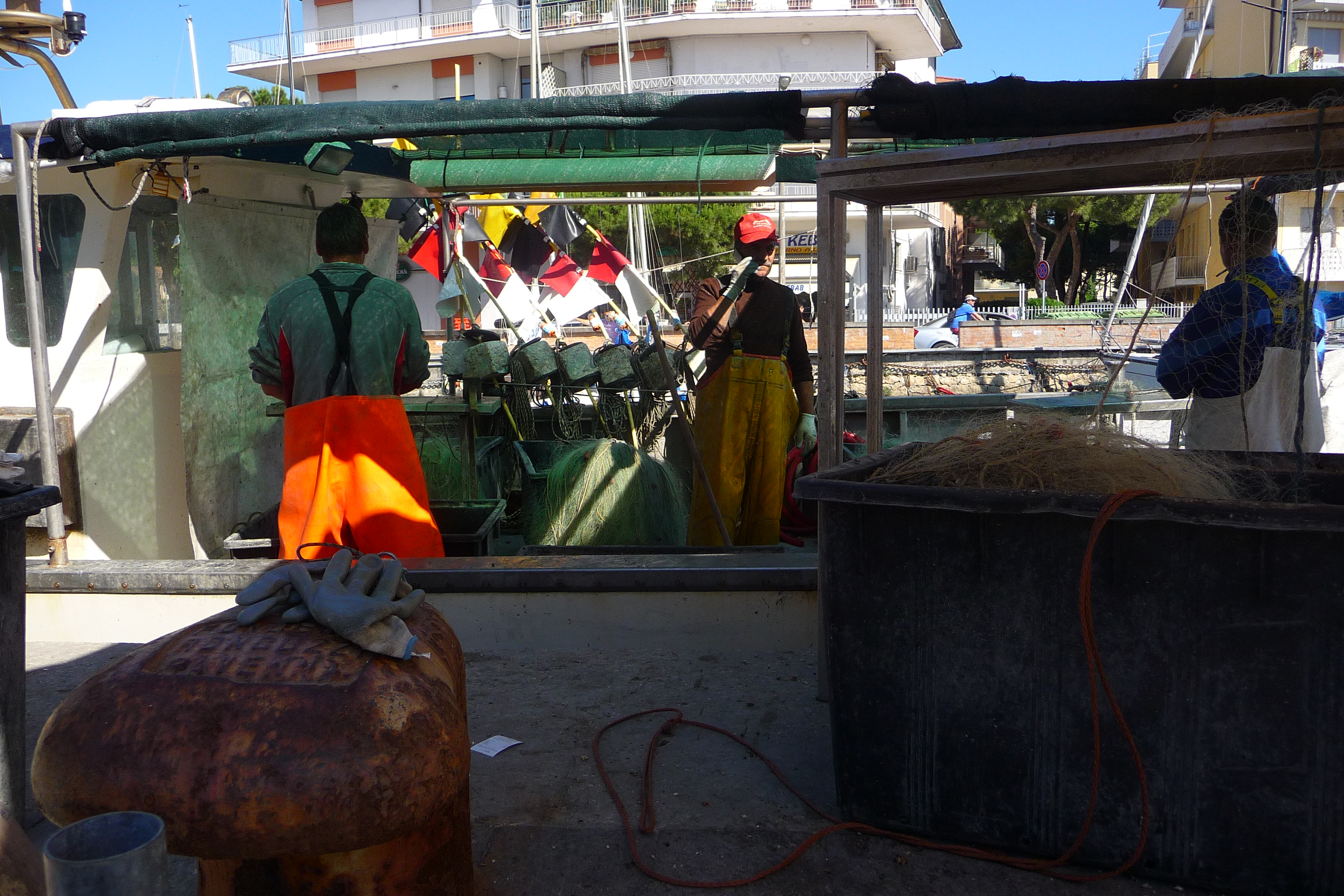
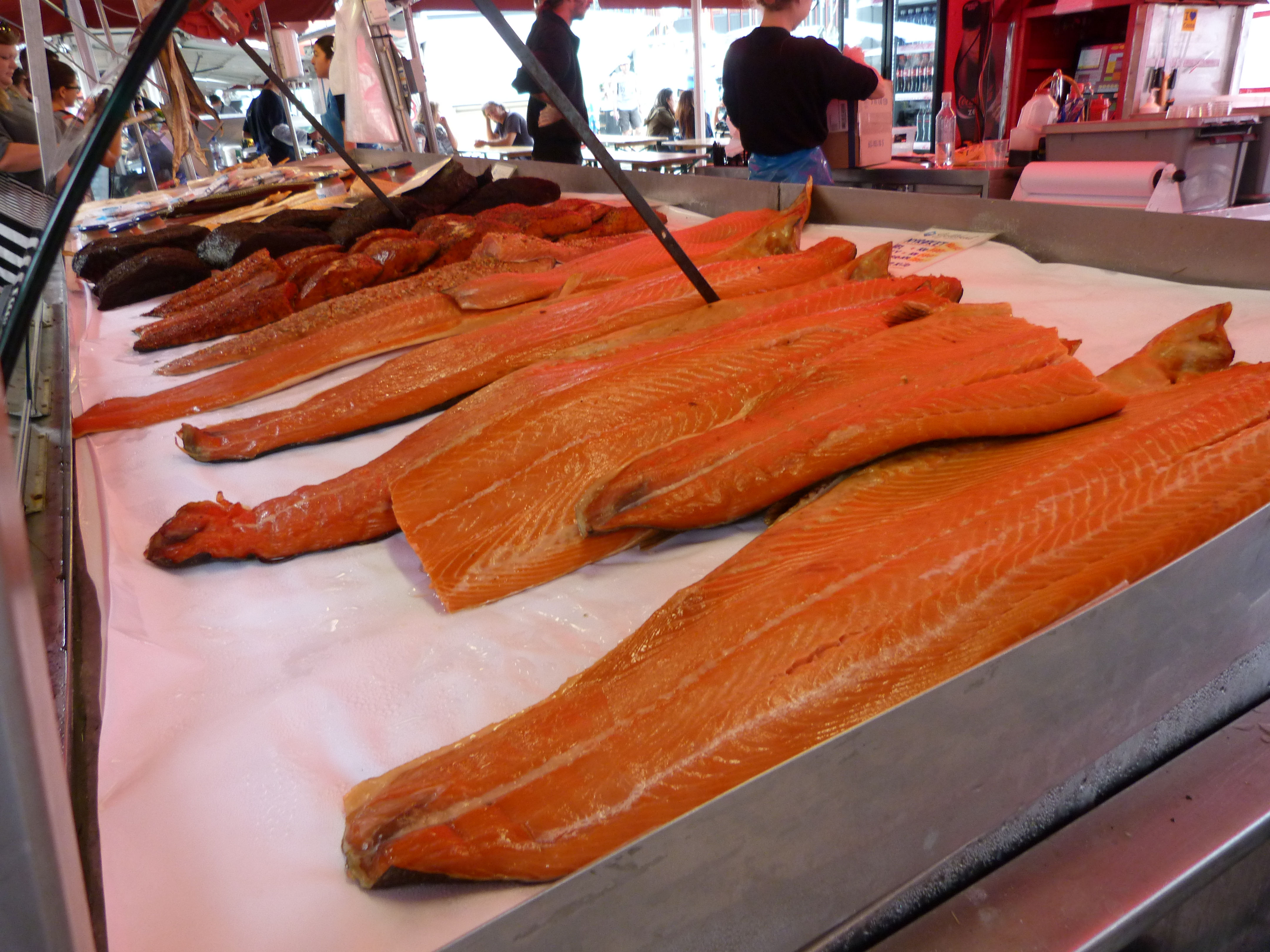
If museums are not your thing, then just step into the Fish Market, the open-air fruit and veg market with its stalls full of the freshest berries I’ve ever seen, wander around the wharf and admire the fishing boats, tourist boats and naval vessels. Locals resting on the seats around the basin will be eager to chat with you, fishermen tending their nets will happily talk about fish and the ever-changing kaleidoscope will keep you entertained for hours.
I didn’t spend long enough there, a mere 3 days, but it gave me a taster of what the city and its environs can offer. Some people I spoke to had arrived by cruise ship and seemed happy with their half day there. I wouldn’t have been. I think I might have cried if I’d had to leave such a gorgeous place after only a few hours. But whether its 3 hours or 3 days, Bergen will offer the visitor a lot to see and a lot to think about.
NB. Best buy – The Bergen Card: Free entrances to many Museums and activities, heavily discounted entrance fees to other places. Travel free on the Light Rail and buses. 24 hours NOK 280, senior & students 224, children 100: 48 hour NOK 360, senior & students 288, children 130
The Queen Mary in Bergen. A sad sight to see such a big cruise ship in this lovely little place.
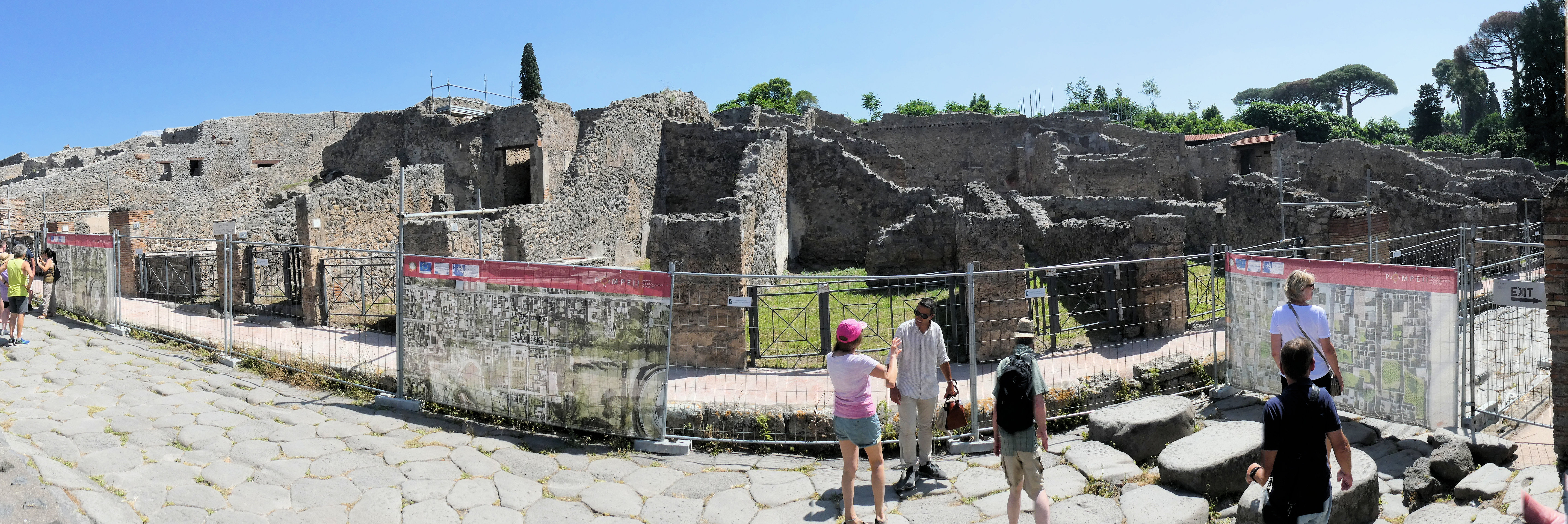
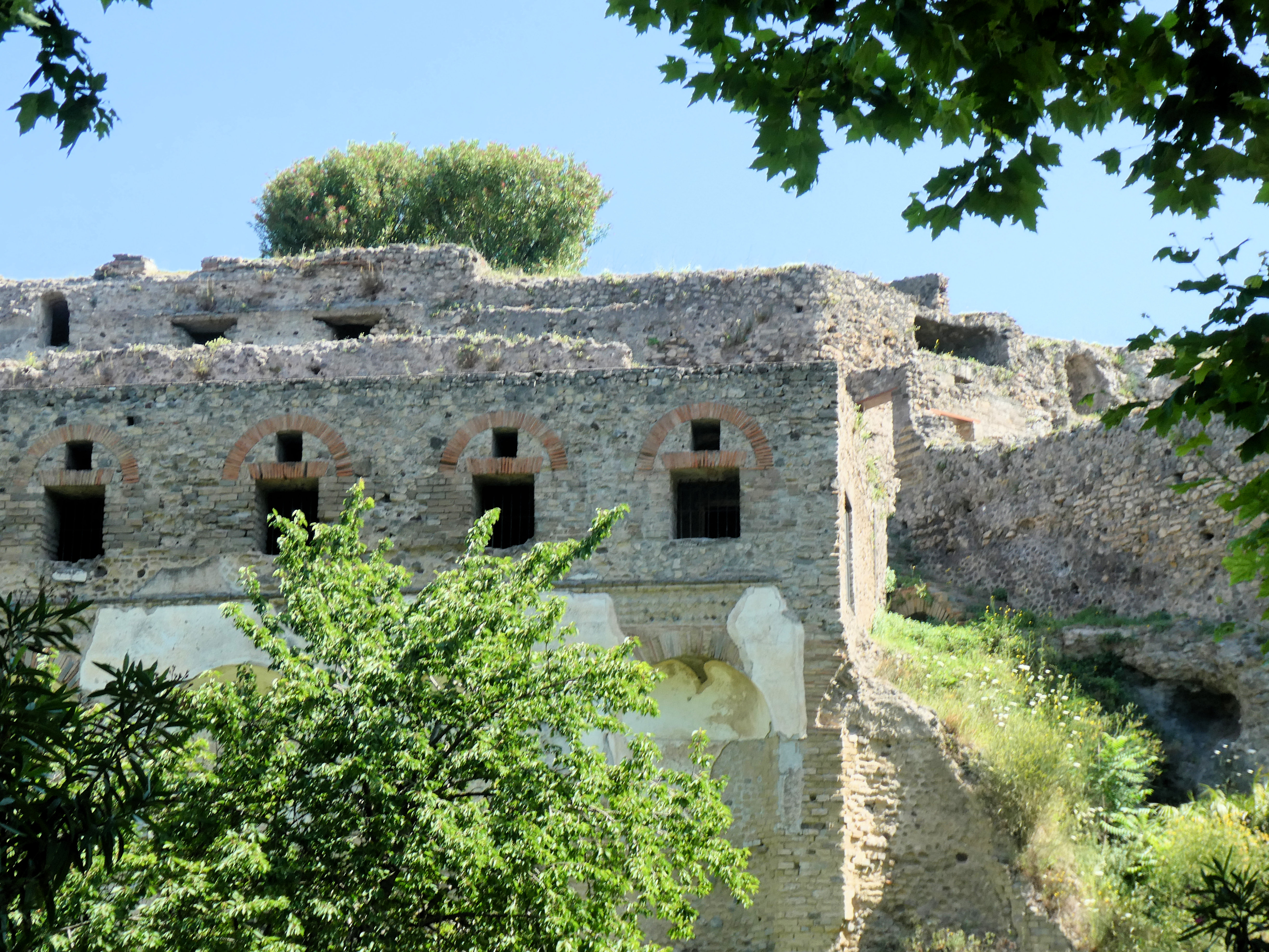
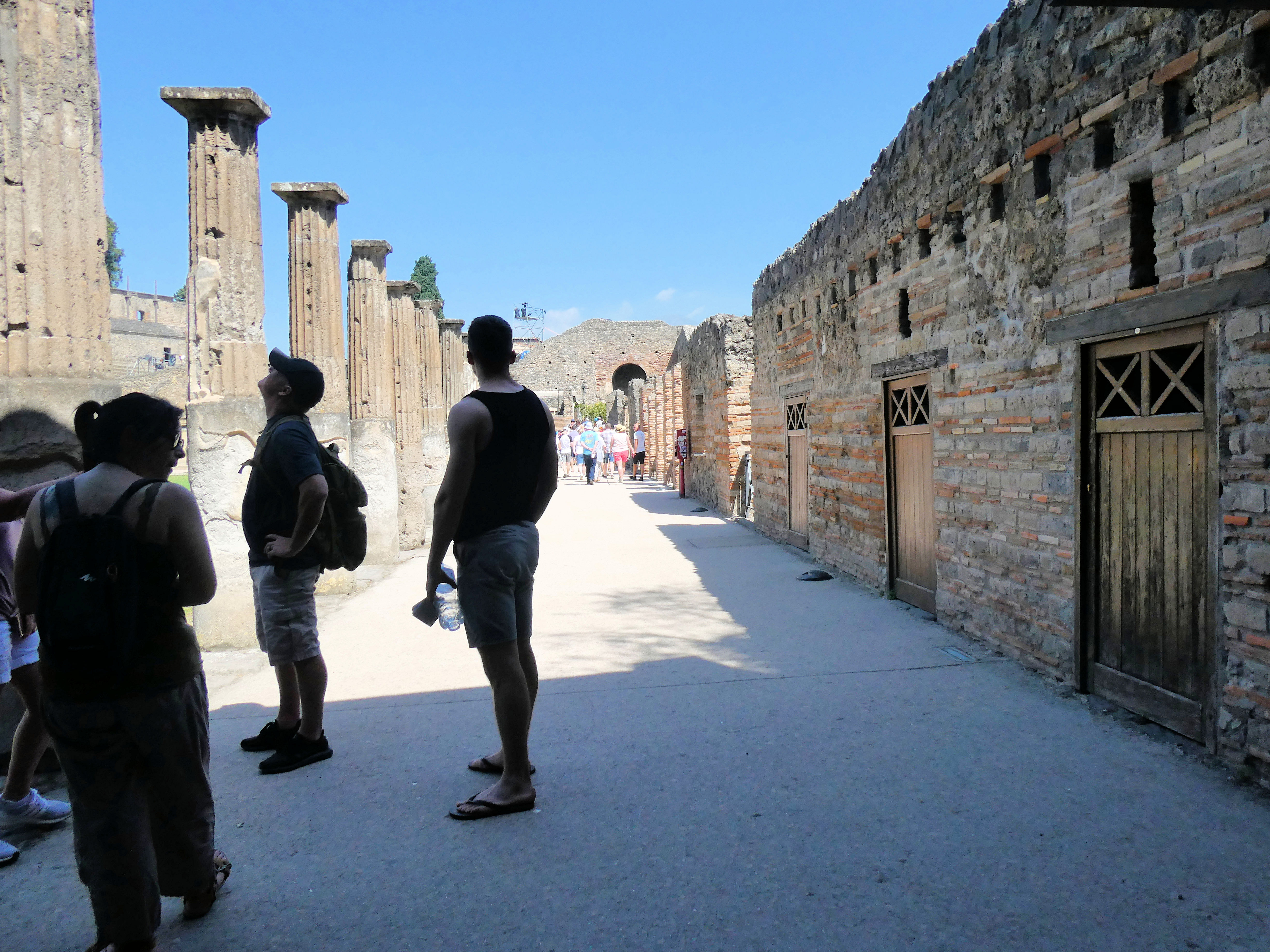
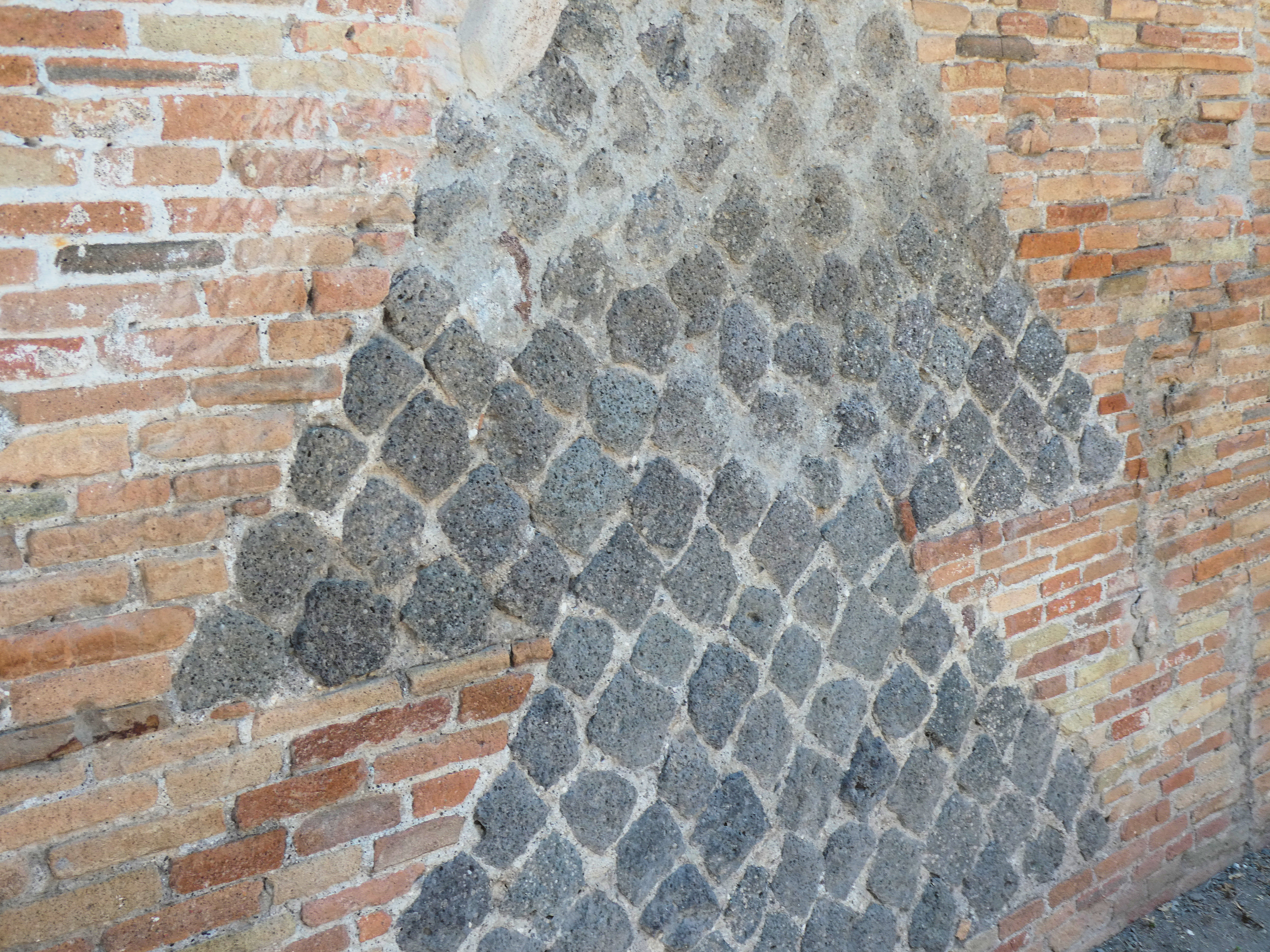
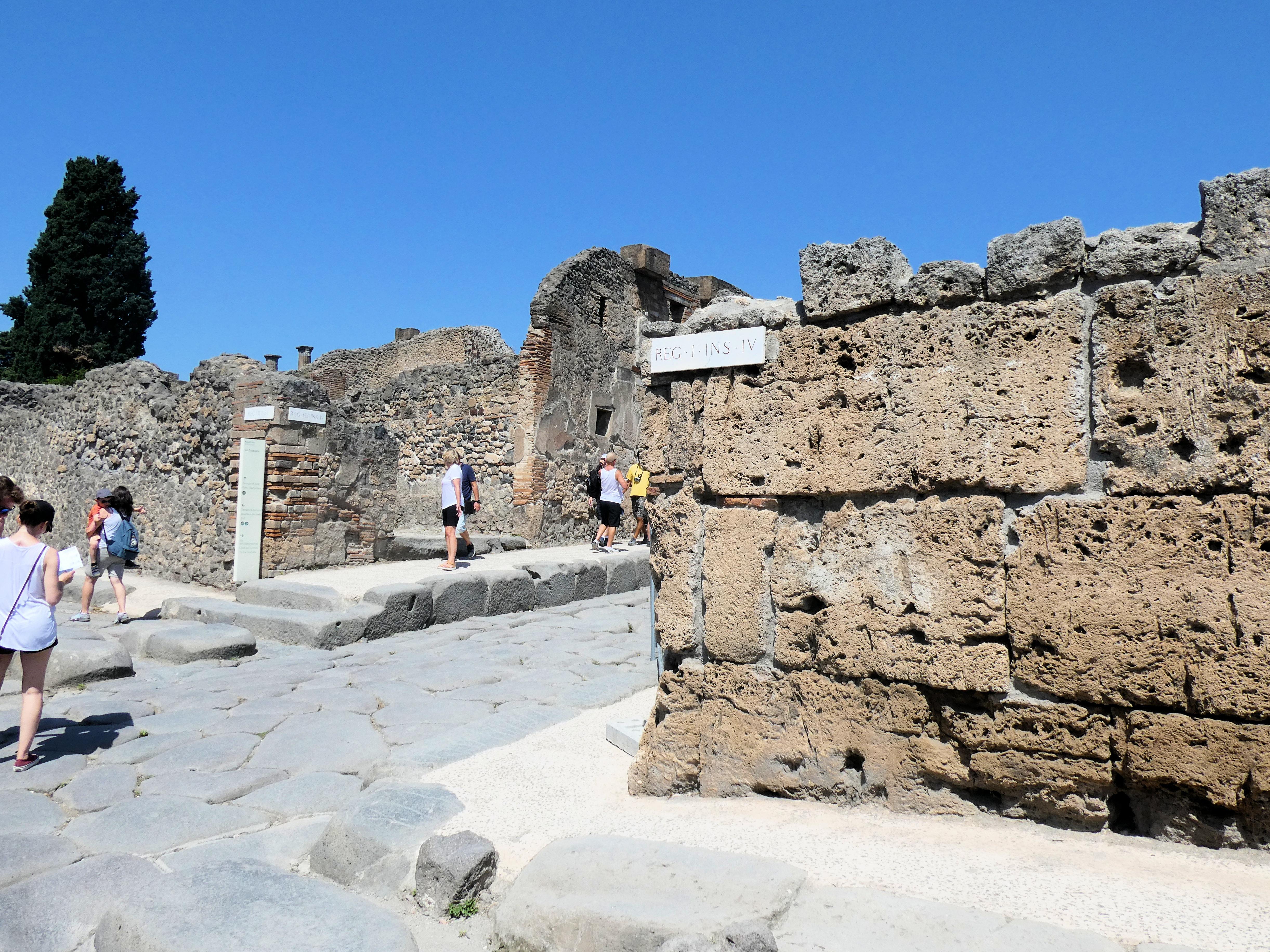
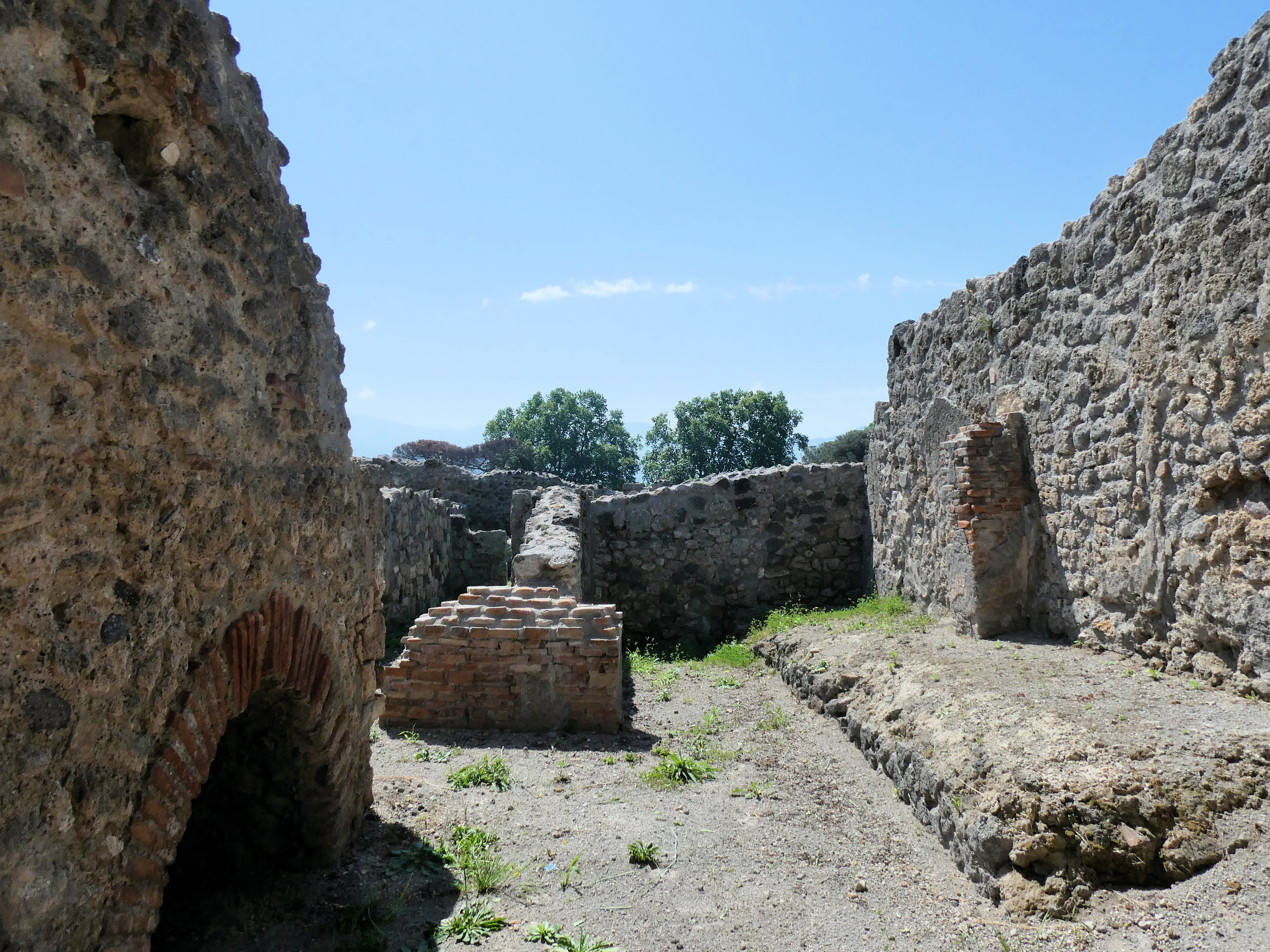
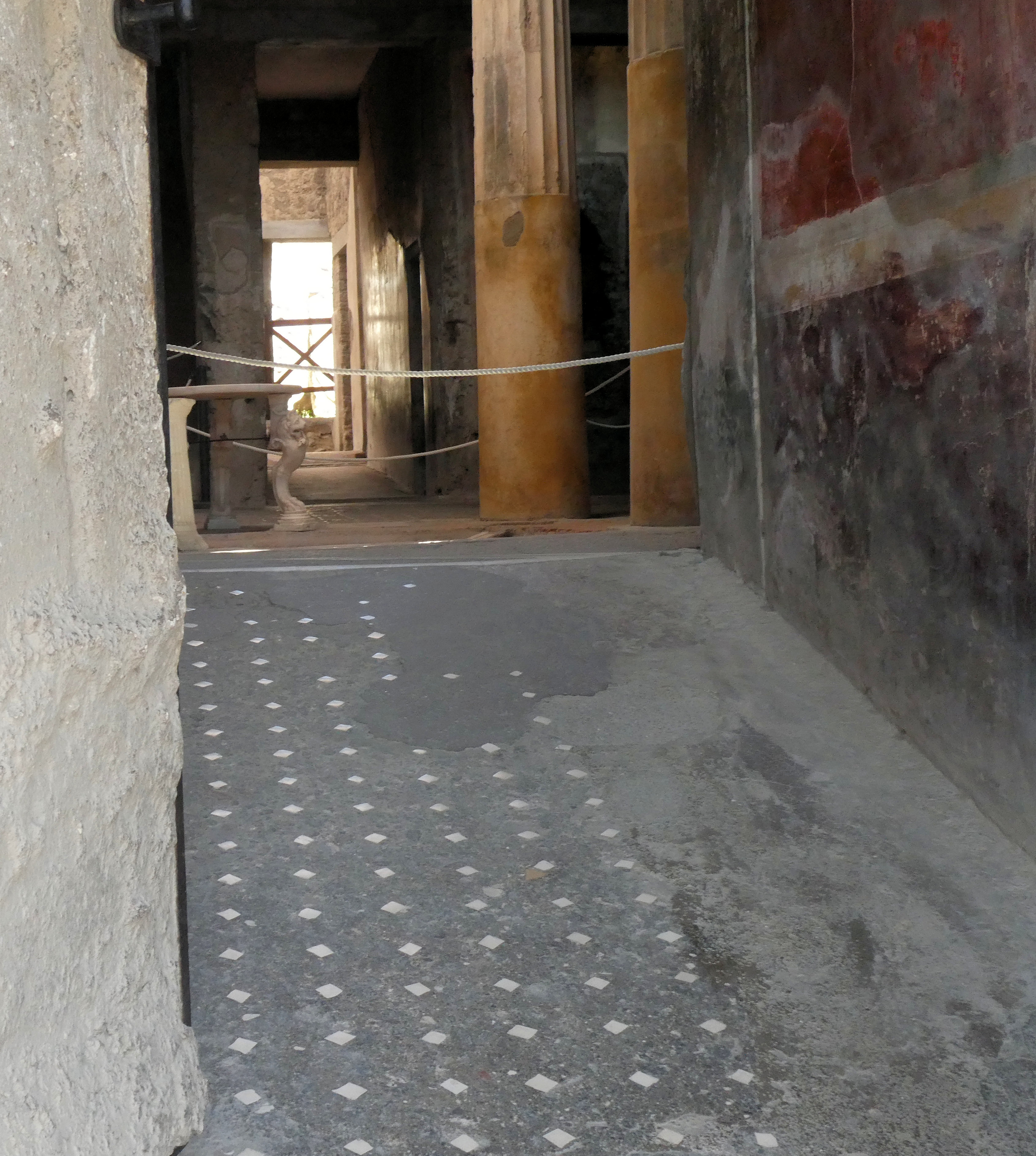
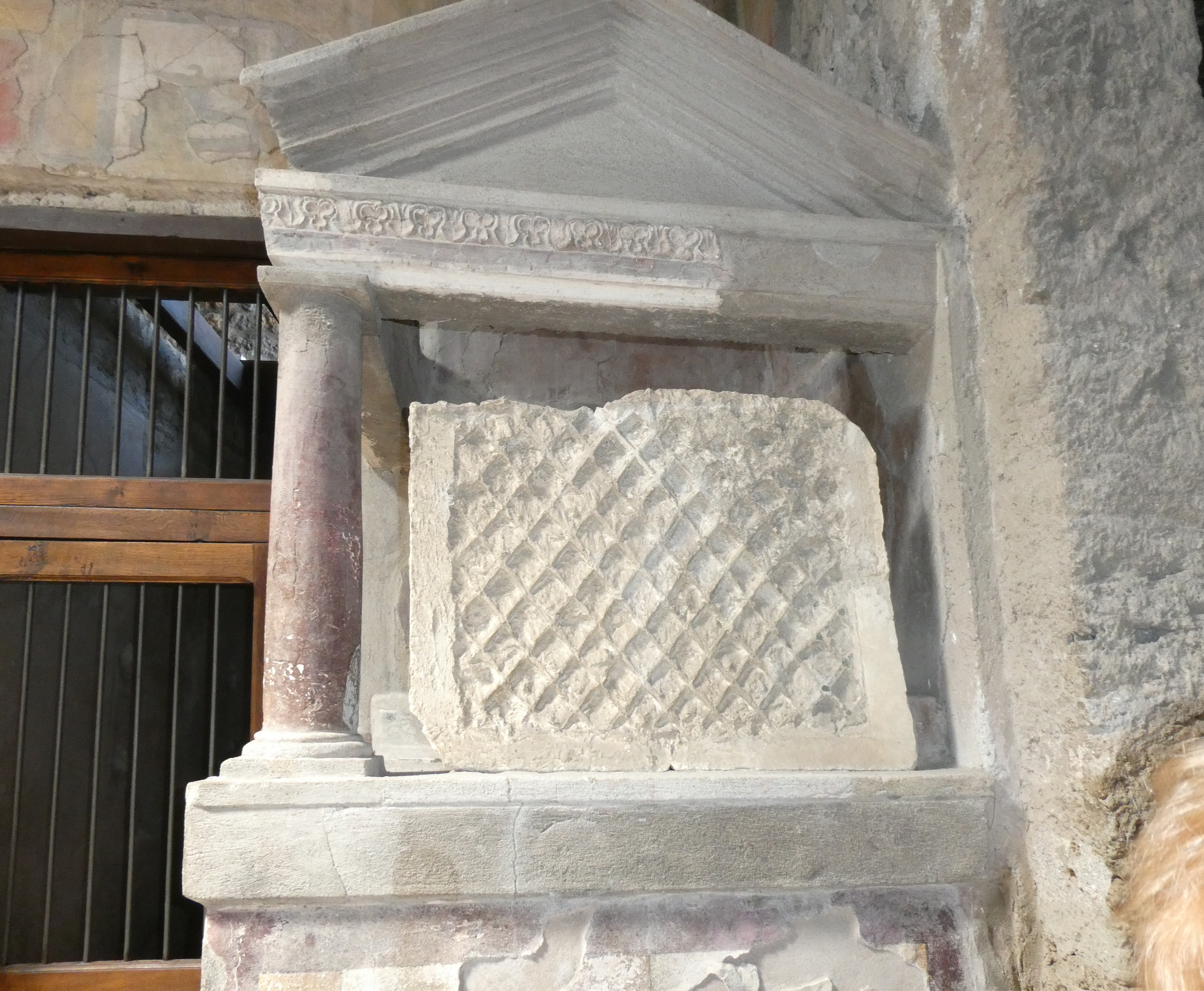
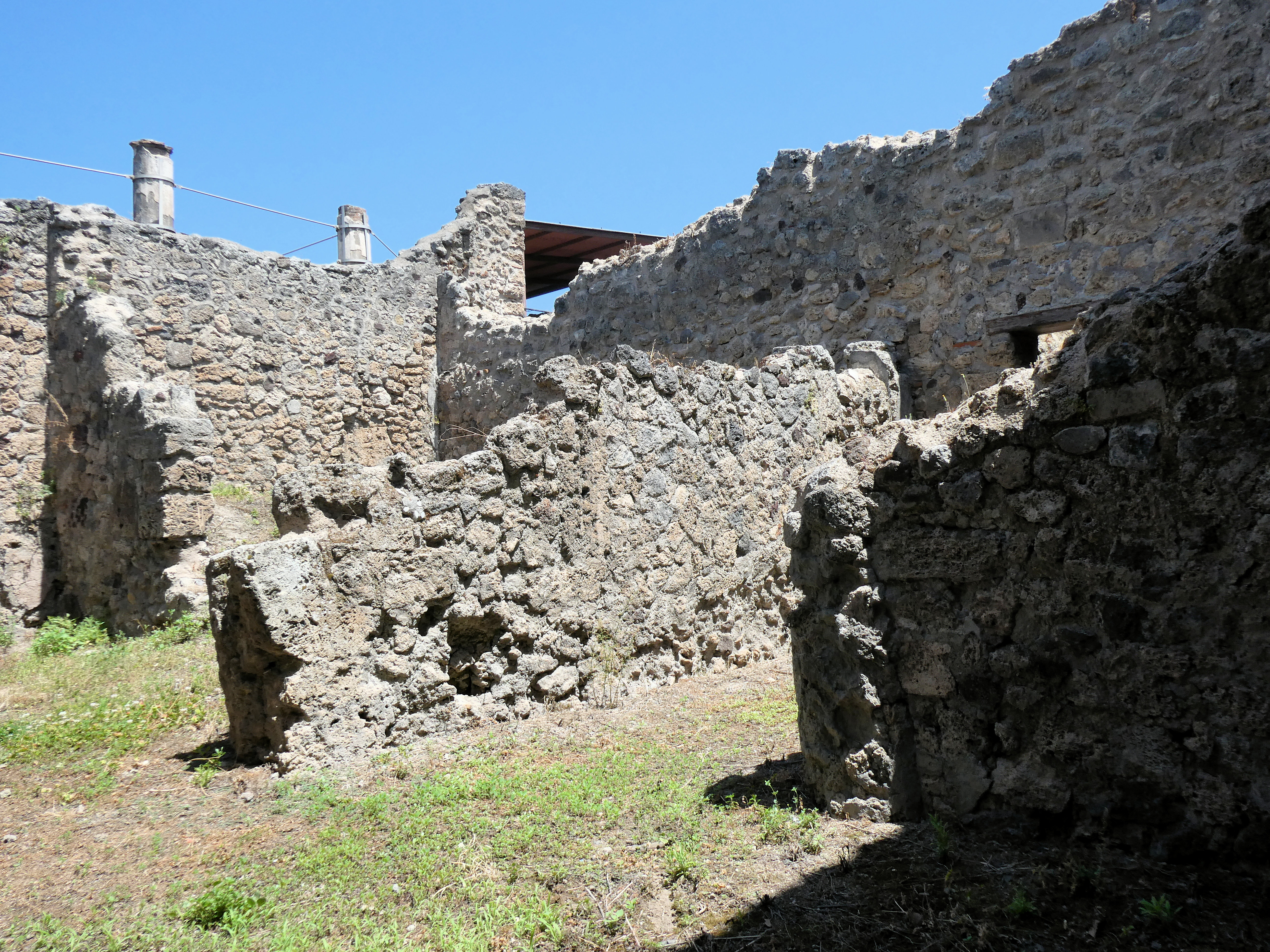
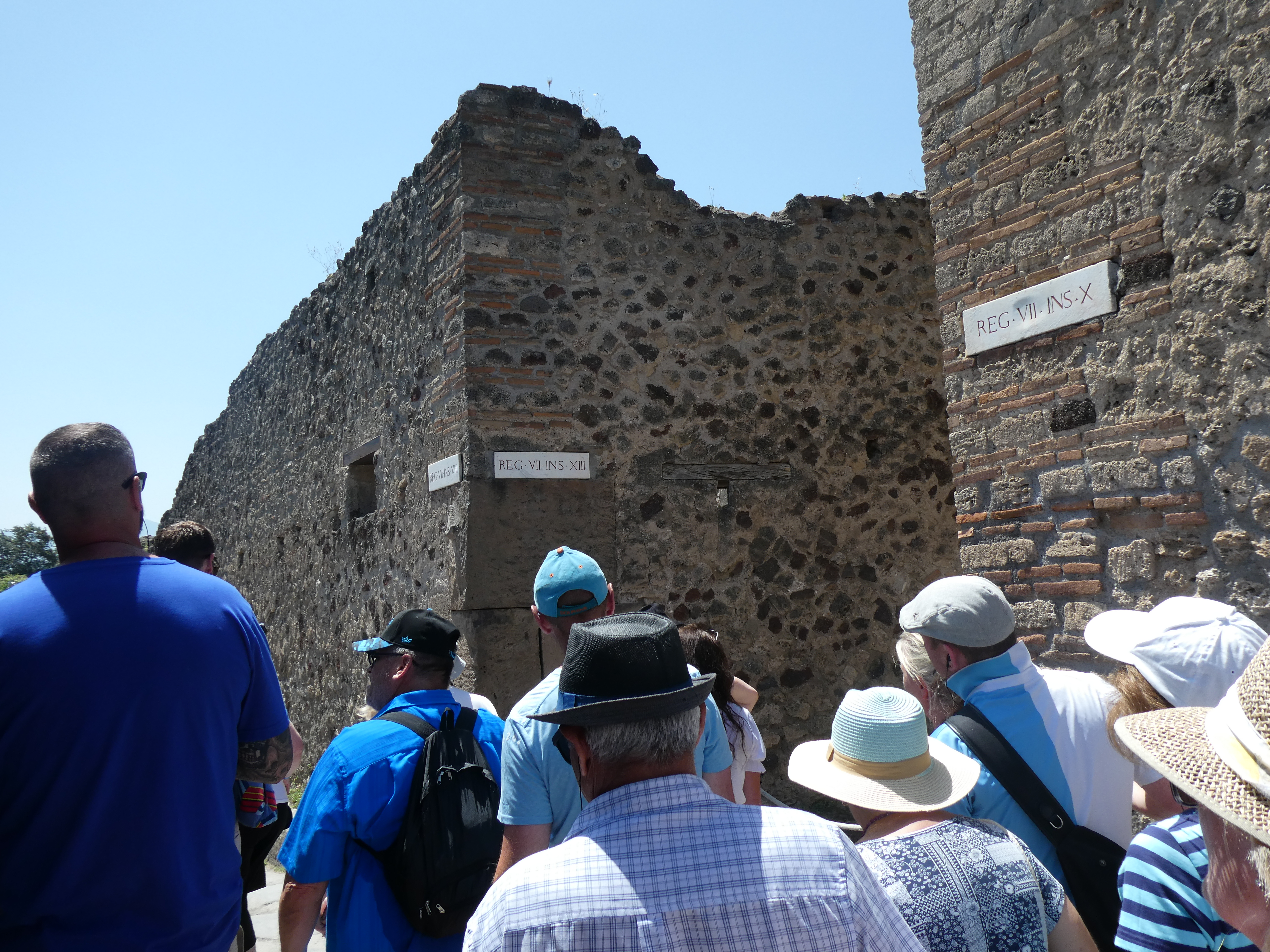
Most people know about the tragedy that was Pompeii so it would be presumptuous of me to write a post on its history. I will, therefore, content myself with posting some images I took when I was there in June last when I struggled in the heatwave and the crowds that had disembarked from the 3 cruise ships in the Bay of Naples. Here are just a few essential details.
It wasn’t until 1594 that the architect Dominico Fontana, discovered the ruins while digging a canal but serious excavations didn’t begin until the mid 18th century. Of the city’s original 66 hectares, 44 have now been excavated but not all of this area is accessible to the public.
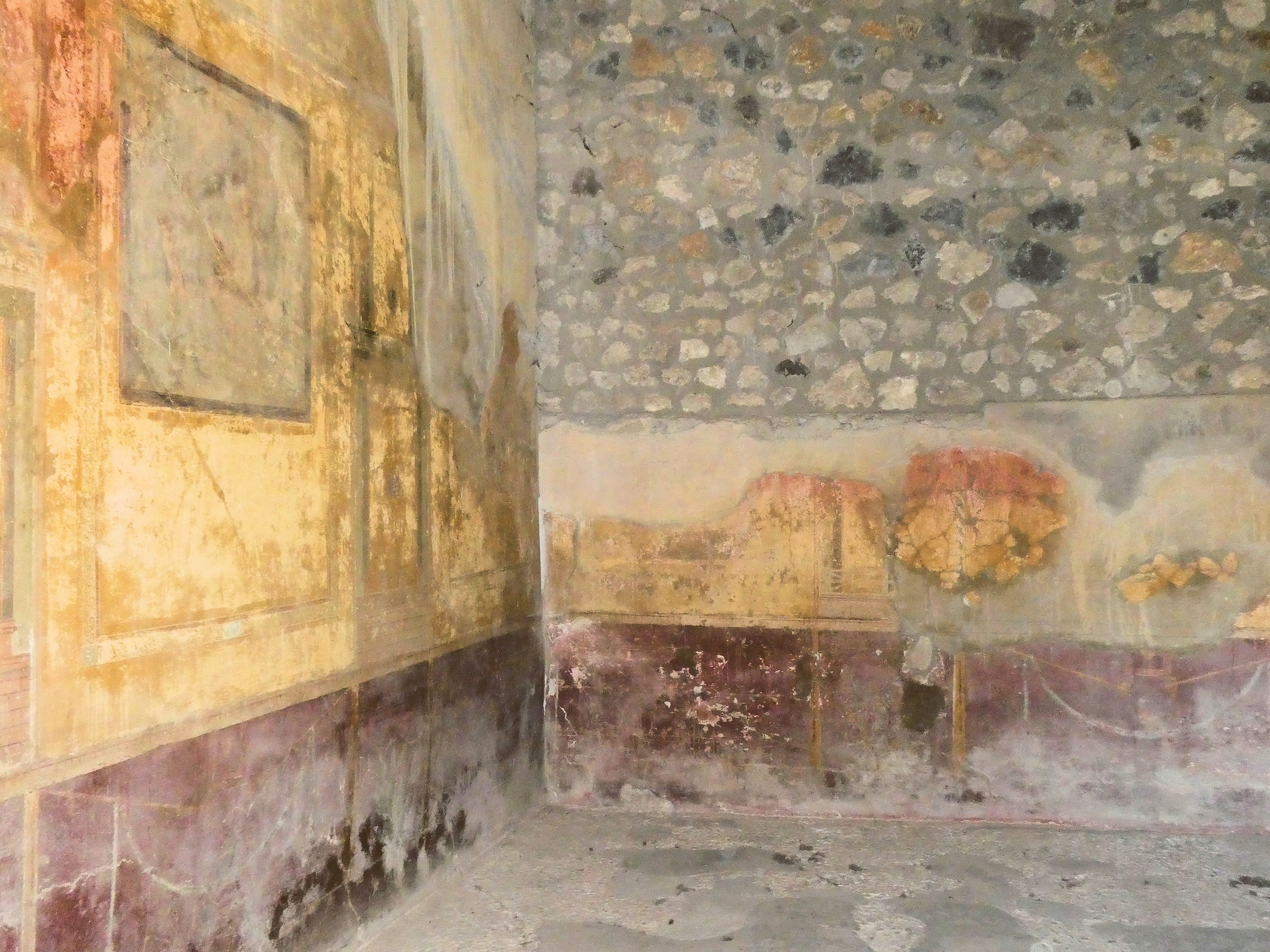
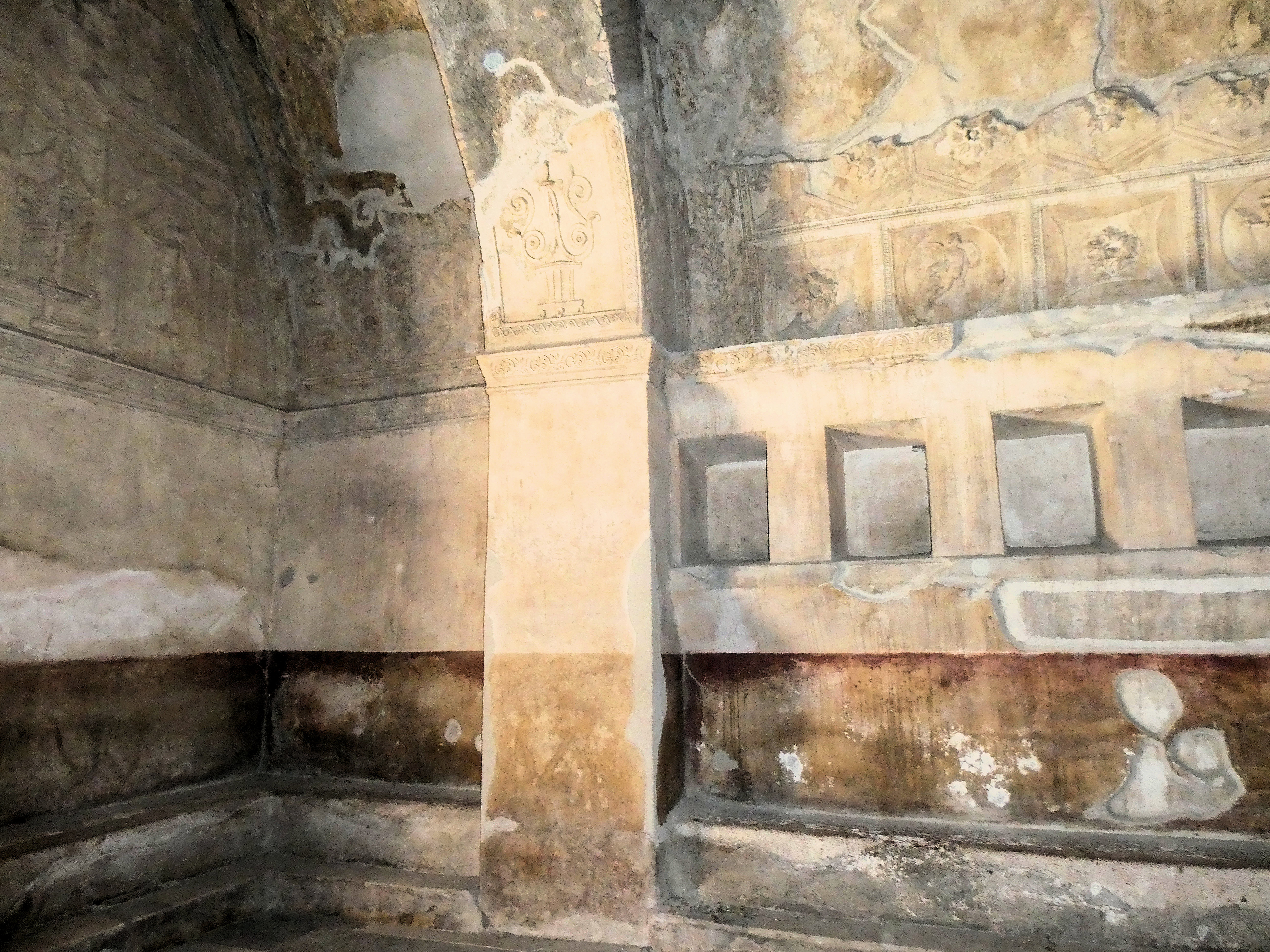
Pompeii wasn’t destroyed by Vesuvius in AD 79: it was buried under a layer of burning pumice stone which means that much of it is remarkably well preserved. Today the visitor can walk down Roman streets, peer into what we know were brothels and bath-houses, snoop around houses, temples and shops and sit in the amphitheatre and pretend to be an ancient Roman. Some of the frescoes are in a remarkable condition, the colours vibrant and the figures well defined. Those in the the brothel are quite explicit as they were there to provide visual inspiration for the clients and they were a cause for scandal in the Vatican when they were first revealed in 2001.
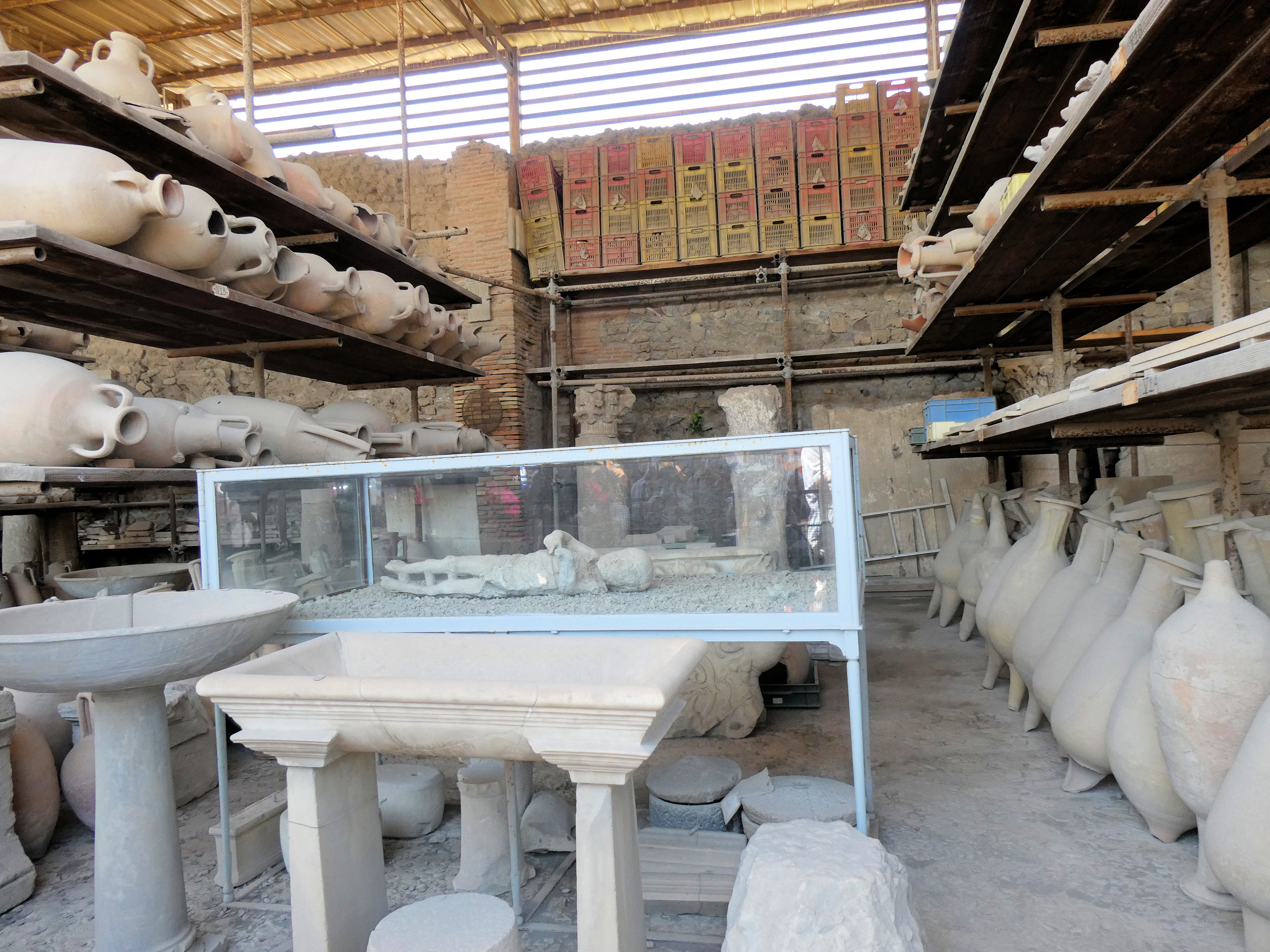
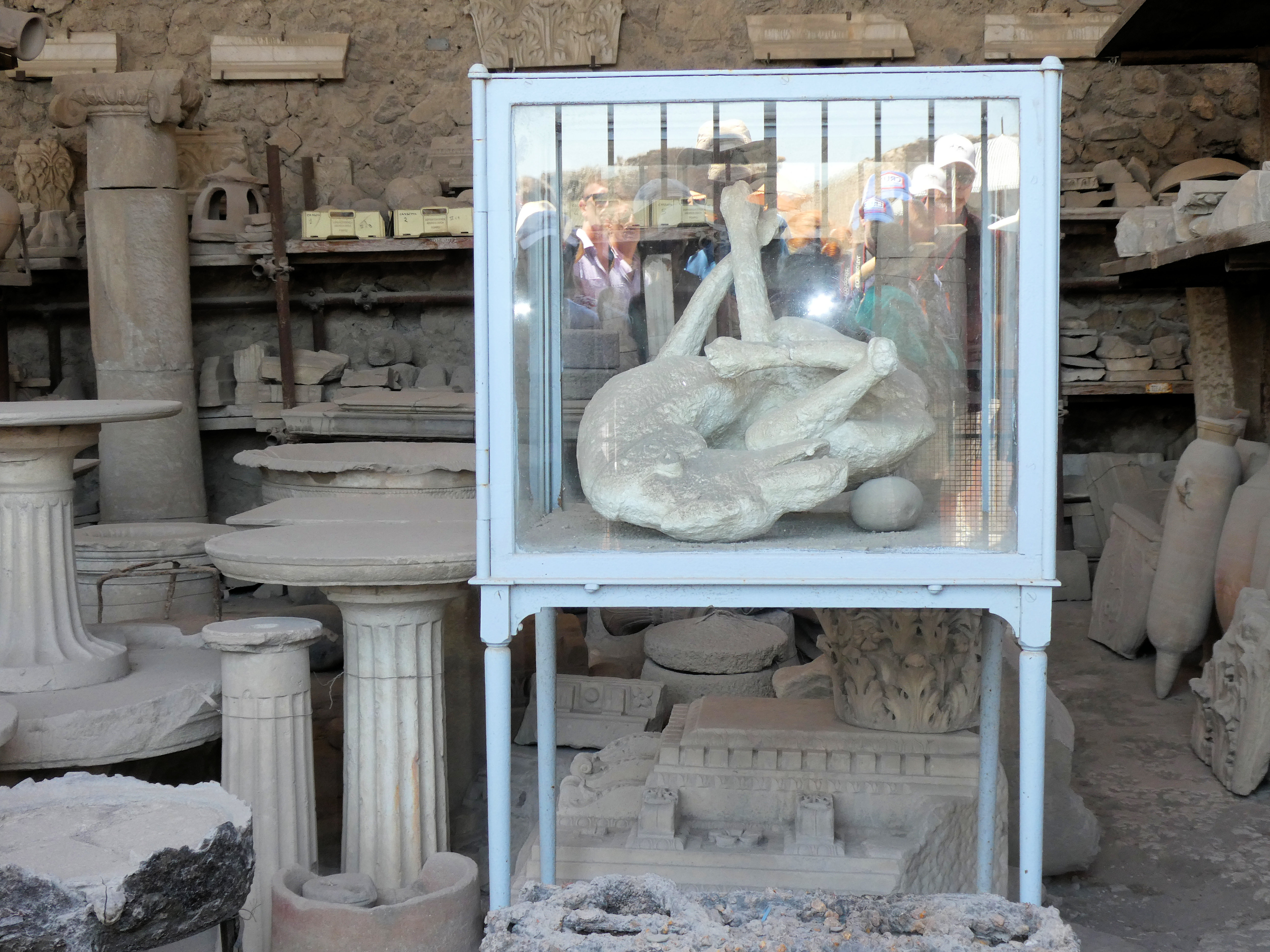
There had been severe earthquakes in the area for two days previous to the volcano’s eruption so many people had left the town for safety, otherwise the number of lives lost would have been a lot more. Nevertheless, 2,000 men, women and children perished. Plaster casts of some of the bodies that were excavated are on display but some are still under renovation.
My first visit to Pompeii was many years ago in late autumn and I would recommend that time of year. The number of visitors visiting the Naples area in late spring, summer and early autumn and ticking Pompeii off their bucket-list makes it a less enjoyable tour for the serious lover of history or archaeology. Besides the crowds, there is the heat, and Pompeii offers no shade whatsoever.
Recommended Reading
There are many histories of the destruction of Pompeii but the best must surely be Robert Harris’s Pompeii (2004) published by Hutchinson which reads like a thriller and is a true page-turner.
The original account is by Pliny the Younger who was there at the time and most accounts are based on this, another very exciting read.
Many years ago I visited Sorrento but wasn’t sure what to make of it. I returned again this year and I am still not sure what it is that makes it tick, but tick it certainly does.
Sorrento has been a popular tourist destination for almost two centuries, having been an essential stop on the Grand Tour in the 19th century, the poet Lord Byron being one who sang the praises of the Sorrentino air. Of course it does have the brooding volcano Vesuvius, but somehow this doesn’t make one uneasy as does say, Mt. Etna in Sicily.
Cruise ships in Sorrento the Bay of Naples with Vesuvius in Background
The perfume in the air is one of the things that makes this town different from most other resorts. Sorrento smells of citrus because the streets are lined with orange and lemon trees and there are at least 3 lemon plantations right in the town which can be visited and where you can sample their homemade Limoncello. We popped in most days for a tasting as one was opposite our hotel, and it was hard to resist.
Lemon Tree in Sorrento
The town is perched picturesquely on a plateau above the sea and there are spectacular views over the Bay of Naples and towards Vesuvius from most of the terraces around. Despite many of its old buildings having been demolished most of the historic town centre remains reasonably intact, the mellow old buildings giving the town an authenticity that many other towns lack. Along with its sister towns, Sant’Agnello, Piano di Sorrento and Meta di Sorrento which spread over land that was once primarily agricultural, visitors will find here an experience second to none.
The Best Gelato in Sorrento
El Duomo at Night – Sorrento
Interior of Church of S. Antonio
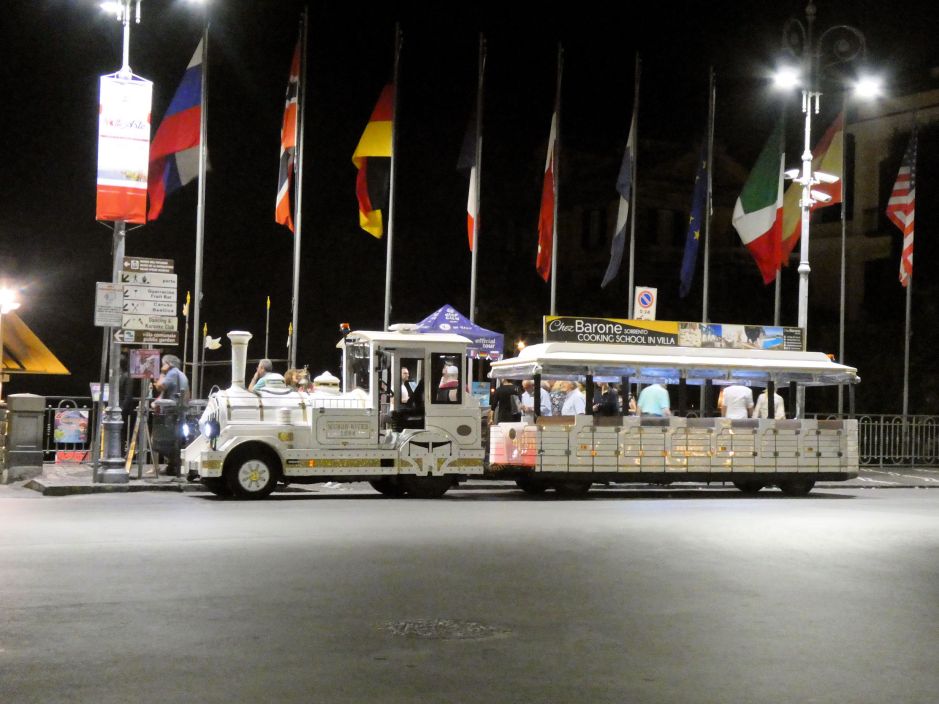
Best value in Sorrento, the tour with town train
Quiet side street
Niche plaques like these all over town
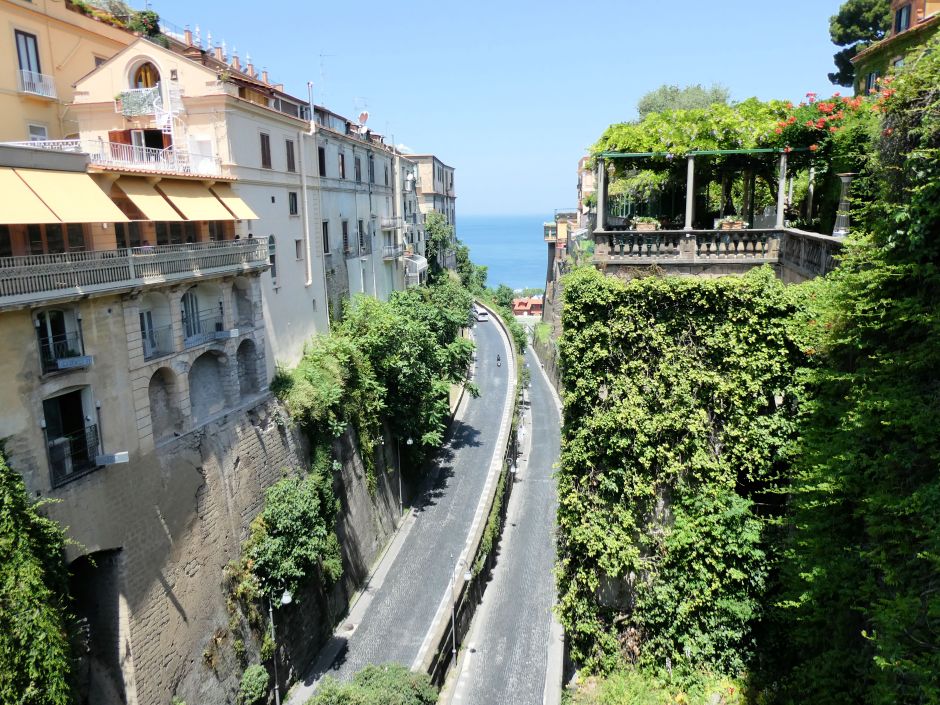
Long Winding Road down to Marina Piccola
Lemon Grove in Town
However, it must be said that Sorrento caters overwhelmingly for the English-speaking market – although it has its fair share of visitors from other countries. Menus are in English and everything seems to be geared towards English-speaking travellers. Sometimes the crowds of cheerful tourists thronging the streets and sitting at the bars in the Piazzo Tasso made me feel as though I hadn’t left home. But then along would come a couple of smiling Italian troubadours, the plaintive notes of “Come Back to Sorrento” or “O Sole Mio” plucked from a couple of mandolins would fill the air, and the Italian atmosphere would be restored.
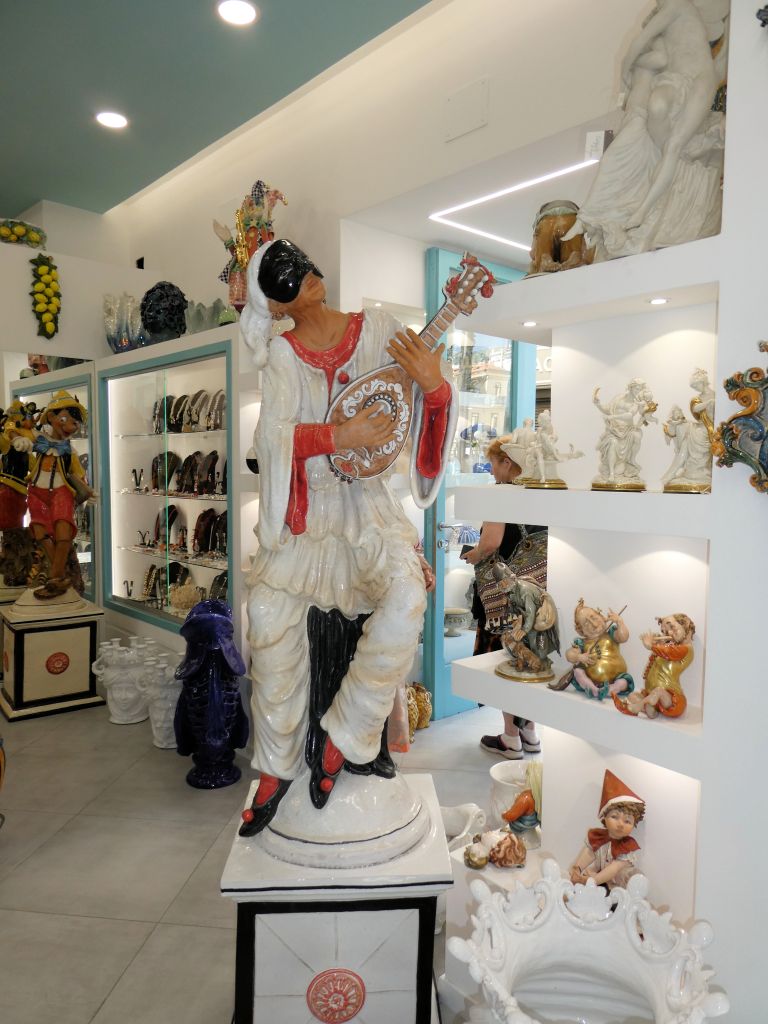
Figures I coveted like I’ve never coveted anything before! Exquisite porcelain but many more thousands of Euros than I could afford.
I got used to hearing these two tunes throughout my stay, they are in the DNA of the place. As in Sicily where every other shop is playing Speak Softly Love the haunting tune from The Godfather trilogy, in Sorrento the shops offer accordions, mandolins and Neopolitan songs. Music is everywhere. Bars belt out arias from popular operas, the market stalls entertain with the latest Italian pop songs, and Neopolitan songs are everywhere because the Sorrentinos themselves are proud to have such a legacy of world renowned melodies and like listening to them, but it never gets too loud.
Statue to the poet Torquato Tasso after whom the Piazza is named
The main square, Piazzo Tasso, is named after the poet Torquato Tasso and is the focal point for the evening passeggiata where the locals come to see and be seen. This is when you know you are in Italy, when everyone is in their finest clothes and sauntering up and down streets – many paved with lava from Vesuvius – that radiate from Tasso into the old town and down to the Port.
Most popular bar in Sorrento – Cafe Fauno
A smaller Piazza, S. Antonio, named after the Basilica of the same name which is in the square, is less crowded but a good place to sit and watch the Italians park their cars (a whole post could be written on this alone).
And just a few steps from here and you come to the road that leads down to one of Sorrento’s two ports, the Marina Piccolo.
Marina Piccola from above
There are two ports in Sorrento but no footpath between them so they each have to be approached from the town separately. Marina Piccola is no great distance from Tasso and is a pleasant walk but as it has 130 steps leading down to the beach it may be advisable to think about getting the bus back – or down to it for those who find steps difficult.
Private Beach on Marina Piccolo
Jetty for Ferries to Capri and Ischia
Although Piccola means small, it is actually the bigger port (Italians love to confuse tourists), the port from where the ferries to Capri, Naples, Ischia and Amalfi depart and the port at which the cruise ships dock.
Marina Grande
The more picturesque port of Marina Grande may be smaller but it has a village-like atmosphere and is where the majority of the seafood restaurants are to be found (one of them a fishermen’s co-operative where the fish is truly great). Nestled into a cove on the Amalfi Coast it is one of the most popular seaside resorts in Italy, homes and shops rising above the curve of the rocks, creating a harmonious, rustic charm. Sheltered by the promontory which separates it from the town, the harbour community retains time-honoured customs and maintains its primary source of survival – fishing.
Steep Street in Marina Grande
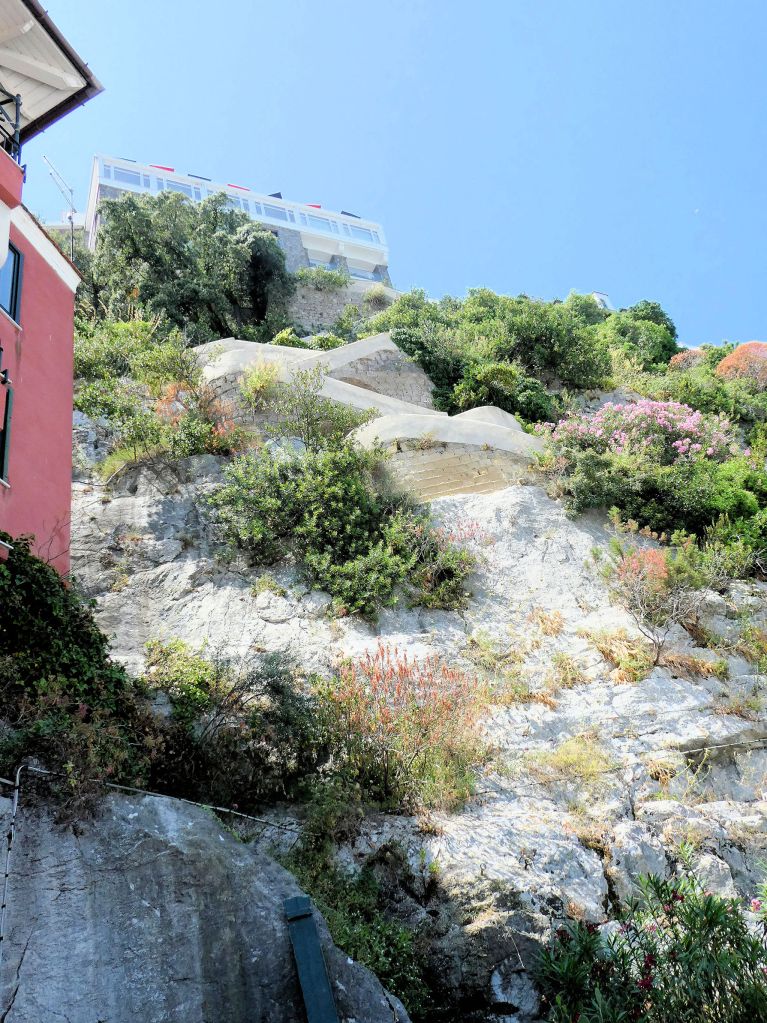
House on top of Rocks (winding path to top)
Beach at Piccolo Grande
The scene in the port at sunset when the day-trippers have gone and the fishermen clean their nets and drink wine at open-air tables by the sea is evocative of an age which has all but vanished. The best way to visit this port is to take the bus down to the main square, walk along the seafront and then take the elevator back to the town when you are ready.
Fishing off the wall
What could be more Italian than the washing on the balcony
Restaurant on the Beach
There is not much sand in
Sorrento unfortunately, and access to the sea is mostly from wooden boardwalks
built out over the water. Both ports
have small private beaches where entrance fees are usually around €10 and there
is a small public beach on Marine Piccola but this is always crowded.
Summer’s over, the chairs are wrecked, I’ll pile ‘em up, see if I can balance them and maybe make a bridge for the cats to walk over before I trash them (the chairs, not the cats). Hmm. Looks quite good against the sky. O-M-G, I’ve created an art installation! Look at that. Could I sell it? Could I invite people to my garden to look at it? Could I call myself an artist? Pity the Council has no spare money due to the cuts, otherwise, I could ask them to buy it as a piece of civic furniture. Would be perfect in the current zeitgeist.
Entrance to the Swarovski Factory and Shop in Austria
This is my first Six-Word Saturday and I hope it’s OK for me not to count the ‘a’ as a word, as I was taught many years ago. I know many rules have changed since my early days and possibly that is also one.
This photograph was taken about ten years ago when I was in Austria and visited the Swarovski factory, a veritable fairyland of crystal figures and jewelry. The result of so much overpowering bling was that I didn’t buy even a tiny piece. I really coveted a huge crystal tiger that cost many thousands of pounds but as I couldn’t have that I decided to have nothing!
The interior is amazing but this exterior exceeds it: this is the most impressive entrance I have ever seen.
NB In case anyone thinks I’ve discovered the Elixir of Life, that is not me in the photograph.











 You’re told about the one bucket of water to a dozen men. You feel the presence of the soldiers, and you hear voices. “Bonjour Tommy” says a Frenchman against footage of civilians and soldiers chatting in the streets. You hear letters written home, and poems from the war poets, like Siegfried Sassoon’s The General.































 MARI'S TRAVELS WITH HER CAMERA