Blog

  • PROVENCE – Villages & Towns

    PROVENCE – Villages & Towns

    I have an urge to go to Provence again.  I think it’s because my lavender is thriving this year and that the rosemary, thyme, sage and oregano are flourishing as never before that makes me want to immerse myself in the pungent scent of wild herbs crushed underfoot and the juniper, golden broom, and cistus that cover the hills of Provence.

    I like the journey there too, on the Eurostar from London (less than 6 hours): with a change at Paris, there is enough time to enjoy a leisurely meal to get the trip off to a good start.   The views from Paris down to Avignon of tiny, half-deserted medieval villages perched on steep hillsides, red geraniums and lime-green ferns tumbling over balconies, fertile valleys of yellow corn and wheat, occasionally highlighted with a blaze of red poppies like a Van Gogh landscape, and the occasional field of wild irises and lavender, always make me happy that I’ve taken the train to this corner of France.

    Palais du Pape

    Avignon:  The best viewpoint is from the Gardens of Rocher des Doms above the Palais des Papes.  The gardens are not worth the trip for themselves, but there are benches on which to sit to take in the peacocks and the panoramic views over the entire city and the surrounding areas. 

    If you visit only one monument, make it the Papal Palace, the Palais des Papes, which includes the Popes’ private apartments with some fabulous frescoes, and is one of the musts of Avignon.  This emblem of the city, an awe-inspiring monument to the importance of Avignon in the Christian world of the Middle Ages was built in the 1300s by two popes – Benedict XII and his successor, Clement V.   Avignon 10It was to become the biggest gothic edifice in all of Europe and is listed as a World Heritage Site by UNESCO, along with the episcopal buildings and the Saint Bénézet Bridge.  Palais du Pape, Golden Madonna

    Next to the palace is the Notre-Dame des Doms Cathedral, built in 1150, with the statue of the Virgin Mary, entirely covered in gold, 6 metres high and weighing 4500 kilos, protecting the city from the bell tower.

    The historic centre radiates from the Place de l’Horloge, a popular square bordered by cafés and restaurants. Just like the Place du Palais higher up you could spend the day just watching the street performers.  Here is the City Hall built in the mid 19th century over a former cardinal’s palace.  Next to it is the 19th-century municipal theatre which houses the Avignon opera.

    Avignon street scene

    Avignon is a city full of ancient dwellings, museums, churches, chapels and art galleries and you can easily fill a week here without leaving the city but it also has a hippy, boho area.  In the Rue des Teinturiers, a delightful cobblestone street dating from the Middle Ages, the street is lined with wine bars and small restaurants, and artists and musicians mingle here in a village-like ambience.  Then there is bourgeois Avignon on one side of the main avenue, the Rue de la Repúblic, a chic designer clothing and luxury shops area.  The other side of Repúblicc leads to the Place Pie and the Halles, the famous covered market and meeting place for the people of Avignon.

    Sur le Pont de Avignon on a windy day.

    But most people come to Avignon to see the famous bridge, the St. Bénézet Bridge, built around 1180 (by a simple shepherd, or so goes the story) to link the city to Villeneuve-les-Avignon.  Over the years, war and flooding took their toll on the bridge and today, the 12th-century St. Nicholas chapel along with four arches of the bridge are all that remain of the original structure. 

    Avignon Bridge 2

    The historic region (Luberon) between Aix-en-Provence and Avignon is often cited as being the most beautiful in France, rolling hills streaked with lavender and medieval villages perched on craggy rocks.

    Gordes 3

    Villages like Gordes, a compact hilltop town at the foot of the Vaucluse Mountains which is one of the trendiest places to live in Provence.  The ancient Borie village, an impressive complex of stone houses which was once the homes of shepherds and agricultural workers before the industrial revolution, was lovingly restored in the 1970s by a team of archaeologists and locals.  There are 300 of these in Gordes.

    Rousillon with its distinctive ochre earth

    Roussillon:  This area has to be visited, if only for the startling ochre colour of the earth as it is located in the very heart of the biggest ochre deposits in the world.  These natural pigments are used throughout the village, the walls of the houses being washed with the traditional ochre rendering, the many different oxides in the ochre sands combining in countless shades.

    Rousillon cemetery (ochre tombs)
    Rousillon cemetery

    The hills are streaked with it, and an Ochre Trail has been laid out and marked.

    Ochres was mined by the Romans

    Rousillon, the village
    A Village in the Luberon

    during their settlement of Provence but only became a widespread, industrial product in the late 18th century when Jean-Etienne Astier had the idea of washing the ochre-laden sands to extract the pure pigment. Today, though natural ochre faces strong competition from synthetic pigments, it remains unrivalled for use in certain applications.

    Blue shutters on house in Arles

    Arles and Aix de Provence.  More like Spain or Italy with narrow streets and shady squares it is the gateway to the Camargue.   Arles has a Roman theatre ringed by cobbled, medieval streets and is one of the most interesting towns in France. Arles, street scene

    It was home to Van Gogh in the 1880’s and because of this the town now has a flourishing artistic centre.  Buy books on Van Gogh and postcards here which you won’t find anywhere else.  The elegant spa town of Aix is Cezanne’s own town where you can visit his workshop and take a guided tour of landmarks in the life of the painter and that of the writer, Emile Zola.

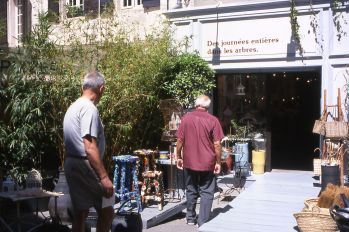
    After Arles, Van Gogh went to the pretty little town of St. Remy which nestles at the foot of the magnificent Massif des Alpilles, now classified as the Parc Naturel Régional des Alpilles. St. Remy, craft shop Stroll along the boulevards under the shade of century-old plane trees in the evening and raid the boutiques and art galleries for bargains (well, perhaps not, the Provencals are not as slow as Peter Mayle made them out to be and they strike a hard bargain).
    And then there is Baux de Provence, officially classified and labelled as “one of the most beautiful villages in France” (by the French).
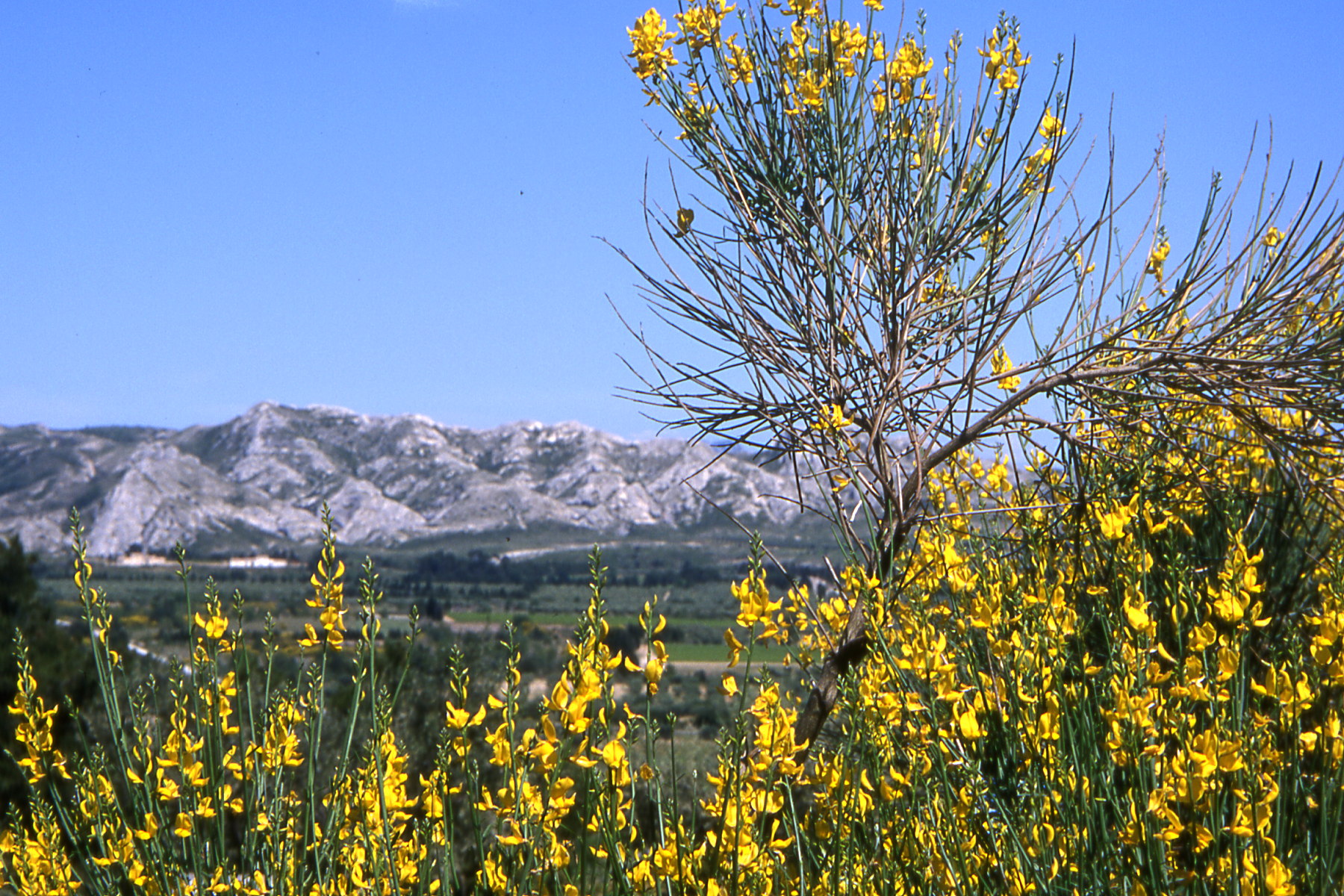
    Les Baux de ProvenceAbout 15 Kl from Arles this is a village high up in the limestone-mountains of Les Alpilles, located on a 245m. rocky plateau from where magnificent views of Arles and the Camargue can be had.  It is rich in cultural treasures, with 22 architectural monuments classified as “Historic”, including the church, chateau, town-hall, hospital, chapels, houses, doorways and many items of furniture.

    Les Baux de Provence 3

    The village (pop. 400) has been painstakingly restored, beautiful Renaissance façades and ‘hôtels particuliers’today serving as art galleries and museums, visited by more than one-and-a-half-million tourists a year, even though the visits must be made on foot.

    Les Baux villageThe narrow streets leading up to the Citadelle des Baux are lined with bistros and restaurants with terraces hanging over the cliffs – all with views to die for.   Many of these restaurants have international reputations and offer high quality dining.

    I’ve probably missed off your favourite village: this is just a sample of what you can see comfortably within a week using local buses.  Many years ago we toured the area by car but I found the local transport both easy to understand and very efficient.

    Terrace cafe in Le Baux (sheer drop other side)
    View to die for but below this terrace is a sheer drop. Magnificent if you have a head for heights.
  • Plaza de España, Seville

    Plaza de España, Seville

    In Seville last week I had my camera stolen on the third day of my four-day break, a major blow as this time it was my zoom camera so the images I took were different to those I’d taken on my last visit and, I like to think, better.

    However, after an evening of crying into my Rioja, I just had to get on with things and determine to be more careful in future.  The loss was my own fault.  I had the camera on a table at the Casa de Las Teresas bar, probably the most famous bar in Seville, moved to look at some pencil drawings on the wall in front of me which left the opening for an opportunist to walk by and whip the camera away.  My travelling companion had been sitting there too but was looking out through the door at something happening in the street.  It was a daring move to grab the camera from under our eyes like that.

    We still had four glorious days in Seville which is a genuinely over-the-top city of bulls and flamenco, dark-eyed beauties and white-washed alleys, a blazing sun beating down from a dark blue sky and never-ending late nights.  It’s the place to go if you’ve fallen for the romance of Carmen, Hemingway’s Toreros, and the lure of castanets and cante hondo, and if you want to drink manzanilla in a white-washed bodega late at night, or ride through the dappled park in a horse and carriage.  Seville is Spain’s party town and I love it.  I was seduced by its magic a long time ago and have never recovered.

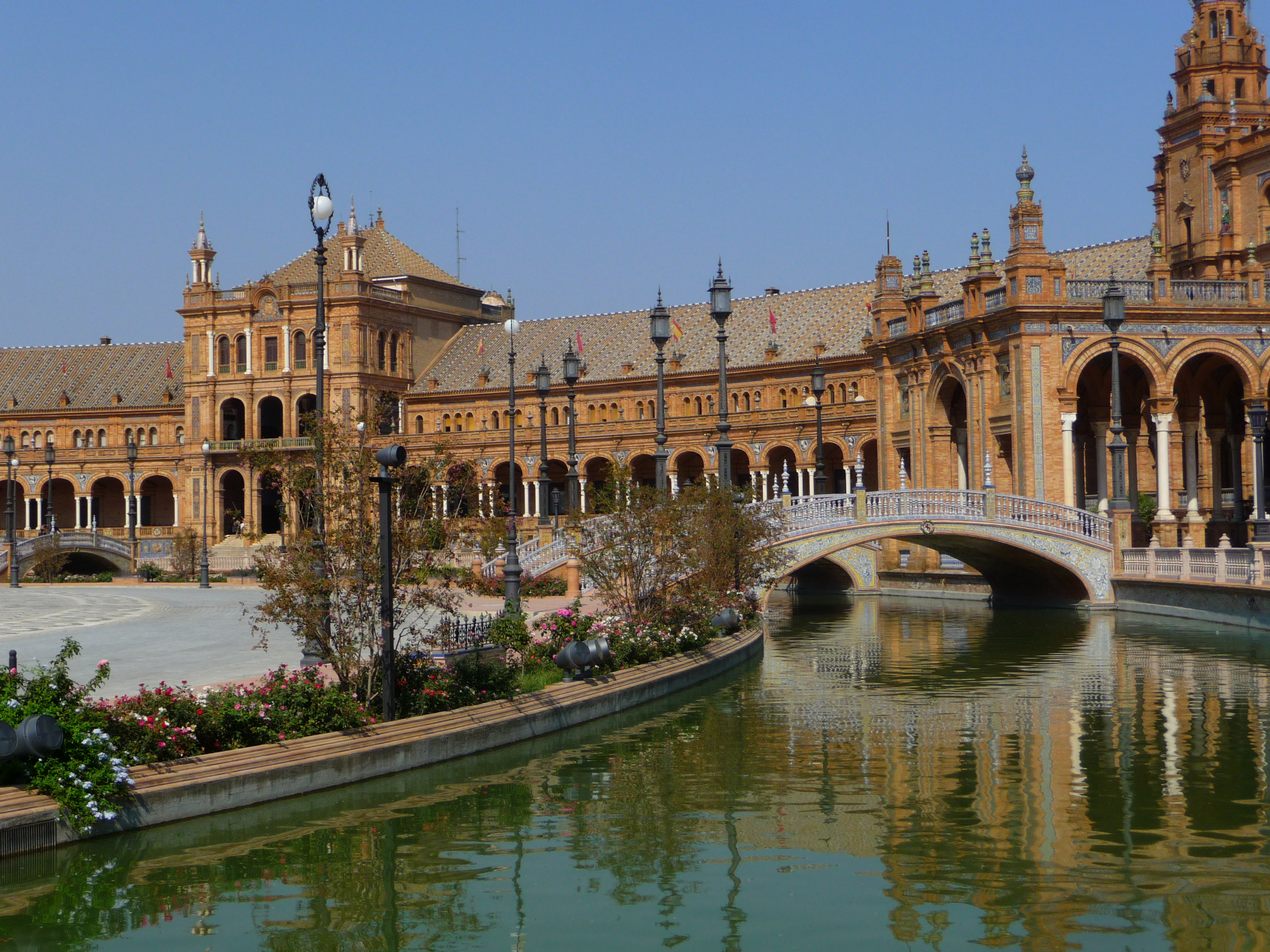
    We spent most of our time wandering the old streets of Santa Cruz, but we also managed to spend one afternoon at the Plaza de España, one of Seville’s show-offy bits, built for the Ibero-American Exhibition of 1929 (Expo 29) and located in Maria Luisa Park.  The following photographs were all taken 3-5 years ago.

    18 10_0601

    This massive building is the city’s most impressive edifice – after the cathedral – for its sheer grandeur.  Some people hate it, thinking it overblown and ornate, a blot on the older Seville, but I love it.  What is certain is that no one should miss it on a trip to Andalucia’s capital, along with the many pavilions in and around the Parque Maria Luisa.

    18 10_0605

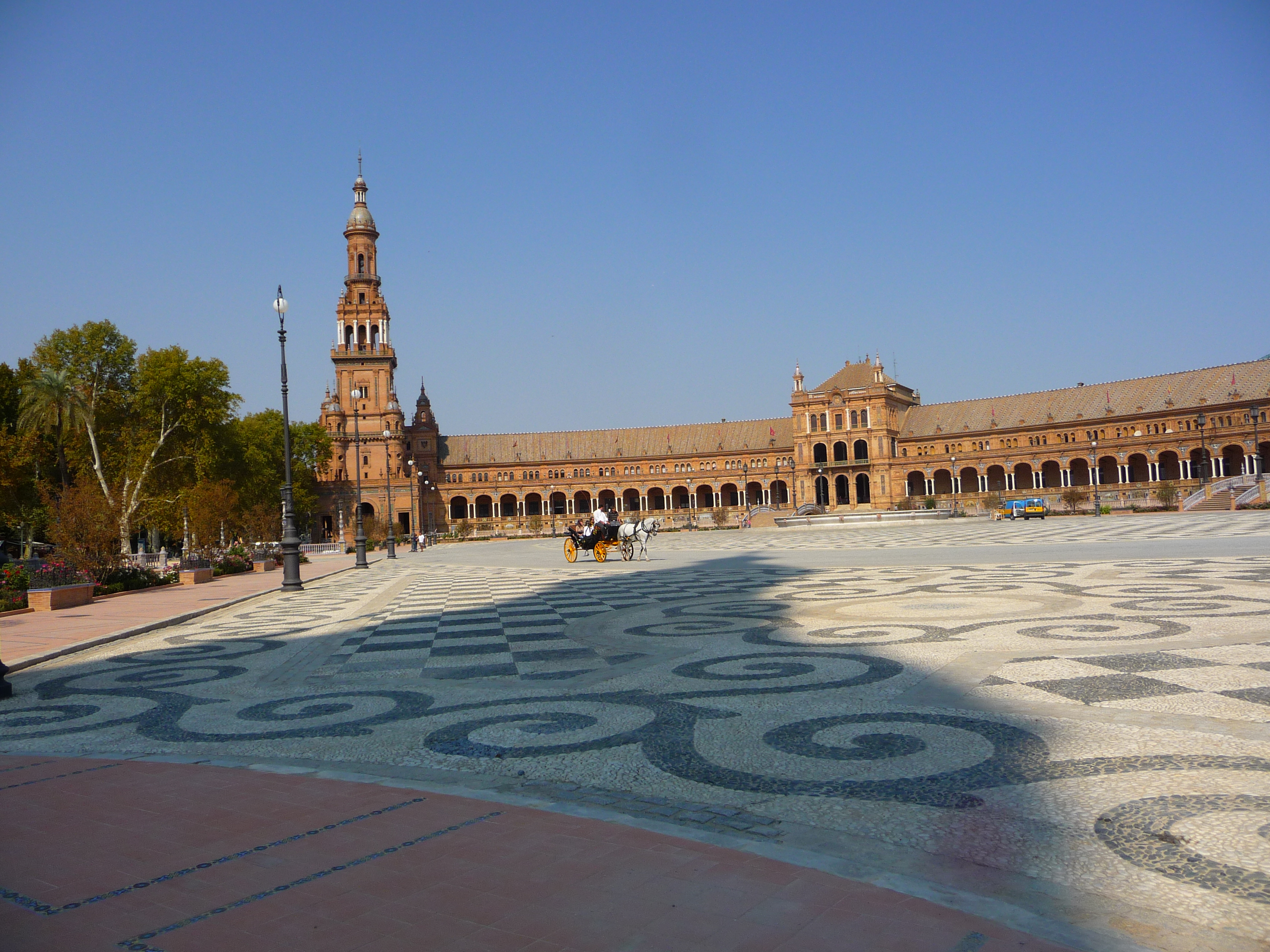
    The Plaza de España is a lavish Renaissance/neo-Moorish semi-circular brick building with a tower at either end, major landmarks as they are tall enough to be visible throughout the city, and it is said to be the size of five football pitches.  In front of the building, following the curve of its façade, runs a 515-metre canal forming a moat on which hired boats can be gently rowed, a real pleasure when the heat is intense.

    18 10_0603 Elegantly curving over the moat are four bridges representing the four ancient kingdoms of Spain, Castille, Aragon, Navarre and Leon.  18 10_0604

    Their supports are made of brightly painted ceramic tiles, which add an extra zing to the architecture, and in the centre of it all is the Plaza itself.

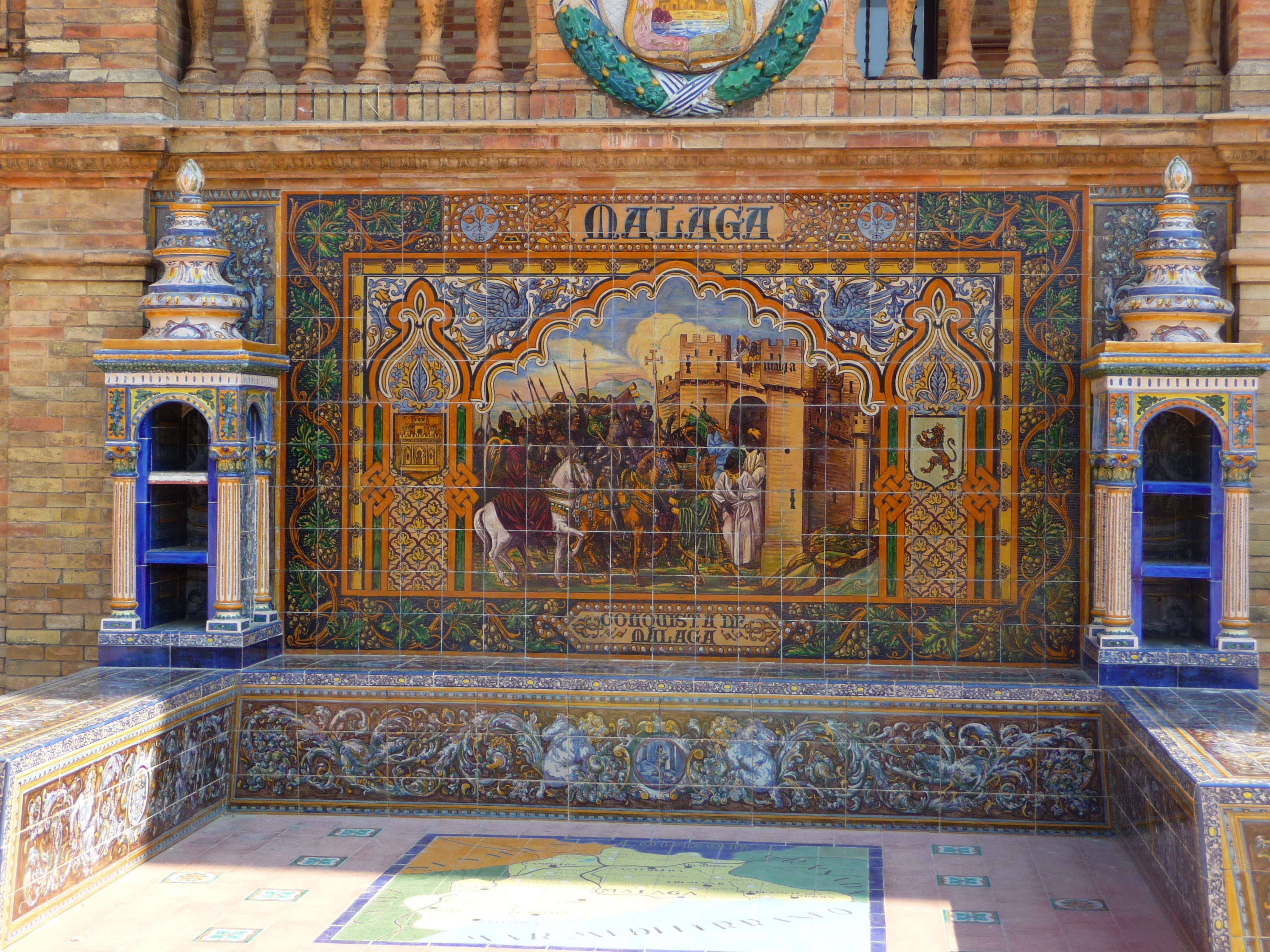
    On top of the ground level portico there is a first-floor balustrade with balconies stretching along its length. Along the wall by the canal are 48 alcoves with tiled benches, one for each province of Spain, each with a relevant tableau and map designed on colourful azulejos, the painted ceramic tiles so popular in this part of Andalucia.

    Malaga Pavilion
    Malaga Pavilion

    In fact, coloured ceramics feature heavily around Plaza de España –  the provincial alcoves, the walls, ornate bridges and balustrades being all covered in painted tiles.

    18 10_0599

    The architect of this amazing building which swings around the plaza in a large semi-circle was Anibal Gonzalez who designed the Plaza to wow the Expo’s visitors and in order to showcase Seville’s talents in industry and crafts.  Only this semi-circular pavilion remains from Expo ’29, the others are now used as museums: the Pabellon de Bellas Artes is now the Archaeological Museum, and the Pabellon Mudejar now houses the Museo de Artes y Costumbres Populares.

    18 10_0600

    For me, the best way to approach the Plaza de España is by horse and carriage.  Touristy, I know, but a ride through Maria Louisa Park to this lavish display of Spanishness, is very Sevillana and highly recommended. Pick a carriage up near the Cathedral, or the bull-ring, and fix your price.  It’s not too expensive (a 75 minute trip around the main sights of the city will only cost you €40 so you could do that and get off at the Plaza España: if there are two or three of you that makes it very reasonable).

    18 10_0591

    And then it will be time for tapas again, a manzanilla or a fino.  Losing my camera didn’t make me stop going to La Casa de las Teresas because the tapas were wonderful, slivers of acorn-fed jamón serrano draped over morsels of bread, little coquinas (clams), skewers of garlicky prawns and pungent tomatoes in a garlicky sauce, washed down with Manzanillo, the delicate wine from Sanlucar de Barrameda.  I’ll be back.

    N.B.  The Plaza de España is situated inside Maria Luisa Park, near the Teatro Lope de Vega and the University.  It is also near the Torre del Oro, embarkation point for trips on the River Guadalquivir (also highly recommended) and the Hop on Hop Off bus.

  • Crime Fiction Festival in N. Ireland

    Crime Fiction Festival in N. Ireland

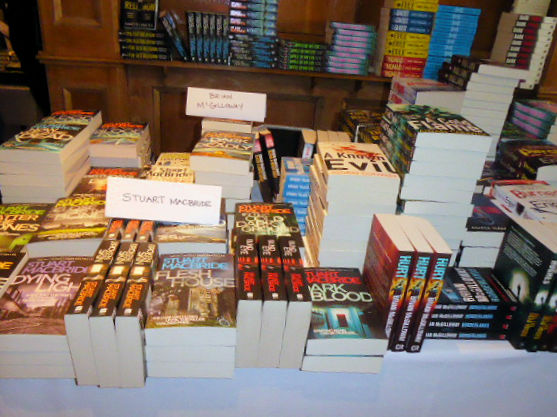
    To Belfast Last weekend for the Noireland International Crime Fiction Festival held in The Europa Hotel and back home laden with books by writers mostly new to me.   I realize that I have been in a rut, buying or borrowing only familiar writers, but listening to the panels of speakers at the Crime LitFest and browsing through the piles of books on the stands, I uncovered a whole new world.Noireland

    And what a world I found at Noireland.  Talks and panel events took place from Friday night till late Sunday afternoon and I was able to dip in and out as I wished.   I managed to catch most of them.  They ranged from An Englishwoman, An Irishwoman and a Scotswoman walk into the Noir which brought together the witty trio of Belinda Bauer, Jo Spain and Denise Mina, to a discussion between two of the top writers in the genre, Stuart MacBride and Adrian McKinty about their writing life.

    Various panels of writers took to the stage to discuss themes that ranged from The Victim, which looked at the human being at the heart of the crime, through True Crime and Podcasts, Gothic Crime, The Outsider (the loner, one of the tropes of crime fiction), Chillin’ like a Villain which explored the nature of the Villain in crime, Political Villainy, right down to our very own Brexit Means …..  And if you think it was all serious, “Catch yourself on” as they say in Belfast, this was all about the craic and the jokes fell fast and furious even as the crimes discussed were bloody and brutal.

    Adrian_Dunbar_-_Actor_(cropped)
    Brian O’Neill (https://creativecommons.org/licenses

    Difficult to chose a favourite session but I think I have to put in ace position the late evening reading by actor Adrian Dunbar of two spine-tingling chapters from John Connolly’s new novel, “A Book of Bones”.   Hard though it was to disassociate the man from his TV character of DCI Ted Hastings in Line of Fire his inspired reading meant that he owned the narrator’s character within a few seconds of him starting to read.  A cliché I know, but you could hear the proverbial pin drop.

    This was a masterclass in reading aloud and holding an audience, but the man is an actor and a Northern Irish citizen so he was at home.

    Another highlight for me was Anthony Horowitz talking about his writing career which spans books for young adults, the Alex Rider books, his Sherlock Holmes novels, Foyle’s War and Midsomer Murders on TV, his James Bond novels and how he was chosen by the Fleming Estate to write these.  Few people know that Horowitz is a wonderful raconteur and notable wit when on stage.

    This slideshow requires JavaScript.

    Writers like Eoin McNamee, Haylen Beck, Claire Allan, Dervla McTiernan, Stuart Turton, Gerald Brennan, Sarah Vaughn, M.J. Arlidge and Will Dean who had flown in from his home in Sweden, ranged over topics such as how they get into their victim’s heads, the human being at the heart of the crime, the extremes that motherhood can drive a woman to, and how true crimes have influenced the writing of crime novels.

    Ann Cleeves in discussion
    Ann Cleeves in discussion

    The final session was Ann Cleeves in conversation with Brian McGilloway talking about her long career in writing and how she came to develop the characters of Jimmy Perez in Shetland, and DCI Vera Stanhope in the long-running Vera.  A fascinating insight into the workings of a true crime writer.

    Part of the Bookstand

    I haven’t named every writer who took part in the Festival: I have listed them below, but a special mention must go to No Alibis bookshop in Belfast without whom this would not have taken place.  The owner, David Torrans, is passionate about books, specializes in mystery and detective fiction and is involved in the community to the extent that he also uses the bookshop as a community venue for literary events and concerts, Van Morrison being just one who performed there.

    Books bought from No Alibis Bookshop are free of postage in the UK so if you want to check out what’s available, log on to noalibis.com, buy a book and support an independent bookseller.  If you are in Belfast, you’ll find the shop at 83 Botanic Ave, Belfast BT7 1JL and they even open on Sunday mornings.

    Eat your heart out Amazon.
    Other writers appearing at the Noireland International Crime Fiction Festival and not mentioned above:

    Eoin McNamee, Haylen Beck, Claire Allen, Asia MacKay, Elodie Harper, Dervla McTiernan, Stuart Turton, Laura Purcell, Caroline Lee, William Ryan, Martyn Waites, Aidan Conway, Declan Hughes, Adam Handy, Thomas Enger, Renee Knight, James Swallow, Douglas Lindsay, Mason Cross, Steve Cavanagh, Karen Hamilton, Elly Griffiths, and D.B. John.
  • WADI RUM – Jordan’s Natural Park

    WADI RUM – Jordan’s Natural Park

    A few hours drive from Amman along the King’s Highway that cuts through the desert and you can be in the stunning nature reserve of Wadi Rum, for me the second unmissable destination in all Jordan.  Familiar to movie-goers from the David Lean film ‘Lawrence of Arabia’, it was one of  the principal encampments during World War I for the attack on the Ottamans by Lawrence and the Arab Army of Sharif Hussein bin Ali, the Hashemite leader of the Great Arab Revolt.

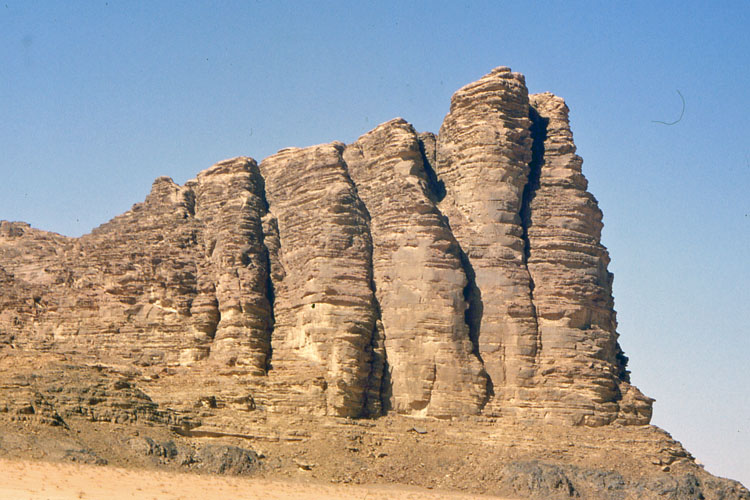
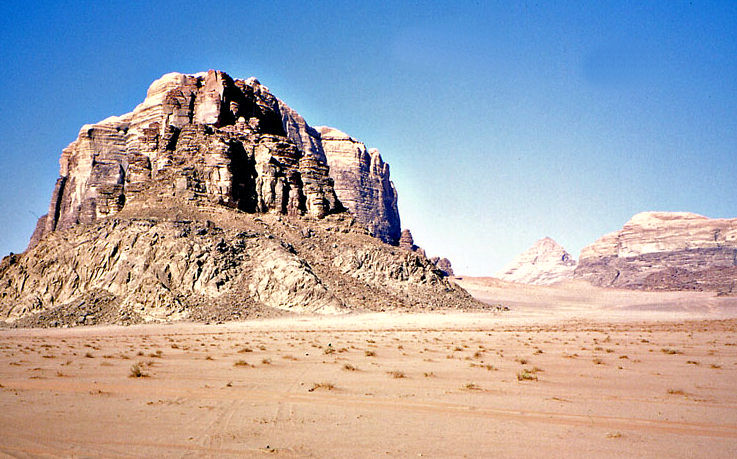
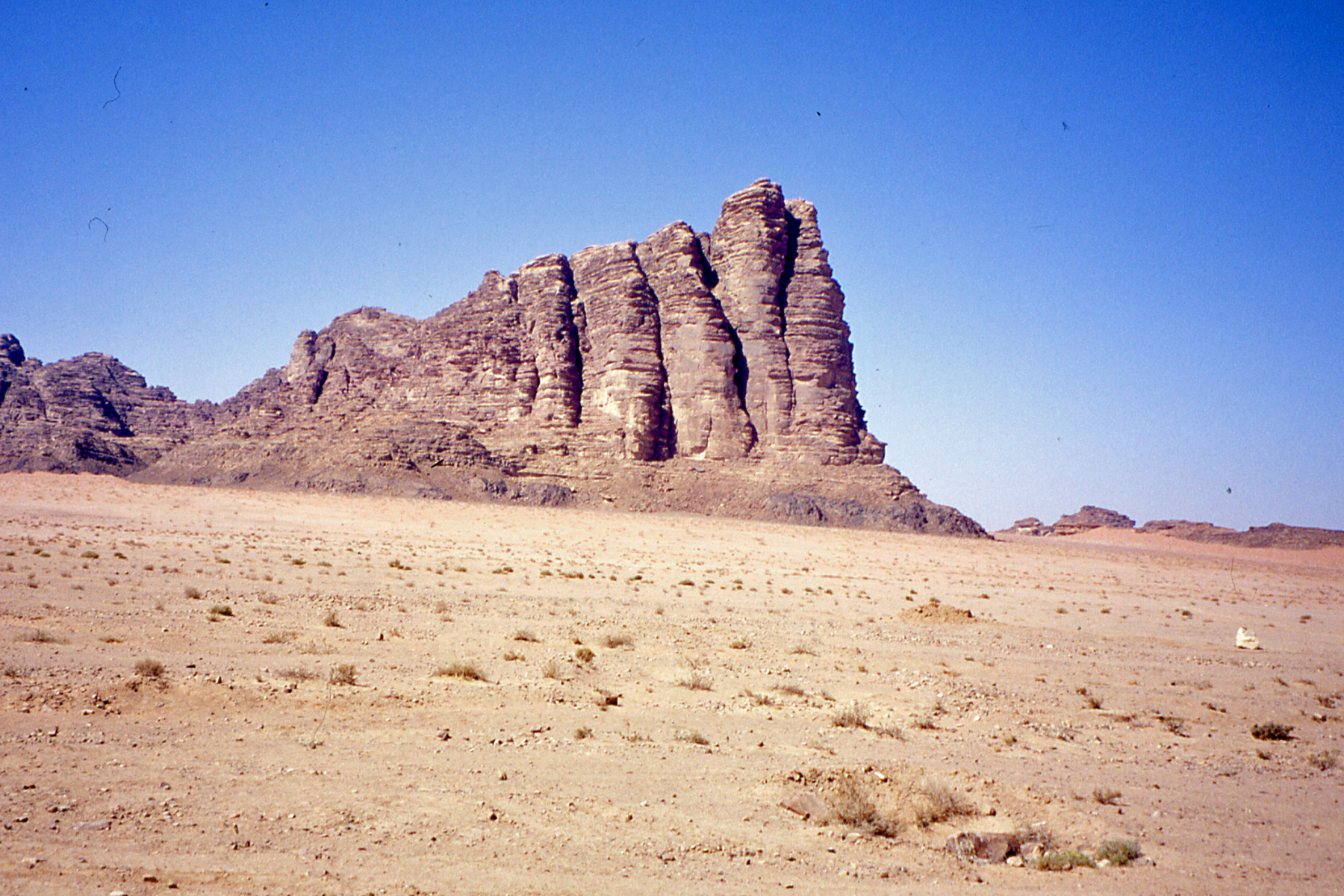
    Wadi Rum is a timeless place, virtually untouched by humanity and stunning in its magnificence.  The weather and the winds have carved the imposing, towering towers of rocks that surge out of the earth like skyscrapers, so elegantly described by T.E. Lawrence as “vast, echoing and God-like…”

    Seven Pillars of Wisdom (2 on other side) - Copy
    Lawrence’s Seven Pillars of Wisdom (the other 2 are on the other side)

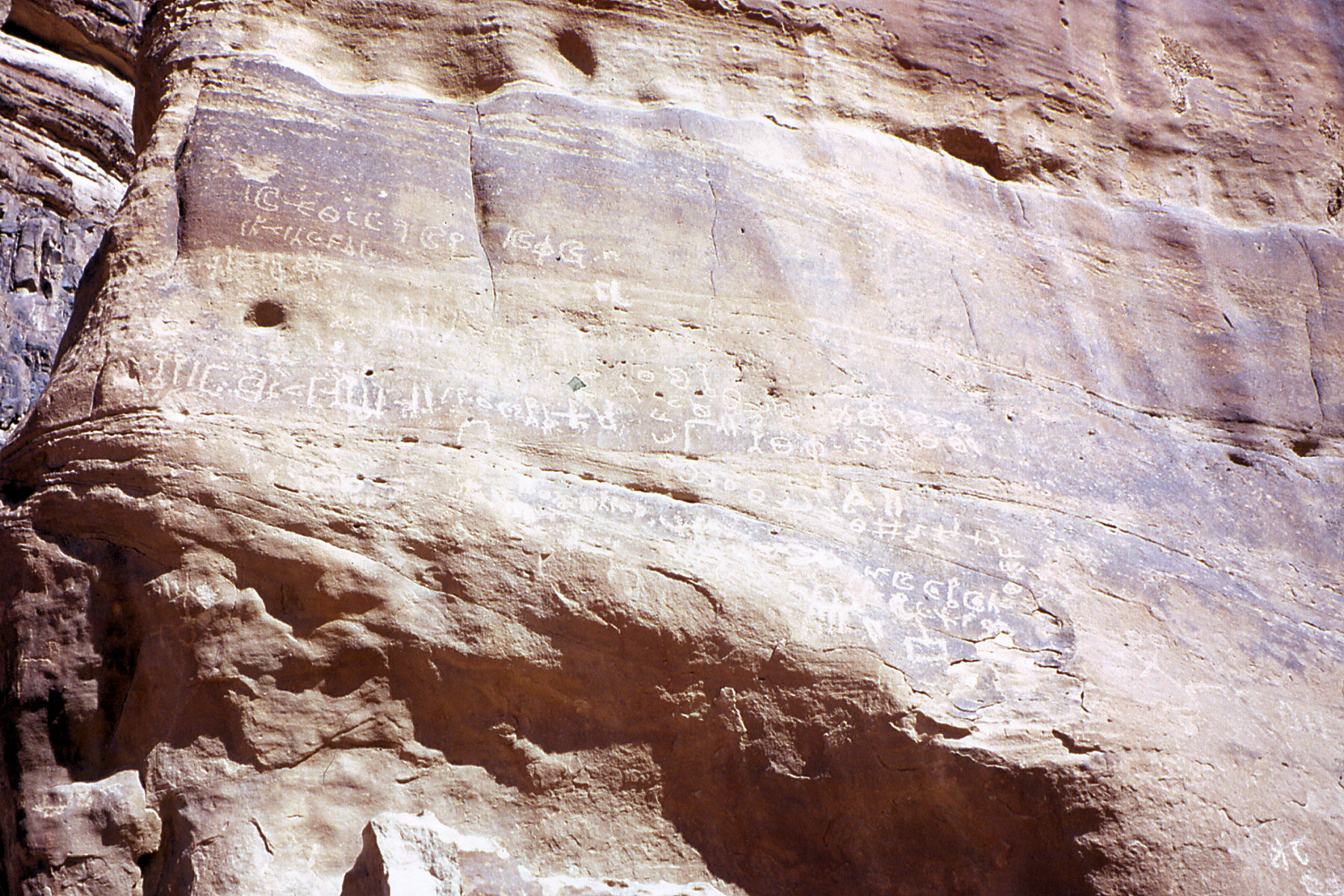
    The totally natural Wadi Rum, described by Lawrence in The Seven Pillars of Wisdom as “landscape that refused to be an accessory ” was a caravan route during Nabatean times, and those who trek or hike through the canyons and the red sandstone hills will come across stones and rocks inscribed with the graffiti of two thousand years ago.  I cannot vouch for the age of the graffiti below: my guide assured me that it was thousands of years old but I’m naturally sceptical when around guides so I’ll pass on that one.

    Graffitti - even in the desert of Wadi Rum - Copy

    Monolithic rocks surge from the desert floor to heights of 1,750 metres offering a challenge to serious mountaineers.  Less strenuous exercise like trekking or hiking in the empty spaces, offers the enjoyment of  exploring the canyons, the water holes and the 4000-year-old rock drawings in this vast wilderness.

    WADI RUM

    Trekkers should be well-equipped and always carry a map of the area, a compass, plenty of water, sunblock and a hat.  It is easy to get lost in this maze of mountains and desert, so it’s best to take a Bedouin guide if at all possible.

    To Jordan’s credit there are no hotels in Wadi Rum, but camping is permitted.  A night spent under the star-studded sky as the sunset deepens the shadows and colours the rocks, to wake at first light to see them change again from brown to reddish-pink, is a life-affirming event you will never forget.

    Although there are no cafés in the desert you may come across of the black, low-slung tents made from goat’s hair where Bedu hospitality ensures that you will be offered a refreshing cup of tea and a chance to get up close and personal with the pack animals.

    This slideshow requires JavaScript.

    Always dress modestly when visiting a Bedu area, skimpy shorts and tops will be considered disrespectful, and remember to ask permission before taking photographs of the local Bedouin.

    There is a Visitor centre where the hire of guides and 4 x 4 jeeps can be made, and where bookings to spend a night in a Bedouin tent sleeping under the stars can be arranged – something everyone should do at least once in a lifetime.

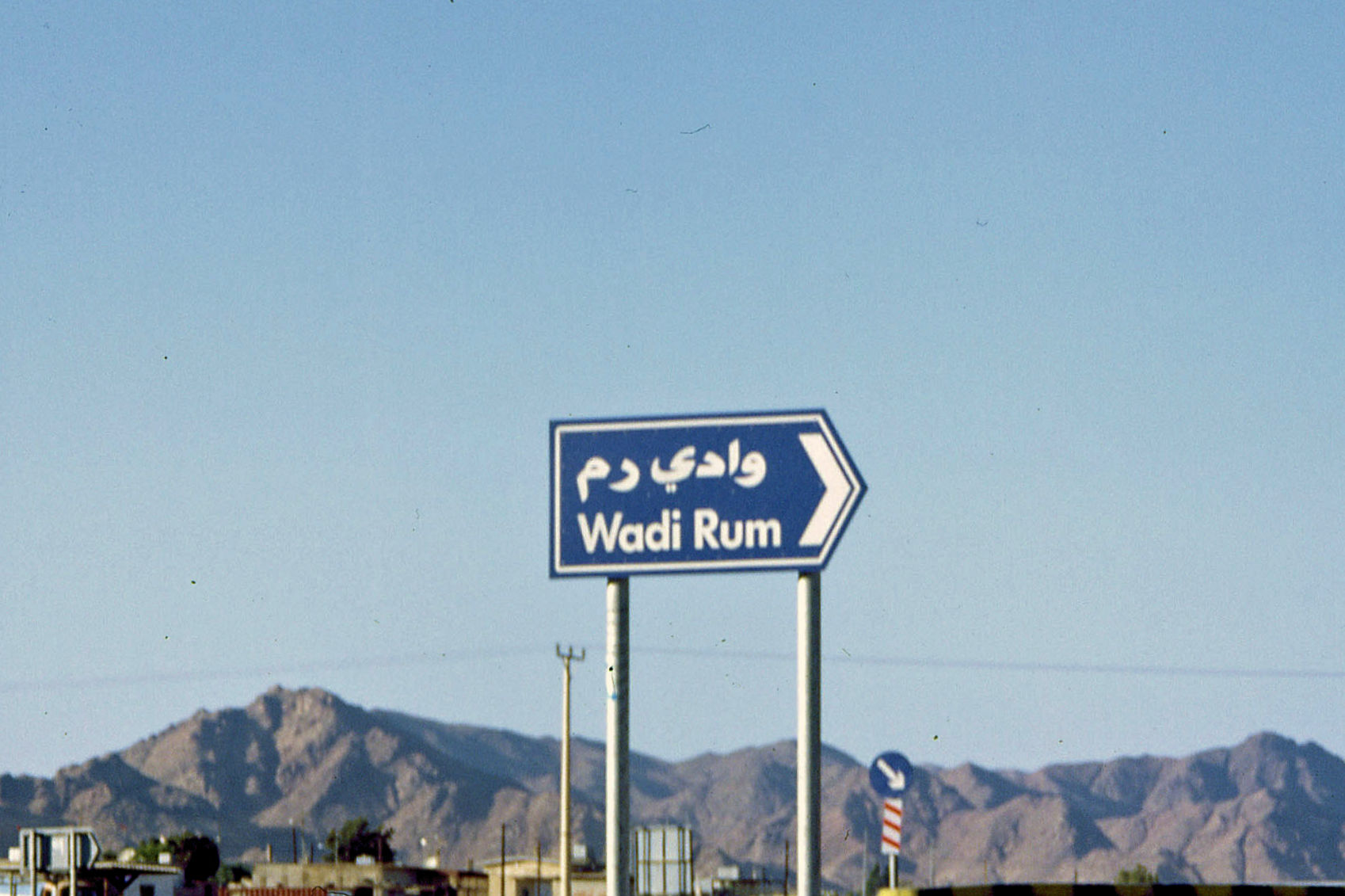
    Signpost Wadi Rum

    Seven Pillars of Wisdom 23

  • AQABA – Jordan’s Red Sea Port

    AQABA – Jordan’s Red Sea Port

    Perhaps reissuing the David Lean film, Lawrence of Arabia, might attract more people to Jordan as film tourism is big business these days – witness the rush to New Zealand for the Lord of the Rings films sites and Northern Ireland and Croatia for Game of Thrones sites.  And, it’s easier for us to reach Aqaba today than it was for Lawrence when he set out across the desert with the Arab Army of Sharif Hussein bin Ali, the Hashemite leader of the Great Arab Revolt, in 1917.

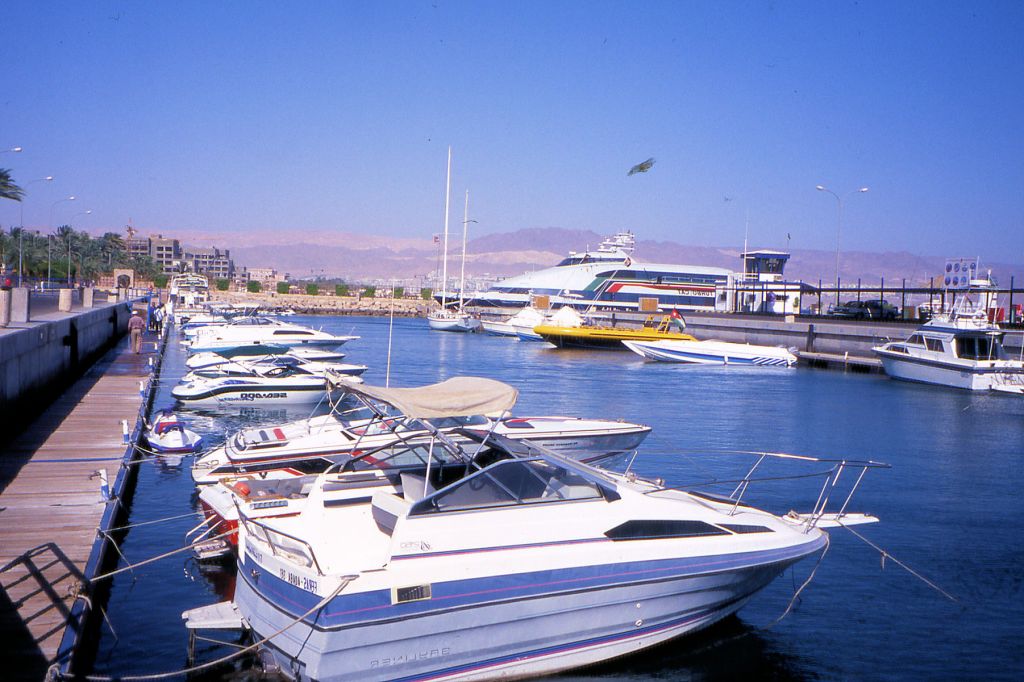
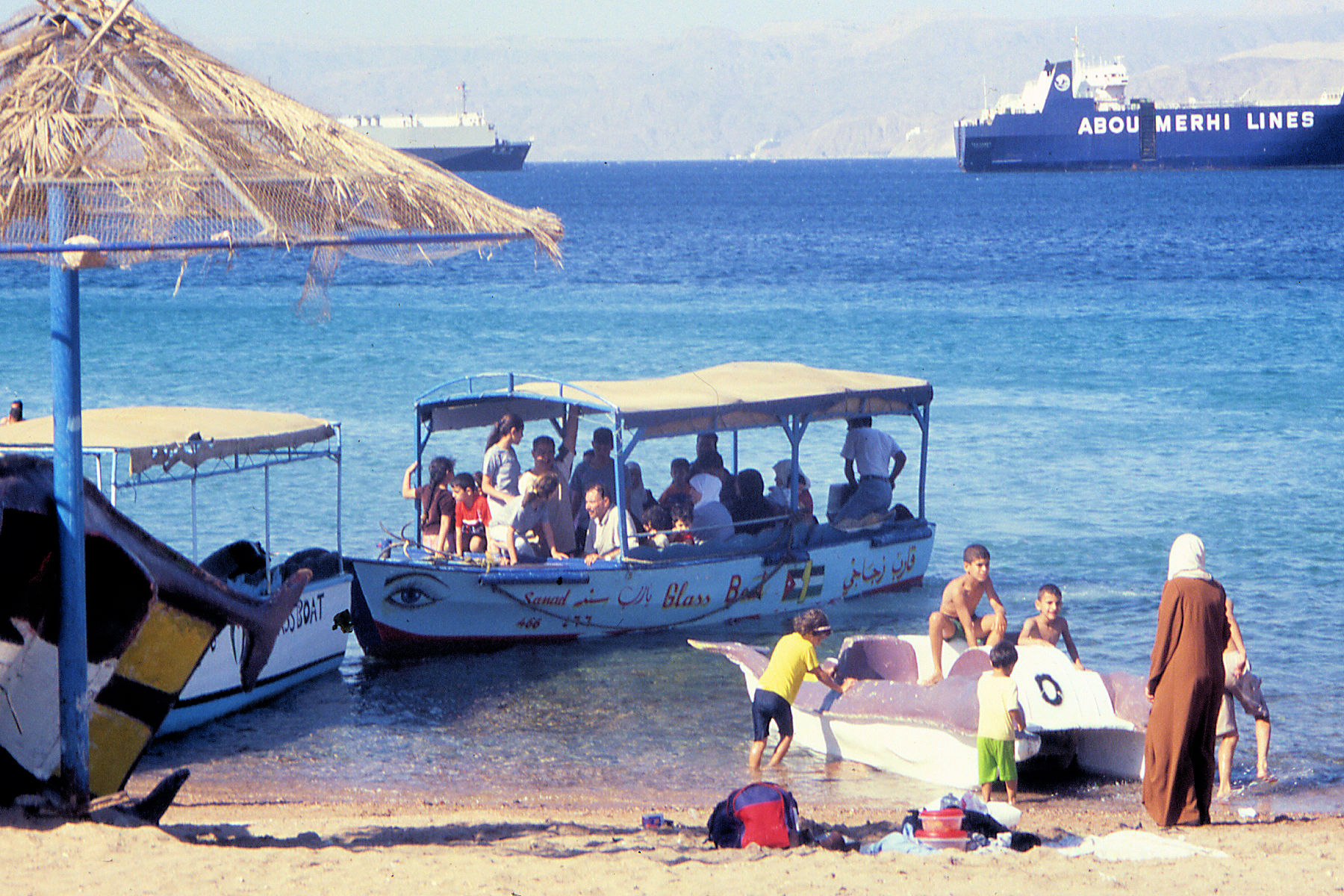
    Not far from Amman and set in a palm-fringed, sandy bay backed by purple coloured mountains and just a few kilometres from the border with Saudi Arabia, Aqaba boasts several excellent seafood restaurants, coral reefs that are a mecca for international divers and deep, indigo-coloured waters that teem with colourful marine life.   Some of the world’s best snorkelling and wreck diving is available at the Royal Diving Club just outside town where day membership for about fifteen dinars gets you a private beach, fresh-water swimming pool, changing rooms and a restaurant.  If you want to see the underwater wonderland but don’t want to get wet, glass bottomed boats leave from the two public beaches in the port.

    However, there is a caveat.  I understand that since my visit to Aqaba, the place has somewhat deteriorated and although nothing can take away from the glorious waters and the beautiful fish, I understand that the showers and other facilities leave a lot to be desired and the Jetty has been closed off.  There is a plus side though, fewer people now use the Diving Club and you may have the place to yourself.

    At one time 50,000 cars a month passed into Iraq through this Economic Free Zone but no longer.   However, the duty-free prices in Aqaba makes it an attractive place for shopping with the accent on jewellery, hand-woven rugs and carpets, finely decorated daggers and swords and the Dead Sea health products that spill out of the numerous little shops that cluster up the hilly streets.   Lapis Lazuli and turquise are especially good buys here.

    The shopkeepers are busier with their worry beads than with their calculators and there is no pressure on you to buy the goods you are admiring.   No one tries to sell you a kaftan when you stop to finger the beaded silk robes outside the shop, no one offers you an immediate discount if you will just step inside, nor are there beggars importuning for your spare coins.

    Beach scene 2

    Aqaba is a perfect place to stop off for a day’s relaxation by the sea if you are mentally and physically tired from walking around Petra and absorbing the history of  that lovely place, and perhaps less so, walking around Amman.  I confess I went there because of the film as Lawrence of Arabia has always been one of my favourite films and I well remember the scene where Lawrence led the charge “To Aqaba” and I had to see for myself.  Not a bit like the film, of course,   But Wadi Rum didn’t disappoint (up next).


  • Jordan – Amman, Capital City

    Jordan – Amman, Capital City

    In the rush to Petra, Amman is often overlooked, but this is a pity because a day or two in Jordan’s capital reveals a wealth of historical sites, most of them dotted throughout the city, part of the daily life of the inhabitants.

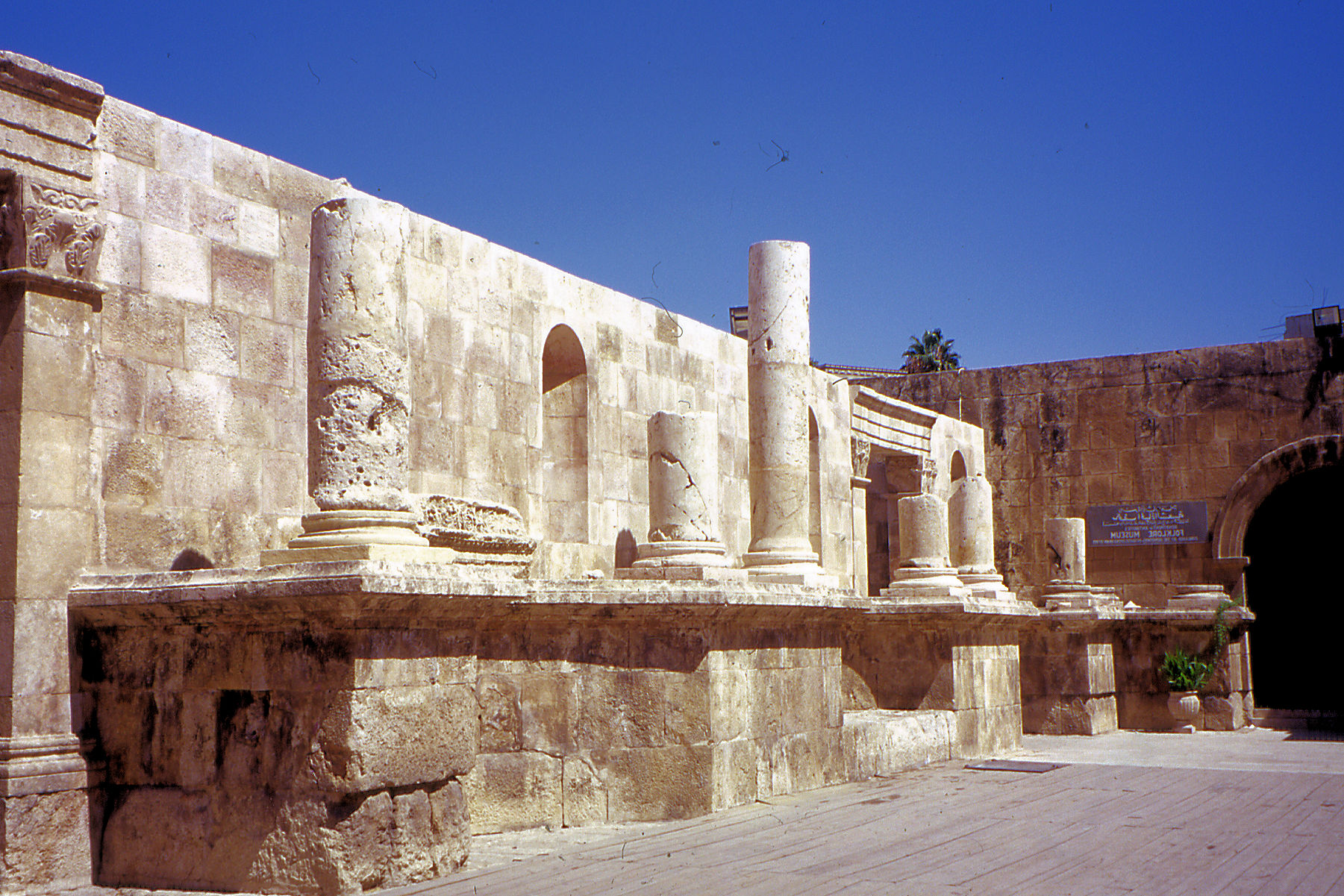
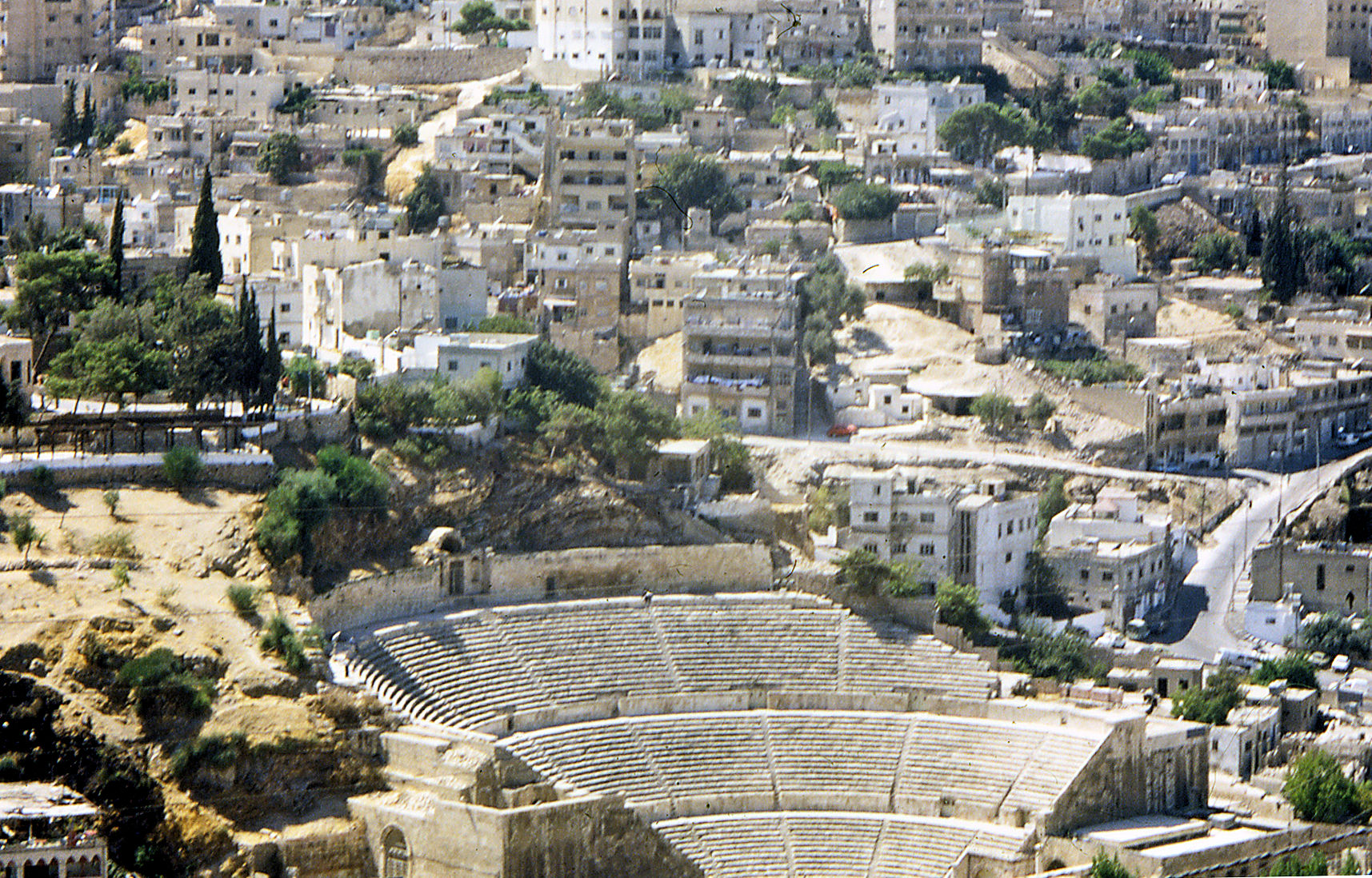
    The city has a well preserved Roman Theatre, a colonnaded street and a Nymphaeum: the juxtaposition of the very ancient and the modern looks perfect.  No painting in garish colours is allowed in Amman so the whole is soothing to the eye.

    Entrance to Roman Theatre & Museum

    Amman is built on seven hills and you should take a taxi to the most ancient part of the city, Jabal al-Qal’a which translates as ‘Citadel Hill’.  The most famous ruins here are the Roman Temple of Hercules, the Byzantine Church and the Umayyad Palace.  The gigantic sandstone blocks of this Roman Temple, part of a vast complex erected in 1200 BC by the Ammonites who gave Amman its name, are being put back together by a team of international archaeologists.  An extra bonus are the magnificent views across downtown Amman from the hill which is one of the highest points in the city.

    Citadel Hill 4
    The Temple of Hercules

    In the nearby Archeological Museum, you’ll find the 3rd century Dead Sea Scrolls, rectangles of kidskin sewn end to end only discovered in 1947 by some Bedouin shepherds.

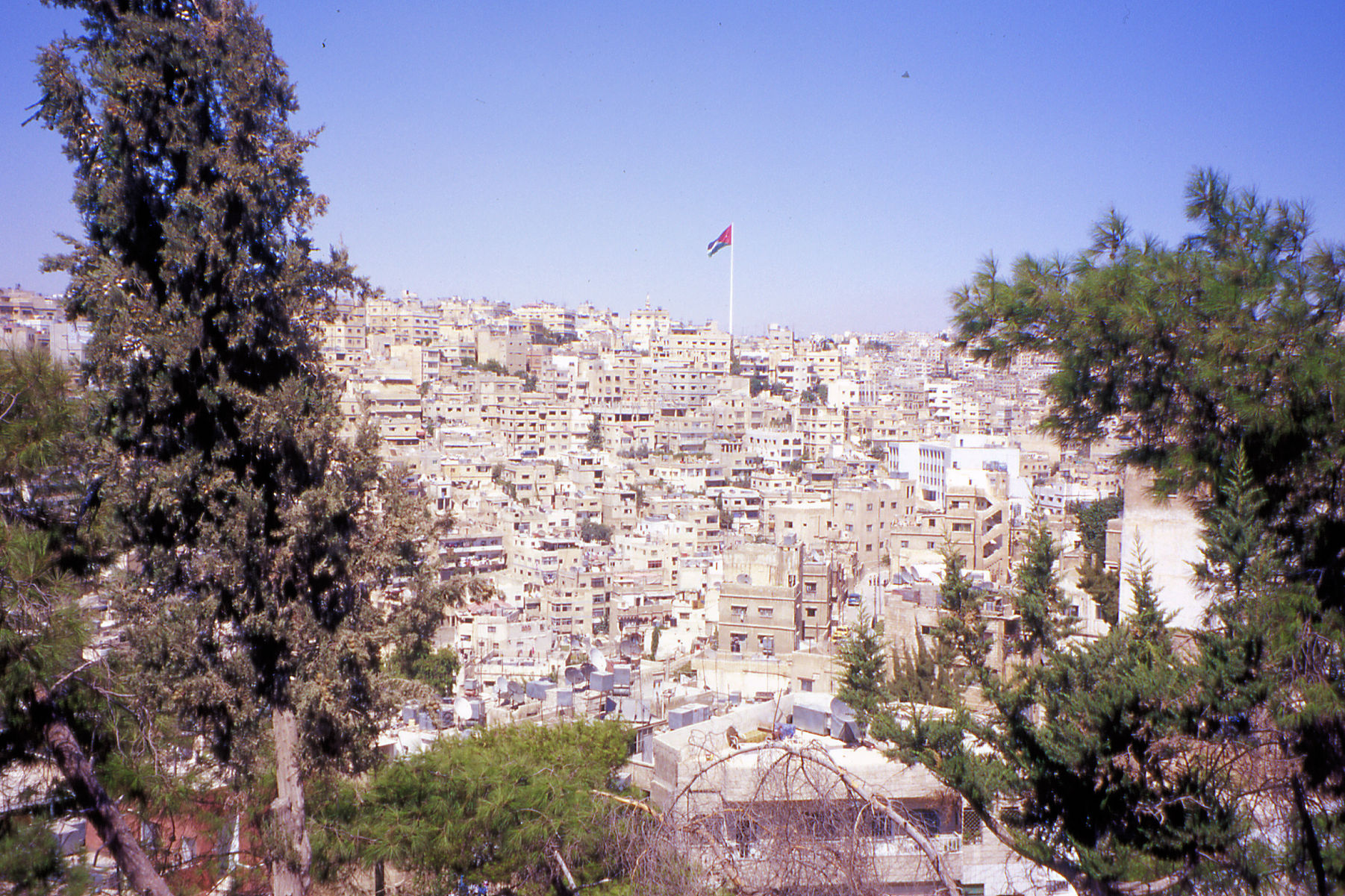
    Looking down from Citadel Hill
    Downtown Amman from Citadel Hill

    From a 3000 year old culture to modern nightlife, there’s something for everyone in Amman.  You’ll find that the vendors are busier with their worry beads than with their calculators, and whether you shop in ancient souks or state of the art shopping malls, you will find no pressure on you to buy anything – a delightful change from Cairo.

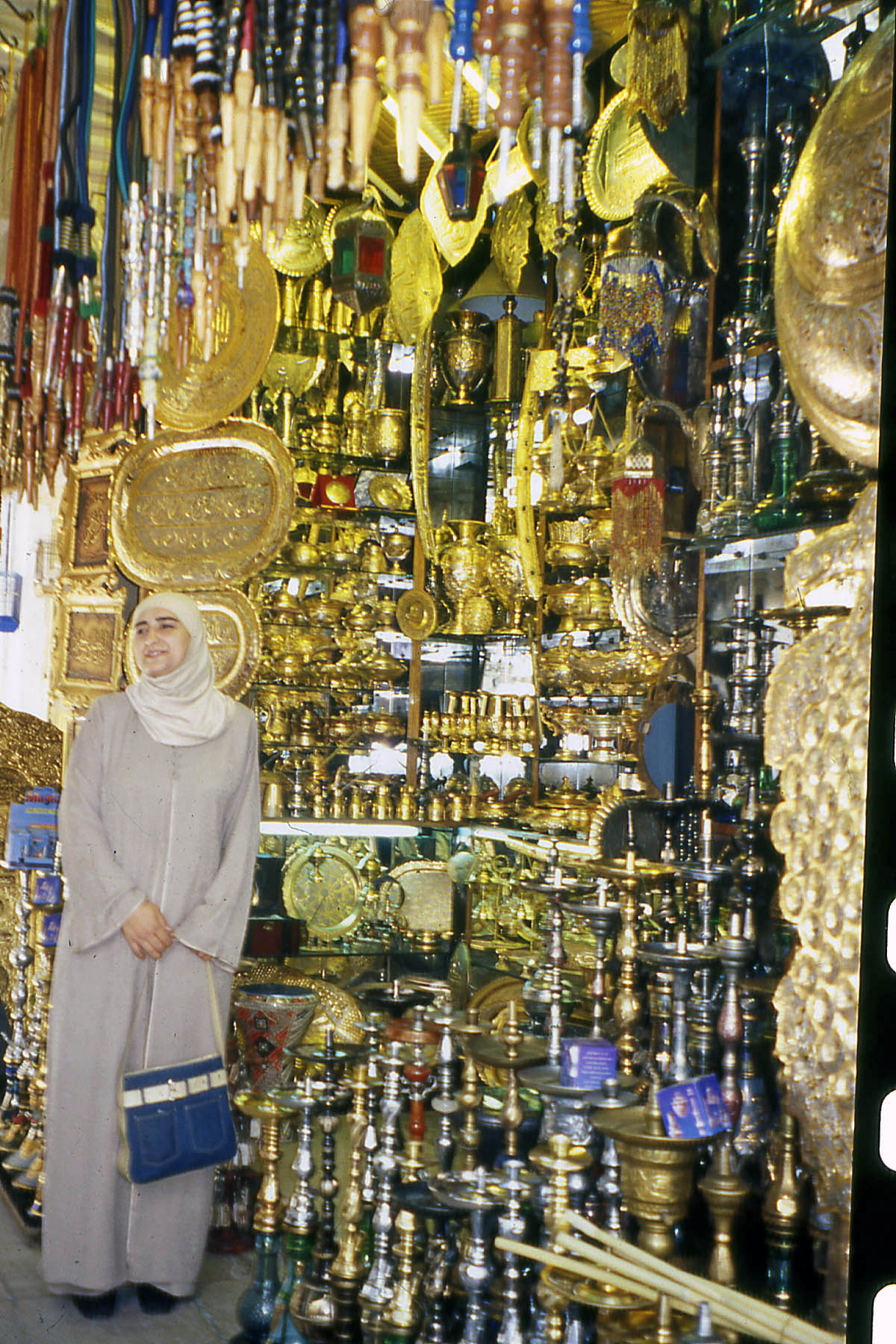
    Brass and Copper shop

    What you will find is a pocket of traditional Arab hospitality and a people who want to extend the hand of friendship, for Jordan is a peace-loving nation and welcomes all visitors.   Amman seems to be more of a collection of adjoining villages rather than one entity with downtown having a constant rumble of traffic, markets, and bustling people. Its highlight is the Roman Theatre where the seats are chiselled out of the mountain.

    Amman from Citadel Hill
    Roman Theatre viewed from Citadel Hill

    And as for food, I can only say “Go try for yourself”.  I never had a bad meal in two weeks in Jordan and I tried many different restaurants.

  • Petra, the Rose Red City of Jordan

    Petra, the Rose Red City of Jordan

    Looking through my images of Jordan I am struck by how much it offers the visitor in terms of not only historical sites, but scenery and serenity.  Serenity may seem a strange word to use about any Middle Eastern country these days, but Jordan has always seemed to me to be like a peaceful house surrounded by warring neighbours.

    The pink-hued cliffs of Petra will always be the absolute highlight of Jordan, but close behind comes the capital itself, Amman.  Then a trip to Wadi Rum where maybe you can find time to stay overnight and sleep under the desert stars, an unforgettable experience, and a side trip to Aqaba, the Red Sea port.

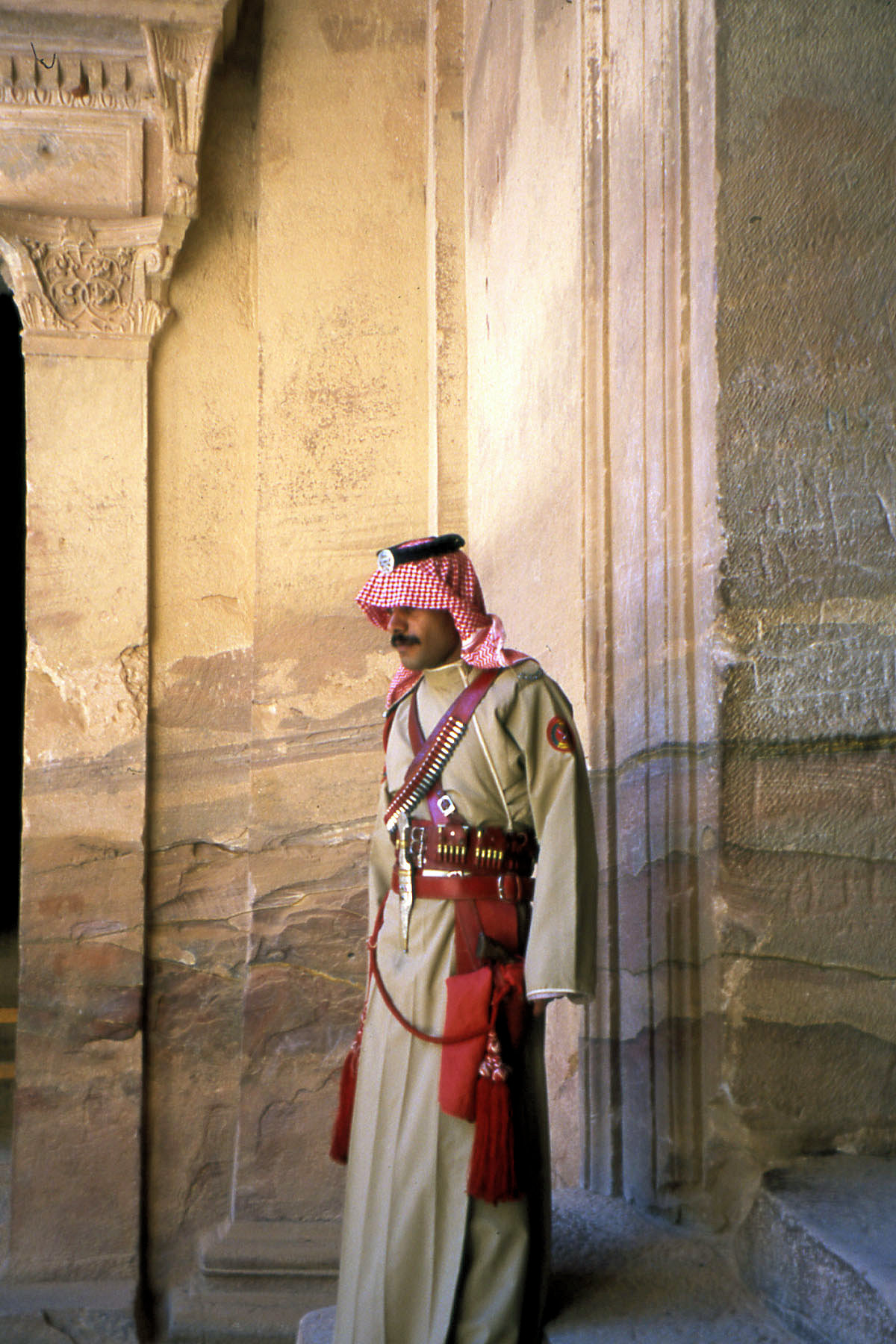
    Royal Jordanian Police Guard
    Royal Jordanian Guard at The Treasury

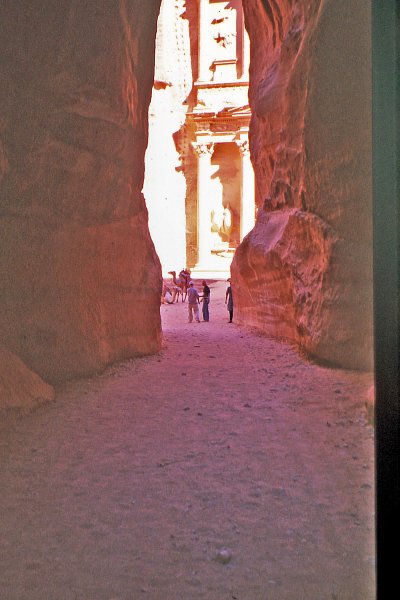
    You approach Petra through the Siq, or chasm, a winding defile hemmed in with towering red rocks that soar nearly 100 metres into the sky before it opens dramatically on to a square dominated by the pink sandstone of the façade, (used in the final scenes of the film Indiana Jones and the Last Crusades).  To emerge into the light at the end of the long walk and be faced with the glory of the Treasury is something that is hard to describe.

    Approaching the City the Siq
    Entry to the Treasury from the Siq

    This 6th century BC world of temples, Roman theatres, monasteries and chambers carved into the red sandstone is Jordan’s best-known tourist attraction and a Unesco World Heritage Site.  Here the original inhabitants, the Nabateans, set up their city-state, defending their home with ease until 106 AD when it fell to the Romans.  After the Romans came the Byzantines, then the Crusaders, until by the 16th century Petra was all but lost to the west.   A Swiss Explorer, Louis Burckhard, penetrated the hidden city in 1812 and the world became aware of the wondrous city that had once been the centre of a trading empire that stretched from Saudi Arabia to Damascus.

    The Treasury was built to impress and 2,000 years on it is still impressive.  Protected from wind and rain, the detailing on the well preserved façade is still sharp and crisp.  It is estimated that 3,000 visitors per day visit Petra during the peak season and visitors are advised to visit between 9.00–11.00 a.m. and 4.00 – 5.00 pm when there are fewer tourists and the walls of the Treasury are suffused with a reddish-pink glow.  Although 3,000  may sound a lot of people, if you cannot visit between these hours Petra is large enough to hold that amount in reasonable comfort.   However, if you are not on a tour, it will repay you to make a really early start in order to savour the utter peace and stillness of the area before the hordes descend from the cruise ships – 7.00 a.m. is perfect.

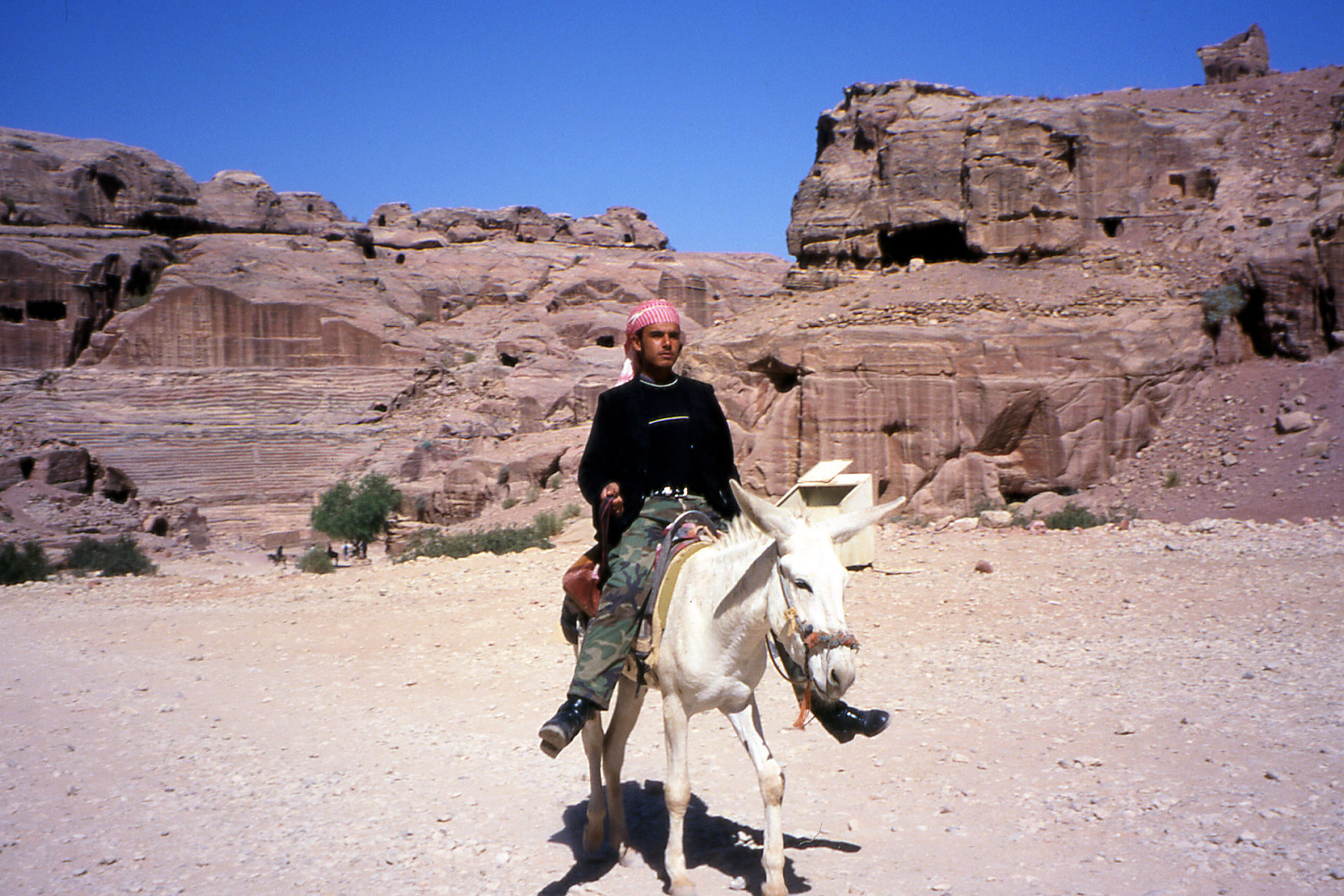
    Boy on Donkey at Petra

    A whole day can be spent here, more than one if time allows because there is a lot to explore, the royal tombs, the 1st century AD Theatre, and the High Sacrificial Place which is reached by climbing 700 well-cut steps past extraordinary rock colourings.  Your reward is breathtaking views over Petra from a peak 170m above Wadi Musa.  No one knows for certain what took place here, whether the sacrifices were of animal or human, but evidence of some human sacrifices in surrounding towns/cities has been found.

    It will be very hot, there is no shade, so carry plenty of water.  For part of the way there is an option of taking a donkey ride or a carriage ride: the authorities discourage these because of the damage they do to the floor of Petra but they are available for those who need them.

  • Tijuana – in the shade of the USA

    Tijuana – in the shade of the USA

    It seems we can’t escape newspaper articles, radio reports and TV programmes about the border between the USA and Mexico, and all this has led me to think of my travels along that border some years ago.  I wrote an article at the time for The Traveller magazine and I thought it might be interesting to use it as a Post on my Blog as when I was there the border seemed to benefit the American tourists almost as much as the Mexicans

    So, here it is.

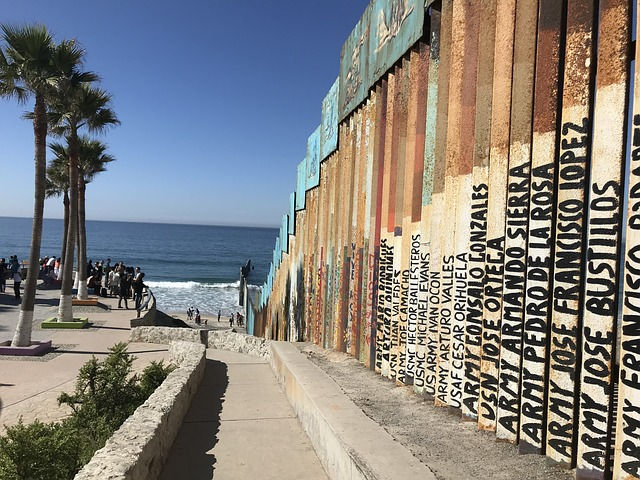
    Tijuana Border (2)

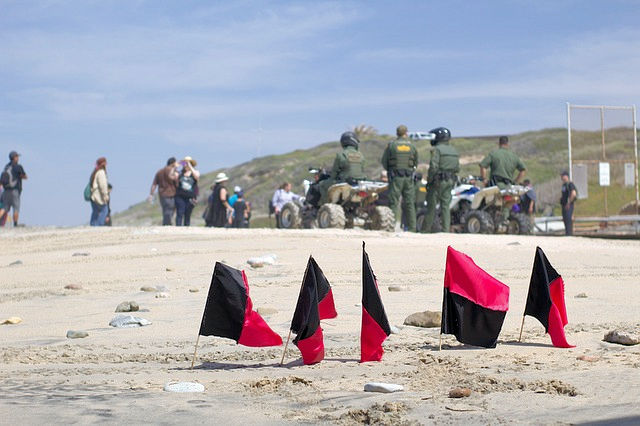
    You’ll see them every evening, peering through the holes in the fence at the patrolling agents on the US side, or astride the wall, silently waiting for sundown and their chance to make that final spurt for freedom.  These are the ‘chickens’ – illegal immigrants who nightly swarm across the high steel fence that snakes inland from Tijuana to San Diego.  Like the old Berlin Wall, this one also has arc lights and guards equipped with night-vision cameras.

    San Diego County, USA, borders Mexico for approximately 70 miles but the wall itself runs for only 14 of them.  Further north, the immigrants risk a gruelling three or four day journey across tough, arid terrain, but from Tijuana to the suburbs of San Diego it is only a short run.  Joselito spoke for them all.  “If we don’t make it tonight, there is a chance of finding some sort of job while we wait for another day.  So we stay”.

    Tijana Border

    Tijuana is a tough place to live: it is noisy and dirty, the crime rate is high and drugs are easily available, but for the scores of people who arrive daily from all over Mexico, this frontier town is the gateway to new beginnings and new hopes,  Many who come here to try their luck at crossing the border end up finding ways to support themselves and their families in Tijuana itself.

    You will see them on the side-streets of the city: the brick-makers who squat by the streams, the farriers who tool and fashion the graceful Mexican saddles and boots, the touts who stand by the sidewalk, a damaged car door in one hand and a panel-beater in the other.  Their customers are Americans who drive their cars across the border for high calibre work at one-tenth of what it would cost in California.

    That’s not the only thing that attracts Americans to Tijuana.  Drugs and dental treatments that are expensive in the United States are cheap and readily available in this border city.  It is almost certain that the American matrons you see clutching  pharmacy bags have just picked up a six-month supply of Prozac at giveaway prices, a supply of chemotherapy treatment or a mixed bag of sleeping pills and wake-up pills.

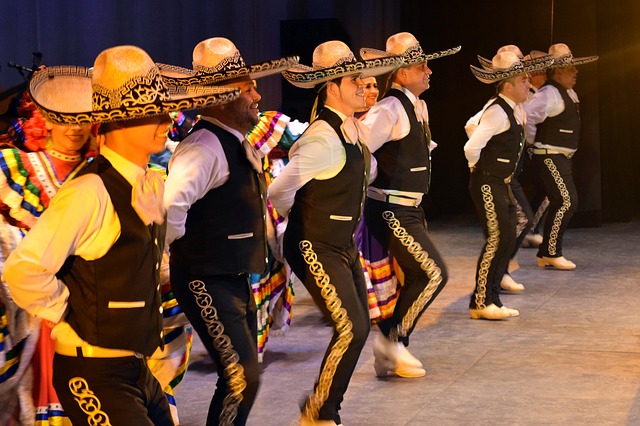
    Rich and poor live in close proximity here.  There are modest houses of concrete and metal alongside magnificent colonial-style mansions, interspersed with crazily leaning shacks.  Plastic containers, splashed recklessly with scarlet and yellow paint and filled with scented red and pink geraniums, define the ‘garden’ space in front of these dwellings.  Here and there on end walls are brilliant murals of darkly exotic flowers and oceans and skies of an impossible blue, a naive art that owes more to the capacity for gaiety and colour in the Mexican temperament than to any innate artistic talents.  Even here, strolling groups of traditionally dressed Mariachi bands want to serenade you and if you have suffered six versions of  Quantanamera in 30 minutes it may be prudent to know the title of one or two other Mexican songs.

    mariachi-2770114_640

    Twenty years ago, Tijuana was little more than a clutch of ragged adobe houses and a few stores, a border town of such searing poverty and dirt that I was glad to leave it.  Today it is a city in its own right, a city that has a future – of sorts.  Above all, it has a young and vibrant population, one of the reasons why Samsung, Sanyo, General Electric, Ford and other multinationals have invested billions of dollars in the city and why they currently employ more than 100,000 workers here.  The fact that there is work for thousands where before there was nothing will not halt the border crossings, but it makes the plight of the ‘chickens’ less hopeless and enables some of them to remain in their own country.

    Meanwhile, the steel border, illuminated at night, adds a frisson of excitement, a charge, to life in Tijuana.  And those gaunt figures that sit astride it today will be followed, inevitably, by others tomorrow.


  • Syracuse – The Other Bits

    Syracuse – The Other Bits

    After my earlier Post on the Greek and Roman theatres in Syracuse, I thought I’d like to show you a few of the more colourful parts of the city.   I hope you’ll enjoy the photographs that follow of the transparent seas around the island, Piazza Archimede and its magnificent fountain, the food market, a few more ruins – for how could one not include them as they are part of the street furniture.

    Just to recap.  In the 5th century, when Dionysus reigned, Syracuse was one of the biggest and most powerful cities in the Mediterranean, embellished by gardens, fountains, palaces and temples.   Plato called it “an ideal city”, one of enormous military power capable of withstanding the might of Athens and Carthage. 

    With your back to the sea, you can walk either straight ahead to the old town and the Duomo, or to the left through the Porto Marina and into the old town and Ortygia.  Either way, strolling around Syracuse at your leisure is sheer pleasure.

    This slideshow requires JavaScript.

    Although the image of the fishermen mending their nets is captioned, I hope you notice the massive cruise ship in the background, the old and the new side by side, the old struggling to make a living, the new a disaster, or a dividend to a city?  The jury is still out on that one in Sicily.

    As you leave the ruins of the 7th-century Temple of Apollo you will find yourself in the Corso Matteotti with its 14th-century Greek palace, and from here it is a short walk to the Piazza Archimede, opened in 1878 and dedicated to the Greek mathematics and physics genius, Archimedes (287-212 BC), and one of Syracuse’s most illustrious sons.   

    In the centre of the Piazza is the beautiful Artemis Fountain by Giulio Moschetti (1906) dedicated to Diana the goddess of the Hunt (Diana was the Roman name of the Goddess, Artemis the Greek).  Appalled by the erotic pursuit of Alpheus the river god, Arethusa had asked the Goddess Diana for help: Diana then transformed Arethusa into a fountain which emerged on the nearby island of Ortygia, the core and oldest part of the Sicilian city, where you will find the spring named after Arethusa.  In the fountain, Alpheus peers from behind the goddess while the nymph is about to slip into the water below where, as the tale goes, she will blend with the stream before re-emerging in Ortygia.  Charging horses, Tritons and nymphs splash in the waters of the fountain and a good hour can be spent just walking around the admiring the work.

    This slideshow requires JavaScript.

     If you choose to go through the Porta Marina you will find yourself surrounded by fading Baroque Villas and Palaces facing the sea and hidden in the narrow alleyways, secretive dwellings with shades of a once glorious past still clinging to them.  Along this long, narrow promenade you will pass the Church of the Holy Spirit which is worth a visit if time allows (but remember you have the Duomo and Santa Lucia alle Badia to explore as well).

    Despite the lack of beach facilities the area around here is popular with swimmers, and often you will see people diving off the rocks into the near transparent waters or sunbathing in what looks like dangerous places along this rocky foreshore.  

    There is another church right by the Duomo, often missed by visitors because of the wonderful golden-coloured Duomo with its complex history which stands beside it, and this is the Santa Lucia alla Badia church which houses The Burial of Santa Lucia by Caravaggio, above the altar.  Caravaggio had arrived in Messina from Malta in December 1608 where he was commissioned to paint the Burial of Santa Lucia for the church of the same name: he completed this in less than a month.

    It is difficult to see this picture because the church is kept fairly dark – I presume to preserve the painting – and no photography is allowed.  

    And with all the sight-seeing, don’t forget to stop occasionally for a snack at one of the many good cafes and restaurants around (very much cheaper in the modern part of the city, by the way), and make sure to have an ice-cream and that Sicilian favourite, a Granita.


  • SYRACUSE, SICILY

    SYRACUSE, SICILY

    My recent trip to Syracuse gave me lots of material for posts but as I have written before about this Sicilian city I thought that this time I would hone in on the Archaeological Park of Neapolis which holds Syracuse’s most important Greek and Roman remains.  The Park covers approximately 240 square metres and the Greek and Roman periods are divided by a green, tranquil oasis in the midst of the ruins, called Viale Paradiso.

    p1030461
    Between the two cultures, through the Viale Paradaiso.

    The Park came into being between 1952 and 1955 with the idea of bringing together all the monuments, pillars and stones which previously had been located on various private properties and were not accessible to the public.  The result has been an outstanding success.

    The Roman part dates back to the 3rd century AD and the Amphitheatre (seen below) is the largest in Sicily at 140 x 190 metres, and it is recorded that the first performance of Aeschylus’ Etnean Women was performed here in 476 BC.  To avoid this turning into a history lesson, I shall leave the images, with captions, to speak for themselves.

    Not only was the amphitheatre used for drama: political life was played out here too, especially the assemblies in which all citizens participated.