In response to The Daily Post’s weekly photo challenge: “Serenity.”
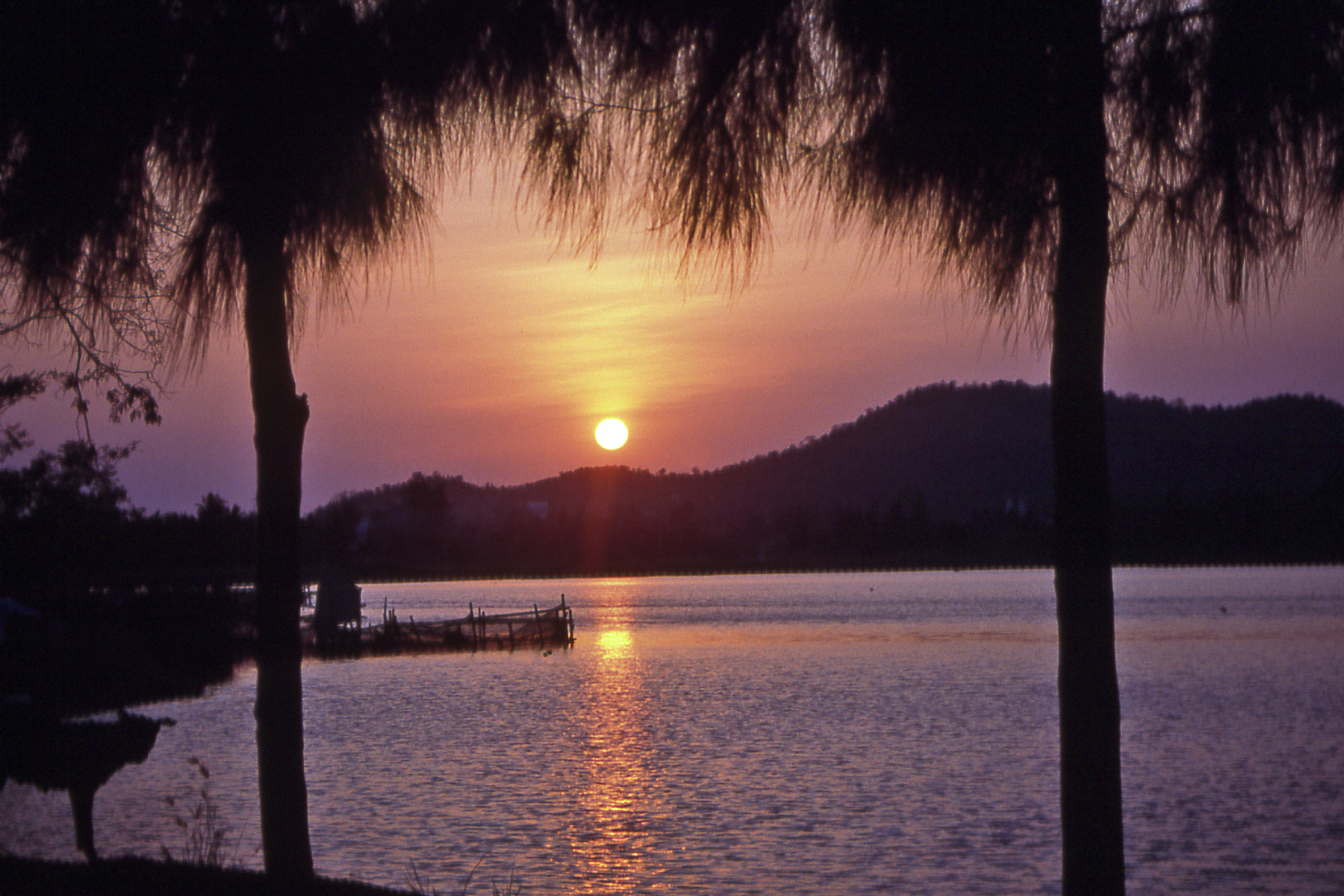
A Thai Sunset – Phuket
This is a different sort of Post – it is one in which I’m responding to the weekly photo challenge set up by WordPress. This week the topic is Serenity so here are a few images that to me represent that scarce emotion in today’s world, serenity.
The first one, below, may not look like everyone’s idea of Serenity, but this Cretan man had an attitude to life that was calm and benign. He was one of the happiest people I’d ever met: even his donkey seemed happy in the heat of the midday sun. It was a harsh life up there in the mountains but Andreas told me he had everything in life he needed, his olive trees, a few animals, a family in good health and all living nearby, and most of all, he said, he lived on Crete.
What more can I say?
An old man on a road in Crete with whom I shared my lunch.
Next photograph is very different. I did an Art Tour once in France where we stopped at various place where some of the painters known as The Impressionists had painted: their pictures were hung in nearby galleries or galleries of some note further away. Rouen I remember very well, as it was one of the places where it rained incessantly during our visit, but luckily, Claude Monet had painted more than 30 pictures of the famous Notre Dame Cathedral (many in the rain) so we were able to see it just as the artist had seen it.
When the group of painters who came to be referred to as The Impressionists evolved their style of painting from chocolate-box interiors to naturalistic outdoor scenes, they were helped by two mid-19th century inventions. One was pre-mixed paints in tubes (akin to today’s toothpaste tubes), and the other was the new vibrant hues like chromium yellow and French ultramarine that freed them from the chore of grinding up lapus lazuli and mixing dry pigment in linseed oil to make colour.
What it also gave them was a complete change of perspective. With these inventions they could now paint “en plein air” (outdoors), capturing the momentary and transient aspects of light and the ever changing colours of the clouds and using ordinary subject matter.
Alfred Sisley (October 30, 1839 – January 29, 1899) was an English Impressionist landscape painter who was born and spent most of his life in France. A very disciplined painter, Sisley is recognized as perhaps the most consistent of the Impressionists. He never deviated into figure painting or thought of finding another form in which to express himself. The Impressionist movement fulfilled his artistic needs.
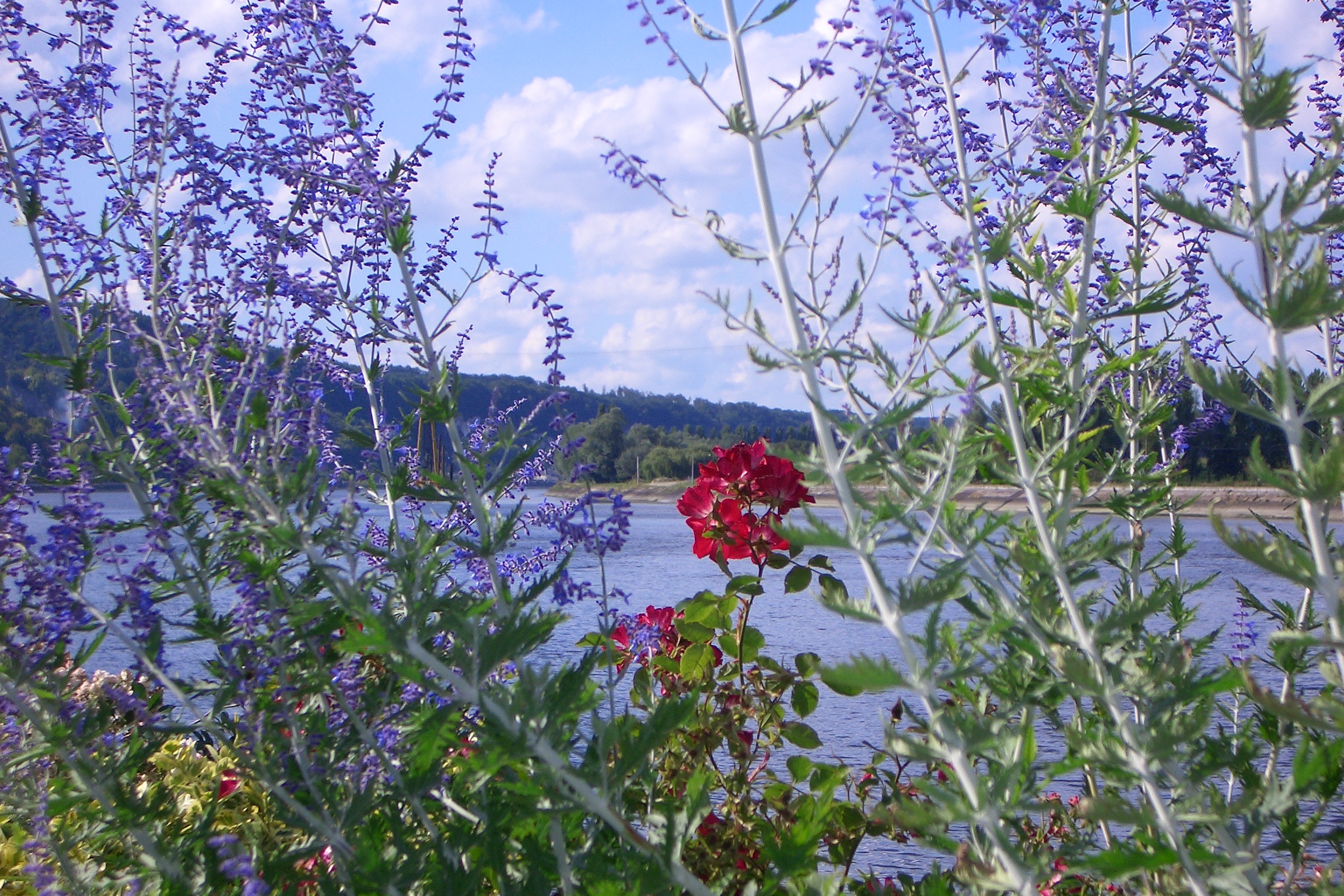
Below is a photograph I took of a scene he painted (I think his painting hangs in the Gallery at Honfleur). To me it is serenity itself. I photographed it on a day when the Normandy sun was shining, dragonflies were chasing each other over the Seine, the village of Bouille was quiet as the people rested after lunch and I captured the scene on camera as I remembered it from the painting.
Serenity.
A quiet scene where the only movement was of butterflies and dragonflies.
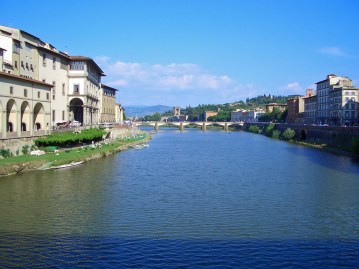
Florence is a place where art, culture, food and wine come together to create a city close to perfection. A medieval maze of ochre-coloured houses with the River Arno gliding beneath the ageless Ponte Vecchio, and Michaelangelo’s magnificent David dominating the Piazza della Signoria.
The River Arno in Florence with the Tuscan Hills as Backdrop
Florentines talk of the Stendhal Syndrome, a reaction to the city’s overwhelming beauty and romanticism that caused the writer Stendahl to swoon at the splendour of Santa Croce.
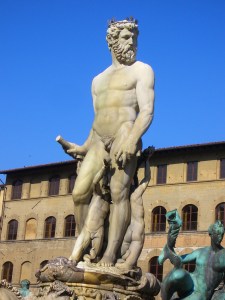
Section of Neptune’s Fountain in Piazza della Signoria
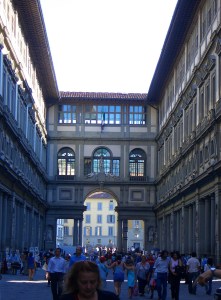
It takes a stretch of the imagination to accept that in this technological 21st century, doctors are still reporting cases of sensitive souls fainting through the sheer emotion of viewing the Duomo, the Baptistry, and the treasures of the Uffizi. But speak to those who live there and they will assure you that this is the case.
Neptune’s Fountain
There is an unreality about Florence that causes the visitor to surrender sensible feelings and give in to a lightness of spirit. On a spring or summer evening, the city resembles an elaborate film set, and if the luscious Helen Bonham Carter were to stroll into view shading her fair skin with a parasol, it would not appear surprising.
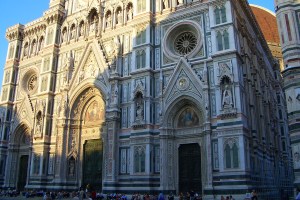
The Glorious Facade of the Baptistry
The glittering cast of characters that inhabit Renaissance history can be imagined strolling through the piazzas and along the banks of the Arno – Dante and his Beatrice, Donatello, Dante, Brunelleschi, Botticelli, and of course the towering giants Michaelangelo and Leonardo.
Canoeing on the River Arno
No city on earth has so much art and architecture packed into such a small space, but not everyone has time to visit, or even wants to visit, the museums and galleries. Don’t fret about it, the city is a living museum and the streets and alleyways, the exteriors of the beautiful churches, the gardens, markets and outdoor statuary may be enough – the important thing is to experience Florence your way.
Horse and Carriage for a leisurely tour of the city
The true heart of the city is the Piazza della Signoria, centre of political activity since the Middle Ages. It was here that the monk Savanarola burned the books in the Bonfire of the Vanities and where he himself was burned at the stake in 1530, where the people of Florence proclaimed the return of the Medici from their own exile, and where in the 19th century Robert and Elizabeth Browning took hot chocolate on cold winter nights during their exile from England (their favourite cafe is still there serving hot coffee and chocolate).
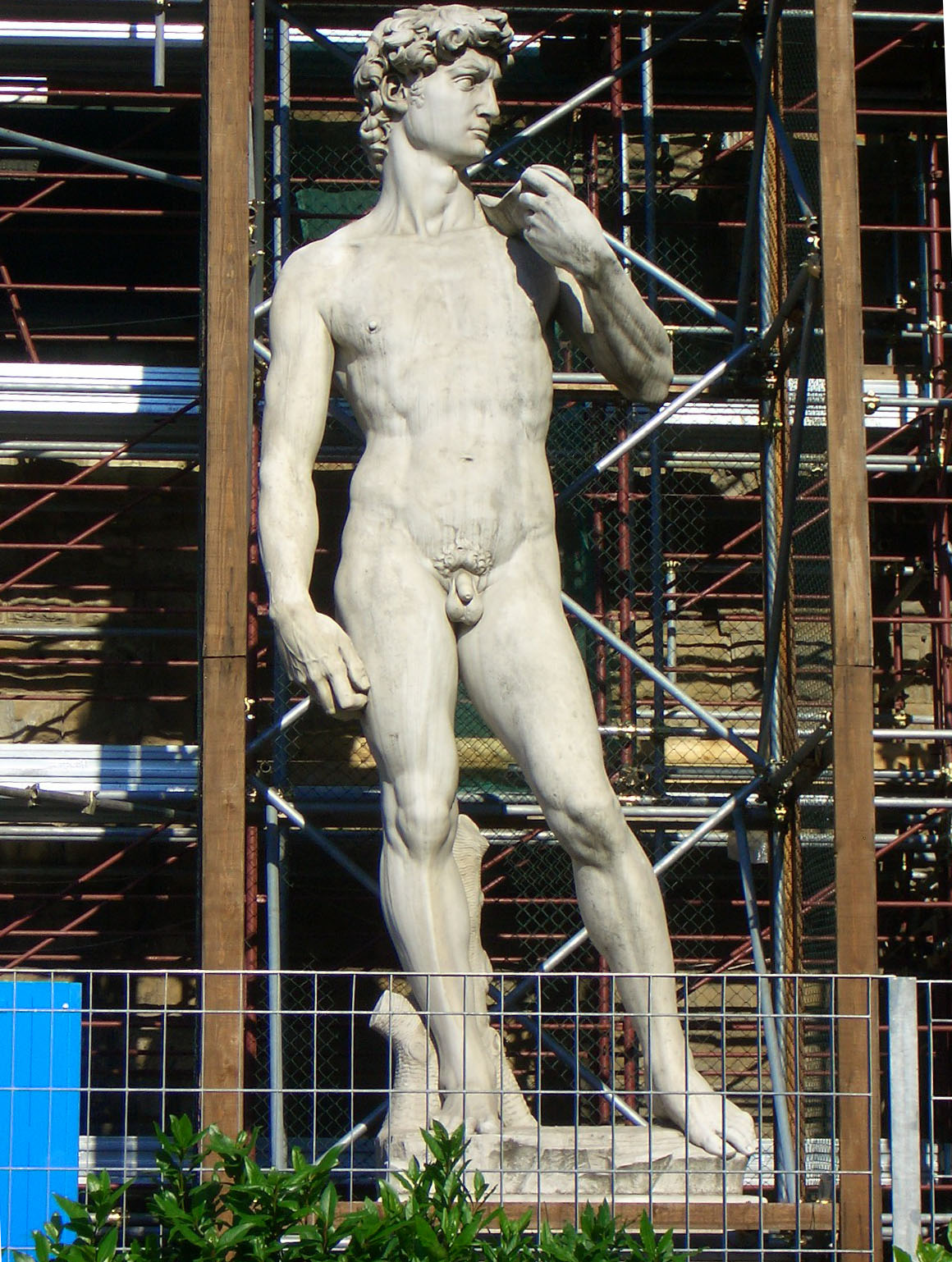
Most Famous Statue in the World – David by Michaelangela (this is a copy in Piazza della Signoria but still needs cleaning periodically)
Towering over the café-filled Piazza is the imposing Palazzo Vecchio which has remained virtually unchanged since it was built in 1299-1302, and still functions as the town hall. Outside is a massive marble copy of Michaelangelo’s David and if you don’t want to join the queues to see the original statue in the Galleria dell’Accademia, then this copy is as near perfect as you will get: more to the point, it places the statue where the artist originally meant it to stand.
The Uffitzi Gallery in Florence
Donatello’s exquisite, androgynous David is in the Uffizi Gallery just a few steps away and this must be seen too, if only to compare it with Michaelangelo’s monumental figure.
The wise visitor to the city will do as the Florentines do and spend time leisurely enjoying an espresso or an aperitivo, watching the world go by while deciding how to spend the day. Subtle and sedentary moments like this are essential if one is to survive the sightseeing marathon that Florence’s many attractions make necessary.
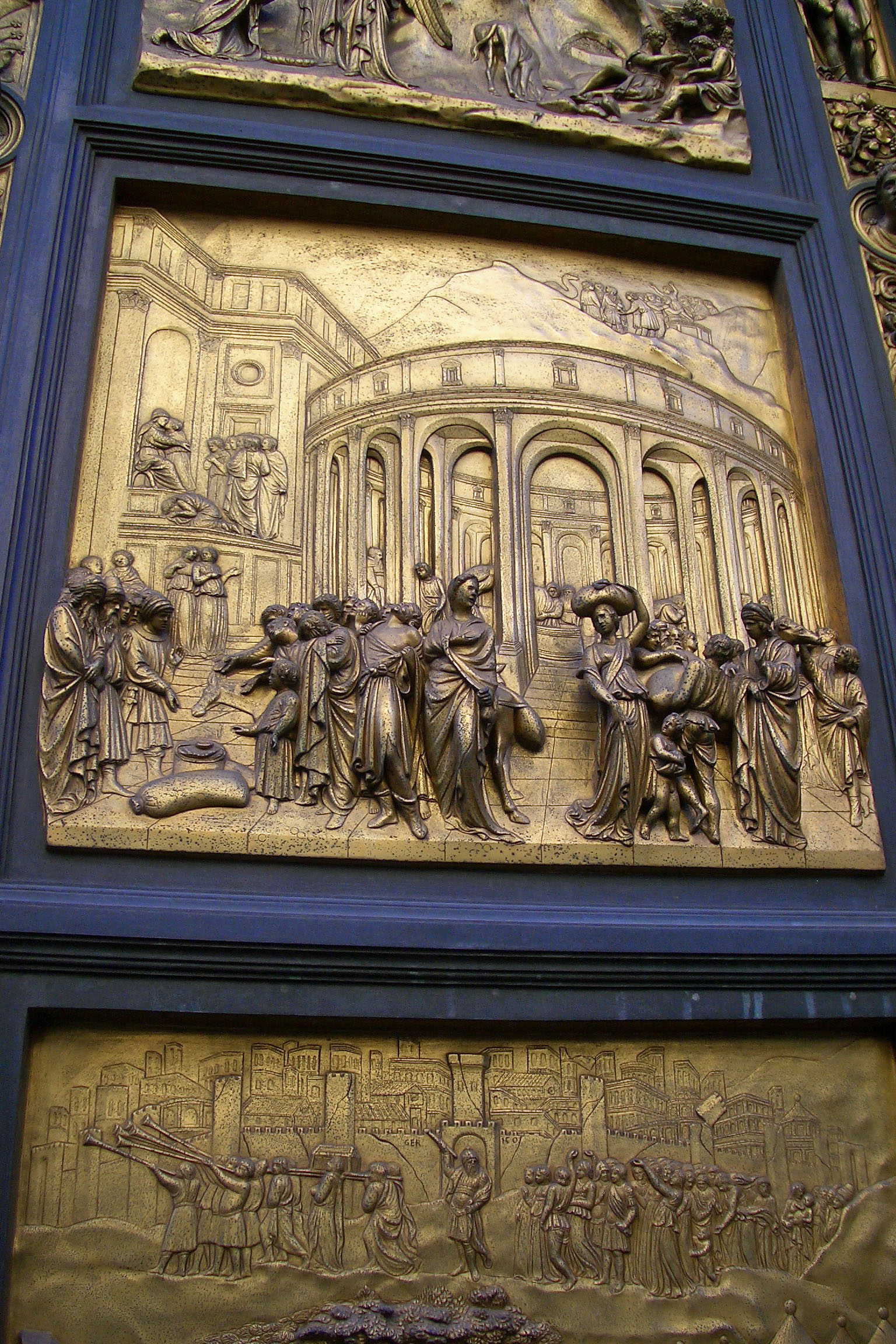
A Panel from a Baptistry Door
Fortunately, Florence is a compact city and you will pass and re-pass the most famous sights more than once as you stroll through the streets, contemplate nature in the Gardino di Boboli, Italy’s most visited garden, and marvel at the finest Renaissance sculptures in the Bargello, the oldest seat of government surviving in Florence and the place from which Dante’s banishment was proclaimed.
If Dante were to return to Florence today, much of the city would be familiar to him. El Duomo, one of the city’s oldest and most famous buildings and the building that broke all the rules when Brunelleschi designed it, is visible from virtually everywhere in Florence but the best view of it is from Giotto’s bell tower, Il Campanile, beside the Cathedral.
El Duomo from one side of the River Arno
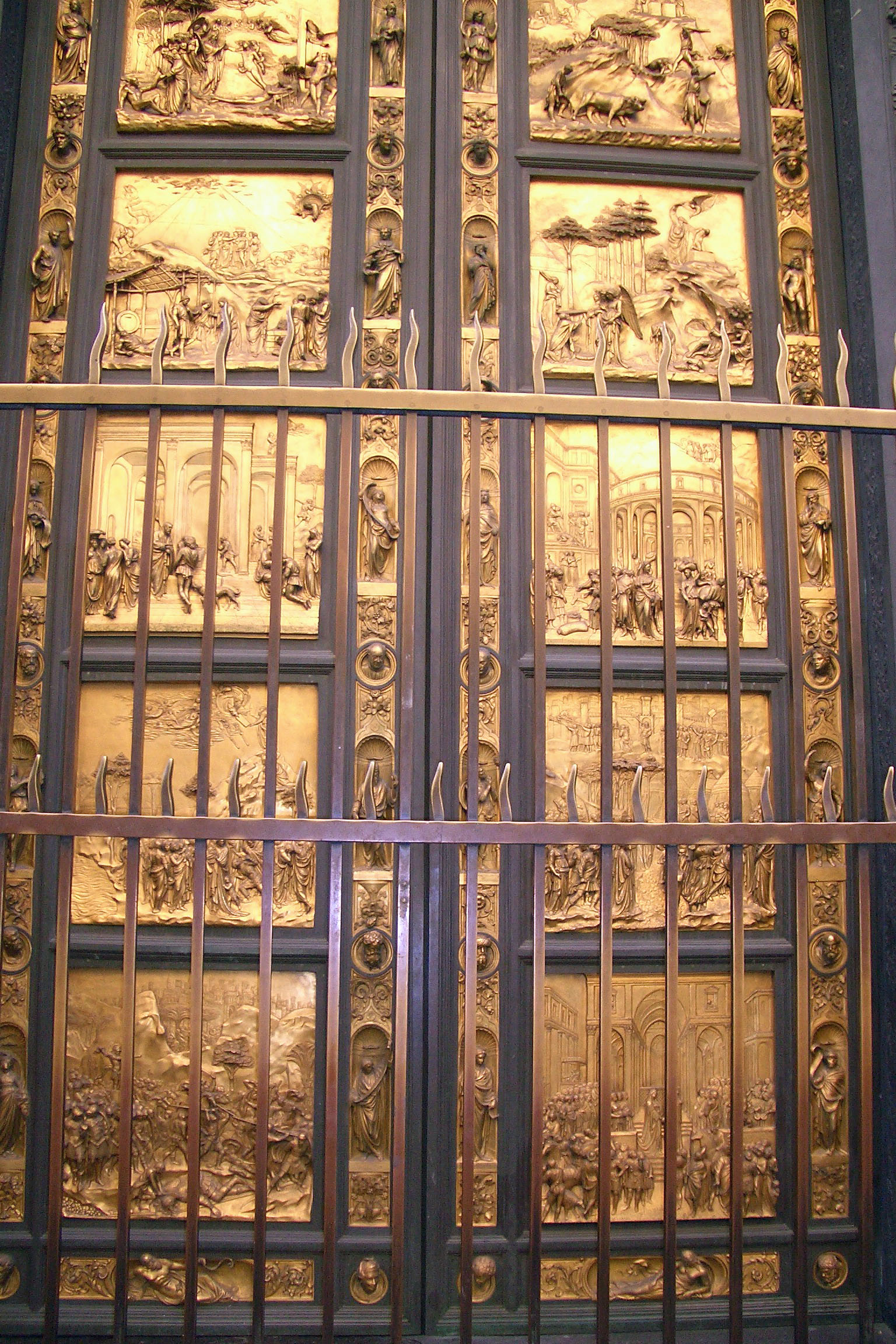
Brunellechi’s great rival was Lorenzo Ghiberti, who was responsible for the Baptistry Doors, the epitome of Renaissance art and before which one can stand for hours reading the story portrayed in bronze.
The Magnificent Bronze Doors of the Baptistry
The East Door is considered his masterpiece, but again, these are not the originals: the originals are housed in the Museo dell’Opera dell’Duomo.
Away from the magnificence of its art and architecture, Florence is a shoppers’ paradise, the three big names being Emilio Pucci, Salvatore Ferragamo and Gucci who help keep alive the art of the Italian designers in this fashion conscious town. For goods with durability but exquisite design, visit the San Spirito neighbourhood where artisans still tool intricate designs on leather, and woodcarvers painstakingly apply whisper-thin layers of gold leaf to wooden statues.
Pizza, Palazzos and Parking Problems
At the other end of the spectrum is the Piazza Santa Croce, where the less wealthy Florentines go to shop for moderately priced goods and if you want to get up close and personal with the locals, head for San Lorenzo Market where the stalls sell everything from crafts to food.
Everyone, at least once, strolls across the Ponte Vecchio, the inimitable bridge near the site of the Roman crossing of the Arno which, from the 16th century until the late 19th, had been the place to shop for Florence’s spectacular jewellery. Today the array of shops can only be considered disappointing: much better to experience the romance of the bridge from the riverside.
Ponte Vecchio, Florence
Looking at it from a cafe or a gelateria below the bridge places it firmly in the Renaissance world, away from the tourists that crowd the shops selling cheap jewellery and trinkets. In the early evening when the sun is just about to set, look towards the bridge and imagine, if you will, Dante, Boccaccio, Machiavelli, or members of the Medici family, strolling across the bridge to visit the famous goldsmiths who carried on their trade there, their brilliantly coloured cloaks standing out against the blue sky and the distant Tuscan hills.
Italian Ice Cream – none better!
And after hours of Giottos and Ghilbertis, piazzos and palazzos, make sure you do as the Florentines do, sit at a sidewalk cafe and have a gelato or an espresso. The best time for this is during the passeggiata, the stylised evening parade beloved of the Italians, when the object is to see and be seen.
The River Arno, away from the Crowds
The centre for all this is on Piazza della Signoria, so grab a seat at one of the cafes there and, for a couple of hours at least, be wholeheartedly self-indulgent.
It seemed right that Marseilles should live up to its shady reputation when our first encounter with it was the Gauloises-smoking taxi-driver who ripped us off by overcharging for the journey from station to hotel. Asked if the taxi was metred, he gave a Gallic shrug and raised his eyebrows in amazement that we should think otherwise. When we got to the hotel however, he announced in a mixture of languages, that ‘Zee taxi-metre ees kaput’.
We managed to laugh as we paid up, for just being in Marseilles, the oldest city in France and a melting pot of east and west was exhilarating. Its origins go back to 600 B.C. and take in Greek and Roman occupation as well as the various kingships of France. It was one of the most successful trading cities in the Mediterranean, its port favourable to commercial activity and despite invasions, plague and revolution, business prospered on an international scale.
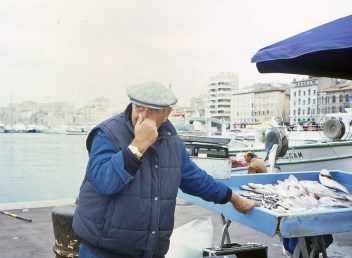
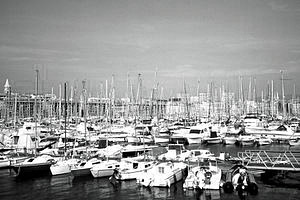
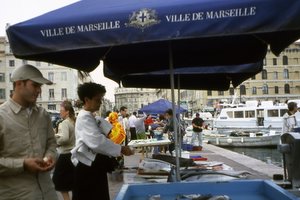
The best place to start exploring is at the Vieux Port, guarded at its entrance by two massive fortresses. The expensive sailing boats and yachts that crowd the marina just off the Corniche is one example of how far this once seedy Mediterranean port has come. A few rough-looking cafés still line one side of the harbour, as though in homage to old black and white movies of the past, and the waiter with sleeked back hair who served us could have come direct from central casting. Posher restaurants line the Place St. Saens on the other side, and throng the Quay des Belges where just after dawn, fishermen and chefs from the top restaurants planning that day’s menus, haggle over the night’s catch.
The same fish goes into the superlative boullabaise, a thick, spicy, fish stew, the gastonomic delight of France’s southern shores. If you haven’t tried it before, or if your previous experience of this dish disappointed you, try the Marseilles version. Fish soup it is not.
Church of Notre Dame de la Garde
Before embarking on a major tour of the area, take the two rides that are available on the ‘Petit Train’ which runs from the Quai des Belges in the Vieux Port. The 50-minute ride goes up to the church of Notre Dame de la Garde, an enormous Romano-Byzantine basilica which stands on the highest point of the city, surmounted by the gilded statue of the virgin and child. The area was a look-out post until 1978 which has resulted in Garde Hill becoming an urban as well as a sacred symbol, and the spectacular views over the city prove just how effective the look-out must once have been.
The second ride circuits Vieux Marseilles via the Cathedral and the Panier quarter, wheezing and shuddering through the steep, cobbled streets of the old city. Both rides give an excellent introduction to the architecture and the landmarks of the area, easy to locate on your free map.
Cliffs and Sea, Marseilles
From the old port you can take a ferry to the Frioul Islands in the bay, and the 16th century Chateau d’If , immortalized by Dumas as the place where The Count of Monte Christo was imprisoned. Chateau d’If has reinvented itself and although its history includes no written record of the imprisonment of Edmond Dantès, that doesn’t stop the locals offering trips around the dungeon where he was allegedly imprisoned. On the other hand, there is a very visible hole in the wall which he is said to have dug. You can also visit the cell of the Man in the Iron Mask, another non-prisoner in the Chateau.
The modern part of the city is a short ride away, a thriving, bustling place with wide open streets, supermarkets, and department stores, indistinguishable from any other modern French connurbation. A good way to see it is to hop on the L’Historbus that makes a tour of the city every afternoon and which covers both its modern and medieval aspects, including the Abbaye Saint-Victor with its sarcophagi dating from the 3rd – 5th centuries.
.
Marseilles is a vibrant, bustling, untidy city, full of colour and gaiety, due in no small part to the heavy ethnic mix of North Africans, Tunisians and Algerians. The apache dancers, the matelots and the inky black bars have gone from the seafront, but Marseilles still has attitude: cynical, sharp, and witty. That edgy feel is still there.
Marseilles Street
Just what I remember in fact, from those the old black and white ‘B’ movies I saw years ago.
Recommended Restaurants in the Old Harbour area: Le Fetiche, Rue St. Saens (04 91 54 00 98) and Chez Caruso, Quai de Port. (04 91 90 94 04)
Sicily has long been one of my favourite countries to visit. Some will say it’s not a country but an Island that forms part of Italy but to me Sicily is so different in every way that it can be considered another country. The food, the people, the extreme variety of environments and the landscape that can change within the distance of a few miles make this almost a paradigm of the Mediterranean.
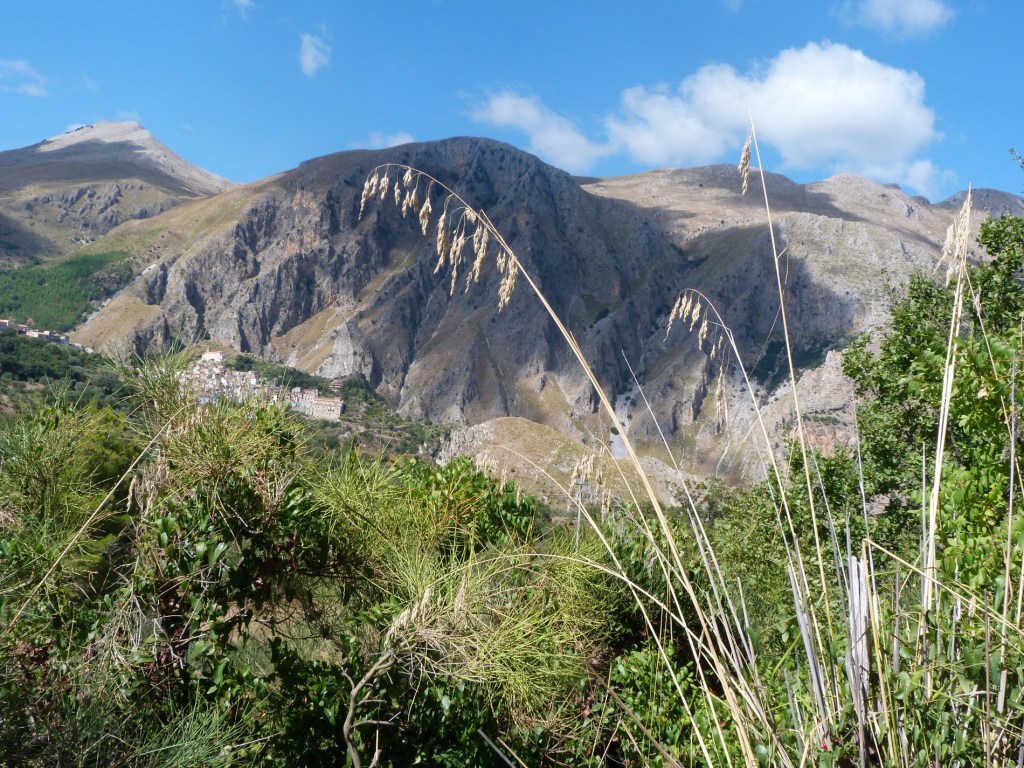
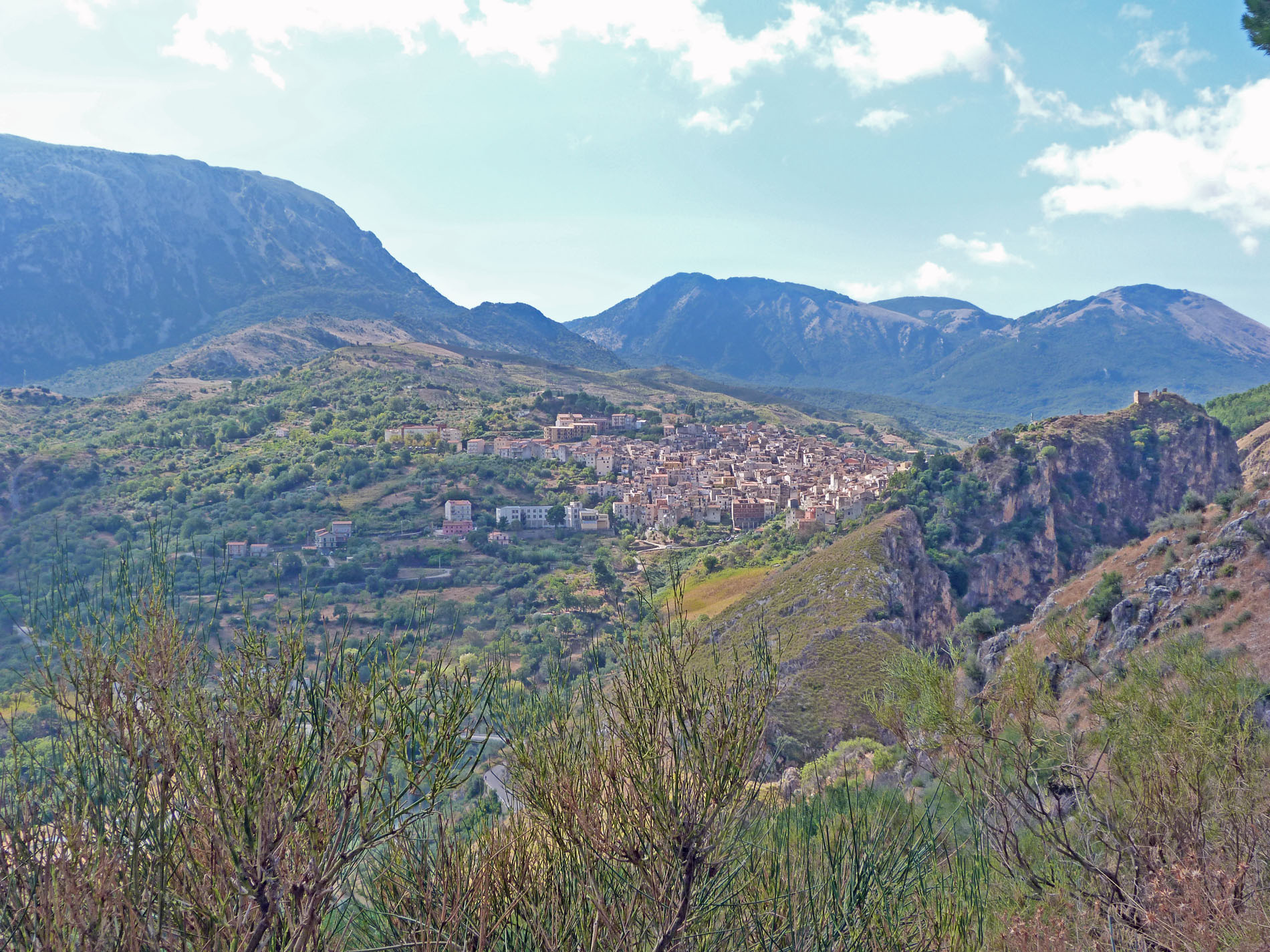
Mountain Village in Madonie National Park, Sicily (c) Mari Nicholson
Three Sicilian men in Village Square Photo: Mari Nicholson
With over a thousand miles of coastline, the highest volcano in Europe, woods, lakes and rivers that attract tourists from all over the world, it can easily be forgotten that Sicily is also blessed with magnificent parks, one of the loveliest being the Madonie National Park in Palermo Province which covers a large territory in the central-northern part of Sicily. What makes it more attractive to the visitor is that this is not just a nature reserve: it is an area where people live and work, making it perfect for culturally rich travel. It incorporates 15 towns and villages including Polizzi Generosa, the twin Petralia towns, Soprana and Sottana, Gangi, Castellana Sicula, Castelbuono, and Isnello, the latter two probably the most interesting. Throughout the area are several monasteries, hermitages, and churches, many of them isolated and seemingly deserted.
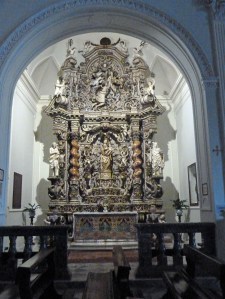
The altar in Castelbuono Church Photo: Mari NicholsonThis olive tree is hundreds of years old and has pushed through a granite rock! Photo: Mari Nicholson
Many of the villages are semi-deserted due to the younger generation having abandoned agricultural life for the charms (and better earnings) of the city and resorts along the coast – and who can blame them? The back-breaking toil of bringing in the olives for pressing, tending the vines and the citrus trees, and shepherding sheep and cattle in the searing heat of summer does not bring in a lot of money.
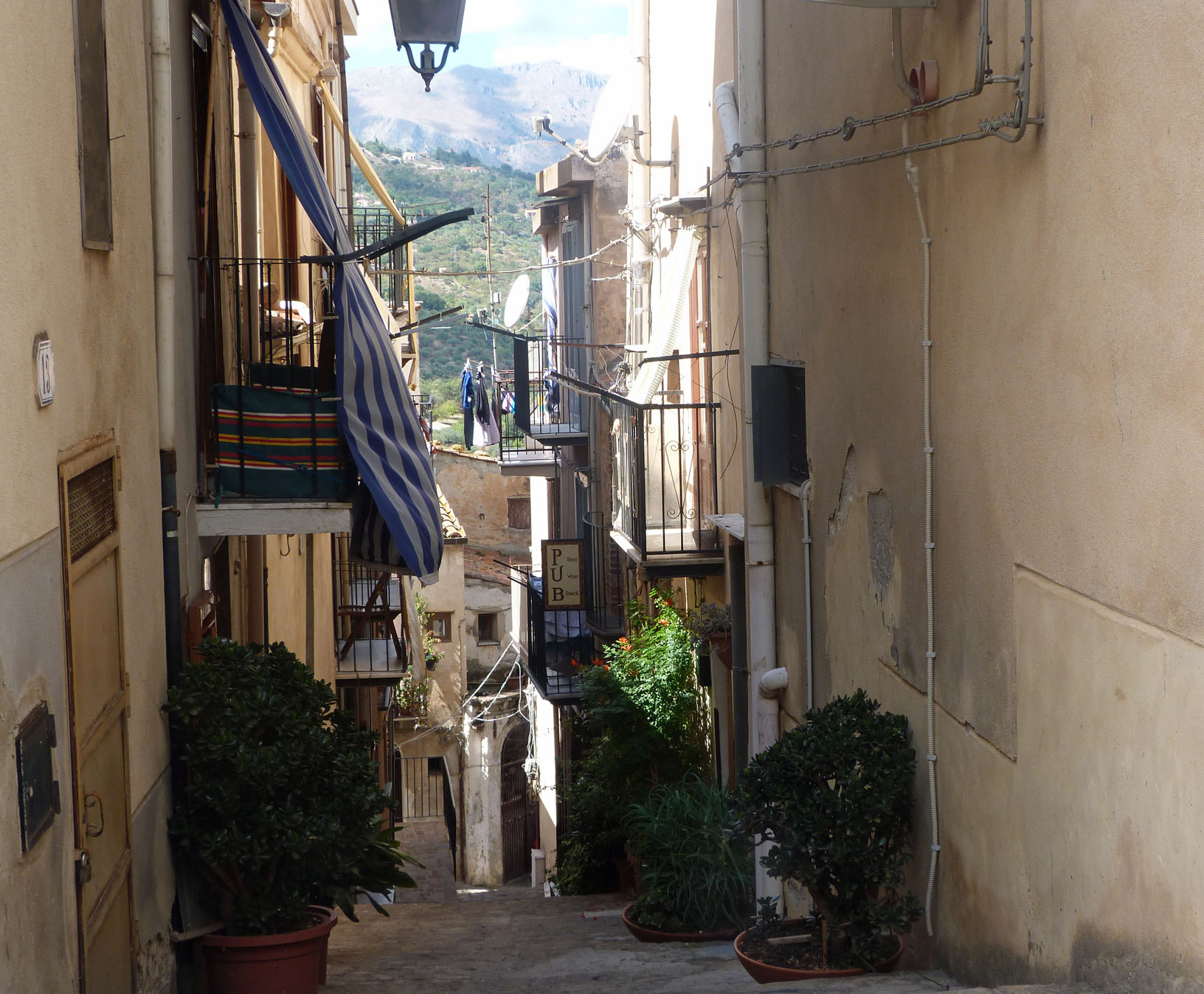
Steep Narrow Streets in Villages Photo: Mari Nicholson
In parts of the Madonie however, there is a movement to re-open some long-closed houses, as former inhabitants return home with savings that enable them to upgrade these dwellings and use them as vacation homes.
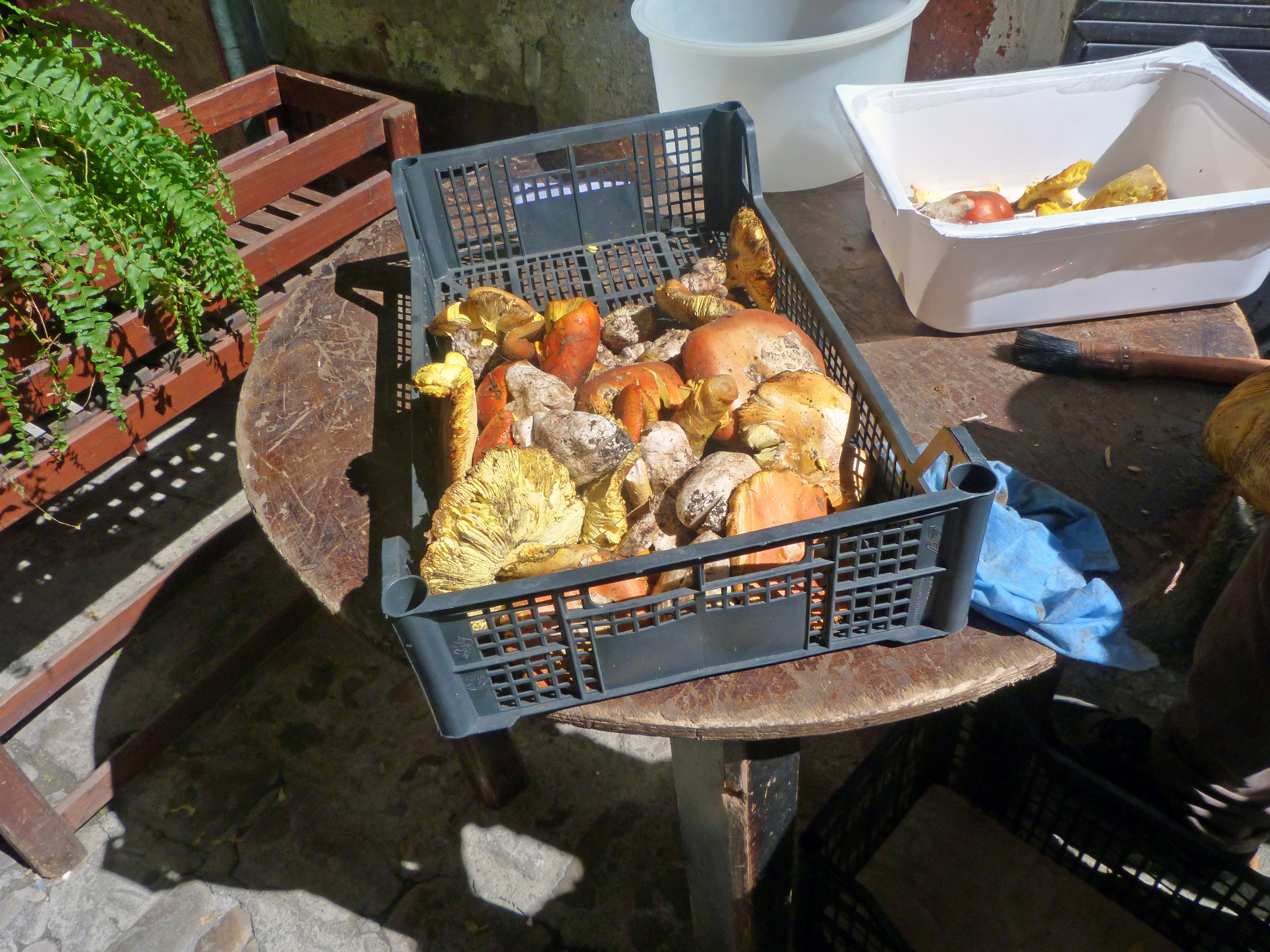
Semi-Deserted village in Madonie. Photo: Mari NicholsonWild Mushrooms awaiting a buyer. Photo: Mari Nicholson
The Park is rich in flora and fauna with the northern slopes covered with thick woods and centuries old olive groves, cork, chestnut, ash and oak woods. The sunny southern side is characterised by hilly slopes cultivated with wheat and barley and although the park only covers 2% of the island’s surface, more than half of the Sicilian vegetable species can be found here.
Wild Figs Growing by the Roadside Delicious! Photo: Mari NicholsonWild Mushrooms awaiting Chef’s attention at a Mountain Restaurant. Photo: Mari NicholsonPhoto: Mari Nicholson
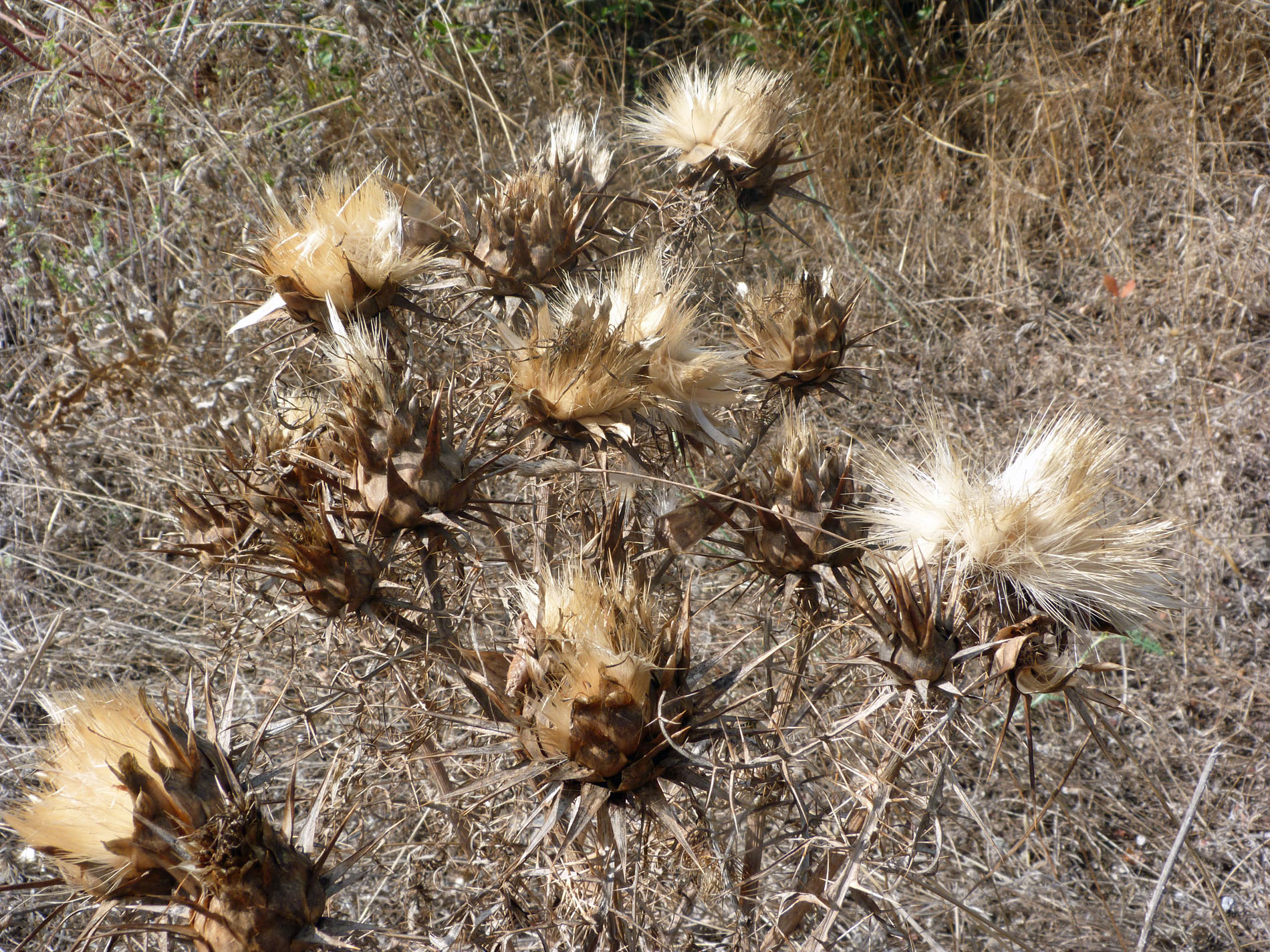
The Sicilian countryside is full of wild edible plants that are still used in local cooking and the Madonie is rich in vegetables like wild asparagus, funghi of every imaginable shape and colour, wild figs, wild chard, wild mustard, edible thistles, wild onions and wild garlic, and herbs such as fennel, borage, mint, thyme, rosemary and oregano.
As regards fauna, Madonie houses about 70% of the nesting birds and about 60% of the invertebrates of the island, among them several endemic, rare and protected species. The Park is a paradise for bird watchers and for those who like to see mammals living free in their native habitat. Among the animals likely to be encountered are wild boar, fallow deer, Italian hare, European hedgehog, and red fox. And everywhere you will see butterflies of every colour and hue.
Madonie Provola Cheese
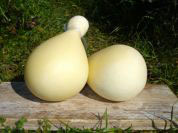
Specialities of the mountains which I can recommend are the Madonie Sfogio, Manna, and a delicious cheese called Madonie Provola, a characteristic pulled-curd cheese made with cow’s milk. This is still produced in the traditional way when small ‘pears’ of cheese are made towards the end of the process, straw yellow in colour and with a thin rind, which are then tied up in pairs and hung astride a pole.
Mountain Honey for Sale. Photo: Mari NicholsonView from the Church at Castelbuono. Photo: Mari Nicholson
Madonie Sfogio is characteristic of the Park, a pastry dessert which has been made for over 400 years and nowadays mainly produced in Polizzi Generoa, Petralia Sottana and Castellana Sicula. A short pastry case filled with mountain cheese, candied pumpkin, egg whites, chocolate, sugar, and cinnamon, it is baked and served cold. It can sometimes be found in other villages, often with a pistachio filling (another product of the mountains).
From the Mountains to the Sea. Photo: Mari Nicholson
Manna is described as the Gold of Sicily despite the difficulty of harvesting it. It is made from the sap of specific varieties of ash trees, extracted by making incisions on the bark of the tree – rather like rubber tapping – causing a whitish resin to flow out which crystallises and creates stalactite forms which are then dried before being sold. In the past, families used to move to the country for the summer harvesting of the manna: men incised the trees and the women and children collected the manna, but nowadays the manna is only harvested in the territories of Castelbuono and Pollina. A few young men still follow the traditional way of doing things but as few of them have the knowledge to determine when exactly to make the first incision, it is mostly left to the older generation to harvest the sap.
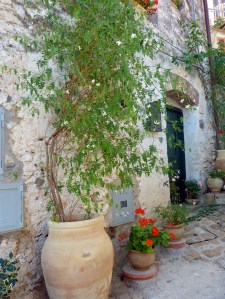
Jasmine and Geraniums most Popular Flowers in the mountains. Photo: Mari NicholsonHuge Granite Rocks lend Grandeur to the Scenery. Photo: Mari Nicholson
Manna has medicinal properties as well and items made from the sap are sold in many of the villages. It is an intestinal regulator, a digestive, a light laxative, it soothes a cough, it decongests the liver and it is rich in mineral salts. Nowadays it is used in pastry making and in cosmetics (soaps, creams etc.) and although its taste is sweet it can be used by diabetics as it doesn’t modify glycaemia.
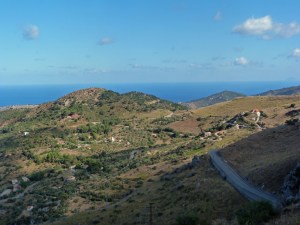
Roads lead over the Mountains to other villages. Photo: Mari NicholsonThe Villages seem to Blend into the Mountains. Photo: Mari Nicholson
A visit to part of The Madonie can be made in a day if time is short, or there are some excellent hotels and hostels in the Park and the tourist board can advise on holidays for walkers, riders, bird-watchers, photographers – even cookery holidays. It is a very pleasant drive, easily accessible from Palermo or Cefalù – but take it slowly as there are some very dangerous bends through the mountains – or it is possible, and not too expensive, to hire a car and driver for the day, leaving you free to stop when the mood takes you, to photograph the landscape and the people, and to relax and drink in the beauty of the park.
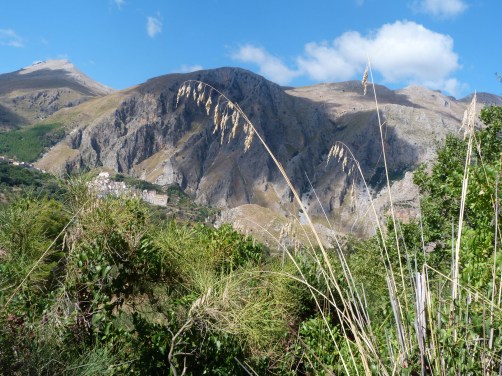
Madonie National Park in its Grandeur. Photo: Mari Nicholson
When to go? Well, spring sees spectacular spreads of wildflowers carpeting the mountain slopes while summer offers cool temperatures and an escape from the crowded coasts and cities down below. Autumn brings rich colours from the forest foliage, wild figs to pick along the road, and a bewildering array of wild mushroom dishes in every restaurant, and in winter the ski slopes are brisk with downhill action.
It is often forgotten in the rush to visit yet another battlefield in France that just a few miles from England’s south coast, the only territory belonging to Great Britain endured almost five years of a harsh and brutal German occupation.
Now at Peace, the Beautiful Island of Jersey
Hitler saw the Channel Islands as a strategic landing stage for an invasion of mainland France, and when in 1940 Churchill deemed the Islands indefensible (despite their heroic efforts to save Allied forces during the evacuation from Dunkirk) their occupation by the Germans became inevitable.
Entrance to the War TunnelsMuseum Entrance to War Tunnels
The story of Jersey’s occupation and the building of the tunnels is unfolded in slow and moving detail on a tour of Ho8 (Höhlgangsanlage 8), the kilometre long underground fortification that was conceived by the Germans as both store-rooms and a bombproof barracks. Known as The War Tunnels, this series of galleries is the best known of Jersey’s many tunnel complexes built by more than 5,000 forced labourers from Europe and Africa – Russians, Poles, Spanish Republicans, French and Algerian POWs.
These men all suffered at the hands of the occupiers, but the most barbaric and brutal treatment was meted out to the Russians who were regarded by the Nazis as Untermenschen – subhuman. They were abused, beaten, starved and, literally, worked to death.
Islanders will tell you that the dead Russians were shovelled into the walls and buried where they had fallen: just a few years ago these wall burials were one of the facts mentioned on the Tunnel tour but when I enquired this time I was told that there was no real evidence for this particular barbarity.
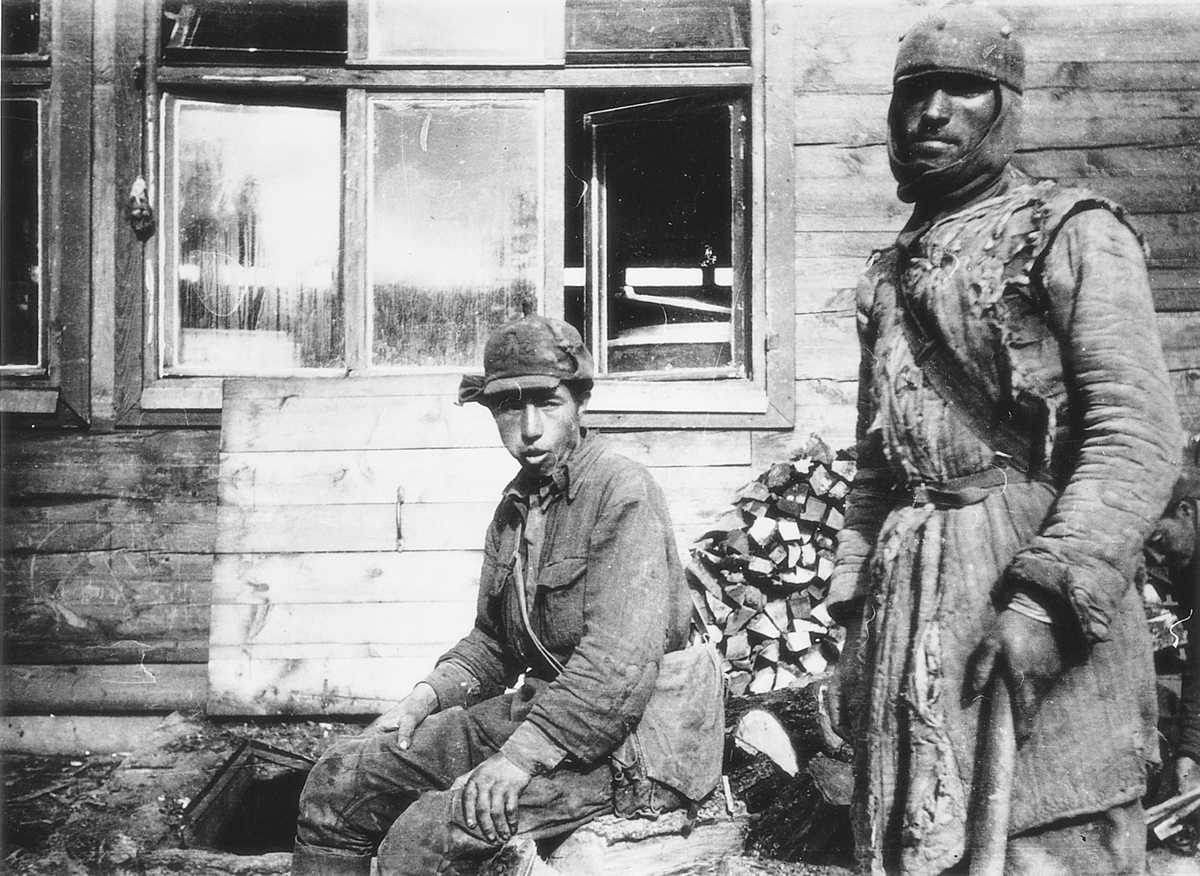
Russian POWs on Jersey during World War ll
Just before the occupation there were approximately 50,000 people living on Jersey, mostly native islanders, some seasonal workers from Ireland, France and Italy and some Austrian and Swiss. Amid the panic in June 1940 Whitehall gave the islanders the option of leaving within 24 hours or remaining on the undefended island: by the end of the day nearly half the population had registered to leave.
Many changed their minds, however, when they saw how the people were packed, for the journey, like sardines on the only transport available – coal and cement boats – and eventually only 6,600 left. From the beginning of the occupation in July 1940, up until December 1940, there were only 1,750 German soldiers on Jersey, but within a year the number had increased to 11,500.
To the Soldaten it was a paradise, a holiday island with shops full of goods, gardens full of flowers, and a not too unfriendly people. Photographs lining the tunnel walls show them relaxing on beaches in the sunshine, swimming, motoring, walking, young men enjoying a near normal life – a long way from the middle of war. But the atmosphere changed on October 21st 1940, when the Order was passed demanding a register of all known Jews and Jewish businesses. In June, 1942, it was ordered that all wirelesses be handed in and just three months later, on September 15th, the Order came for all British-born islanders to be deported to Germany. Over several days 1,200 of them were led away to an unknown fate with more deportations following in February 1943 when the Germans rounded up the remaining Jews, Freemasons, retired army officers and protesters.
And now food was getting short. Tea was made from bramble leaves or carrots, coffee from acorns or roasted parsnips, shoes were repaired with bits of wood, clothes cut from old curtains, and lipstick made from oil and coloured dyes. Soap was a rarity (sand mixed with ash was used as a substitute) gas was cut off every evening, and communal bake houses and soup kitchens were opened.
Scene from the Museum in Jersey. Wax Work of Woman and Food
Some girls found it hard to resist the handsome young blond soldiers and there was a certain amount of fraternisation despite the stigma it carried: the other islanders called them ‘Jerry bags’ and worse. They weren’t the only ones who fraternised, however.
Lack of food and clothing was a great incentive to work for the Germans because of the high wages paid and the extra rations given. There was resistance to the occupation in the form of painting V-signs on buildings, the theft of arms and explosives from barracks, and the use of the forbidden radios: if caught, the penalty was harsh – deportation to a concentration camp in Germany. The same punishment was meted out for offering food and shelter to escaping POWs and it is recorded that three members of one family were deported for merely offering some food to starving prisoners: one member of the family died in the gas chambers at Ravensbrὒck.
Reminders of the 1939-45 war still to be seen in Jersey
These are the stories you hear as you walk through the underground galleries, each dedicated to a period. There are last letters written to loved ones, daily printed Orders from the German occupiers and tableaux showing German soldiers speaking careful English to the young women of Jersey.
But the most moving of all images are the pictures of the starving Russian POWs dressed in rags, whose dark, haunted eyes staring out of the photographs speak of their utter despair. It is an exhibition that tells the story of the Occupation in the words and pictures of the people who lived through it.
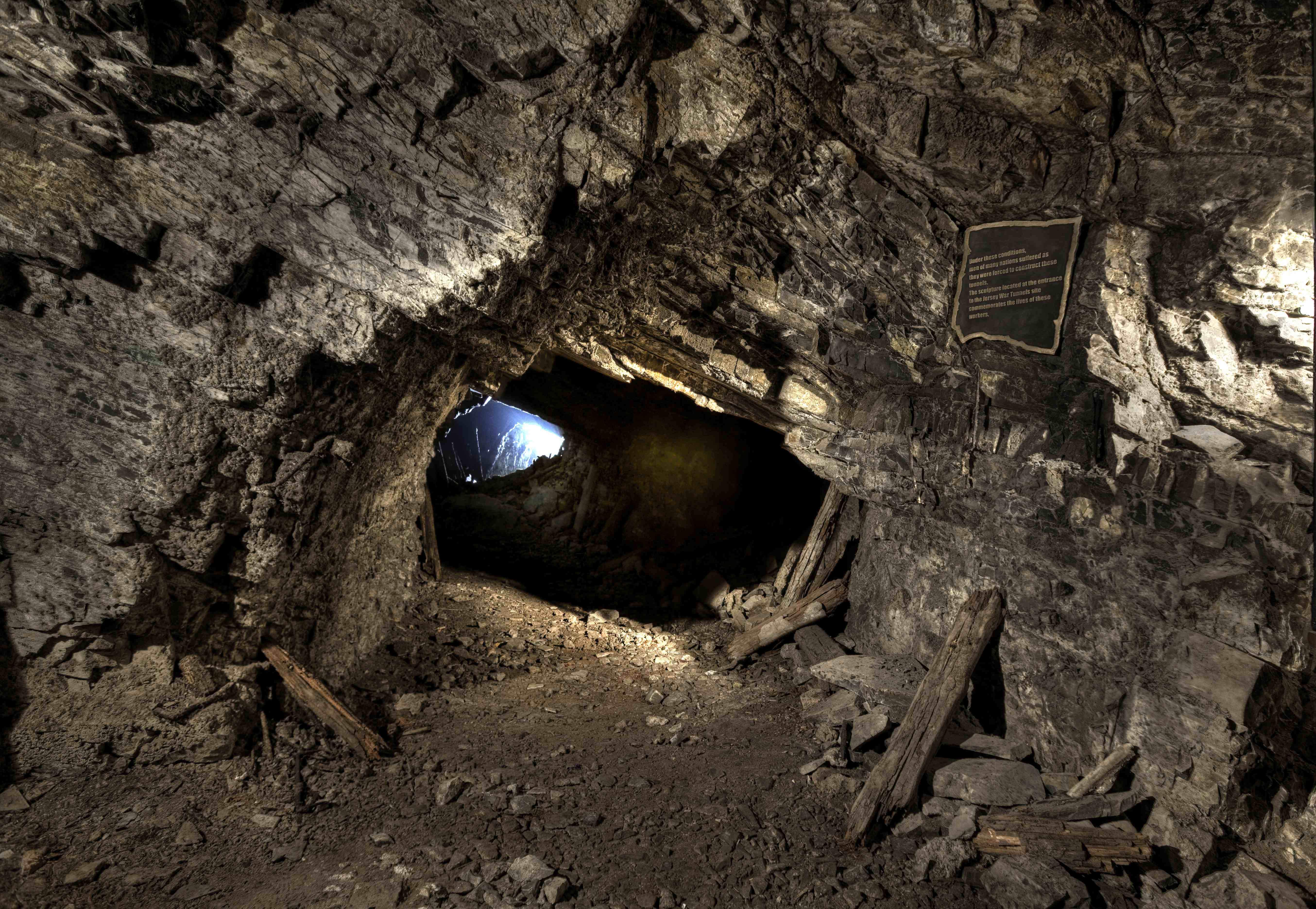
The final, unfinished, tunnel is black as the deepest night, a flickering light at the end of the tunnel the only sign of the outside world. As you grope your way through the darkness, a tremendous noise erupts and echoes around the cavelike space as though the world were about to end. The earth seems to vibrate beneath your feet, the sound of rocks crashing round about is deafening and there is an overwhelming feeling that the ceiling is about to collapse, burying you forever. And you think back to the pictures of the POWs you’ve seen and you know why each one wore a haunted look.
Black Tunnel in which the POWs worked.
The Normandy landings in 1944 heralded the final phase of the German occupation of the Islands, but it also meant that the supply routes were cut off. For the next eight months, the local population and the 28,000-strong German garrison were close to starvation both sides vying for the sparse grasses, berries, and edible tubers that were in the fields. Churchhill refused to help the islanders as he considered that the Germans, who were caught between France and England with no hope of escape, would benefit from such assistance.
The Germans acted with surprising decency towards the end of the war. When Red Cross parcels arrived for the starving people of Jersey, the soldiers delivered them to the houses and it is recorded that no parcels were opened and that no food was stolen. It is almost hard to believe, considering that they too were starving and considering also, their former behaviour.
Outside the tunnels, The Garden of Reflection provides a peaceful place in which to reflect on the suffering of the islanders, rendered defenceless by the UK and forced to find a way of existing with the enemy, and of the POWs who lived lives of utter misery and degradation. The lives of all are brought vividly to life in the tunnels of Ho8 Höhlgangsanlage, the Jersey War Tunnels.
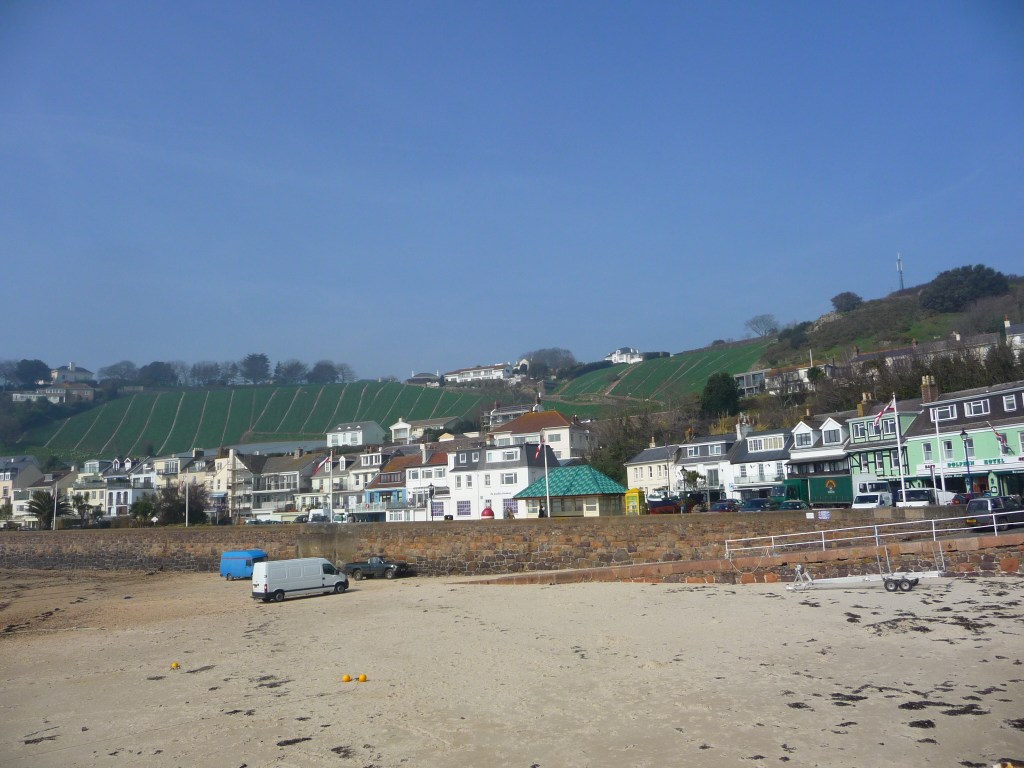
Jersey today, bright and cheerful
ALL FULL PAGE IMAGES ARE COURTESY OF JERSEY TOURISM
FACT FILE
Jersey War Tunnels, Les Charrières Malorey, St Lawrence, Jersey, Channel Islands JE3 1FU. Open seven days a week 1st March – 31st October 2014. 10.00 am – 6.00pm (last entry 4.30 pm) dults £11.50, Children (7 – 15) – Must be accompanied by an adult £7.50
Adults £11.50, Children (7 – 15) – Must be accompanied by an adult £7.50 Senior citizens £10.50, Students (with valid ID card) £8.50 Jersey Tourism (www.jersey.com)
sIstanbul has long been a lure for travellers in pursuit of the exotic, the city where Europe and Asia meet in harmony yet where the whiff of an alien culture is obvious. Just over a hundred years ago, it was as far as the sensible person on the Grand Tour would venture and it was the stopping place for that most exotic form of transport in those days, the Orient Express. It was where Christians met Muslims, a city of fewer than a million people, the city with a well-preserved heritage from Byzantine churches to Ottoman palaces.
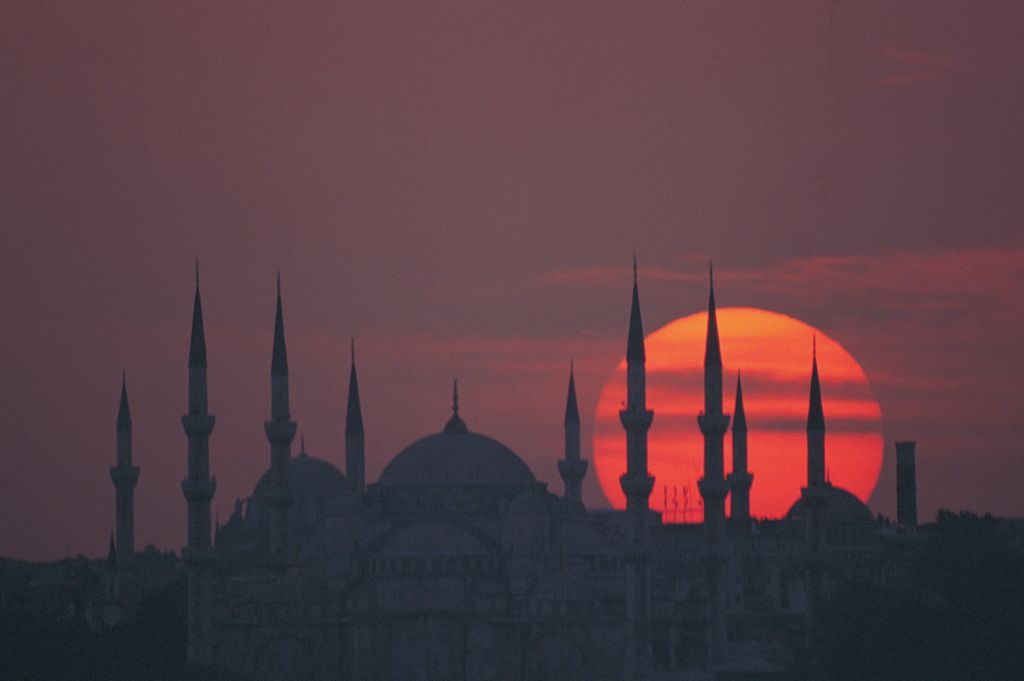
Sunset in Istanbul
Today’s world travellers venture much further in their quest for exciting destinations but Istanbul still manages to stir the senses. This derives from many things, from the faces of its citizens who hail from many regions of the country and on whose faces is written the country’s history, the magnificent architecture ranging from early 5th century to present day designs in glass and steel, and from the mosques and churches with their mosaics and fine carpets that point to the continuity of the two cultures side by side.
If you have only one day there, perhaps on a cruise ship, then the two most important sights are the Aya Sofia and the Blue Mosque. But if you have longer, than take a boat cruise on the Bosphorus and have a fish sandwich at the end of it (fresh fish from the Bosphorus fried on board and slapped between two pieces of bread).
The following places should be included in your tour.
On the Banks of the Bosphorus, Istanbul
Basilica Cistern
A magnificent underground reservoir with 336 columns each one 9m high beneath a high vaulted ceiling. Visitors walk through this forest of pillars on raised wooden boards above carp-filled waters which reflect the columns. It was built in the 4th century during the reign of Constantine the Great and creates an impressive atmosphere.
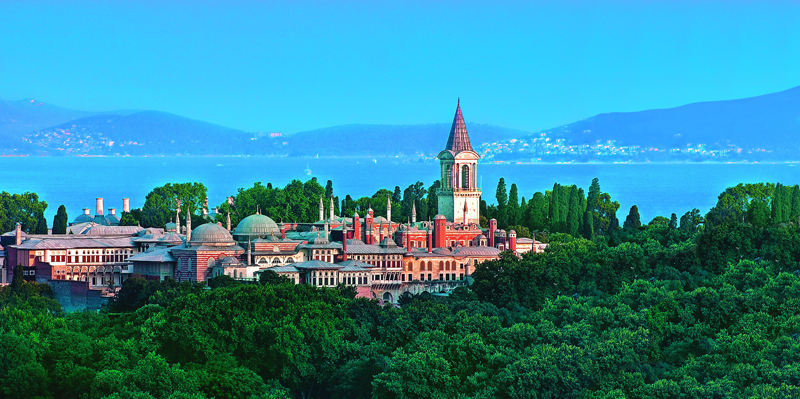
Topkapi Palace
Topkapi Palace with Bosphorus in Background
Topkapi is the largest and oldest palace in the world to survive until today. Situated on the site of the first settlement in Istanbul, it commands an impressive view of the Golden Horn, the Bosphorus and the Sea of Marmara. Once home to the Ottaman Empire’s ruling sultans from the mid 15th century to the mid 19th century this sprawling palace was turned into a museum on orders from Ataturk in 1924. Inside it consists of richly decorated chambers, pavilions overlooking the Bosphorus which were part of the private world of the harem, and holds some of the fantastic diamonds and other jewels of the Court. Most famous of these is the Topkapi emerald-encrusted dagger. Television still shows the Jules Dassin film of the same name, Topkapi, starring Melina Mercouri, Peter Ustinov, Maximilian Schell, and Robert Morley which was about the attempted theft of this famous emerald. If you have never seen it, catch it next time it is screened: it is well worth watching.
Grand Bazaar
Grand Bazaar, Istanbul
Said to have been founded by Istanbul’s first Ottaman ruler, Mehmet ll, the Grand Bazaar is one of the most famous souks in the world. It is a town within a city, miles of alleyways lined with over 4,000 shops which makes it an easy place in which to get lost. Everything from jewellry and carpets to Turkish delight and fake handbags is for sale here. The salesmen are experts at their job and you need to be firm if you don’t want to buy a silk carpet (which they can ship home for you) or a rug or a kelim. Caveat Emptor.
The Blue Mosque
Its real name is the Sultan Ahmed Mosque but everyone knows it now as The Blue Mosque, the only one ever to be built with six minarets. One of the most famous monuments of Turkish and Islamic art it is a fine example of classical Turkish architecture.
The architect, Mahmet Aga decorated the interior in jewel-like colours and it features stained glass, marble latticework and thousands of beautiful blue tiles which give it its name. It was built in the early 17th century and was originally part of a larger complex of baths, public kitchens, a covered bazaar, a hospital, schools and a caravanserai, few of which survive today.
If at all possible, try to view the mosque from the sea when, dominating the Old City skyline, it is breathtaking.
Aya Sofia
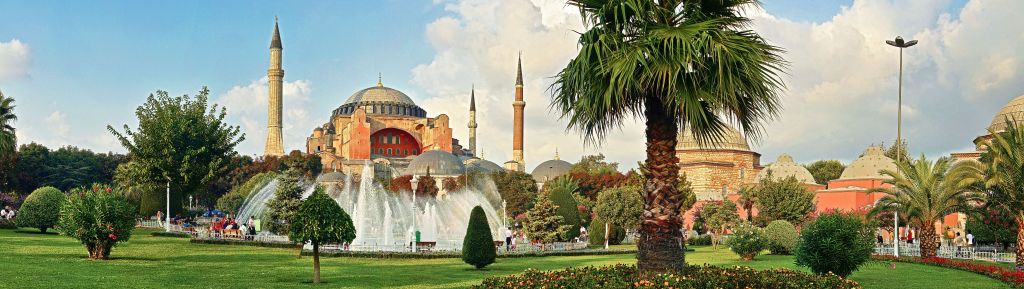
The Byzantine Emperor, Justinian, was responsible for the commissioning of this Christian church in 532 AD, the crowning glory in Christiandom’s crown for a millenium. Under the Ottamans it became a mosque but it is now a museum, famous for the seemingly unsupported vast dome of golden mosaics and stained glass windows.
Hagia Sofia interior
Aya Sofia (or Hagia Sofya or Haga Sofia) is one of the most visited Museums in the world. Used as a Christian church for 916 years, it was converted into a mosque after the conquest of Istanbul by Fatih Sultan Mehmed and remained so for 482 years. In 1935, a decision by Kemal Atatürk and the Council of Ministers, meant that Hagia Sophia was converted into a museum, which it remains to this day.
Hagia Sophia is open for visit every day except Mondays.
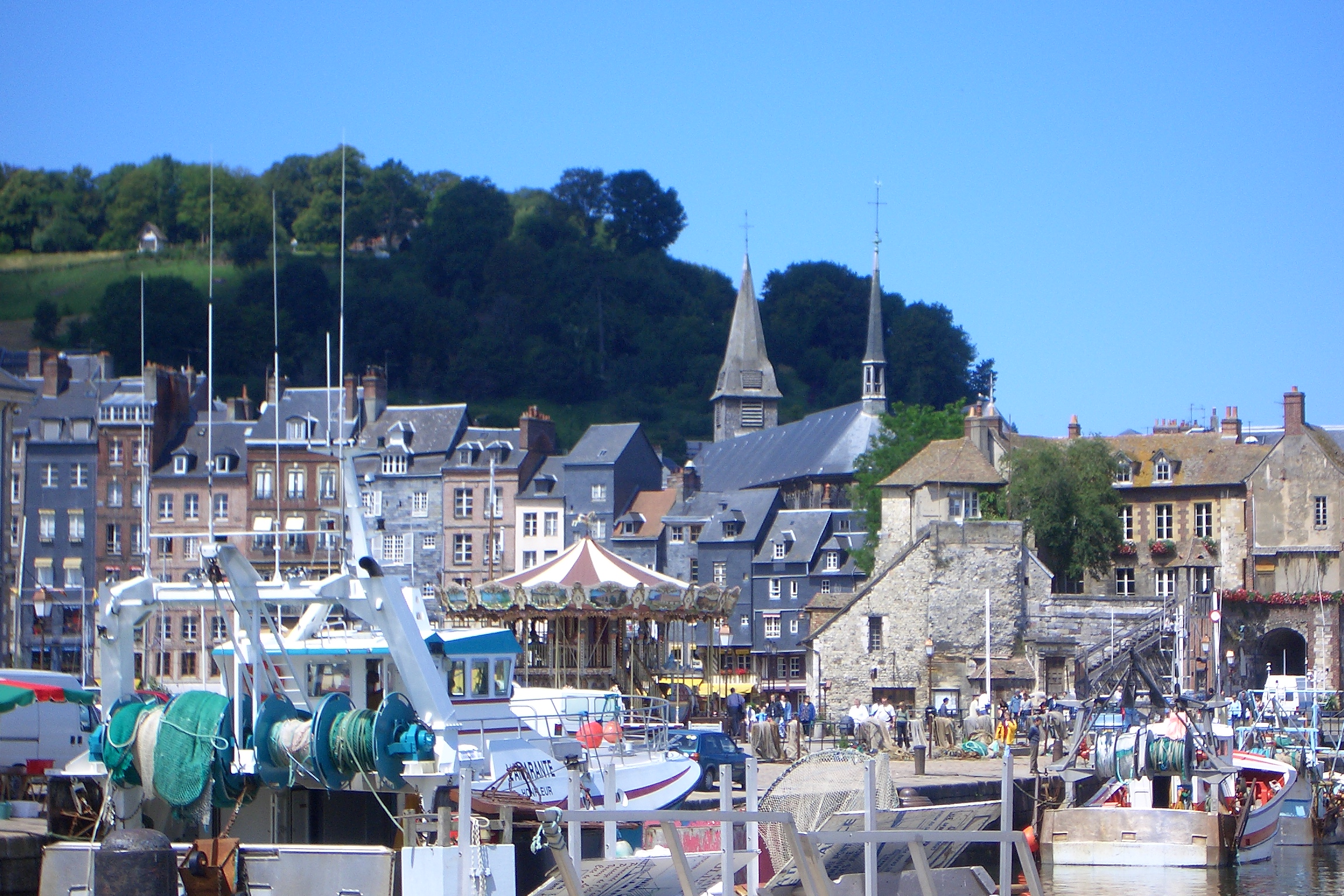
Now that the Eurostar has put so many French towns and cities within reach of the UK, the big decision is where to go. Yes, Paris is wonderful, but there are many other lovely places within a few hours of London, or just a hop across the channel from Dover or Portsmouth, and one of the loveliest is Honfleur.
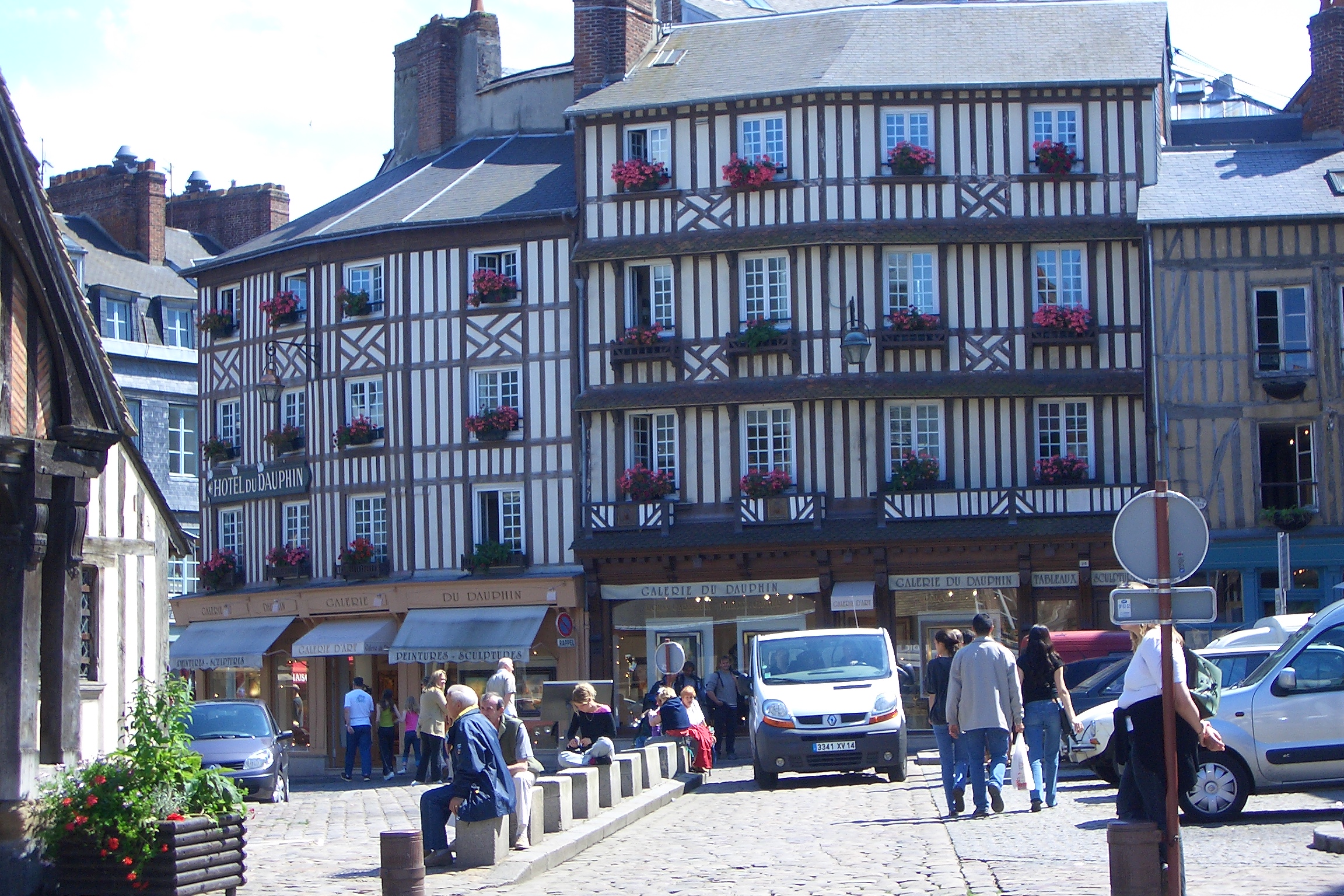
Of all Normandy’s coastal resorts, Honfleur is the prettiest – it is like a postcard come to life – with its yacht-filled harbour lined with cafes. Most people will be familiar with the look of the town from the dozens of Impressionist paintings in which it features, from local-born painter Eugène Boudin to Pissarro, Cézanne, Renoir and Monet, who followed Renoir from Paris to paint the ever-changing light.
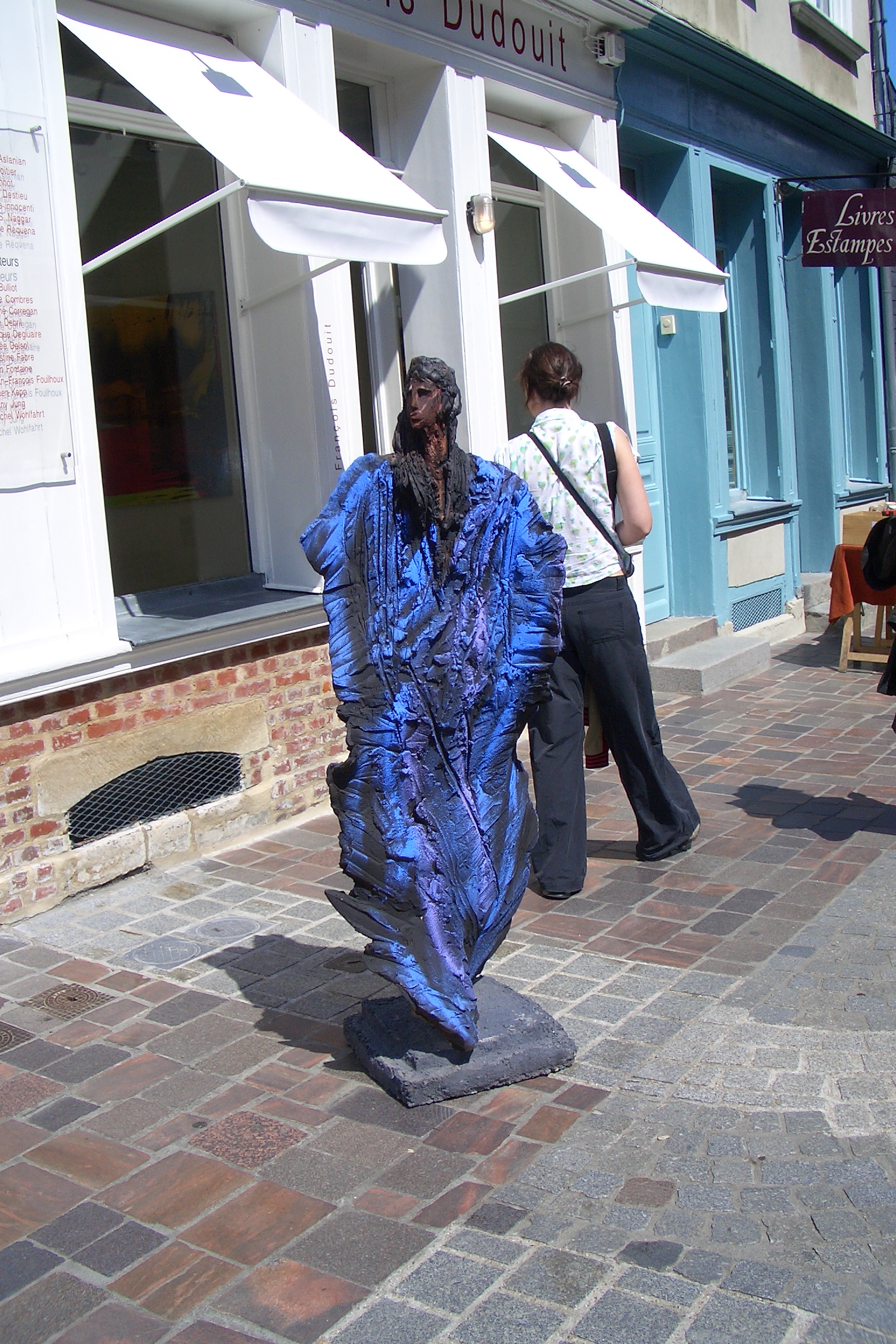
Today the town still acts as a magnet for artists and there are probably more galleries than cafes or restaurants, and more bad art per square metre than anywhere else in France! Of course there is good art too, and you may pick up a bargain, but you will have to fight off the new rich oligarchs who now make up most of the tourists.
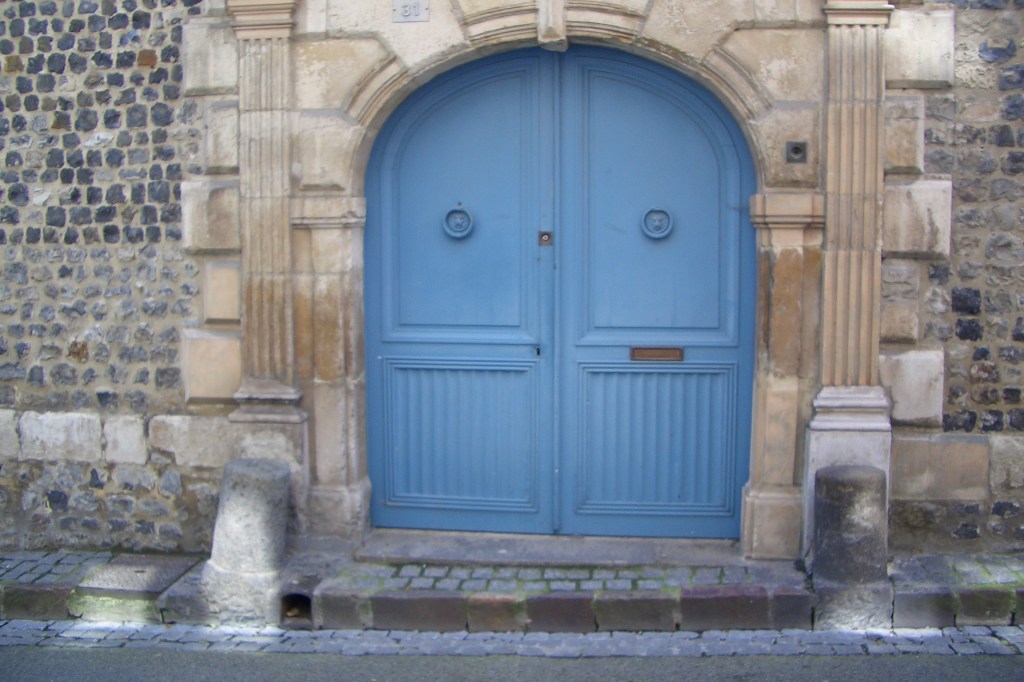
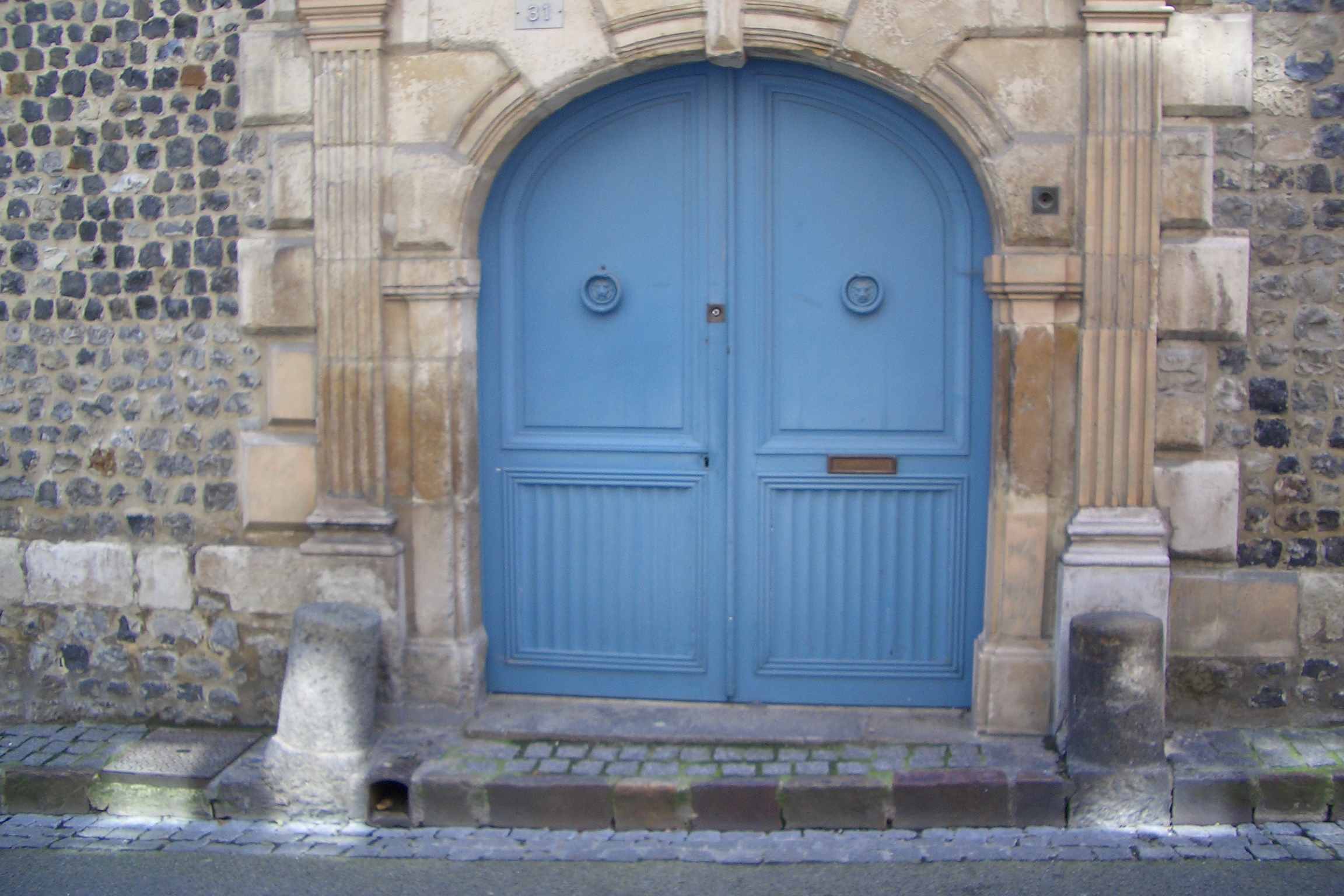
Blue Door, 17th century House
Its exceptional geographical position makes Honfleur an ideal base to discover the route du cidre or the route des fromages, for walks around the Seine estuary in the steps of the impressionists, for visits to the bustling resort of Trouville, to historic Rouen, and to the Pay d’Auge valley for some of Normandy’s best cider and cheeses. Its harbour invites one to sit and relax over a coffee and cognac, lunch like the locals on the local moules, and watch the manoeuvering of boats in the harbour while the sun goes down.
Mussels and Cider in Honfleur
Normandy’s fertile countryside supports a rich dairy industry and prolific apple orchards, the basis for its cuisine based on the three Cs – cream, cider and cheese. And from the cream of course, comes the famously rich Normandy butter and from the apples comes the famous Calvados.
There are beaches to die for in Normandy, as indeed some did in the Second World War, and visits to the famous battlefields can be easily arranged. There is a small beach in Honfleur but it would not suffice as a ‘holiday beach’, but is adequate for a day’s sunbathing.
A few things not to miss.
The Vieux-Bassin, (old dock) in the heart of the town, and the high, narrow old houses which overlook the harbour on three sides.
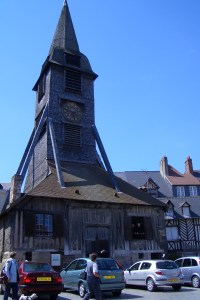
Saint Catherine’s Church built entirely of wood.
Old Wooden Church, Honfleur
The Notre-Dame-de-Grâce Chapel has relics of the first explorations that marked the beginning of the first colonisations in New France (Canada). One of the oldest sanctuaries in the area still stands on the plateau de Grâce, surrounded by ancient trees.
The Eugène Boudin Museum houses paintings by the 19th and 20th century painters from Honfleur and around, who followed Boudin – Dubourg, Jongkind, Monet, Courbet, Dufy, and others. Also on display are drawings and paintings bequeathed to the town by Eugène Boudin.
Les Maisons Satie Museum paying tribute to Erik Satie, musician and composer born here in 1866.
The Greniers à sel (Salt granaries): these date from 1670 and were used for storing up to 10,000 tons of salt at a time. Today these vast stone buildings are used for exhibitions, concerts and conferences.
And find time to take a trip around the estuary, stroll along the backstreets where you will come across little museums, odd statues and traditional markets and discover the spirit of old Honfleur.
Syracuse (often spelt Siracuse) in south-east Sicily, is often overlooked in favour of the more touristy Taormina but the visitor to Sicily should not miss this city that was described by Cicero as the greatest Greek city in the world.
Assaulted by Romans, Byzantines, Vandals, Arabs, Normans and Spanish, Sicily has absorbed these foreign cultures and made it her own, perhaps best exemplified by the Cathedral in the Piazza Duomo, the delightful pedestrianised square in the heart of Ortygia, the island in the centre of Syracuse.
The façade of the cathedral is 18th-century and like so much of Sicily’s architecture, it was erected following the earthquake of 1693. It is actually built on successive altars to the Temple of Athena, the doors of which were said to be made of gold and ivory. Round about the 17th century the temple was transformed into a Christian church which later became the Cathedral. Walk down Via Minerva to view the outside of the Duomo and see how nothing was wasted: the giant Doric columns of the Greek temple to Athena were incorporated into the church that superseded it.
Ancient Greek Pillar still supporting the Duomo
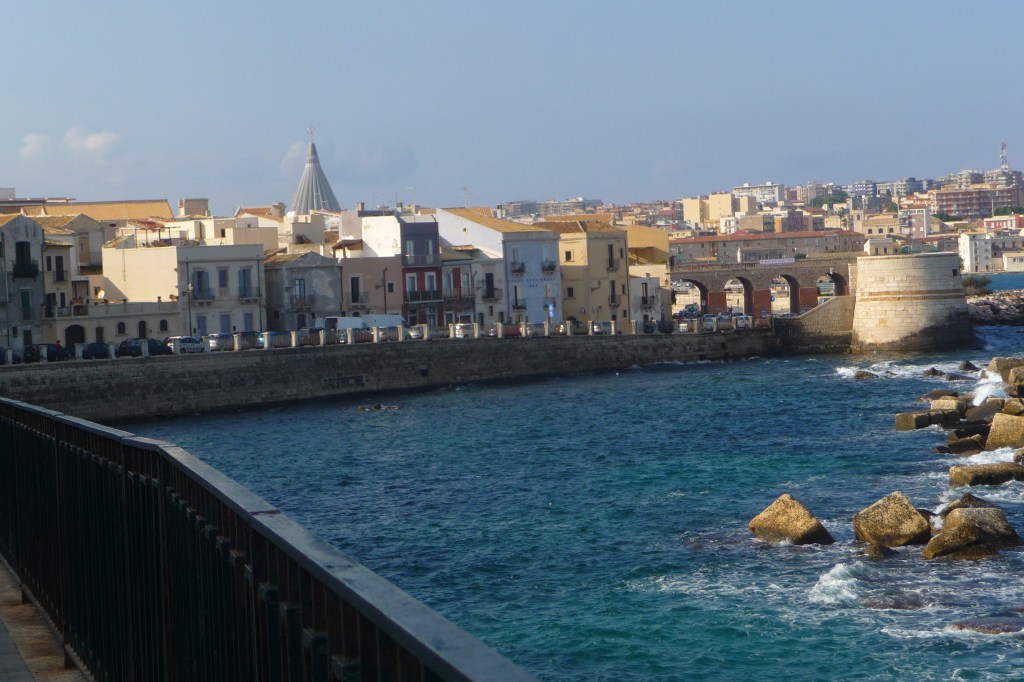
Syracuse Town
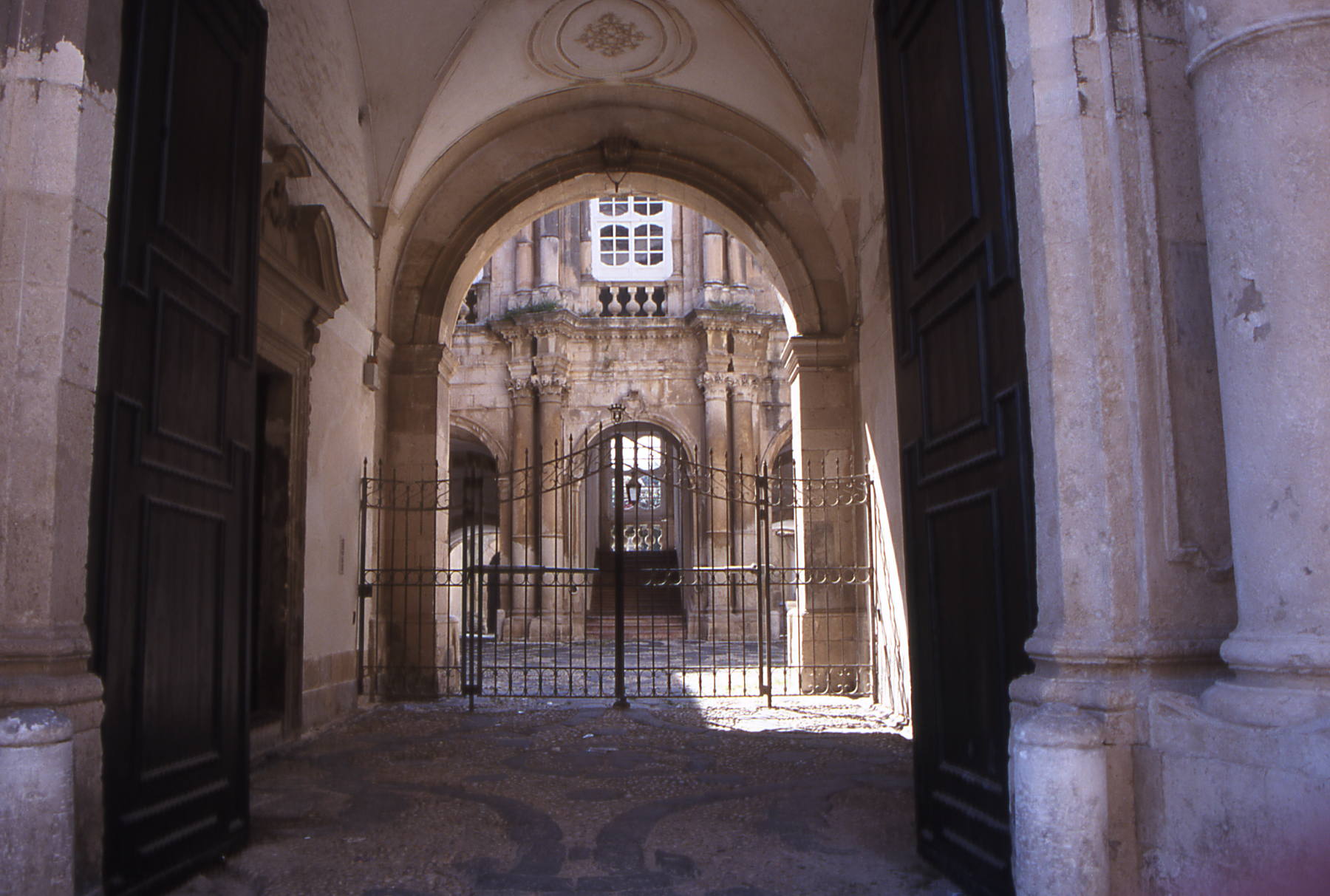
Courtyard in Piazza Duomo, Siracusa
The Piazza is regarded as one of the most beautiful in all Italy with the Cathedral on one side and various Baroque palaces dotted around the square. Day and night the piazza is a scene of energy and life as the ground floors of the once-great palaces now mostly operate as restaurants, cafés and bars. On a warm evening there is no better place in Syracuse in which to sit and enjoy an espresso or aperitif.
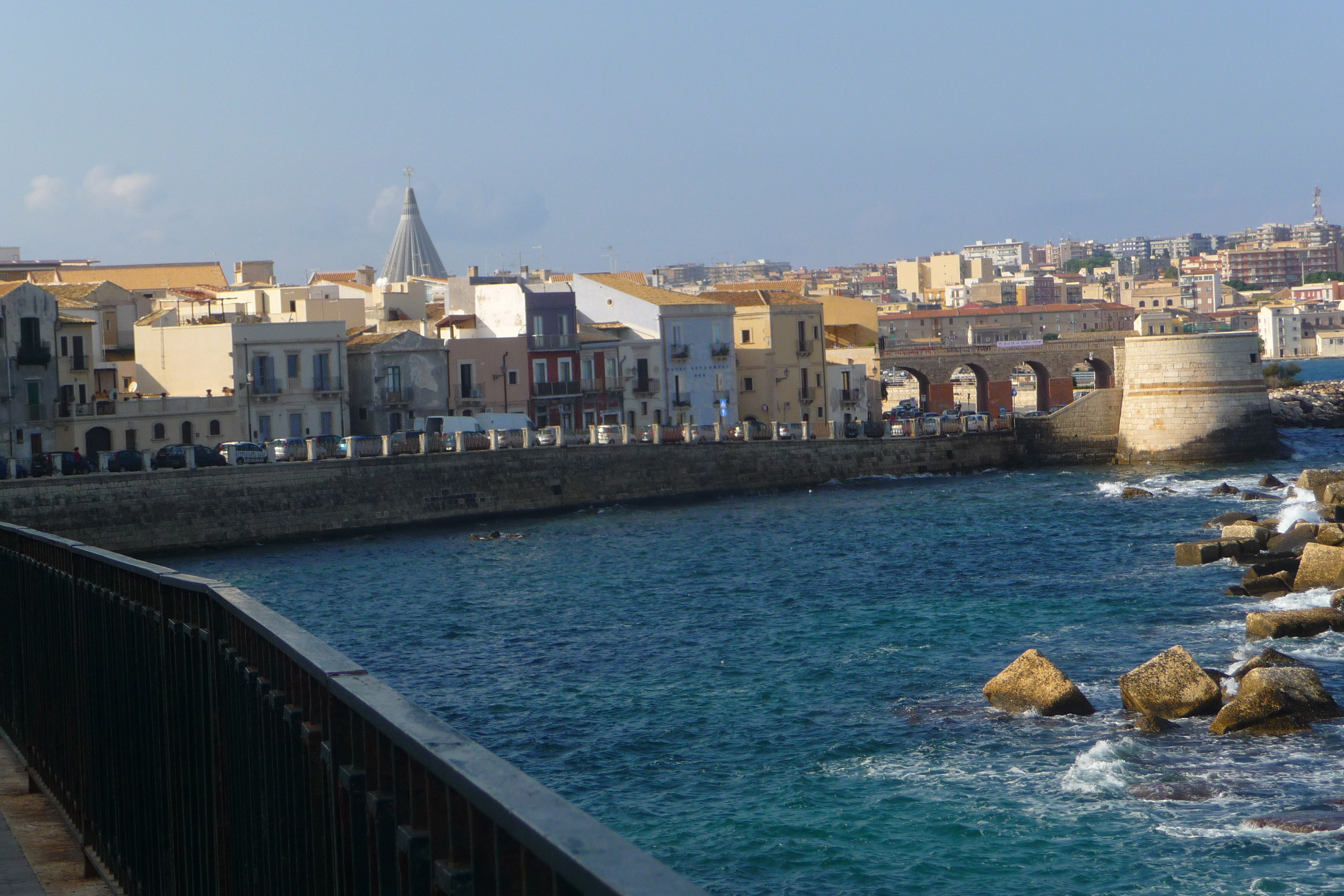
A Bridge Links Old and New Syracuse
There are two main areas in the town, the archaeological area which includes Greek and Roman theatres and remains, and Ortygia, a small island that feels more like a tiny peninsula, with beautifully restored Baroque buildings, a number of fine hotels and some great restaurants.
The Archeological Area
Temple to Apollo in Piazza Archimedes, Syracuse
In the Neapolis Archaeological Park situated in the northwest of the town, are a number of well-preserved Greek and Roman remains.
Greek Theatre, Syracuse
The main attraction is the Greek theatre (not to be confused with the more often photographed Greek Theatre in Taormina which has as its backdrop the snow-capped Mount Etna) where the plays of Aeschylus and Euripides are still performed from May to the end of June each summer as they were more than 2,000 years ago.
Started in the 5th century when Syracuse was one of the great cultural centres of the Mediterranean world, the theatre is considered to be one of the most perfect examples of Greek architecture to have survived and can accommodate up to 15,000 spectators in its 59 rows.
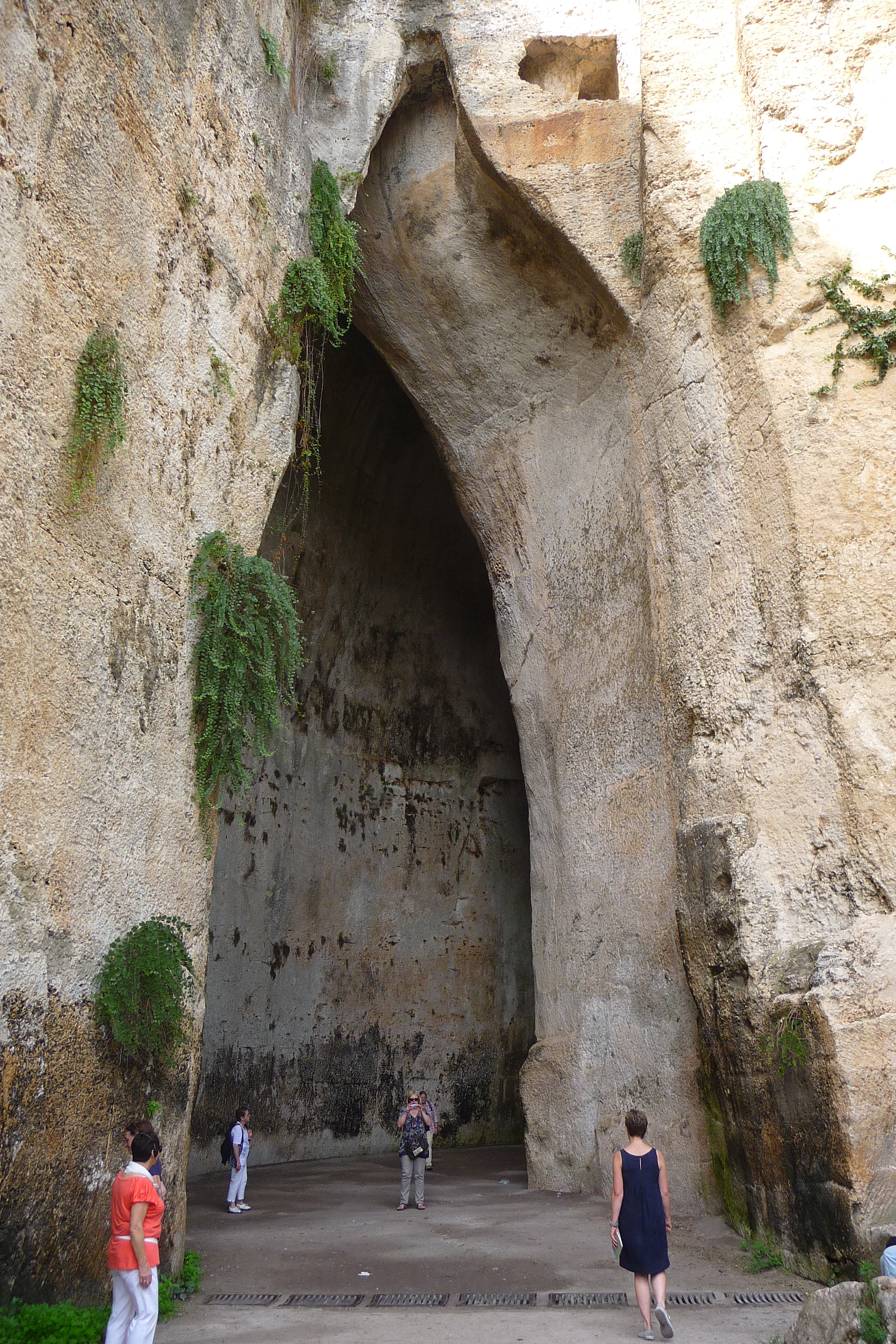
The Ear of Dionysis
The nearby fragrant lemon grove was once an old stone quarry used at one time to house 7,000 Athenian prisoners of war, the limestone dug from it in 500 BC being then used to build Syracuse.
Wander into the vast man-made chamber known as Dionysius’s Ear, a 20m high pointed arch cut into the rock face which owes its name to a visit by Caravaggio in 1608. Used as a prison, the excellent Cathedral-like acoustics meant that the prisoners’ conversations could be heard from outside.
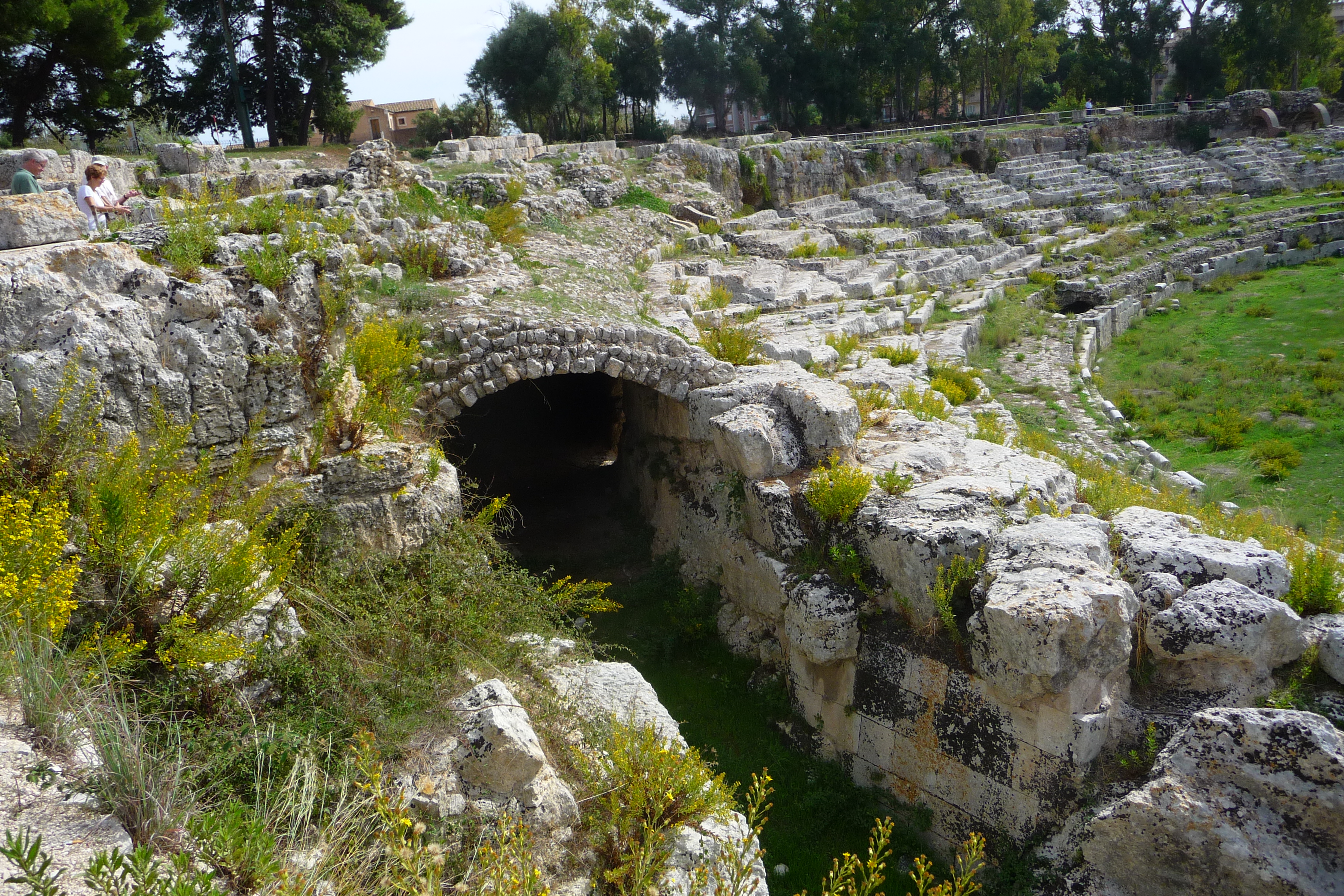
There is also an impressive Roman amphitheatre, approximately 140m long, built in the 3rd Century AD where traditional blood sports took place, gladiators and wild animals providing the blood-letting that was so much part of these offerings. The hole in the centre is believed to have been a drain for the blood and gore – as one guide told me – or, a space for scenic machinery – as another guide told me!
Roman Amphitheatre, Syracuse, Sicily
The Archaeological Museum is just a short walk from the park and if time allows, it is worth a visit.
Ortygia, 2,55 Years of History
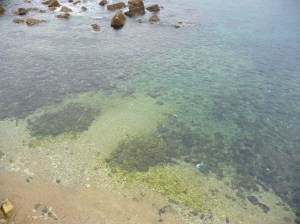
At only 1km by 500m, the best way to see Ortygia is just to wander through the area admiring the Norman buildings and the Baroque decorative facades. Enjoy the sun at one of the cafes in the area sipping a café or an aperitif, or lunch al fresco at one of the many good restaurants on this tiny island. Take a picnic and sit on the seawalls and admire the fish that swim lazily in the clear waters of the bay.
Clear Waters of the Bay in Syracuse, Sicily
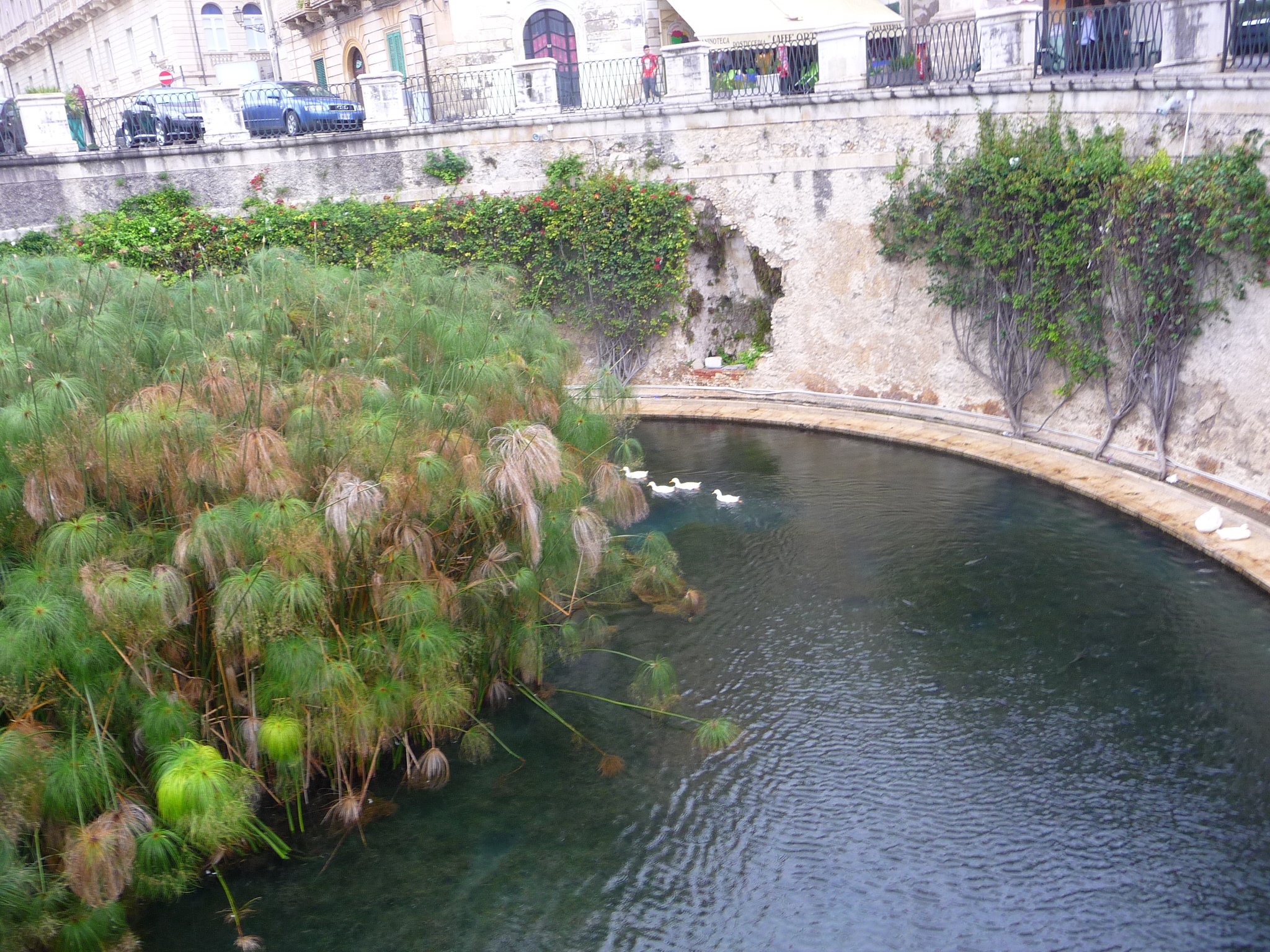
One could easily walk past the Fountain of Arethusa. filled with white ducks and surrounded by walls of greenery, as it looks so unpretentious but it is one of the most important sights in Syracuse.
Legend has it that the Arcadian nymph Arethusa, fled underwater to Syracuse to rid herself of the amorous advances of the God Alpheios and the Goddess Artemis transformed her into the freshwater spring that we see today.
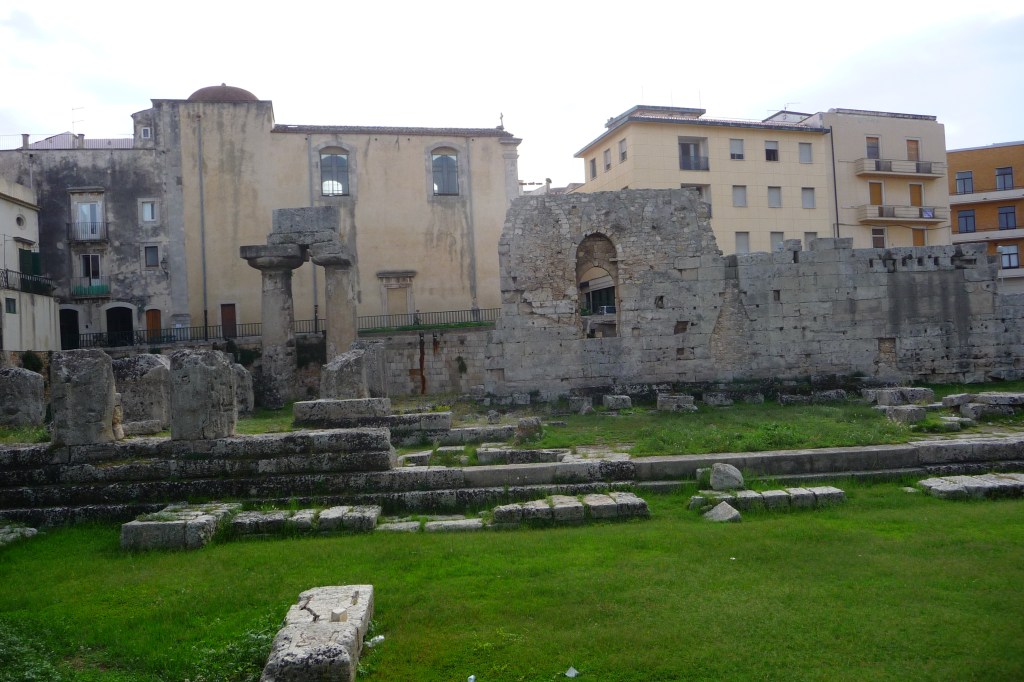
The ruins of this Doric temple stand incongruously in the middle of the town (you can’t miss it as it’s on a main thoroughfare), on one side of which is a bustling market with sellers hawking clothes, handbags, umbrellas and anything else that will sell.
Temple to Apollo, Siracusa, Sicily
It seems such a pity that the Temple is not isolated so that visitors could enjoy it in tranquillity, but then it was probably full of bustling life when it was in use back in the 8th century BC when it was at its most active. It is the oldest temple in Sicily and over the centuries it has been a Byzantine church, a mosque and a Christian church.
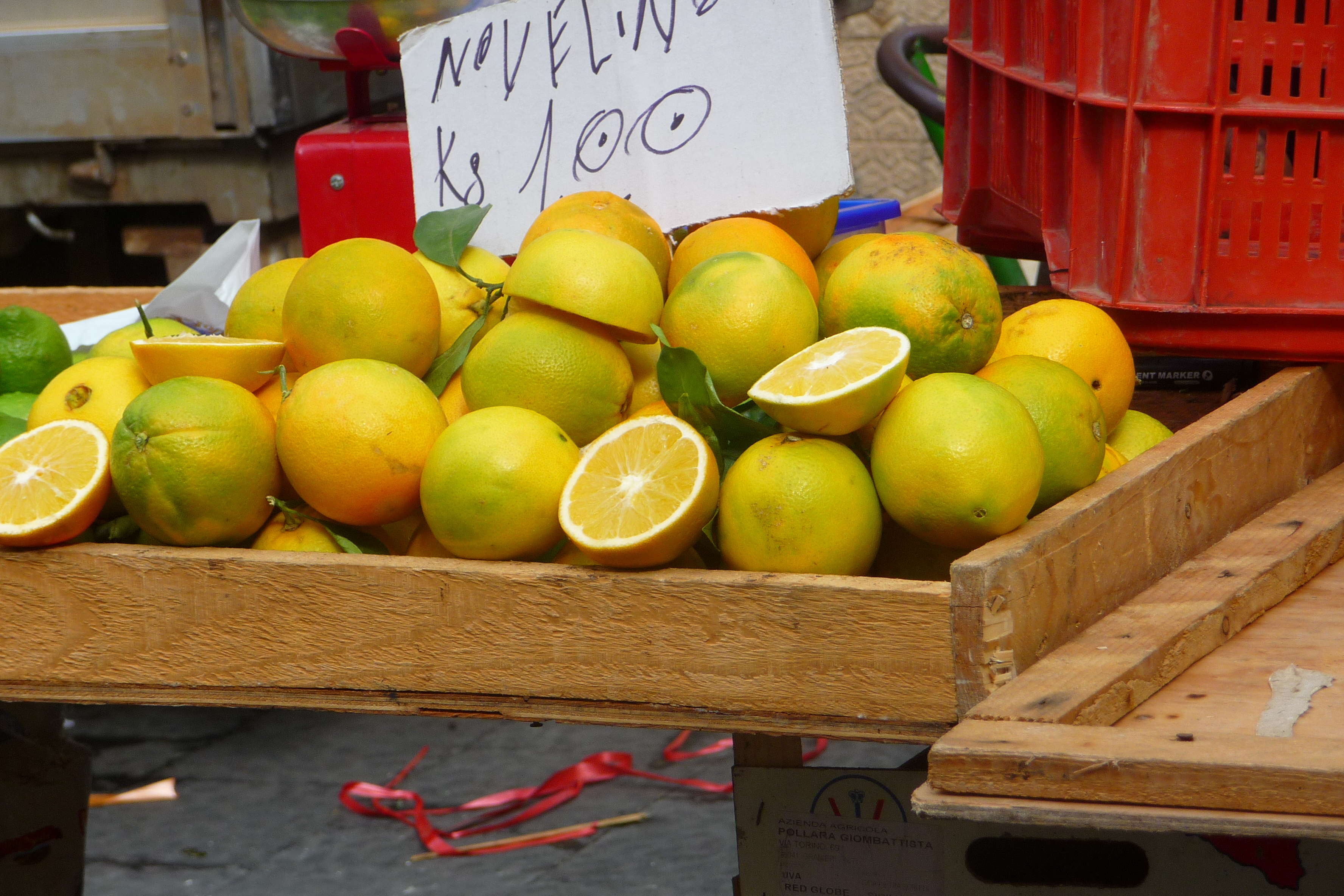
Citrus from Sicily
Plato visited Sicily several times as did Simonides and Pindar, and Aeschylus sang of its beauty. Its enormous military power made it capable of withstanding attacks from Carthage and Athens and it remained powerful until the Arab conquest in 878 when it lost its supremacy.
For opera lovers, the upcoming summer season of glorious music in Italy is something not to be missed. All over the country festivals are about to open, many in small villages but all the more passionate because the town or village will have a personal tie to the composer whose work will be honoured. Places like the San Galgano Opera Festival at Chiusdino, Siena that runs from June – August, the Rossini Opera Festival in Pesaro 10th-23rd August, and dozens more are set to keep opera fans happy during the summer months. My own favourites, the ones I hope to visit each year, are the Verona festival, the Puccini Festival in Torre del Lago and the Ravenna Festival, not just because of the music they offer but because they are in areas that allows touring during the day and longer trips on either side of the musicfest.
The Arena di Verona is one of the most magnificent arenas in Italy, capable of seating 20,000 patrons per performance but limited to 15,000 for safety reason. The setting is truly magnificent, open to the elements and capable of staging the world’s most famous operas and adding props like real elephants and camels when the work calls for them. This year the Arena celebrates 100 years and is offering Aida, Romeo and Juliet, Nabucco, Traviata, Trovatore, Rigoletto, and a Verdi Gala. Among the special guests for the opening Gala are Placido Domingo, José Carreras and Andrea Bocelli. June 14th – September 7th.
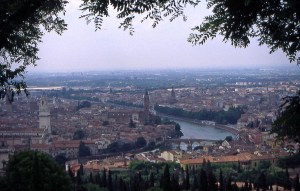
Verona from the hills outside the city.
The home of the legendary Romeo and Juliet, there is no lack of sightseeing in Verona itself, but nearby is Lake Garda surrounded by delightful towns, further afield but an easy day trip is Venice, and the Dolomites are on the doorstep. What could be better. http://www.arena.it
The Amphitheatre of Verona
The 59th Puccini Festival takes place in Torre del Lago from July 12th – Augst 24th, a festival created by the great man himself in 1930 and since continued. The outdoor theatre close to Vlla Mausoleo where Puccini’s remains lie, is a wonderful setting in which to enjoy the music of one of the greatest opera composers of all time. This year the offerings are Cavalleria Rusticana, Il Tabarro, Tosca, Turandot and Rigoletto. There is little accommodation in Torre del Lago and most visitors to the event choose to stay either at nearby Viarragio or Lucca (my favourite).
Madame Butterfly in Mosaic Tiles in Lucca
Lucca has the Puccini museum, is the only town remaining with its surrounding walls intact, the top of which can be walked or cycled around as they are very wide, and is known as the “tower town” due to the number of intact tall towers there. A charming cathedral, free concerts in the evenings when not at the opera, some great restaurants, and Lucca could be the prize of the season. Besides, it is just a short rail journey from Pisa and so perfect for connecting flights. http://www.puccinifestival.it
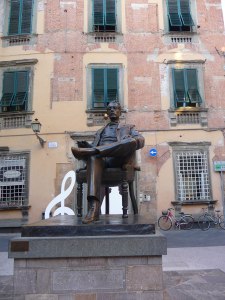
Puccini Statue in Piazza in Lucca (beside Museum)Magnificent 5th Century Mosaics in Ravenna
The Ravenna Festival from May to June is hosted in its many theatres and churches. The Byzantine basilicas, cloisters and piazzas combine to make a superb backdrop for the art and music on offer. The finest opera companies with the finest singers converge on this small town for a very special festival, this one the 24th, and apart from opera and classical music, they will offer jazz, films and exhibitions. http://www.ravennafestival.org
For all other festivals, check out the following site which lists them all. www.festivalopera.it
I didn’t realise how few people knew about the green volcanic archipelago of The Azores until my recent article on the tea grown there persuaded many people to contact me for more information. The mountains, lakes and picturesque towns are The Azores greatest attraction and because the capricious climate means that mass tourism is unlikely to destroy the strong culture of the archipelago one can really use the word ‘unspoilt’ to describe the islands.
Having said that, they have now been discovered by the cruise market and nearly every day there is a cruise ship moored in one of the harbours.
But meantime, the 9 islands are there for the traveller who looks for beauty and tranquillity, not adventure, not crazy nightlife, but the serenity that used to be the added value of most remote islands.They are perfectly placed for outdoor activities with a lack of pollution both in land and at sea as well as unique and diverse terrain.
Walking, Hiking and Trekking in the Azores
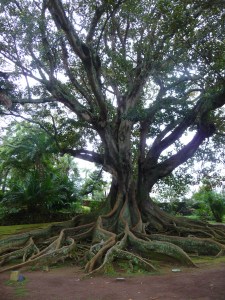
Lichen on Stone in MountainsTree in Botanic Gardens in S. Miguel
Hiking and trekking includes walking up to volcanic peaks, around craters and through mountains. Local organizations such as the Os Montanheiros have spent countless hours mapping and cleaning trails all about the Azores. The Mountain of Pico and the Pico is a “must climb” for those wanting a moderate exercise and a unique stunning view of 4 other islands, Terceira, Faial, S. Jorge and Graciosa, on a cloud-free day). Horse riding tours via places such as Picos da Aventura, local farms such as Quinta das Raiadas can also be reserved, the tours being made along the beautiful countryside.
Whale Watching and Swimming with Dolphins
The most reliable departure ports are Ponta Delgada, Vila Franca do Campo, Horta, Lajes do Pico and Madalena. Visitors are taken out on small boats and often get within ten yards of the whales. Contrary to the mass-produced affairs that swimming with the dolphins involves in more popular places, in the Azores, one is not allowed to touch the dolphins due to environmental concerns. This in no way decreases the fun to be had especially as you swim in a clean blue ocean with pleasant water temperature.
Coastal Adventure Sailing, Yachting and other Water Activities
The Azores from the Sea
It is possible to spend time sailing between the islands and exploring what each one has to offer: boats moore in sheltered marinas or anchor in secluded bays. Find out more from the individual islands as weather and winds make a difference to the frequency. Canoeing is popular in the main marinas as well as some of the lakes in S. Miguel and Flores such as Sete Cidades e Furnas.
The marinas of Ponta Delgada and Horta are world famous for those crossing the Atlantic with Horta in particular having been used for centuries by the yachting community as a place to pull in for a rest and a g. & t!
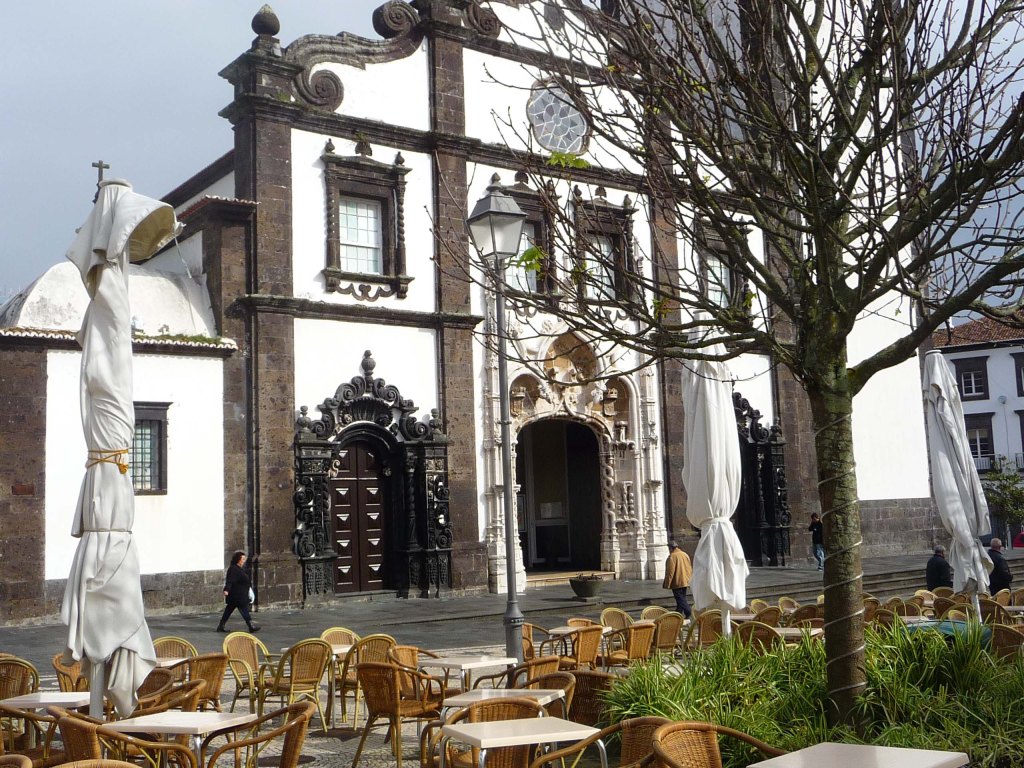
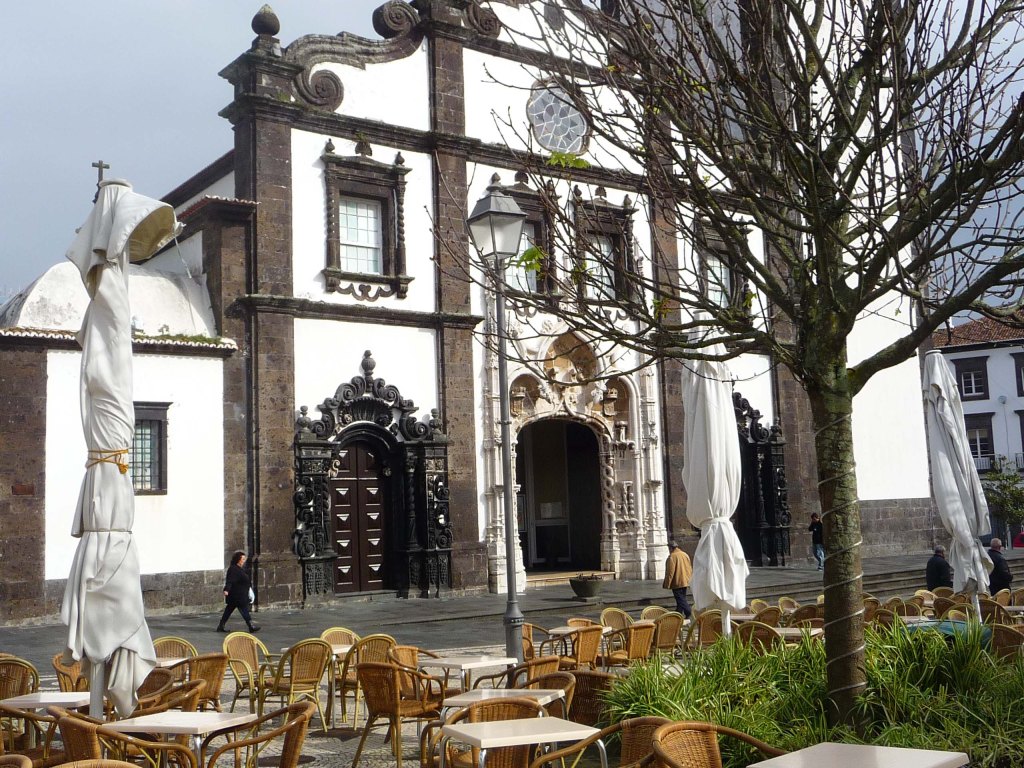
Pleasant cafe by Church
Surfing
Located in mid-Atlantic as they are, the Azores have plenty of swell most of the time. Not surprising therefore, that major international events are being held there for both men and women (on S. Miguel). The Azores are slowly becoming a surfing mecca for those want to surf with fellow aficionados, the main spots being Ribeira Grande, a powerful beach break with consistent waves, and Rabo de Peixe, a left-hander created by the harbor development. Only for experienced surfers as these are,more or less, uncharted and sometimes dangerous waters.
Diving and Underwater Activities
The Azores is home to some unique and fantastic sub-aquatic setting. With a variety of fish and water mammals great coastal formations, excellent water visibility and temperature, the Azores have become a must-visit place for diving aficionados. Many certified diving centers are located in the various islands. Two decompression chambers are available in S. Miguel and Terceira.
Golf
A less strenuous activity is gold and The Azores are a great place for golfing due to its pleasant weather. S. Miguel has 3 golf and there is one in Terceira, all fully certified and internationally recognized 18 hole courses.
Local Transport – Horse & Carriage
Volcanism
There is current fascination with volcanoes and on The Azores special mention should be made of the underground lake (Graciosa), the volcanic cones of Furnas valley (Sao Miguel), the remains of the Capelinhos volcano (Faial), the sulphur grottoes next the “caldeira de Guilherme Moniz” (Terceira), the basaltic columns of “Rocha dos Bordoes” (Flores) and the many grottoes and caverns on the islands of Sao Miguel, Santa Maria, Pico, Sao Jorge and Terceira.
Pineapples growing in glasshouse – a local speciality.
If there is time for any other sports while on a trip to the islands, think about hang-gliding, bicycle rides, tennis, jeep safaris or moto-quad. In fact, there are few sports that cannot be indulged in on the Azores, but if you aren’t a sporty type, there is plenty of beautiful scenery on which to feast the eye, gorgeous architecture, excellent and unusual shopping (think pineapple liqueur made on the islands, sea-island cotton goods,and island grown tea).




















Known as The War Tunnels, this series of galleries is the best known of Jersey’s many tunnel complexes built by more than 5,000 forced labourers from Europe and Africa – Russians, Poles, Spanish Republicans, French and Algerian POWs.

![German Wax Works[1]](https://travels-with-my-camera.blog/wp-content/uploads/2014/07/german-wax-works1.jpg?w=1024&h=669) But the atmosphere changed on October 21st 1940, when the Order was passed demanding a register of all known Jews and Jewish businesses. In June, 1942, it was ordered that all wirelesses be handed in and just three months later, on September 15th, the Order came for all British-born islanders to be deported to Germany. Over several days 1,200 of them were led away to an unknown fate with more deportations following in February 1943 when the Germans rounded up the remaining Jews, Freemasons, retired army officers and protesters.
But the atmosphere changed on October 21st 1940, when the Order was passed demanding a register of all known Jews and Jewish businesses. In June, 1942, it was ordered that all wirelesses be handed in and just three months later, on September 15th, the Order came for all British-born islanders to be deported to Germany. Over several days 1,200 of them were led away to an unknown fate with more deportations following in February 1943 when the Germans rounded up the remaining Jews, Freemasons, retired army officers and protesters.















 The 59th Puccini Festival takes place in Torre del Lago from July 12th – Augst 24th, a festival created by the great man himself in 1930 and since continued. The outdoor theatre close to Vlla Mausoleo where Puccini’s remains lie, is a wonderful setting in which to enjoy the music of one of the greatest opera composers of all time. This year the offerings are Cavalleria Rusticana, Il Tabarro, Tosca, Turandot and Rigoletto. There is little accommodation in Torre del Lago and most visitors to the event choose to stay either at nearby Viarragio or Lucca (my favourite).























![German Wax Works[1]](https://travels-with-my-camera.blog/wp-content/uploads/2014/07/german-wax-works1.jpg)














 MARI'S TRAVELS WITH HER CAMERA