Tag: Art

  • Pézanas, where Molière Played

    Pézanas, where Molière Played

    A town often overlooked in the Languedoc area is Pézenas, graced with elegant 17th and 18th-century houses of mellow, honey-coloured stone adorned with graceful, wrought iron balconies.

    It was once the capital of Languedoc but lost that honour in the late 17th century although it continued to thrive as a trading centre for over 100 years afterwards: if you are there on a Saturday you should visit the market which hasn’t changed much since those days.  It further declined as a trading hub when it was bypassed by the railways in the 19th century and became something of a backwater.  This could be seen to have been to its benefit, however, as it has managed to preserve much of its charm from earlier days and to have escaped the ravages of over-development that have afflicted so many other French towns in the area.

    During the town’s heyday, Pézenas was one of the favourite towns for the cosmopolitan elite to visit.  Travelling players made regular stops here and provided the main entertainment of the day, one of whom, Jean Baptiste Poquelin, known to us as Molière,  frequently made Pézanas his base.

    Moliere statue in Pezanas
    Homage to Molière in the centre of the town

    The famous playwright toured with a  troupe of jobbing actors and in the process of acting and playwriting in Pézenas, he became the town’s favourite son.  In fact, so popular was he that he acquired the patronage of the Prince of Conti, governor of Languedoc, at whose court in Pézenas they often performed.

    At the Place Gambetta lies the heart of this medieval town and this is where Molière would spend much of his day chatting and drinking coffee in the cafes, and visiting the tradesmen in the square among whom he had many friends.  Today, the square is a place of many delightful cafes and it gives one the chance to sit and relax while thinking about the famous resident, and maybe even reading some of his work which is available from many of the shops around.

    As you wander through the old town you will sometimes find yourself in a different world, alleys lined with houses with chimneys, gables, arches, windows and doors dating from the 14th right up to the 19th  century.  It is here that you will find the medieval Jewish quarter, just one road where a few buildings carry a Jewish emblem.  Jews were able to live quietly here, in an amicable relationship with their Christian neighbours despite having been expelled from France in 1394 under the orders of King Charles Vl.  (When I was there a few years ago there was talk of a Jewish Museum being opened in the quarter).

    Artisan's toy shop
    A shop full of handmade wooden toys

    Pézenas has a tradition of fine craftsmanship and you will find many craft shops on your walks through the town, from woodwork to stone carving.  New crafts are well represented too in the form of boutique-style fashion shops where the designs range from quirky to haute couture.

    The Tourist Office on Place des Etats du Languedoc is one of the most interesting I’ve ever come across, as it is contained, along with the town’s ancient prison, inside the Hôtel Peyrant on Place des Etats du Languedoc.

    P1080642
    The Tourist Office

    The building is interesting in its own right, once offering accommodation to aristocrats as well as prisoners.  You can explore the old jail but to get the best out of a visit to the Hôtel, try to make time to see the wonderful Scenovision Moliere, a 3D show about the famous playwright that takes place over five acts, each performed in a different room of the building.   Details herewith.

    Scenovision Moliere

    The 3D film show in French and English is presented on the upper floors of the tourist office. daily 9am-noon and 2-6pm Monday to Saturday (from 10am on Sun) with a break for lunch, with extended hours over the peak summer season with no lunch break.  Adults €6: children €4:  families €15

    Pézenas Tourist Office, Hotel Peyrat, Place des Etats du Languedoc

    http://www.scenovcisionmoliere.com

    If cruising the canals of France, it is easy to arrange a visit to Pezanas.


    Oldest Door in Town
    In a town of old doors, this is the oldest
    P1080667
    Artisan chocolates – luscious


  • Among my (Japanese) Souveneirs

    Having decided that sentimentality has to give way to practicality when one has downsized and lacks room, I am making strenuous efforts to clear away the bits and bobs that one brings back from one’s travels.  I’m not talking the sort of souvenir that one puts on the sideboard or has pride of place in the hall, I’m talking about things like programmes, tickets and other ephemera.
    And none that I have short-listed to be disposed of are causing me such a problem as these below.

    The Menu on the right is not crumpled, it is the style of paper on which it is printed.

    Hand-painted menus are a feature of most of Japan’s Ryokens (traditional Japanese-style hotels) and it was one of the pleasures of the meal to be presented with these delightful examples of Japanese art.  Not only were the delicate floral designs lovely to look at but the papers were all of a high quality, often marbled or embossed.  The smaller paper was usually the actual menu, folded and tucked inside the larger menu page.

    The dishes on which the food was served were equally beautiful, dainty, thin porcelain bowls and plates on which the food was arranged so artistically it seemed wrong to disturb it just to satisfy hunger.  I will confess, I didn’t always enjoy the food.  There was an amazing amount of small dishes but the texture of so many seemed slimy (an overabundance of abalone in many cases), and when I did get a dish I could enjoy it was of minuscule proportions.

    However, here are some pictures of the food.  Enjoy these while I try and decide whether I can throw away these lovely menus, or if I can think of another use for them.
    All these pictures were taken by one of my travelling companions, Steve Moore, who enjoyed the food on every occasion.  I think it shows in his compositions.

    There was usually one dish that had to be cooked personally, so a miniature barbecue or a dish of oil would be on the table (one for each person).  Nothing too difficult, small pieces of Kobe beef, fish fillets, that sort of thing.

    As the menus were in Japanese we were never sure of what we were eating.  The waiter/waitress took great care to explain each dish but sometimes there was no translation for what we were faced with, something very pink turned out to be ginger, something that looked like a bean was a paste formed into the shape of a bean.

    Imagine the time it took just to arrange these items on the plate.

    And now, for something completely different.

  • Strasbourg – Cross Roads of Europe

    Strasbourg – Cross Roads of Europe

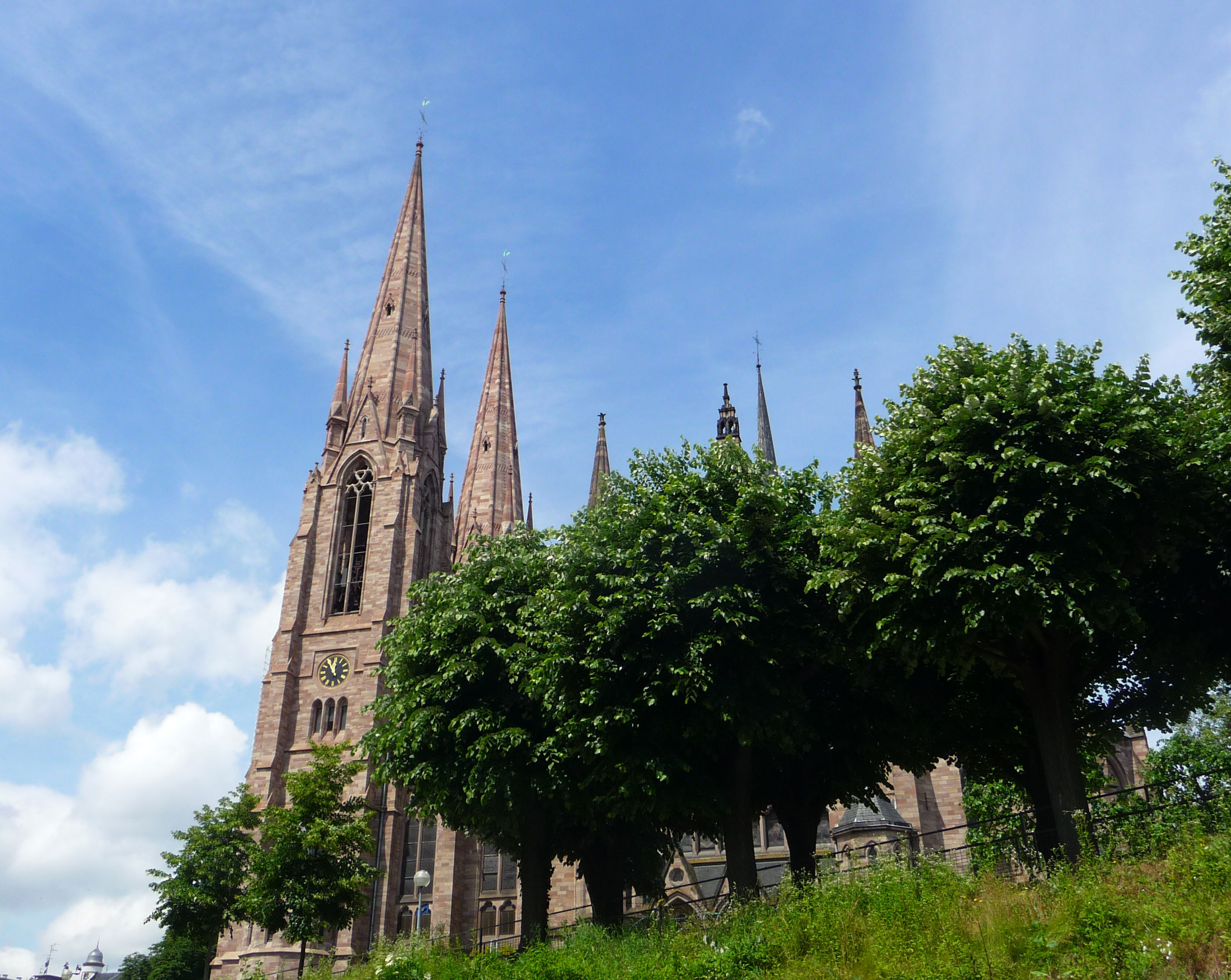
    With the UK about to depart the EU albeit with an extremely narrow margin of Leave votes, my thoughts turned to my visit a few years ago to Strasbourg, site of the European Council and European Parliament and one of the loveliest places in Alsace.

    A-Strasbourg-Square

    P1110743

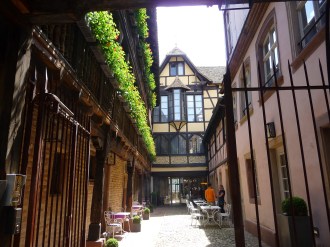
    This delightful city with its medieval churches and half-timbered houses seems to have become a byword for what some in the UK see as a hijacker of British sovereignty.   Which is a shame, because that idea is blinding people to an elegant, international city of great charm that in the Middle Ages was referred to as The Crossroads of Europe.  At that time, goods from the Baltic, Britain, the Mediterranean and the Far East poured across the borders to be traded for wines, grain and fabrics and just like today, when the languages of the 46 member states can be heard in the squares and streets of the city, traders speaking a dozen different languages, met and conducted business.  The city continues to be the crossroads of Europe  as people from different countries work and mingle in Strasbourg’s squares just as they did hundreds of years ago.

    Once a free city within the Holy Roman Empire, Strasbourg later came under periods of French and German rule, which has given the ancient centre a unique appearance, half-timbered medieval houses sitting alongside elegant French-style mansions.  In 1988, UNESCO classified Strasbourg as a World Monument, the first time such an honour was given to an entire city centre.

    It is an easy place for visitors to discover as the traffic problems that beset most big cities have been solved here with a combination of canal boats, a sleek and comfortable light rail system, local buses, and pedestrianised squares.  Although it presents itself as a folksy-like small town, Strasbourg is very international, cosmopolitan and multilingual.

    GRAND ILE ISLAND

    This is the historic part of the city where you will find the main sights and using the 142-metre high spire of the Cathedral as your landmark, you will soon find your way around Strasbourg.

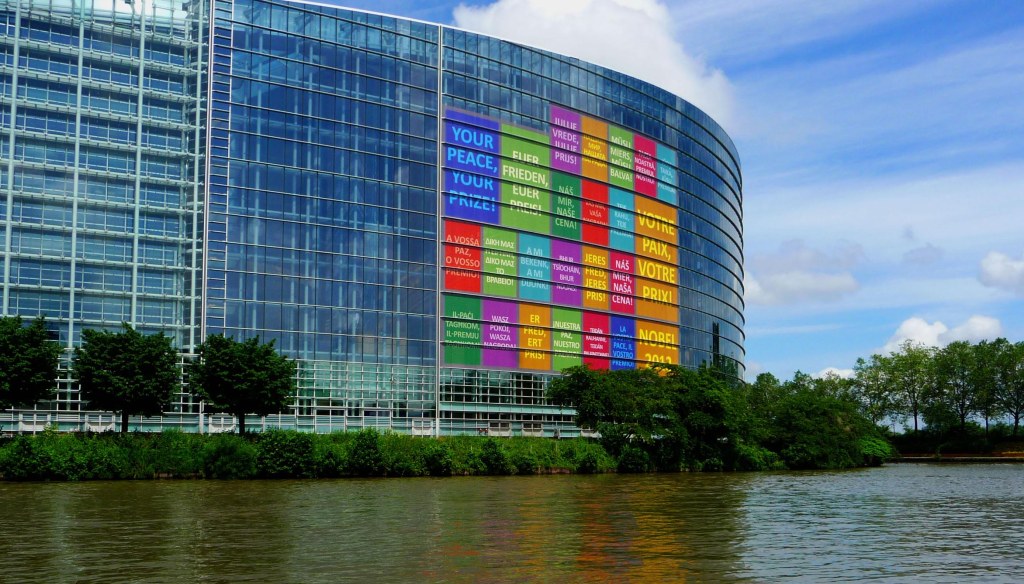
    The city’s charm has much to do with its canals which surround the Grand Ill island where Petite France, is located.  A 70-minute boat trip (open-top in fine weather) on Batorama’s Twenty Centuries of History, circumnavigates the whole of the Grande-Île before skirting the 19th-century German Quarter.  The turn-around point and good photo opportunity is where the European Parliament, Council of Europe and European Court of Human Rights are head-quartered, a magnificent display of concrete, steel and glass.

    Flags-of-all-Nations

    On the boat cruise you will see the Vauban Dam, near the confluence of canals by the Pont Couverts, a defensive lock which allowed the entire southern part of the city to be flooded in times of war.  It is P1110618

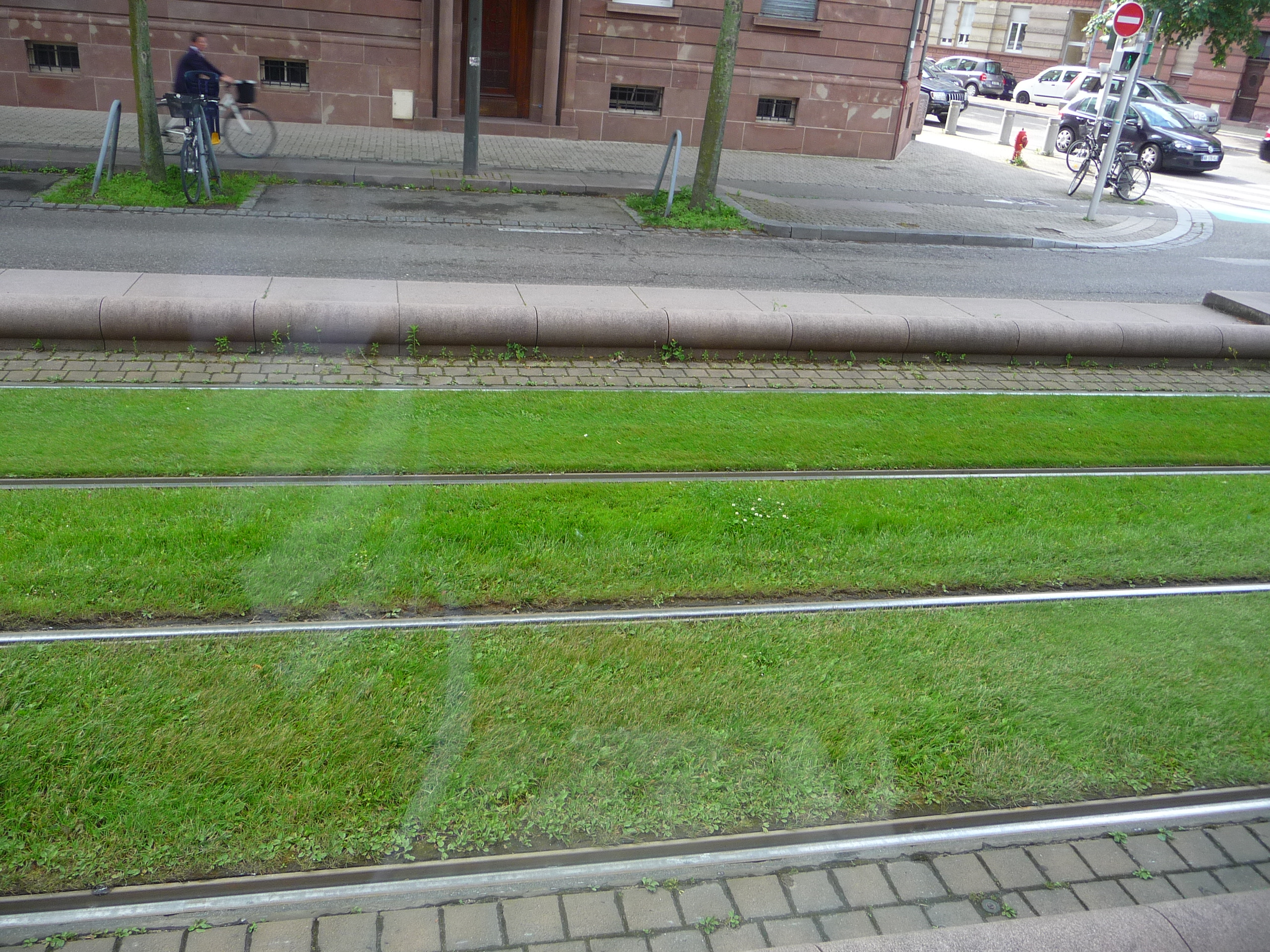
    They even grow grass between the tramlines in the street

    Walking around the canals, especially in the early part of the year when everything seems green and lush and the spring flowers are out in abundance is an equally attractive way of seeing the main sights.  This is a city that loves nature and it takes pride in decorating every bridge and windowsill with baskets of flowers, changed according to the seasons.

    PETITE FRANCE, STRASBOURG (a UNESCO site)

    The number one attraction in Strasbourg is Petite France, a photographic cluster of 16th and 17th-century half-timbered houses reflected in the waters of the canal.  These houses were originally built for the millers, fishermen and tanners who used to live and work in this part of town.  If you have taken the boat tour, you may like also to take a tour of the historic centre with an audio guide (€5.50) from the Tourist Office which will introduce you, via a winding route through the narrow streets, to a truly fascinating old town.

    NOTRE DAME CATHEDRAL Opening hours: 7am-7pm

    Cathedral-from-the-canal

    The Cathedral, an imposing red sandstone edifice, stands alone in its square and towers above the city.  It was the tallest building in the world until the 19th century and is the second most visited cathedral in France after Notre Dame in Paris, receiving 4 million visitors a year.  Built in 1439 it is considered to be an outstanding masterpiece of Romanesque and late Gothic art with outstanding 12th-century stained glass windows. Inside is one of the world’s largest astronomical clocks.

    Try to arrive at the cathedral by noon to get a good viewpoint for the 12.30 display of the famous Astronomical Clock.  The procession of sixteenth-century automata was designed to remind us of our mortality.   Afterwards, you can climb 332 steps to the platform below the cathedral’s twin towers for a stunning view.

    The narrow street that leads to the cathedral and the Place de Cathedral are the liveliest places in Strasbourg, especially in summer, and are filled with outdoor restaurants that remain open late into the night.  Entertainment is in the form of jazz musicians, mime artists and clowns.

    Oldest-House-in-Strasbourg
    This is the oldest house in Strasbourg

    And finally, Strasbourg’s Christmas Market has a high reputation but its popularity may be its undoing.  After a few evenings of mulled wine, yuletide cake, Silent Night and Adeste Fidelis, a spring or autumn visit begins to look very attractive.

    Strasbourg is a city that has a very special charm at any time of the year and the organisations that dominate its life are what still guarantees peace in Europe.  If you are looking for culture, cuisine and character, Strasbourg is hard to beat.

    Facade-of-the-Oldest-House-in-Strasbourg

    A few recommended eating places:  Expect the usual French coq au vin, boeuf bourguignon, crème Brulee and crepe Suzette, but be prepared also for the German influence of pork and sauerkraut.

    First up though, is wine.  Strasbourg is the capital of one of France’s premier wine regions and if you are in the mood to sample some of the best, head for Terres à Vin, 1 Rue du Miroir, tel +33 3 88 51 37 20, with several by-the-glass options from €3.20 to over €10).

    Pain d’Epices, 14 Rue des Dentelles, for indulgent gingerbreads and cake and for the heady scents of spices.

    Master-Patissier, Christian Mayer, offers a tea room second to none in Strasbourg at 10 Rue Mercière, just a few yards from the cathedral.

    Maison Kammerzell 16 Place du Cathédrale, tel +33 3 88 32 42 14, where the oldest section dates back to 1427, is a Strasbourg institution.  Occupying rooms on four floors, you can sample the house speciality of fish sauerkraut if you fancy that but there are many less thought-provoking dishes from which to choose, average €40 for three courses.

    Au Pont Corbeau, 21 Quai Saint-Nicolas, tel +33 3 88 35 60 68, – a warm and welcoming place where the onion soup is so thick you could stand your spoon up in it.  A modest but excellent wine list available.  Average €32 for three courses.

    The Batorama Tour departs from the Quai outside Palais Rohan, adults €12.50.

    A ticket with unlimited tram and bus trips valid for 24 hours is available for €4.30. Also, you can rent bikes (vélhop) for $5 per day.

    Tourist Office, 17 Place de la Cathédrale

  • Montpelier:  Antigone Area

    Montpelier: Antigone Area

    Montpelier had been experiencing rapid growth since the 1970s.  The city was on line to become the new regional technology centre and there was a need for expansion and for more public housing.  In 1979, the newly elected municipal council of Montpelier, with far-seeing vision, decided to develop a whole new district to provide for this expansion and link the centre to the River Lez.  The plan for the stunning development incorporated a west-east axis consisting of a landscaped boulevard and a series of squares enclosed by residential blocks each of seven-stories, to terminate in a new waterfront “port” along the Lez.

    p1080172

    Magnificent Buildings along the 1 Kl-length of Antigone – Mari Nicholson

    Thus did Antigone, surely the most attractive of new developments in France, c0me into being.  The 1-Kilometre length of this development was built on the grounds of the former Joffre Barracks, located between the old centre of Montpelier and the River Lez which meanders along the eastern side of the city.  It is known as the Champs-Élysées of Montpelier and the master plan was designed by Spanish architect, Ricardo Bofill – who also designed the majority of the buildings – as a series of grand neo-classical structures with pediments, entablatures and pilasters on a gigantic scale.

    greek-heroes

    Neo-Greek Statues with Fountain – Mari Nicholson

    The Antigone squares are idealised, perfectly proportioned Renaissance spaces with grand names like La Place du Nombre d’Or.  Neo-classical Greek statuary that harks back to another age is dotted about the boulevards and plazas in streets that were planned to allow a paved walkway from Place des Echelles de la Ville to the River Lez.  A continuous movement of wheeled devices and small battery-powered minibuses provide transportation within the mall.

    Antigone is an enormous project in every respect.   It includes about 4,000 new dwellings and 20,000 sq. meters of commercial space, the Languedoc-Roussillon regional government headquarters, office space, various government offices, restaurants and cafes, schools with special housing for students and artists, sports facilities, and underground parking.  This new development is town planning n a grand scale.

    among the water spouts with Greek statue centre – Mari Nicholson

    The only other project of this size and scale designed by one architectural firm is the Karl Mark Hof in Vienna, but this has a mere 1500 dwellings as compared to the 4,000 at Antigone and almost no other services.

    p1080197
    On the River Lez there are various watersports for the public – Mari Nicholson

    A visit to this remarkable area of Montpelier makes it easy to see why it continues to attract worldwide attention.

    This slideshow requires JavaScript.

  • Rome and the Tiber

    Rome and the Tiber

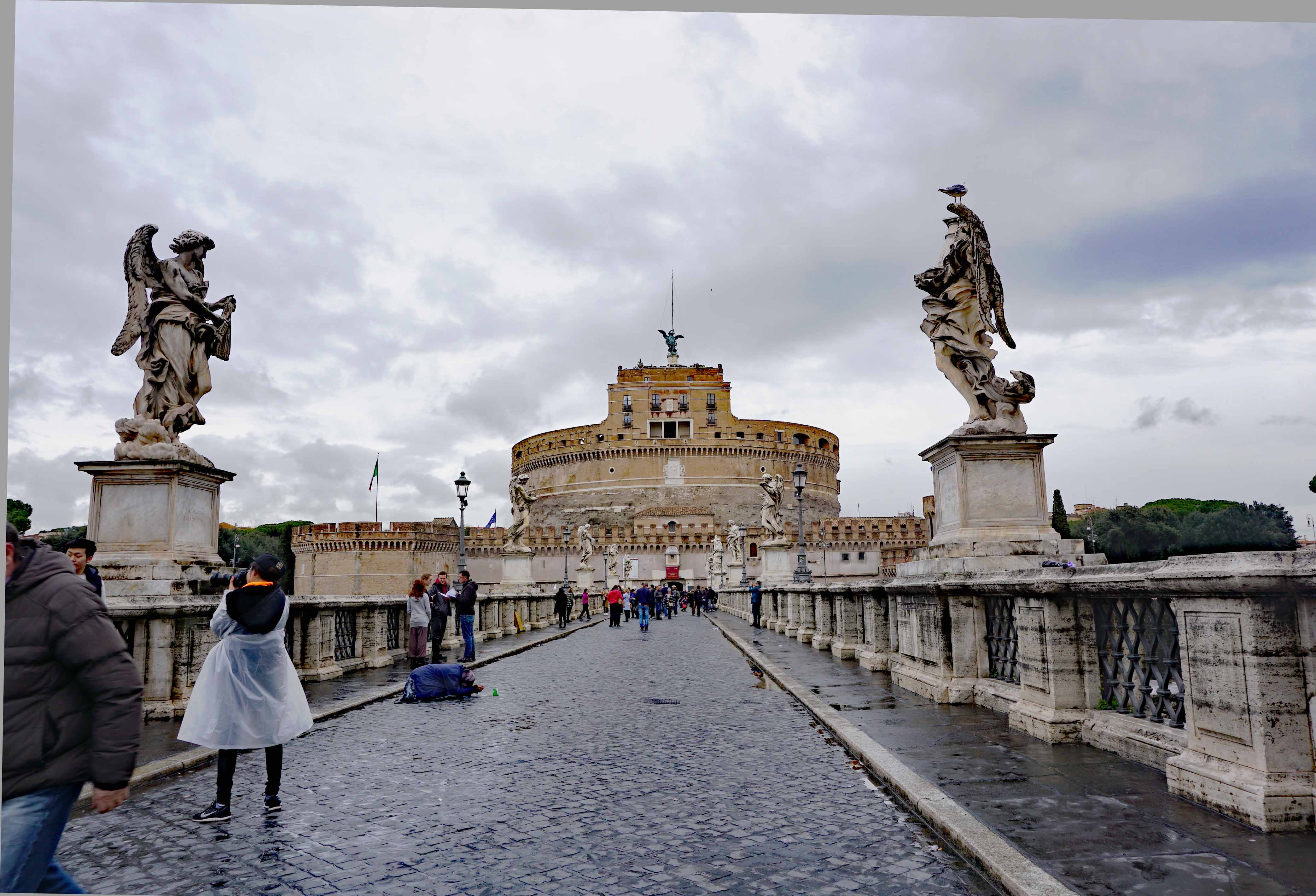
    Castel-Sant'Angelo-from-across-the-Tiber

    Castell Sant’Angelo across the Tiber – Photo Mari Nicholson

    The Tiber has been the soul of Rome since the city’s inception, and it could be said that Rome owes its very existence to this strategically important river on whose banks the first settlements were built.  The two sides of the river are joined by more than thirty bridges, creating a fascinating setting for the archeology and history of the eternal city.

    View_of_the_Tiber_Looking_Towards_the_Castel_Sant'Angelo,_with_Saint_Peter's_in_the_Distance
    Old View of the Tiber, possibly 18th century

    Several of the old Roman bridges no longer exist, in Papal Rome and in the modern city seven were built in the 19th century and ten in the 20th century.

    Bridge on the Tiber leading to Castell Sant'Angelo
    Ponte Sant’Angelo with statues

    The Tiber (named after Tiberius who drowned in the river) is unlike rivers like The Danube, The Seine or The Thames as there is little activity on the water.  In the summer, various boats convey tourists along the stretch of the river, but in general, it seems underused. However, along the Lungotevere, the boulevards that run alongside it, human traffic always seems to flow.

    Flooding was a regular occurrence before the high embankments were built in the 19th century when there were houses located along the banks of this navigable river which was used for fishing and bathing.  Over time, however, silting and sediment build-up meant that the river became unsuitable for navigation.

    Looking downriver towards the Cavour bridge

    Looking down to Cavour Bridge, Rome

    As in other cities such as Bangkok, Seville, London and Paris, tour boats were introduced along the river to give locals and tourists a unique opportunity to view the city.  This is a great way to take in the panorama, and immerse yourself in one of the most evocative cities in the world.

    A stroll along the Boulevard is also a favourite pastime and a visit to Castell Sant’Angelo and the Jewish Ghetto and Synagogue, which are both situated along the Tiber can be combined in a “Tiber walk”.  There are many restaurants, cafes, and bars down by the river  so sustenance is not a problem: these are very noticeable at night when the warm lights from their windows illuminate the Boulevards.

    The Tiber

    The Tiber, Rome – Mari Nicholson

    Whether you opt for a dinner cruise, a daytime hop-on-hop-off cruise, or a private jaunt, along the way you can admire the great Palace of Justice, designed by William Calderoni;  Sant’Angelo Castle, one of the oldest monuments of Rome; St. Peter’s Basilica, Tiberina Island, a picturesque island linked by one of the most famous bridges in the city, and the innumerable bridges that span the Tiber.

    Ponte Sant'Angelo with statues

    Ponte Sant’Angelo Looking towards the Castle – Mari Nicholson

    When the surface of the Tiber is calm and the monuments that span the river are reflected in the still waters, they increase one’s delight in the vista they offer across Rome.  Ponte Sant’Angelo (by the castle of the same name), Ponte Fabricio, Ponte Rotto, Ponte Garibaldi, they all offer a sense of the history of the city.

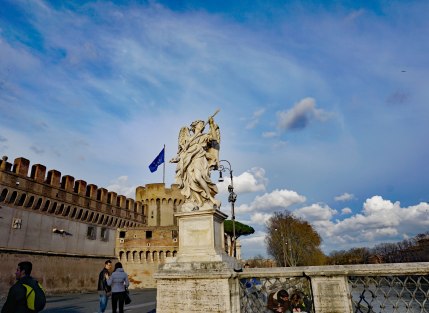
    Angel-on-Ponte-Sant'Angelo-near-Castle
    Angel on Pone Sant’Angelo – Mari Nicholson
    Angel on the Ponte Sant'Angelo
    Angel on Ponte Sant’Angelo

    The first named, Ponte Sant’Angela is the most spectacular, being embellished with angels carrying the instruments of Christ’s passion, and was designed by Gian Lorenzo Bernini whose fountain in Piazza Navona is one of the most photographed in Rome.

    The Ponte Sant’Angelo was erected to ease the movement between the Vatican (which was also connected to the Castell Sant’Angelo) and the commercial area across the river.

    Ponte Sant'Angelo

    The Vatican City is the only zone controlled by the papacy today, but in earlier centuries papal dominion was exercised over the entire city, hence the need for easy connection with the commercial area of the settlement.   Three energetic popes, Urban VIII (1623–44), Innocent X (1644–55), and Alexander VII (1655–67), harnessed the versatile talents of the great artists nd sculptors of the day to build monuments and beautify areas all over Rome but especially in the Vatican area.

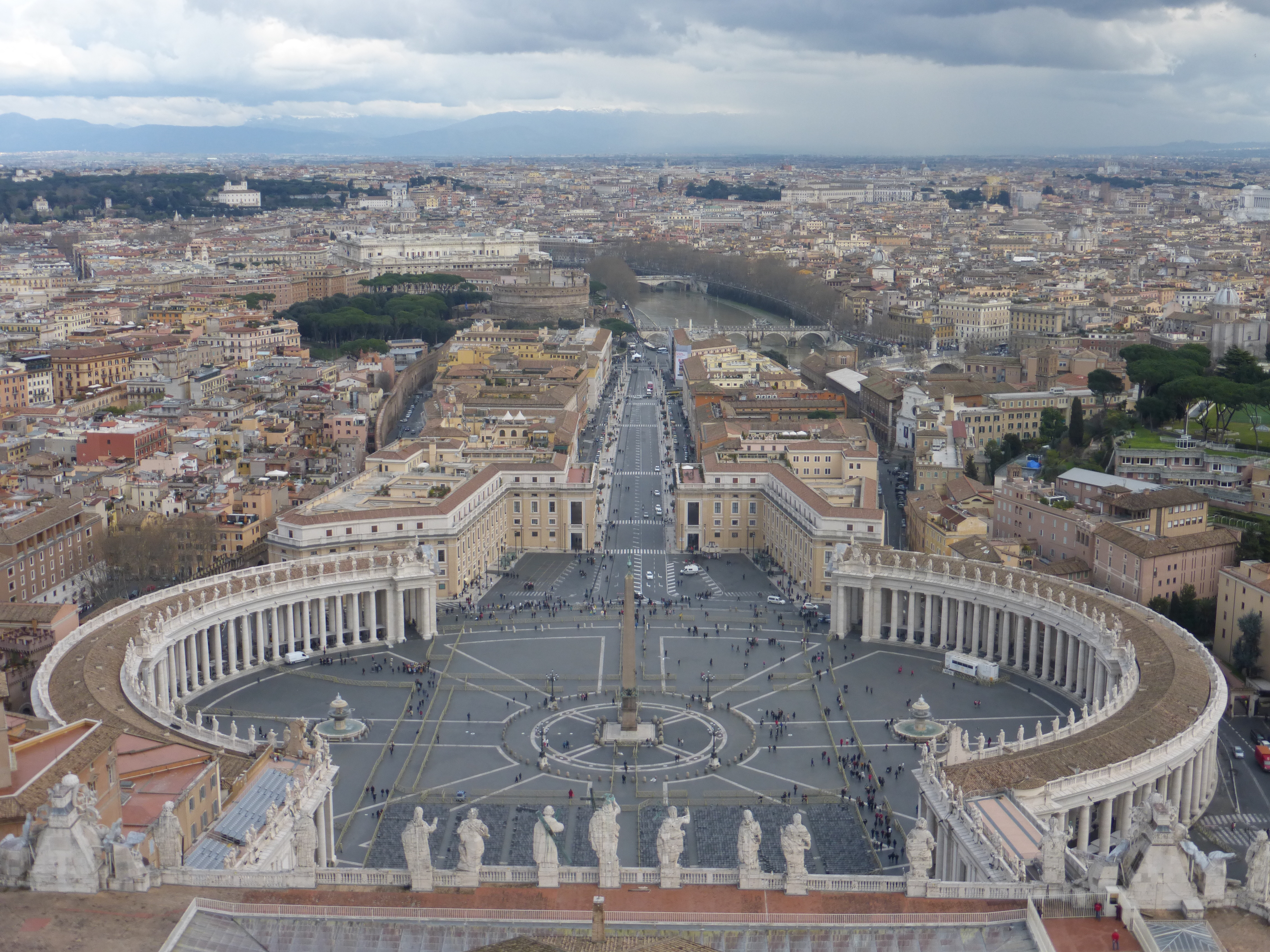
    View from the Vatican Dome
    View from the Vatican to Ponte Sant’Angelo – Photo Solange Hando

    A walk along the Tiber, and then up the imposing obelisk and olive-tree-lined road to the Vatican is an exercise in itself and you can be forgiven if you decide to postpone visiting St. Peter’s Basilica and the Vatican Museum until another day.  It can take a long time to do justice to them both.   A trip to the top of St. Peter’s is a worthwhile exercise but be warned, there are many steps to the top.  A lift goes part way only.

    Part of Bernini's Magnificent 4-Rivers Fountain in Piazza Navona, Rome

    Part of Bernini’s Magnificent 4-Rivers Fountain in Piazza Navona – Photo Mari Nicholson

    How to get there:  Ponte Sant’Angelo:  Metro Line A, Lepanto stop. Boats leave from nearby.        Buses 23, 34, 40, 49, 62, 280, 492, and 990.        Tram 19.

  • London’s Hidden Gems (1)

    London’s Hidden Gems (1)

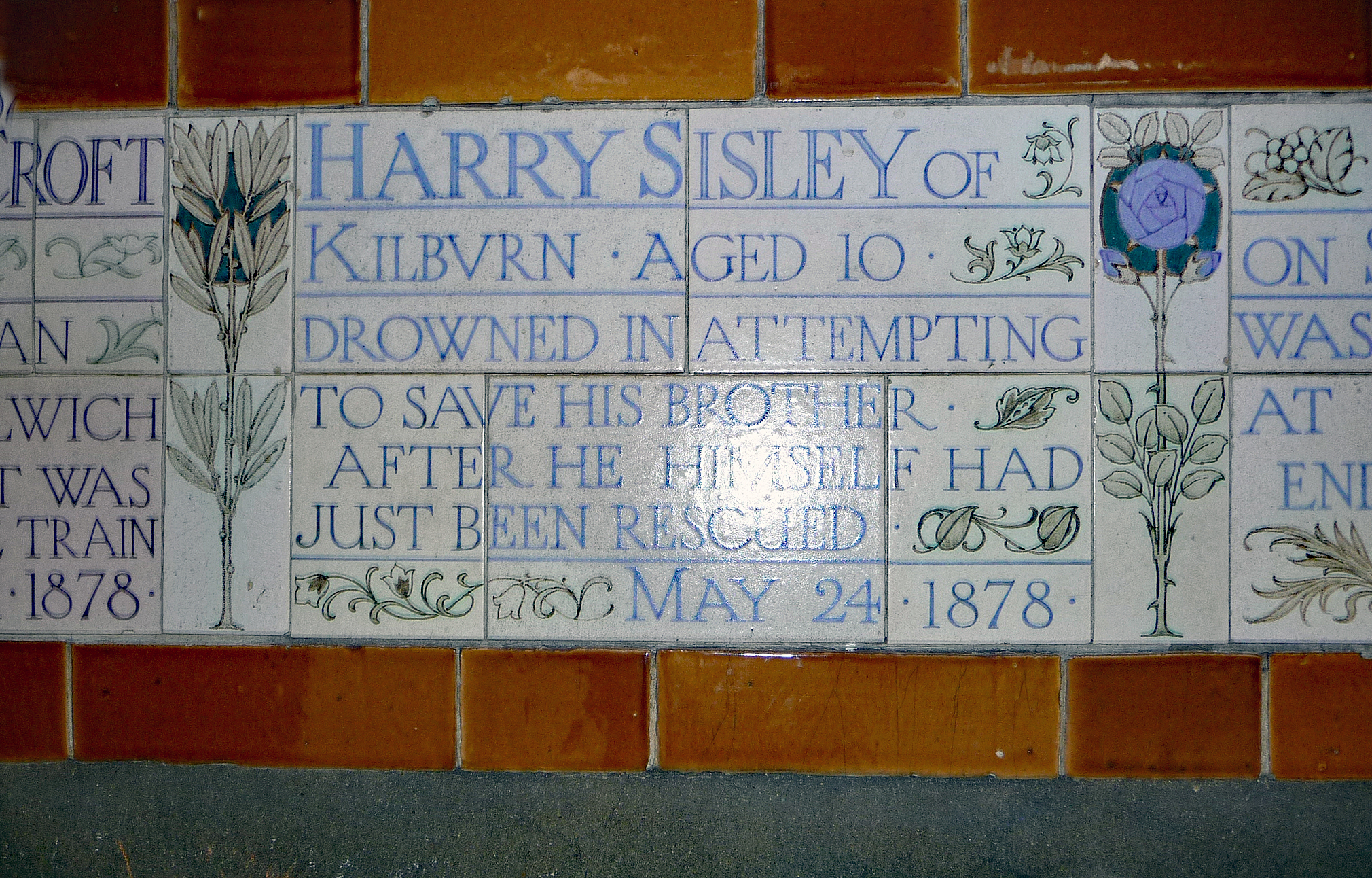
    Postman’s Park in London contains a simple but evocative Memorial to unsung heroes of the 19th and early 20th century, in the form of a collection of glazed Doulton plaques on a wall protected from the elements by a loggia.  Each of these plaques commemorates someone who, in tragic circumstances, died a hero, trying to save the lives of others.

    What and where is Postman’s Park in the City of London?

    First the name:  the park acquired the Postman’s Park name because during it’s heyday in the 19th century and before it became the site of the Memorial, it was popular as a lunchtime retreat with workers from the General Post Office in nearby Clerkenwell, long since demolished.

    Situated between King Edward Street, Little Britain and Angel Street and just round the corner from St Paul’s Cathedral whose steps are normally crowded with tourists hugging backpacks and guitars and where the streets are full of bankers and financiers bursting with self-importance, it contains a gallery of tiled memorials to extraordinary people who were, nonetheless, just ordinary citizens.

    f129057084
    St. Paul’s Cathedral – Mari Nicholson

    The brainchild of the Victorian painter and philanthropist, G.F. Watts (1817-1904), a radical socialist who felt deeply about the dreadful conditions of the London poor, and who had twice refused a Baronetcy, it is now regarded as a Memorial to Watts who made no attempt to hide his dislike of the greed of the upper classes of the time.

    About the Tiled Memorials

    London Child Hero -
    Plaque to one of the child heroes on the Memorial of Heroic Self Sacrifice in Postman’s Park, London –   Photo Mari Nicholson

    A long, high wall covered with Royal Doulton ceramic plaques, decorated in burnt orange and blue, names, ages, occupations and means of death engraved on the tiles – this is a wall before which people have been known to stand with tears in their eyes.  Tragedy after tragedy told in a few simple phrases, bring to life drownings, raging fires, train disasters, and runaway horse accidents, in which these workers and children had saved someone’s life by giving their own.

    There is seating under the plaques and the garden area of the park is a restful place with bright flower beds and a gently trickling fountain, interesting shrubs and flowering plants. Of special interest are the large banana tree, musa basjoo, which flowers in late summer, and the dove tree, davidia involucrata.  In fact, Postman’s Park is a perfect place for a lunchtime picnic.

    In 1887, Watts wrote to The Times to suggest the creation of a park to commemorate ‘heroic men and women’ who had given their lives attempting to save others.  This, he said, would be a worthy way to mark Queen Victoria’s Golden Jubilee year.

    His letter to The Times did not stimulate any interest, however, but in 1898, St Botolph’s Church at Aldersgate purchased land that had previously been owned by the City Parochial Foundation, and they approached him regarding the Memorial.   So, on the site of the former churchyard of St. Bolophs, there was erected a 50ft long open gallery along the wall of which he planned to place glazed Doulton tablets commemorating acts of bravery, each one detailing a heroic act.

    One of Britain’s leading tile designers at that time, William de Morgan, agreed to work with Watts.  Their collaboration, first unveiled in 1900, is what you see on the early plaques when you visit Postman’s Park. 

    About the Tiles and Plaques

    London Hero = 60 yer old William Goodrum
    Plaque to William Goodrum, a 60-year-old Hero, honoured on the Memorial wall in Postman’s Park – Photo Mari Nicholson

    The plaques could easily be overlooked in the somewhat hidden corner of the park, but these beautiful hand-lettered tiles hand-painted at the Royal Doulton factory, when once you see them, live with you forever.  Each one tells the story of a boy or girl, man or woman, who died trying to save another at the expense of his own.   Told in a few poignant words, they nevertheless manage to paint a picture of a life unfulfilled that ended in tragedy.  Take, for instance,

    • the young Alice “daughter of a bricklayer’s labourer who by intrepid conduct saved 3 children from a burning house in Union Street Borough at the cost of her own young life”.   Or
    • William “drowned in the Lea trying to save a lad from a dangerous entanglement of weed”.

    The stories seem almost Dickensian until the very real tragedies these plaques represent hit home and one realises that this was real life, not fiction.  Life was harsh for those who didn’t own land or property of some sort in those days: violence and disease were everyday events.  Prostitution and child abuse were rife in late-Victorian London, and these children who died, many of them orphans or ‘indentured workers’, each and every one of them would have been working at some poorly paid job.

    Reading the tiles one is struck by the occupations that don’t exist any more and the causes of death that remind one of nothing so much as a Victorian engraving – a runaway carriage of four with a child trampled beneath the horses, a boy in the Thames (probably a mudlark) attempting to swim to land with his friend in his arms.

    Harry Sisley - London Child Hero
    London’s Child Heroes, 10-year-old Harry Sisley, honoured here in a Doulton plaque on the Memorial in Postman’s Park, London – Photo Mari Nicholson

    G.F. Watts and his Reasons for Erecting the Memorial

    GF Watts wanted to use his art as a force for social change and his intention was to build a memorial that honoured ordinary people, people who would not have had a burial tomb at Highgate, Brompton or even St. Pancras & Islington Cemetery.

    Watts had for many years collected newspaper reports of heroic actions and the plaques were based on these cuttings.

    London Worker Hero
    Royal Doulton Plaque for one of London’s Worker Heroes, showing the placement of the plaques side by side and on the row above.  ©  Mari Nicholson

    It was planned to have one hundred and twenty tiles in place for the opening, but sadly, it was only possible to erect four.  By this time Watts was too ill to attend the unveiling and only nine more were added during his lifetime.  His wife Mary, took over the work and added what she could before her death.  Then, 78 years later, in 2009, the Diocese of London added a new tablet to commemorate one Leigh Pitt who rescued a nine-year-old boy from drowning in a canal.  The plaque reads:

    • Leigh Pitt, Reprographic operator, aged 30, saved a drowning boy from the canal at Thamesmead, but sadly was unable to save himself.  June 7, 2007.

    Today you can see rows of blank spaces, although no doubt there were unsung heroes in the intervening years who were never commemorated.

    This wall of tiled plaques to these forgotten Londoners is one of the city’s most moving Memorials and in 1972, along with other key elements in the park, it was Listed as a Grade ll site.

    Postman’s Park in Recent Film

    The BAFTA and Golden Globe-winning film Closer which stars Natalie Portman, Julia Roberts, Jude Law and Clive Owen (based on the play of the same name by Patrick Marber) references Postman’s Park in that the character Alice Ayres (Natalie Portman) fabricates her identity based on Ayers’ tablet on the Memorial which the film character had read.

    How to get there:

    Tube –  Central St Paul’s

    Buses:  4, 8, 25, 56, 141, 100, 172, 521, 242


  • What is Serenity?  It’s what Makes me Happy

    What is Serenity? It’s what Makes me Happy

    In response to The Daily Post’s weekly photo challenge: “Serenity.”

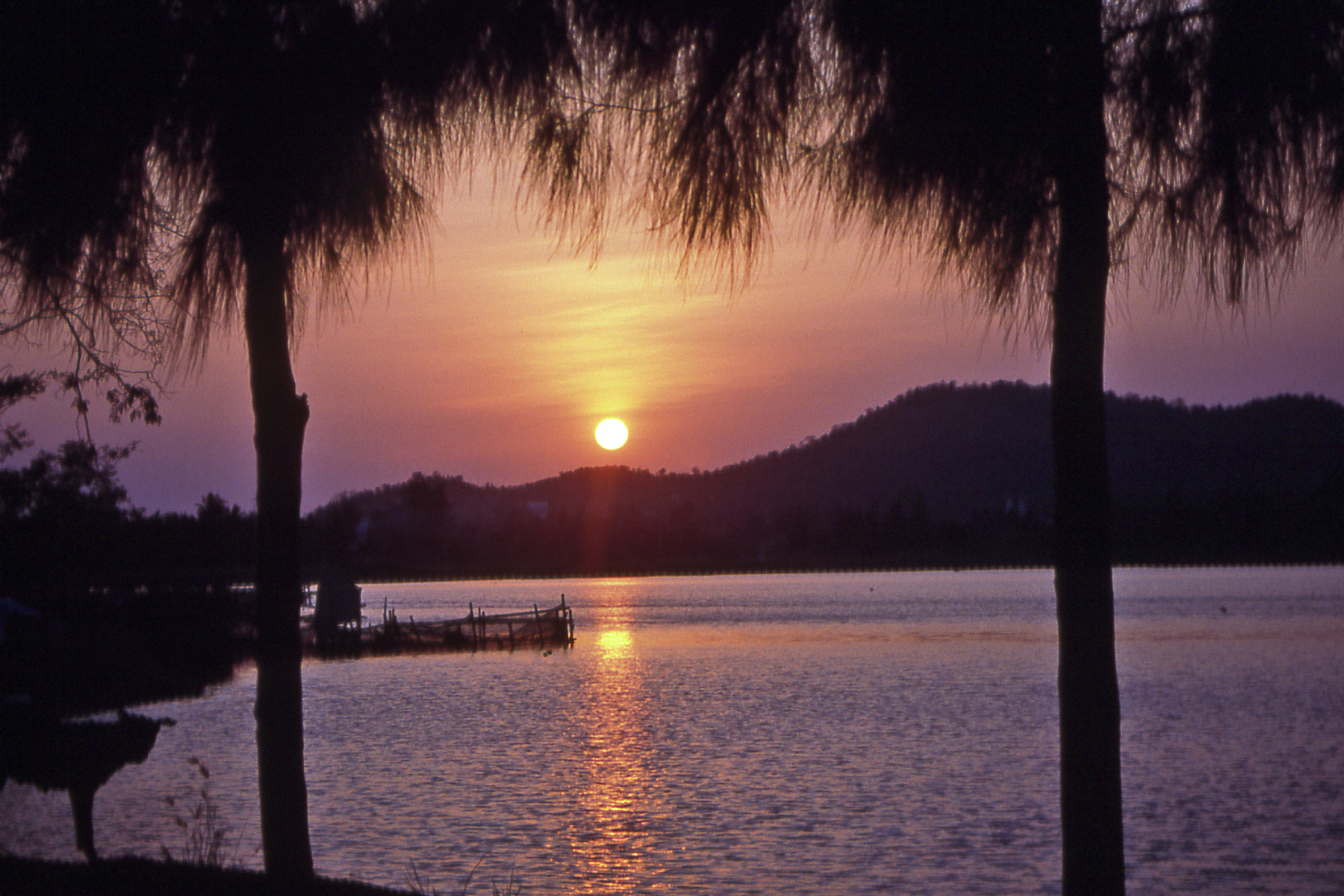
    A Thai Sunset - Phuket
    A Thai Sunset – Phuket

    This is a different sort of Post – it is one in which I’m responding to the weekly photo challenge set up by WordPress.  This week the topic is Serenity so here are a few images that to me represent that scarce emotion in today’s world, serenity.

    The first one, below, may not look like everyone’s idea of Serenity, but this Cretan man had an attitude to life that was calm and benign.  He was one of the happiest people I’d ever met: even his donkey seemed happy in the heat of the midday sun.  It was a harsh life up there in the mountains but Andreas told me he had everything in life he needed, his olive trees, a few animals, a family in good health and all living nearby, and most of all, he said, he lived on Crete.

    What more can I say?

    An old man on a road in Crete with whom I shared my lunch.
    An old man on a road in Crete with whom I shared my lunch.

    Next photograph is very different.  I did an Art Tour once in France where we stopped at various place where some of the painters known as The Impressionists had painted: their pictures were hung in nearby galleries or galleries of some note further away.  Rouen I remember very well, as it was one of the places where it rained incessantly during our visit, but luckily, Claude Monet had painted more than 30 pictures of the famous Notre Dame Cathedral (many in the rain) so we were able to see it just as the artist had seen it.

    When the group of painters who came to be referred to as The Impressionists evolved their style of painting from chocolate-box interiors to naturalistic outdoor scenes, they were helped by two mid-19th century inventions.   One was pre-mixed paints in tubes (akin to today’s toothpaste tubes), and the other was the new vibrant hues like chromium yellow and French ultramarine that freed them from the chore of grinding up lapus lazuli and mixing dry pigment in linseed oil to make colour.

    What it also gave them was a complete change of perspective.   With these inventions they could now paint “en plein air” (outdoors), capturing the momentary and transient aspects of light and the ever changing colours of the clouds and using ordinary subject matter.

    Alfred Sisley (October 30, 1839 – January 29, 1899) was an English Impressionist landscape painter who was born and spent most of his life in France.  A very disciplined painter, Sisley is recognized as perhaps the most consistent of the Impressionists.  He never deviated into figure painting or thought of finding another form in which to express himself.  The Impressionist movement fulfilled his artistic needs.

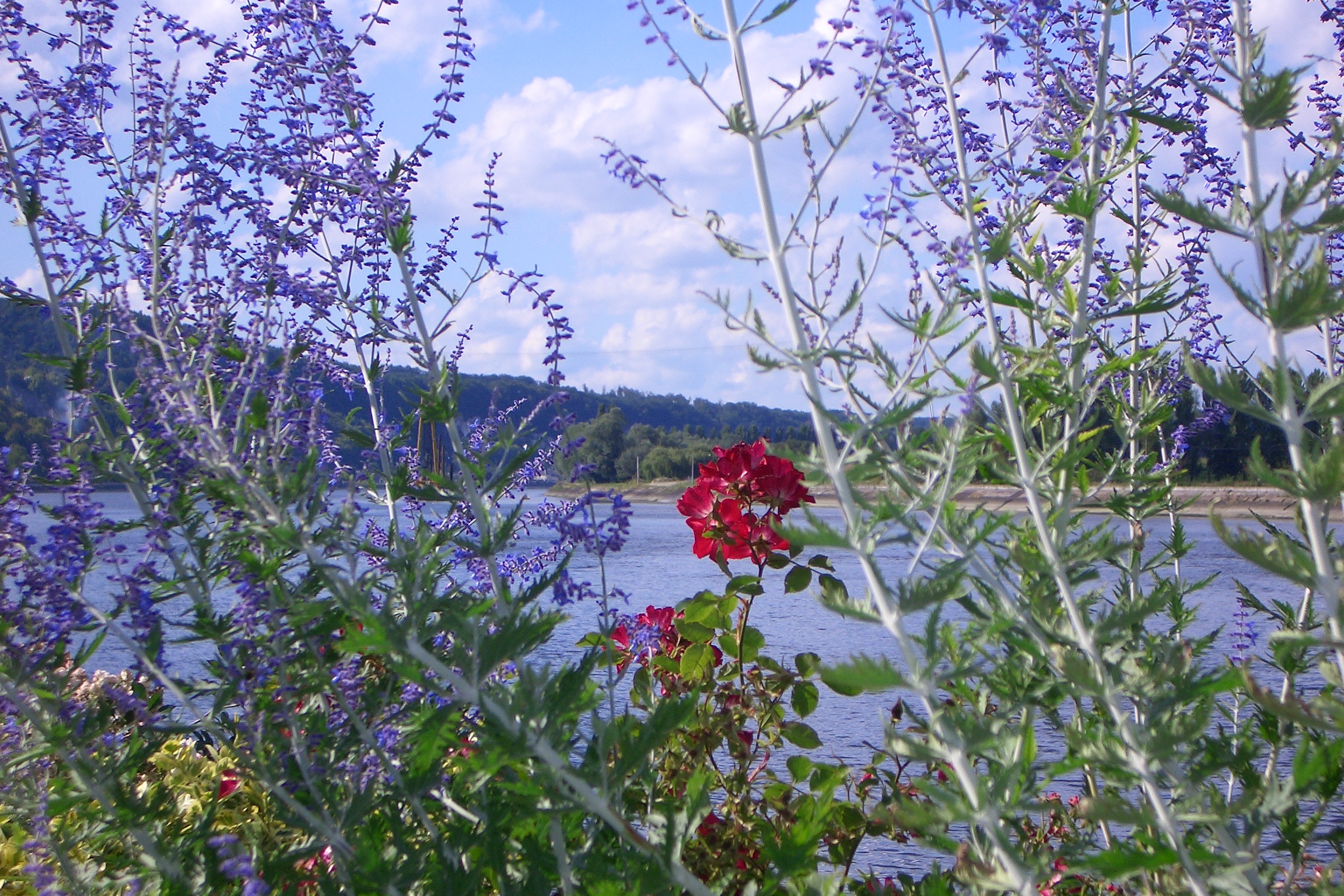
    Below is a photograph I took of a scene he painted (I think his painting hangs in the Gallery at Honfleur).  To me it is serenity itself.  I photographed it on a day when the Normandy sun was shining, dragonflies were chasing each other over the Seine, the village of Bouille was quiet as the people rested after lunch and I captured the scene on camera as I remembered it from the painting.

    Serenity.

    A quiet scene where the only movement was of butterflies and dragonflies.
    A quiet scene where the only movement was of butterflies and dragonflies.
  • Historic Istanbul, Turkey

    Historic Istanbul, Turkey

    sIstanbul has long been a lure for travellers in pursuit of the exotic, the city where Europe and Asia meet in harmony yet where the whiff of an alien culture is obvious.   Just over a hundred years ago, it was as far as the sensible person on the Grand Tour would venture and it was the stopping place for that most exotic form of transport in those days, the Orient Express.   It was where Christians met Muslims, a city of fewer than a million people, the city with a well-preserved heritage from Byzantine churches to Ottoman palaces.

    Sunset in Istanbul
    Sunset in Istanbul

    Today’s world travellers venture much further in their quest for exciting destinations but Istanbul still manages to stir the senses.  This derives from many things, from the faces of its citizens who hail from many regions of the country and on whose faces is written the country’s history, the magnificent architecture ranging from early 5th century to present day designs in glass and steel, and from the mosques and churches with their mosaics and fine carpets that point to the continuity of the two cultures side by side.

    If you have only one day there, perhaps on a cruise ship, then the two most important sights are the Aya Sofia and the Blue Mosque.  But if you have longer, than take a boat cruise on the Bosphorus and have a fish sandwich at the end of it (fresh fish from the Bosphorus fried on board and slapped between two pieces of bread).

    The following places should be included in your tour.

    On the Banks of the Bosphorus, Istanbul
    On the Banks of the Bosphorus, Istanbul

    Basilica Cistern

    A magnificent underground reservoir with 336 columns each one 9m high beneath a high vaulted ceiling.  Visitors walk through this forest of pillars on raised wooden boards above carp-filled waters which reflect the columns.    It was built in the 4th century during the reign of Constantine the Great and creates an impressive atmosphere.

    Topkapi Palace

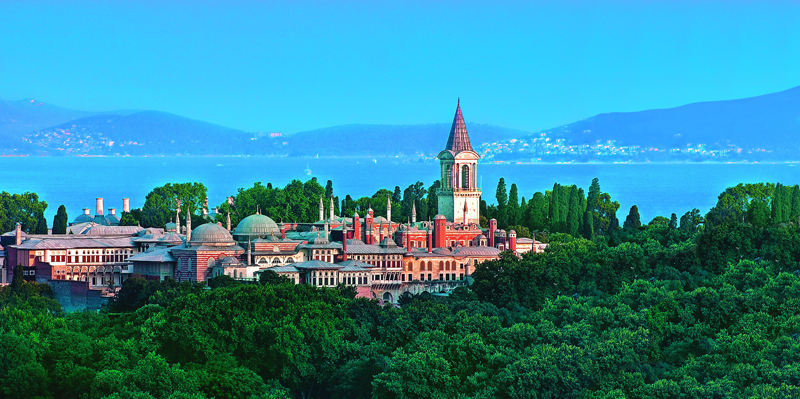
    Topkapı -palace
    Topkapi Palace with Bosphorus in Background

    Topkapi is the largest and oldest palace in the world to survive until today.  Situated on the site of the first settlement in Istanbul, it commands an impressive view of the Golden Horn, the Bosphorus and the Sea of Marmara.   Once home to the Ottaman Empire’s ruling sultans from the mid 15th century to the mid 19th century this sprawling palace was turned into a museum on orders from Ataturk in 1924.  Inside it consists of richly decorated chambers, pavilions overlooking the Bosphorus which were part of the private world of the harem, and holds some of the fantastic diamonds and other jewels of the  Court.  Most famous of these is the Topkapi emerald-encrusted dagger.  Television still shows the Jules Dassin film of the same name, Topkapi, starring Melina Mercouri, Peter Ustinov, Maximilian Schell, and Robert Morley which was about the attempted theft of this famous emerald. If you have never seen it, catch it next time it is screened: it is well worth watching.

    Grand Bazaar

    Grand Bazaar, Istanbul
    Grand Bazaar, Istanbul

    Said to have been founded by Istanbul’s first  Ottaman ruler, Mehmet ll, the Grand Bazaar is one of the most famous souks in the world.  It is a town within a city, miles of alleyways lined with over 4,000 shops which makes it an easy place in which to get lost.  Everything from jewellry and carpets to Turkish delight and fake handbags is for sale here.  The salesmen are experts at their job and you need to be firm if you don’t want to buy a silk carpet (which they can ship home for you) or a rug or a kelim. Caveat Emptor.

    The Blue Mosque

    Its real name is the Sultan Ahmed Mosque but everyone knows it now as The Blue Mosque, the only one ever to be built with six minarets.  One of the most famous monuments of Turkish and Islamic art it is a fine example of classical Turkish architecture.
    The architect, Mahmet Aga decorated the interior in jewel-like colours and it features stained glass, marble latticework and thousands of beautiful blue tiles which give it its name.  It was built in the early 17th century and was originally part of a larger complex of baths, public kitchens, a covered bazaar, a hospital, schools and a caravanserai, few of which survive today.

    If at all possible, try to view the mosque from the sea when, dominating the Old City skyline, it is breathtaking.

    Aya Sofia

    Hagia_Sophia_Pan_compressed

    The Byzantine Emperor, Justinian, was responsible for the commissioning of this Christian church in 532 AD, the crowning glory in Christiandom’s crown for a millenium.  Under the Ottamans it became a mosque but it is now a museum, famous for the seemingly unsupported vast dome of golden mosaics and stained glass windows.

    Hagia Sofia interior
    Hagia Sofia interior

    Aya Sofia (or Hagia Sofya or Haga Sofia) is one of the most visited Museums in the world.   Used as a Christian church for 916 years, it was converted into a mosque after the conquest of Istanbul by Fatih Sultan Mehmed and remained so for 482 years. In 1935, a decision by Kemal Atatürk and the Council of Ministers, meant that Hagia Sophia was converted into a museum, which it remains to this day.

    Hagia Sophia is open for visit every day except Mondays.

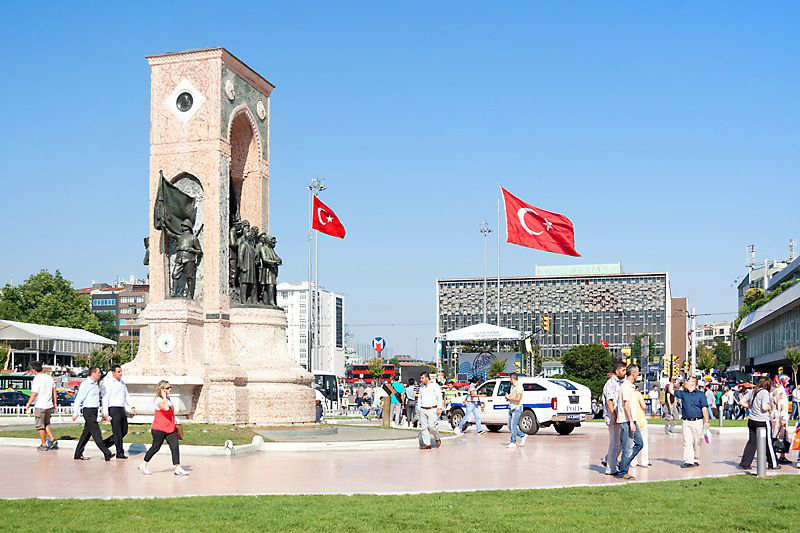
    Istikal Street Monument
    Istikal Street Monument
    Istiklal Street
    Istiklal Street

    IMAGES PROVIDED BY TURKEY TOURISM

  • Syracuse, Sicily: Greatest Greek City in the World

    Syracuse, Sicily: Greatest Greek City in the World

    Syracuse (often spelt Siracuse) in south-east Sicily, is often overlooked in favour of the more touristy Taormina but the visitor to Sicily should not miss this city that was described by Cicero as the greatest Greek city in the world.

    Assaulted by Romans, Byzantines, Vandals, Arabs, Normans and Spanish, Sicily has absorbed these foreign cultures and made it her own, perhaps best exemplified by the Cathedral in the Piazza Duomo, the delightful pedestrianised square in the heart of Ortygia, the island in the centre of Syracuse.

    The façade of the cathedral is 18th-century and like so much of Sicily’s architecture, it was erected following the earthquake of 1693. It is actually built on successive altars to the Temple of Athena, the doors of which were said to be made of gold and ivory. Round about the 17th century the temple was transformed into a Christian church which later became the Cathedral. Walk down Via Minerva to view the outside of the Duomo and see how nothing was wasted: the giant Doric columns of the Greek temple to Athena were incorporated into the church that superseded it.

    Ancient Greek Pillar still supporting the duomo
    Ancient Greek Pillar still supporting the Duomo

    Syracuse Town

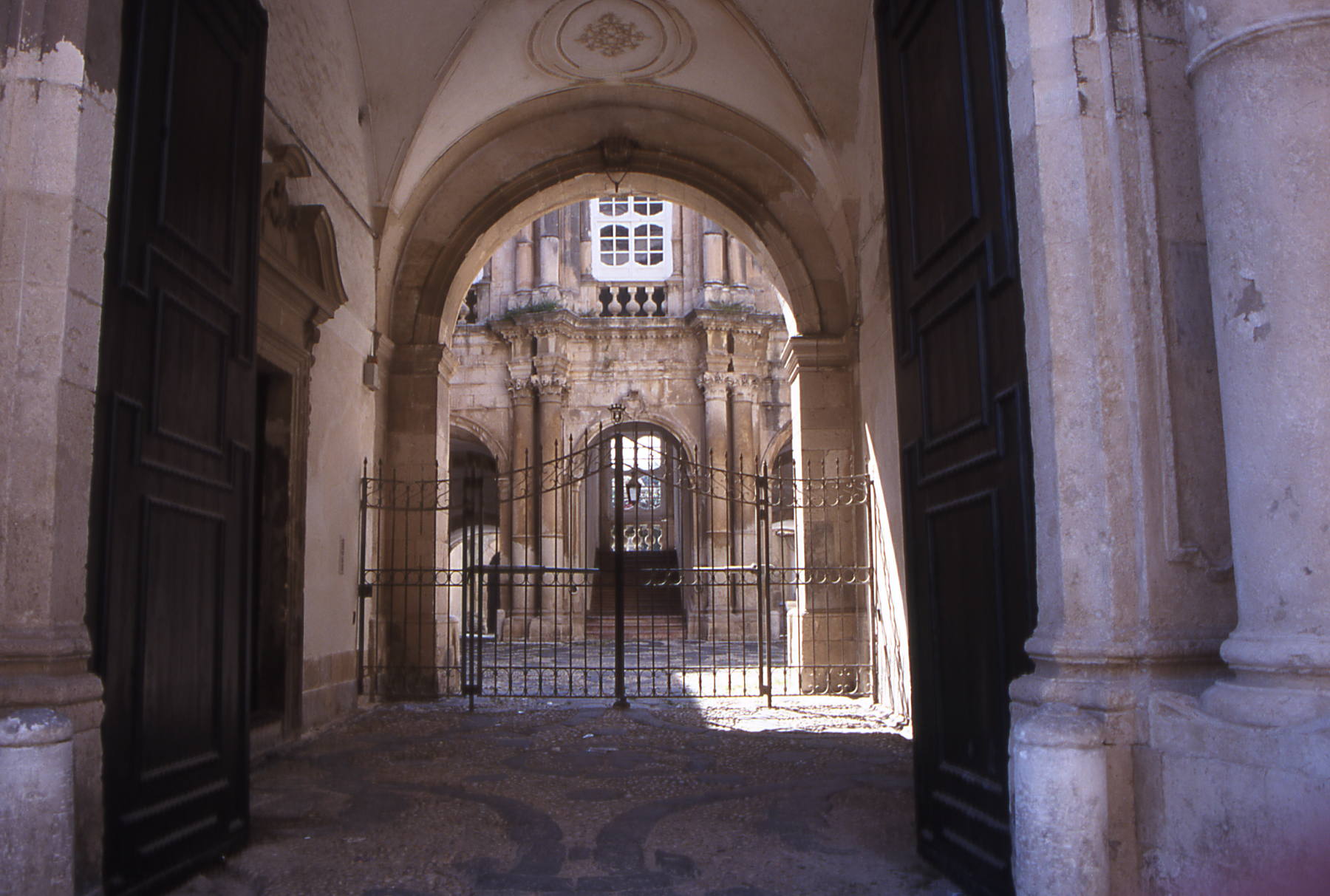
    Courtyard in Piazza Duomo, Siracusa
    Courtyard in Piazza Duomo, Siracusa

    The Piazza is regarded as one of the most beautiful in all Italy with the Cathedral on one side and various Baroque palaces dotted around the square. Day and night the piazza is a scene of energy and life as the ground floors of the once-great palaces now mostly operate as restaurants, cafés and bars.  On a warm evening there is no better place in Syracuse in which to sit and enjoy an espresso or aperitif.

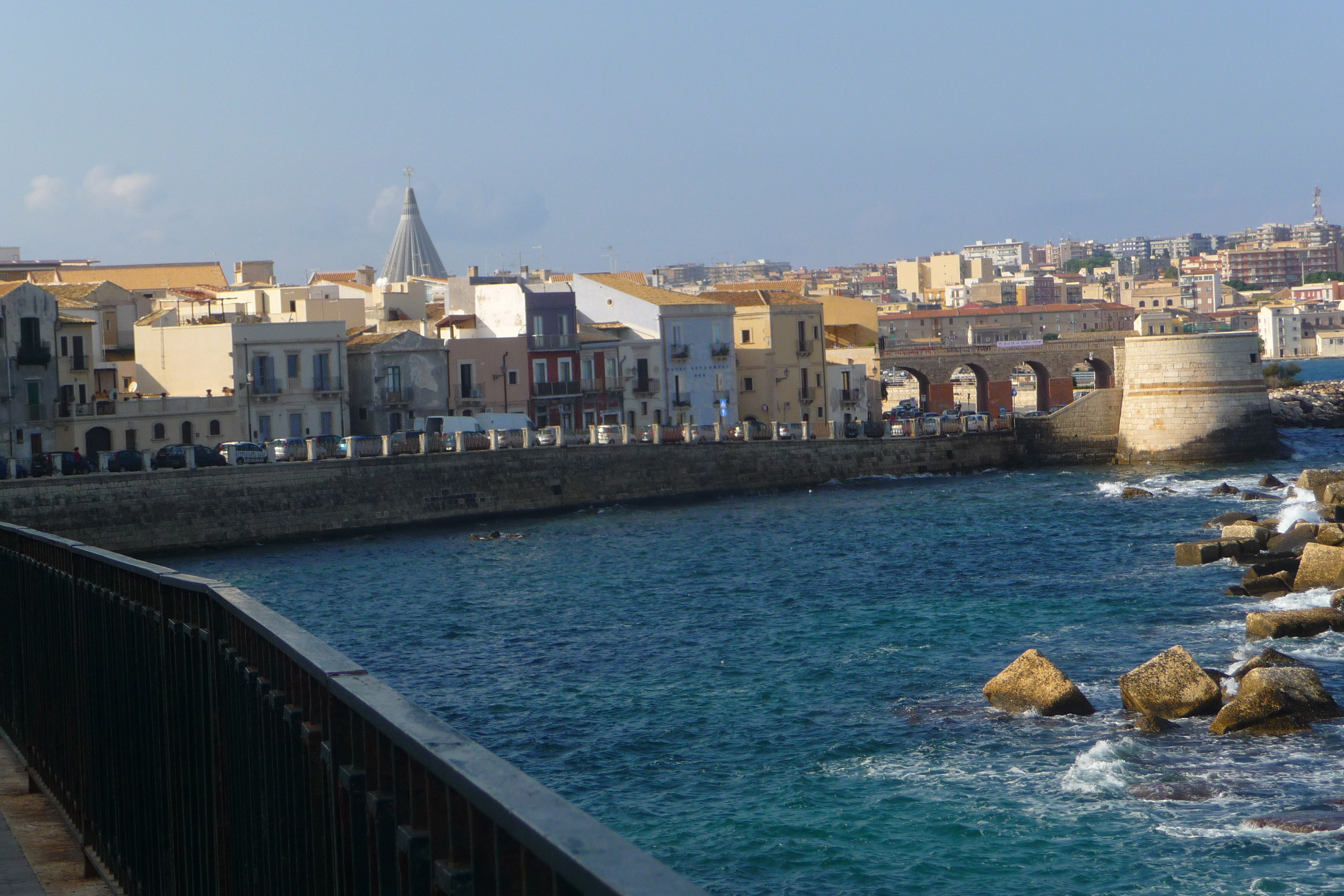
    A Bridge Links Old and New Siracusa
    A Bridge Links Old and New Syracuse

    There are two main areas in the town, the archaeological area which includes Greek and Roman theatres and remains, and Ortygia, a small island that feels more like a tiny peninsula, with beautifully restored Baroque buildings, a number of fine hotels and some great restaurants.

    The Archeological Area

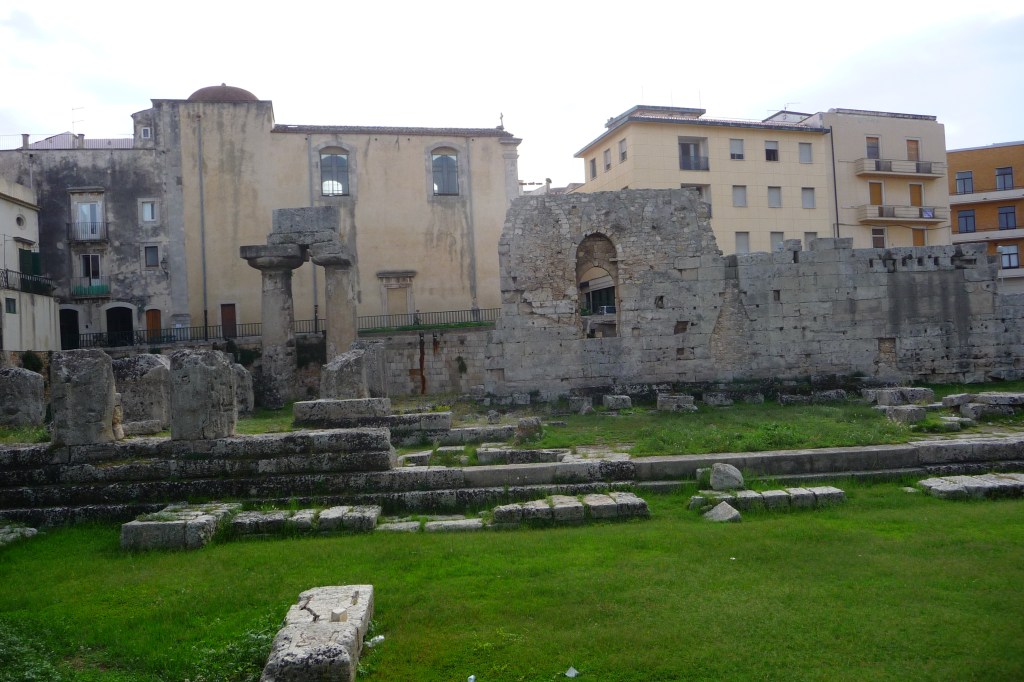
    Temple to Apollo in Piazza Archimedes, Siracusa
    Temple to Apollo in Piazza Archimedes, Syracuse

    In the Neapolis Archaeological Park situated in the northwest of the town, are a number of well-preserved Greek and Roman remains.

    Greek Theatre, Siracusa
    Greek Theatre, Syracuse

    The main attraction is the Greek theatre (not to be confused with the more often photographed Greek Theatre in Taormina which has as its backdrop the snow-capped Mount Etna) where the plays of Aeschylus and Euripides are still performed from May to the end of June each summer as they were more than 2,000 years ago.

    Started in the 5th century when Syracuse was one of the great cultural centres of the Mediterranean world, the theatre is considered to be one of the most perfect examples of Greek architecture to have survived and can accommodate up to 15,000 spectators in its 59 rows.

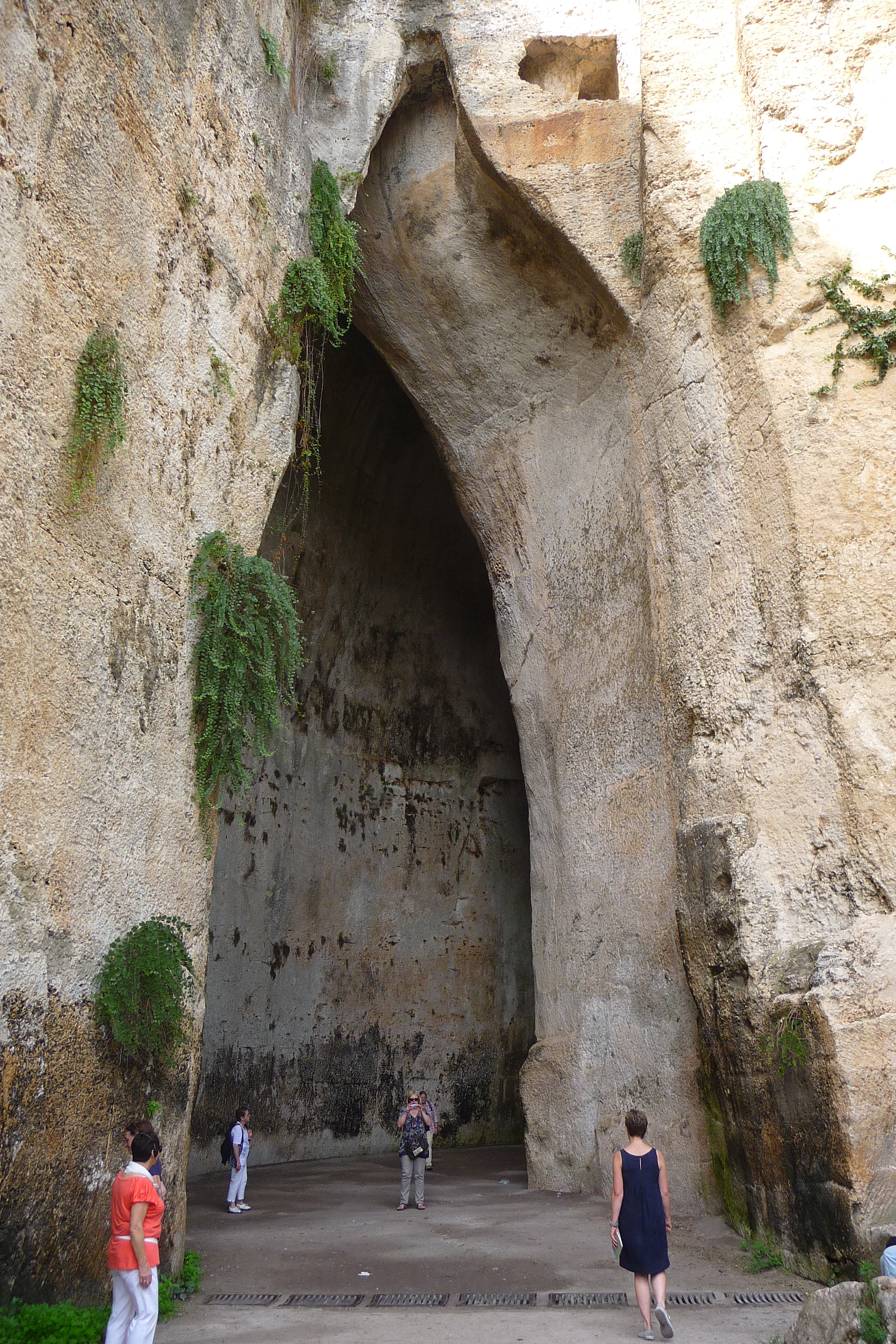
    The Ear of Dionysis

    The nearby fragrant lemon grove was once an old stone quarry used at one time to house 7,000 Athenian prisoners of war, the limestone dug from it in 500 BC being then used to build Syracuse.

    The Ear of Dionysis 4

    Wander into the vast man-made chamber known as Dionysius’s Ear, a 20m high pointed arch cut into the rock face which owes its name to a visit by Caravaggio in 1608. Used as a prison, the excellent Cathedral-like acoustics meant that the prisoners’ conversations could be heard from outside.

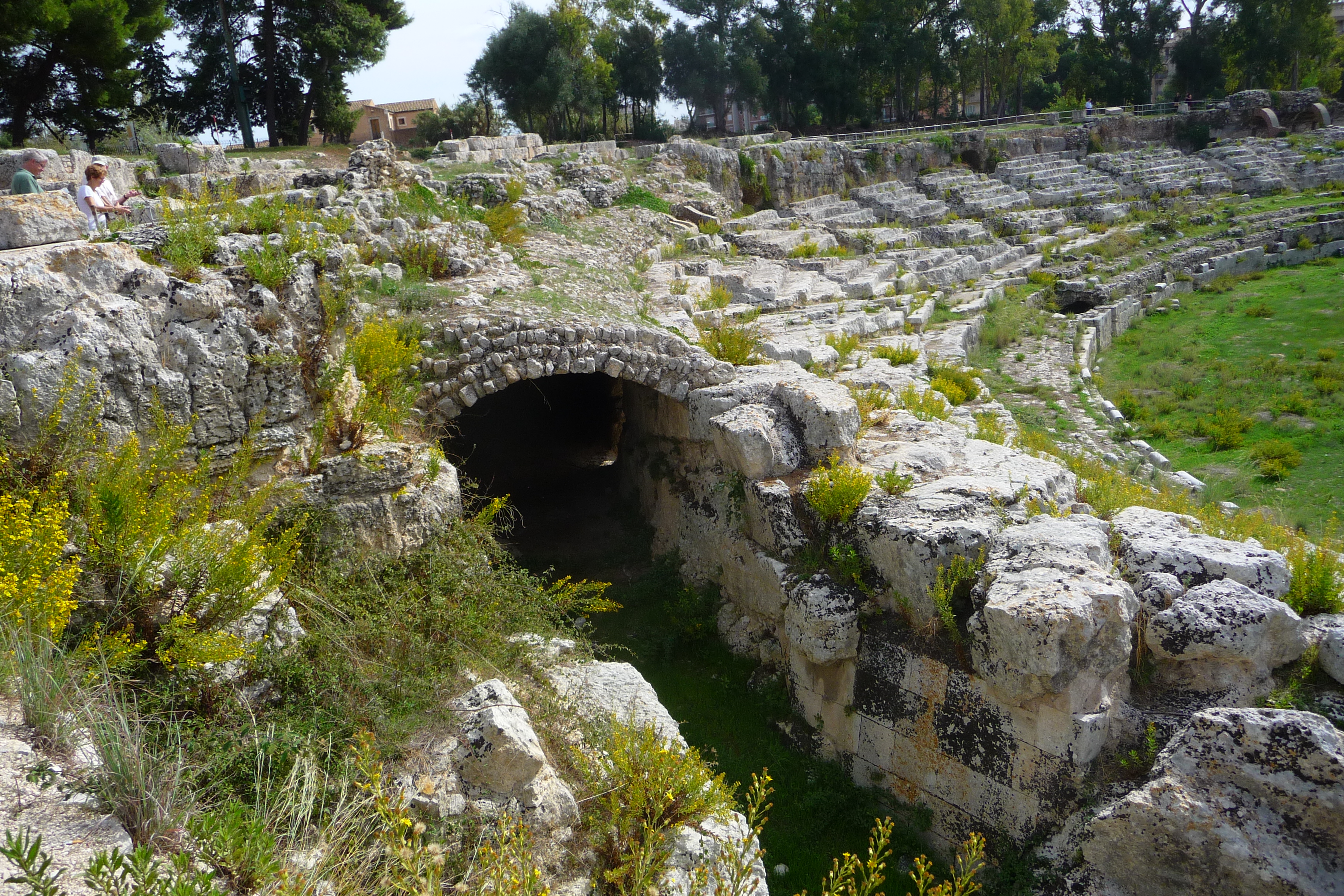
    There is also an impressive Roman amphitheatre, approximately 140m long, built in the 3rd Century AD where traditional blood sports took place, gladiators and wild animals providing the blood-letting that was so much part of these offerings. The hole in the centre is believed to have been a drain for the blood and gore – as one guide told me – or, a space for scenic machinery – as another guide told me!

    Roman Amphitheatre, Siracusa, Sicily
    Roman Amphitheatre, Syracuse, Sicily

    The Archaeological Museum is just a short walk from the park and if time allows, it is worth a visit.

    Ortygia, 2,55 Years of History

    At only 1km by 500m, the best way to see Ortygia is just to wander through the area admiring the Norman buildings and the Baroque decorative facades. Enjoy the sun at one of the cafes in the area sipping a café or an aperitif, or lunch al fresco at one of the many good restaurants on this tiny island.   Take a picnic and sit on the seawalls and admire the fish that swim lazily in the clear waters of the bay.

    Clear Waters of the Bay in Siracusa, Sicily
    Clear Waters of the Bay in Syracuse, Sicily

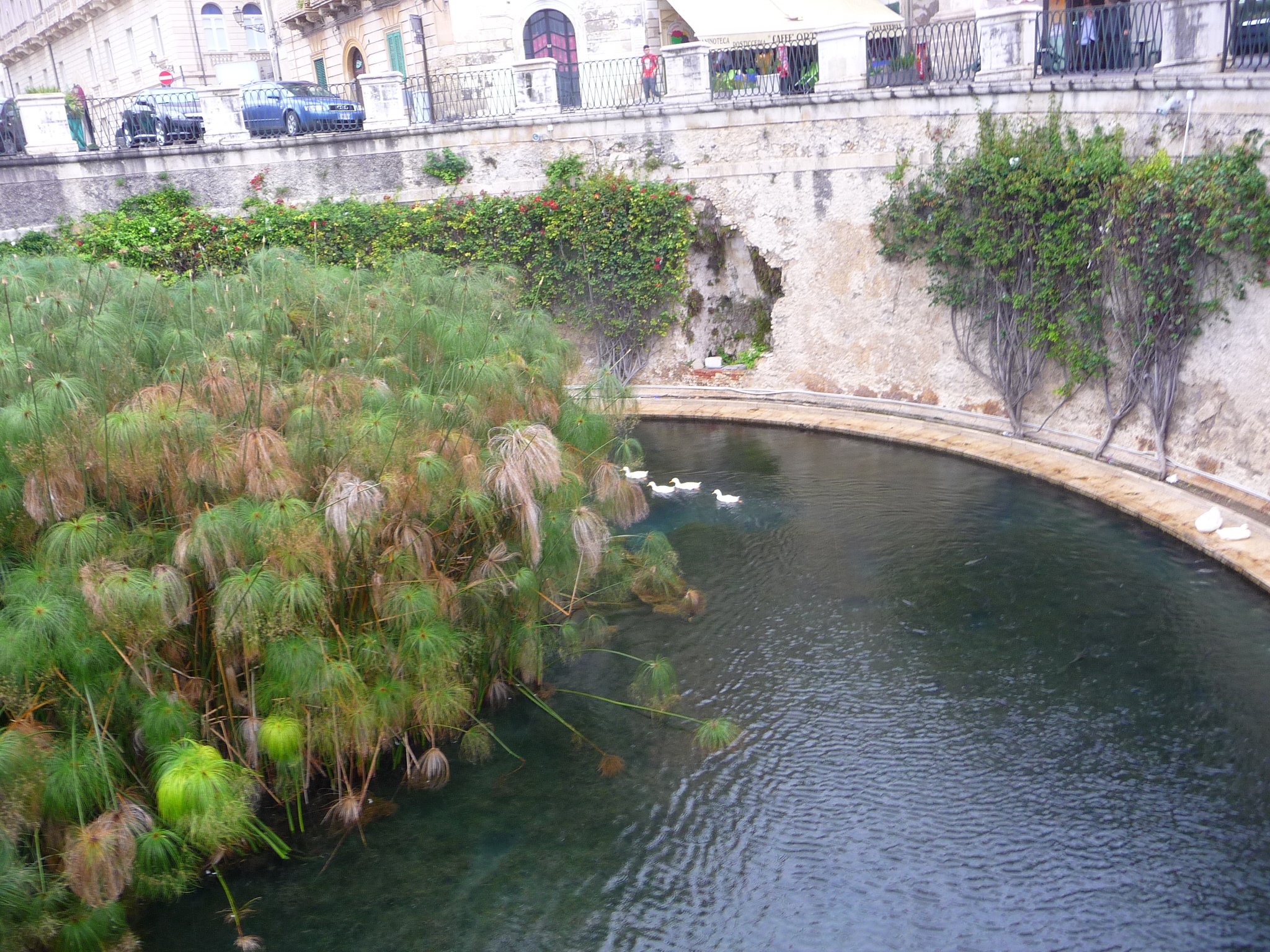
    One could easily walk past the Fountain of Arethusa. filled with white ducks and surrounded by walls of greenery, as it looks so unpretentious but it is one of the most important sights in Syracuse.

    Legend has it that the Arcadian nymph Arethusa, fled underwater to Syracuse to rid herself of the amorous advances of the God Alpheios and the Goddess Artemis transformed her into the freshwater spring that we see today.

    The ruins of this Doric temple stand incongruously in the middle of the town (you can’t miss it as it’s on a main thoroughfare), on one side of which is a bustling market with sellers hawking clothes, handbags, umbrellas and anything else that will sell.

    Temple to Apollo 4
    Temple to Apollo, Siracusa, Sicily

    It seems such a pity that the Temple is not isolated so that visitors could enjoy it in tranquillity, but then it was probably full of bustling life when it was in use back in the 8th century BC when it was at its most active. It is the oldest temple in Sicily and over the centuries it has been a Byzantine church, a mosque and a Christian church.

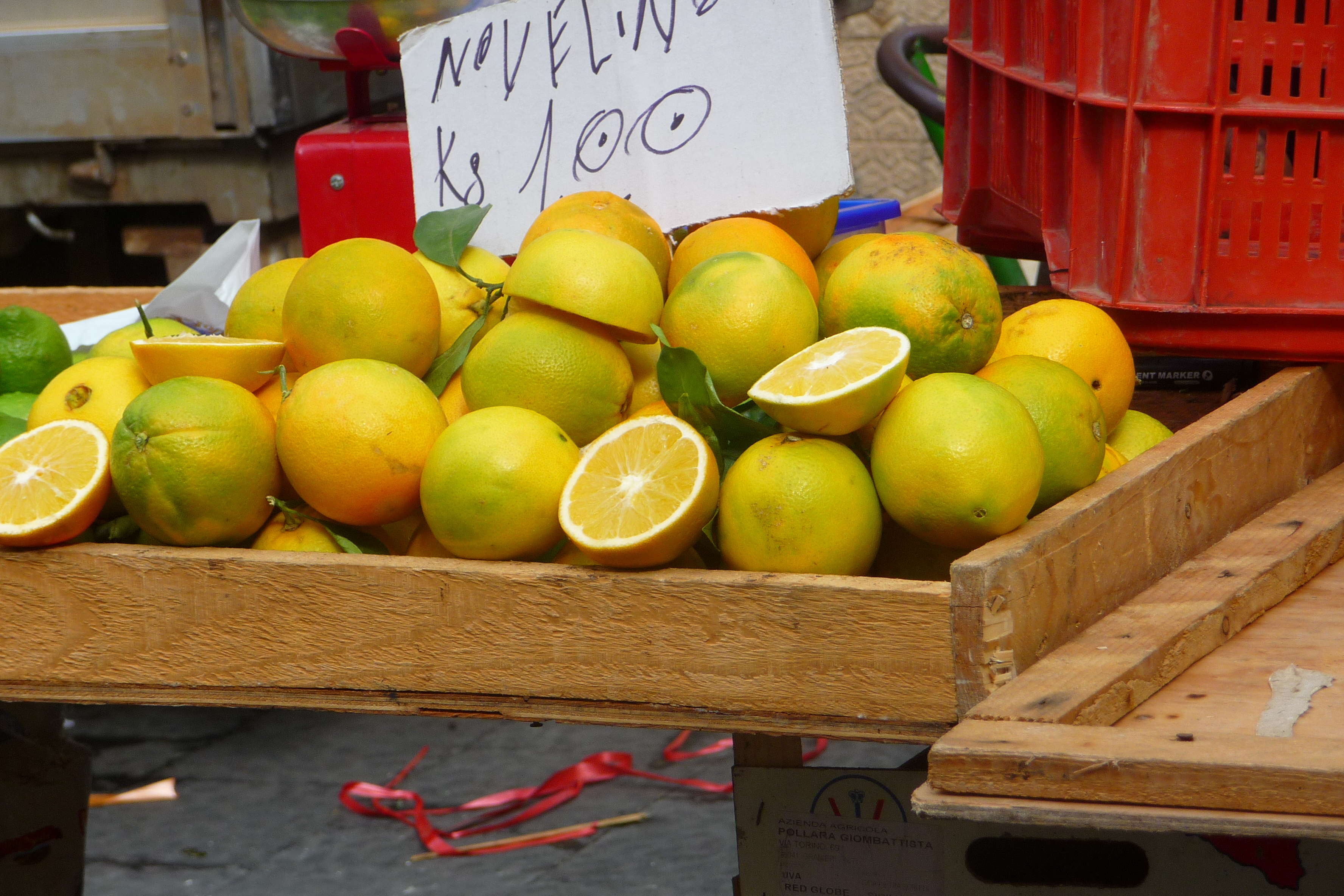
    Citrus from Sicily
    Citrus from Sicily

    Plato visited Sicily several times as did Simonides and Pindar, and Aeschylus sang of its beauty. Its enormous military power made it capable of withstanding attacks from Carthage and Athens and it remained powerful until the Arab conquest in 878 when it lost its supremacy.


    See also, Syracuse: The Other Bits

    Today Syracuse is a pleasant town in which to spend a few days – more if you want to travel beyond it, say to Noto, a perfect day out.

    Arethusa Spring, Siracusa
    Arethusa Spring, Siracusa
  • TATE BRITAIN –  GREAT BRITISH ART IN LONDON

    TATE BRITAIN – GREAT BRITISH ART IN LONDON

    A Grenadier Guard in London
    A Grenadier Guard in London

    Tate Britain, the original Tate Gallery to distinguish it from Tate Modern, is situated near Lambeth Palace and just a short walk from the South Bank, the Eye and Westminster.  It is an elegant building with a neo-classical portico in the area of Millbank and stands on the site of the former Millbank Penitentiary.  It houses the greatest collection of British Art in the world, works by  Epstein, Gainsborough, Hirst, Hockney, Hogarth, Rossetti, Sickert, Spencer, Stubbs,  and the artists of the pre-Raphaelite Brotherhood who revolutionised British art in the 19th century.      copyright Tate Britain

    Special attention is given to three outstanding British artists from the Romantic age: Blake and Constable have dedicated spaces within the gallery, while the Turner Collection of approximately 300 paintings and many thousands of watercolours, is housed in the specially built Clore Gallery.

    Originally called the National Gallery of British Art it started with a collection of 65 modern British paintings given by its founder Sir Henry Tate (he of the sugar cube and sugar refining firm) when it opened in 1897.  A further gift from Sir Henry in 1899 enabled an extension to be built, and in 1910 thanks to the gift of Sir Joseph Duveen, the Turner Wing was completed.

    Over the years the Gallery amassed a collection of works dating from the 16th to the 20th century, to include Modern Art in 1916 and three new galleries for foreign art ten years later.  This led to a change of name from National Gallery of British Art to The Tate Gallery.

    Parliament, Lndon, in evening light.
    Parliament, London, in evening light.

    The Tate is rightly famous for its collection of the works of the foremost English Romantic painter and landscape artist –  J.M.W. Turner (1775-1851).   Turner left his collection of oil paintings and thousands of studies to the nation on condition that they were kept together, and in 1987 the Clore Gallery was opened to house this magnificent bequest.

    When the Tate Modern opened on Bankside in 2000, a decision was made to create more space by transferring the collection of international modern art from 1900 to the present day to the new gallery.  Tate Modern, a former pumping station, is the perfect repository for modern art, and in the Turbine Hall, it has space to display enormous installations.

    Looking Across to the Embankment from the South Bank, London
    Looking Across to the Embankment from the South Bank, London

    Tate Britain however, continues to house the Turner Prize exhibition, one of the art world’s most controversial prizes.  Awarded to an artist under 50, British or working in Great Britain, the Turner Prize attracts both media attention and public demonstrations, former well known winners being Damien Hirst, Grayson Perry and Gilbert and George.

    The Tate is no stranger to controversy, from accusations of favouritism in the purchase of work by Royal Academicians in the 19th century to media ridicule of the works it purchases today.  There was the famous case in 1972 of the work by Carl Andre popularly known as The Bricks, which caused The Times newspaper to complain about institutional waste of taxpayers’ money.  In 1995 a gift of £20,000 from art fraudster John Drewe came to light, along with the fact that the gallery had given Drewe access to its archives from which he forged documents authenticating fake paintings which he then sold.  The last major scandal was in 2005 over the Tate’s purchase of Chris Ofili’s work The Upper Room for £705,000 with accusations of a conflict of interest.

    None of these controversies however, detracts from the Tate’s magnificence.  Whatever time of the year one chooses to visit, there will be one or two challenging exhibitions ranging from Neo-classical sculptures, exhibitions of the work of Rubens, William Blake, and Millais (founder of the Pre-Raphaelite Brotherhood), to film and video work of Derek Jarman and that of the Iranian film maker and photographer, Mitra Tabrizian.  All this as well as the gallery’s normal offerings.

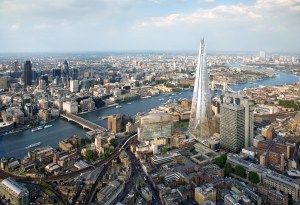
    View Over London from The Shard, Highest Building in Western Europe
    View Over London from The Shard, Highest Building in Western Europe

    Three year’s ago the Tate held the Francis Bacon Exhibition (1909-1992), a re-assessment of his work in the light of new research since his death, comprising around 60 of his most important pieces from each period of his life.   It showed in great detail, the work of possibly the 20th century’s greatest painter of the human figure in an exhibition that captured its sexuality, violence and isolation.  The artist’s bleak outlook, his flamboyant homosexuality and his colourful private life had made him a controversial figure in life as much as in death.

    For those visiting Liverpool, the superb Tate Liverpool which opened in 1988 shows various works from the London Tates as well as mounting its own eclectic displays and for those heading for Cornwall, the Tate St. Ives has an equally impressive collection.

    The London Eye
    The London Eye

    The out-of-London Tates entail rail or coach travel from London, but Tate Britain is an easy walk from Westminster.  For a truly memorable arrival, the best way to travel is by river-boat which leaves half-hourly from Tate Modern on the Thames, stopping at the London Eye along the way.

    Like that other great palace of art in Trafalgar Square, the National Gallery, the Tate also offers free admission apart from special exhibitions.

    website: www.tate.org.uk

    Open 10.00 a.m. to 17.50 daily.

    Bus No. 77A runs from the centre of London through Westminster, Whitehall, Trafalgar Square and Aldwych to the Museum every ten minutes.   Nearest underground:  Pimlico.    Two superb licensed restaurants are in the basement of the Gallery.

    Visitors wanting a quick and expert guide to parts of the Gallery should take one of the free one-hour tours offered daily which start at 11 a.m. 12 p.m. 2 p.m. and 3 p.m (Saturdays and Sundays 12.00 and 15.00 only).