Tag: History
-
Pull up a seat
Linked to xingfumama
Pull up a seat in the Parque Federico Garcia Lorca in Alfacar, Granada, Spain, and meditate on the poet’s death and those of his 3 close companions, plus the thousands of others assassinated by Franco’s rebel army in the area, just a few days after the outbreak of Spain’s Civil War.
The Park was inaugurated by the Provincial Council of Granada in 1986 to pay tribute to the thousands shot between Alfacar and Viznar and has been declared a Place of Historical Memory.

Sombre yes, but good to have such a place to commemorate a great poet and playwright, and the thousands of other victims of the Spanish Civil War..
Linked to xingfumama
-
A Battle with BATTLE

KODAK Digital Still Camera Our battle was with the weather, and we were in Battle, Sussex, scene of the Battle of Hastings. If the wind and rain had been as bad in 1066 as it was during part of our stay, I think the Normans might have turned tail and gone back home.
As it was, we did what we Brits always do, grumbled a bit and then got on with it, struggling against the elements and elbowing our way into cafes to drink mugs of hot chocolate, in between sampling the Award winning local beer, Abbey Pale Ipa brewed by Battle Brewery. A shout out here to the very welcoming Abbey Pub just opposite the Abbey where the fire in the cosy nook added to the welcome.
English Heritage Accommodation
We had five days in the area so we managed to see and do a lot. We had a car, lots of reading matter and fabulous accommodation at The Lodge at Battle Abbey, an English Heritage rental which provided us with some of the best self-catering I’ve ever had. It was warm, the heating was superb, the bedrooms were luxurious and comfortable, the kitchen had everything one could wish for, from Jasper Conran china to Joseph utensils and state-of-the-art means of cooking. Oh, and a lovely hamper of local produce to start us off.


The living room with dining table 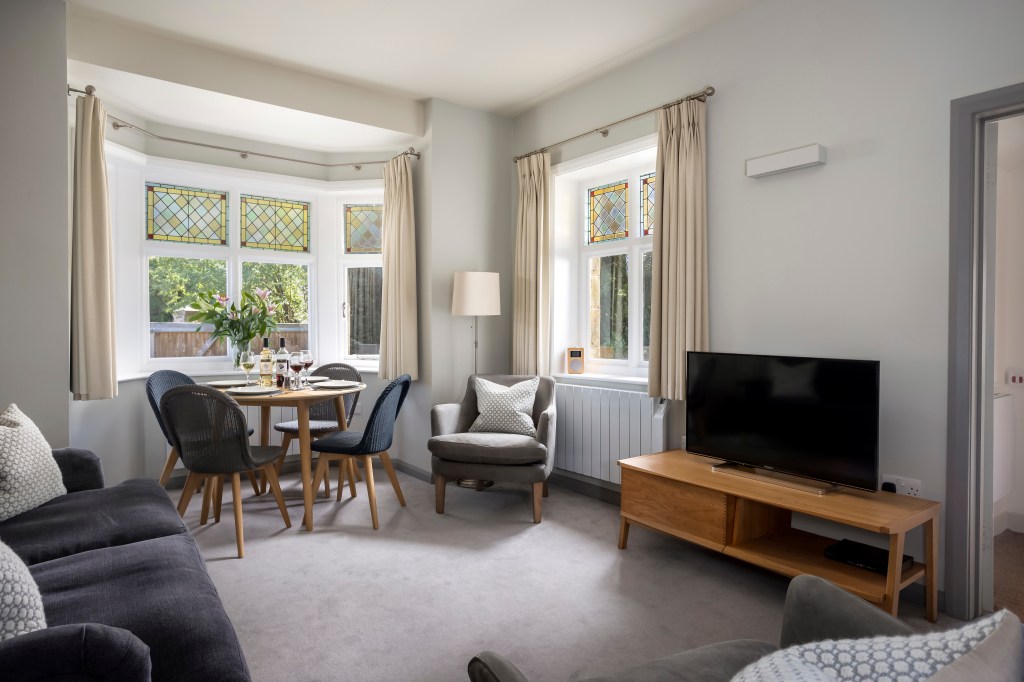
The living room with dining table 
The kitchen 
Breakfast al fresco 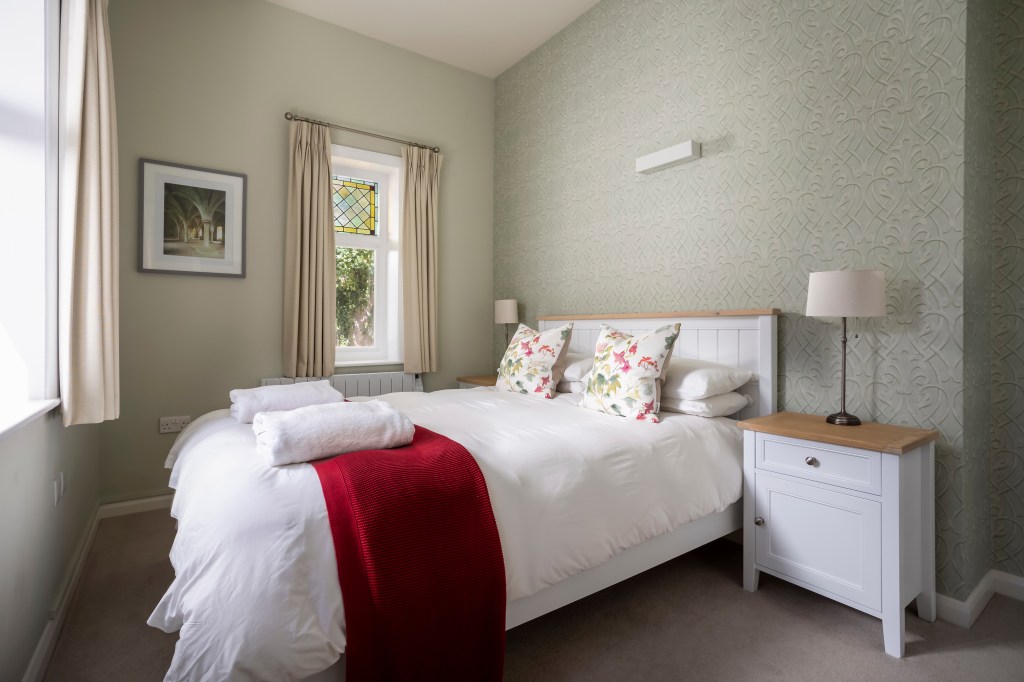
Double bedroom Photographs of The Lodge at Battle provided by English Heritage
We looked out on green fields where the sheep safely grazed and a flowering crab apple lit up the garden, our rental included VIP tickets to English Heritage sites in the area, discount in the shops and cafes, and access to the Abbey through the grounds in which our Lodge was situated. What more could travellers, history buffs and walkers want?

One of the houses in Battle High Street Location of Battle?
Lying just 50 miles from London and 27 miles from Brighton, Battle is well placed for visitors to the UK to include a day trip to see the attractive town and its Abbey. It gets its name from the Battle of Hastings, fought between Harold the Saxon king and William the Conqueror in 1066, a battle that changed the course of English history.
Battle Abbey & St. Mary’s Church
After he won the battle, William built the Abbey of St. Martin, something he’d vowed to do if he won. Built between 1070 and 1094, the high altar is believed to have been placed on the spot where Harold fell, although this fact is disputed today.

Looking up Battle’s High Street with cottages and houses dated form the 1700’s on the left. The Abbey ruins and the battlefield are a magnificent sight as you look down the length of Battle’s High Street, past the Georgian buildings that line the street. At the northern end can be found the Almonry, built in 1090, which now houses the Town Council and the Battle Museum of Local History.
At the other end of the street, the cottages and houses near the Abbey date from around 1700. The nearby parish church of St. Mary is for the most part 12th century in construction. This lovely old church is worth a visit for its rare 14th century wall paintings and its Norman font, but it also houses a modern tapestry in the style of the Bayeux tapestry, a community project conceived and designed by local inhabitant, Tina Greene. The contemporary tapestry is a three-metre long depiction of how the town of Battle might have grown between the years following the Battle of Hastings in 1066 to the founding of St Mary’s Parish Church in 1115. Started in 2016 and with contributions from 741 registered stitchers, not only from Battle but from the rest of the UK and abroad, the tapestry was finally completed in January 2017.
Dissolution of the Monastery in 1538
Battle’s influence grew over the years until the Dissolution of the Monasteries under Henry Vlll and the closure of the Abbey in 1538. In later centuries however, the town achieved fame through its charcoal-making technique and Battle became famous in the 17th and 18th centuries for its gunpowder, rated by Daniel Defoe as the finest in Europe.


Battle Today
Now today, this quiet market town concentrates on the finer things in life and, apart from its great historical appeal, it offers the visitor great food experiences from the comfort of tiny cafés and tea rooms that spill out onto the pavements (and a special mention here to Bluebells Tea Rooms) to fine dining at chef Paul Webbe’s The Wild Mushroom, in nearby Westfield, right up to tastings at Oastbrook Estate Vineyard.
Shopping is a delight too, as Battle’s historic high street features many of the type of shops you don’t often see elsewhere, independent clothes shops, craft shops, wool shops and book shops, and my favourite, the delightful British Design British Made, showing the best of British design. For beer lovers, Battle Brewery and Bottle Shop is a don’t-miss, offering beer from their own microbrewery as well as other locally produced ciders, wines and snacks.


Battle High Street There are mapped walks ranging from 4.5 miles to 37 miles and the helpful tourist office can offer guidance on these.
In fact, the weather doesn’t really matter in Battle as there is just so much to do. I know this for a fact, five days in Battle flew by and we even made time to visit Hastings (more about that another day).
Facts:
For a selection of English Heritage accommodation: https://www.english-heritage.org.uk/visit/holiday-cottages/ I have previously stayed at Walmar Castle in Deal and Osborne House on the Isle of Wight, both of which I highly recommend.
-

Venice, La Serenissima
I finally made it back to Venice.
I’d wanted to return to La Serenissima for years but the thought of elbowing my way through the crowds, queueing for a restaurant, queueing to visit the Doge’s Palace, queueing even for a Gondola ride, was just too much. I thought of a winter visit: then I read about Venice’s floods, the rain, the mist, the dark medieval streets one has to negotiate at night, and thought again.
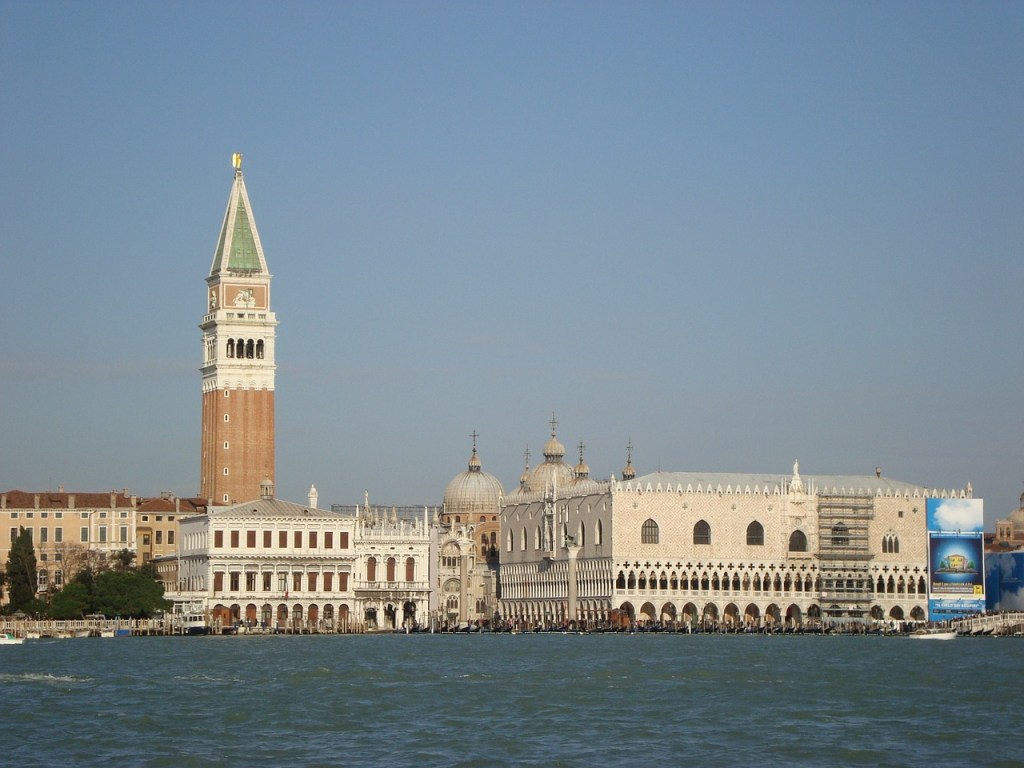
Desire overcame caution however, and two weeks ago I returned to Venice and I can now thoroughly recommend a winter/spring visit. I wouldn’t travel later than the second week in March though, as the number of tourists was increasing daily and the queues were already beginning to lengthen.
Canals and Crumbling Houses
Misty mornings gave way to sunny afternoons and Venice worked her charm as always. Wandering around the maze of streets that lead of Piazza San Marco, stopping for hot chocolate and coffee when we spied a particularly attractive place, walking across the small bridges that span the green waters of the canals and stopping to watch the gondolas gliding under them, in areas away from the crowds, was something we never tired of.
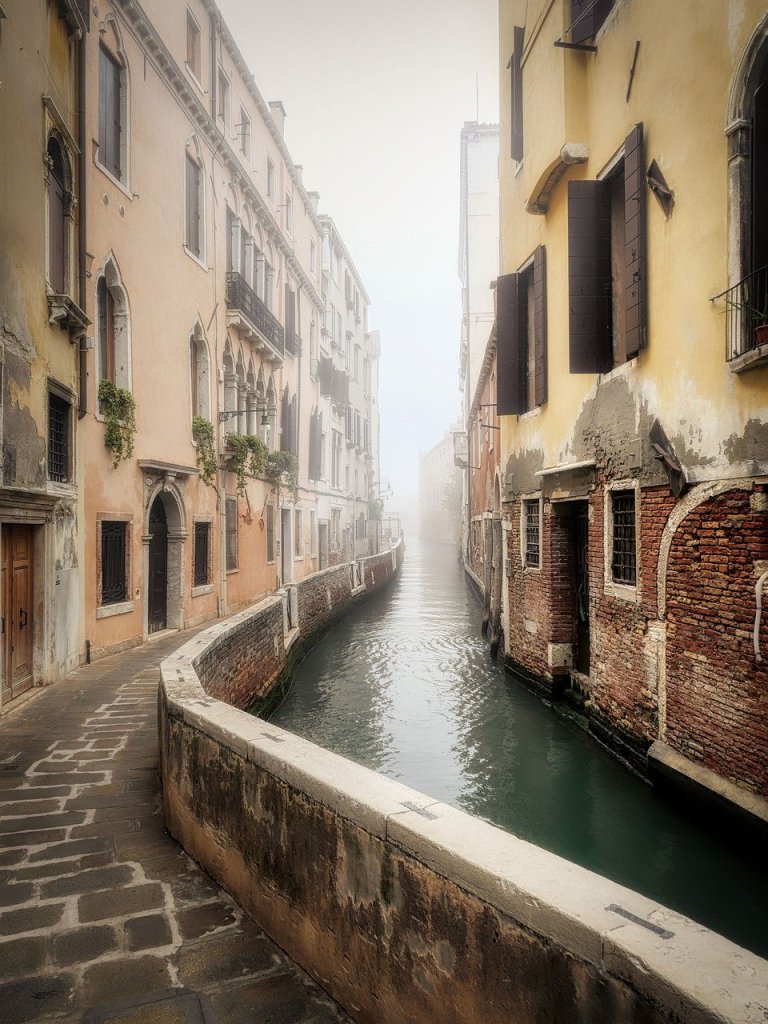

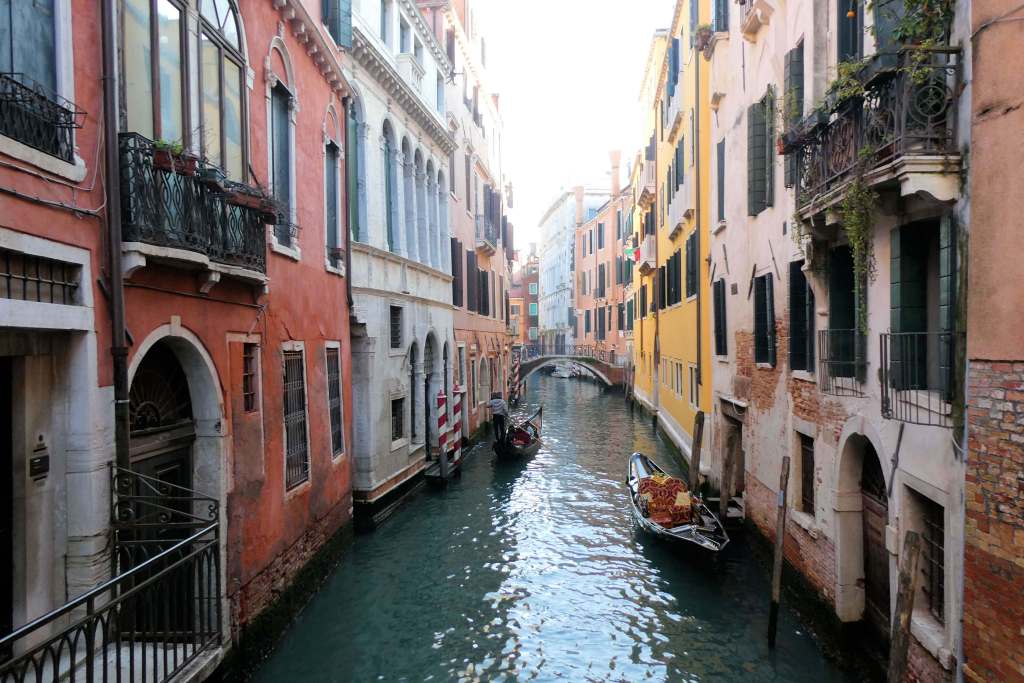

3 interesting balconies 
Crumbling walls 
Back streets/canals 
We had a map but still got lost. How could one not in Venice, when crumbling houses and palazzos, fading murals and ancient wooden doorways lured one into areas unknown. The tall buildings hushed the noise from the surrounding streets and often the only sound was that of the gondoliers’ oars swishing through the water as they ferried locals to their doorways on the canals, or transported tourists beyond the tourist spots.
Gondolas – their history

In the 14th century, horses were outlawed from the streets of Venice and the Nobles embraced gondolas as a respectable form of transportation. It then became the way to get around the lagoon’s islands. In order to navigate over the sandbars, the boats had to be flat-bottomed and the gondolier had to stand up to see ahead.
Two hundred years ago, there were 10,000 gondolas. Today there are about 400 licensed gondoliers only. When one dies, the license passes to his widow, so keeping the skill and the tradition in Venetian families.


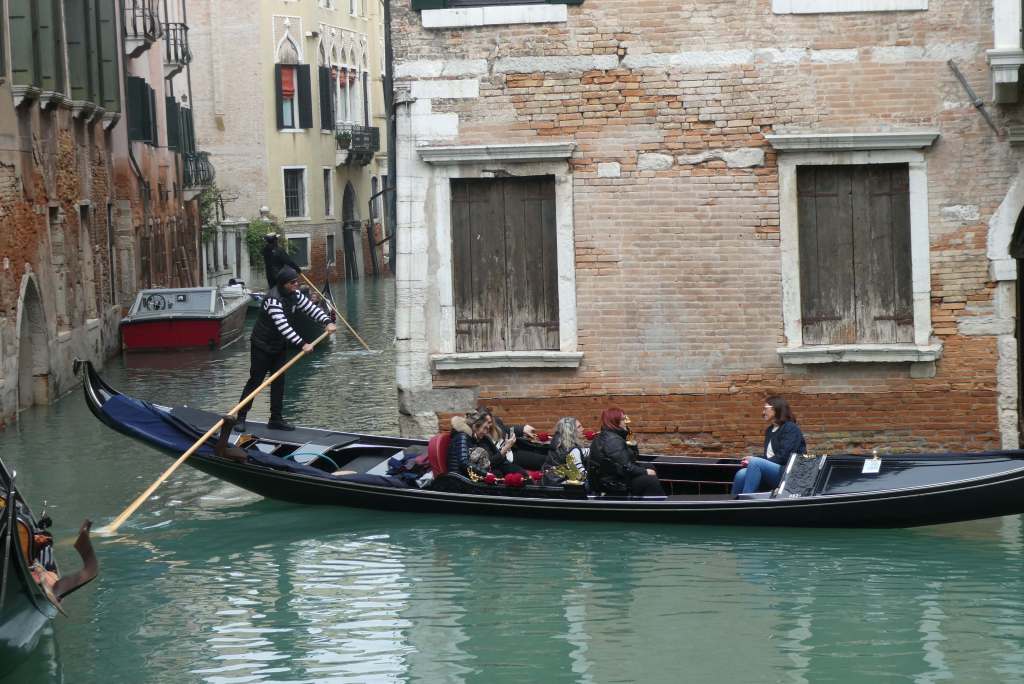


Gondola Waiting Area A law enacted in the 17th century decreed that all Gondolas be painted black to eliminate competition between nobles for what were status symbols at that time. Today they are still painted black and decorated extensively, their detailed carvings embellished with gold, and with unique upholstery, trim and detailing. .
St. Mark’s Basilica and The Doge’s Palace

We arrived in a Venice which had more people than I’d expected, even for late spring, but the queues for the main sites were already huge.
Day 1, the time on the board for the queue to St. Mark’s Basilica said 1 hour 15 minutes. Want to jump the queue? Of course, you can, for just 90 Euros, and then you are whisked inside in 10 minutes to shuffle around with all the others. It was a mere 1 hour queue for The Doge’s Palace with the same 90 Euros to jump the queue and by the time we left, six days later, the time queue in both cases, had increased by half an hour.
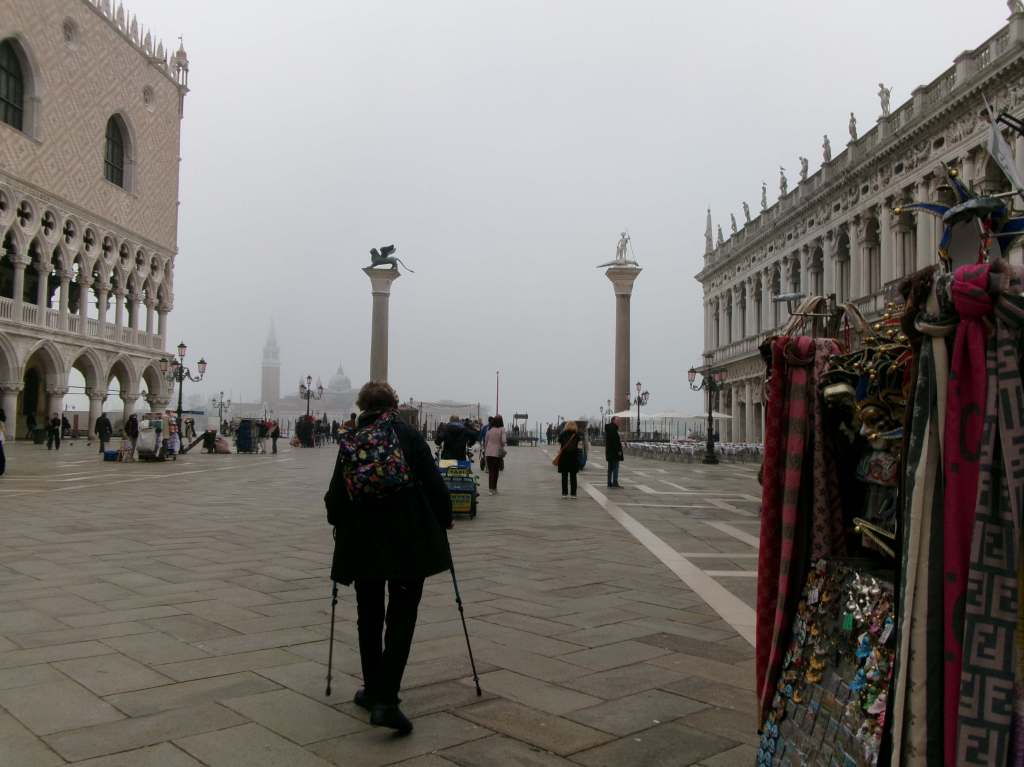
Misty morning in Venice 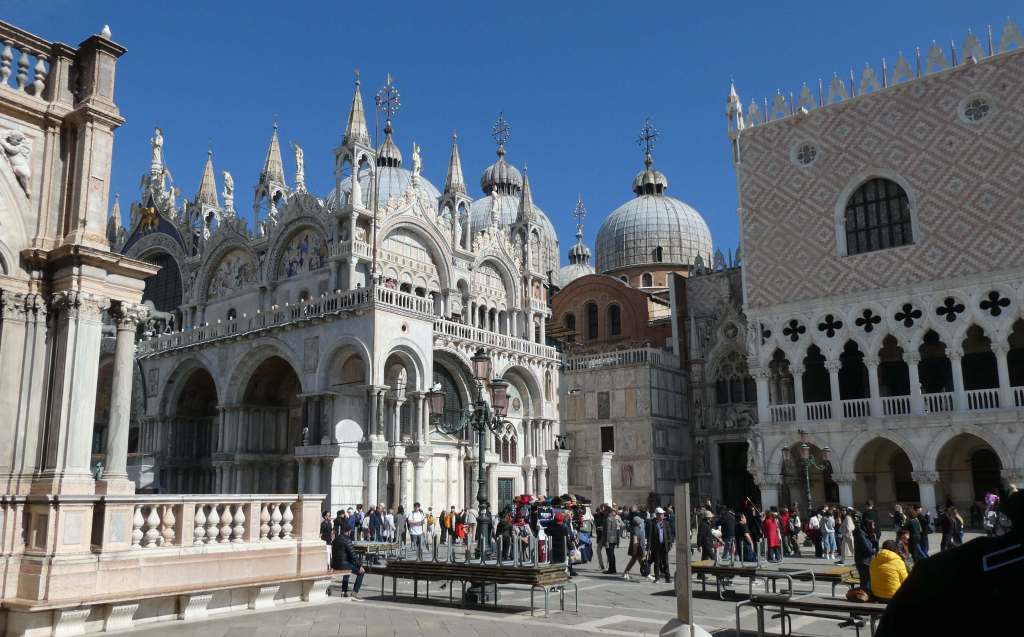
Basilica 
Basilica and Doge’s Palace 
Basilikca Facade 

Doge’s Palace 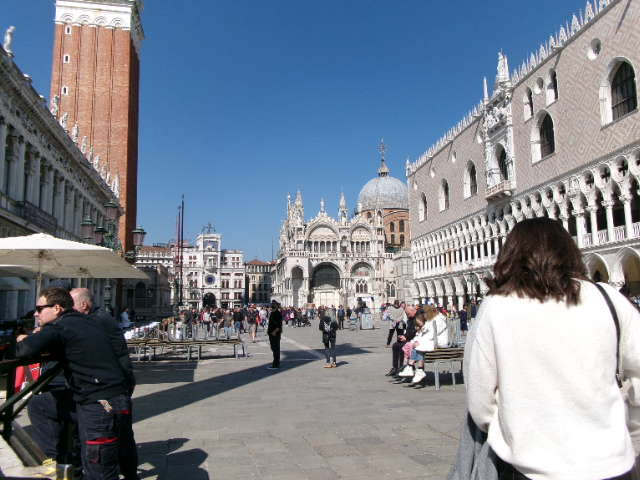
Piazza San Marco 
Piazza San Marco 
Early March, Venice 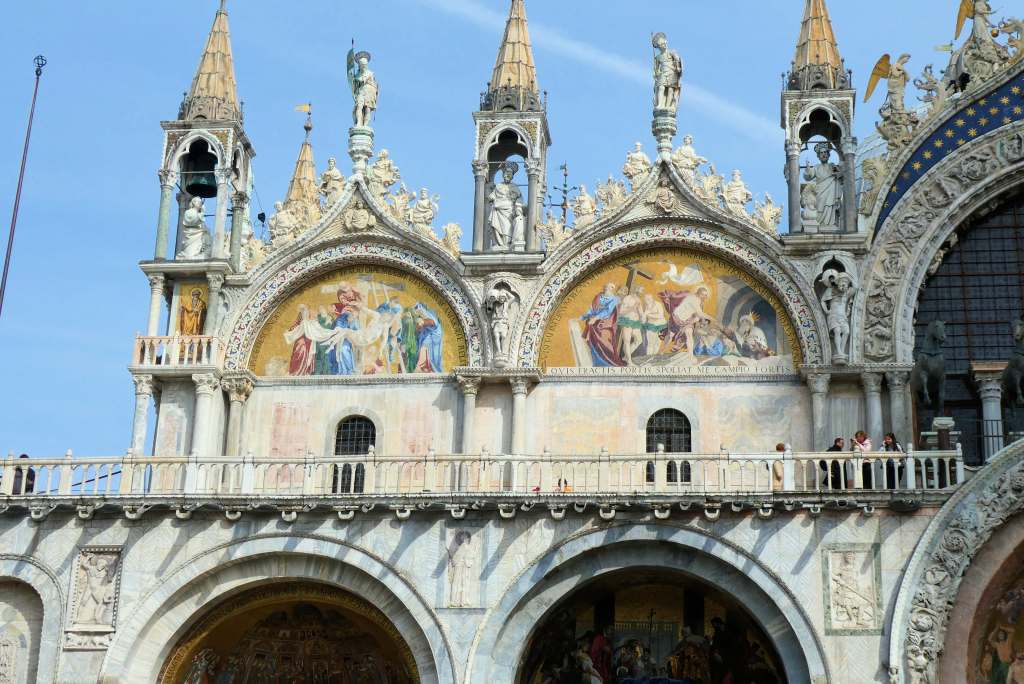
Facade Basilica 
San Marco 
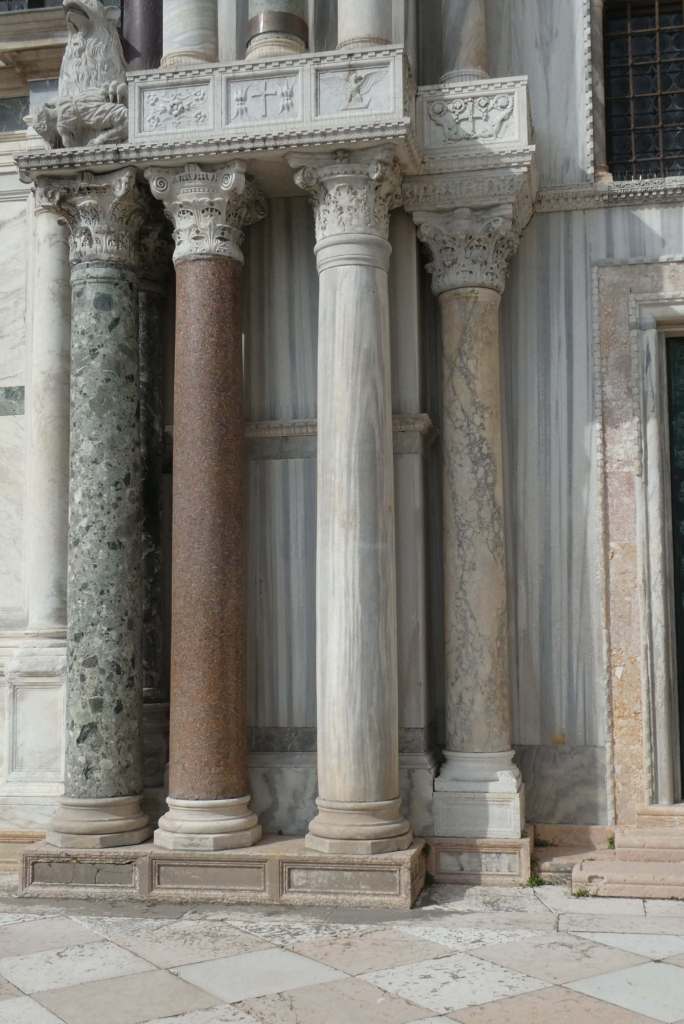
What will happen at Easter and after, when the two local airports welcome increased flights from all over Europe and the cruise ships disgorge their thousands daily, is anyone’s guess.
Rialto Bridge
Of course we spent time window gazing at the expensive Murano glass items in the shops by the Rialto Bridge, the jewellry, the bags, and the multi-coloured pastas, pestis and ricottas packaged for easy packing.

Rialto Bridge 
Entering Grand Canal from Rialto 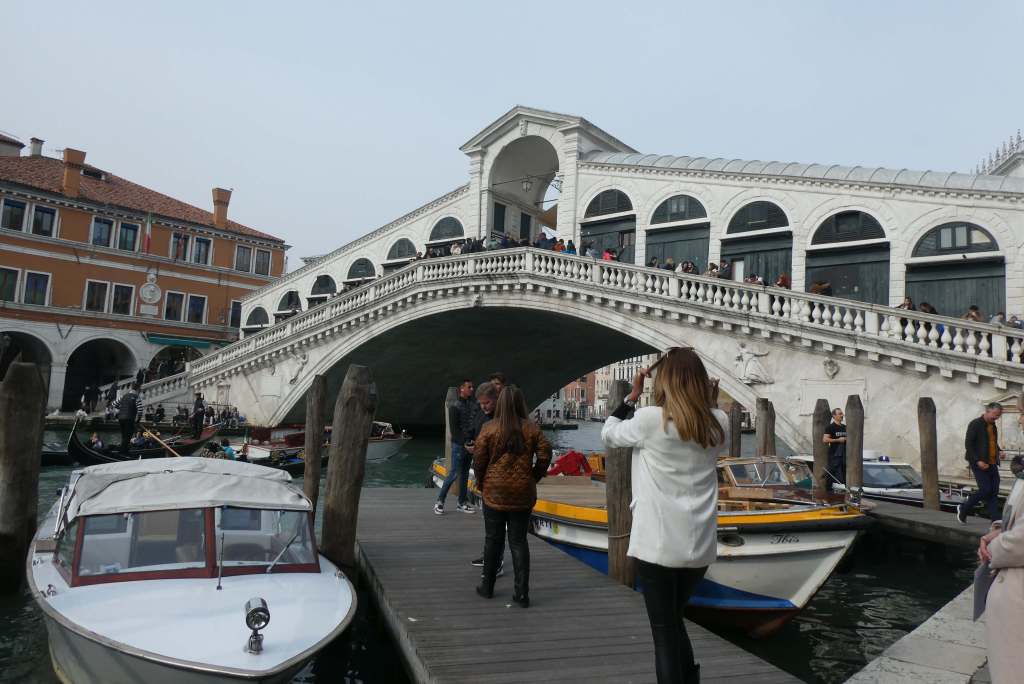

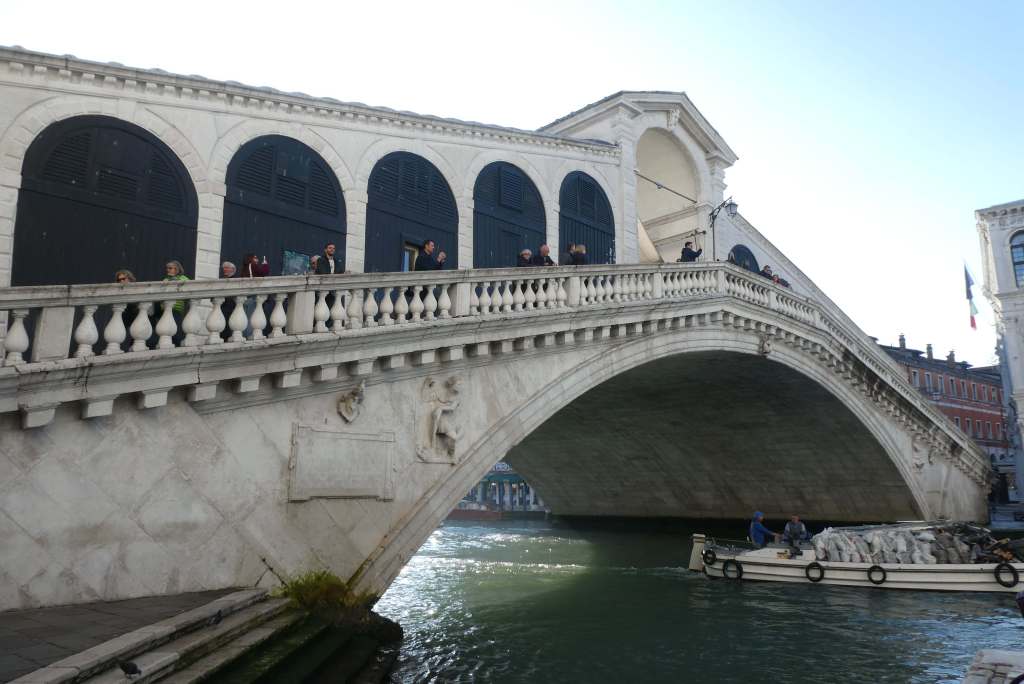
In fact we spent a lot of time in the area, fascinated not just by the food, but by the selfie-taking photographers balancing precariously on the Rialto Bridge, sure that one of them would fall into the murky waters and secretly hoping one of them would.
Grand Canal
We took boat rides on the Grand Canal with both the slow Water Bus and the Vaporetto, the commuters’ form of water transport. Below are just some of the houses along this magnificent waterway, some still occupied by old families, some now rented out, and some now AB&Bs. As you can imagine, photographing from a moving, and sometimes rocking, boat, was not easy.
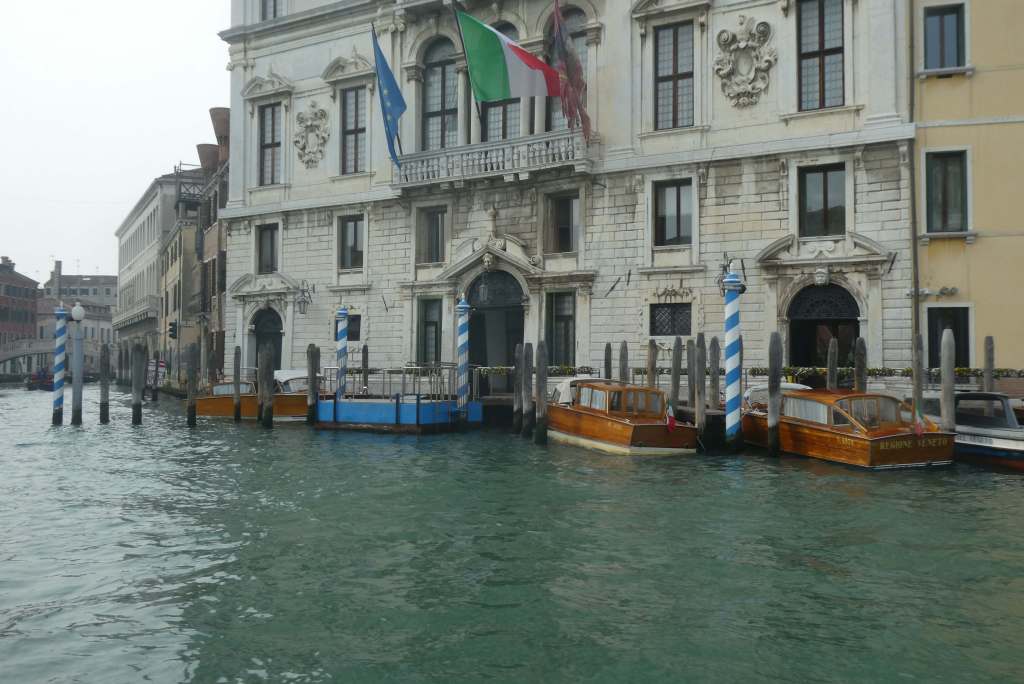


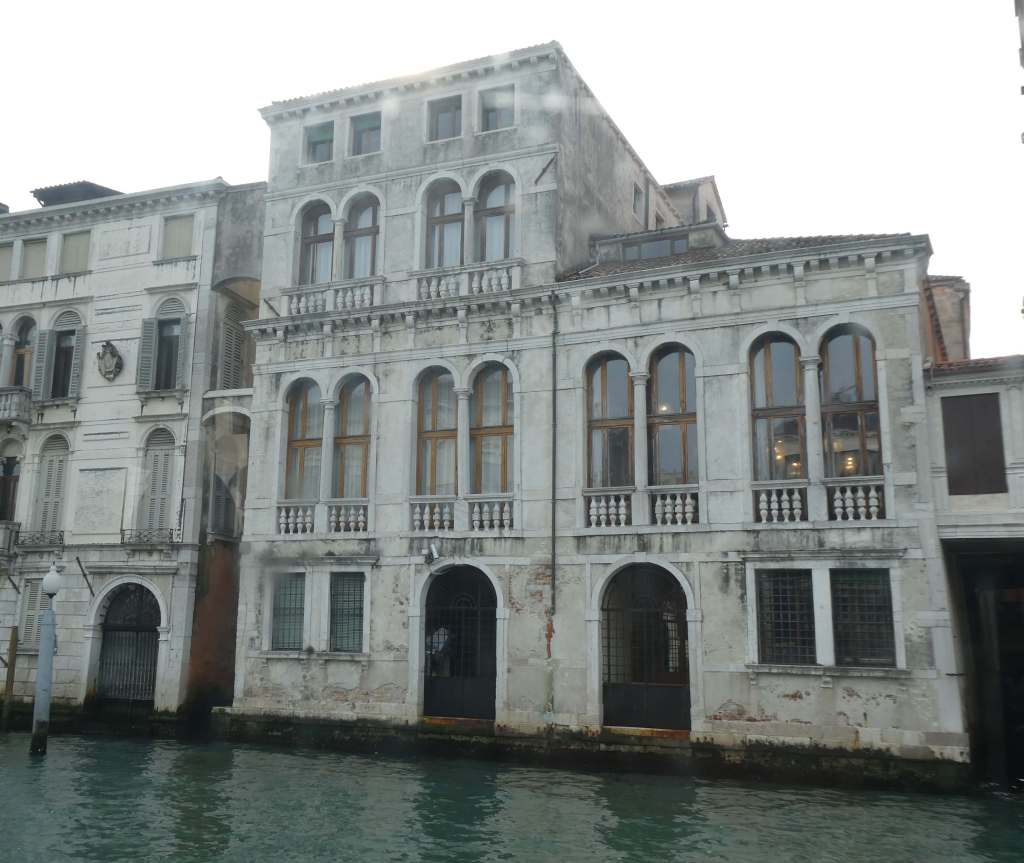
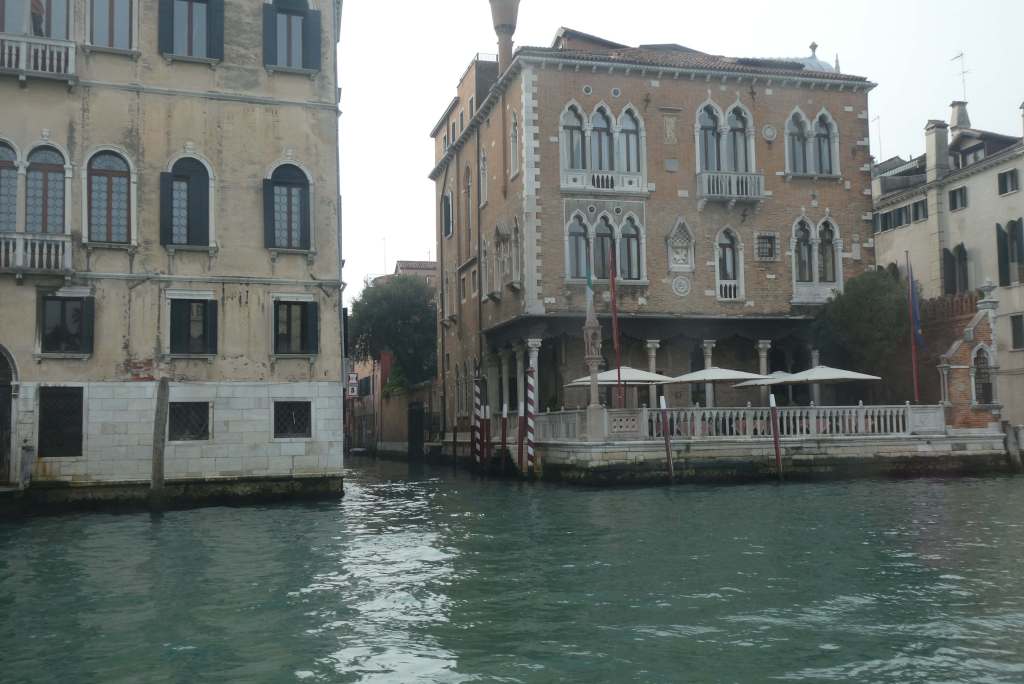


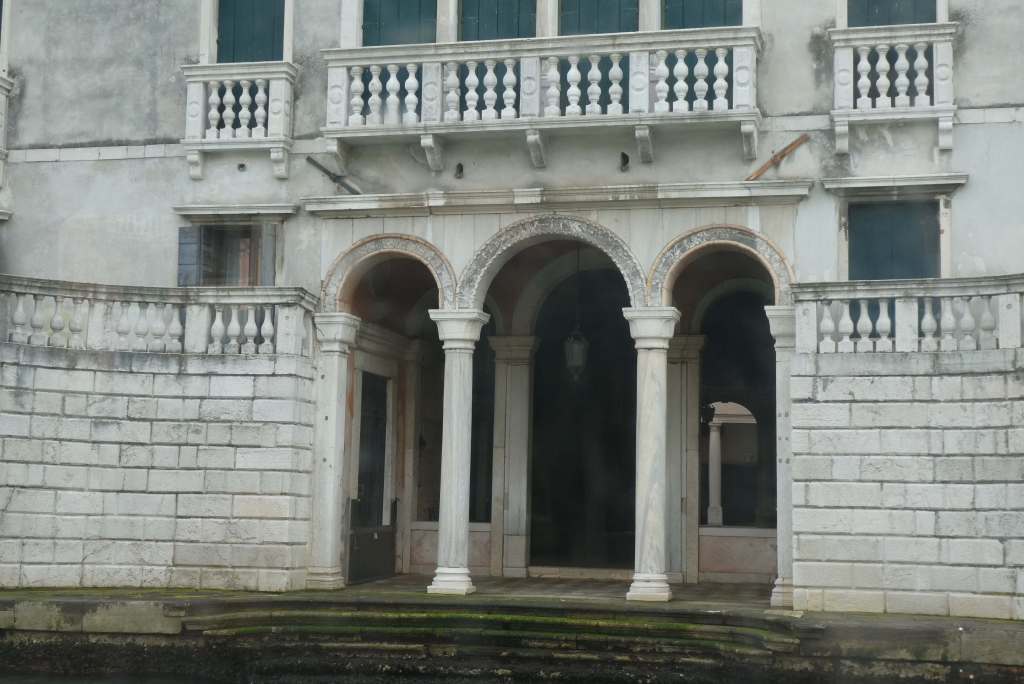


I would recommend a Grand Canal trip to everyone visiting. It’s the only way to see the magnificence that once was Venice, the mansions, palazzos, and houses of minor aristocrats that line this great watery thoroughfare.
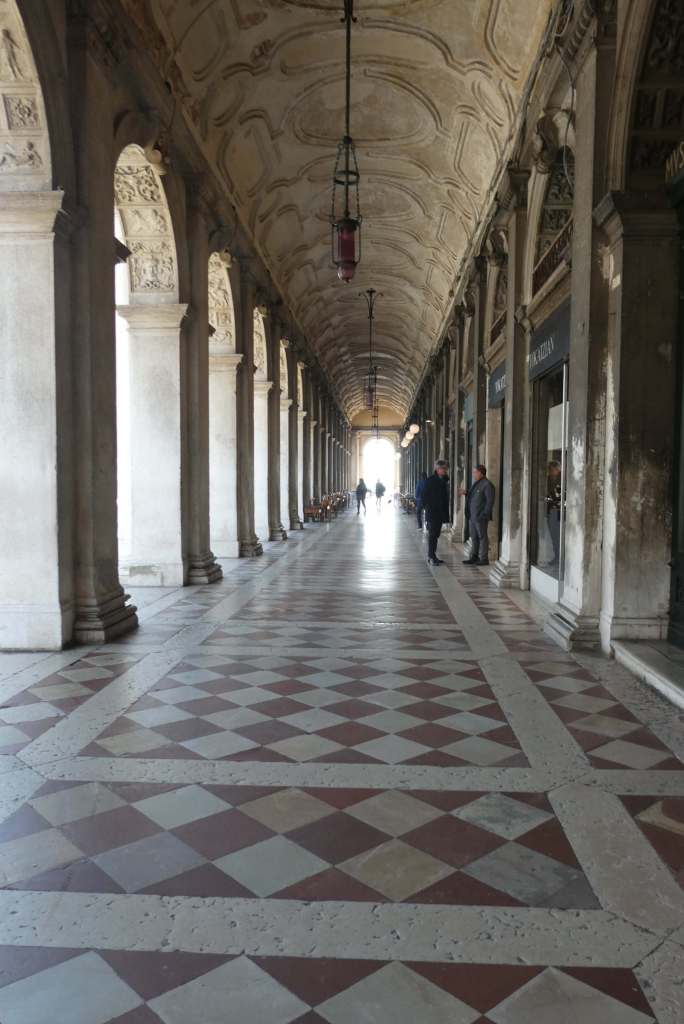
Colonnade Piazza San Marco 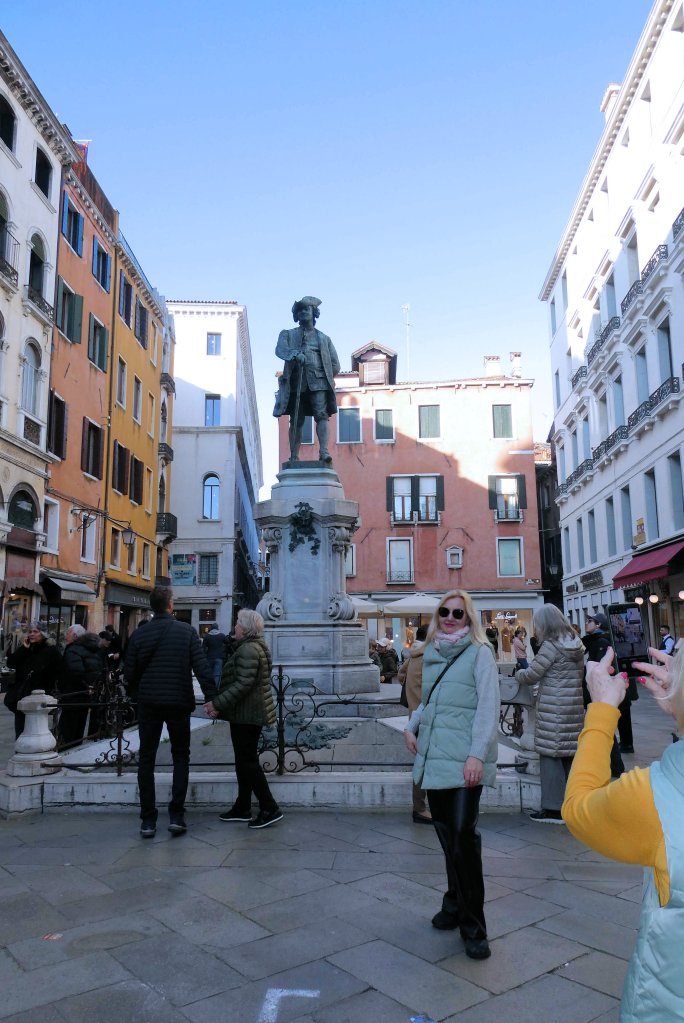
Goldoni, author of La commedia dell Arte 

There were churches to visit which we didn’t, islands to visit which we didn’t, and even a Lido which we neglected, as the experience of just being in Venice proved enough to satisfy us. We seemed to retrace our steps most days, always starting at Piazza San Marco for a coffee and then just wandering, lost in the magic of this wonderful city that is Italian, but totally of itself. Venice is the only place in Italy which doesn’t appear to have a statue of Garibaldi but they honour their famous playwright son, the 18th century writer, Carlo Goldoni of Commedia dell ‘art fame, with a bronze statue in Campo S. Bartolomeo, not far from the Rialto Bridge.
I didn’t take a gondola ride as mobility problems made this an impossibility, but I would have done so if I could. After all, where else but in Venice can you experience this. I watched enviously as my friend went off in her black and gold gondola, her straw-hatted gondolier skilfully avoiding the other boats as he steered them across the lagoon and under the Bridge of Sighs. I know, I know, it’s touristy, isn’t it, but who cares when you’re in Venice and doing what Venice is famous for?
And as we walked back to our hotel at night, over bridges under which dark waters flowed, I tried not to think about the chilling figure in the red cloak that haunts the Venice of Nicholas Roeg’s classic film Don’t Look Now – but it was hard to dispel the image, it is so part of the Venice I know.
I have plans for a return visit in 2025. What better recommendation than that?
Getting from the airport to Venice hotels:
Water Taxis – 30-45 minutes, from 140 euros (1-4 people)
Shared Water Taxis from 60 Euros per person.
Allilaguna Line – Comfortable water bus to Piazza San Marco takes 1 hr 14 mins with stops along the way. 15 Euros
Vaporetto – fast commuter boat takes slightly more time as it stops more often, but you may have to stand. Costs 7.5 Euros.
Bus from airport to Train station, then taxi to ferry, then boat.
Whichever way you travel, you eventually have to go by water to reach San Marco & surroundings but you can stay on the mainland and travel daily by waterbus.
-
VERONA – A SHORT STOPOVER
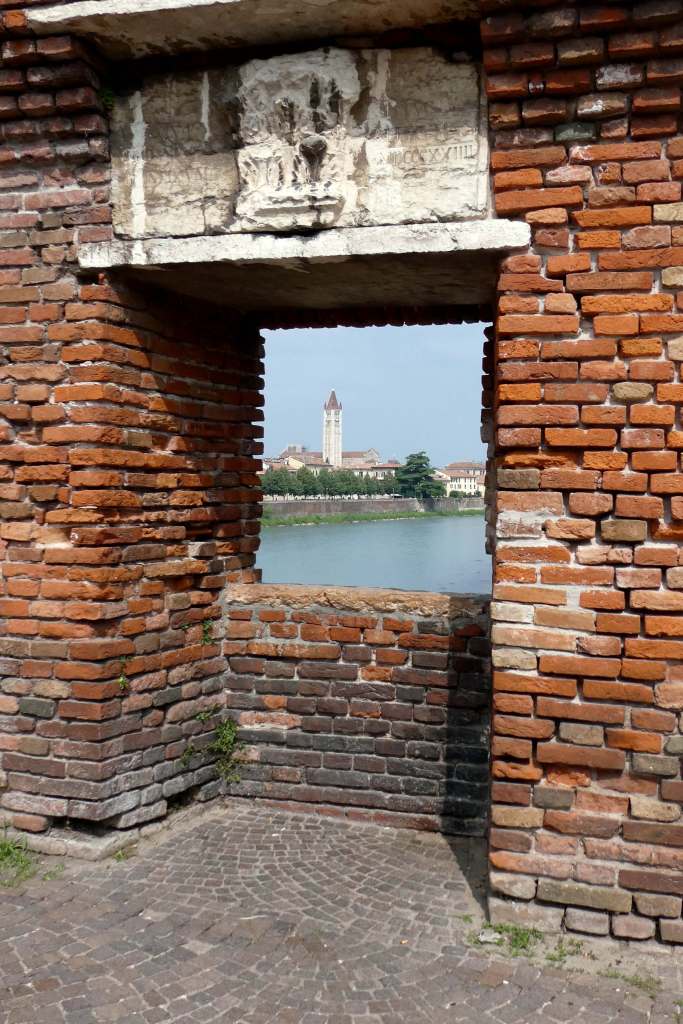
Across the River Adige to old Verona It’s no secret that I love Verona, and just two of the reasons for loving it are a) the city is highly walkable, and b) it is a place where tourists take second place to locals who live and work in its historic centre.
That’s not to say that visitors aren’t everywhere, but as you stroll through the medieval streets, charmed by faded frescoes and hidden gardens, or sit at the foot of an enigmatic marble statue in one of the huge piazzas, you never feel part of mass tourism.
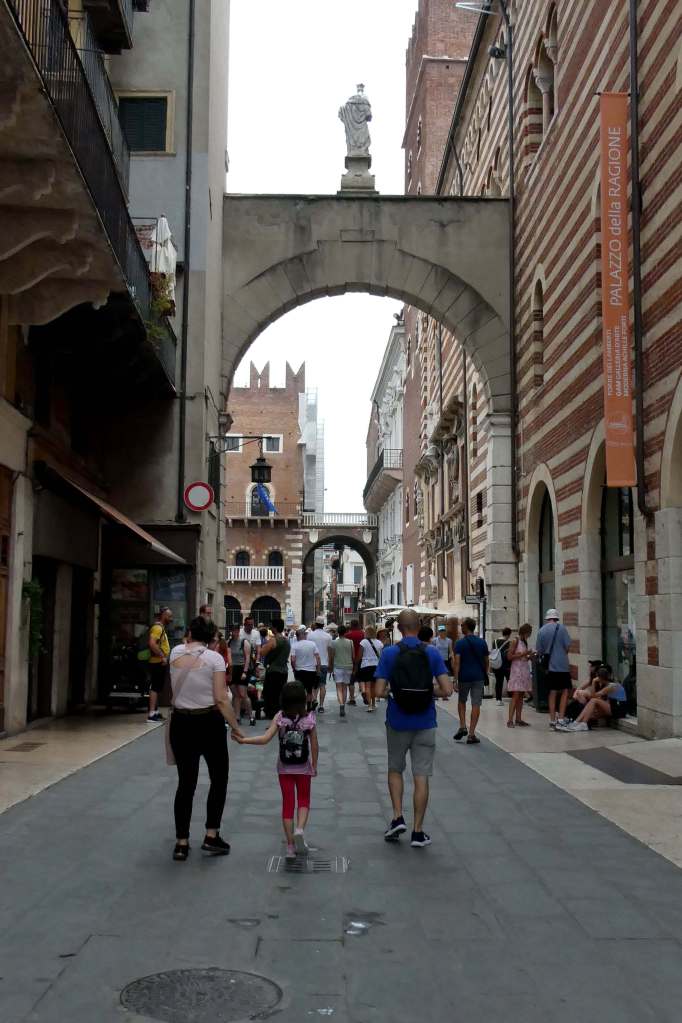
Simply strolling through Verona leads one to magical places, like the splendid Piazza del Signori. Italy’s most famous poet, Alighieri Dante, lodged nearby with the ruling Della Scala family during his exile from Florence in the 14th century, and so the square also answers to the name of Piazza Dante. Surrounded by ancient buildings which played an important role in Verona’s early civic life, whose façades, although faded, are still beautiful, the square still resonates with a sense of medieval life.
Scaligeri, Napoleon and Castelvecchio
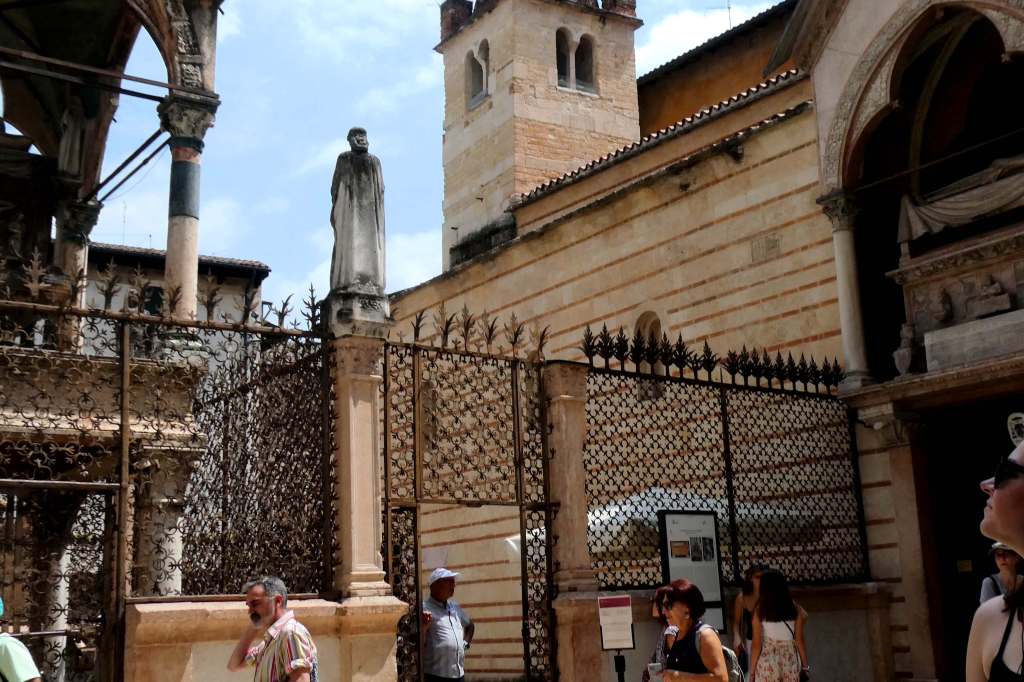
The Scaligeri Family Tombs 
The Scaligeri Family Tombs 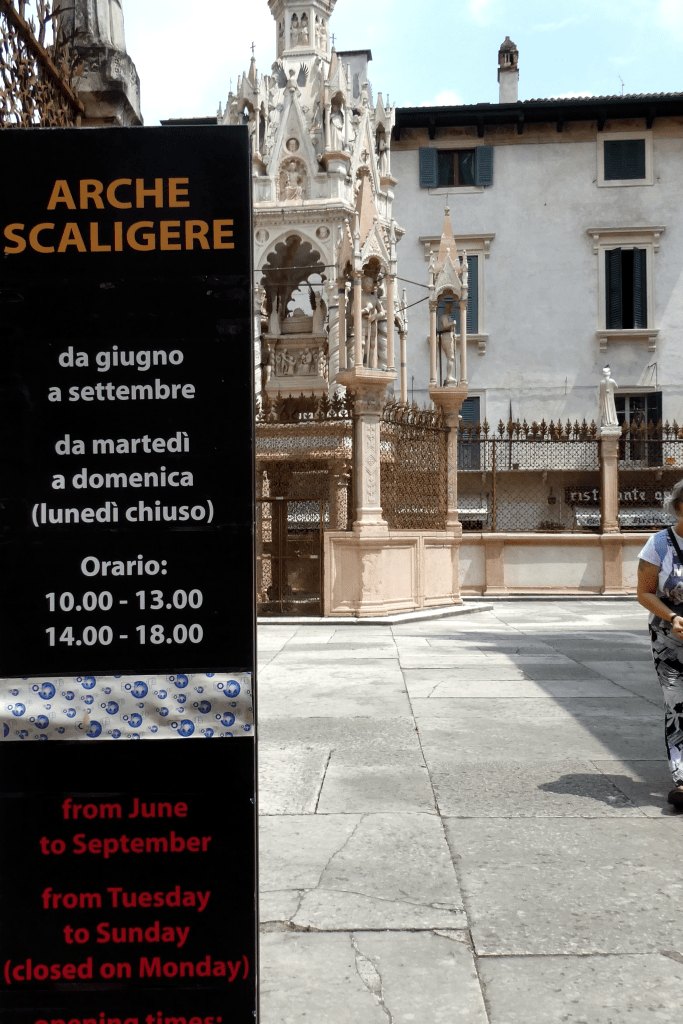
Scaligery Tomb site 
Scaligeri Tomb Above
Church DoorNearby is another tiny square in which can be found the tombs of the Scaligeri family. They dominate the area, massive Gothic-like edifices, some behind a gated courtyard, and one above the church door. Intriguing, certainly, and something not to be mi
More Scaligeri family history can be found at Castelvecchio, best approached along the Adige River and across the bridge into the city proper. Castelvecchio (in Italian ‘the old castle), a red brick building with crenelated walls and square turrets was built by the ruthless Scaligeris in the 1350’s as a home and a fortress. A later ruler also used it as his residence, during his time in Verona – one Napoleon Bonaparte who had conquered most of Northern Italy in the early 1800’s.
During the 1920’s it was converted into a Museum and then in 1985, a renovation project to repair the damage done during the second world war was started by Italian architect Cala Scarpa. The result of that renovation is the splendid red brick castle one sees today the interior of which has been converted into one of the best Museums in Northern Italy.


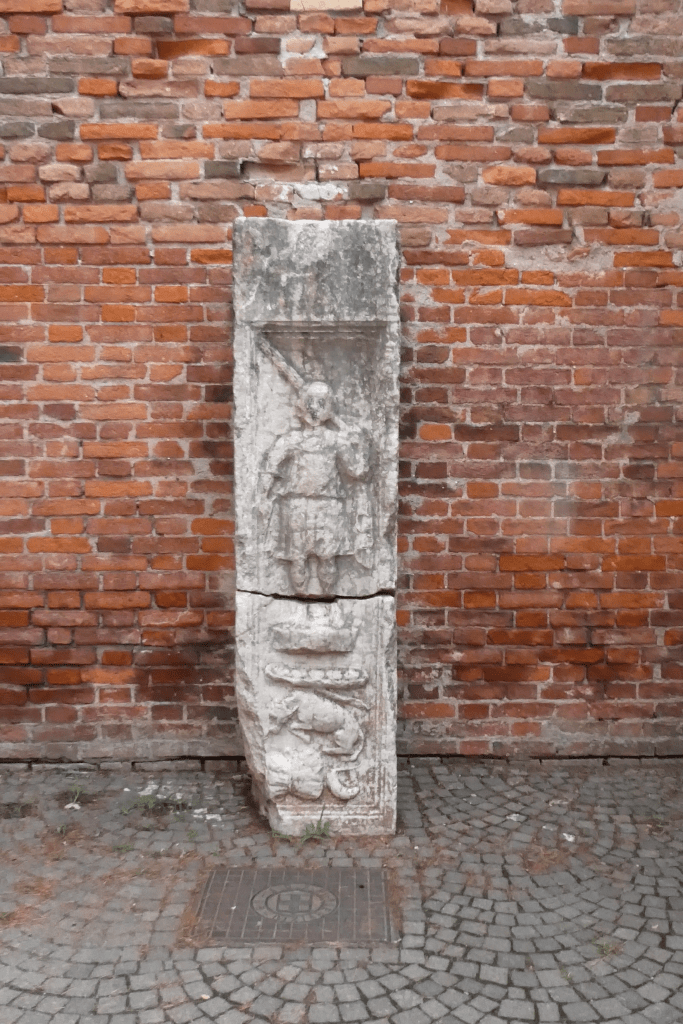
Romeo & Juliet
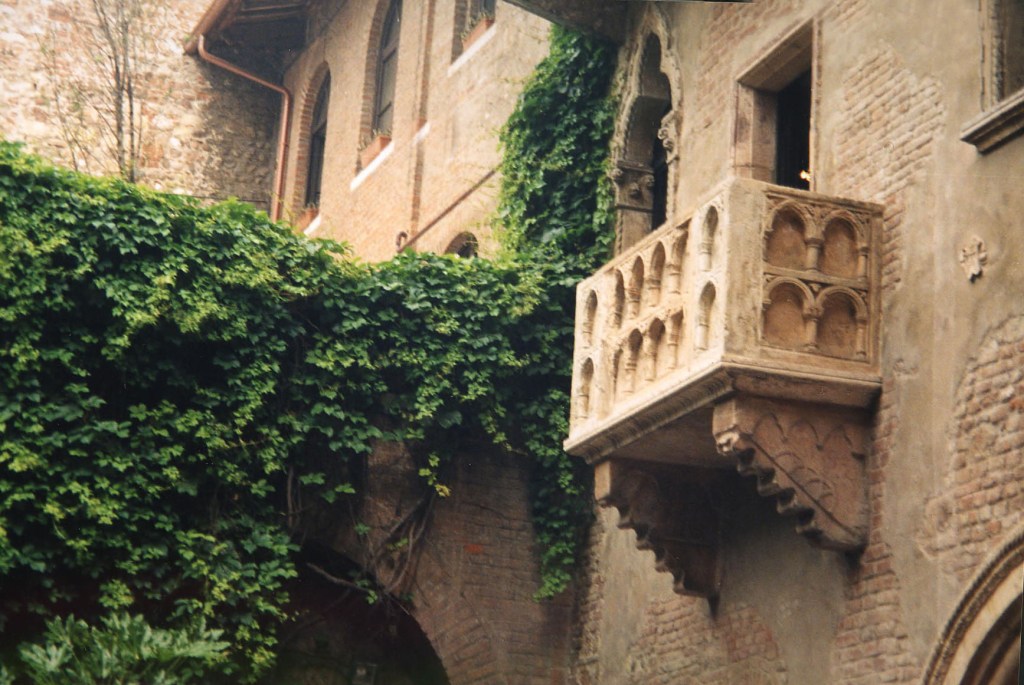
The Balcony 2003 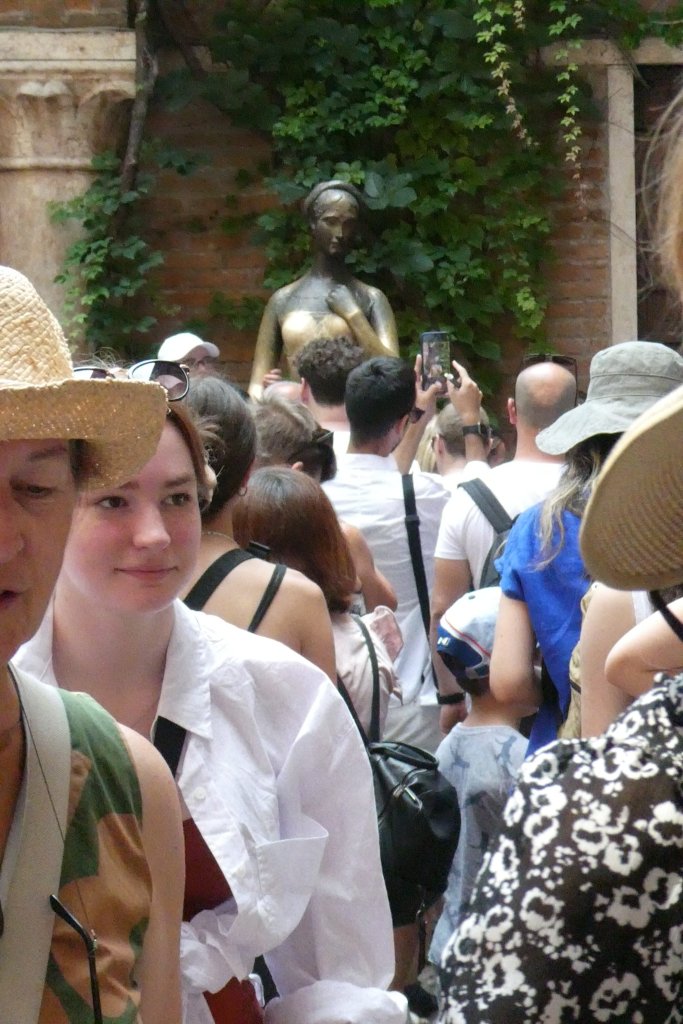
The Crowds Below Juliet’s supposed balcony, 2023 Everyone knows that Romeo & Juliet are fictitious characters dreamt up by William Shakespeare, but that doesn’t stop the crowds pouring into the courtyard of the supposed home of Juliet in Via Cappello, to touch the statue of the young heroine, and to pose on the balcony for a selfie. So many people have touched Nereo Costantini’s bronze statue that her right breast has now been burnished to gold. But even though the balcony you see today was erected only because tourists kept demanding to see the balcony, it is worth a visit even if you are in Verona for only one day. The house once belonged to the rich Veronese Dal Cappello family, and to visit the house and its courtyard gives an idea of how families lived in Verona in the 14th century.

My last visit was some 14 or so years ago, the courtyard then was almost empty, we had time to explore the house and surroundings and even read some of the letters received daily asking for advice. This time, however, the search for the ultimate selfie by the crowds queueing and surging into the small space under Juliet’s balcony was a major distraction, yet I would still return to feel the magic that the place possesses. It is but a short step away from the city’s two major Piazzas linked by its famous shopping street, Via Mazzini.
Lovers’ Locks
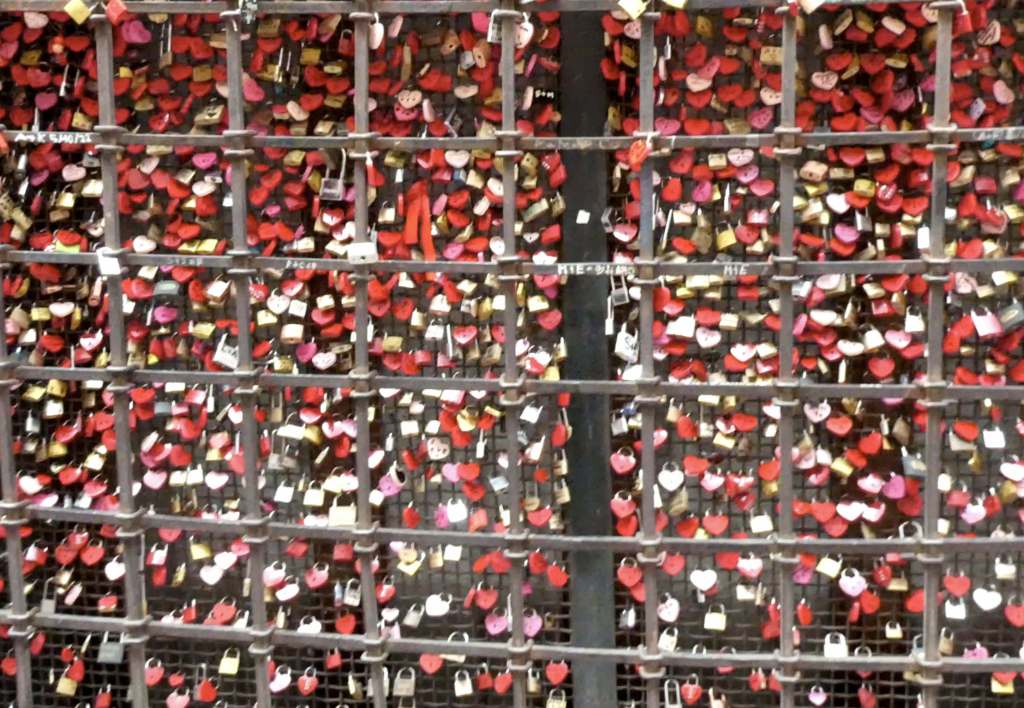
Verona was the first place to have love locks on bridges, something that is now defacing bridges all over the world. Piazza del Erbe and Piazza Bra
Piazza del Erbe, named after the spices that were once sold there, (erbe=spices in Italian), Verona’s most ancient piazza, was ‘the Forum’ during Roman times. It is now Verona’s commercial centre, a hub for shopping, café life, and people watching. Beautiful old buildings surround the Piazza in front of which lively market stalls sell food, spices and household goods, while the traders entertain the public as they have done since Roman times. It is around this area that you will find the prettiest streets and alleyways.

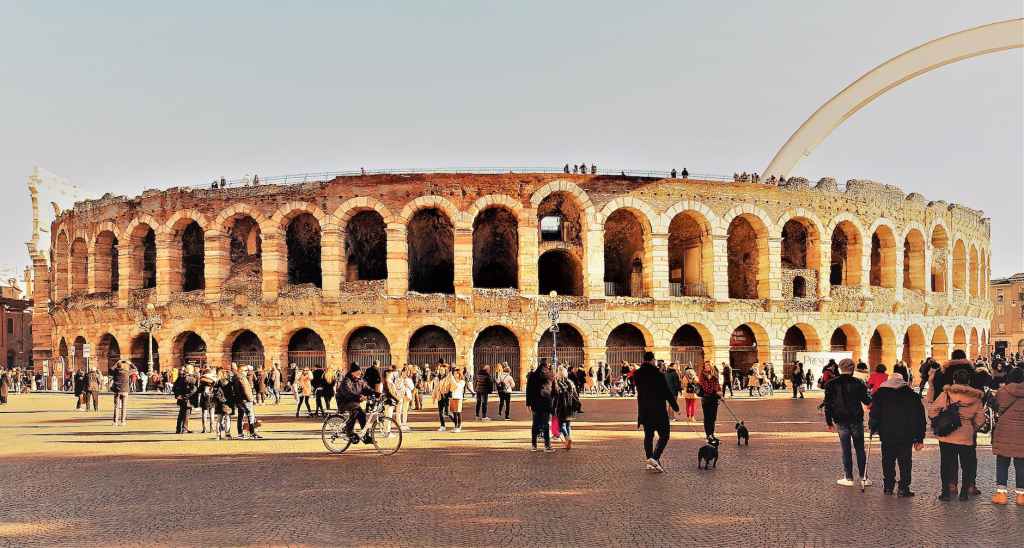
Piazza del Bra The Via Mazzini, a high-end shopping area where the shops all bear famous fashion names, from Chanel to Dolce & Gabbana, links Piazza del Erbe with Piazza Bra, home to the famous Amphitheatre of Verona, usually called The Arena. Elegant ladies with tiny dogs parade down this street which on Sundays can become very crowded when it is time for the passeggiata, the ritual Sunday evening parade when all Italy turns out to display la bella figura.
I kept the best till last. The impeccably preserved Amphitheatre in the heart of old Verona and the city’s most famous site, is deserving of that much abused word, awesome. Rows of arches and curves dominate the skyline and form a centrepiece in Piazza Bra, the city’s largest public square.
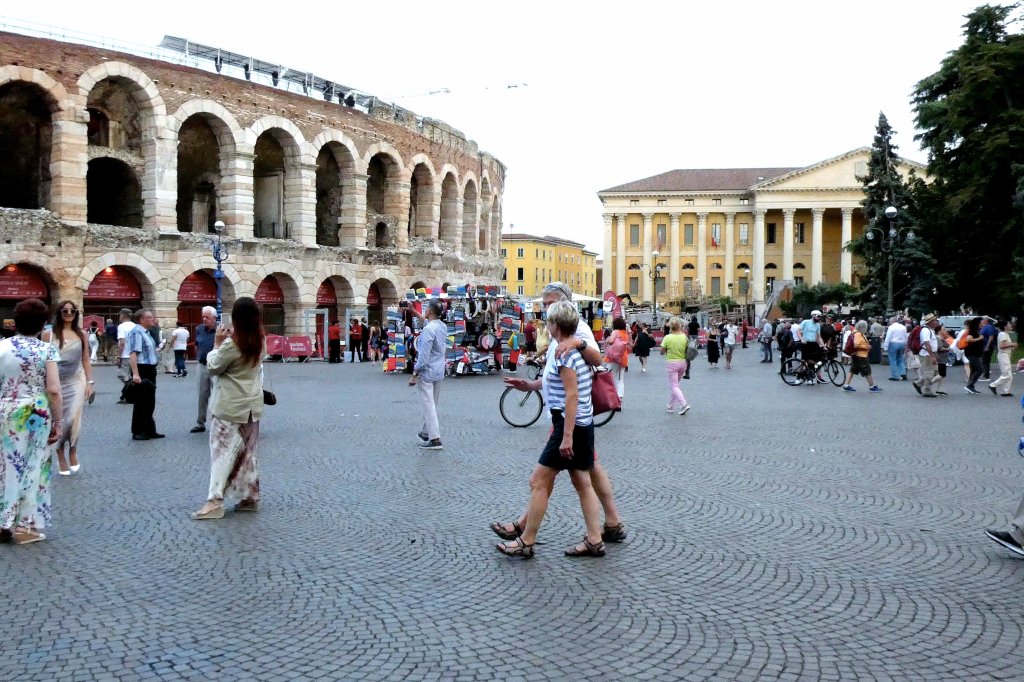
Piazza Bra and the Colosseum 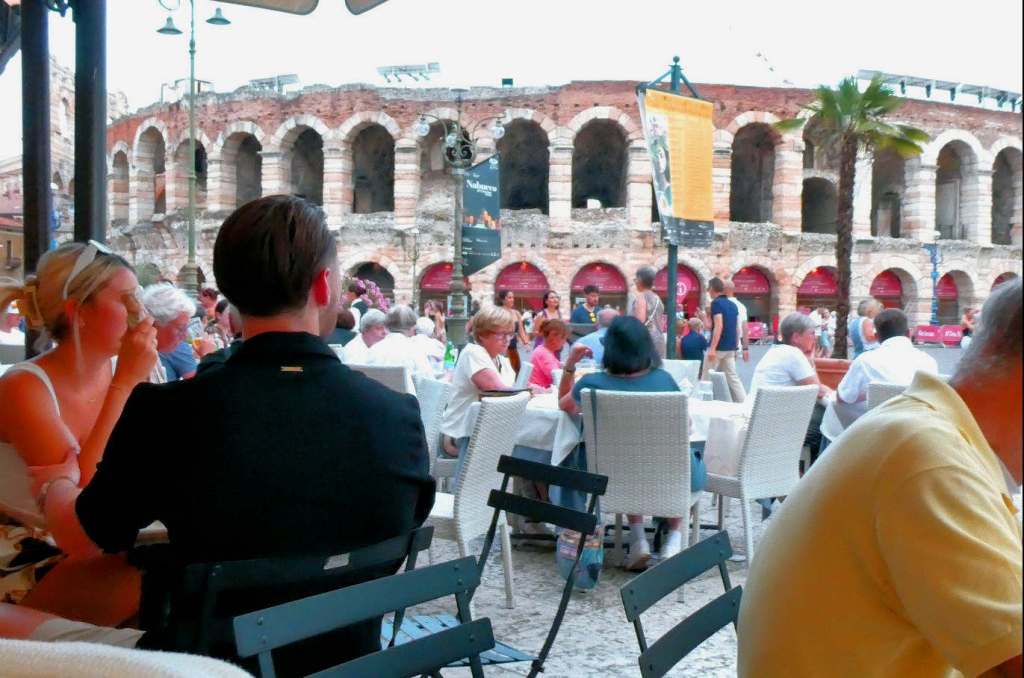
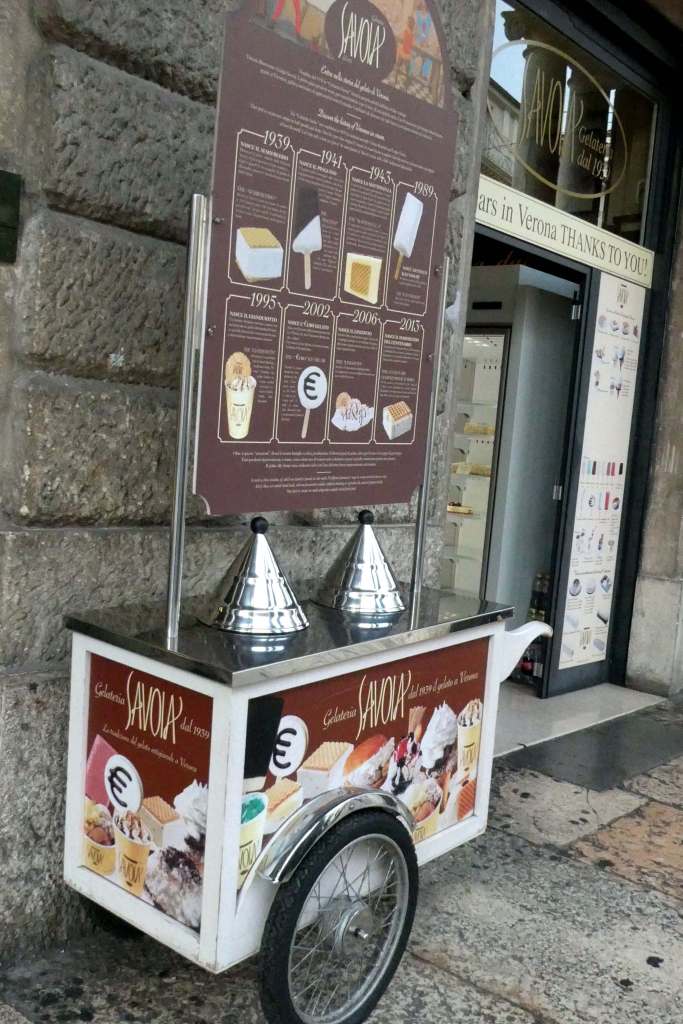
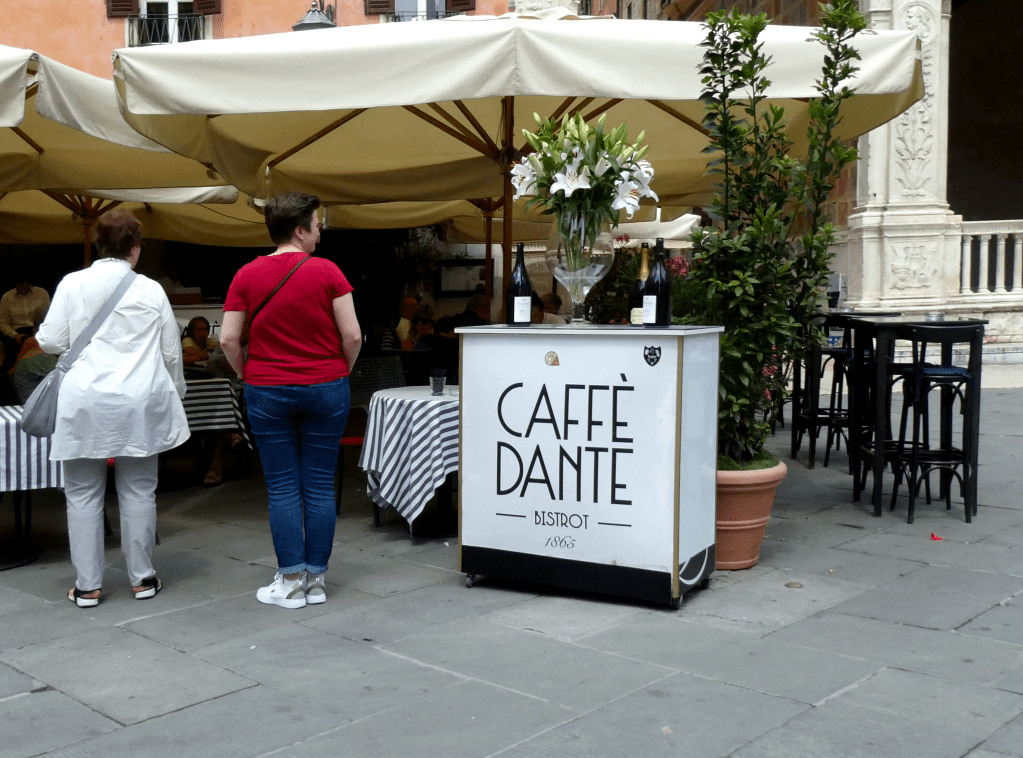
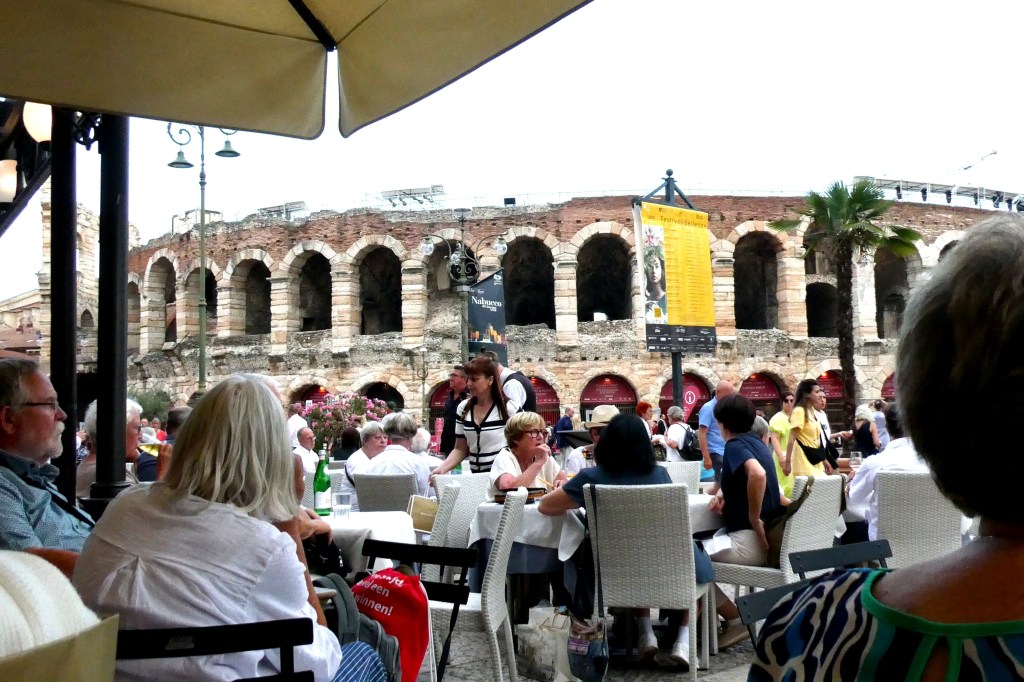
The square is lined with bustling restaurants and imposing buildings, notably the 19th century Palazzo Barbieri, a yellow building with a neoclassical façade that now serves as Verona’s Town Hall. Nearly two millennia old, the Colosseum used to hold up to 30,000 spectators at gladiatorial fights between men and men and men and beasts, who fought to the death on the sandy stage. And this glorious arena is not a dead relic of the past: it still entertains the masses although in a different way. No more are the crowds offered bread and circuses but performances of high art, most notably the world famous Verona Opera Festival which takes place every summer.


Verona is a city for all, young and old, the seeker after history & ancient cultures and lovers looking to re-kindle an old love or find a new one, opera lovers who fill the Arena night after night during the summer, and fans of William Shakespeare who watch his dramas play out under the stars. There’s a jazz festival, a festival of street games, and even a horse fair. As I said, Verona is a city for everyone.

-

VERONA: A NIGHT AT THE OPERA
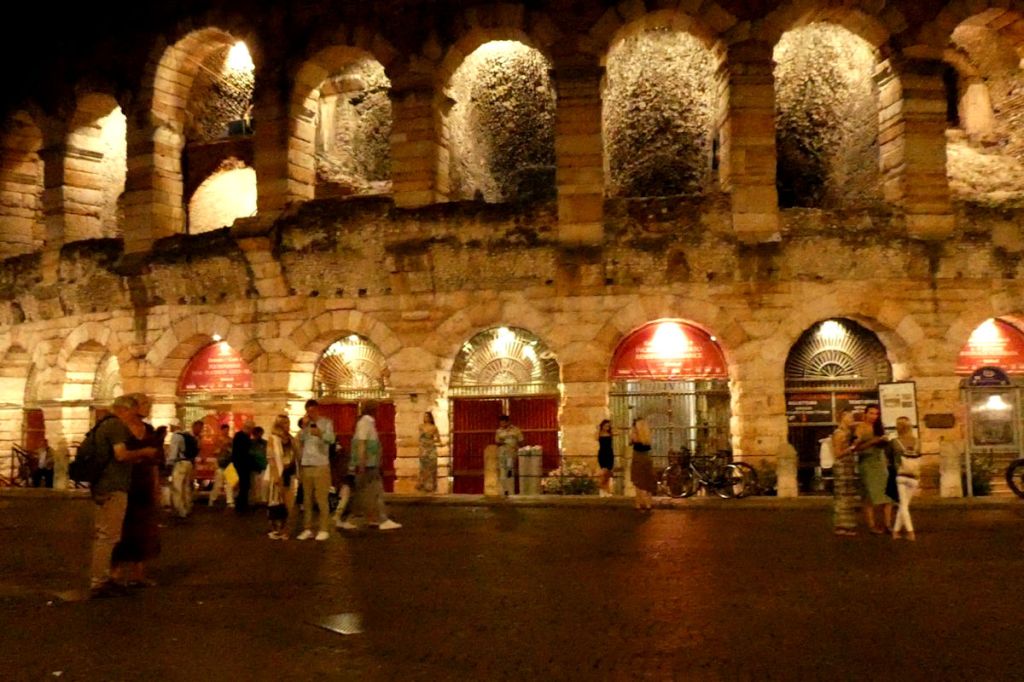
Exterior of Arena We came, we saw and we were conquered. Not just by the city but by the by-product of that city, opera, for we were in Verona for the 100th Anniversary of the performance held in the ancient arena, an arena older than the Colosseum in Rome. In ancient times it held 30,000 people for its circuses and gladiatorial events but as the stage for opera performances decreases the available seating, it now has places for only 22,000.
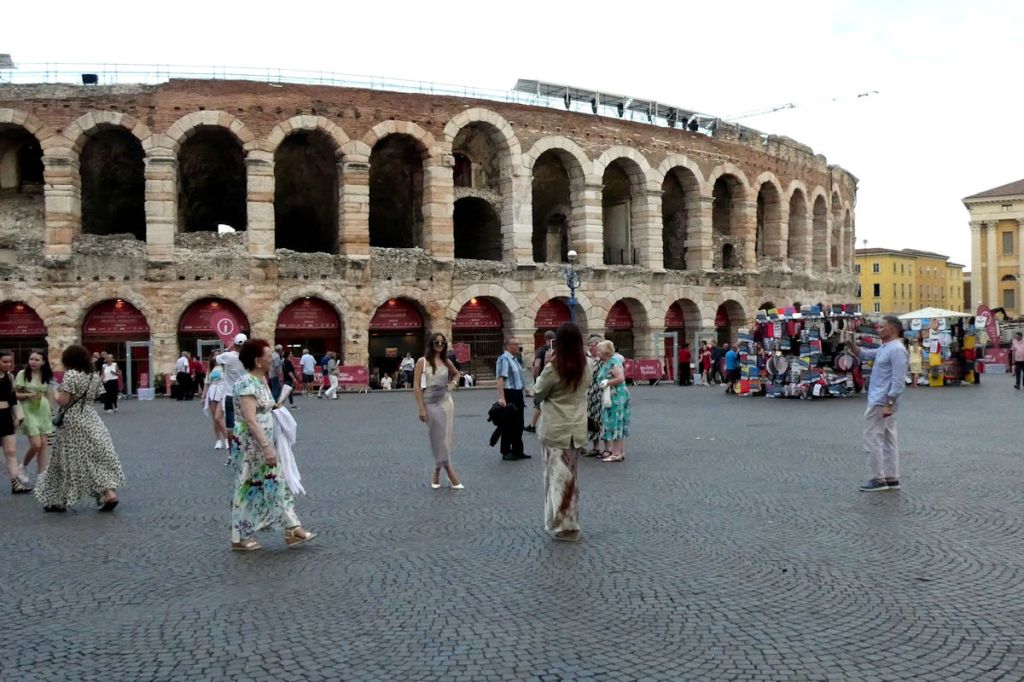
Exterior of Arena early evening We came to Verona, my friend Jane and I, for Giuseppe Verdi’s Aida, the signature opera of the city. Although there had been some productions during the 1850s, it wasn’t until 1913 that opera began in earnest in the Arena, due to the zeal of the famous Italian tenor Giovanni Zenatello and the impresario Ottono Royato. The first opera to be produced in the arena on 10th August 1913 to mark the centenary of Verdi’s birth in 1813, was Aida, and since then, Aida opens the yearly festival of opera.

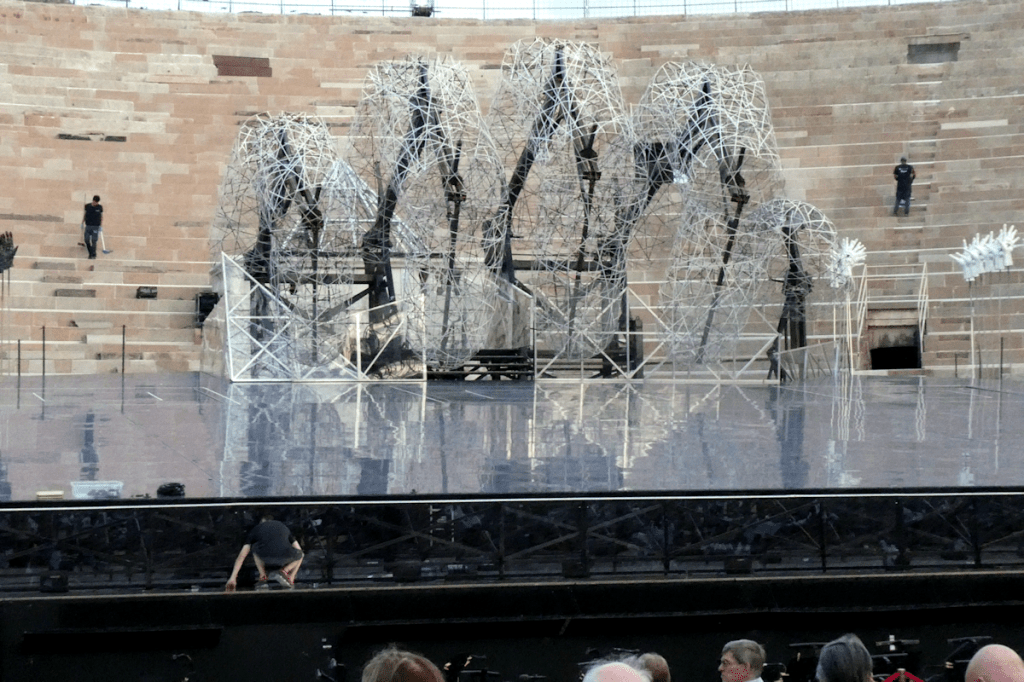
The moon has appeared as the audience awaits the evening’s performance As dusk settled over the amphitheatre and a pale moon floated in the velvety blue sky above, anticipation was high. We’d watched the stage-hands sweep the tiered stage, watched the lighting engineers fiddle with the lamps, and wondered at the meaning of the objects that decorated the set, crystal pyramids, giant hands, and lighting designs which, although technologically modern, blended easily into the ancient Roman amphitheatre. Later I read that the giant white hands that dominated the stage represented power.


The arena was full, from the front padded seats to the tier upon tier of stone seats (no back rests but with hired cushions for comfort), and the audience milled around taking photographs, chatting in groups and in Italian fashion, jumping over seats to shake hands with old friends before the performance began at 9.30 pm. It was an audience as enthusiastic as any I’d ever seen – and noisier than most.


Then suddenly the orchestra was filing on to rapturous applause and the opera was about to begin.

There was a hush as Alexander Vinogradov as Ramfis began singing, a hush that continued throughout the First Act and every subsequent Act. I have never, ever, known an audience be so quiet, enraptured even, so receptive of the story being told in voice and music from the stage, so totally engrossed in what was happening in front of them.
I can’t even begin to guess how wide the stage was: one’s eye just couldn’t take it all in at once, yet somehow, the war-stricken world of Aida materialised in an intimate setting on the vast arena stage, as over 300 performers – soloists, chorus members, dancers and mimes – cast their spell. Their costumes were inspired by Paco Rabanne and Capucci, silver robes and helmets radiating brilliance across the expanse of the tiered stage.

The gigantic wire hands which towered over the stage and had puzzled us when we first saw them now moved menacingly or soothingly as the music and the story demanded. Stefano Podo’s avant-garde production included LED-laser lights that formed shapes and changed colours from red to blue to green, to great effect, plus impressive lighting effects at the back of the arena as actors brandished what looked like light rods used to great effect during the judgment scene.

And as for the Arena itself! Built in AD30 out of white and pink Valpolicella limestone (a few repairs since then), the arena has perfect acoustics (amplification was only brought in in 2011). In its heyday it hosted gladiatorial fights and blood sports, horse races and medieval jousts but nowadays the crowds come not for blood and gore in the sand but to be transported to another realm by the beauty of the human voice.
I’m failing as a writer here because I can’t describe what the experience of seeing and hearing the opera was like; it was a spectacle that needed to be seen in order to understand the power it had. I had been to the Arena years ago when the stage effects for Aida included ancient Egyptian scenes to rival those of Cairo. We were younger then, my husband and I, and we sat on the stone seats way, way up on the terraces. The excitement of opera under the stars past midnight (it starts about 9.30 pm and finishes, usually, around 2.00 or 2.30 am) – meant that I wasn’t aware of any discomfort.
But the 2023 100th Anniversary Performance was even better, it was uncomplicatedly magical. Possibly helped by the fact that age now demands a padded seat and some space so we had expensive seats front centre (still nearly half what a similar seat would cost at Covent Garden). I would recommend paying that bit extra for the comfort if you are aged from 30 upwards!

Just across from the Arena after the performance And then jostling for seating at the café opposite the Arena with others who’d shared the experience, sipping a glass of wine at 2.30 am when the heat from the ochre-coloured stones was still intense, not wanting to go back to the hotel, and feeling part of something great and grand was somehow life-affirming.
Was it the settings? The music? The atmosphere? Maybe some of the silver dust drifted from the costumes and covered us with its magic? I don’t want to be a third-rate critic so I’ve found a clip on You Tube with a selection of scenes from the performance in Verona and if there are any opera fans among you, you might like to take a look and enjoy what we enjoyed.
Factfile:
Purchase tickets directly online, at www.arena.it/buy. You can check the availability of seats by consulting the seating plan, which can be found on each performance date. You will be asked to give a password so have one ready. If you want to book by phone, call +39 0458005151 Monday to Saturday 9 am to 6 pm.British Airways flies direct to Verona.
-
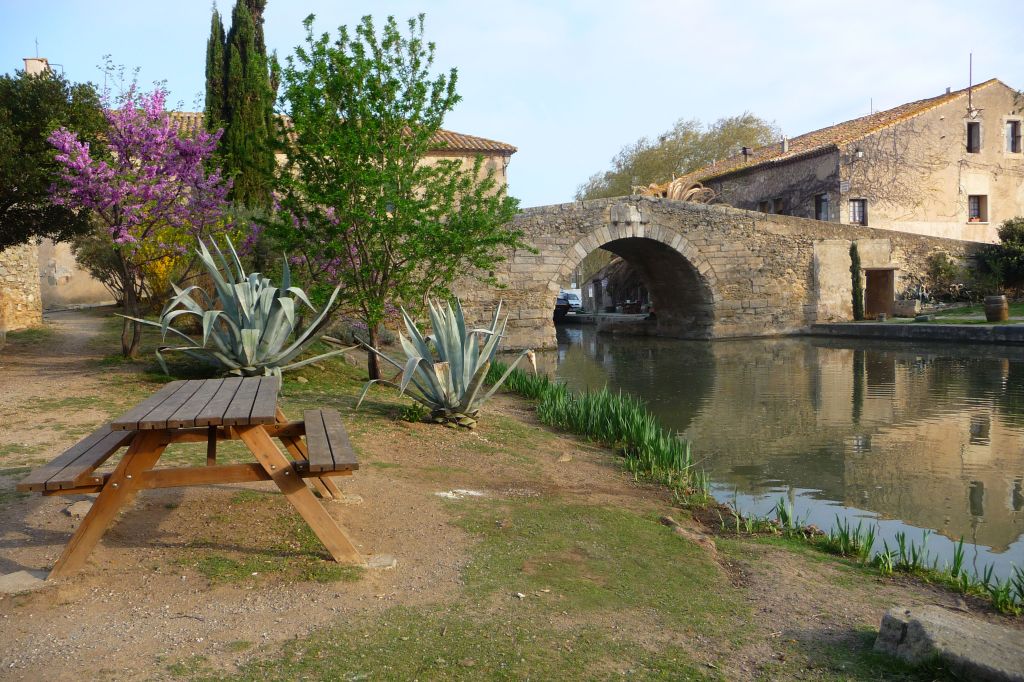
Lens Artists Challenge: Picking Favourites
Linked to Toonsarah who is hosting this week’s Lens Artists Challenge
It is with great trepidation that I sit down once more to enter one of the photographic challenges on the site, but I’ve been looking at various entries in different categories and especially Sarah’s today so here I am. I haven’t posted for a few months now but I have managed to dip in and out of the site and kept up with what’s been happening.
I said “with great trepidation” and I meant it, because after seeing some of the entries in today’s challenge and some of those from former weeks, I realize how far short of “artistic” my work falls. Being more interested in the words than the pictures I’ve never looked really closely at my images, or taken enough time to get them right.
Apologies over. Here are a few of my favourites, and I stress the word favourites as I can’t claim they are great!

- This is one of the monuments to World War ll spotted along the coast of Normandy. I do like this picture mainly because of the sky, the clouds were wonderful on that day and seemed to change shape every few seconds so I was lucky to get them just when they looked especially good.
I didn’t get to know the Normandy coast well until a few years ago when, with a friend, I spent 10 days touring the area. I loved the horses trotting along the beach, their passengers snugly wrapped up in carriages behind them, the serious tourists with their maps and photographs of relatives who landed on these beaches during WWll, and the fact that the food in Normandy was as good as I remembered from many years back. And I loved the fact that the museums and monuments, cemeteries and commemorative parks are still there to tell the story of what happened in France between 1939-1945.

The Library of Celsus at Ephesus, Turkey This is Ephesus in Turkey. It’s a print taken probably about 30 years ago and yes, it did win a prize.
I don’t think it’s a great image but I think it does show the magnificence of that place and when I look at it I can still remember my awe as we walked in and faced this extraordinary facade.
Ephesus was an ancient port city lying just 80 km from Izmir, and whose well-preserved ruins are in modern-day Turkey. Once considered the most important Greek city and the most important trading centre in the Mediterranean region, it survived multiple attacks and changed hands many times.
Today it is one of Turkey’s most significant ancient cities and it was added to the UNESCO World Heritage list in 2015.
Ephesus came to prominence under the ancient Greeks and became a city under the Romans in 133 BC and the capital of Asia Minor in 27 BC, seen as its historical turning point as it then became second in importance only to Rome.
Ephesus is also important from the point of view of Christian history in that St. Paul wrote his “First letter to the Corinthians” from here, St. John wrote his gospel here, and it is believed to be the final resting place of the Virgin Mary.
The facade of the library of Celsus which looms over the city and which you see above has been very carefully reconstructed from original pieces. It was originally built in 125 AD and Celsus is buried in a sarcophagus beneath it.
Apart from the facade of the library, there are many impressive ruins to see in Ephesus. Allow at least 4 hours to see it all, the amphitheatre (largest in the ancient world), the Odeon with its Corinthian-style pillars made of red granite, the 2nd century Temple of Hadrian, the aqueducts and the Agoras.
Sadly, Ephesus died, by reason of silt building up in the harbour to the point where no ships could reach the city. Without ships, trade died, and without trade the city died and was abandoned.

Torii Gate at Miyajima, Japan I have so many Torii Gates in my files that the problem was picking out the one I like best but then the problem was, do I want one with a boat, with a beach, or set in a forest? In the end I decided on this misty morning scene.
I think everyone has seen images of Torii gates, the most famous of which is probably the above gate near Hiroshima, but there are many dotted around the seas, all calling out for a photograph.
A Torii gates represents the boundary between a sacred shrine and the human world. Once you pass through the torii gate you have entered the sacred, special space.
Originally Torii gates were white, but now they are mostly painted red because the colour symbolises vitality in Japan and it is believed red gives protection against evil. (It is also said that as red paint contains mercury, the gates are preserved for longer – practical as well as spiritual).
White was the original color of torii gates which were more common than red ones until the arrival of Buddhism in Japan. After the separation of Shinto and Buddhism was officially implemented in the mid-to-late 19th century, some shrines started to paint over their red torii gates with white again, but they are fewer in number than the red.
Although the most photographed appear to be those that are located in the waters, torii gates appear in many inland spots such as the base of famous mountains, or along forest routes. These gates are said to embody the deity which is believed to exist in nature, sacred mountains and the ocean.
If you do come across a torii gate on your travels in Japan, as a mark of respect and if you wish not to offend your hosts, it is a good idea to bow before entering through the gate.
Linked to Toonsarah who is hosting this week’s Lens Artists Challenge
-
Caerleon – The Sculptures
Caerleon town, just five miles from Newport in Wales, is a pleasant, charming little town of mostly Georgian houses, narrow streets with good shops and some excellent restaurants. A historic town, famous for its Roman amphitheatre and the Roman Museum, it is easy to spend a good couple of days here just enjoying the fascinating history of the place. See my post Camelot in Wales.
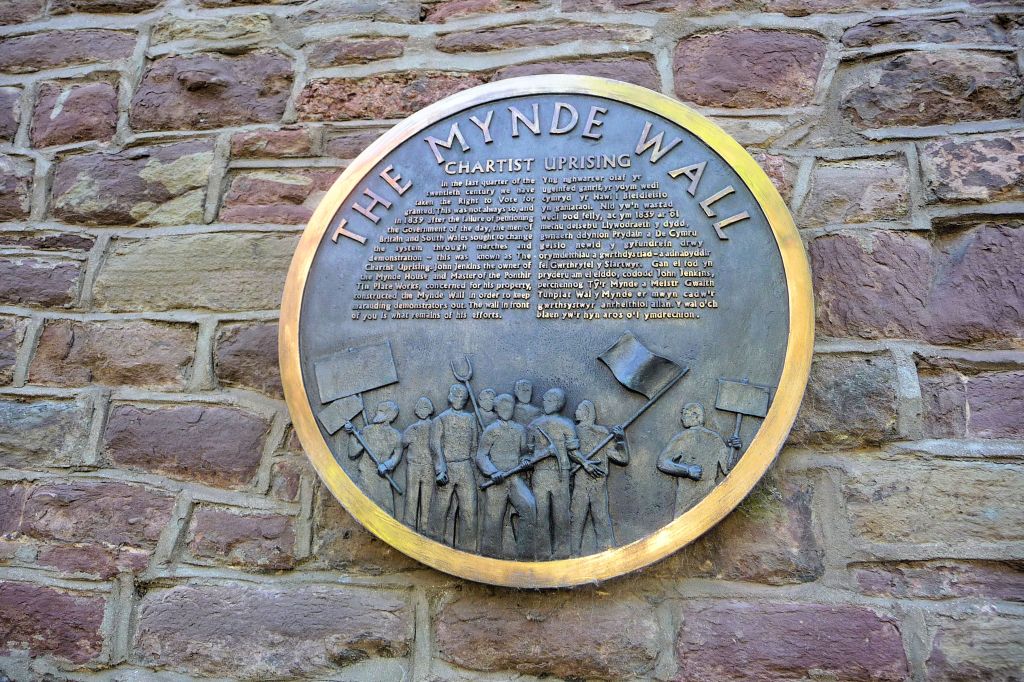
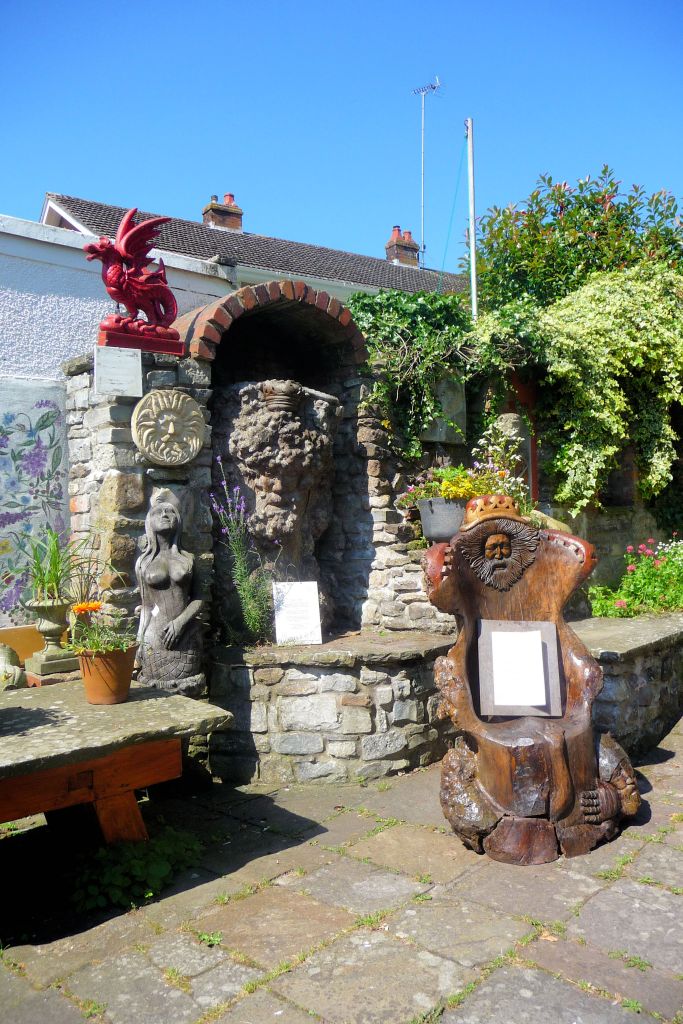
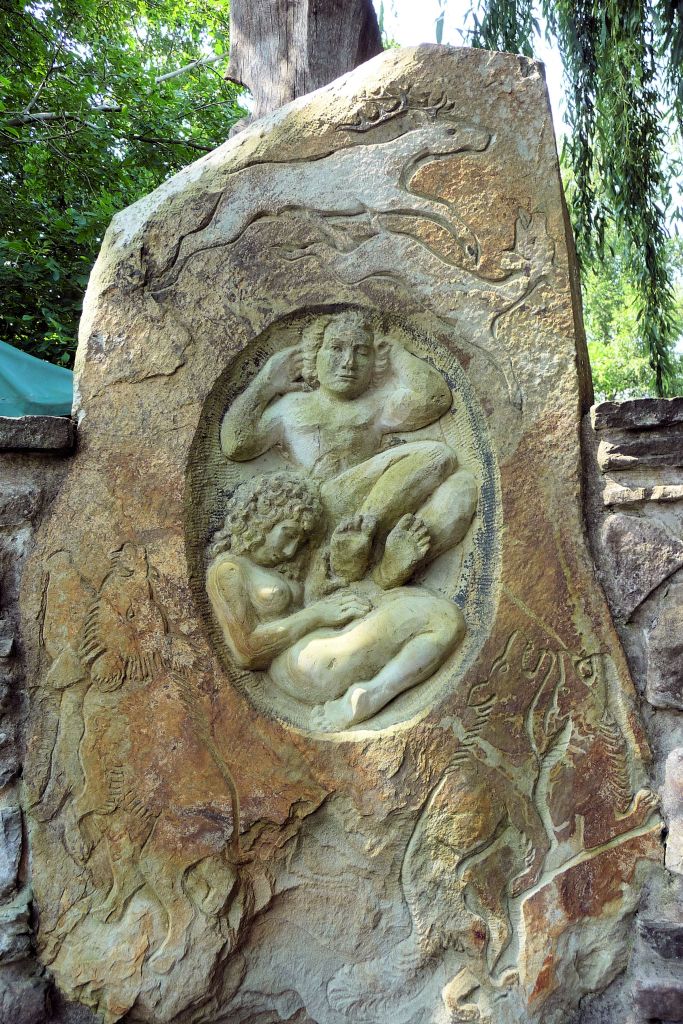
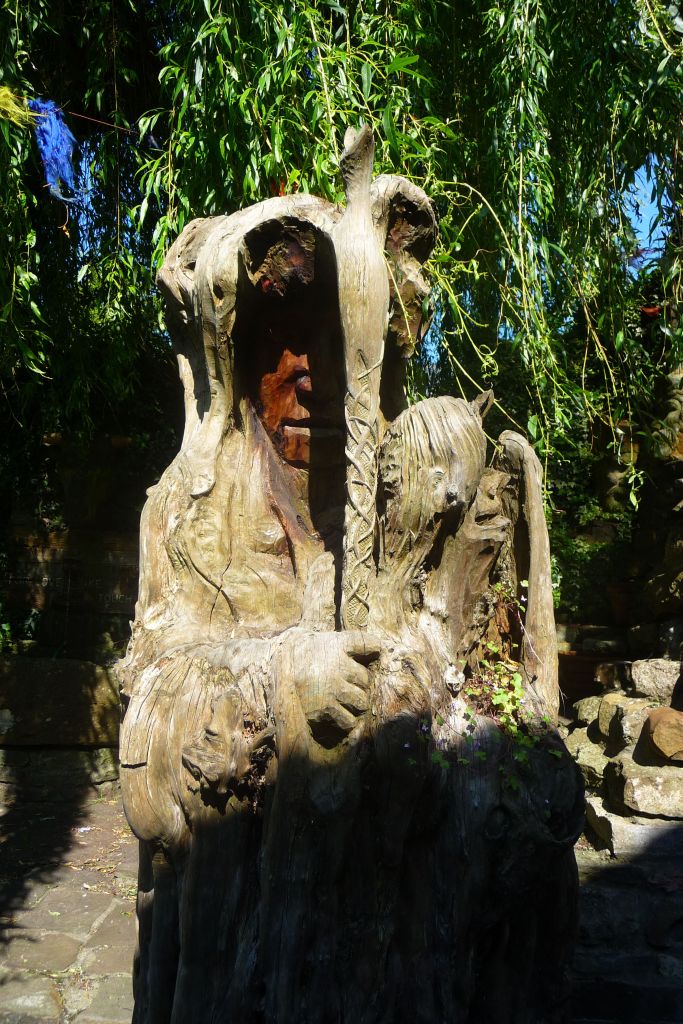
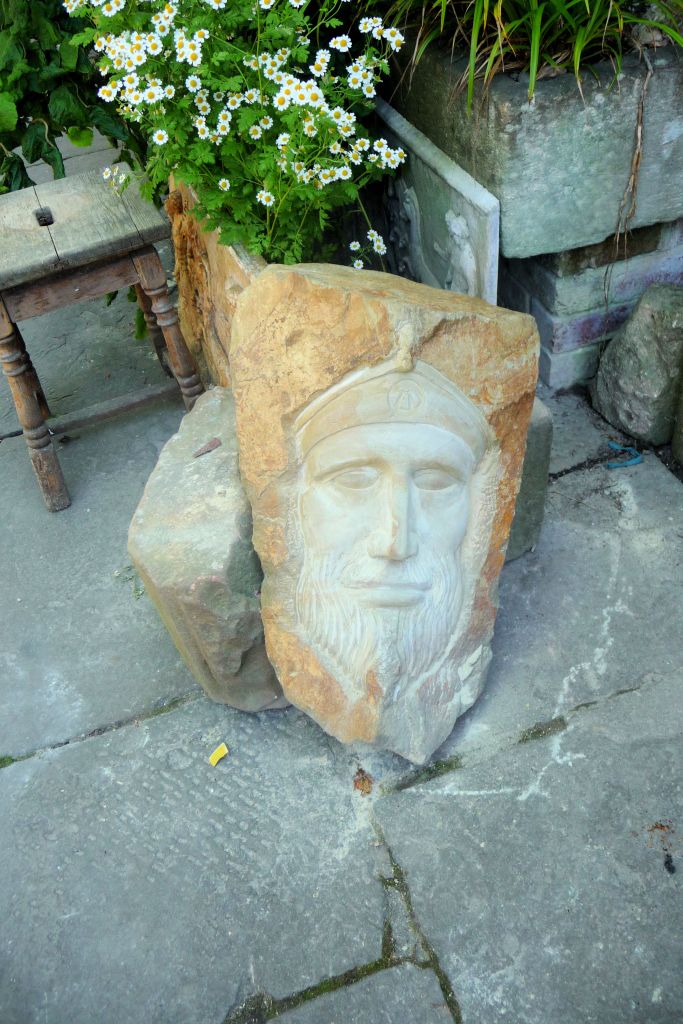
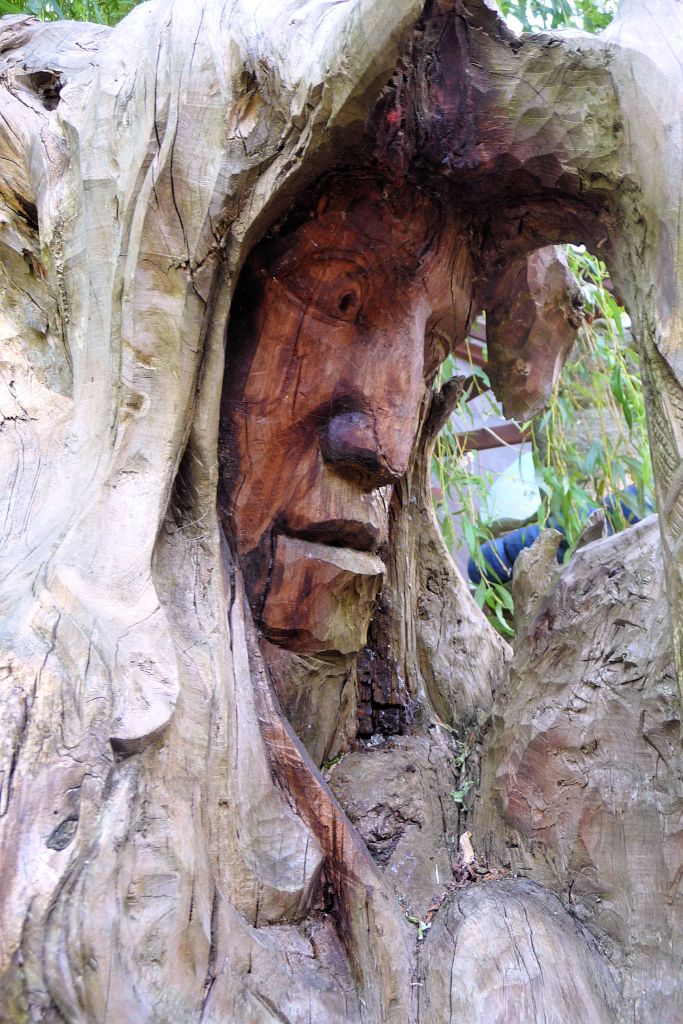
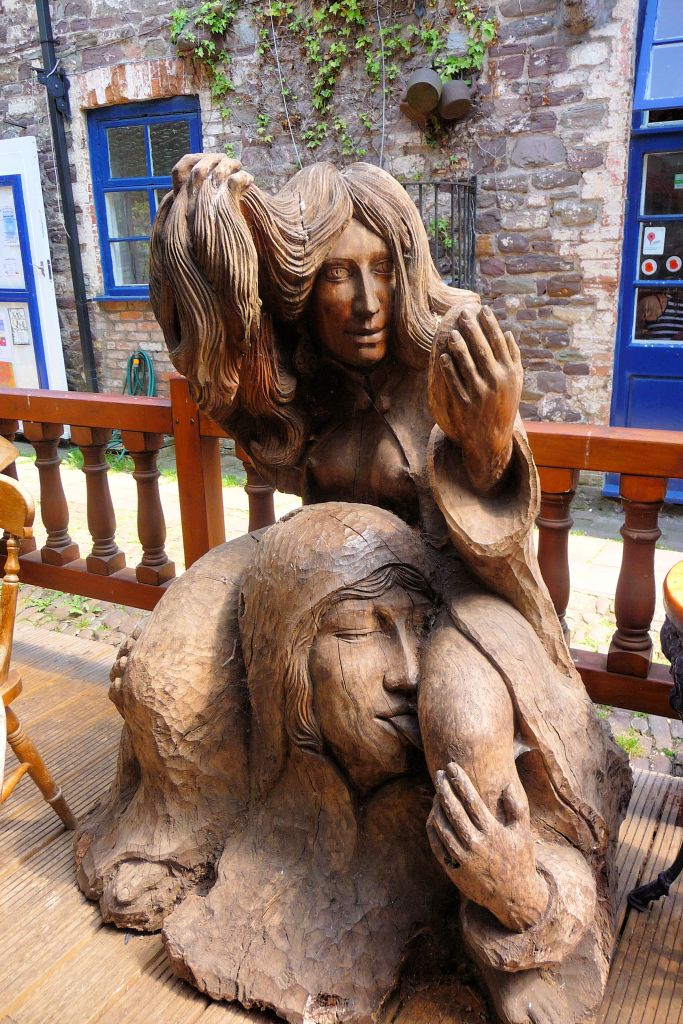
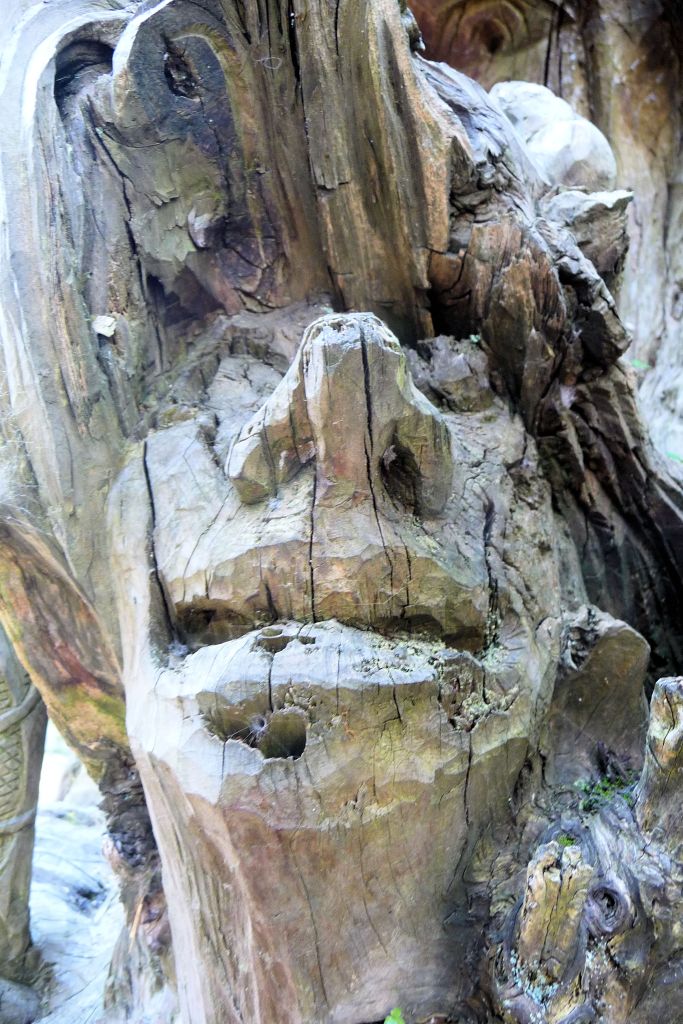
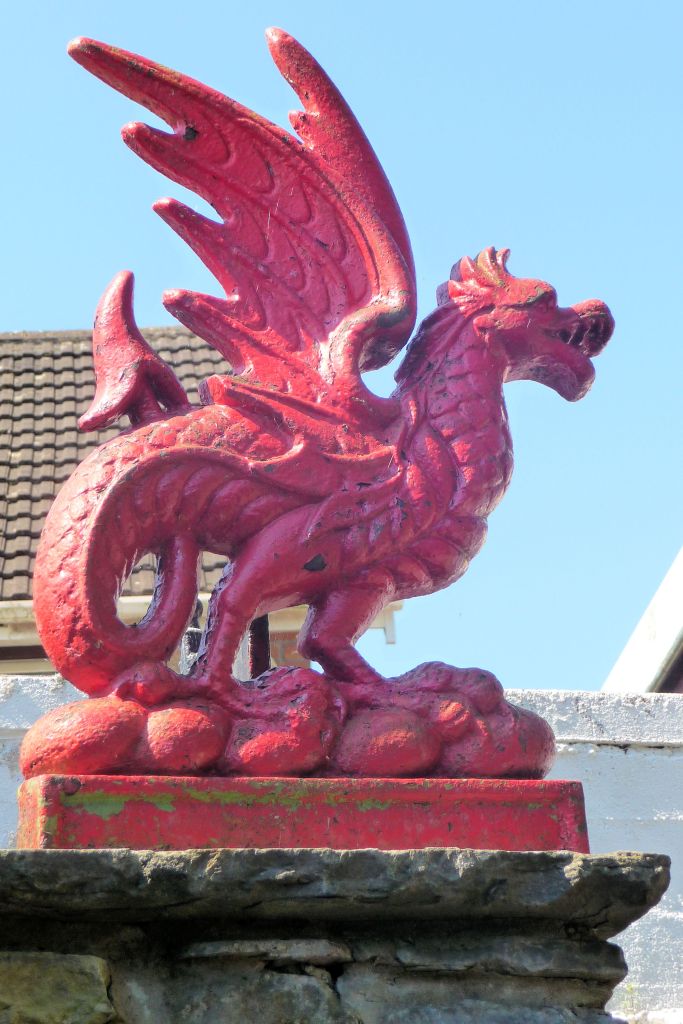
Views of the town and the River Usk at dusk But Caerleon has more to offer than ancient history. Just off the High Street you can walk through a reconstructed arch of the main Roman gates, across cobblestones and into an eighteenth century walled garden peopled with sculptures of King Arthur, Merlin, Mordred and Morgana, and, at 44 feet long – the world’s largest love spoon. Alongside these carvings of mythical figures are carvings of characters from classic Welsh folktales from The Mabinogion, a collection of sculptures that has no equal anywhere in Wales.
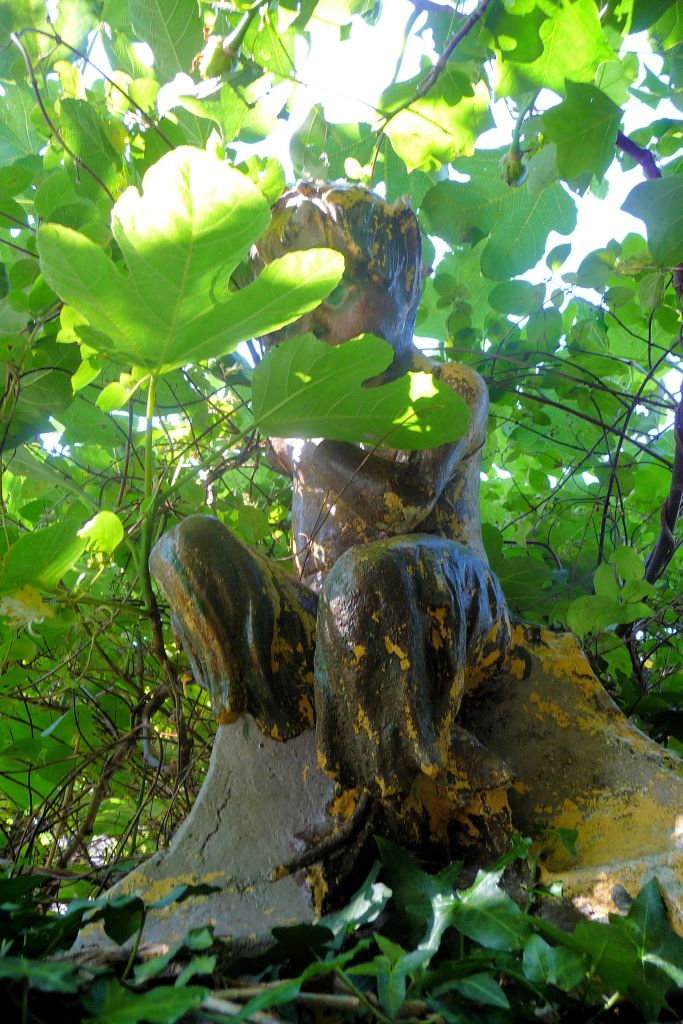
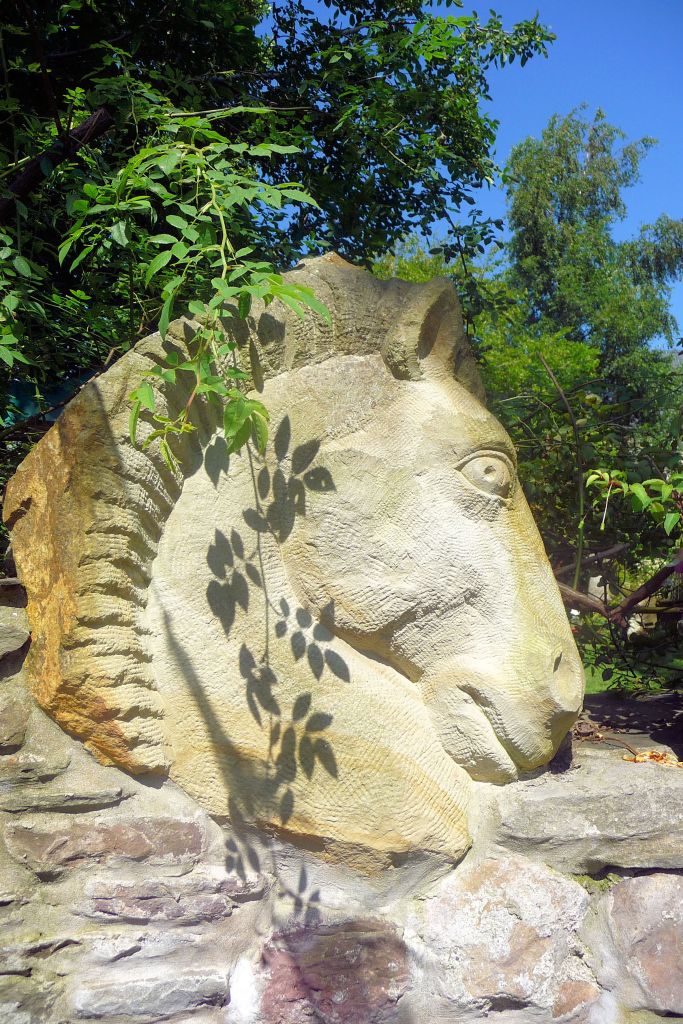
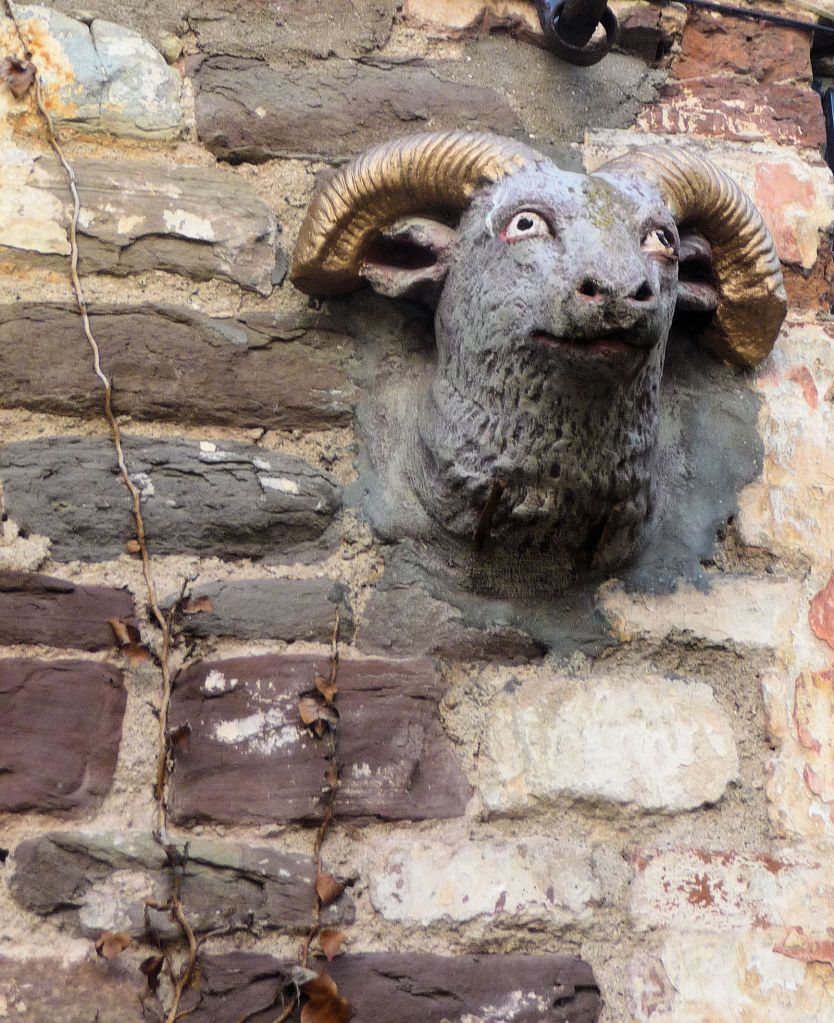
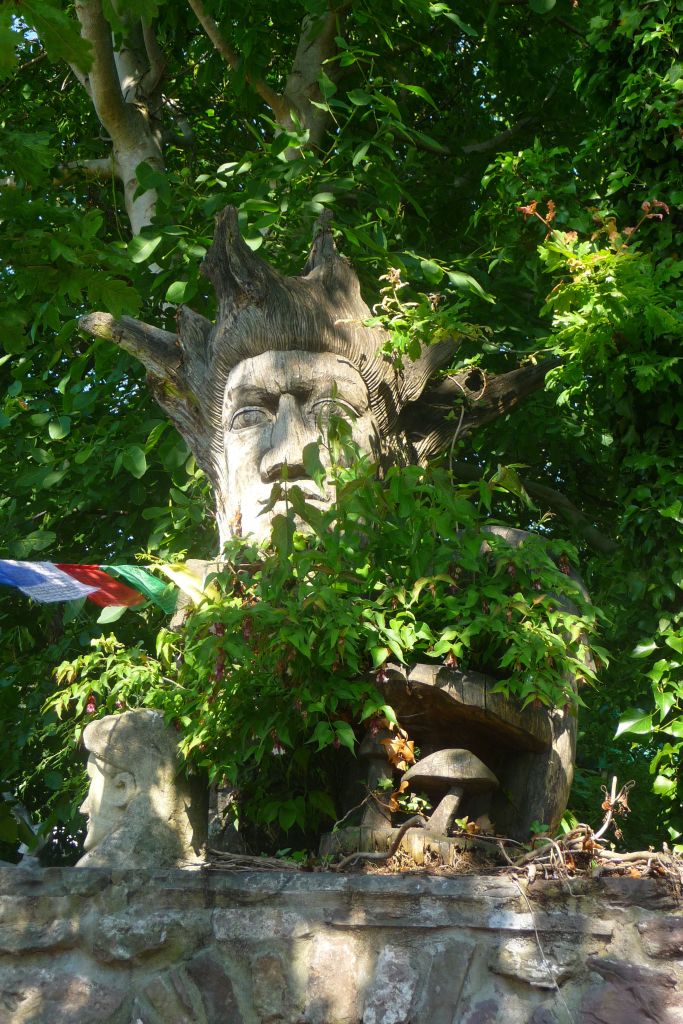
Nymphs, fauns, fictional figures, a Welsh dragon and an Irish Patriot, Daniel O’Connell Caerleon has FFWRWM

Lifesize Head So here, in the heart of Caerleon town, is Ffwrwm Arts where people can meet, sit and talk, shop, view an exhibition, have holistic treatments, enjoy fine arts, eat or even join a workshop. And all around you are wonderful carved works of the imagination. If you’ve ever wondered about the Welsh myths, this is the place to find out exactly what they mean.
Arthur’s Throne and a description of same The range is eclectic, the themes bookish and mythical.
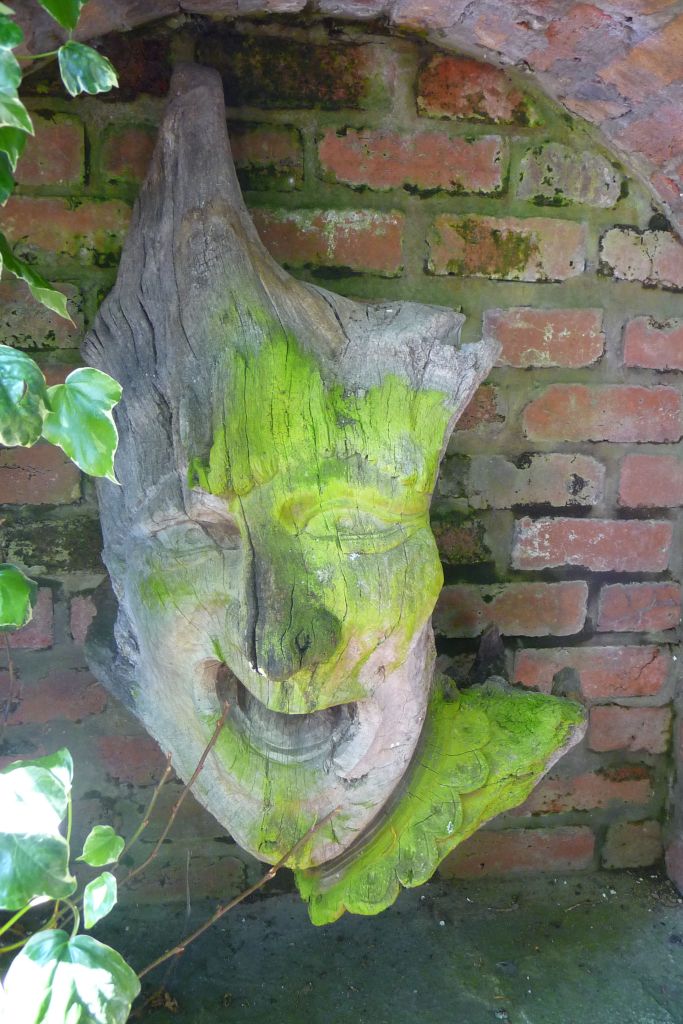
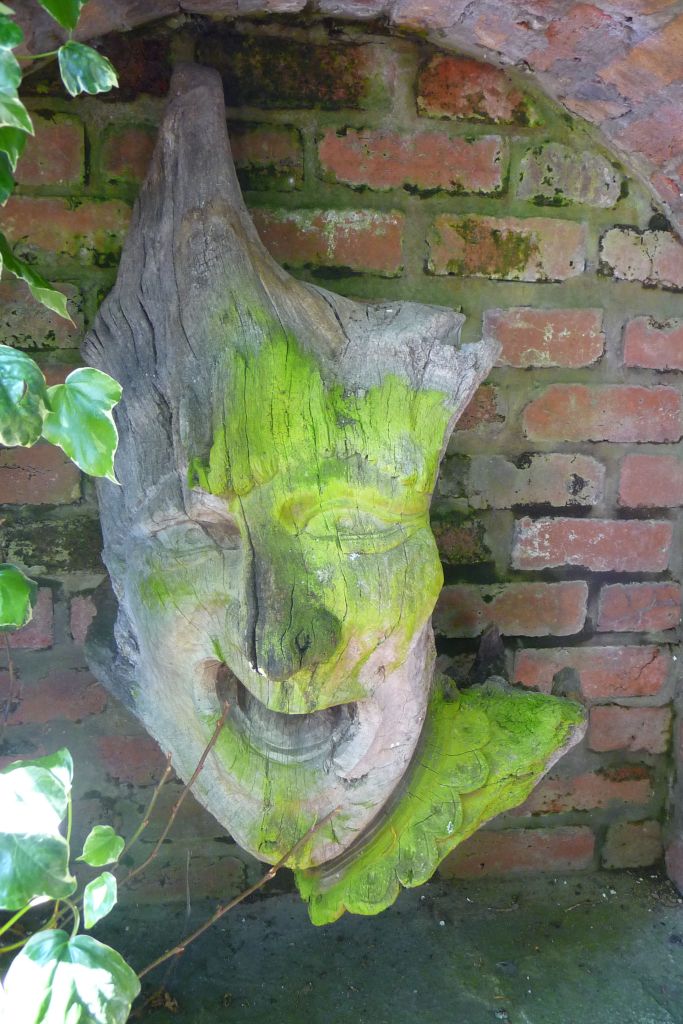
The Green Man. I’ve never felt comfortable with the Green man and once had to dispose of a pendant I’d been given as a present because it made me feel bad. True. All so very different but all giving food for thought. There are seats around on which to sit to contemplate the art, cafes and restaurants serving great food and, honestly, what more could you ask for? I call these my grotesques but I’m not sure if they are. 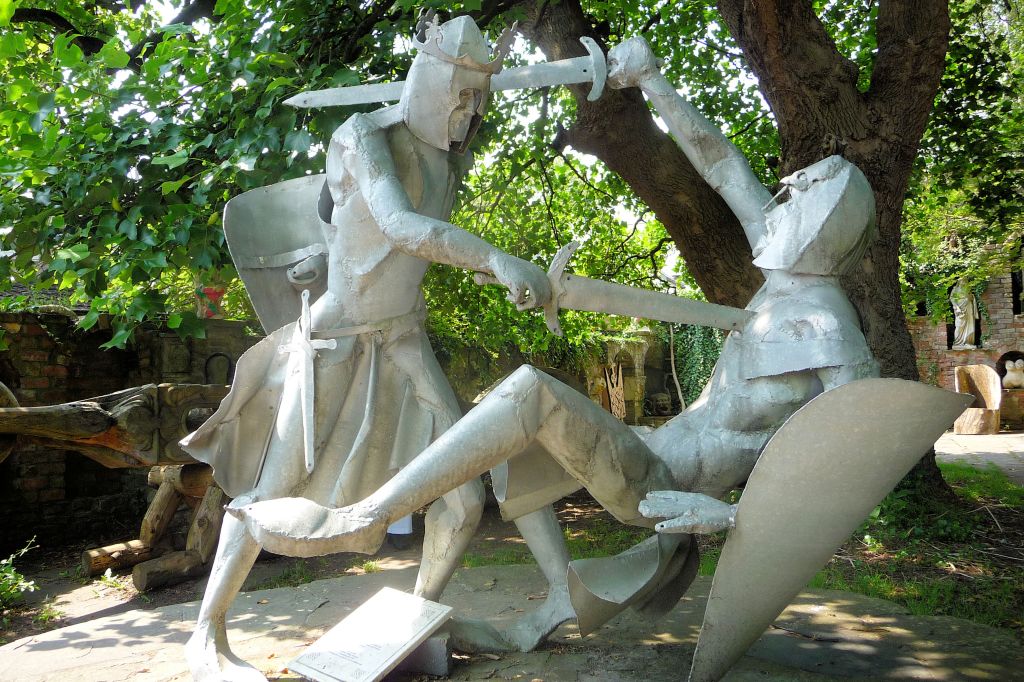
We’ll finish with some Roman Legionairres fighting, because Caerleon was one of the most important military sites in Britain under the Roman Empire, home to the 2nd Augustan Legion of 6,000 soldiers. -

Windsor by Steam Train
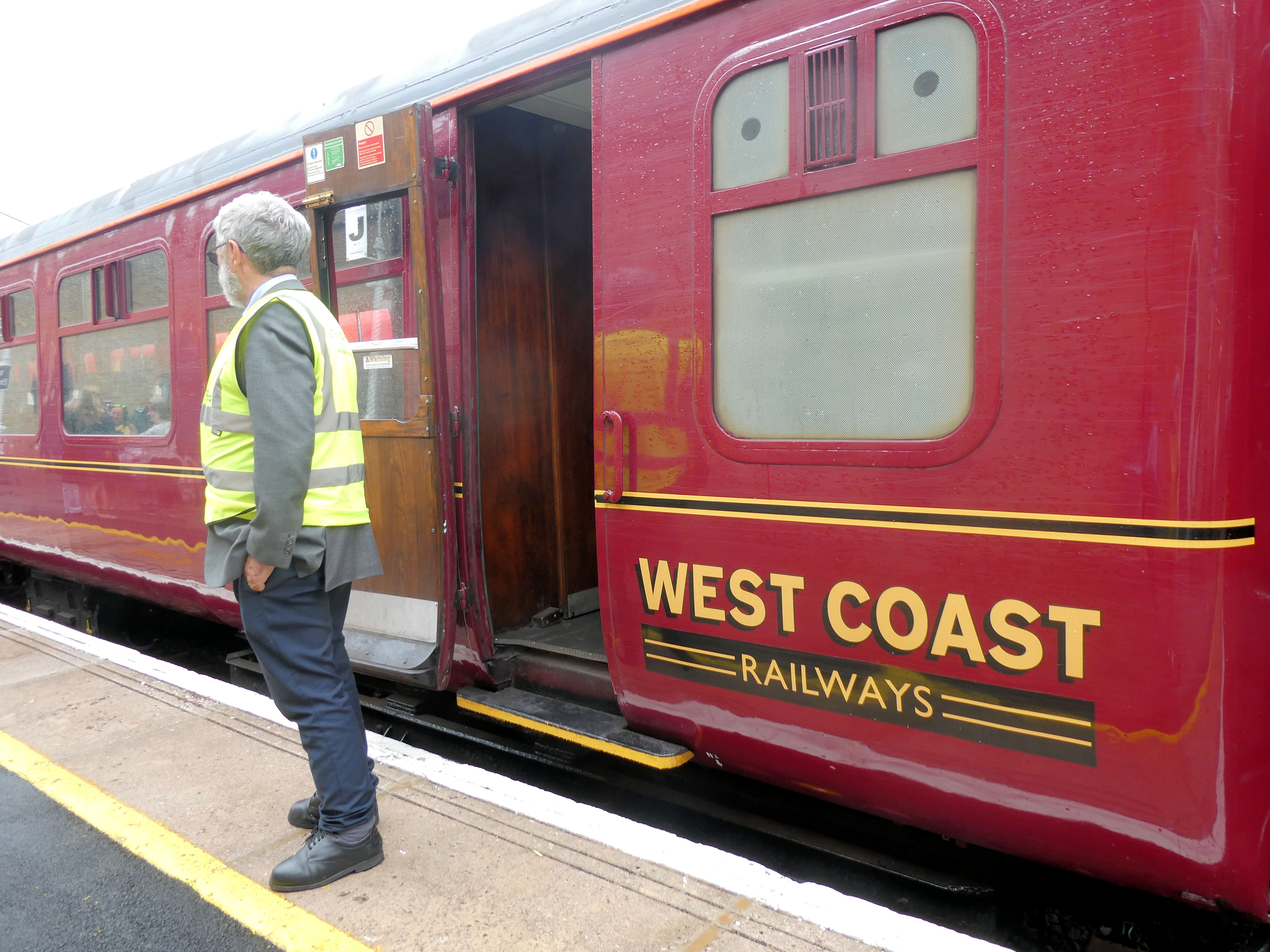
I had a sort of time-travel experience yesterday when a celebratory day out with friends took me from London Waterloo in sumptuous style to Windsor, recently the perfect setting for two royal weddings. We traveled in a ‘special event’ steam train of the Royal Windsor Steam Express.

Pullman Dining in Style On board the vintage Pullman carriages of the RWSE it is easy to imagine yourself back in the golden age of steam travel as you relax in the plush seats with plenty of legroom. The wood paneling on the walls of the carriage soothes the eye, and the starched white tablecloths on the tables take you back decades.
A champagne brunch is available in the Pullman dining carriages for £85 per person if you want the real luxe effect, but there is also the option of coffee, tea, wines and snacks from one of the charming hostesses on board in the Standard and First Class non-Pullman carriages.

The London Eye Starting from London the Royal Windsor Steam Express passes many of London’s famous landmarks including the London Eye and Houses of Parliament, crossing the River Thames to reach leafy suburbs, reservoirs and lakes until it reaches the charming Royal Windsor & Eton Riverside Station designed by William Tite for the London & South Western Railway (LSWR). The steam engine used to pull the refurbished carriages is The Mayflower, an original British Rail engine built in 1948.
Windsor Castle The station is right in the town and as soon as you exit you can see stunning Windsor Castle on the hill opposite. Windsor Castle is the largest and oldest inhabited castle in the world and is the Queen’s favourite weekend home.

Windsor Castle with statue of Queen Victoria The River Thames runs through the town and a boat trip along this stretch of the river is highly recommended. Unfortunately, we didn’t have time for this: I had done it before but would have very much liked to do it again had we not spent so much time lunching by the river and ambling around the town.

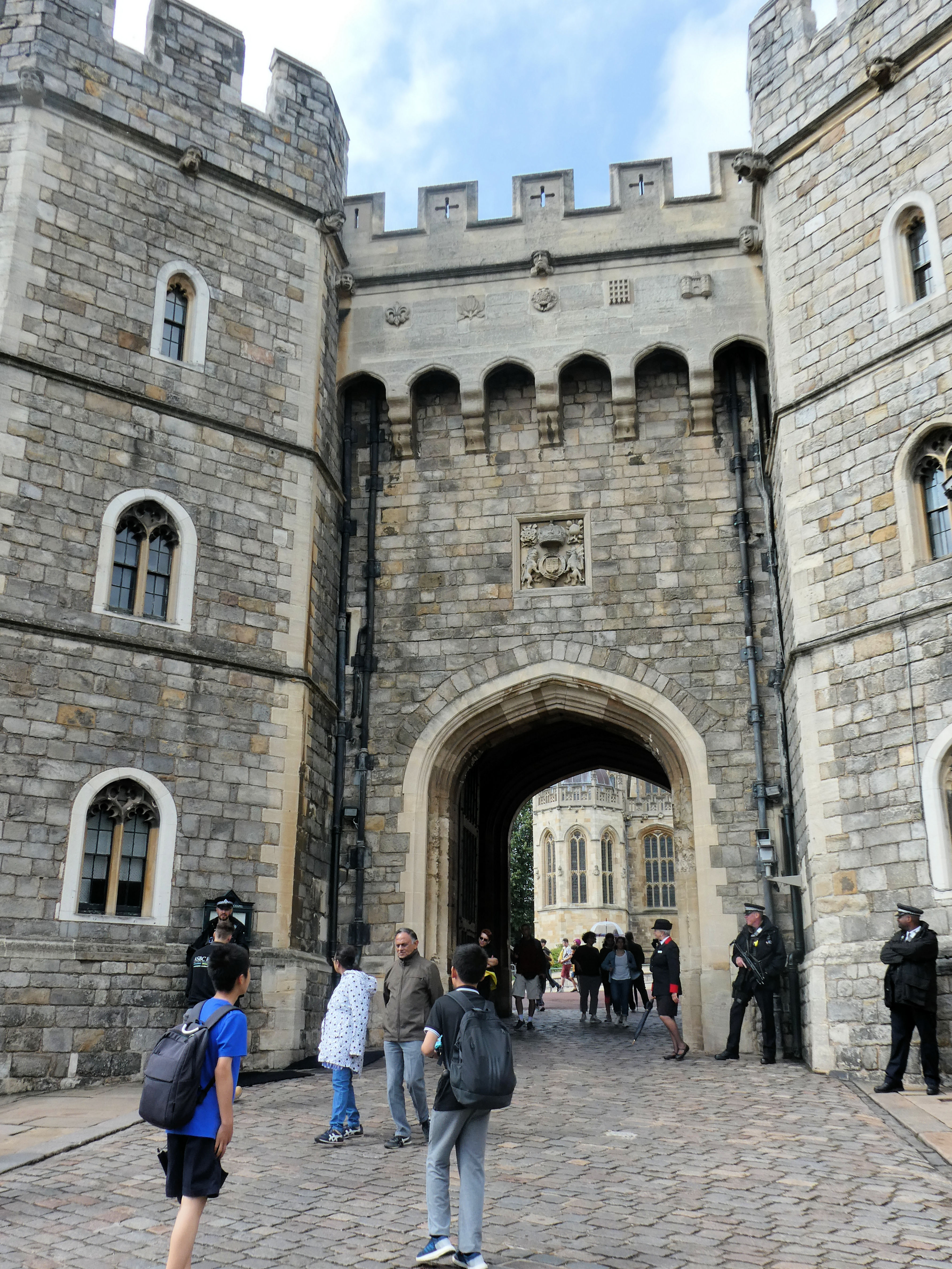


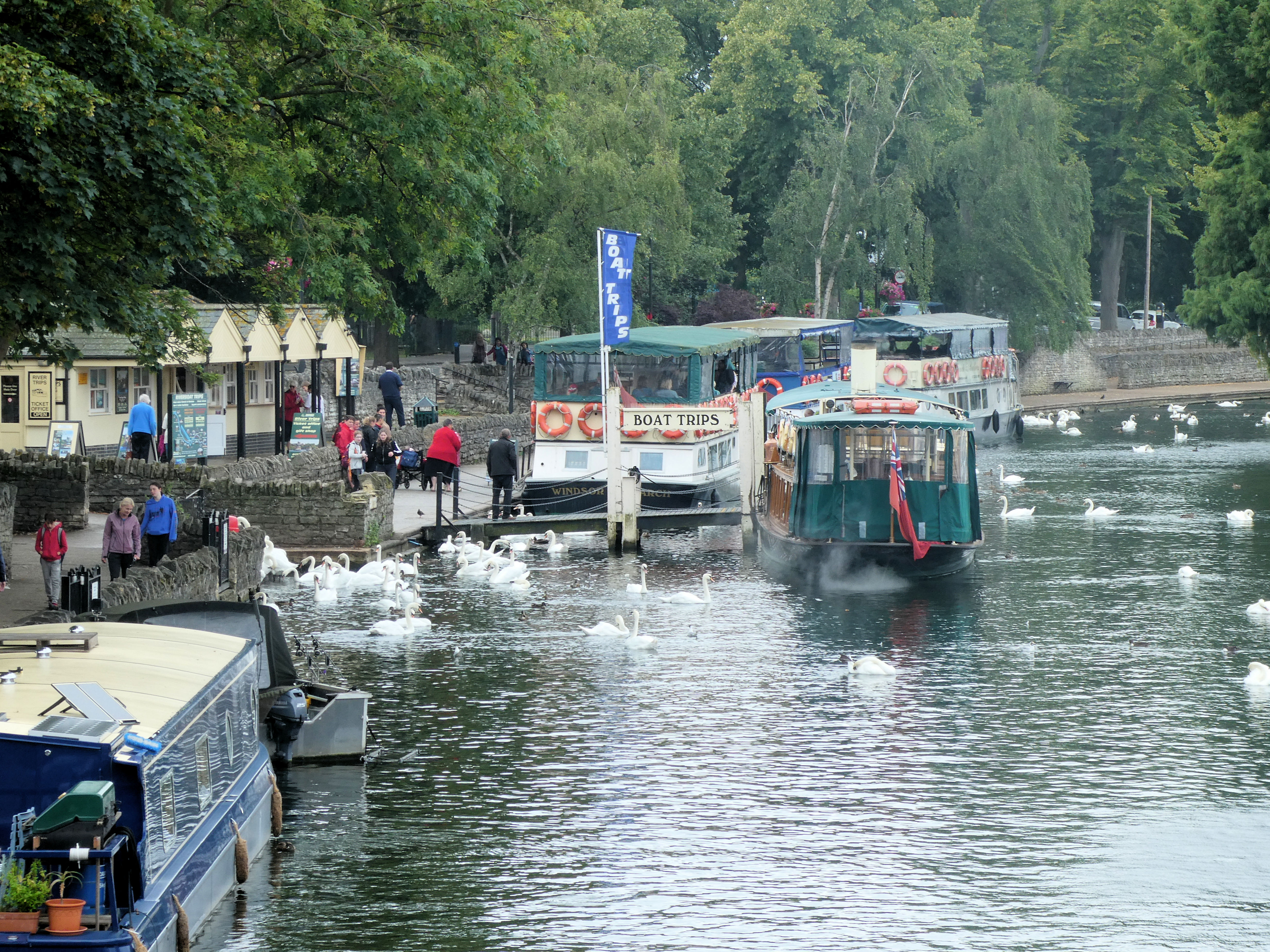
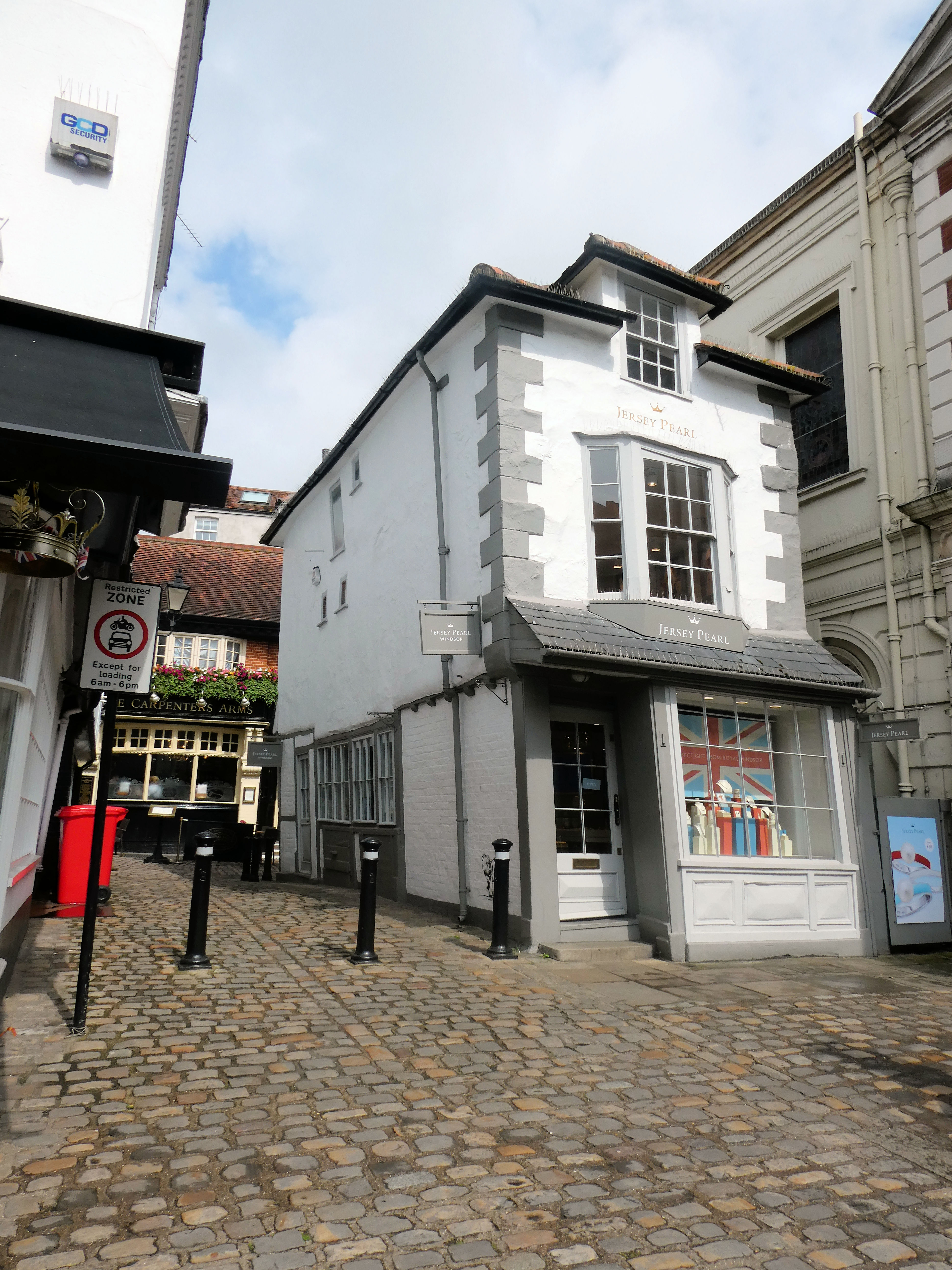
The Royal Borough has a rich mix of history, culture and heritage and if time allows a walk through the town is both practical and easy. If not, the hop-on-hop-off bus will transport you to the main sights in Windsor and next-door Eton. If you can time your visit to take in the colourful spectacle of the Guards marching through the streets of Windsor for the Changing the Guard ceremony within Windsor Castle’s walls, this unique sight could well be the icing on the cake.
Notes:
Windsor Tourist Office: https://www.windsor.gov.uk/visitor-information/visitor-information-centre
The steam train service runs every Tuesday from 4th June – 3rd September, with three daily services each way between Waterloo and Windsor & Eton Riverside station. Fares from £35 one way. Tel: 01483 209888 Website: SunsetSteamExpress.co.uk
1-Hour Boat Trips on the Thames at Windsor in an 1898 Steam Boat – 4 minutes walk from the station. £14 per person FrenchBrothers.co.uk Tel: 01753 837345
Hop-on Hop-Off Windsor Bus Tour £20. theoriginaltour.com/windsor Tel: 0208 877 2120

















 MARI'S TRAVELS WITH HER CAMERA