Tag: Spanish Civil War

  • Barranco de Viznar: Unearthing Lorca’s Legacy and the Spanish Civil War Tragedy

    They work in silence over a hole in the ground, on their knees, lying flat on their stomachs to access the dig. On a table nearby are some bones, skulls too. The harsh sun has bleached the surrounding terrain but there is a little shade in the nearby wooded area and under the gazebo tented area in which they work.

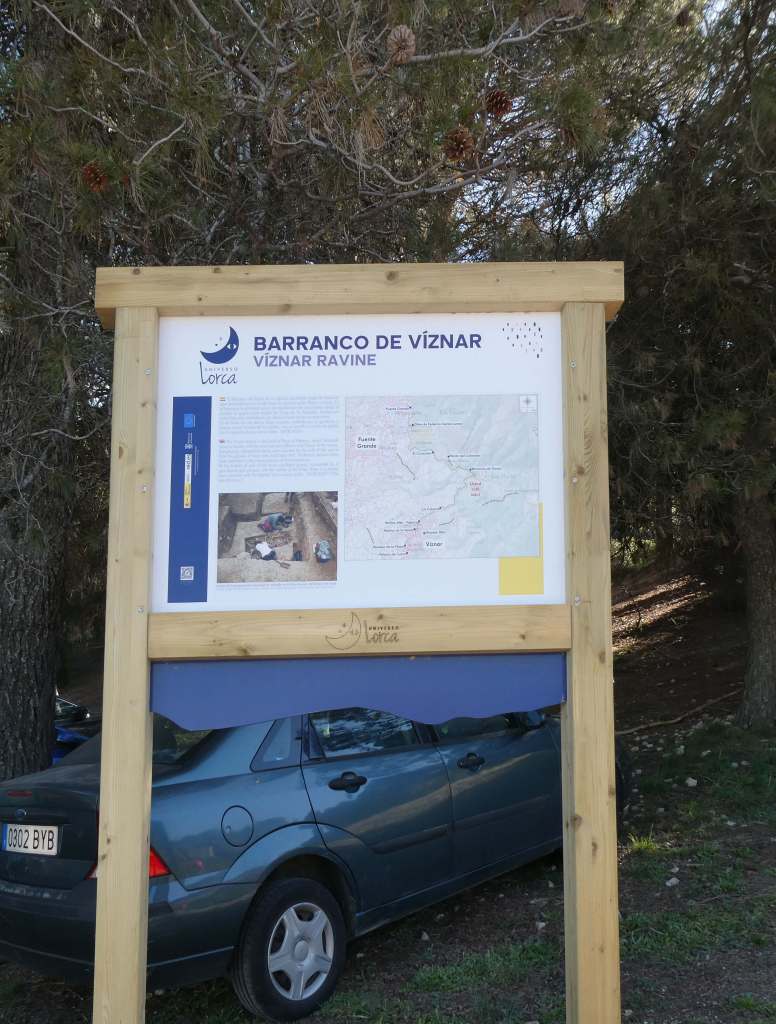
    The Barranco de Viznar has been declared a Place of Historical Memory in Granada, Spain, and as a life-long student of the Spanish Civil War, standing in this sloping, wooded area of about 10,000 square meters on a sharp curve of the road between Alfacar and Viznar, just has to be one of the best moment of 2024 for me.

    We know where the bodies are

    Imagine being given the opportunity to visit the site where the exhumation of thousands of young men assassinated by Franco’s troops during the Spanish civil war is taking place. Between September and November 1936, at the start of the Spanish Civil War (1936-1939), it is reckoned that at least 173 people were killed here and thrown into mass graves. Even earlier, in July and August, just after the coup d’état that triggered the war, there had been other assassinations, including that of the poet Federico García Lorca, but no record was left of them.
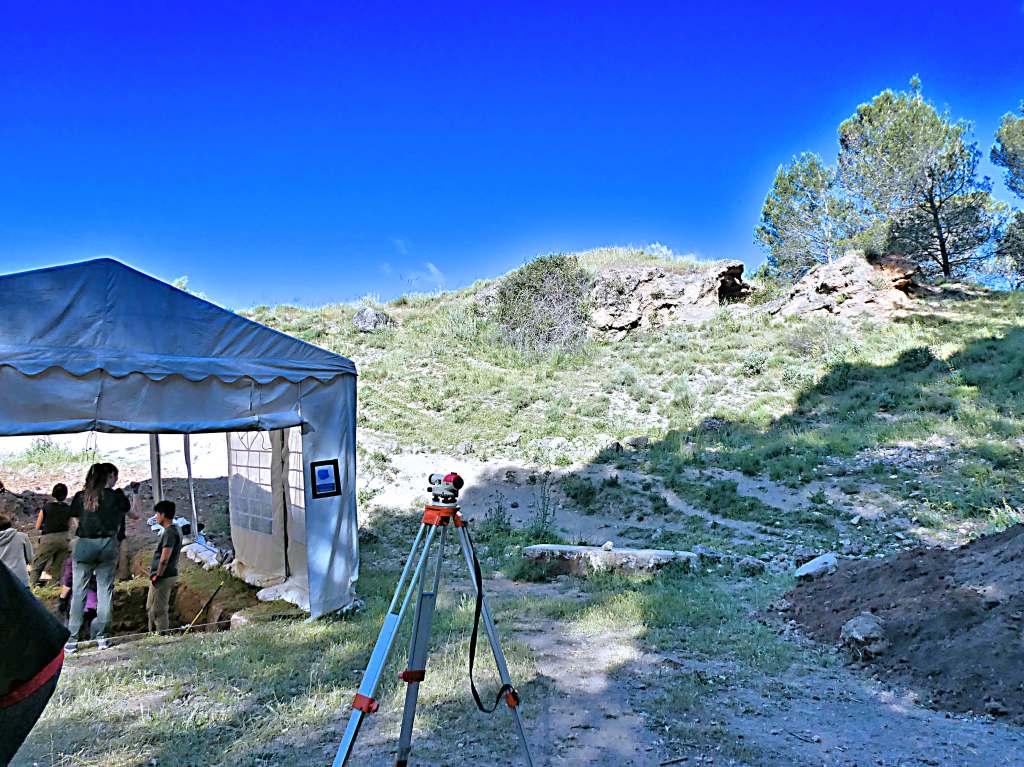
    Imagine how overwhelming it was , as a lover of Lorca’s poetry and plays, to be given the privilege of visiting the place where his assassination is presumed to have taken place in the opening days of that terrible conflict, and to talk with those involved in the ‘dig’.
    In Lorca’s Footsteps in Granada

    That is what happened when my friend Kathleen and I visited Granada recently to renew our acquaintance with a city that had charmed us both decades ago. We found it virtually unchanged, still intensely Spanish, catering mainly to Spanish visitors and still with the best tapas bars in Spain, but giving nods to a more modern vibe with the addition of Gin bars!

    Our idea was to walk In the Footsteps of Federico Garcia Lorca, guided by the Ian Gibson book of the same name, and it was while we were doing this that we had a serendipitous encounter with a Granada local who shared our enthusiasm and who invited us to visit the dig in Viznar.

    The Barranco de Viznar and its secrets

    The Barranco de Víznar is a ravine in the province of Granada, Spain, where a team of researchers made up of archaeologists, geophysicists, anthropologists, forensic experts and historians led by Francisco Carrión Méndez, a Senior Lecturer in Prehistory and Archaeology at the University of Granada has been searching for the bodies of the those assassinated during the Spanish Civil War, and searching for one in particular, the poet and playwright, Federico Garcia Lorca, one of the first to be killed.

    How Many Assassinations

    No one knows exactly how many were assassinated in the Spanish Civil War but it is estimated that it was more than 500,000, thousands of whom were massacred in the Province of Granada, some, including Lorca, even before Franco’s military coup.

    In the area of Viznar, to date, they have located 16 mass graves and recovered 124 bodies. In one mass grave they found the bodies of 10 people with gunshot wounds to the head and their hands tied behind their backs.

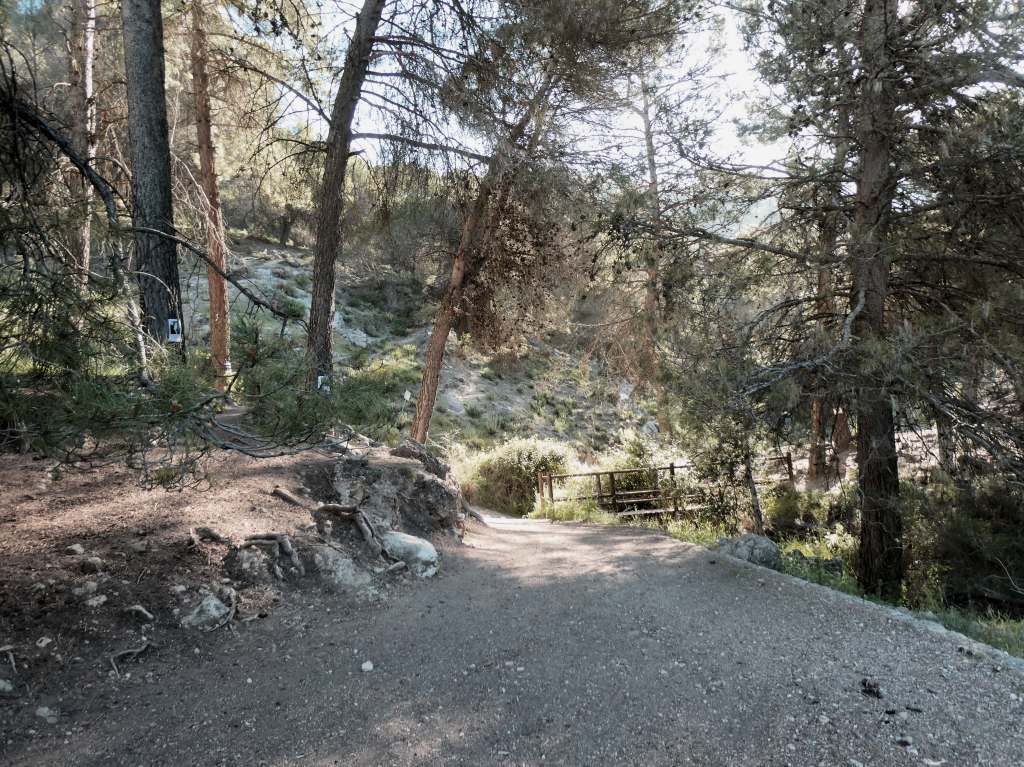
    The area of Barranco de Víznar was replanted with a thick forest of pine trees which has covered up the graves left after the mass executions committed by platoons of assault guards, part of the ferocious repression that followed the uprising.

    How is the Dig Funded

    The project is funded by the state and the regional government and is being conducted under the 1922  Democratic Memory Law which was enacted following the coming to power of the government of Pedro Sánchez. However, there are fears that this could be in jeopardy and the excavation stopped under a new government.

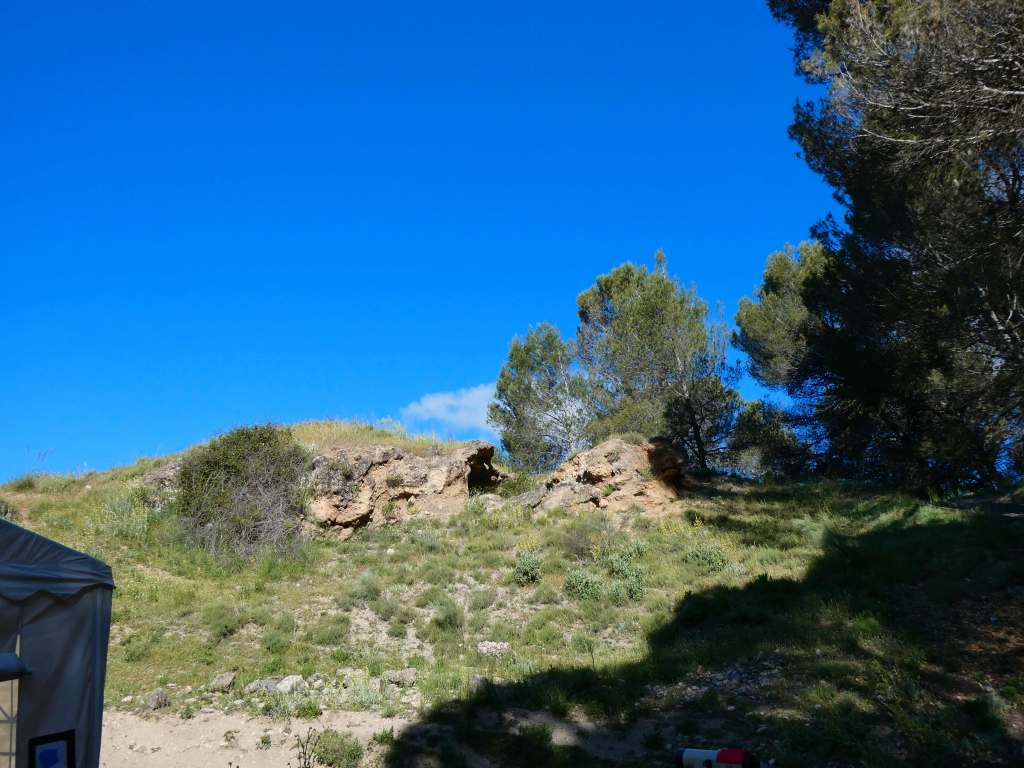
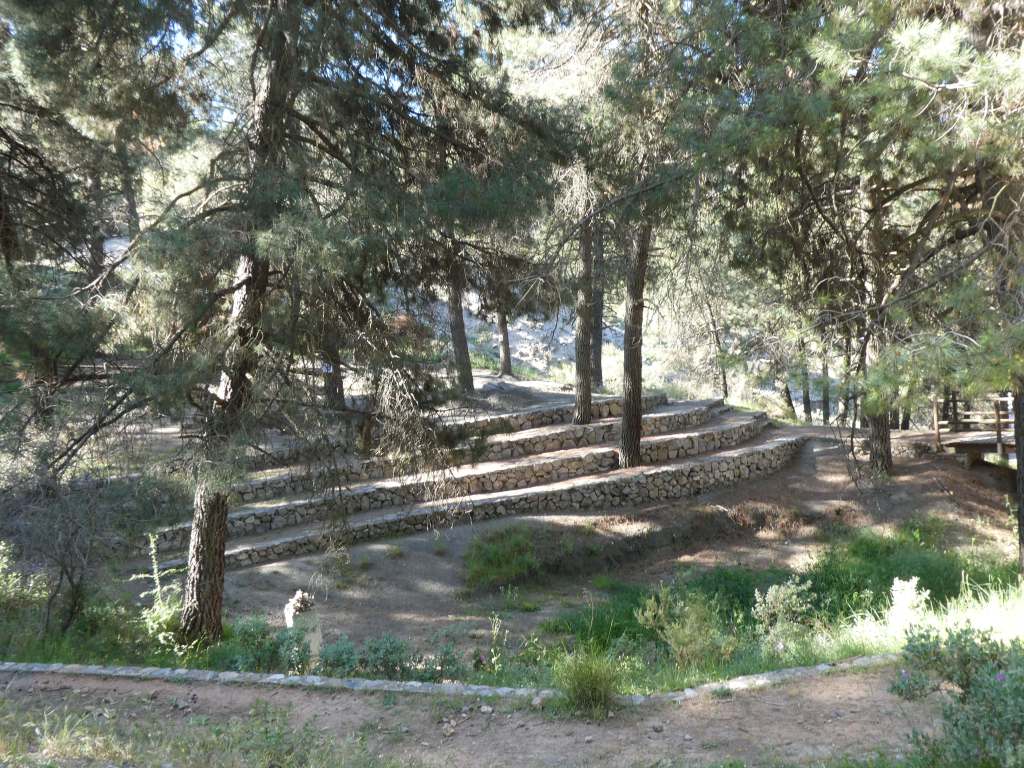
    Some scenes of the Barranco, above. Throughout the woods are dotted tents where the archaeologists and forensic scientists are working, in difficult terrain and extreme heat.

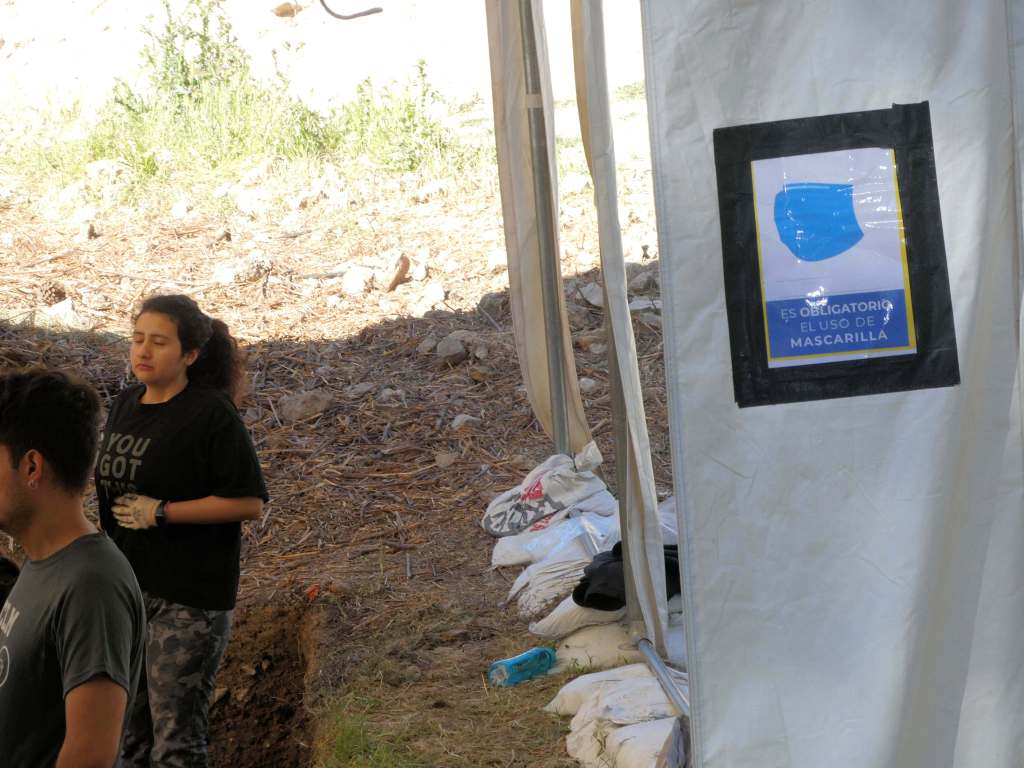
    One of the volunteers told me it usually takes four to six weeks to complete an exhumation, to excavate the personal effects and log, photograph and do the paperwork. Fortunately, the soil in the ravine of Víznar has managed to preserve the bones remarkably well, helpful in identifying the age and sex of the victims, as well as the injuries and the type of violence to which they were subjected. The DNA results can take a long time to come in but when the families are re-united with a family member, it is a great moment.

    Each tree could be a Memorial

    When a family is linked with a body from one of the mass graves via the DNA their permission is requested for a photograph of the victim to be displayed on a tree. Most families agree and it was an emotional moment to wander amongst the trees, see the photographs and read the names and occupations – some academics, a bullfighter but mostly ordinary citizens, killed because of their sympathies with the legally elected Republican government.

    Among the bones of those discovered is a former Rector of the University of Granada, Salvador Vila (above) who was brought from Salamanca to Granada and shot on October 22nd 1936. His wife, Gerda Leimdörfer, daughter of the editor-in-chief of Berlin’s leading Jewish newspaper, the Berliner Zeitung am Mittag, was spared thanks to the mediation of Manuel de Falla, the Spanish composer, who obtained a pardon in exchange for her conversion from Judaism to Catholicism.

    The burial area is accessed over uneven terrain and a paved dirt path has been laid by the City Council of Víznar that after a detour, leads to the main grave which is surrounded by a stone gallery filled with small metal plaques bearing the names and circumstances of those killed, placed there by Historical Memory Associations and the heirs of those shot.

    The Death of Lorca

    Lorca was spending time in the home of family friends, the Rosales, on Angulo Street, on 17th August 1936, when he was arrested and taken just 300 metres away to the Civil Government building, at that time a centre of terror: from there he was quickly transferred to Alfacar and Víznar, two small towns located only ten kilometres away where Franco’s rebel army had created a centre for the extermination of left-wing sympathizers. He was assassinated not only because of his beliefs and his ideology, but because he was homosexual.

    Memorial to Lorca

    All Were Lorca memorial stone

    Within the area there is a simple stone with the legend “All were Lorca. 18-08-2002″ and each year, on August 19, a poetry event takes place here beginning at midnight and lasting until the early hours of the morning. This celebration of Lorca’s poetry originally started as a clandestine event during the last years of the dictatorship and was the first open-air commemoration of Lorca’s assassination.

    The road to Al

    To date, Lorca’s body has not been discovered but hope remains high that one day it will be among those exhumed.

    Postscript:

    The project in the ravine, which is in its fourth and final phase, is now funded by the state and the regional government and is being conducted under the new Democratic Memory Law passed in 2022. It is not certain that this will continue if a more right-wing government should be installed in Madrid.

    Essential Reading

    For the politics of Spain during the Civil War and since, anything by Peter Preston is to be recommended.

    Ian Gibson: Federico García Lorca:  A Life (Faber & Faber)

    Ian Gibson:  The Assassination of Federico García Lorca (Penguin)

    Ian Gibson:  Lorca’s  Granada (Faber & Faber):  This is a great guide book to Granada as it takes you on ten routes, step by step from his birthplace to the site of his execution outside the city via the poets best-loved places in Granada.

    Granada Tourist Board – Patronato Provincial de Turismo de Granada
    Cárcel Baja, 3. 18001 Granada
    Tel: +34 958 24 71 27
    www.turgranada.es<http://www.turgranada.es/>

  • Pull up a seat

    Linked to xingfumama 

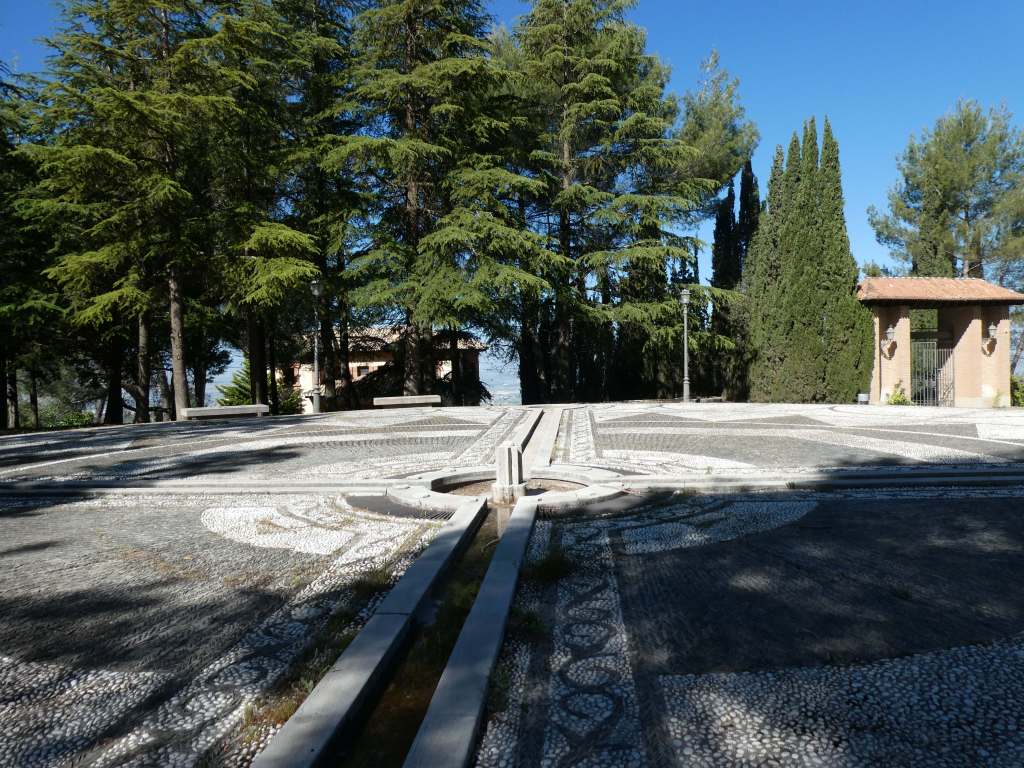
    Pull up a seat in the Parque Federico Garcia Lorca in Alfacar, Granada, Spain, and meditate on the poet’s death and those of his 3 close companions, plus the thousands of others assassinated by Franco’s rebel army in the area, just a few days after the outbreak of Spain’s Civil War.

    The Park was inaugurated by the Provincial Council of Granada in 1986 to pay tribute to the thousands shot between Alfacar and Viznar and has been declared a Place of Historical Memory.

    Sombre yes, but good to have such a place to commemorate a great poet and playwright, and the thousands of other victims of the Spanish Civil War..

    Linked to xingfumama 

  • Jersey at War 1940-1945

    Jersey at War 1940-1945

    It is often forgotten in the rush to visit yet another battlefield in France that just a few miles from England’s south coast, the only territory belonging to Great Britain endured almost five years of a harsh and brutal German occupation.

    Now at Peace, the Beautiful Island of Jersey
    Now at Peace, the Beautiful Island of Jersey

    Hitler saw the Channel Islands as a strategic landing stage for an invasion of mainland France, and when in 1940 Churchill deemed the Islands indefensible (despite their heroic efforts to save Allied forces during the evacuation from Dunkirk) their occupation by the Germans became inevitable.

    Entrance to the War Tunnels
    Entrance to the War Tunnels

    Museum Entrance to War Tunnels
    Museum Entrance to War Tunnels

    The story of Jersey’s occupation and the building of the tunnels is unfolded in slow and moving detail on a tour of Ho8 (Höhlgangsanlage 8), the kilometre long underground fortification that was conceived by the Germans as both store-rooms and a bombproof barracks. Known as The War Tunnels, this series of galleries is the best known of Jersey’s many tunnel complexes built by more than 5,000 forced labourers from Europe and Africa – Russians, Poles, Spanish Republicans, French and Algerian POWs.

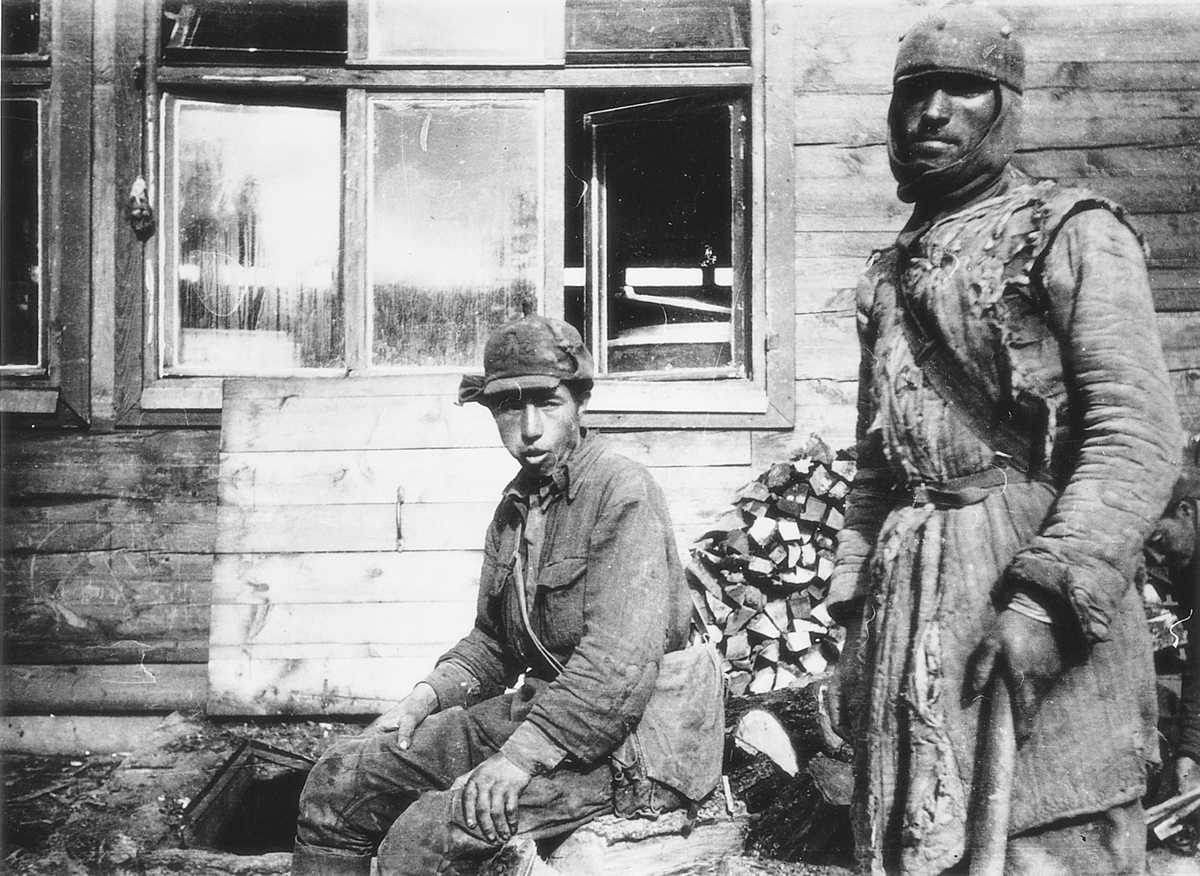
    These men all suffered at the hands of the occupiers, but the most barbaric and brutal treatment was meted out to the Russians who were regarded by the Nazis as Untermenschen – subhuman.  They were abused, beaten, starved and, literally, worked to death.

    Islanders will tell you that the dead Russians were shovelled into the walls and buried where they had fallen: just a few years ago these wall burials were one of the facts mentioned on the Tunnel tour but when I enquired this time I was told that there was no real evidence for this particular barbarity.

    Russian POWs on Jersey during World War ll
    Russian POWs on Jersey during World War ll

    Just before the occupation there were approximately 50,000 people living on Jersey, mostly native islanders, some seasonal workers from Ireland, France and Italy and some Austrian and Swiss.   Amid the panic in June 1940 Whitehall gave the islanders the option of leaving within 24 hours or remaining on the undefended island: by the end of the day nearly half the population had registered to leave.

    Many changed their minds, however, when they saw how the people were packed, for the journey, like sardines on the only transport available – coal and cement boats – and eventually only 6,600 left. From the beginning of the occupation in July 1940, up until December 1940, there were only 1,750 German soldiers on Jersey, but within a year the number had increased to 11,500.

    To the Soldaten it was a paradise, a holiday island with shops full of goods, gardens full of flowers, and a not too unfriendly people.  Photographs lining the tunnel walls show them relaxing on beaches in the sunshine, swimming, motoring, walking, young men enjoying a near normal life – a long way from the middle of war. German Wax Works[1] But the atmosphere changed on October 21st 1940, when the Order was passed demanding a register of all known Jews and Jewish businesses.  In June, 1942, it was ordered that all wirelesses be handed in and just three months later, on September 15th, the Order came for all British-born islanders to be deported to Germany.   Over several days 1,200 of them were led away to an unknown fate with more deportations following in February 1943 when the Germans rounded up the remaining Jews, Freemasons, retired army officers and protesters.

    And now food was getting short.  Tea was made from bramble leaves or carrots, coffee from acorns or roasted parsnips, shoes were repaired with bits of wood, clothes cut from old curtains, and lipstick made from oil and coloured dyes.  Soap was a rarity (sand mixed with ash was used as a substitute) gas was cut off every evening, and communal bake houses and soup kitchens were opened.

    Scene from the Museum in Jersey. Wax Work of Woman and Food
    Scene from the Museum in Jersey. Wax Work of Woman and Food

    Some girls found it hard to resist the handsome young blond soldiers and there was a certain amount of fraternisation despite the stigma it carried: the other islanders called them ‘Jerry bags’ and worse.  They weren’t the only ones who fraternised, however.

    Lack of food and clothing was a great incentive to work for the Germans because of the high wages paid and the extra rations given. There was resistance to the occupation in the form of painting V-signs on buildings, the theft of arms and explosives from barracks, and the use of the forbidden radios: if caught, the penalty was harsh – deportation to a concentration camp in Germany.  The same punishment was meted out for offering food and shelter to escaping POWs and it is recorded that three members of one family were deported for merely offering some food to starving prisoners:  one member of the family died in the gas chambers at Ravensbrὒck.

    Reminders of the 1939-45 war still to be seen in Jersey
    Reminders of the 1939-45 war still to be seen in Jersey

    These are the stories you hear as you walk through the underground galleries, each dedicated to a period.  There are last letters written to loved ones, daily printed Orders from the German occupiers and tableaux showing German soldiers speaking careful English to the young women of Jersey.

    But the most moving of all images are the pictures of the starving Russian POWs dressed in rags, whose dark, haunted eyes staring out of the photographs speak of their utter despair.  It is an exhibition that tells the story of the Occupation in the words and pictures of the people who lived through it.

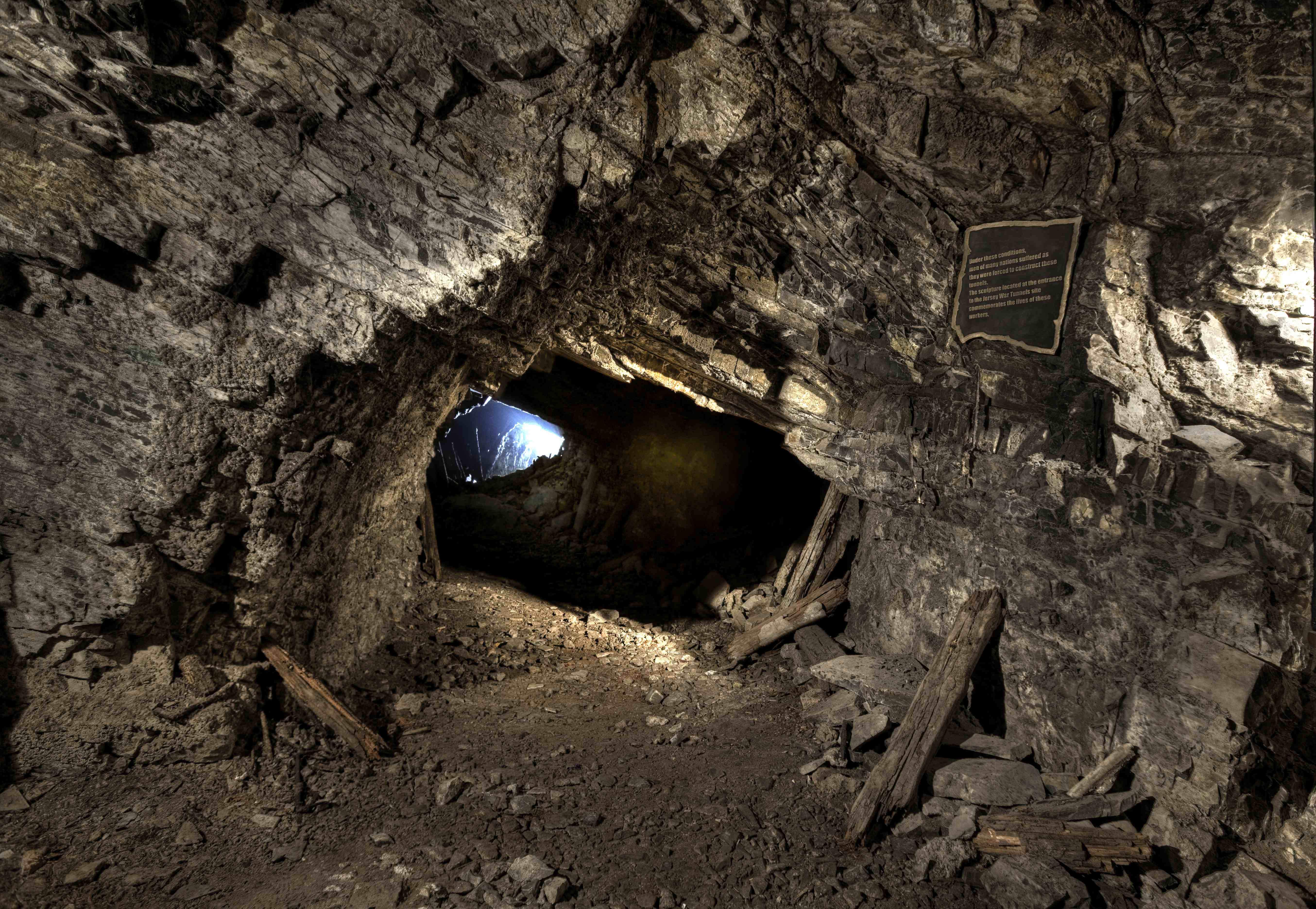
    The final, unfinished, tunnel is black as the deepest night, a flickering light at the end of the tunnel the only sign of the outside world.  As you grope your way through the darkness, a tremendous noise erupts and echoes around the cavelike space as though the world were about to end.  The earth seems to vibrate beneath your feet, the sound of rocks crashing round about is deafening and there is an overwhelming feeling that the ceiling is about to collapse, burying you forever.  And you think back to the pictures of the POWs you’ve seen and you know why each one wore a haunted look.

    Black Tunnel in which the POWs worked.
    Black Tunnel in which the POWs worked.

    The Normandy landings in 1944 heralded the final phase of the German occupation of the Islands, but it also meant that the supply routes were cut off.   For the next eight months, the local population and the 28,000-strong German garrison were close to starvation both sides vying for the sparse grasses, berries, and edible tubers that were in the fields. Churchhill refused to help the islanders as he considered that the Germans, who were caught between France and England with no hope of escape, would benefit from such assistance.

    The Germans acted with surprising decency towards the end of the war.  When Red Cross parcels arrived for the starving people of Jersey, the soldiers delivered them to the houses and it is recorded that no parcels were opened and that no food was stolen.  It is almost hard to believe, considering that they too were starving and considering also, their former behaviour.

    Outside the tunnels, The Garden of Reflection provides a peaceful place in which to reflect on the suffering of the islanders, rendered defenceless by the UK and forced to find a way of existing with the enemy, and of the POWs who lived lives of utter misery and degradation.  The lives of all are brought vividly to life in the tunnels of Ho8 Höhlgangsanlage, the Jersey War Tunnels.

    Jersey today, bright and cheerful
    Jersey today, bright and cheerful

     ALL  FULL PAGE IMAGES ARE COURTESY OF JERSEY TOURISM

    FACT FILE

    Jersey War Tunnels,  Les Charrières Malorey,  St Lawrence,  Jersey,  Channel Islands JE3 1FU.   Open seven days a week 1st March – 31st October 2014.  10.00 am – 6.00pm (last entry 4.30 pm) dults £11.50,  Children (7 – 15) – Must be accompanied by an adult £7.50

    Adults £11.50,  Children (7 – 15) – Must be accompanied by an adult £7.50 Senior citizens £10.50,   Students (with valid ID card) £8.50 Jersey Tourism (www.jersey.com)