Tag: travel

  • VERONA:  A NIGHT AT THE OPERA

    VERONA: A NIGHT AT THE OPERA

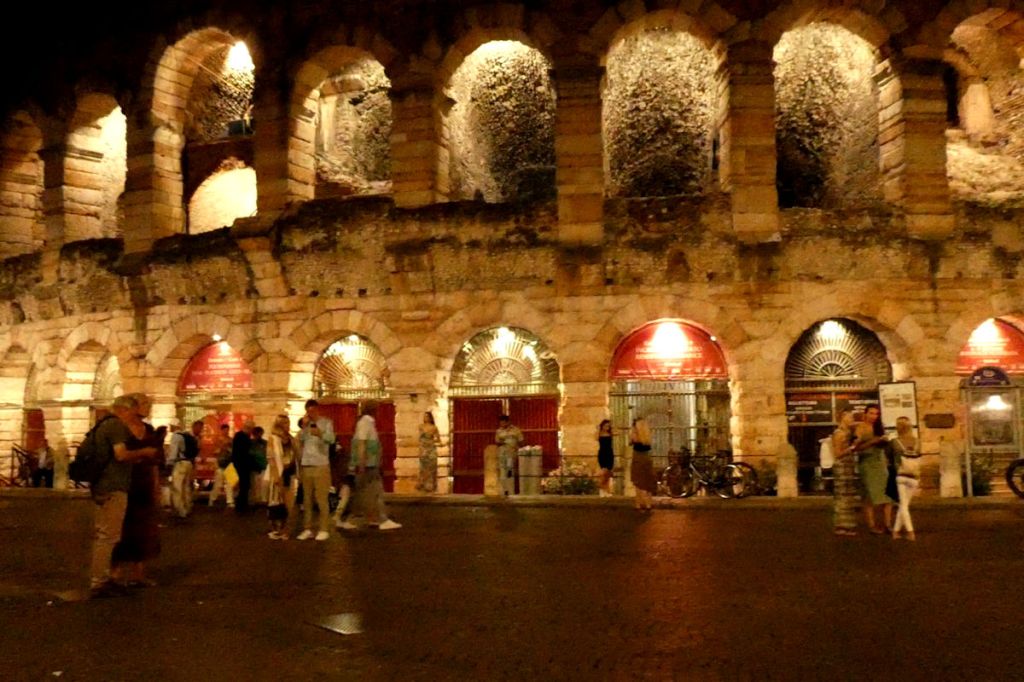
    Exterior of Arena

    We came, we saw and we were conquered. Not just by the city but by the by-product of that city, opera, for we were in Verona for the 100th Anniversary of the performance held in the ancient arena, an arena older than the Colosseum in Rome. In ancient times it held 30,000 people for its circuses and gladiatorial events but as the stage for opera performances decreases the available seating, it now has places for only 22,000.
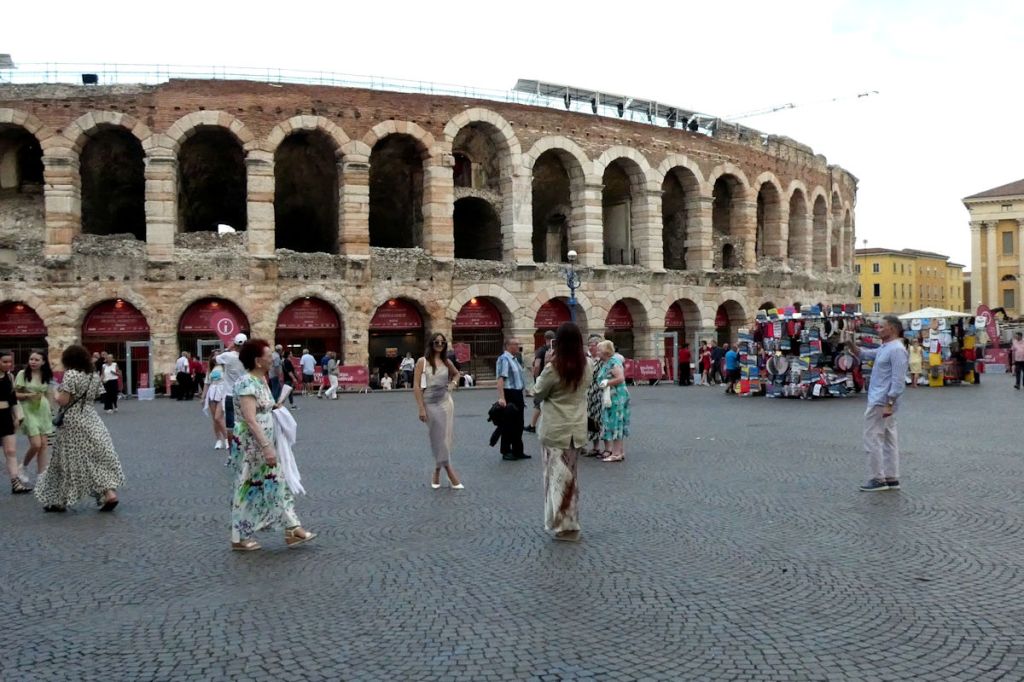
    Exterior of Arena early evening

    We came to Verona, my friend Jane and I, for Giuseppe Verdi’s Aida, the signature opera of the city. Although there had been some productions during the 1850s, it wasn’t until 1913 that opera began in earnest in the Arena, due to the zeal of the famous Italian tenor Giovanni Zenatello and the impresario Ottono Royato. The first opera to be produced in the arena on 10th August 1913 to mark the centenary of Verdi’s birth in 1813, was Aida, and since then, Aida opens the yearly festival of opera.

    The moon has appeared as the audience awaits the evening’s performance

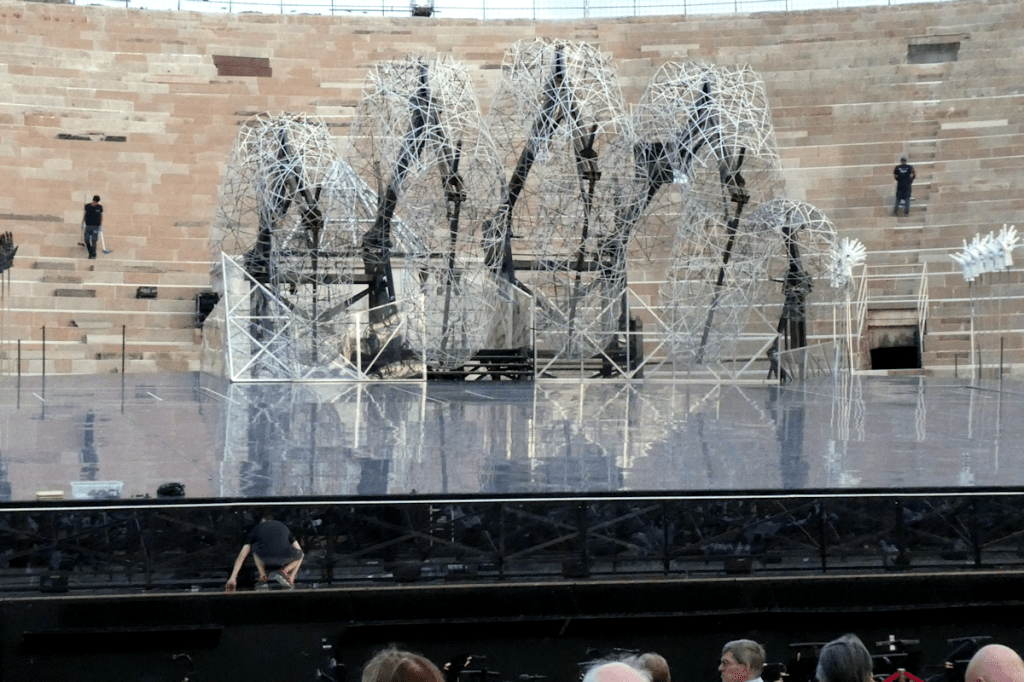
    As dusk settled over the amphitheatre and a pale moon floated in the velvety blue sky above, anticipation was high. We’d watched the stage-hands sweep the tiered stage, watched the lighting engineers fiddle with the lamps, and wondered at the meaning of the objects that decorated the set, crystal pyramids, giant hands, and lighting designs which, although technologically modern, blended easily into the ancient Roman amphitheatre. Later I read that the giant white hands that dominated the stage represented power.

    The arena was full, from the front padded seats to the tier upon tier of stone seats (no back rests but with hired cushions for comfort), and the audience milled around taking photographs, chatting in groups and in Italian fashion, jumping over seats to shake hands with old friends before the performance began at 9.30 pm. It was an audience as enthusiastic as any I’d ever seen – and noisier than most.

    Then suddenly the orchestra was filing on to rapturous applause and the opera was about to begin.

    There was a hush as Alexander Vinogradov as Ramfis began singing, a hush that continued throughout the First Act and every subsequent Act. I have never, ever, known an audience be so quiet, enraptured even, so receptive of the story being told in voice and music from the stage, so totally engrossed in what was happening in front of them.

    I can’t even begin to guess how wide the stage was: one’s eye just couldn’t take it all in at once, yet somehow, the war-stricken world of Aida materialised in an intimate setting on the vast arena stage, as over 300 performers – soloists, chorus members, dancers and mimes – cast their spell. Their costumes were inspired by Paco Rabanne and Capucci, silver robes and helmets radiating brilliance across the expanse of the tiered stage.

    The gigantic wire hands which towered over the stage and had puzzled us when we first saw them now moved menacingly or soothingly as the music and the story demanded. Stefano Podo’s avant-garde production included LED-laser lights that formed shapes and changed colours from red to blue to green, to great effect, plus impressive lighting effects at the back of the arena as actors brandished what looked like light rods used to great effect during the judgment scene.

    And as for the Arena itself! Built in AD30 out of white and pink Valpolicella limestone (a few repairs since then), the arena has perfect acoustics (amplification was only brought in in 2011). In its heyday it hosted gladiatorial fights and blood sports, horse races and medieval jousts but nowadays the crowds come not for blood and gore in the sand but to be transported to another realm by the beauty of the human voice.

    I’m failing as a writer here because I can’t describe what the experience of seeing and hearing the opera was like; it was a spectacle that needed to be seen in order to understand the power it had. I had been to the Arena years ago when the stage effects for Aida included ancient Egyptian scenes to rival those of Cairo. We were younger then, my husband and I, and we sat on the stone seats way, way up on the terraces. The excitement of opera under the stars past midnight (it starts about 9.30 pm and finishes, usually, around 2.00 or 2.30 am) – meant that I wasn’t aware of any discomfort.

    But the 2023 100th Anniversary Performance was even better, it was uncomplicatedly magical. Possibly helped by the fact that age now demands a padded seat and some space so we had expensive seats front centre (still nearly half what a similar seat would cost at Covent Garden). I would recommend paying that bit extra for the comfort if you are aged from 30 upwards!

    Just across from the Arena after the performance

    And then jostling for seating at the café opposite the Arena with others who’d shared the experience, sipping a glass of wine at 2.30 am when the heat from the ochre-coloured stones was still intense, not wanting to go back to the hotel, and feeling part of something great and grand was somehow life-affirming.

    Was it the settings? The music? The atmosphere? Maybe some of the silver dust drifted from the costumes and covered us with its magic? I don’t want to be a third-rate critic so I’ve found a clip on You Tube with a selection of scenes from the performance in Verona and if there are any opera fans among you, you might like to take a look and enjoy what we enjoyed.

    Factfile:
    Purchase tickets directly online, at www.arena.it/buy. You can check the availability of seats by consulting the seating plan, which can be found on each performance date. You will be asked to give a password so have one ready. If you want to book by phone, call +39 0458005151 Monday to Saturday 9 am to 6 pm.

    British Airways flies direct to Verona.

  • THURSDAY’S DOORS.

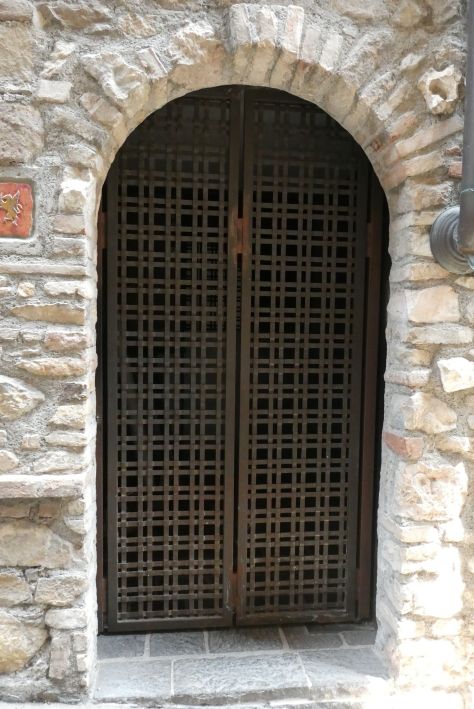
    An Old Door in Verona, Italy

    A Door in Garda on the Lake of the same name.

  • Friendly Friday: Favourite Photo Challenge

    Friendly Friday: Favourite Photo Challenge

    Linked to the Sandy Chronicles

    Chef Eddie does his thing

    This picture is one I love because it captures, for me, a moment of total relaxation during a cargo ship cruise we took about 30 years ago. The ship was ‘The Author’, one of what I learned to call “the big whites”, boats of the South African Safmarine line.

    Sunday was a big day for the crew when they had the brai, or barbeque, a tradition that was almost a religion for the South African crew on board. It was dress-down day when even the captain sported shorts and tee shirt, hair-cutting took place in quiet corners on the decks, and the crew relaxed in their ‘civvies’.

    I was surprised that a barbeque was allowed on the deck, but I was assured all was perfectly safe. Eddie, the chef, had everyone’s favourite food ready, from salads to heavy carbs, fruits to exotic vegetables, and a fine selection of meats, fish and shellfish. As passenger we numbered only 7 but we had become friends with the crew over the course of our trip from Tilbury via northern Europe to South America. In fact we were their ‘shoppers’ as well, as some of the countries we stopped at would not allow the S.A. crew to disembark (political not racist) so we were given shopping lists when we disembarked – usually tee shirts for themselves and a gift for a Mum or a son or daughter.

    I know this isn’t a good photograph, it’s blurry and lacks definition but it’s one of my all-time favourites because that holiday was one of the best ever and that evening sums it up so well. I must add here that I don’t go on cruises as floating hotels are not my cup of tea but a trip on a cargo-ship is a world apart.

    On “The Author” we mixed with the crew as they went about their work during the day, and in the evening we socialised with them over drinks and dinner, played games in either their lounge or ours and swapped books and DVDs. Some evenings we lay on our backs on the deck and were taken through the star system by one of the crew, seen to its best away from the lights on land.

    Thirty years after and I’m still in contact with one of the captains and two of the crew. It was an unforgettable holiday and I remember every minute of my time aboard “The Author”, Eddie’s great food, and the treats left in our cabin daily, from warm biscuits to gooey cake, the ever-changing menus due to the fresh produce he picked up at the different ports, and the tears and the hugs when we all said good-bye to some of the nicest people I’ve ever met.

  • AMALFI – Italy’s Gem

    Amalfi, tiny and expensive is one of the easier coastal towns to walk around as it rises gently up the hillside from the waterfront rather than clinging vertically to it, like Positano for instance. 

    Centreville, Amalfi

    It is hard to believe that this very small town had a glorious history as a maritime republic on a par with Venice and Genoa, but Amalfi was a trade bridge between the Byzantine and western worlds for centuries with a population exceeding 70,000 (today, less than 5,000).   Unfortunately, there are very few historical buildings of note to see as most of the old city, and its inhabitants, slid into the sea during the 1343 earthquake.

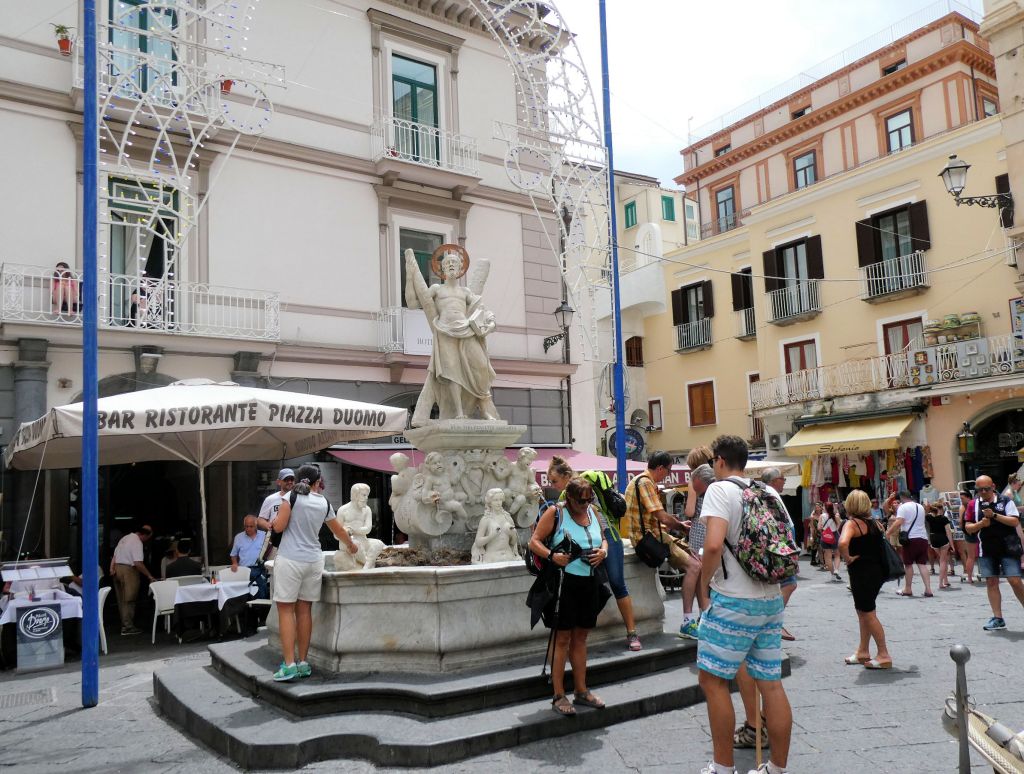
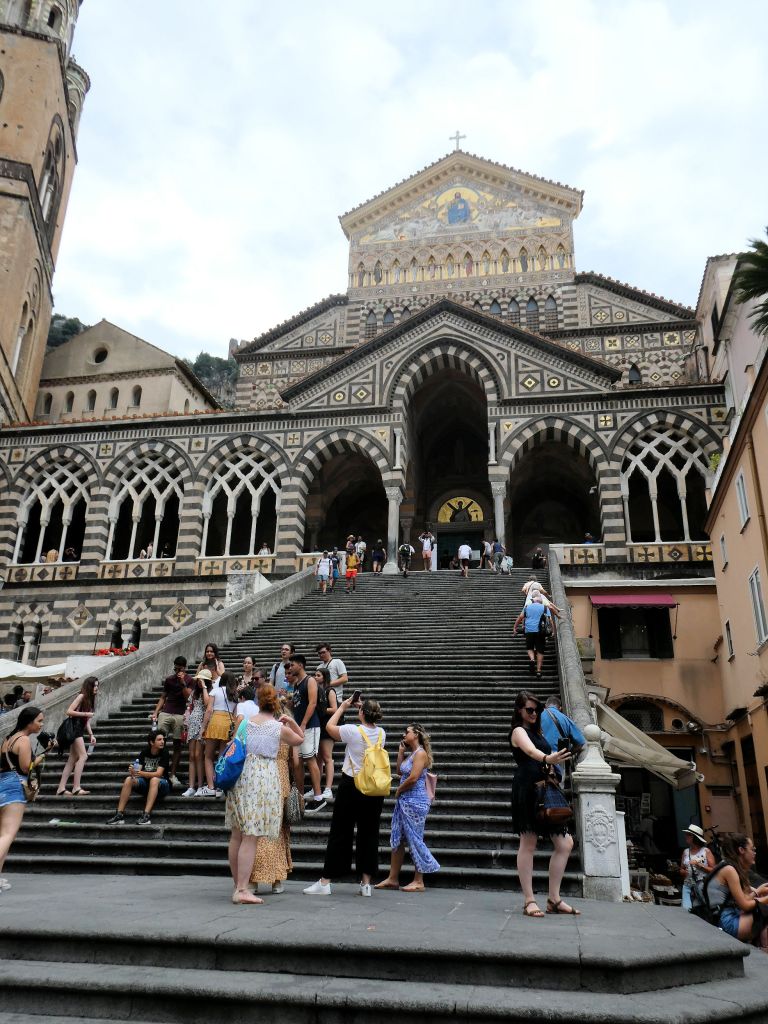
    There is a delightful promenade along the waterfront and a marina full of colorful boats but the focal point of the historic center is the Piazza del Duomo with its striking cathedral dedicated to St. Andrew. There are sixty steps leading up to the Byzantine-style church with its Moorish-influenced arches and decoration and inside the church is a forest of columns and Arabesque arches and the hidden Cloister of Paradise, dating to 1266.  The Piazza is lined with bars, cafes, gelaterias, artisan and tourist shops, and is a perfect place for people watching – if you can bag a table.  It seems to be permanently busy. Don’t forget the water if you decide to walk up the steps, those 65 can feel like 100 when the sun is out.

    The Duomo

    Famous for the manufactire pf paper, the Paper Museum (Museo della Carta) is well worth a visit to see how the products were made by hand. There are still some family-owned paper mills that carry on the tradition of hand-made paper which can be bought in some of the high-end shops – good, if expensive buys, for that special present for someone who still likes to write letters. 

    How Many G & T’s could that Lemon serve?

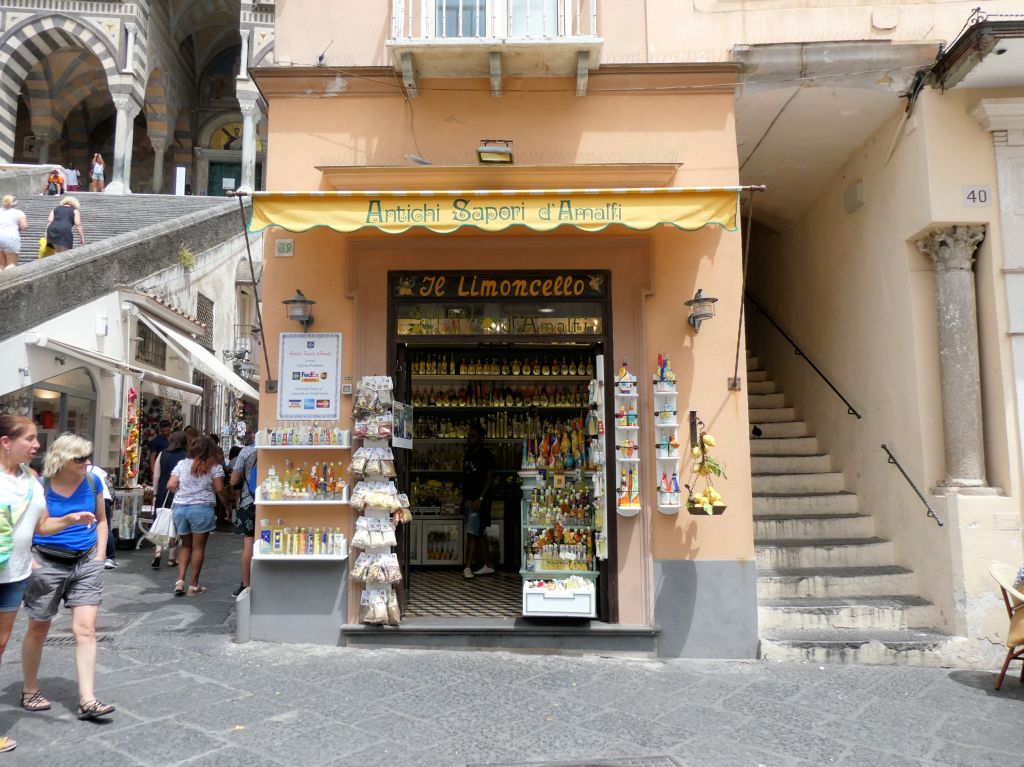
    However, the primary product of the area is lemons, enormous in size, picked fresh to make limoncello liqueur and to be used in local dishes.  Lemon ice-cream features a lot in restaurants and gelaterias, the one by the town gate serving quite the biggest lemon sorbet I have every seen (or eaten). 

    Biggest Lemon Sorbet I’ve ever eaten

    If you don’t spend too much time over lunch or coffee, there will still be time to visit hilltop Ravello, full of historic, artistic, monumental and architectural treasures – another expensive town but exquisite in its layout, and its 13th century Villa Rufolo which has breathtaking views from gardens overlooking the sea.  Famous names you’ll hear mentioned a lot in Ravello are Richard Wagner who was inspired by the Villa to compose some verses of the Parsifal, Boccaccio who stayed here while writing the Decameron, D. H. Lawrence who supposedly got inspiration for Lady Chatterley’s Lover while holidaying in the town and Gore Vidal who came for a visit and stayed for 30 years! 

    Ravello

    Shopping is rather special in Ravello too, as there are many craft and high-end fashion stops where you will find one-off garments – at a price, of course. Even the ice-cream advertises as ‘gourmet’ gelato though what that is I have no idea. 

    Ideal spot for lunch in Ravello
    Interesting items for sale in Ravello- Wine and Drugs. I hope it doesn’t mean what it says!

    Restaurants bars and bistros abound, but walk around the interesting narrow backstreets of cobble-stones, peering in at dark interiors, looking over dry-stone walls fronting overgrown gardens and vegetable plots, if you want to see what this hill-top village is really like. Ravello is a great starting point for walks in the surrounding Lattari mountains along ancient paths.

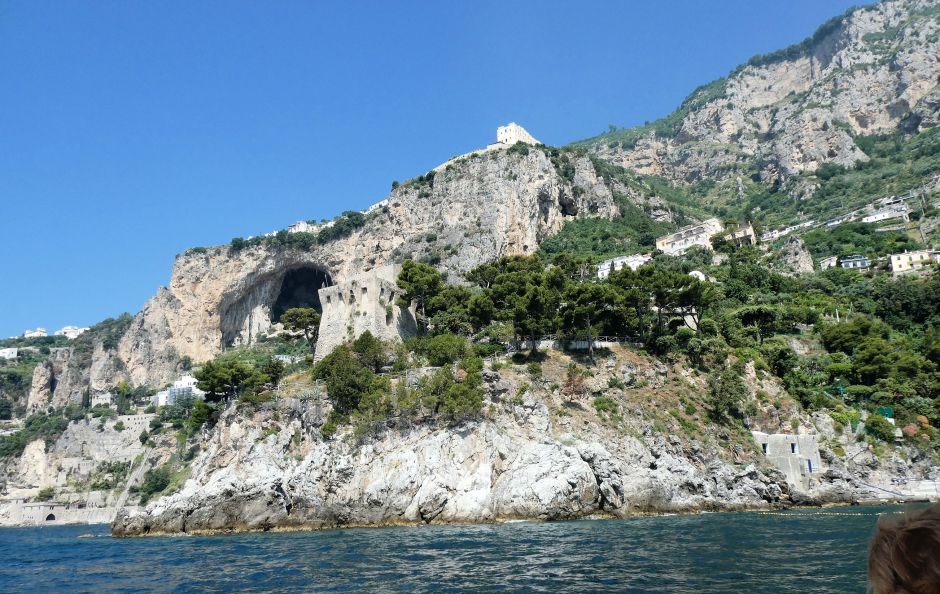
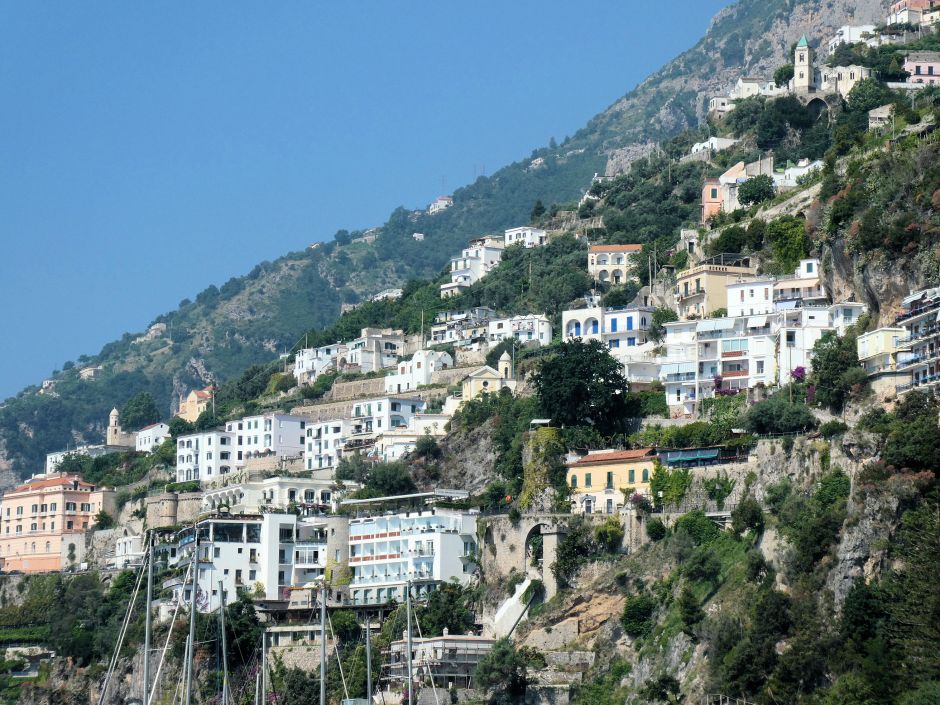
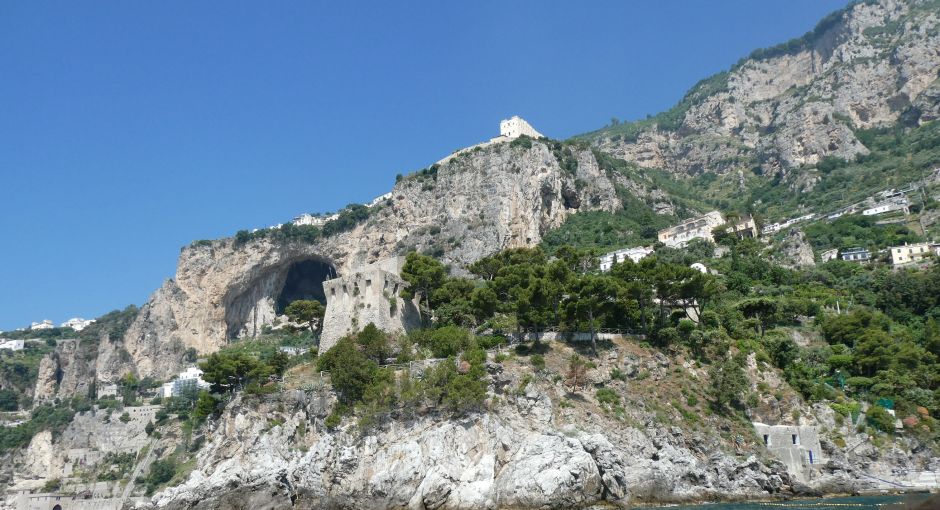
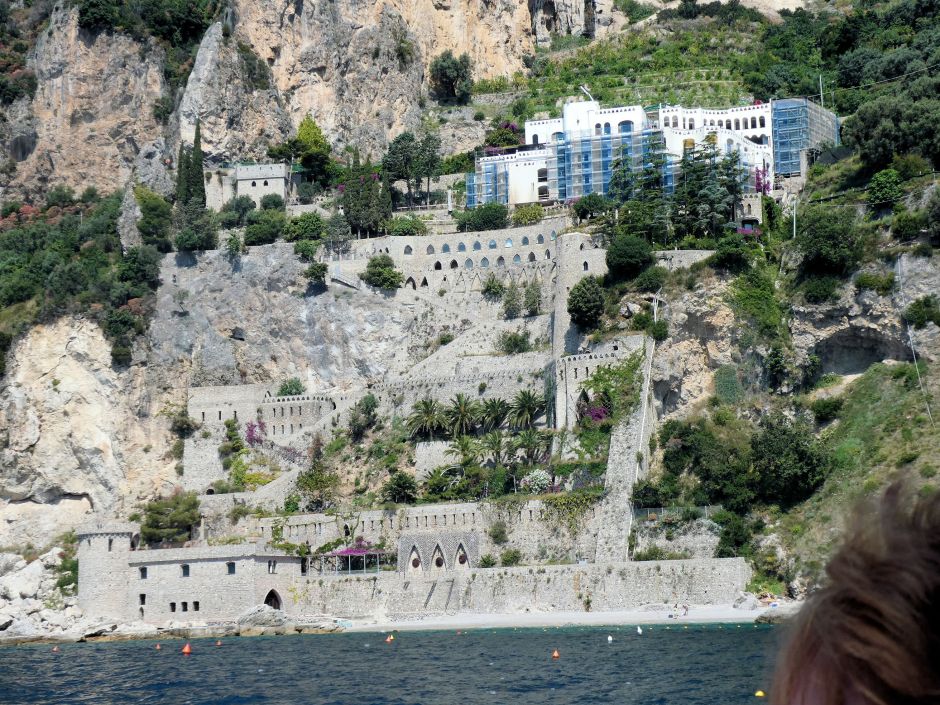
    Amalfi’s trading importance may have declined but its maritime importance continues, as you can hop ferries and hydrofoils to Capri, Salerno, and Positano.   For me, the best way to view Amalfi is from the sea and the best way to do that is to take a boat trip around the bay, either in one of the 45-minute trips or by hiring a boat to take you to hidden coves to enjoy some private sun and surf.  You will see the homes of Gina Llolabrigida, Sofia Loren, George Clooney (before he moved to Como I presume) and other famous names, smaller than you’d imagine because of their position built into the rocks.  In the above slide show of scenes from the sea, the blue and white house set ino the hillside is that of Sofia Loren.

  • PROVENCE – Villages & Towns

    PROVENCE – Villages & Towns

    I have an urge to go to Provence again.  I think it’s because my lavender is thriving this year and that the rosemary, thyme, sage and oregano are flourishing as never before that makes me want to immerse myself in the pungent scent of wild herbs crushed underfoot and the juniper, golden broom, and cistus that cover the hills of Provence.

    I like the journey there too, on the Eurostar from London (less than 6 hours): with a change at Paris, there is enough time to enjoy a leisurely meal to get the trip off to a good start.   The views from Paris down to Avignon of tiny, half-deserted medieval villages perched on steep hillsides, red geraniums and lime-green ferns tumbling over balconies, fertile valleys of yellow corn and wheat, occasionally highlighted with a blaze of red poppies like a Van Gogh landscape, and the occasional field of wild irises and lavender, always make me happy that I’ve taken the train to this corner of France.

    Palais du Pape

    Avignon:  The best viewpoint is from the Gardens of Rocher des Doms above the Palais des Papes.  The gardens are not worth the trip for themselves, but there are benches on which to sit to take in the peacocks and the panoramic views over the entire city and the surrounding areas. 

    If you visit only one monument, make it the Papal Palace, the Palais des Papes, which includes the Popes’ private apartments with some fabulous frescoes, and is one of the musts of Avignon.  This emblem of the city, an awe-inspiring monument to the importance of Avignon in the Christian world of the Middle Ages was built in the 1300s by two popes – Benedict XII and his successor, Clement V.   Avignon 10It was to become the biggest gothic edifice in all of Europe and is listed as a World Heritage Site by UNESCO, along with the episcopal buildings and the Saint Bénézet Bridge.  Palais du Pape, Golden Madonna

    Next to the palace is the Notre-Dame des Doms Cathedral, built in 1150, with the statue of the Virgin Mary, entirely covered in gold, 6 metres high and weighing 4500 kilos, protecting the city from the bell tower.

    The historic centre radiates from the Place de l’Horloge, a popular square bordered by cafés and restaurants. Just like the Place du Palais higher up you could spend the day just watching the street performers.  Here is the City Hall built in the mid 19th century over a former cardinal’s palace.  Next to it is the 19th-century municipal theatre which houses the Avignon opera.

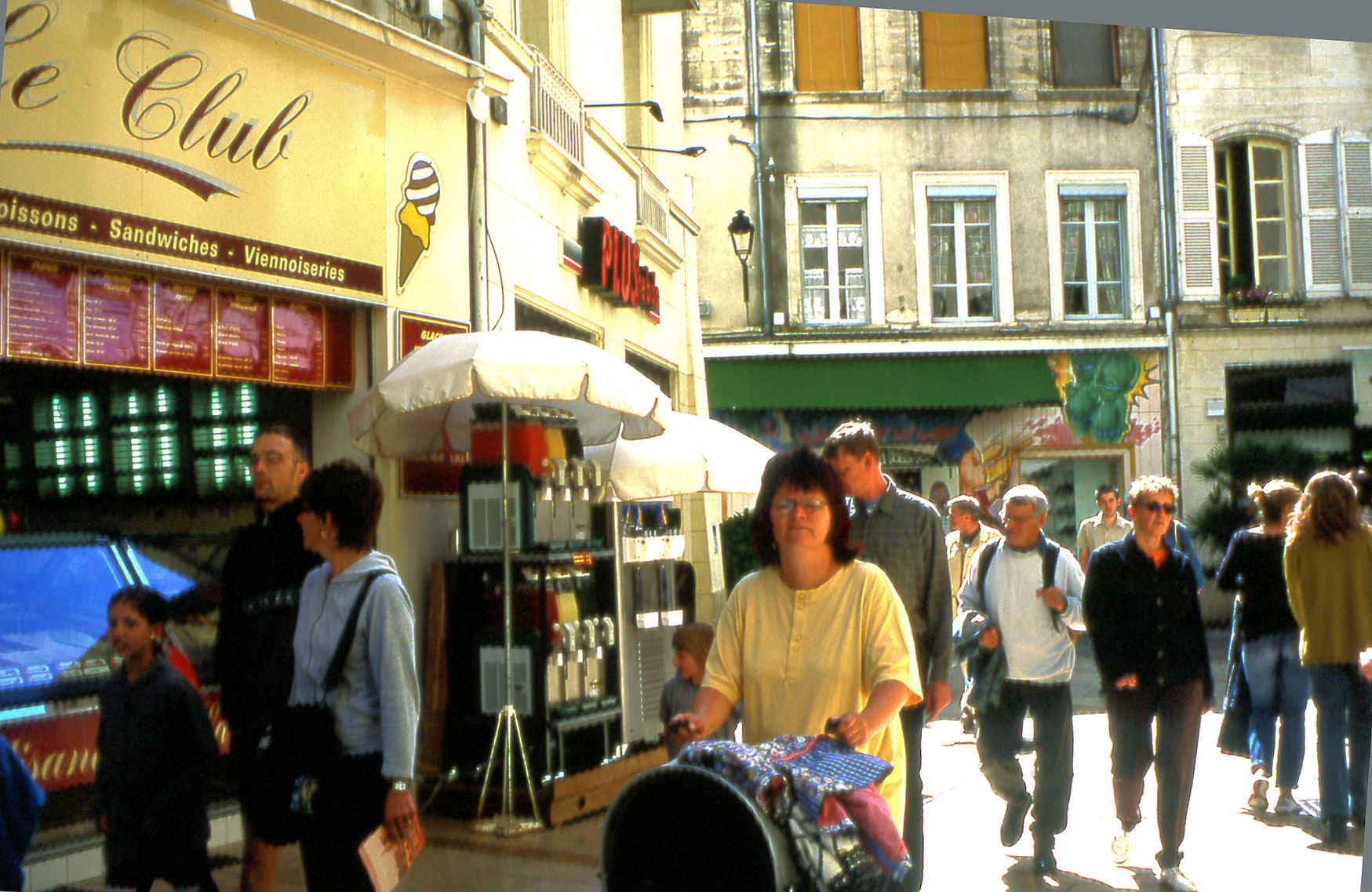
    Avignon street scene

    Avignon is a city full of ancient dwellings, museums, churches, chapels and art galleries and you can easily fill a week here without leaving the city but it also has a hippy, boho area.  In the Rue des Teinturiers, a delightful cobblestone street dating from the Middle Ages, the street is lined with wine bars and small restaurants, and artists and musicians mingle here in a village-like ambience.  Then there is bourgeois Avignon on one side of the main avenue, the Rue de la Repúblic, a chic designer clothing and luxury shops area.  The other side of Repúblicc leads to the Place Pie and the Halles, the famous covered market and meeting place for the people of Avignon.

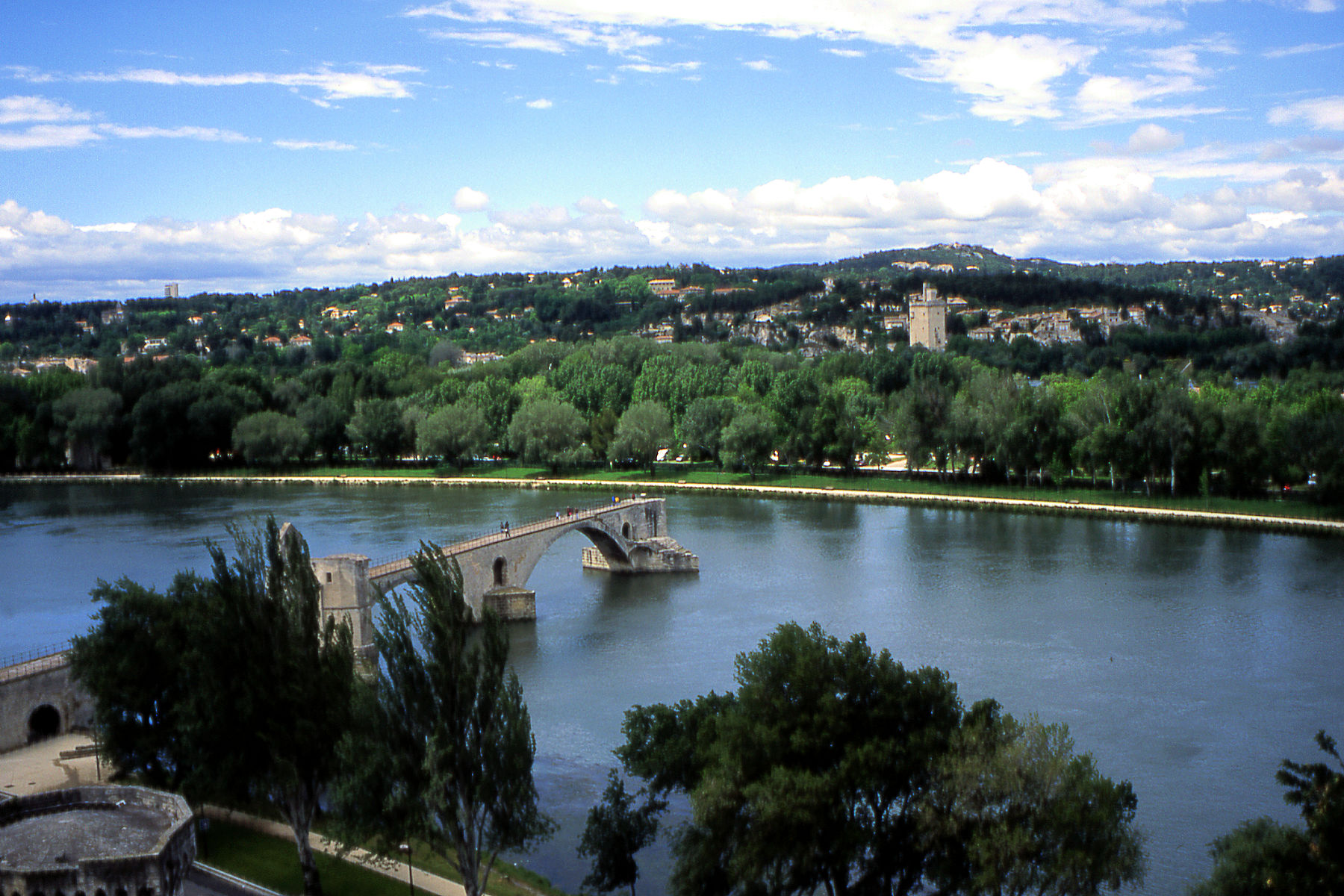
    Sur le Pont de Avignon on a windy day.

    But most people come to Avignon to see the famous bridge, the St. Bénézet Bridge, built around 1180 (by a simple shepherd, or so goes the story) to link the city to Villeneuve-les-Avignon.  Over the years, war and flooding took their toll on the bridge and today, the 12th-century St. Nicholas chapel along with four arches of the bridge are all that remain of the original structure. 

    Avignon Bridge 2

    The historic region (Luberon) between Aix-en-Provence and Avignon is often cited as being the most beautiful in France, rolling hills streaked with lavender and medieval villages perched on craggy rocks.

    Gordes 3

    Villages like Gordes, a compact hilltop town at the foot of the Vaucluse Mountains which is one of the trendiest places to live in Provence.  The ancient Borie village, an impressive complex of stone houses which was once the homes of shepherds and agricultural workers before the industrial revolution, was lovingly restored in the 1970s by a team of archaeologists and locals.  There are 300 of these in Gordes.

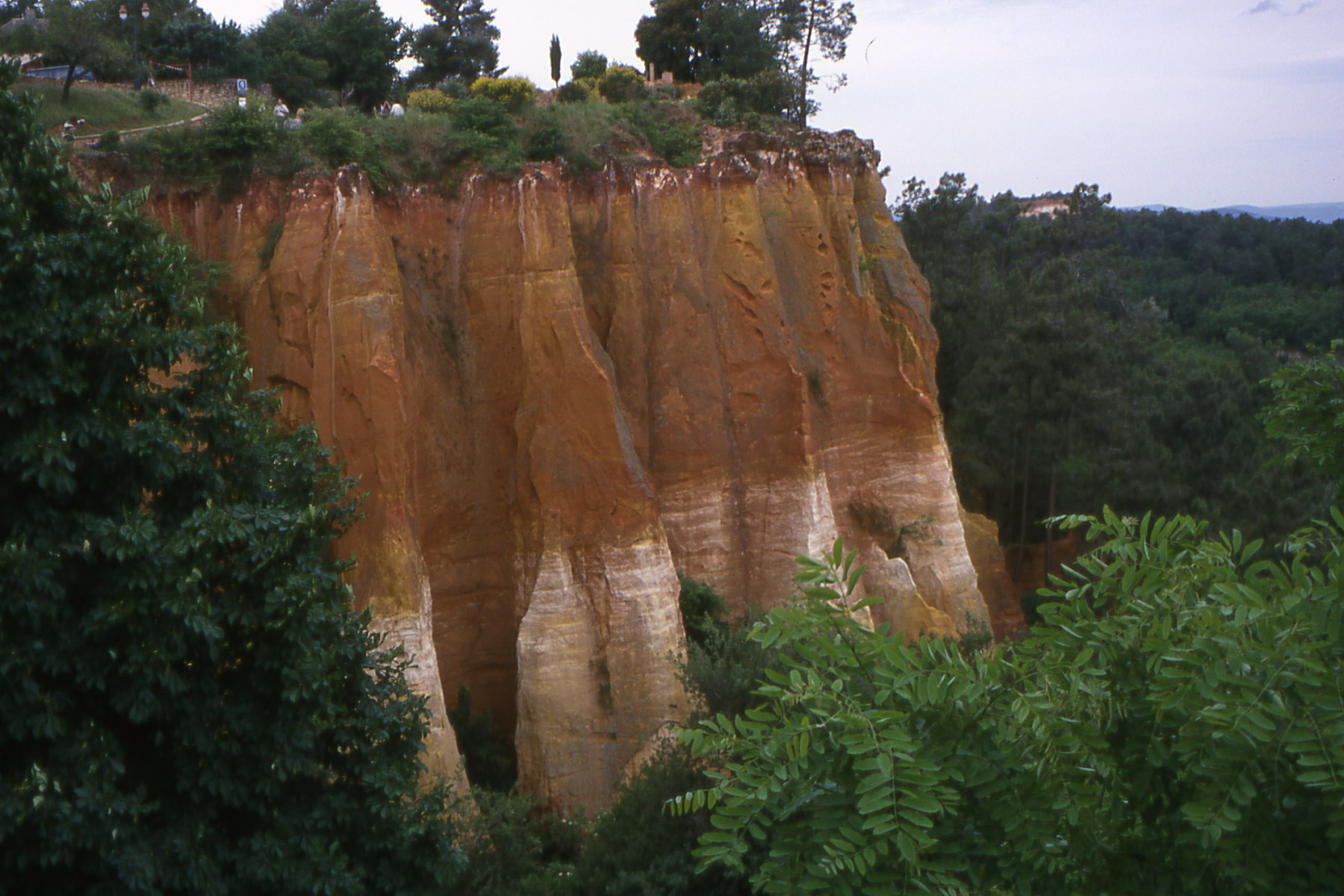
    Rousillon with its distinctive ochre earth

    Roussillon:  This area has to be visited, if only for the startling ochre colour of the earth as it is located in the very heart of the biggest ochre deposits in the world.  These natural pigments are used throughout the village, the walls of the houses being washed with the traditional ochre rendering, the many different oxides in the ochre sands combining in countless shades.

    Rousillon cemetery (ochre tombs)
    Rousillon cemetery

    The hills are streaked with it, and an Ochre Trail has been laid out and marked.

    Ochres was mined by the Romans

    Rousillon, the village
    A Village in the Luberon

    during their settlement of Provence but only became a widespread, industrial product in the late 18th century when Jean-Etienne Astier had the idea of washing the ochre-laden sands to extract the pure pigment. Today, though natural ochre faces strong competition from synthetic pigments, it remains unrivalled for use in certain applications.

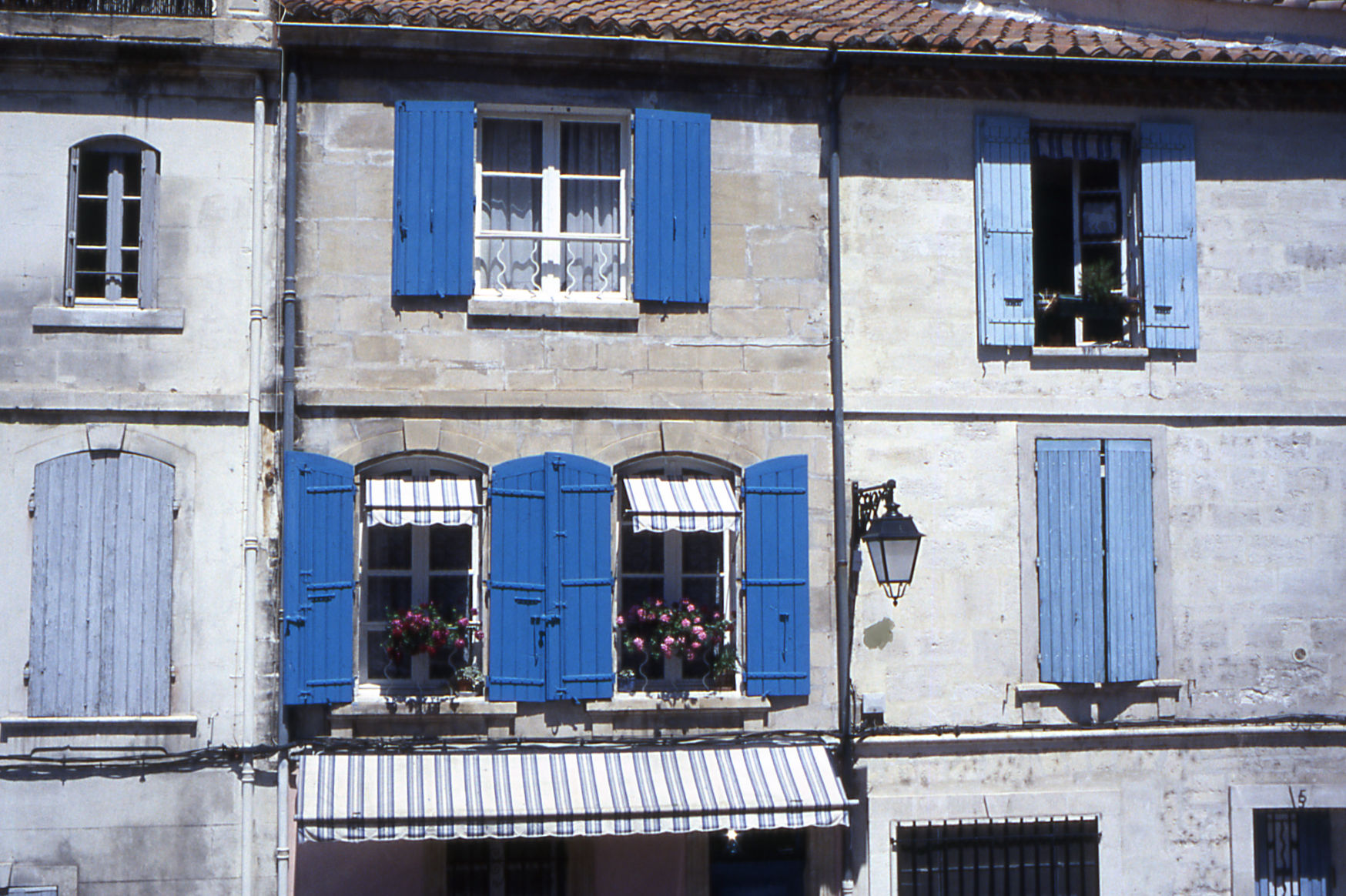
    Blue shutters on house in Arles

    Arles and Aix de Provence.  More like Spain or Italy with narrow streets and shady squares it is the gateway to the Camargue.   Arles has a Roman theatre ringed by cobbled, medieval streets and is one of the most interesting towns in France. Arles, street scene

    It was home to Van Gogh in the 1880’s and because of this the town now has a flourishing artistic centre.  Buy books on Van Gogh and postcards here which you won’t find anywhere else.  The elegant spa town of Aix is Cezanne’s own town where you can visit his workshop and take a guided tour of landmarks in the life of the painter and that of the writer, Emile Zola.

    After Arles, Van Gogh went to the pretty little town of St. Remy which nestles at the foot of the magnificent Massif des Alpilles, now classified as the Parc Naturel Régional des Alpilles. St. Remy, craft shop Stroll along the boulevards under the shade of century-old plane trees in the evening and raid the boutiques and art galleries for bargains (well, perhaps not, the Provencals are not as slow as Peter Mayle made them out to be and they strike a hard bargain).

    And then there is Baux de Provence, officially classified and labelled as “one of the most beautiful villages in France” (by the French).

    Les Baux de ProvenceAbout 15 Kl from Arles this is a village high up in the limestone-mountains of Les Alpilles, located on a 245m. rocky plateau from where magnificent views of Arles and the Camargue can be had.  It is rich in cultural treasures, with 22 architectural monuments classified as “Historic”, including the church, chateau, town-hall, hospital, chapels, houses, doorways and many items of furniture.

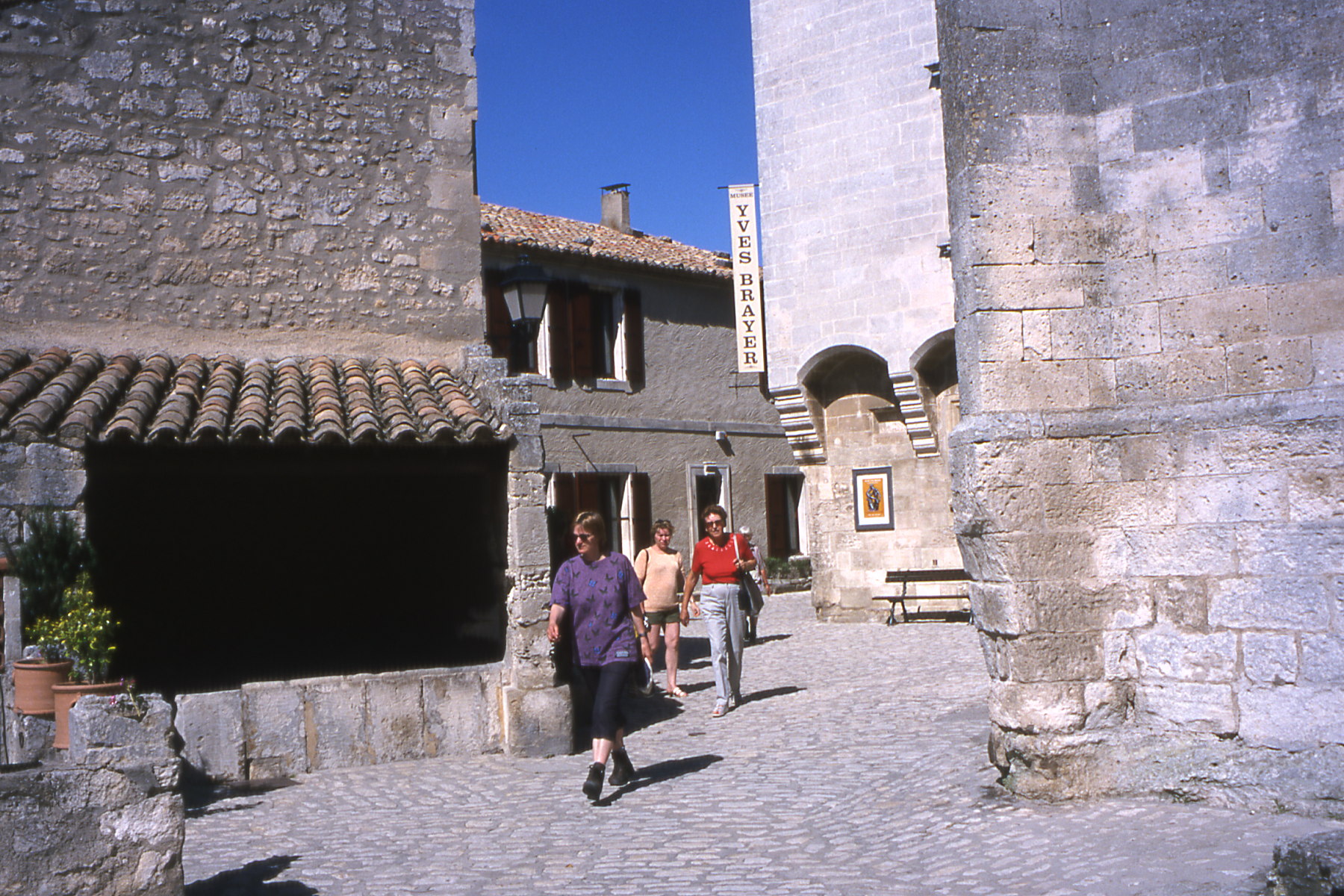
    Les Baux de Provence 3

    The village (pop. 400) has been painstakingly restored, beautiful Renaissance façades and ‘hôtels particuliers’today serving as art galleries and museums, visited by more than one-and-a-half-million tourists a year, even though the visits must be made on foot.

    Les Baux villageThe narrow streets leading up to the Citadelle des Baux are lined with bistros and restaurants with terraces hanging over the cliffs – all with views to die for.   Many of these restaurants have international reputations and offer high quality dining.

    I’ve probably missed off your favourite village: this is just a sample of what you can see comfortably within a week using local buses.  Many years ago we toured the area by car but I found the local transport both easy to understand and very efficient.

    Terrace cafe in Le Baux (sheer drop other side)
    View to die for but below this terrace is a sheer drop. Magnificent if you have a head for heights.

  • Syracuse – The Other Bits

    Syracuse – The Other Bits

    After my earlier Post on the Greek and Roman theatres in Syracuse, I thought I’d like to show you a few of the more colourful parts of the city.   I hope you’ll enjoy the photographs that follow of the transparent seas around the island, Piazza Archimede and its magnificent fountain, the food market, a few more ruins – for how could one not include them as they are part of the street furniture.

    Just to recap.  In the 5th century, when Dionysus reigned, Syracuse was one of the biggest and most powerful cities in the Mediterranean, embellished by gardens, fountains, palaces and temples.   Plato called it “an ideal city”, one of enormous military power capable of withstanding the might of Athens and Carthage. 

    With your back to the sea, you can walk either straight ahead to the old town and the Duomo, or to the left through the Porto Marina and into the old town and Ortygia.  Either way, strolling around Syracuse at your leisure is sheer pleasure.

    This slideshow requires JavaScript.

    Although the image of the fishermen mending their nets is captioned, I hope you notice the massive cruise ship in the background, the old and the new side by side, the old struggling to make a living, the new a disaster, or a dividend to a city?  The jury is still out on that one in Sicily.

    As you leave the ruins of the 7th-century Temple of Apollo you will find yourself in the Corso Matteotti with its 14th-century Greek palace, and from here it is a short walk to the Piazza Archimede, opened in 1878 and dedicated to the Greek mathematics and physics genius, Archimedes (287-212 BC), and one of Syracuse’s most illustrious sons.   

    In the centre of the Piazza is the beautiful Artemis Fountain by Giulio Moschetti (1906) dedicated to Diana the goddess of the Hunt (Diana was the Roman name of the Goddess, Artemis the Greek).  Appalled by the erotic pursuit of Alpheus the river god, Arethusa had asked the Goddess Diana for help: Diana then transformed Arethusa into a fountain which emerged on the nearby island of Ortygia, the core and oldest part of the Sicilian city, where you will find the spring named after Arethusa.  In the fountain, Alpheus peers from behind the goddess while the nymph is about to slip into the water below where, as the tale goes, she will blend with the stream before re-emerging in Ortygia.  Charging horses, Tritons and nymphs splash in the waters of the fountain and a good hour can be spent just walking around the admiring the work.

    This slideshow requires JavaScript.

     If you choose to go through the Porta Marina you will find yourself surrounded by fading Baroque Villas and Palaces facing the sea and hidden in the narrow alleyways, secretive dwellings with shades of a once glorious past still clinging to them.  Along this long, narrow promenade you will pass the Church of the Holy Spirit which is worth a visit if time allows (but remember you have the Duomo and Santa Lucia alle Badia to explore as well).

    Despite the lack of beach facilities the area around here is popular with swimmers, and often you will see people diving off the rocks into the near transparent waters or sunbathing in what looks like dangerous places along this rocky foreshore.  

    There is another church right by the Duomo, often missed by visitors because of the wonderful golden-coloured Duomo with its complex history which stands beside it, and this is the Santa Lucia alla Badia church which houses The Burial of Santa Lucia by Caravaggio, above the altar.  Caravaggio had arrived in Messina from Malta in December 1608 where he was commissioned to paint the Burial of Santa Lucia for the church of the same name: he completed this in less than a month.

    It is difficult to see this picture because the church is kept fairly dark – I presume to preserve the painting – and no photography is allowed.  

    And with all the sight-seeing, don’t forget to stop occasionally for a snack at one of the many good cafes and restaurants around (very much cheaper in the modern part of the city, by the way), and make sure to have an ice-cream and that Sicilian favourite, a Granita.


  • SYRACUSE, SICILY

    SYRACUSE, SICILY

    My recent trip to Syracuse gave me lots of material for posts but as I have written before about this Sicilian city I thought that this time I would hone in on the Archaeological Park of Neapolis which holds Syracuse’s most important Greek and Roman remains.  The Park covers approximately 240 square metres and the Greek and Roman periods are divided by a green, tranquil oasis in the midst of the ruins, called Viale Paradiso.

    p1030461
    Between the two cultures, through the Viale Paradaiso.

    The Park came into being between 1952 and 1955 with the idea of bringing together all the monuments, pillars and stones which previously had been located on various private properties and were not accessible to the public.  The result has been an outstanding success.

    The Roman part dates back to the 3rd century AD and the Amphitheatre (seen below) is the largest in Sicily at 140 x 190 metres, and it is recorded that the first performance of Aeschylus’ Etnean Women was performed here in 476 BC.  To avoid this turning into a history lesson, I shall leave the images, with captions, to speak for themselves.

    Not only was the amphitheatre used for drama: political life was played out here too, especially the assemblies in which all citizens participated.

  • Castelmola, Sicily – Medieval Village

    Castelmola, Sicily – Medieval Village

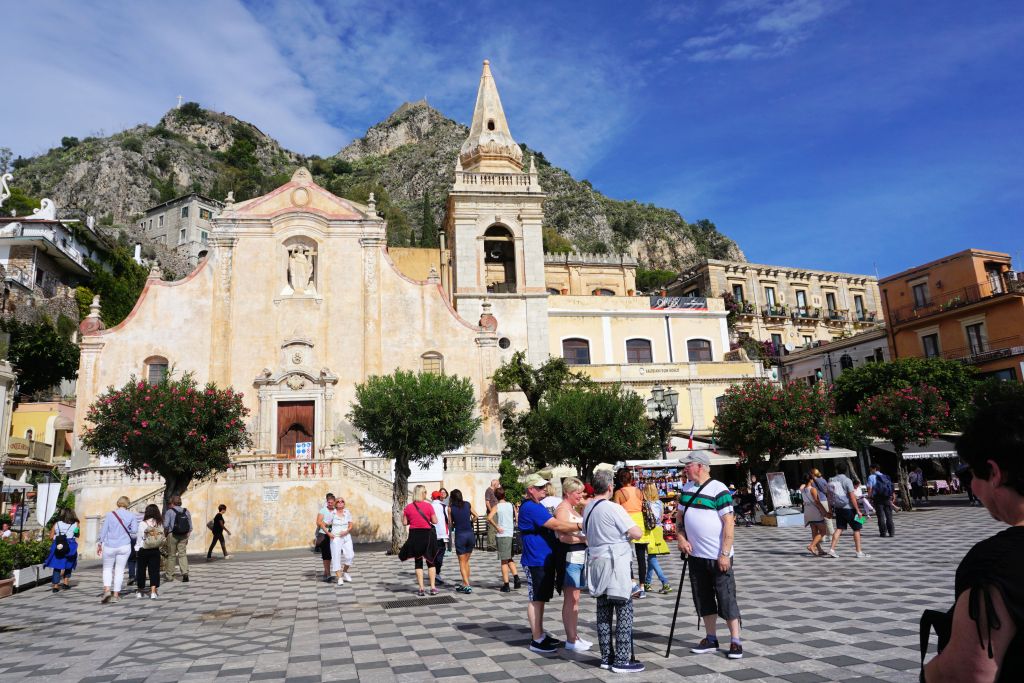
    From the natural terrace built around the ruins of a Norman castle, you have a spectacular view of the Ionian coast, majestic Etna, Taormina, the Bay of Giardini-Naxos, the straits of Messina, and the Calabrian coast:  on a clear day you can even see way beyond Catania, as far as Syracuse.  You are nearly 2,000 feet above sea level, you are in Castelmola in Sicily.

    Castelmoro from below

    Part of the attraction of Castelmola is gazing up at it from Taormina (as in the featured photo taken from the main square in Taormina,  and above from another part of the town) and wondering how on earth you can get up there.  It looks like the top of the world, this tiny village perched on a craggy hilltop above Taormina.  Not so long ago the village was inaccessible, visited only by a few intrepid travellers who hiked up the seriously uphill mountain paths for about 90 minutes, or drove up the curving, almost perpendicular road, to the top.  Nowadays a bus makes the 15-minute journey every hour from Taormina and things are changing, although slowly.


    The result of this remoteness is that the people of the village have kept their dialect, their customs and their lives entirely to themselves.

    Casteldemoro

    Founded in the 8th century BC it was first conquered by the Greeks and afterwards by Saracens and its interesting mix of customs and traditions reflect this history.  The entrance to the village is marked by an ancient arch of Greek-Roman origin, built in 900 BC, and this dominates the Piazza S. Antonino, the main square of the village.  In earlier times the entry was through a gate carved into the rock which was moved to the front of the castle in 1927.


    This relatively modern Piazza Sant’Antonio, built in 1954, is one of the main squares of the town and attracts the local elders who like to sit on the benches in the square to watch the village activity and the arrival and departure of the buses.  From this Piazza of white and black lava stone, bordered by a white balustrade and tree-lined sidewalks, there is a panoramic view of Taormina, its town, beaches and islands.


    From the Piazza, roads lead off to other parts of the village, every corner offering more spectacular views whether it’s over the velvety green mountains with their trails delineated as though someone had poured them in swirling patterns on the slopes or the craggy peaks of the barren side.  The street names, numbers and signs are locally crafted in stone and wrought iron, and the pastel-coloured houses range from palest primrose to sky blues and apple greens.  In fact, it is a typical Sicilian village, better preserved than most, as it has not lost all its inhabitants as have most of those in the interior of the island.


    That said, a fair number of the inhabitants depart in the winter for the slightly warmer temperature along the coast but during the rest of the year, they man the restaurants, bars and lace and embroidery shops for which the village is famed.

    One of the most famous and most eccentric attractions is the Turrisi Bar which has a bizarre display of phalluses in wood, clay and ceramic – a sign of abundance and a good omen as per the Hellenic tradition – in every size, from large stone sculptures to bathroom taps, paintings and wooden carvings.  This ancient emblem of fertility is celebrated here in flamboyant style, and among the gifts available from the shop is the locally produced almond wine in phallic-shaped bottles, referred to, of course, as the “elixir of love”.

    As so often in Sicily one passes from the profane to the sacred in the blink of an eye and in just a few steps you arrive at the Cathedral which dates back to the 16th century (rebuilt in 1935), known otherwise as the Church of St. Nicholas of Bari, in the Piazza Duomo. There isn’t a lot to hold your attention here but it has a rather beautiful pulpit and a wooden statue of Mary Magdalene which, I am told, is of the school of Bagnasco.   I confess I had no knowledge of this sculptor but I found a reference to one Rosario Bagnasco who worked mainly in wood, and who was active mainly in Palermo, so I presume it is his work. Looking towards the Bell Tower Before you leave, look to the beautiful bell tower which offers a wonderful frame for a photograph of Mount Etna in the distance behind it.

    CASTEL DEL MOLA

    So if you find yourself with a day, or even a half day to spare when you are in Taormina, or if you want to see one of Sicily’s loveliest medieval villages, then be sure to visit Castelmola where you will find narrow streets and quiet solitude in a community of just over one thousand residents.  In fact, if you visit out of season and find your way up the mountain to Castelmola you may feel that you have the entire town to yourself.


  • Newport, Isle of Wight, a Second Look

    Newport, Isle of Wight, a Second Look

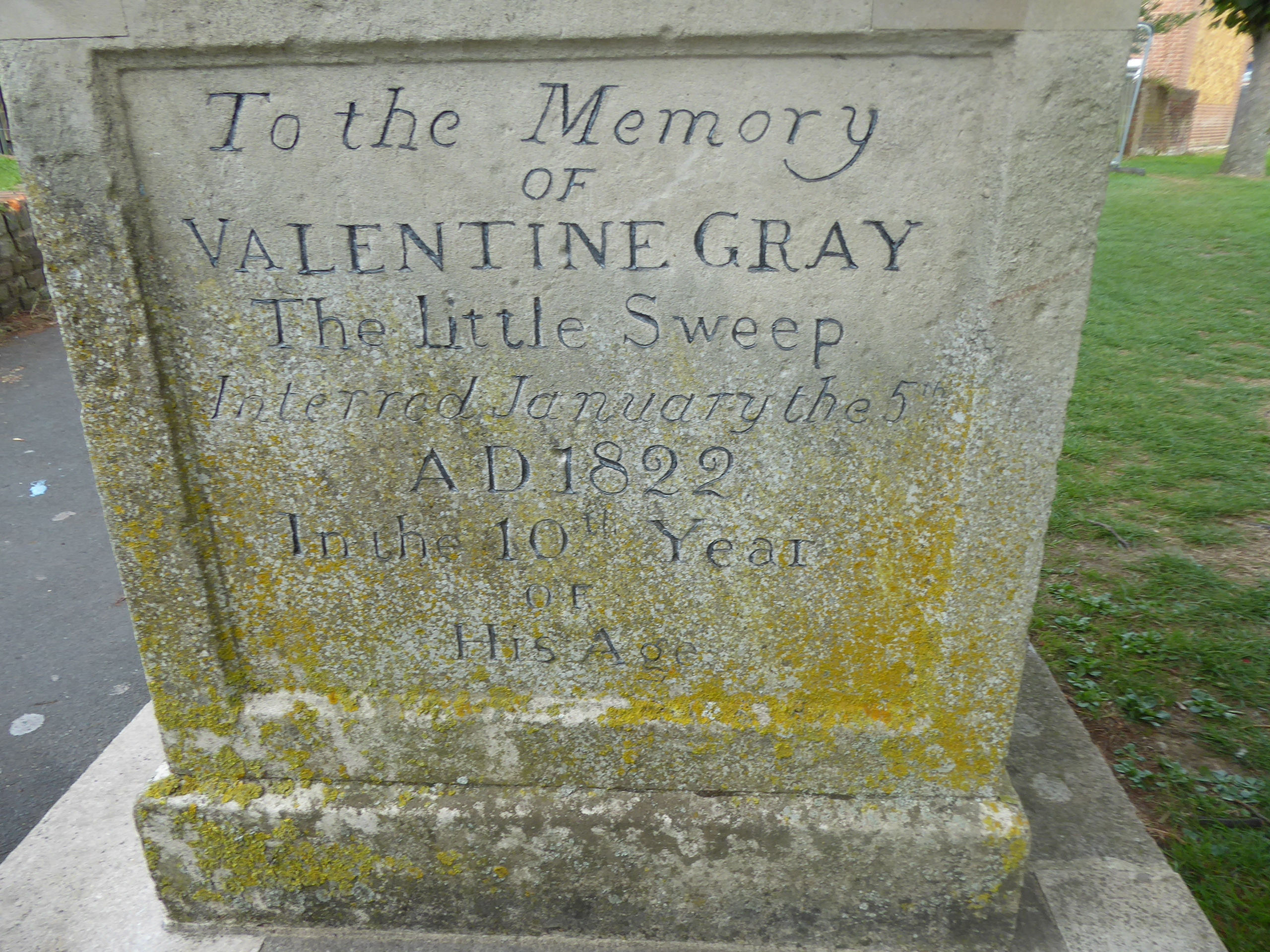
    On the green in the middle of the town stands a memorial to the last little chimney sweep to die here, and just a few miles away a lovely old pub is the site of the last hanging to take place.  I’m in Newport, the main town on the Isle of Wight, sometimes referred to as the capital.

    Valentine Grey


    The Island is well known as a favourite holiday resort for walkers, cyclists and families with young children, but Newport itself is often dismissed as merely a shopping area.  Yet Newport was the hub of the Island’s rail network until the Beeching cuts of 1996 closed its railway along with many more on the island.  This was a cut too far as the roads can barely cope with the increased traffic that was the result of such drastic pruning.

    The only remaining train line runs from the ferry terminal at Ryde to the resort town of Shanklin with stops at Sandown, Brading and Smallbrook (for the Steam Railway), and the hub of the transport network is now the bus station in Newport where routes from across the Island terminate.

    A quick visit to the town and you could be forgiven for thinking it is a town of chain stores from the ubiquitous M & S to H & M and Primark, but this historic town centres on two elegant squares surrounded by Georgian and Victorian architecture, and the town’s quay from which goods from all over the world were shipped along the Medina River from the port at Cowes, is just a short walk away.

    P1090920
    Riverside Pub in Newport, The Bargeman’s Rest

    Swans float serenely on the river ignoring the canoes and kayaks, the sailing boats and the odd small yacht or two that are on the water, and on the terrace of the Quay Arts Centre people relax with coffee and cakes, tea and crumpets or lunch.  Inside the Arts Centre is a constantly changing art exhibition, dance classes, open mic occasions and an upmarket shop selling exquisitely crafted goods in silk, silver, ceramic, pottery and paper.

    There was an extensive Roman settlement on the island and there remain two Roman villas, one of which is open to the public and whose remains provide a fascinating insight into country life in 3rd century Britain.  Discovered in 1926 when foundations were being dug for a garage, subsequent excavations revealed the remains of a late Roman farmhouse built around 280 AD with a superb bath suite, underfloor heating and remnants of mosaic floors.  You can peep into a Roman kitchen and see a slave preparing a Roman feast and there is a hands-on activity room where you can make a mosaic, repair a broken pot or weave a blanket.  Outside, the plants Romans would have used are grown in the beautiful herb garden.

    CC David Hill
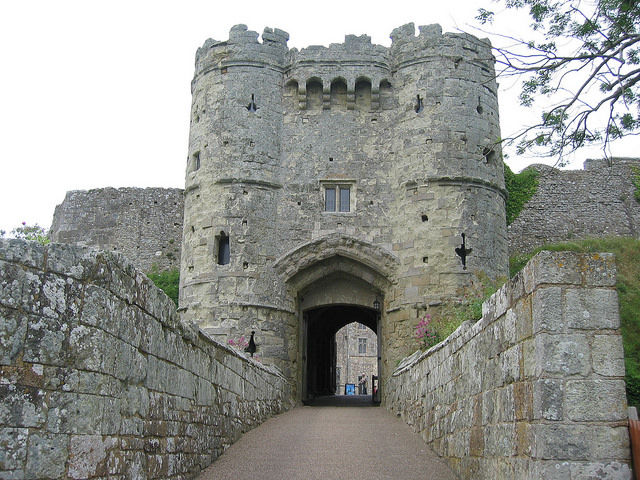
    Carisbrooke Castle – Copyright David Hill (Flickr)

    Newport is probably more famous for the nearby castle of Carisbrooke in the village of the same name, but although there have been fortifications on the Carisbrooke site since Roman times, what one sees today dates largely from the 12th to the 15th century.

    Carisbrooke Castle Copyright David Hill (Flickr)
    Carisbrook Castle – Copyright David Hill (Flickr)

    Carisbrooke Castle is most famous as the place where Charles I was held prior to his removal to London and his execution by Oliver Cromwell’s Parliamentarians. The castle is said to be haunted by the King’s young daughter, Princess Elizabeth, who died during her incarceration in the Castle.

    The donkeys of Carisbrook Castle are very popular with children of all ages.  In previous centuries, water for the castle’s occupants was drawn from the 150 foot deep well by two donkeys powering a draw-wheel, walking approximately 270 metres to raise one bucket of water.  When the castle lost its defensive role this practice stopped.

    When the castle was restored in the 19th century, the equipment was renewed and the donkeys have been raising the water for the benefit of watching visitors ever since then. English Heritage is keen to say that the donkeys enjoy the exercise and are never over-worked.

    Nearby Parkhurst Forest is home to two prisons which together make up the largest prison in the UK: it was once among the few top-security prisons in the United Kingdom. Their names, Parkhurst and Albany, were once synonymous with the major criminals who were housed there, it being presumed that any escapee would have a problem getting off the Island (as indeed it proved on the few occasions when a breakout occurred).

    Crowds enjoy the music festival ©VisitIsleofWight.com

    The famous Pop Festival shows no signs of losing popularity despite competition from other towns and cities across the country.  Seaclose Park on the east bank of the River Medina has been the location for the revived Isle of Wight Music Festival since 2002 and it is one of the key events in Newport’s events calendar!

    So if Newport, Isle of Wight is on your itinerary, please wander around its streets and alleyways, look at the façades of the houses and try and guess in what century it was erected.  Find the row of old Alms Houses and if time permits, take a walk along the banks of the Medina River and try and visualise the days when sailing ships sailed up here from Cowes carrying a cargo of rice from Carolina.  And when it comes to time to eat, whether your taste runs to Mac & Cheese, Burgers, or Fine Dining, Newport can supply you with the best, with the Golden Arches for fast food and Hewitts and Michelin-starred Thompsons for truly superb food.

    The Guildhall, Newport.jpg ©VisitIsleofWight.com


  • Wish You Were Here

    Wish You Were Here

    Today I got a postcard from abroad!   So what? you may think.

    So absolutely fantastic that I did an impromptu jig in the hallway when I picked it up before reverently placing it in a prominent position so that I could look at it and admire it for a few more days.

    THE AZORES

    Do you remember how exciting it was to receive a postcard in the days when people sent you postcards?  Those mountain views, seascapes, hotels with the X placed just where the sender’s room was?  The whiff of abroad that unsettled you as you sweltered in a stuffy office or maybe dreamed in your kitchen or garage as the evenings grew shorter and the winter light faded?  You remember it now?

    Japan
    Mount Fuji, Japan

    Next time you’re away from home, put away your smartphone, pack up the tablet, venture out and into the touristy gift shops and buy some postcards to send to your friends  Postcards are physical things, things you hold, read and re-read, pass along to friends to read; they give rise to conversations “So-and-so is in Venice this week.  I’ve had a card”.  “Oh, does (s)he like it?” and so on.  A whole conversation opens up in which you discuss former holidays, your bucket-list of places to see, the food you ate, the weather (always good) and how the children loved it.  You don’t need to look down at your phone to check anything, it’s on the card, as is the view, not a blurred selfie taken and then hastily dispatched to all and sundry.

    Russia
    Russia

    You can’t store the postcard in your Inbox only to have it deleted after the set time (in my case 30 days), you can’t Tweet it, upload it to Facebook, Instagram it or save it to your computer. But you can be cheered by it every time you look at it and think that someone has thought about you enough to go out and buy a card, then a stamp, then find a Post Office in which to post it. I know sometimes the shop will sell stamps and take them for posting, but not always.

    CUBA
    Cuba

    So, what sort of Postcard are you going to send?  One of those innuendo-laden Donald McGill cards that used to make everyone laugh, even the Vicar on a good day? Or a view of the sea/sand/mountains?  A donkey, Flamenco dancer, famous painting, or two fluffy kittens in a basket?  You have to think of the right card for the right person, and as you do, you’ll realise the pleasure it is going to give to whoever receives it, whether it be an aged aunt or a nine-year-old nephew.

    Writing and sending postcards means time away from interfacing on Facebook, emailing the office, or poring over selfies of friends out on the town, but isn’t it a great excuse to ditch the technology for an hour or two?

    Yorkshire
    Haworth, Yorkshire

    I don’t mind what you send me.  I just love that lift I get when I receive one, to know I’ve been remembered, and that you have spent time buying, writing and posting me a Wish you Were Here thought.

    The Beach at LeHavre

    Wish You Were Here!