Overlooking the Douai Plain, the Vimy Memorial is located approximately eight kilometres northeast of Arras and is the centrepiece of a 250-acre preserved battlefield park that encompasses a portion of the area over which the Canadians made their assault during the initial Battle of Vimy Ridge. The imposing structure stands amid craters and unexploded munitions that still honeycomb the grounds which remain largely closed off to the public for reasons of safety.
The Memorial is dedicated to the Canadians who served their country in battle during the First World War, and in particular. to the 60,000 who gave their lives in France. It also bears the names of 11,000 Canadian servicemen who died there who have no known grave.
The rough terrain is because it cannot be properly excavated due to unexploded munitions.
Designed by W.S. Allward, it took 11 years to build. He had initially hoped to use marble for the facing stone but was persuaded that this would not weather in northern France. After a two year search he found a limestone of just the right colour, texture, and luminosity in the ruins of Diocletian’s Palace at Split in Croatia and managed to procure supplies from an ancient Roman quarry located in Croatia near Seget. Oscar Faber, a Danish structural engineer who designed the substructure for the Menin Gate at Ypres, prepared foundation plans and provided general supervision of the work.
Vimy Memorial from the road with designated pathway to the Monument
Postscript:
During the Second World War Germany took control of the site and held the site’s caretaker in an internment camp for Allied civilians. There were rumours that it had been desecrated and to demonstrate that this was not so, Hitler, who reportedly admired the memorial for its peaceful nature, was photographed by the press while touring it on 2 June 1940. After the war it was found that it had not been damaged in any way and that it had been carefully looked after by the Germans during the war.
The site of 250 acres, most of which is forested and off limits to visitors to ensure public safety, is of rough terrain and because unexploded munitions make the task of grass cutting too dangerous for human operators, sheep graze the open meadows of the site.
For over half a century the delights of German Saxony remained hidden from a large part of the world due to it being part of the former East Germany. Since German reunification however, this lovely state in south east Germany is once again attracting visitors drawn there by its archecture, its craftwork and its traditions.
Sign for hand-made porcelain, Gorlitz
In Saxony, culture goes hand-in-hand with nature, and one of the many pleasures awaiting the visitor is driving or cycling on roads almost free of traffic. We drove from Leipzig through Dresden and on towards the medieval towns of Görlitz and Bautzen on nearly empty roads, bordered by massive tracts of yellow rape (the size of the fields a relic of communist collectivisation), the wind turbines on the horizon like giants with flailing arms striding across the hills.
The nearly 1,000-year-old town of Gőrlitz shares a border with Poland and Czechoslovakia (Prague is a mere 160 Kl. away) its glorious architecture virtually untouched despite the wars that raged across the land. To stand on the German side of the Peace Bridge and look at the blue, yellow and pink facades of the houses across the river in Zgorzelecon the Polish side, is to feel the full weight of recent history.
View of the Lusiarian Niesse River and the Polish town of Zygorzelic from the bridge in Gorlitz
Prior to World War II, Gőrlitz straddled both banks of the River Neisse but when the Allies redrew the boundaries after the war and divided Germany between the western powers and the Soviet Union, it lost its eastern suburbs. Fortunately for posterity, the Soviets did not knock down and rebuild the town in utilitarian style as they did in most of Dresden and Leipzig.
A walk through the crooked, narrow streets on the 15th century basalt cobblestones, forged from the mountain just outside the town, takes you on a fascinating journey through the past. Throughout its history, this former textile trading town has exercised political importance, initially by its position and dominance as a medieval trading post and then by its transformation into a residence for the bourgeoisie in the 19th and 20th centuries. If some parts of it look familiar to you it is because it has been used as a location for more than one popular film, the most recent being The Grand Budapest Hotel.
A View to the Round Tower, a popular landmark in the town
Its position on the trade route to important places like Frankfurt, Leipzig, and Krakow and to special privileges granted to the town, meant that all merchants passing through were obliged to offer their wares in Gőrlitz. This gave rise to some spectacular architecture in the building of houses with impressive inner yards where the textiles could be displayed. Enormous squares, the sides lined by the houses of the rich merchants who dealt in wool and furs, richly decorated house fronts, fortifications and fortified towers, buildings from the Gothic, Renaissance, Baroque, and Art Nouveau eras have made the town a 3-dimensional reference book of architectural history.
A few of the beautiful façades of the houses in Gorlitz
In the part-arcaded Untermarkt (Lower Market Place) is grouped one of the finest collection of Renaissance and Baroque town houses to be seen in Europe, a place of pilgrimage for architects the world over. In fact, 4,000 of Gőrlitz’s late Gothic, Renaissance, Baroque, Gründerzeit (German Industrial Revolution) and Art Nouveau buildings, are protected as National Monuments.
Once a Bishop’s Palace now a Museum in Gorlitz
The older buildings blend harmoniously with the Gründerzeit and Art Nouveau quarters, the Strassbourg Arcade Department Store with its stunningly beautiful chandeliers and the Art Noveau Karstadt Department Store being prime examples.
Gorlitz has a small town charm despite its centuries of architecture and is a good place to see craftsmen work in traditional trades like jewellery making, porcelain painting and toy-making: it is also an ideal place to sample the local specialities – Landskron beer and a fruit schnapps called Görlitzer Geister.
The Schönhof
If you are spending time in the region and want a break from the culture overload, there are many kilometres of cycle and hiking tracks along the Oder-Neisse to explore and guided tours by bicycle through the cultural regions of Upper Lusatia, Lower Silesia and Bohemia are available. Frequent stops are made in beer-gardens along the river for local delicacies washed down with the very special local beer or the equally delicious white wine of the region.
Dresden is only 100 kl. away and easily reachable by train or bus but I’m mindful of the fact that you may come to Gorlitz from Dresden, so I would suggest instead a trip to the fantastic town of Bautzen where Sorbian language and traditions still rule.
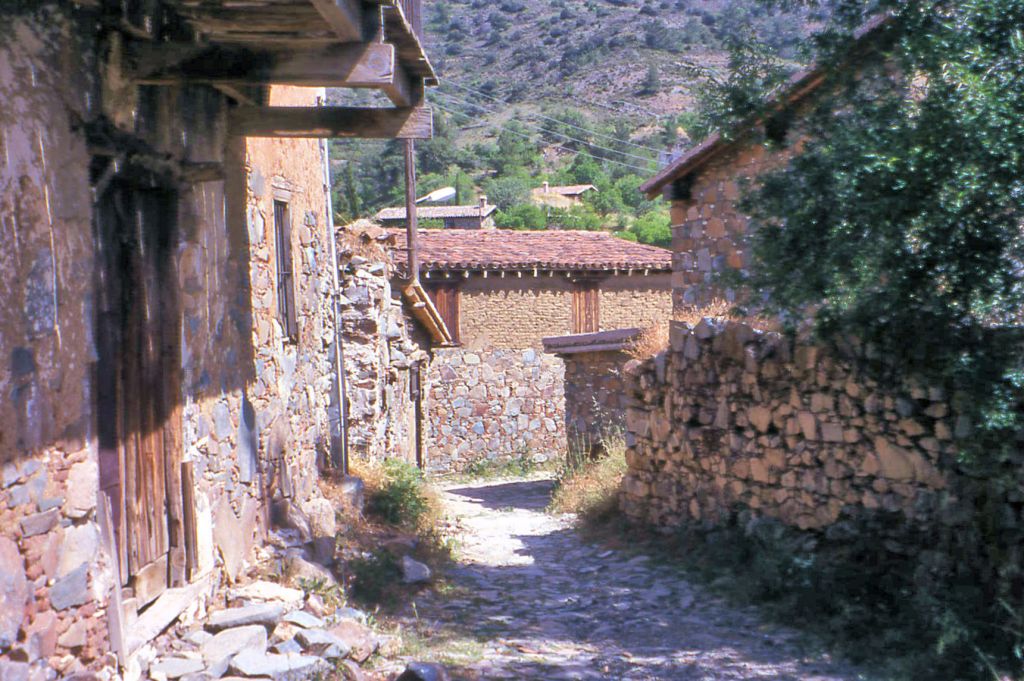
It is always sad to see deserted villages and town and even though they are being given status by UNESCO, they still harbour a feeling of meloncholy.
Fikardou Village – a Unesco Heritage Site in Cyprus
There is no escaping the fact that young people will no longer work at back-breaking, low-paying jobs on farms, and abandoned villages like these are a familiar site all over the Mediterranean. Even when some houses are restored by a local who works abroad, they are then used only as holiday homes. The greatest cause for concern then becomes the elderly left to fend for themselves when all the young people have fled to coastal towns for work.
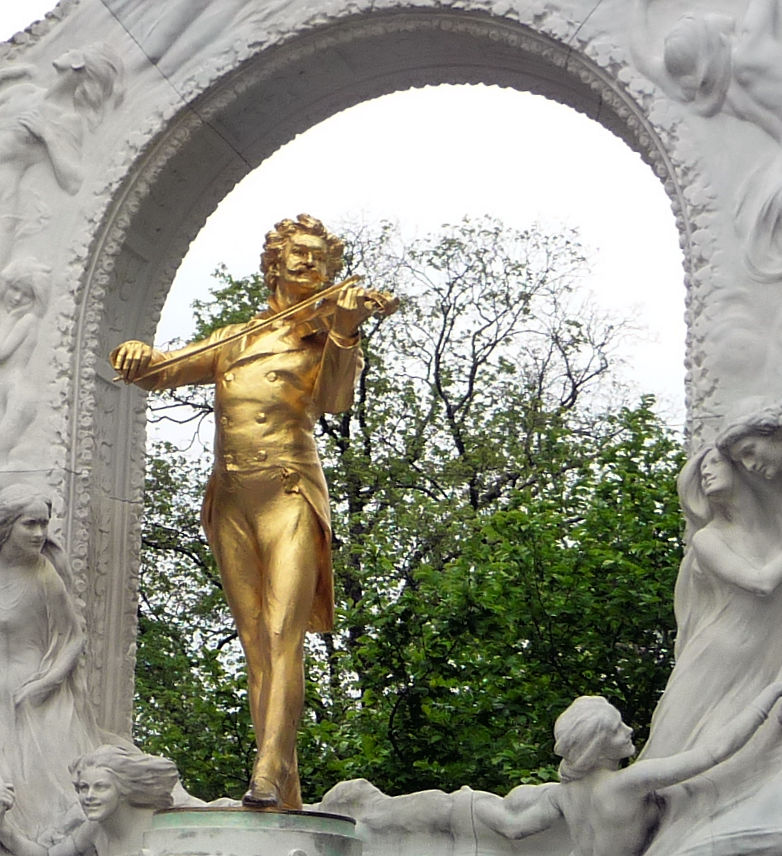
Prior to taking a tour through the Vienna Woods I took a walk in the Stadt Park which is full of statues to musicians. Pride of place, of course, goes to the favourite son, Johann Strauss.
They must have run out of plaques when they erected this sitting man statue on the walls in Salamanca but a student told me it was the writer Unomuno. It’s not shown among the 20 most famous statues in that city of many statues, but I loved it.
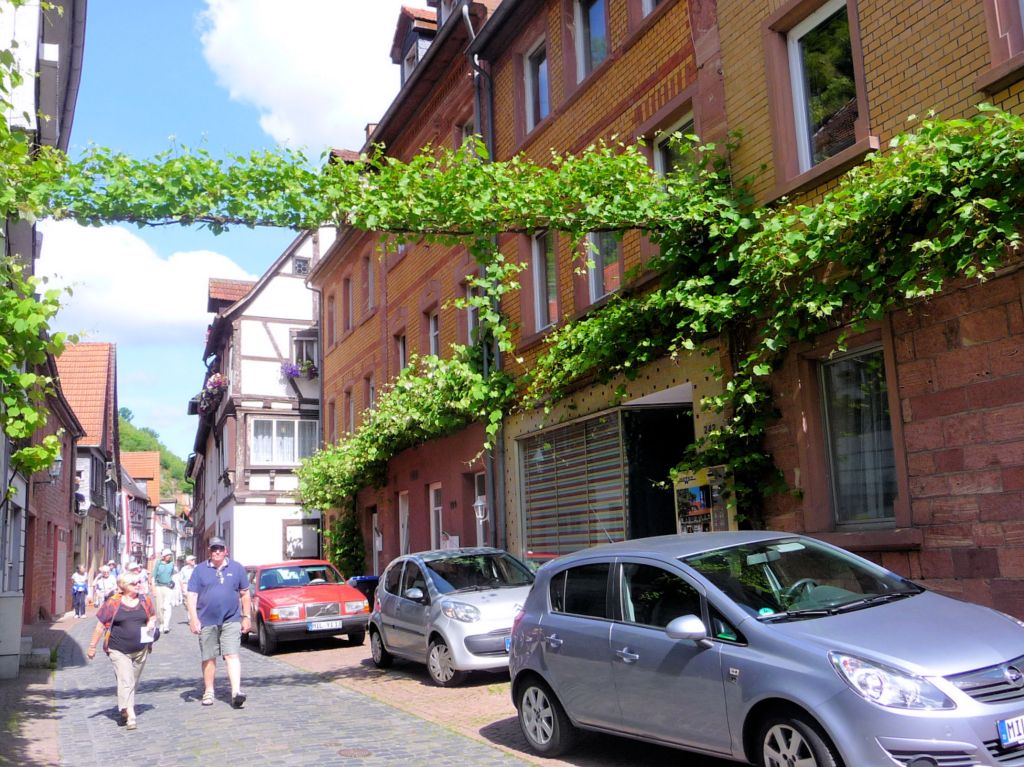
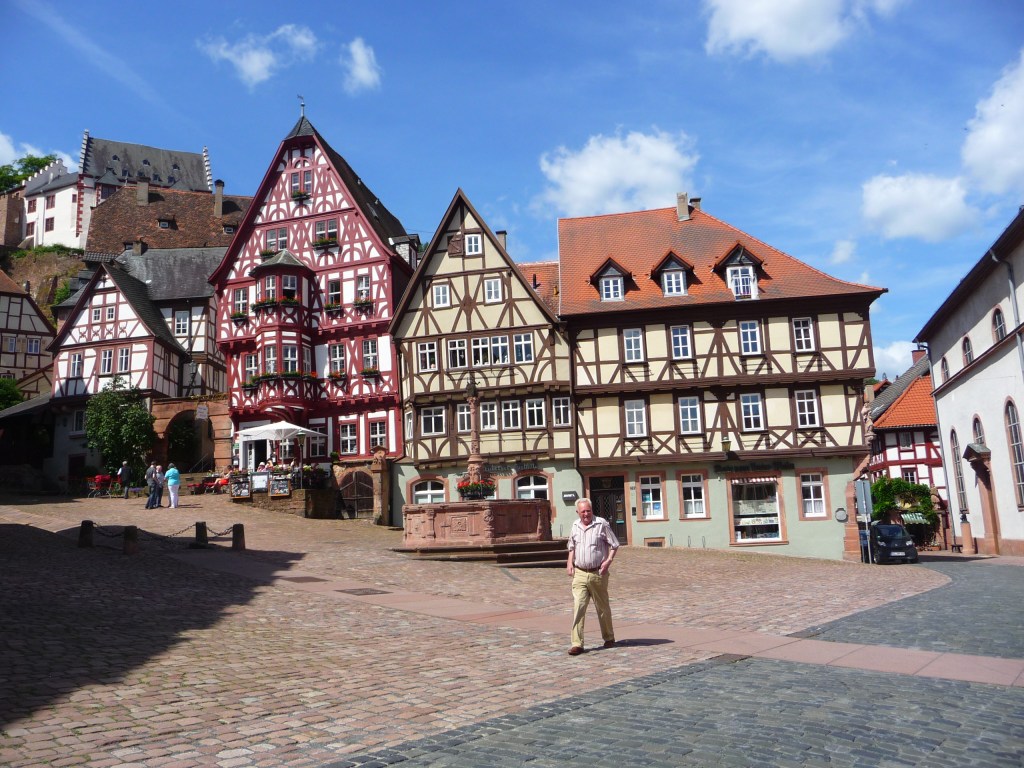
It’s been a few years since I last visited the villages along the River Main in Germany but it was once a favourite driving holiday, especially in early spring when the flowers were in bloom and the street stalls were full of jewel coloured blooms, wrapped in flimsy coloured paper, just asking to be taken home. Of all the lovely medieval villages along the route one of my favourites was Miltenberg, a town with a wide main street lined with half-timbered houses and small medieval alleys.
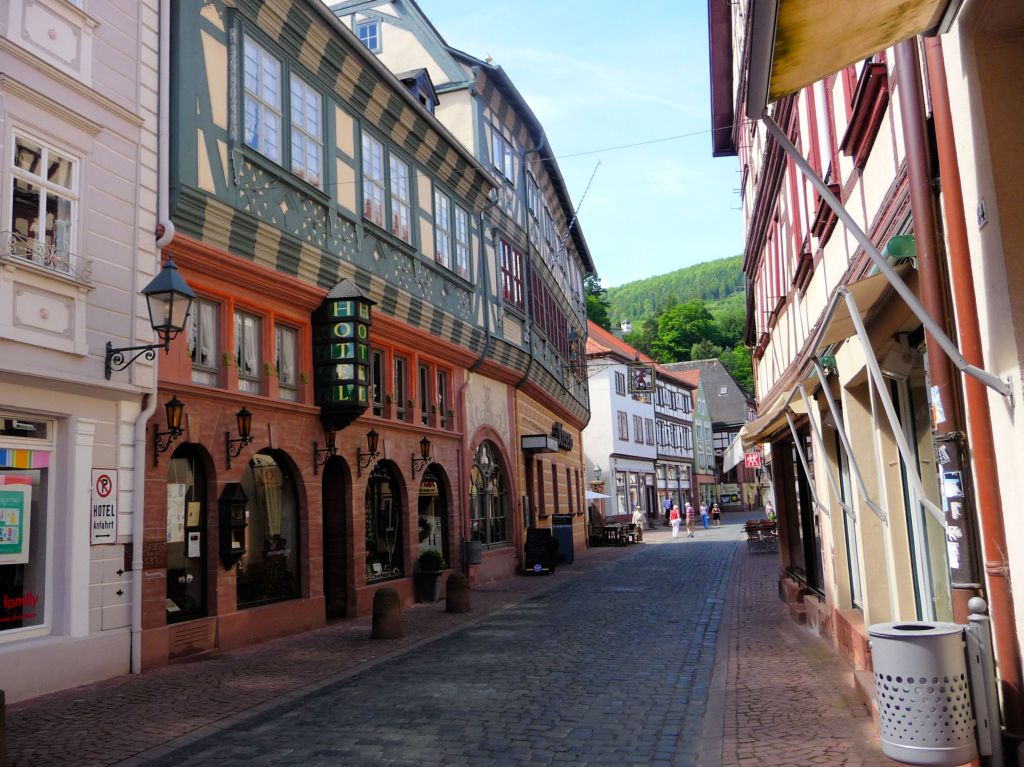
Main Street, Tables Ready for Lunch
The beautiful houses that line its main street span the 15th – 17th centuries and the oldest dates back to 1339: what is so unusual is that all of these half-timbered dwellings are lived in. In consequence, there is no feeling that this is a tourist site, a place where we come to gawp and take photographs. Instead, we wander and look, dive into interesting looking shops, and stop off at cosy taverns serving local cuisine along with the wine of the area – and, of course, beer.
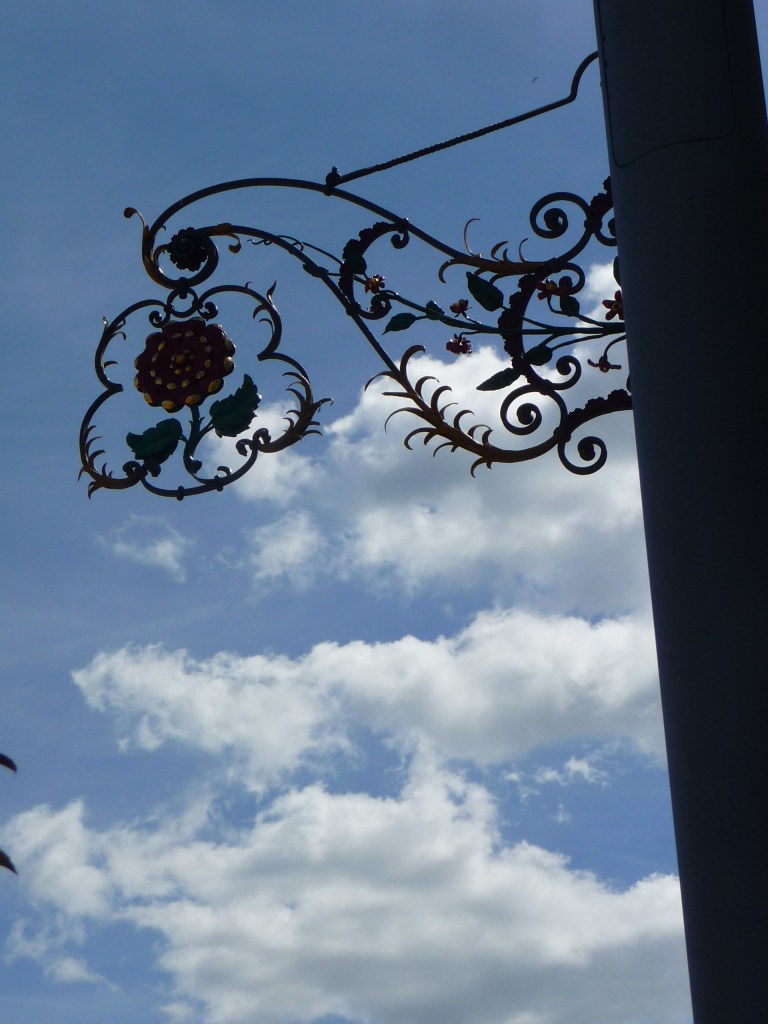
Wrought Iron Signs
Wines of the Region
Vines Across the Street
Stag’s Heads
Main Beer Keller
A Green Haven
The town has a few interesting sculptures dotted around the streets most of them honouring local artisans. I was also impressed by the quality of the goods for sale in the shops, at a quality-high price I may add. Even the mannikins that modelled the clothes looked beautiful as you can see from the picture below.
Viniculture and the wine trade, wood from the surrounding forests and stone, and the fact that the town was well-placed on the river for transportintg goods, was favourable to this location at the trading artery of Nuremberg and Frankfurt and the town grew rich.
The Old Marketplatz
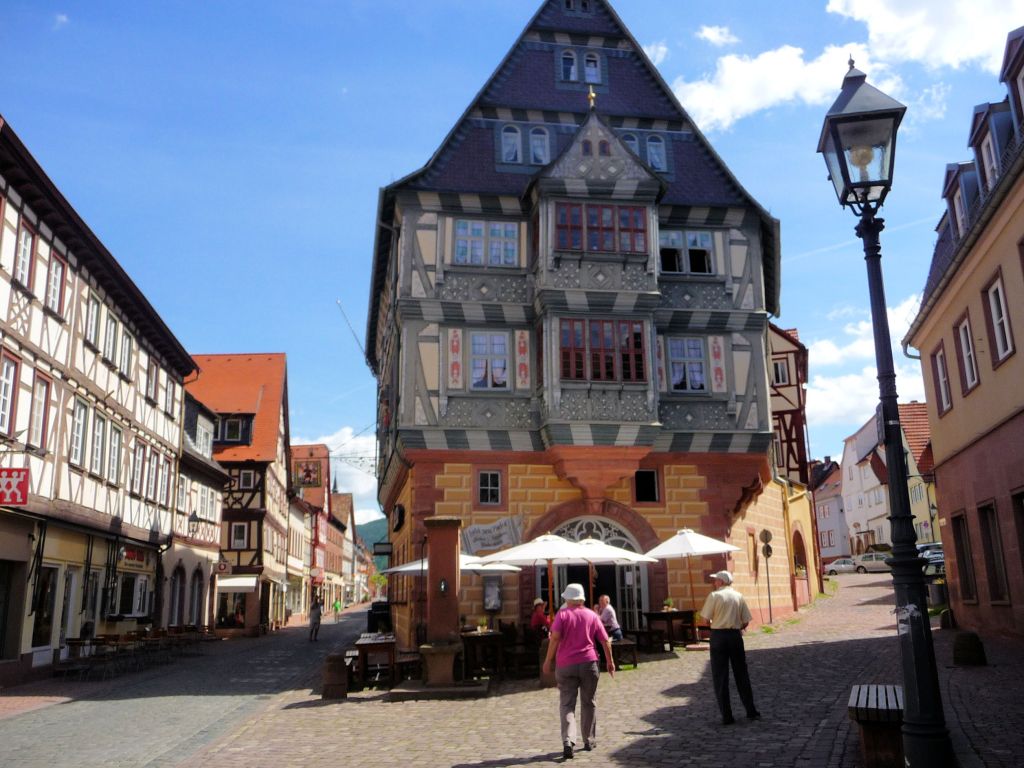
One can see Miltenberg’s importance from the magnificent half-timbered houses, especially those in the Old Market Place (the Schnatterloch) and Germany’s oldest Inn, the Gasthaus zum Riesen, dating from 1590. It claims to be Germany’s oldest Inn and an historical document tells us that a local owner at the time was granted the right to fell a hundred oak trees for its construction. It is known for serving some of the best food in town and is especially noted for its roast salmon.
Germany’s Oldest Inn, Gasthaus ZumReisen, dating from 1590
From the Market Square to Mildenburg Castle, which was constructed in 1200 under the aegis of the Archbishop of Mainz, is an easy walk. The castle doesn’t really comare to other castles in Germany being a relatively small fortress, but it is worth the walk if only for the wonderful views of the old city.
A small town but a supremely beautiful one, and a recommended stop on the way to or from Nuremberg or Frankfurt.
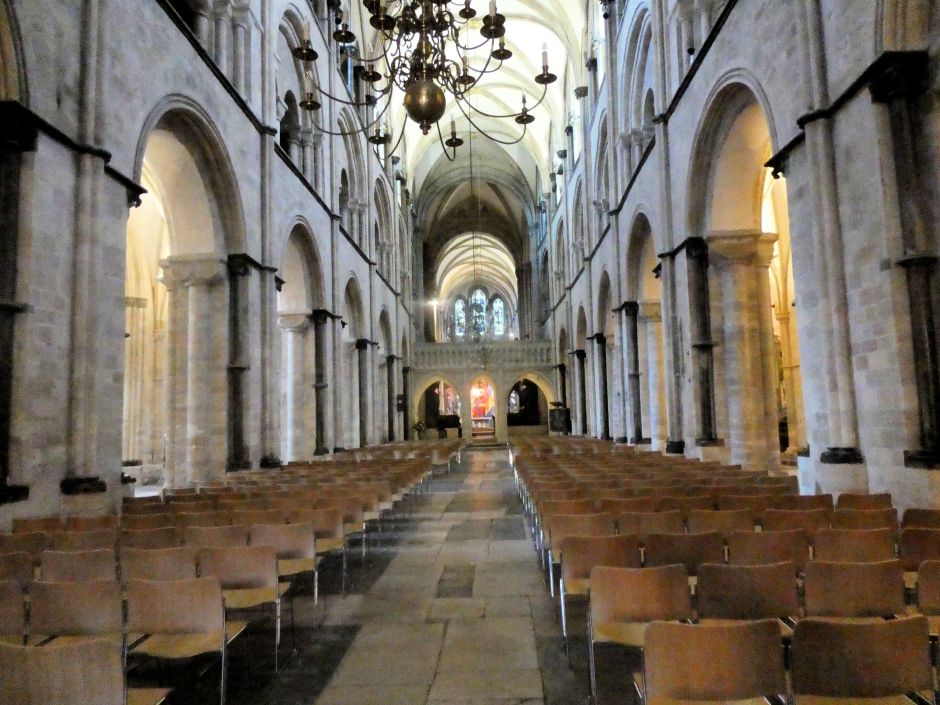
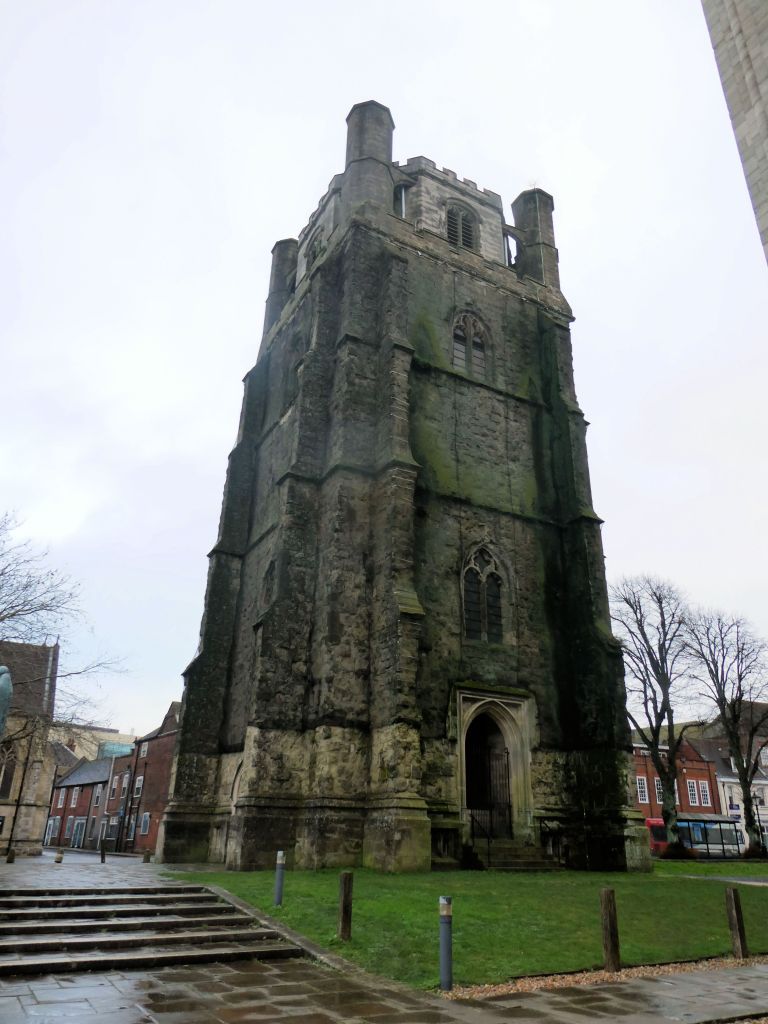
I am not a frequent visitor to churches and cathedrals but I make an exception for the 7thCentury Chichester Cathedral because it contains art that speaks to me. The Cathedral is a classic Norman building with round arch windows and west facing twin towers and is the only English Cathedral with a surviving detached medieval Bell Tower dating back to 681 when Saint Wilfred brought Christianity to Sussex.
Medieval Bell Tower, Chichester Cathedral
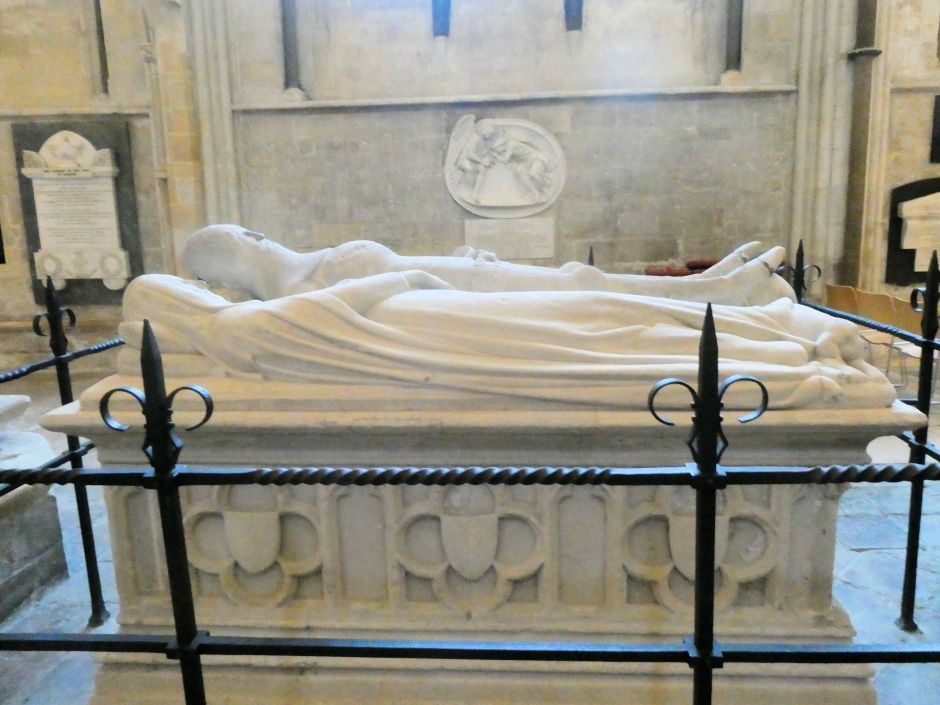
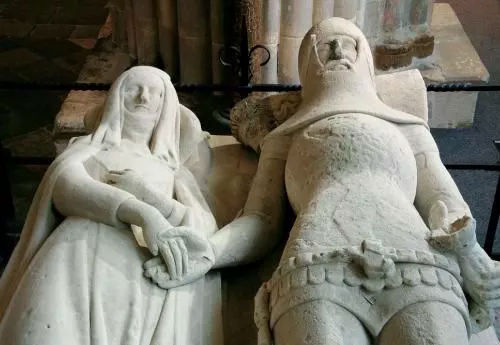
It was raining heavily on the day after the theatre performance so we spent most of the time before lunch and our departure, in the Cathedral. I wanted to re-visit the Arundel Tomb, subject of a poem by one of my favourite poets, Philip Larkin. I have been re-reading Larkin recently and that particular poem has being going round and round in my head and I knew I could only dislodge it by visiting the tomb.
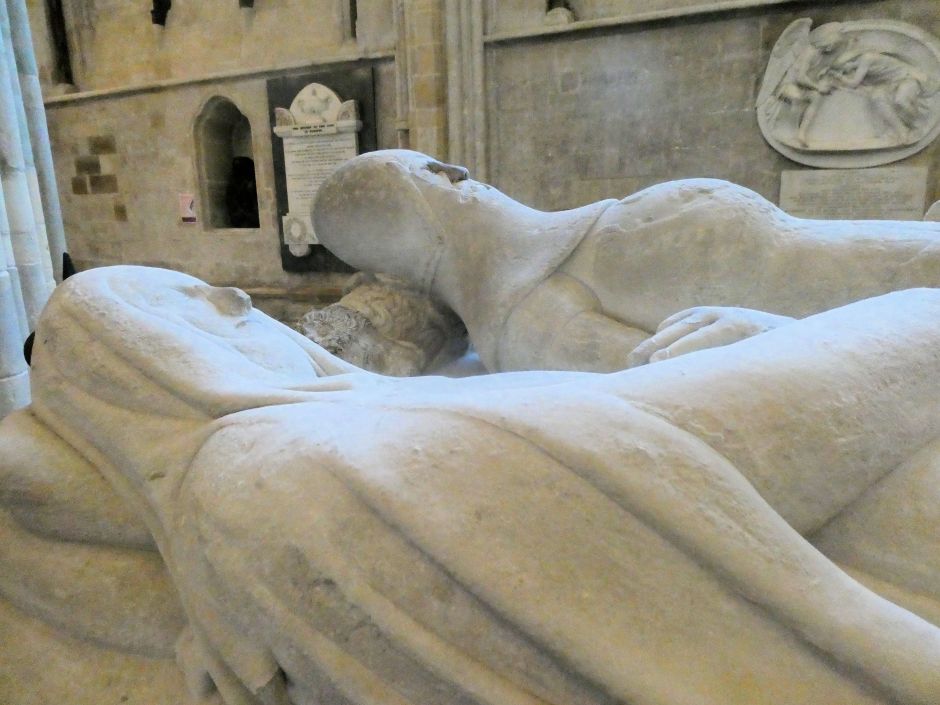
The Arundel Tomb
The Arundel Tomb was brought from Lewes Priory sometime after its dissolution in 1537. On top of the carved stone tomb lie the figures of Richard Fitzalan, Earl of Arundel, and his second wife, Eleanor of Lancaster. The tomb was restored at the beginning of the 19th century by Edward Richardson, a well-known sculptor of the day.
I know the poem off by heart and I was able to sit there for a long time and listen to the music of the words in my head and ‘see’ what Larkin saw when he wrote the poem. Without his words, I would have walked by this tomb and missed what he saw “what will survive of us is love”. If copyright allowed, I would have liked to add the poem here, but it wasn’t possible.
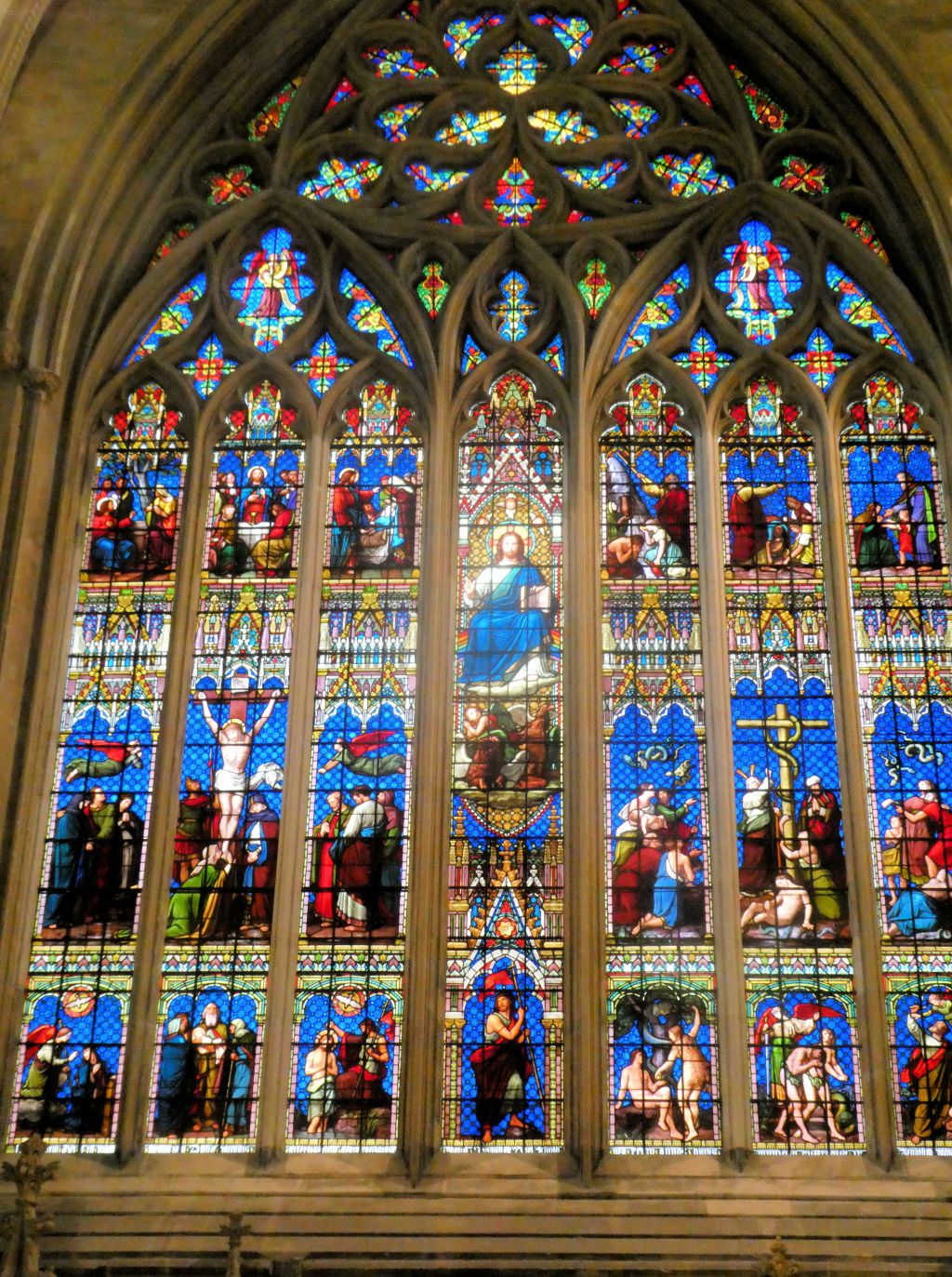
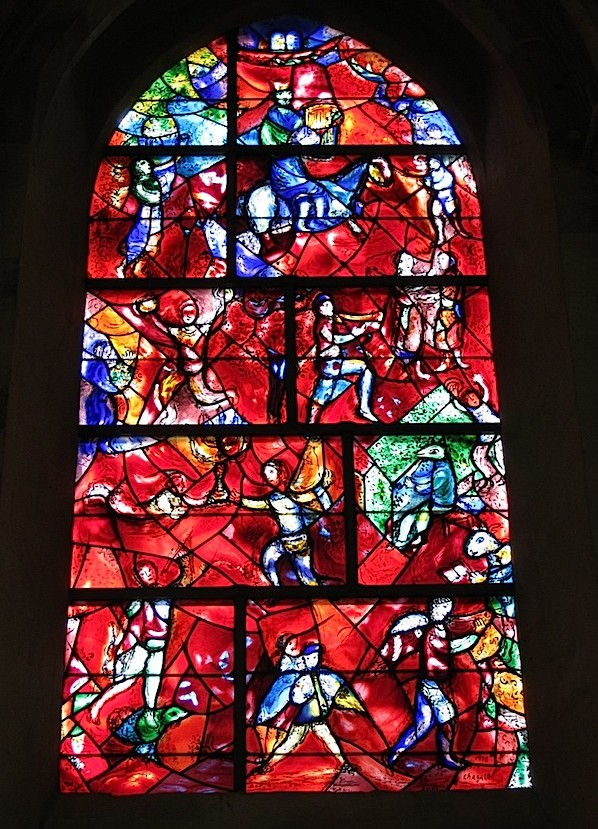
I also wanted another chance to see the Chagall stained-glass window and the Gustav Holst plaque. The Chagall window, installed in 1978, is unusual in that the glass is predominantly red when Chagall usually worked in blue. It is absolutely gorgeous and I could have stayed longer just drinking in the beauty of the luminous jewel cololurs.
Stained Glass Window by Chagall – Photo by David Spender CC.
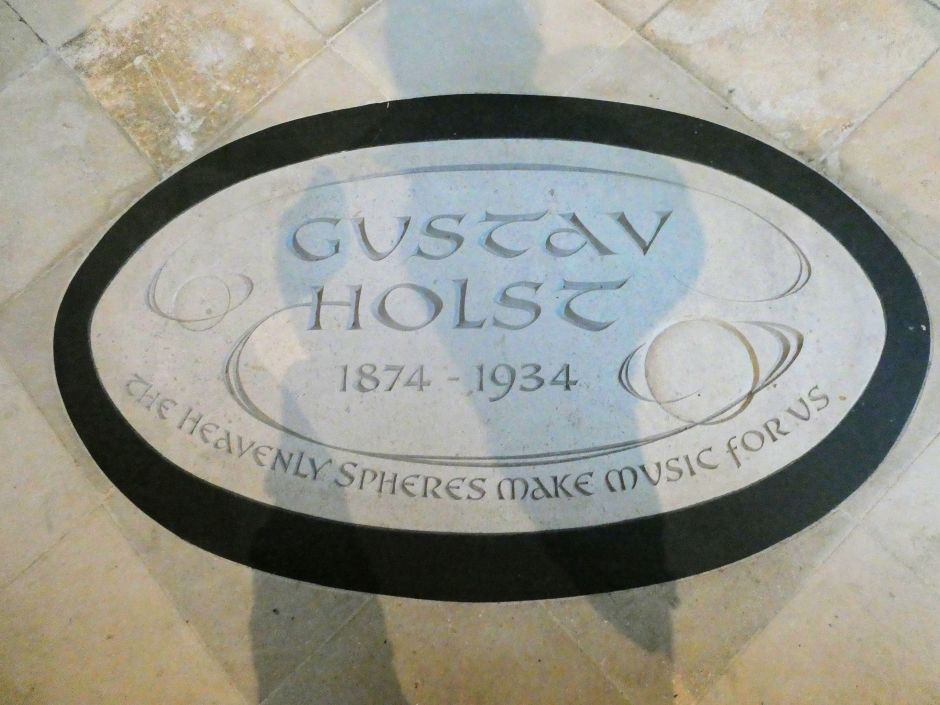
Gustav Holst, composer of The Planets Suite, one of the greats in British 20th century music, had a special connection to Chichester Cathedral having worked with Bishop Bell on the Whitsuntide Festivals. On his death on 25th May, 1934, aged 59, his ashes were interred in the Cathedral under the plaque on the floor in the North Transept near to a memorial to his favourite Tudor composer, Thomas Weelkes.
Plaque in Memorium Gustav Holst
I shall no doubt visit again on my next trip to Chichester because there is more art to be seen in the cathedral. There is a John Piper tapestry on the High Altar, a vividly coloured work which I have yet to take to: there is a Graham Sutherland painting and there are various sculptures worth searching out.
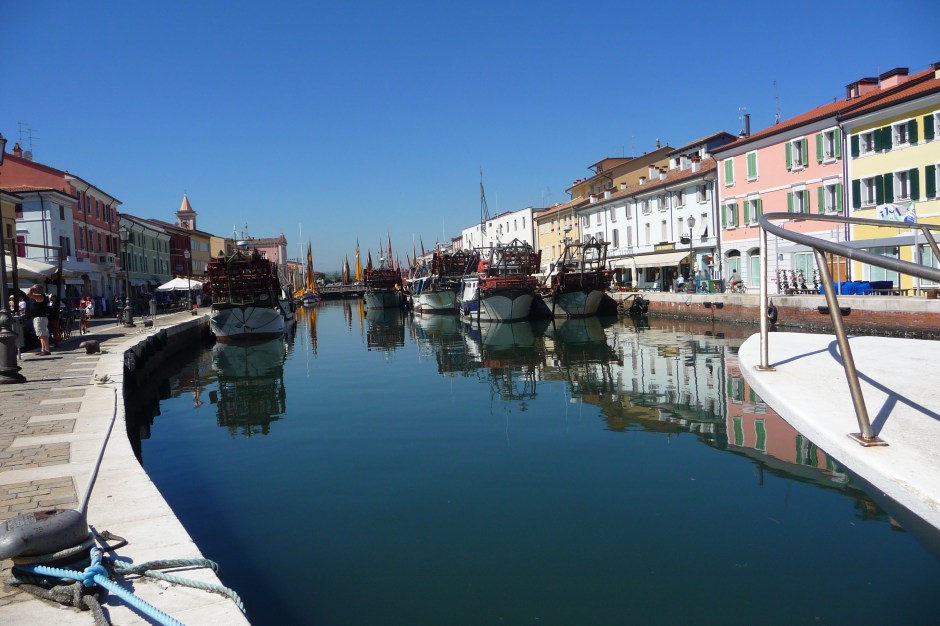
For years now I’ve been totally in love with the region of Emilio-Romagna in Italy, mostly, I admit, because of its food, but my first flirtation with the area came when I visited Cesenatico. It was here that I discovered that the canal that runs through the centre of the town, was designed by Leonardo da Vinci and I was immediately charmed. That the genius who produced so much art could also put his mind to something so mundane, seemed so wonderful. Is there nothing he didn’t design? How had it escaped me?
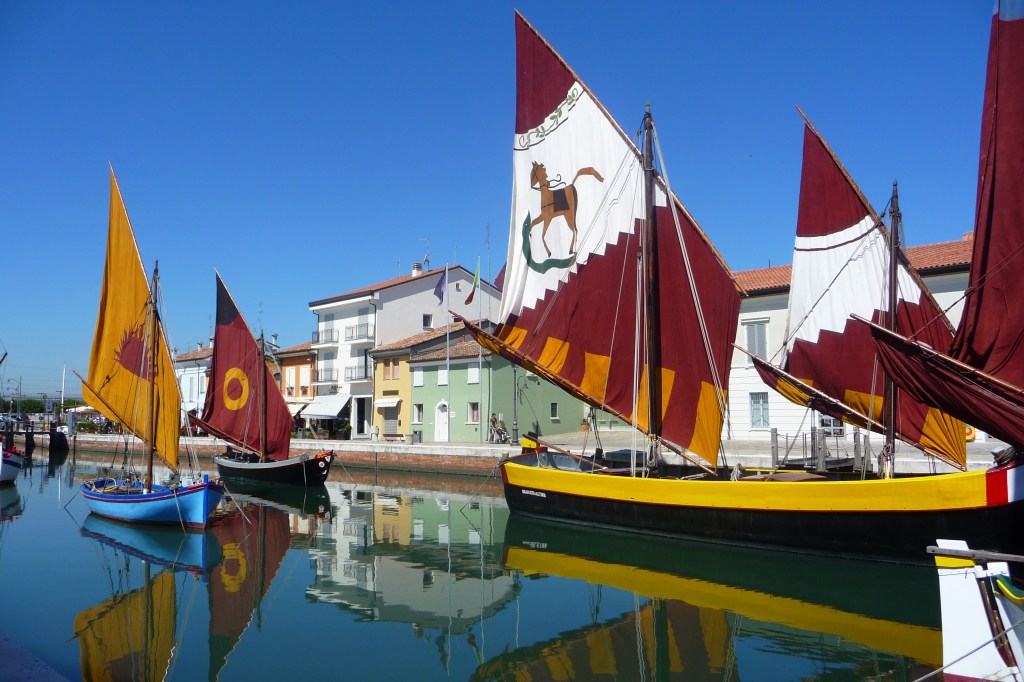
Canal and Port
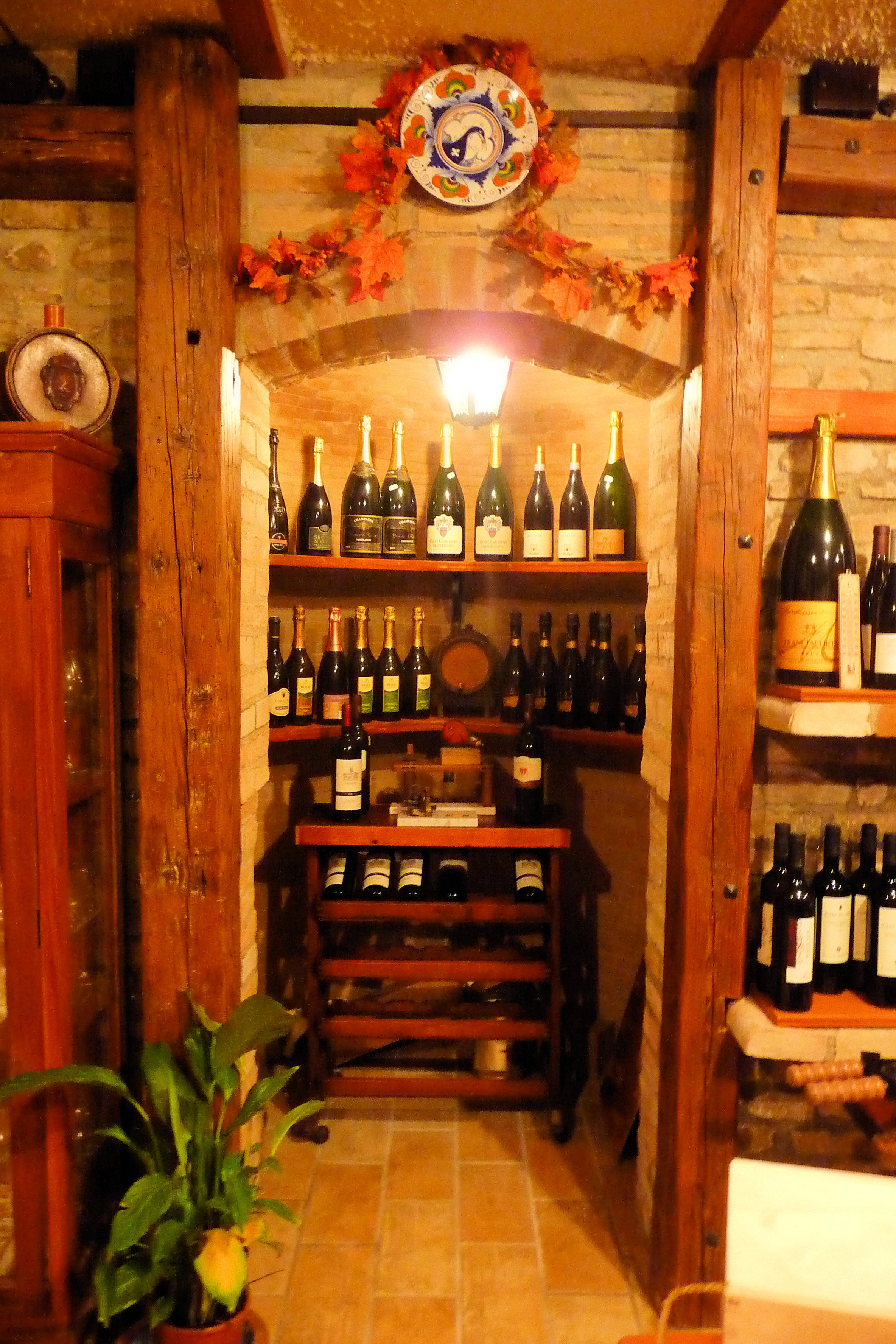
Cesenatico has been a popular seaside resort for Italian visitors since the early 20th century, but it wasn’t until the end of the Second World War when people began to seek pleasure in sandy beaches and sun that its tourist trade really took off : Cesenatico’s beaches stretch for over five kilometres. More recently, the town has seen an influx of visitors attracted by the beaches and shallow waters of the Adriatic, the bars, bistros, elegant shops and gelateria that line the canalside, and the near perfect weather.
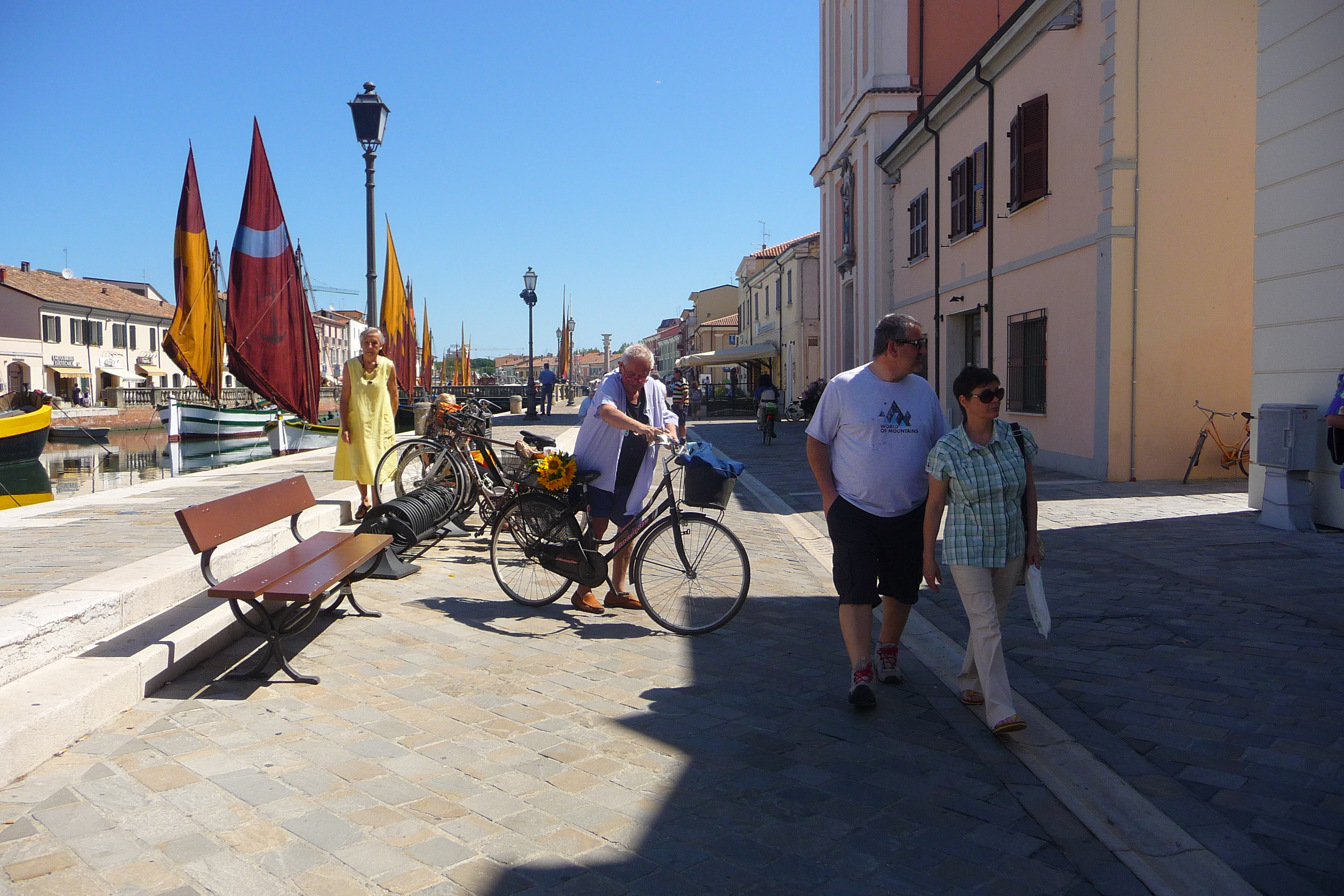
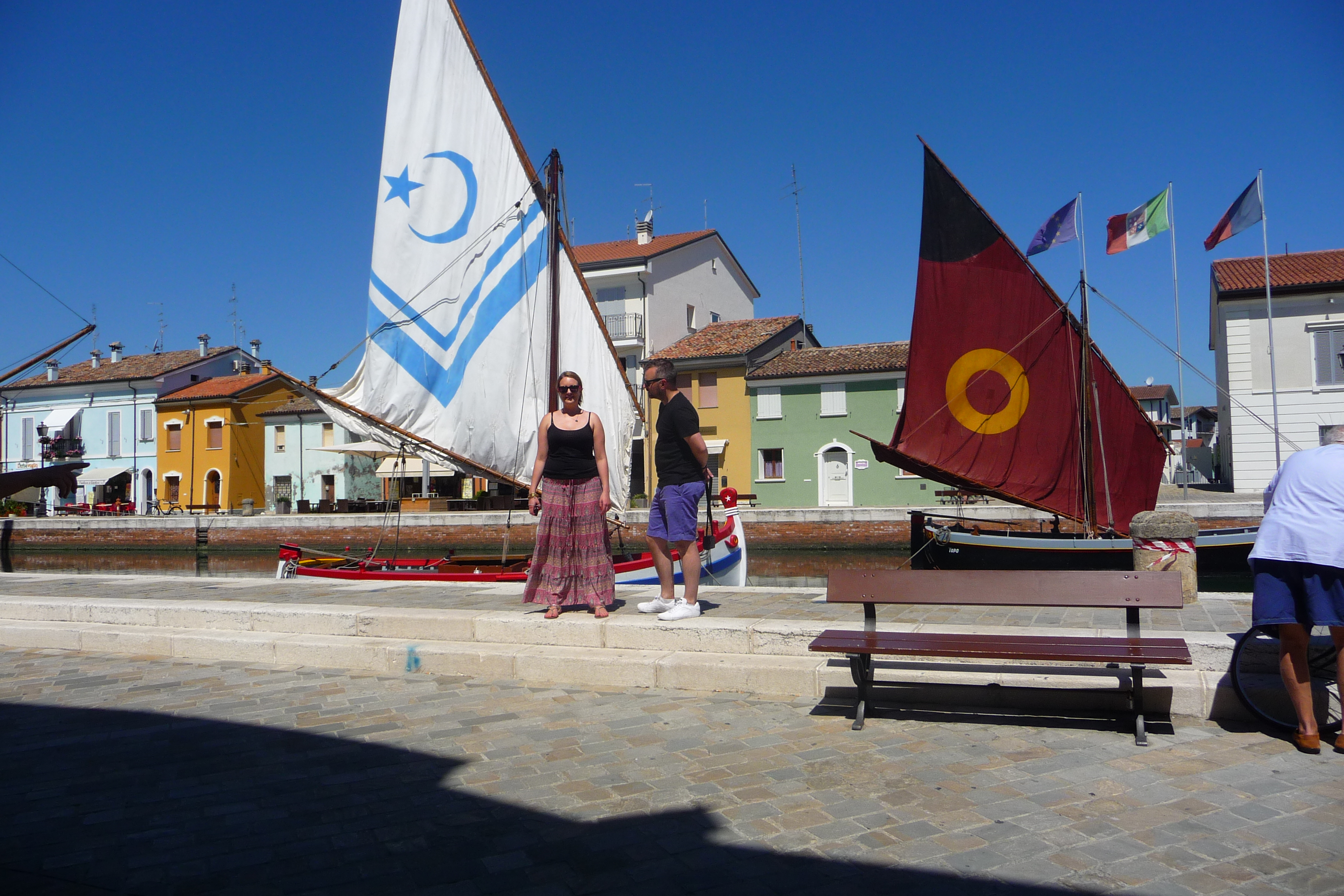
Outdoor Museum of Boats on the Canal
This is as medieval as it gets and it rings with names from history. The ancient fishing harbour was designed in 1502 by da Vinci on the orders of Cesare Borgia, two names to set the mind racing. One part of the canal has been closed off to accommodate the Floating Museum of Marine History in which eight perfectly restored boats of the type that were once used locally for trade in the upper and middle Adriatic are on display. Painted in the natural colours that were used in the past, each sail represents a different fishing family from the area. This was done originally so that the boats could be recognised at a distance: today they are a lesson in maritime history.
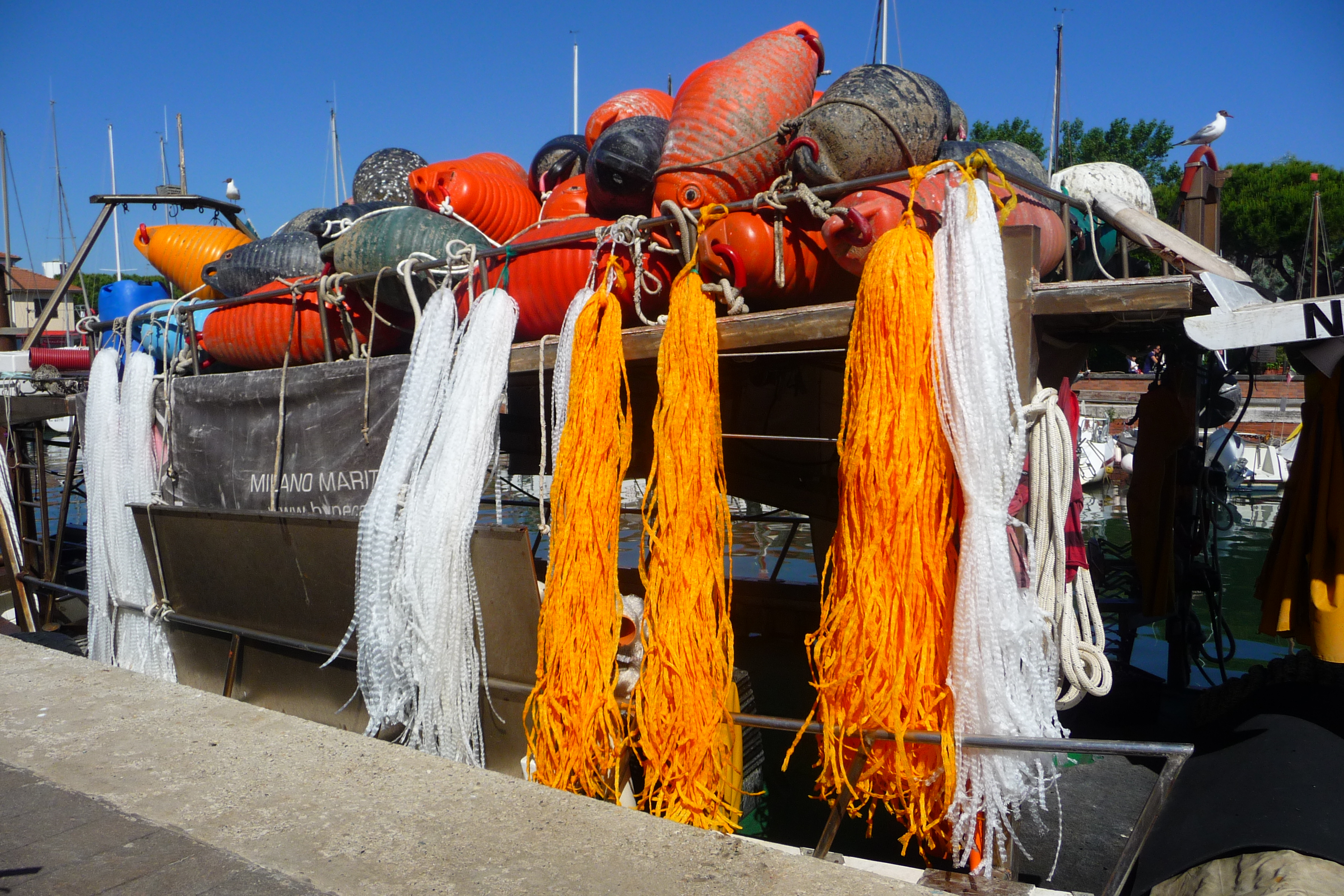
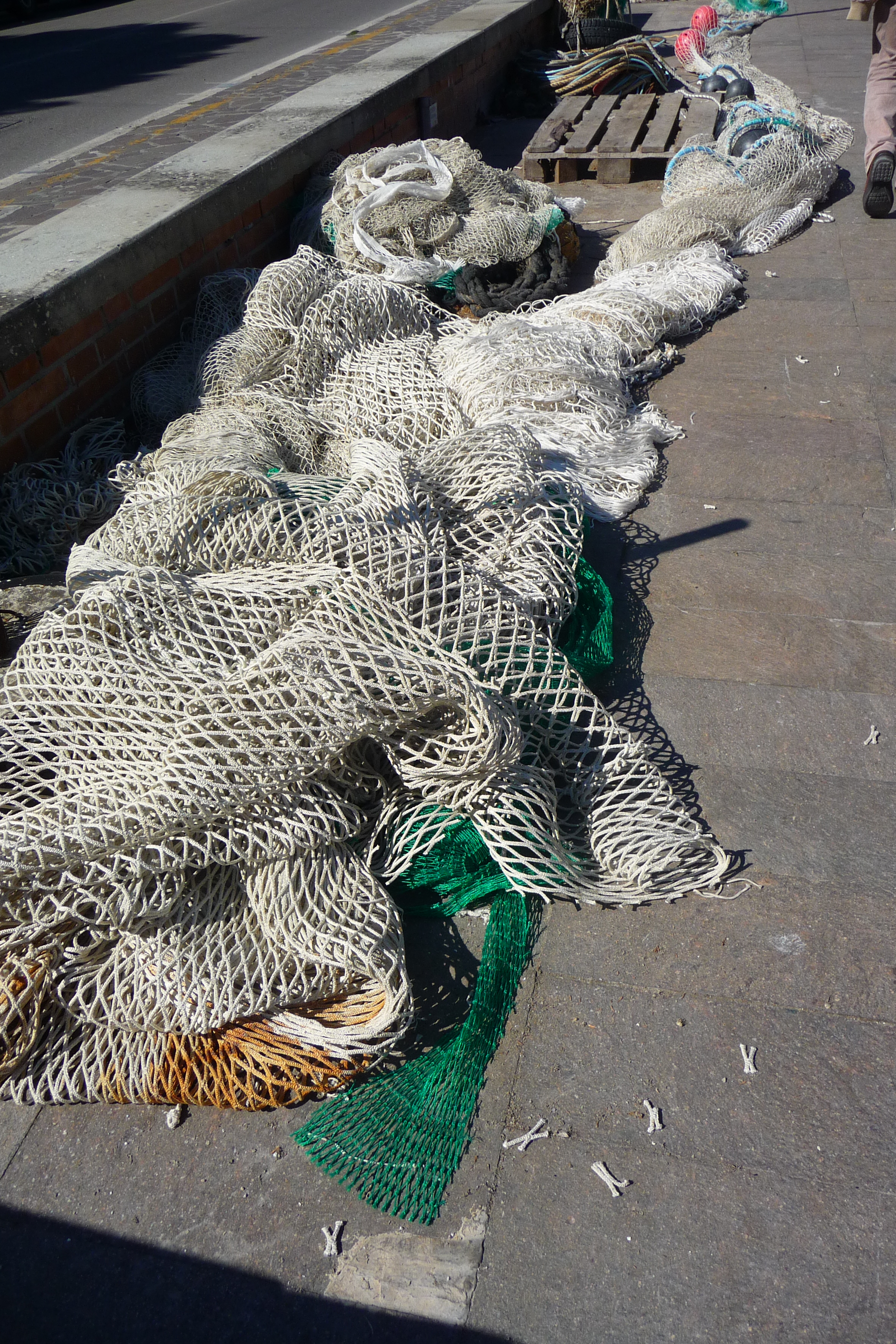
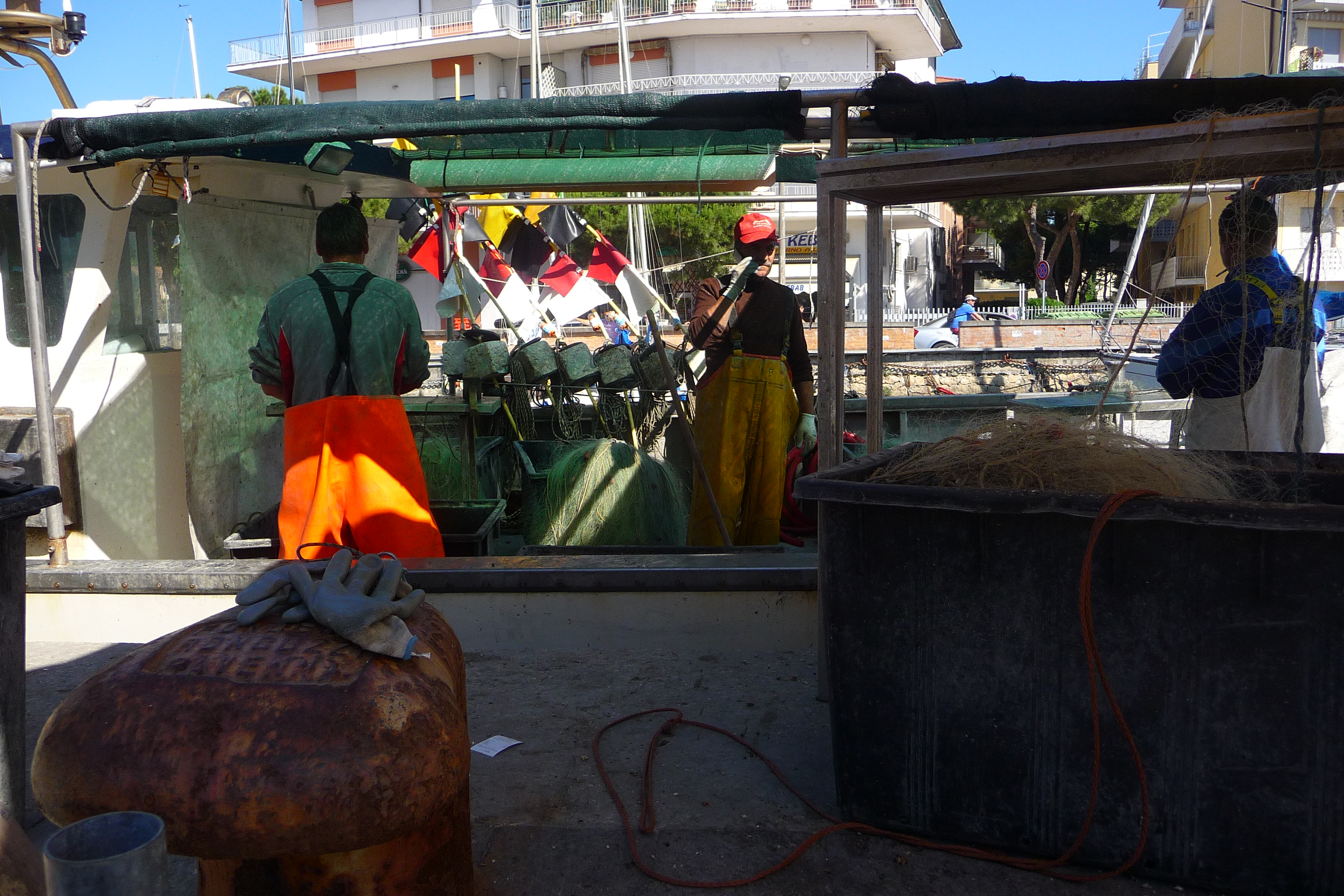
Alongside the canal the indoor Maritime Museum houses artefacts and documents dating back to the prehistory of navigation. As the port supports today’s fishing industry the canal bustles with working boats, many of which sell their catch from the boat. Weaving in and out are small yachts and leisure craft for the canal has an attraction for all who love messing about on boats.
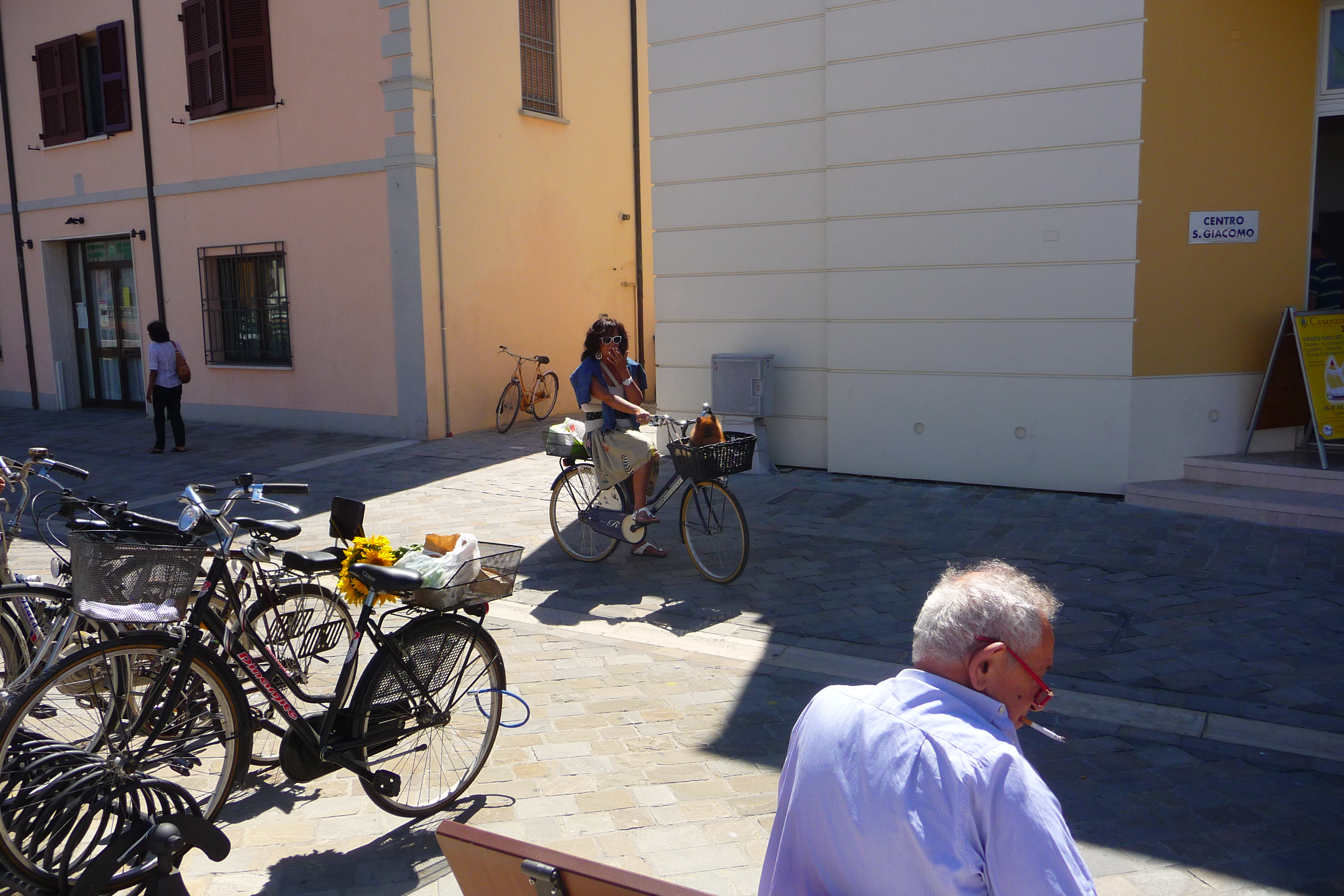
If it’s a sunny day and being indoors is not to your liking, then admire the collection of medieval boats on the canal while sitting at a nearby café with a glass of the delicious local wine. If you are there on a Sunday expect to see elegant ladies tottering about on their Louboutins, tiny dogs clutched in their arms, impeccably dressed young men making the passagieta with or without their girlfriends, and old men sitting outside the bars nursing espressos and smoking.
Cesenatico was the first Italian town to erect a monument in honour of the great Liberator of Italy, Giuseppe Garibaldi, to signify his connection to the town and this statue can be seen in Piazza Pisacane. In August of 1849, the great man, his wife, and other patriots fleeing from Rome were hunted down here.
There are a few other monuments to visit if you can drag yourself away from the port and its charms or the beach and the calm waters. The birthplace of the poet Moretti is now a centre for the study of 20th century Italian literature with a display of his books and papers, and the Theatre built by the architect Candido Panzani which, having survived damage sustained during the Second World War was restored in 1992, is architecturally very interesting.
But Cesenatico is really a place made for relaxation, for doing what the locals do, chill out with a coffee and grappa, lunch al fresco with local wines, or dine elegantly while watching the world go by.
The region of Emilia-Romagna in Italy has many lovely towns and villages but none, apart from Cesenatico, has a canal designed by Leonardo da Vinci, running through it.
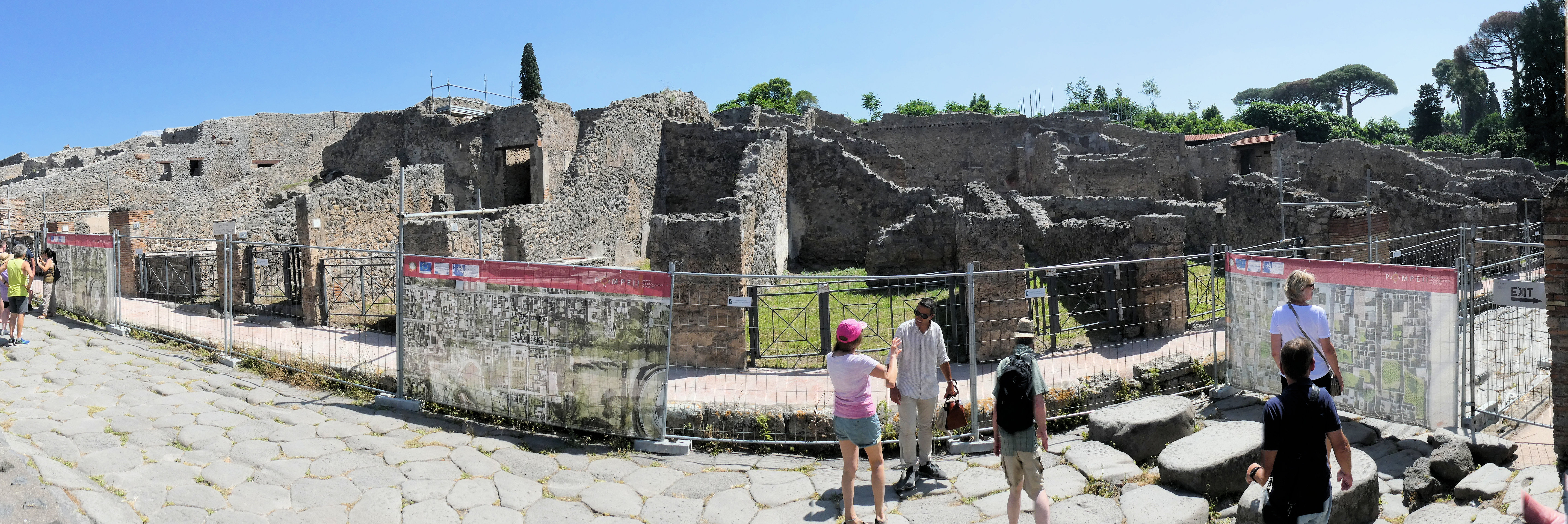
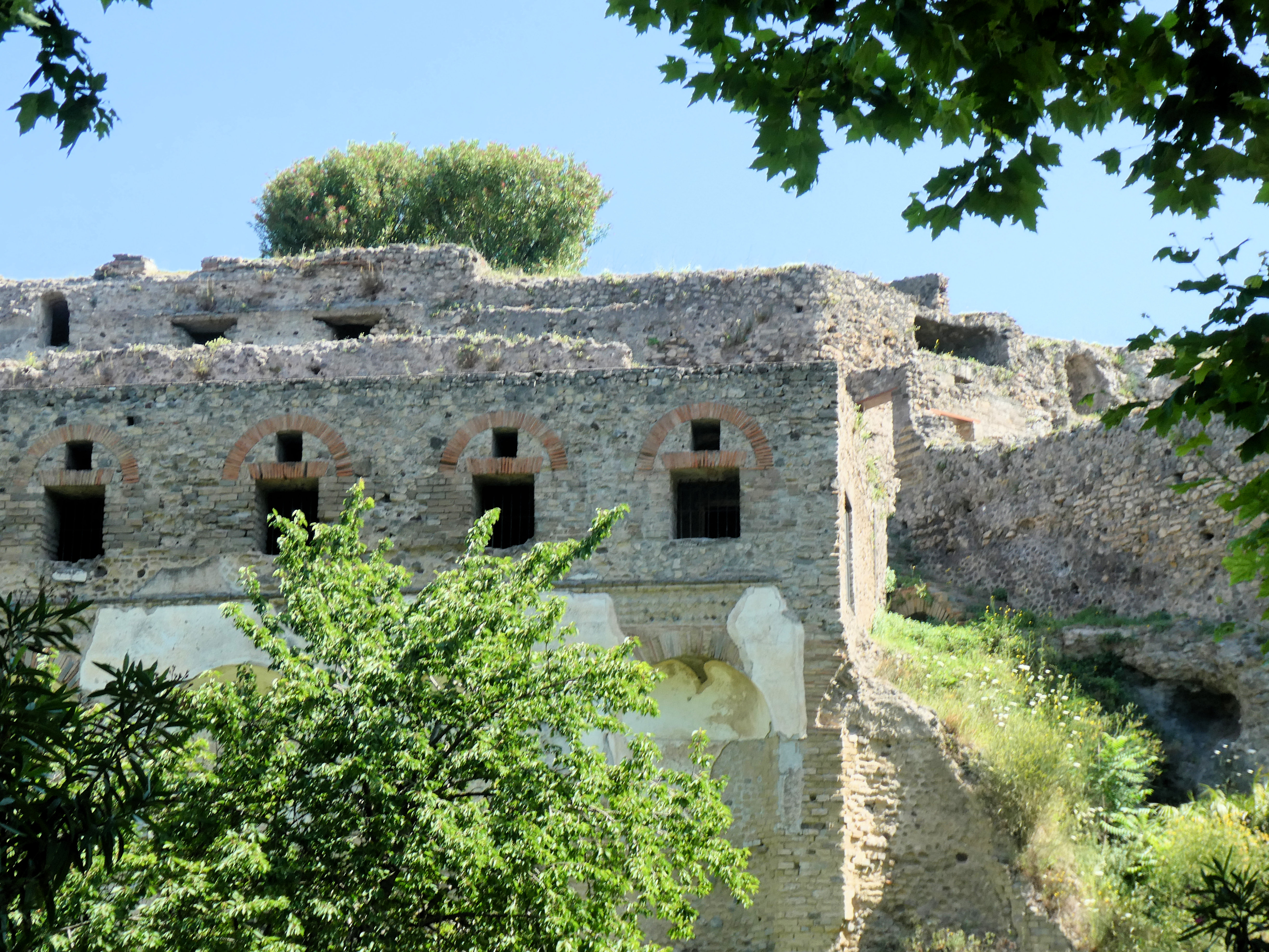
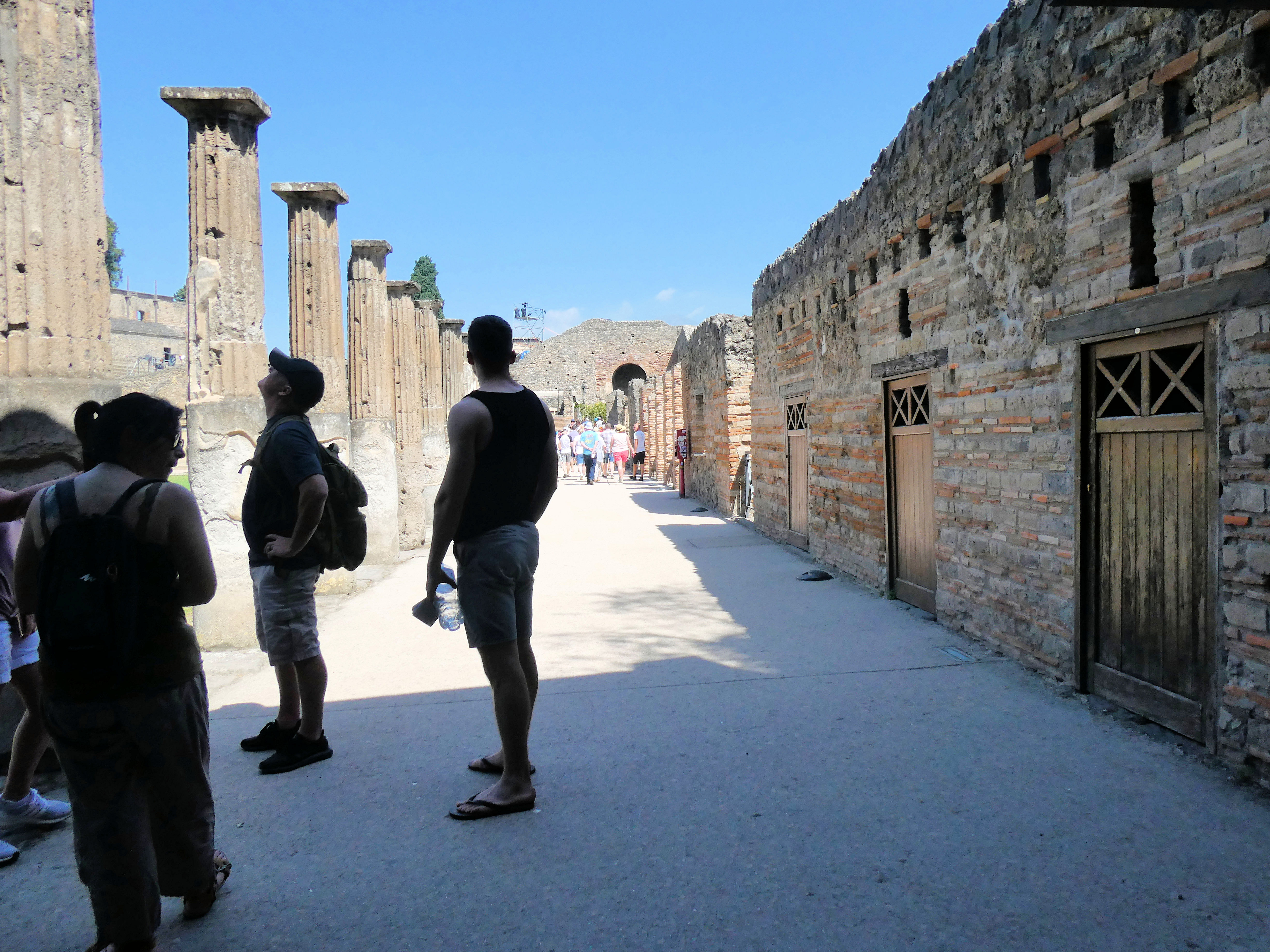
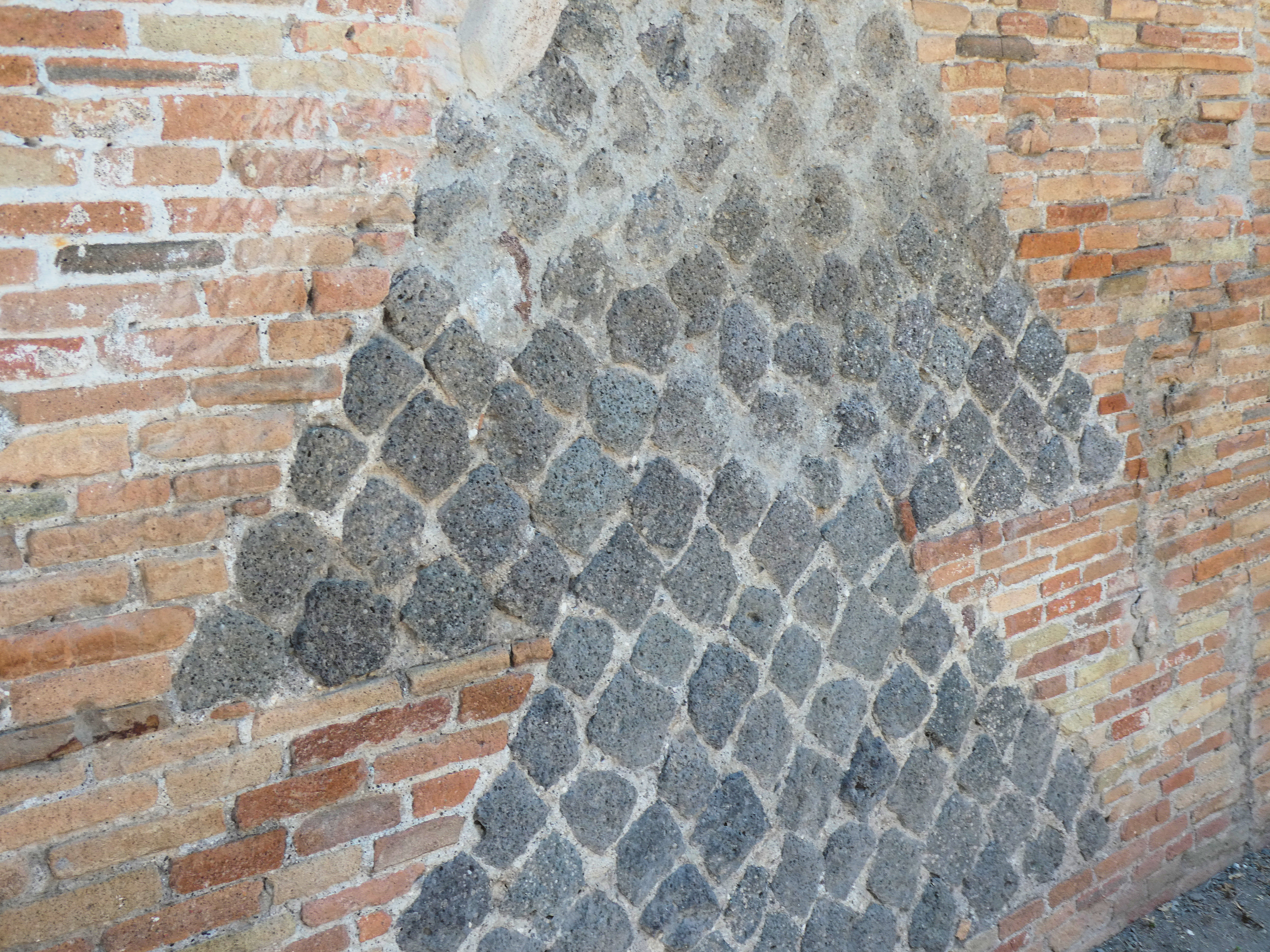
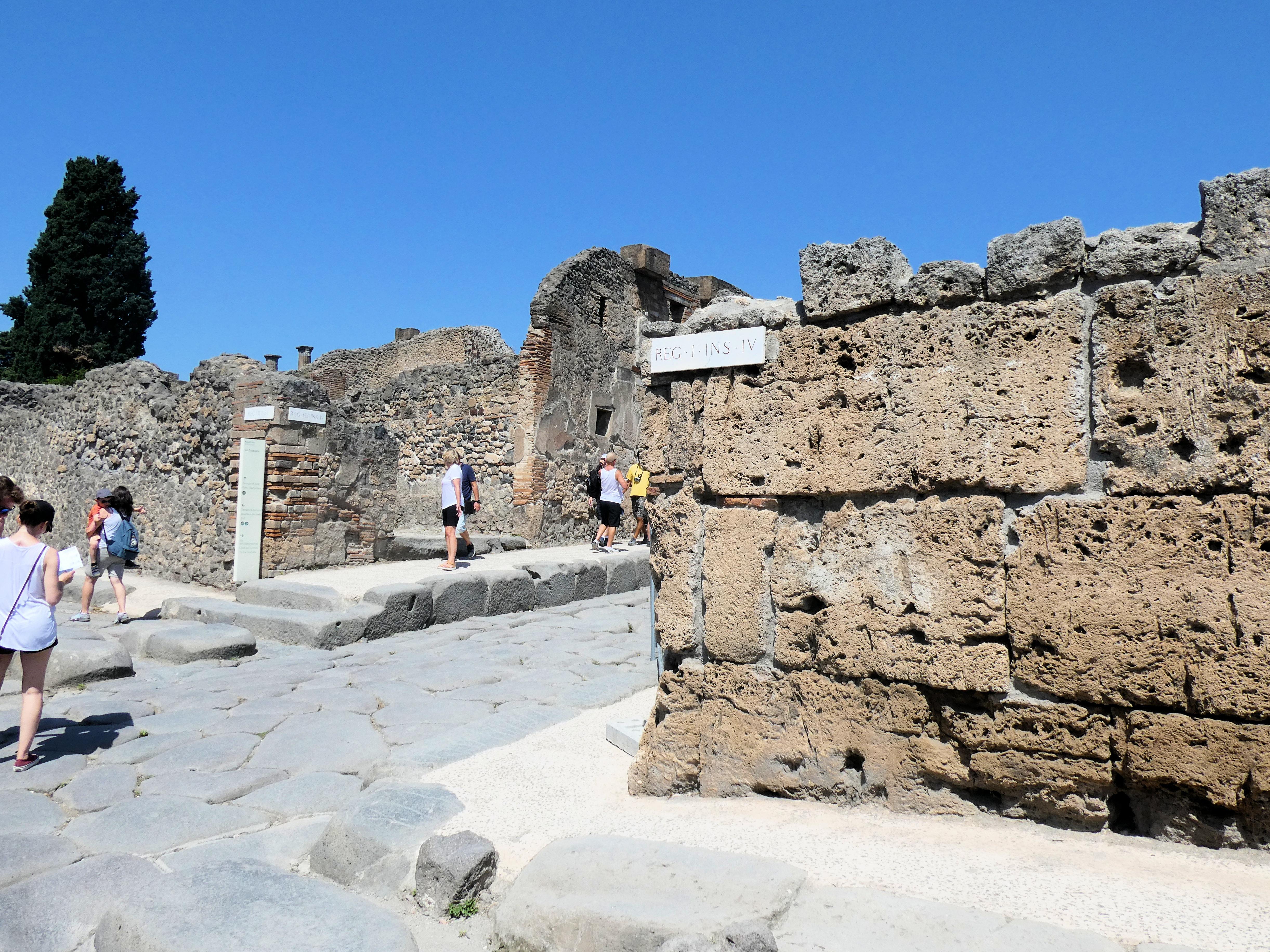
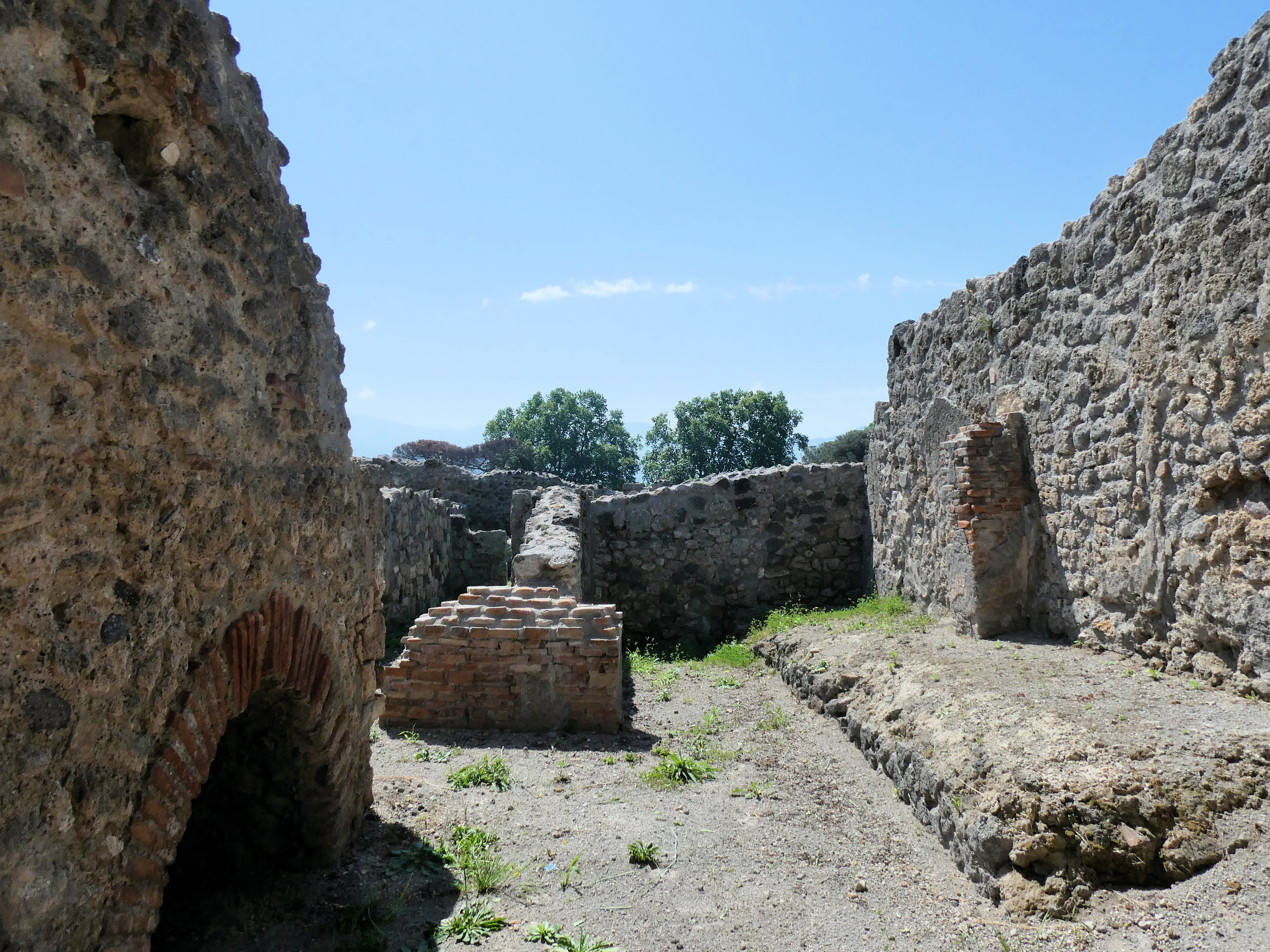
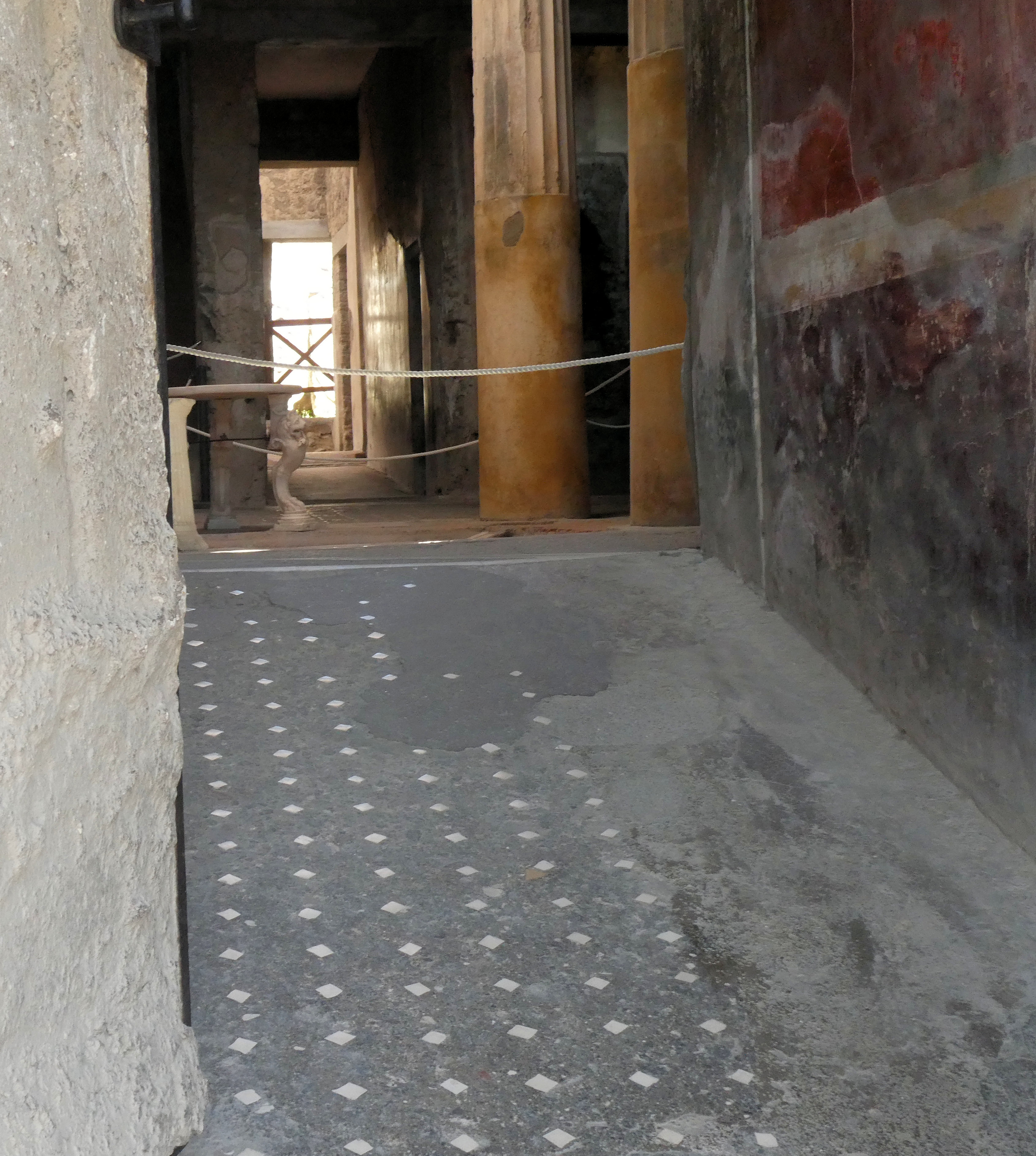
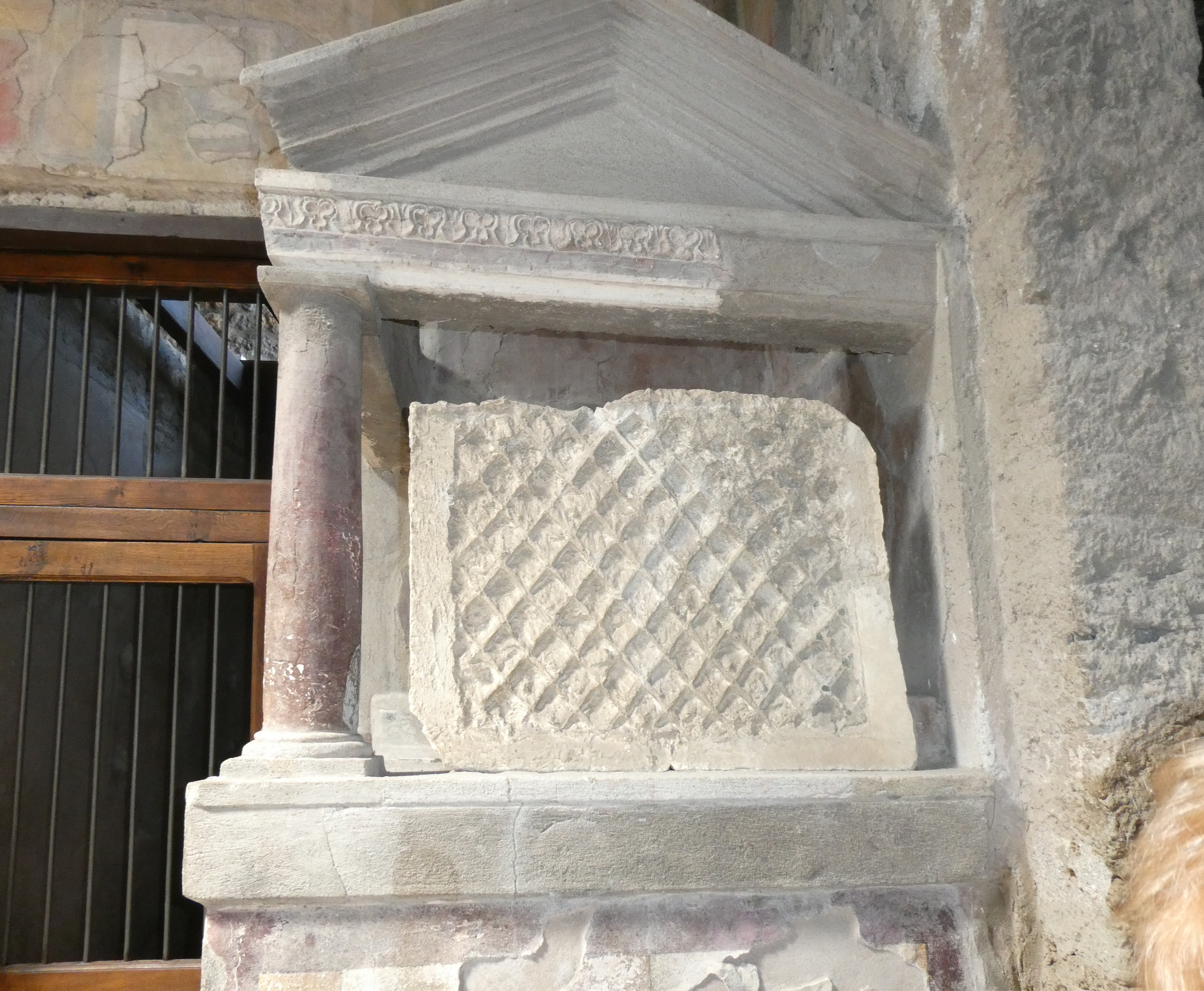
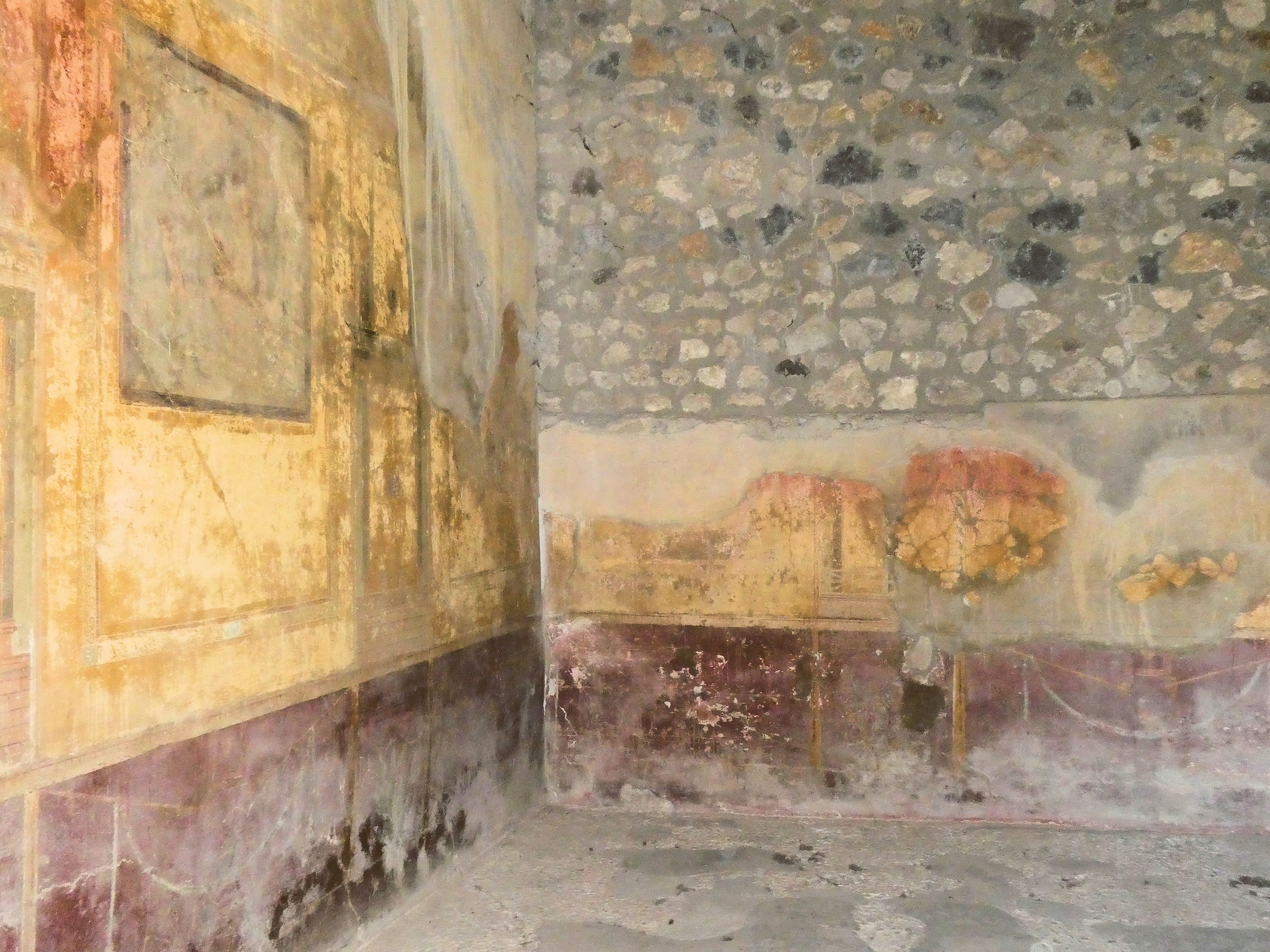
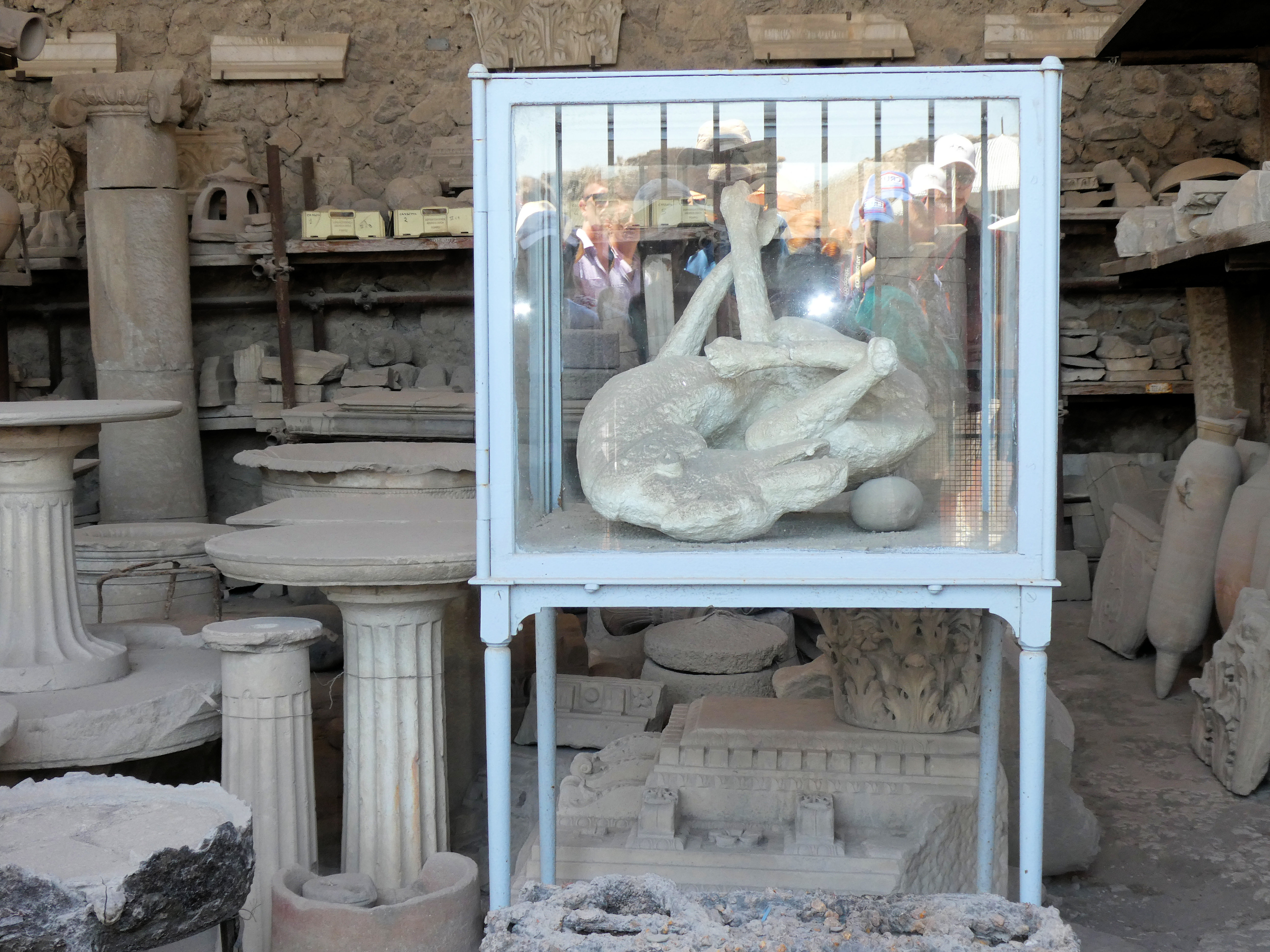
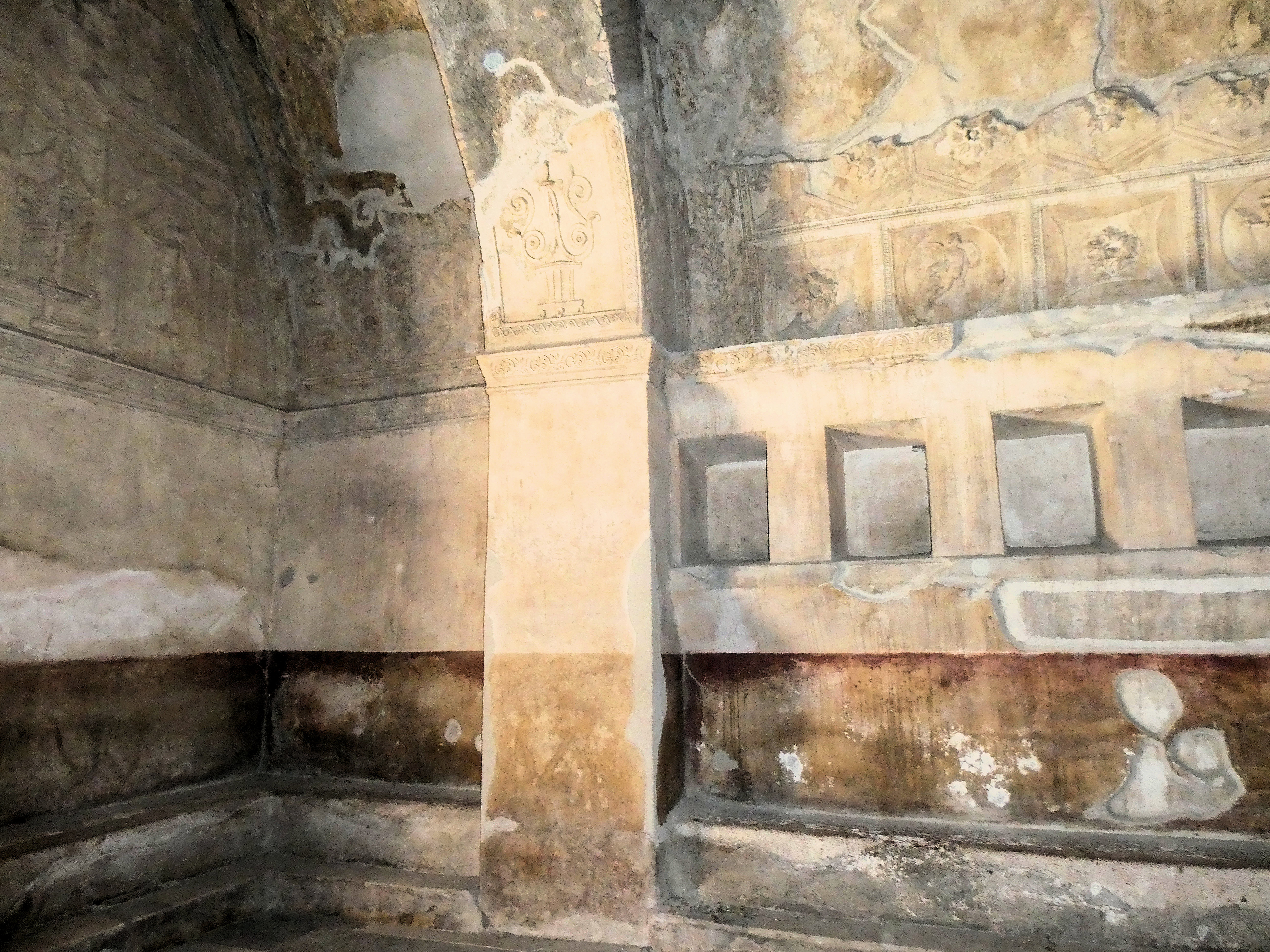
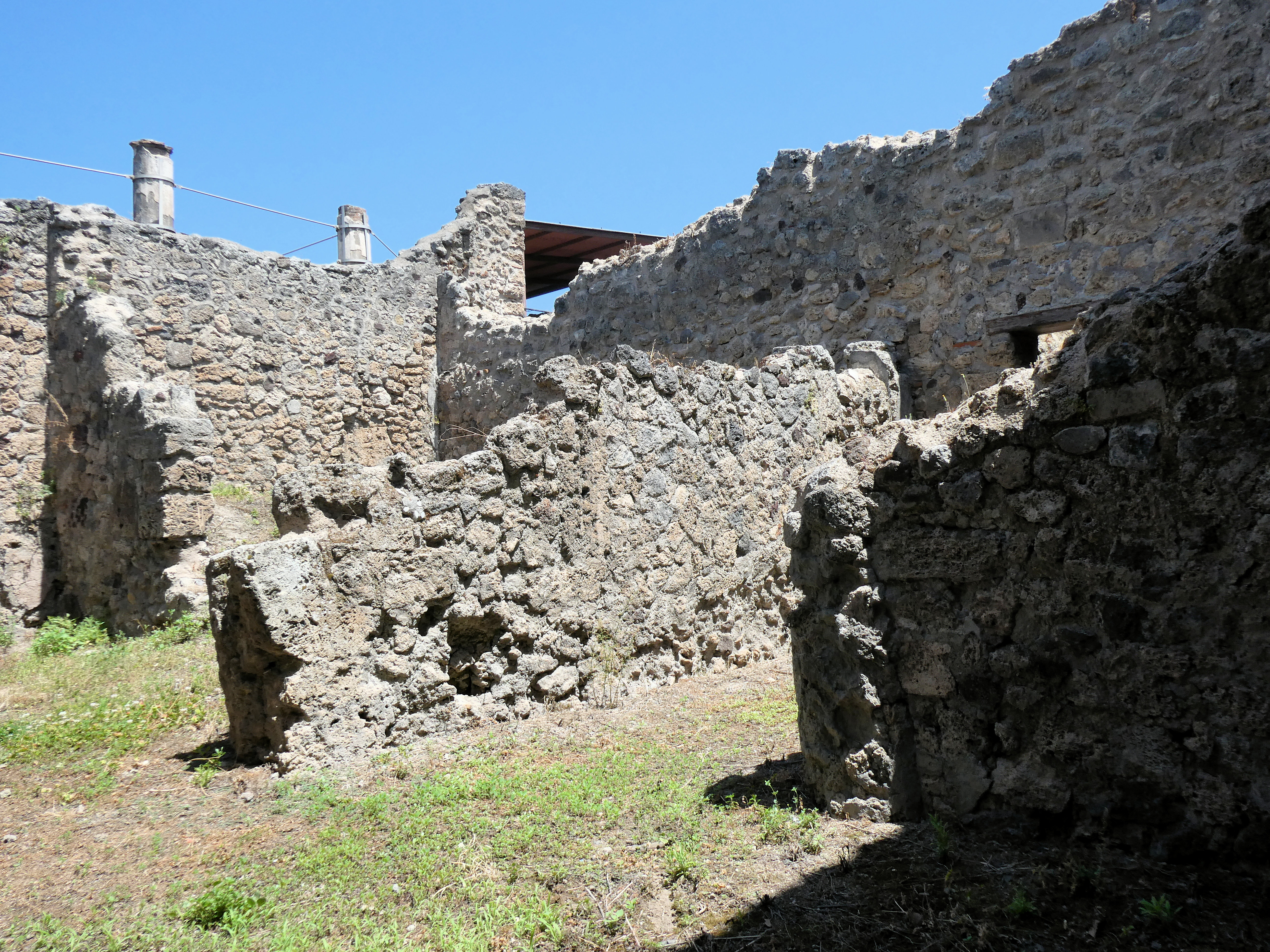
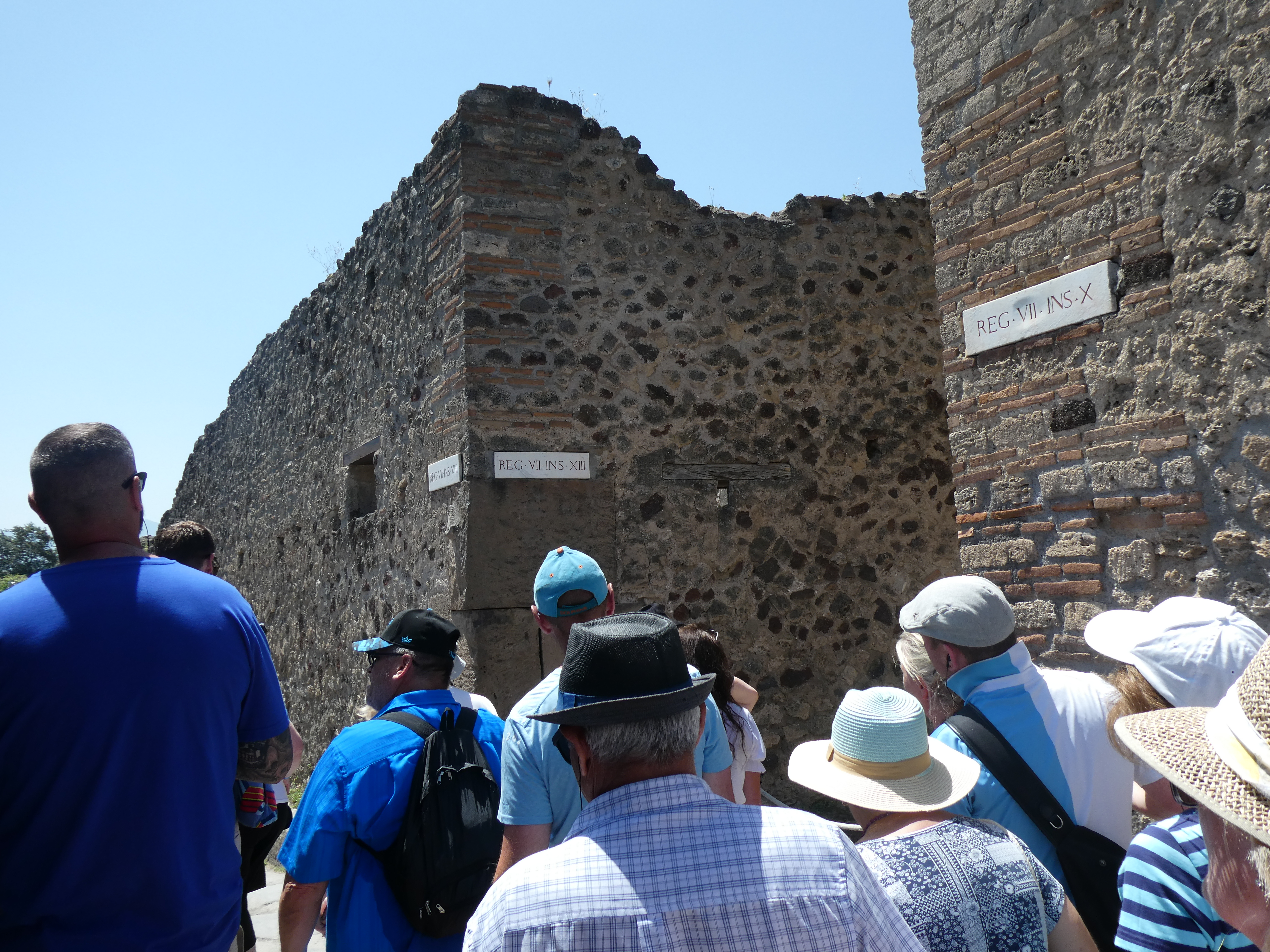
Most people know about the tragedy that was Pompeii so it would be presumptuous of me to write a post on its history. I will, therefore, content myself with posting some images I took when I was there in June last when I struggled in the heatwave and the crowds that had disembarked from the 3 cruise ships in the Bay of Naples. Here are just a few essential details.
It wasn’t until 1594 that the architect Dominico Fontana, discovered the ruins while digging a canal but serious excavations didn’t begin until the mid 18th century. Of the city’s original 66 hectares, 44 have now been excavated but not all of this area is accessible to the public.
Pompeii wasn’t destroyed by Vesuvius in AD 79: it was buried under a layer of burning pumice stone which means that much of it is remarkably well preserved. Today the visitor can walk down Roman streets, peer into what we know were brothels and bath-houses, snoop around houses, temples and shops and sit in the amphitheatre and pretend to be an ancient Roman. Some of the frescoes are in a remarkable condition, the colours vibrant and the figures well defined. Those in the the brothel are quite explicit as they were there to provide visual inspiration for the clients and they were a cause for scandal in the Vatican when they were first revealed in 2001.
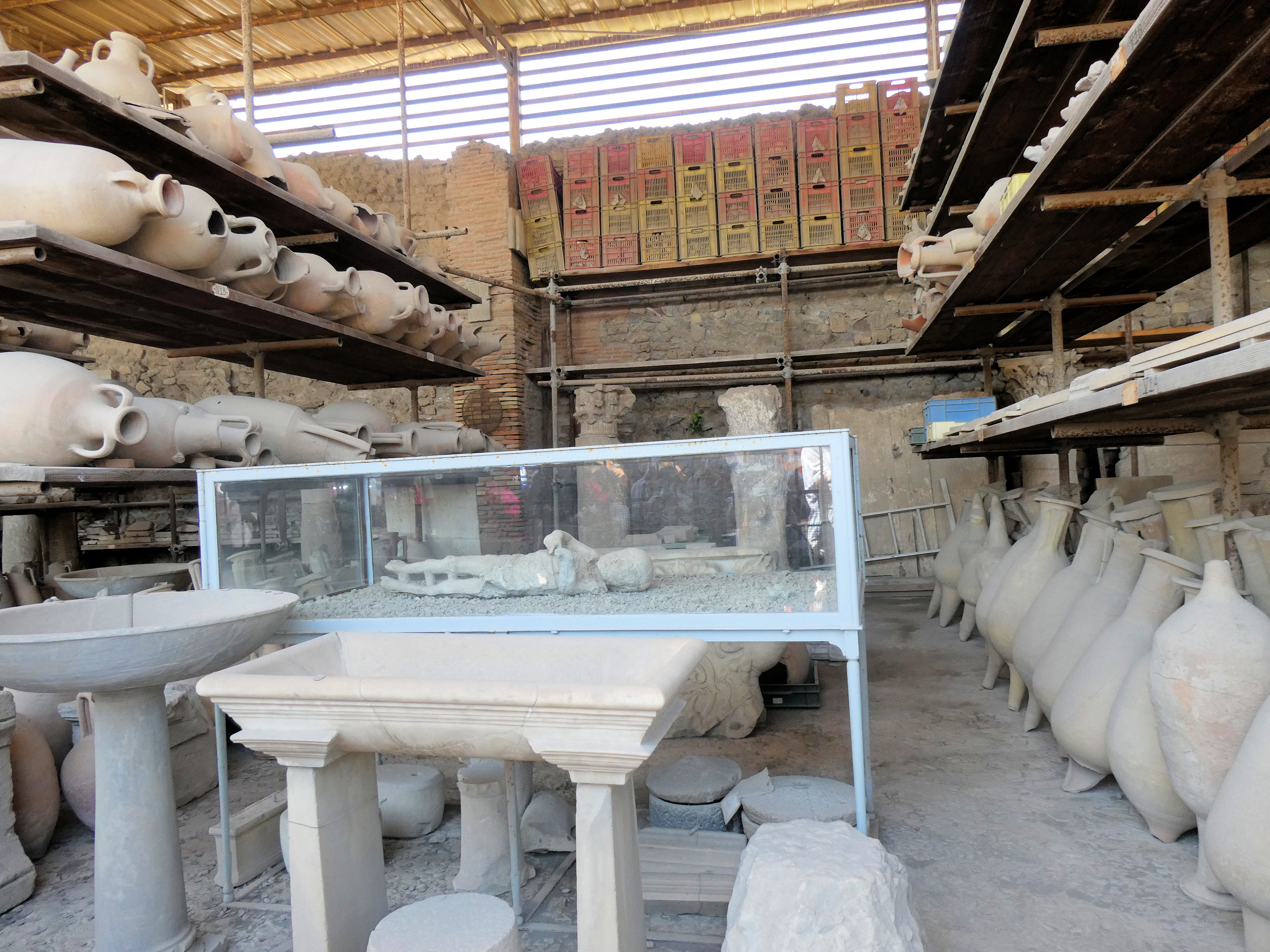
There had been severe earthquakes in the area for two days previous to the volcano’s eruption so many people had left the town for safety, otherwise the number of lives lost would have been a lot more. Nevertheless, 2,000 men, women and children perished. Plaster casts of some of the bodies that were excavated are on display but some are still under renovation.
My first visit to Pompeii was many years ago in late autumn and I would recommend that time of year. The number of visitors visiting the Naples area in late spring, summer and early autumn and ticking Pompeii off their bucket-list makes it a less enjoyable tour for the serious lover of history or archaeology. Besides the crowds, there is the heat, and Pompeii offers no shade whatsoever.
Recommended Reading
There are many histories of the destruction of Pompeii but the best must surely be Robert Harris’s Pompeii (2004) published by Hutchinson which reads like a thriller and is a true page-turner.
The original account is by Pliny the Younger who was there at the time and most accounts are based on this, another very exciting read.
My trip to Rome coincided with the heat wave which, although welcome in that it meant I didn’t need to carry a shower-proof jacket (just in case), did mean I had to carry a paper umbrella bought from a street trader, He must have thought his birthday and Christmas had come along on the same time, so many were the customers queuing up to buy his parasols.
Rome is wonderful in any weather but walking in 34ᵒ heat
this time made sight-seeing a trifle difficult.
It did, however, allow for many more granitas and gelato stops, even as
it cut down on the photography.
Part of the Forum
We stayed at the wonderful Forum Hotel, so named because it
faces the Forum. To wake up every
morning and look out on the sprawl of ancient pillars and stones glowing from
the rising sun, was magical. We had the
same view from the breakfast terrace on the rooftop, so although I usually
forego breakfast, in this case it was a must.
Part of the Forum
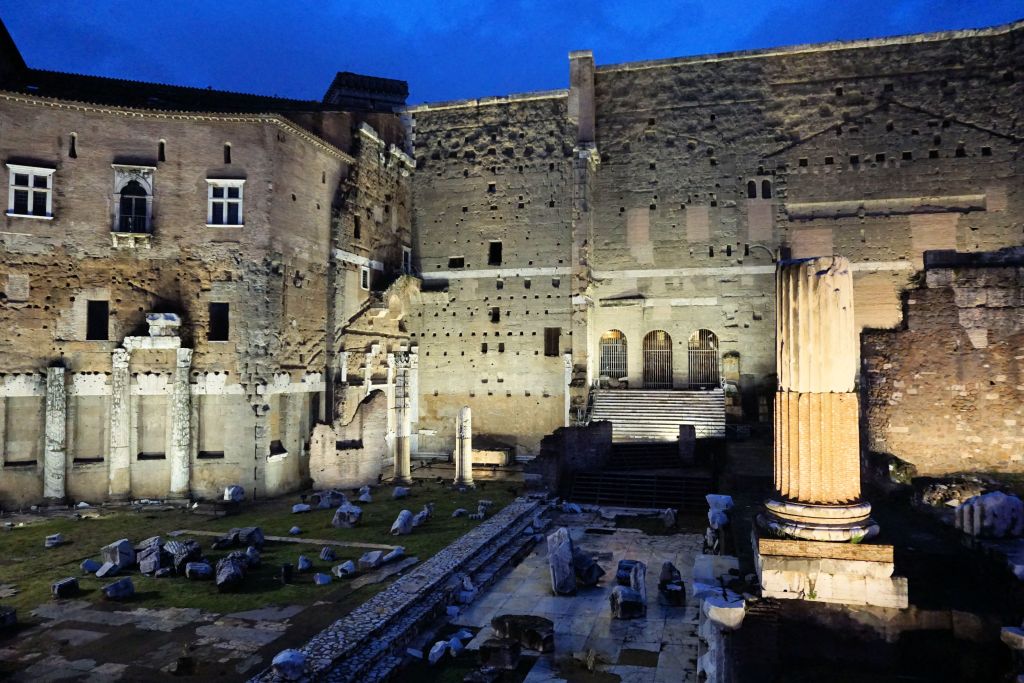
The Forum was ancient Rome’s showpiece centre, a site originally developed in the 7th century BC from a marshy burial ground which grew into the social, commercial and political hub of the Roman Empire. It was a handsome district of temples, basilicas and bustling public spaces which, with a little imagination is easy to people with toga-clad inhabitants going about their business accompanied by their slaves.
Forum by Night
Part of the Forum is open for wandering around but to see it
all one needs to pay. However, I would
say leave this until the end of your stay, because a) you can see some of it
without charge and b) there is so much else to see in Rome and you can always
return to it if you wish.
The Colosseum by Night (Photo Solange Hando)
It is but a short walk from the Forum to the Colosseum, the hugely impressive, troubling monument to Roman imperial power and cruelty. Inside this emblem of Rome, behind the serried ranks of Tuscan, Iconic and Corinthian columns, and three storeys of superimposed arches, Romans for centuries cold-bloodedly killed thousands of people for amusement, and sent gladiators to their death as they fought wild animals like lions, tigers and leopards for the amusement of the rulers and the populace.
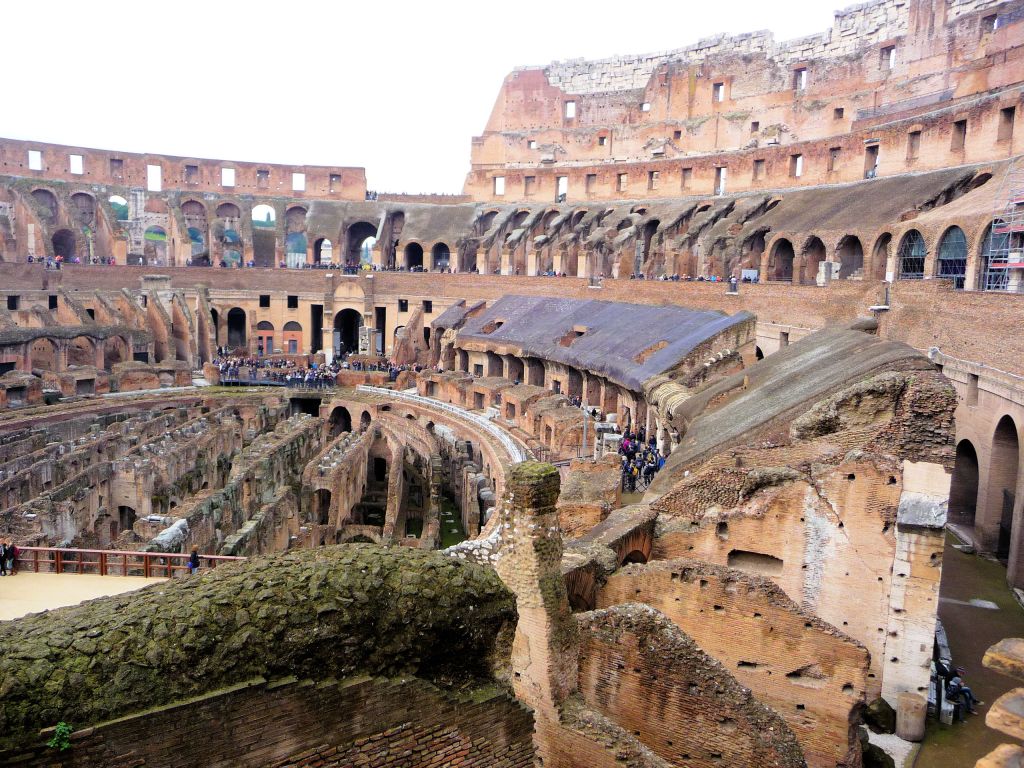
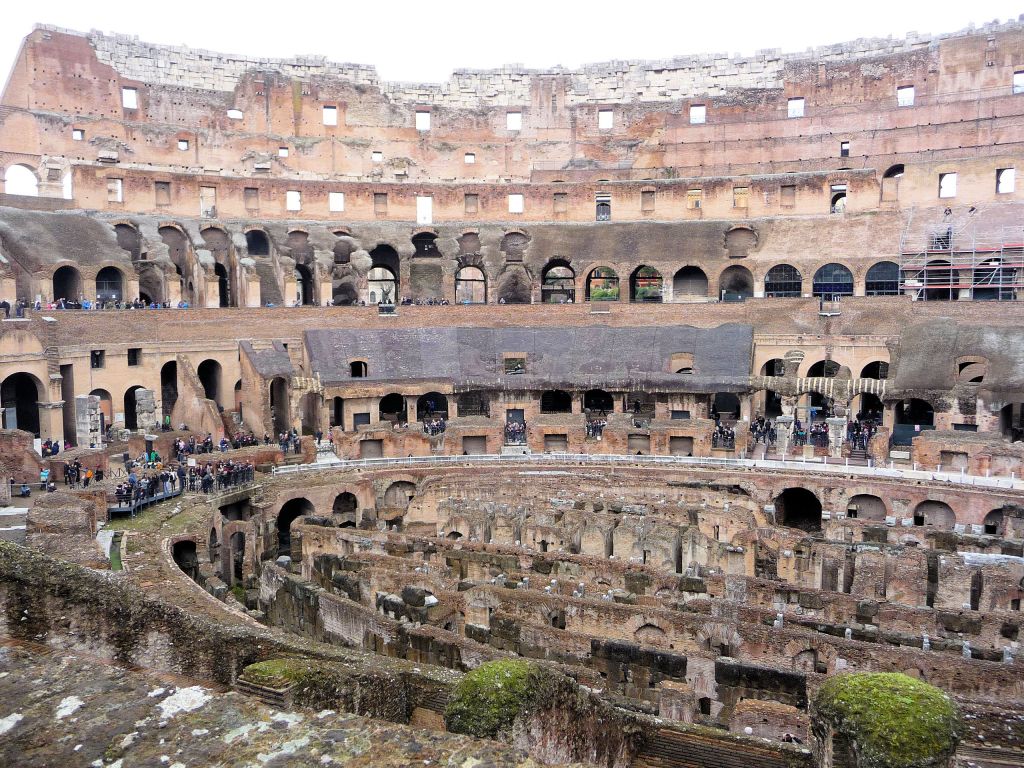
Inside the Colosseum
The Colosseum is now a mere shadow of its former self as only about one-third of the original building still stands, its glistening marble and stone having been carried away and used in the building of palaces and churches by Roman popes and aristocrats who coveted it. Nearby Palazzo Venezia and the Tiber’s river defences are just two examples of this.
Looking down at the pits from which the animals would emerge
Originally the largest amphitheatre in the Roman world, a pleasure palace built for the people by the emperor Vespasian (69-79) to a design worked out before the building began, it was capable of holding 50,000 spectators,
It is difficult not to quote sizes and quantities in such an undertaking, suffice to say that drains were built 8m beneath the structure to take away the streams that flow from the valleys and hills that surround Rome: the foundations under the outer walls and seating are 12-13m deep while under the inner part of the arena they are only 4m deep. The spoil dug from the foundations was used to raise the surround level by over 6m.
Sometimes quoting facts and figures like these can take away from the brooding power of the Colosseum, but I never fail to be moved by an atmosphere still inside those walls.
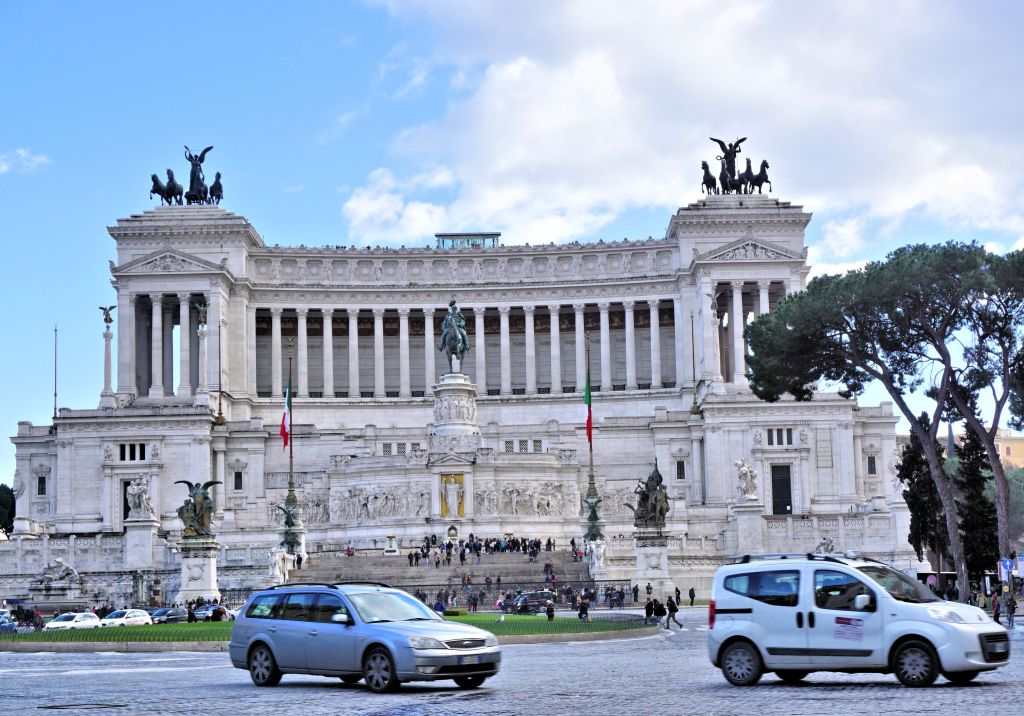
The Victor Emmanuel Palace.
Vittorio Emmanuel ll Palace
Also known as ‘Il Vittoriano’ and sometimes referred to as The Wedding Cake Palace by the locals, this monument to King Victor Emanuel II, is a bombastic monument of sparkling white marble decorated with numerous allegorical statues, reliefs and murals. At the center of the monument is the colossal equestrian statue of Victor Emmanuel, and on either side are fountains representing the seas that border Italy, the Adriatic Sea and the Tyrrhenian Sea. At the foot of the statue Guards of honor, selected from the marine, infantry and air divisions, guard the Tomb of the Unknown Soldier day and night.
The Vittorio Emmanuel ll Palace
Inside the monument is the Museo Centrale del Risorgimento, which charts the events that led to the unification of Italy, with a display of paintings, documents, photographs and memorabilia, the entrance to which is to the left of the monument, at the Via di San Pietro in Carcere.
During the 1930’s, the Italian dictator, Mussolini, delivered his speeches to the populace from the terraces and balconies of this building.
The Victor Emmanuel Monument cannot be considered one of Rome’s most beautiful buildings and its stark whiteness does not fit well into the soft ochre color of the surrounding buildings. Nevertheless, it is well worth the visit if only for the great views from the top (which is also connected to the Capitoline Square which may also be on your list).
A useful tip for visitors: You will see lots of advertisements – everywhere – to buy tickets that “skip-the-queues” and indeed you do skip the line for tickets. But unfortunately, after many years of this, the queue for the “skip-the-queue” line is much longer than the normal one to buy tickets at the office, so take my advice, ignore this (and ignore the touts who will offer you tickets for immediate entry), join the queue for tickets and you’ll be through in no time.

































 MARI'S TRAVELS WITH HER CAMERA