Category: Europe – Mediterranean

Spain, Italy, P:ortugal & France

  • Palermo -Sicily’s Chaotic Capital

    Palermo -Sicily’s Chaotic Capital

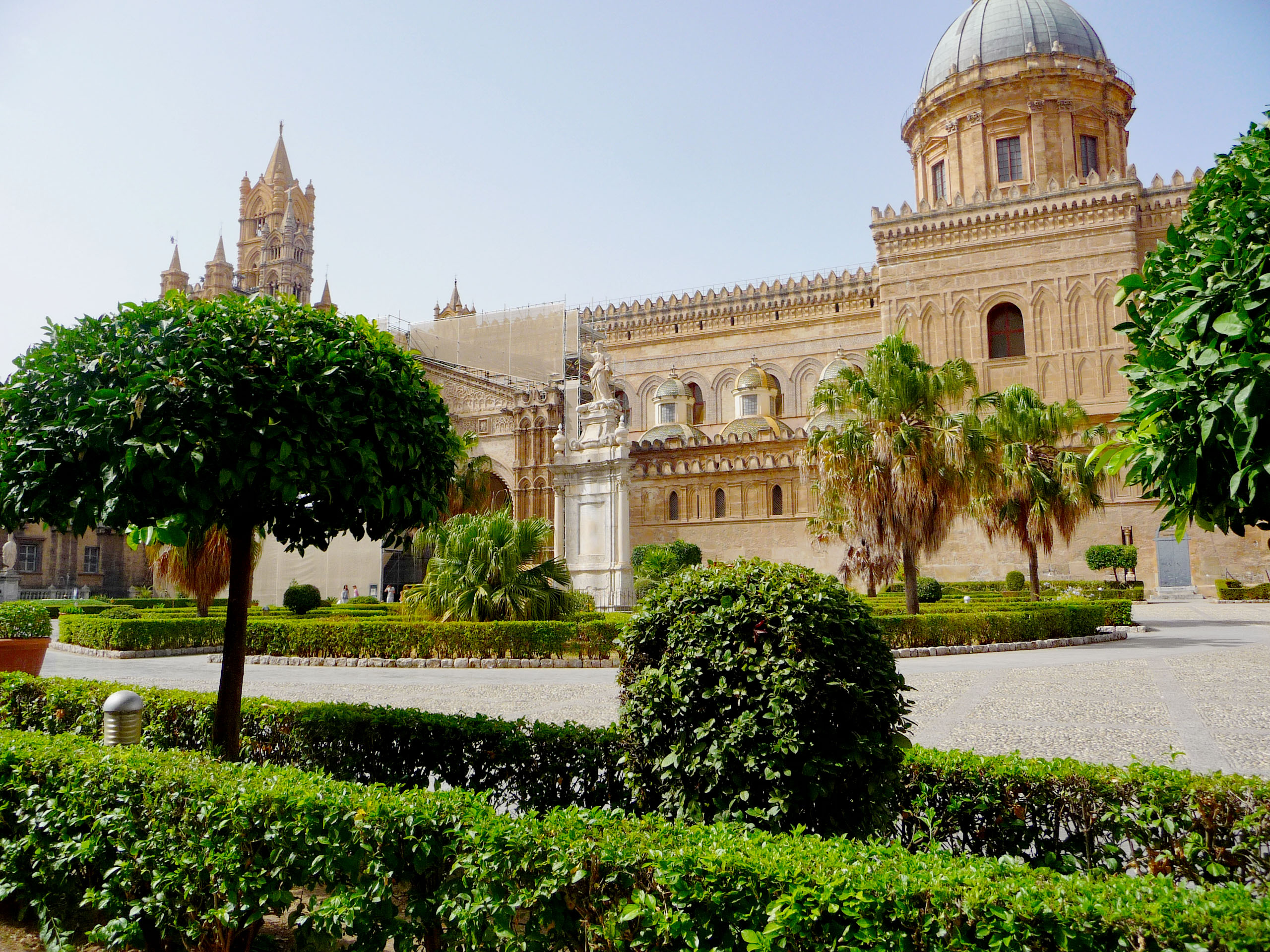
    Palermo is like nowhere else in Europe.  It’s a crazy, chaotic, crumbling city with a vibrant life that has led it to defy the Mafia, the last in a line of exploiters bent on conquering and subduing the spirit of its people.  Every neighbouring power at one time or another. has occupied this island that lies at the crossroads of the Mediterranean, with the result that it offers the visitor a heady mixture of aromatic Arabic food served in tiled restaurants that hark back to Spanish invaders, and stunning architecture and artefacts from Greek and Norman periods.  All this in streets lined with crumbling buildings, visual proof of the Italian Government’s neglect of a region for which it seems to have no respect.
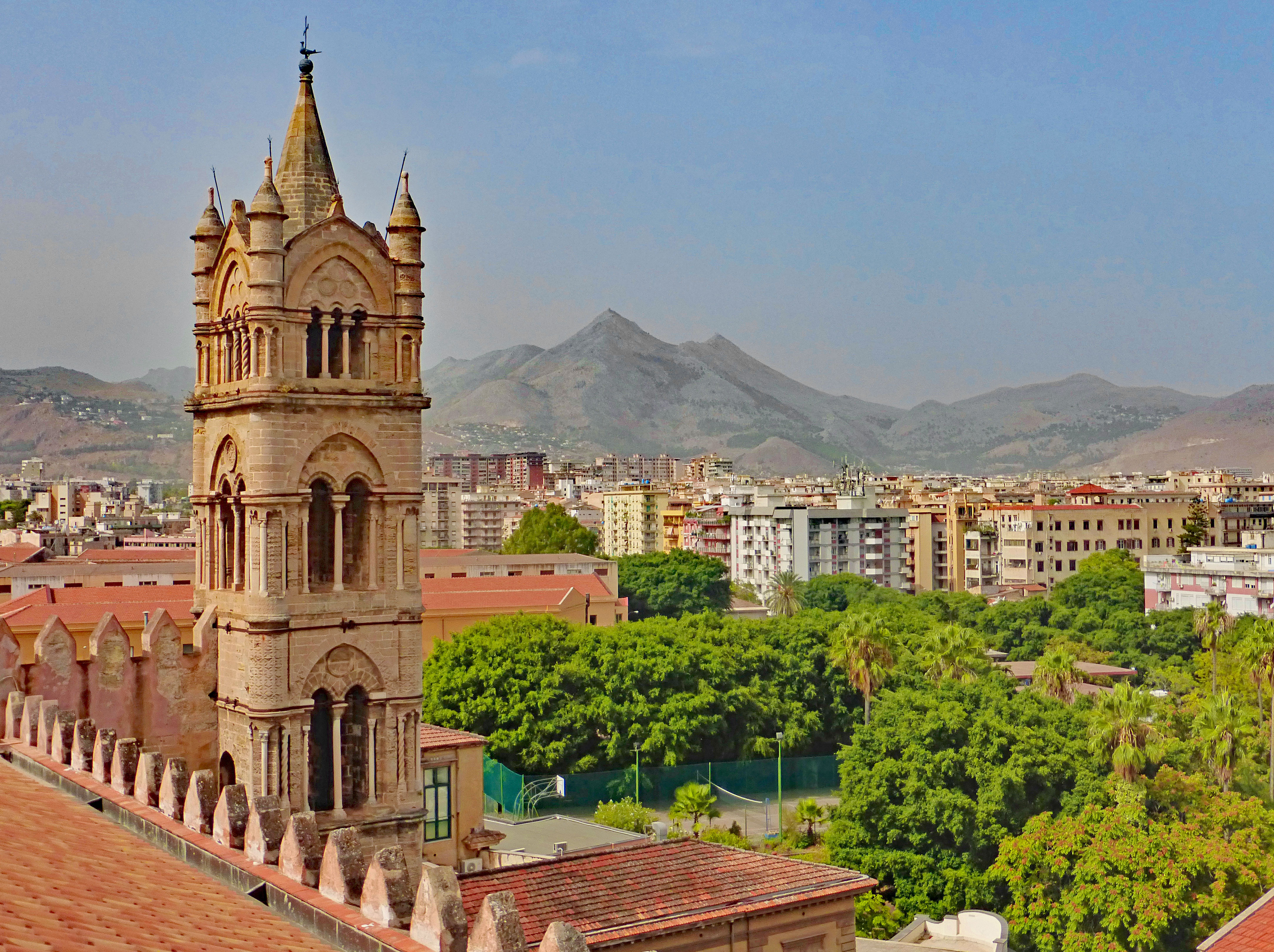
    view-from-cathedral-by-solange

    View from the Cathedral by Solange Hando

    We all think we know Palermo from years of watching films like The Godfather (in all its parts), and Scarface, but the films have never shown the beauty of the baroque palaces, the marble statues that are public art, the beauty of the bay at sunset and the tranquillity of the surrounding countryside.
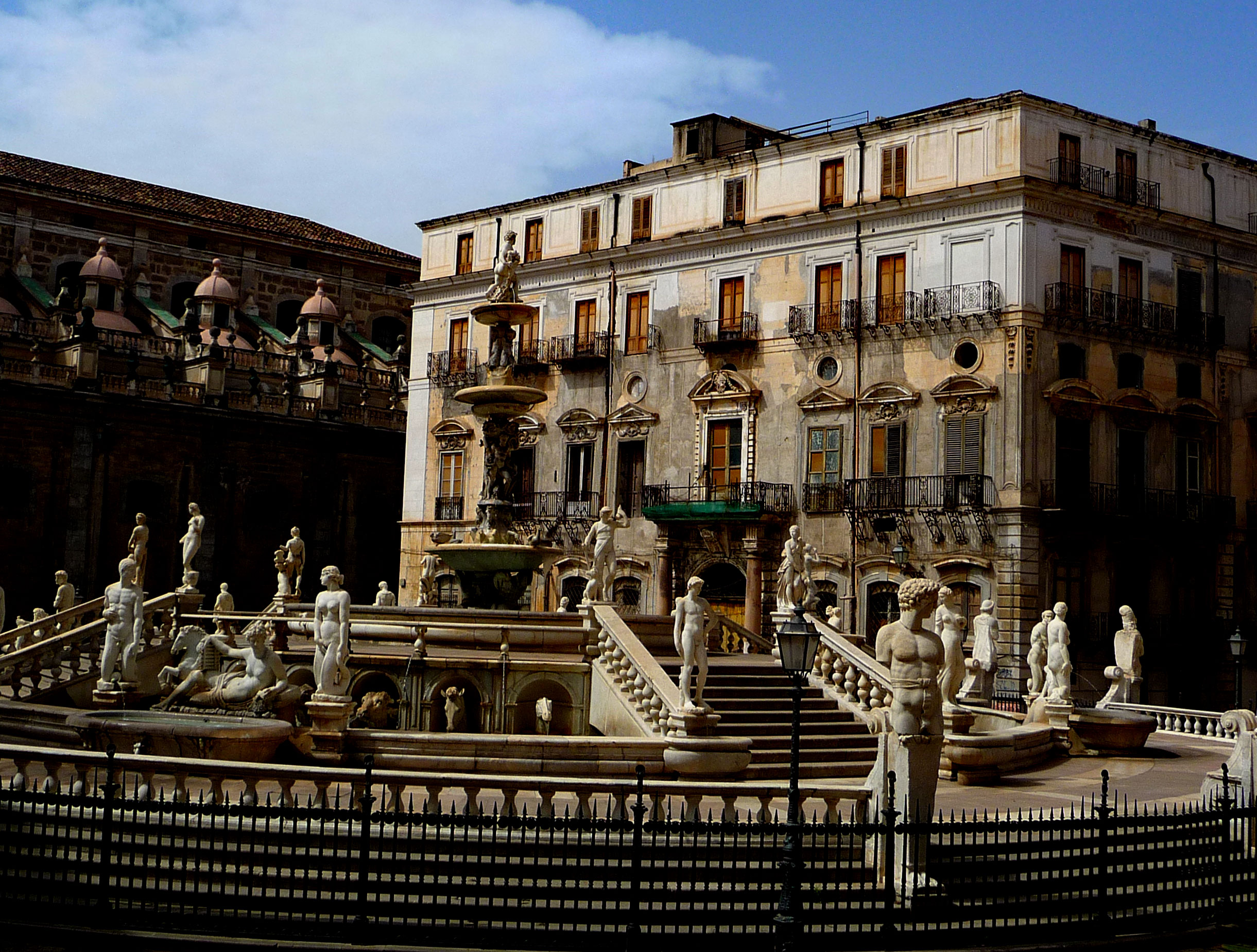
    open-air-display-of-statues

    Outdoor Art in Sicily – Photo Mari Nicholson

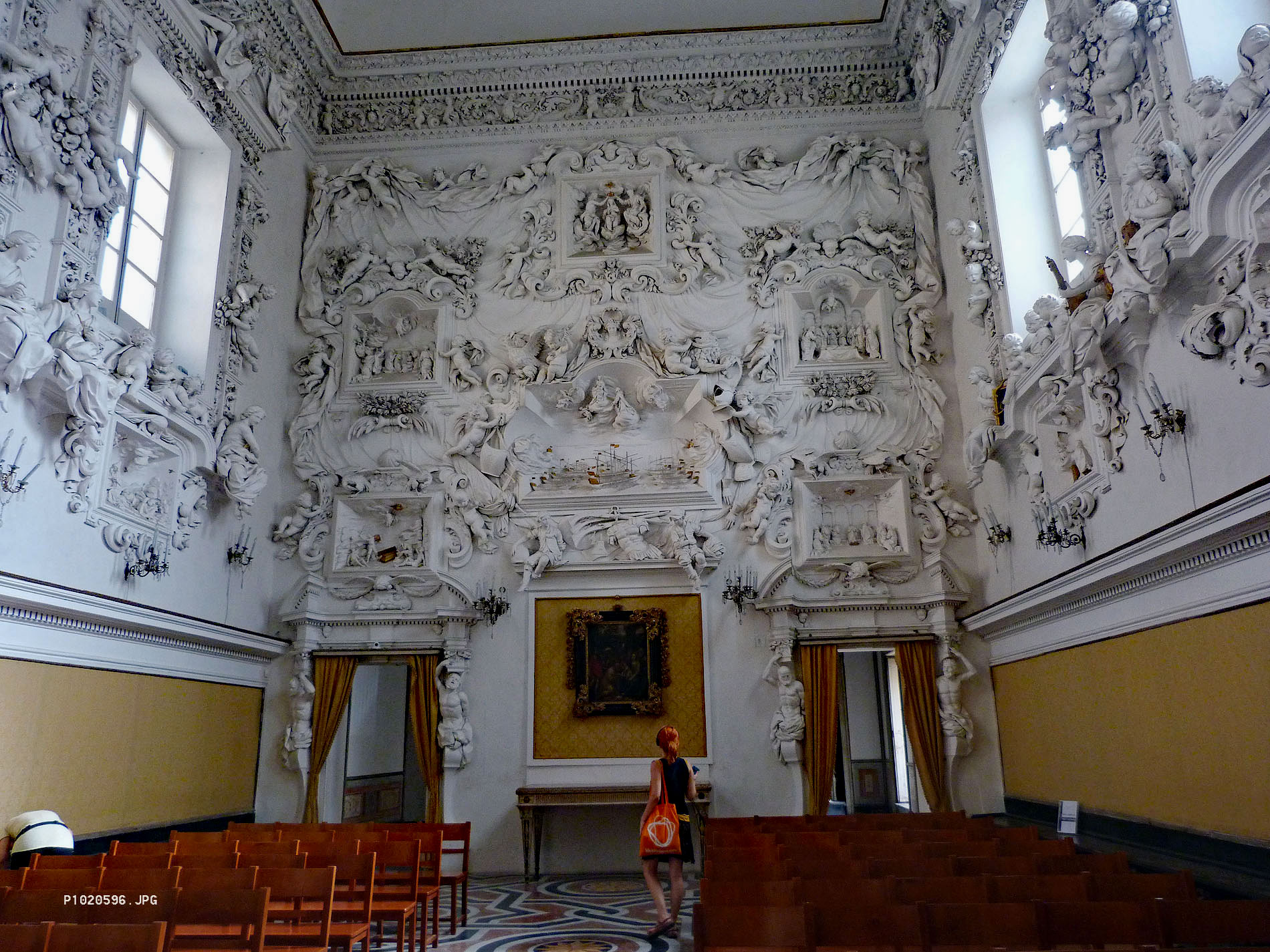
    The façade of the Teatro Massimo, the magnificence of the Cathedrale at Monreale, five miles south of the city, with its fabulous mosaics brought to Sicily from Byzantium, and the hidden beauties of the marble Serpotto Cherubs in the Oratorio del Santissimo Rosario, are Palermo at its best.  At its worst are the alleys strewn with litter, the almost feral children that chase each other around the stalls in the markets, itinerant sellers of silver jewellery and leather belts who accost you at tourist spots, and neighbourhoods filled with ghosts.
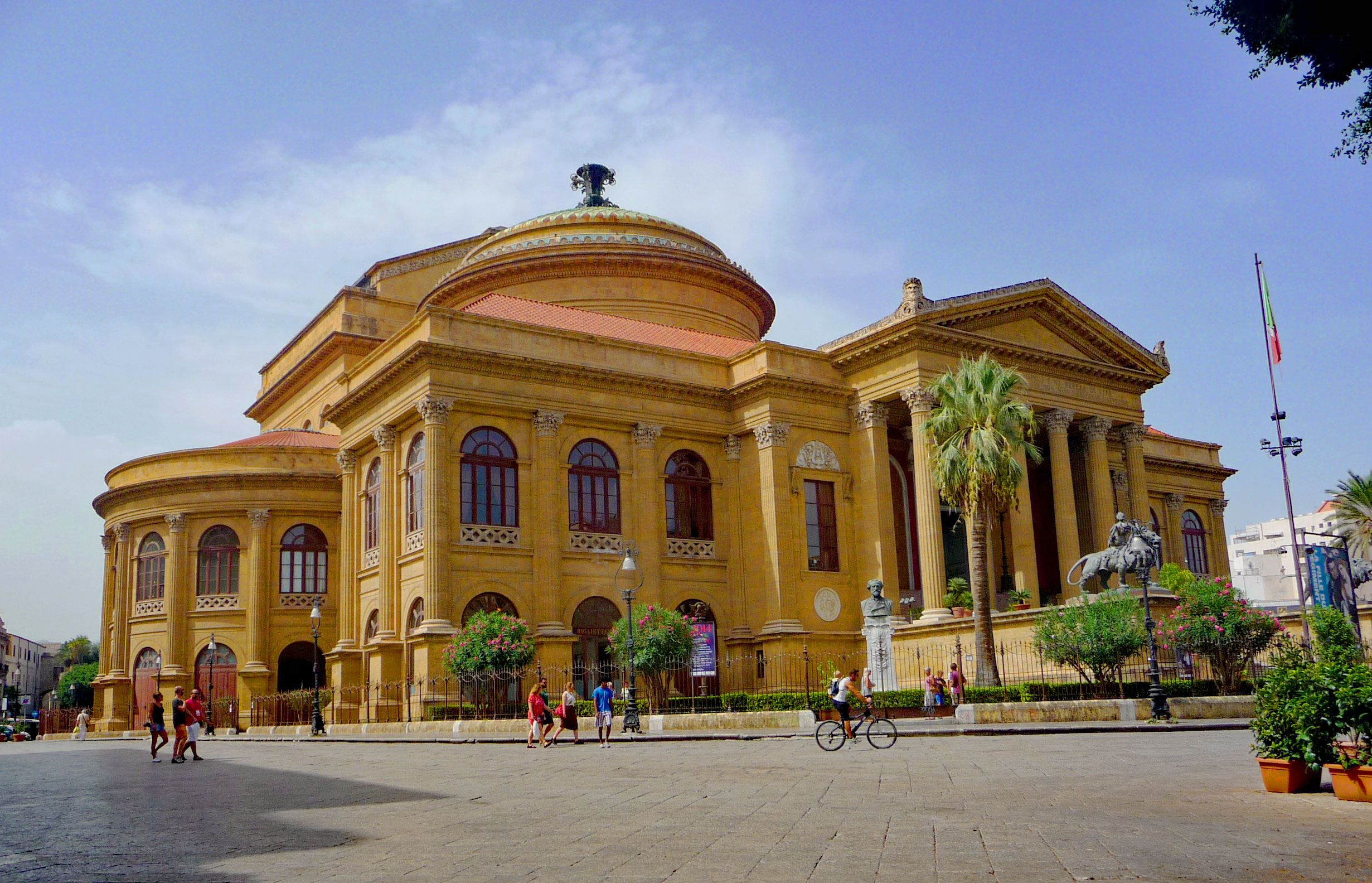
    teatro-massimo-palemo

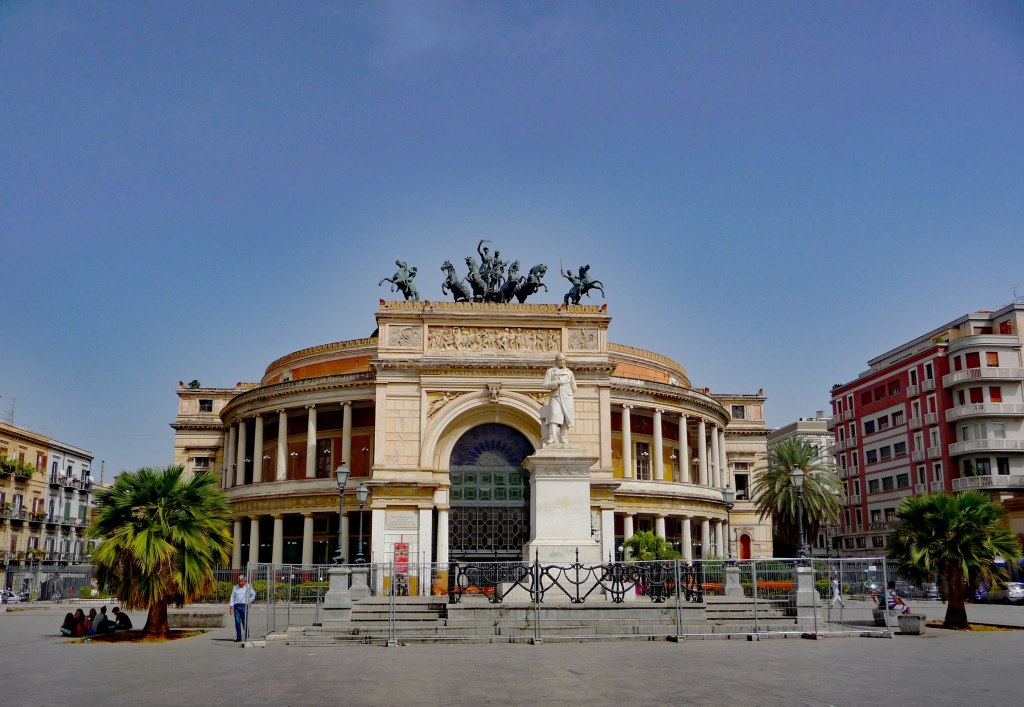
    Teatro Massimo In Piazza Verdi, Palermo – Photo Mari Nicholson

    Italy in the raw is on every Rococo street corner, the Italy of Andrea Camilleri’s  Inspector Montalbano (he operates in a different region of Sicily but the sense of his world is here).  Stand in the Piazza Verdi opposite the Teatro Massimo, Europe’s third largest opera house, and look towards the steps of the theatre on which the final scene of The Godfather III took place, and I defy you not to hear the swelling music of Cavalleria Rusticana and hear the howl of anguish from Al Pacino as his beloved daughter died in his arms.
    But it is in its streets that the real Palermo, and Sicily, is revealed and in its boisterous markets with their mixture of fresh food, dusty shoes and lurid outerwear vying for your attention with the fast-food stall, the fresh orange-juice seller and the suspect ‘antiques’.  Crumbling baroque facades look down on this carnival of life which attracts the rich and poor of the city.
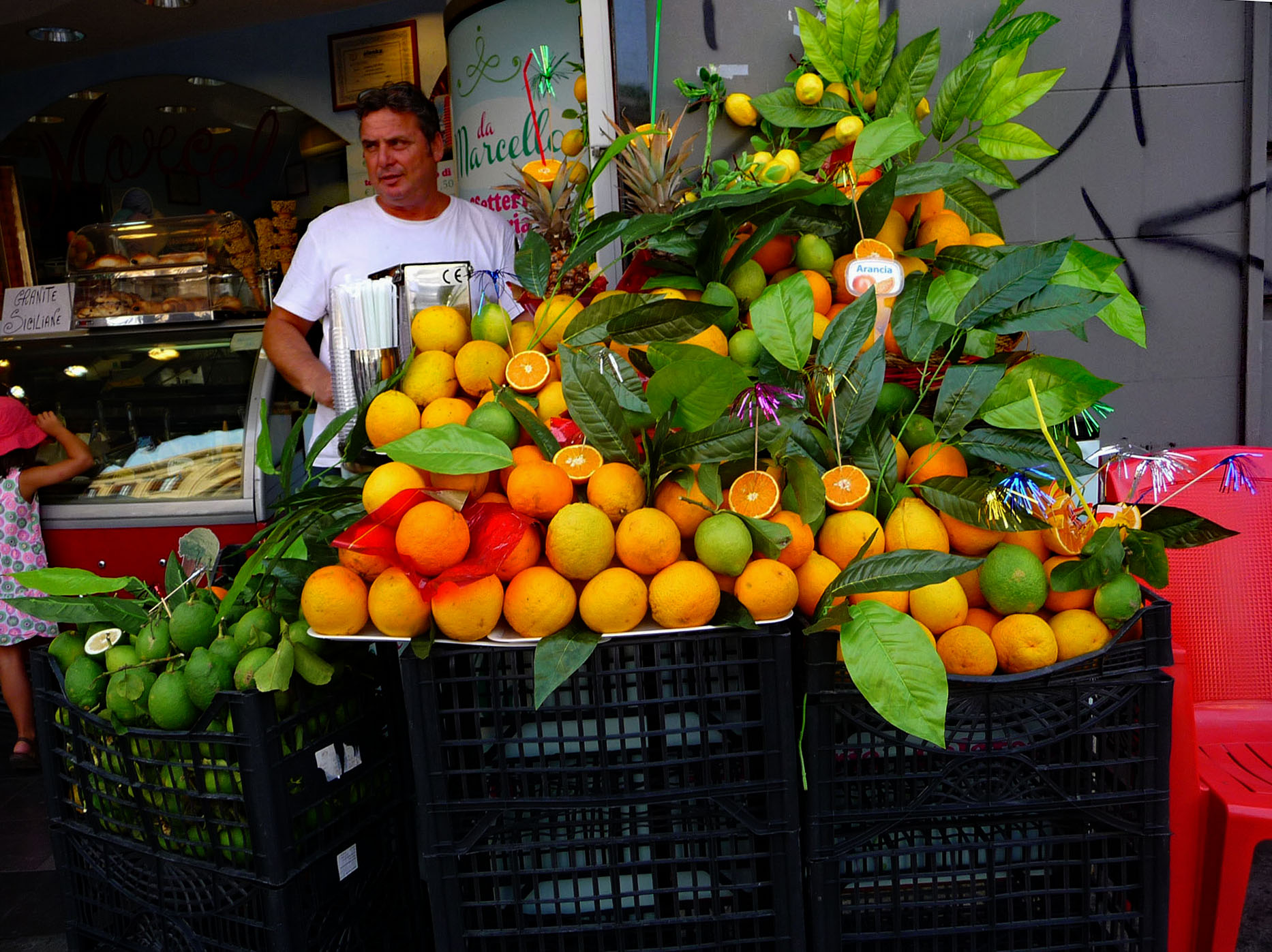
    freshly-squeezed-juices-on-every-corner-2jpg

    The Orange Juice Seller, Palermo, Sicily  –  Photo by Mari

    Despite advances made by the justice system and the reverence in which Giovanne Falcone and Paolo Borsellino are held (the two Judges gunned down by the Sicilian Mafia in 1992) the honoured society is still a reality in Palermo.  Its presence is a burden the Sicilians have had to bear for many years because few were prepared to defy the demands of the organised crime ring and, let’s face it, it dispensed a type of justice, the only sort on which the poor could rely.
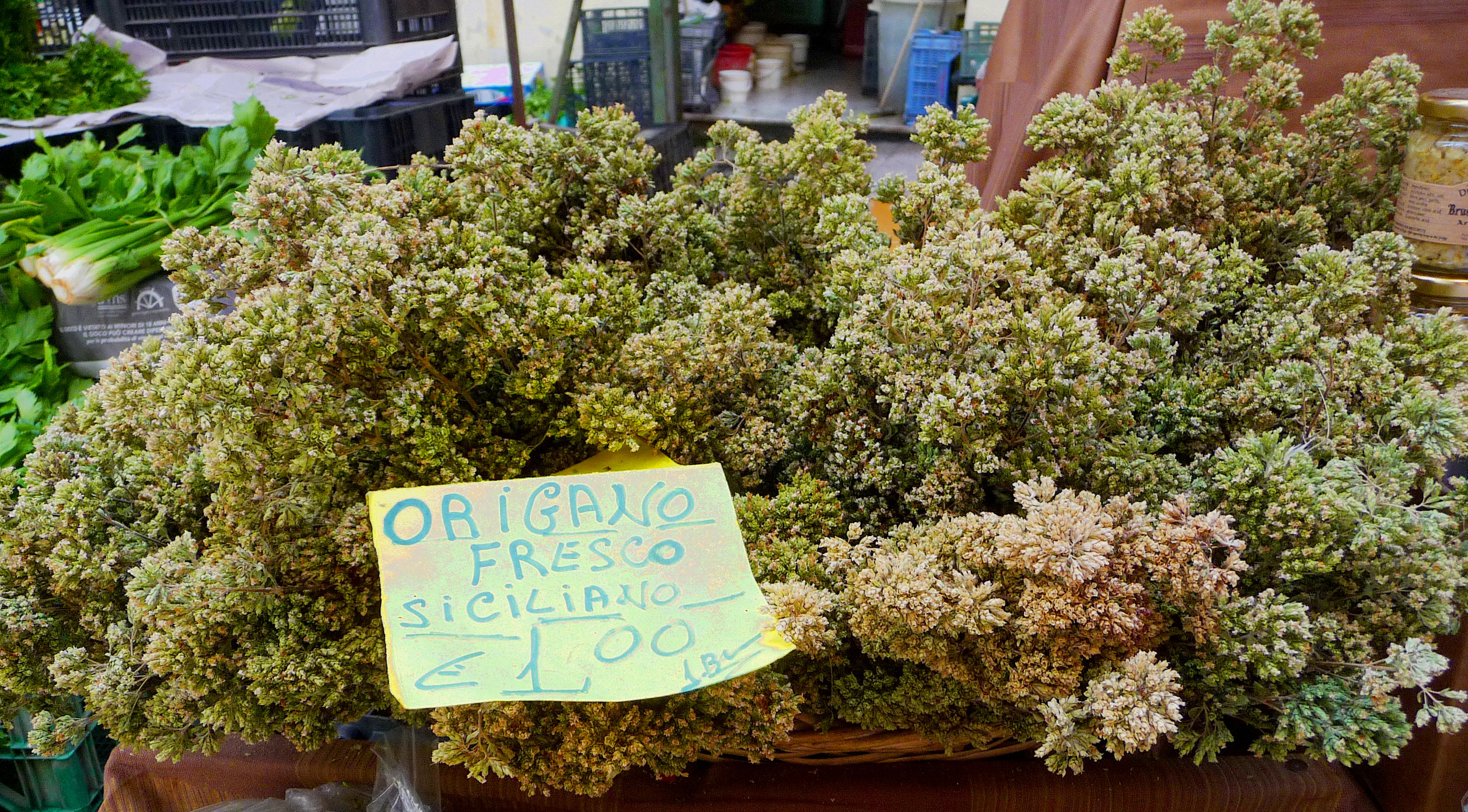
    so-much-oregano-palermo-sicily

    Herb Stall in Palermo Market, Sicily – Photo by Mari Nicholson

    Yet by the end of the 20th century and as a result of the assassination of the two popular judges, the Sicilians began to challenge the status quo.  Led by Rita Borsellino, sister of the assassinated judge, a native of Palermo and an activist,  an anti-Mafia movement, Libera, was formed.  Now another movement called Addiopizzo, meaning ‘goodbye to protection payments’ is operating, a movement that is trying to involve tourists for the good of the city.

    Addiopizzo was founded in 1994 by a few young restaurateurs who had a vision of  a Sicily where the Mafia did not control all sectors of the economy and where businesses of all sizes could keep 100% of their profits.

    This organisation has now moved into offering anti-Mafia tours and accommodation and lists of bars and restaurants are available where it is guaranteed that the owners are  refusing to pay protection money.  Addiopizzo offers walking and cycling tours, car hire and accommodation, and can even arrange a tour to Corleone.

    Addiopizzo could be the saviour of Palermo and the means by which the people’s pride and their strength to resist the corruption which has ruined their city, could be resurrected.  I personally, can highly recommend all their tours and the walk around Palermo is truly an eye-opener.

    In the midst of the chaos, the crumbling architecture, the fading grandeur and beauty of its palaces and mansions, the city has a vibrancy not felt in any other city in Italy.  It has a life of its own, a language of its own, and it has art spilling out on to the streets.  Go see for yourself, and when you’re there, do support ADDIO PIZZO.
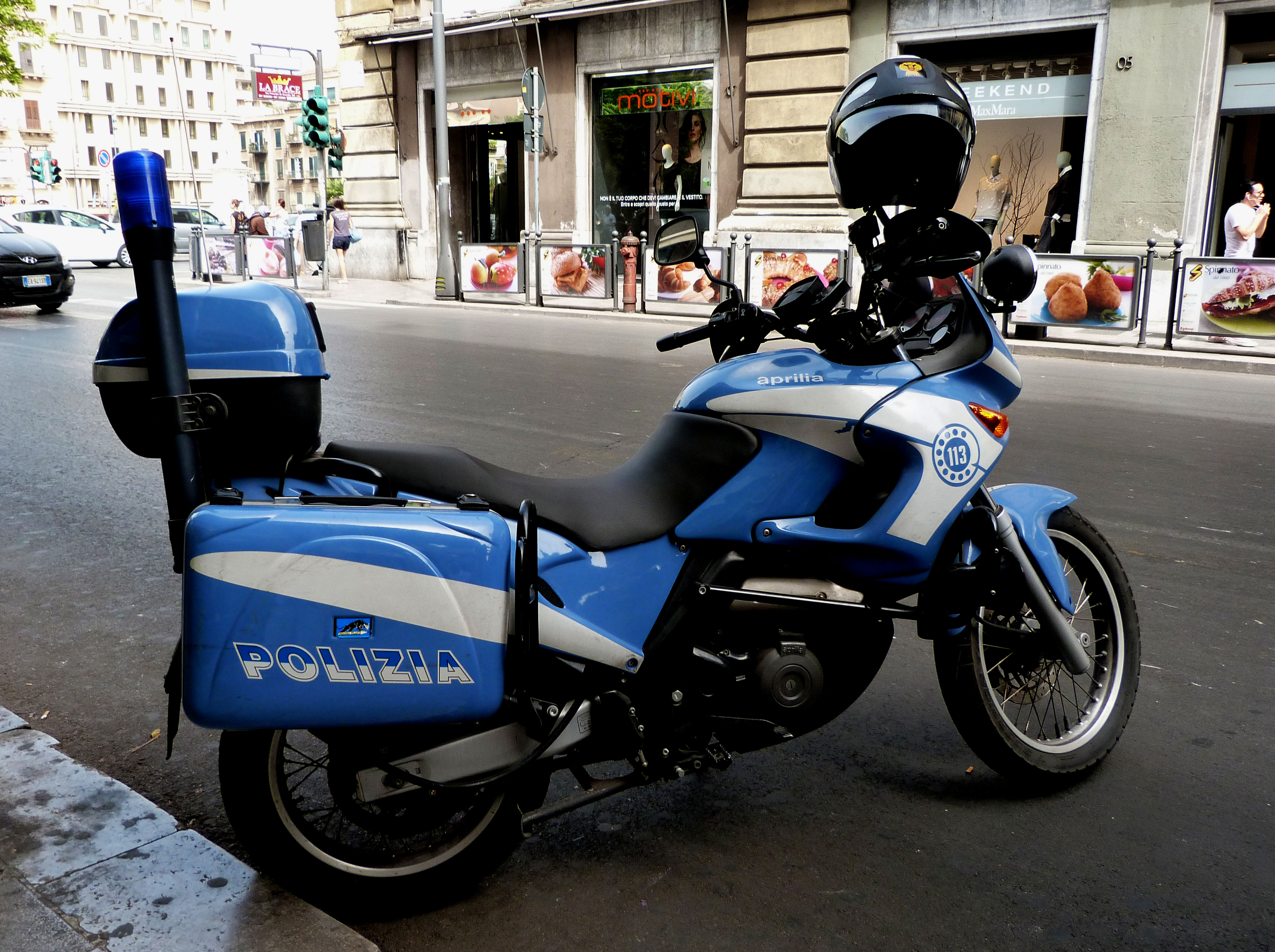
    the-ubiquitous-scooter

    The Ubiquitous Scooter – Photo by Mari Nicholson

    .

  • Shakespeare’s Cities (2)

    Shakespeare’s Cities (2)

    HAMLET – Denmark

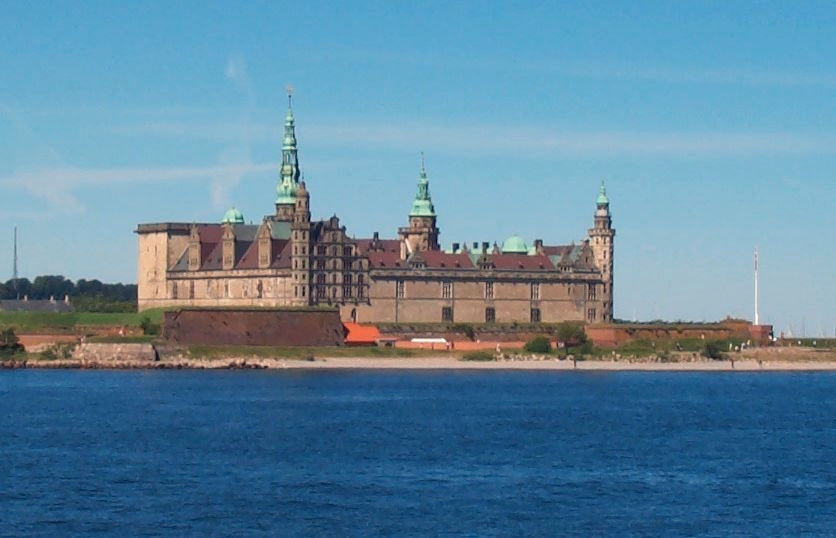
    No use telling the world that Hamlet is not autobiographical as approximately 200,000 people beat a path to Kronberg Castle in Denmark every year.  Shakespeare set the fictitious story in Elsinore Castle and it is presumed that this was Kronborg Castle which has existed since 1420 and is considered to be one of Europe’s finest Renaissance castles.

    schloss_kronborg_vom_meer

    Elsinore (Kronberg Castle) – WikiCommons

    Despite being burned to the ground twice, Kronberg has continued to maintain its vital position at the head of the Øresund Sound. Ships passing into the Baltic Sea used to pay tolls at the Castle and Helsingør (the Danish translation of Elsinore) was once one of the most important towns in Europe.

    Shakespeare’s evocative imagery, the dramatic story, and the play’s worldwide popularity means that thousands of people visit Kronborg Castle every year.  A UNESCO World Heritage Site since 2000, the dingy catacombs and graceful towers have become synonymous with the doomed Prince Hamlet.   Guided tours are offered in June, July and August, but the best time to visit, if possible, is during the annual Shakespeare festival in August.

    From Copenhagen the journey takes less than 45 minutes or the “Hamlet” ferry takes passengers from Helsingborg, Sweden through the narrow strait.

    MERCHANT OF VENICE – Venice

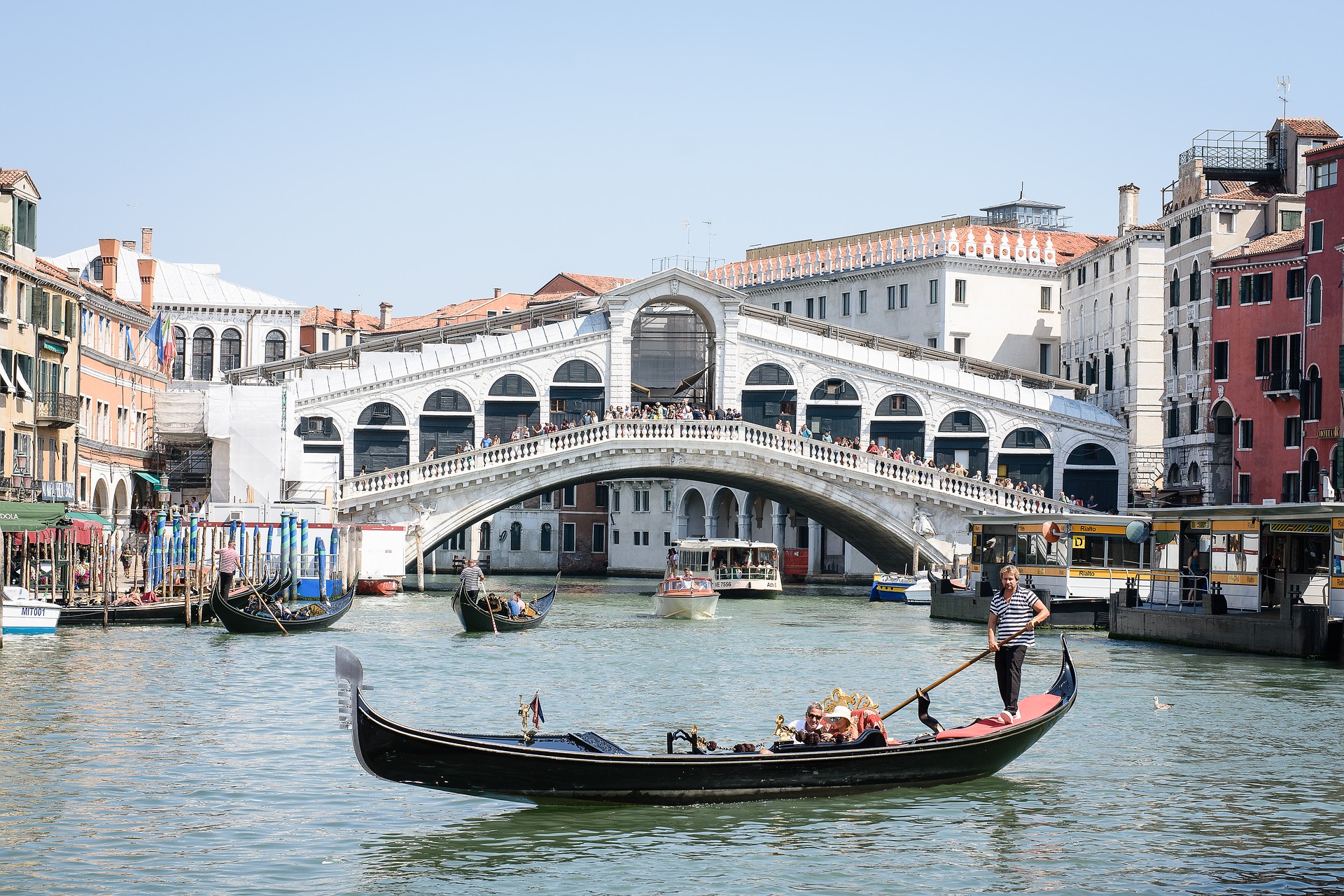
    Italy was one of Shakespeare’s favourite locations in which to set his plays.  Venice, which provided the setting for the story of Antonio, Bassanio and Portia in The Merchant of Venice, is one of Italy’s glories, its beauty breath-taking when approached from the sea, and its treasures among the greatest in Italy.

    venice-1678651_1920

    The ghettos may have gone, but this famous port city is still exceptionally atmospheric.  It’s hard not to have flashbacks to scenes from the 1973 Nicholas Roeg film Don’t Look Now if you are strolling around Venice as dusk falls.

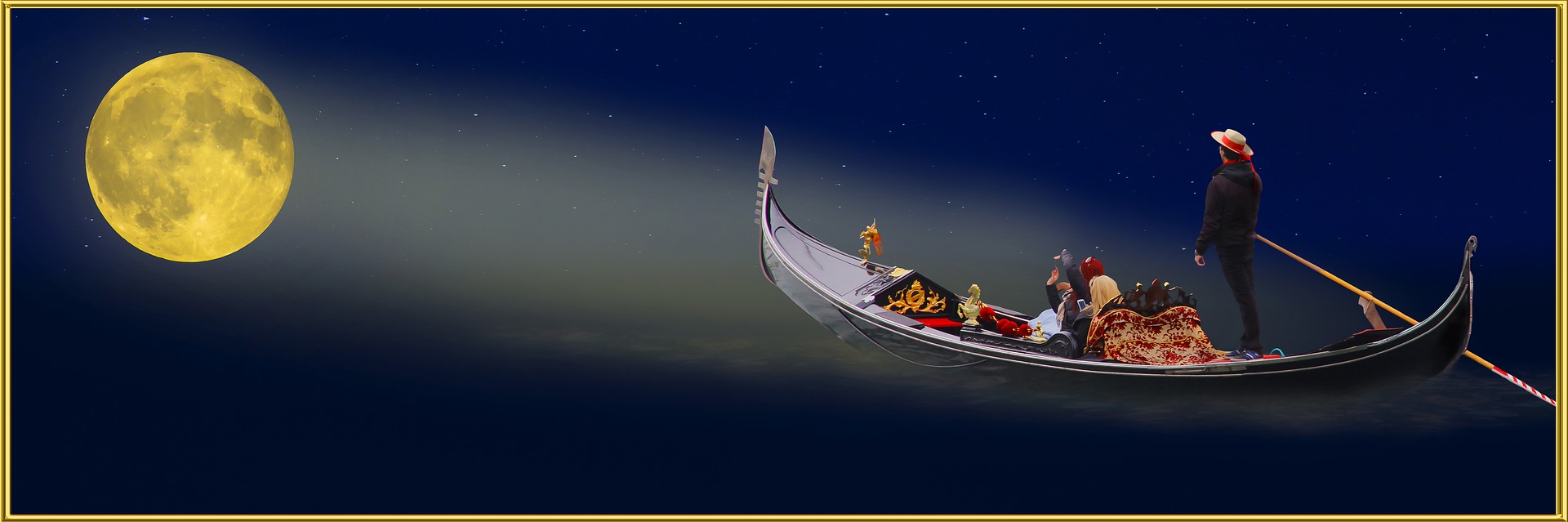
    Take a gondola to Palazzo Ducale and explore the former wine bars, cafes and churches,   visit some of the art galleries, relax on a boat ride to the outer islands and when the sight-seeing has exhausted you, take the canal trip down to Padua.  But, for some quiet time to think about the play, you will have to visit in winter – the only time the tourists don’t visit in their thousands.  With four or five giant cruise ships docking most days, Venice is in danger of losing all character and the world of Portia and Shylock may become a thing of the past.   It’s impossible to see Venice properly during the day, for that you have to wait until the cruise visitors have returned to their ships when you are no longer forced to dawdle behind them as they crowd the streets in groups with their cameras on sticks held high, desperate to get the photograph that may serve as an aide memoire when they return to their cocooned cruiser.

    If I can paraphrase, it must be Venice, there’s a gondola in my photograph.

    venice-1721988_1920

    MEASURE FOR MEASURE – Vienna

    One doesn’t associate Austria with Shakespeare yet for some reason he set one of his plays in Vienna, a Vienna that is not recognisable today but that has some similarities with the Vienna that existed immediately after the Second World War when it was a city divided between the four powers, Britain, France, Russia and USA.

    concerthaus

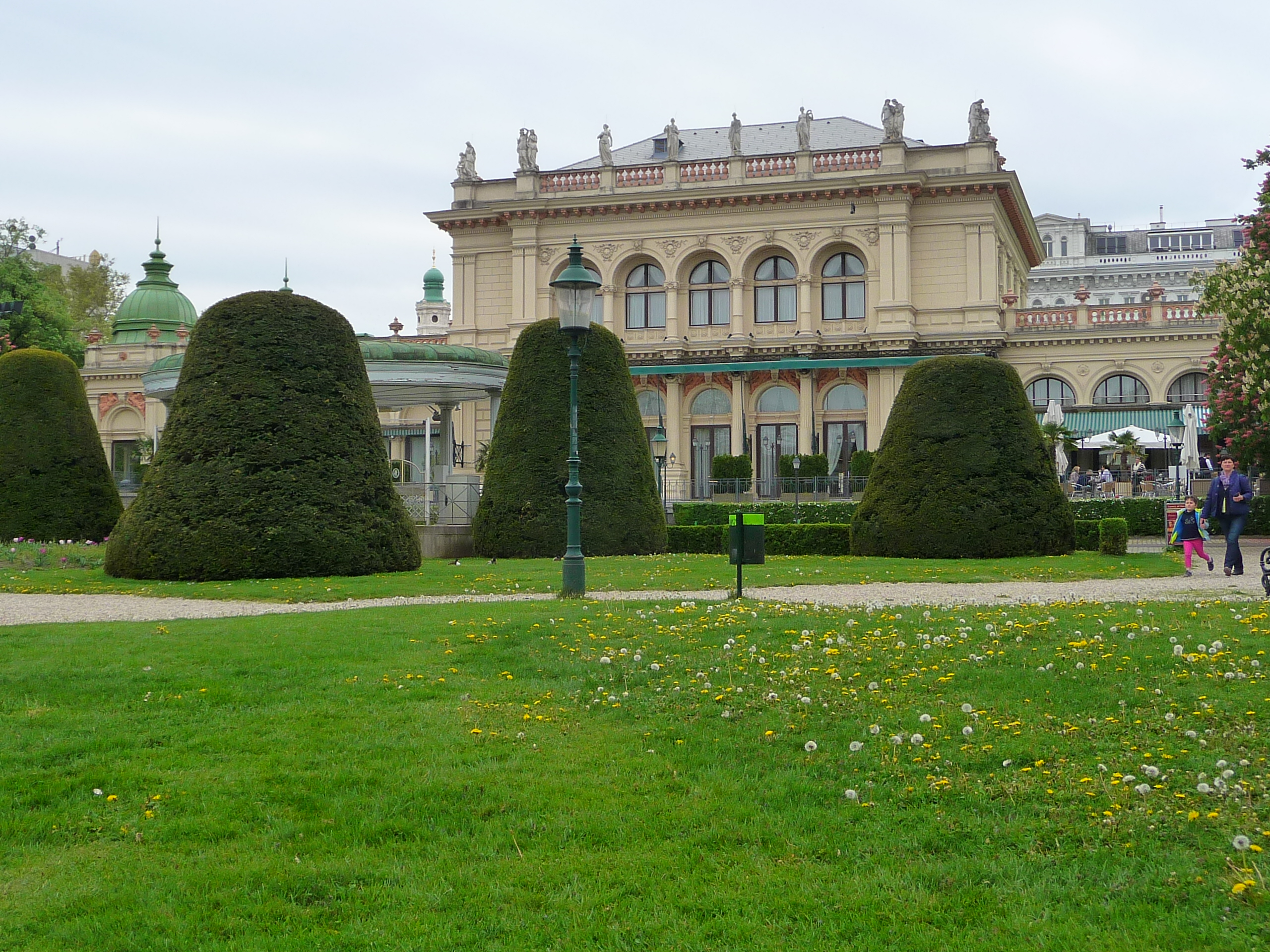
    Concert Hall in Vienna – Mari Nicholson

    Measure for Measure is set in a Vienna whose streets and taverns are teeming with criminals, prostitutes and pimps, not one we would recognise today.  This problem play offers us the purity of the city that was Austria’s cultural crown jewel, long hailed for its art, architecture and intellectuals as a city that has to balance purity with la vie bohème; the old with the new.  Often referred to as one of Shakespeare’s problem plays, its text has often been altered to suit the mores and morals of the period in which it was performed.

    Most of the action takes place in the Duke’s palace, in the city prison and in the streets of Vienna. The play’s main themes include justice, “mortality and mercy in Vienna,” and the dichotomy between corruption and purity: “some rise by sin, and some by virtue fall.”

    Today’s Vienna is more about Strauss than sin, Mozart rather than mayhem.

    There is little to remind you of Measure for Measure but Vienna boasts Shakespeare Garden, a space dedicated to the flora and fauna in his works, a pleasant place to spend a little time.  Then maybe light a candle at the gothic St Stephen’s Cathedral and enjoy the quintessential coffee and cake at Hotel Sacher where you will have to join a queue for perhaps 20 minutes in order to get a seat and a piece of that cake – Sacher torte – but it’s worth it.

    Have a traditional night out at the Viennese Opera before heading to a trendy bar in Freihaus or to a restaurant for the perfect Weiner Schnitzel.  Shakespeare would have loved it I bet.

  • MOSTAR, UNESCO World Heritage Site

    MOSTAR, UNESCO World Heritage Site

    Dalmatian Sights:

    p1150750

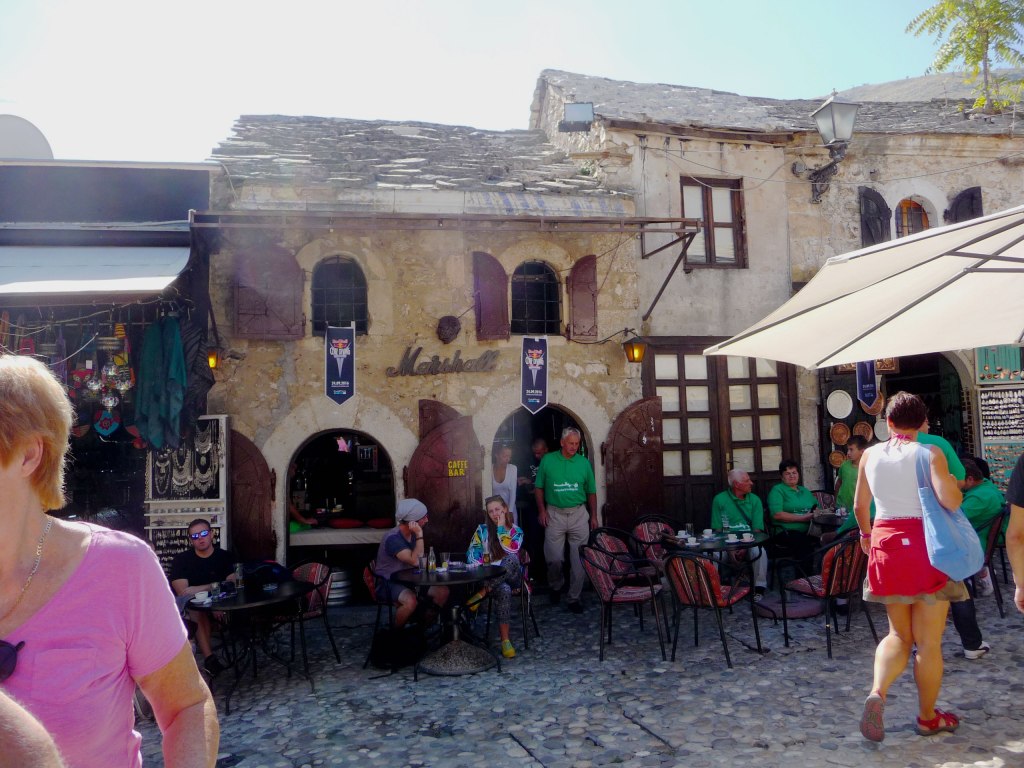
    Modern day Mostar – Mari Nicholson

    Famous for the bridge that was destroyed in the 1990 conflict in the Balkans, the historic old town of Mostar in Herzegovina that spans the deep valley of the Neretva River, is somewhere that should be visited by anyone who travels to Dalmatia.   Most of the old town, as well as the bridge, was destroyed in that dreadful war, signs of which are still in evidence around the area.

    present-day-mostar-looking-from-the-bridge

    Mostar, Astride the River – Mari Nicholson

    Dating back to the 15th century, Mostar was developed as an Ottoman frontier town and was further developed during the 19th and 20th centuries when the Ottomans were seemingly unstoppable as they pushed at the gates of the Austrian-Hungarian Empire.

    mostar-bridge
    Old Bridge – Photo Pixabay

    Long known for its old Turkish houses and the iconic bridge, Stari Most, after which the town is named (mostari meaning the bridge-keepers) many of the dwellings in the Old Town were restored or rebuilt in 2004 with the help of UNESCO.   The Old Bridge was originally designed by the architect Hajruddin, under the direction of his famous architect teacher Sinan, and its reconstruction was based on thorough and detailed analyses, use of authentic materials and techniques: the reconstructed portions have been left visible.

    colourful-souk-on-way-to-bridge-mostar

    Before the war, Muslims, Christians, and Jews, mosques, churches, and synagogues existed side-by-side indicating that the Roman Catholic Croats, the Eastern Orthodox Serbs, and the Sephardic Jews, had lived peaceably together with the Bosniak-Muslims for more than four centuries and the town is an outstanding example of a multicultural settlement with its pre-Ottoman, eastern Ottoman, Mediterranean and western European features. cafe-near-entrance-to-the-souk-mari-nicholson

    It is hoped that the reconstructed old bridge and city of Mostar will serve as a symbol of the coexistence of the diverse cultural, ethnic and religious communities in this region.

    mostar-old-town
    Old Houses, Mostar – Photo Pixbay

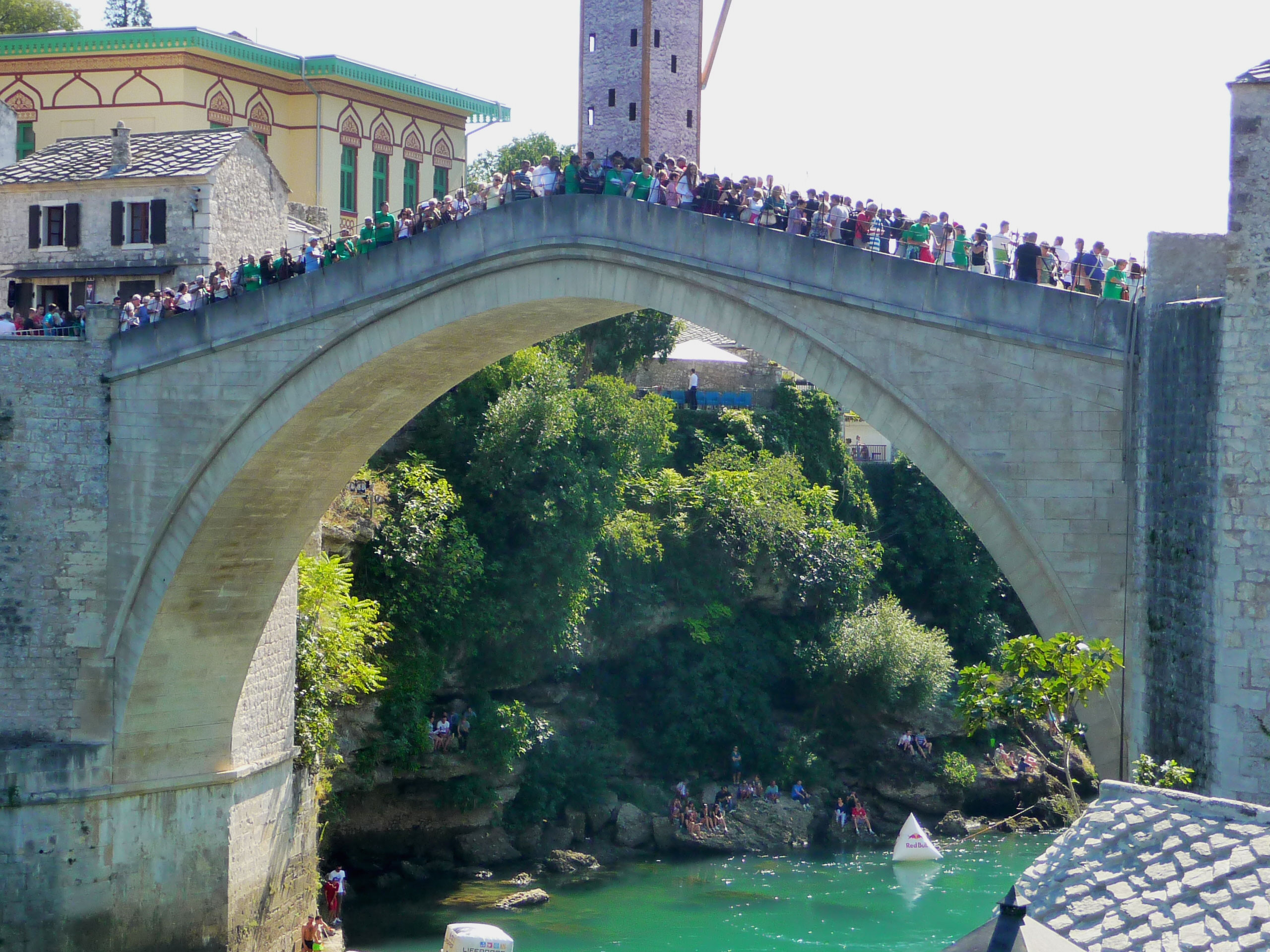
    mostar-bridge-2016-watching-the-cliff-divers
    Mostar Bridge today (watching the Cliff Divers)

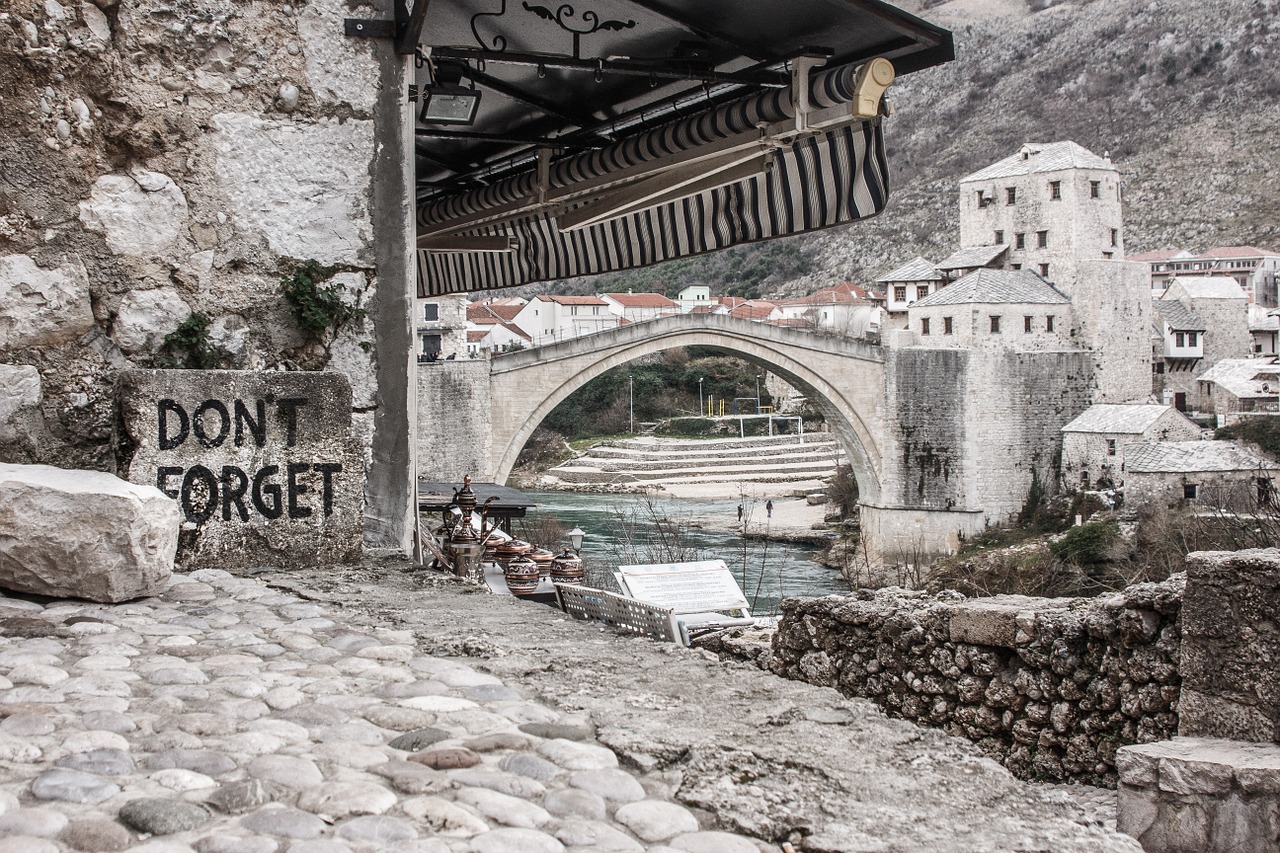
    dont-forget-mostar
    A Plea from the Heart – Don’t Forget the Past – Photo Pixabay

  • Montpelier:  Antigone Area

    Montpelier: Antigone Area

    Montpelier had been experiencing rapid growth since the 1970s.  The city was on line to become the new regional technology centre and there was a need for expansion and for more public housing.  In 1979, the newly elected municipal council of Montpelier, with far-seeing vision, decided to develop a whole new district to provide for this expansion and link the centre to the River Lez.  The plan for the stunning development incorporated a west-east axis consisting of a landscaped boulevard and a series of squares enclosed by residential blocks each of seven-stories, to terminate in a new waterfront “port” along the Lez.

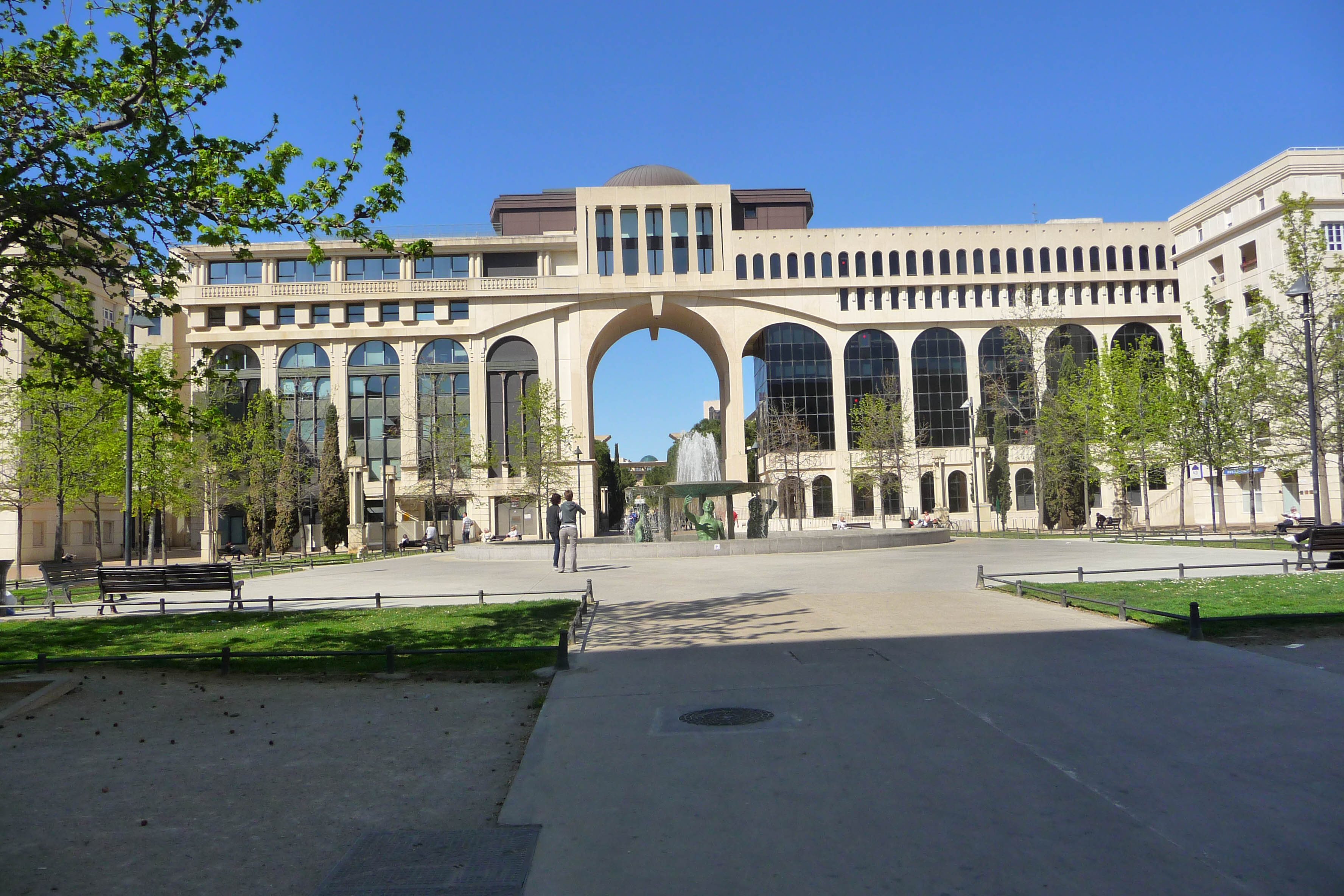
    p1080172

    Magnificent Buildings along the 1 Kl-length of Antigone – Mari Nicholson

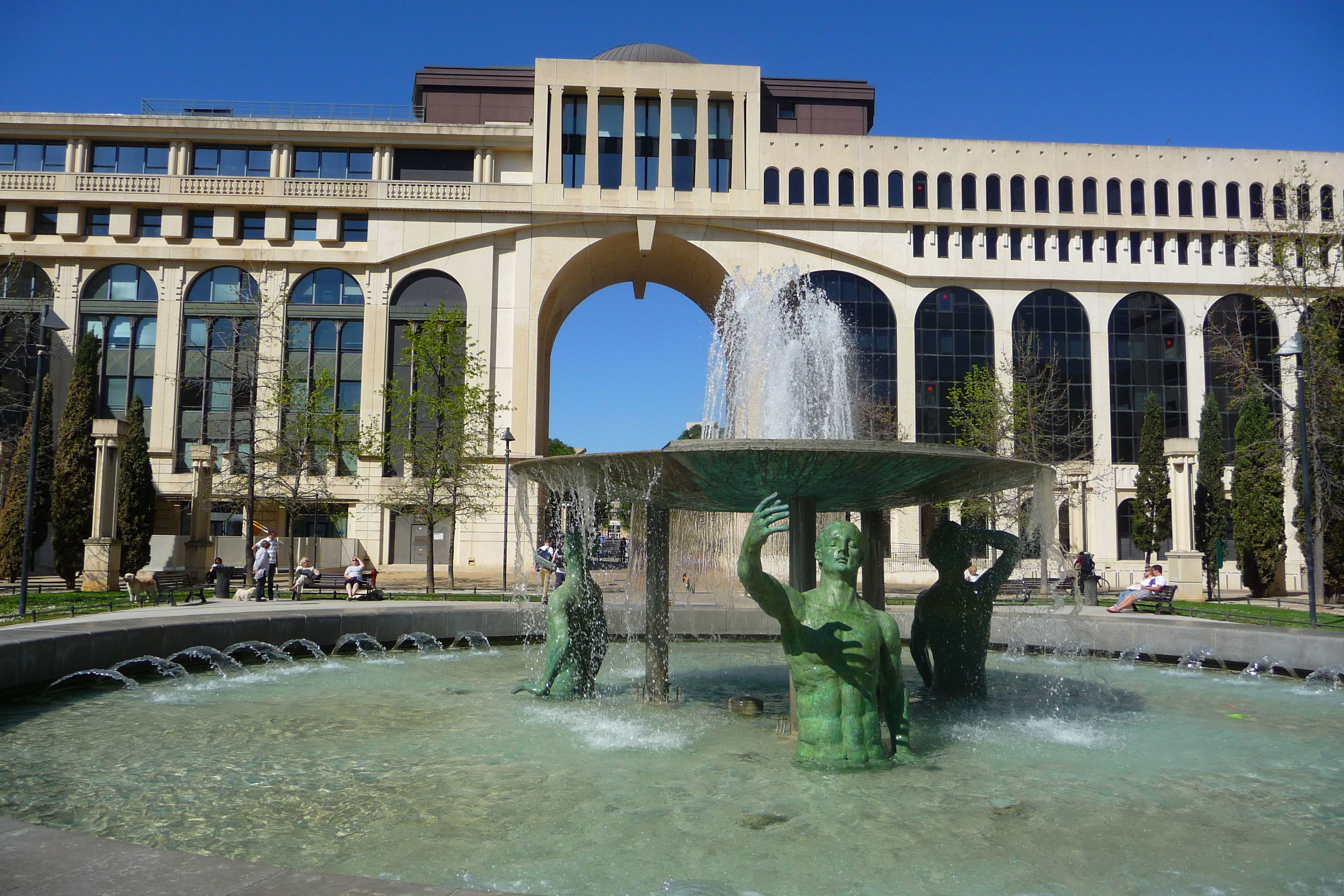
    Thus did Antigone, surely the most attractive of new developments in France, c0me into being.  The 1-Kilometre length of this development was built on the grounds of the former Joffre Barracks, located between the old centre of Montpelier and the River Lez which meanders along the eastern side of the city.  It is known as the Champs-Élysées of Montpelier and the master plan was designed by Spanish architect, Ricardo Bofill – who also designed the majority of the buildings – as a series of grand neo-classical structures with pediments, entablatures and pilasters on a gigantic scale.

    greek-heroes

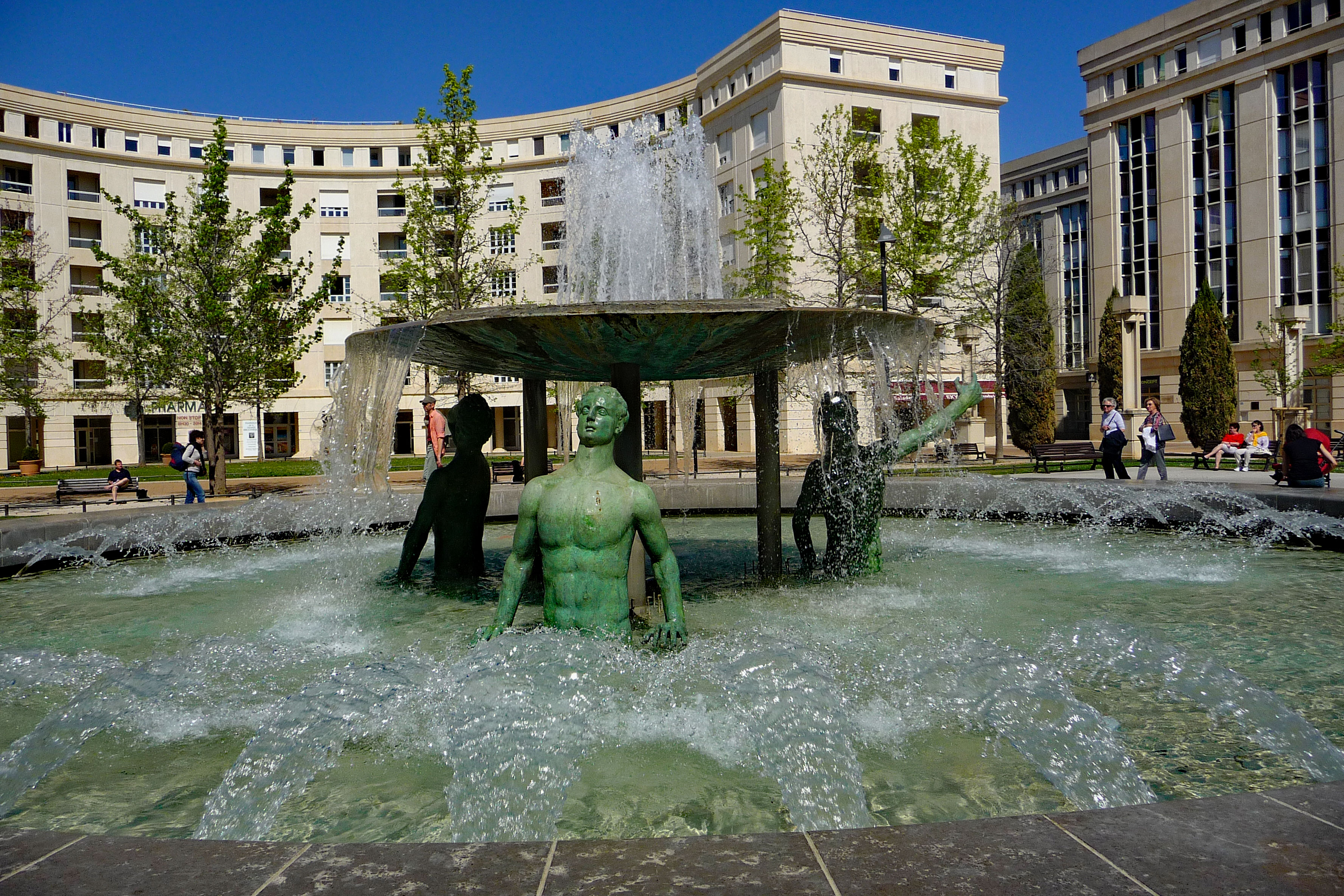
    Neo-Greek Statues with Fountain – Mari Nicholson

    The Antigone squares are idealised, perfectly proportioned Renaissance spaces with grand names like La Place du Nombre d’Or.  Neo-classical Greek statuary that harks back to another age is dotted about the boulevards and plazas in streets that were planned to allow a paved walkway from Place des Echelles de la Ville to the River Lez.  A continuous movement of wheeled devices and small battery-powered minibuses provide transportation within the mall.

    Antigone is an enormous project in every respect.   It includes about 4,000 new dwellings and 20,000 sq. meters of commercial space, the Languedoc-Roussillon regional government headquarters, office space, various government offices, restaurants and cafes, schools with special housing for students and artists, sports facilities, and underground parking.  This new development is town planning n a grand scale.

    among the water spouts with Greek statue centre – Mari Nicholson

    The only other project of this size and scale designed by one architectural firm is the Karl Mark Hof in Vienna, but this has a mere 1500 dwellings as compared to the 4,000 at Antigone and almost no other services.

    p1080197
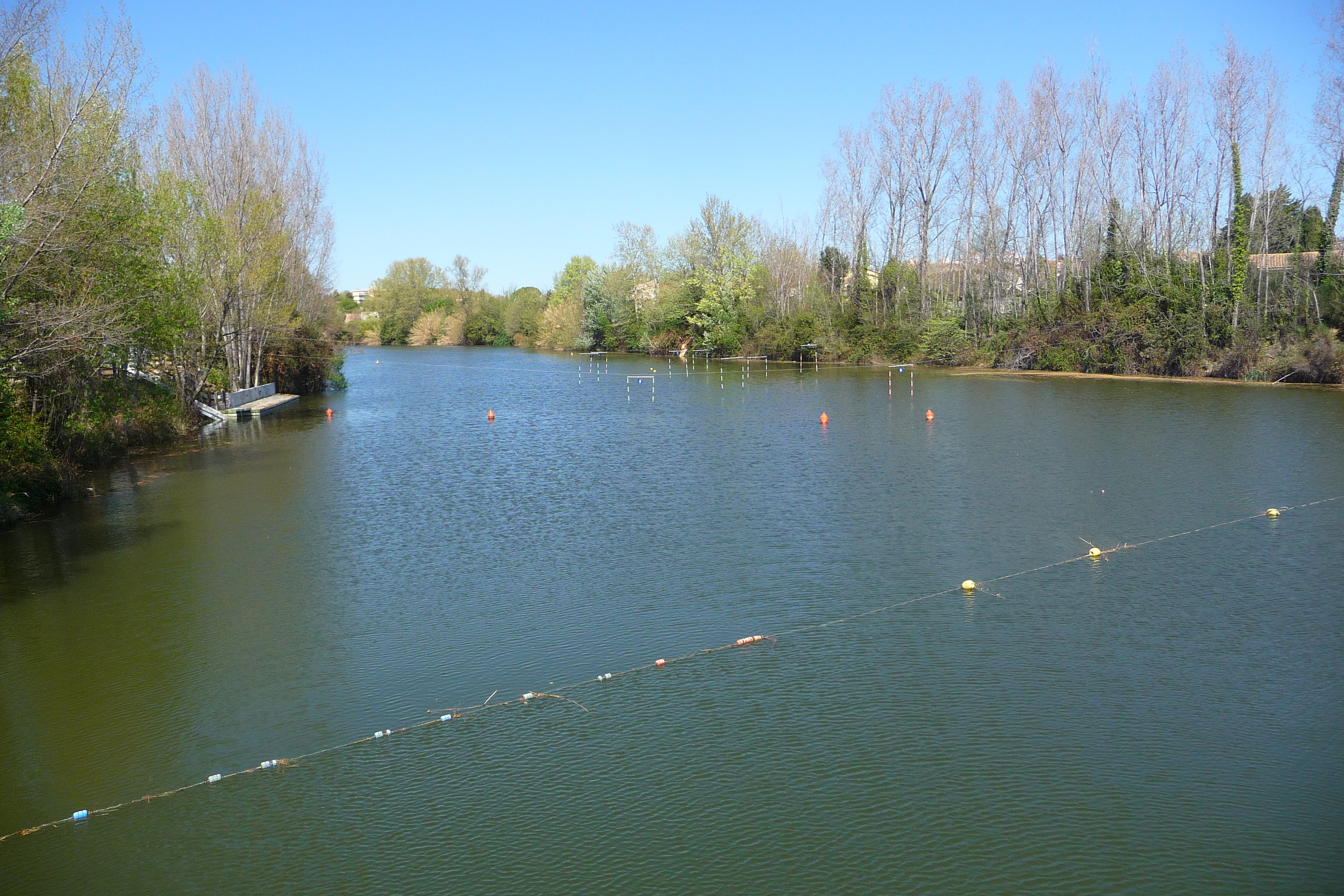
    On the River Lez there are various watersports for the public – Mari Nicholson

    A visit to this remarkable area of Montpelier makes it easy to see why it continues to attract worldwide attention.

    This slideshow requires JavaScript.

  • Palavas les Flots – Montpelier’s Seaside

    Palavas les Flots – Montpelier’s Seaside

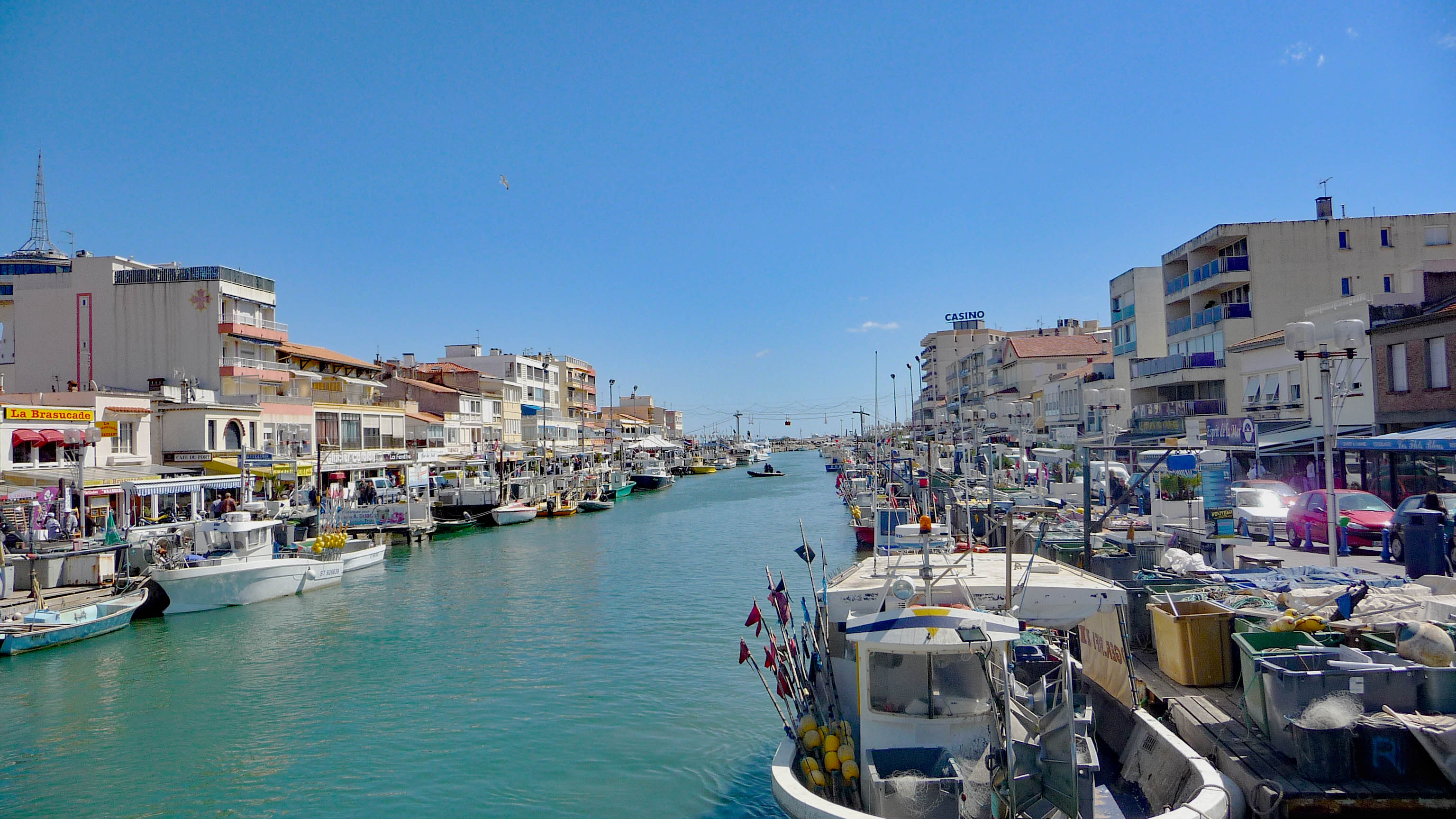
    Just six kilometres south of Montpelier lies Palavas-les-Flots, a seaside town with some very fine seafood restaurants lining the canalised section of the River Lez  that runs through the centre of the town just before it enters the sea.    This has the effect of splitting the town into two sections, a Left Bank and a Right Bank, the names by which they are known.

    Chair-Lift-Over-Palabas-Les-Flot

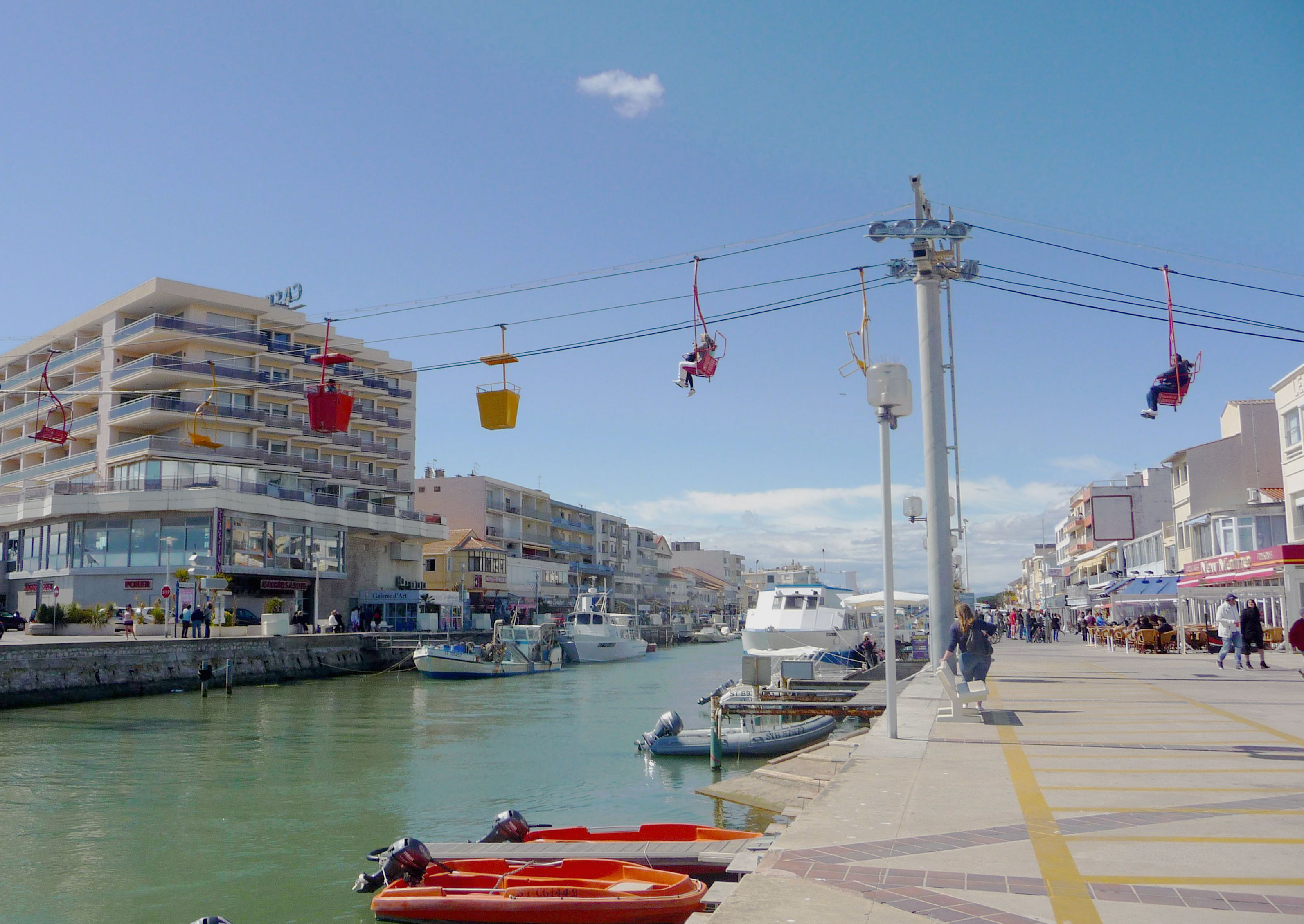
    See Palavas by Chair Lift- Mari Nicholson

    In the centre of the town is the distinctive ‘lighthouse of the Mediterranean’ with its popular revolving restaurant: next to this stands the church of Saint Pierre with its attractive garden.  There are few other sights to detain one in this seaside resort – it is a place for relaxation and enjoyment of the watersports and the facilities on hand.  What is a charming sight, though, is the canalised section of the town on which the fishing fleet makes a fine picture on a sunny day as they get ready to set sail.  And again, on their return, photographers line up to  photograph the fishermen who sell the fish directly from the decks of their boats to customers from the nearby flats and even from towns beyond.

    Fishing-boats-ready-to-sail---Mari-Nicholson

    The restaurants that line the canal are a magnet for visitors from Montpelier, especially at weekends, and you should be prepared to wait a while for a table and again for the meal to be served once you have chosen a restaurant.  The favourite meal is  mussels , served n every imaginable style, and always in the traditional big, blue enamel pots beloved of French restaurants.  They can be recommended.

    Those who enjoy the fun of local markets should visit on the mornings of Monday, Wednesday and Friday when there is a market in the town.

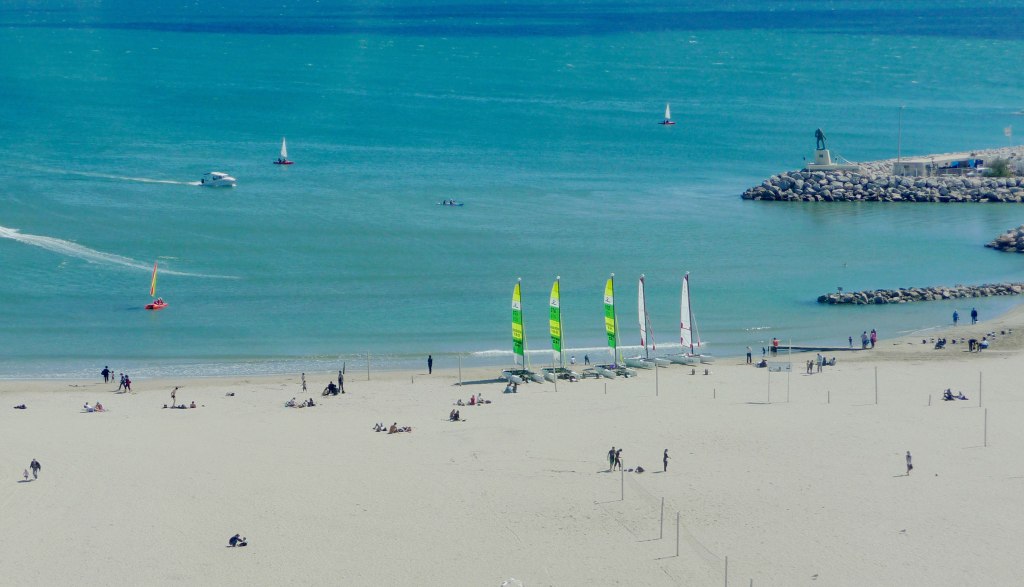
    The seafront is a short distance from the town centre and has a wide sandy beach, not what one would call a ‘golden beach’ but nevertheless, sandy and clean.  It is seven kilometres long and with this massive stretch of seaside comes all the water-related sports activities you could wish for  – kayaking, jet-skis, windsurfing, paragliding, swimming, snorkelling and diving.  Most of the equipment can be hired from concessions on and around the beach.

    The sprawl of apartment buildings that is a backdrop to the beach either side of the centre is not especially handsome but the little harbour is attractive and from the small concrete pier are some good views of the town and across the bay to La Grande Motte.   And as I said, the good stretch of sandy beach is an ideal spot for families and couples to enjoy the facilities on offer.

    Just outside Palavas, a short walk away, there are natural ponds that are home to an interesting selection of wildlife.   What attracts most people to the area, however, are the flocks of flamingoes that live here and that make a visit to the ponds something rather special.

    How to Get to Palavas-les-Flots from Montpelier

    By Tram or Bus, but the tram is so quick and fun to ride that I recommend them.  Purchase tickets before boarding, multi-lingual ticket machines at each tram stop. A day pass is recommended if you plan to use the tram much. Be sure to validate your ticket in the machines, being found without a valid ticket means an on-the-spot fine of around 30 euros. Not speaking French is not accepted as an excuse.

    One-way tickets cost €1.40 round-trip €2.50. A 24-hour bus and tram ticket is €3.80.  Line 28 runs to the beach at Palavas les Flots.

    The “Navette des Plages” bus runs non-stop to the “Face a la Plage” beach, between Palavas les Flots and La Grande Motte. Bus 131 runs to Palavas-les-Flots.


  • MONTPELIER, France

    MONTPELIER, France

    If there’s a city in France that can offer more in the way of enjoyment, relaxation, places to visit outside the area than Montpelier, then I have yet to find it.

    Known as the sunshine capital of France because of its 300 sunny days per year, Montpelier lies just 11 km from the Mediterranean coast and has its own wide sandy beach within an easy tram ride.

    Narrow-streets-of-the-Old-Town

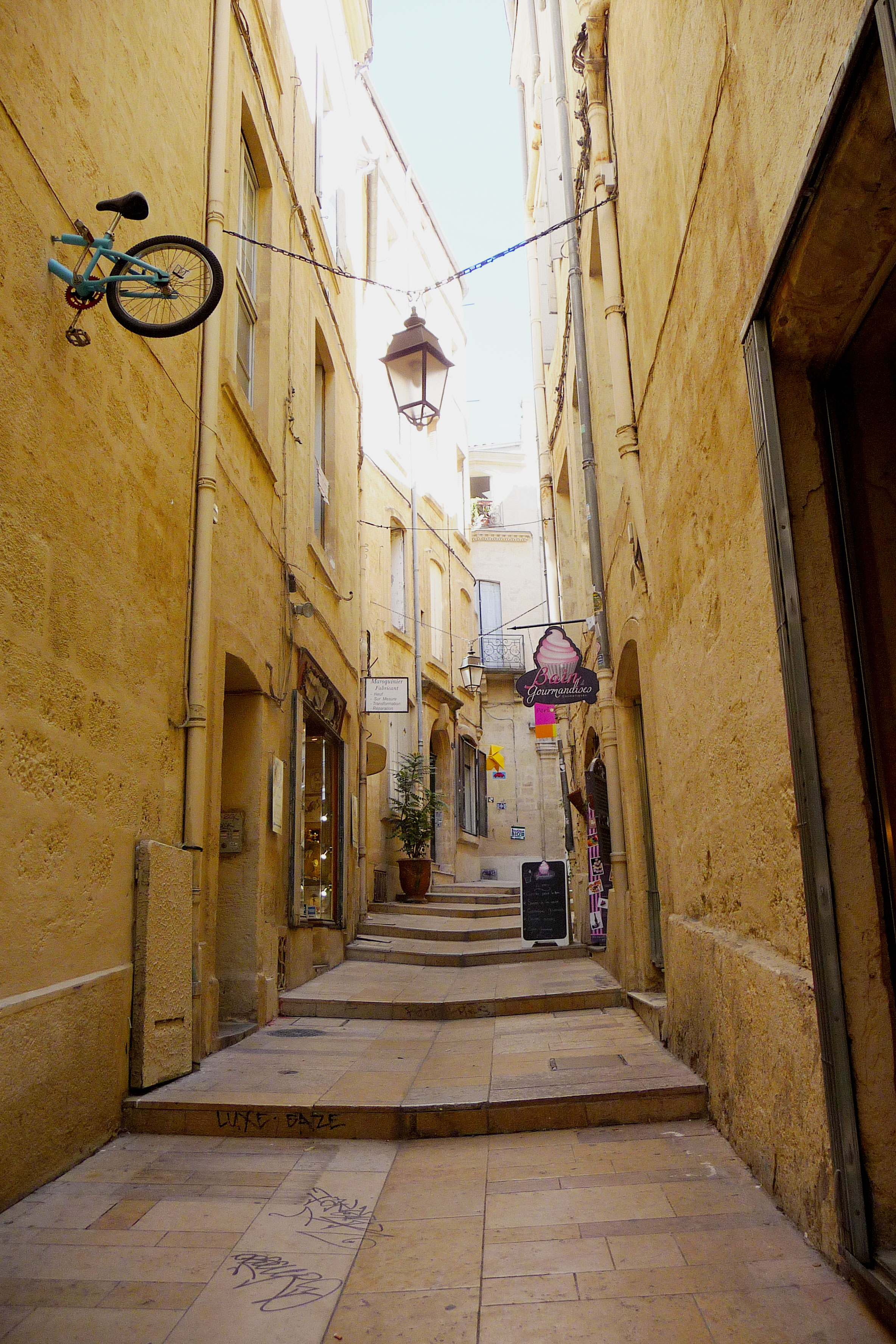
    Montpelier combines recent history and old-fashioned elegance with a youthful feel, mostly due to its large student population and its university.  It had the first medical school in France at which Nostradamus and Rabelais studied and is a delightful mix of old buildings in the centre, and  major new-age industries in modern buildings around the edge.  Lovely beaches are nearby at Palavas-les-Flots. What more could anyone want?

    As easy town to get around, the places listed as ‘must-sees’ are more or less grouped together, the Place de la Comédie, the Peyrou garden, the Charles de Gaulle esplanade,  t the Arc de Triomphe,.and the Saint-Roch church, all on the well-trodden tourist route.   However, like European capital cities such as London, Madrid, or Paris, the city abounds with special neighbourhoods with individual identities, some specialising in artisan work, some in antiquities and others devoted to food and wine.  Their social mix gives them a fascination lacking in other towns in the region.

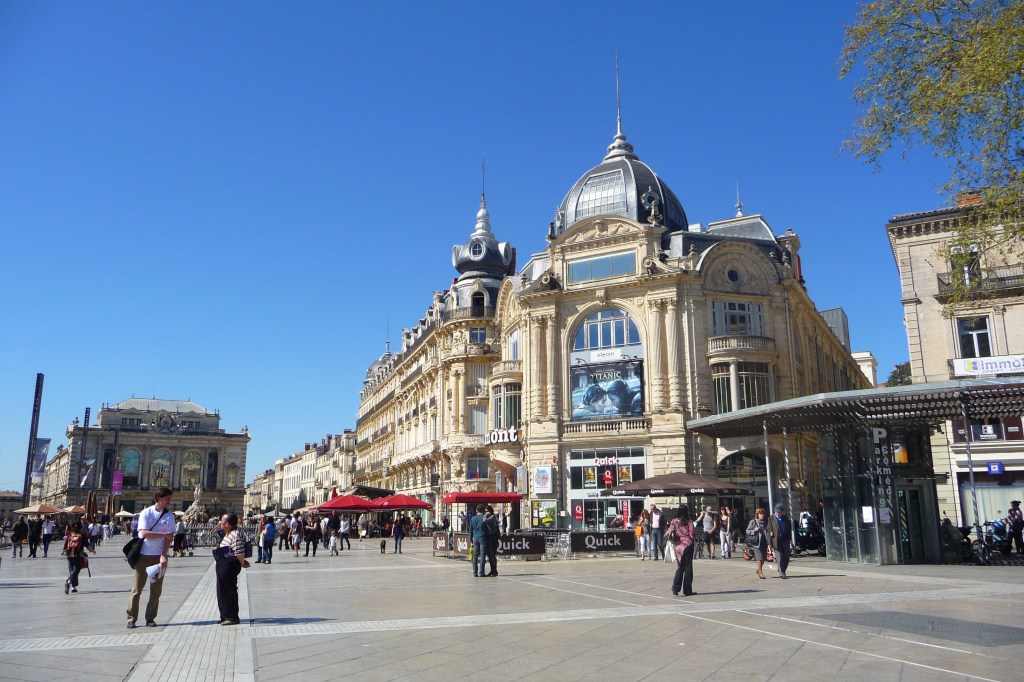
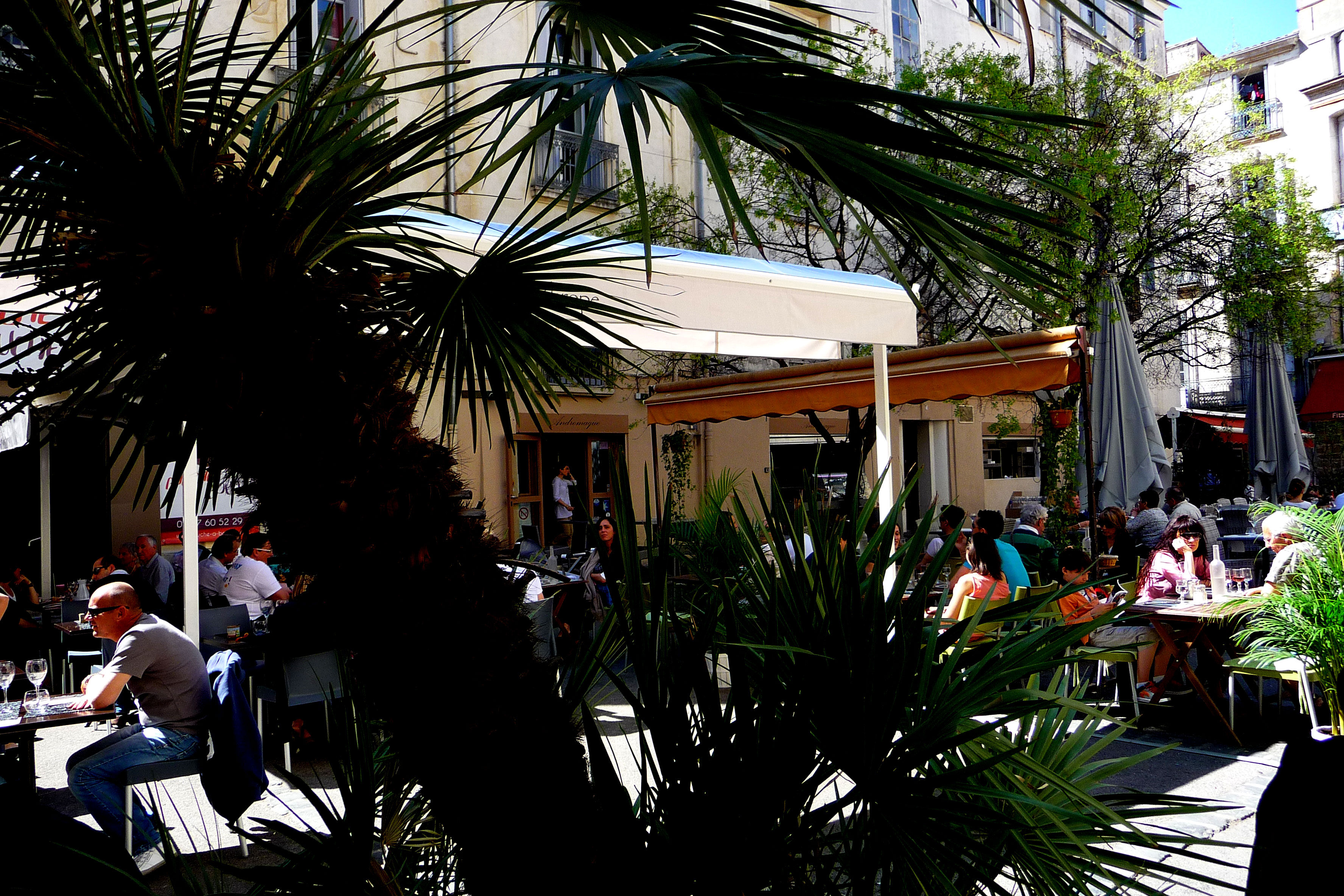
    The centre of the action and the beating heart of the pedestrianised centre is the Place de la Comédie.  During the morning there is a market at one side of the Place where the local farmers set up stalls and sell fresh fruit and vegetables: off to one side of this is the flower market, a static garden of jewel-coloured blooms and plants.  During the season an old-fashioned carousel is stationed at the other end of the square near the Opera House (a useful place to arrange to meet someone as is the statue of the Three Graces).  In the middle of the square street artists demonstrate their talents as magicians, living statues, cycle gymnasts, mime artists and break dancers.  Passengers coming from the St. Roch railway station with their wheeled luggage skirt around them as they dodge the colourful trams that glide over the yellow paving while students watch from the nearby cafes, their books open before them.

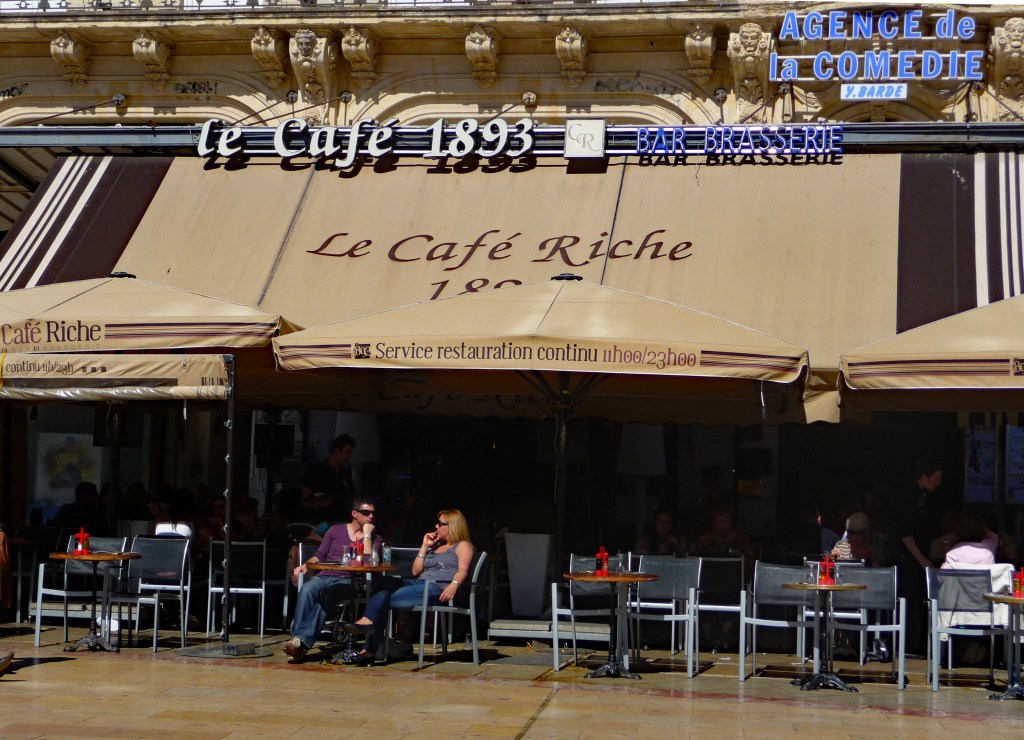
    Cae Riche, Montpelier, France

    The large student population makes it a lively spot all year round and gives the city a buzz. The cafés, bars, and bistros in the pedestrianised city square which spill out onto the street are one of the attractions of Montpelier and it can be difficult to find a table at certain times.  One of the busiest cafés, the Café Riche, is also the most popular and dominates the square with a grand awning bearing the name and date of its foundation.

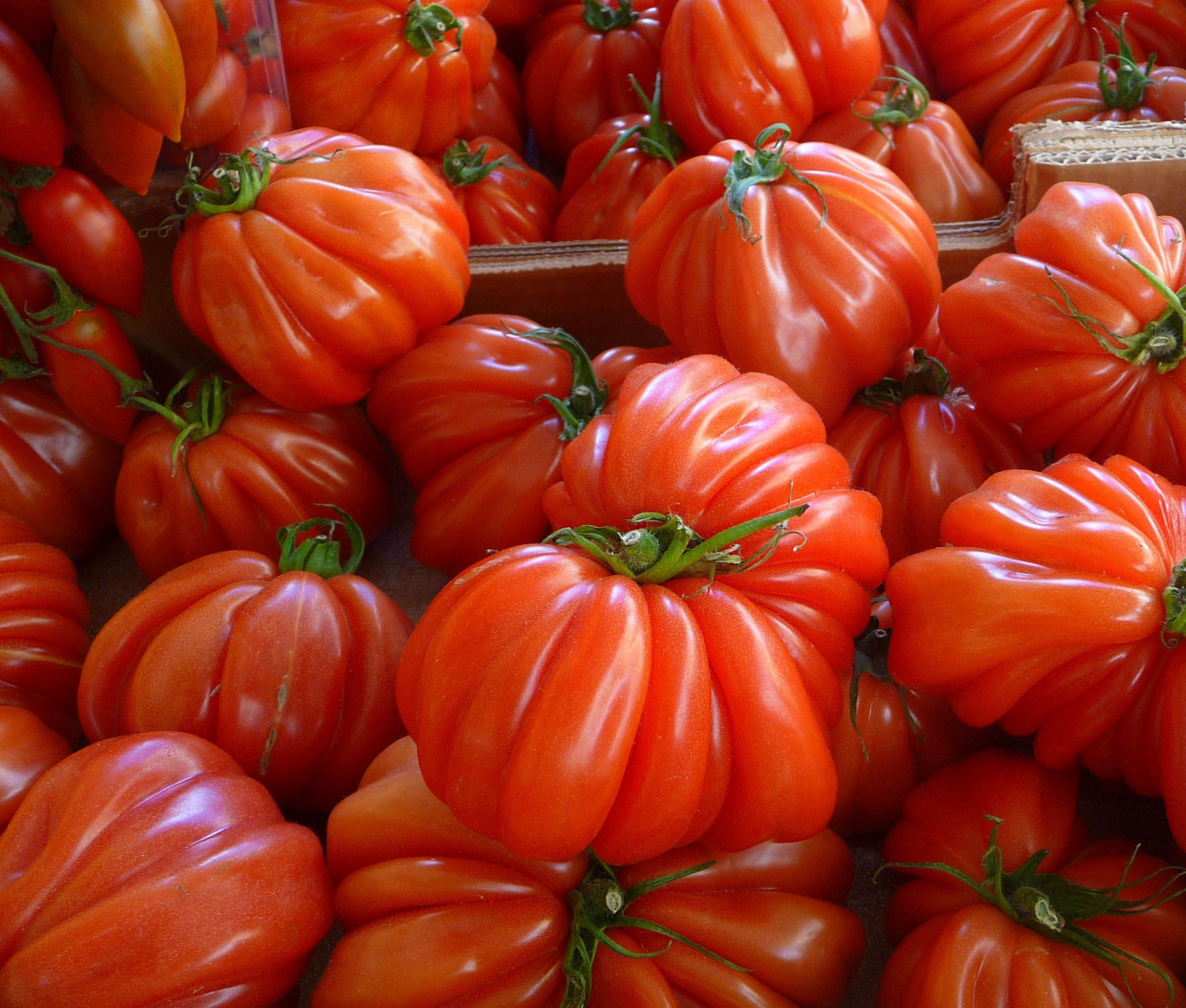
    Famed for its produce, Couer de Bouef

    Couer de Bouef Tomatoes – a Speciality of the Region

    The Montpelier region is known for its local produce, its excellent wine, its fine dining and its farmers’ markets.  It has 3 Michelin-starred restaurants in addition to other excellent eating places and bistros.  Being right in the heart of the Languedoc, the opportunity to sample the luscious wines of the region as well as those of nearby Roussillon shouldn’t be missed, and tastings at nearby vineyards are easy to arrange.

    Restaurant,-Montpelier
    Restaurant in Montpelier

    The old town with its medieval narrow streets is lined with upmarket boutiques and antique shops interspersed with restaurants and typical houses of the area fronted by private courtyards, a  world that sits quite comfortably with cutting-edge design and architecture in other parts of the city.  Check out the mock-Gothic Pavilion Populaire and compare it with the modern, glass-clad town hall.  Even transport gets into the act, with designer trams from the hand of no less than Christian Lacroix!

    Montpelier, France
    Montpelier

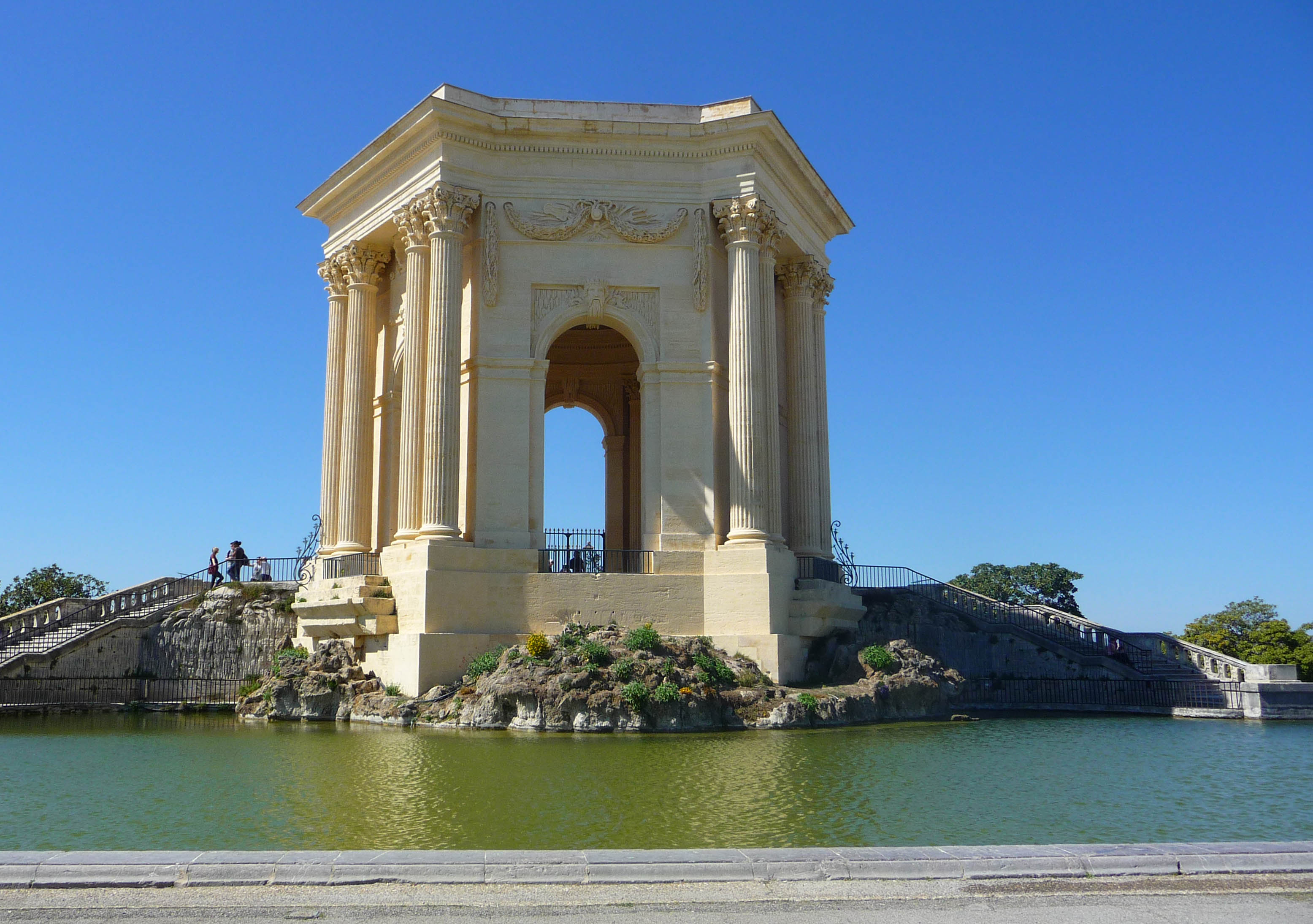
    Wander along Rue Foch, a road carved through medieval Montpellier to the Arc-de-Triomphe, a glorious golden stone arch which could only be in France and which was built to honour Louis XIV.  Just beyond this point, you will come upon the king mounted on a horse on the magnificent Peyrou Promenade.

    Antigone is Montpelier’s new modern part of the city, is located to the east of the historic centre and is the biggest single development to be built in France.  This extraordinary development which extends the city to the banks of the River Lez, has been designed by Catalan architect Ricardo Bofill and was completed in the 1980’s.

    Antigone.-Montpelier
    Antigone

    As it’s name implies, the area is based loosely on the architecture of Ancient Greece and a further link is apparent in the boulevards with names like Rue de L’Acropole and Rue de Thebes that open out and lead you into large squares with names redolent of famous Greek events, like Place de Marathon and Place de Sparte.  The neoclassical design of the buildings, the sculptures, and the layout, are dramatically different to the architecture of the old town, and although on a larger than life scale, it is all well proportioned.

    At the end of the Antigone district is the Place de Europe, a huge semi-circular area with a crescent of buildings. On the other side is the River Liz adding to the drama of the site and on the opposite bank the ‘Hotel de Region’ also built in the neo-classical style.

    Palavas-les-Flots, Montpelier

    Palavas-les-Flots, Montpelier

    The fishing port of Palavas-les-Flots is worth a trip even if it’s only for a bowl of mussels served with chips (French fries to some) or garlic and herb breads in any one of the ways in which they are served here.  The port is making great efforts to turn itself into a seaside resort but despite the attempts of the many boat owners to entice you aboard for a sea trip, a fishing trip or a tour around the lagoons, it remains firmly a place to visit for its great food.  Bars, bistros, and ice-cream parlours line the central canal and you can walk a few miles along the spit of land to the medieval Maguelone cathedral which stands between sea and lagoon.


    donna's book


    Best Guide Book

    Montpelier and Beyond Travel Guide is a pocket guide to the best of Montpellier, written by two award-winning travel experts Donna Dailey and Mike Gerard and published by the team behind the successful Beyond London Travel.   Available from Amazon as an e-book or a download for Kindle.


  • The Artichoke, Rome’s 8th King

    The Artichoke, Rome’s 8th King

    I’ve given up trying to cook artichokes as sampled in Rome and I’m feeling very cross with myself.  I never fancied myself as a great cook but I am a fairly good one, but artichokes have beaten me.

    I’ve always liked them but always bought them in tins or jars.  Then I went to Rome in May when the artichoke season was at its height and every restaurant and trattoria was serving them in ways I’d never even thought of and I OD’d for a week on this king of the vegetable world.  In fact, it’s called the 8th King of Rome in that city.

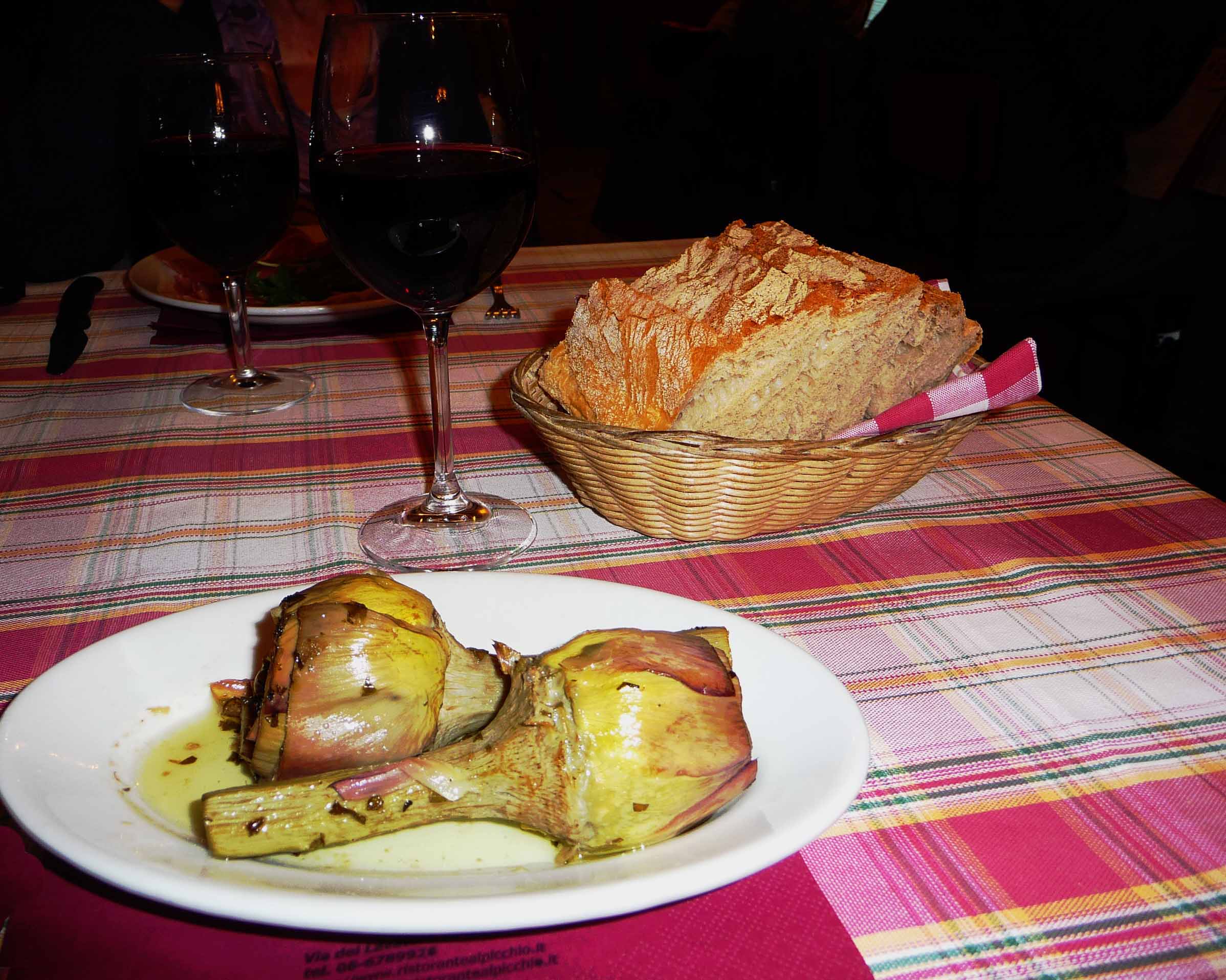
    Artichokes and Wine, a Great Combination - Mari Nicholson

    It’s scientific name is cynara acolymus and it was named after Zeus’s former lover who betrayed him and was transformed into a prickly plant in revenge, but its etymological root comes from the Arabic alkaharshῡf.  As it grew in popularity from being a food of the poor to one much sought after by the rich, it’s shape was appropriated by architects who used it to adorn various buildings, Chartres Cathedral being one.

    The Italian artichoke usually has dark purple leaves and is eaten as an appetiser, in pastas, and as a vegetable with meats and fish.  It can be boiled, fried, roasted, steamed, sautéed, or marinated and I will gladly eat it any which way!  In Rome I usually had it “cariciofa alla giudia” which I was told is an ancient Jewish method from the 16th century and entails the vegetable being deep-fried twice.  That flavoursome oil dripping down one’s chin.  Decadent, I know, but delicious.

    DSC00957 - Copy

    Restaurant Window in Rome – Mari Nicholson

    My favourite restaurant for this appetiser (I reckon 3 makes a good starter) is Trattoria da Giggetto to which the concierge at my hotel directed me, saying that it had been serving up the artichoke for three generations.  The secret, so the waiter told me, was to open the artichoke leaves like a flower and to cook it first in boiling oil before roasting it for a little and then deep-fryng again.  Labour intensive, yes, but sheer heaven when you taste it.

    Deep Fried Artichokes a la Romana - Mari Nicholson
    Deep Fried Artichokes, Decadent but Delicious – Mari Nicholson

    I tried.  I deep-fried, then I roasted, then I deep-fried again and all I got was an oily vegetable that bore no resemblance to the ambrosia I had partaken of in Rome.  There’s only one thing for it.  I shall have to return next May and eat it every night as I did this year and try and wangle an invitation into the kitchen to see how it’s really done.

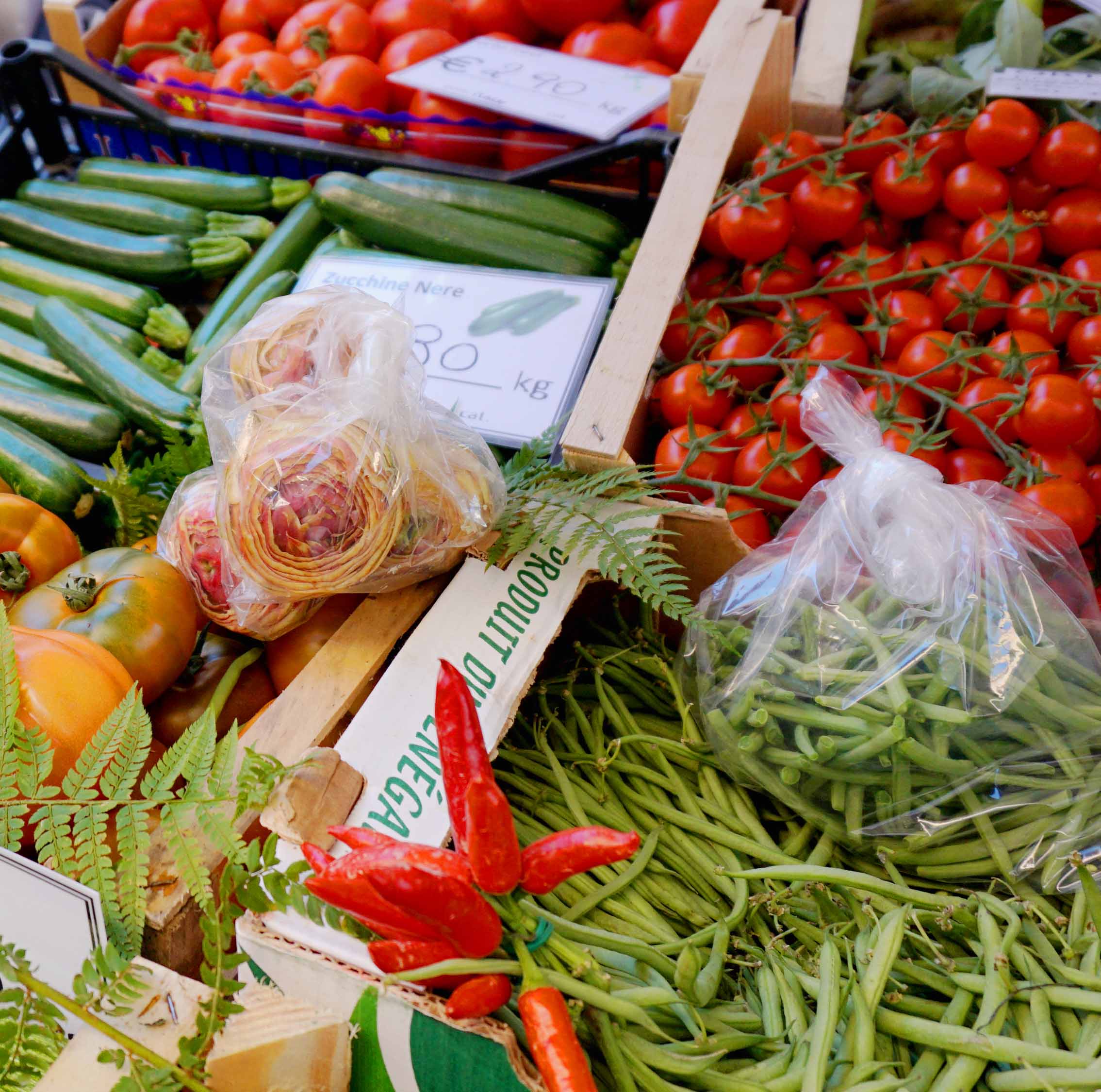
    Prepared artichokes for sale in Rome market

    Prepared Artichokes for Sale from a Stall in Rome – Mari Nicholson


  • Rome and the Tiber

    Rome and the Tiber

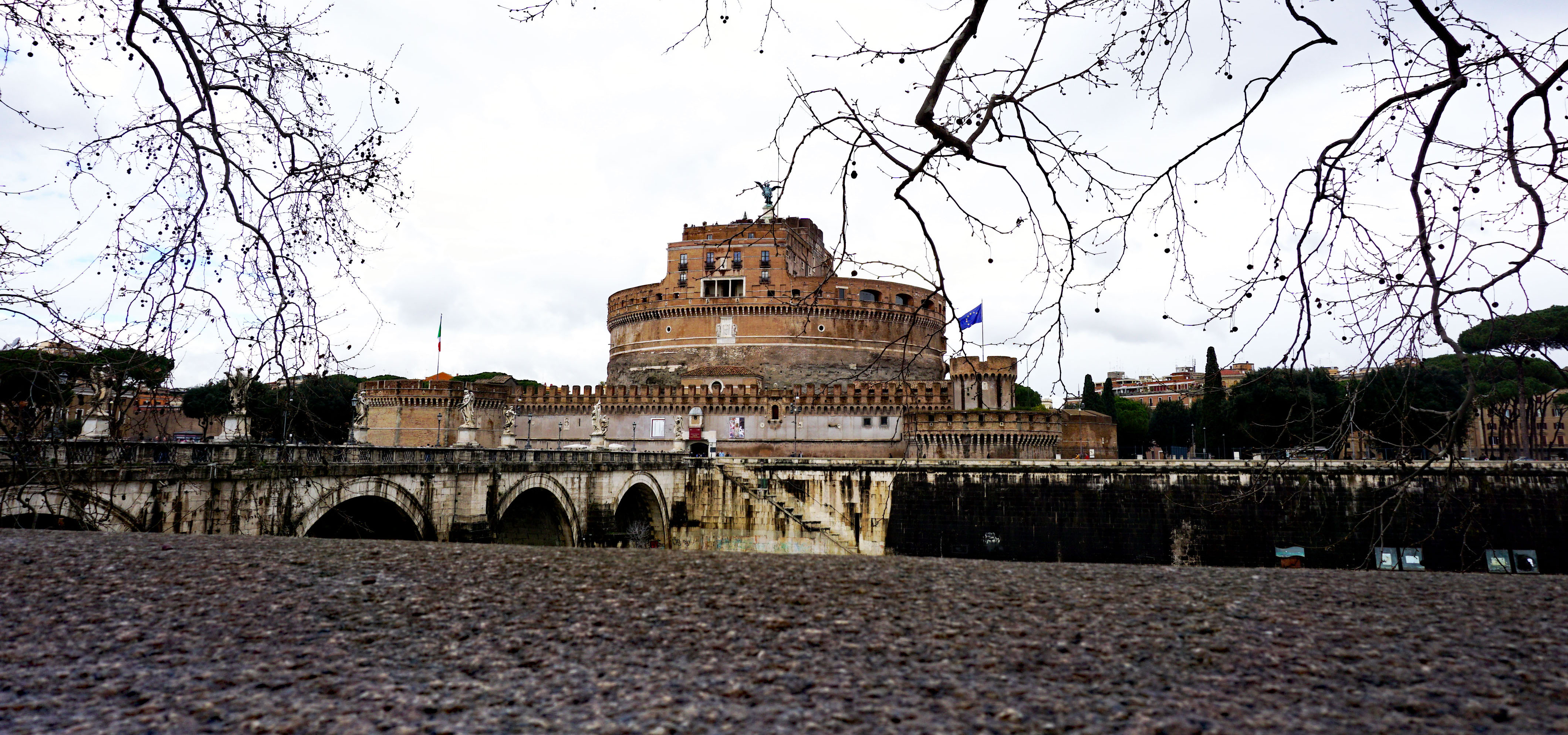
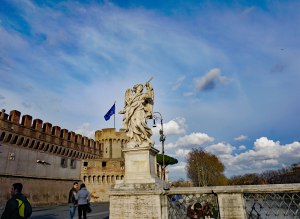
    Castel-Sant'Angelo-from-across-the-Tiber

    Castell Sant’Angelo across the Tiber – Photo Mari Nicholson

    The Tiber has been the soul of Rome since the city’s inception, and it could be said that Rome owes its very existence to this strategically important river on whose banks the first settlements were built.  The two sides of the river are joined by more than thirty bridges, creating a fascinating setting for the archeology and history of the eternal city.

    View_of_the_Tiber_Looking_Towards_the_Castel_Sant'Angelo,_with_Saint_Peter's_in_the_Distance
    Old View of the Tiber, possibly 18th century

    Several of the old Roman bridges no longer exist, in Papal Rome and in the modern city seven were built in the 19th century and ten in the 20th century.

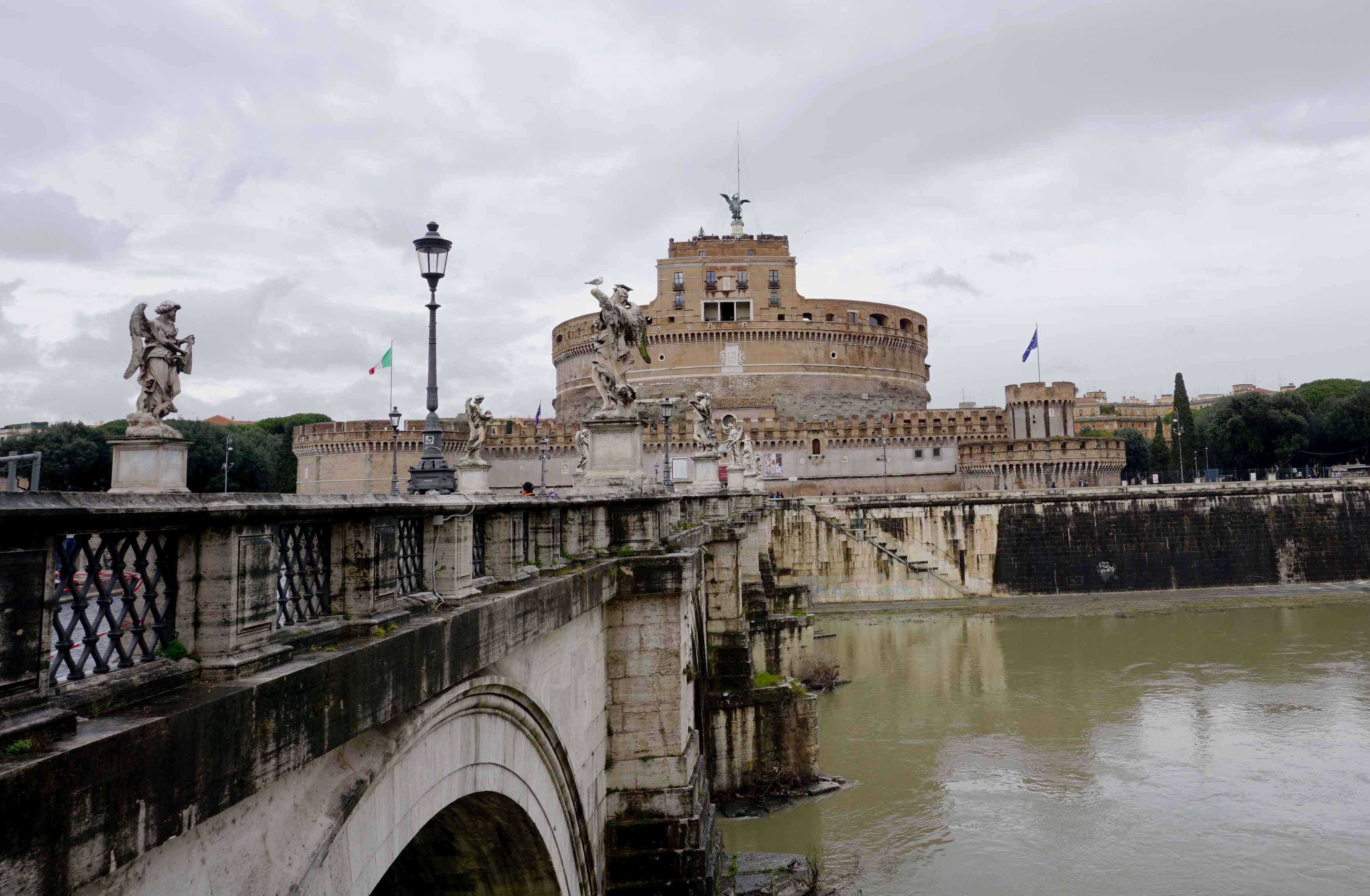
    Bridge on the Tiber leading to Castell Sant'Angelo
    Ponte Sant’Angelo with statues

    The Tiber (named after Tiberius who drowned in the river) is unlike rivers like The Danube, The Seine or The Thames as there is little activity on the water.  In the summer, various boats convey tourists along the stretch of the river, but in general, it seems underused. However, along the Lungotevere, the boulevards that run alongside it, human traffic always seems to flow.

    Flooding was a regular occurrence before the high embankments were built in the 19th century when there were houses located along the banks of this navigable river which was used for fishing and bathing.  Over time, however, silting and sediment build-up meant that the river became unsuitable for navigation.

    Looking downriver towards the Cavour bridge

    Looking down to Cavour Bridge, Rome

    As in other cities such as Bangkok, Seville, London and Paris, tour boats were introduced along the river to give locals and tourists a unique opportunity to view the city.  This is a great way to take in the panorama, and immerse yourself in one of the most evocative cities in the world.

    A stroll along the Boulevard is also a favourite pastime and a visit to Castell Sant’Angelo and the Jewish Ghetto and Synagogue, which are both situated along the Tiber can be combined in a “Tiber walk”.  There are many restaurants, cafes, and bars down by the river  so sustenance is not a problem: these are very noticeable at night when the warm lights from their windows illuminate the Boulevards.

    The Tiber

    The Tiber, Rome – Mari Nicholson

    Whether you opt for a dinner cruise, a daytime hop-on-hop-off cruise, or a private jaunt, along the way you can admire the great Palace of Justice, designed by William Calderoni;  Sant’Angelo Castle, one of the oldest monuments of Rome; St. Peter’s Basilica, Tiberina Island, a picturesque island linked by one of the most famous bridges in the city, and the innumerable bridges that span the Tiber.

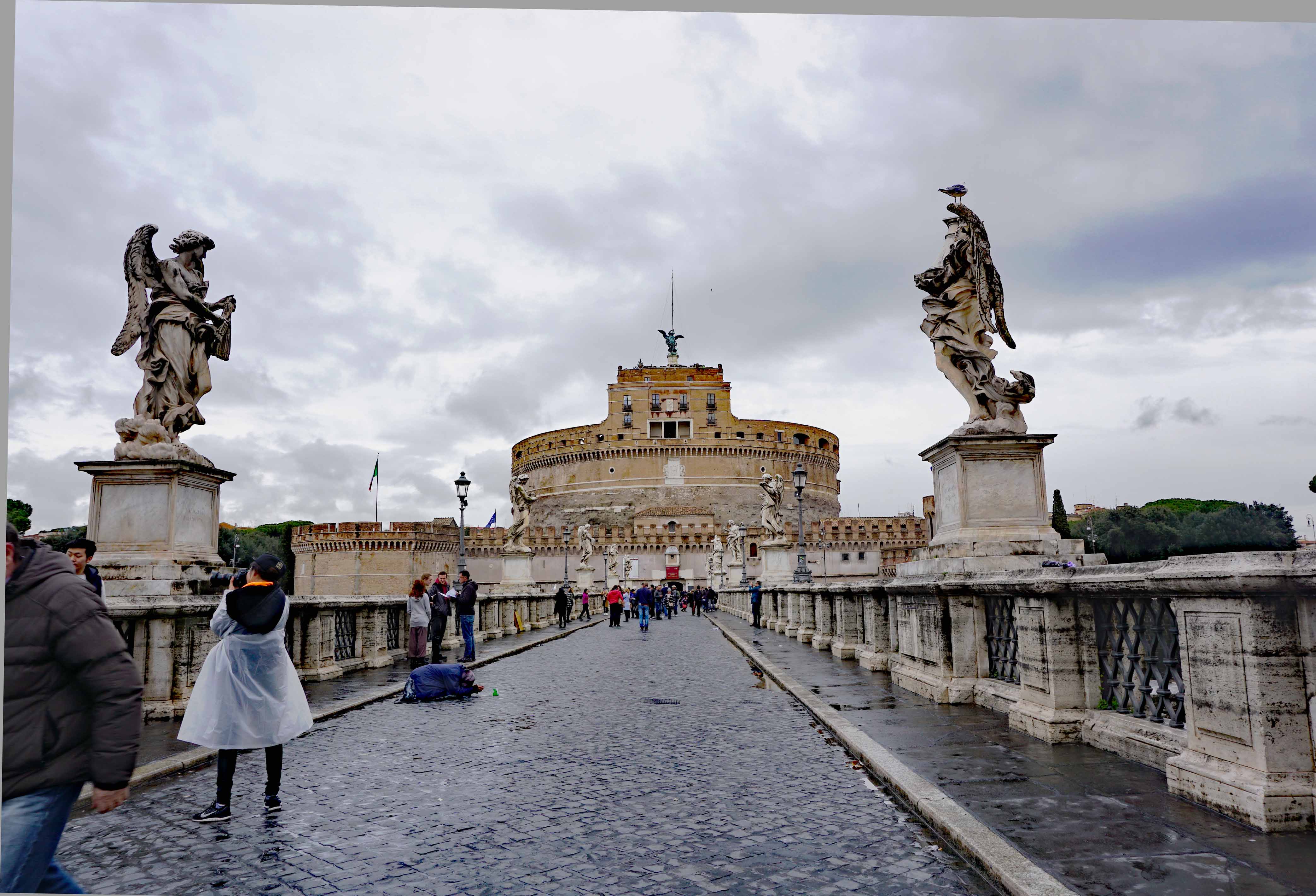
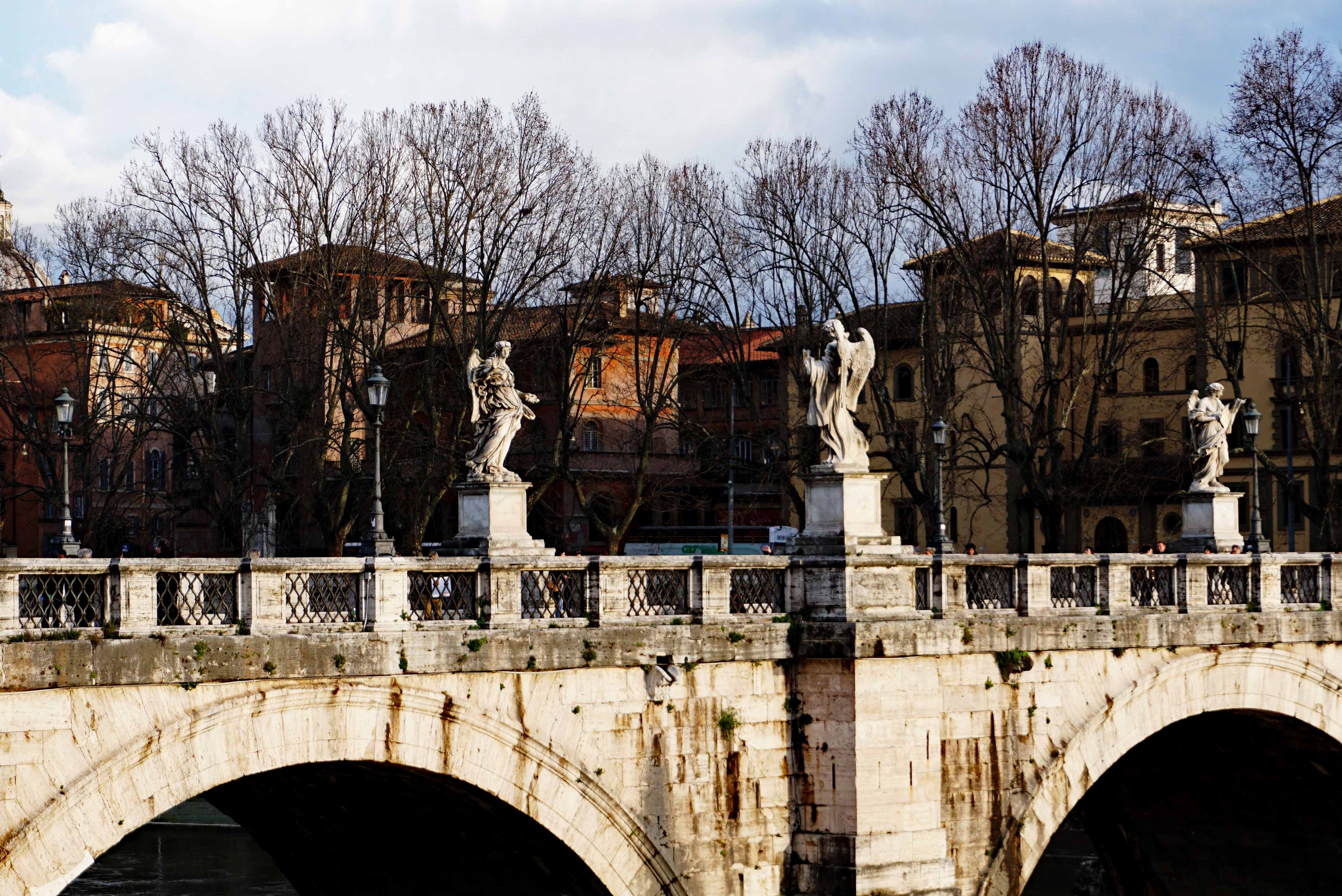
    Ponte Sant'Angelo with statues

    Ponte Sant’Angelo Looking towards the Castle – Mari Nicholson

    When the surface of the Tiber is calm and the monuments that span the river are reflected in the still waters, they increase one’s delight in the vista they offer across Rome.  Ponte Sant’Angelo (by the castle of the same name), Ponte Fabricio, Ponte Rotto, Ponte Garibaldi, they all offer a sense of the history of the city.

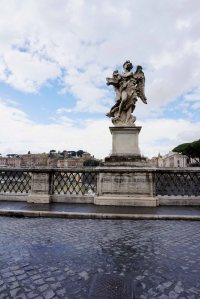
    Angel-on-Ponte-Sant'Angelo-near-Castle
    Angel on Pone Sant’Angelo – Mari Nicholson

    Angel on the Ponte Sant'Angelo
    Angel on Ponte Sant’Angelo

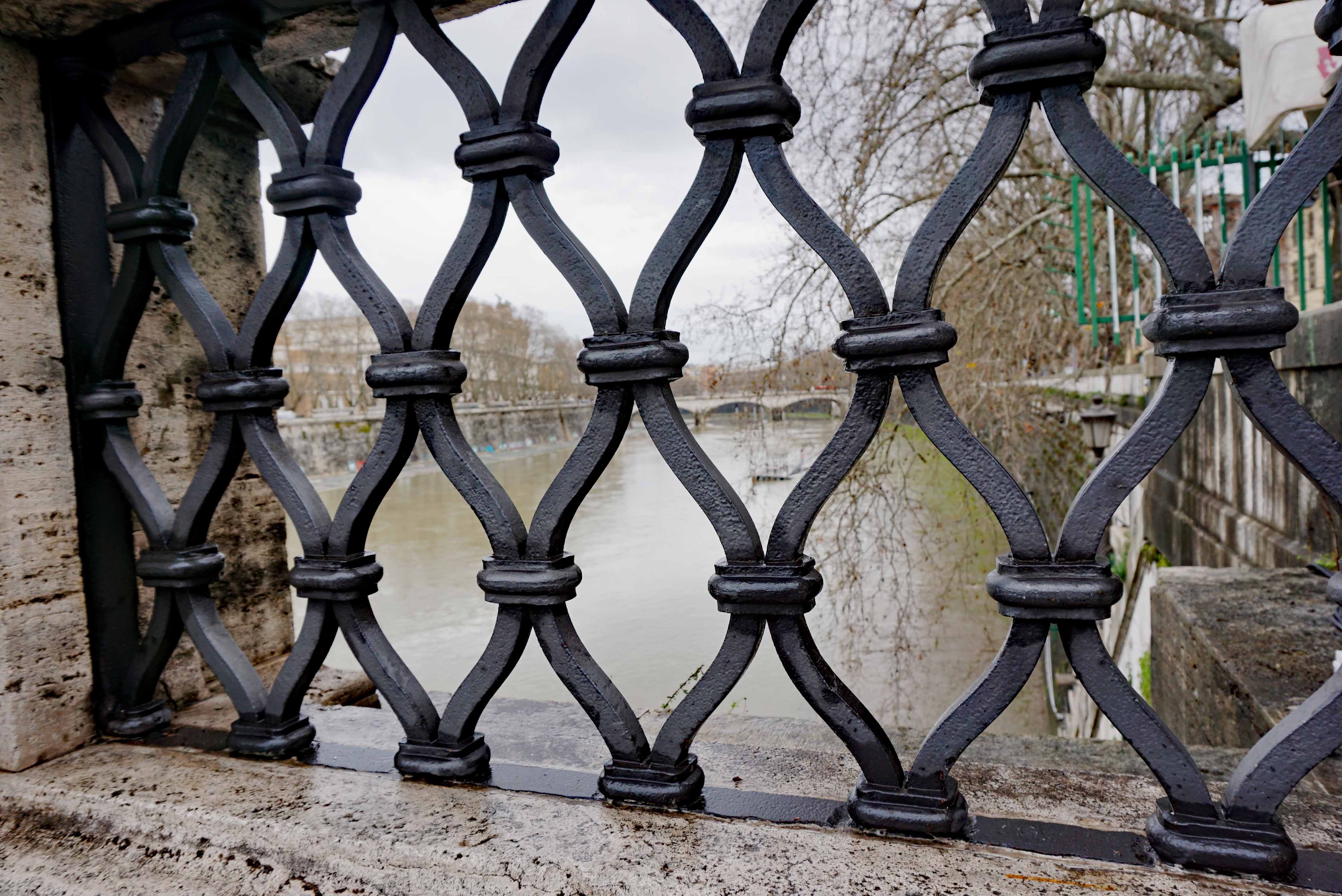
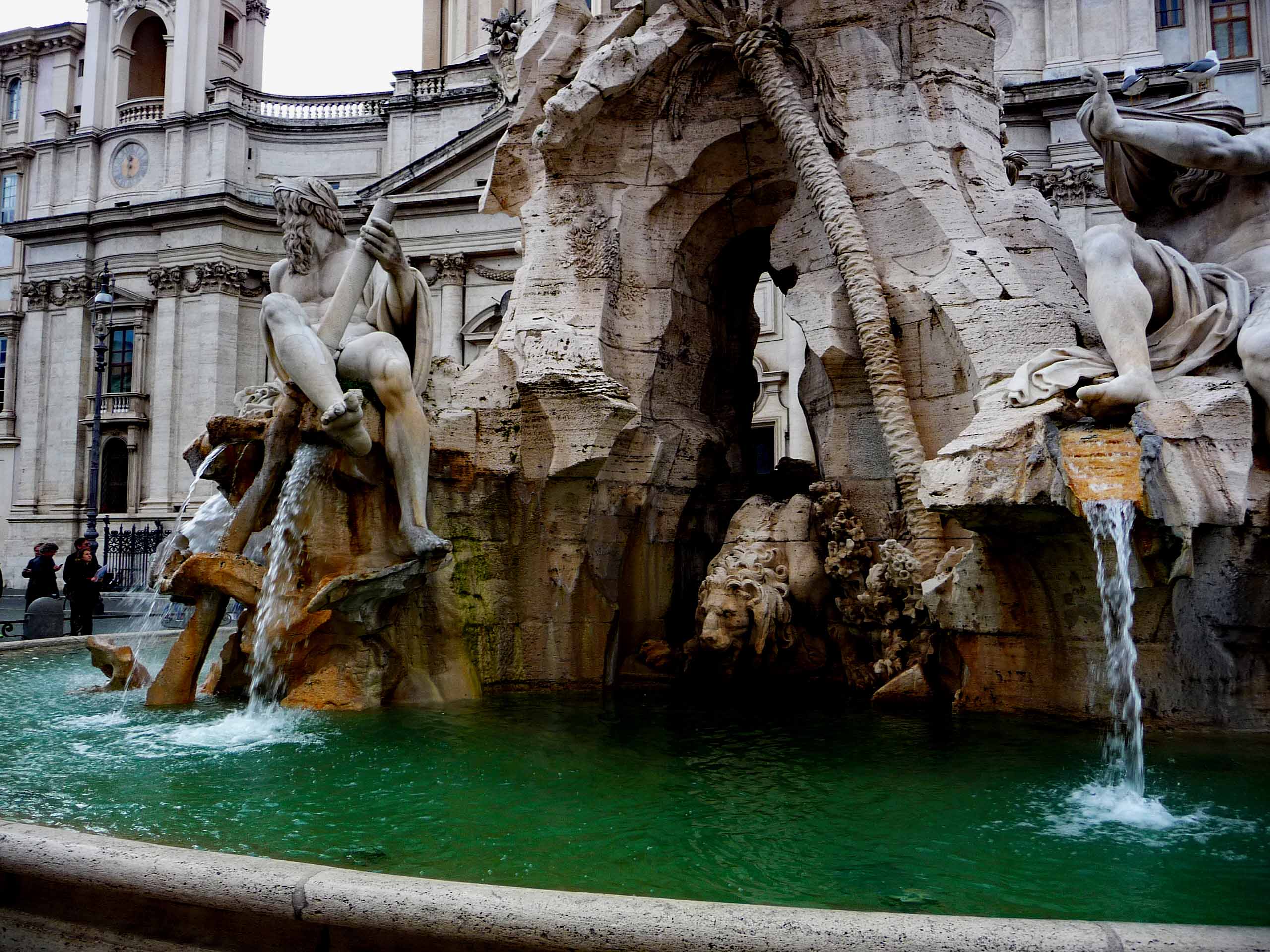
    The first named, Ponte Sant’Angela is the most spectacular, being embellished with angels carrying the instruments of Christ’s passion, and was designed by Gian Lorenzo Bernini whose fountain in Piazza Navona is one of the most photographed in Rome.

    The Ponte Sant’Angelo was erected to ease the movement between the Vatican (which was also connected to the Castell Sant’Angelo) and the commercial area across the river.

    Ponte Sant'Angelo

    The Vatican City is the only zone controlled by the papacy today, but in earlier centuries papal dominion was exercised over the entire city, hence the need for easy connection with the commercial area of the settlement.   Three energetic popes, Urban VIII (1623–44), Innocent X (1644–55), and Alexander VII (1655–67), harnessed the versatile talents of the great artists nd sculptors of the day to build monuments and beautify areas all over Rome but especially in the Vatican area.

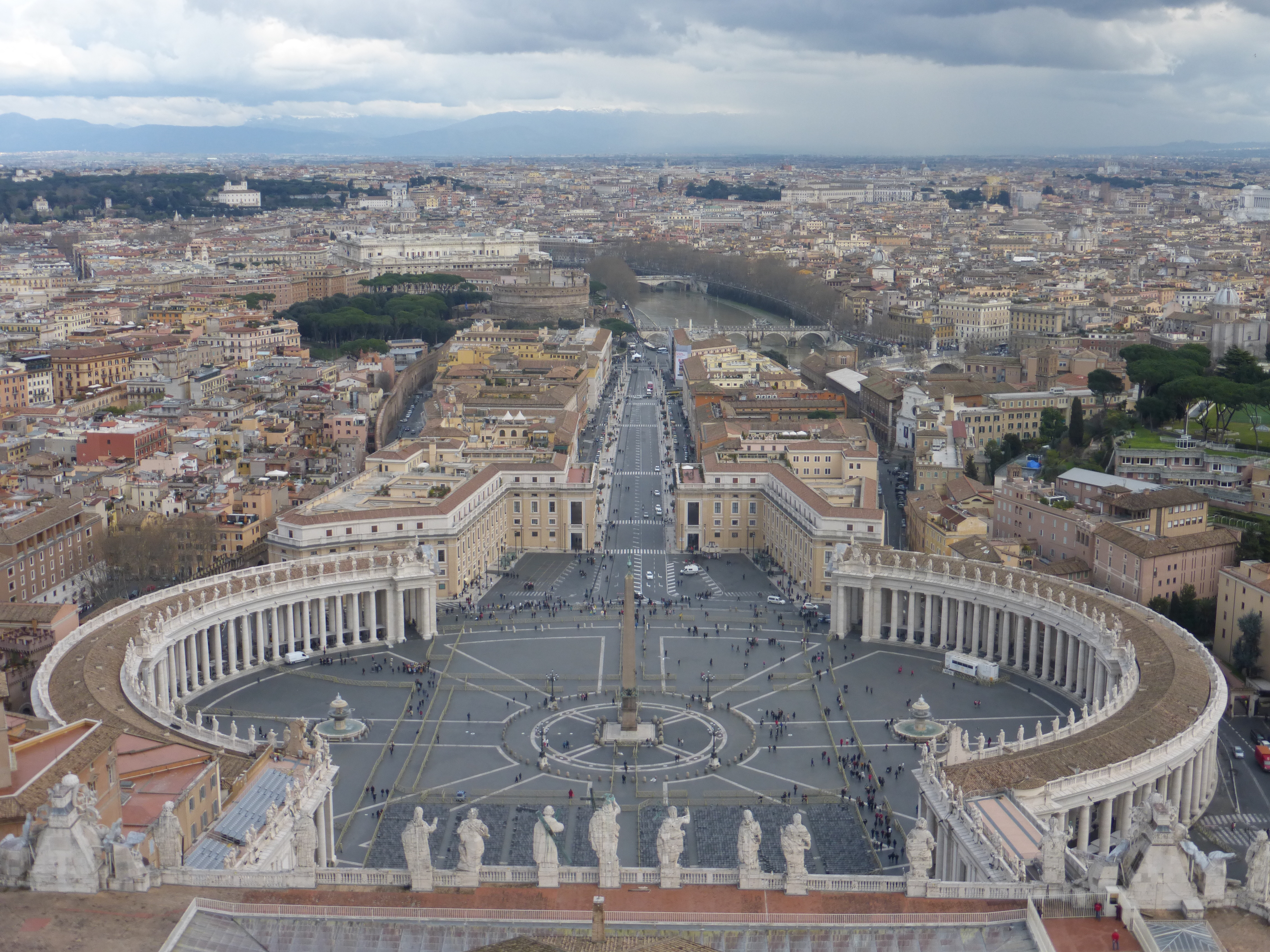
    View from the Vatican Dome
    View from the Vatican to Ponte Sant’Angelo – Photo Solange Hando

    A walk along the Tiber, and then up the imposing obelisk and olive-tree-lined road to the Vatican is an exercise in itself and you can be forgiven if you decide to postpone visiting St. Peter’s Basilica and the Vatican Museum until another day.  It can take a long time to do justice to them both.   A trip to the top of St. Peter’s is a worthwhile exercise but be warned, there are many steps to the top.  A lift goes part way only.

    Part of Bernini's Magnificent 4-Rivers Fountain in Piazza Navona, Rome

    Part of Bernini’s Magnificent 4-Rivers Fountain in Piazza Navona – Photo Mari Nicholson

    How to get there:  Ponte Sant’Angelo:  Metro Line A, Lepanto stop. Boats leave from nearby.        Buses 23, 34, 40, 49, 62, 280, 492, and 990.        Tram 19.

  • Photography Challenge 101: Landscape

    Took me a while to think about some landscapes, and unfortunately, I was unable to get out and about to photograph some, so here is a selection of some of my favourites.


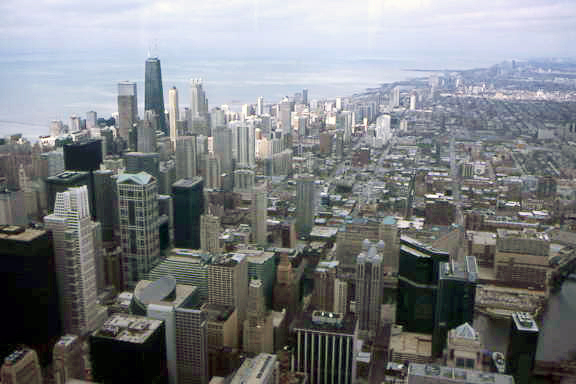
    Chicago from Sears' Toweer
    Chicago, from Sears’ Tower – Photo Mari Nicholson

    This was taken on a fairly good day in Chicago from the top of the famous landmark, the Sears’ Tower.  The skyline is probably more impressive from ground level, but I found the view from above quite exciting.   See another Chicago photo, bottom.


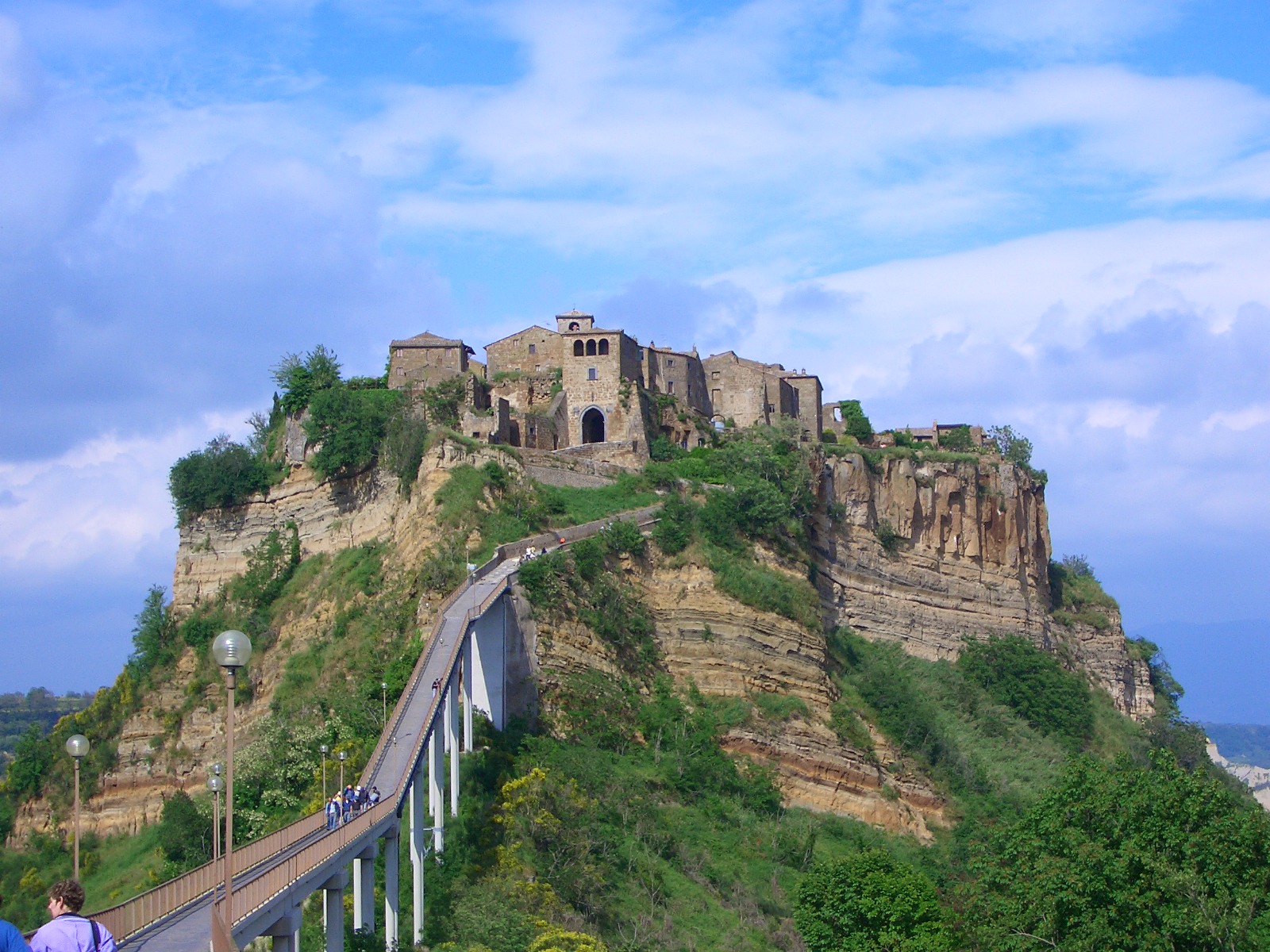
    Citiva 6
    Citava, Italy – Photo Mari Nicholson

    Citiva is in Lazio Province, within driving distance of Siena, Rome. and Orvieto.  Inside the mountain fastness is a quaint old town of cobbled stoned streets, a couple of good restaurants serving rustic food, and a Bodega where the wine flows very liberally.

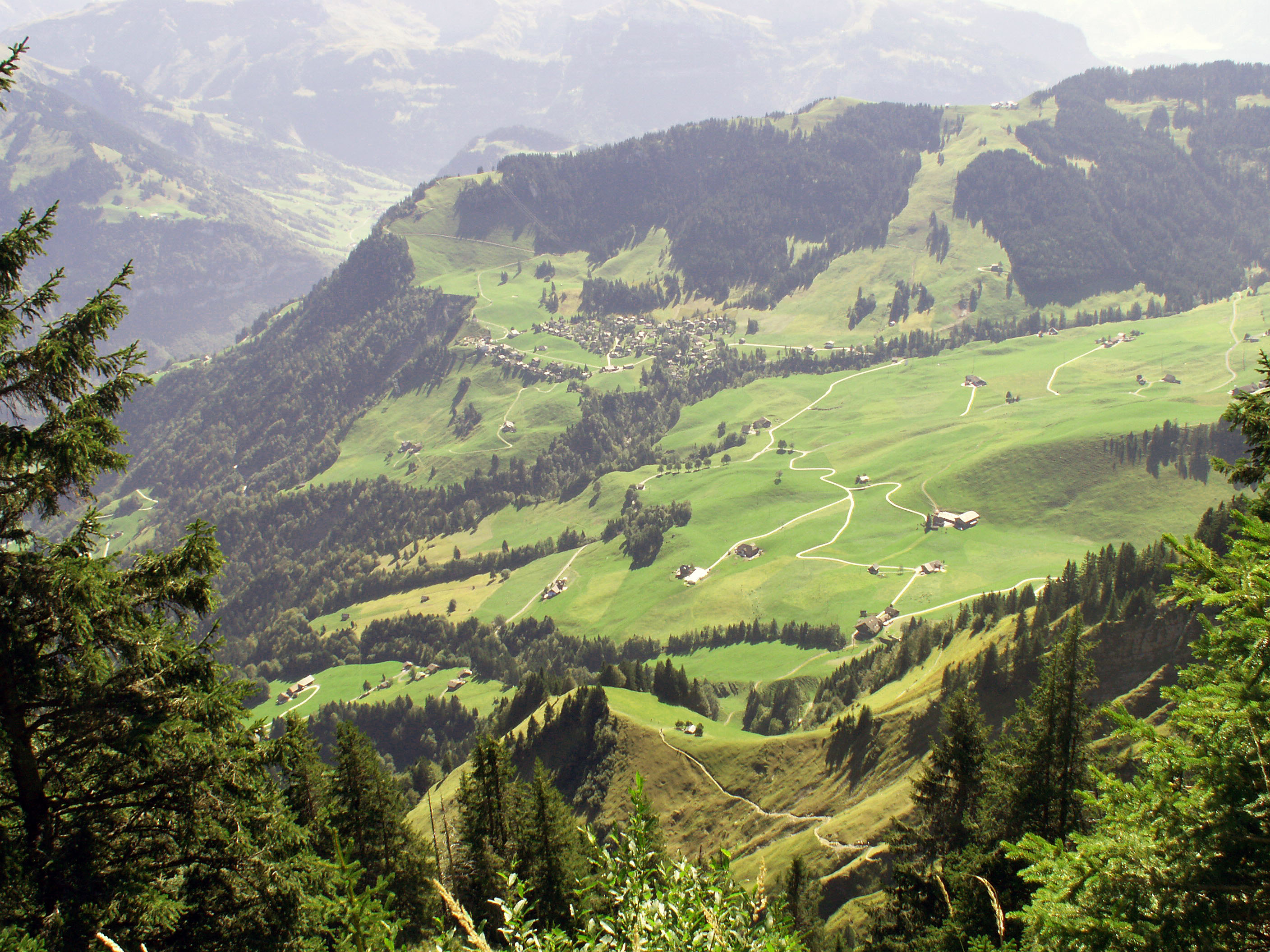
    Walking trails to Stanserhorn
    Walking trails to Stanserhorn in Switzerland

    This was taken from a cable car as we floated over the mountains in Switzerland.  I seem to remember that it was quite a long cable-car trip, longer than most I remember.  It was a magical journey over the mountains and villages below, the brown and white cows hardly visible and their cowbells muffled by the distance.

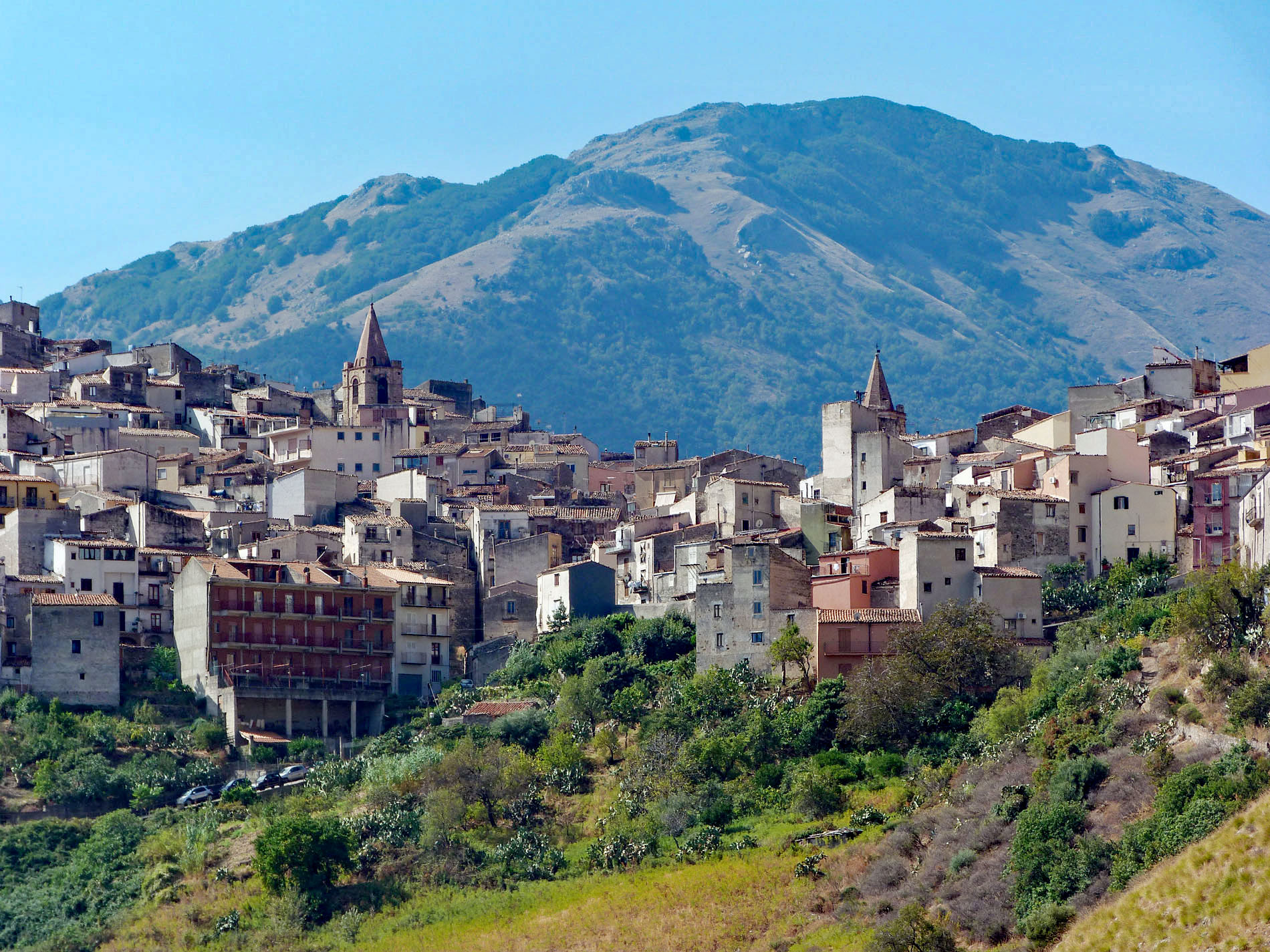
    Village in the Madonie National Park, Sicily
    Village in Madonie National Park, Sicily – Photo Mari Nicholson

    One of my favourite places in Sicily, the National Park of Madonie, where wild figs grow along the roadside and just a few locals are left in near-deserted villages to sit outside their doors and chat to whoever passes by.  Now and again one sees a thriving village like this one, which is being slowly restored to its former glory by returning families who have made some money working elsewhere and now are coming home to reclaim their birthright.

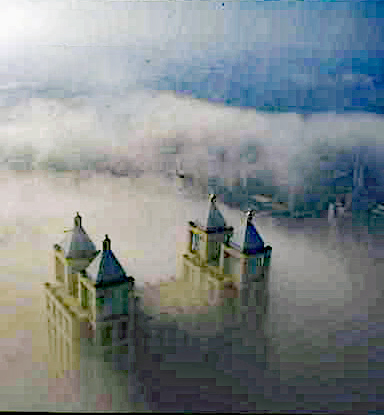
    Skyline with clouds - Chicago
    Chicago skyline peeking from out the clouds

  • Photography 101: BIG and P.o.V.

    Having difficulty in keeping up with the daily stint and due to other work commitments am not free to wander out and about with camera.  Frankly, even if I were, the bitter cold is enough to prohibit my photography excursions, as I find cold hands do not for good photos make!

    I have just returned from Rome and when I saw BIG, the one thing that sprang to mind was the Colosseum, that massive elliptical shaped theatre of blood lust and killing, where in the first hundred days of the inauguration games in 81 AD, it is said that over 9,000 wild animals were slaughtered.  During another festival in 240 AD 2,000 gladiators, 70 lions, 40 wild horses, 30 elephants, 30 leopards, 20 wild asses, 19 giraffes, 10 antelopes, 10 hyenas, 10 tigers, 1 hippopotamus and 1 rhinoceros were slaughtered.  In fact, so many wild beasts were killed in the Roman arenas that some exotic animals became virtually extinct.

    Here are a few of my images of that iconic spot in Rome.  Maybe I haven’t covered point of view so well, but I hope you will enjoy the perspective anyway.

    Colosseum
    Exterior of part of the Colosseum, Rome – Photo Mari Nicholson

    Interior of Colosseum showing 5 levels
    Interior of part of Colosseum, five tiers to hold up to 80,000 spectators. The animal pits are on the basement level from which they were released to do battle with either the trained Gladiators or the early Christian martyrs – Photo Mari Nicholson

    View through entrance arch
    View through one of the entrances to the other side of the Colosseum – Photo M. Nicholson

    Part of Interior Colosseum
    A better look at the pits below the seating, where the wild animals were kept before they were released to do battle with the Gladiators. – Photo Mari Nicholson

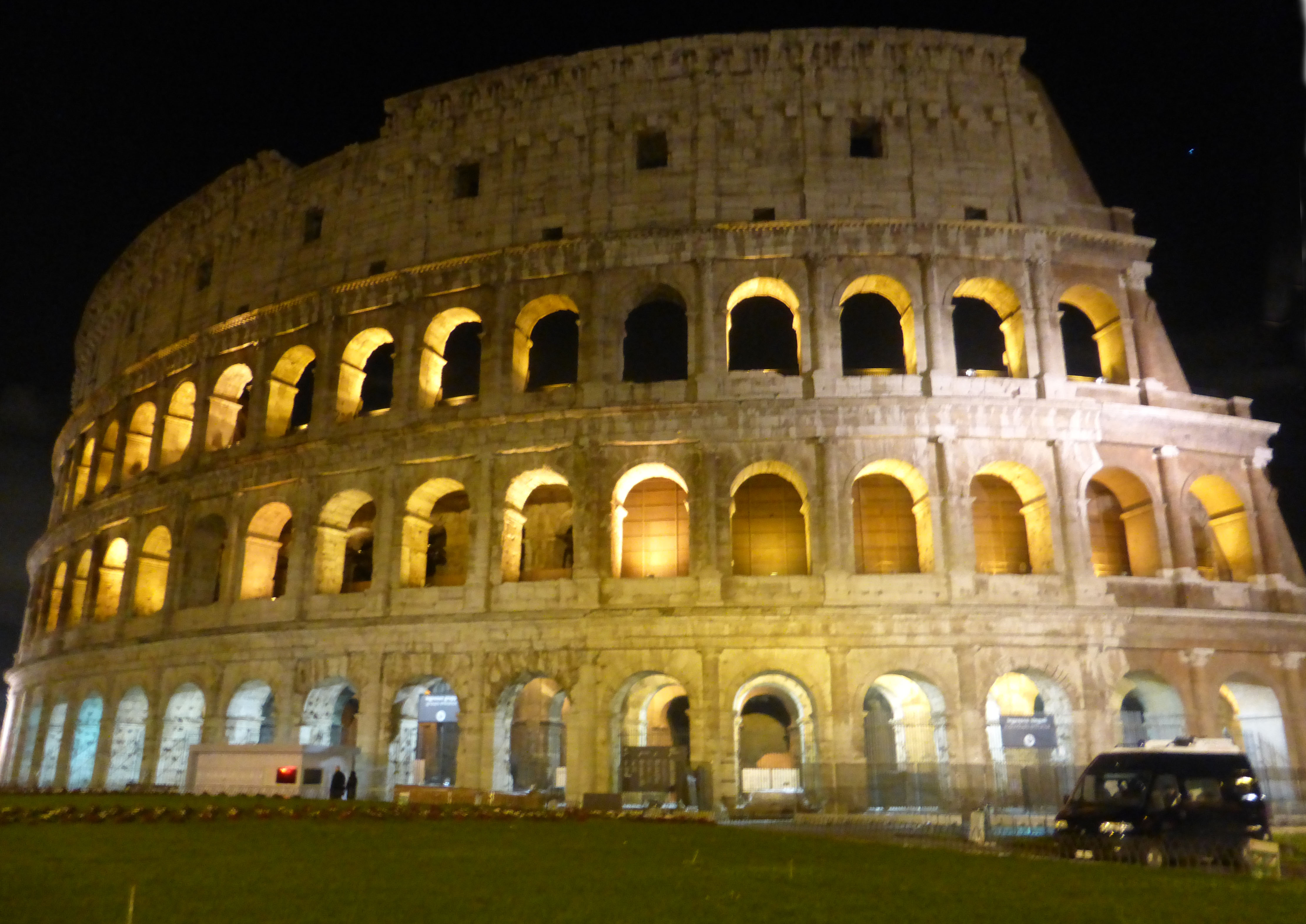
    Colosseum by Night.
    Colosseum by Night – Photo Solange Hando

    N.B.   It is generally accepted that the Ridley Scott film The Gladiators is a very true depiction of what the Colosseum arena looked like in those days as the research was meticulous.