Category: Europe – Northern Europe & Scandinavia

Austria, Belgium, Germany, Scandinavia, Croatia, Bosnia & Herzogovina

  • Saturday Sculpture                        Vimy War Memorial, France.

    Saturday Sculpture Vimy War Memorial, France.

    Vimy War Memorial

    Overlooking the Douai Plain, the Vimy Memorial is located approximately eight kilometres northeast of Arras and is the centrepiece of a 250-acre preserved battlefield park that encompasses a portion of the area over which the Canadians made their assault during the initial Battle of Vimy Ridge. The imposing structure stands amid craters and unexploded munitions that still honeycomb the grounds which remain largely closed off to the public for reasons of safety.

    The Memorial is dedicated to the Canadians who served their country in battle during the First World War, and in particular. to the 60,000 who gave their lives in France. It also bears the names of 11,000 Canadian servicemen who died there who have no known grave.

    The rough terrain is because it cannot be properly excavated due to unexploded munitions.

    Designed by W.S. Allward, it took 11 years to build. He had initially hoped to use marble for the facing stone but was persuaded that this would not weather in northern France. After a two year search he found a limestone of just the right colour, texture, and luminosity in the ruins of Diocletian’s Palace at Split in Croatia and managed to procure supplies from an ancient Roman quarry located in Croatia near Seget.  Oscar Faber, a Danish structural engineer who designed the substructure for the Menin Gate at Ypres, prepared foundation plans and provided general supervision of the work.

    Vimy Memorial from the road with designated pathway to the Monument

    Postscript:

    During the Second World War Germany took control of the site and held the site’s caretaker in an internment camp for Allied civilians. There were rumours that it had been desecrated and to demonstrate that this was not so, Hitler, who reportedly admired the memorial for its peaceful nature, was photographed by the press while touring it on 2 June 1940. After the war it was found that it had not been damaged in any way and that it had been carefully looked after by the Germans during the war.

    The site of 250 acres, most of which is forested and off limits to visitors to ensure public safety, is of rough terrain and because unexploded munitions make the task of grass cutting too dangerous for human operators, sheep graze the open meadows of the site.

  • Saturday Sculpture

    Mary Magdalene with the Risen Christ by David Wynne (1967)

    This sculpture by David Wynne stands outside the entrance to St. Dunstan’s Chapel in Ely Cathedral and depicts the moment when Mary Magdalene recognizes Christ after he has risen from his tomb. Next to it is a plaque, which reads: “This striking sculpture by David Wynne captures the moment when a distraught Mary recognises Jesus on the morning of his resurrection. The figures are so thin it is as though everything has been stripped from them except the core of their being.

  • Ol’ Blue Eyes in Norway

    I was sure I’d written about my day with the huskies a few years back but I’ve trawled through my posts and can’t find it, so here it is – maybe first time round.

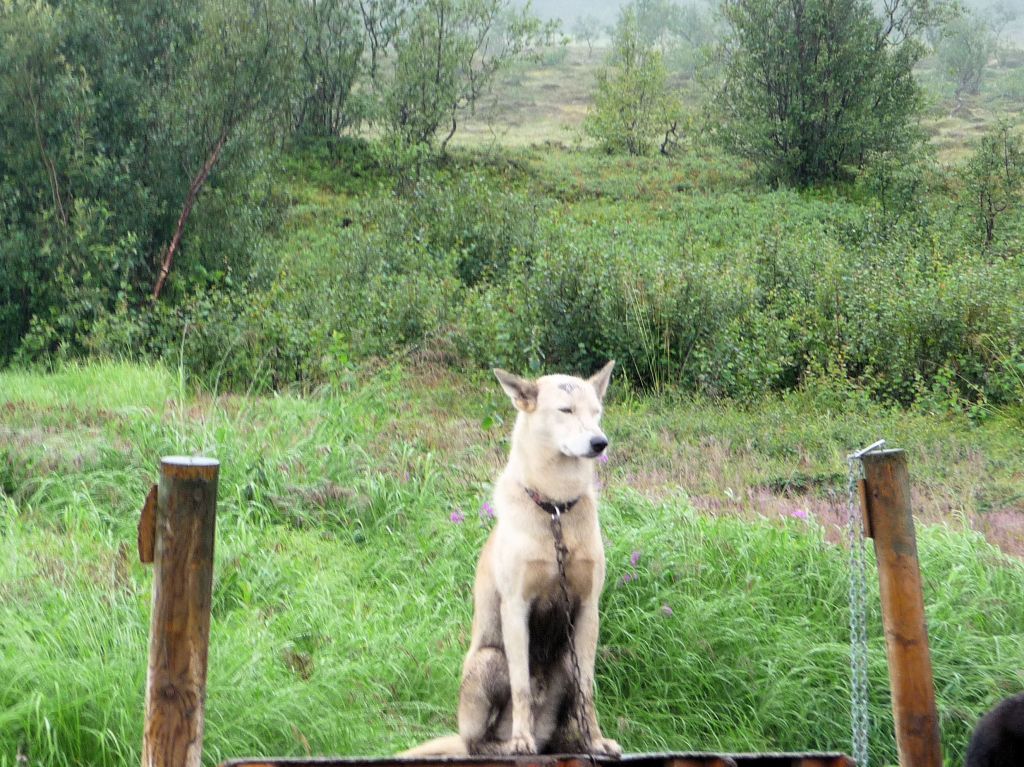
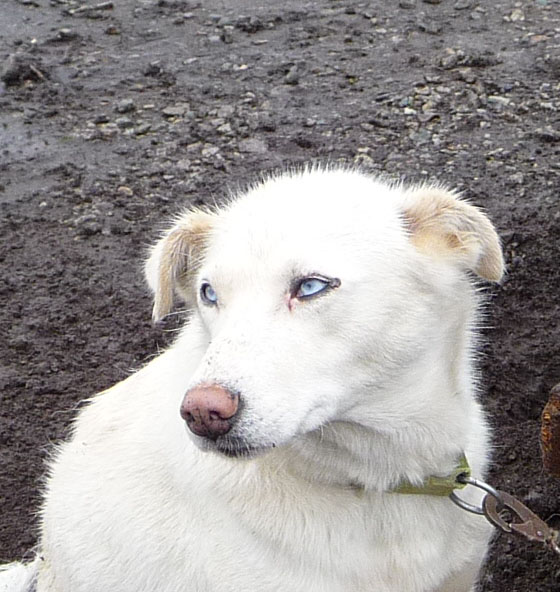
    Ol’ Blue Eyes – Husky

    It was when I read Jo-Jo’s blog, Snow Capped Memories of Lapland, and she described how

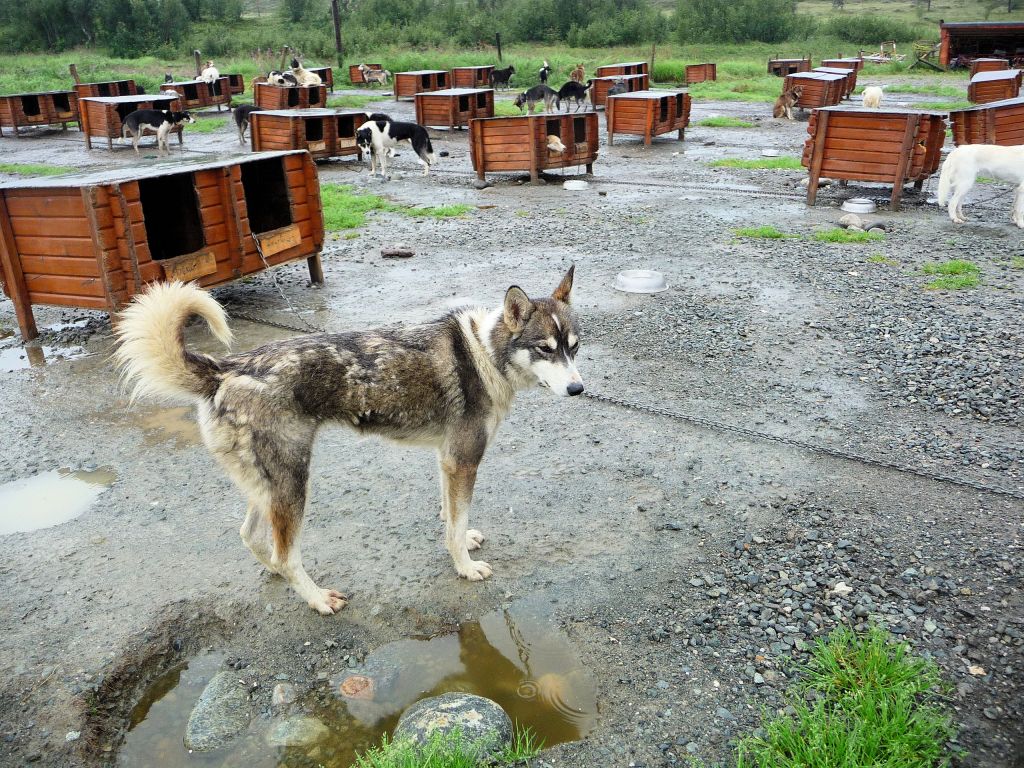
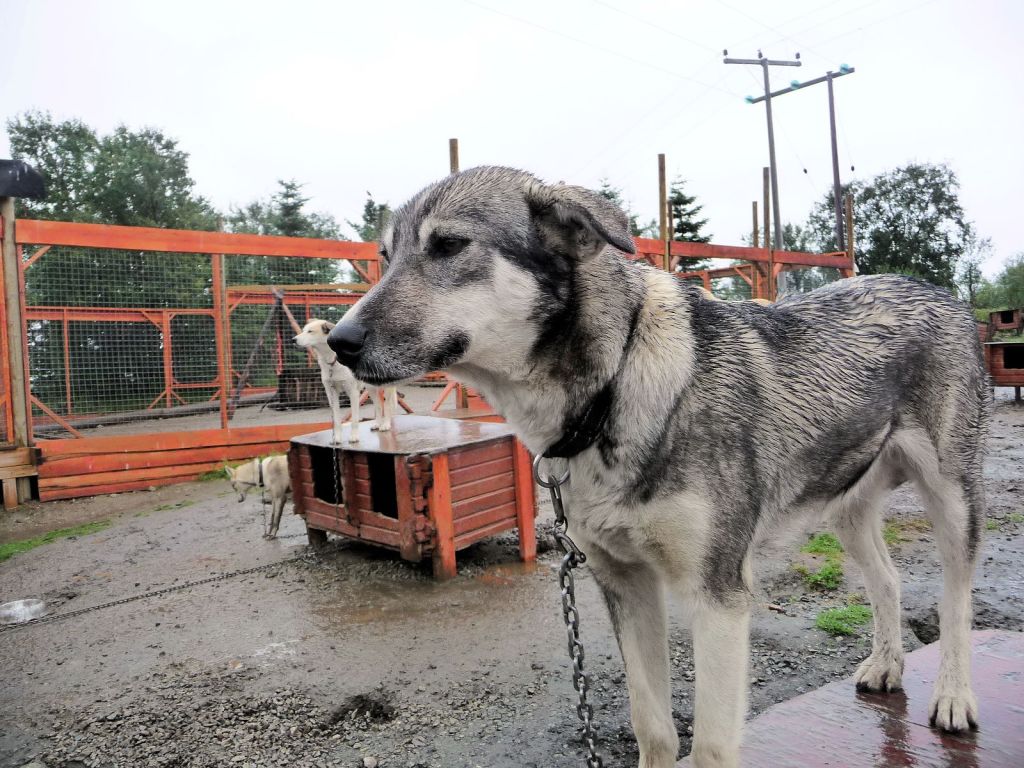
    “…the dogs were much smaller and less fluffy than the pet huskys I know. Strong and lean and frisky – like highly attuned race horses just itching to take off…” that I had a vivid recollection of my day with the huskies. I, too, was surprised that the huskies were lean and much smaller than I had imagined but I was told that these are the real working dogs of northern Norway, not the heavily fur-coated ones we see on TV and films.

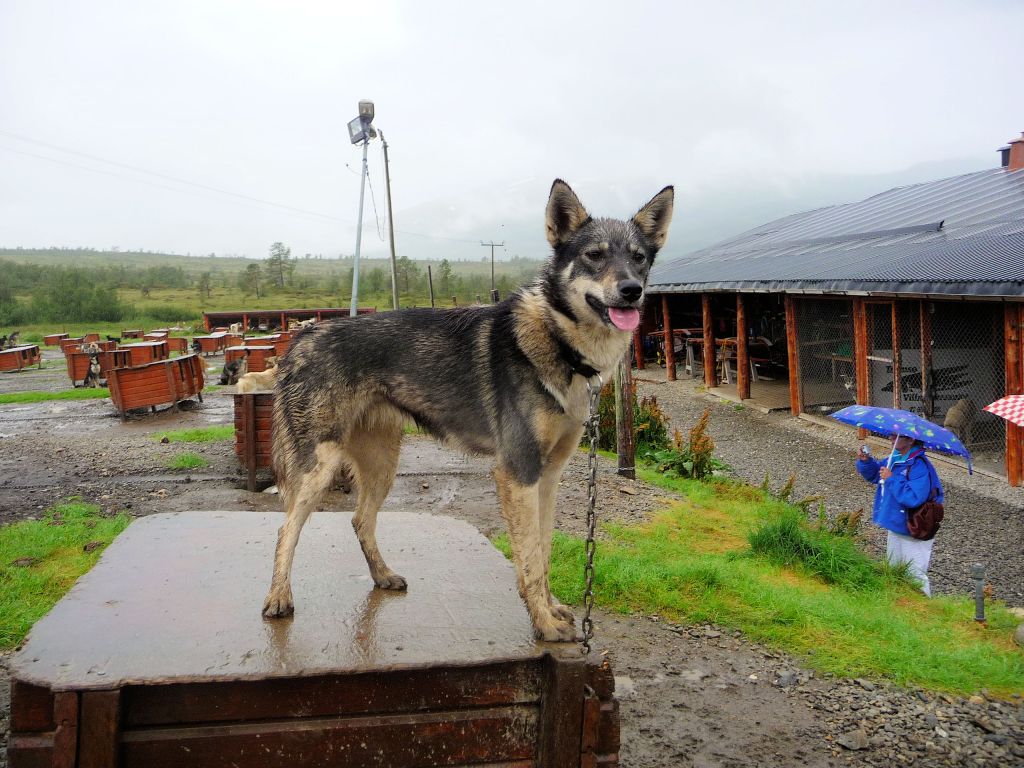
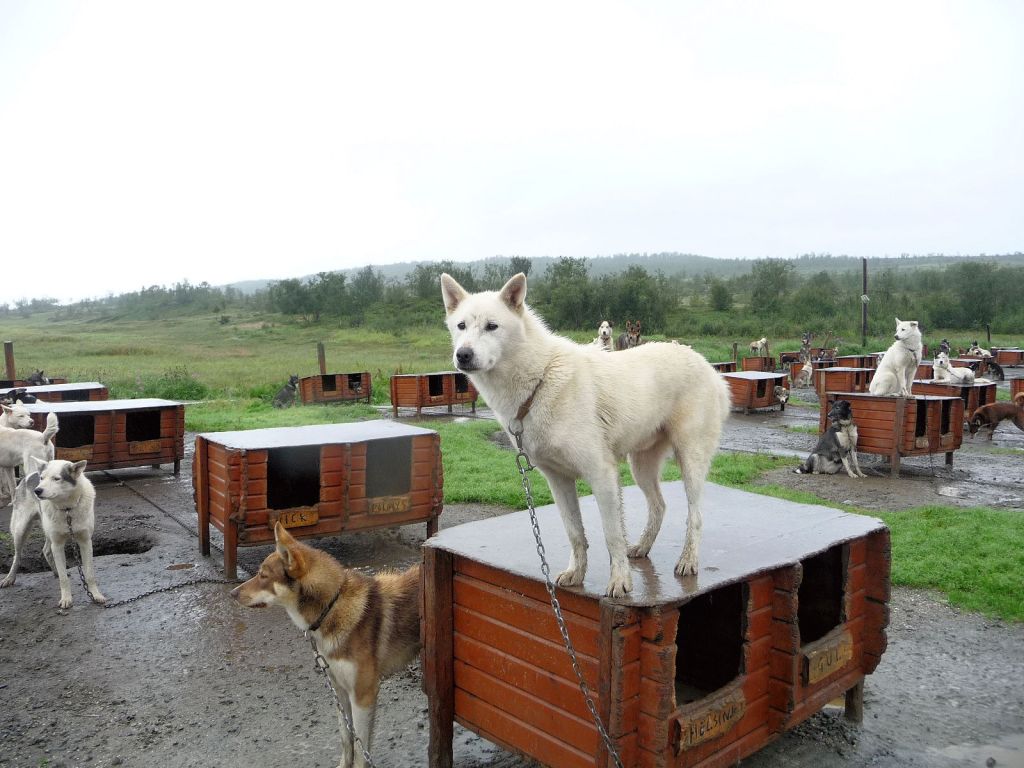
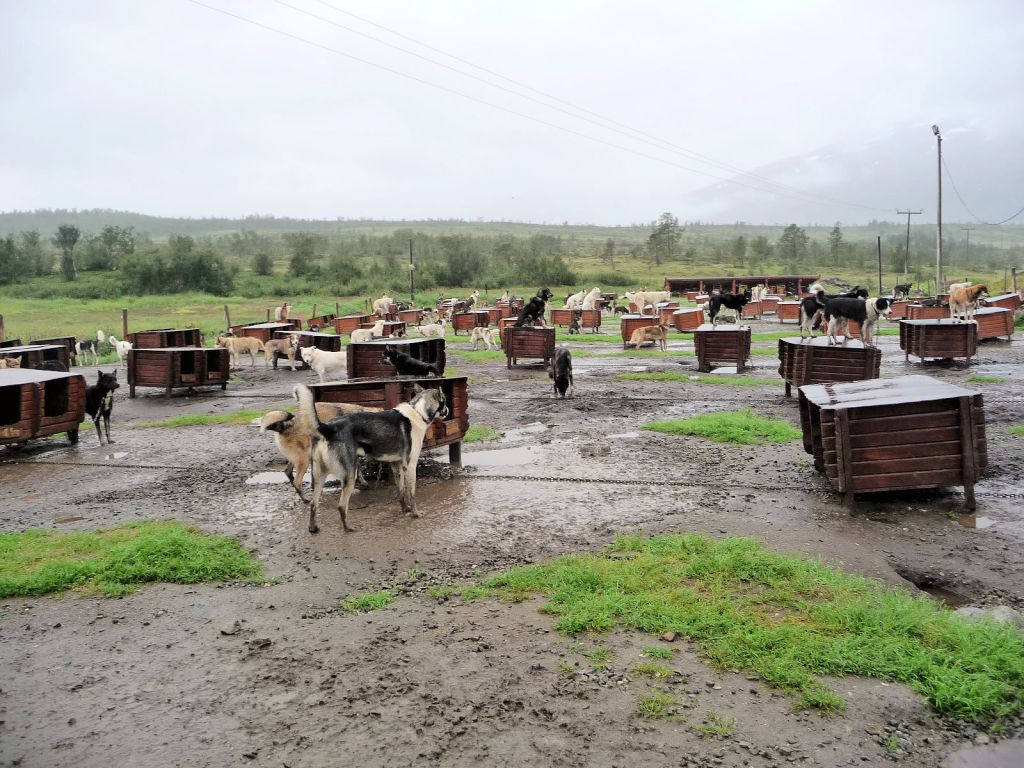
    We had made the 25 minute journey from Trondheim for a day with the huskies at TROMSØ VILLMARKSSENTER, located on Kvaløya (the Whale Island), one of the biggest adventure companies in Norway. The centre offers dog sledding trips and northern lights safaris, lasting from 4 hours to 5 days in the winter (Nov 1st –  April 30th) and kayaking trips and mountain hikes in the summer (May 1st – Oct 31st) the main focus being an authentic wildlife experience with the help of their 300 huskies.

    Tove Sørensen, the owner, founded the centre in 2006, the year in which she competed in the world’s longest dog sled race in Alaska, the Iditarod, and in which she won the “most inspirational musher” award. She has over 20 years experience with dog sledding and when we met her in 2018 she had already competed 16 times in the European longest dog sled race, Finnmarksløpet.

    Just to prove it was summer

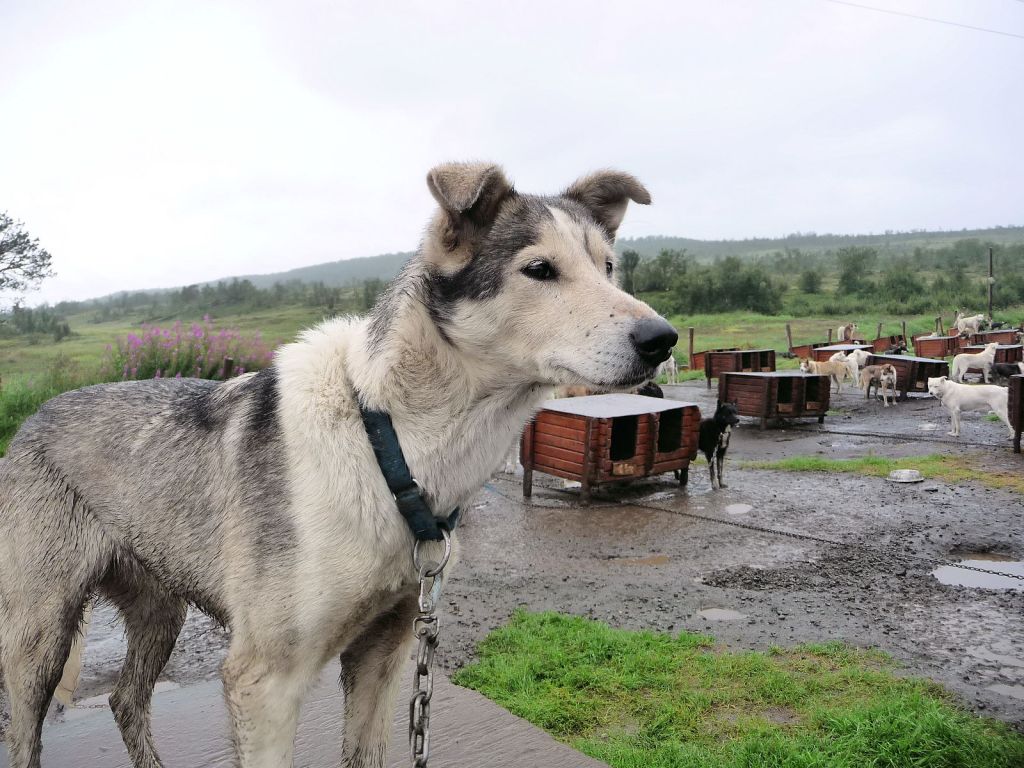
    Although our visit was in June it had been raining for some days and the place was a morass. It rained all the time we were there and it was very cold forcing us to don all the warm clothes we had brought with us.

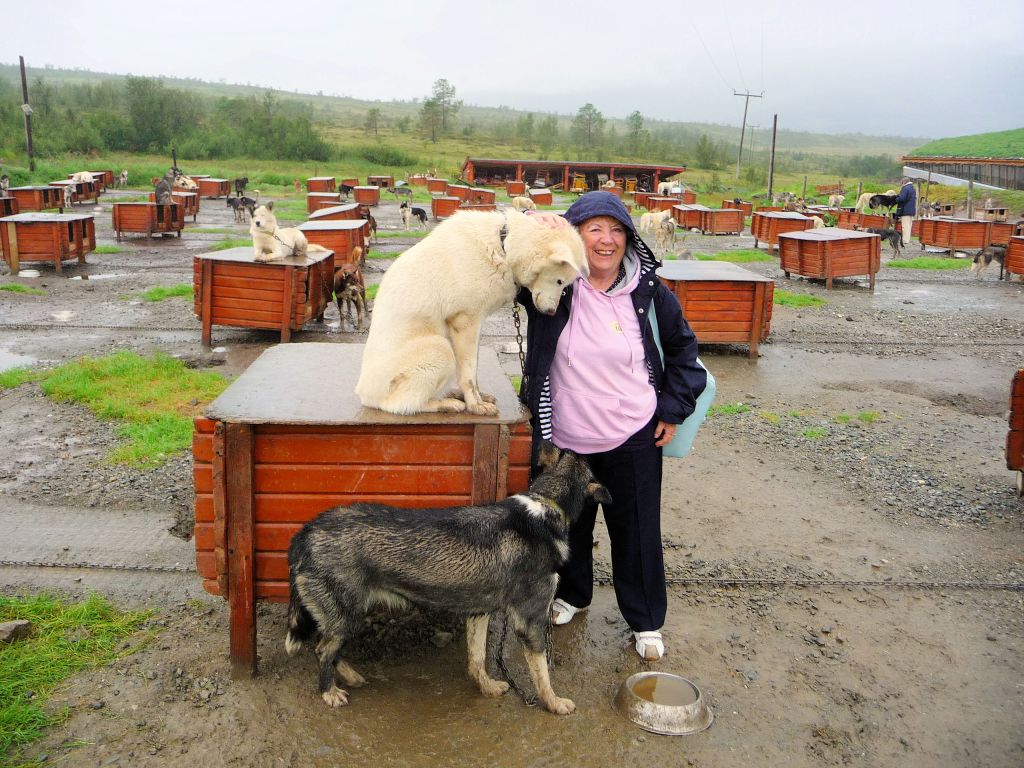
    Despite the cold however, we all had smiles on our faces because the huskies were so friendly and welcoming, jumping up and covering us in mud, demanding cuddles and trying to get as close as they could. They were like children, burrowing into your arms and resting their heads any place they found, your neck, the crook of your elbow, inside your coat, all the time demanding you pet them. You ventured near them at your peril – the peril that is, of being licked to death and covered in dirty paw-marks.

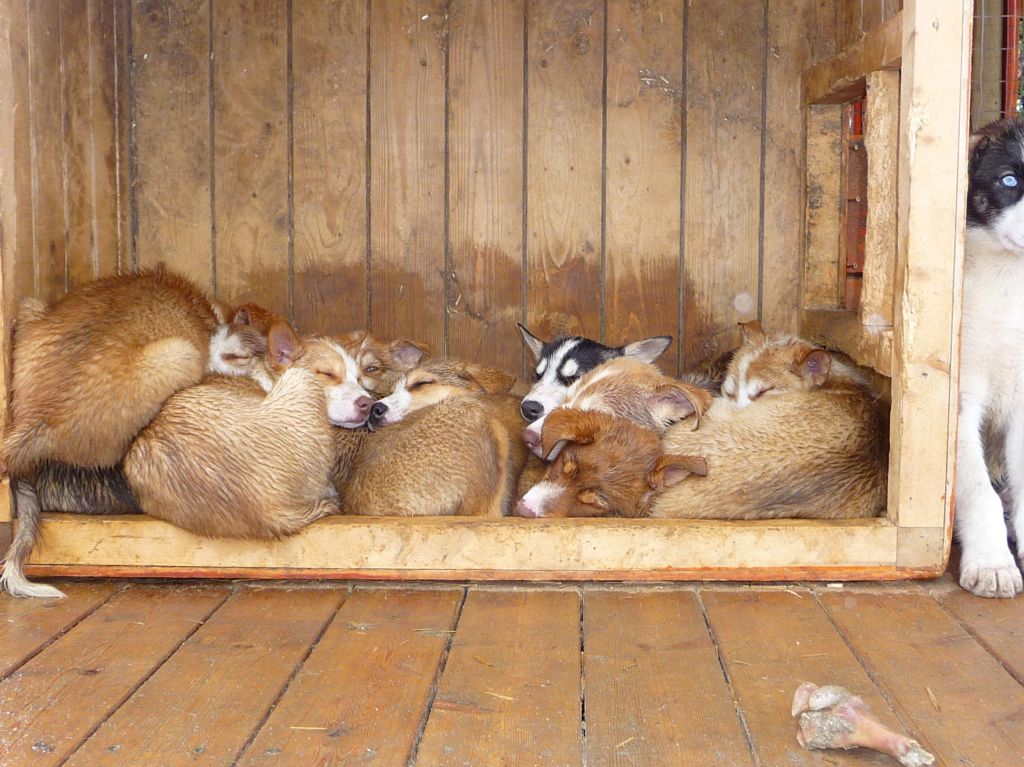
    All were small, all were lean, and the heavy rain had flattened their coats so that hardly a hair stood up. Each one occupied a kennel to which it was chained but they all looked contented and were obviously well-fed. The puppies were adorable but refused to wake up while we were there. I was told they need a lot of sleep when they are young. They start training when they are six months old and are taken out for 1 hour a day to start with, increasing in half-hourly increments until they can join a main sledding group.

    One blue eye keeps an eye on the sleeping puppies

    You can see from my photographs how wet it was that day and how bedraggled the dogs and their visitors looked. I was lucky enough to be wearing trainers but some of the sandal-clad visitors fared badly, one or two slipping in the mud.

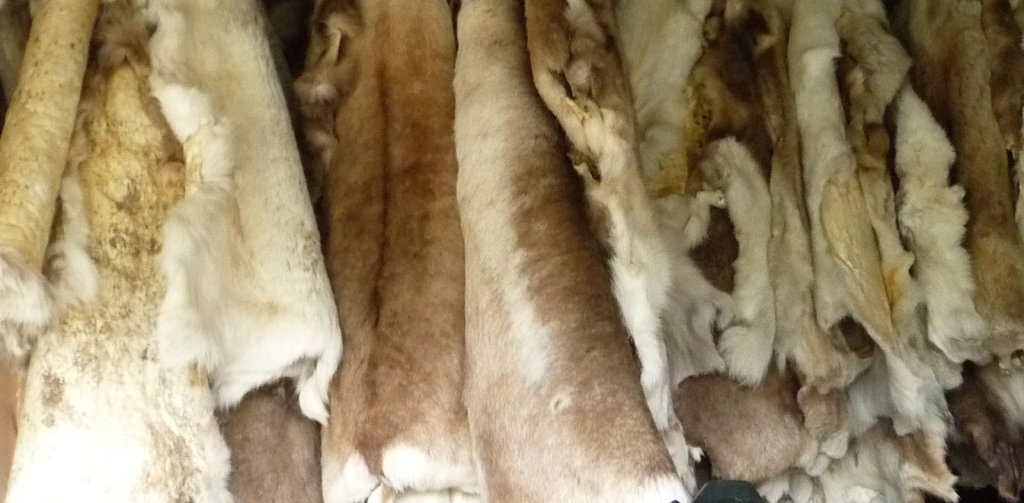
    Reindeer skins for sale in the on-site shop

    Should you fancy a trip to see these lovely, friendly huskies, details are below. There is a small cafe on the site and a shop selling ethnic garments (wooly hats, scares, mittens, gloves, boots, skins and suchlike), you get a chance to see an excellent film about huskie sledding and racing, and you can, of course, stay overnight.

    Phone:+47 77 69 60 02 Mobile: +47 91 38 74 56 email: mail@villmarkssenter.no

     Adress:   Tromsø Villmarkssenter Håkøybotn,   9100 Kvaløysletta

    Web:  http://www.villmarkssenter.no

    Phone+47 77 69 60 02 Mobil+47 91 38 74 56 Fax+47 77 69 60 39

    Email: mail@villmarkssenter.no

  • Saturday (Christmas) Sculpture

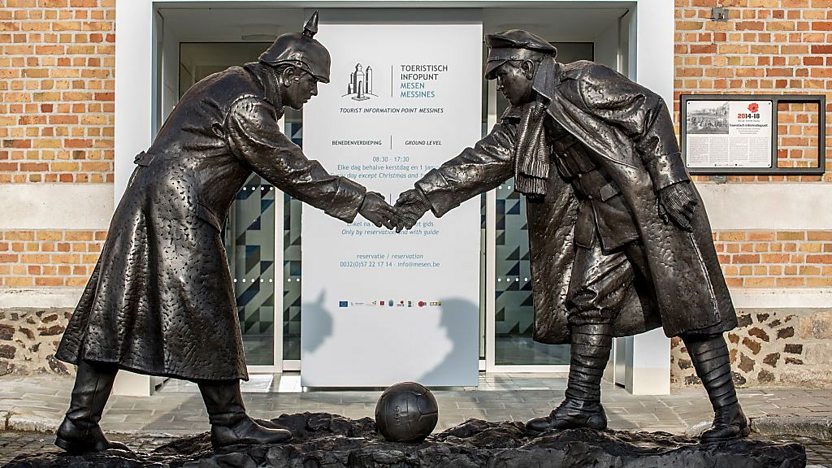
    This should have gone up on Christmas Day but I didn’t schedule it for the correct date. Better late than never, this iconic statue surely needs no explanation. Not my photograph, unfortunately, but it’s one most people will understand.

    In Memory of the Football Match between enemies on Christmas Day, 1914
  • Sculpture Saturday

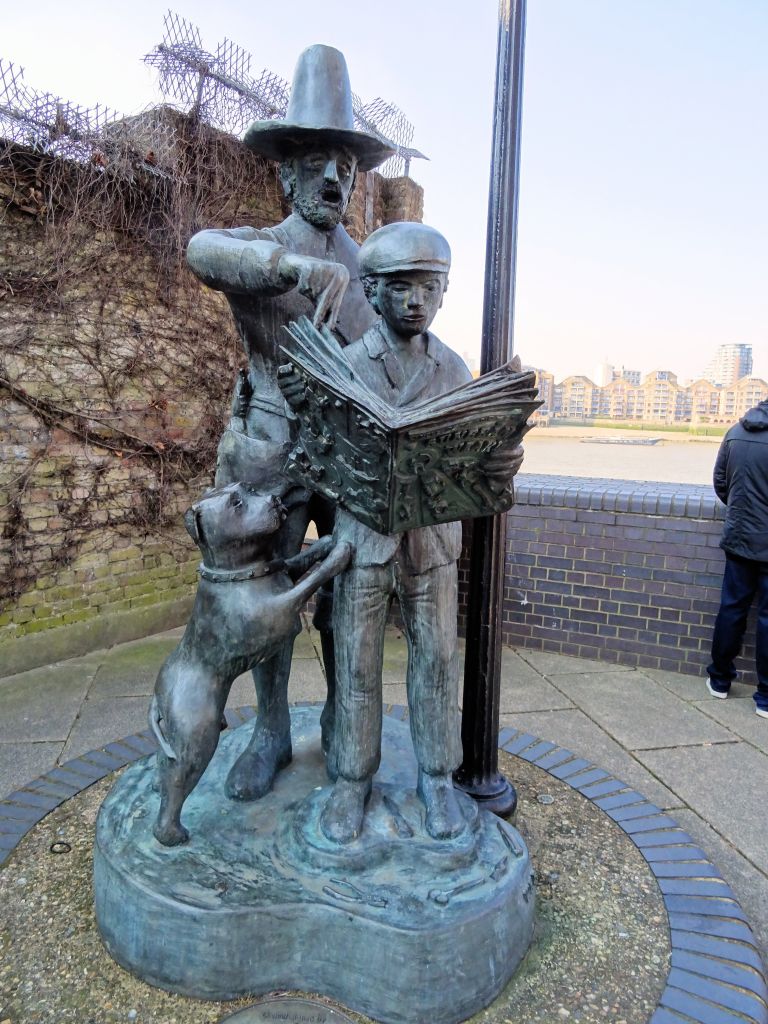
    I am indebted to my London friend, Steve Moore, who gave me this picture of a sculpture by Peter McLean, erected in 1991 along the Thames Path. It shows the spirit of a Pilgrim Father looking over the shoulder of a young 1930’s boy reading a magazine. 

    I’ve seen the sculpture and it is a truly wonderful piece of work. The detail in the work is terrific and repays time spent looking and reading it.

  • 10-Day Travel Photo Challenge: #2

    I have been nominated by my namesake Marie at Hops, Skips and Jumps to take part in the Travel Photo Challenge which involves posting one favourite travel picture for each day and nominating another blogger to do the same – that’s 10 travel pictures and 10 nominations in ten days – but 0 explanations!

    Some of my favourites you may have seen before but I’ll do my best to sort through and find something different each day. It’s hard to decide whether I like a picture because I think it is good or because it reminds me of happy times – sometimes it’s both and that’s a plus. Lucky there’s no text required so I may make it to Day 10 despite Covid and Christmas.

    Today I nominate Jo at restlessjo for the challenge. I hope you are able to join in Jo, if not already nominated, but if not, no pressure. If you do decided to join, please ping back to me to let me know.

  • Sculpture Saturday: Basel

    Linked to Mind Over Memory who hosts this challenge.

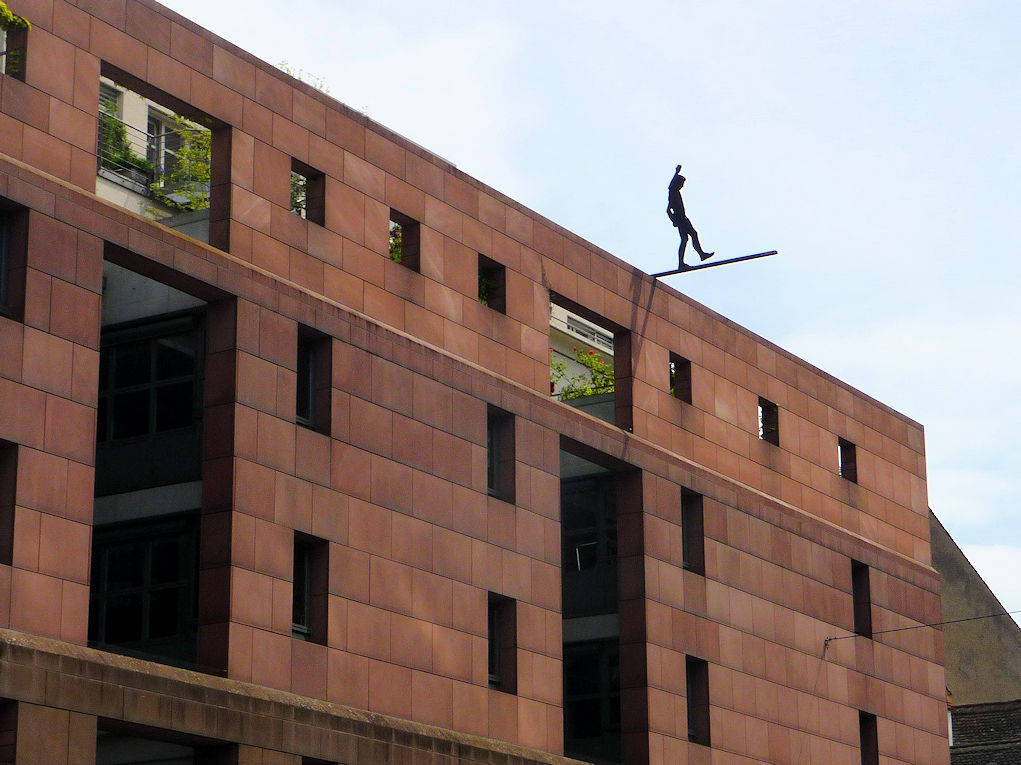
    It was just a few hours stopover in Basel – a town in which I hope to spend more time on my next trip to Switzerland. Neat, tidy, like all Swiss towns yet with a quirkiness that is all its own. I particularly remember some very lovely small shops and even in the short time I spent there I managed to pick up some interesting souvenirs.

    Then I looked up and saw it.

    The building is called the Rosshof and the sculptor of this work is Hubertus von der Goltz. I knew nothing about him until I saw this work but since then I’ve enjoyed seeing his installations and his work online. His website is worth a visit.

  • Sculpture Saturday: Gormley

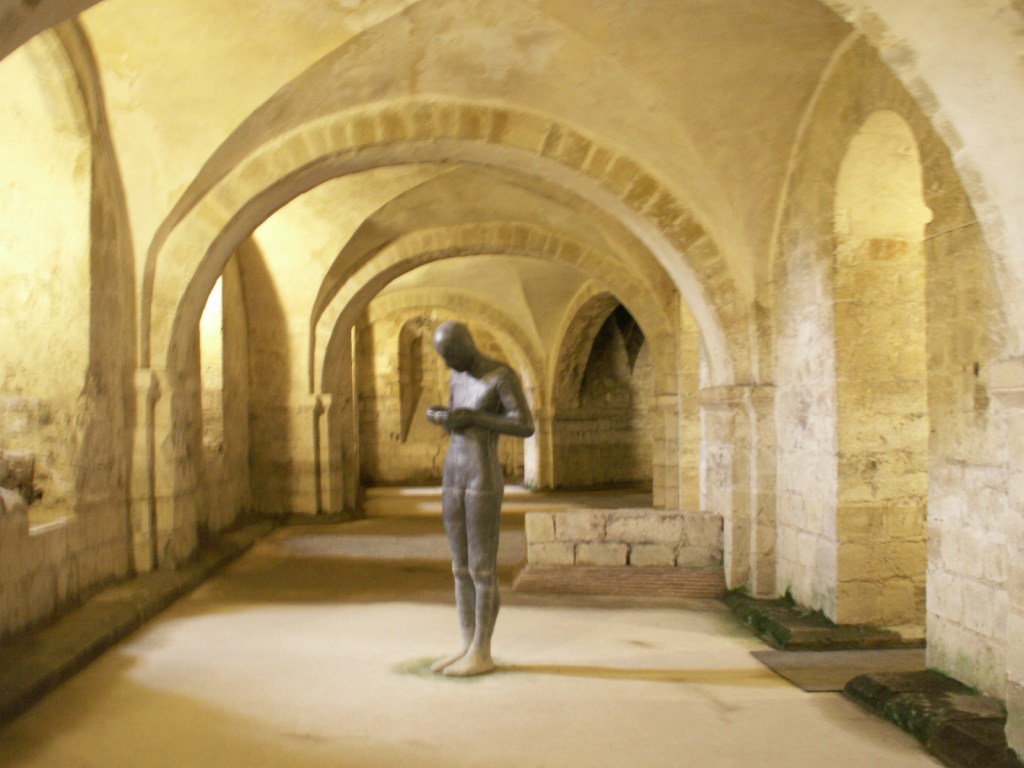
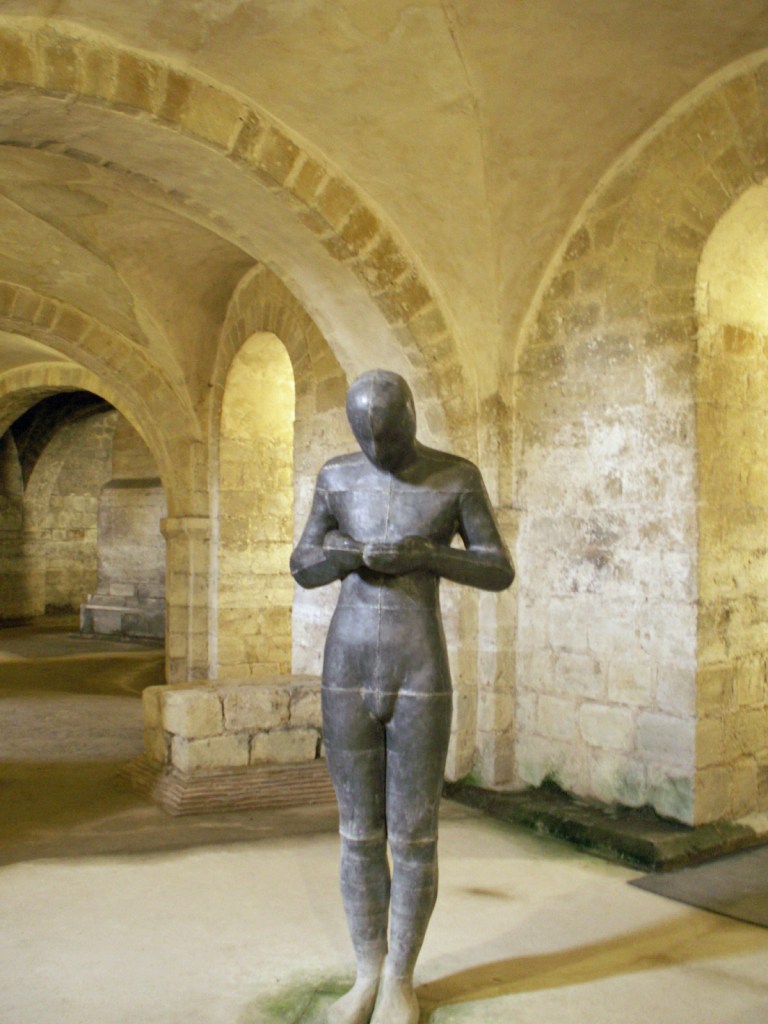
    Antony Gormley at Winchester – SILENT II

    “Sound II” stands like a gently glowing sentry beneath the nearly 1,000-year-old stone mass of Chichester Cathederal. It was installed sometime in the late 1980’s, part of an effort by the cathedral to introduce contemporary art into the Gothic masterpiece.

    This life-size statue of a man contemplating the water held in his cupped hands is fashioned from lead out of a plaster cast of the artist’s own body and stands in the crypt of Winchester Cathedral. During the rainy months, the crypt floods and as the water level rises gradually to his knees, the statue acquires an even more moody air as it stands in silent contemplation of its cupped hands. There is a tube mechanism through the body, so as the water rises it fills his cupped hands

    Hosted at https://nofixedplans5.wordpress.com/2020/11/14/sculpture-.saturday-9/

  • A Ticket to Ryde – and Then a Walk

    A Ticket to Ryde – and Then a Walk

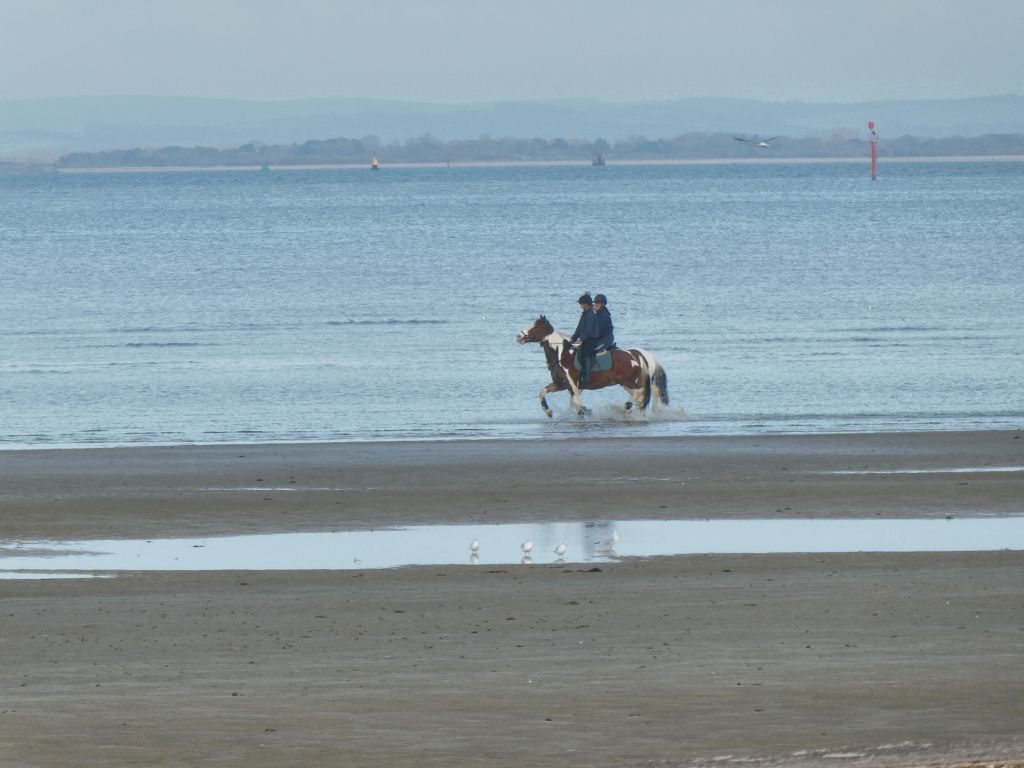
    A bus to Ryde (Isle of Wight) through villages and towns, down country lanes and across high Downs, to take a coastal walk along the sands at Appley Beach, a walk full of interest, from dogs on the beach (my favourite was the Caucasian Shepherd which refused to stand still to be photographed) to horses being exercised in the waters and even to a group of hardy folk picnicking on the sands! And on a crisp November day we had a marvellous view across the water to the Portsmouth skyline, dominated by the Spinnaker Tower.

    Portsmouth from Ryde, Isle of Wight, car ferry on the right

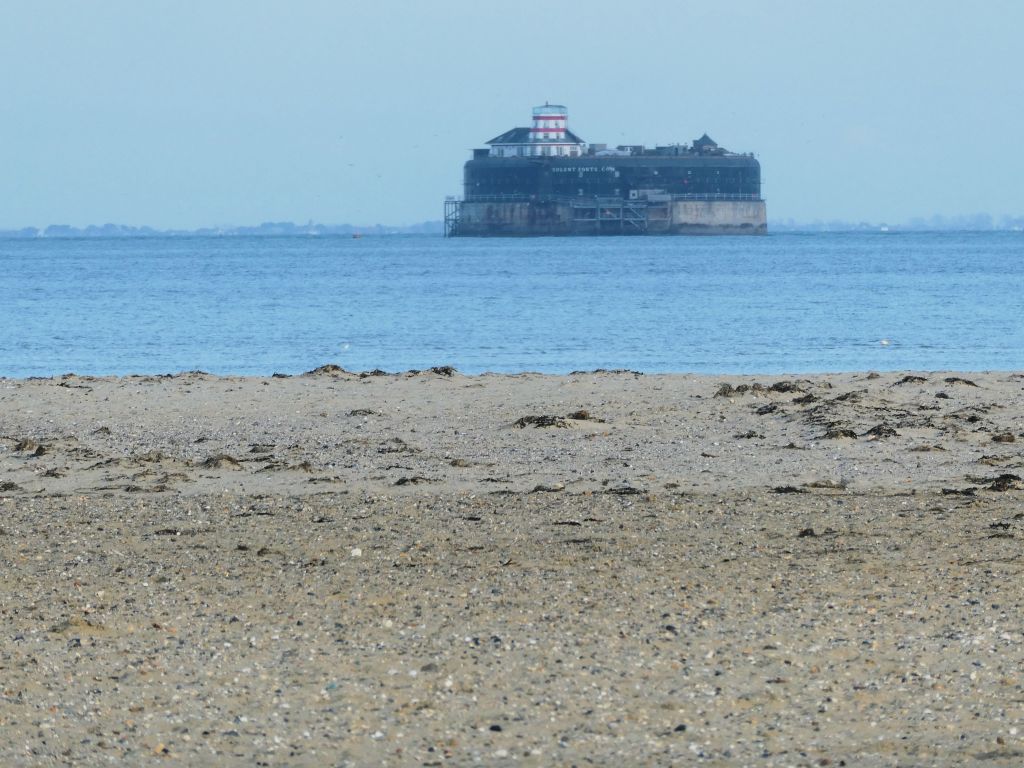
    The distance between Ryde and Portsmouth is approximately six miles. In the middle of the sea are the armour-plated Palmerston Forts commissioned by Prime Minister Lord Palmerston in 1859 to defend Portsmouth dockyard at a time when the country feared invasion by Napoleon III.

    Heavy guns were installed on the forts during the two world wars and it is said that the troops stationed there were chosen for their inability to swim as the damp, dark, and lack of all but the most basic facilities made this a very arduous posting. Although the forts were armed and re-armed as technology advanced, apart from training their guns on French ships in the harbour after the fall of France in 1940, the forts were never used and in the 1960’s they were de-activated. One has been retained by the MoD and three were sold to private buyers in the 1980’s, one of which is now a super luxury hotel and spa, another a museum and the other in private hands.

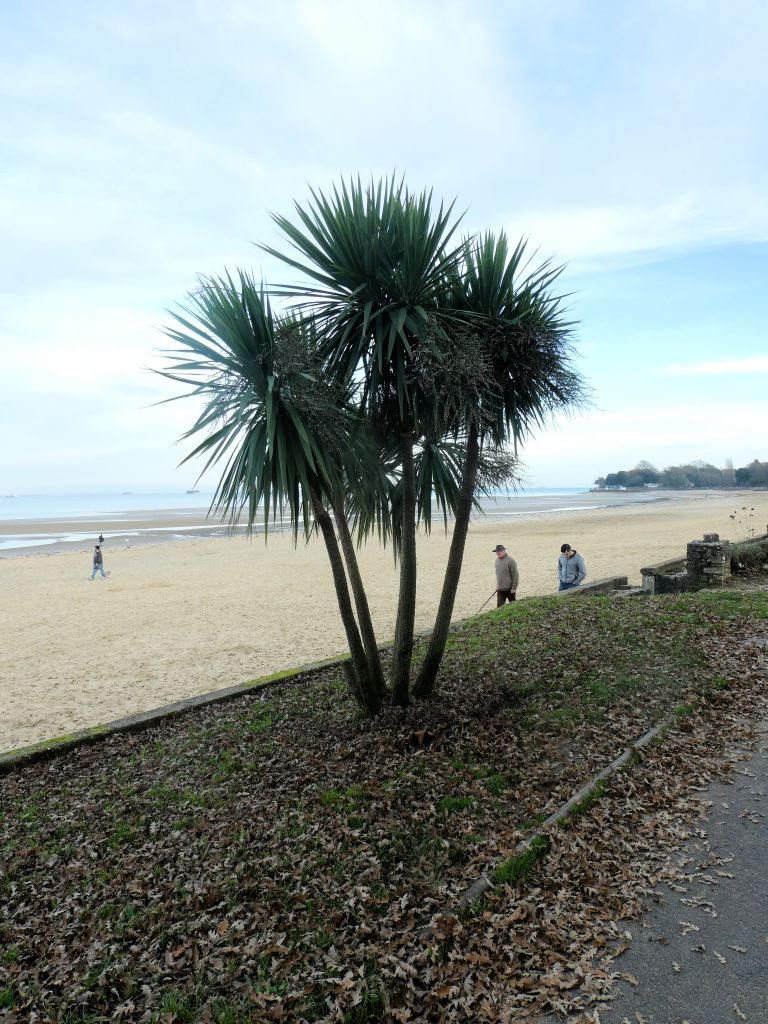
    Continuing along the sea-front we enter Appley Park, a green oasis on the sea-front where the beach huts are set among the trees but with a view of the Solent and easy access to the beach: a snack bar and restaurant caters for walkers and site-owners alike.

    Appley Park with Beach Huts

    The Solent as a whole supports 13% of the entire world population of Brent Geese and 30% of the UK population of same, and the beach at Apply is one of the most protected areas in the world. When the tide is out the mudflats are rich in winter-feeding nutrients, worms, molluscs, invertebrates and other creatures needed by the Geese as well as bar-tailed godwit and other birds who rest over here on their way to Siberia. Further out to sea at low tide you can see the rare eel grass – it looks like bright green meadow grass – where seahorses, pipe fish and sea urchins make their home.

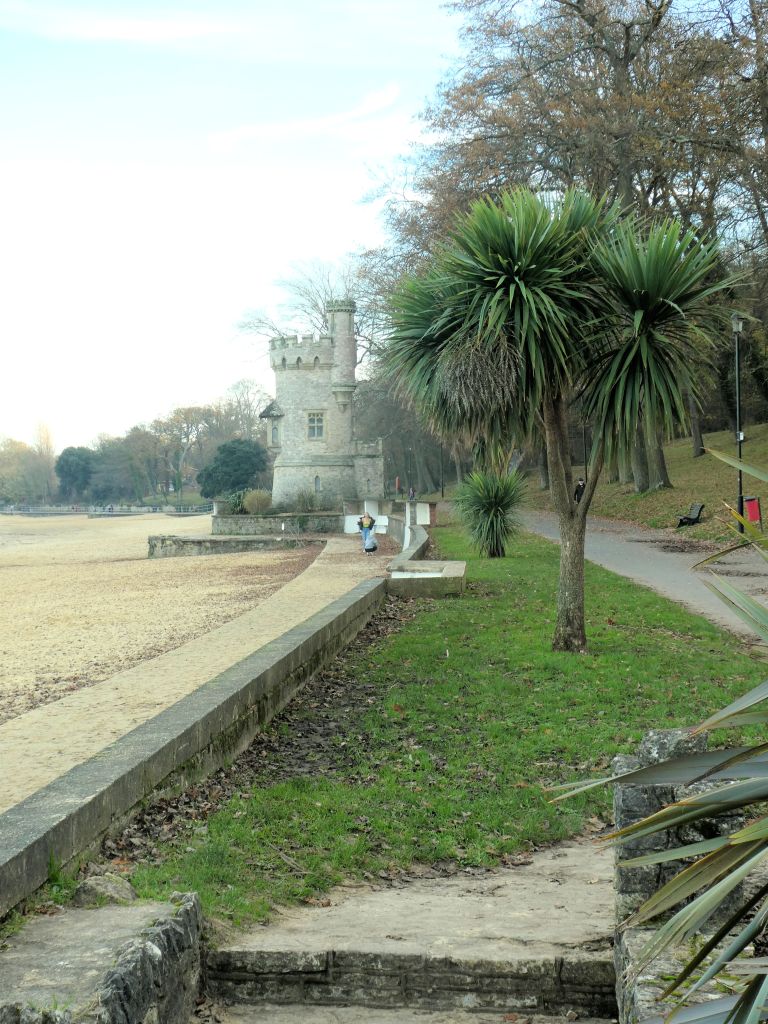
    Appley Park has two especial points of interest. Appley Tower which is a rare coastal folly is one. Most follies were built in inland private parks and gardens, but in 1875 Sir William Hutt had the tower erected which he called his watchtower. It is a delightful building and has withstood the test of time.

    Beyond the tower is a fascinating monument to an event linking the Isle of Wight to Australia, a monument to HMS Sirius, the principal Naval Consort of the First Fleet which sailed to Australia from the Motherbank just off the shore on 13th May 1787. The First Fleet carried the convicts and soldiers who were sent to start a penal colony there so the Monument celebrates the start of the European settlement in Australia. The ship arrived in Sydney on 26th January 1788 then subsequently went for repairs to Mosman Bay before sailing to Norfolk Island with personnel and where she ran aground in March 1789.

    The bas relief of HMS Sirius, erected on 29th June, 1991, is one of 3 commissioned by Mosman Council from sculptor Alex Kolozsy to commemorate the 200th Anniversary of the arrival of Europeans at Mosman Bay and Norfolk Island where the other two memorials have been installed.

    Monument to the HMS Sirius and the first Australian settlers in 1788.

    Beyond this point and round the corner and you are just a short distance from Seaview, one of the nicest little towns on the island, but with a pebbly beach, quite different from that in Ryde.

    The views across the Solent on a sunny day can be stunning, the white chalk cliffs of Portsdown Hill (where U.S. General Dwight D. Eisenhower established his HQ during the D-Day invasions) shimmering across the Solent, matching the white tower of the Spinnaker that looms over Portsmouth’s waterfront.

    I confess to spending too many days here just watching the ever changing traffic on the waters of the Solent, one of the busiest waterways in the world. The Catamaran from Ryde runs twice hourly to Portsmouth on its 12 minute journey linking the island to the mainland and the fast train to London; double-decker car ferries sail between Fishbourne and Portsmouth and the Hovercraft runs from early morning to dusk, carrying passengers and small freight to Southsea. Sometimes there are naval vessels, gunships and battleships in Portsmouth Harbour, some visiting, some home-grown, and always, of course, the huge ocean liners that sail majestically over the waters of the Solent, past the Isle of Wight to destinations unknown.