Blog

  • Sculpture Saturday: Ava and Frank on the Costa Brava

    Ava Gardner: Statue in Lloret de Mar

    It was in the small Spanish fishing villages of Lloret de Mar and Tossa de Mar that the torrid romance of Ava Gardner and Frank Sinatra played out in the 1950s.  More than a romance between singer and actress, this was a passion of operatic proportions played out between the singer, the actress and the matador, because Ava was also having an affair with Catalan matador, Mario Cabré. 

    In 1950 Sinatra came to Spain to be with Ava who was living in Tossa de Mar while shooting Pandora and the Flying Dutchman. They tried to be discreet about their affair but as the Matador publicly dedicated every bull he killed to Ava, this proved impossible.  Sinatra divorced his wife in 1951 and married Ava the same year.

    Ava & Sinatra in Lloret or maybe Tossa de Mar (Wikicomms).

    In 1953, the pair split up, but Sinatra came back looking for her at Christmas of that year by which time, Gardner was having an affair with another bullfighter, the famous Luis Miguel Dominguín.  Sinatra and Ava made up and moved to Madrid where their life was lived out in public in night-clubs and restaurants, their frequent booze-fuelled fights ensuring the affair remained front-page news.  They divorced in 1957.

    Gardner became an alcoholic.  She had a stroke which left her unable to speak properly and the only person she would speak to in her last years was Frank Sinatra who telephoned her regularly. She said he had always been the love of her life. 

    Ava’s charm and friendliness won over the people of the two villages and both towns erected a statue to her.  The one below is in Tossa de Mar, the one above from Lloret de Mar taken on a visit I made in the early days of this century. I think the Tossa one is more beautiful but the Lloret one was meant to symbolise her role in The Barefoot Contessa.

    Ava Gardner- image from Wikicomms.
  • Six Word Saturday

    Linked here to Debbie‘s Six Word Saturday

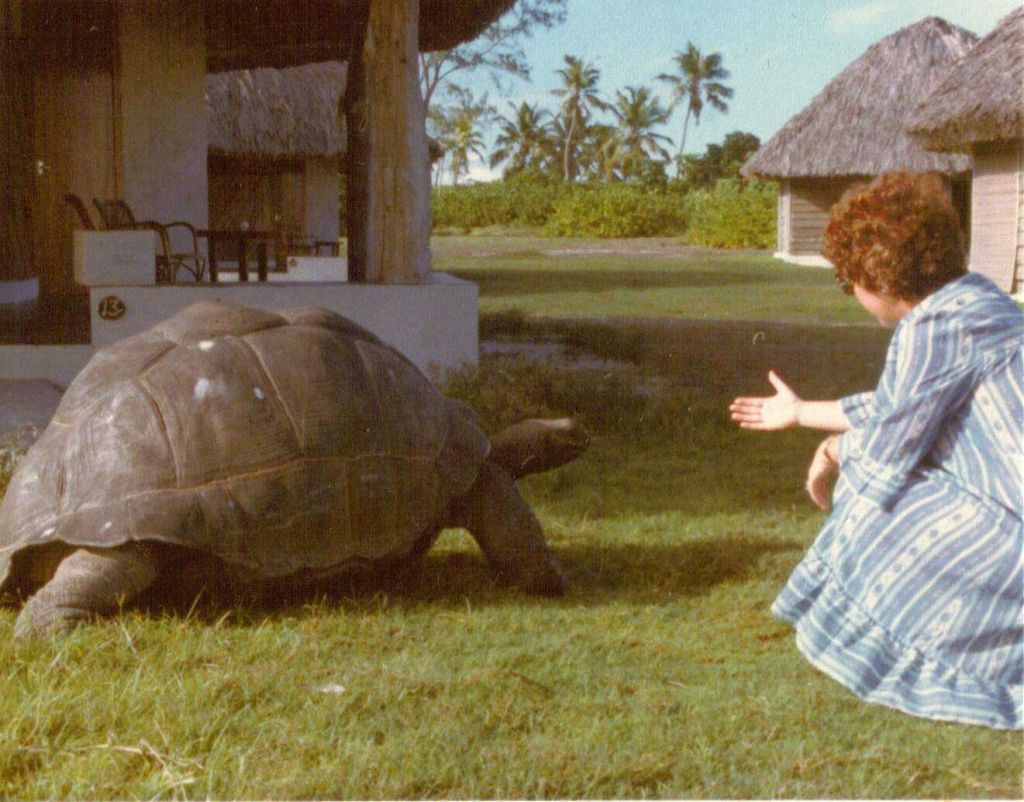
    WON’T YOU BE MY BEST FRIEND?

    This is Esmeralda considered to be one of the oldest tortoises in the world (by the Seychellois). Photo taken circa 1975.

    When I was young and in my prime, hey ho, diddly do……

  • Challenge Your Camera 9: Kitchen

    This week Dr. B has selected the theme of Kitchen as a challenge to our photography. If you would like to join in #challengeyourcamera, the rules are printed below.

    I’m not really into kitchens so I’ve found this one very hard. The things I thought to do have already been done, like arrangements in lovely jugs done perfectly by Marie from Hops, Skips and Jumps. My herb pots were nearing the end of their life, my pasta jars at less than half full looked sad, and the rest of the kitchen stuff was boring. Then my eyes lit upon my favourite Christmas gift, but because it sits in the corner quietly humming away I almost overlooked it. So, I give you my mini-wine fridge, flanked by my very old microwave (40 years?) and an orchid bought for me yesterday because I’d had a bad fall in the bathroom (that’s another story but I’m lucky to be all in one piece today and able to post).

    Wine Cooler & Microwave

    It only holds ten bottles I think, but I don’t drink a lot of white wine so that’s fine. At the moment it contains 2 bottles of wine, 1 bubbly, 2 Manzanilla, some fizzy water, beer for visitors and a few soft drinks. But it’s great and looks elegant. I couldn’t photograph it face on because it has a slightly mirrored front – in fact you can probably see the other side of my kitchen in the reflection – if your eyes are better than mine! The wooden lunch carrier on top of the microwave is real, i.e. not a tourist buy. I bought it from a village shop on my first trip to Thailand about 50 years ago after I’d seen similar being used by field workers. One compartment contains rice, one vegetables and one fruit,or, if available, a little bit of fish or meat.

    RULES of CHALLENGE YOUR CAMERA

    Each week Dr. B selects a single theme to point his camera at or display a few photos from his collection as a way to brighten up the week. If you would like to join in #challengeyourcamera then here’s what to do:

    • 1. Follow Dr. B to discover the weekly theme.
    • 2. Select a few photos related to the week’s theme
    • 3. Post your own photos that week, any day you like.
    • 4. Include a caption with each photo so we know what/where it is
    • 5. Include a link to his blog in your post so that he is notified and can follow you back
    • 6. Add a pingback/link to YOUR post in the comment section of HIS post on that weeks theme.
    • 7. Include the tag #challengeyourcamera
    • 8. He will follow you back and encourage other posters to follow you
    • 9. He will list each blogger in his weekly post in arrears
  • Monday’s Washing Lines

    Linked to Andew’s Monday Washing Lines here.

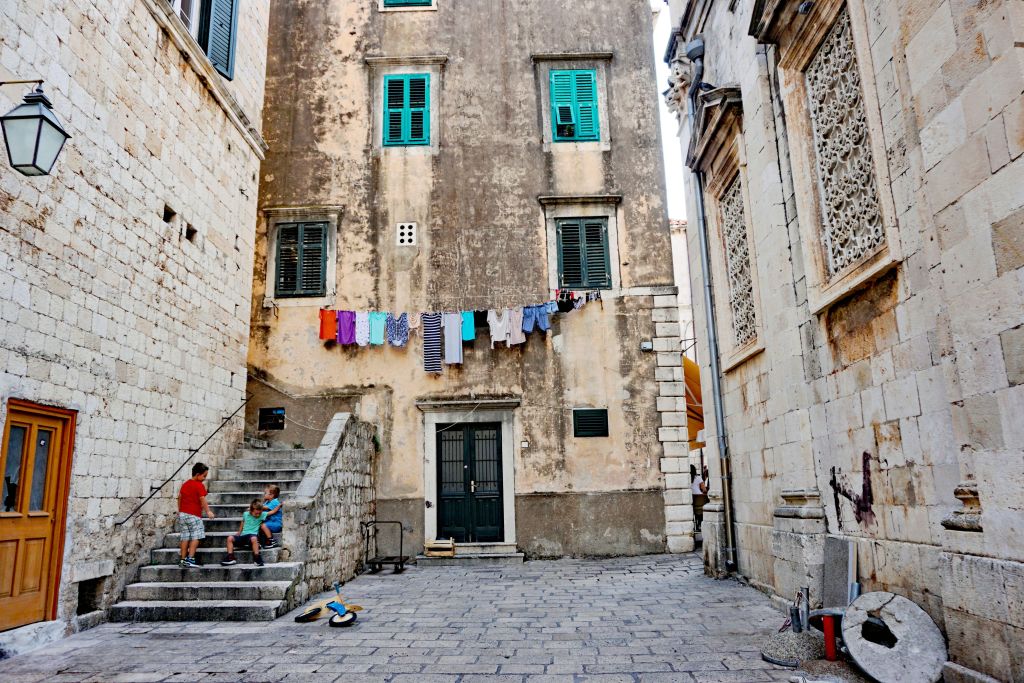
    I knew if I looked hard enough I’d find at least one and here it is. Inside the walls of Diocletian’s Palace in Split, Croatia. I wonder if the washerwomen of 305 AD were hanging out their washing in the same way.

    Inside the walls of Diocletian’s Palace, Split
  • Silent Sunday: The Daintree, Australia.

    The Daintree, Australia

    Silent – except for the chattering of the monkeys and the soft plop of the menacing crocodile that glides from the riverbank into the water.

  • SIX WORD SATURDAY

    Debbie hosts this outlet for our six words here.

    I think I’ve only taken on this challenge once before, maybe twice, but as I read more of the challenges I begin to think I should be taking part. So here goes, late Saturday afternoon instead of morning. Memo to self, must try and do better.

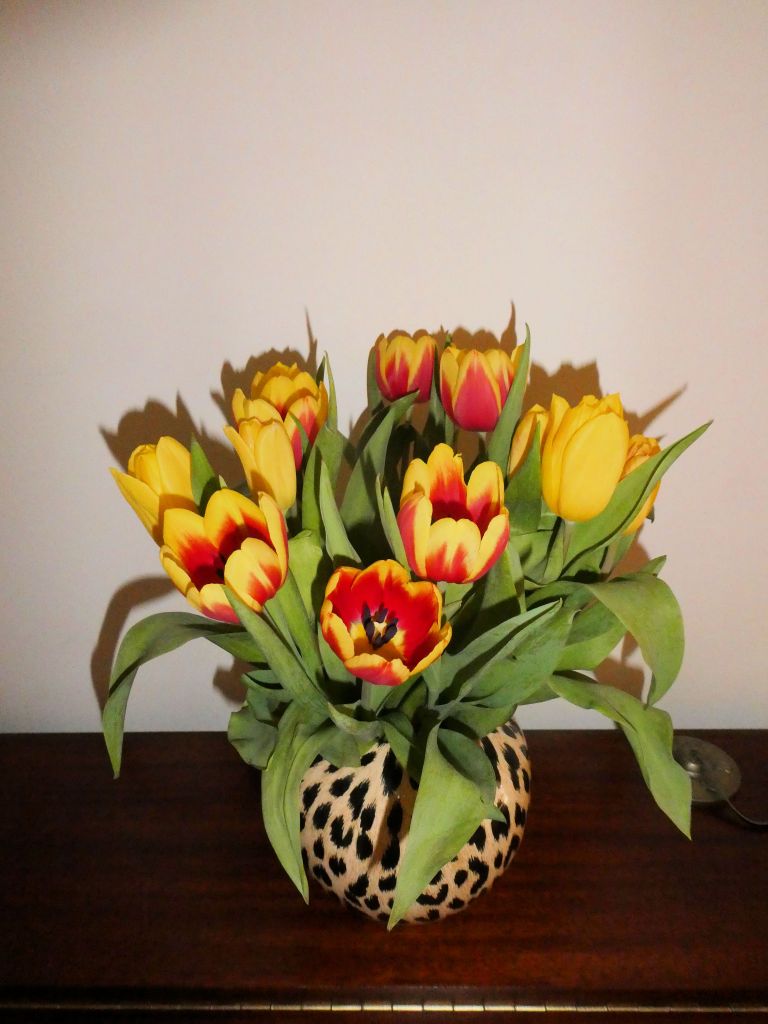
    Cut Flowers, Central Heating, Don’t Agree.

    Cut Flowers, Central Heating, Don’t Agree

  • Saturday Sculpture:  LIONS

    Saturday Sculpture: LIONS

    Linked to Mind Over Memory who hosts this challenge.

    First I offer you a real lion, the BIG DADDY Lion, the original MGM Lion.

    By Pacific & Atlantic Photos – eBayfrontnews storyback, Public Domain, https://commons.wikimedia.org/w/index.php?curid=37816547

    Sorry. I know it isn’t a statue but I couldn’t resist this. I did start off with the bronze statue of the lion from the MGM Hotel in Las Vegas but I thought it paled beside the real thing so there you have it.

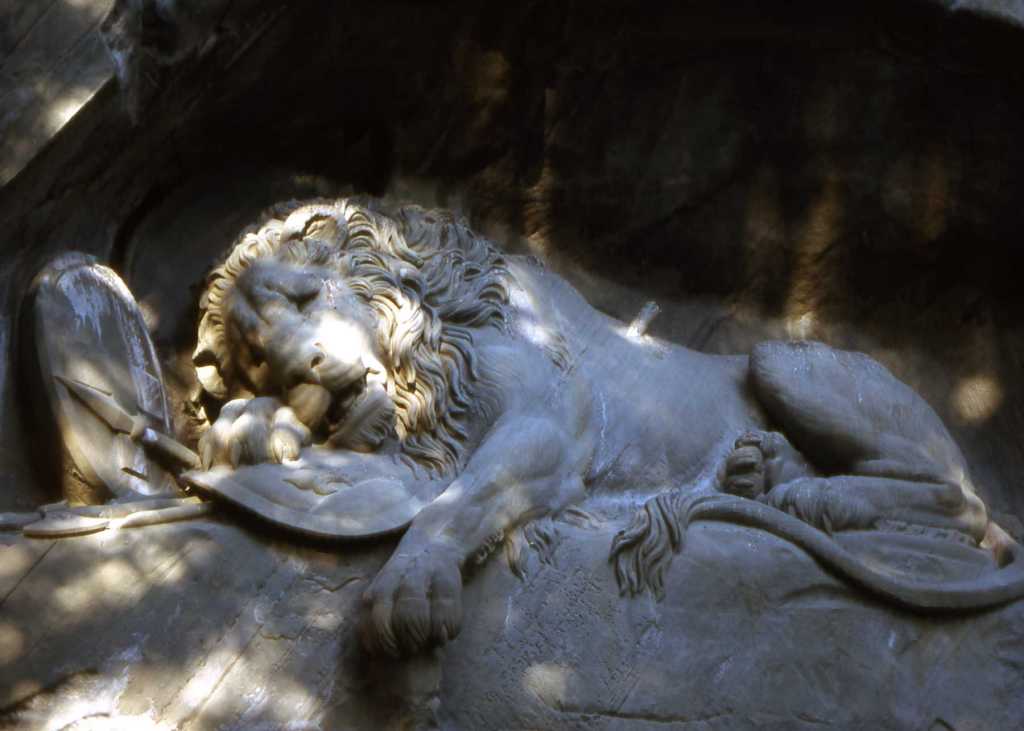
    Now here are two sculpted Lions. The first one from Lucerne, Switzerland, was described by Mark Twain in his 1880 travelogue “A Tramp Abroad” as “The most mournful and moving piece of stone in the world”. A mortally wounded lion is carved into the wall of a sandstone quarry in the old part of the town, designed as a memorial to mercenary soldiers from central Switzerland who lost their lives defending the royal Tuileries and the family of Louis XVI in Paris in August 1792 during the French Revolution. Six hundred died in their defence and 140 more died afterwards.

    The 6m x 10m long monument was designed by the Danish sculptor Bertel Thorvaldsen and carved by German stonemason Lucas Ahorn out of the sandstone rock in 1820-21.

    The Wounded Lion in Old Lucerne, Switzerland

    Next we move to Spain, to Cordoba where there are so many statues it is easy to miss this one, but he is part of the Triunfo de San Rafael column, the most elaborate of many devotional columns in Cordoba commemorating the town’s guardian angel. The column at the center of a scenic viewpoint was begun in 1765 and it was finally finished in 1871. He’s quite an ugly old lion but I feel sorry for him as he looks uncared for and few stop to admire him as they gaze upwards at the shiny figure of the saint or rush across the bridge to photograph the more famous Mesquita.

    Lion at the base of the Triunfo de San Rafael column in Cordoba, Spain.
  • Challenge Your Camera 8 – SPORT

    Challenge Your Camera 8 – SPORT

    Dr. B has a new challenge this week – Sport. Below are my sportie images

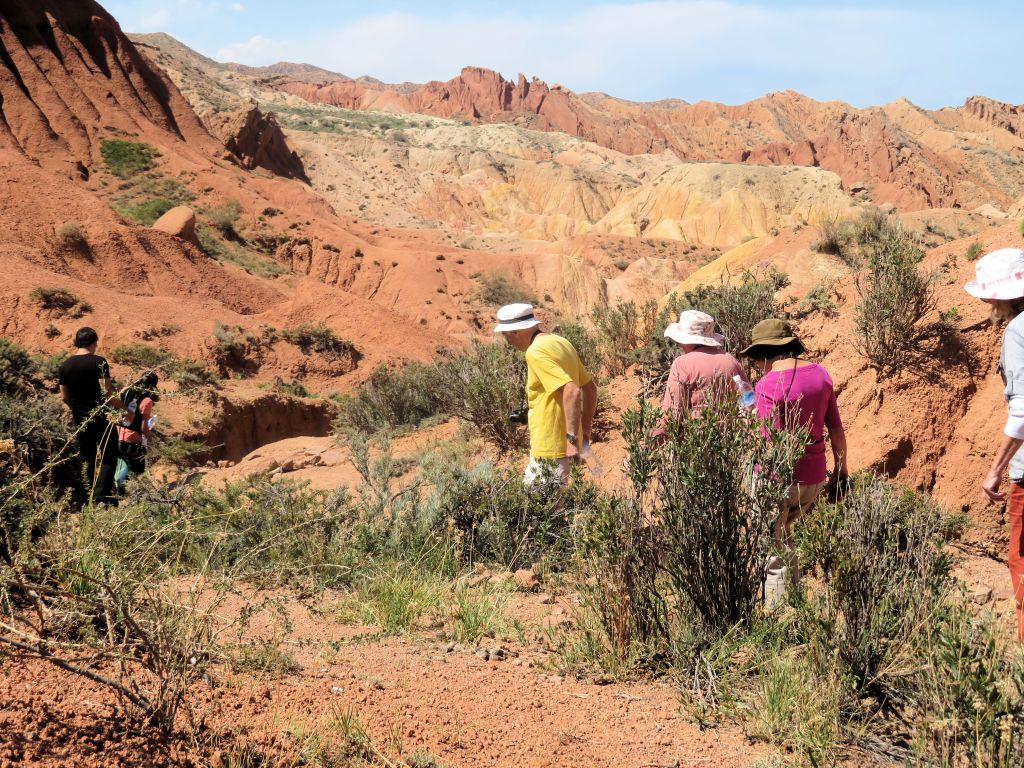
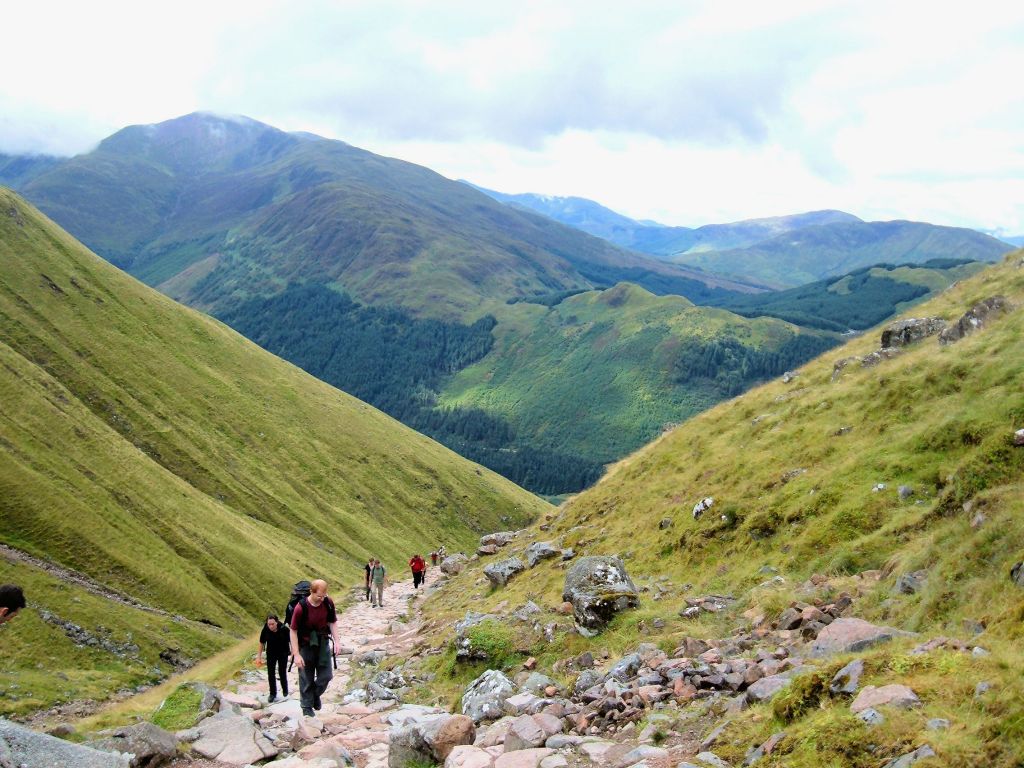
    The first two are from my friend Solange Hando, travel writer and trekker, who has covered most of Nepal and Bhutan and who can’t resist climbing a mountain if she sees one. I know, I’ve holidayed with her and waved her off many times as my energies don’t run as far as mountain-climbing.

    TREKKING:

    RIVER FISHING:

    The next photo shows a slower and more sedate form of sport, river fishing on the Guadalquivir River that flows through the heart of Seville, in Spain. There was often as many as 20 sitting along the banks of the river while just as many stopped to chat and pass the time of day.

    River fishing on the Guadalquivir, Seville, Spain

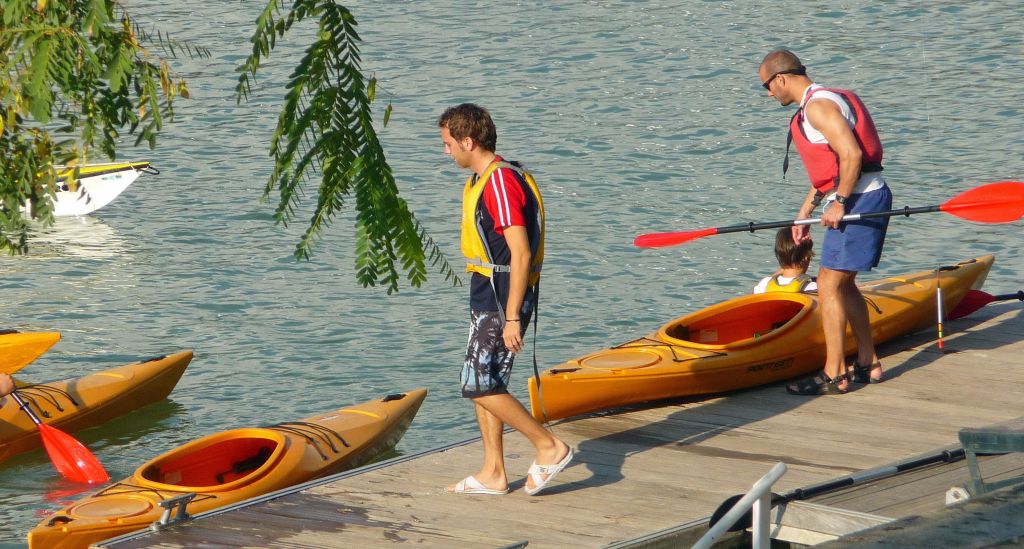
    Still in Seville, it is kayaking this time, and the second image is the same sport taking place in Syracuse in Sicily. Both are major cities and both support a large number of water-sports clubs.

    KAYAKING:

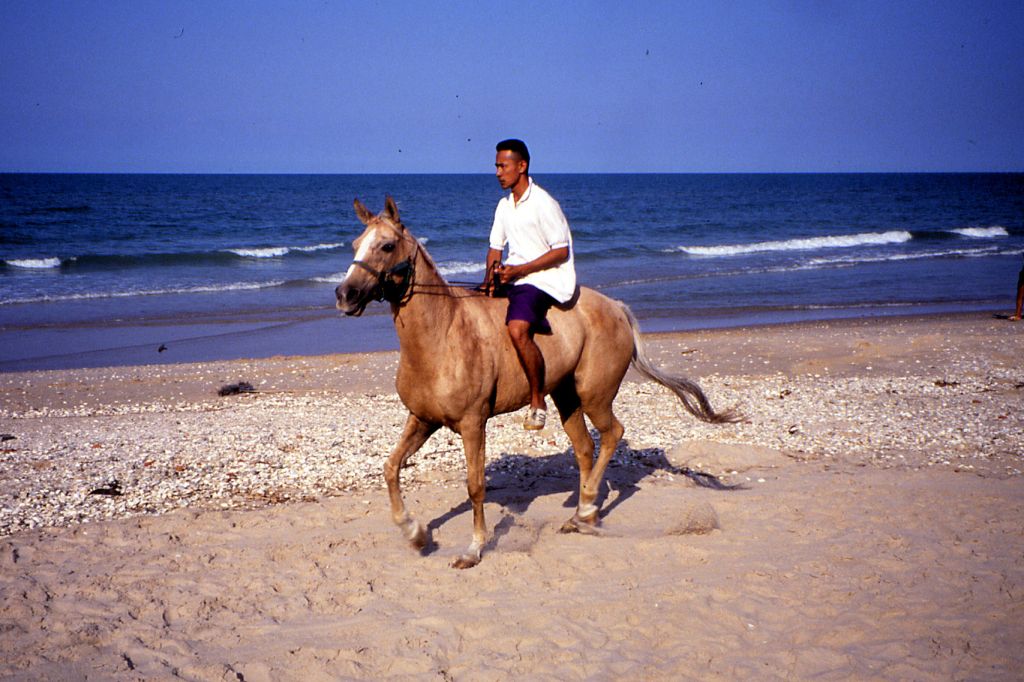
    Off to Thailand now for horse riding on the beach. A few of the beach hotels have recently opened stables where horses are kept for visitors to ride along the beach, very early in the morning or late in the evening as it is too hot for afternoon trotting – even in the water.

    HORSE RIDING:

    Horse riding on the beach at Hua Hin, Thailand

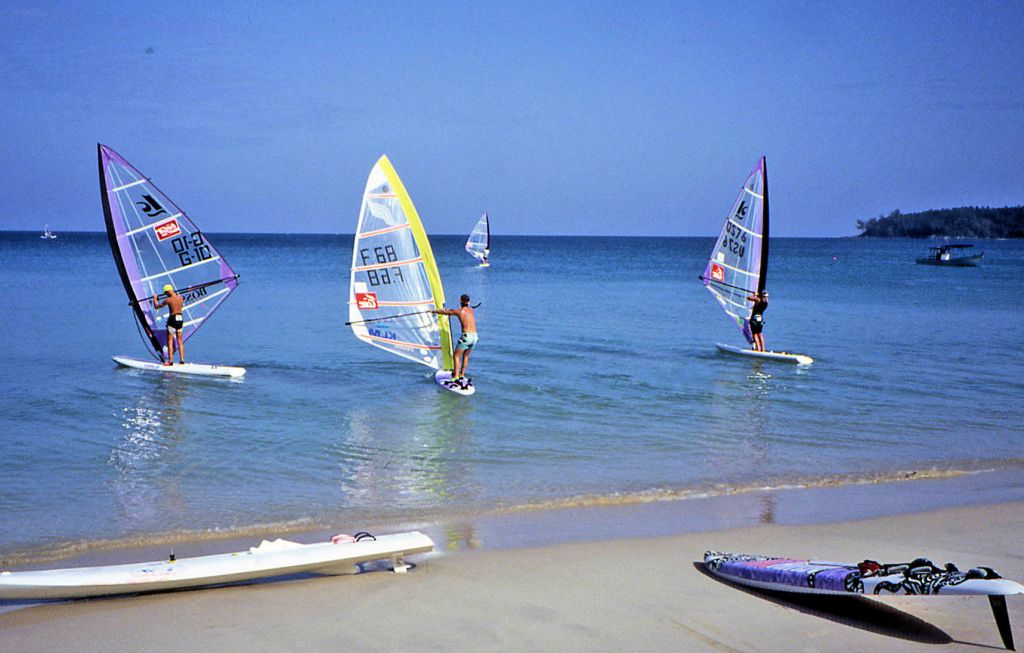
    Still in Thailand, windsurfing is one of the coolest (in both senses of the word) and most enjoyable sports to be had on the water.

    WINDSURFING

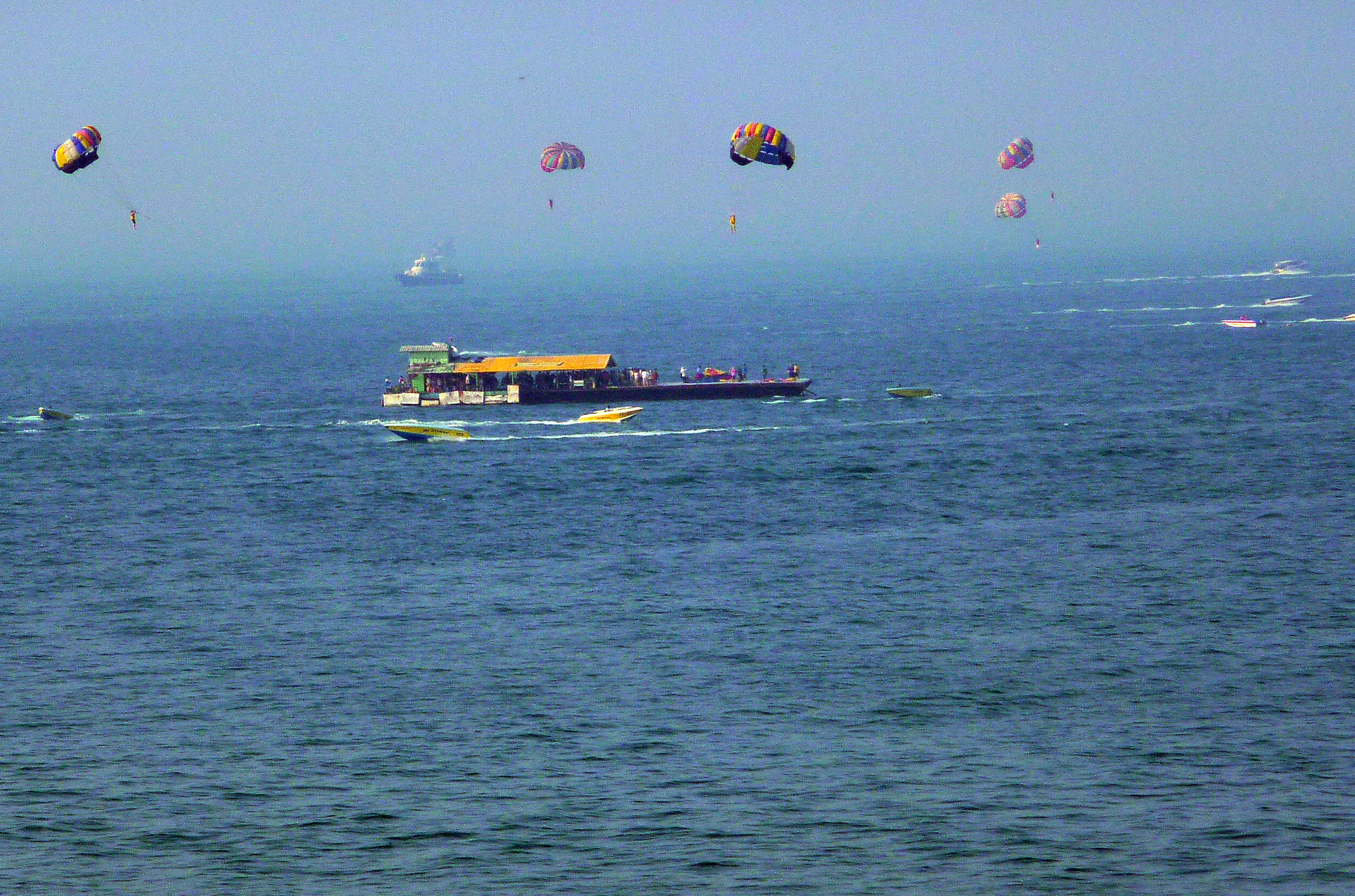
    Along with windsurfing, para-gliding is popular in Thailand and I first encountered it there in the early 70’s, long before safety harnesses were thought of, never mind health and safety rules. I grow failt at the thought of the foolishness of it all, trusting myself to a harness into which I was strapped by someone whose language I didn’t understand and relying on his mate to catch me as I landed on the beach – if the boat maneuvered correctly. And my husband encouraged me! I have dark thoughts about that now. The quality of the first photo is pretty bad but I had to include it as this was Pattaya before it got its reputation for night-life of a certain kind. It was just beginning to attract the US servicemen on R&R from Vietnam, but was at that time, quite genuinely, a fishing village with, I think, about 5 hotels and we had one of our best holidays, ever, there.

    And last, PELOTA, the Basque game of very fast handball. This is a Pelota Court but I never got a photograph here because the game is so fast and the atmosphere so tense that I couldn’t really take a camera out as it would have disturbed the onlookers. They were all locals as this was quite a small village and this was the main event of the week. If you are ever in an area in which it is played (mostly along the northern coast of Spain and in the Canaries), then do try and catch a game.

    Pelota Court in Navarre, Spain
  • Silent Sunday

    What could be more silent than the Quad at Eton on a Sunday when pupils and masters are in church?

    Quad at Eton

    Behind those windows, who knows?