Blog

  • Tea Growing in Portuguese Azores

    Tea Growing in Portuguese Azores

    Stunning colour of the azaleas in January
    Stunning colour of the azaleas in January

    Of all the things I expected to find in the Azores, that group of Portuguese islands in the Atlantic, stunning scenery, beautiful architecture, charming people and good food, tea was not on my list. When I say tea, I don’t mean the tea you find in tea-rooms and restaurants, I mean tea growing on hillsides and gathered in traditional ways.  So far from the Orient, so almost Europe, the tea is delicious.

    When one thinks of tea, one usually thinks of Chinese or Indian, but I was more than a little surprised to find that the tea grown in the Azores, on hillsides that attract heat and rain in just the right quantities for this particular type of leaf, is quite delightful.
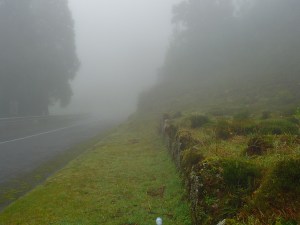
    Frequent mistiness keeps the pastures lush.
    Frequent mistiness keeps the pastures lush.

    It is believed that tea was first discovered in China in 2737 BC.  Legend has it that the Emperor Shen-Nung, who drank boiled water for his health, was one day enjoying this plain beverage when some leaves accidentally blew into the drinking vessel:  the resultant savoury and aromatic brew started the passion for tea drinking.

    It wasn’t until the Portuguese expeditions to the Orient 16th century, that the western world discovered the wonders of tea, but it was the Dutch and the English who developed the trade in Europe in the 18th century, which later reached the Americas.  Today, few houses in the world are without this popular beverage whether it is in the form of speciality teas, robust breakfast tea, or the current favourite,  green tea.

    The Azores is the furthest point from Europe in which tea is grown.  It was introduced to the islands in 1820 when one Jacinto Leite started the first plantation in São Miguel, with seeds which he brought from Brazil, where he had been Commander of the Royal Guards in the court of Dom João V1.

    Tea plantations very quickly took over from citrus growing on the island during the 19th century and in the 1850’s tea production reached approximately 250 tons – a lot for a small island.  Sadly, wars and a policy that protected the Mozambique tea industry, severely affected tea production in the Azores, and by 1966 there were only 5 of the original 14 tea manufacturers left.

    Swirley black and white marble mosaic pavements
    Swirley black and white marble mosaic pavements

    One of these was the Gorreana Tea Factory (Chá Gorreana) which had been founded in 1883 by the Gago da Câmara family and which today produces nearly 40 tons of a strong-flavoured tea annually, three-quarters of which is sold with the region.  One of the things that sets Gorreana’s tea apart from others is that it is purely organic, as neither pesticides nor fungicides are needed in the region, as no pests exist in the islands.

    The Gorreana Tea Factory produces 3 types of black tea – Orange Pekoe (a light and aromatic tea produced from the first leaf),  Pekoe (fuller –flavoured than the Orange Pekoe and prepared from the second leaf) and Broken Tea (produced from the lowest leaf).  It also produces a Green Tea (Hysso) rich in tannins with a very full flavour and green colour.

    The islands of the Azores are delightful for many reasons, their exotic flowers, the dazzling colours of the blooms against the lush green grass, the charming people and the feeling of stepping back fifty years, but their tea is something quite special and should be sampled while on the islands.  It also makes a perfect gift to take home for friends.

    Further details http://www.gorreana.com

    P1110143

  • Cruising:  The Verdict.

    Cruising: The Verdict.

    In my last post I wondered if cruising was all it’s cracked up to me.  Well, I have now returned from a my Caribbean cruise and have reached a verdict.  No, it’s not.

    Lifeboat and Sea
    Lifeboat and Sea

    Mind you, I went with my viewpoint on the subject of cruising already half-formed.  My interaction with regular cruisers had not always been positive as I had found most of them to have little interest in the countries they visited: they spoke of “seeing” the city when they had spent a mere six hours there.  No harm there you may well say and I agree: we don’t all have to like the same thing.   But I felt that cruising took away the real adventure and excitement of travel, of discovering new things and being surprised by sights and sounds.

    Big Ship in the Harbour
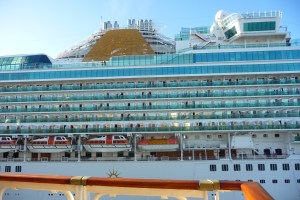
    Big Ship in Harbour – Probably Celebrity Cruises

    What I also hadn’t realised was the sheer competitiveness of the cruising lifestyle.  Those who had cruised most often talked about their Platinum status with certain lines, their Diamond status with others and their Gold cards, all of which entitled them to various bonus events and favours, champagne in the cabin, extra captain’s cocktail party, an upgrade (the only worthwhile bonus in my opinion) and early booking rights.  I listened in awe at the dinner table to the cut and thrust of the conversation and tried to work out if 4 Cunard trips equalled 3 P. & O and how many P & O’s or Celebrity Cruises would one have to do to have equal par with someone who’d done a trip on the Queen Mary.  It was a world I’d never known before, one fraught with social dangers.

    Swimming in St. Vincent's in the Caribbean
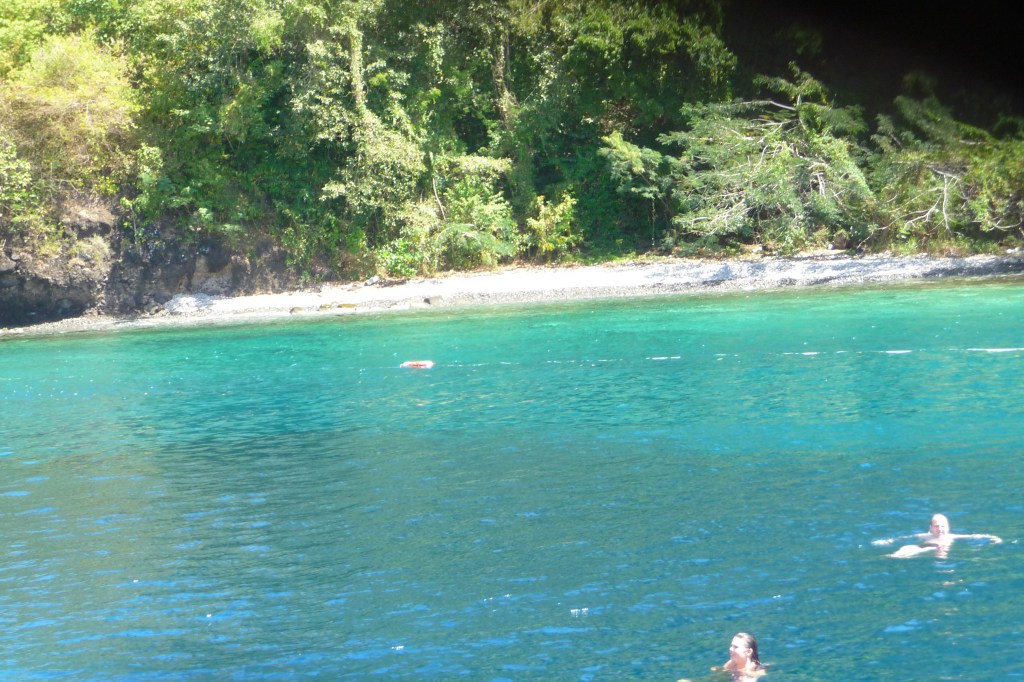
    Swimming in St. Vincent’s in the Caribbean

    Then there were the back-to-backs, those who stayed on the ship and continued with the next voyage, sometimes 3 voyages all together.  Many of these people didn’t even bother getting off the ship when it docked, saying “Oh, we’ve been here before and it doesn’t change much!”  Well no, it probably didn’t, but don’t we all change with the years and what appealed last year might not this year so isn’t a town or city worth another look

    The Azoes and Street Art

    Amazing Street Art in Porta Delgado in the Azores

    .But then I love my casually shod feet on the ground as I roam the streets and alleyways of foreign ports.  I love evenings sitting at wayside cafes and restaurants, watching the world go by as I sip a coffee or something stronger.  I love the strange smells that waft from the kitchens, the sounds of foreign languages, the frisson of excitement as one tries to remember the warnings from friends of the dangers of certain places.  And there’s none of that on a cruise.

    I got off at every port, I went on some trips into the interior, but I don’t think for a moment that I experienced the Caribbean.  I saw beautiful landscapes and seascapes through the window of a coach, I managed a walk along a beach once or twice, and sampled Creole cooking on one occasion, but we never interacted with the locals.  I walked through the towns where we docked listening to the cries of the vendors, being hustled to take a taxi, buy a necklace, try some rum, but all the time aware that the ship would sail without me if I wasn’t back in time.  Even on the one day I managed to have lunch in the town it wasn’t possible to meet any local characters as I normally do.  I was an obvious visitor from the ship (two ships unloading over 5,000 people into a small town skews everything out of kilter).

    Tropical Blooms in Martinique
    Tropical Blooms in the island of Martinique in the Caribbean

    So, I shall return to land holidays with maybe the occasional cargo-ship trip (these I don’t class like cruise ships – they are so different).  A week trekking in the hills in my own country, or walking in Austria or Switzerland, lazing on an Asian beach and attending a religious festival in the evening, or jazzing it up in New Orleans is more my style.

  • Is Cruising all It’s Cracked up to Be?

    Is Cruising all It’s Cracked up to Be?

    Wash from the Ship
    Wash from the Ship

    Now that Christmas is over I can finally turn my thoughts to holidays again.  I am lucky to live on an island where the summer months are delightful, the waters are warm (usually) and sailing, swimming, and surfing are all popular pastimes, so I usually creep away somewhere warmer during the winter.

    This year, for the first time, I have opted to try cruising    I am not sure if I’m going to like it as I’m an inveterate people watcher from cafe tables in Southern Spain and Italy, bistros in France and Konditori in Denmark and Sweden, but I feel it’s time I had a change.

    Williamstad Harbour

    Not only am I going on a cruise-ship but I’m going to the Spice Islands of the Caribbean so I shall not have the usual pleasure of traipsing around ruins and wrecked churches, guide-book in hand, feet encased is stolid walking shoes.   But everyone tells me I will love it, so I’m giving it a go.

    I have travelled the ocean before, but always on a cargo ship, one of the big ones that are the length of 3 football pitches, around which a walk makes a perfect workout before, or after a meal.  I have always enjoyed them, but then feeling part of a working ship seems so much better than being a passenger on a cruise ship.

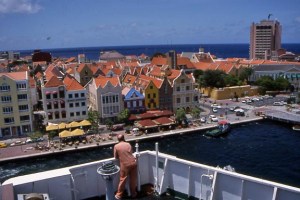
    Beautiful Williamstad, Dutch Antilles Sure, we dressed up in the evening, but so did the crew who changed from oily overalls into pristine whites to mingle with the six passengers in the bar.  No entertainment but we made our own, pockets of conversation with the mixed crew from South Africa, Philippines, Angola, UK and South America, Trivial Pursuit, watching the latest DVDs together, or just spending longer over the magnificent meals: cargo ship food is always good I’ve found without encouraging too much gluttony.

    Al Fresco Evenings in the Tropics

    The Chef & the Barbie

    And then there were the Sunday barbecues on the deck, dress-down for captain and crew when the flamboyant shirts and shorts made an appearance and we all relaxed.

    Eddie Does His Thing

    I think I shall miss all that as I polish up my hat and smarten my glad rags.  On the other hand I may find it the best thing since sliced bread.  Who knows?

    Photos from my last cargo ship trip on display here.

    AStreetin CartagenaA Pilot Boat Approaches

    Security in Caracas

  • The Best Salmon Restaurant in Sweden

    The Best Salmon Restaurant in Sweden

    Every once in a while one comes across a really superb restaurant in an unexpected place, sometimes on a main road, sometimes hidden away down a side street, and last week this happened to me.

    On the long drive between Gothenburg and Oslo, I found Laxbutiken LJungskile by exiting off the main road to this “salmon house” recommended by my friend Kelly Andersson from Gothenburg, who spoke in very complimentary terms about the food.

    P1100419
    The self-serve coffee area.
    P1100418
    Cool, clean, Scandinavian decor

    Situated beside a lake, with outdoor seating surrounding the elegantly designed restaurant, one could imagine the pleasure of dining in the outdoor space during a Swedish summer, but this was November, so it was inside for us.

    The interior did not disappoint.  Elegant décor in grey and lime green set of the food which was arranged in a long glass cabinet behind which stood smiling waitresses with advice.

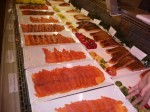
    And advice was needed!   Here was more salmon than I’d ever seen served in more ways than I’d ever known.  Eight types of smoked salmon, from the basic Gravdlax to smoked salmon with different herbs and mixtures of herbs, there was poached salmon, grilled salmon, boiled salmon, salted salmon,

    A salmon dish with sauces
    A salmon dish with sauces
    Salmon in every form
    Salmon in every form
    P1100413
    A selection of salmon dishes

    deep fried salmon, salmon pie, salmon cake and more.  To go with these were delicious sauces like caviar sauce, white sauce with dill, lobster butter sauce, Malibu sauce, and a deep green garlic and spinach sauce.

    The choice was difficult so I eventually decided on the Large Salmon Platter which gave me five varieties of salmon, 2 sauces, salad and boiled potatoes (at an unbelievable 145 Kroner).  More than I could eat, I was relieved to be offered a “doggy bag” (a rather elegant box packed in another bag) to take away.

    The simplicity of good ingredients well prepared and served
    The simplicity of good ingredients well prepared and served
  • TATE BRITAIN –  GREAT BRITISH ART IN LONDON

    TATE BRITAIN – GREAT BRITISH ART IN LONDON

    A Grenadier Guard in London
    A Grenadier Guard in London

    Tate Britain, the original Tate Gallery to distinguish it from Tate Modern, is situated near Lambeth Palace and just a short walk from the South Bank, the Eye and Westminster.  It is an elegant building with a neo-classical portico in the area of Millbank and stands on the site of the former Millbank Penitentiary.  It houses the greatest collection of British Art in the world, works by  Epstein, Gainsborough, Hirst, Hockney, Hogarth, Rossetti, Sickert, Spencer, Stubbs,  and the artists of the pre-Raphaelite Brotherhood who revolutionised British art in the 19th century.      copyright Tate Britain

    Special attention is given to three outstanding British artists from the Romantic age: Blake and Constable have dedicated spaces within the gallery, while the Turner Collection of approximately 300 paintings and many thousands of watercolours, is housed in the specially built Clore Gallery.

    Originally called the National Gallery of British Art it started with a collection of 65 modern British paintings given by its founder Sir Henry Tate (he of the sugar cube and sugar refining firm) when it opened in 1897.  A further gift from Sir Henry in 1899 enabled an extension to be built, and in 1910 thanks to the gift of Sir Joseph Duveen, the Turner Wing was completed.

    Over the years the Gallery amassed a collection of works dating from the 16th to the 20th century, to include Modern Art in 1916 and three new galleries for foreign art ten years later.  This led to a change of name from National Gallery of British Art to The Tate Gallery.

    Parliament, Lndon, in evening light.
    Parliament, London, in evening light.

    The Tate is rightly famous for its collection of the works of the foremost English Romantic painter and landscape artist –  J.M.W. Turner (1775-1851).   Turner left his collection of oil paintings and thousands of studies to the nation on condition that they were kept together, and in 1987 the Clore Gallery was opened to house this magnificent bequest.

    When the Tate Modern opened on Bankside in 2000, a decision was made to create more space by transferring the collection of international modern art from 1900 to the present day to the new gallery.  Tate Modern, a former pumping station, is the perfect repository for modern art, and in the Turbine Hall, it has space to display enormous installations.

    Looking Across to the Embankment from the South Bank, London
    Looking Across to the Embankment from the South Bank, London

    Tate Britain however, continues to house the Turner Prize exhibition, one of the art world’s most controversial prizes.  Awarded to an artist under 50, British or working in Great Britain, the Turner Prize attracts both media attention and public demonstrations, former well known winners being Damien Hirst, Grayson Perry and Gilbert and George.

    The Tate is no stranger to controversy, from accusations of favouritism in the purchase of work by Royal Academicians in the 19th century to media ridicule of the works it purchases today.  There was the famous case in 1972 of the work by Carl Andre popularly known as The Bricks, which caused The Times newspaper to complain about institutional waste of taxpayers’ money.  In 1995 a gift of £20,000 from art fraudster John Drewe came to light, along with the fact that the gallery had given Drewe access to its archives from which he forged documents authenticating fake paintings which he then sold.  The last major scandal was in 2005 over the Tate’s purchase of Chris Ofili’s work The Upper Room for £705,000 with accusations of a conflict of interest.

    None of these controversies however, detracts from the Tate’s magnificence.  Whatever time of the year one chooses to visit, there will be one or two challenging exhibitions ranging from Neo-classical sculptures, exhibitions of the work of Rubens, William Blake, and Millais (founder of the Pre-Raphaelite Brotherhood), to film and video work of Derek Jarman and that of the Iranian film maker and photographer, Mitra Tabrizian.  All this as well as the gallery’s normal offerings.

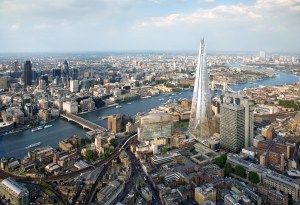
    View Over London from The Shard, Highest Building in Western Europe
    View Over London from The Shard, Highest Building in Western Europe

    Three year’s ago the Tate held the Francis Bacon Exhibition (1909-1992), a re-assessment of his work in the light of new research since his death, comprising around 60 of his most important pieces from each period of his life.   It showed in great detail, the work of possibly the 20th century’s greatest painter of the human figure in an exhibition that captured its sexuality, violence and isolation.  The artist’s bleak outlook, his flamboyant homosexuality and his colourful private life had made him a controversial figure in life as much as in death.

    For those visiting Liverpool, the superb Tate Liverpool which opened in 1988 shows various works from the London Tates as well as mounting its own eclectic displays and for those heading for Cornwall, the Tate St. Ives has an equally impressive collection.

    The London Eye
    The London Eye

    The out-of-London Tates entail rail or coach travel from London, but Tate Britain is an easy walk from Westminster.  For a truly memorable arrival, the best way to travel is by river-boat which leaves half-hourly from Tate Modern on the Thames, stopping at the London Eye along the way.

    Like that other great palace of art in Trafalgar Square, the National Gallery, the Tate also offers free admission apart from special exhibitions.

    website: www.tate.org.uk

    Open 10.00 a.m. to 17.50 daily.

    Bus No. 77A runs from the centre of London through Westminster, Whitehall, Trafalgar Square and Aldwych to the Museum every ten minutes.   Nearest underground:  Pimlico.    Two superb licensed restaurants are in the basement of the Gallery.

    Visitors wanting a quick and expert guide to parts of the Gallery should take one of the free one-hour tours offered daily which start at 11 a.m. 12 p.m. 2 p.m. and 3 p.m (Saturdays and Sundays 12.00 and 15.00 only).

  • Buddhas and Beaches

    Buddhas and Beaches

    Hua Hin – a Village a short drive from Bangkok

    Fifty years ago only a few intrepid travellers were aware of the wonders of Thailand.  Last year over twelve million visitors came to enjoy this amazing country.  With people who actually do smile all the time, and mean it, beaches that are sandy and often powdery white,  waters that range from turquoise to a limpid blue, a mean average temperature of 280 , and one of the finest cuisines in the world, it is easy to understand the attraction.  Nor should the safety factor be overlooked, either.  With a population that is 98% Buddhist,  religious conflict is virtually nil in this country of gentle, courteous people.

    Thai Orchids

    Bangkok is Noisy but the Chao Phraya River is Tranquil    

    The Modern Face of Bangkok

    No one would call present day Bangkok a paradise, but this modern metropolis was once known as the Venice of the East, a city built on canals which meandered through the capital and out into the countryside.  Most of these have now been filled in, but the magnificent Chao Praya River with its traffic of tugs, rice barges, and house-boats, still runs through its centre, lined by stunning hotels like the Oriental, Peninsula, Sheraton Towers, Shangri-La and a host of others.

    Big Buddha in Pattaya – a famous landmark

    Hire a boat and a boatman from your hotel’s landing stage for a visit to the temples and palaces which are on the river, and you need never step into Bangkok’s noisy streets.  It’s a relaxing way to see the City of Angels (a name by which Bangkok’s was once known) and sunrise over the Temple of Dawn, viewed from the boat, is an incredible sight.

    Beaches and Islands – Where to find the best   

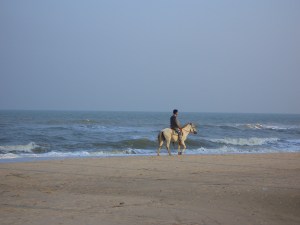
    Horse riding on the beach, early morning

    If its beaches you’re after, there’s the peace and tranquillity of the resorts on the Andaman Sea at Krabi,where you can cruise around the extraordinary 40-odd limestone karsts thrusting out of the sea in a totally surreal landscape (recognisable from The Man with the Golden Gun which was filmed here), picnic on a sandbank or deserted island, or head off into the Marine National Park for some of the finest diving in the world.   If you choose to stay in a hotel, the most exclusive, The Rayavadee, has not one, but three beaches surrounding it as well as an infinity pool.

    Koh Samui

    The best known of Thailand’s islands is Phuket, whose coastline hides bays with the sort of shimmering sands lapped by turquoise seas you see in publicity pictures – Karon, Kata, Nai Harn, Pansea, Bang Tao and the National Park beach of Mai Khao.  Pick any one of these and you’ll find exclusive, world class hotels to cosset and pamper you.  If you want brash and noisy, then head for Patong Bay, easy to reach for an evening’s entertainment.

    Phuket is subject to monsoons but when it is raining there the weather is usually fine in Ko Samuii (and vice versa) an island fast moving from backpackers hideaway to an upmarket resort with a laid-back atmosphere.

    On the mainland, the resorts of Hua-Hin, where the Thai royal family have their summer palace, and Cha’am, attract the more mature travellers for great shopping and good restaurants.  And don’t dismiss Pattaya, known mostly for its girlie-bars, nightclubs, and massage parlours: it  has one of the world’s great hotels right on the edge of town which many people check into and leave without once setting foot outside it, their entire vacation having been spent luxuriating in one of the Royal Suites.

    Go North and visit the Hill Tribes        

    The writer with a Padaung Hill Tribe Woman, one of the ‘Long Necks’

    Even great beaches can bore after days of perfect weather, offering a good excuse to visit the hill tribes and enjoy the northern culture of Chiang Mai, Chiang Rai and Mae Hong Son.  Home to some of the most colourful tribal people in the world, the Akha, Meo, Leo, Hmong, Karen, Lisu and the long-necked Padaung, the velvety green mountains hiding rare orchids and other flora, is a startling contrast to the south of the country.  There are opportunities to join elephant rides into the jungle or to trek to remote villages to meet the hill tribe people.  For a more hands-on activity you can hire a 4WD (with or without driver) so that you can navigate the steep mountain roads and tracks, drift up the Pai River from Chiang Mai to Chiang Rai on a bamboo raft, visit the border town of Mai Sai and cross into Myanmar for a few hours, then visit the strange town of Theod Thai to talk with the remnants of Chiang Kai Shek’s Nationalist Army that settled here after escaping from China.

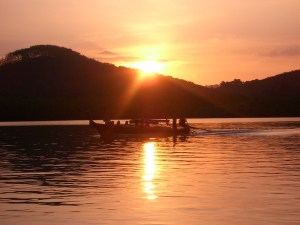
    Phuket Sunset
    The Elephant is the National Symbol o Thailand

    Thailand is not just another country, it’s another way of life, guaranteed to de-stress even the most overworked executive.  After all, a country that has only one word for both work and pleasure, sanuk, has to be something special.

    Reflections in a Pool – Hotel in Bangkok

  • The Shard – London’s New Viewing Attraction

    The Shard – London’s New Viewing Attraction

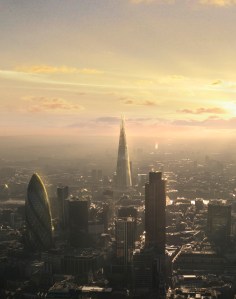
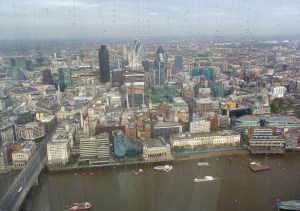
    Daytime View from The Shard, London

    Nightime View from The Shard, London

    The Shard.  Ah!  I look up from the ground and marvel at the design, at the shards of glass that catch the light and splay out at the top.  I had watched it slowly take over its London site, putting in the shade even the famous green glass building that the locals have named The Gherkin.

    Then last week during the World Travel Market at Excel, I was privileged to be invited to take a trip to the top of The Shard to experience the incredible views over London from this spectacular building designed by Master Architect Renzo Piano.  And what a vista.

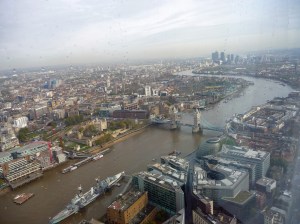
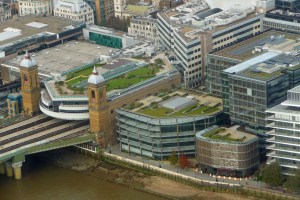
    London Bridge from The Shard

    With a 360 degree view over the city to a distance of 64 km (40 miles), and from 800 feet up in the sky in the tallest building in Western Europe, London had never looked better.  The Shard is twice as high as any other viewing point in London and the only place in the city from which you can see all of London.

    The View from the Shard

    For the first time I could see how the River Thames has helped create this great city, how it snakes in and out, meandering north and south in ways I had never realized.   Tiny boats sailed on its muddy waters, like toys pushed off from river banks by little boys.

    The Majesric River Thames

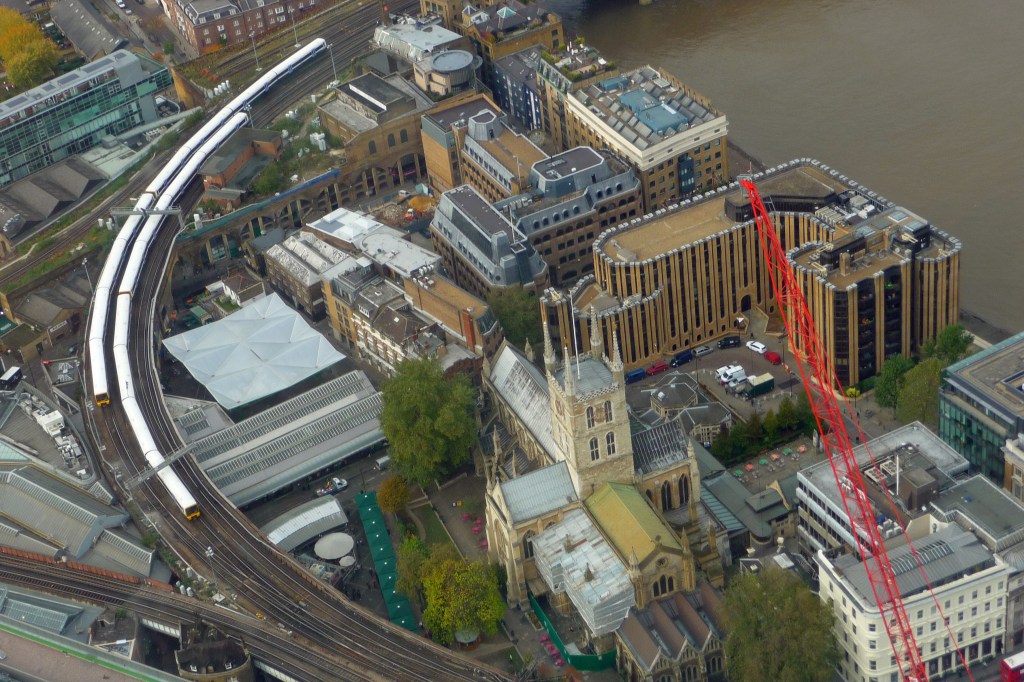
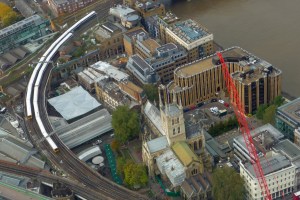
    From high in our eyrie on Level 69 we could see all of London’s famous landmarks – even on a grey drizzly day.  Easy to pick out the Emirates Stadium (home of the Arsenal football team), Wembley Stadium, Windsor Castle, St. Paul’s etc. and by following the railways with their toy-trains for all the world like the Hornby set I played with a child I could find the railway stations and using this as a guide, find lesser known sites in the area.

    Trains on London’s Railways as viewed from The Shard

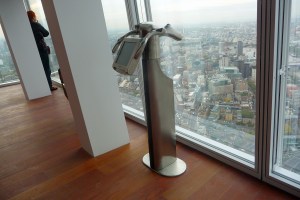
    Technical Help on Viewing Platform

    One of the Tell Scopes on Level 69

    Of course there are telescopes too.  Not just telescopes, but Tell:scopes, a state of the art system that provides both day and night views of London and information in ten languages.  One thousand years of history and some of the most iconic buildings in the world lie before the viewer as digital Tell:scopes  help visitors explore the cityscape in every direction.

    From these viewing galleries it is possible to ascend even higher to Level 72 where, at the highest accessible point of The Shard, guests can stand in the open air, surrounded by the giant shards of glass that seen ti disappear into the sky.  The Shard title derives from the sculpted design which consists of glass facets that incline inwards but which do not meet at the top but instead, open to the sky to allow the building to breathe naturally.

    Rood Gardens on the City’s Important Buildings

    Further Details and how to book:

    The View from the Shard will offer a totally immersive experience of one of the greatest cities on earth when it opens to the public on February 1st 2012.

    Restaurants, offices, executive apartments and the Shangri-La Hotel their first time in London ) occupy different floors of the building.  Two lifts whisk visitors to the top in 30 seconds.

    Tickets can be reserved for dates next year at www.theviewfromtheshard.com at £24. 95 for adults and £18. 95 for children or via the box office hotline +44(0)844 499 7111.  Open 0900-2200 daily.  Nearest tube station is London Bridge, bus routes 43, 141, 148 and 521 stop there and bus 151 goes from London Bridge. Boat from Westminster Pier leaves hourly.
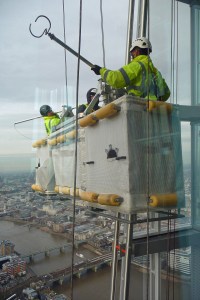
    Not a Job if you Suffer from Vertigo!

  • Noto – Sicily’s Perfect Baroque Town

    Noto – Sicily’s Perfect Baroque Town

    Sicily, with its dark history, rough mountains, ravishing scenery, and Etna, that brooding snow-capped volcano that is  never far from people’s thoughts, is one of the Mediterranean islands to which I am constantly drawn back.   I go there for the known attractions and for the food, heavily influenced by the cuisine of the many nations that conquered the island, and for the Baroque towns that sprang up after the earthquake of 1693 that devastated the south-east of the island.  All are beautiful, but the finest of them all is Noto, a town built of golden stone from a local quarry and a UNESCO World Heritage Site. After the earthquake, Giuseppe Lanza, Duke of Camastra, employed the best architects of the day to rebuild the city just south of the original town: the result is a triumph of urban planning and harmony.  Noto is in the province of Siracusa, itself a gem of a city and one that should not be rushed through as it has some of the most beautiful buildings in the area, plus the world famous Duomo in the Piazza of the same name, a sea-front with a wall just made for sitting on while you feast on a gelato.  Noto lies about 35 kilometers southwest of Siracusa and is easily reached by local trains which run regularly.        

    It was built almost entirely in the  prevailing style at the time, Baroque, and these near-perfect buildings are what makes Noto so special and which earned it the title of  UNESCO World Heritage site.

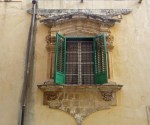
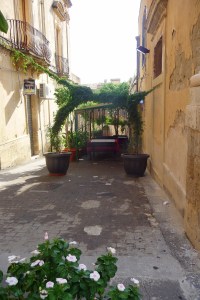
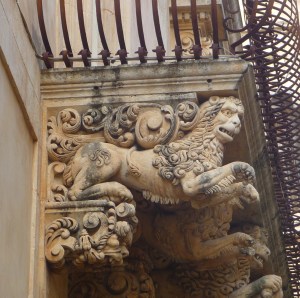
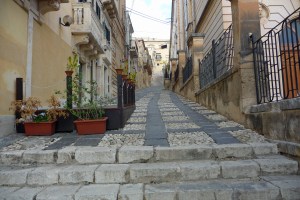
    It is a very accessible town.  You can wander the length of the graceful Corso, stopping here and there for a coffee and one of Noto’s famous cakes, or a gelato or freshly squeezed orange or lemon juice.  Take a detour down the side streets and climb the steep steps to the top where the aristocrats lived, then come down to the next level which housed the clergy and other nobility, before arriving back at street level where the ordinary people lived.   One of the best streets in which to wander is the Via Nicolaci, famous for its buttressed balconies held up with playful horses, griffons, cherubs and old men, incongruous on an otherwise severely classical façade.

    Just at the top of Via Nicolaci is the beautiful elliptical façade of the Chiesa di Montevirgine. I didn’t have time to count them, let alone visit them, but I was assured that Noto has thirty-two churches.  Think on that – thirty two churches.

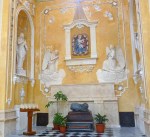
    So, what to visit when you are only there for a day visit.  If time is short my advice is just to wander.  Like Florence, the history of the town is in its buildings, their façades and the sense of life in the streets.  The Cathedral rises impressively above Corso Vittorio Emmanuelle and is approached by a wide and graceful flight of steps and its simple interior  

    may well come as a surprise in contrast to its exterior.

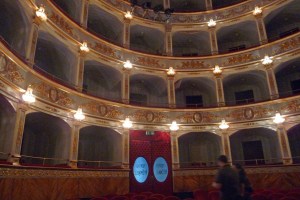
    I had initially mistaken the flamboyant Chiesa di san Dominica for the Cathedral, flanked as it is by huge palm trees and looking more Middle East than Mediterranean. The Municipio (town hall) has an exuberant trompe l’oeil ceiling and a “magic mirror” which is just a mirror of illusion.  My own favourite interior was the Vittorio Emmanuelle Theatre, still offering productions to its patrons, a fantasy theatre with red velvet and gilded boxes lining the walls echoed by heavy drapes curving round the proscenium arch.      

    If you want to imagine what Italian towns looked like in the 17th century, then Noto should be on your list of towns to visit – it’s very special.    

  • Fukuoka, Japan: a Very Traditional City

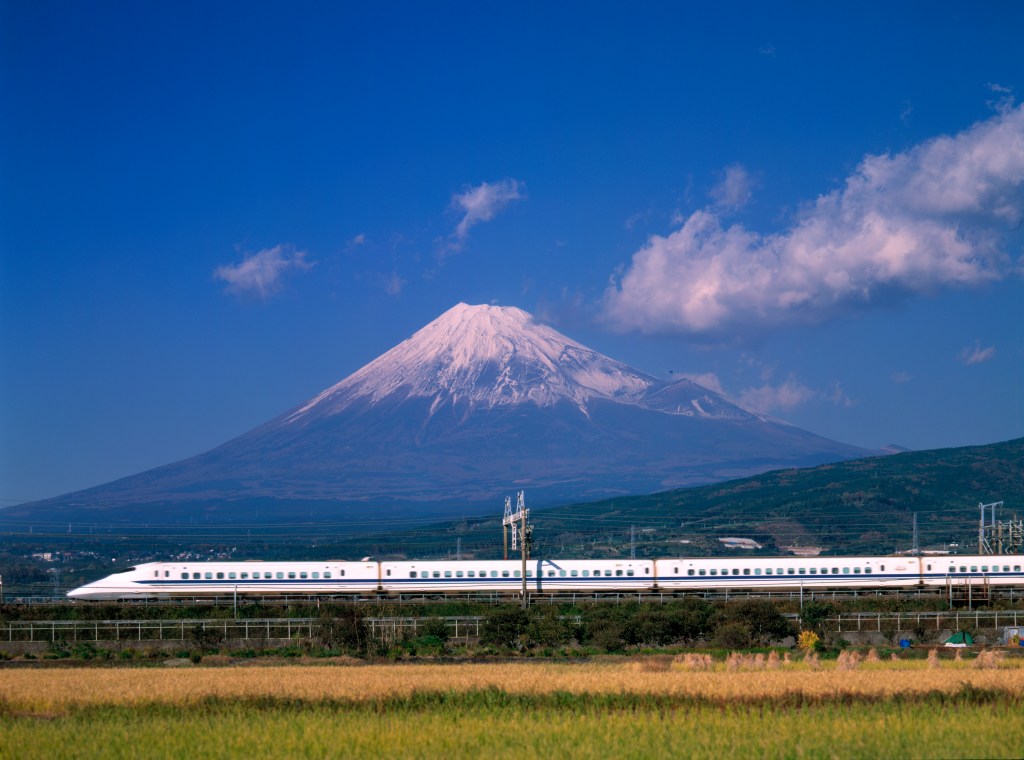
    Fuji with Bullet Train – copyright Japanese Tourist Board

    Japan, that country full of surprises, stylish day to day living, and exquisite scenes that unfold in front of one’s eyes as though arranged by the Gods, is rich in dynamic cities.  None is more so than Fukuoka, a city rich in traditions, yet one that has embraced modernity with enthusiasm, a city of shopping-malls, modern subways and high rise condominiums.  Like the best of Japan’s cities, it is traditional in its outlook, but manages to fuse old and new.  Unfortunately, it is also the country where I dropped my camera and with it, hundreds of pictures I hadn’t saved to any other medium, but lucky for me the Japanese Tourist Board were able to help me out with these lovely images.

    Dazaifu, Fukuoka

    Located on the island of Kyushu, Fukuoka’s main attractions are the many Buddhist statues, Shinto shrines and age old ruins. Visit in spring-time for the glorious, pink cherry blossom and the Fukuoka Daibutsu, the imposing 10.5 metres high sitting Buddha statue. You may photograph the blossom but it is forbidden to take pictures of the Daibutsu.. Many people will be observ ing you and if the rules are broken you could end up in difficulties!

    Son et Lumiere Fireworks and the Fukuoka Dome – Copyright Japanese Tourist Board

    The city has modern shopping malls in plenty too, catering to a hip, young, fashion conscious clientele who, even in freezing weather, will be found wearing mini-skirts and sleeveless shirts. Smaller family shops sell local handicrafts, and share the spotlight with high rise condominiums. A network of subways conveys people effortlessly around the city while bullet trains cover the rest of the island.

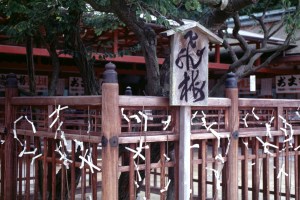
    The Kushida shrine, recognisable from the large red lanterns that decorate its two-storey gate is just a ten minute walk away from the Daibutsu Buddha. This is a Mecca for the worshippers praying there, as they seek success in business, or getting a wife, or/and a long life.  If you want to know what the future has in store for you, you can have your future foretold by one of the fortune-tellers in the courtyard that leads to the praying chamber.

    One of the best places for shopping and eating is Canal City, a huge complex of hotels, movie theatres, restaurants and shops. Fukuoka’s seafood is famous throughout Japan with most of it caught daily in the Sea of Genkai and served fresh in the restaurants here and in Nakasu, the nightlife district. Or, join the locals around the open-air yatai food stalls in the central districts of Tenjim, for grilled chicken skewers, hot pot and noodle soup.  The food is really fantastic.

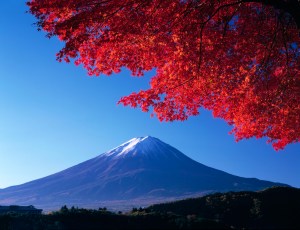
    Mt. Fuji/Lake Kawaguchi – Copyright Japanese Tourist Board

  • Luxury Cruising on Burgundy’s Canals

    Luxury Cruising on Burgundy’s Canals

    Burgundy is famous for great wines and cheeses but those not exported are a special treat best sampled while cruising in luxury through France on board a canal barge.

    A Peaceful Mooring for the Evening

    Cruising on the barges of European Waterways definitely falls into the category of luxury, if luxury can be defined as having large air-conditioned bedroom suites (unusual on barging holidays) being pampered, and being served superb food and drink.

    The GoBarging company has been cruising European waters since 1974, since when their reputation as canal cruise experts has gone from strength to strength. Unashamedly serving the luxury end of the cruise market they deliver what they promise, food of the highest quality, fine wines, expertly chosen regional cheeses to accompany the dishes, and a crew that pampers and looks after everyone with genuine warmth. The 24-hour open bar carries a wide selection of spirits, wines and liqueurs.

    In France GoBarging.com covers different parts of Burgundy, Provence, the South of France, the Rhone and Loire Valleys. Passengers are collected in Paris and driven in comfortable mini buses to the embarkation points.
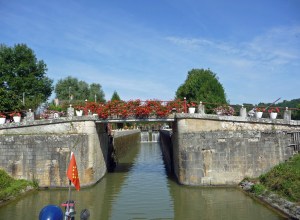
    Approaching a Lock on the Nivernais Canal

    Taking just one cruise for instance, one that departs from the  scenic town of Auxerre with its magnificent Gothic style cathedral and streets of half-timbered houses, the barge passes through 45 locks on the Nivernais Canal.   Negotiating the locks (by Captain and crew) gives passengers the opportunity to disembark and walk along the towpath or make use of one of the bicycles carried on board to explore further inland.

    Getting to know fellow travellers is facilitated by a champagne reception hosted by the captain. The free-flowing wines and cocktails ensure a lively atmosphere at all times. The wines and cheeses are explained before meals by one of the charming hostesses on board and the chef ascertains guests’ likes and dislikes and offers alternatives if necessary.

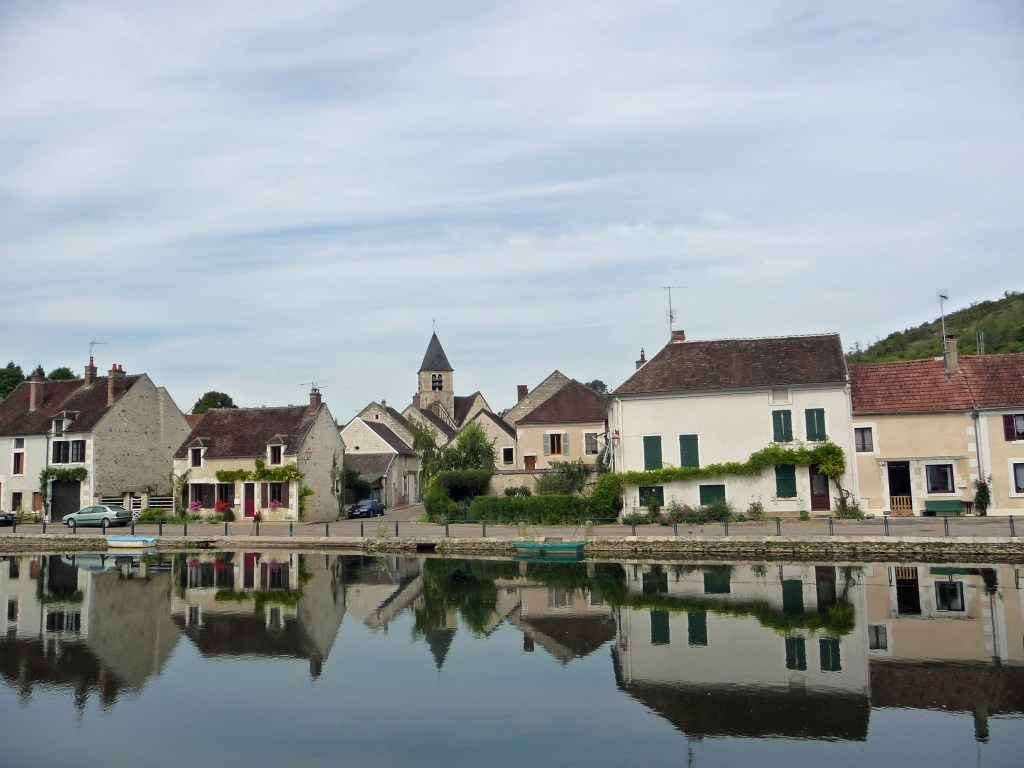
    Burgundy has some of the most stunning scenery in France. The canal and the River Yonne wind through rolling hills dotted with ancient villages in which every limestone house has pink roses climbing the beige walls and window boxes crammed full of red and pink geraniums. Vineyards, fruit orchards and farms add a variety of colour, and with 3-4 harvests a year in the area, there are always ribbons of green alternating with golden fields of wheat.

    Chateau on a Hill seen from the Canal

    Barges on the canals sail approximately half a day, the other half being spent at a place of interest.   All members of the crew are well versed in the history of the area and act as guides and drivers. If walking cobbled streets is not to everyone’s liking there is usually an interesting bar from which to people watch, or remaining on the barge with a book and some music from the library is the other option.

    Vineyard in Beaune

    Few people want to miss the tours of the wine-cellars though, especially in Chablis, the tiny area that produces the coveted vins de luxe Grand Cru and Premier Cru Chablis. French vineyards in Burgundy are frequently small and family-owned specialising in only two grape varieties, the red pinot noir and the white chardonnay. The sparkling wine of the region, the Cremant, is a revelation to some people who have not tried it before.

    The towns visited afford time for exploring and shopping, whether Auxerre with its gold sundial clock and quirky statues dotted throughout the maze of pedestrianised streets or Vézelay with the Roman Basilica of St. Mary Magdalene where the crusaders converged before setting out for Jerusalem, a centre for artists of all kinds and a perfect place to buy ceramics, paintings, or woven tapestries.

    As an alternative to a spa stay, barging is perfect. It is just as relaxing, the food is much better, there is no TV, no “entertainment”, no jolly “mine host” encouraging audience participation, only good food over which to linger with a fine wine or liqueur. Cabins are comfortable and spacious, and the captain, chef and crew are chosen for their friendliness, charm and ability to cope with any emergency.

    Many companies on the French canals offer cruises of varying periods, but I’ve only travelled with the company mentioned above, European Waterways.  Having found one that pleases me, why change?  

    Reflections