I was encouraged to join the Last on the Card when you said phone pix were acceptable, Brian as I can no longer handle a camera with confidence due to my failing eyesight and have to rely on my phone camera which I haven’t mastered yet.
The above image is from the current exhibition at Dimbola Lodge (Isle of Wight home of world famous photographer Julia Margaret Cameron) of the work of the late Gemma Bell, a talented young artist who some years ago re-interpreted the Isle of Wight Pop Festivals since 1969, in a series of paintings now being re-shown in this exhibition. Her images include iconic stars like Hendrix, Bowie, Iggy Pop ,Jagger, and others, in a mixed-media format.
I haven’t done Pingback for some time so I’m hoping it’s worked.
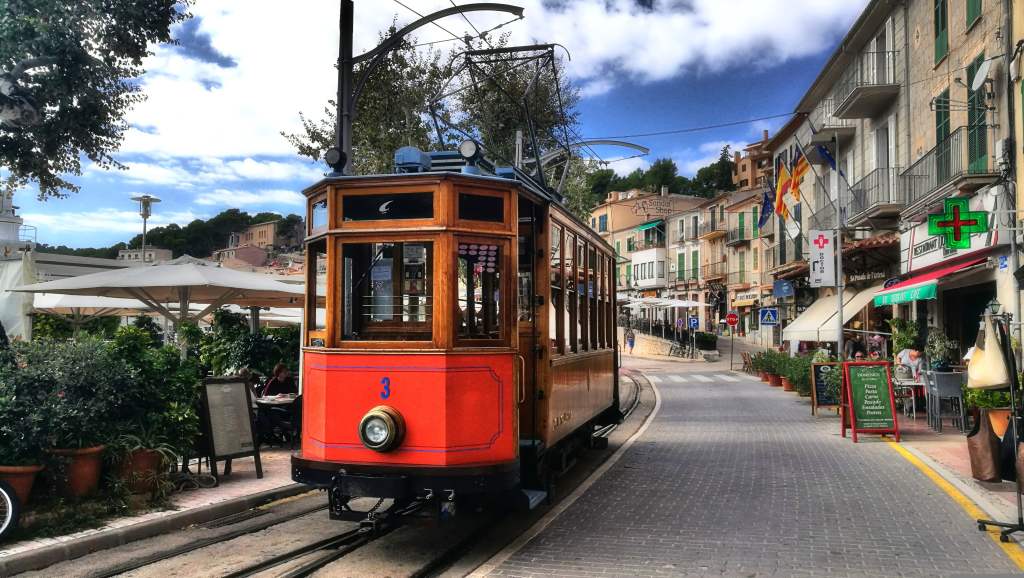
Vintage tram in Sóller. Photo courtesy of Christian B via Pixabay
When I first visited Sóller, 50 years ago or more, I was not interested in its history. At that period in my life, Mallorca was an exotic holiday playground, a place that offered respite from winter in the UK, where sea, sand and blue skies dominated daytime activities, and where the landscapes and seascapes offered a vista of paradise.
Later, I learned the fascinating history of Sóller which inspired in me a desire to return and experience the town’s strangeness, but the opportunity didn’t arise until April of this year when I managed to fit in a day trip from our base in Palma.
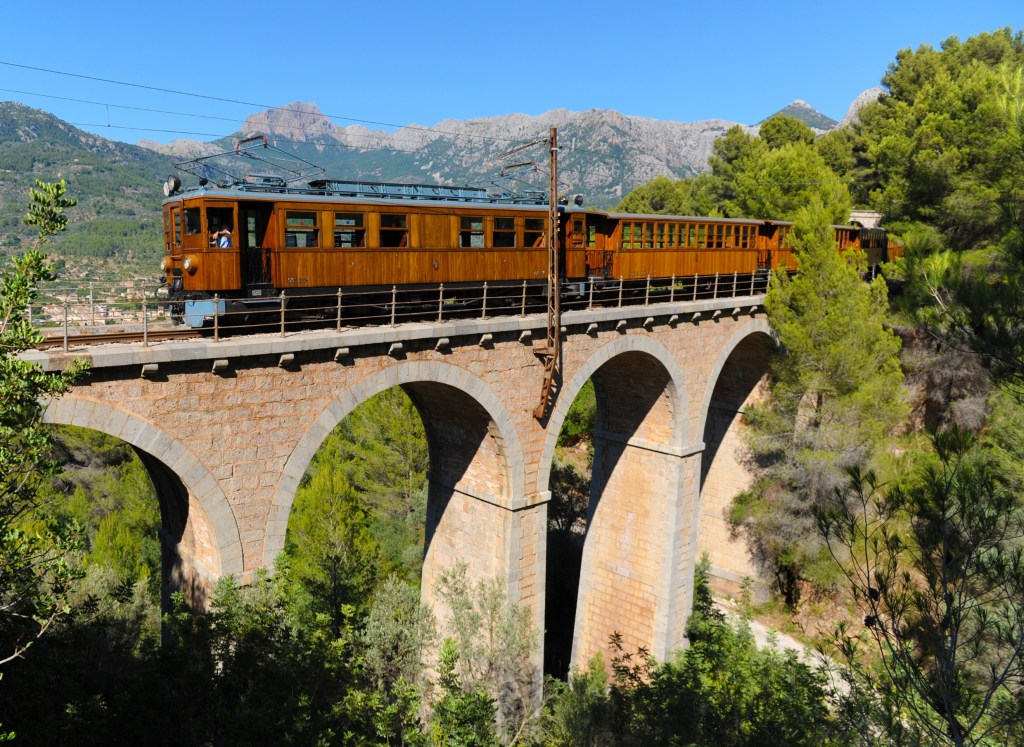
Vintage Train travels over Viaduct on its journey between Palma and Soller. Image courtesy of Ramon Rullan via Pixabay.
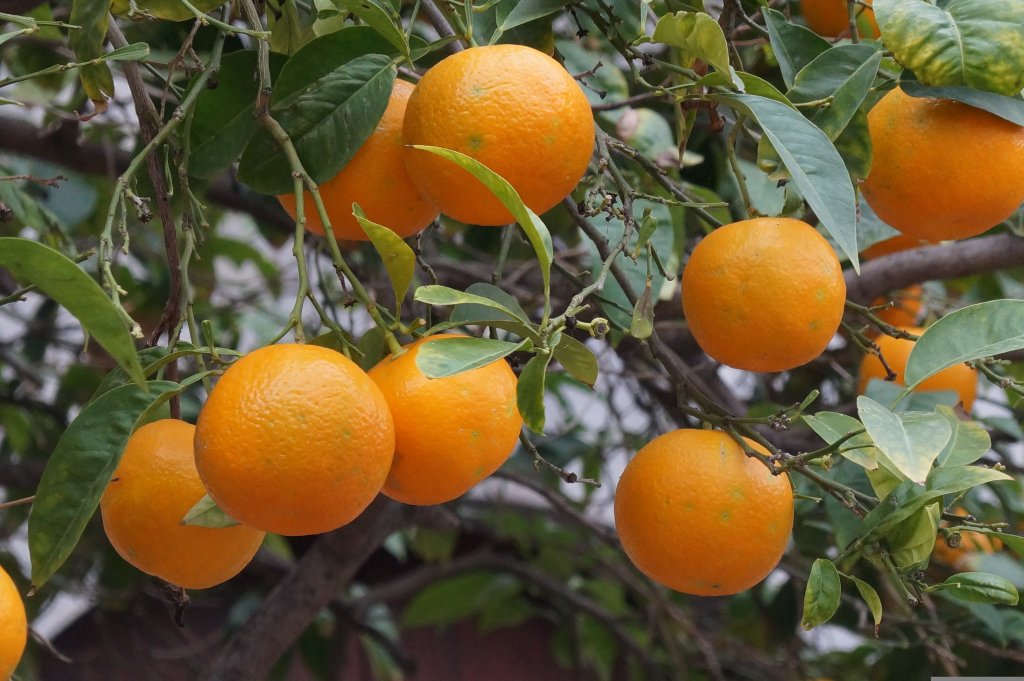
My first visit was by train from Palma – the only method of getting there. It was called “the Lemon Express” or maybe it was “the Orange Express” and I remember still being overwhelmed by the perfume from the orange blossom that drifted through the open window of the carriage, and I remember too, my excitement at glimpsing lemon and orange fruits peeking through the dark green leaves of the citrus trees. I guess that was the start of my love affair with Spain.
It would have been nice to replicate the journey this time but that wasn’t possible.
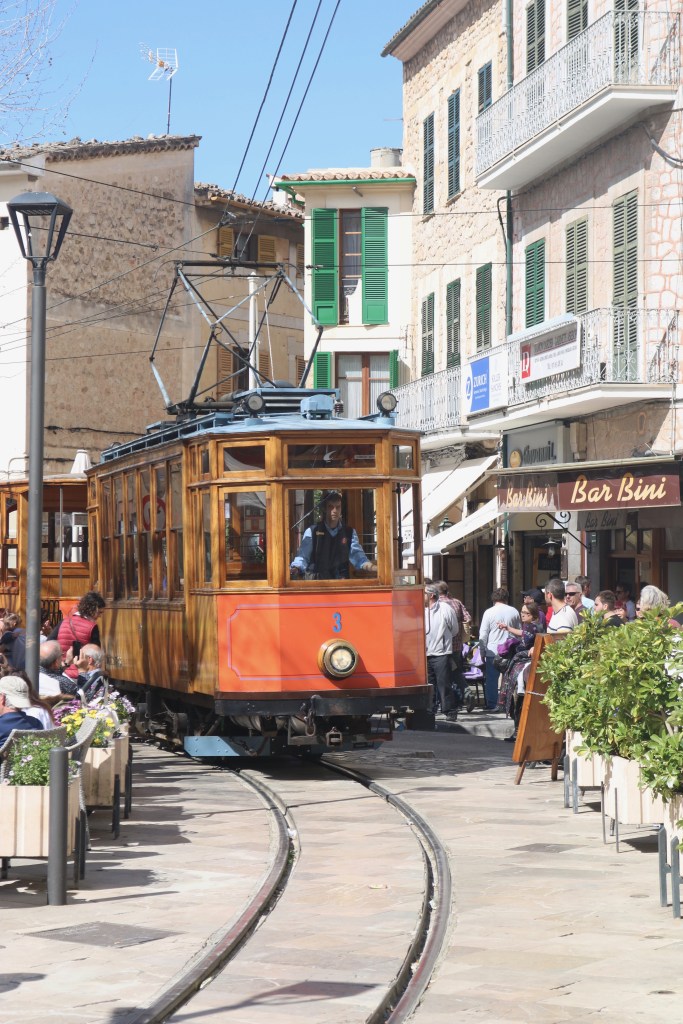
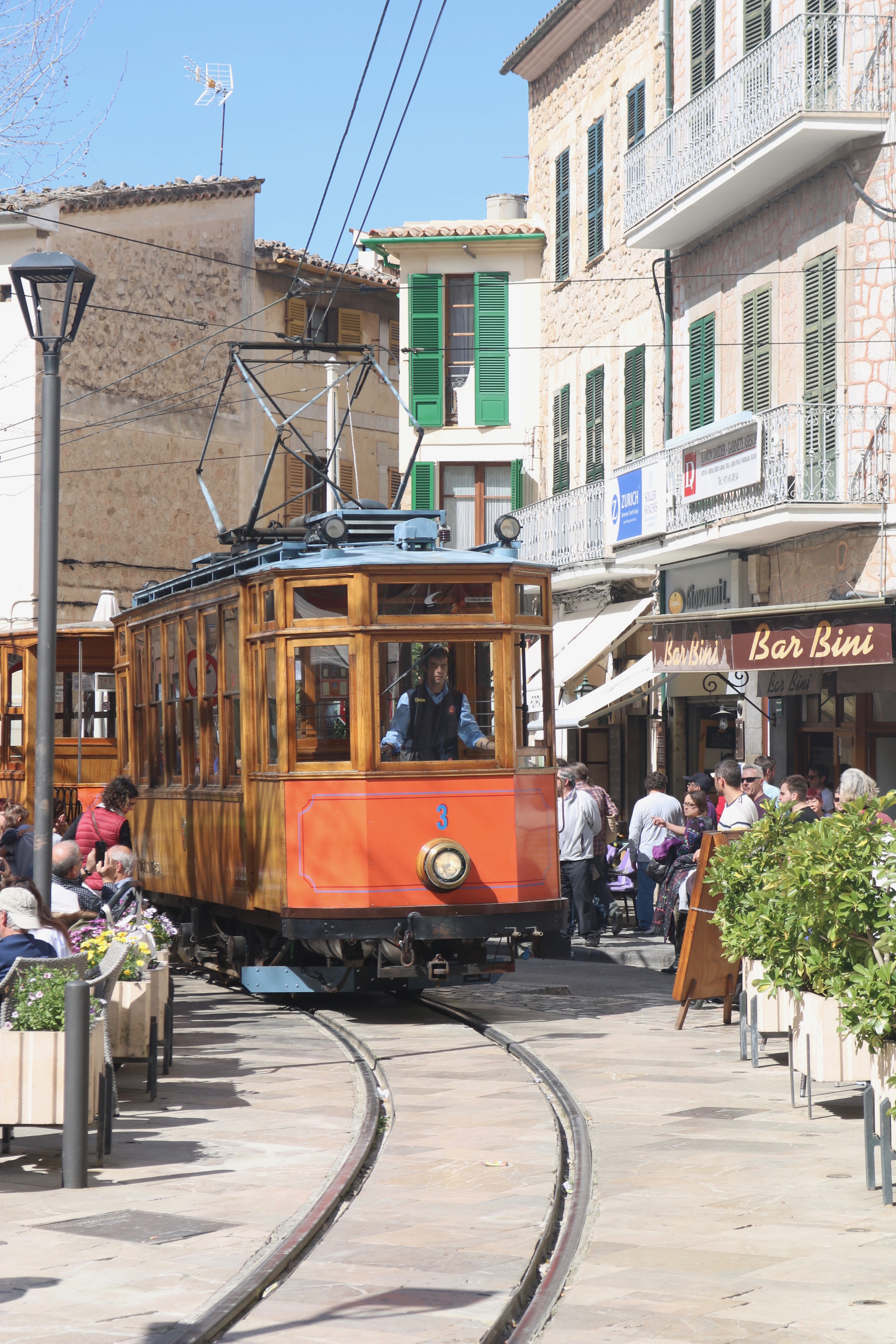
The Vintage Tram still runs through Sóller’s streets. Photo courtesy of Nicole Pankalla, via Pixabay
Once at the railway station one boarded the tram, a vintage vehicle that is still in service and in use as a means of getting from one place to another and as a valued tourist attraction.
Sóller’s Recent Past
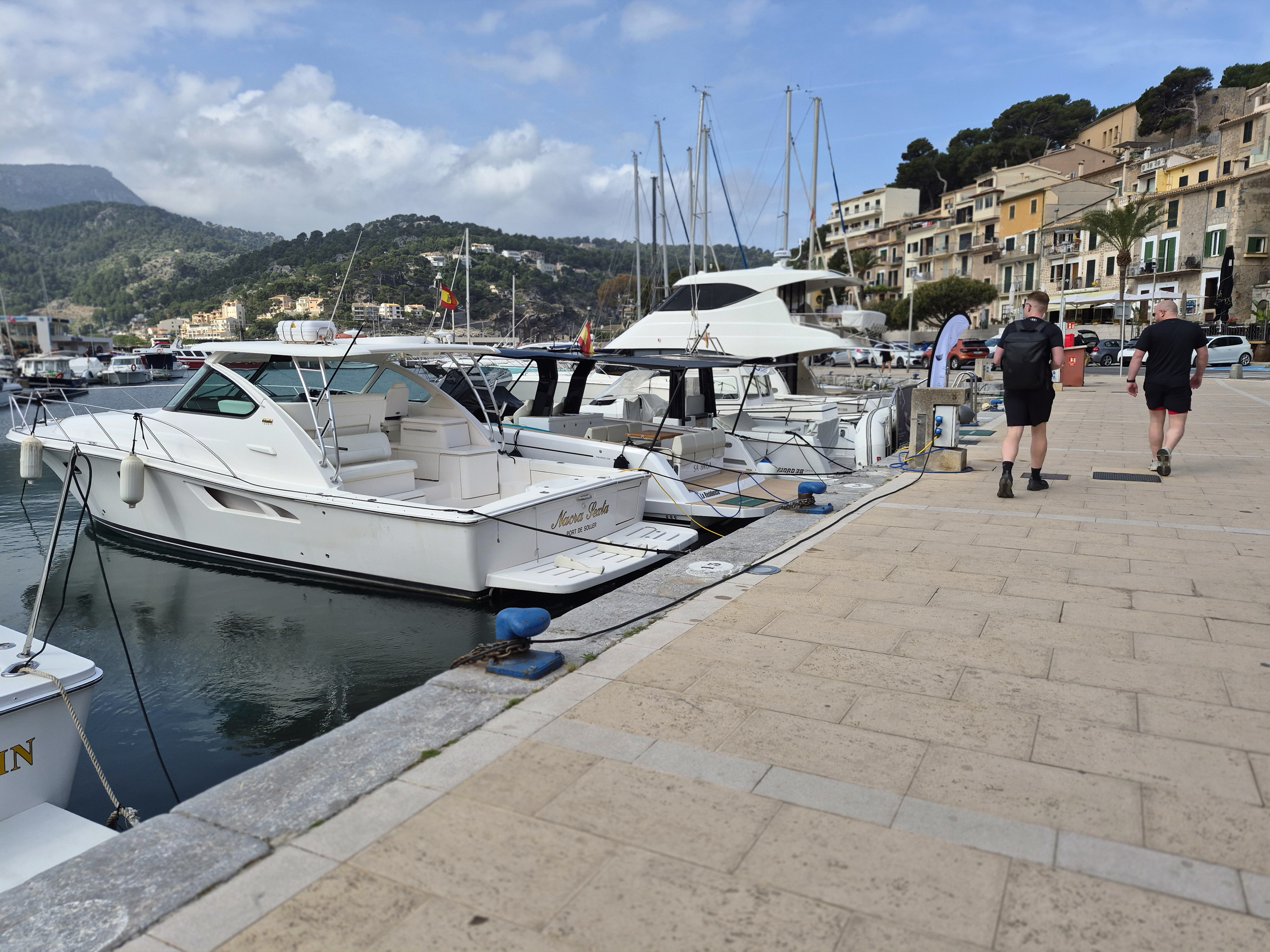
Sóller lies in the northwest of Mallorca, now an area where the super rich live in mansions hidden in gated communities, and where million-pound yachts are moored in the marinas.
Photo courtesy of ralph.rybak via Pixabay.
In the 19th century, the area was isolated from the rest of Mallorca by mountains. An abundance of citrus groves dotted the valley but as it was difficult to get them to Palma, the farmers had the ingenious idea of selling their oranges to France, and so they started to ship their oranges to France by boat from the nearby West coast. This direct exportation to France effectively made the farmers and the town extremely wealthy.
It was a two-way trade, not only did the citrus fruits make the journey to France but locals also crossed the water to work in France and many French came to work in Sóller. Fortunes were made in France and many of those who amassed riches eventually returned to Sóller to build large houses, some of which can still be seen today. French companies opened offices in Sóller, French as well as Spanish was spoken in the town and to this day, French is still spoken in Sóller by many people.
The train and tram system worked up to a point, but more was needed, and in 1989 excavations began for a tunnel through the mountains to provide an easier route to Palma and the rest of Mallorca. This Toll Road opened in 1997 and at approximately £5 a time, was the most expensive in Europe: all toll charges were dropped in 1917 and it is now a free road, so cars, buses, and coaches, can all get to and from Sóller in approximately 30 minutes. Not so romantic, but more practical.
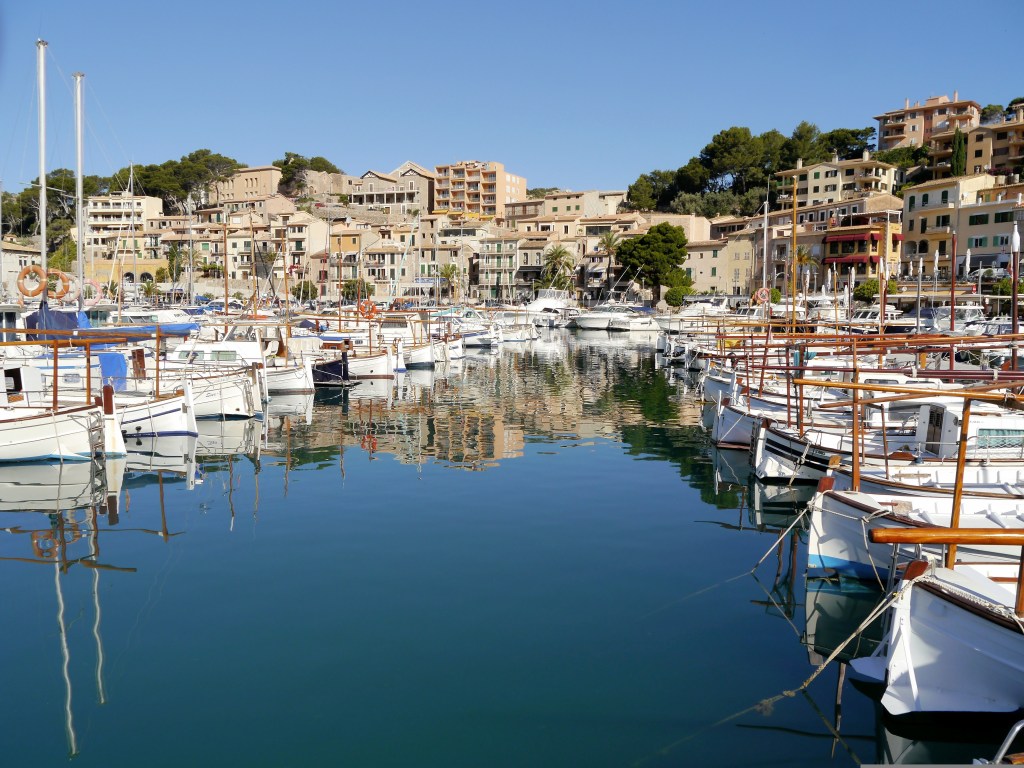
Sóller from the Port. Photo courtesy of effekt99 via Pixabay
You Can Still Travel by Train and Tram from Palma
If circumstances had been different my preference would have been to taken the 60-minute historic wooden train (the FerrocarrilTrende Sóller) from Palma to Sóller: this vintage train has run between Palma and Soller since 1912 and is nowadays a famous attraction in itself. It chugs on its 27kilometre journey through the majestic Sierra de Tramuntana, navigating the 13 tunnels cut through the mountains. The contrast between the inky blackness of the tunnels and the beauty of the rural landscape is spectacular, ranging from fields of almond and orange trees to ancient viaducts and small villages.
What to do in Sóller
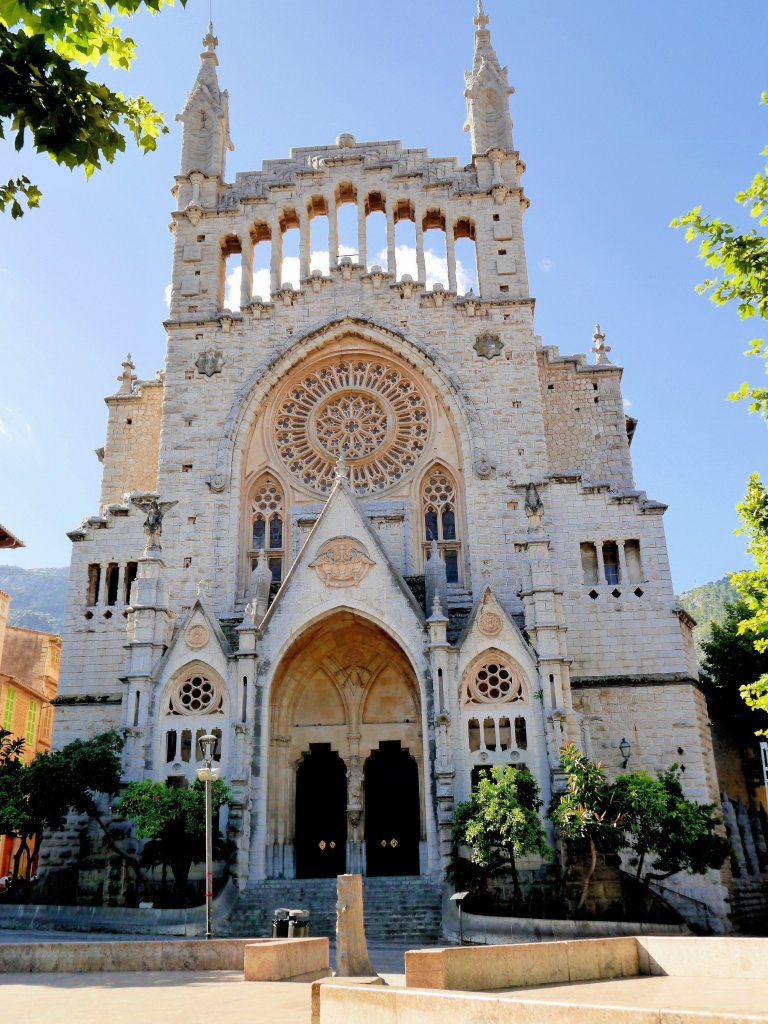
The Sant Bartomeu Church, photo courtest of effeck99 via Pixabay
Plaza de la Constitución is the heart of Sóller, dominated by Sant Bartomeu church and from here you can wander the narrow streets lined with shops and bars, where traditional goods and locally made craft items are a good buy, visit an art gallery, or hop on the antique open-air tram and head down to the Port in about 20 minutes. The many hikers and Nordic walkers you will see in the town are heading for the Serra de Tramuntana’s long-distance path – the Dry Stone Route.
Art lovers should head for the Art Nouveau mansion, Can Prunera, which has a very fine permanent collection, including Kandinsky, Picasso, Miro and Warhol, alongside local artists Miquel Barceló and Francesca Martí). Temporary exhibitions are a regular feature in Can Prunera and for a small town, they can be exceptional.
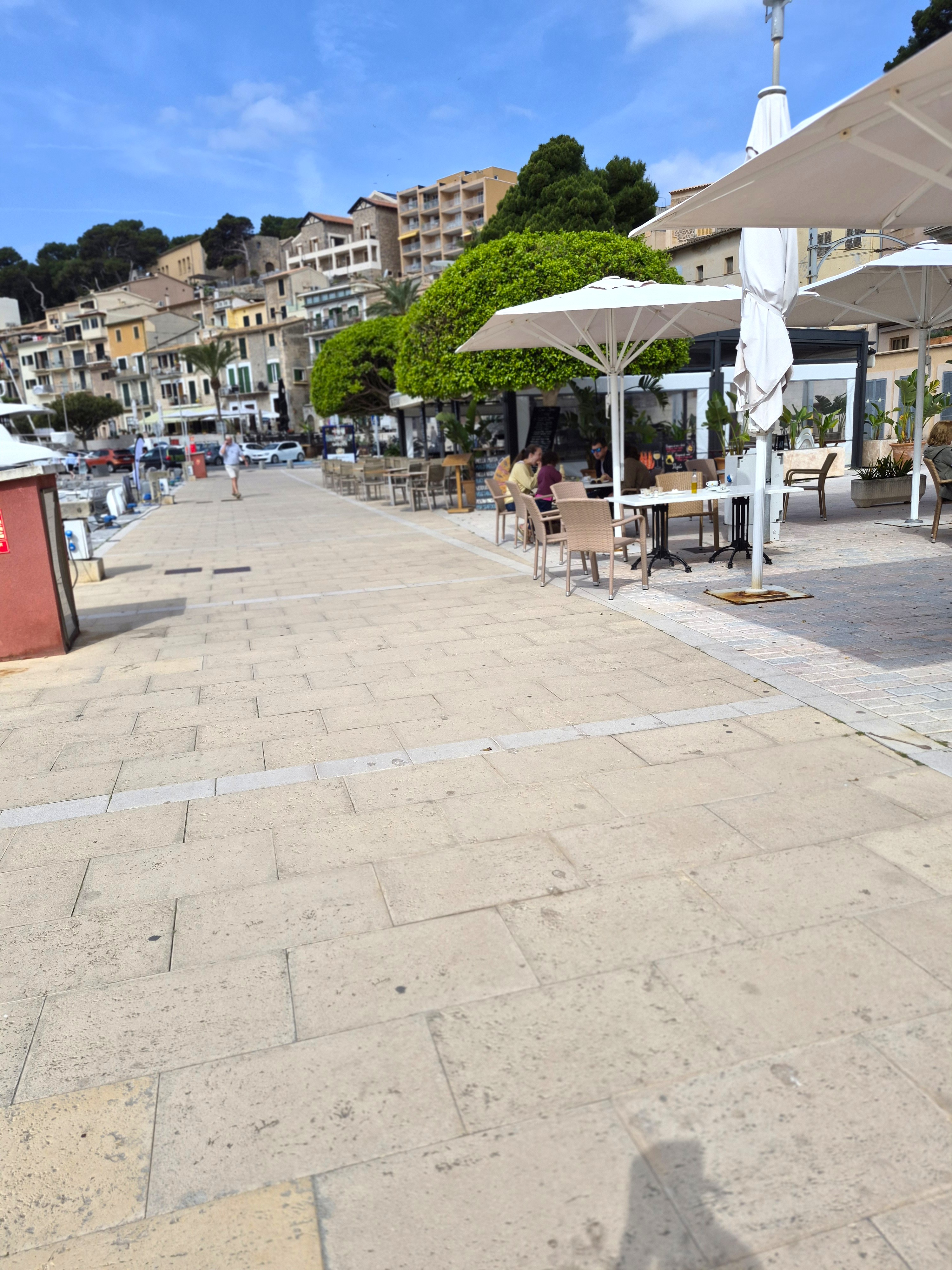
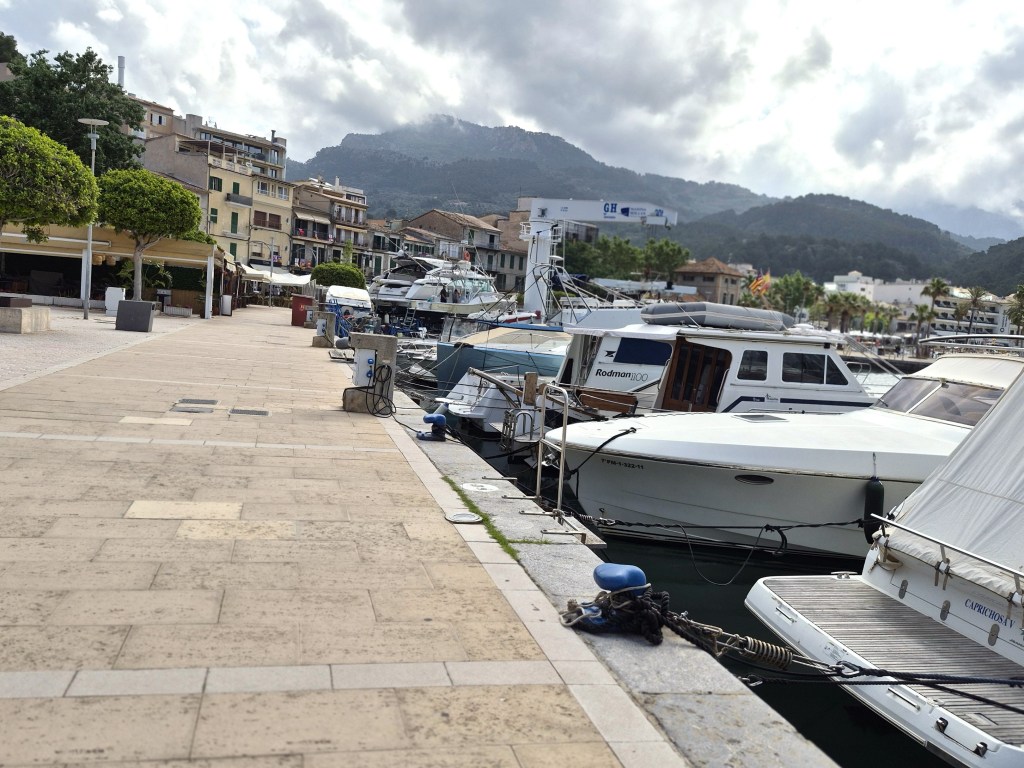
Once in the Port, much changed since my earlier trip. a pre-lunch walk walk along the Promenade is a relaxing way to view the natural, sheltered bay, sandy beaches, seafood restaurants, and scenic boardwalks.
Sóller is a glorious place in which to spend a few hours. It is not only a unique town, but a very beautiful town in a picturesque setting with a history like no other.
Photo courtesy of effeck99 via Pixabay
PS. I haven’t been but I’ve been told that the Spring Orange Festival – theFira de la Taronja – is a spectacular introduction to Sóller’s citrus culture. It spans a couple of weeks of citrus-themed food tasting events. Contact the Tourist Board for dates. The event usually takes place end March-early April.
An easy 20-minute drive from Palma, capital city of Mallorca, lies the lovely little town of Valldemossa set in the Tramuntana mountains that form the backbone of Mallorca, a town that seems a world away from the busy capital.
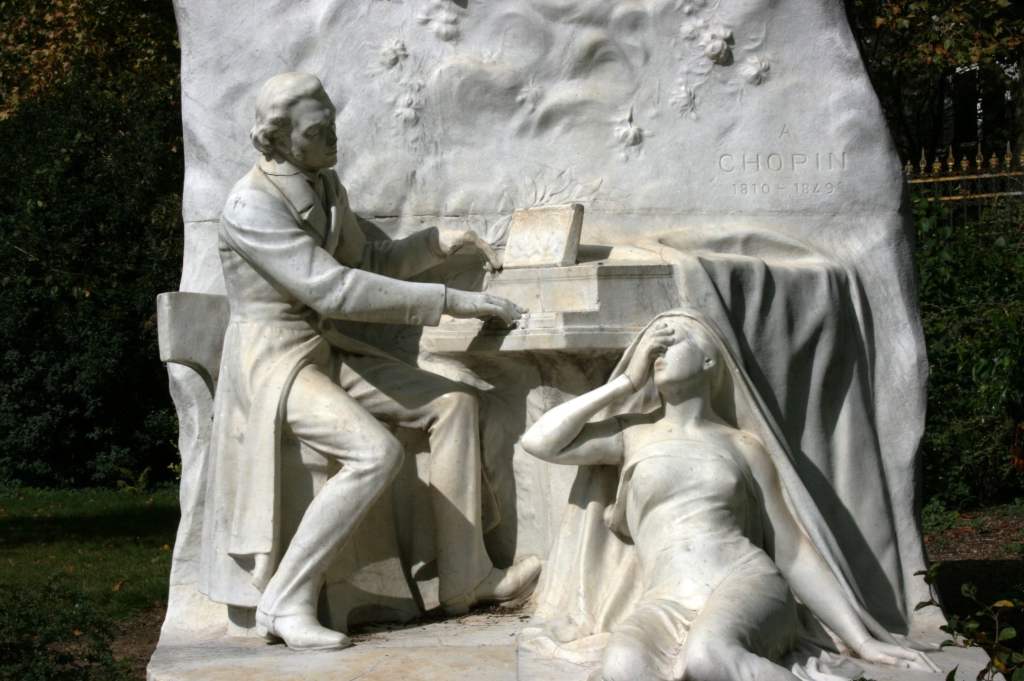
Federic Chopin, Valldemossa’s most famous resident, along with George Sand.
Perched on a hilltop and with car-free cobbled streets and alleys, Valldemossa, the highest town in Mallorca, is best known as the place where Federic Chopin and his lover, the French writer George Sand, spent the winter of 1828/9 in Cell No. 4 (a suite of 3 rooms) in the town’s famous Carthusian Monastery. George Sand’s book about their stay there, A Winter in Majorca, is on sale in virtually every bookshop in Valldemossa in a variety of languages.
Wiki Image from Pixabay
A ticket to the Real Cartuja (Royal Carthusian Monastery) including the church, cloisters, the old pharmacy and Chopin’s apartment which contains his original piano and other artefacts, includes a short Chopin piano recital, highly recommended.
For something more up to date, a visit to Costa Nord, a contemporary cultural centre established by actor Michael Douglas in 2,000, is well worth a visit. Created by the Hollywood actor (who spends half the year there on his estate and is active in local affairs) as a way to celebrate the cultural and natural heritage of the UNESCO World Heritage site Serra de Tramuntana, the backbone of Mallorca, visitors can explore the history, traditions and landscapes of Mallorca’s northern coast through exhibits that cover everything from agriculture and seafaring to architecture and Folklore, with opportunities to taste local produce and experience local cooking.
Photo by Pixel-Sepp
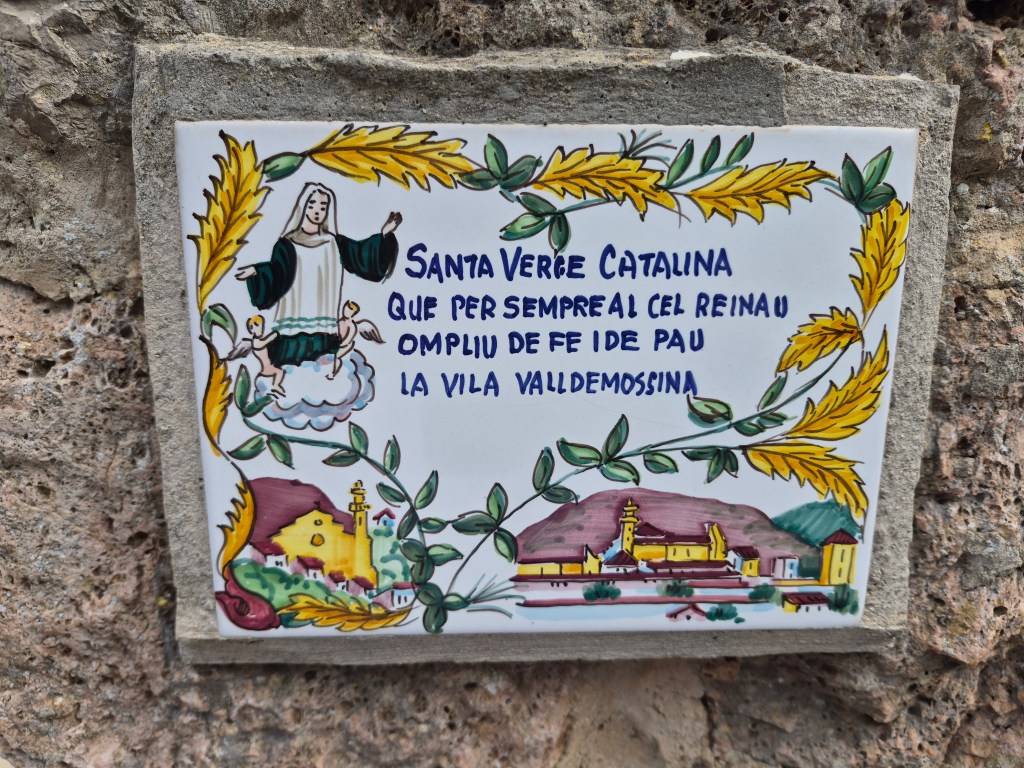
Local Mallorcans however, say that Valldemossa has a more important claim to fame: it was the birthplace of the island’s only saint: Santa Catalina Thomas.
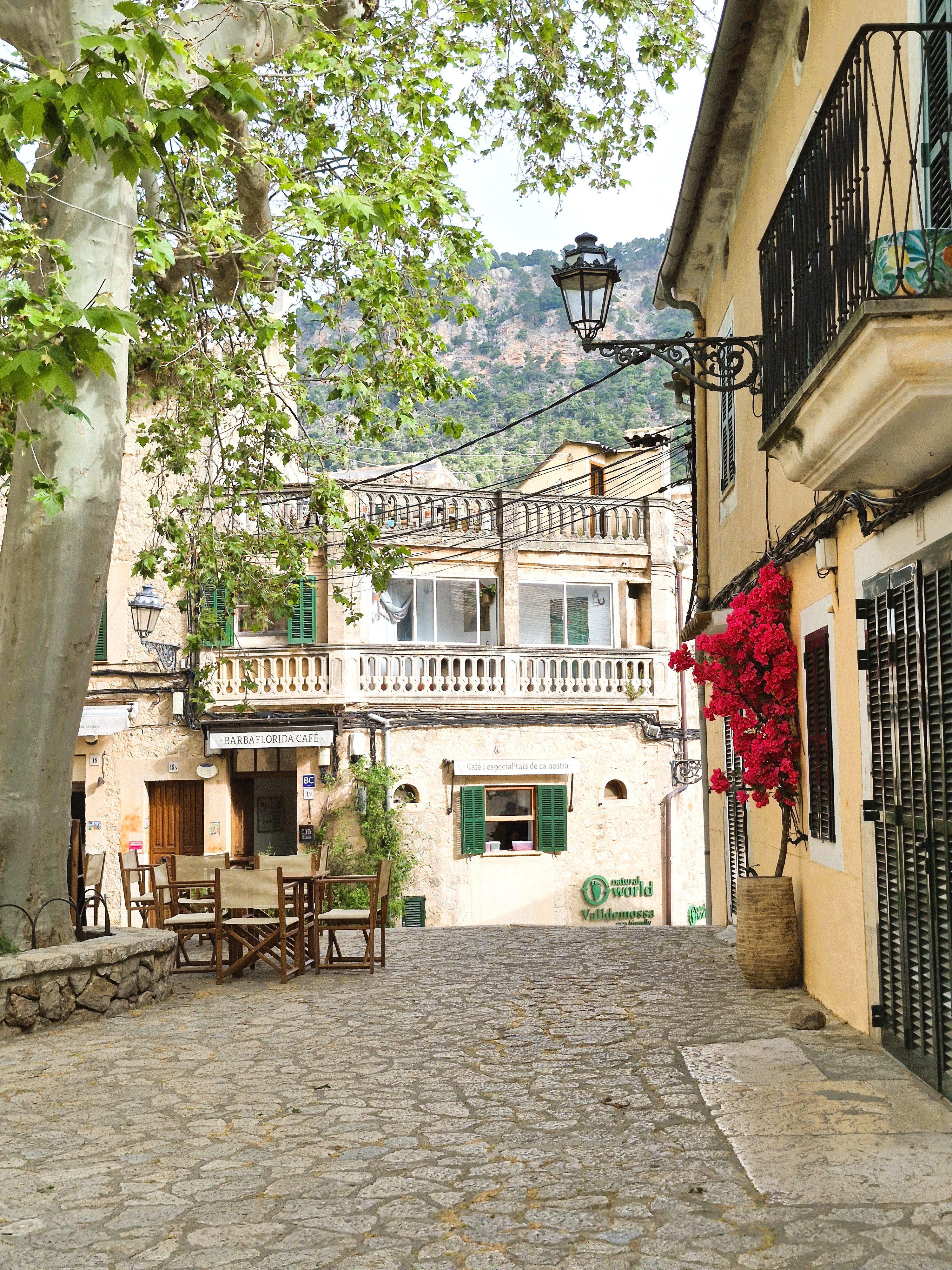
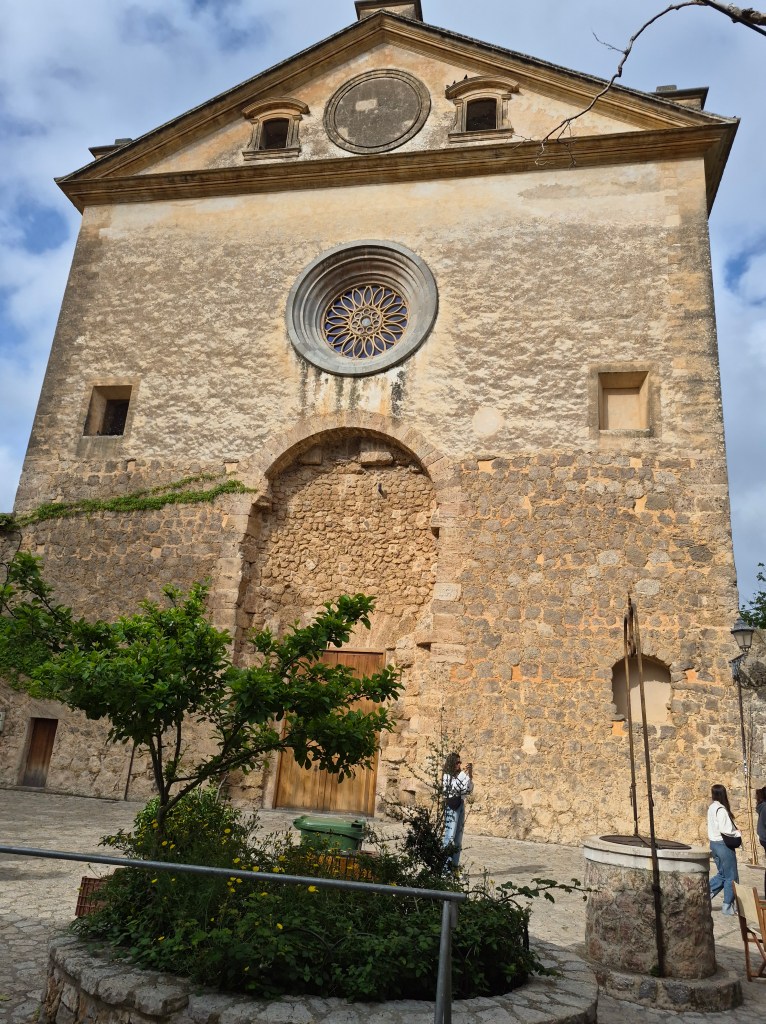
If you want to visit her tiny birthplace and shrine it lies just behind the church of Sant Bartomeu in peaceful Rectory Street (Calle Rectoria) a picturesque, narrow cobblestone alley.
Hiking and walking
You will see many hikers and walkers in the area as it is a popular venue for trekking into the mountains with both routes for experienced walkers and for the less adventurous. O
One of the most visited peaks in the Tramuntana mountain range is Puig des Teix, which is a trek of some 16km up through the Son Marroig estate, once the home of Austrian Archduke Lluis Salvador, to the 1064m summit. Once at the summit, the vistas that greet you are jaw-dropping. The only word to describe them are Awesome, an overworked adjective but right for the views from Puig des Teix. Details of all walks can be obtained from the Tourist Office in the village.
A Day Visit to Valldemossa
If on a day visit and with little time to spare, then Valledmossa will still charm. Its cobblesone streets lined with shops, boutiques, cafes and bars, means that pretty much every need can be met. Cocas de Potatas, Valldemossa’s famous biscuits, and rightly so, are found in every bakery. There is a colourful street market every Sunday morning, a great place to source quality local produce, including fruit and vegetables, cheeses and Spanish ham, artisan soaps and shampoos, and small leather goods. Some producers sell from stalls by their farm gates, with organic jams and olive oils the most popular items on sale.
Or just buy an ice-cream from one of the shops, wander to the edge of the town and look on the peaceful terraces that surround it, then find a cafe, tapas bar or ham-hung restaurant and enjoy some great Spanish food.
It was my first planned trip in 18 months following a series of health mishaps and a city break in Mallorca seemed just the ticket. My travelling companion, like me, hadn’t visited Mallorca for over 40 years and we’d planned to spend most of our days delving into the old town of which we had fond memories and re-visiting favourite spots.
Unfortunately, on our first day out to find the Tourist Office, Cathy ruptured her Achilles Heel and that was the end of our walking the lanes and alleyways of old Mallorca!
Photo by MarciMarc105 from Pixabay
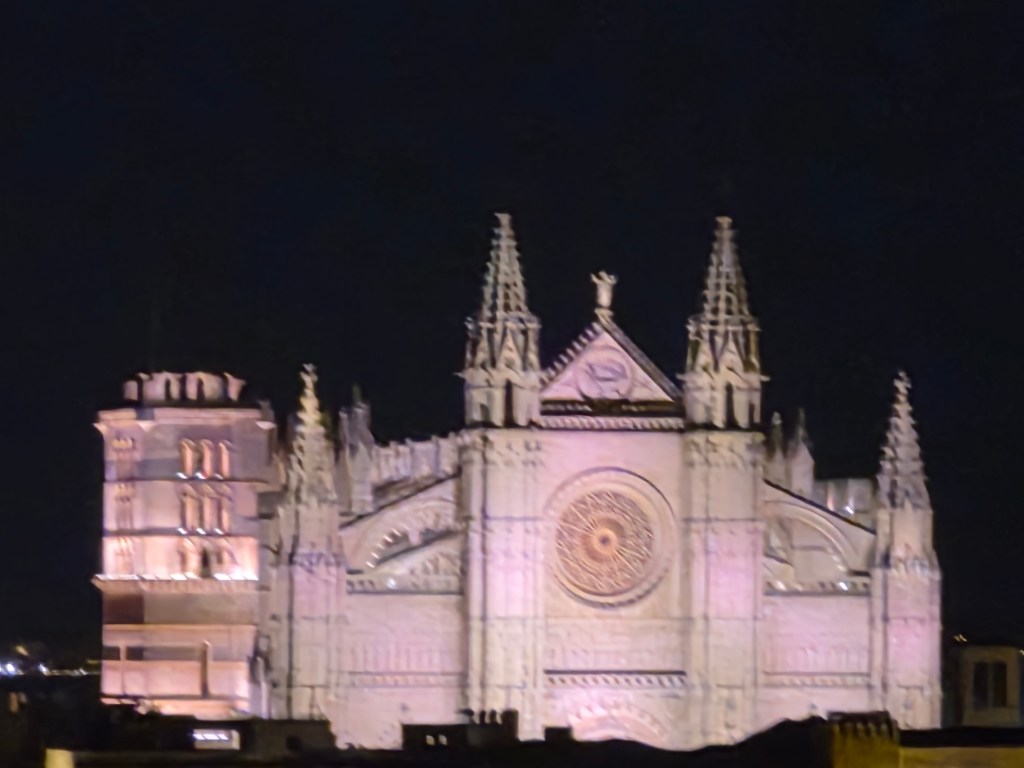
Luckily, our chosen hotel, The Saratoga, on the edge of the Old Town knew of an osteopath whose treatment was brilliant and although we were still house-bound as it were, the pain was controlled. The hotel itself was perfect, the roof terrace bar with its comfortable sofas and chairs and its view of the Cathedral over the intervening rooftops was a good place to spend the after-dinner hours (and most of the daytime hours as well). We were limited as to where we could eat but the hotel’s fine-dining restaurant was amazing, so all was well.
I managed to go out alone a few times but felt guilty leaving Cathy alone so my jaunts out were just to stroll arond the nearby streets and to El Corte Ingles for a few hours of retail therapy.
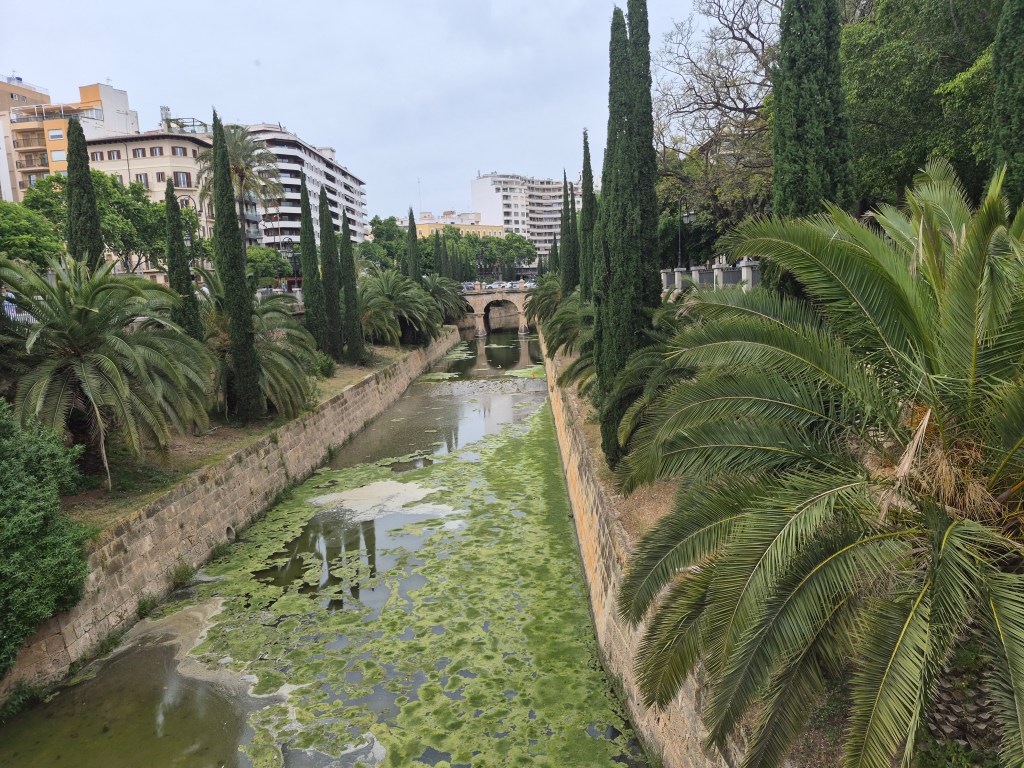
A nearby canal which seemed odd in the middle of Palma but was interesting.
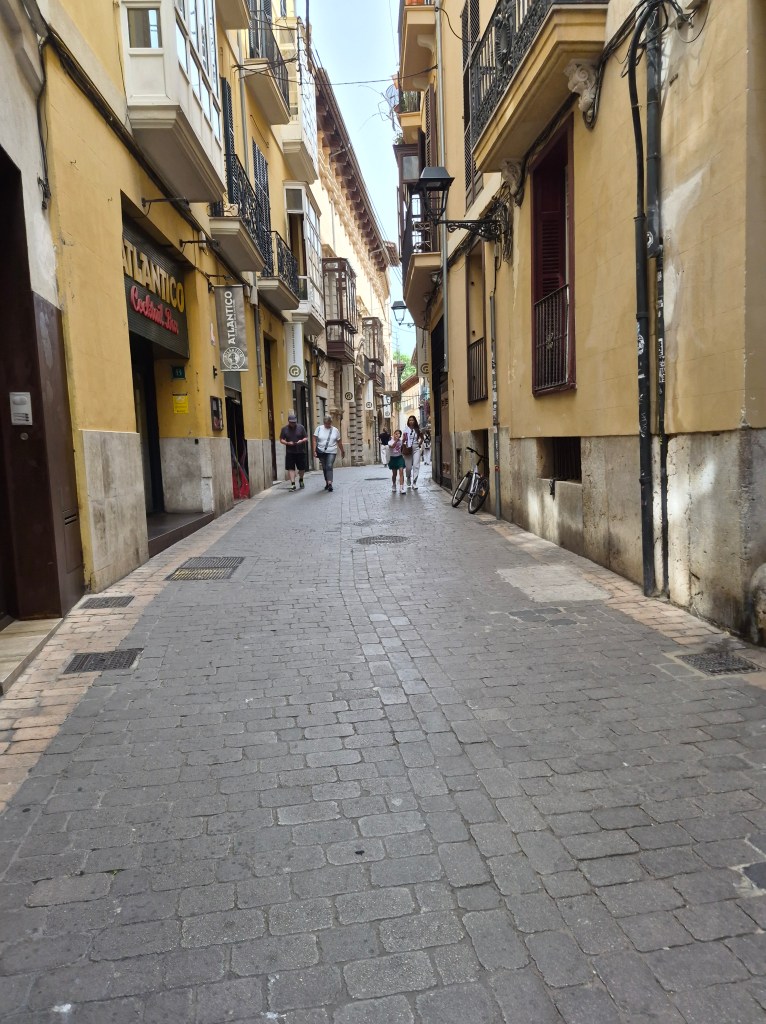
The Old Town was no longer the Bohemian place I remembered, but an area full of artisan coffee shops, art studios and craft outlets. Still, it was engaging and elegantly laid out, the coffee was good and the street art attractive.
We booked a car and driver one day for an outing that include Valldemossa, which was one of the places we’d earmarked for a visit, and I’ll write about this in a follow-up blog, and another day we did the same to Soller – again a happy outing to a spot we both remembered well from years gone by.
A Street in Old Palma
And that was Mallorca – my first holiday in ages. And what was to be my return blog here is more of a damp squib.
But I’m back, and since then I’ve also managed to get to Crete which was relaxing and re-charged the batteries although I was sad not to be able to do the walking I once did in that lovely island.
So, hello again. Looking forward to posting more often, though not as often as before as I still have ongoing eye problems which prohibits computer use.
I’ve also got to get to grips with WP again as I can’t remember how to re-size photos and set them out properly. Hey Ho! Another fine mess I’ve got myself into!
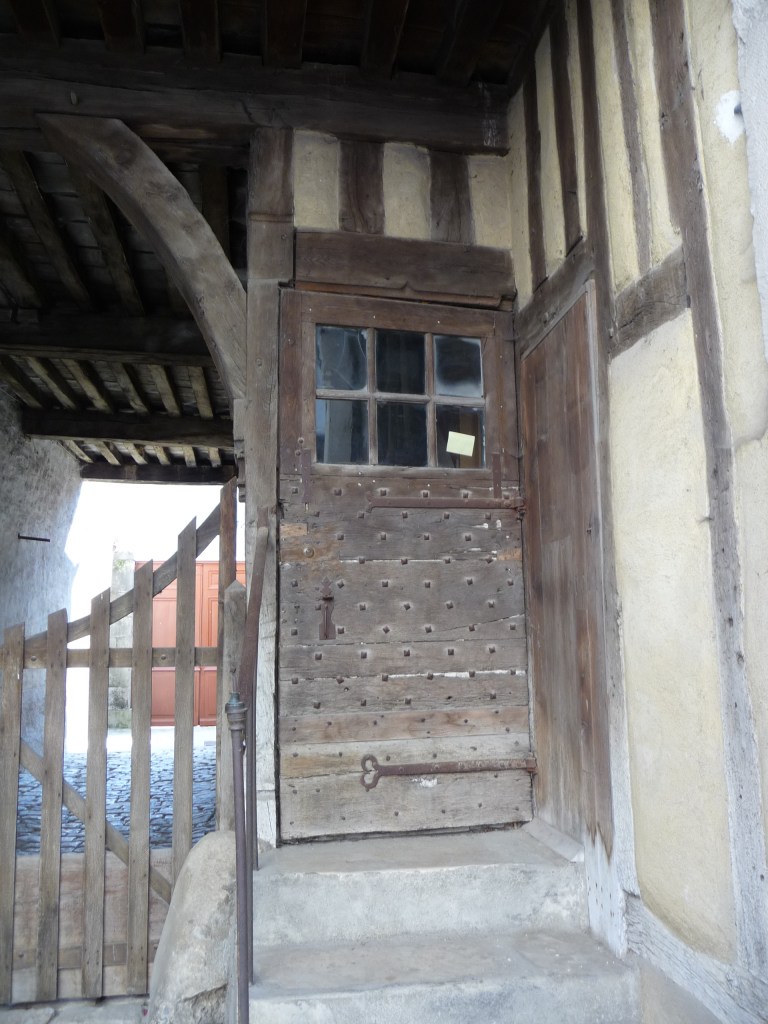
The inhabitants of Noyers in France say that theirs is the prettiest village in the country, and who am I to argue with them. They certainly have some interesting doors, maybe not pretty, but interesting, such as the above.
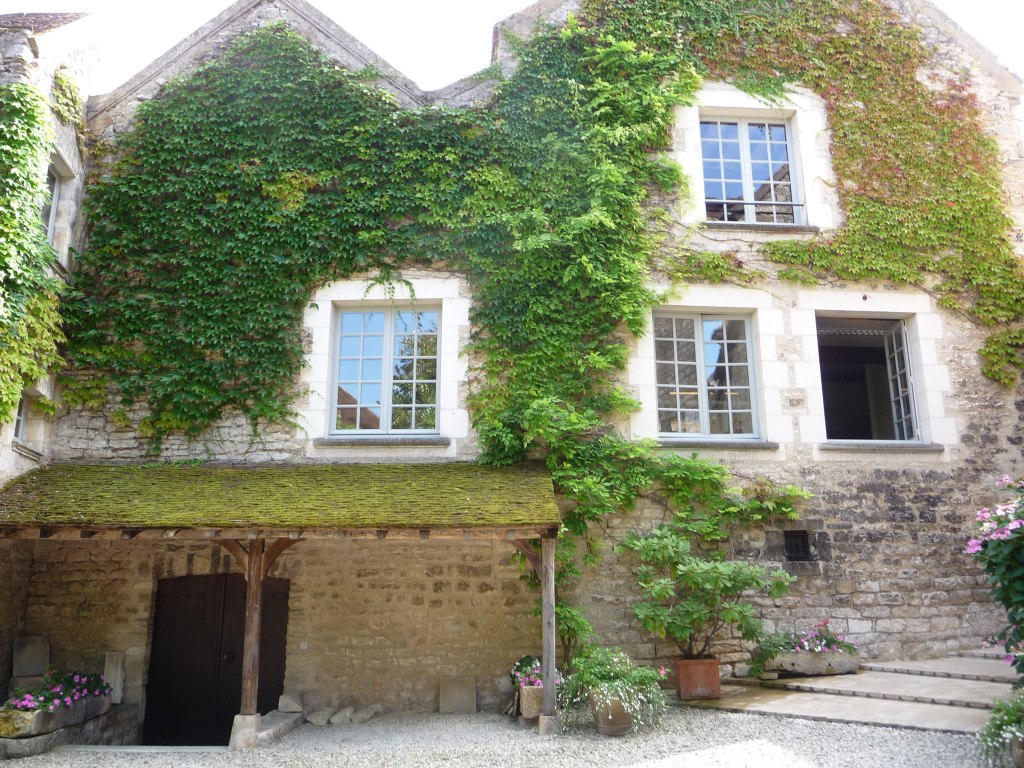
I was tempted to do a ‘series’ from Noyers but decided against it, preferring instead to move along to another lovely town to display a door that is charming, exquisite in its setting, and one that seems to reflect the produce associated with the house. It’s warm, cosy, (half hidden under a roof of grass, to all appearances a basement entrance) and redolent of summer, a house in Chablis.
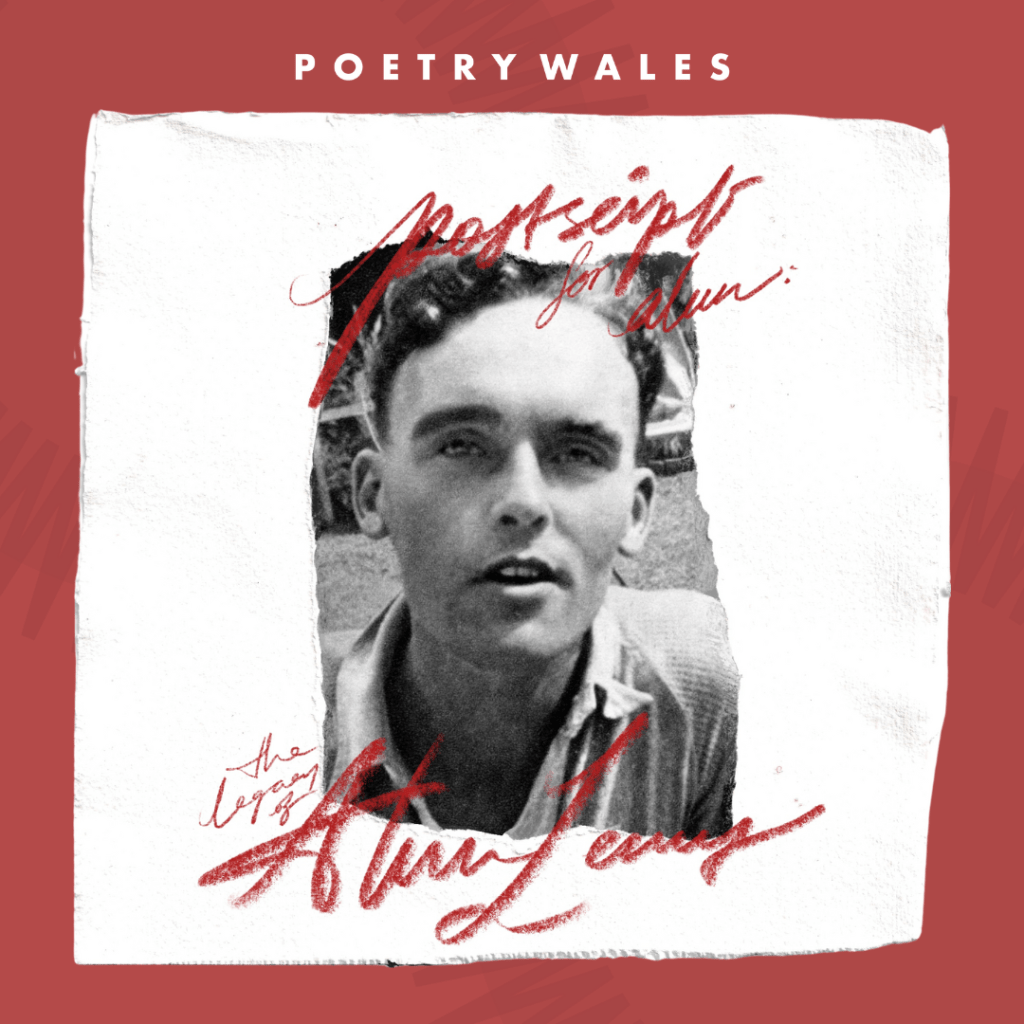
The phrase ‘One Day’ set me thinking of a poem by Alun Lewis whose work I’d recently been re-reading, and try as I might I can’t get it out of my mind. One Day is not the same as All Day, yet the two phrases seemed to fuse. The Lewis poem, All Day It Has Rained, is about one day in the life of a group of soldiers stationed in Hampshire, during the Great War.
All Day It Has Rained
This is one of Lewis’s greatest poems, one of the great World War 1 poems even if guns and five-nines aren’t even mentioned. The wealth of observation and the matter-of-fact vocabulary lifts the poem from the everyday: nothing about the poem is predictable, from the down to earth vocabulary to rhythm and metre.
And now I shall have to read something else to get it out of my mind!
Here is the first part of the poem. If you don’t know it and would like to read the rest of it, it can be found online.
All Day It Has Rained
All day it has rained, and we on the edge of the moors Have sprawled in our bell-tents, moody and dull as boors, Groundsheets and blankets spread on the muddy ground And from the first grey wakening we have found No refuge from the skirmishing fine rain And the wind that made the canvas heave and flap And the taut wet guy-ropes ravel out and snap. All day the rain has glided, wave and mist and dream, Drenching the gorse and heather, a gossamer stream Too light to stir the acorns that suddenly Snatched from their cups by the wild south-westerly Pattered against the tent and our upturned dreaming faces. And we stretched out, unbuttoning our braces, Smoking a Woodbine, darning dirty socks, Reading the Sunday papers – I saw a fox And mentioned it in the note I scribbled home; – And we talked of girls and dropping bombs on Rome, And thought of the quiet dead and the loud celebrities Exhorting us to slaughter, and the herded refugees:
…….
Tomorrow maybe love; but now it is the rain Possesses us entirely, the twilight and the rain.
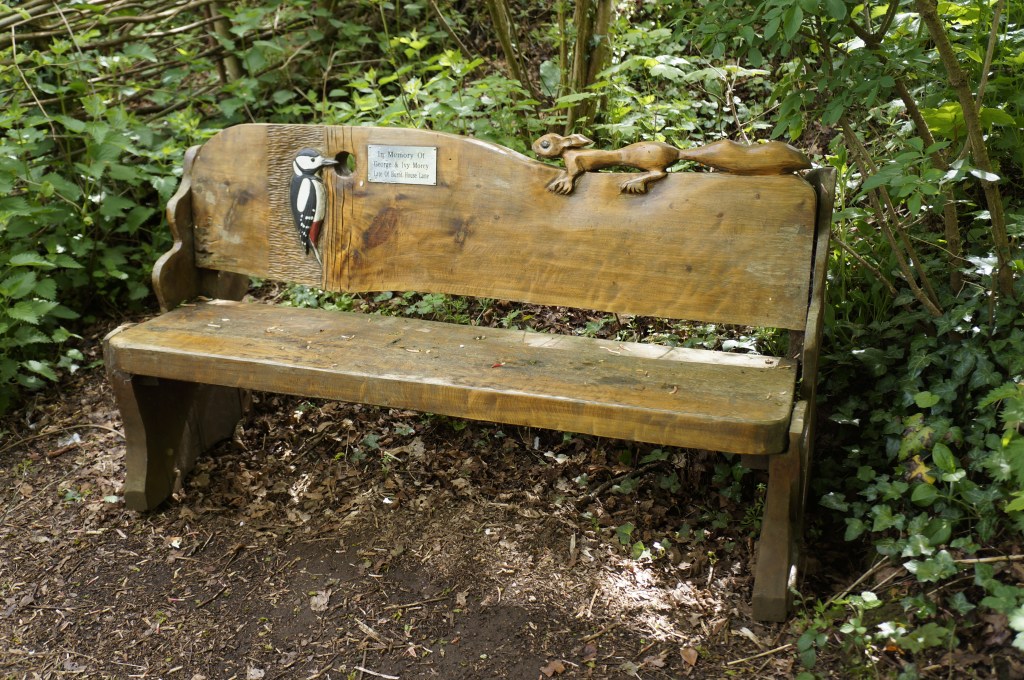
Not sure if this challenge is still running but I’ve found two more images of benches that I’d like to post.
On a walk along the sea cliffs in my home town I spied this one.
More than one bench here along the river Adige , the second longest river in Italy and a central feature of the city of Verona through which it runs before heading towards the Adriatic Sea. Verona’s historic centre is partly enclosed by the river and several of her historic bridges cross the river including the Scaligeri family’s Ponte di Castelvecchio.
Having just seen Jo’s Bench challenge and realising i have a lot of benches amongst my images, I thought I’d make an easy comeback to WP and dip my foot into the water again as it were, by posting “a bench” and re-joining the community. So, a stone bench with shadow!
I’m not even sure I know how to do this properly any more!
A resting place in the Botanical Gardens at Blanes, Spain
Image posted as part of the Bench photo challenge but I’m not sure if I link to Jo, Jude or Cee.









 MARI'S TRAVELS WITH HER CAMERA