Author: maristravels

  • La Albufera Nature Park, Valencia, Spain

    La Albufera Nature Park, Valencia, Spain

    This slideshow requires JavaScript.

    Valencia may be going through a difficult patch at the moment with the credit crisis seeming to have hit it hard, but it’s a city that should be visited for the ultra modernity of its City of Arts and Sciences.  Those who now say Valencia shouldn’t have spent so much on this grandiose but gorgeous city had earlier been the first to admire and encourage Valencia in its endeavours.  The slideshow above shows part of this very modern metropolis, a park credited with having the most environmental and ecological value in Spain: it is beautiful at any time of the year and is well worth the short trip from the city centre.

    Then the next day head off to La Albufera, the Nature Park just outside the city in the village of the same name.  Images below are all from La Albufera.

    A Canal in La Albufera

    To get to La Albufera from Valencia is easy whether you use self-drive, bus or cycle.   Head south along the El Saler motorway for about 12 Kl. until the Lake of Albufera comes into view.  La Albufera, Valencia, Spain, Restaurants in Main Street

    Lying between sea and rice fields, the lake and surrounding wetlands are separated from the Mediterranean Sea by sand dunes and pinewoods, a paradise for migrating birds. Serious bird-watchers should head for El Palmar at the head of the park where there is a tower from which to watch the birds.

    La Albufera Park and Lake, Valencia

    This immense natural park and its surrounding rice fields, the crop from which forms the basis of the famous Valencia paella, and the canals dotted with fishing boats that hug the grassy verges of the lake, are less than 30 minutes away from the medieval splendour of Valencia, yet it seems like part of another world.

    Farm Houses with the typical thatched roofs.

    Lake Albufera is the largest lake in Spain and was formed aeons ago by sediment from the rivers Turia and Júcar which hem it in on either side sealing it off from the sea and making the 6 Kls. of water into a freshwater lake.   The innumerable canals leading to the lake are well used by fishermen who are usually to be found with their boats, ready to organize a relaxing trip on the lake or a fishing trip (bait and lines provided if necessary). Todos es posible (everything is possible) as they say in Spain.

    Despite its size, the lake is estimated to be only one-tenth of the size recorded by the Romans. The remainder has been cultivated and turned into fields which in spring are drained and planted with rice seeds ready to be fertilized in May.  In July and August the Albufera is one enormous emerald paddi-field ready to be harvested in September.

    Eating in La Albufera, Valencia

    Eating places alongside one of the Canals. Boats for hire.

    As well as the water activities, the boat trips, and the walks along the lake, the popularity of the restaurants that proliferate along the canals and in the village mean that they are a major attraction to visitors from the outskirts and from the city.   They all serve typical Valenciana fare, and more typically, dishes from the area of the lake. One of these is Ali i pebre de Anguilas, a sort of slightly spicy eel stew with potatoes, tomatoes and garlic. For those unsure of their ability to eat eels, a small tapas ración can be bought as a trial sample.

    P1040632
    Valencia Paella

    Valencian paella is the other offering: eaten straight from the pan in which it was cooked, everyone having their own spoon, or if requested, it can be transferred to individual plates.

    Beaches Surrounding the Lake at La Albufera, Valencia

    There are good sandy beaches near the town of El Saler together with a camping site. Natural sand dunes make up the 10kl Dehasa del Saler, backed by pine trees which provide necessary shade in summer.

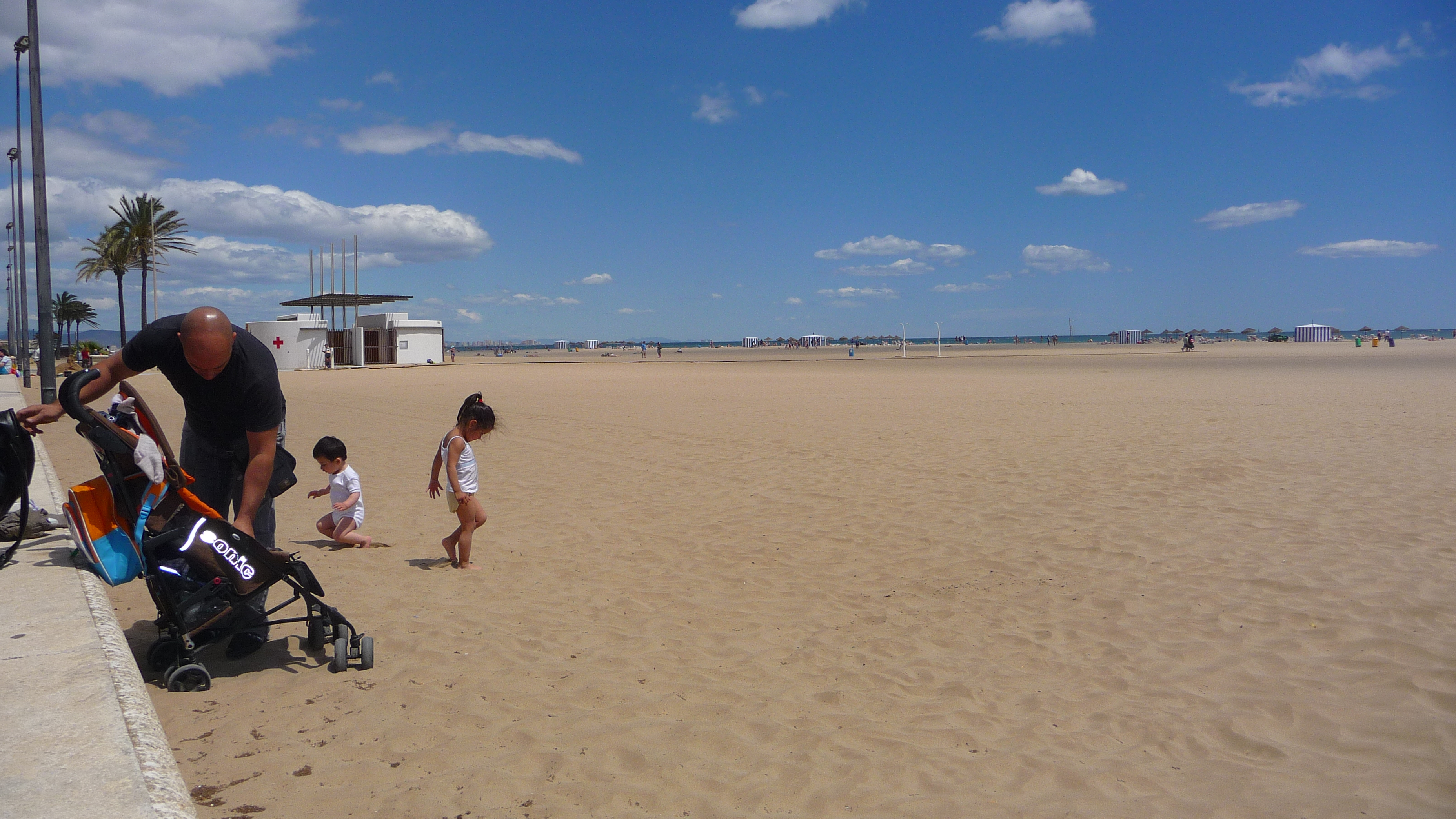
    Without doubt, the best beaches in Valencia are in the city itself, miles of golden, soft, sandy beach near the harbour and the King Juan Carlos Marina built for Valencia’s hosting of America’s Cup three years ago.  They seem to stretch for miles from the Esplanade to the sea (shoes necessary when the sun is hot) and the best seafood restaurants are dotted along the promenade.
    P1040599
    Wide Sandy Beach at Valencia

    Spending a day on the enormous sandy beach and around the harbour and marina is a perfect antidote to too much sight-seeing in Spain’s third most important city of golden-stoned buildings.


  • The Poetry is in the Pity: War Poets and Poetry

    The Poetry is in the Pity: War Poets and Poetry

    Reading some of Linda O’Neil’s poetry on her blog  http://www.poetrypf.co.uk/lyndaoneillpage.shtml) sent me back to my favourite war poets, Wilfrid Owen, Siegfried Sassoon, Isaac Rosenberg, Alun Lewis, Edward Thomas and many others, and to France where they fought.  I’m a regular visitor to France, sometimes to visit the World War I War cemeteries there, sometimes to cruise the canals, and sometimes I can combine the two.

    Reading Linda’s lovely poem Embroidery, which I think we can call a homage to Owen, reminded me of the time I visited, not the vast fields of white crosses, but Owen’s grave in the little French cemetery at Ors in north eastern France near the site of the battle to cross the Sambre Oise canal.  He was killed there, just one week before the Armistice of 1918.

    Today, his body lies, not in Poets’ Corner in St. Paul’s, but in a tranquil plot in the British war graves section of Ors’ village cemetery, a short walk from the place where he died.   Britain’s greatest war poet, Owen wrote poetry of a rare compassion and beauty, war poetry that did not hesitate to describe unseemly death and disablement in ways that had never been attempted before.  ‘My poetry is in the pity’ said Owen, and it is the pity and the compassion that we take from the poems.
    My first visit to his grave was made nearly 20 years ago when, together with members of the Western Front Association and the Wilfrid Owen Society, we took part in the dedication of a Memorial to the poet.   The military historians who accompanied our party breathed life into statistics and Battle Plan references that our maps high-lighted.  Ground was fought over and won and fought over again and lost, as we listened to the story of the attacks across fields we stood on, and marched up trails that were once dirt tracks.

    On the Somme the villages seem caught in a time warp.  After the war most places were rebuilt exactly as they had been before 1914, and you pass through villages whose names echo with a terrible resonance down the years, Thiepval, Fricourt, Maricourt, Montauban – villages which stand today almost as they did then.  What has changed is the terrain.  In many places today the Somme is like a prairie: hedges have been uprooted to maximise planting, and the flat, rolling plains are unlike the former fields on which the battles were fought.  Despite these changes, and 100 years after the 1914-18 battles, the Somme still throws up the bones of long dead combatants, old bits of ordnance and the occasional live shell.  Mametz Wood is a chilling place, even on a fine day when the sun is shining.

    The sun was shining as we gathered on the banks of the Sambre-Oise canal to listen to the story of the battle in which Owen was killed.  The geese from the nearby farm were loud in their scolding, and staring at us from the opposite bank were cows, not Germans.  It was all a far cry from November 4th, 1918, when the men of the 2nd Manchesters and the 15th and 16th Lancashire Fusiliers fought long and hard for control of these now peaceful waters.  Difficult to imagine on this sunny morning, the men of the Royal Engineers working feverishly to make and mend the bridges and pontoons that were carrying the assault troops across the canal: difficult to imagine the shouts of the men, the sounds of the gunfire, and the screams of the wounded.

    The day lives in my memory chiefly because of the French welcome.   The whole town turned out to welcome us, or so it seemed, and for the dedication of the Memorial.  Representatives from the Western Front Association and the Wilfrid Owen Society took their places alongside  M. Houson the Mayor of Ors, and dignitaries from other nearby towns.  Then down the street came the band, bussed in for the occasion from the neighbouring village of le Catillon.  That afternoon they had their most appreciative audience ever.

    Certain songs have instant access to our emotions – one of them is Roses of Picardy.  As the opening bars of that sentimental old melody began, the chattering stopped and the crowd fell silent.  There were few there who were not moved to tears and the relief from the emotion of the moment was almost audible when the Mayor started his speech of welcome.

    For some of us the pilgrimage ended as we laid our tributes on the grave of the poet and read the words on the pristine white slab that marks his burial place.  I remembered his last letter home to his mother …. There is no danger here, or if any, it will be over before you read these lines ..      Prophetic words.  The bells were ringing to announce the Armistice when the doorbell rang in the Owen household and Susan and Tom Owen got the telegram they’d been dreading.

    Readers with an interest in Owen’s poetry who visit France, will have no bother finding Ors.  It is an easy spot to reach lying not far from Amiens (Michelin Touring Map No. 50.  200 Km. North of Paris, 40 Km. North-east of San Quentin and 25 Km. South-east of Cambrai).  Walk across the bridge that spans the canal and you will see the Memorial erected to Owen just nineteen years ago by the villagers, the Western Front Association and the Wilfrid Owen Society.  The Commonwealth graves are in a quiet spot at the side of the village cemetery, their pristine white slabs terribly upright in sharp contrast to the polished granite and marble of the French headstones.

    The bond that grew between the men who fought in World War I was of a special kind, forged in the hell of the trenches and kept alive by the inability of those on the home front to comprehend the horror of that war.  Some may think that Westminster Abbey is the only fit place for a great English poet.  I believe Wilfrid Owen is happier to lie at Ors with the men whose life, and death, he shared.

    Read Linda’s poem on http://www.poetrypf.co.uk/lyndaoneillpoems.shtml  and you’ll see why my memory slipped back to nearly 20 years ago.  Travel takes one to strange places and although I have visited the graves in the cemeteries on the River Kwai many times and been moved to tears more than once, those upright white slabs in France seem to resonate with the tragedy of all wars.  Is it the poetry the fallen left behind?  Is it the prose, not just from the English combatants, but Frenchman Henri Barbusse, German Erich Maria Remarque, and the Russian Pavel Antokolsky.

    They have all left their mark on literature, and on lovers of poetry, but was still go on.

  • Ellen Terry Museum, Smallhythe Place, Kent

    Needing to get some photographs for an article on pretty Kent villages, took myself off to the Weald last week only to find that places like Tenterden and Biddenden had thrown themselves into Jubilee mode with a vengeance.  Medieval doorways draped with the Union Jack, windows bedecked with red, white and blue ribbons, and bunting strung across the streets wasn’t what my editor wanted for the article, so I had to leave this particular area and postpone the writing.

    Looking round for an alternative idea I thought of covering some of the lovely venues in the area and headed for Sissinghurst which I’d visited some years ago.  Unfortunately, I hadn’t checked opening days and when I got there found it wasn’t open on Wednesdays or Thursdays.  Very disappointed.

    I felt it would have been helpful if National Trust had put a sign by the entrance giving the Opening Days, saving visitors a drive down to the car park and then a walk to the entrance, only to be refused entry.

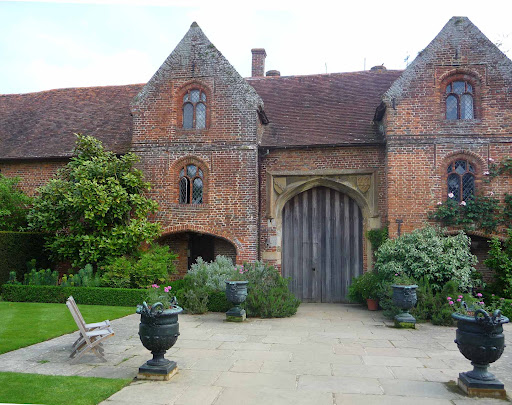
    Sissinghurst Castle

    However, the sun was shining so I looked around the exterior of the buildings, checked out the plants for sale, was tempted by the David Austin roses for sale and enjoyed the lovely views.    The emerald lawns looked spectacular and the exterior was immaculate, making it even sadder that I couldn’t gain entry to the house and gardens.

    Smallhythe Place Museum – former home of Ellen Terry

    From there I drove on to Smallhythe Place, the best little Museum I have ever visited.  Also a National Trust venue but they were open – until 4.30 that is.  Smallhythe was the former home of one of England’s most beloved actresses, Ellen Terry, and the house still seems like a home, full of her treasures and memorabilia from various roles she performed on the London stage.

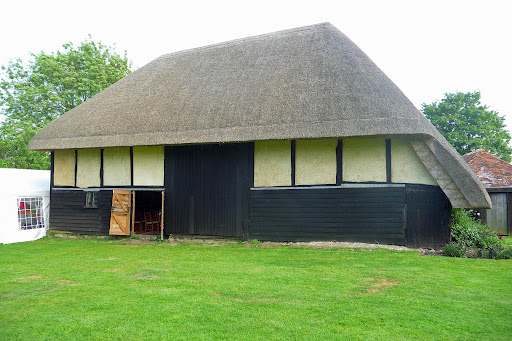
    The Barn Theatre, Smallhythe Place

    In the gardens is The Barn Theatre where many famous actors have worked (plays are still performed, but it is a private theatre), and the gardens are full of the roses she loved, every one of which had an exquisite smell.

    So, all was not lost on my trip to Kent, but I have made a note to avoid all celebratory times if I want to take photographs as the decorations do date them.

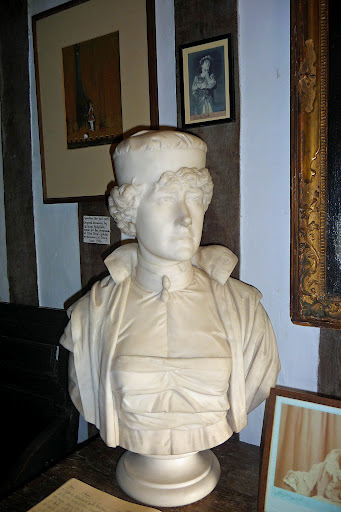
    Marble Bust of Ellen Terry
  • The Old Gaffers’ Festival, Isle of Wight

    Yarmouth Harbour with Car Ferry in Background

    It’s a bit late now to tell you about the Old Gaffers’ Festival at Yarmouth which was a great success last week-end 25-27 May.  Coinciding with what we hope was the start of our British summer, it attracted people from all over the south of England plus the residents of the Isle of Wight who flocked to the little town in their thousands to welcome the Old Gaffers.

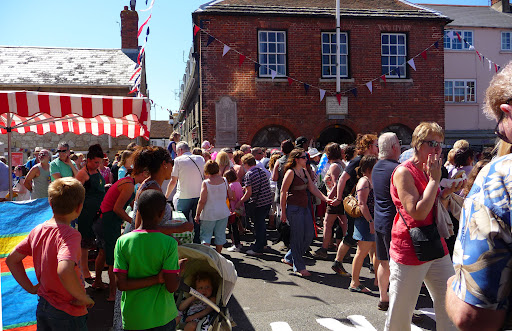
    Crowds throng the streets over the weekend.

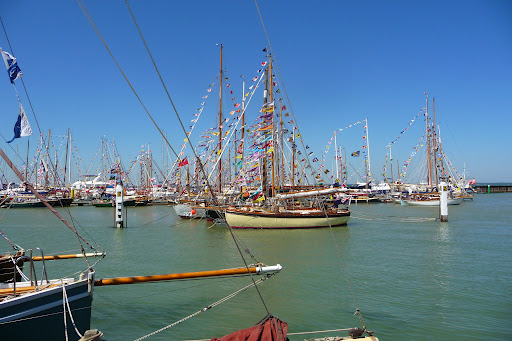
    For those of you who may be wondering what, or who, are the Old Gaffers, they are a type of sailing boat (I’ve given a link to the website where you can find the technical details) and the Yarmouth Festival attracts the boats and their owners for a weekend of sailing and merry-making.  The gaff-rigged boats, dressed overall, is something one doesn’t see every day and the harbour filled with the colourful boats is a complete contrast to the usual fleet of everyday boats.  The main race was on the Saturday, but people were arriving on the Friday for the Continental Fair (this could be Continental Fare as there was food from France, Spain, Italy and Germany on sale, both as takeaway and to eat there and then).

    Boats Dressed to Kill

    Glorious weather on the Saturday and Sunday meant that the town was pretty busy but the exceptional stalls in the main square, the displays of food, bread, sausages, pastas and paellas were so enticing, that more than half the people spent time looking and tasting which left the beach and pier less crowded for those whose main interest was the sailing.

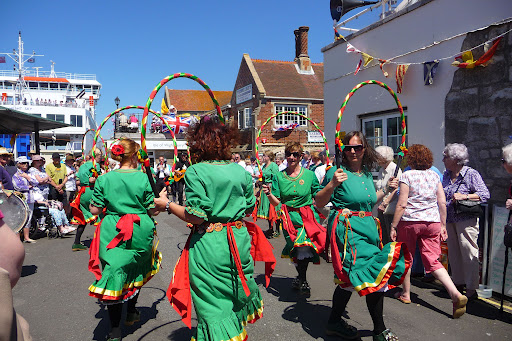
    Morris Dancers

    Various horticultural merchants were offering bargains in unusual plants and shrubs, craftsmen and women were demonstrating their workmanship and the whole event was like an old fashioned Fair.  It was almost a novelty not to have the usual market traders hawking their goods.

    Freshwater & Totland Samba Band

    On the Friday night Rob da Bank topped the bill with some great acts and the tribute bands had their turn on the Saturday night.  Bands played all day long, marching bands, bands in marquees, jazz bands, and even the Freshwater and Totland Samba Band paraded through the town.  The Wight Hot Pipes (bagpipes, guitar and keyboard) were on hand, as were the Boogie Woogie Pianos with Team le Roc dancers, and The Crew sang shanties and sea songs in keeping with the Festival.  There was even a male voice choir.  Among the street entertainers was a magician, the Men O’Wight Morris Dancers, Irish country dancing from th Ceri Dancers and on the sea the RNLI lifeboat demonstrated a search and rescue mission.

    Sea Shanties from the Boat

    The Beer Tent and the Real Ale tent, the Strawberries and Cream Teas, and the local ice-cream makers were all kept pretty busy.  Those who could tear themselves away from the eating and the fun around the harbour could inspect the Veteran and Vintage vehicles that were on display.

    Once again, The Old Gaffers Festival has pleased thousands of people.  Let’s hope the weather is equally kind for next year’s event.

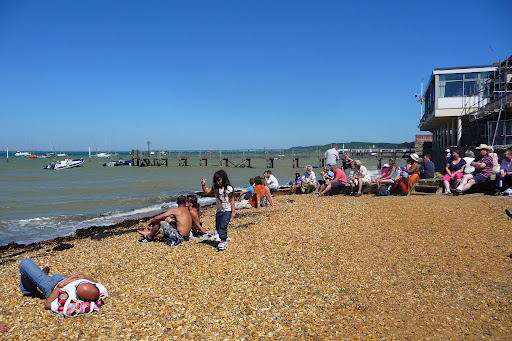
    The overflow found the shingle beach quite comfortable


  • A DAY TRIP TO SAINT MALO, FRANCE

    A DAY TRIP TO SAINT MALO, FRANCE

    A DAY TRIP TO SAINT MALO
    Saint Malo from the Sea
    To St. Malo for a couple of days with Brittainy Ferries from Portsmouth, a smooth journey in an ensuite cabin that surpassed my expectations.  The food on board was delicious – and very inexpensive for the quality.  On offer was a buffet with main course served separately from the grill, an a la carte menu, a snack bar and a self-service restaurant – choice enough for everyone.
    Heart of the old Town
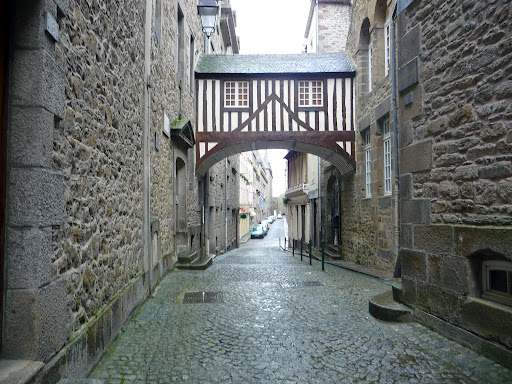
    Unfortunately, the first morning in St. Malo brought winds and rain, and when I say winds, I mean icy cold winds that cut through my three layers of warm clothing like a Siberian dagger.  Foolishly ignoring the advice of the hotel receptionist, we took ourselves off on a tour of discovery, only to find that nothing opened before 10 a.m. in St. Malo – not even a coffee shop – so we had the wet, cobble-stoned streets to ourselves as we perused the soggy map trying to negotiate the lanes, alleys and squares of this granite island.  Down one side-street we managed to locate a coffee shop which served delicious chocolate and croissants so the morning took on a more cheerful aspect.
    By midday however, the sun was out, the sky was blue, and it was smiling Gallic faces all round.  Saint Malo surges up from rocks and curves to form a natural harbour.  The Cathedral which we’d earlier visited (partly to escape the rain) dominates the skyline and is a good marker if one gets lost.  Despite the religious symbol however, the city has a somewhat shady past, being the haunt of Barbary pirates in the 18th and 19th centuries who preyed on the ships crossing the channel.
    The Old Town
    It would be a good idea to take La Petit Train de Saint Malo for the 30 minute sight-seeing tour – a good 5 Euros worth – before embarking on a walking tour with a map, as this tours the walled city and the surrounding port and includes an English commentary.  Visitors to the town can see quickly where the landmarks are and make a note as to what they would like to return to see when time permits.
    The Beach and the Causeway to the Isle
    The heart of the city is the old walled town known as Intra-Muros (inside the walls) and a favourite walk is on top of these 20-foot thick walls.  From high above town and beach one has a magnificent view of the surrounding area and down into the maze of medieval streets.  A stretch of approximately one and a half miles can be walked and despite being buffeted by the wind, it was a joy to gaze on the golden sands of St. Malo which stretch right along the Brittany coast, watch the parties of schoolchildren wander along the water’s edge, and the hardier folk who were hurrying along the stone-flagged causeway to Grand Be islet (don’t attempt this if the tide is coming in: if you do, then you must stay on the island until it goes out again).
    Restarant on the Walls
    1 Kilo of Moules avec Frites 11 Euros
    In a town known for its fish and seafood it can be a problem to decide where to eat, so many are the good restaurants on offer.  One row of restaurants backs on to the walls (Rue Jacques Cartier and Place Chateaubriand) and this seemed to be most people’s favourite place.  And do try a Kir Breton (Kir and Breton Cider).  Most people, for lunch and dinner, seemed to be opting for moules in all their forms washed down with either local cider or white wine, followed by crepes for dessert.
    The weather didn’t encourage sea trips but bus rides to nearby Dinard and Dinan were easy to arrange.  We were temped to take a taxi to Mont-Saint-Michel for 85 Euros but decided against it not knowing what the weather would be like.
    Next day we sailed back to Portsmouth on the Bretagne with the sun shining fiercely from a blue, blue sky.  It was ‘on the deck’ weather the whole way back and I’ve already made up my mind to do this trip again.
  • Return to Blogging

    So, after a long absence I have returned to blogging.  Friends have been asking me why I’ve neglected my blogs for so long and I can only plead overwork in other fields and, perhaps, a little bit of laziness as well.

    Now, however, I am determined to get back into the swing of things and update the blog on a regular basis, starting off by detailing some of my travels which have taken me to France, Italy, N. Ireland, Spain, Thailand and Vietnam since I last uploaded words and photos on the site.

    First, I wanted to make sure everything was working on the site, to add one or two gadgets which will make it easier for people to comment on the blog if they wish, and I’ve changed the background colour.  I’ve also added some new menus to the strapline which I hope you’ll like, I enjoyed playing with them myself, darting from Mosaic to Classic, from Timeline to Flipchart (and isn’t the flipchart one amazing?).

    So, watch this space.  Meantime, here’s a few recent images from my travels.  Hope you like them.

      Orchids in Thailand

     Sheep and Shed in Ireland

    Auxerre in France

    Menu in Italy

    Oranges in Spain

  • A Walk in the Woods on the Isle of Wight

    Thanks to the glorious weather currently being enjoyed by most people in the UK, I’ve been able to explore some of the hidden gems on the Isle of Wight, England’s island in the Solent, and home for many years to Queen Victoria and her family.  Just ten minutes by fast catamaran from Portsmouth, or twenty minutes by Fast Jet from Southampton, the island is one of the UK’s favouite holiday resorts.

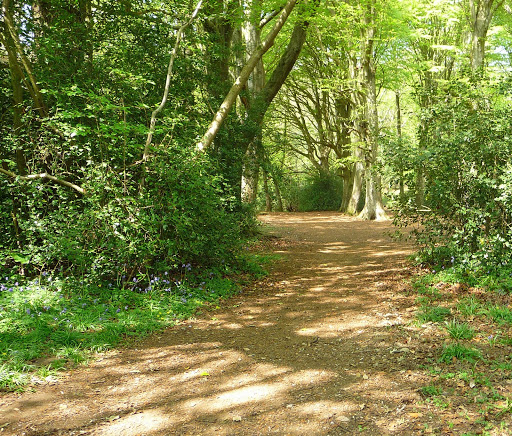
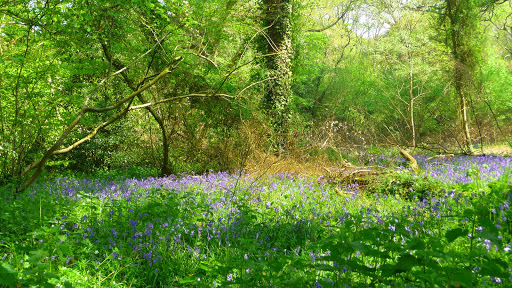
    Apart from the delightful sandy beaches of Sandown, Shanklin and Ventnor, and the pebbly beaches and rockpools of Bembridge and Seaview, there are miles of coastal, forest and woodland walks.  Yesterday I took myself into the woods at Borthwood Copse, near the ancient village of Alverstone, to view the bluebells.  To see these at their best I shall have to return in about a week’s time I think, but meantime, those that were in bloom, made a lovely misty blue carpet under the trees.

    Before entering the woods, I popped into the Hide at the Alverstone Mead Nature Reserve to see if I could spot a red squirrel (the island is one of the few places where these delightful little creatures have managed to fight off the grey squirrel predators) and I was lucky enough to see one.  Just outside the entrance, there is a list of what birds have been spotted that day (see image).  What a wonderful resource for anyone visiting, especially bird watchers.  I spent far too long in the Hide, absorbed by the ducks, geese and other wildlife that had nested on the pond below, so had to cut my walk short in order to meet up with friends for lunch in nearby Godshill.

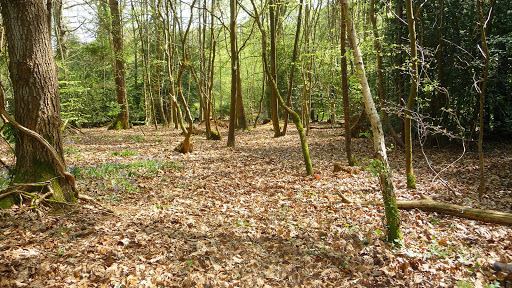
    The woods were magical.  Few people were walking there, a few had well behaved dogs on leads, most had cameras and many took advantage of the tree stumps dotted around the place, to rest and gaze at the myriad shades of green that formed the woods.  There were copper coloured leaves on the ground which made a contrast to the young green of new shoots, the fallen tree-trunks stretched across them like an illustration from a fairy tale.  I could imagine Red Riding Hood wandering through just such woods as these.

  • The Palio, Siena, and Horse Deaths

    The famous Siena Palio is under attack from politicians and animal activists who feel that too many horses are dying on the streets of ancient towns as horse racing in Italian streets continues to attract crowds.

    Scene of the Palio, Piazza del Campo

    The famous Palio in Siena which is staged on July 2nd and August 16th each year in the beautiful medieval Piazza del Campo has been pitting jockeys from different neighbourhoods against one another, since the middle of the 17th century.  Amid pageantry and crowds dressed up for the occasion, horses ridden by ten colourfully dressed bareback jockeys, earlier chosen from Siena’s 17 quarters, gallop three times in two minutes around the Piazza del Campo, during which they lash both their rivals and their horses with whips made from bull penises.

    Spectacle without the Horse Racing at Siena’s Palio

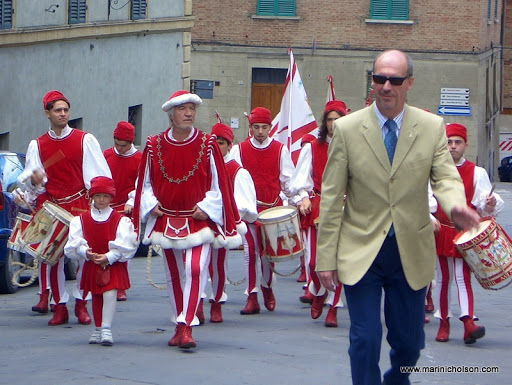
    For those who want to avoid the actual horse racing but who would like to see a little of the pageantry, go to Siena a few weeks before.  During the lead-up to the main event, and especially at the weekends, the neighbourhood support groups march through the streets and alleys of the town, narrowly avoiding confrontations with each other through luck more than route savvy.  These groups are magnificently dressed in medieval costumes as they strut through the town, accompanied by their bands and sundry followers.  The core group can be composed of the very elderly to the very young, all staunch members of one particular group, although I never saw any women marching.

    If by chance two groups should meet, an exchange of insults is par for the course with the occasional brandishing of swords.  Worse for the onlooker is the discordance of two bands playing different local anthems!

    Siena in Tuscany, near Florence and Pisa

    There is accommodation around the square with balconies from which to view the racing, or there is seating on certain balconies rented out for those willing to pay a premium, but this needs to be booked up early.

    Siena is a magnificent town, it rivals Florence in many ways, and is easily reached by train or coach from Pisa to which most of the airlines fly these days.  It is also within easy reach of Florence and could be the centre of a Tuscany touring holiday giving you access to a wealth of medieval hillside towns as well as the better known artistic centres.  And when in the area, do visit the magnificent little hamlet of Civita di Bagnoregio just a few miles away.  It has a population of only ten people as it was dying at one point but efforts are being made to restore the glorious medieval properties some dating from the Etruscan period.

    I shall be returning this year, not for the Palio, but to enjoy the Piazza del Campo where it seems all Italian life is lived, to revel in the beauty of the town, and to eat some truly fabulous food.

    Siena Tourist Office

  • Bangkok – City of Angels

    Bangkok – City of Angels

    KONICA MINOLTA DIGITAL CAMERA
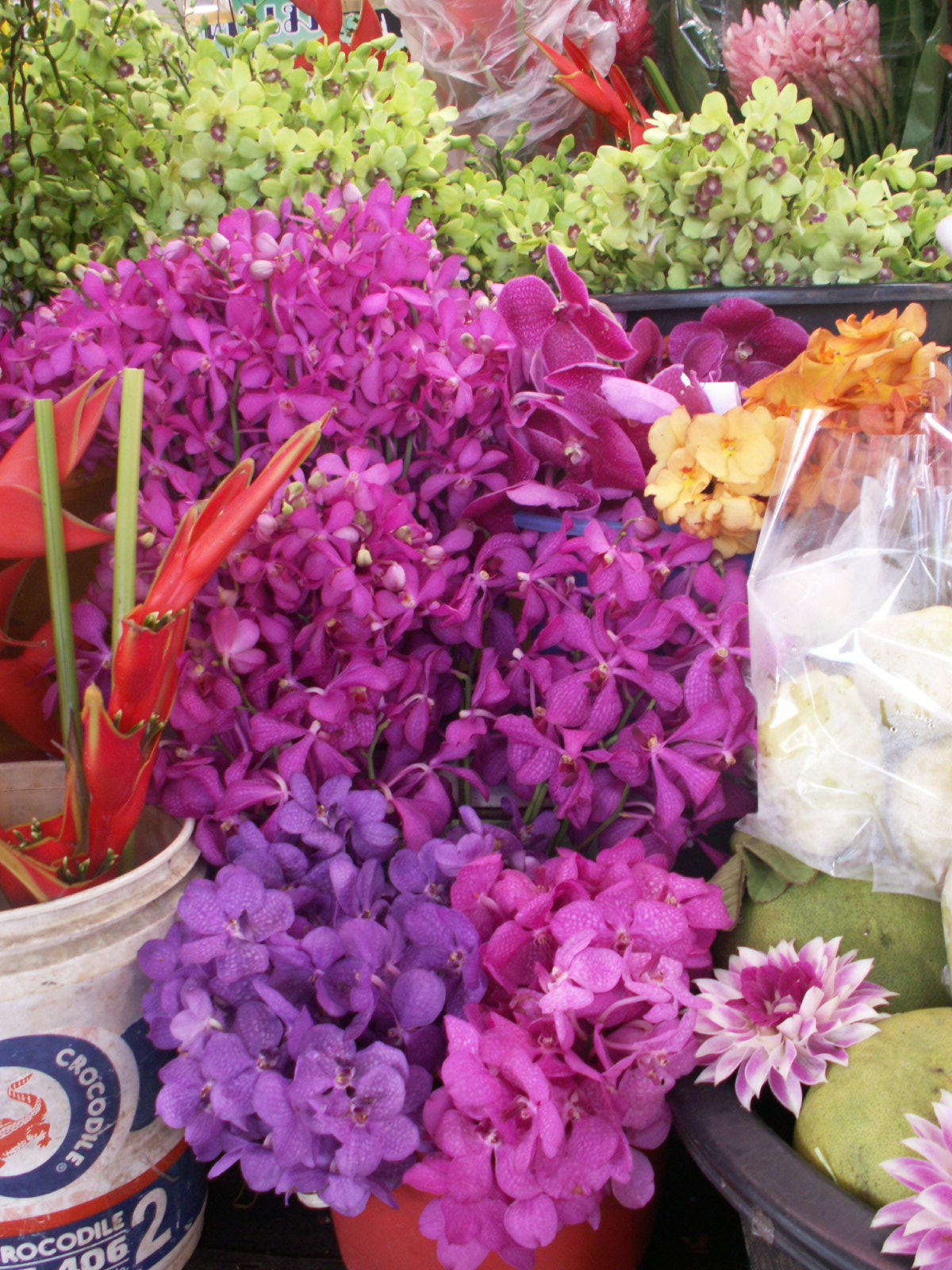
    Orchids on display in  one of Bangkok’s markets

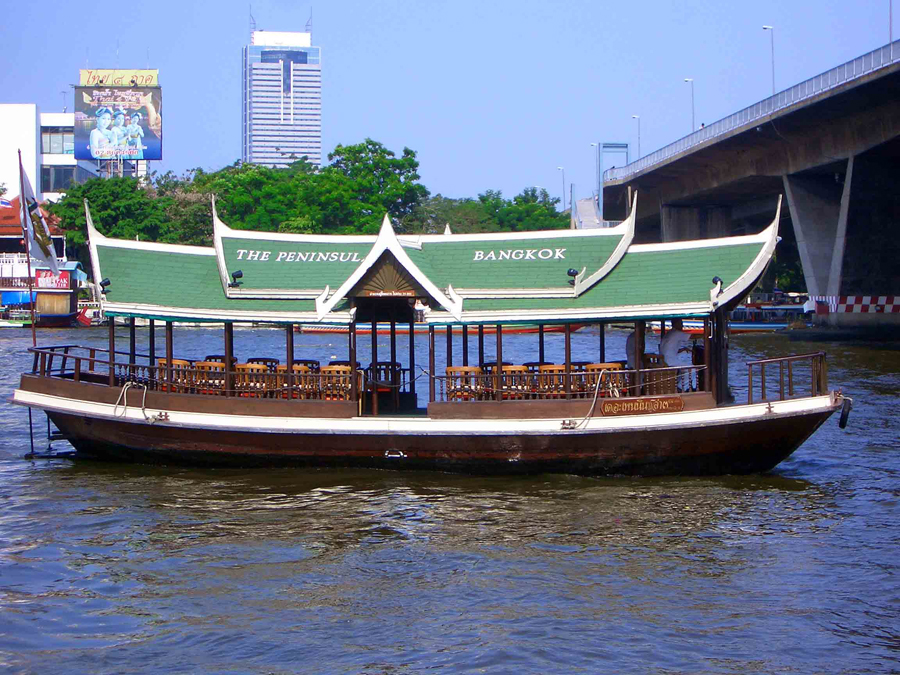
    The City of Angels is one translation of the name Bangkok, but the reputation it has in the world today has more to do with sinners methinks.  Do not let this deter anyone from visiting this fabulous city, chock full of amazing sites from the red lacquer and gold leafed temples to the famed River of Kings, the Chao Phraya, that meanders through the city.

    P1030857

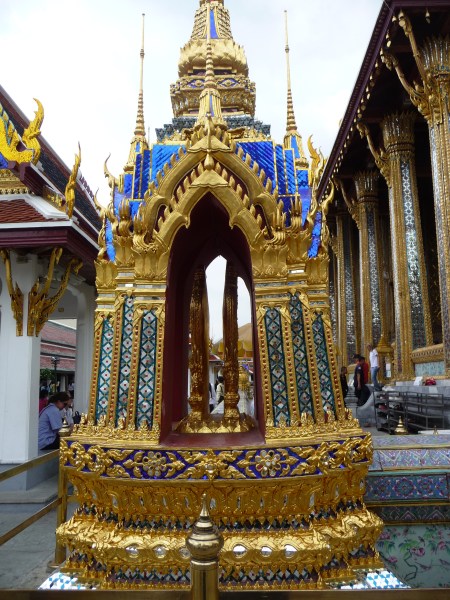
    Add to those the Grand Palace, actually a complex of beautiful buildings, temples, wall murals, and temples:  Wat Arun the famous Temple of Dawn; Chinatown alive with noise and bustle day and night, the best shopping in Asia without a doubt, and great food, roof top bars with the Wow! factor, and the Skytrain to get you from one place to the other in comfort, and you can understand why Thailand is a top destination today.

    P1030873I returned from Bangkok just a few weeks ago laden with trinkets, silks and wood carvings as usual.  My regular visits do not mean that I don’t shop as avidly as I always did.  If anything, the growth of the fashion industry in Thailand and the increase in skilled staff in the carving and gem departments, makes it more difficult to resist.

    P1030826

    I still visit the Grand Palace to wonder at the magnificence, and Chinatown at night for fun eating and bargains as well as other favourite haunts.  And I always stroll through the infamous Patpong just to see how it expands and still welcomes families as well as single males and females.  It’s not generally known but all visitors are welcome there, and safe.  Watch this space for an article on the streets known as Patpong I and Patpong II, and the other area where the sex trade is practised openly, Soi Cowboy.

  • Hua Hin – Thailand’s Royal Town

    Hua Hin – Thailand’s Royal Town

    People often ask what is my favourite town or city in Thailand.  The answer is easy, it is Hua Hin, a once quiet fishing village on the Gulf of Siam, two hours drive from Bangkok, and a world away from the bustle and noise of the capital city.  Mind you, Bangkok is up there with the favourites as well, but it is the capital city after all, and all capital cities are deserving of their popularity.

    I have been visiting Hua Hin for about 25 years now, stopping off on every holiday to recharge my batteries in the peace and tranquillity of one of the hotels just outside the town.  For the last twenty years, that hotel has been the Dusit Thani Hua Hin, a 5-star establishment that attracts guests from far and wide, but it also pleases the Thai people because come the week-end, they flock to it for the great food (especially the Saturday night barbecue), the delightful seaside setting, and the chance to go horse-riding at dawn on the beach (the only hotel at which this is available).

    Today’s Hua Hin owes much of its popularity to the fact that many people discovered it only after the tsunami that devastated the southern beaches of Phi Phi, Phuket, Kao Lak etc.  Before the tsunami it could be said that the fishing village atmosphere was very evident, but today, the little fishing harbour is being crowded by the shops, restaurants, and tailors that line the roads leading to the sea.

    Most of the major hotel chains have a presence here – Hyatt, Hilton, Marriott, Aleena, Sofitel, and of course, the already mentioned, Dusit Thani.  I choose The Dusit Thani because it is a purely Thai owned hotel with service and attention to detail that reflects the Thai ideal of hospitality.  All these hotels have excellent restaurants but Hua Hin itself must be one of the best towns in which to find food from every nation.  As well as Thai restaurants, of which there are many, there are Chinese, French, German, Indian, Italian, Korean, Swiss, Japanese, Vietnamese, American and European/Mediterranean fusion.

    With the growth of a well-heeled retirement colony in the town, bakeries have sprung up as well as cheese and meat importers.  Fresh vegetables can be purchased daily at the local market, or there is a Tesco/Lotus supermarket for those who feel the need for packaged veggies and air-conditioned stores.

    Hua Hin is one of the most popular spots to which people want to retire as the climate is never too hot or too humid, unlike say Phuket or the islands in the south.  It is also within easy reach of Bangkok, there is a good transport network, and, there are six championship golf courses in the area.