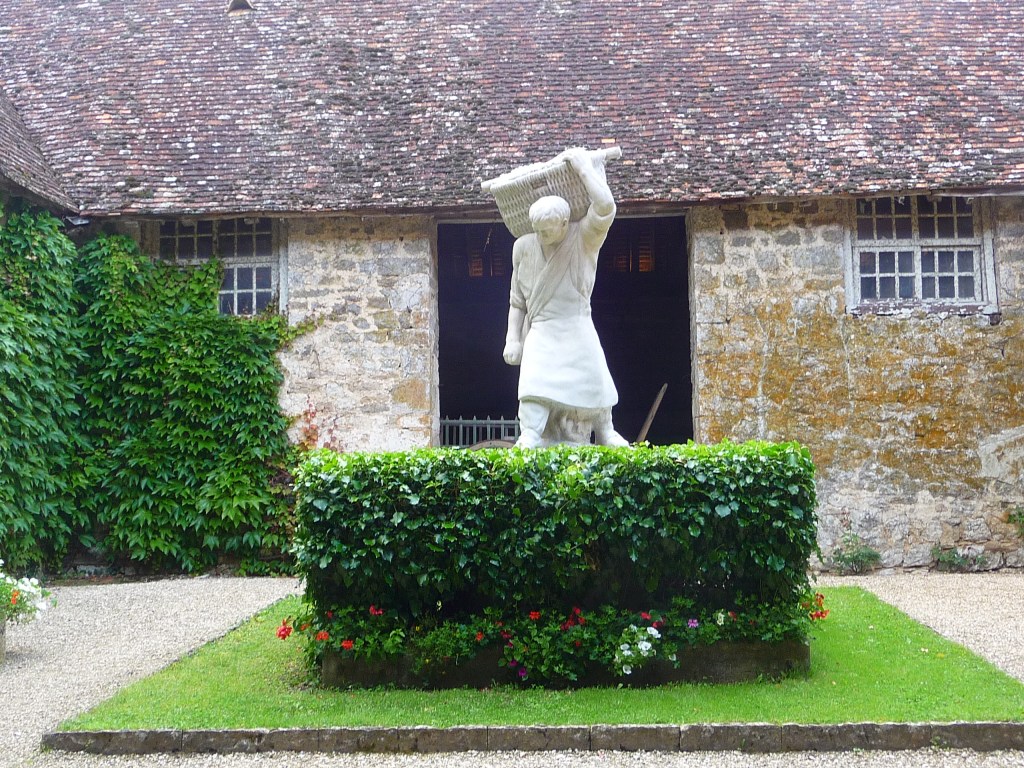
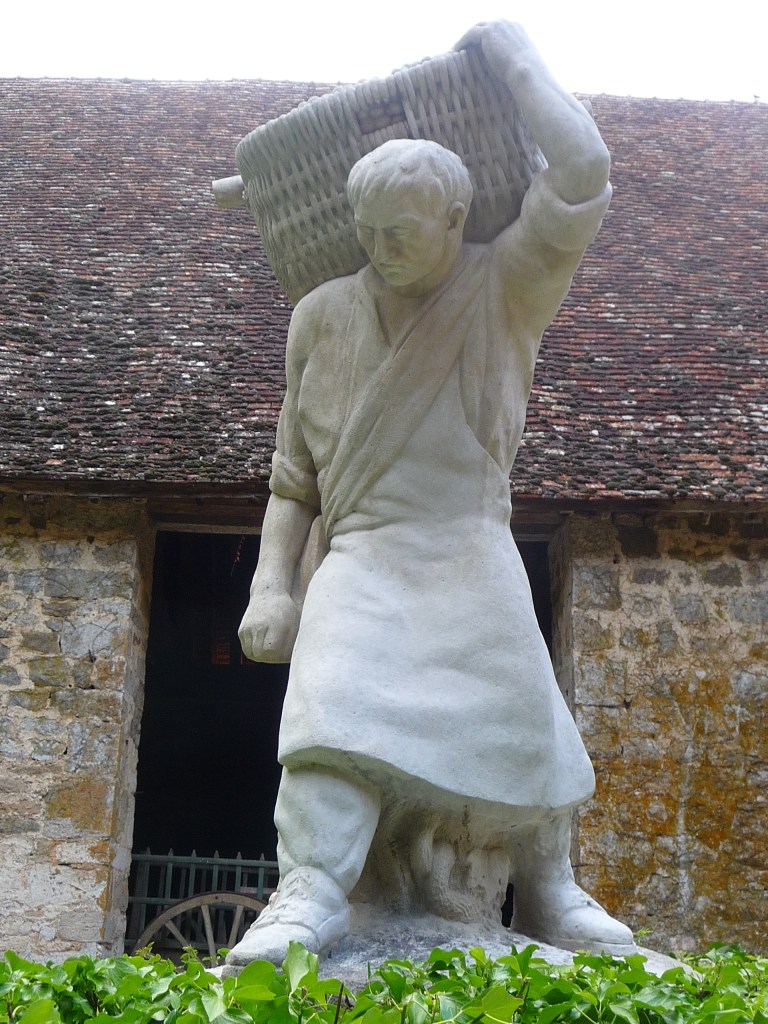
I never thought I’d find a photograph that would show something in silver but guess what? I found one that I took a couple of years ago on quick trip from Vienna to Bratislava. I was looking for something else entirely and voila – there it was. So, my silver statue of a dapper, man-about-town off to the theatre, is my offering for Life in Colour – Silver.
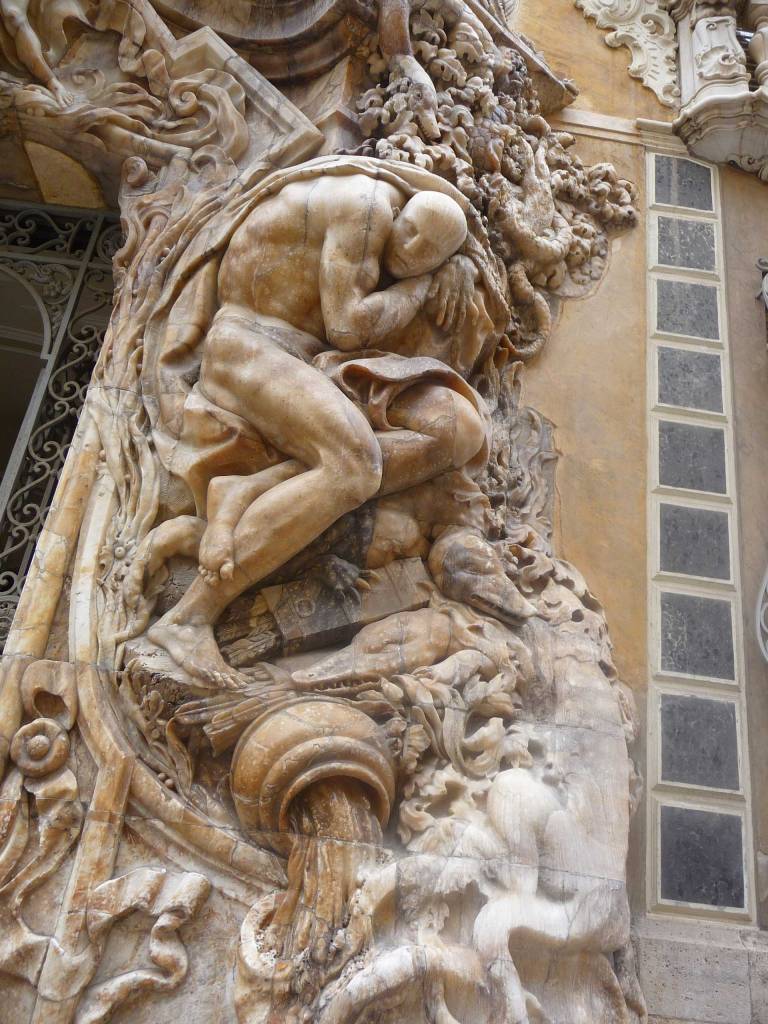
In Spain for this Baroque Sculpture at the Casa de los dos Aguas in Valencia, the home of the Marquises of the same name. This mansion is now the home of the National Museum of Ceramics and Decorative Arts, and is located in one of the most central locations in the city, a Rococo nobility palace.
The interior is equally impressive, if not quite so ornate but I am always overwhelmed by the entrance which was made in 1745 and has reference to the two rivers of the Valencian community, the Turia and Jucar which are represented by two naked figures and the two urns of water at their feet, reference to the title of the Marquises (los dos aguas).
On one side are two crocodiles, a quiver of arrows and the water pouring from the vessel. On the other side is a reclining lion, another quiver of arrows and the representative vessel pouring water. I’ve enlarged only one of them (see below) just to show some of the detail without you having to click on the enlarging feature.
In the centre of the entrance is an image to the Virgin of the Rosary, patron saint of the House of Dos Aguas and at her foot kneel two women, one with a cornucopia of fruits and the other with a vessel from which pours coins. The whole is a riot of voluptuousness in true Rococo style. The virgin is a plaster copy made in 1855 as the original work disappeared at the end of the century previous.
The Museum is a worthwhile place to visit but if there is no time, the building of the Palacio de los dos Aguas is right in the centre of town and you can stand outside and look at it for free!
If you are into the Baroque – this is an impressive entrance.
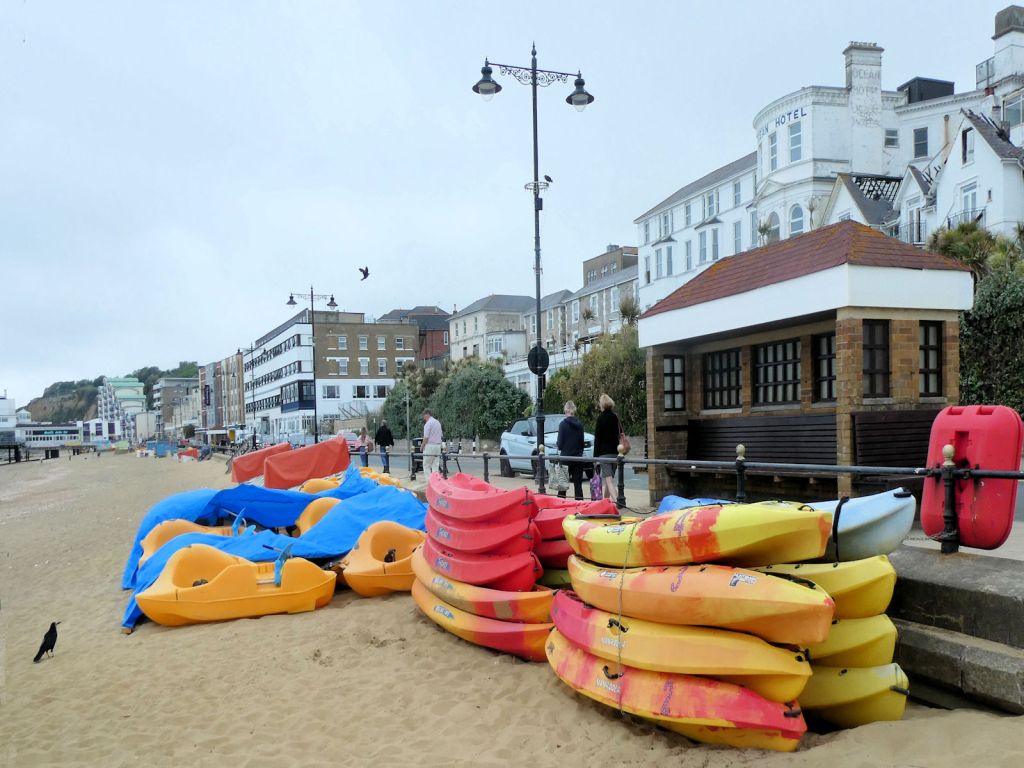
Summer was yesterday, today reverts to normal English June weather. But click on the image and look there in the distance, two ladies sitting on deckchairs, the wind being deflected by a windbreak. Say what they like, but we’ve got grit in bucketfuls in the UK: it takes more than grey skies and chill winds to put us off sitting on the beach.
Two ends of the beach, mist coming over both. The right hand side image shows Shanklin on zoom setting viewed from the Pier at Sandown, about 3-4 miles away.
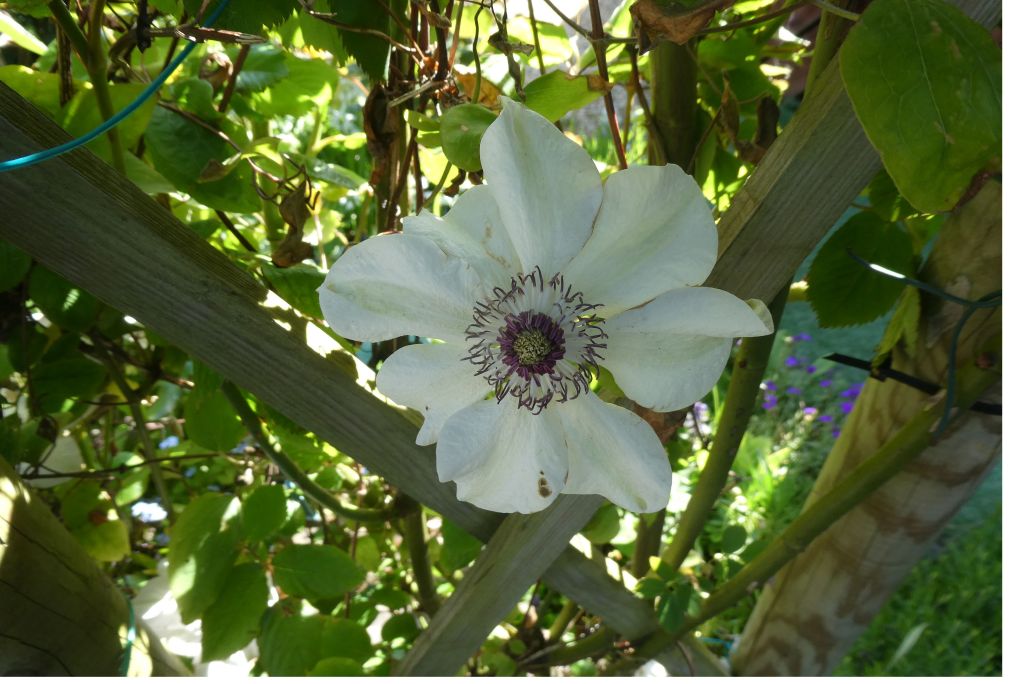
This month, Jude has asked us to find examples of White, so here are a few images taken today in my garden. Perhaps some, less botanical, during the week.
White Clematis
Daisies in pot beneath a common Clematis and the delicatate creamy Climbing Hydrangea
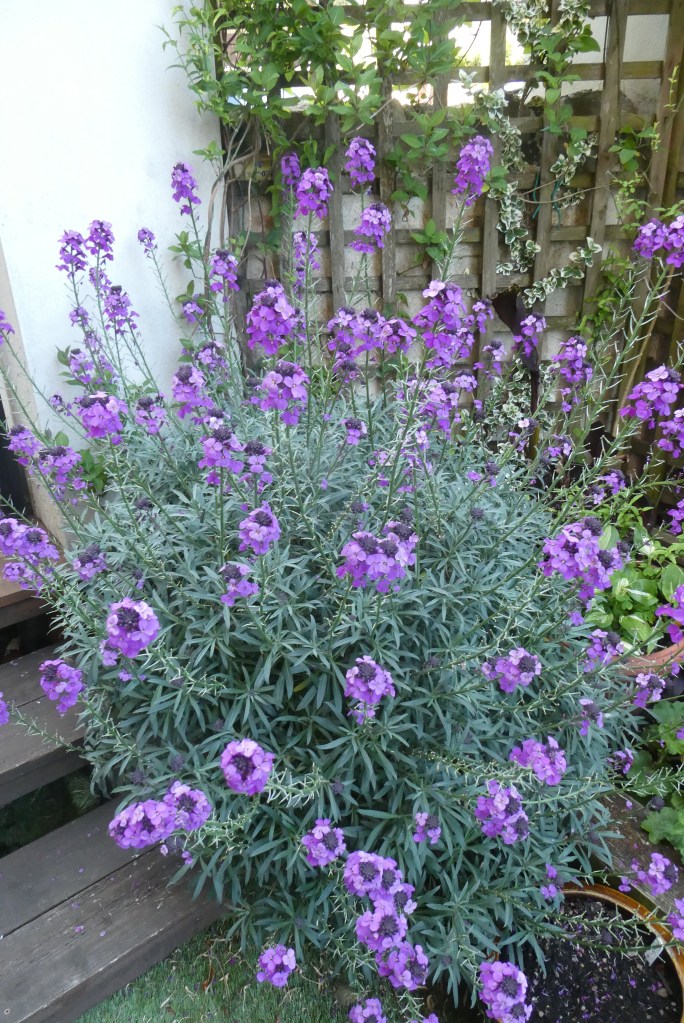
Nearly the end of May and I can still only find flowers to illustrate the colour purple. Nothing else catches my eye on my walk through the town so here are just a few garden flowers.
First up is the everlasting wallflower (Erysimum Bowles), much too big for its position right by my side gate and creeping over the steps, but the butterflies and the bees love it so here it stays. It’s not really purple, it’s what my generation would call mauve.
Erysimum Bowles or Everlasting Wallflower to give it it’s popular name.
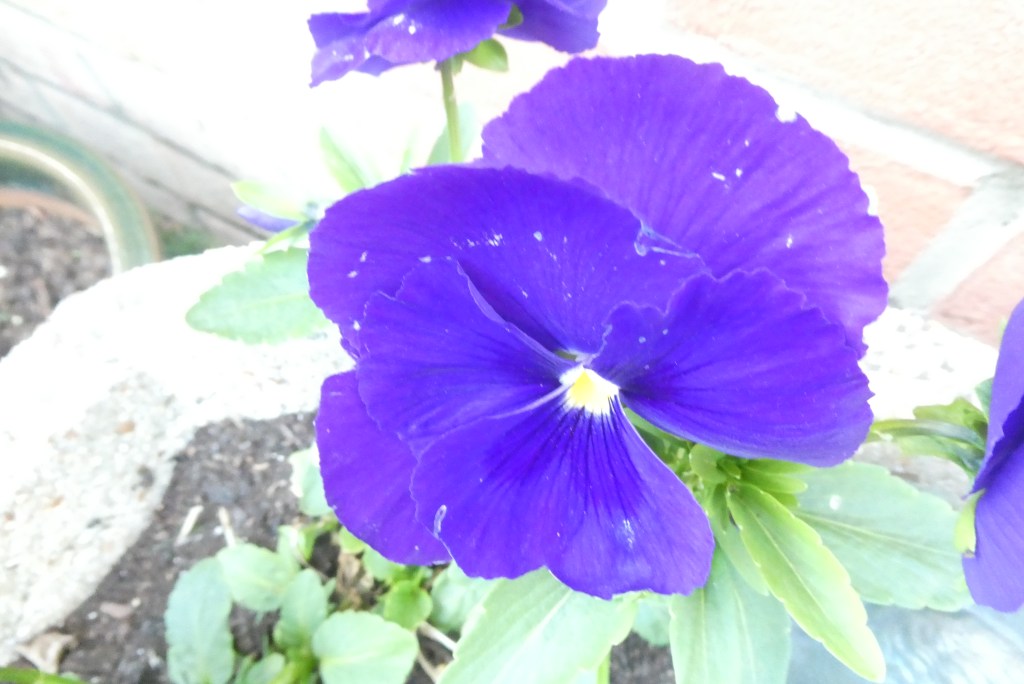
Favourite pansies next, one bordering on blue perhaps but edging towards the purplish I think.
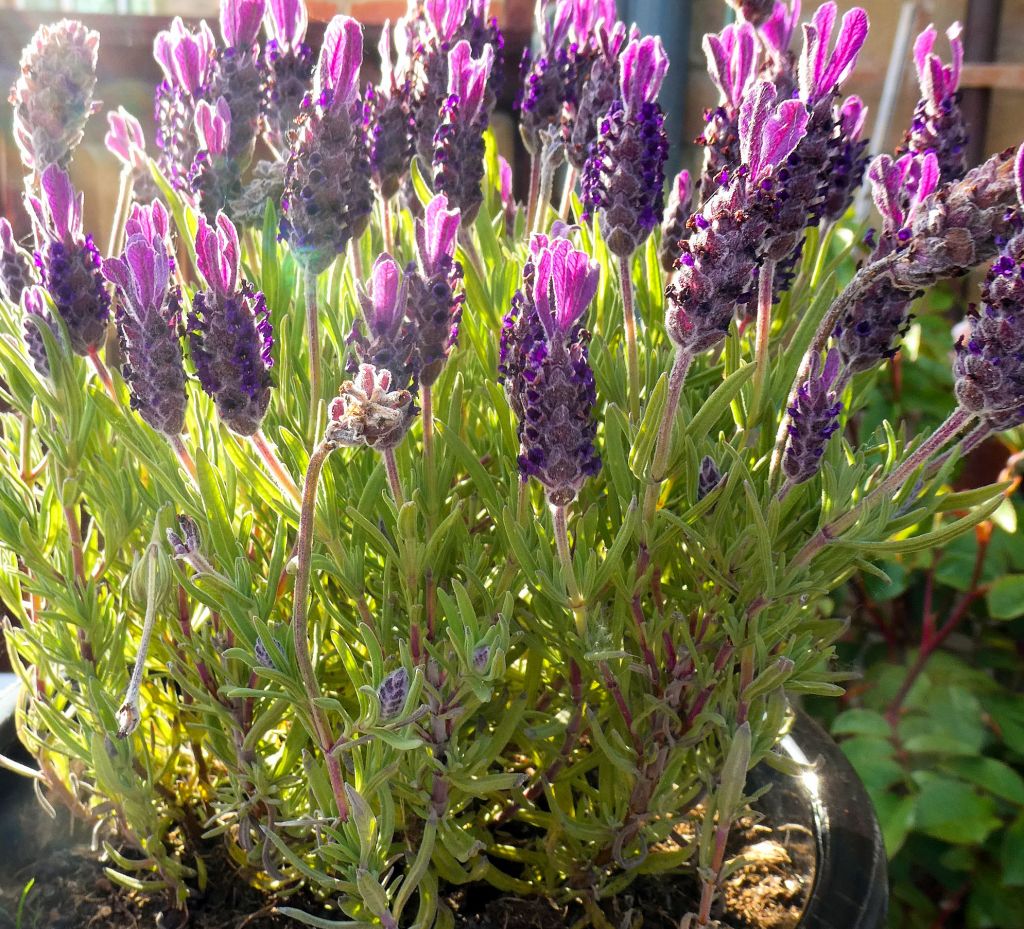
And lastly, lavender, without which no garden is complete. This one is a particular favourite and I’ve taken a cutting from a more sprawling version in the garden to have it outside my bedroom door.
I know the Life in Colour Pink has long since gone but I came across this photograph of an enchanting little girl who was taking part in the children’s parade in the Trinidad Festival a few ears ago when I was there. I can’t resist adding her to Life in Colour or should it be Perfect in Pink?
The terrible accident yesterday in Italy sent me to my photographs of the time I spent there just over two years ago. The Italian lakes are beautiful at any time but my week there was exceptional, especially in the town of Stresa with its access to so many other towns along the lakes and to so many lovely walks in the mountains and hills around.
One of the Hiking Trails
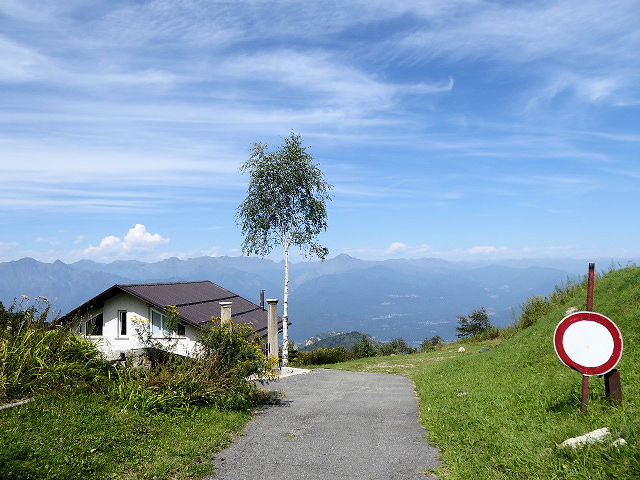
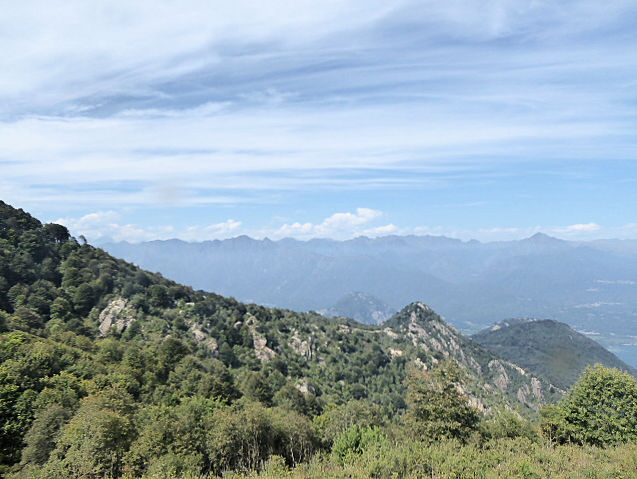
The Cable car ride to Mottorone above Stresa was one such and I wanted to put just a few pictures up to show why people go up there in summer. Winter, of course, can be for skiing, but summer is for walking among the trees and looking at the amazing views down to the lakes.
Summit
I had often though of returning to do that trip again but when an accident like this happens, one’s faith in machinery takes a bit of a knock!
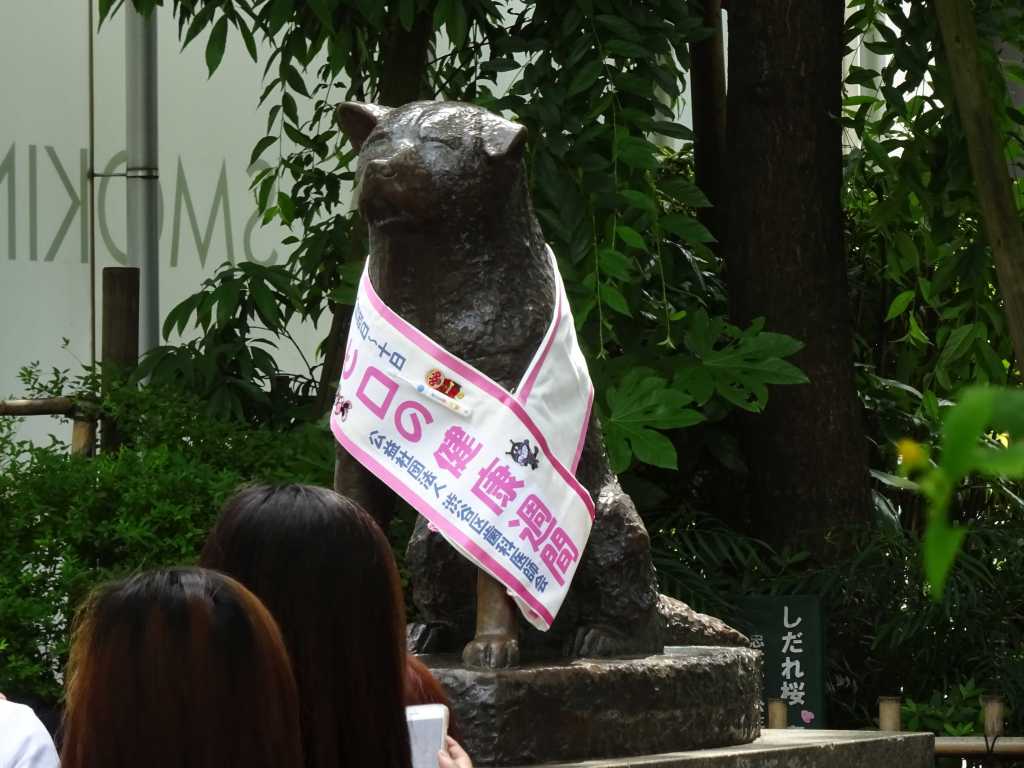
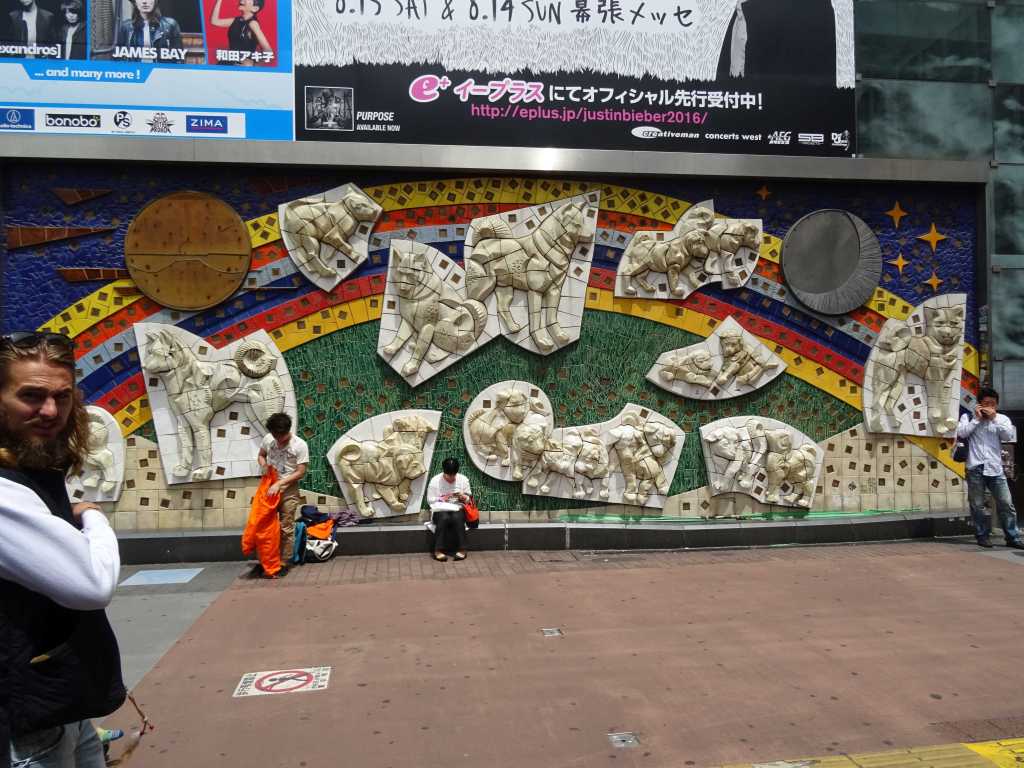
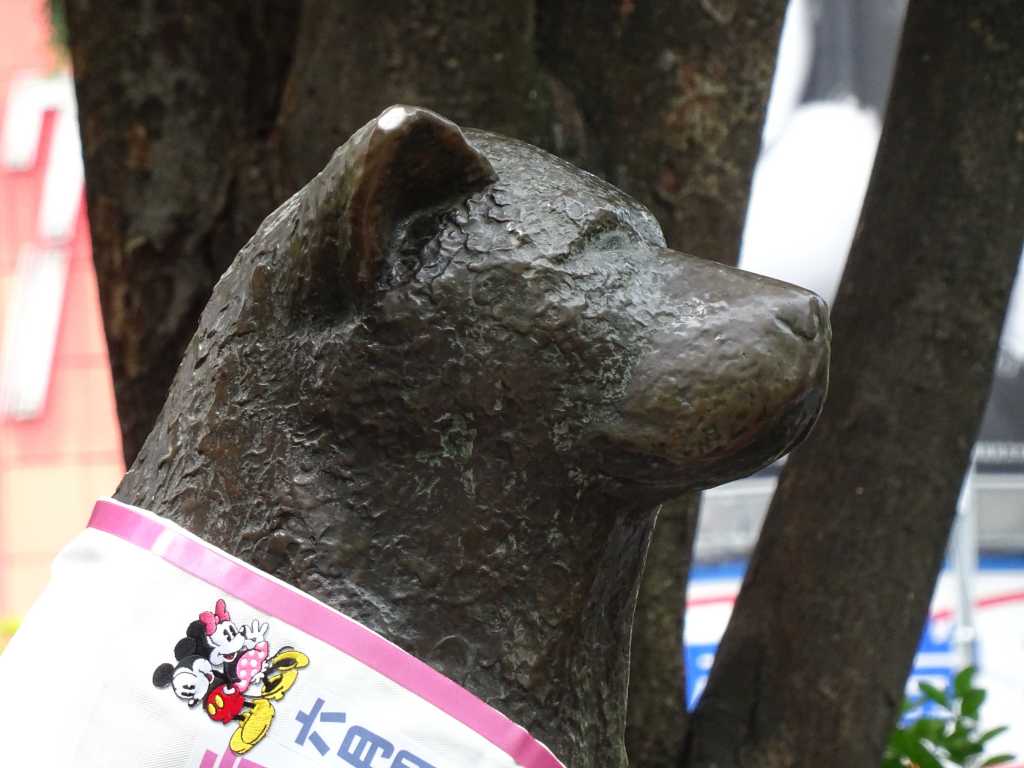
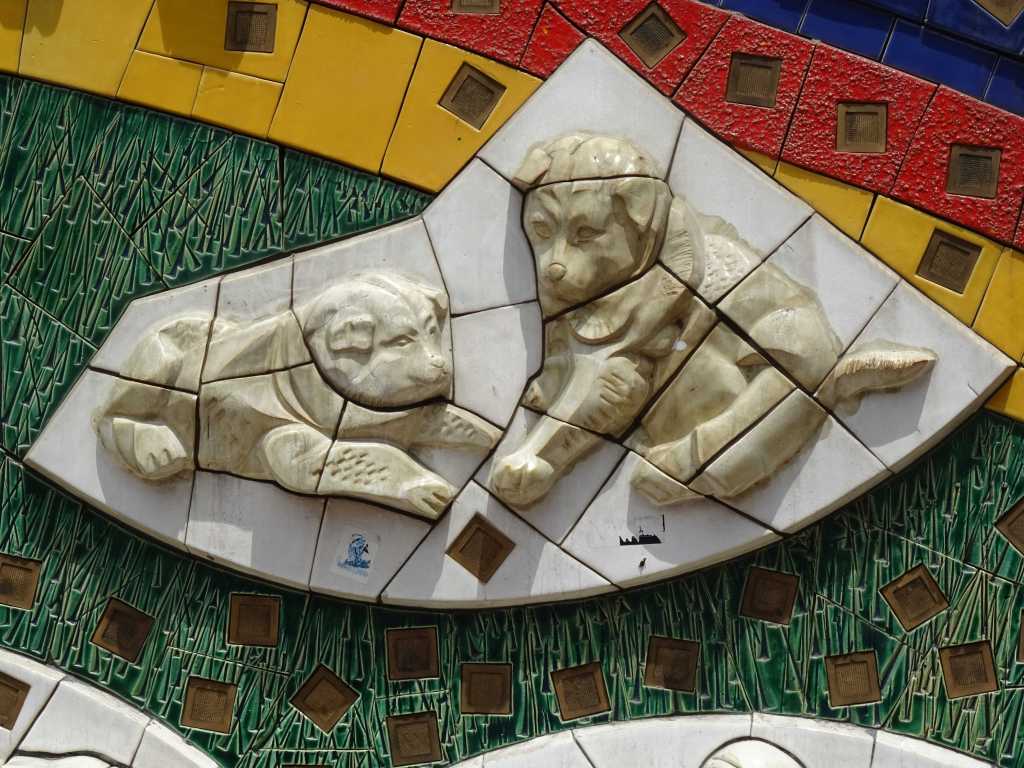
I’d like to set the scene as Maria in Sound of Music suggests “Let’s start at the very beginning” but maybe it’s better if I tell you first that this is Hachikō, the most famous dog in Japan, and that people come from all over Japan to visit his statue in central Tokyo. We tourists also come, led by guide books and the moving story of the faithful dog who waited at the train station for his owner to return from work, every day for nearly a decade.
Hachikō was a golden brown Akita born in November 1923 in Japan’s Akita prefecture: a year later, still a puppy, he was acquired by Hidesaburō Ueno, a professor who taught at Tokyo Imperial University and lived in the Shibuya neighbourhood of the city.
The pair formed a close bond and their life became one of routine. In the morning Professor Ueno would walk to the Shibuya Station, Hachikō trotting alongside, and take the train to work. After finishing the day’s classes, he would return by train arriving at the station at 3 p.m. on the dot: there Hachikō would be waiting for him.
This continued until May 1925 when the Professor died suddenly at work, having suffered a brain haemorrhage while teaching.
Hachikō, who had come to meet his master as usual on that day, was left waiting at the station. Day after day for nigh on ten years the dog returned to the spot where he had always waited for his owner, patient and loyal despite not being welcomed by the station employees.
The loyal dog, one of only 30 purebred Akitas on record at the time, never gave up hope and although reportedly given away after his master’s death, he regularly ran off to Shibuya Station at 3 p.m. hoping to meet the Professor. Days turned into weeks, then months, then years, and still Hachikō returned to the station each day to wait.
At first, the station workers were not all that friendly to Hachikō, but his fidelity won them over and they began to bring treats for him and sometimes sat beside him to keep him company. Soon, the lone dog and his story began to draw the attention of other commuters. His presence had a great impact on the local community of Shibuya and he became something of an icon.
It is thanks to one of Professor Ueno’s former students, Hirokichi Saito, who also happened to be an expert on the Akita breed, that we know much of this story, because when he got wind of the tale he took the train to Shibuya to see for himself. When he arrived and saw Hachikō there, as usual, he followed him from the station to the home of Ueno’s former gardener, Kuzaburo Kobayashi. There, Kobayashi filled him in on the story of Hachikō’s life.
The student wrote articles about the situation at the Shibuya station one of which was published in the national daily Asahi Shimbun in 1932. The tale spread throughout Japan bringing nationwide fame to Hachikō and people then began to arrive from all over Japan to visit the dog who had become something of a good-luck charm. Many travelled great distances just to sit with him.
For the next nine years and nine months, Hachikō came to the station every day at 3.00 pm on the dot. He was found dead in the street in March 1935, the cause of death (not discovered until 2011) later found to be a cancer. His death made national headlines and after cremation, his ashes were placed next to Professor Ueno’s grave in Aoyama Cemetery in Tokyo. His fur, however, was preserved, stuffed and mounted and is now housed in the National Museum of Nature and Science in Tokyo.
The stuffed Hachiko in the National Museum of Nature & Science, Tokyo
The original bronze statue of Hachikō was raised from donations and erected in the exact spot where he had waited for his master for so many years but after World War ll erupted the statue was melted down for ammunitions. In 1948 however, the current statue was erected in Shibuya Station.
The death of Hachiko: Credit Shibuya Folk and Literary Shirane Memorial Museum, Public domain, via Wikimedia Commons
There is a similar statue, erected in 2004, in Odate, Hachikō’s original hometown, where it stands in front of the Akita Dog Museum.
On the 80th anniversary of Hachikō’s death, in 2015, the University of Tokyo unveiled yet another brass statue of the dog.