Connections between rooms in castles are well documented, less well known is the connection between the Castel Sant’Angelo in Rome and the Vatican City.
The Castel of Sant’Angelo, the massive fortress-like building on the right-hand side of the Tiber, was originally built by the Emperor Hadrian (117-13 AD), as a monumental tomb for himself and his successors, not far from the Mausoleum of Augustus near the edge of the Vatican fields.
Castel Sant’Angelo, Rome. Hadrian’s Mausoleum
By the 5th Century, the Mausoleum had been included in the defensive system of the city walls, and from the 10th century onwards it had become a fortress, the Castel Sant’Angelo, its purpose being to defend the Vatican, to which it was linked by a special passageway (the Connect). Originally the Mausoleum was surmounted by a gilt bronze statue of the emperor in a chariot.
Below is a photograph taken from the cupola of St.Peter’s at the Vatican and the Castell is quite some way from it, on the left-hand side just beyond the patch of dark green trees that can be seen.
Looking down from St. Peter’s, Vatican City.
Looking Down from the Cupula of St. Peter’s in the Vatican, towards the Castel S Angelo. Photograph Copyright Solange Hando.
The Mausoleum was incomplete when Hadrian died but he was buried there one year later in 139 AD. The bridge connecting both sides of the Tiber had been built by Hadrian to facilitate direct access to the tomb, a more elaborate bridge than any other Roman bridge at that time: it survived until the end of the last century by which time it had become known as the Ponte Sant’Angelo. The two end spans were rebuilt at the end of the last century and only the three central arches are originals from the period 130-134.
Ponte Sant’Angelo, Rome: Photograph copyright Mari Nicholson
I was away last week but managed to log on to my tablet and saw that the subject was Street. I hope I’ve got this right because I cannot now remember how to get the rest of the week’s Photo Challenge words up. I thought they were to be emailed to me, obviously I’ve got it wrong. I’ve gone into Photograph 101 but all I see there is the Weekly Photo challenge and Daily Prompt Word, so if anyone can steer me in the right direction I’d be obliged.
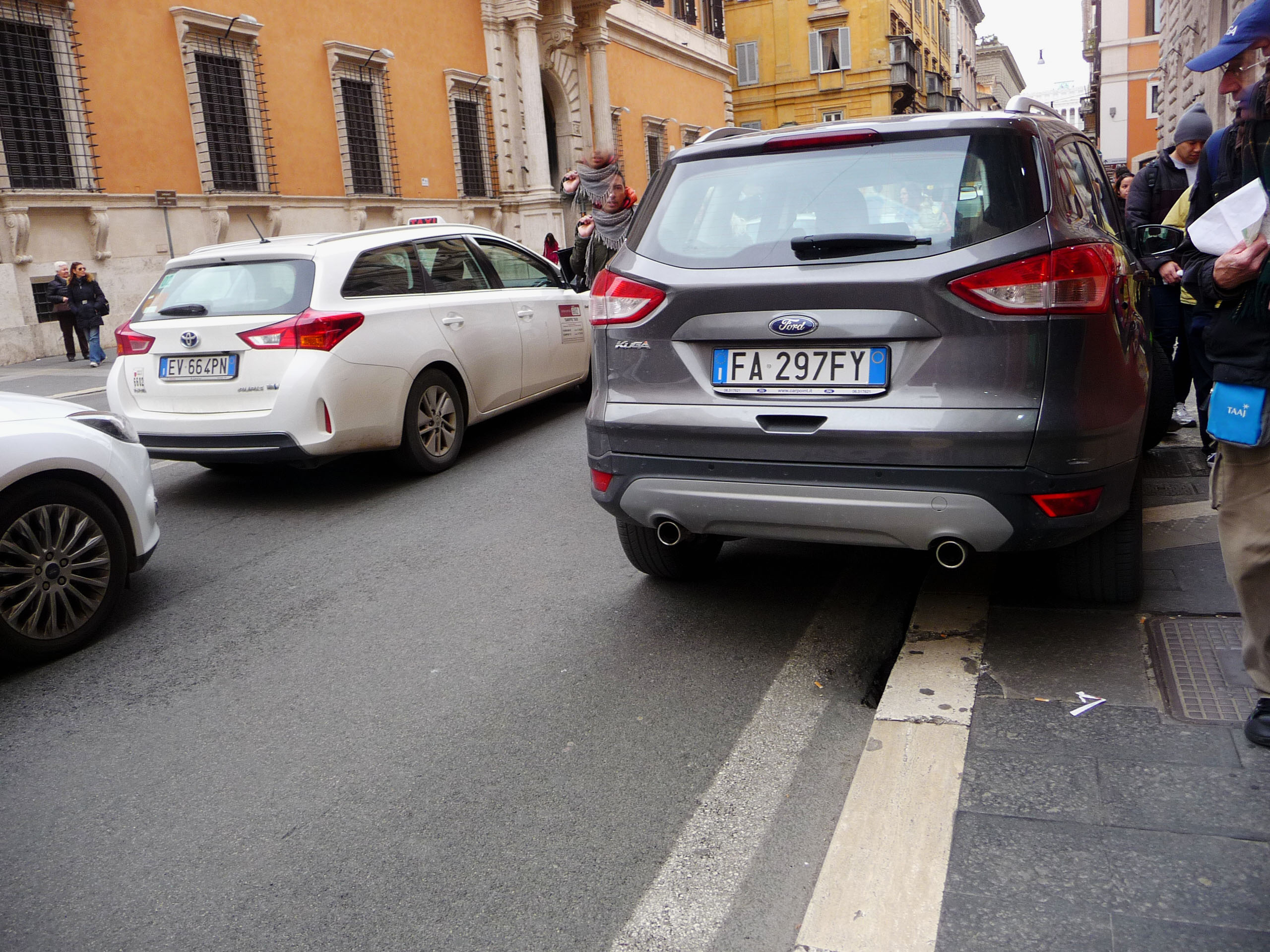
So, hope I’m right about last Tuesday’s subject being Street, and here are two from Rome.
Italy, where the Vespa still reigns supreme
Parking> Not my problem. I’ve just gone off for a coffee..
Quite literally, this is about time: a clock, no less.
This is the Great Clock (Gros Horlogue) in Rouen, France, which dates from the 16th century and sits amoung the maze of narrow streets that make up the old part of town. The half-timbered houses that line the streets seem to be always freshly painted and look smart.
Rouen is, of course, Joan of Arc’s town, and the church dedicated to her is truly wonderful. It is set near the market square which has stalls selling the most amazing cheeses – always a reason for visiting this area.
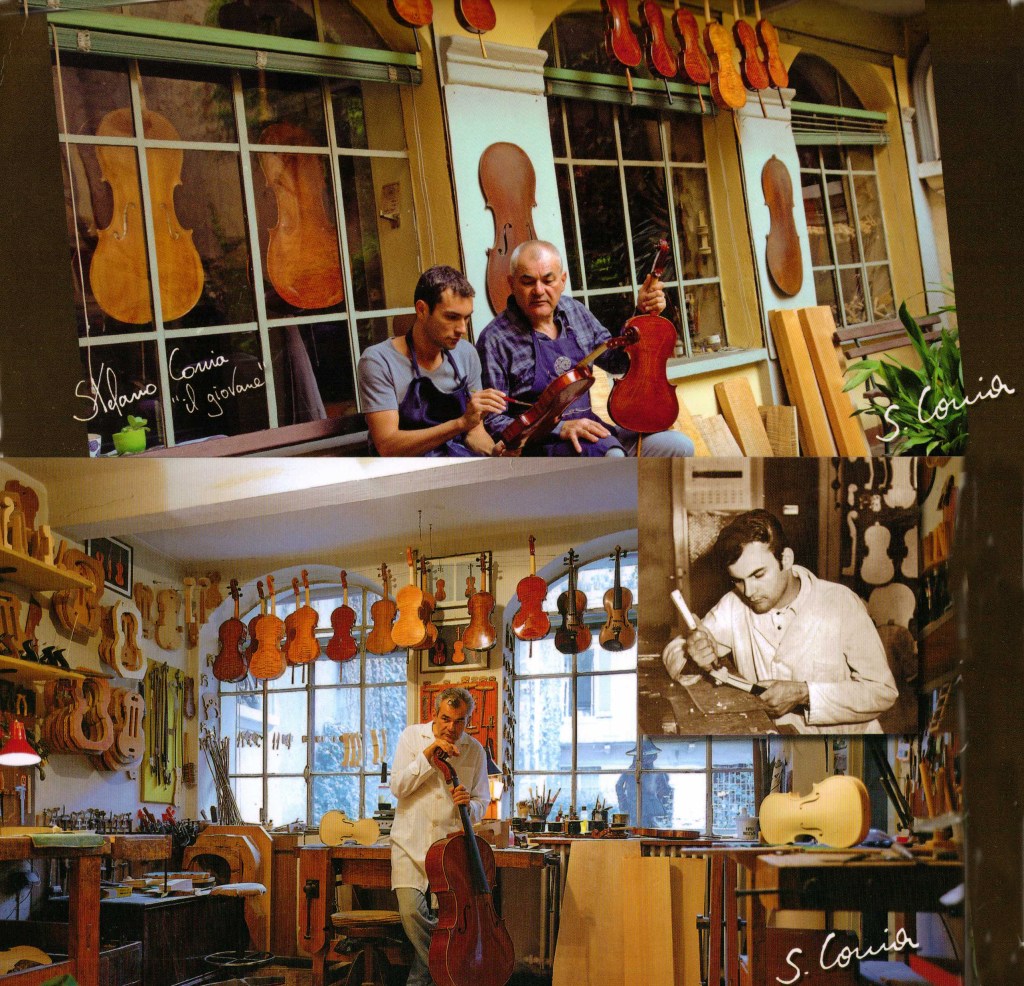
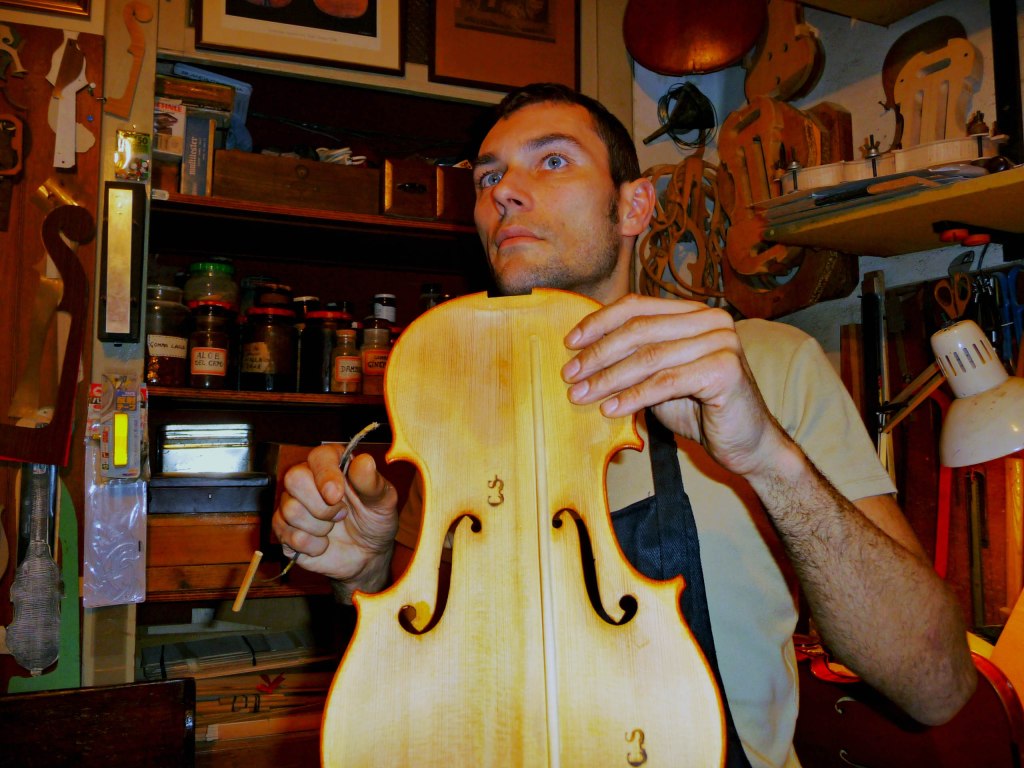
I went to Cremona last winter and two things from that trip I remember clearly: one was how cold it was, so cold that I had to buy a woollen hat from a street trader who charged me an outrageous €20 for a very inferior product: the second, but most important, was my meeting with violin maker, Stefano Conia, a master luthier, an intense young man who makes violins with passion, violins that are bought and played by some of the world’s finest musicians.
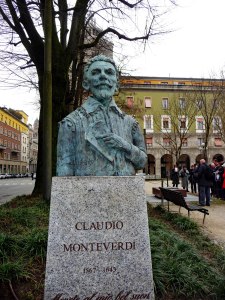
Cremona has been important in Italy’s cultural life since Roman times, located as it is on the banks of the Po River, a major junction for trade and commerce. The narrow streets of the city are rich in history, the red brick medieval towers and the Renaissance buildings shading the many statues of its famous sons, Antonio Stradivari and Claudio Monteverdi.
Statue of Claudio Monteverdi, in CremonaStatue of Antonio Stradivari, in Cremona
Today the town has 147 luthiers who still make violins using the template of the great masters whose common bond was a tradition of classical techniques handed down from the middle of the 16th century. It is this tradition that is still being practised by Stefano Conia and others like him.
In his workroom/studio, Stefano explained the finer points of violin making to me as I took in all aspects of the space around me, the overpowering aromas of resin, varnish, wax, woods and other smells to which I couldn’t put a name. His studio, evocative with smells from the pots of glue, wax and resin, is hung with violin parts awaiting varnishing or waxing, and the workbench is littered with tools of every description. Juniper Gum tickled the nostrils and had a mind-clearing effect when I inhaled it. Wood shavings littered the floor and had their own peculiar smell, violins hung from the ceilings and part-completed fronts, backs, and frets of as yet uncompleted instruments, sat awaiting his attention.
Stefano demonstrates his method of violin making
Earlier I’d had an insight into the history of the violin and its unique acoustic characteristics at the Violin Museum, one dedicated to Cremona’s sovereign musical instrument. In this impressive building, there is a stunning collection of stringed instruments (violins, cellos and a viola) made by the most renowned violin makers. I was also privileged to hear a skilled young musician play Meditation by Massenet and a Paganini violin concerto, on an original Stradivari for a small audience in the auditorium of the museum. I do not exaggerate when I say that the playing brought tears to my eyes and I know, beyond doubt, that my emotion stemmed from the lush, rich sounds that came from the Stradivari violin as the music penetrated the skin and found the pleasure centres of the brain.
The Museum boasts a collection of the most ancient instruments – including one dating back to 1556, made by Andrea Amati for Carlo IX of France, and the original “Cremonese” made by Stradivari in 1715. Museum pieces they may be but they must be played every day to preserve their purity. One elderly musician described a Stradivari to me as being like an old wine that gets better with age.
At his workshop, Stefano told me that creating an instrument with such depth of character relies on centuries of tradition being handed down from father to son. In his own family, his uncle is also a violin maker and he has hopes that at least one of his two sons will follow in his footsteps although they are too young yet to even consider it.
Stefano in his workshop
Stefano is obsessed with wood because apart from the craftsmanship, it is the wood from which the instrument is made that gives the violin its unique sound. Over the course of our conversation, I learned that the wood for the front of the violin comes from the spruce trees found in the Dolomites, the Northern Italian Alps. Stefano often goes himself to choose the tree to be cut as sometimes he feels the need to be totally hands-on, but usually, he is happy to leave it to the experts who know exactly what he is looking for. The wood for the back of the violin is Maple and has to be imported from the mountains of Bosnia-Herzegovina in the Balkans. The search for the perfect wood is an ongoing pursuit and although he owns valuable stocks of old wood, there will always be a need for more.
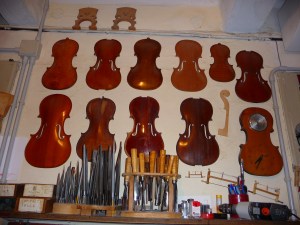
Awaiting assembly in Stefanos’ studio.Violin parts awaiting assembly in the workshop of Stefano Conia
A violin will take approximately two months to make from start to finish but with time in between for resting and drying the varnish, he reckons to make possibly 12 violins per year each of which will sell for approximately 12,000 Euros.
Stefano plays the violin himself as do all luthiers. “How do you feel when you part with one of your violins, given that you have devoted so much time to making it the best you can,” I asked. He smiled. “Each violin is like my baby, but I have to let it go.”
As yet unvarnished, violin making in Cremona
There is some concern in the town that the East Asians are now making violins and may make inroads on the trade. In China, violins and cellos are mass-produced for a fraction of the cost of those made in Cremona and nowadays, many of the craftsmen in the town are Asian. In the town’s international Violin Making School, it is estimated that 80% of the students are foreigners, Koreans, Japanese and Taiwanese predominating. Most will return home but some will stay to continue the learning process and to open their own workshops.
The name Cremona is synonymous with the work of the great violin makers and it is said that there are few investments like a Cremonese violin and that a buyer can expect a 20%-30% return on the money invested. That is why the luthiers of Cremona will survive despite the competition from the East. As a Rolls Royce is to a car enthusiast, so a Cremona violin is to an instrumentalist.
Stefano’s sons, it is hoped, will follow him into the workshop in which their grandfather worked, producing exquisite violins for the world’s great musicians, the floor will still be covered in shavings and the ripe smells of gums and resins will still waft out through the doorway of the studio in Corso Garibaldi in Cremona.
POSTSCRIPT:
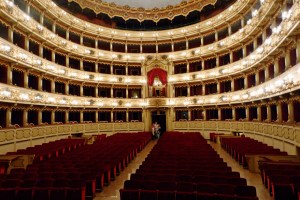
Nearly 80 years ago on June 13th, 1937, at the Ponchielli theatre in Cremona, a concert took place which is still spoken of with awe. The music of Corelli, Bach, Vivaldi and Boccherini was played using twenty-four Stradivarius, nine Guarneri and one Amati. I cannot imagine the effect on listeners but musicians to whom I’ve told the story have almost wept that they were not there.
The founder of the Ponchielli Theatre in CremonaPonchielli Theatre, Cremona
Following that, Cremona launched a violin-making school in September 1938 but with the coming of the Second World War it was closed. Not until the 1950s did it pick up momentum and begin to inspire the passion for making violins in the tradition of the original luthiers. The handful of violin-makers with which they started has grown and now there are some 150 workshops where instruments are made and restored and where students practice their craft. Most work is commissioned and the waiting list can be as long as one year.
Oh, and you want to buy a Stradivari? You’ll have to find something in the region of €200,000, I was told.
To hear a Stradivarius being played, try the Palazzo Comunale at midday, or ask at the Violin Museum.
The Samaria Gorge, fast flowing icy water and stones, stones, stones
It was when I was sorting through some old photographs of former vacations to make room for the overflowing baskets of new images I’ve acquired from this year’s trips, that I came across those of the Samaria Gorge in Crete, a place I hadn’t thought about in years.
It was 1990 when I was there last if my memory serves me right, and I can still recall the icy-cold waters which we had to wade through. I remember I had to buy a pair of trainers because I didn’t have adequate footwear for the trek and you aren’t allowed to enter without full preparation for the walk.
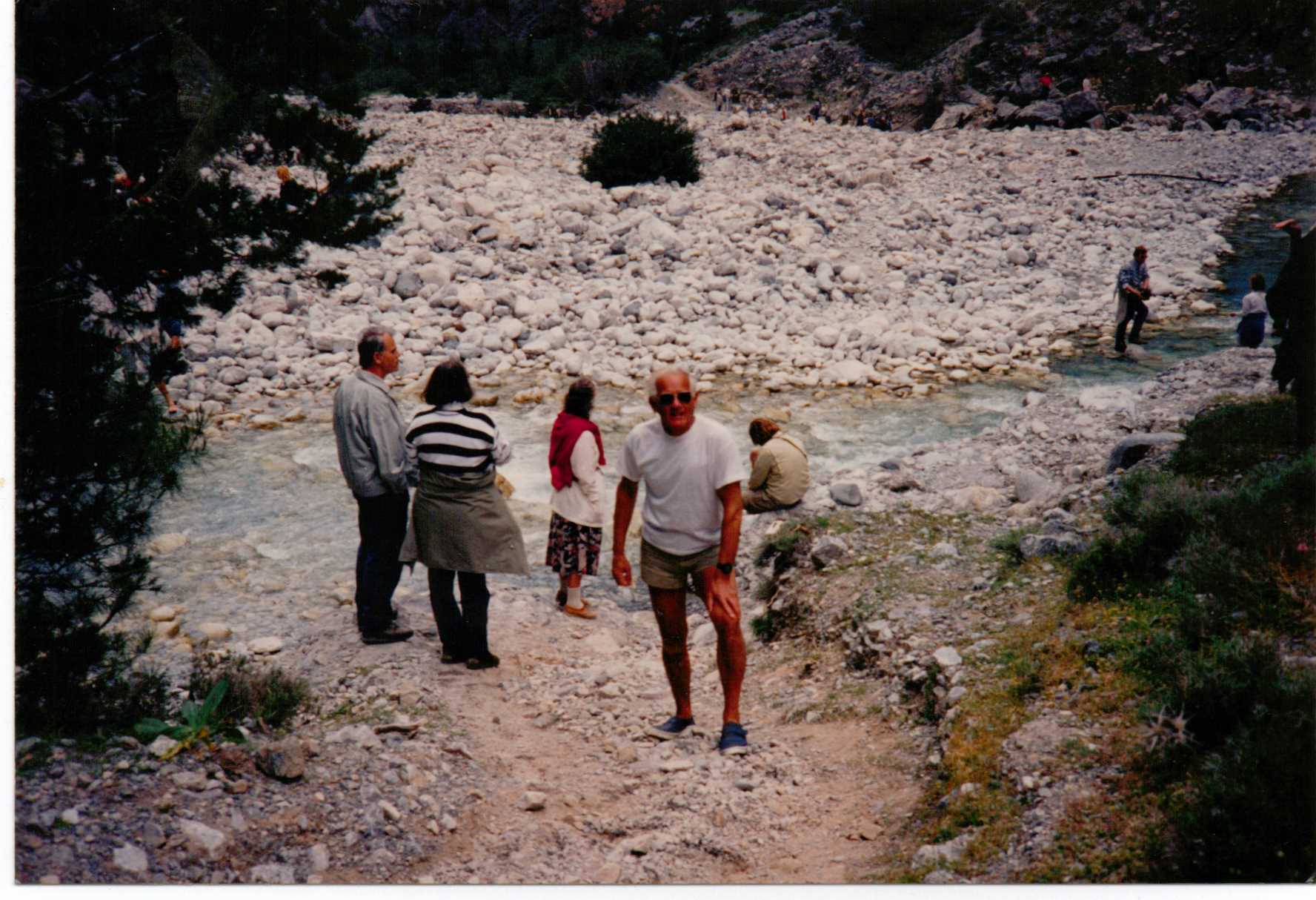
Me, younger, fitter and wondering if I’ve bitten off more than i could chew, bearing in mind I hate having wet, cold feet.
I so enjoyed looking through my old photographs that I thought I’d write something about the Gorge and upload some of the photographs, taken on negative film on my trusty old Canon Camera. I’ve had to scan these in and because of their age the colour is not very good – a rather pinkish tinge seems to cloud them.
I know that the Samaria Gorge hasn’t changed since I did the trek as I stayed at the Mistral Hotel in Malame in Crete last year and spoke with visitors who had done the walk. They had to leave the hotel at 05.00 a.m to do this, came back exhausted but thrilled to have accomplished the walk (with boots, walking poles, mobiles, sat navs. etc.) We didn’t have those sort of things when we did it as you can see from the above photograph.
At times the cliffs on either side seem to bear down on you. Don’t rest beneath them, there is sometimes a rock fall
Samaria Gorge is situated in the National Park of Samaria, in the White Mountains in West Crete and is considered one of the main attractions of that lovely island. It is 16 Kilometres long but the walk from the exit of the National Park to Agia Roumeli adds another 3 km. to that. Even so, it is not the longest in Europe as it sometimes claimed: that honour belongs to the “gorges du Verdon” in Southern France which is a little over 20 km in length.
The Samaria Gorge starts at an altitude of 1230 metres and takes you down to the shore orf the Libyan Sea in Agia Roumeli, and the walk will take between 5 -7 hours to complete. The terrain is rough and difficult to negotiate at times due to the water rushing over stones which can cause you to stumble, so you need to have a certain degree of fitness and walking experience. I doubt if I could do it now, but in 1990 (it may even have been the eighties) I was younger, fitter, and up for anything!
A few are hesitant about going on. This is the start of the trek.
Best way to arrive is by public buses (KTEL) from Chania to Omalos every morning when the gorge is open. Once you have walked through the gorge and are in Agia Roumeli there is a ferry boat to take you to Hora Sfakion for the return connecting bus to Chania.
Normally, the Gorge opens at the beginning of May and closes at the end of October, but if the weather is at all inclement, this can all change. The gorge will also close on rainy days when there is a danger of rock falls. Make enquiries before heading off to Crete if the Gorge is one of your main reasons for visiting the island.
Negotiating the terrain in Samaria Gorge isn’t easy. It may be shallow but it is slippery
The park opens at daylight and closes at dusk but I would suggest starting at dawn if possible, as the first tourist buses arrive about 7.30 or 8.00 o’clock and it can get a bit crowded then. You can start later, at say, 11.30 or noon when there are fewer people, but you will need to spend the night in Agia Roumeli because the last boat out will have left by the time you get there. Spring is the best time to walk the Samaria Gorge, avoid the summer at all costs when the heat is intense.
This is not a walk to do with children who could easily fall and injure themselves, although children accustomed to walking, say from the age of nine or so, should manage it. Bear in mind though, that once embarked on the walk there is no quick exit anywhere along the way. There are wardens in radio contact with each other along the way, who will help you in case of trouble or injury and the presence of well-maintained springs mean that you do not have to carry much water but there are no huts in which to rest. The walk is long but not especially difficult for the experienced walker – the word here being experienced. Every day some people manage to get into trouble, but they are usually those who have never attempted a long walk, or a walk over such rough terrain.
Nearly half way along now
When I say rough terrain, I mean stony terrain. You will encounter stones in all shapes and sizes, from uneven stones at the start to pebbles in the river bed (tiring on the soles of the feet). You often have to cross the river bed by stepping on large stones which have been placed at strategic intervals and which require some sure-footedness.
The village of Samaria is situated roughly at the halfway point and most people take a rest here. You may care to take a quick walk around the village where you will probably catch glimpses of the kri-kris, the Cretan wild goats, but avoid approaching them if they are with their young.
And lastly, a Cretan wild goat with her day-old kid. She was a Diva and refused to pose, deliberately turning her back on me.
And lastly, you can visit the gorge on an organised coach trip and the coach will usually pick you up at your hotel in the early morning. You don’t walk in a group, once there you can set your own pace but you have the advantage of knowing there are other people entering the Gorge at the same time. It can be a lonely walk if there are not many there on the day you choose to do the trek.
Essentials for the trip
You won’t need much water but you will need a water bottle which you can refill on the way.
The last part of the walk has very little shade so sun cream and a brimmed hat are essentials.
Sturdy shoes. Something that won’t cause you to slip on the stones.
There are no shops, no cafes and no restaurants inside the National Park so you must carry your own food if you are likely to be hungry.
It can be cold at dawn at 1230 metres so wear something warm .
Waterproof plaster in case of blisters. You never know and help is a long way away!
The Granite Cross that Dominates the Entrance to the Cemetery
The huge granite cross, starkly outlined against the blue sky, dominates the entrance to the German War Cemetery in Malame, Crete, scene of some of the most ferocious fighting during the Second World War – the aptly named Battle of Crete. The cemetery, home to the remains of 4,700 German soldiers who died on the island, is easy to find as it is just off the coast road in Malame, a short distance from Chania.
The German Cemetery, high above Malarme
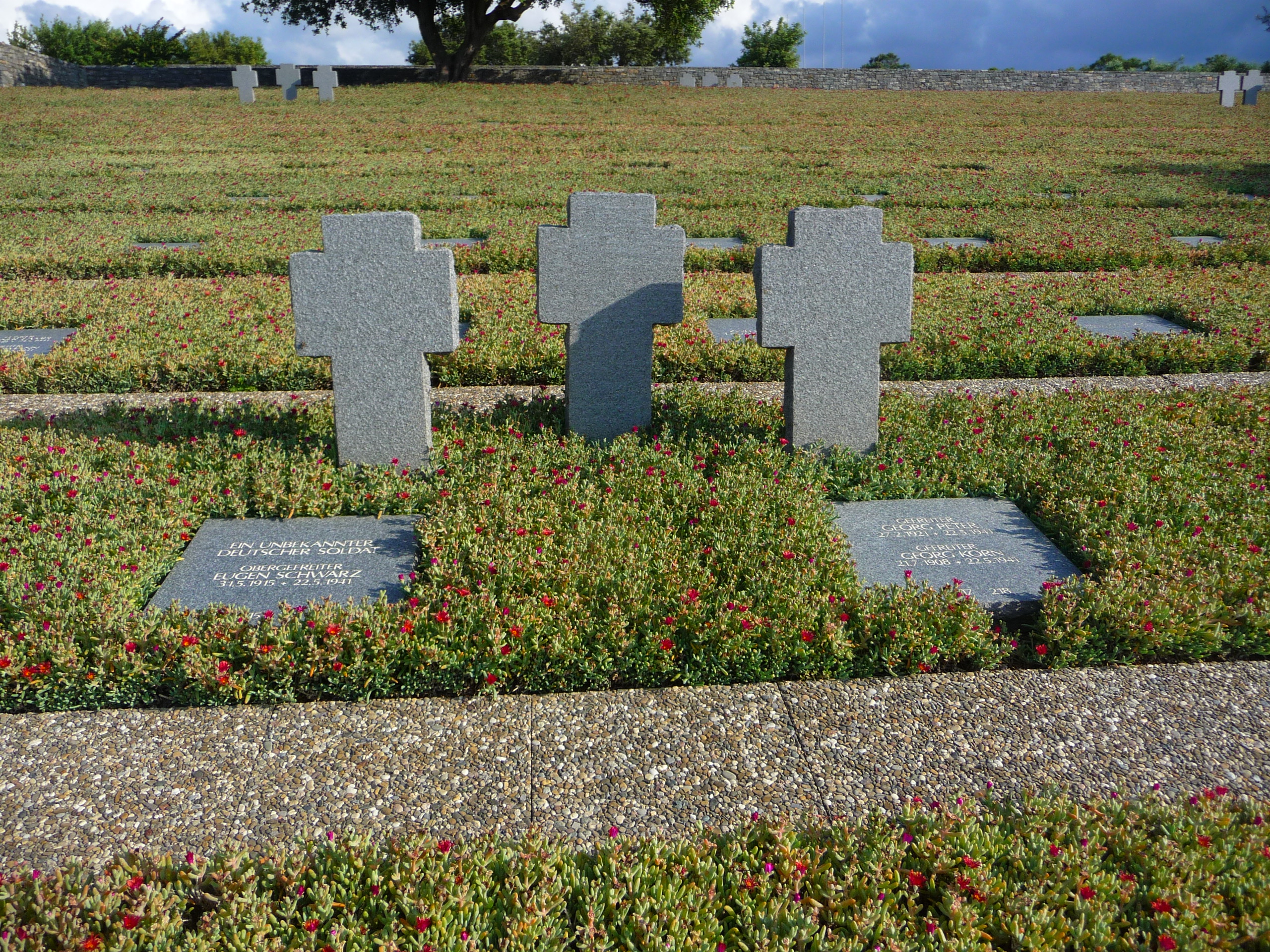
Once in the cemetery proper, one is faced with sombre, grey granite crosses dotted about the area with small granite plaques embedded in the ground, each one bearing the name of two soldiers who lie beneath. Interspersed with the grey lozenge-like plaques are tough grasses and plant forms that can withstand the dry heat and the cold, snowy winters of Crete.
Plaque to a fallen soldier
The Battle of Malame in May 1941 has become famous as one of attack and counter attack, assault and retreat, with the Cretan partisans and what remained of the Greek army on the island, fighting alongside a New Zealand infantry company, the RAF and Fleet Air Arm personnel left stranded at the airfield.
Three crosses and two plaques.
Over 500 Junkers attacked in a blitzkrieg similar to that launched on Guernica, Spain, five years earlier. Historians still query why the powers-that-be failed to realize that Hitler might try the same tactics again five years later.
Wave after wave of German paratroopers invaded the island. The Junkers were followed by an armada of paratroopers who were ferried in on gliders and parachute troop carriers and who darkened the sky as they descended in their thousands. (There were 70 gliders each one holding 10 paratroopers and these were followed by parachute troop carriers). Many were shot as they descended or were enmeshed in the surrounding olive trees.
The invaders who died in this assault were initially interred at 62 locations on the island but in 1960, following permission from the Greek Government, the Germans were permitted to recover these bodies which were then transferred to the Gonia monastery at Kolymbari. (The Monastery had been a centre for the Resistance during the Battle of Crete and the monks were imprisoned in Chania prisons, after the Germans found guns inside the chapel).
View of the German Cemetery with its crosses and granite plaques.
In 1971 the remains of 4,465 German troops were transferred to their current resting place in Malame, designed as a cemetery for the Germans who died on the four main battlegrounds of Malame, Chania, Rethymnon and Heraklion. The cemetery was consecrated on 6th October 1974.
The human cost paid by the German and Allied forces in the fight for Crete was very high. There is a little Museum on the cemetery site with information on the walls about the history of the battles but most Cretans dispute the interpretations offered.
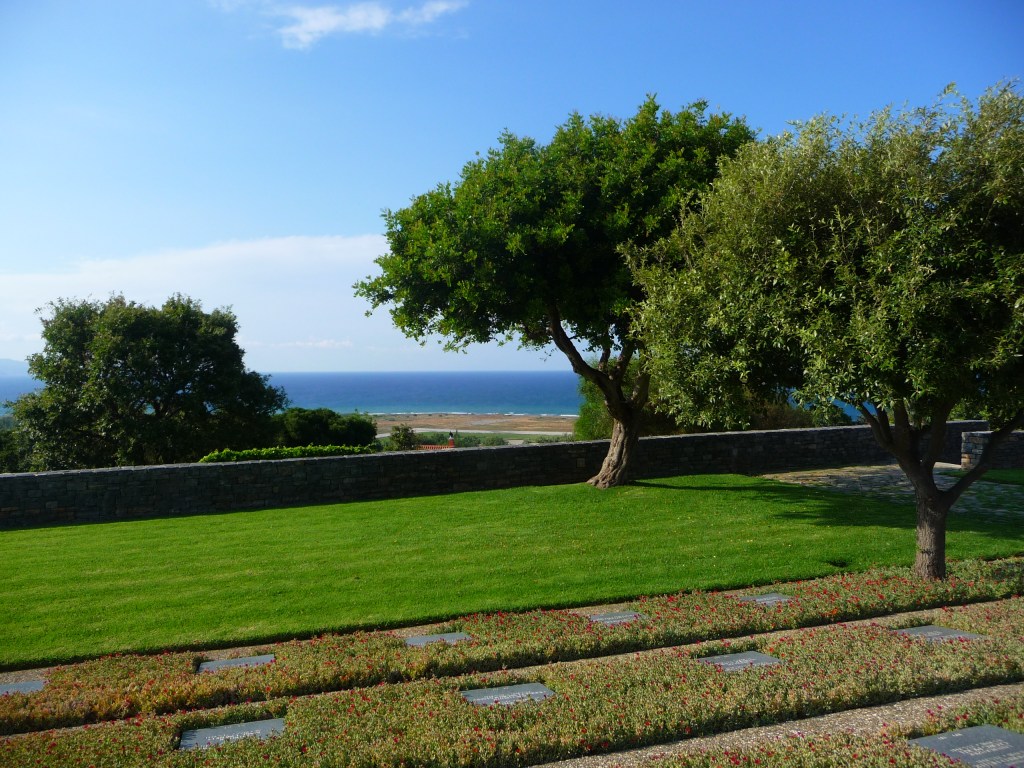
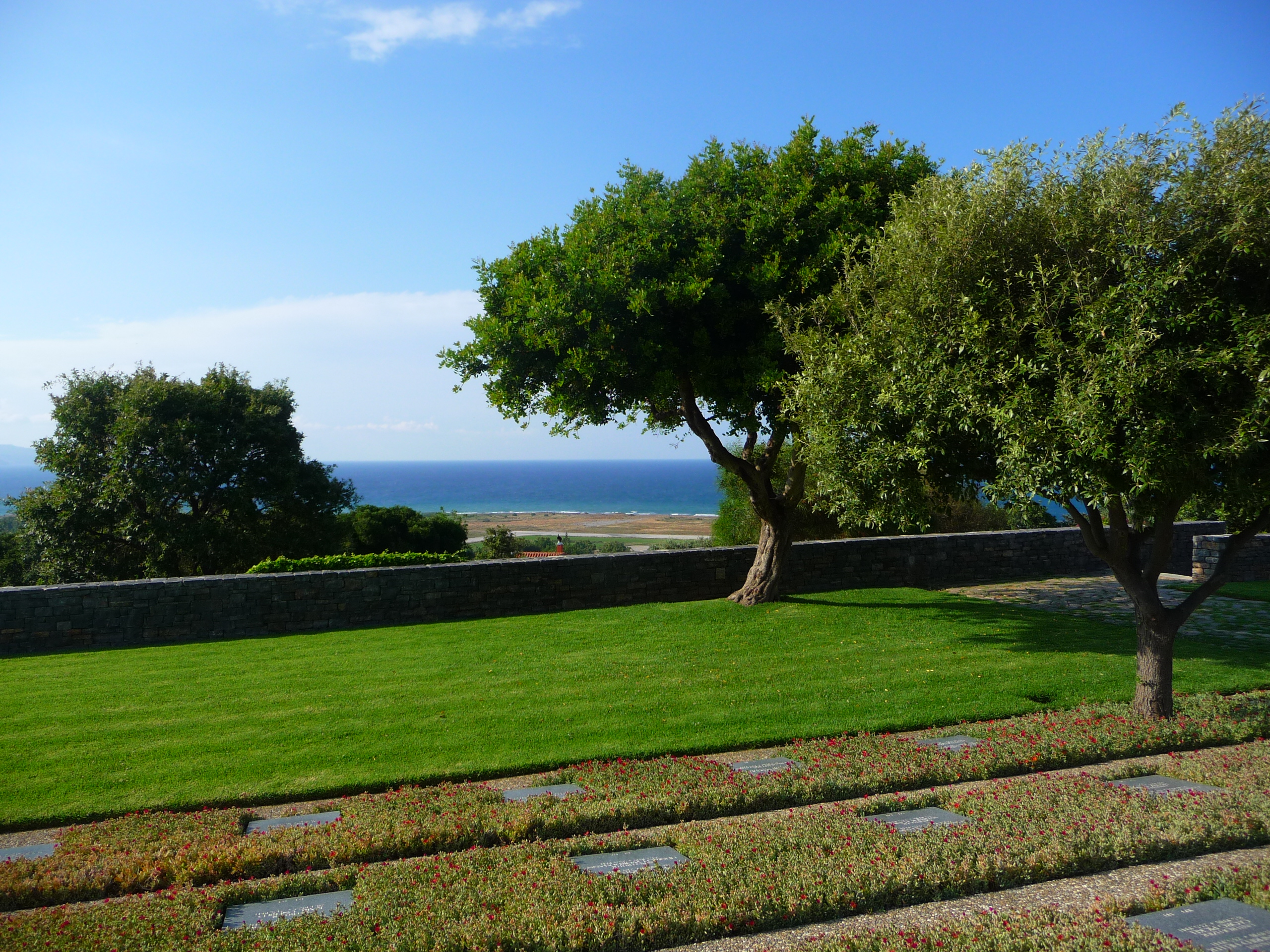
View to the Coast from the German Cemetery
From the cemetery the view to the coast is stunning. Standing at the top one can see far into the deep blue bay of Chania across hillsides dotted with olive trees, winding down to the Tavronitis River. Goats graze among the trees, their bleating rising from below sounding eerily like a child crying. A thin ribbon of road runs between the olive groves and the Aegean Sea beyond, and it is hard to imagine the horror that erupted in this peaceful area 75 years ago, or to visualize the dead and dying that littered the beaches and fields.
Neither side has exact numbers of fallen soldiers.
R.I.P.
Best books on the history of the Battle of Crete:
Crete: The Battle and the Resistance by Antony Beevor (John Murray, Paperback – a division of Hodder Headline (1991). Still regarded as the best history of Crete during WW11
The Cretan Runner by George Psychoundakis (trans. by Patrick Leigh Fermor): John Murray, Paperback (first published 1955). A first-hand account by one of the partisans from the mountains.
“If I shout ‘Duck’! It doesn’t mean look out for wildlife: it means hit the deck – now”! This was Captain Julian speaking, during instruction in safety etiquette on board the converted eight-passenger Dutch barge ANJODI, our home for the next six days as we cruised the tree-lined Canal du Midi in France.
The Anjodi Barge
The reference to ducks and wildlife was timely, for shortly after leaving our embarkation point of La Somail, a delightful little village just 45 minutes from Montpelier, our boat was surrounded by friendly ducks and drakes with their ducklings, as sleek coypus swam close to the willow-hung banks, and grey and white geese scolded us from the tow-path.
But a warning is a warning and we were careful to keep a look out for low bridges as we cruised along this, the oldest canal in France, designed by Pierre-Paul Riquet to link the Mediterranean and the Atlantic. He spent much of his fortune on the project but sadly, he didn’t live to see this magnificent feat of engineering, now a UNESCO World Heritage Site, completed in 1681.
Canal du Midi, France
Shop on the Canal du Midi
The Canal du Midi is 240 Kilometres long and runs from the city of Toulouse to the Lagoon at Thau on the Mediterranean Sea. On our six-day trip we covered only part of this fascinating waterway in which the landscape changes from pasture to vineyards and from grain crops to rice paddi as it nears the Camargue.
We soon found out what the captain meant by “duck” as we met bridges so low that even the tiller had to be removed at times – and we marvelled at the skill with which he and the crew took the barge through narrow locks just wide enough to accommodate it. The ‘ladder-lock’ at Fonserannes, a staircase of seven locks took 45 minutes to negotiate and watching this was as engrossing an experience as I’ve ever had.
The plane trees that line the Canal du Midi giving shade to the boats and barges that use the waterways were just coming into leaf, their delicate pale green leaves a perfect contrast to the bright blue skies as we journeyed further south. The banks yielded up wild irises, white snowflake flowers, primroses and poppies, and the houses we passed were already displaying geraniums, crocus and, most surprisingly, peonies. Relaxing on deck with a Kir Royale or a glass of something bubbly, watching the passing panorama and admiring the churches and chateaux silhouetted on the hillsides, was total bliss after days hunched over a computer in a stuffy office. Often it was with great reluctance that we left the comfortable chairs on the deck for our meals as there was always a feeling that there might be something exciting just around the next bend.
Camargue Wild Life
Wild Horses of the Camargue
And one day there was. Standing on the bank contemplating us with curiosity were some of the wild horses of the Camargue. Storks flew overhead and off in the distance we could just see a flock of flamingos. Too excited to grab for the cameras we just revelled in the sight of the birds as they huddled together in the lagoon devouring the shellfish that gives them their pink colour.
There were major sight-seeing jaunts in the barge’s mini-bus each morning, leaving the afternoons free for relaxing, walking or cycling along the towpath on one of the onboard cycles, and exploring the pretty villages along the way. We would catch up with the boat at the next mooring or lock – and as we always knew just how far the distance was between locks it made planning easy.
Cathar Country, Carcassonne, Minerve and Narbonne
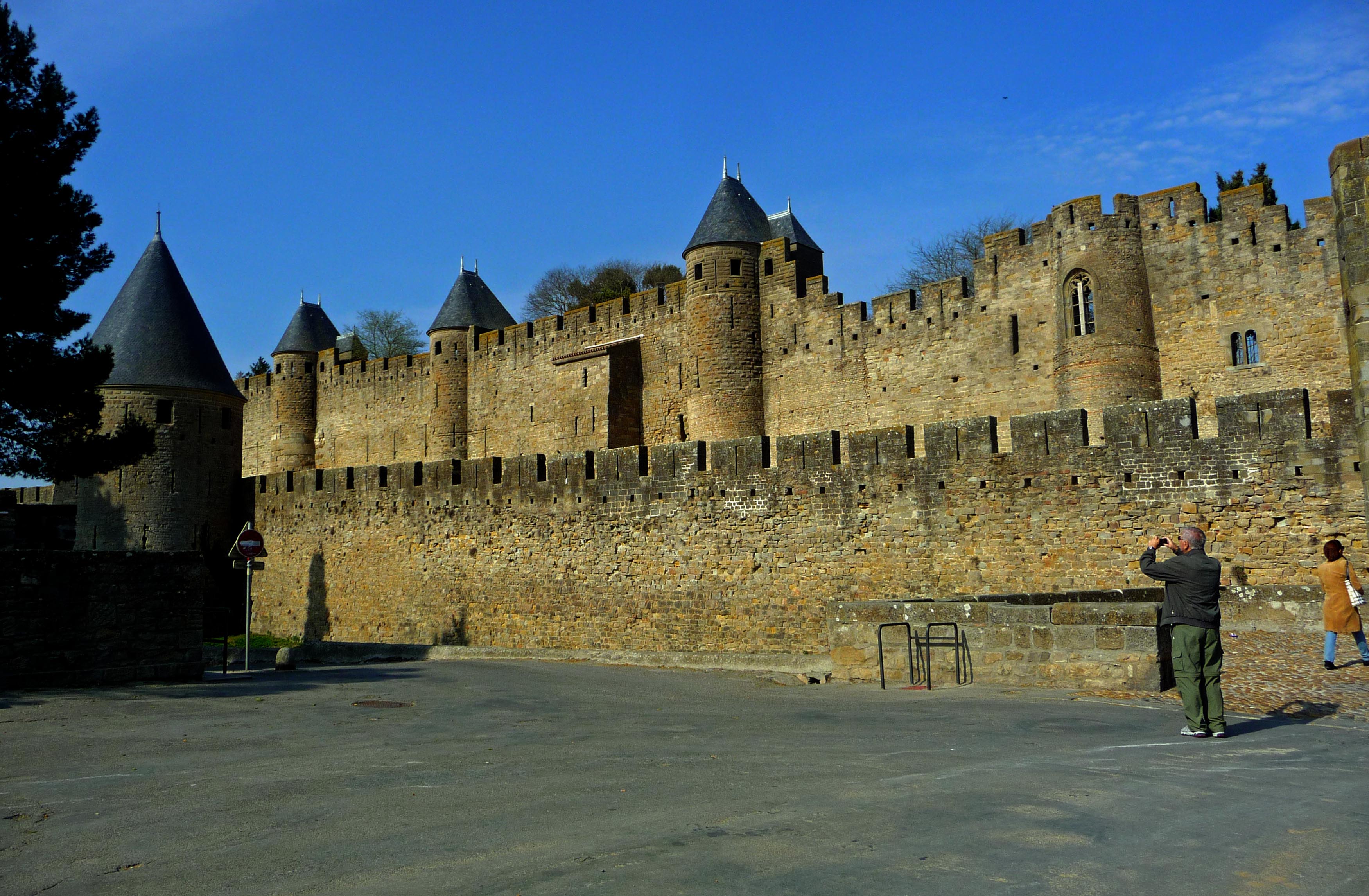
Carcassonne, France
Our barge sailed through Cathar country, a land where the memory of the massacres that occurred during the Albigensian wars is preserved like a fly in amber in the minds of the villagers. The most famous massacre may have happened in 1210, but to the people of the Languedoc, it is as though it happened yesterday. Visits to fortified hill towns like Carcassonne with its dungeons and fairy-tale like turrets that soars into the sky, to the UNESCO protected town of Minerve,
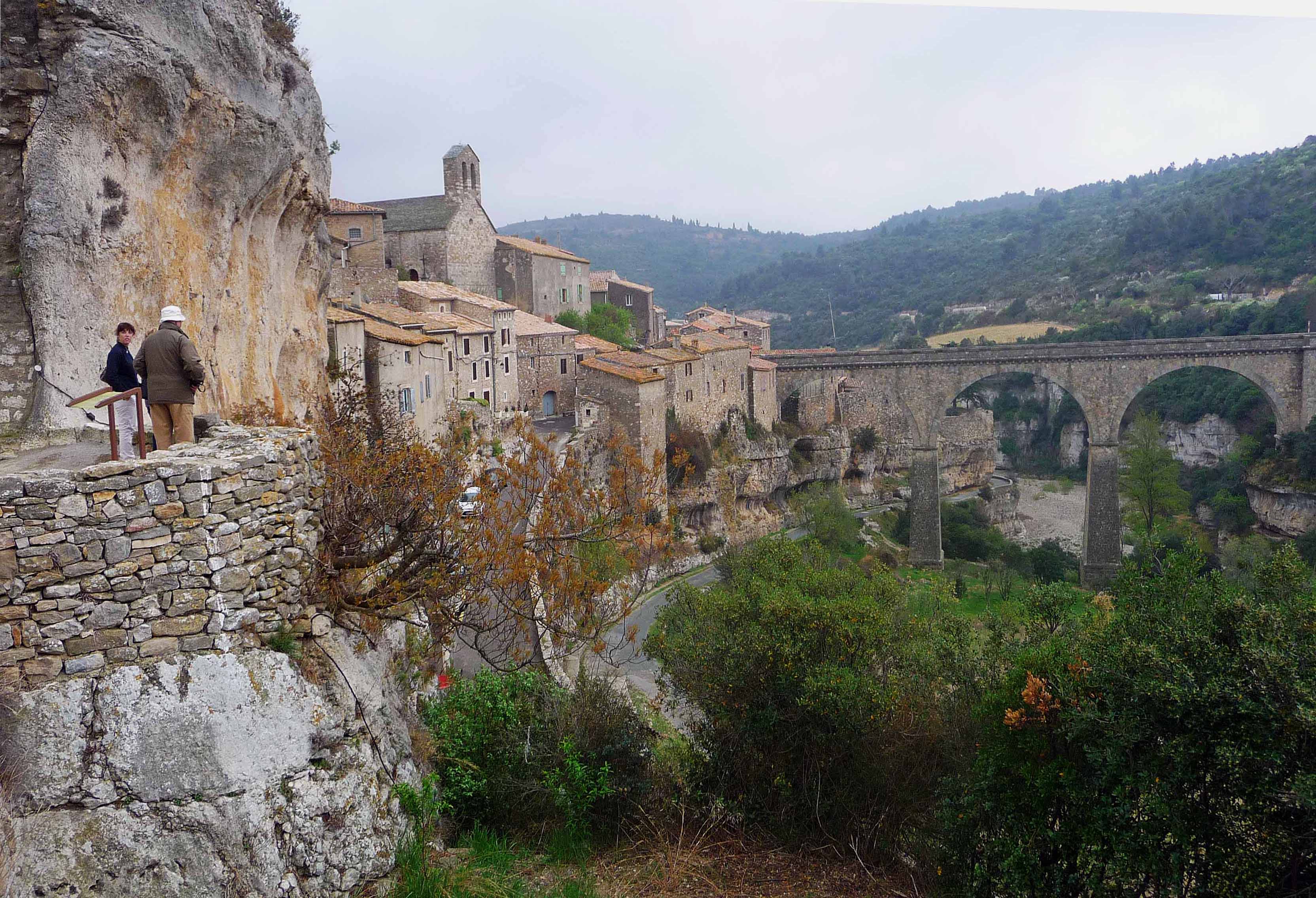
Minerve, well fortified and perched high on a cliff.
perched on a limestone plateau between the gorges of the Briant and Cesse rivers, and to Narbonne with its well-preserved Roman Road, were constant reminders of the bloody wars fought over this land.
Inside the protective battlements of these fortresses are winding alleyways and narrow streets with half-hidden shops selling distinctive local crafts and products.
Cloisters of Bishop’s Palace at Narbonne
Visits to these and other towns, like Pézanas, the birthplace of Moliere, and Villeneuve-les-Beziers, alternated with wine tastings at prestigious chateaux and a very special wine-tasting at the home of one of France’s top female sommeliers, Mdme. Jackie Bonnet.
Moliere, Pezanas
Food on Board the Barge
The Holy Trinity of the French table is wine, cheese and bread, and although our barge cruise was not solely about food and wine, it played a large part in our daily life. I’d cruised with European Waterways before and knew that the chefs and captains of the barges were chosen as much for their knowledge of regional specialities and produce as for their professional skills. Every day we sampled exquisite and unknown wines, often the product of a small single vineyard, alongside premium Crus of the great houses, and we ate the best locally sourced food available as Chef Lauren matched food to wine and cheeses to what had gone before with a skill that owed much to her knowledge of the countryside and its produce.
Chef Lauren and hostess Alex prepare pre-dinner drinks.
Leaving the barge at our last stop for the drive back to Montpelier, was a wrench. The Anjodi offered peace and tranquillity and a stress-free environment with the ambience of an upmarket family hotel. At the same time. we had been given the opportunity to make trips to the major cities along the route, we enjoyed wine tastings at famous vineyards and had even lunched out at a superb restaurant on one occasion. And all this while sailing through some of France’s most quintessential countryside. It can’t ever be better than that.
Fresh fruit always available.
FACTFILE:
The cruise is fully inclusive of gourmet meals aboard and ashore, fine wines, champagne reception, all day open bar, all excursions and admission fees, use of cycles, spa pool, and transfers to and from embarkation point. Crews are British or French but all speak perfect English and double as tour guides and drivers. Because this is a converted Dutch barge, not all of the rooms are spacious but they are all very comfortable and have air-conditioning and central heating. The lounge is elegant and comfortable, and the deck – on which meals can be taken – is equipped with deck-chairs, dining table and seating for eight.
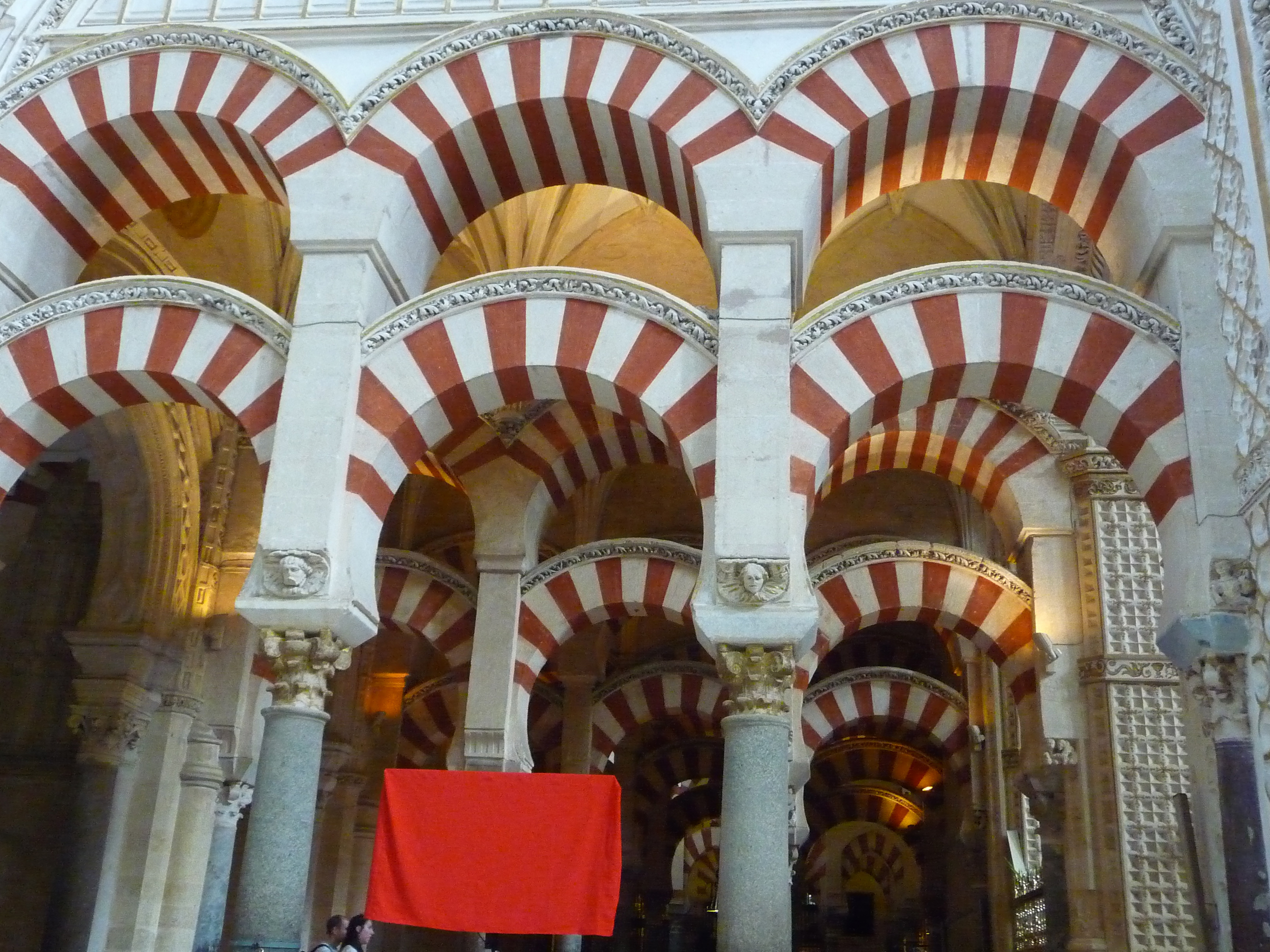
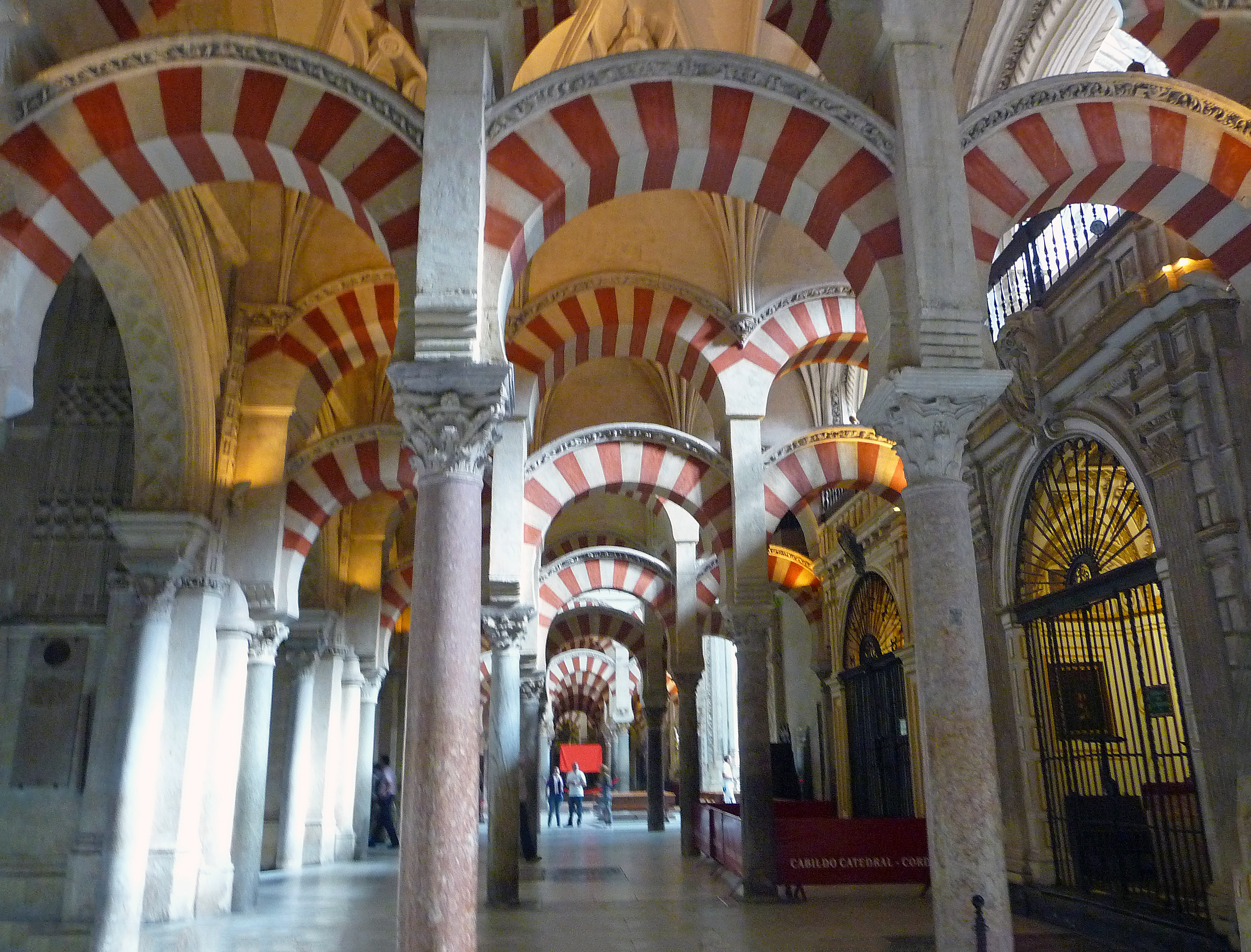
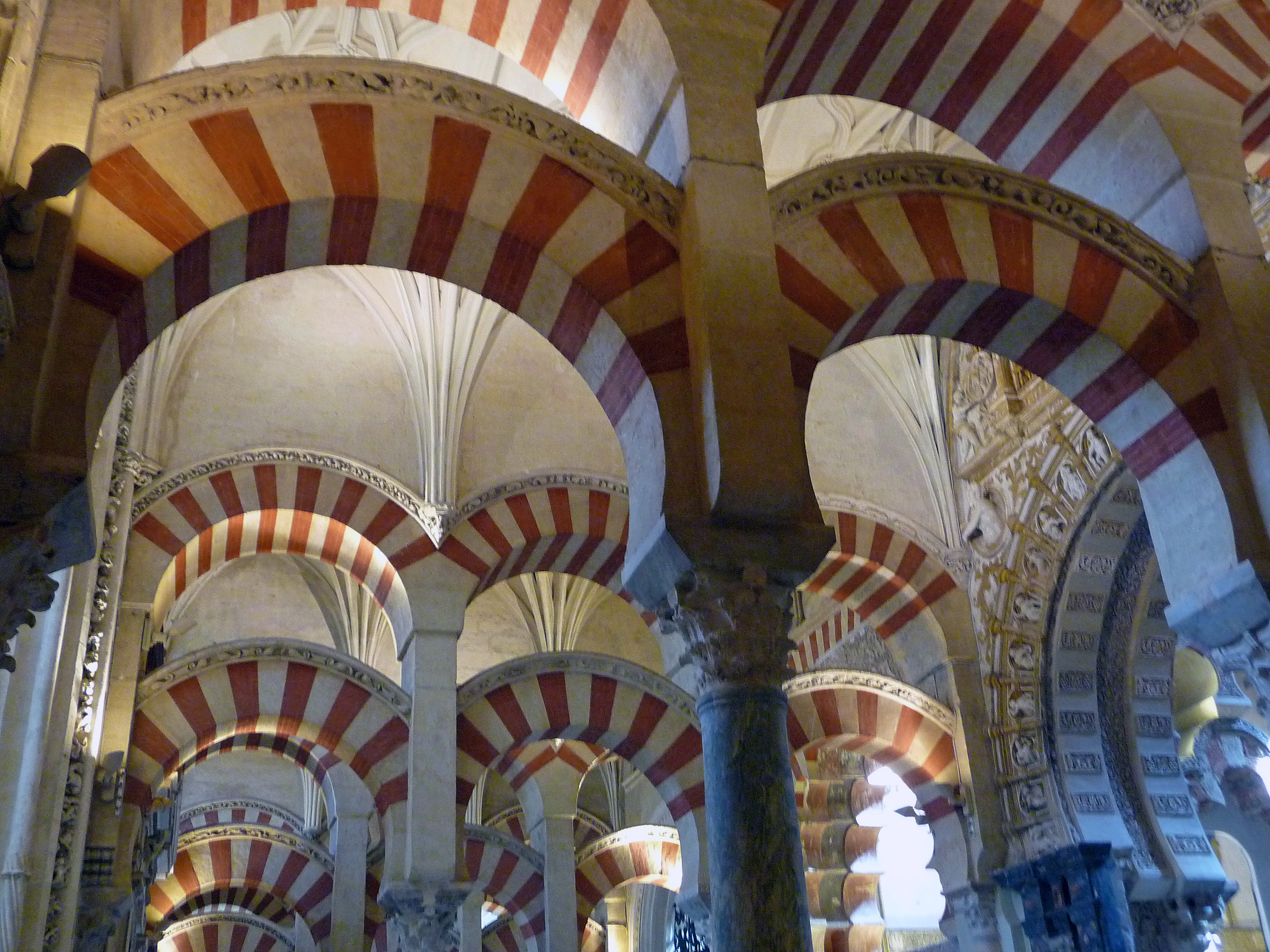
Magnificence of the Arches in the Mezquita in Cordoba
Once the centre of worship in Western Islam, the Mesquita in Cordoba, Spain, with its glorious exterior golden walls, is considered one of the architectural wonders of the world. Red and white striped arches as far as the eye can see, each one seemingly different, create patterns that leave one enchanted. More bizarre however, is the Catholic Church plonked down in the centre of the mosque, something which alone qualifies it as a most unusual place.
Originally built on the site of the Basilica of St Vincent the Martyr, a 6th century Visigothic church, then becoming a mosque and latterly a church (in use today) one can look down on the remains of the earlier building through a glass panel set in the floor, reminding us that this edifice has been owned and operated by 3 religious houses at different times.
From 785 when the Caliphate was powerful in the Iberian peninsula until the sack of the Moors in the 13th century, the Mesquita grew grander and larger under each succeeding Caliph but during all that time, all religions lived side by side in harmony, each sharing their knowledge of geometry, philosophy, algebra and other intellectual disciplines.
The pillars seem to go on forever. Mezquita, Cordoba, Spain
Caliph Abderramán 1 built the great hall in which there are 110 columns the capitals of which came from old Roman and Byzantine buildings Above this there is a second row of arches which creates a wonderful effect. Eight more arches were added in 833 by Abderramán II, the minaret, Mahrab and the Kliba in 962 by Alakem II. The mosque was doubled in size in 987 when Caliph Alamanzor added blue and red marble pillars and today the total of these endeavours is truly wondrous.
Arches of the Mezquita in Cordoba, Spain
It is our good luck that the Christian conquerors didn’t destroy this magnificent building as they did so many others, but choose to place their church, consecrated in 1236, inside the walls of the mosque. This bizarre placing of one religious house inside another is just one of the things that makes the Cordoba Mezquita so unusual. Against the austerity of the pillars of the mosque, the chapels full of gold and silver decoration, statues of the Madonna, marble-swathed tombs and heavy wooden carved choirster stalls, stand out defiantly but somehow, the spellbinding beauty and simplicity of the arches puts the flamboyance of the christian church in the shade.
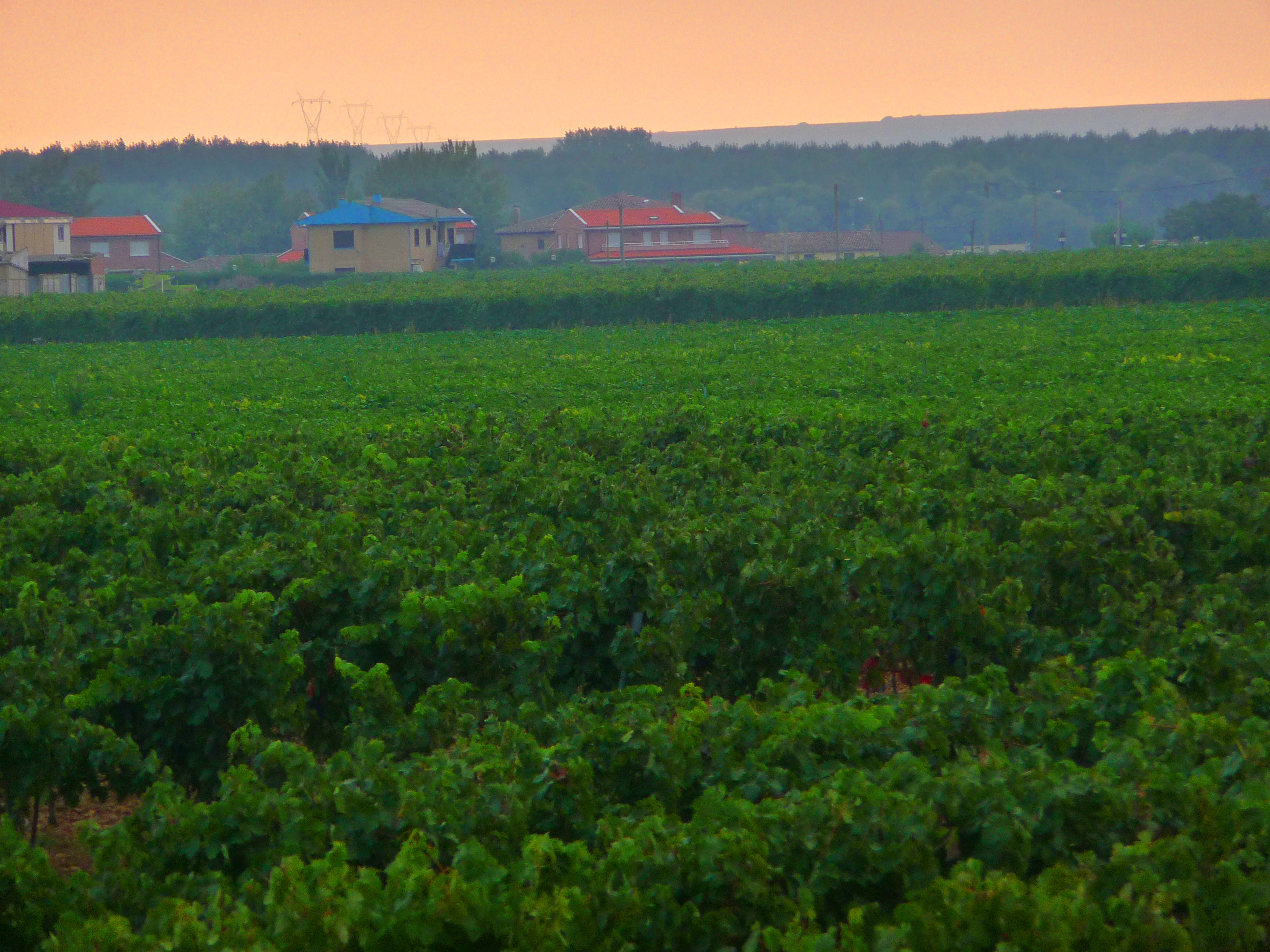
I don’t know why I overlooked the most serene moment of my life when I started on my former blog about this subject. Maybe it was because the images to go with it are not very spectacular; certainly they don’t convey the calmness of the moment, the sense of absolute peace and tranquility, and the near total silence we experienced.
The occasion was a balloon flight over the vineyards and fincas of the wine-growing area of Rioja in Spain. We began our ascent as dawn was breaking bathing our world in a warm pinkish glow as we rose into the sky watching fields and houses below diminish in size minute by minute. Initial trepidation dissipated as soon as we started our flight and the beauty and joy of the morning filled us with awe. For once I felt at one with nature, not in the way I had done when out walking in the mountains or swimming with dolphins, but a feeling of really being part of this marvellous planet of ours.
Vineyards of the Rioja area
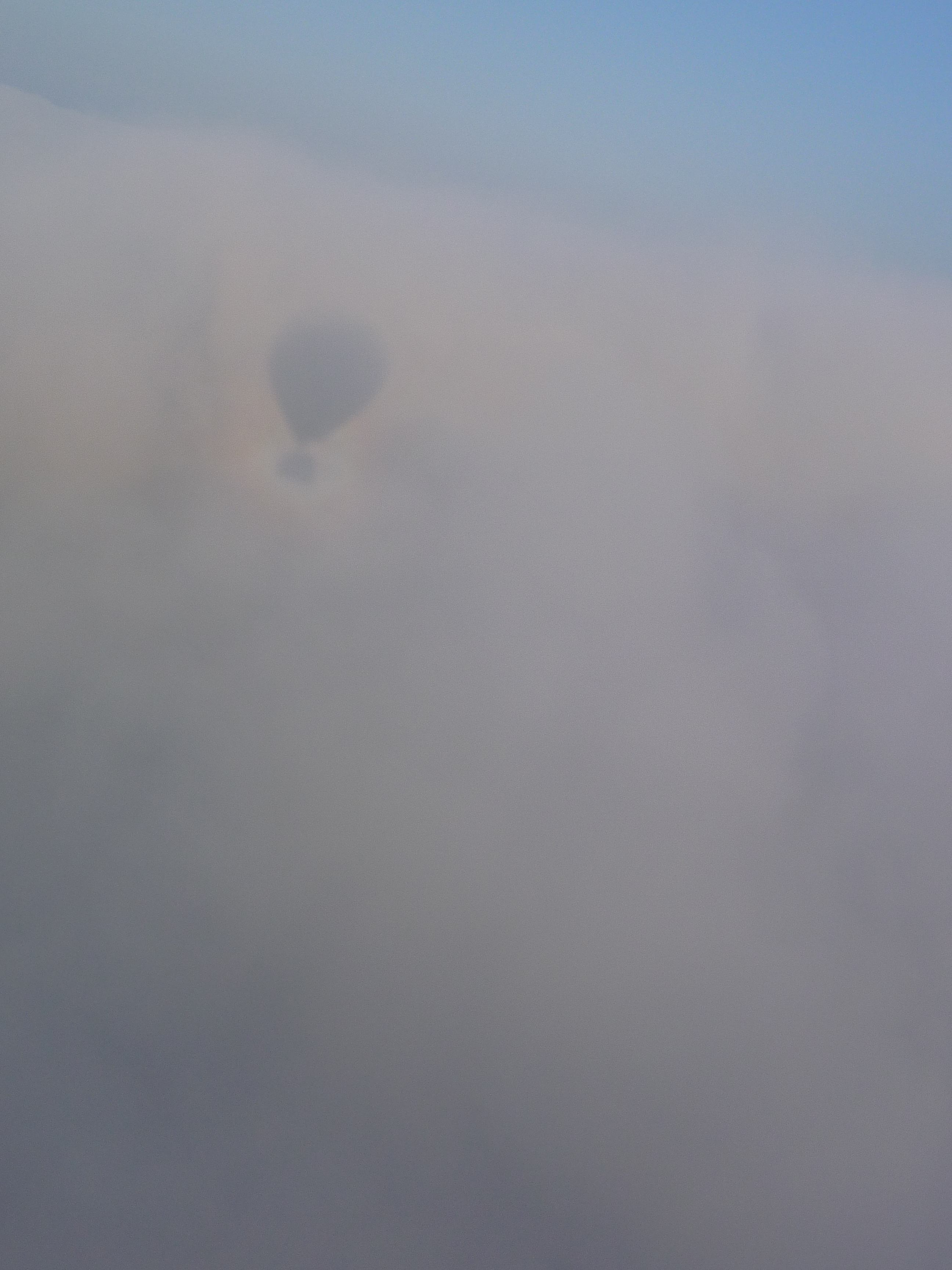
Up and up we went right into clouds which deadened what little sound there had been up until then. it was totally eerie, chilly and white.
Up, Up and Away, in my Beautiful Balloon
Then the pilot motioned ahead and there it was, the photo I would have died for if I’d known when on the ground that I would actually see it, our balloon shadowed on the cloud in front of us, faint but very obviously there. The moment was too precious to grab for a camera and start focusing, so in a sort of reflex action, I just clicked on the little camera I carry for emergencies like this, and here it is. My only image from my time in the clouds when I really knew the meaning of Serenity.
My Beautiful BalloonReflection of Balloon in Clouds
In response to The Daily Post’s weekly photo challenge: “Serenity.”
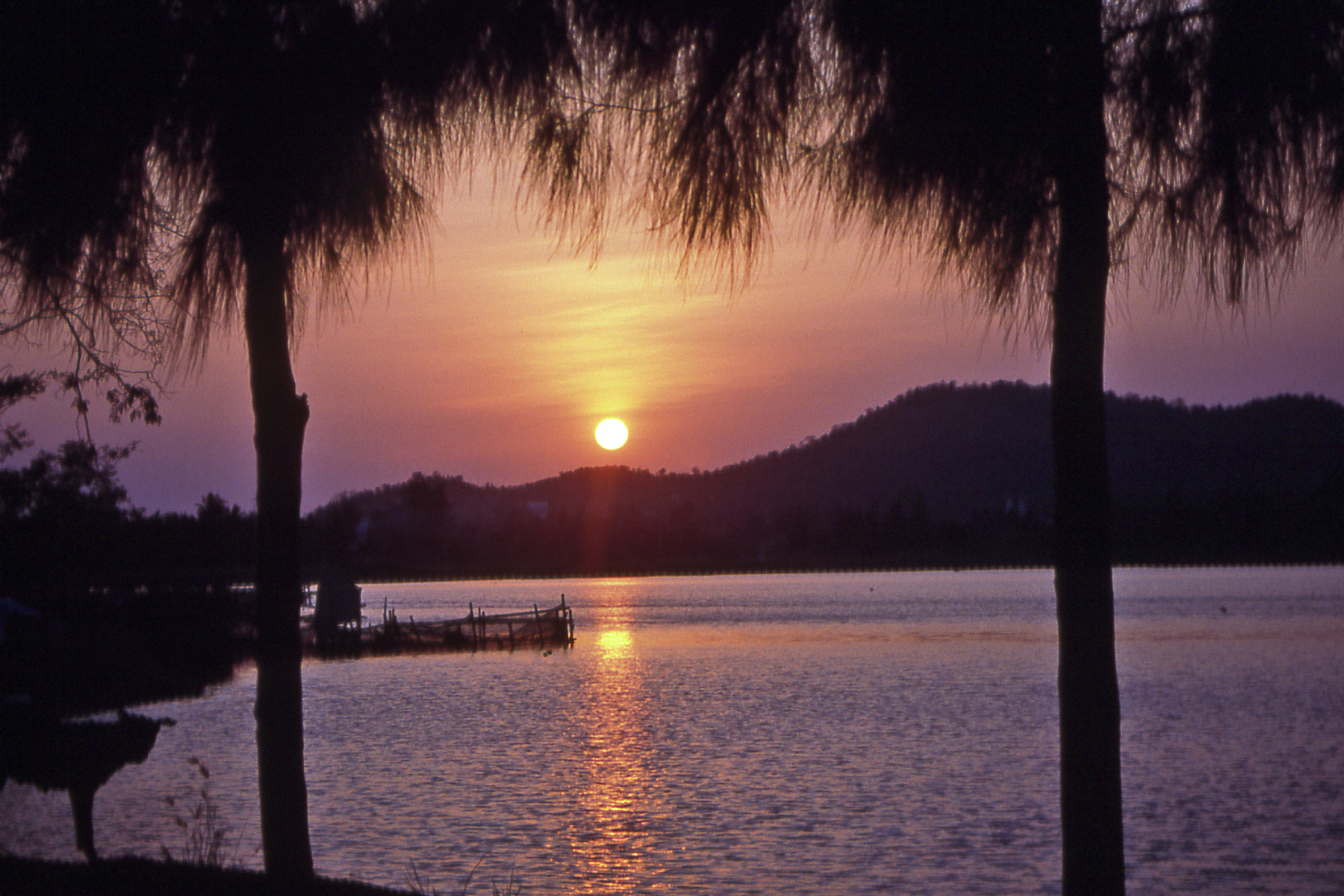
A Thai Sunset – Phuket
This is a different sort of Post – it is one in which I’m responding to the weekly photo challenge set up by WordPress. This week the topic is Serenity so here are a few images that to me represent that scarce emotion in today’s world, serenity.
The first one, below, may not look like everyone’s idea of Serenity, but this Cretan man had an attitude to life that was calm and benign. He was one of the happiest people I’d ever met: even his donkey seemed happy in the heat of the midday sun. It was a harsh life up there in the mountains but Andreas told me he had everything in life he needed, his olive trees, a few animals, a family in good health and all living nearby, and most of all, he said, he lived on Crete.
What more can I say?
An old man on a road in Crete with whom I shared my lunch.
Next photograph is very different. I did an Art Tour once in France where we stopped at various place where some of the painters known as The Impressionists had painted: their pictures were hung in nearby galleries or galleries of some note further away. Rouen I remember very well, as it was one of the places where it rained incessantly during our visit, but luckily, Claude Monet had painted more than 30 pictures of the famous Notre Dame Cathedral (many in the rain) so we were able to see it just as the artist had seen it.
When the group of painters who came to be referred to as The Impressionists evolved their style of painting from chocolate-box interiors to naturalistic outdoor scenes, they were helped by two mid-19th century inventions. One was pre-mixed paints in tubes (akin to today’s toothpaste tubes), and the other was the new vibrant hues like chromium yellow and French ultramarine that freed them from the chore of grinding up lapus lazuli and mixing dry pigment in linseed oil to make colour.
What it also gave them was a complete change of perspective. With these inventions they could now paint “en plein air” (outdoors), capturing the momentary and transient aspects of light and the ever changing colours of the clouds and using ordinary subject matter.
Alfred Sisley (October 30, 1839 – January 29, 1899) was an English Impressionist landscape painter who was born and spent most of his life in France. A very disciplined painter, Sisley is recognized as perhaps the most consistent of the Impressionists. He never deviated into figure painting or thought of finding another form in which to express himself. The Impressionist movement fulfilled his artistic needs.
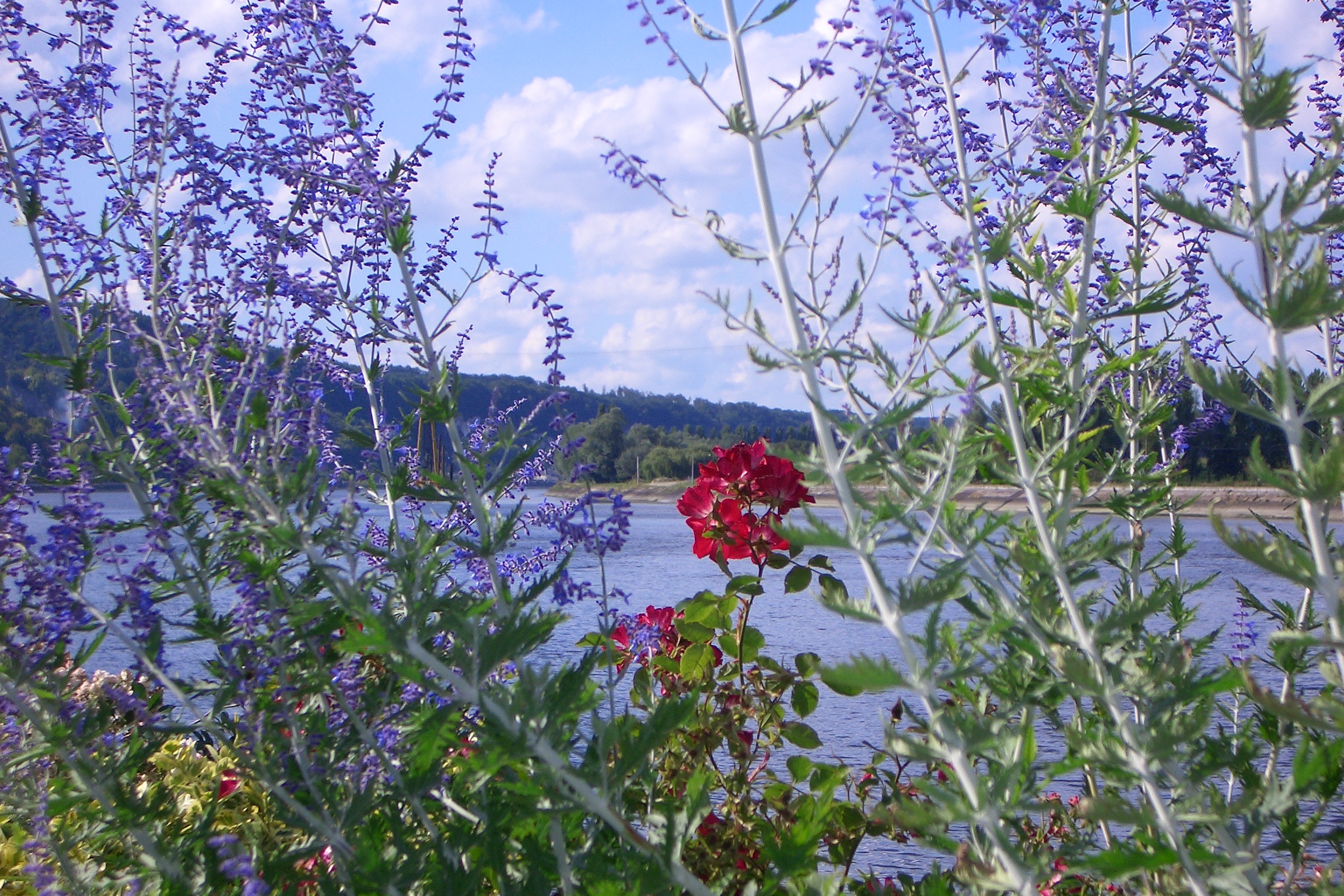
Below is a photograph I took of a scene he painted (I think his painting hangs in the Gallery at Honfleur). To me it is serenity itself. I photographed it on a day when the Normandy sun was shining, dragonflies were chasing each other over the Seine, the village of Bouille was quiet as the people rested after lunch and I captured the scene on camera as I remembered it from the painting.
Serenity.
A quiet scene where the only movement was of butterflies and dragonflies.























 MARI'S TRAVELS WITH HER CAMERA