The Göta Canal which links Sweden’s two cities Stockholm and Gothenburg, runs through the heart of Sweden. A one-way trip on one of the historic ships that plies the route takes 6 days; it is like a journey into another world.
Cruising through archipelagos with thousands of small islands, one river, eight lakes, two seas and three canals with 66 locks (in one case ascending 91 metres) the ship makes several stops at places of interest along the way.
The ships used were built between 1874 and 1831 and are considered historically important. Furnished in a period style there is neither radio nor TV on board any of the ships, and the use of mobile phones is discouraged. Between 40-50 guests are accommodated in small cabins about the size of a sleeping compartment on a train with bunk beds and a wash basin with hot ad cold water. Communal showers only, I’m afraid, but the food makes up for it.
Fresh lake fish every day, game from the forest, the freshest of vegetables and saladings, lots of the berries for which Scandinavia is famous and of course that marvellous coffee and cake.
This journey along one of the world’s great canals is an experience like no other but is only available during the summer months. And in those cabins you really get to experience what travelling was like in the 19th century on board these ships that carried immigrants from rural Sweden out to America.
The 190 kilometres of the Göta Canal were dug out by hand between 1810 and 1832 and it runs from Sjötorp in the west to Mem in the east, it is three metres deep and approximately 14 metres wide.
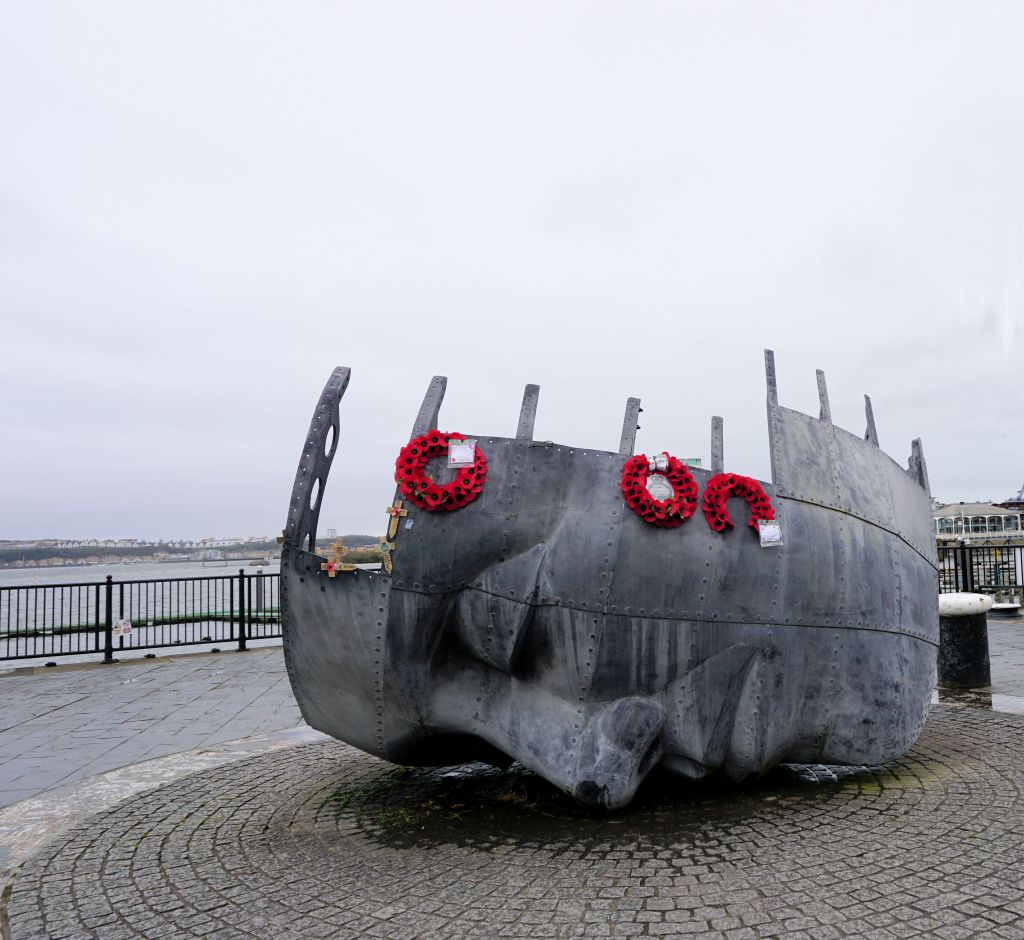
This striking Merchant Seaman’s Memorial in Cardiff Bay is in the form of a sleeping face fused with a ship’s hull. This was made by riveting plates of metal together, a traditional technique used in early iron and steel ship building. The sculptor Brian Fell, whose own father had been a merchant seaman, was commissioned to create the work in 1994 by Cardiff Bay Arts Trust, Cardiff Bay Development Corporation, Merchant Navy Memorial Committee and Cardiff County Council and it sits in Tiger Bay, Cardiff.
The ports of South Wales played a vital role in supplying coal from Welsh mines to fuel the world’s ships, especially warships and the allies were dependent on merchant vessels to transport troops, food, ammunition, raw materials and equipment. Shipping lanes ran around Pembrokeshire and around the island of Anglesey to get to and from the port of Liverpool and to access the Atlantic; within these lanes German U-boats targeted ships, sinking them with torpedoes and sea mines.
Over 150 vessels were sunk off the coast of Wales during the first World War alone.
Depressed by the current news, the arguments, the depths to which politicians and supposedly clever men and women are sinking, I think back to how years ago Franklin D. Roosevelt was a beacon of light to a world deep in a fiscal depression. As he saw America through a war and put in action methods to help Europe build itself up after the second world war, he laid the groundwork for 20th century democracy in the western world. Less than a century later, we stand to lose it.
FDR had many faults, he was a human being after all, but he was a giant compared to what we see today.
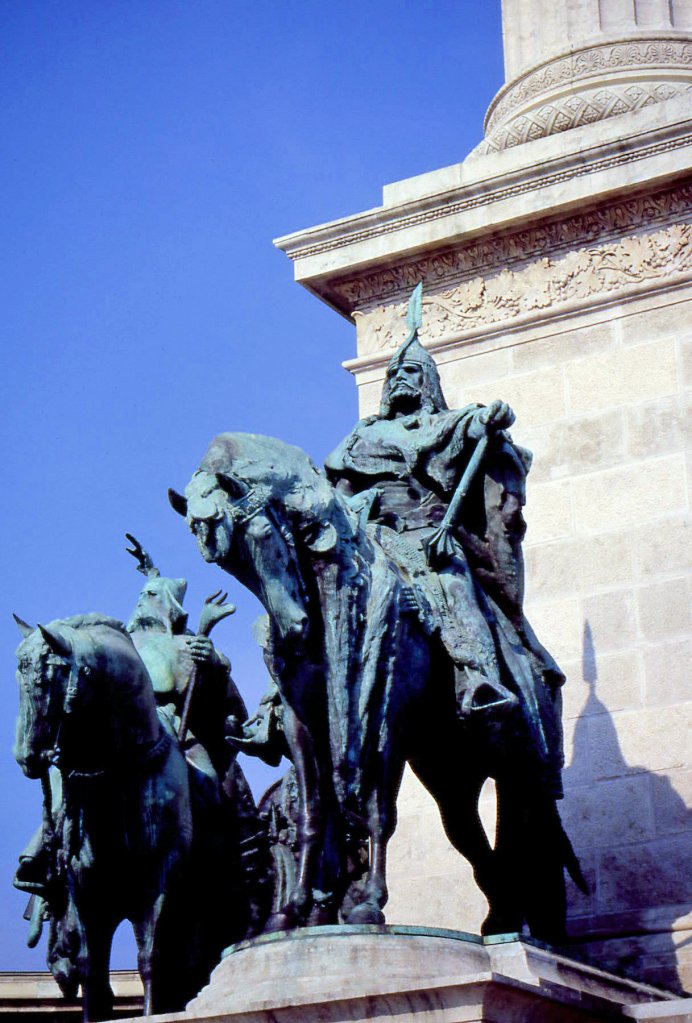
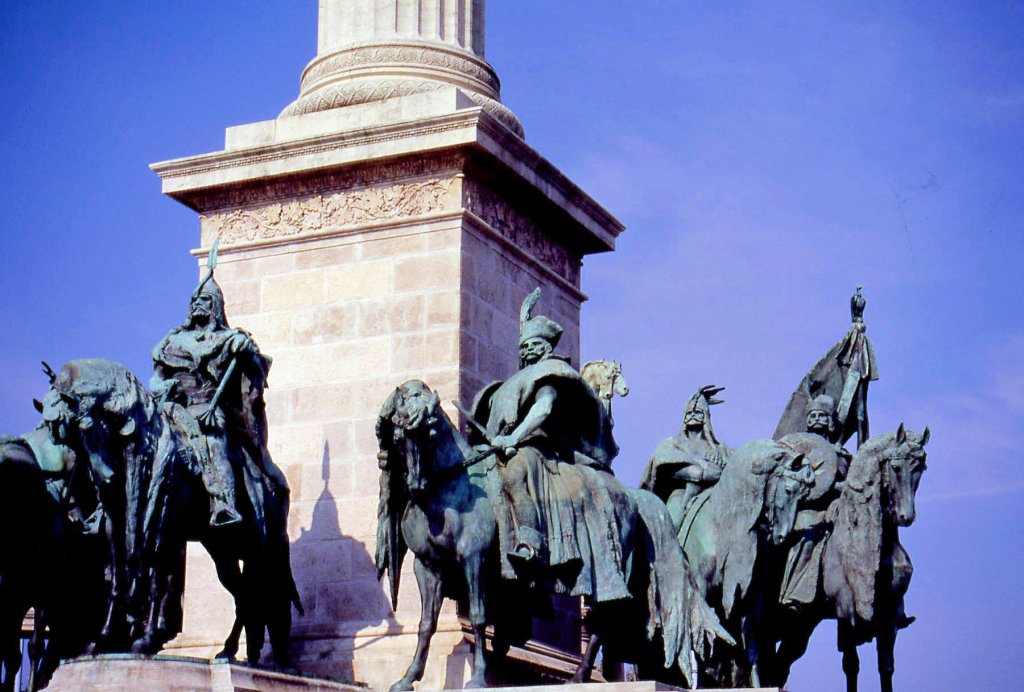
Designed in 1896 to mark the 1000th Anniversary of the Magyar conquest of the Carpathian Basin, Heroes’ Square (a name given to it in 1932) was designed in 1896 for the celebration of the Millennium of Hungary. The 36-m high column, topped by the Archangel Gabriel holding the Hungarian crown and cross, dominates the square. Around the base of the column are sculptures of Magyar chieftains from the 9th century mounted on horses. The colonnades that run behind the column hold 14 statues of earlier rulers and statesmen from King Stephen to Lajos Kossuth.
Base of Millennium Column in Heroes’ Square, BudapestMagyar Chiefs at base of Millennium column, Budapest
The BBC should be showing the marvellous David Lean film Lawrence of Arabia in its new Film Club series on Thursday nights and as always, that film takes me back to my trip to Jordan some years ago, to Petra, Aqaba and Wadi Rum. This is Petra.
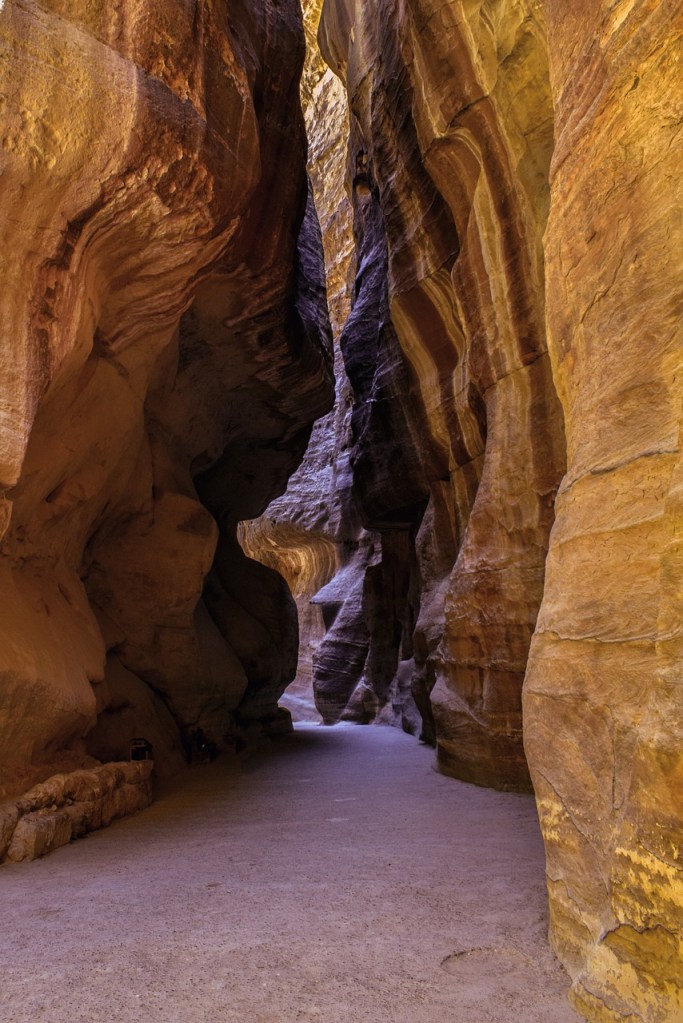
Ahmed shines his torch upwards on to the rock-like walls that rise on either side of us to a slit of night sky hundreds of feet above and whispers “Be careful”. I place my feet carefully on the narrow path trodden by ancient tribes centuries ago, a path along which we tourists now travel to view the hidden city of Petra.
Al-Siq, leading to The Treasury
Nothing I had read prepared me for my first sight of the fabled Treasury – the most photographed place on the site, a richly deep-hued pink building that had been carved from the mountainside. In the centre of the building was a huge doorway in front of which camels swirled about as their owners petitioned customers to hire their beasts (all guaranteed very tame and ‘no spitting, madam’). In hindsight I think it was good that camels were there to spoil the effect as without them one could well suffer from the Stendhal syndrome (a fainting fit when overcome by the beauty of a place, first recorded by the author in Florence).
This image by Heidelbergerin at Pixabay
In the centre of the doorway stood a Royal Palace guard, resplendent in a long tan-coloured robe liberally bedecked with red bandoliers slung casually over his shoulders the bullets for which were also topped with red, a dagger worn centre stomach, red tasselled sashes and the obligatory red and white chequered kufiyah. I was awestruck.
Royal Jordanian Palace Guard at Petra
This was 2012, exactly two centuries after its rediscovery by the explorer Burckhardt, and I was visiting the ‘rose-red city’ of Petra which had lain in ruins for 500 years since its abandonment after the Crusades. Now famous once more due to the work of explorers, painters and film-makers, it still has the power to excite awe and wonder and the approach to it through the narrow gorge is the perfect way to come upon it. Take a guide if you can, chances are he will have been born in one of the caves on the site before the advent of tourism and will have a host of stories to tell you.
Petra’s vast wealth derived from its position as a crossroads of the world where it traded in frankincense from Arabia, spices from India and silks from China. I struggled to imagine caravans of 5,000 camels arriving at this once mighty trading post which Ahmed assured me was the case. How did they negotiate the narrow passages to the entrance? Where did they all live? How did they live? And how did they cope with the smell? Ahmed just smiled. “It is true”, he said, “don’t question, live in the magic”. But it’s not magic; the history books tell me it was so.
Roman Soldiers’ Tombs
Roman Theatre
Royal Tombs
From the Roman Days
Away from the Treasury you are in an ancient city of ruined streets lined with Classical façades, a city that housed approximately 30,000 people at its peak, who spoke Aramaic, the language of the Dead Sea Scrolls – in fact, the language of Jesus Christ. Over 80% of the site remains to be excavated and the heaps of rubble you see dotted around were once houses, shops, and communal buildings.
If it’s not too hot (always go early morning if possible) and you have the energy, it is worth climbing the mountain gorge to the High Sacrificial Place, 850 well-cut steps past extraordinary coloured rocks to where there is a façade even larger than that of the Treasury: a doorway and columns 150 feet high. Your reward is breathtaking views over Petra. No one knows for certain what took place here, whether the sacrifices were of animal or human, but evidence of human sacrifices have been found in surrounding towns/cities. Your other reward can be the freshest lemonade with soda you’ll ever have from the very essential café at the top.
Historical bit: The original inhabitants of this 6th-century BC world of temples, Roman theatres, monasteries and chambers, the Nabateans, set up their city-state, defending their home with ease until 106 AD when it fell to the Romans. After the Romans came the Byzantines, then the Crusaders, until by the 16th century Petra was all but lost to the west. A Swiss Explorer, Louis Burckhard, penetrated the hidden city in 1812 and the world became aware of the wondrous city that had once been the centre of a trading empire that stretched from Saudi Arabia to Damascus.
There were few tourists when I visited Petra in 2012 just after the conclusion of one of the many disputes in that part of the world. My guide was fond of saying “We are a small friendly family with some noisy, disruptive neighbours but we welcome visitors” and that was the extent of our political discussion. Now once again I fear there will be few, if any, tourists, and the friendly, welcoming people of the area will miss the tourists. Go visit if you can, when things get better. These friendly people needs and welcomes tourists.
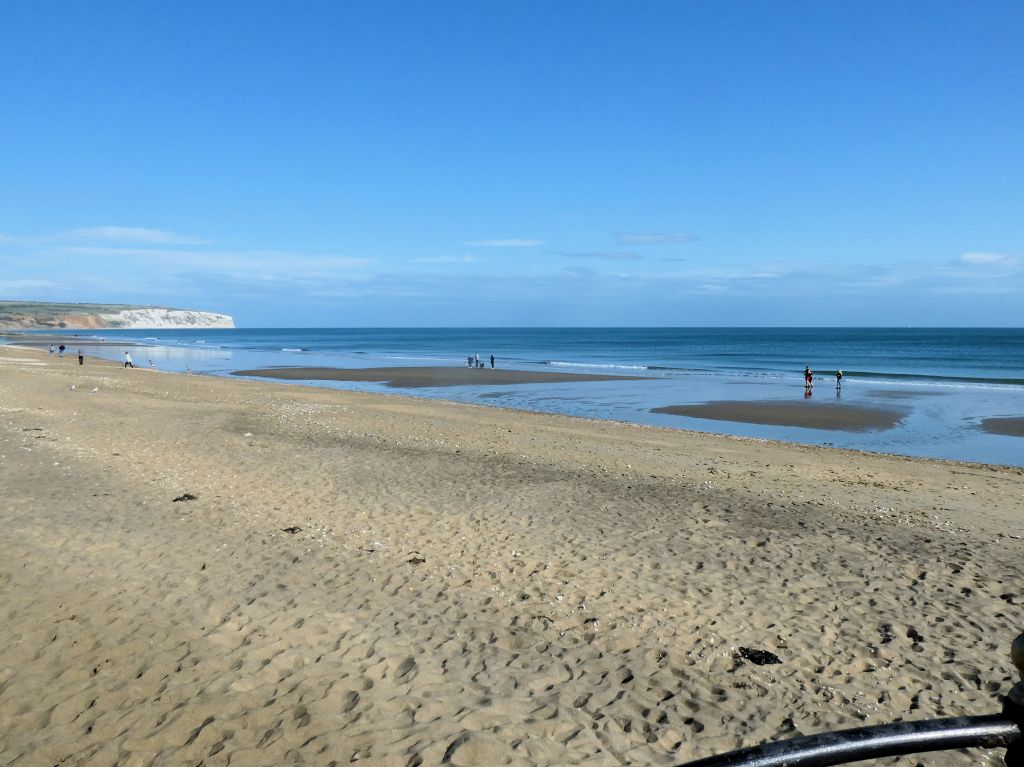
It’s not just Covid-19. The weather forecast influences people’s decisions but often the meteorological office gets it wrong. And so it was today. The temperature was supposed to be around 17ᵒ with cloudy patches but we had wall-to-wall sunshine and it felt like mid-20s. The result was that only a handful of people were walking on the esplanade and fewer still on the beach.
One lonely figure sat wrapped in a blanket on the beach guarding the clothes of the two boys fishing by the pier who were wearing only swimming trunks so at least someone was benefiting from this burst of sunshine.
The Bay sands, once golden, are now less so, and many blame this on the 7 – 9 liners and tankers that used the Bay during the Covid outbreak when they couldn’t get into Portsmouth or Southampton harbours to unload their cargoes of people and goods. For some weeks they sat on the horizon, their engines pumping away to keep the ships ventilated and facilities ongoing. The noise from this was so great that a complaint was made and the harbour masters requested to speed up the entry into port.
Premier Inn opening soon in Sandown, Isle of Wight
Sandown has a new Premier Inn due to open soon on the Esplanade and it was good to see this finished at last. The Covid outbreak had stopped building work earlier in the year and we wondered if it would open for business at all this year. Now it’s looking smart and new and ready to welcome autumn and winter visitors to the town, where the winters are mild and pleasant and the temperature usually about 5ᵒ above that of the mainland.
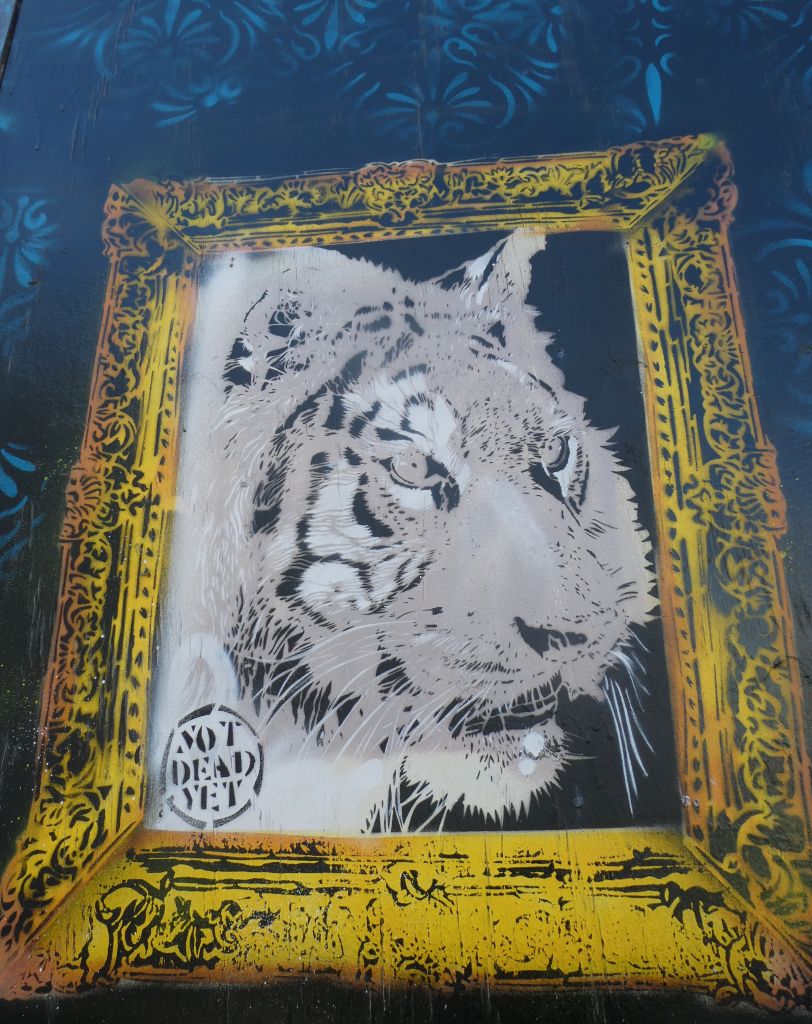
The High Street was quiet with only a few shoppers hunting souvenirs and tea-rooms. But I noticed that one of our closed-up Banks (a few years ago 3 of the big five operated here) has been graffitied but a theme is not discernible. Intriguing yes, and from what I can see it is a community venture and they are appealing for donations. I wonder if the Bank has thought to donate something to improve the boarded up look of their building? Or am I being naive?
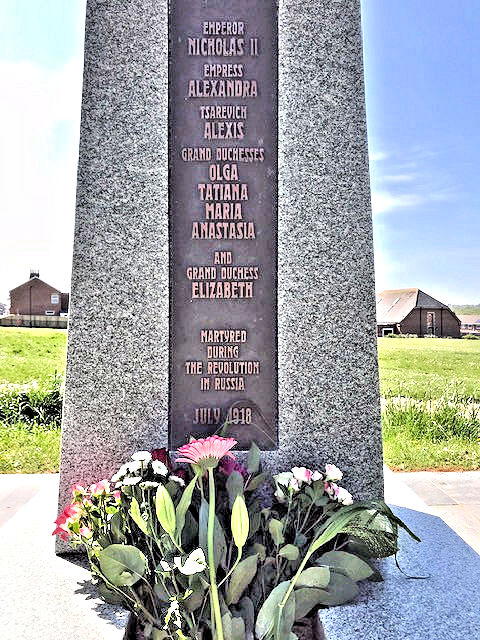
Elena Bezborodova‘s memorial to the Royal Family of Russia, murdered by the Bolsheviks in 1918. This Memorial was erected at East Cowes, Isle of Wight to commemorate the 100th Anniversary of their deaths.
In 1909, Tsar Nicolas ll and Tsarina Alexandra of Russia (Princess Alix of Hesse-Darmstadt, grand-daughter of Queen Victoria) along with their five children, visited Cowes, Isle of Wight at the invitation of King Edward Vll. The occasion was Cowes Regatta, one of the longest-running and most important regattas in the world at that time. A home-movie taken during that visit and shown on UK television last year, shows two of the children, Grand Duchess Olga and Grand Duchess Tatiana who had never experienced such freedom before, enjoying a walk around the town, diving into shops and buying postcards and sweets. An interesting account is to be found here.
On 7th July, 2018 during a weekend of events that remembered the 100th Anniversary of the assassination of the family and their close servants at Yekaterinburg, a 3-metre high granite memorial with bronze decoration was unveiled to commemorate the close connection between the Imperial Romanov family and East Cowes. This magnificent monument was unveiled in the presence of their surviving descendants, Russian Orthodox bishops, the Moscow sculptor of the work Elena Bezborodova, and a choir from Minsk, Belarus.
Top of the Memorial with its bronze relief of individual members of the family
The memorial was gifted by members of the Grand Duchess Elizabeth Romanov Society who revere the Tsar’s sister-in-law who was later made a saint. It stands in the Jubilee Recreation Ground close to Osborne House the former home of Queen Victoria and Prince Albert which the Romanov family visited on their trip to the island in 1909. The Tsar had also been a naval cadet at the then Royal Naval College Osborne House.
The 18th/19th century photos are courtesy of Wikicommons. The Photographs of the Memorial at Cowes are from David Hill, local coordinator for the event working with the Grand Duchess Elizabeth Romanov Society.
Historical Note: Tsar Nicholas II and his family were assassinated by the Bolsheviks on 17 July 1918. They were buried in unmarked graves, and in 1979 some remains were discovered but were concealed until the fall of communism. In 1991 the graves were excavated and a state funeral was organised for five family members. Remains of two other children were found in 2007 but these are undergoing additional examinations.
Two days of torrential rain had cleared the beaches of all but the most hardy but then on the third day, came the sun and the world changed for the better. The hotel was better, the food was better and even the yapping dog in the next room that woke us at dawn, became bearable. What a difference the sun makes.












 MARI'S TRAVELS WITH HER CAMERA