setting out on life’s adventure, first day at big school, seeming weighed down by too many books, lunch-boxes and maybe some home comforts, who knows, but I hope it all went well for this little one.

Linked to XINGFUMANNA
setting out on life’s adventure, first day at big school, seeming weighed down by too many books, lunch-boxes and maybe some home comforts, who knows, but I hope it all went well for this little one.
Linked to XINGFUMANNA
It’s no secret that I love Verona, and just two of the reasons for loving it are a) the city is highly walkable, and b) it is a place where tourists take second place to locals who live and work in its historic centre.
That’s not to say that visitors aren’t everywhere, but as you stroll through the medieval streets, charmed by faded frescoes and hidden gardens, or sit at the foot of an enigmatic marble statue in one of the huge piazzas, you never feel part of mass tourism.
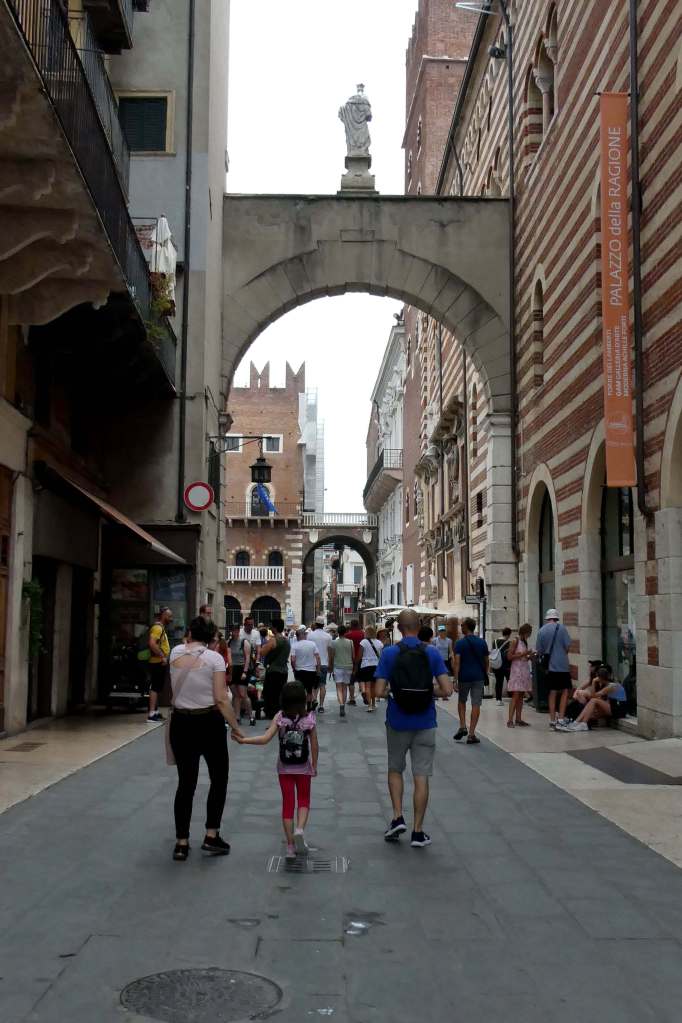
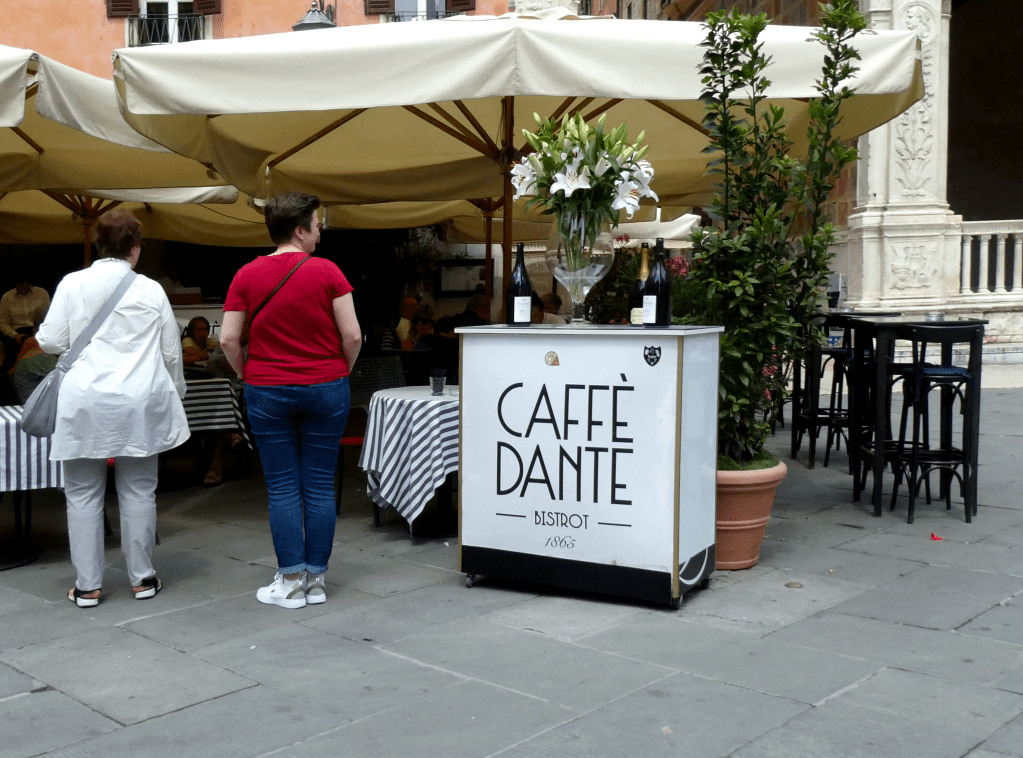
Simply strolling through Verona leads one to magical places, like the splendid Piazza del Signori. Italy’s most famous poet, Alighieri Dante, lodged nearby with the ruling Della Scala family during his exile from Florence in the 14th century, and so the square also answers to the name of Piazza Dante. Surrounded by ancient buildings which played an important role in Verona’s early civic life, whose façades, although faded, are still beautiful, the square still resonates with a sense of medieval life.
Scaligeri, Napoleon and Castelvecchio
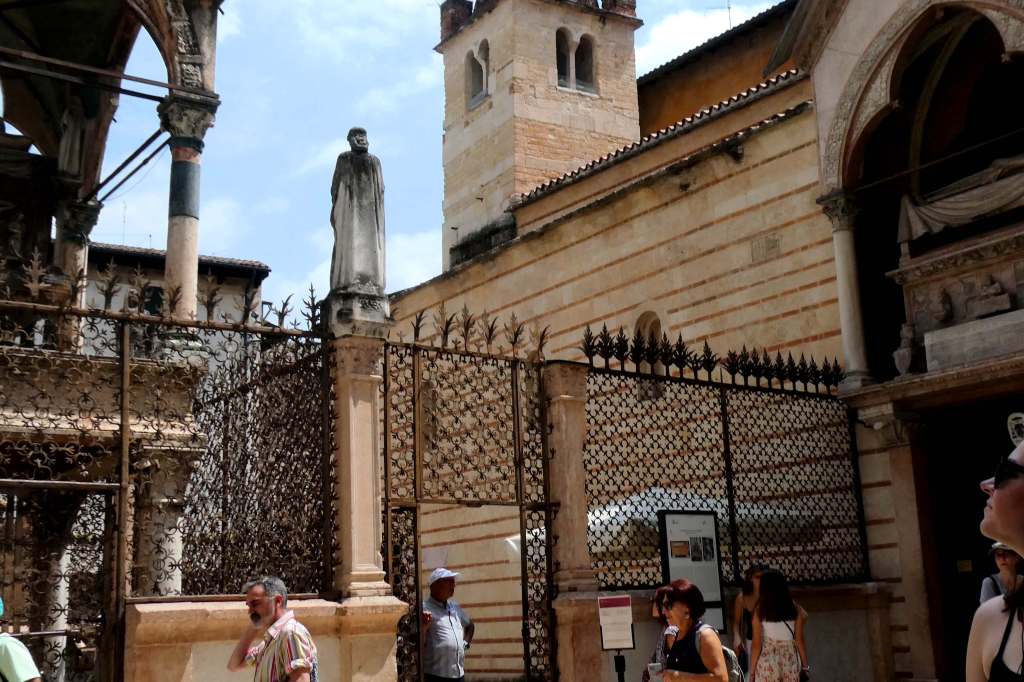

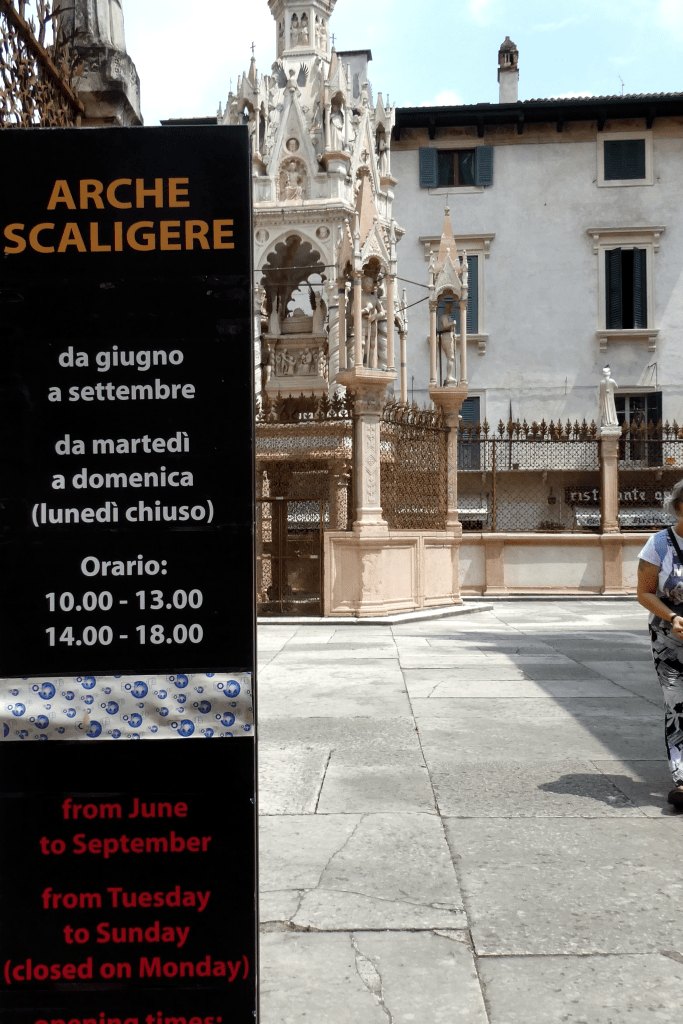

Nearby is another tiny square in which can be found the tombs of the Scaligeri family. They dominate the area, massive Gothic-like edifices, some behind a gated courtyard, and one above the church door. Intriguing, certainly, and something not to be mi
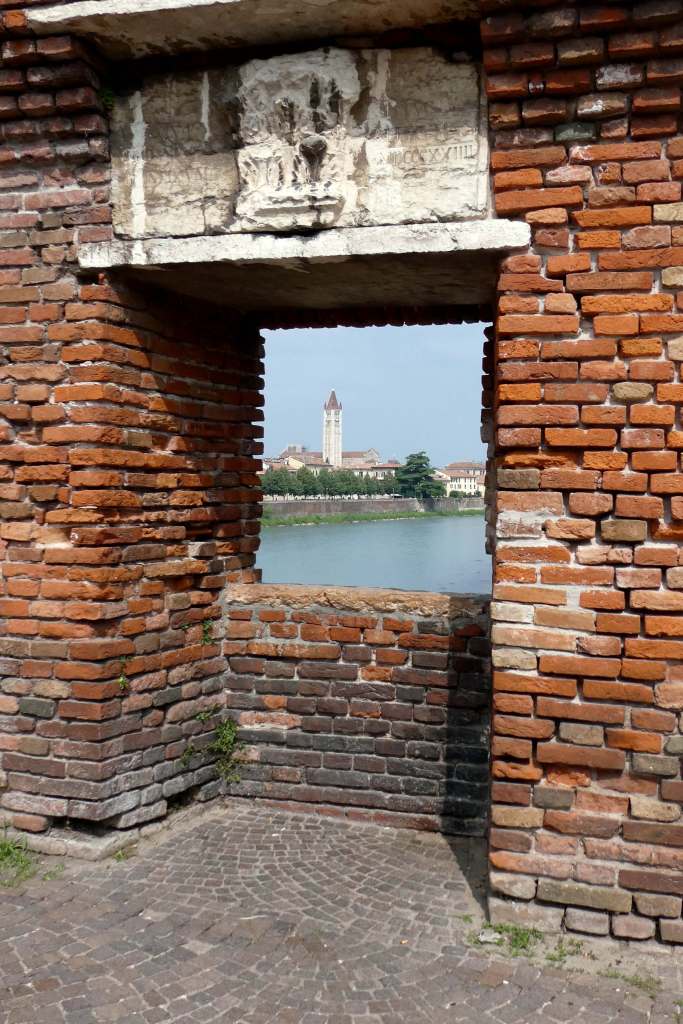
More Scaligeri family history can be found at Castelvecchio, best approached along the Adige River and across the bridge into the city proper. Castelvecchio (in Italian ‘the old castle), a red brick building with crenelated walls and square turrets was built by the ruthless Scaligeris in the 1350’s as a home and a fortress. A later ruler also used it as his residence, during his time in Verona – one Napoleon Bonaparte who had conquered most of Northern Italy in the early 1800’s.
During the 1920’s it was converted into a Museum and then in 1985, a renovation project to repair the damage done during the second world war was started by Italian architect Cala Scarpa. The result of that renovation is the splendid red brick castle one sees today the interior of which has been converted into one of the best Museums in Northern Italy.


Romeo & Juliet
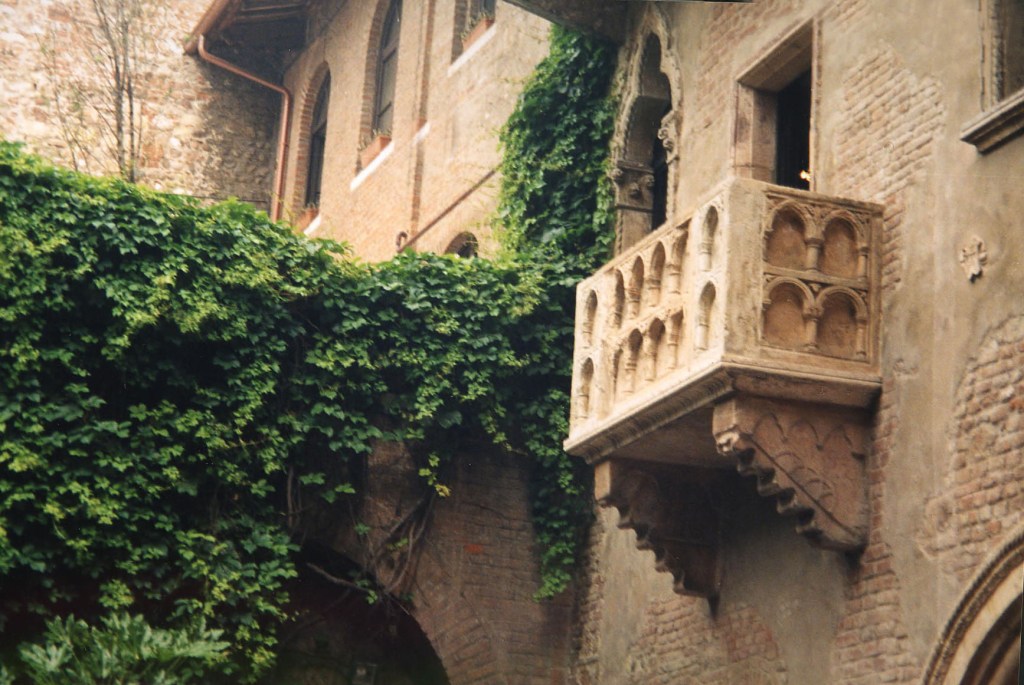
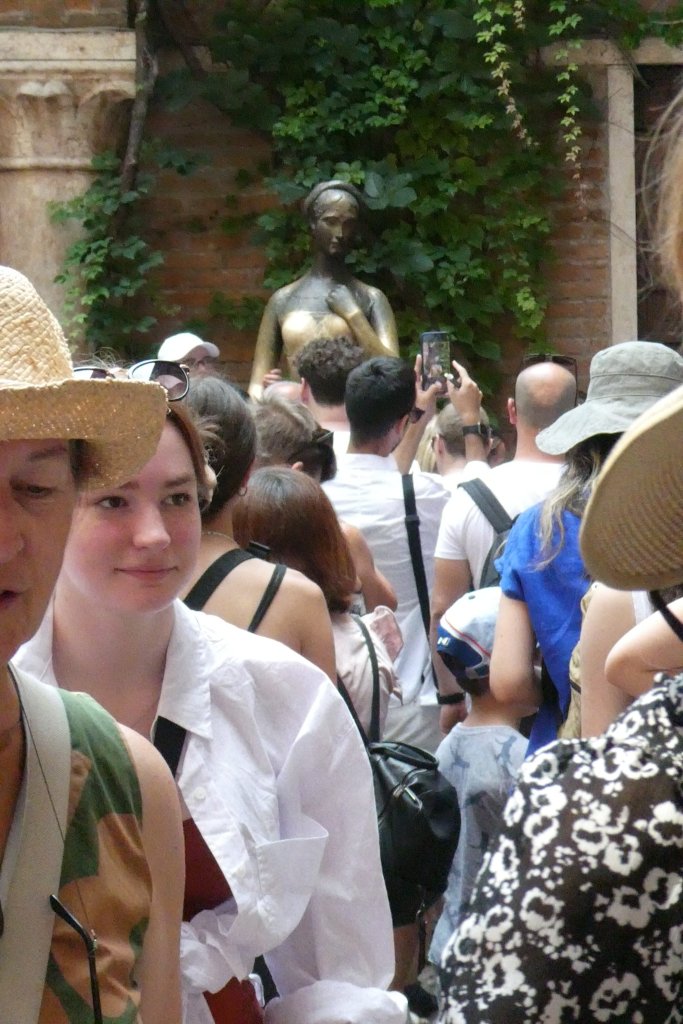
Everyone knows that Romeo & Juliet are fictitious characters dreamt up by William Shakespeare, but that doesn’t stop the crowds pouring into the courtyard of the supposed home of Juliet in Via Cappello, to touch the statue of the young heroine, and to pose on the balcony for a selfie. So many people have touched Nereo Costantini’s bronze statue that her right breast has now been burnished to gold. But even though the balcony you see today was erected only because tourists kept demanding to see the balcony, it is worth a visit even if you are in Verona for only one day. The house once belonged to the rich Veronese Dal Cappello family, and to visit the house and its courtyard gives an idea of how families lived in Verona in the 14th century.

My last visit was some 14 or so years ago, the courtyard then was almost empty, we had time to explore the house and surroundings and even read some of the letters received daily asking for advice. This time, however, the search for the ultimate selfie by the crowds queueing and surging into the small space under Juliet’s balcony was a major distraction, yet I would still return to feel the magic that the place possesses. It is but a short step away from the city’s two major Piazzas linked by its famous shopping street, Via Mazzini.
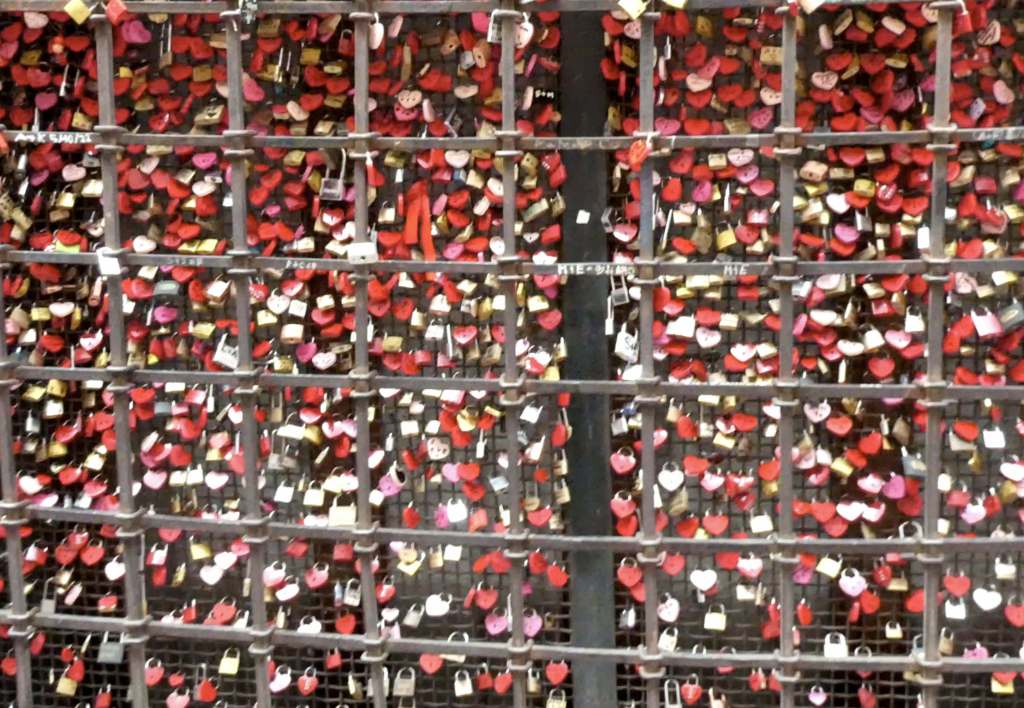
Lovers’ Locks
Piazza del Erbe and Piazza Bra
Piazza del Erbe, named after the spices that were once sold there, (erbe=spices in Italian), Verona’s most ancient piazza, was ‘the Forum’ during Roman times. It is now Verona’s commercial centre, a hub for shopping, café life, and people watching. Beautiful old buildings surround the Piazza in front of which lively market stalls sell food, spices and household goods, while the traders entertain the public as they have done since Roman times. It is around this area that you will find the prettiest streets and alleyways.

The Via Mazzini, a high-end shopping area where the shops all bear famous fashion names, from Chanel to Dolce & Gabbana, links Piazza del Erbe with Piazza Bra, home to the famous Amphitheatre of Verona, usually called The Arena. Elegant ladies with tiny dogs parade down this street which on Sundays can become very crowded when it is time for the passeggiata, the ritual Sunday evening parade when all Italy turns out to display la bella figura.
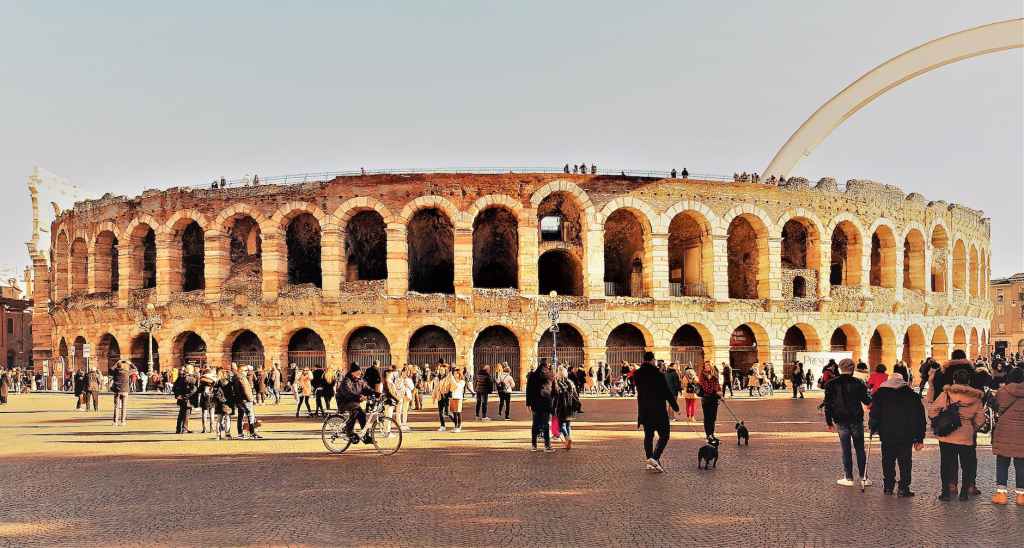
I kept the best till last. The impeccably preserved Amphitheatre in the heart of old Verona and the city’s most famous site, is deserving of that much abused word, awesome. Rows of arches and curves dominate the skyline and form a centrepiece in Piazza Bra, the city’s largest public square.
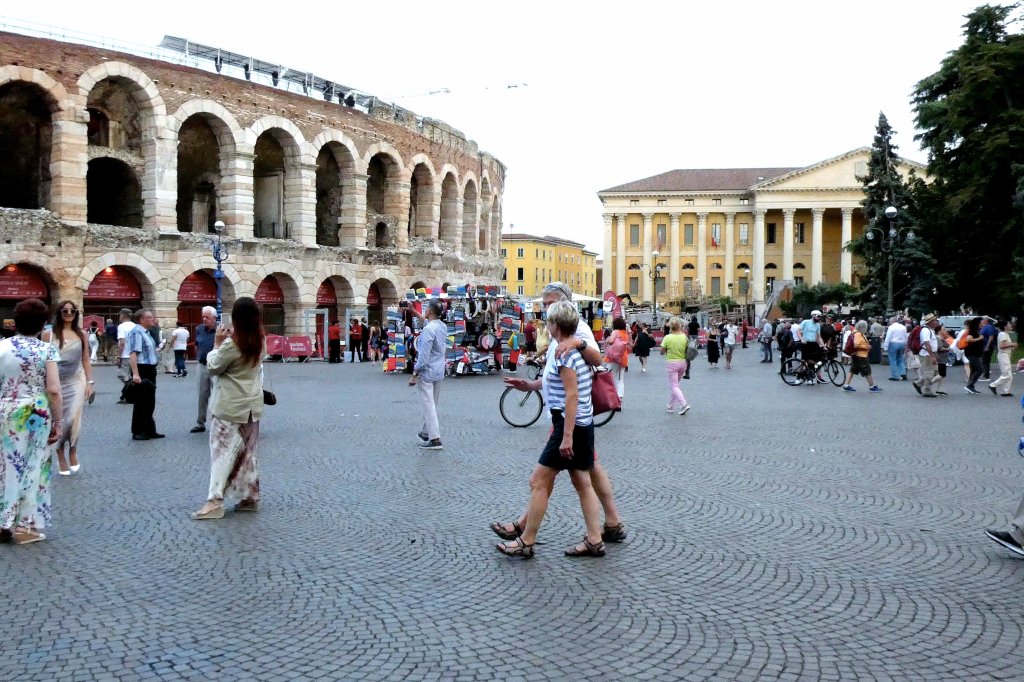
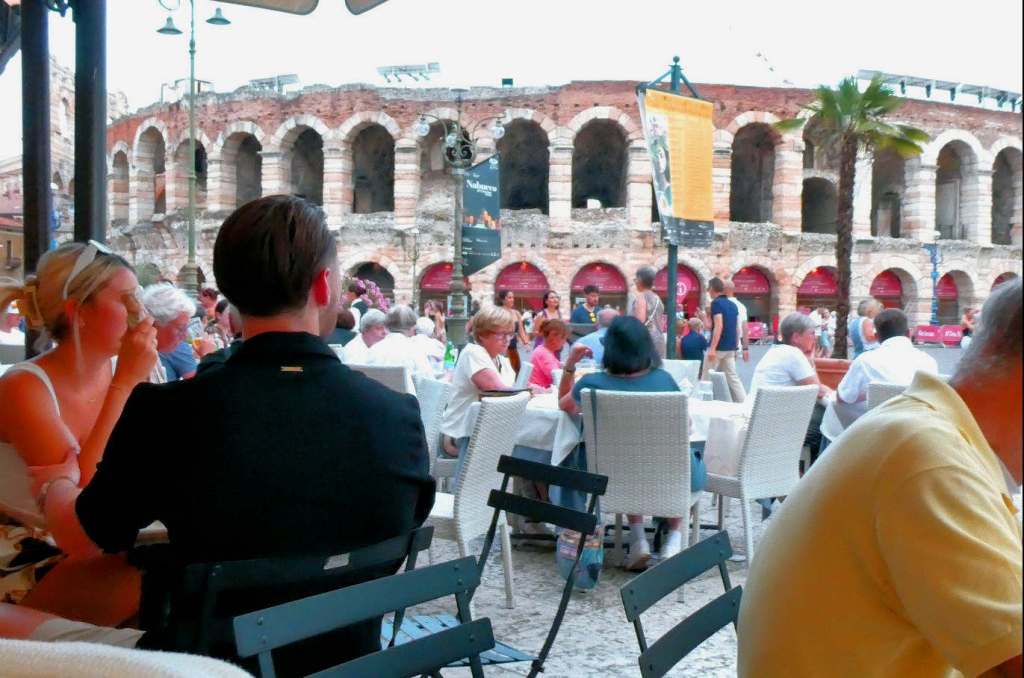
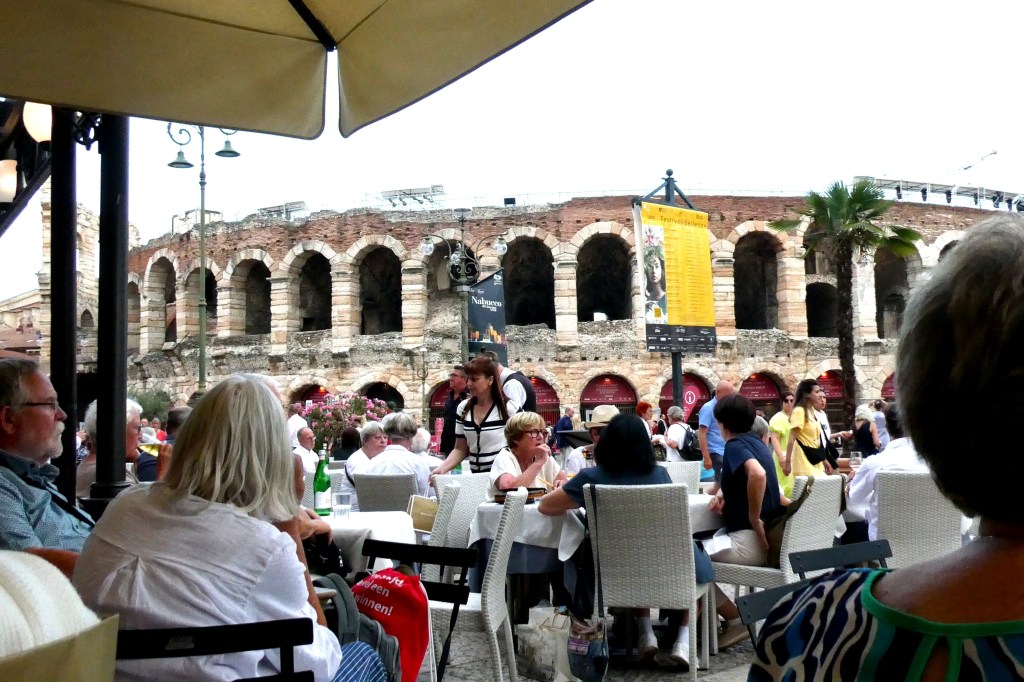
The square is lined with bustling restaurants and imposing buildings, notably the 19th century Palazzo Barbieri, a yellow building with a neoclassical façade that now serves as Verona’s Town Hall. Nearly two millennia old, the Colosseum used to hold up to 30,000 spectators at gladiatorial fights between men and men and men and beasts, who fought to the death on the sandy stage. And this glorious arena is not a dead relic of the past: it still entertains the masses although in a different way. No more are the crowds offered bread and circuses but performances of high art, most notably the world famous Verona Opera Festival which takes place every summer.


Verona is a city for all, young and old, the seeker after history & ancient cultures and lovers looking to re-kindle an old love or find a new one, opera lovers who fill the Arena night after night during the summer, and fans of William Shakespeare who watch his dramas play out under the stars. There’s a jazz festival, a festival of street games, and even a horse fair. As I said, Verona is a city for everyone.

Linked to CWWC – Cee’s Which Way Challenge
A Sunday lunch with Spanish friends can never be silent, in fact it will be quite the opposite. We had enjoyed lunch with old friends in Arco and were driving back to Ronda when we turned a corner, and there was a scene of such solitude and calm that we paused by the roadside to savour it. There must have been birdsong and goats bleating, but I can’t remember any sounds at all.


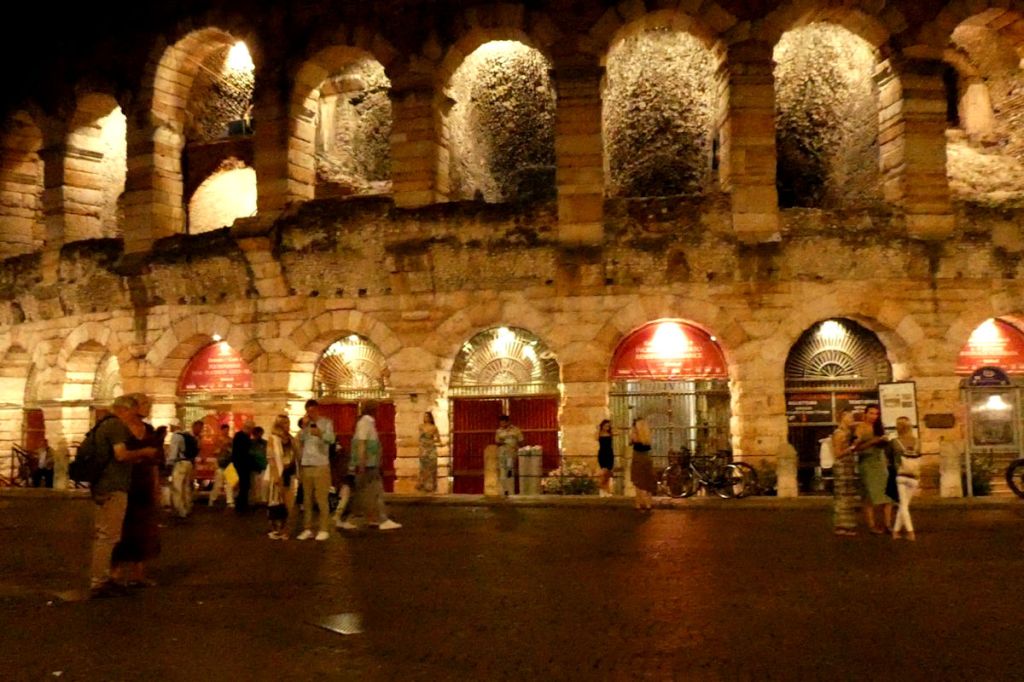
We came, we saw and we were conquered. Not just by the city but by the by-product of that city, opera, for we were in Verona for the 100th Anniversary of the performance held in the ancient arena, an arena older than the Colosseum in Rome. In ancient times it held 30,000 people for its circuses and gladiatorial events but as the stage for opera performances decreases the available seating, it now has places for only 22,000.
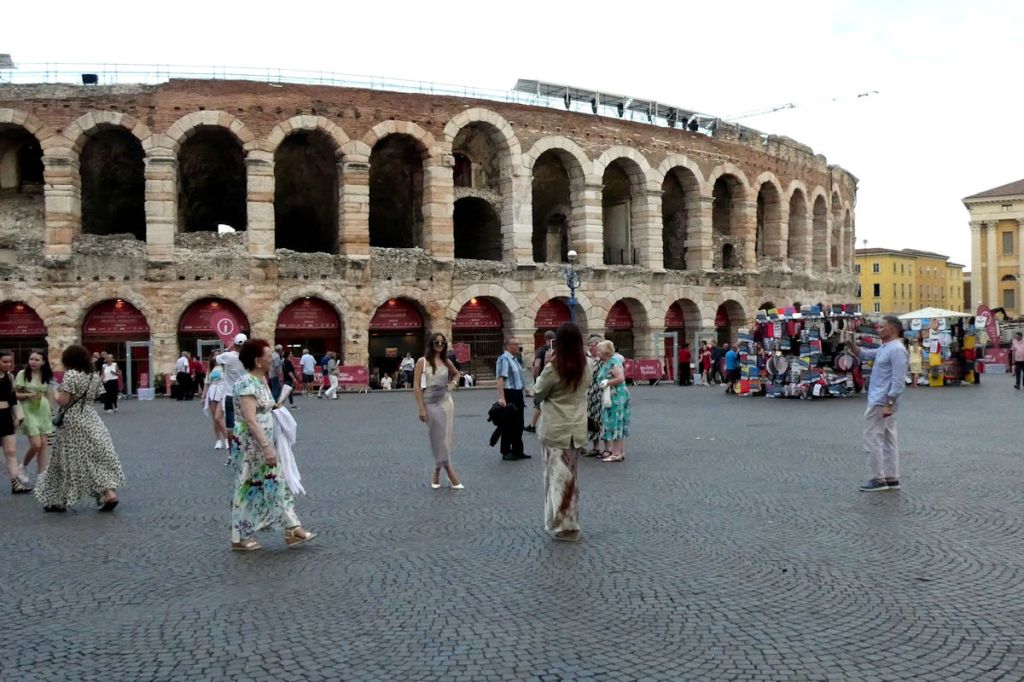
We came to Verona, my friend Jane and I, for Giuseppe Verdi’s Aida, the signature opera of the city. Although there had been some productions during the 1850s, it wasn’t until 1913 that opera began in earnest in the Arena, due to the zeal of the famous Italian tenor Giovanni Zenatello and the impresario Ottono Royato. The first opera to be produced in the arena on 10th August 1913 to mark the centenary of Verdi’s birth in 1813, was Aida, and since then, Aida opens the yearly festival of opera.

As dusk settled over the amphitheatre and a pale moon floated in the velvety blue sky above, anticipation was high. We’d watched the stage-hands sweep the tiered stage, watched the lighting engineers fiddle with the lamps, and wondered at the meaning of the objects that decorated the set, crystal pyramids, giant hands, and lighting designs which, although technologically modern, blended easily into the ancient Roman amphitheatre. Later I read that the giant white hands that dominated the stage represented power.

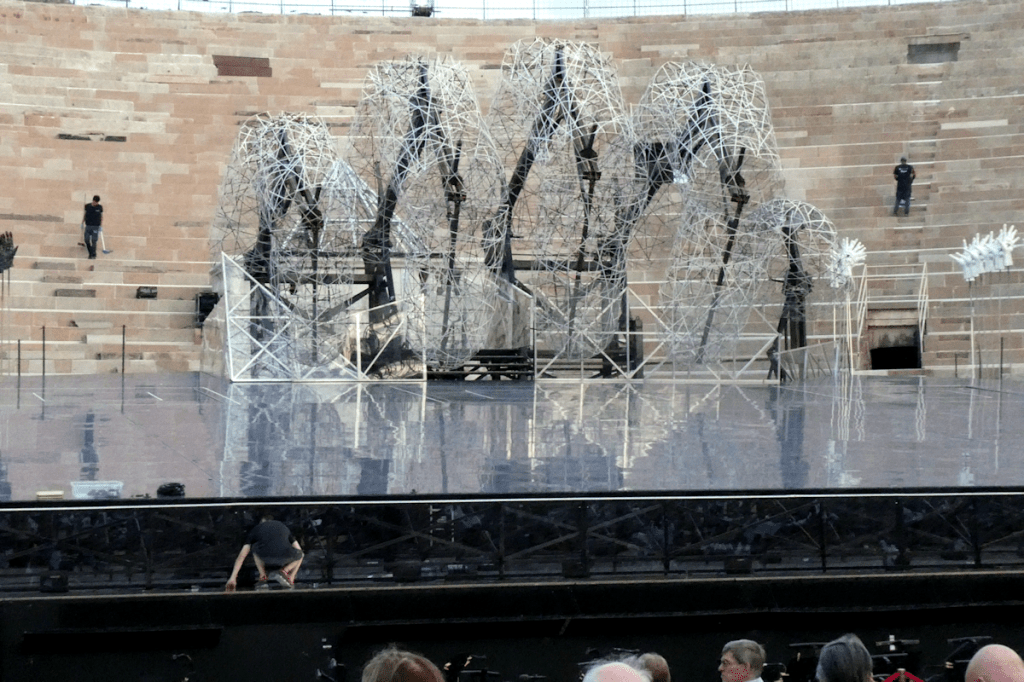

The arena was full, from the front padded seats to the tier upon tier of stone seats (no back rests but with hired cushions for comfort), and the audience milled around taking photographs, chatting in groups and in Italian fashion, jumping over seats to shake hands with old friends before the performance began at 9.30 pm. It was an audience as enthusiastic as any I’d ever seen – and noisier than most.


Then suddenly the orchestra was filing on to rapturous applause and the opera was about to begin.

There was a hush as Alexander Vinogradov as Ramfis began singing, a hush that continued throughout the First Act and every subsequent Act. I have never, ever, known an audience be so quiet, enraptured even, so receptive of the story being told in voice and music from the stage, so totally engrossed in what was happening in front of them.
I can’t even begin to guess how wide the stage was: one’s eye just couldn’t take it all in at once, yet somehow, the war-stricken world of Aida materialised in an intimate setting on the vast arena stage, as over 300 performers – soloists, chorus members, dancers and mimes – cast their spell. Their costumes were inspired by Paco Rabanne and Capucci, silver robes and helmets radiating brilliance across the expanse of the tiered stage.

The gigantic wire hands which towered over the stage and had puzzled us when we first saw them now moved menacingly or soothingly as the music and the story demanded. Stefano Podo’s avant-garde production included LED-laser lights that formed shapes and changed colours from red to blue to green, to great effect, plus impressive lighting effects at the back of the arena as actors brandished what looked like light rods used to great effect during the judgment scene.

And as for the Arena itself! Built in AD30 out of white and pink Valpolicella limestone (a few repairs since then), the arena has perfect acoustics (amplification was only brought in in 2011). In its heyday it hosted gladiatorial fights and blood sports, horse races and medieval jousts but nowadays the crowds come not for blood and gore in the sand but to be transported to another realm by the beauty of the human voice.
I’m failing as a writer here because I can’t describe what the experience of seeing and hearing the opera was like; it was a spectacle that needed to be seen in order to understand the power it had. I had been to the Arena years ago when the stage effects for Aida included ancient Egyptian scenes to rival those of Cairo. We were younger then, my husband and I, and we sat on the stone seats way, way up on the terraces. The excitement of opera under the stars past midnight (it starts about 9.30 pm and finishes, usually, around 2.00 or 2.30 am) – meant that I wasn’t aware of any discomfort.
But the 2023 100th Anniversary Performance was even better, it was uncomplicatedly magical. Possibly helped by the fact that age now demands a padded seat and some space so we had expensive seats front centre (still nearly half what a similar seat would cost at Covent Garden). I would recommend paying that bit extra for the comfort if you are aged from 30 upwards!

And then jostling for seating at the café opposite the Arena with others who’d shared the experience, sipping a glass of wine at 2.30 am when the heat from the ochre-coloured stones was still intense, not wanting to go back to the hotel, and feeling part of something great and grand was somehow life-affirming.
Was it the settings? The music? The atmosphere? Maybe some of the silver dust drifted from the costumes and covered us with its magic? I don’t want to be a third-rate critic so I’ve found a clip on You Tube with a selection of scenes from the performance in Verona and if there are any opera fans among you, you might like to take a look and enjoy what we enjoyed.
Factfile:
Purchase tickets directly online, at www.arena.it/buy. You can check the availability of seats by consulting the seating plan, which can be found on each performance date. You will be asked to give a password so have one ready. If you want to book by phone, call +39 0458005151 Monday to Saturday 9 am to 6 pm.
British Airways flies direct to Verona.
And coming up at the back, a long way back, late and far behind as usual, is Mari with a few Thursday Doors.
First up is one from Noyers in France. Noyers was once touted as the prettiest village in France, and far from me to argue with the French but I’ve seen prettier.

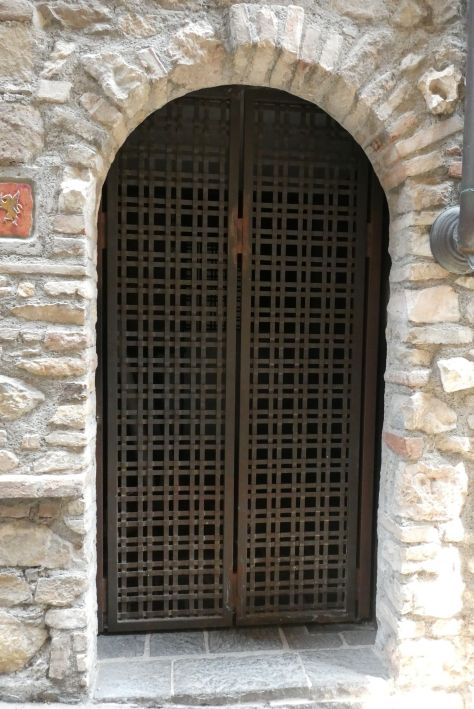
In the next photograph, the eye is drawn. not to much to the door as to the tomb above it. This is the sarcophagus of Cangrande, founder of the Scaligeri dynasty of Verona who died in 1392 supposedly of poison. One of the most bizarre examples of Gothic funerary art, it sits over the entrance to the church of Santa Maria Antigua not far from Piazza Erbe in Verona. This was the first to be built, there are other dynastic members buried nearby, behind locked gates. Sorry about the ‘intruders’ but honestly, I waited ages for them to move but I think their messages were very important!

Not sure if I may not have used this one before but anyway, here is the door to an old Haman in Limassol, Cyprus.

TRAVEL TAKEAWAYS by JULIE WATSON

It’s not often I blog about a book I’m reading. It has to be exceptional or part of a writing or a photography challenge, but in this case it is because I have just discovered a paperback by someone who writes travel articles that really appeal to me, the sort I used to enjoy in the Sunday papers before they turned themselves over to the advertising world.
I found it through Beachy Books, an Isle of Wight publisher whose listings have often included quirky and interesting books. It turns out that Julie Watson is also an Isle of Wight writer, someone I don’t know but someone whom I’d like to meet one day. So, as well as being happy to introduce a travel writer to those here who write on travel, I’m also excited because she’s from my area, a local writer!
Julie’s book is a collection of travel memoirs from her first independent trip to the French Alps to work as a waitress, to later trips to more exotic places like India, Russia, Egypt, Malaysia, Costa Rica and Borneo, to name but a few. And each tale is an anecdote, a story about her trip, not a list of restaurants and hotels, but about the chance meetings that occur on holiday when we open ourselves to new experiences, serendipitous moments that are evoked in exhilarating detail. And all this brought to us in a very personal, authentic prose. I finished the book feeling I’d learned something new about the places and the people.
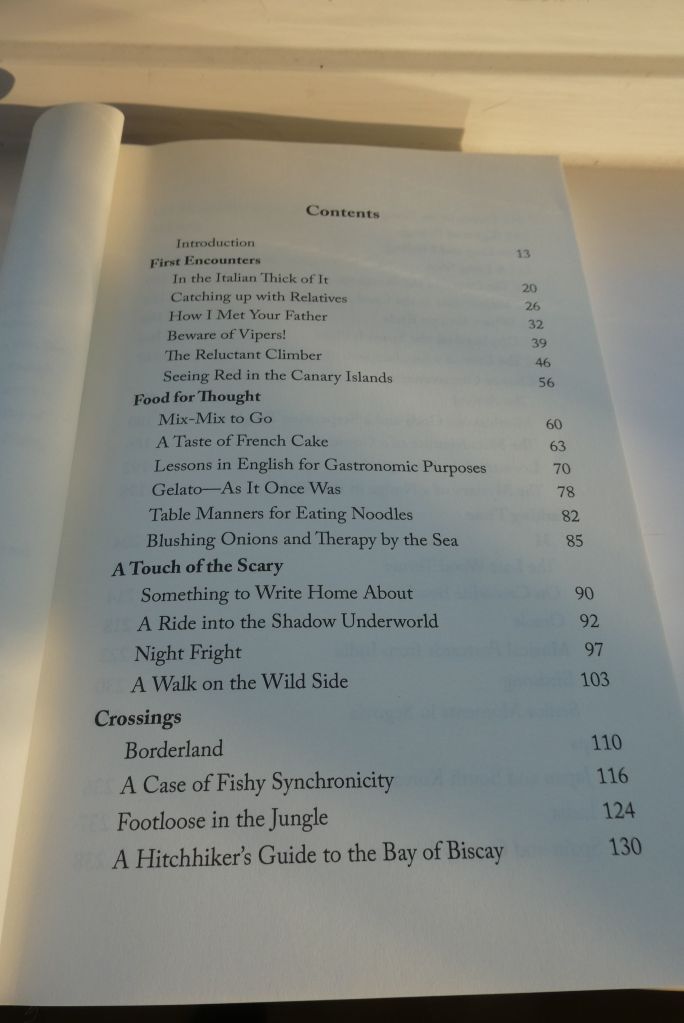
Above is one of the Contents pages, from which you’ll see that the articles are short, bite-sized, and as the cliché has it “small but beautifully formed”, ideal for dipping into when you have a spare few minutes.
It’s hard to choose a favourite from so many great pieces but I think I’ll opt for Birdsong, an exquisitely crafted piece written in lockdown, a simple tale, yet one that when read, left me with the feeling that I had known that place, and I had known that moment. And I was strangely moved.

Available from all good bookshops and from Amazon, of course.
The word is Busy for this week’s One word Sunday from Debbie at One Word Sunday
Hey Ho! It’s nearly Monday. I almost went for the usual bicycles in Saigon and crowds homeward bound across the famous zebra crossings in Tokyo but opted for a quieter form of busy.


See more at One Word Sunday


 MARI'S TRAVELS WITH HER CAMERA