Blog

  • DUBAI – Heaven or Hell?

    DUBAI – Heaven or Hell?

    P1160370Dubai is not one of my favourite places, but it’s a place that fascinates me. The most blingtastic city in the world, it outdoes anything you can think of. The excesses of Las Vegas or old Hollywood are as budget ventures besides the seemingly untold wealth on which Dubai runs.

    P1020464
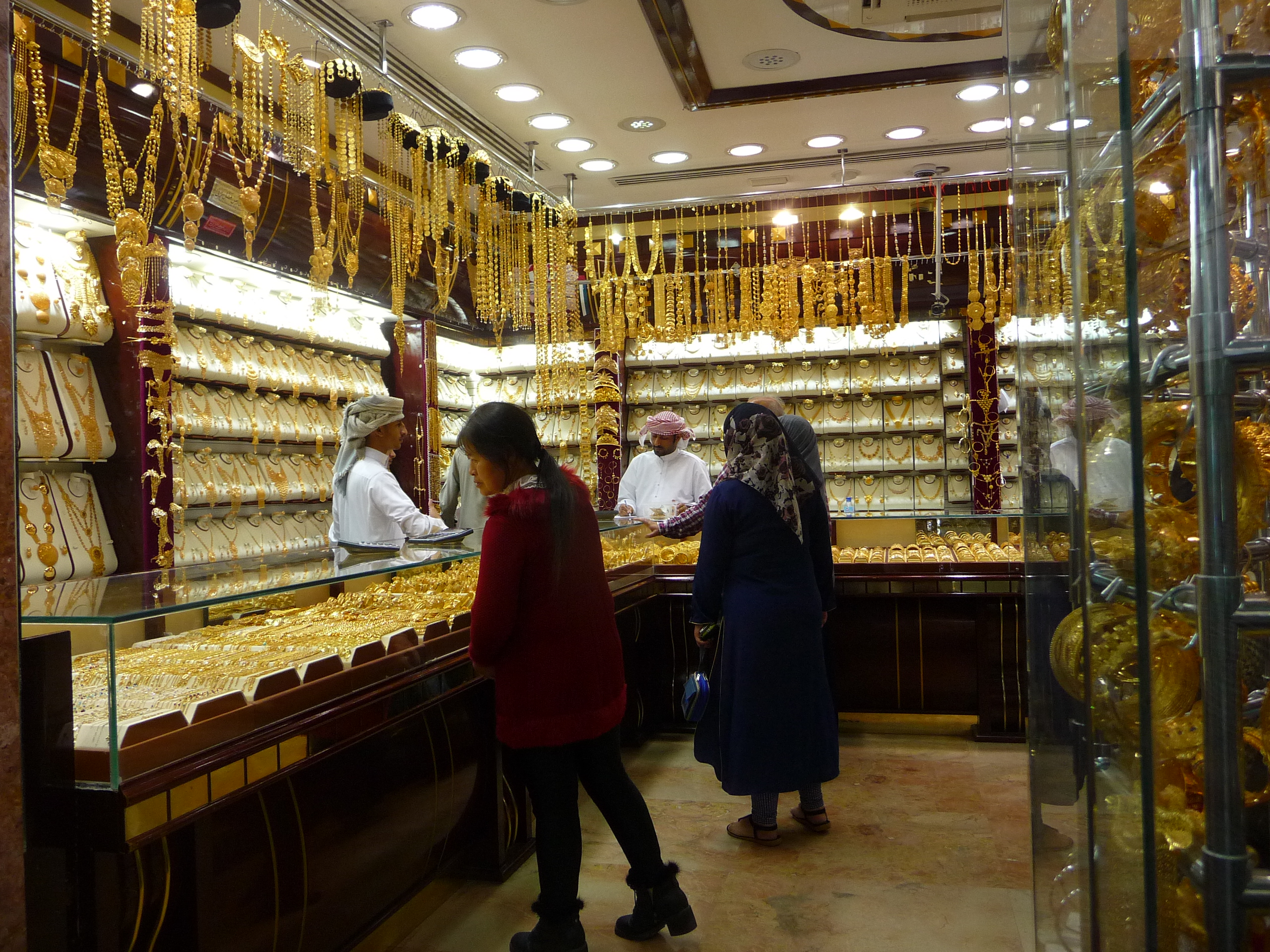
    A Bit Over the Top?   Pure Gold Necklaces

    This is so very obvious on its streets and in its architecture, whether you are walking through the gold souk or one of the outrageously expensive Malls, from the Bugatti in a roped-off area to the £105 it can cost you to reach the Top of the Burj to gaze out on the desert below.
    P1020496
    Behind the Bugatti. Daimler? Bentley?
    Bugatti: owner shopping in the Mall

    How many of the thousands who ascend the famous ‘fastest lifts in the world’ (having paid approximately the monthly salary of a local immigrant worker to do so) think that what they are looking out on is what was actually here before the ‘miracle’ of modern Dubai – desert. Is someone having a laugh?

    P1160406

    Horse-racing, motor-racing, tennis and athletics featuring the world’s top sportsmen regularly amuse local and visiting wealthy patrons, operas featuring singers from the MET and the ROH are constant events, and  mega-stars rock up to perform at  concerts for astronomical sums of money, mean that Dubai is no longer an isolated desert kingdom but a major player in the entertainment field.

    P1160379
    In Dubai, no one is further than a 5-minute walk from a Mosque

    Do you want to go skiing in the middle of a 45-degree summer? Dubai can accommodate that. Do you want to go Wadi-bashing in the desert in a 4WD at night? Ditto? Or how about sleeping under the stars (glamping, of course), eating in a restaurant with exotic fish swimming by, sailing along canals as though in Venice, or ballooning with a falcon? All of these Dubai can offer.

    But if you can turn away from the glitz and glamour for a moment, there are quieter pleasures to be had. Swimming in the beautiful Arabian Sea (admittedly not so nice now that they have built The Palm and The World in the said sea), surfing, crisscrossing the Creek on Abras or wandering the textile souk, fingering the silks and satins and bartering with the shopkeepers in the old part of town, then having a coffee by the waterfront while watching the porters carry heavy loads to the boats moored in the Creek, ready for the journey across the sea to India.

    P1160352
    Arinatucs

    Judge for yourself. You’ll love it or hate it, or like me be fascinated by it while being depressed by the knowledge that all this is built on the shoulders of immigrant workers from India & Pakistan, poorly paid and poorly housed. The argument that they might otherwise be starving in their home countries is used a lot in Dubai to justify the continued expansion of the city. That’s not a valid argument in this day and age, is it?


    P1020451
    Spices, dried fruits & nuts.

    Things are improving – somewhat.  Only 20 years ago there used to be camel races where little boys of 4, 5 and 6 were jockeys, velcroed to the saddles of great lolloping camels.   A great scandal rocked the kingdom when one of the camel owners left a boy to die in the desert (he’d become too old at eight to be light enough to ride the camel). Laws now state that no one under the age of 14 can be employed as a camel-racer but rumours abound that there is still illegal racing in parts of the UAE.

    CIMG1055
    Dhow on the Creek – Old Town
    Re-exposure of Commuting on the Creek
    Workers Crossing the Creek in an Abra

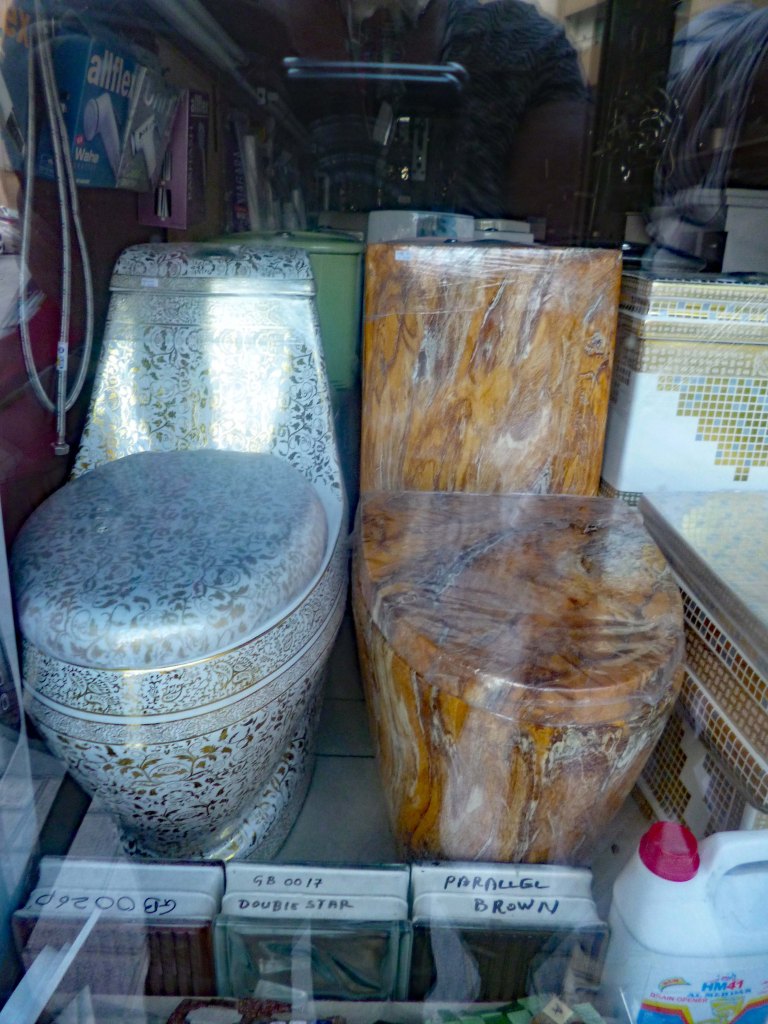
    And finally, an irresistible selection of ceramic lavatories.  Spoilt for choice, aren’t you?P1020468
  • DOORWAYS:  London, Tokyo, France

    DOORWAYS: London, Tokyo, France

    Writing is at standstill at the moment as I have an eye problem that prevents me from working on the computer (or it takes so long that I can’t do it anyway), so as doorways seems a popular feature of blogs, I thought I’d dig out a few of my favourites.  The featured image is of a street of blue doors in East London, the others follow:

    Lots of Interesting doorways in Honfleur, France
    Lots of  old doors in Honfleur, France
    KONICA MINOLTA DIGITAL CAMERA
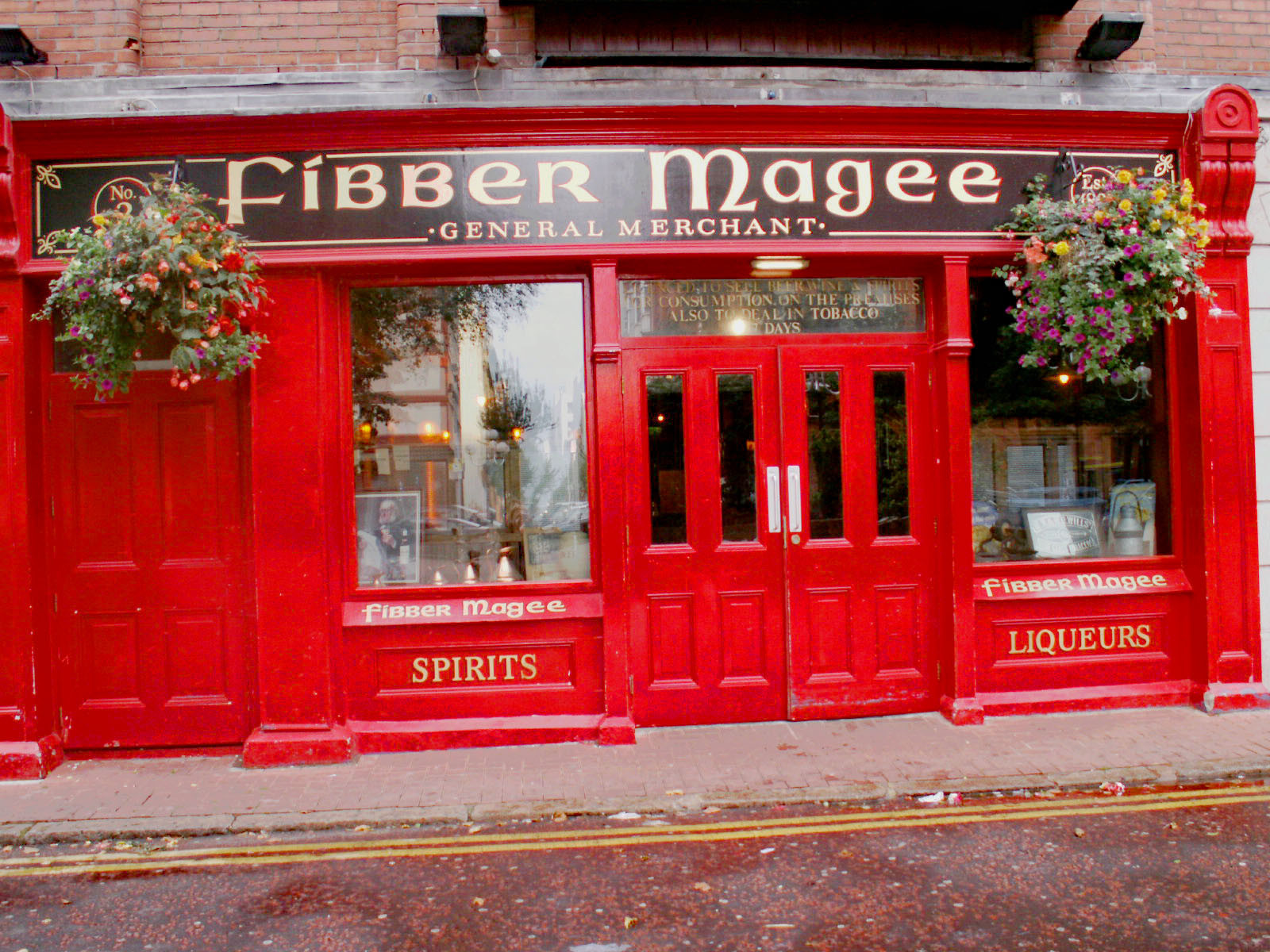
    Can’t resist including my favourite pub in Belfast
    Doorway of Restaurant in Kyoto
    Not exactly a doorway, but a delightful entrance to a restaurant in Tokyo
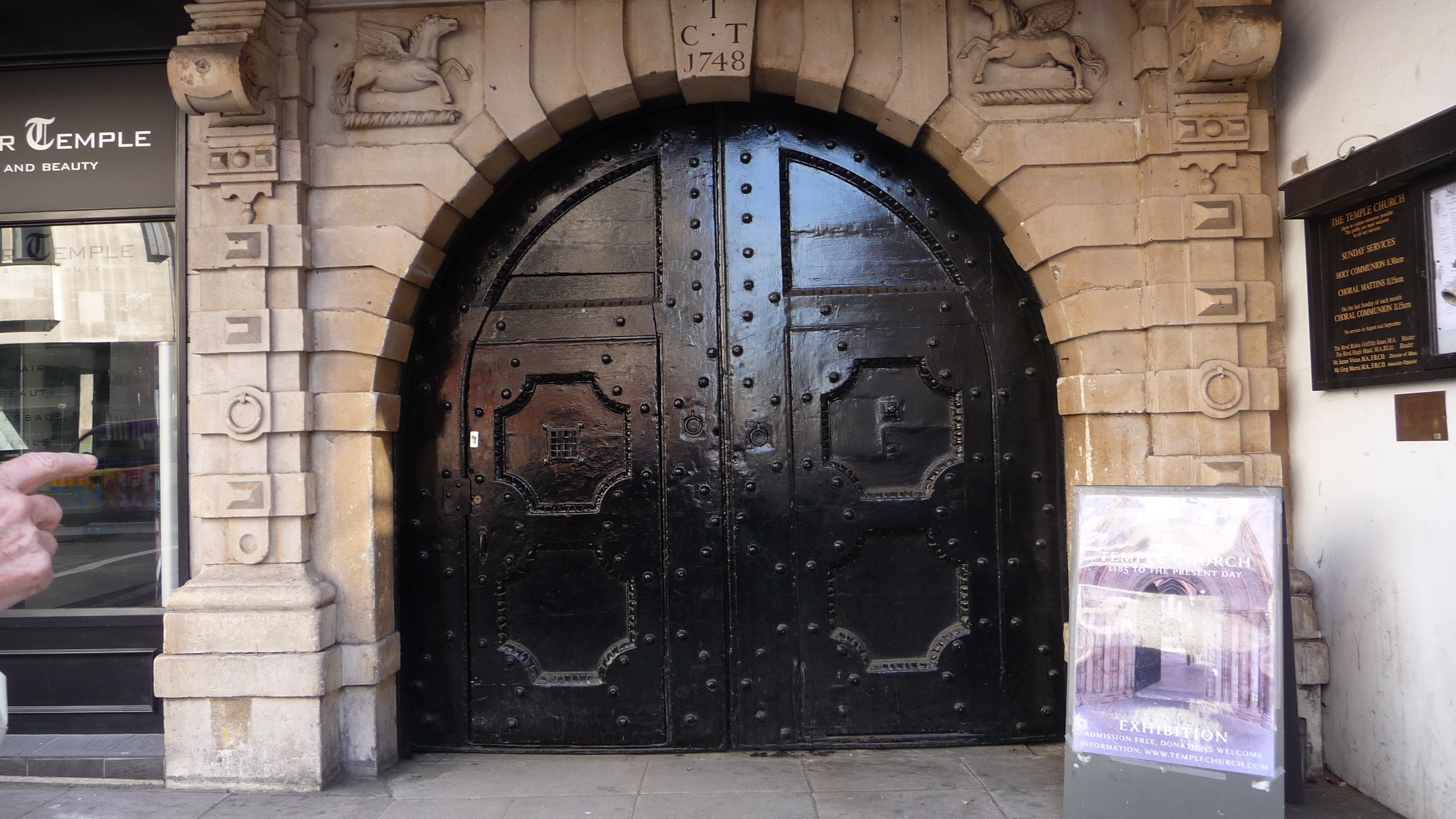
    The Strand, London
    The Strand, London


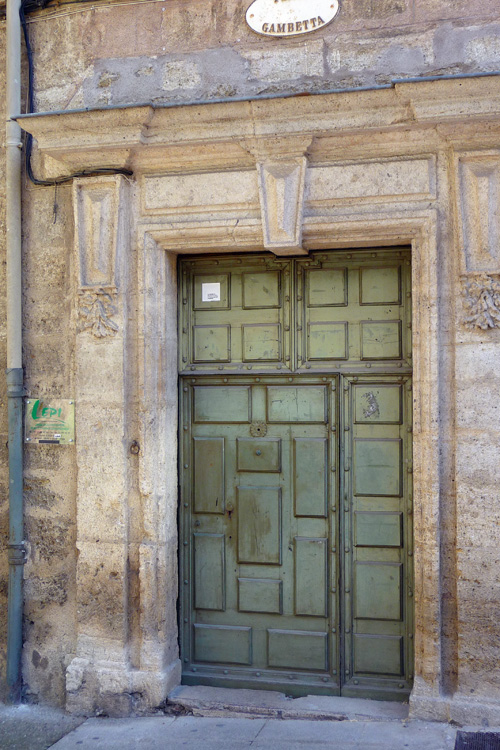
    Oldest Door in Town
    Pezanas, France (Oldest Doorway)


    Very iold door, Noyes, France
    A Very Old Door in Noyes, France


  • Cee’s Foto Fun Challenge


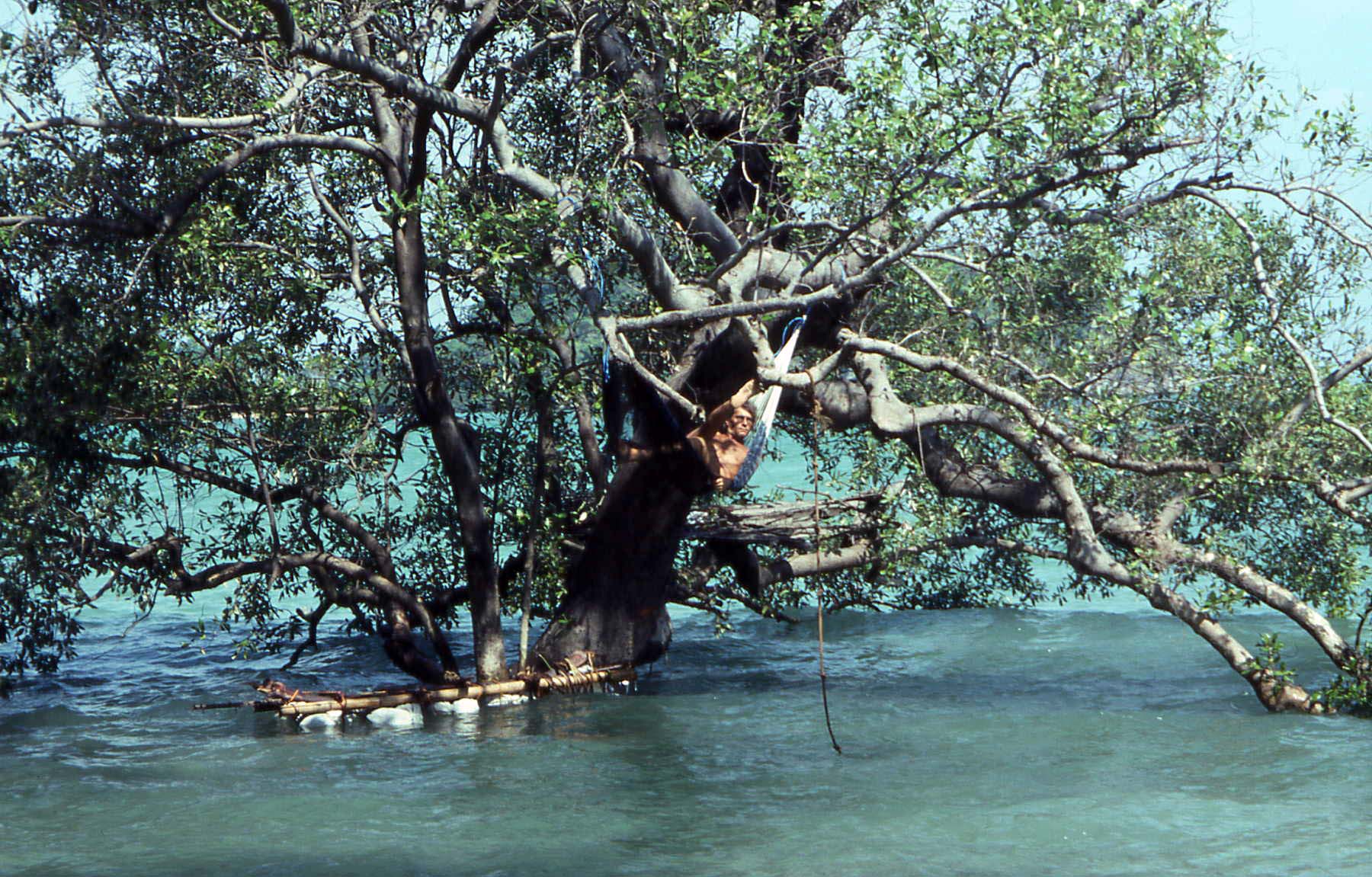
    Phuket Krabi Hammock
    Man in Hammock – Best Use I’ve Ever Seen for a Tree


    Nature's revenge 24
    Tree  Roots.  Angkor Wat, Cambodia


  • The Balinese Smile: How to Achieve It

    The Balinese Smile: How to Achieve It

    You’ve seen pictures of the Balinese: slim, elegant and with perfect white teeth that dazzle in a smile of such beauty that you wonder at the brushing process that produces such perfection?  Wonder no more.

    It was in the late 1960’s or early 1970’s that we made the trip to Bali, long before teeth-whitening was the commonplace procedure it is today, and long before the need for a mouthful of blindingly white teeth was considered necessary.

    The Balinese are a friendly people and Hari, who early in the holiday had attached himself to us, announced one morning that we were invited to the wedding of his cousin, village chieftain and head of a very extended famil in the interior of the island.  As it turned out, the marriage ceremony wasn’t the highlight of the day.

    Marie & Balinese Lady

    The youthful chief who came to greet us after our four-hour drive had just such a smile.  Incredibly handsome in a gold-embroidered white tunic, gold slippers on his feet, a white and gold Nehru style hat upon his head, his smile of welcome made my fingers itch for my camera although courtesy required that I take no photographs

    After our arrival, there was a general movement of the guests towards a canopy-covered dais which had been set up in the middle of the courtyard.  Room was made for us in the front row and glasses of the sticky, sweet, lurid-hued drinks the Balinese like were placed in our hands.

    All eyes now turned towards the left of the stage as through the curtains emerged the bride.  It is difficult not to lapse into hyperbole when it comes to describing her, even from this distance in time.  She was just incredibly beautiful.

    Spectators look towards the stage

    frisson of excitement came from the crowd as from the other side of the stage emerged a very old man dressed in white and carrying what looked like a carpet-bag.  He bent over the bride and opened her mouth to examine her teeth.  He smoothed her cheeks with his hands and mumbled some words which could have been a prayer.  Then from his bag, he produced what I’m sure was an industrial file, some six to eight inches long.  This he placed against her teeth.

    From my vantage point in the front row, I stared, incomprehension turning to incredulity.  A moment later the filing began.  As she gripped the sides of the divan until the knuckles showed white, the old man wielded the file along the edge of her teeth, the scratching setting my own teeth on edge.  Backwards and forwards it went, the sounds audible above the whispering of the onlookers, and backwards and forwards went the old man’s arm as he filed.

    The Beautiful Bride

    Once the filing was underway we, as special guests, were encouraged to mount the dais to inspect the damage being inflicted at closer quarters.

    My husband was asked to record the scene on our movie camera (remember those?) as the chief wanted a permanent record of the ceremony.  The old man continued working as we filmed, only once lifting his head and smiling with his infrequent teeth into the camera.  By now the bride had a wedge of cotton between her teeth – to keep from screaming or to keep the teeth apart?  I wasn’t sure.  My smile of encouragement brought a squeeze of the hand from her and as I looked at the tears glistening in the corners of her eyes I could only marvel at the continuation of a custom that caused such obvious pain, has no relevance to religion, and which was regarded as a special treat for the bride.  For yes, this was her bridal present – to have her teeth filed.

    The teeth are filed along the edges until both top and bottom rows are even.  They are then filed across until they are of a velvety smoothness, the result of practically all the enamel having been removed.  They are now of an even size and a uniform brilliant white  – like very fine porcelain – and beautiful.  But the loss of the enamel means the speedy deterioration of the teeth, the juice from the betel-nut they all chew stains them brown very quickly, and before middle-age, what teeth are left are loose and discoloured.

    Enjoying the Party

    I can’t remember how long the ceremony lasted, about an hour I think.  I wandered into the eating area but I had lost my appetite. The sweet sticky drinks, bright red and green, and the sweets made from coconut milk and sugar served only to remind me of the early decay that they encouraged.

    ===========================

    My few prints have deteriorated over the years and were printed on matt paper which serves to make them a trifle blurry.   Etiquette demanded that I did not photograph some people at all and those I did had to be photographed from a distance.   We were a long way from the tourist spots and even then, Bali was fairly undiscovered.  Few people there spoke English and I spoke no Indonesian which made it all much more difficult.

    This account was printed in Dental Hygiene magazine in the UK in 1992 and reprinted in the Swedish Dental Association magazine for the 81st FDI Congress in Goteborg 1993.

  • Holy Week in Malaga

    Holy Week in Malaga

    As Easter approaches, I am reminded of a visit to some Spanish friends in Malaga a few years ago when I joined in that city’s celebrations for Semana Santa (Holy Week), an unforgettable event.  My photographs are not good, a combination of flashing lights, reflections, and crowded balconies and pavements: I apologise in advance.

    Strictly speaking, Semana Santa is a religious festival, but with the solemnity comes carousing and fun, bars open until the early hours and entire families, from grandparents to babes in arms staying up until two and three in the morning.  The two main Spanish cities in which to witness this extraordinary event are Seville and Malaga.

    A Brotherhood early in the afternoon

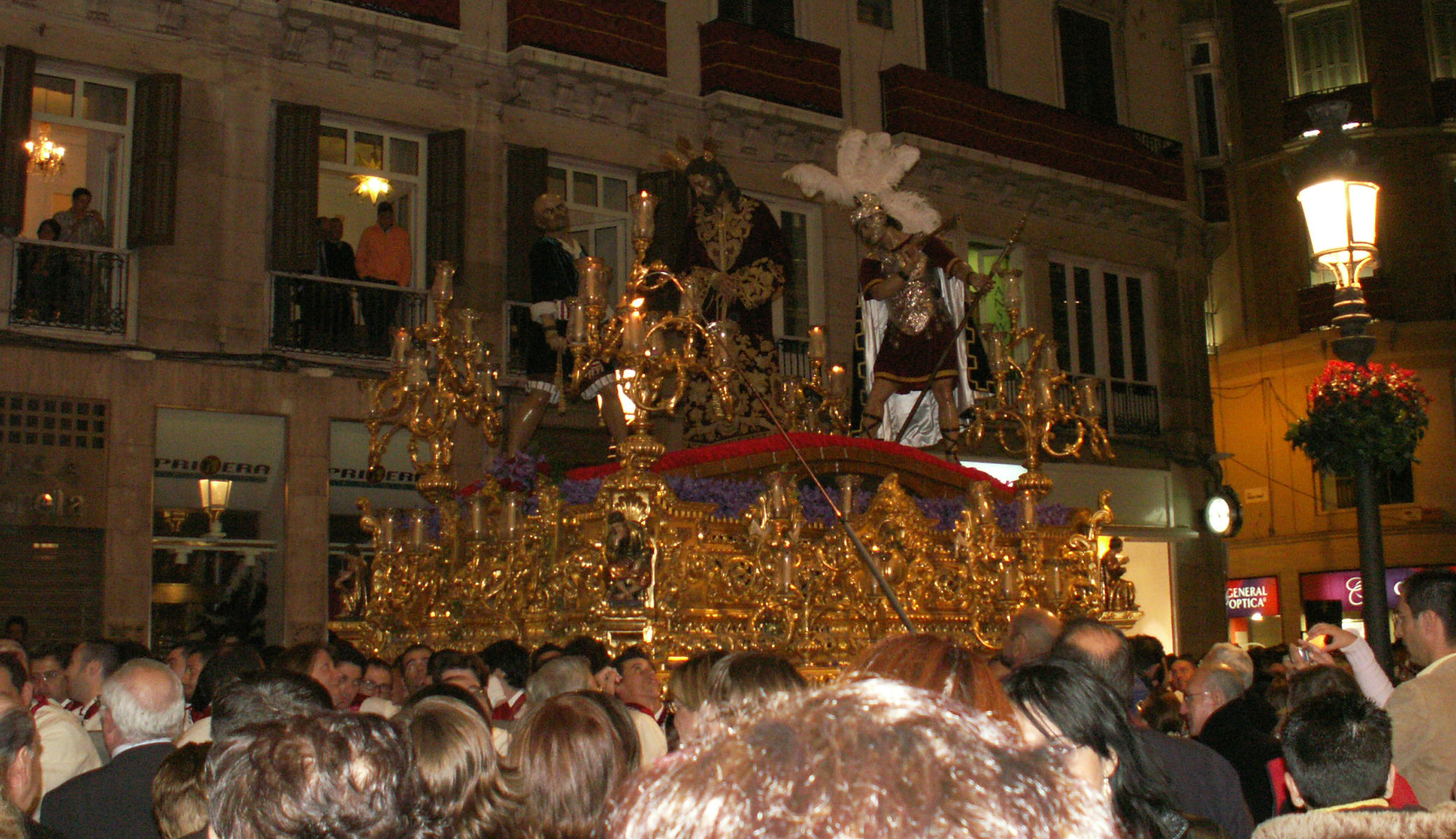
    During Holy Week from early afternoon until well after midnight, elaborate floats –  huge statues of the Virgin Mary and Christ swaying dangerously atop them – weave through the streets and alleys, carried on the shoulders of men called submarinos, hidden by the float’s draperies.   They are accompanied by Brotherhoods and Penitents carrying candles and incense burners behind which come musicians playing hymns that have faint hints of flamenco.  Good Friday is the climax.

    KONICA MINOLTA DIGITAL CAMERA

    With its aroma of burning candles, the mournful trumpets, the menacing appearance of the penitents in their white robes and white pointed hats, towns and cities across the region are literally transformed.

    My friends had booked a room in a hotel overlooking one of the streets down which the procession came.  The reservation included food and wine which were replenished throughout the night (I told you there was fun as well) and the party continued well into the early hours of the morning.

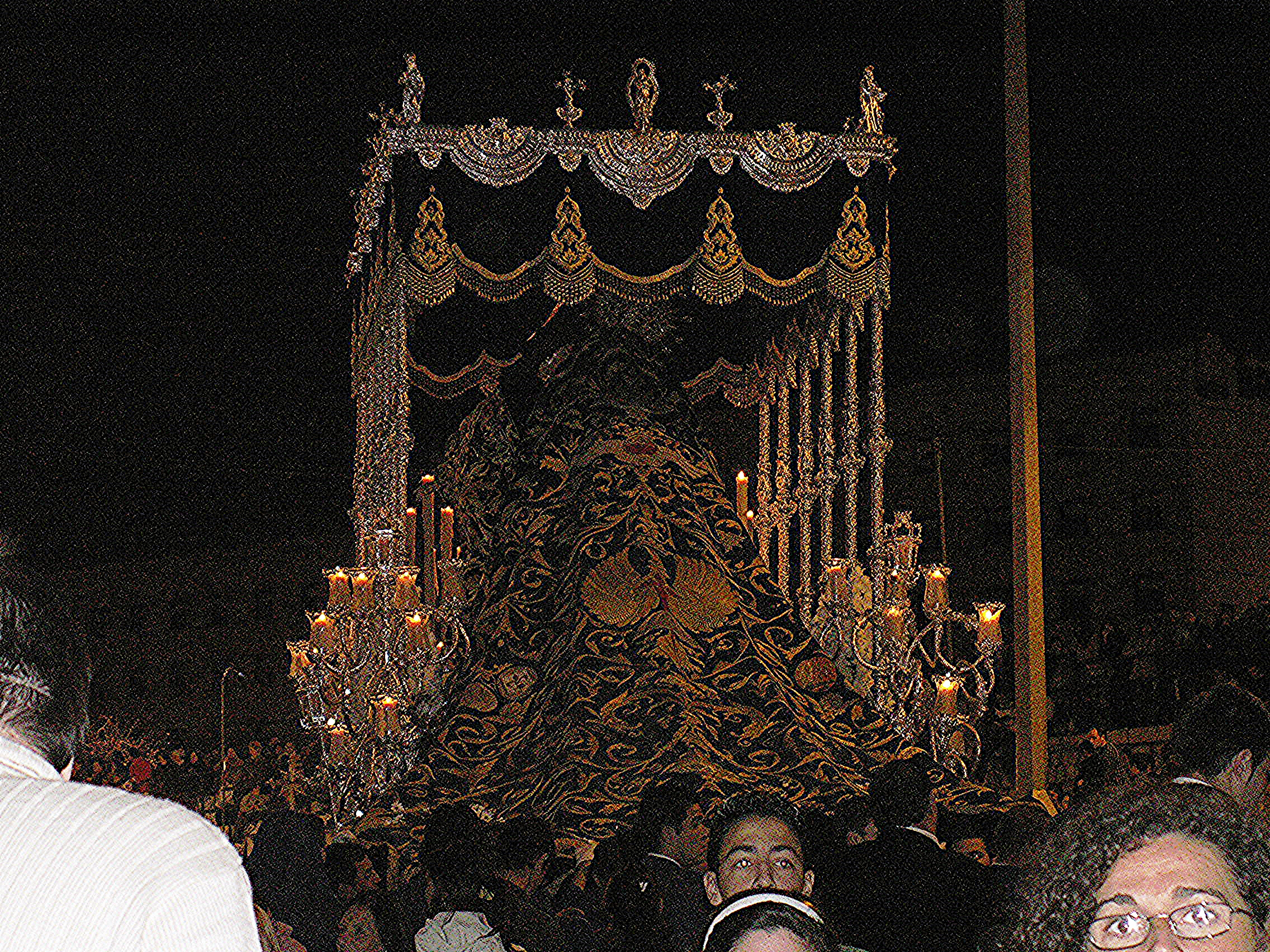
    A bell tolled to herald the approach of a wildly swaying float supporting a statue of the silver-crowned Virgin Mary with a dazzling blue velvet cloak richly embroidered in gold stretching some six metres behind her.  Hundreds of wax candles surrounded the statue, illuminating the golden float, the somberly attired attendants, and the onlookers.

    Among the Brotherhood members, whose honour it is to support and carry the floats which can weigh up to six tons, can often be found celebrities from the Spanish film and TV world, but they will be incognito, the submarinos who support the float from beneath a curtain which hides them from view.   During my visit I was told that Antonio Banderas was one such submarino, as he is known to attend most years.

    The tronos float High above the heads of the Spectators

    In the hotels that line the route, the partygoers rush to the balconies as the clanging of the bell and the dull thud of the drums announces the passing of the procession. On tiered seats in alleyways, streets and plazas, the rest of the onlookers wait patiently, as they have done for up to seven hours, children, round-eyed and excited by the occasion, grandmothers fingering their rosary beads.

    Those participating, whether as devotees or spectators, are often visibly affected by the rhythms of the music, the swaying pace of the bearers, the wailing of the sacred saeta (not unlike flamenco) and the build-up of emotion brought about by the statues of tear-stained Christ and Madonna figures.

    KONICA MINOLTA DIGITAL CAMERA

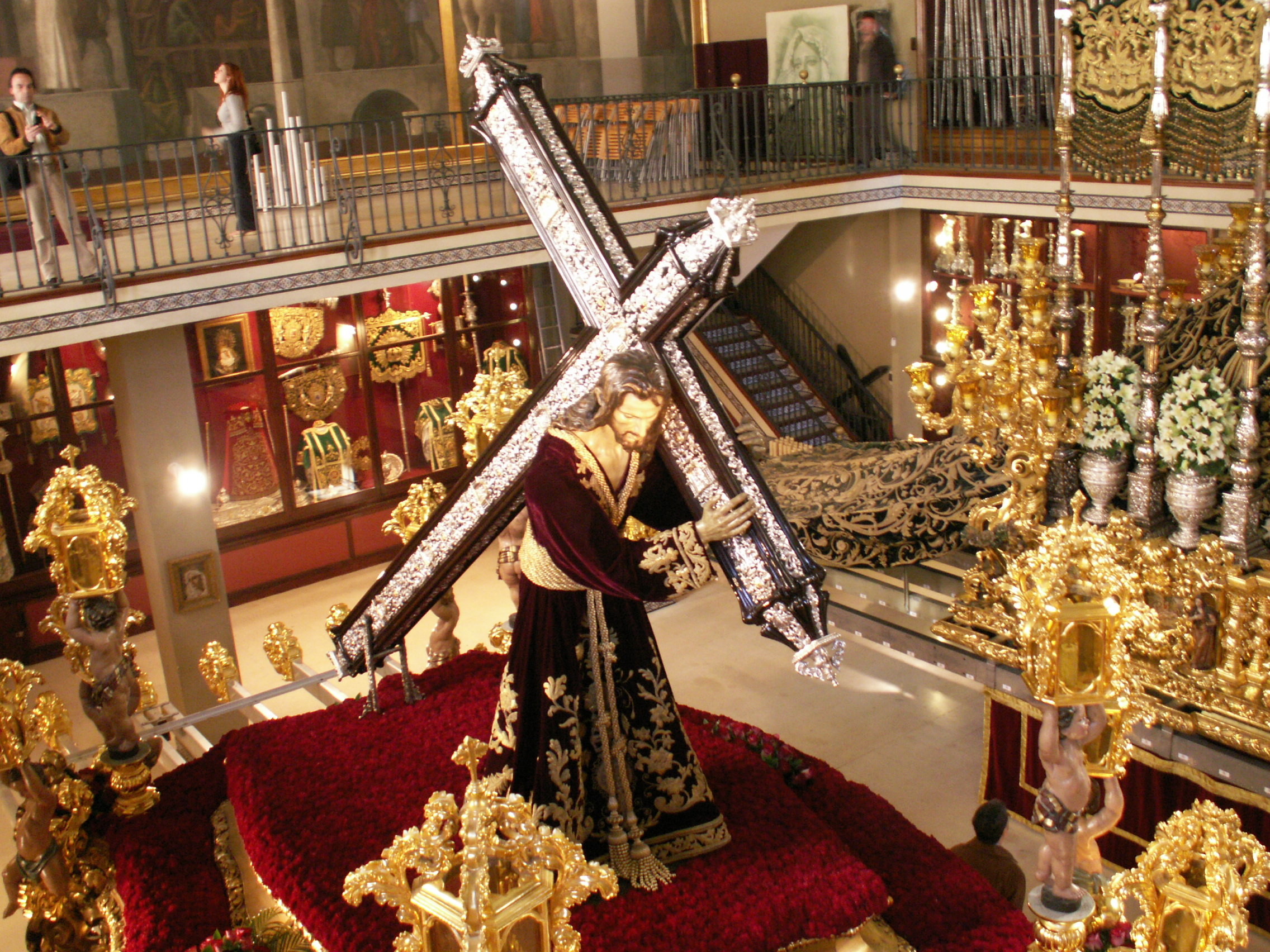
    Again, the bell tolls, and on a golden float lit by the candles carried by penitents walking alongside it, is a life-size statue of Christ carrying his cross on the road to Calvary, light catching the lavish gold embroidery on his scarlet velvet robe and glittering from the silver cross he carried on his shoulder.  The costeleros sway to the slow rhythmic beating of the drums and the wailing of a flamenco song.  The real Christ was not dressed in velvet stitched with silver as he carried a plain wooden cross on the road to Calvary but such details can be ignored on this occasion when to dress the statue well is to honour Christ.

    KONICA MINOLTA DIGITAL CAMERA
    The Christ Tableau ready to leave the Chapel

    Behind comes the Nazarenos, followers dressed in white or black hooded robes that cover the entire body, the headpiece a pointed hood with space for the eyes only, the whole scene reminiscent of a Klu Klux Klan convention.  It could feel sinister were it not for the party atmosphere among the watching people.

    Scary

    Goya could have done justice to the scene in front of me, a scene where art and religion merged into one theatrical event reflecting the culture and spirit of the Spanish people.

    It was an experience like no other I’d ever had.  I must admit also, that there was a frisson of excitement, akin to apprehension, in that the floats swayed alarmingly in the narrow streets and I was fearful that the candles would catch the trappings on the tronos or the costumes of the penitents or Nazarenos.

    Blue and Gold Cloak of Madonna

    In villages, towns and cities all over Spain – especially in Andalucía – processions take place from Palm Sunday to Good Friday.   Religious beliefs are not needed for one to take part. To a visitor, it can be a fun-filled Fiesta or a week of reflection, but it will invariably be moving.  The only thing to remember is to dress with respect, i.e. no tee shirts or shorts.

    Seats should be booked early, either in a hotel with a view of the processions, or along the route of the procession.

    Thw Madonna is ready to leave the chapel

    SEMANA  SANTA  in 2018  Sunday, March 25th – Sunday, April 1st.

    Malaga Tourist Office for further information:   http://www.malagaturismo.com/en

    Spanish Tourist Office in London  http://www.spain.info/en_

    6th floor, 64 North Row

    W1K 7DE  Londres

    Tel.:+44 02073172011

  • Photo Challenge: Face in the Crowd


    Like many people, I hesitate to photograph people without their knowledge.  Sometimes, if the mood is right, I ask permission, but then the people invariably strike poses or give an embarrassed smile for the camera.  So, the few I have are usually street scenes or action scenes.  Some I feel I couldn’t display publicly as they could be misinterpreted, have vulnerable children in them, or are otherwise not suitable.   Below are some I hope fit the challenge and I have captioned them.


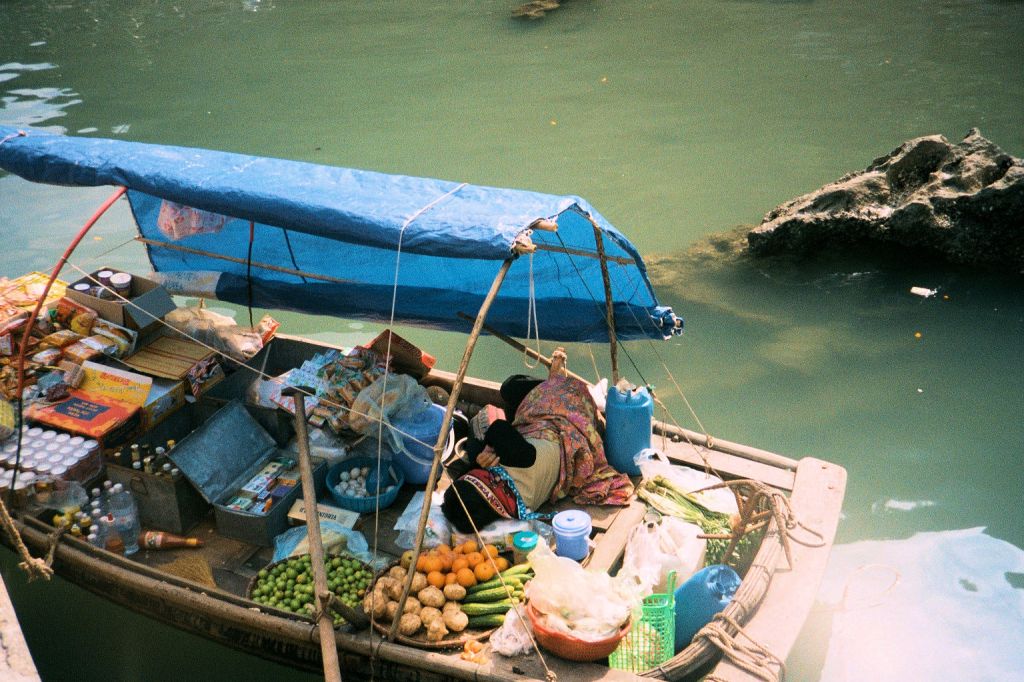
    Asleep on the job in Halong Bay, Vietnam
    It’s a Man’s World in a Sicilian Village
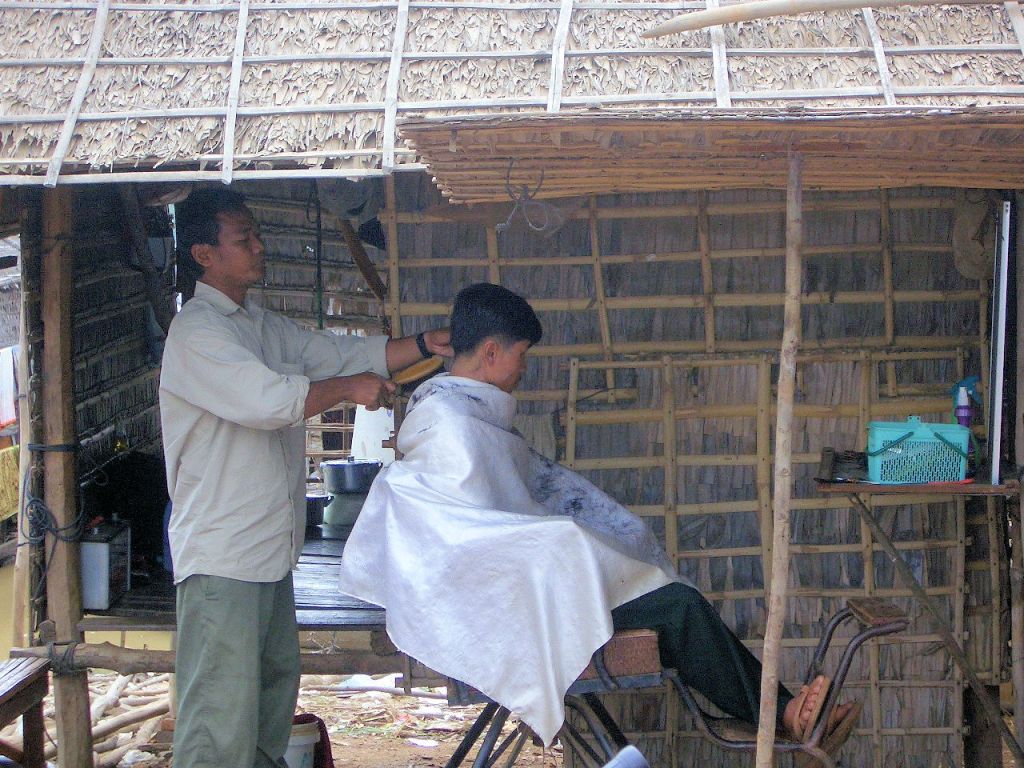
    Street Cred. A Hair-cut on the sidewalk in Hanoi, Vietnam
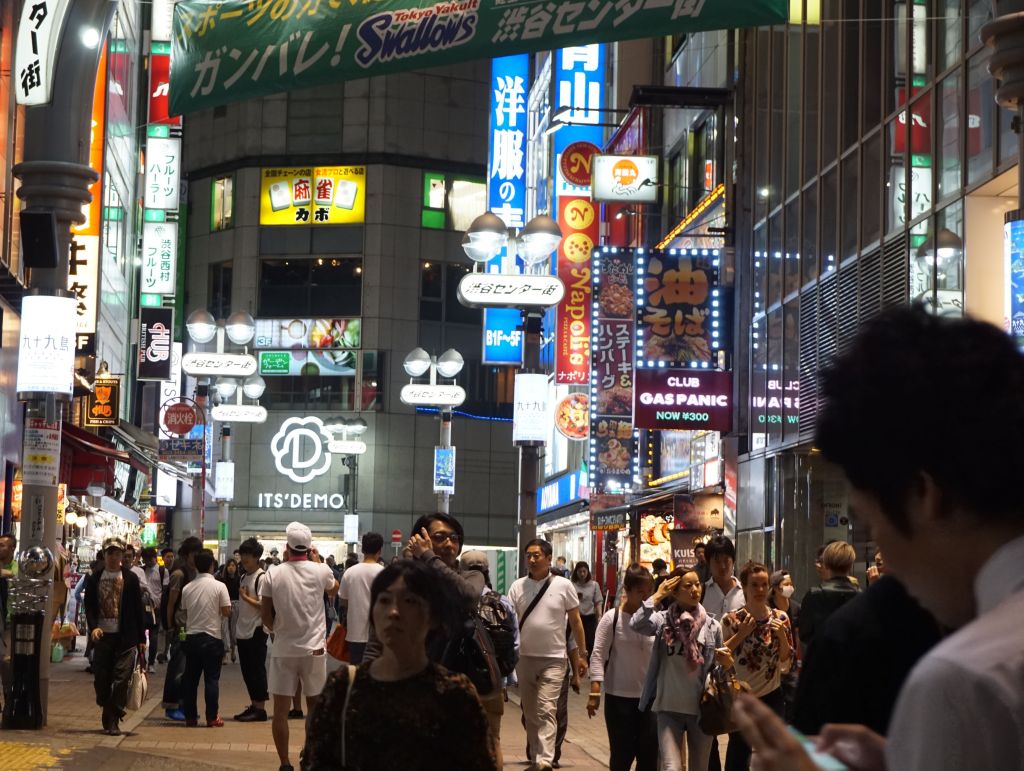
    Looks like a hard day at the Office. Tokyo, early evening

  • Serpotta’s Stucco in Palermo

    Serpotta’s Stucco in Palermo

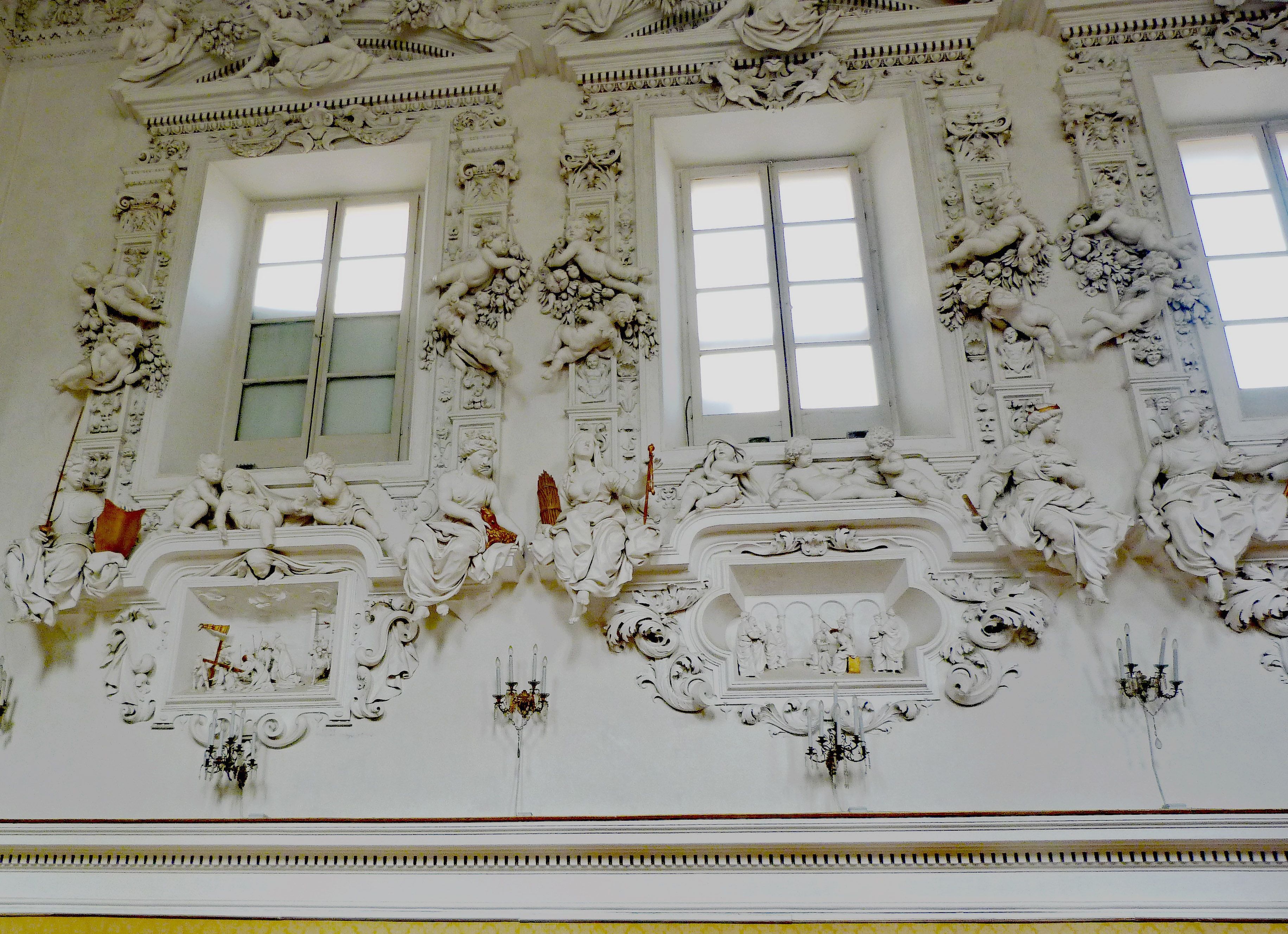
    Palermo is this year’s Italian City of Culture.  The city has stunning architecture, beautiful churches and art that is equal to that in many other parts of Italy, but for me, Palermo’s gem is the baroque Oratory of the Rosario in Santa Cita.

    My favourite putti
    The Playful Putti

    Tucked away in a back street of the capital, this exuberant masterpiece is often overlooked as one stumbles from one opulent Baroque creation to the next in this very theatrical city.  The flamboyance is all inside the building, because the Oratory, by its nature, had to be simple.  Perhaps that is why it is often missed by visitors to Palermo.

    Cherub from Serpotta's stuccoes

    I first saw the Oratorio on the 1912 BBC series Unpacking Sicily, presented by art historian Andrew Graham-Dixon and chef Giorgio Locatelli.  As the presenters walked us into a room whose walls were covered with sparkling white putti climbing and curling around pillars, playing with and teasing the allegorical statues I fell in love with the place.  It seemed to me to be redolent of joy and happiness as the impossibly round and naked infants cavorted along the walls oblivious to saints or sinners.

    Notice the devil above the statue
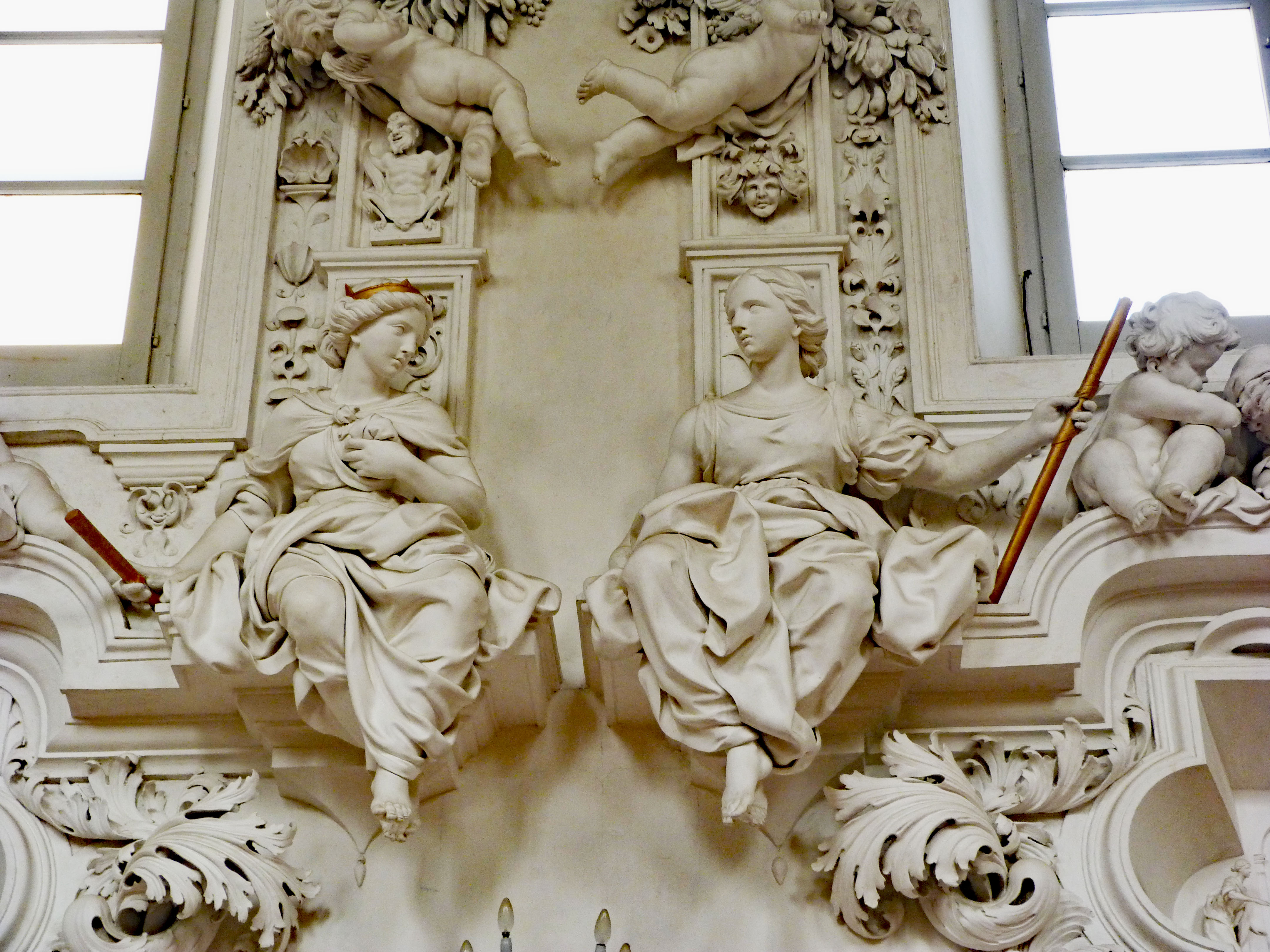
    Two allegorical figures sit ledges while all around are figures, faces, leaves, fruit.

    Giacomo Serpotta (1652-1732) the Sicilian artist responsible for the interior of the Oratory was a sculptor of genius whose work in stucco* produced a very distinctive style. His work was already sited all over Palermo when he was commissioned in 1699 to transform the Oratorio and according to art historian Anthony Blunt, he was provided with an artistically complex iconographical plan for the oratory.

    In his use of stucco, he created a new art form.   Sacheverell Sitwell, who considered his female figures to be the equivalent of those in portraits by Gainsborough, states that the sculptor lifted a minor art “out of itself into an eminence of its own”.

    Icons

    One of three Oratorios (the others being San Dominico and Santa Zita a few metres away) the Oratorio of San Lorenzo is a masterpiece of Sicilian Baroque.   The artist worked on this interior between 1698 and 1710, and apart from the cavorting, mischievous cherubs, it features a series of 10 symbolic statues, plus panels detailing the lives of Christ, the lives of St. Francis and St. Lawrence, and one that tells the story of the Battle of Lepanto.

    Of extraordinary elegance, white swathes of stucco supported by a swarm of putti flow over the walls;  life-size allegorical figures sit casually on ledges as though at a picnic while cherubs play with the draperies of their skirts and blow kisses, and a cornucopia of fruit and flowers adds joy to the scenes.

    End Wall of Oratory.
    The Battle of Lepanto panel. Below the ship sit two boys, one Christian and a victor, the other an Infidel and a loser in the battle, but they are alike in their sorrow.

    Above Lepanto scene - one cherub foot missing, one crying, one supporting
    A less-happy trio of cherubs, one has already lost a foot, one is supporting him and one is crying.

    These could be today's urchins in Palermo
    These could be today’s urchins from the streets around Palermo, clothes, stance, everything. In the middle the detritis of war.

    The Battle of Lepanto is the panel in front of which people stand for a long time absorbing the detail of the battle, the virgin protecting the fleet, the stormy seas, and the two boys sitting on the edge of the panel, one Christian and one infidel, who resemble in every way – even down to their clothes – the street urchins one can still see playing in the streets of Palermo.

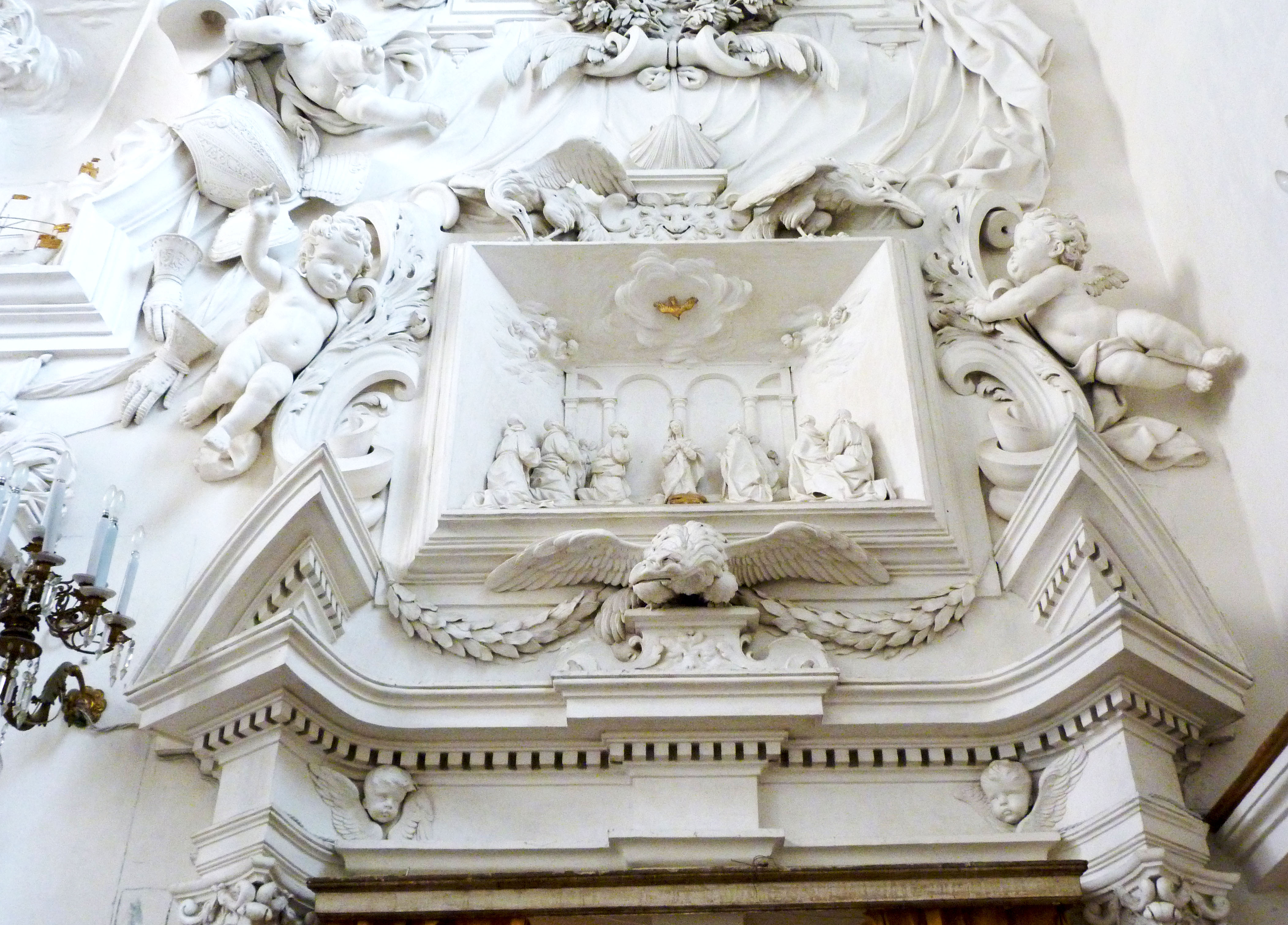
    Centrepiece on a wall

    The 16th century Battle of Lepanto was the largest naval battle since antiquity and the last major engagement fought between more than 400 rowing vessels.  A fleet of the Holy League, a coalition of European Catholic maritime states of which the Venetian and Spanish Empires were the main powers, inflicted a major defeat on the Ottoman Empire in the Gulf of Patras.   Miguel de Cervantes, the author of Don Quixote, was one of those injured in the battle.

    I think it fair to say that Serpotta displays in this work, an anti-war sentiment, or if not anti-war then a compassion for the enemy unusual at that time.

    Window wall with playing cherubs

    The altar in the Oratory is disappointing after the sheer gorgeousness of the walls.  It was originally famous because it held a masterpiece by the great Caravaggio, a Nativity with St. Francis and St. Lawrence (1609),  but this was stolen in 1969.  It has never been recovered despite a massive reward being offered.  It is presumed that the theft was the work of the Sicilian Mafia and the latest rumour is that it was shredded and fed to pigs.

    In 2015 a rather poor digital copy of the altarpiece was placed in the vacant space but it cannot be considered even a good copy.

    And now I’ll let the pictures fill in the gaps.

    This slideshow requires JavaScript.

    *Stucco: The artist first constructed a model using frames of wood, wire and rags, held together by sand and lime. Over the model a mix of lime and plaster was applied, to which marble dust was added to achieve the smooth surface glaze,  This was the invention that lifted Stucco to a higher level and Giacomo Serpotta is credited with creating an original technique that imparted to his work a lustre, not unlike that of stone or marble.  Great skill and dexterity were needed as plaster mix dried very quickly but it was valued as it allows the artist not only to build up forms but to carve into them as well.

    Address:  Via Immacolatella, 90133, Palermo.    Tel: 0921 582370

  • Majolica – Made in Faenza, Italy

    Majolica – Made in Faenza, Italy

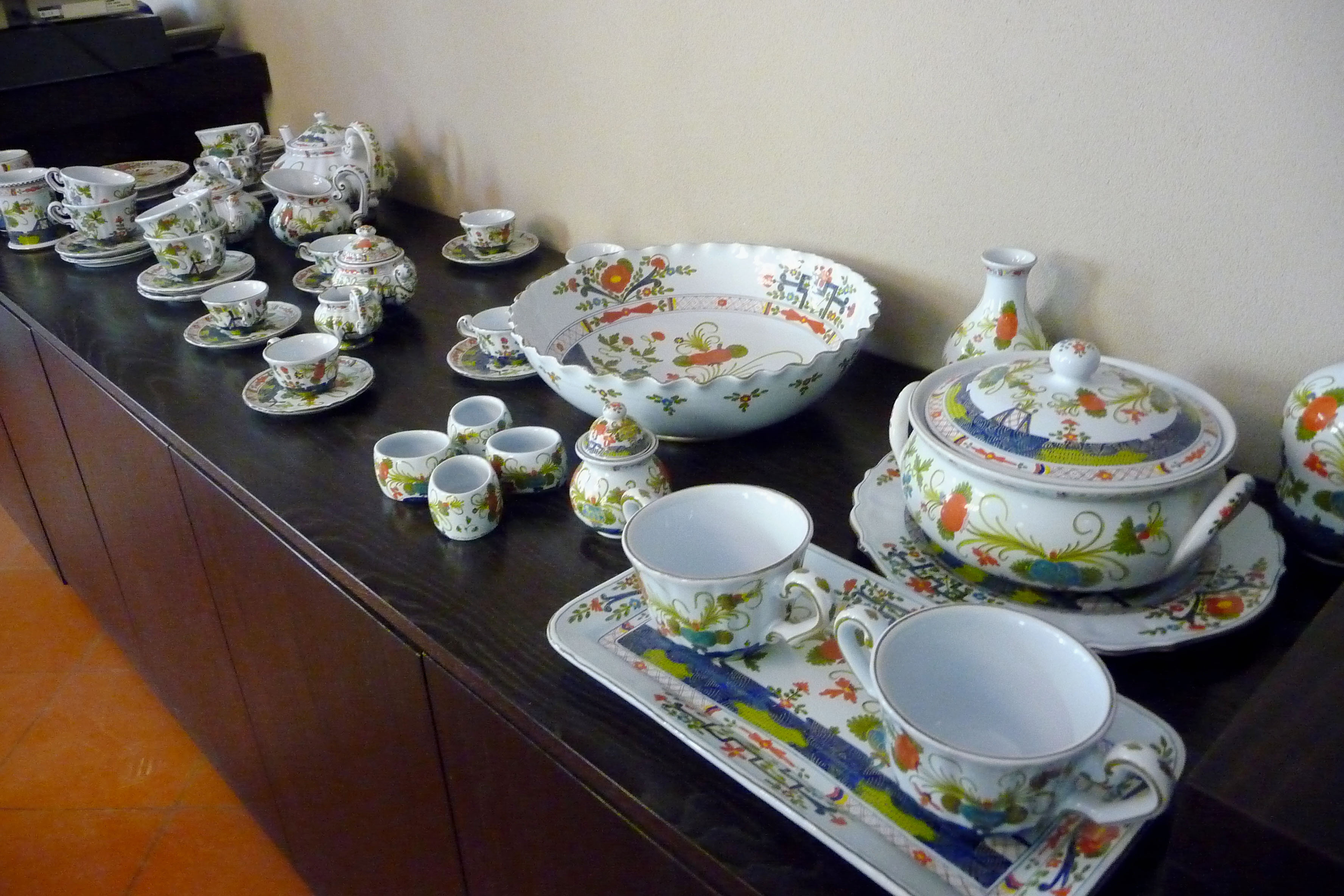
    Becky’s lovely Tavira vase post reminded me of the beautiful ceramics we saw a few years ago on a trip to Faenza in Italy, the town between Bologna and Florence which produces work of great originality from old, traditional, designs and occasional new designs.  These ceramics go by different names, depending on who is speaking about them: sometimes they are called Majolica ware, and sometimes they are called Faience, the French word for the ceramic, and the word from which the town derives its name.

    P1090220

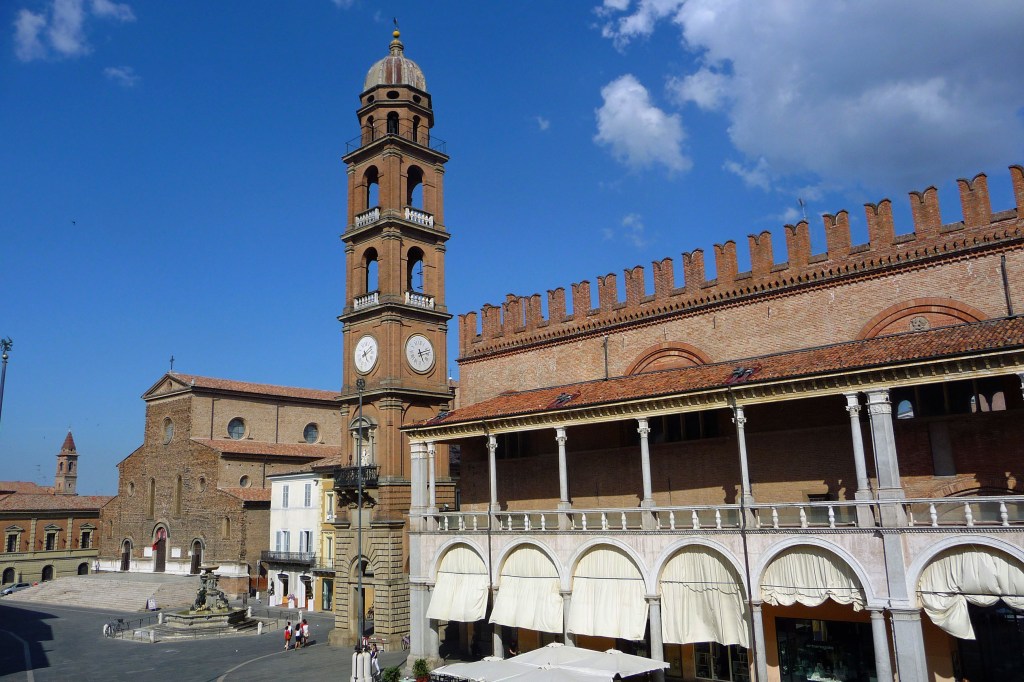
    Faenza has been a flourishing city from the 2nd century AD; from the 11th century it started to really expand and grow and by the Renaissance period it had reached its peak, thanks to good relations with nearby Florence, the centre of Italian artistic life.  The city we see today with fine Renaissance architecture and Neo-classical monuments is a testament to this period of prosperity and growth.  P1090225

    P1090222


    Faenza majolica was born here because the land was rich in the type of clay needed for the production of fine pottery and because the inhabitants were able to mould the clay into beautiful objects.  Over the years the craftsmen absorbed the knowledge flowing from Florence and became experts in shape and line as they perfected the pottery and became artists.

    Crowns, crowns and more crowns - a very popular subject
    Crowns are one of the most popular objects and are very traditional

    Majolica is terracotta clay, glazed with powder and water which makes the object waterproof and gives it a high gloss surface on which traditional designs are painted.  Sometimes the object is fired twice to give it strength and sometimes it is baked in a plaster cast which is then broken to expose the piece.

    Crowns awaiting embellishment

    The designs are etched on to the glaze, or sometimes the object is covered in paper on which pin-pricks are made, after which black coal-dust is used to stamp the lines through the pin-pricks – a form of stencilling.  Precious metals are also used and this makes the object more expensive, of course, as gold, silver and platinum need 3 firings and to be heated to 750 degrees.

    Birthing set - for the new mother after baby is born
    This set is given to a woman when she gives birth. It is for her first meal and includes a soup-bowl, egg-cups, plates, teapot etc.

    One of the expert painters works on a design


    Ceramic Plaque on Wall in Faenza

    This is the sign for the oldest workshop in Faenza

    Crowns are a very popular subject

    In September and October international contemporary and classical ceramic art events draw majolica amateurs, collectors and artists to Faenza from all over the world.

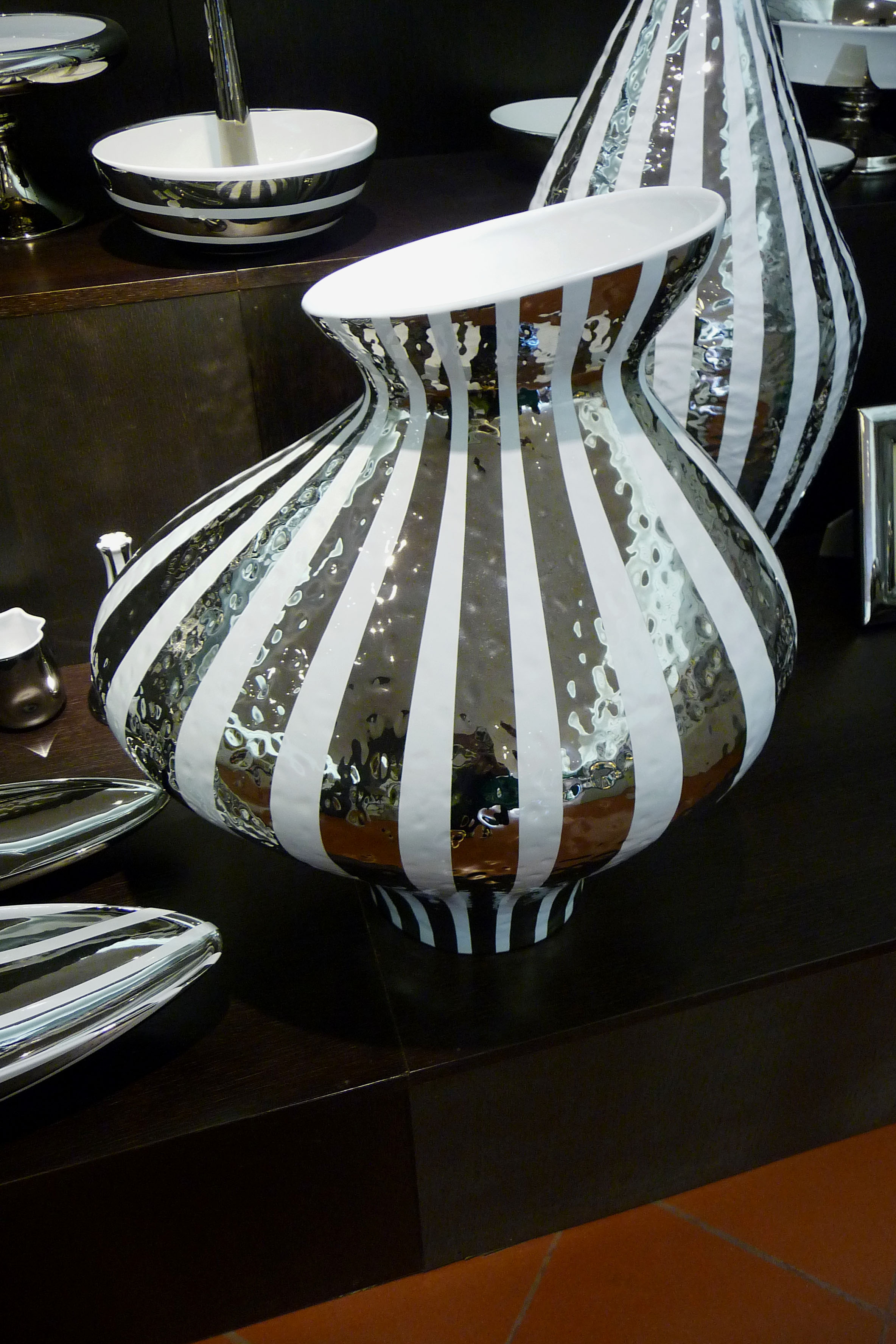
    This 'silver' decoration is pure platinum
    The ‘silver’ stripe is actually platinum and the vase was priced at €1,400.

    The ceramics alone make the trip to Faenza worthwhile and there are over 50 workshops most of which welcome visitors – look for the signs outside the shops (see one above).

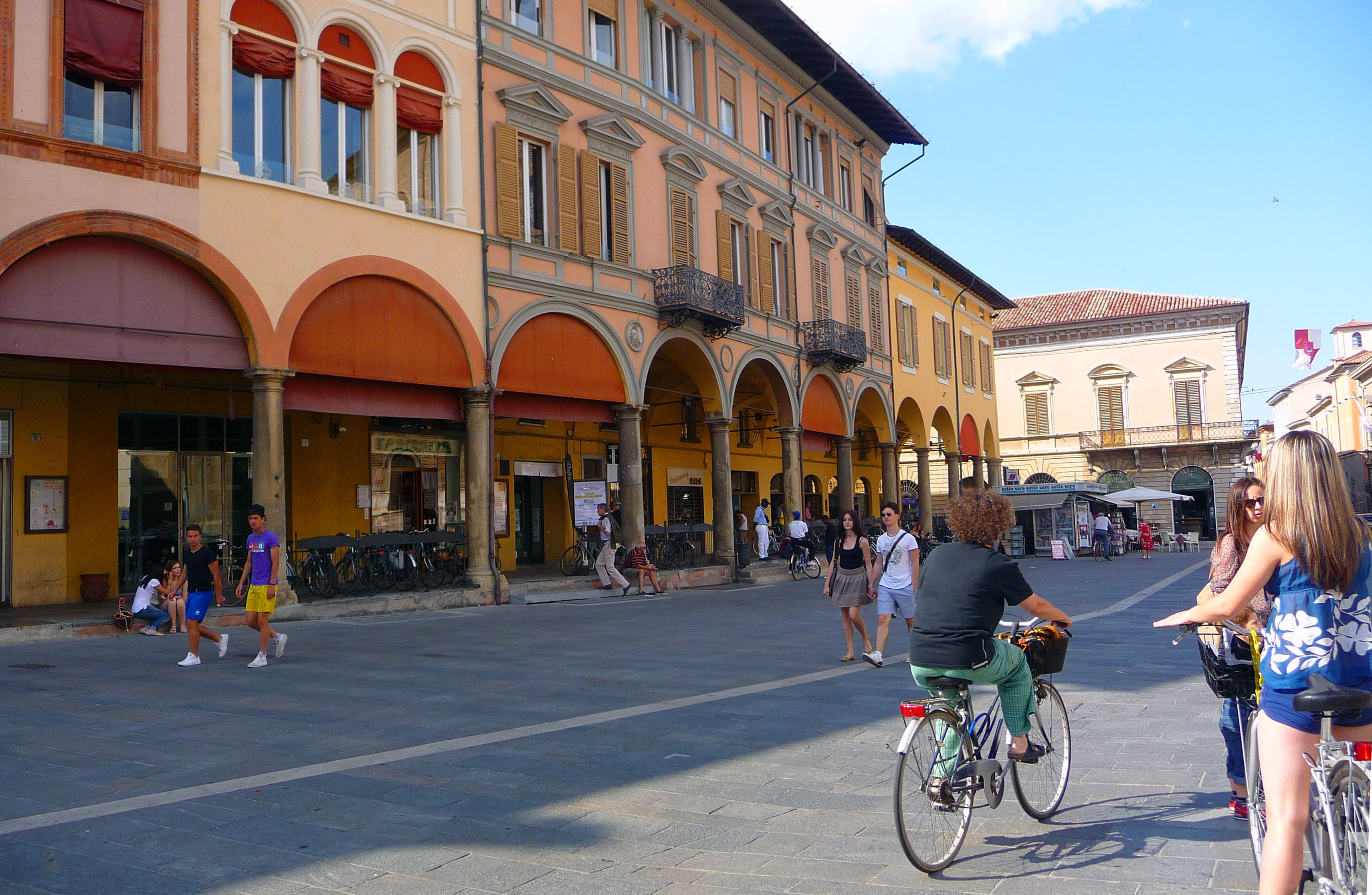
    However, Faenza is also a town of outstanding artistic and architectural features, two beautiful squares in Renaissance style, elegant arcaded streets, palaces, a 15th-century cathedral and an 18th-century theatre add to the aesthetic enjoyment while the food is superb.

    Not to be missed:   The magnificent Museo Internazionale delle Ceramiche in Faenza has some of the world’s most beautiful pieces of majolica from every epoch and from all over the world, including a section dedicated to pottery from the Renaissance period.

    A very expensive group of ceramics
    Most items here are expensive.  For example,  the animal skin ceramic tea set was €400.

    FOOTNOTE=

    A ‘Majolica line’ can be traced from Faenza to the UK, through the centuries right up to the nineteenth when the technique of tin and lead glazing was further developed in London and Brighton before moving to Stoke-on-Trent, Staffordshire.   Herbert Minton’s porcelain factory in Stoke on Trent was already quite famous when, Leon Arnoux, the great French ceramic chemist joined it in 1841 to help regenerate the production of lead-glazed pottery based on Renaissance designs.

    These early pieces were destined for English gardens as the lead glaze protected urns, fountains, garden seats and ornaments from the English weather.  Minton then used the same process for their fast-growing trade in culinary dishes, each piece descriptive of the food that would be served on it, oyster plates, fish platters crab, lobster and sardine boxes,  and game dishes showing rabbit, partridge, pheasant and quail.

    (I have seen references to the effect that the word Majolica refers to the fact that the goods were first exported to Majorca and then re-imported,  It seems plausible but I haven’t been able to ascertain that this is, in fact, where the word came from).


    This slideshow requires JavaScript.


  • The new Theme doesn’t work. Sorry!

    I feel I must apologise to everyone who glances at my Posts because I’ve made a right mess of the blog.   All I wanted to do was remove my photograph from the middle of the featured image on my former theme but I couldn’t do this, so I tried to change it again.  This didn’t work and then I found I couldn’t get back to my former theme as it seems to have been discontinued.

    Four or five themes later and at least a couple of hours, I have got to call a halt as I have Christmas presents to wrap.  I shall try and fix this tomorrow, but somehow, I have a feeling this is going to take a long time.  I am very frustrated with it now so I shall pour a large glass of red wine to help me put things back in perspective.  And I can blame WP for this!

    Anyone got any ideas?  I want my categories at the top as I had before, but not so spaced out as they are on this theme.


  • Weekly Photo Challenge: Ascend

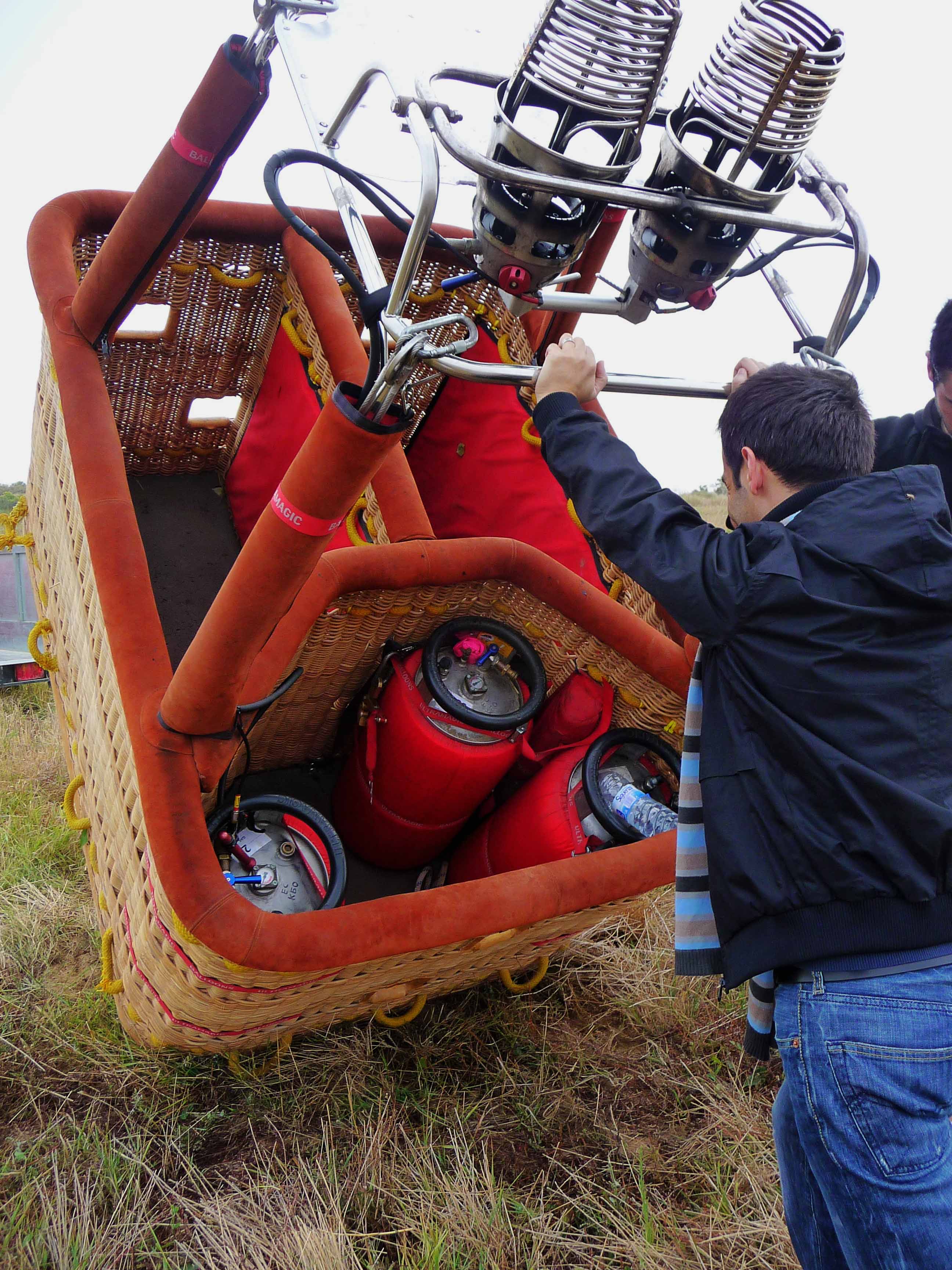
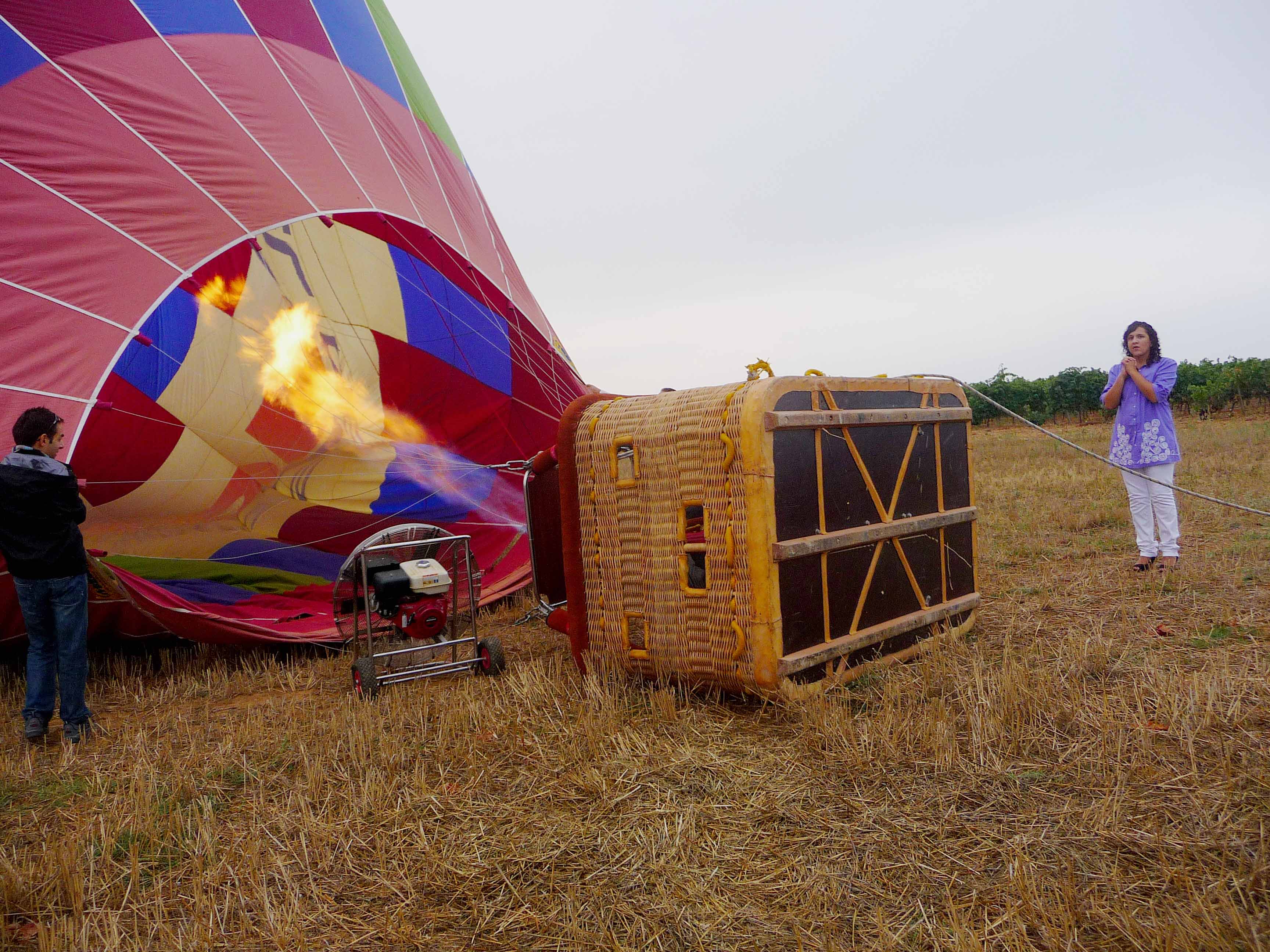
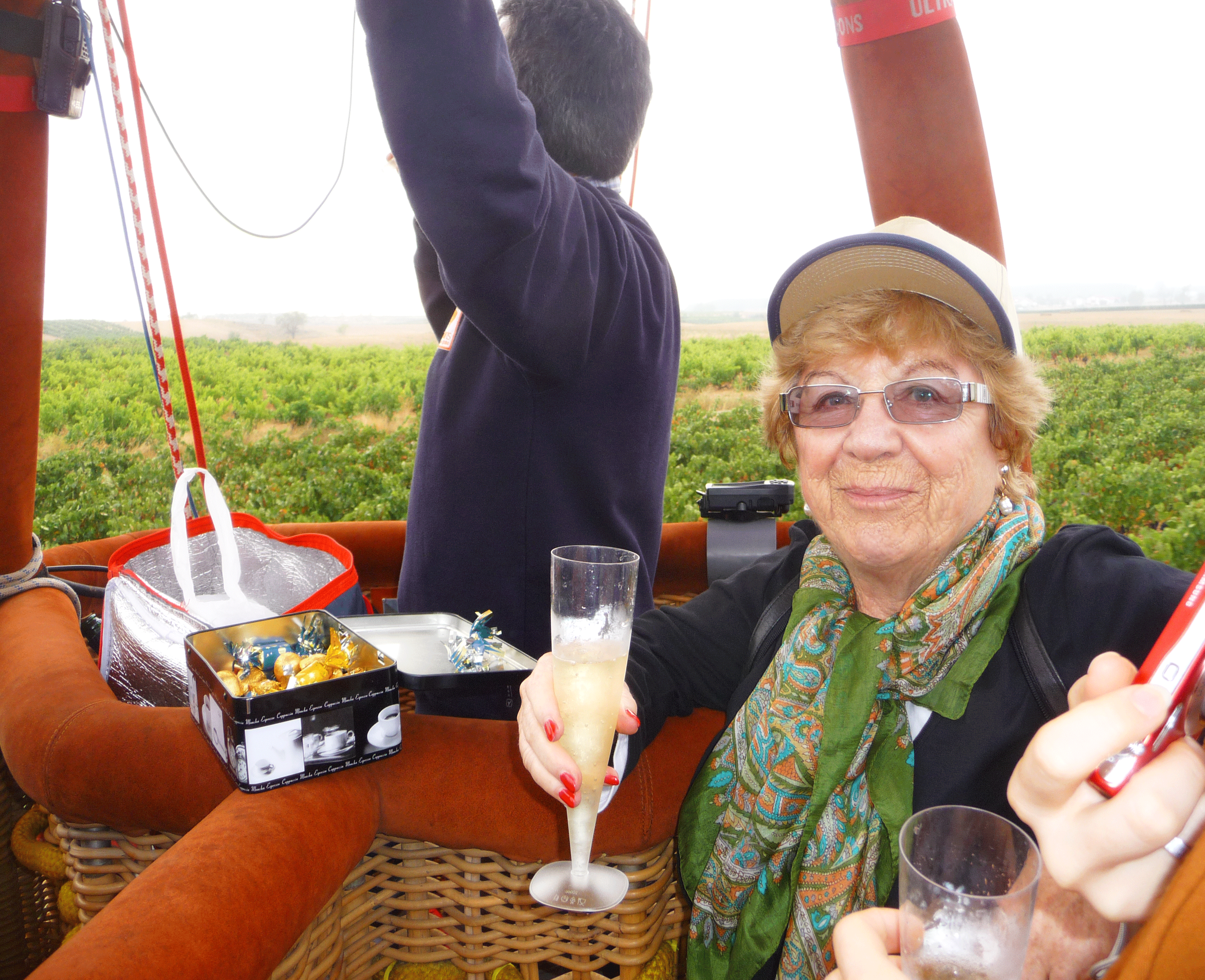
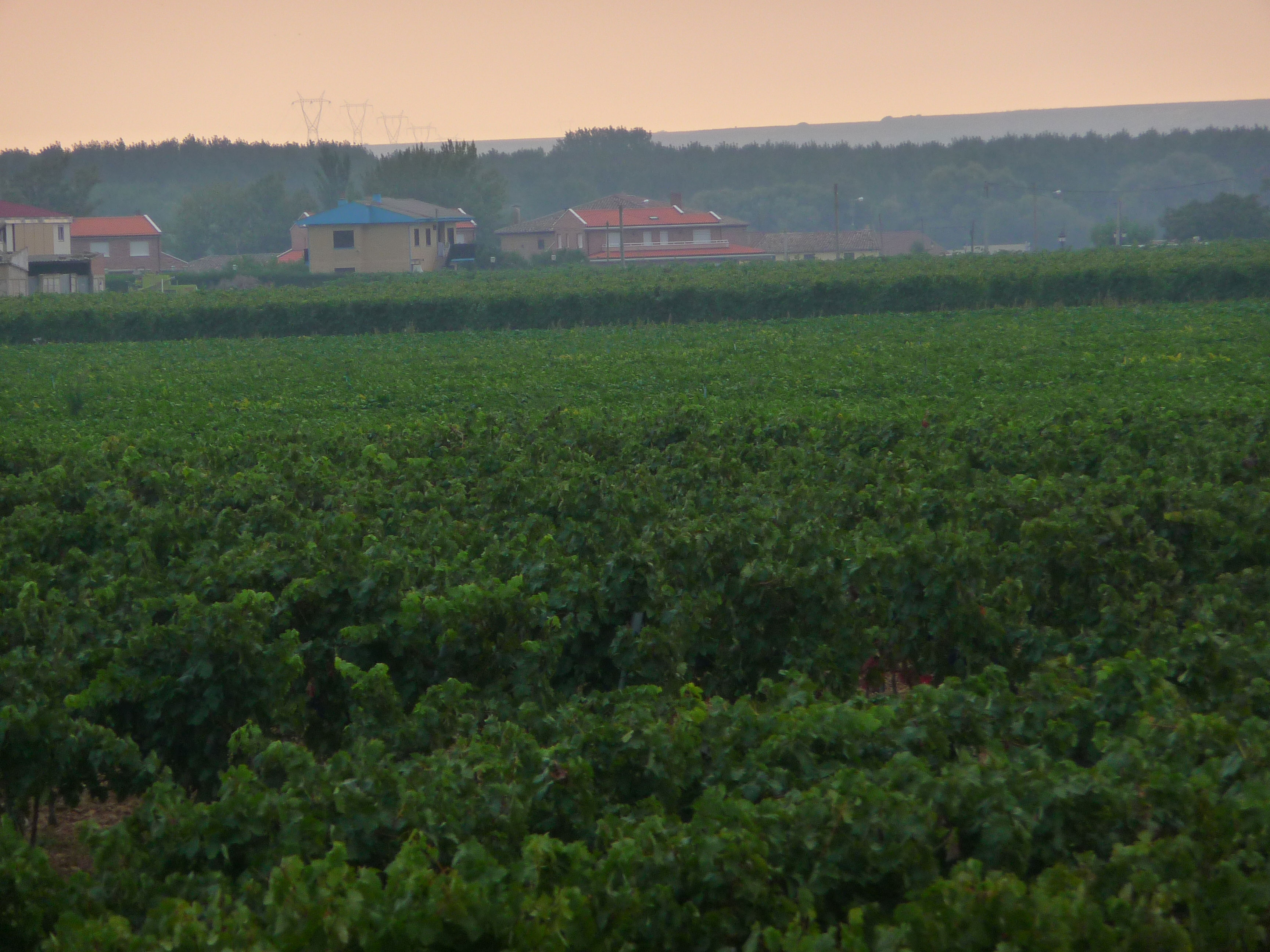
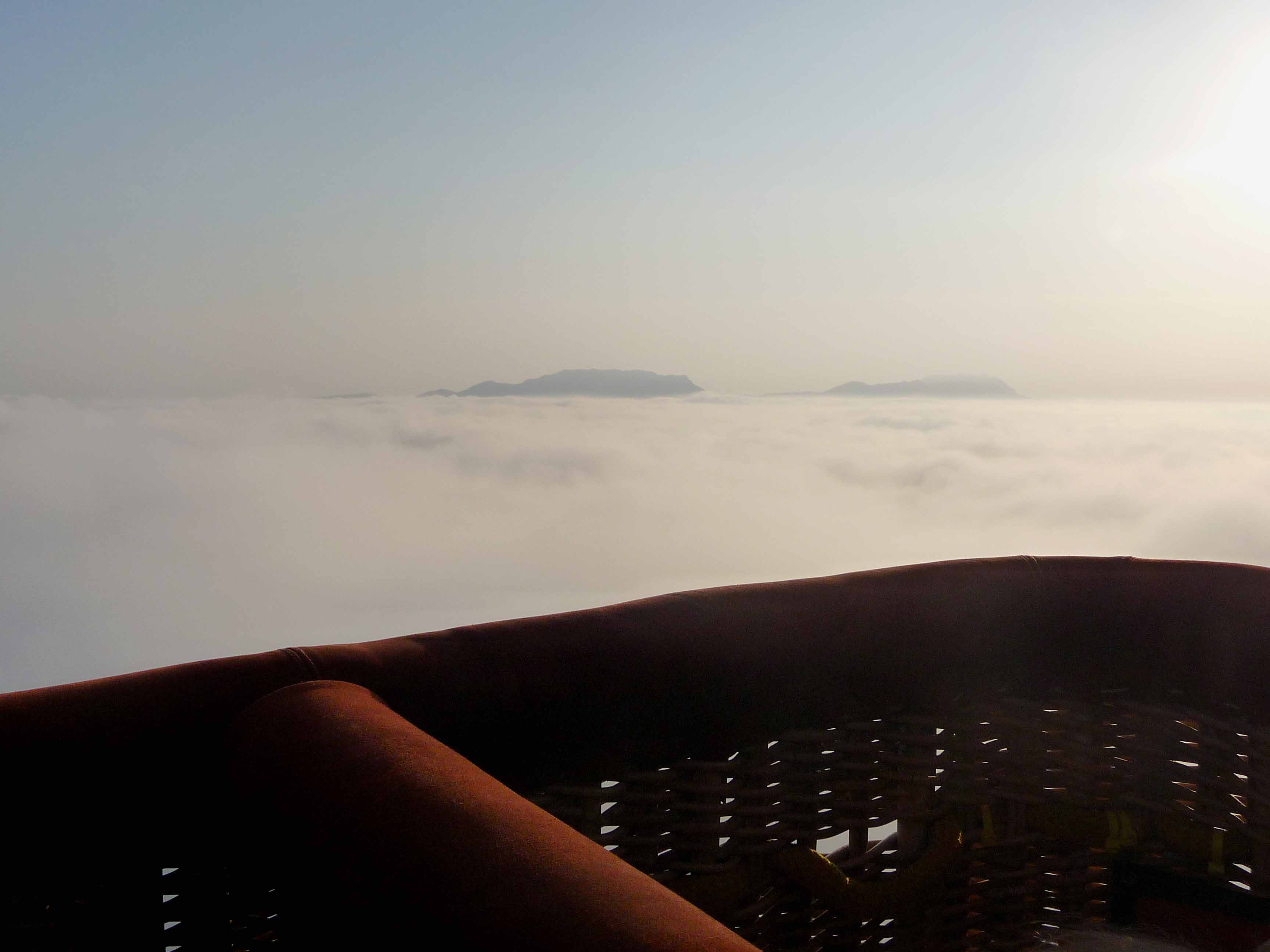
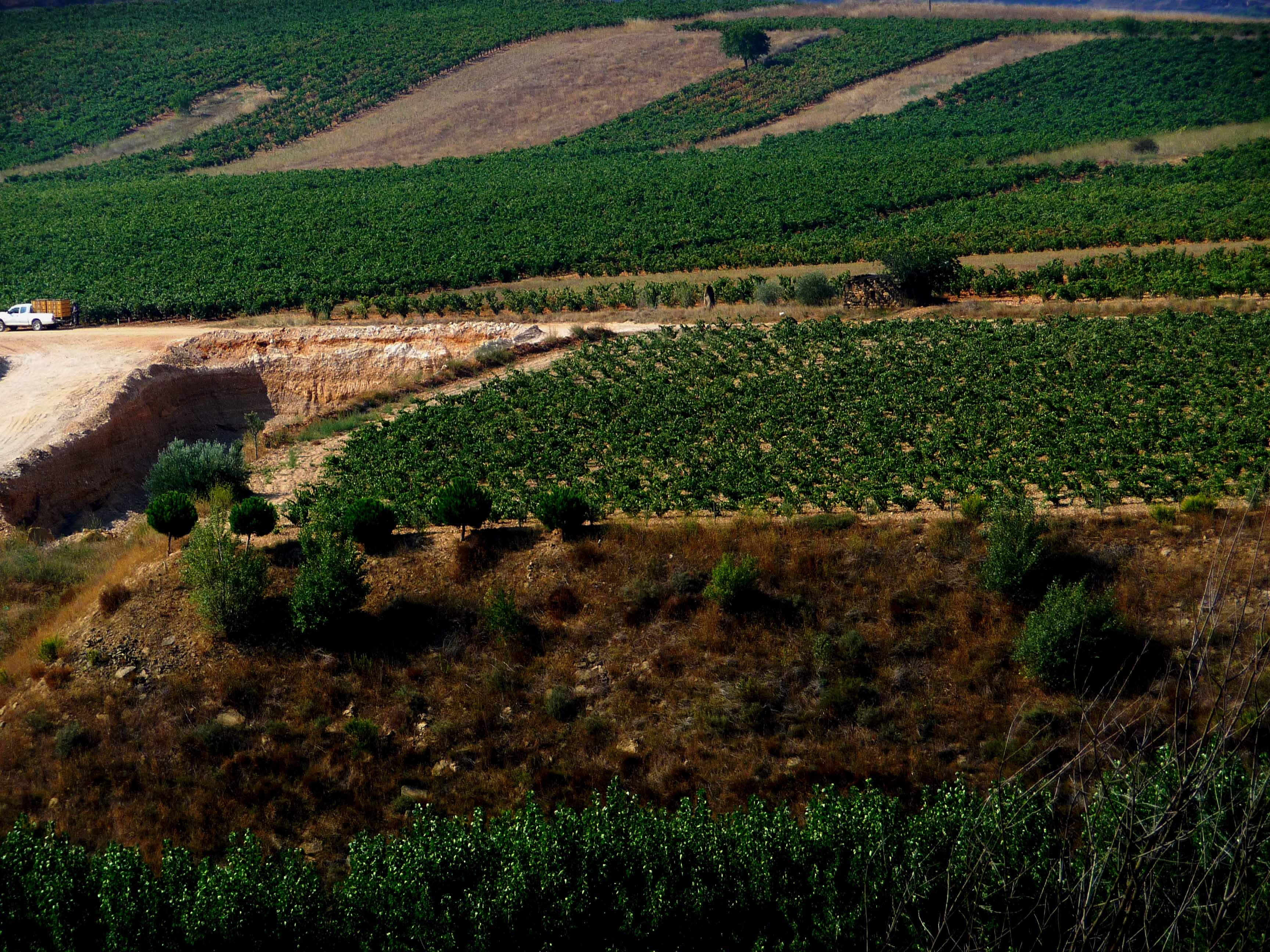
    My one and only balloon trip was over the vineyards of Rioja and the town of Lograno in Northern Spain.  It was both exhilarating and exciting but I’m not sure I would do it again!  It was dark when we got to the spot and dawn was just breaking when we took off – it was magical, wonderful, and a time I shall always remember.

    Here are a few photographs of the Ascent.

    I apologise to the readers, I cannot get rid of the white space between two of the photographs.  I shall have to work on this and try and re-edit.

    Righting the Balloon


    It’s scary when the flame goes Whoosh (Is she praying, by the way?)


    I may look calm ……

    A Pink Dawn

    High Above the Clouds

    Rioja’s vineyards