Blog

  • TOKYO – Soaring Towers and Electronic Delights

    TOKYO – Soaring Towers and Electronic Delights

    From bonsai in lush landscaped gardens, to kimona-clad beauties shopping in Ginza, and from pale green tatami mats in Ryokans to exquisite floral arrangements, Tokyo, as well as reaching into the future, is picture-book Japan come to life.

    This is the first stop on a tour that will take in stays in some of Japan’s most beautiful cities and countryside, Kamikochi in the Japanese Alps, Kyoto, the ancient capital, Takayama, whose beautiful old town still preserves traditions, Hiroshima and Miyajima, and Hakone where a cable-car side-trip to Mount Fuji is planned.  Fingers crossed, the weather will be fine on the day.

    DSC00144

    Kamikochi, Japanese Alps, turquoise waters of the snowmelt from surrounding mountains – Mari Nicholson

    Driving into the city from the airport did not show a green  and pleasant land.  Living space is at a premium in Tokyo, which means that the suburbs are composed of high-rise apartment blocks built wherever space could be found, all in a uniform grey, unbroken by a splash of colour or flowers on a balcony.  Once in the city however, another world becomes apparent.

    Getting around Tokyo

    Tokyo is a city of districts, each offering something different to the visitor, so it repays a bit of research before you set out to explore.

    With its sensory bombardment, the capital of Japan can seem daunting to the first time visitor but with a little planning, we found it to be very accessible.

    Tokyo is composed of many different districts each with its own character and charm, and as a capital with a reputation for safety, walking the streets is one of the best ways to absorb the atmosphere, check out the local craft shops, or explore the shopping malls both below and above ground.  I am a leisurely traveller, happy to leave some things unseen, rather than rush around ticking off the sights, so I didn’t try to see everything.

    Orientation, subways, and trains

    Inside-one-of-Tokyo's-stations

    Tokyo Train Station – Mari Nicholson

    Rail is, without doubt, the best way to get around Tokyo, and the trick is to buy an IC Rail Pass for 3,000 Yen which is something like the UK Oyster Card, and which is valid on the vast subway network, the equally extensive overland train network, and the Monorail (great for views over Tokyo Bay), and also valid to use in some Japanese cities.  Not only that, but you can use it to buy drinks from the kiosks on every station, just slap your card on the designated spot, and hey presto! green tea or hot chocolate can be yours in an instant.  Topping up when needed is easy, with instructions in English.

    Taxis are on the expensive side, but you don’t tip in Japan so at least what you see on the clock is what you pay.  If you decide to hire one, then ask your hotel to write the destination in Japanese and show this to the driver.  Rear passenger doors are automatically locked so wait for the door to open.

    Luckily my travelling companions, Ken and Steve, are wizards when it comes to map-reading, especially subway maps, so I was able to rely on their expertise on negotiating the metro.  Even I, after the first day, felt confident beneath Tokyo’s streets, as the system is made easy for non-Japanese speakers, with letters and numbers as well as names on the stations, fail-proof directions to platforms and tannoy announcements throughout the carriages when a station is reached.

    Tip:  Buy your IC Card and get a Tube Map as a priority on your first day.  Then hurl yourself into the city and enjoy the experience – remembering to stop for sustenance occasionally.

    Tokyo Fish Market

    Octopus in Tokyo Fish Market
    Octopus – Mari Nicholson


    DSC00010 copy
    Eeels in Tsukiji Market – Mari Nicholson


    Everyone said the Tsukiji fish market which handles a larger volume of seafood than any other market in the world is a must, and although we had all seen fish markets in the East before, we went there on our first morning.  It’s impressive, with over 400 varieties of seafood on display from massive tuna laid out on marble slabs, squid and octopus squirming in baskets, shellfish heaped up in mounds, baskets of crustaceans, and eels, lots of eels, along with species of fish I’d never seen before.  Tiny automated carts zip around (you need to watch out for these) collecting boxed items to be forwarded on.  I loved the machine where huge blocks of ice were man-handled into a drum which turned it into ice cubes which were then used to pack the fish for the retail market.

    Parks and Gardens
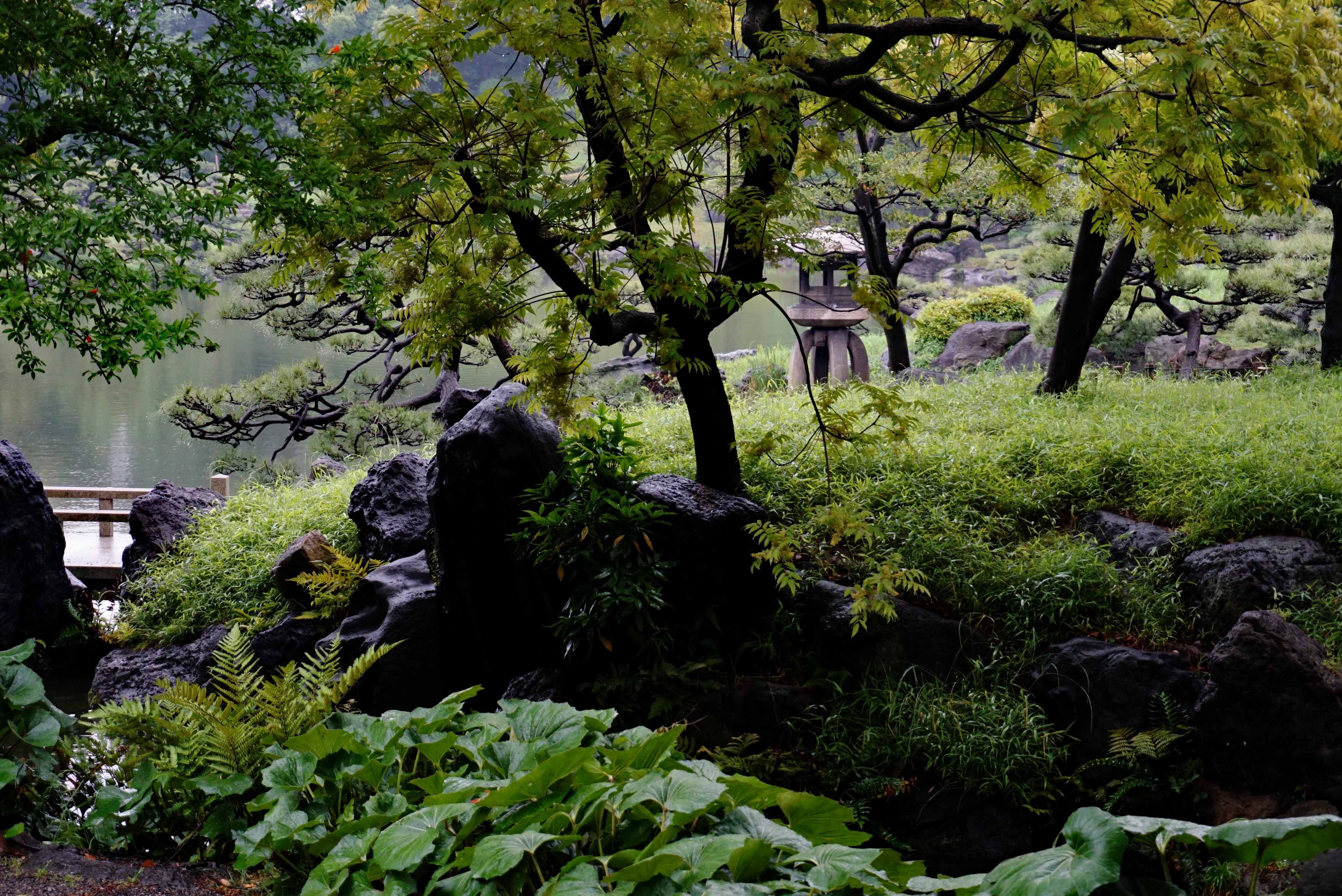
    Gardens,-Tokyo

    Misty Day in Tokyo Garden – Mari Nicholson

    Too many to be able to visit them all, so we choose just three, the Shinjuku Gyoen Park where an air of tranquillity heals the spirit, and Koi carp plop in the streams under arched bridges, the gardens surrounding the Imperial Palace which are a superb example of the perfect Japanese Garden and the Kiyosumi Gardens with its large pond surrounded by some very special stones placed in the garden as stepping-stones, paving stones and stones for the waterfall.

    ImperialPalaceGarden, Tokyo

    Imperial Palace Garden, Tokyo – Japanese Tourist Board

    Tokyo Gardens

    MUSEUMS

    There are too many Museums to mention and too many to visit on a 3-day visit if one wanted to see anything else, so Fukagawa Edo Museum was the only Museum we visited in Tokyo.  This was an instant lesson in Japanese history and was a great help in understanding modern Japan.  It consists of a display of reconstructed Fukugawa Saga-cho houses, taverns, and shops, all looking as though they’ve just been vacated – as well as a small theatre and lecture hall, all furnished in the period.  There are interactive displays and fantastic model towns, rivers and courtyards filled with people.  Well worth the visit.

    Edo-Museum-Figures

    Edo Museum – Mari Nicholson


    Menu,-Tokyo

    Restaurant Menu – Mari Nicholson

    There are so many superb restaurants in Tokyo, that won’t go into the eating experience, but the best sushi restaurant in Tokyo is said to be in Kyubey, right here in Ginza .  Sadly, we just couldn’t make time to visit it as there was just so much sight-seeing to take in but from what we heard from other people, this is definitely the place to go.  The prices are in keeping with the area with dishes from 4,000 to 8,000 yen, while a full set runs from 10,000 – 30,000 yen.

    But I was mightily intrigued by some of the ‘alternative’ restaurants in the city.  First up there are the ‘Maid’ restaurants which pander to Japanese male fantasies and allows the customer to interact with real-life manga characters. Waitresses are typically dressed as French maids and customers are treated as though they are the masters/mistress of the house.  These range from standoffish Victorian style maid service to the school-themed cafes where customers pay to be spoon-fed or to be slapped in the face in public.

    An eye-opening blog by fellow WP blogger, Stacey Gleiss, is worth reading here, https://thesixfootbonsai.com/2016/05/22/child-bride-a-few-months-shy/ as it explains a lot about these restaurants and the Japanese man’s liking for ‘childlike women’.

    Then there are the ‘Cat’ cafes, the ‘Dog cafes, the ‘Bird’ cafes, the ‘Rabbit’ cafes, where you can sip your coffee or tea while relaxing with either your own pet or a rental pet.  As space is so scarce, many people do not have the option to keep a pet so this is the answer to the problem.  Mind you, if you do have the space to have a dog or a cat, you can also buy a pram in which to wheel them about.  It stopped me in my tracks, but the Japanese sailed serenely by, unfazed by this strangeness.

    And now there is a ‘Goat’ café as well, 5 minutes walk from Shibuya Station at Shinoda Building 1F, 23-3 Shibuya, but I wasn’t able to check this out to see how they interacted with the goats.  This one sounds seriously weird.

    (To be continued)

    DSC00073

  • Japan – Land of the Rising Sun

    Japan – Land of the Rising Sun

    I have had this image of Japan for years, of a country of kimono-clad beauties, beautiful gardens landscaped with flowers and red bridges, temples, and Bonsai, and, you know what, it is just like that.

    Japan 1
    Kimono-clad Japanese Lady

    I  didn’t manage to cover the whole of Japan on my trip, that will take a few years, but I did chance upon many instances of the above as well as the frenetic crackling neon of Tokyo with shopping on Ginza, the surge of people crossing the road at Shinju and suspicious bars behind curtained doorways off the main streets: the traditional craft shops in Takayama; the Ryokans where you sleep on a futon and eat only Japanese food: Kamikochi in the Japanese Alps, a sublimely tranquil place for walking and cycling, where snow-capped mountains surround fast-flowing rivers, and monkeys cavort among the bamboo, and where the birdsong is so sweet it stops you in your tracks: Kyoto, ancient capital of Japan with its traditions and spectacular sight-seeing: Hiroshima with its sombre Peace Park and its nearby island of Miyajima, and Hakone where the image of the ic0nic Mount Fuji changes depending on time of day and weather.

    To say it was culture shock is putting it mildly whether it was from seeing a racoon on a lead being led along the street, to seeing a dog in a ‘dog-pram’ being wheeled around a park, to witnessing day in and day out, the regiment of ‘salarymen’ coming and going from their businesses all dressed in their uniform of black suits, white shirts and dark ties. The men of this most conservative of nations never sport coloured shirts.

    Japan 2
    Japan

    The kimono-clad women and young girls I saw, and the few men I glimpsed dressed in traditional garb, I later found were often Koreans who hired the kimonos when they were in Japan.  Many Japanese hire them also, as the cost of buying a good kimono, or a special one, can be astronomical, and they are nearly always worn for weddings.

    So, join me as I blog about my trip on later pages, let me know if I can answer any questions you may have, or just log on and say ‘hello’.

    DSC00073


  • Rome and the Tiber

    Rome and the Tiber

    Castel-Sant'Angelo-from-across-the-Tiber

    Castell Sant’Angelo across the Tiber – Photo Mari Nicholson

    The Tiber has been the soul of Rome since the city’s inception, and it could be said that Rome owes its very existence to this strategically important river on whose banks the first settlements were built.  The two sides of the river are joined by more than thirty bridges, creating a fascinating setting for the archeology and history of the eternal city.

    View_of_the_Tiber_Looking_Towards_the_Castel_Sant'Angelo,_with_Saint_Peter's_in_the_Distance
    Old View of the Tiber, possibly 18th century

    Several of the old Roman bridges no longer exist, in Papal Rome and in the modern city seven were built in the 19th century and ten in the 20th century.

    Bridge on the Tiber leading to Castell Sant'Angelo
    Ponte Sant’Angelo with statues

    The Tiber (named after Tiberius who drowned in the river) is unlike rivers like The Danube, The Seine or The Thames as there is little activity on the water.  In the summer, various boats convey tourists along the stretch of the river, but in general, it seems underused. However, along the Lungotevere, the boulevards that run alongside it, human traffic always seems to flow.

    Flooding was a regular occurrence before the high embankments were built in the 19th century when there were houses located along the banks of this navigable river which was used for fishing and bathing.  Over time, however, silting and sediment build-up meant that the river became unsuitable for navigation.

    Looking downriver towards the Cavour bridge

    Looking down to Cavour Bridge, Rome

    As in other cities such as Bangkok, Seville, London and Paris, tour boats were introduced along the river to give locals and tourists a unique opportunity to view the city.  This is a great way to take in the panorama, and immerse yourself in one of the most evocative cities in the world.

    A stroll along the Boulevard is also a favourite pastime and a visit to Castell Sant’Angelo and the Jewish Ghetto and Synagogue, which are both situated along the Tiber can be combined in a “Tiber walk”.  There are many restaurants, cafes, and bars down by the river  so sustenance is not a problem: these are very noticeable at night when the warm lights from their windows illuminate the Boulevards.

    The Tiber

    The Tiber, Rome – Mari Nicholson

    Whether you opt for a dinner cruise, a daytime hop-on-hop-off cruise, or a private jaunt, along the way you can admire the great Palace of Justice, designed by William Calderoni;  Sant’Angelo Castle, one of the oldest monuments of Rome; St. Peter’s Basilica, Tiberina Island, a picturesque island linked by one of the most famous bridges in the city, and the innumerable bridges that span the Tiber.

    Ponte Sant'Angelo with statues

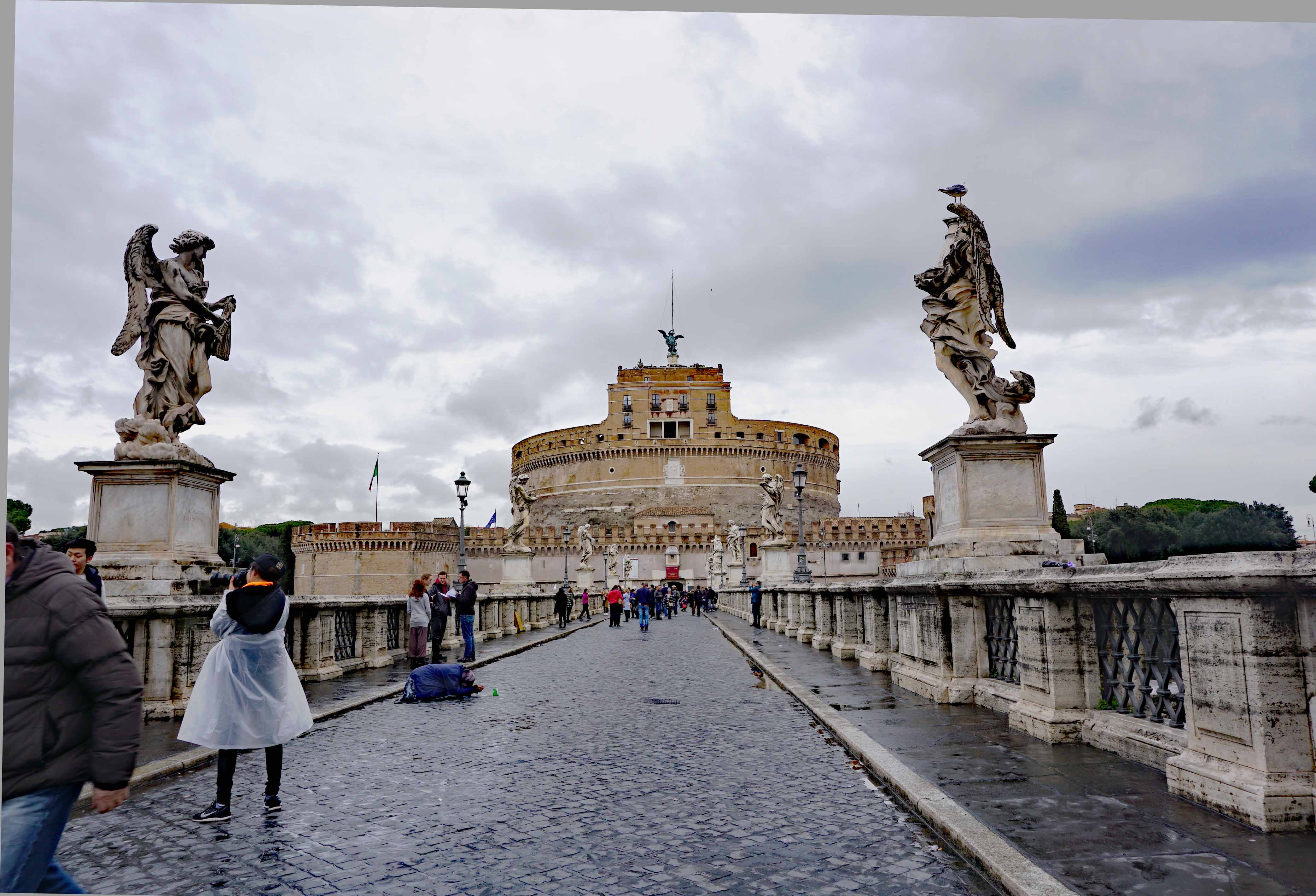
    Ponte Sant’Angelo Looking towards the Castle – Mari Nicholson

    When the surface of the Tiber is calm and the monuments that span the river are reflected in the still waters, they increase one’s delight in the vista they offer across Rome.  Ponte Sant’Angelo (by the castle of the same name), Ponte Fabricio, Ponte Rotto, Ponte Garibaldi, they all offer a sense of the history of the city.

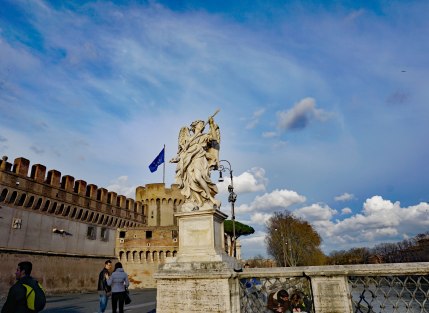
    Angel-on-Ponte-Sant'Angelo-near-Castle
    Angel on Pone Sant’Angelo – Mari Nicholson
    Angel on the Ponte Sant'Angelo
    Angel on Ponte Sant’Angelo

    The first named, Ponte Sant’Angela is the most spectacular, being embellished with angels carrying the instruments of Christ’s passion, and was designed by Gian Lorenzo Bernini whose fountain in Piazza Navona is one of the most photographed in Rome.

    The Ponte Sant’Angelo was erected to ease the movement between the Vatican (which was also connected to the Castell Sant’Angelo) and the commercial area across the river.

    Ponte Sant'Angelo

    The Vatican City is the only zone controlled by the papacy today, but in earlier centuries papal dominion was exercised over the entire city, hence the need for easy connection with the commercial area of the settlement.   Three energetic popes, Urban VIII (1623–44), Innocent X (1644–55), and Alexander VII (1655–67), harnessed the versatile talents of the great artists nd sculptors of the day to build monuments and beautify areas all over Rome but especially in the Vatican area.

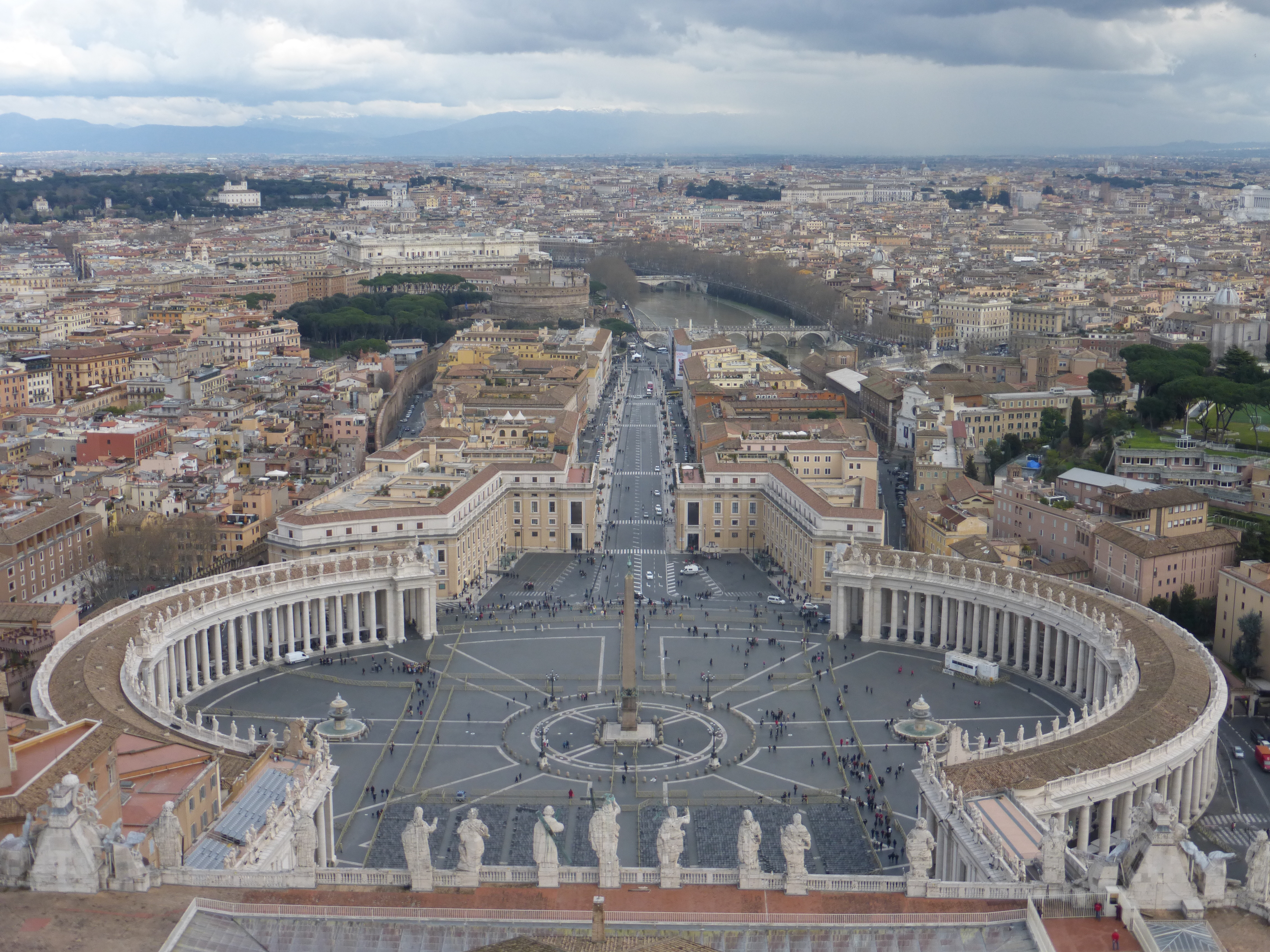
    View from the Vatican Dome
    View from the Vatican to Ponte Sant’Angelo – Photo Solange Hando

    A walk along the Tiber, and then up the imposing obelisk and olive-tree-lined road to the Vatican is an exercise in itself and you can be forgiven if you decide to postpone visiting St. Peter’s Basilica and the Vatican Museum until another day.  It can take a long time to do justice to them both.   A trip to the top of St. Peter’s is a worthwhile exercise but be warned, there are many steps to the top.  A lift goes part way only.

    Part of Bernini's Magnificent 4-Rivers Fountain in Piazza Navona, Rome

    Part of Bernini’s Magnificent 4-Rivers Fountain in Piazza Navona – Photo Mari Nicholson

    How to get there:  Ponte Sant’Angelo:  Metro Line A, Lepanto stop. Boats leave from nearby.        Buses 23, 34, 40, 49, 62, 280, 492, and 990.        Tram 19.

  • Weekly Photo Challenge: ABSTRACT

    Truly abstract I think.  Love the subtle muddy colours and the starkness of the image.

    This is a piece of graffiti on a wall in London’s East End (Brick Lane area).  It’s a wonderful place in which to make artistic discoveries.  This one comes from the camera of London photographer Steve Moore who has given me permission to use it.

    Abstract


  • Weekly Photo Challenge: Future

    Weekly Photo Challenge: Future

    I’ve recently moved house and am still coming to grips with making a new garden.  This year I’m trying to grow roses in pots but if this doesn’t work I shall replant them next year in a new rose bed I hope to make.  I had a large rose garden in my former home which I can’t hope to replace as I’ve downsized drastically.

    However,  roses are my favourite flowers, and I’ve bought ten super plants, all highly perfumed Old English species, mostly repeat flowering and with their heady scents they shall have pride of place on my bedroom balcony.

    This is my future.  Whether they will bloom as the labels show is a moot point, but ……………. we live in hope.  Wish me well.

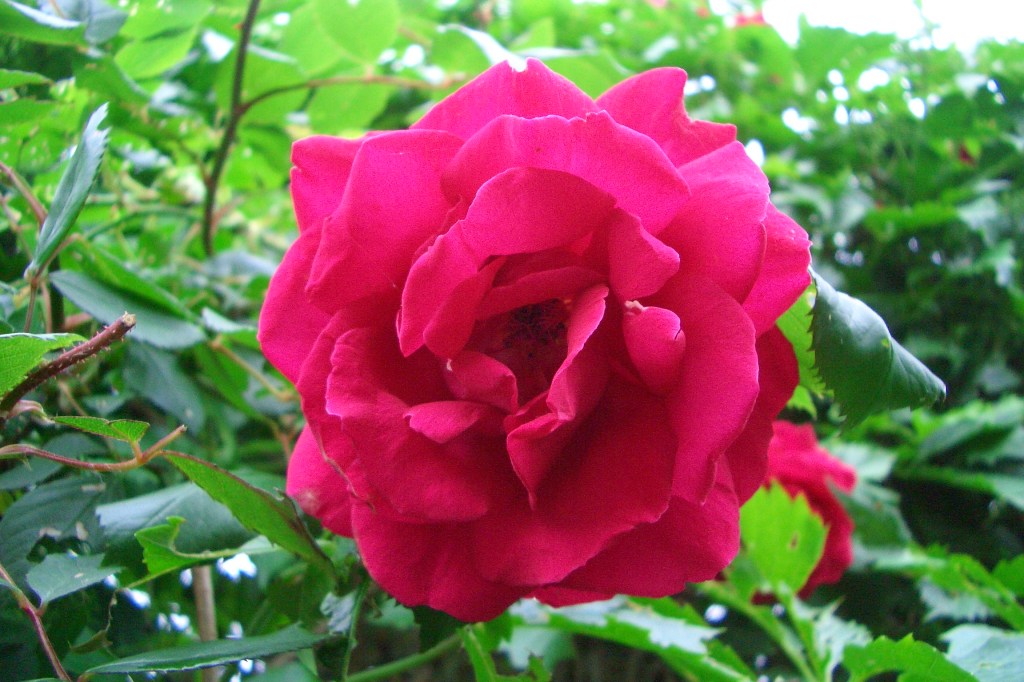
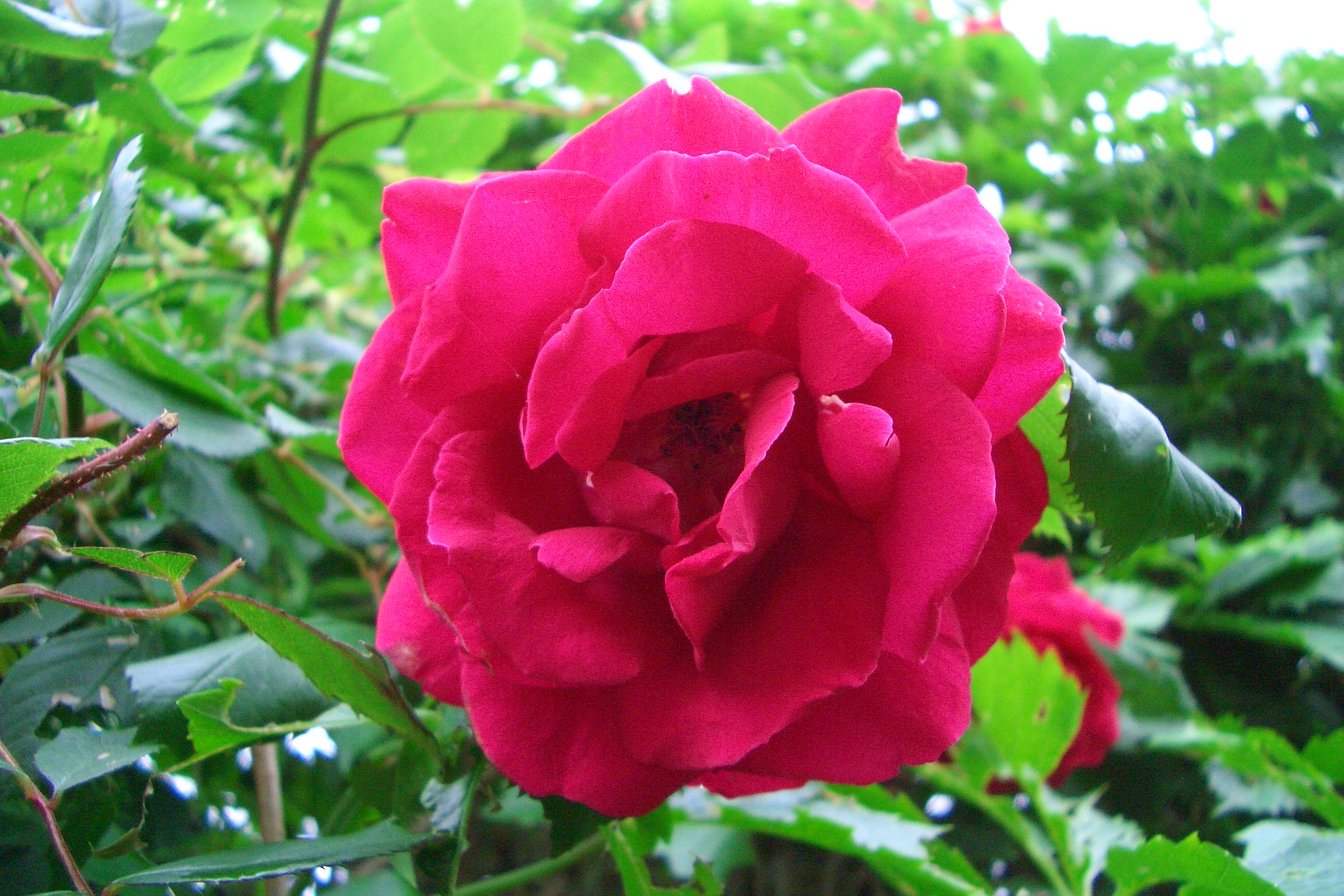
    My favourite rose (for its appearance and sunny look from early June until nearly December where I live) is Tequila Sunrise.  I thought I had an image of this from my old garden but it seems to have disappeared from the folder.  But here is another of my favourites, Gertrude Jekyll, which I’ve bought again and if it shows blooms like this one, my future will indeed be bright.

    Some of the other roses I’ve bought are Thomas a Beckett, Grace, James Galway, the Alnwick Rose, Iceberg.   Rose aficionados will recognise some of them.

    Rose 2

  • Photography Challenge 101: Landscape

    Took me a while to think about some landscapes, and unfortunately, I was unable to get out and about to photograph some, so here is a selection of some of my favourites.


    Chicago from Sears' Toweer
    Chicago, from Sears’ Tower – Photo Mari Nicholson

    This was taken on a fairly good day in Chicago from the top of the famous landmark, the Sears’ Tower.  The skyline is probably more impressive from ground level, but I found the view from above quite exciting.   See another Chicago photo, bottom.


    Citiva 6
    Citava, Italy – Photo Mari Nicholson

    Citiva is in Lazio Province, within driving distance of Siena, Rome. and Orvieto.  Inside the mountain fastness is a quaint old town of cobbled stoned streets, a couple of good restaurants serving rustic food, and a Bodega where the wine flows very liberally.

    Walking trails to Stanserhorn
    Walking trails to Stanserhorn in Switzerland

    This was taken from a cable car as we floated over the mountains in Switzerland.  I seem to remember that it was quite a long cable-car trip, longer than most I remember.  It was a magical journey over the mountains and villages below, the brown and white cows hardly visible and their cowbells muffled by the distance.

    Village in the Madonie National Park, Sicily
    Village in Madonie National Park, Sicily – Photo Mari Nicholson

    One of my favourite places in Sicily, the National Park of Madonie, where wild figs grow along the roadside and just a few locals are left in near-deserted villages to sit outside their doors and chat to whoever passes by.  Now and again one sees a thriving village like this one, which is being slowly restored to its former glory by returning families who have made some money working elsewhere and now are coming home to reclaim their birthright.

    Skyline with clouds - Chicago
    Chicago skyline peeking from out the clouds
  • Photograhy 101: Treasures

    I’ve racked my brain to think of something I regard as a treasure but apart from books there is nothing I really treasure.  I’m not into possessions too much, although I seem to be surrounded with souvenirs, pictures and odd things I wouldn’t want to lose.

    However, none of these would I class as a treasure, but I do treasure the flowers in my garden and feel upset when things go wrong there.  Last night, for instance, like most of the UK, the storm we had in my area (winds of apparently 106 mph), wrecked havoc in my garden.  I won’t mention the fence that’s down, bags of rubbish upended, the missing furniture, etc.

    I’d just invested in eight new rose trees from David Austin and these were still in pots but blew over, losing half their soil and damaging the tips.  I hope they will survive but who knows.  The daffodils were flattened, the camellia is now a mess of brown-tipped blossom and will need to be dead-headed when I can summon up the energy, and my new pansies will take a long time to recover.

    But I’m cheered when I look at some of my photographs and remember how earlier pansies looked.  At least I have a photograph!

    Pansies - after the rain.
    Pansies after the Rain – Mari Nicholson
    f18082556
    Rose 1915 – Mari Nicholson


  • Photo 101: Mystery and Lighting Effects

    I didn’t dash out today with my camera to find a subject that would fit the title of Mystery  because as soon as I saw the subject I remembered this photograph taken some years ago on a trip to Switzerland.  There was no time to think about lighting effects, or exposure, or ISO ratings.  It was enough that I had the presence of mind to take the photograph.

    It was September and we had been driving with our Swiss friend, Werner, in the Bernese Oberland, searching for a farmhouse he’d heard about, where the mountain cheese was the best in the Canton – if not in the country – and which would be perfect for the planned supper.

    The mist was heavy in the mountains, deadening all sound, and we could only see a few yards ahead at this point. We had parked the car and got out to peer over the barricade at the side of the road and to listen to the distant sound of falling water.  No other sound broke the stillness, no dogs barked, no cowbells jingled, no birds sang: then came the faint, ghostly clip-clop, clip-clop of horses’ hooves and out of the mist that swirled around us, came the Victorian carriage and horses you see in the photograph below, four horses and two coachmen.  Neither the horses nor the coachmen appeared to notice the three mesmerized people who stood by the side of the road, and it passed by, silently, and turned the corner.

    My husband, a born sceptic, decided it was some actors from a film set, but I’m not so sure.  We were, after all, just by the Reichenbach Falls………… 

    EPSON scanner image
    Switzerland – by the Reichenbach Falls

    Photo by Mari Nicholson

    This story is true and I remember it well.   The recollection and telling of it can still send shivers down my spine.


  • Photography 101: BIG and P.o.V.

    Having difficulty in keeping up with the daily stint and due to other work commitments am not free to wander out and about with camera.  Frankly, even if I were, the bitter cold is enough to prohibit my photography excursions, as I find cold hands do not for good photos make!

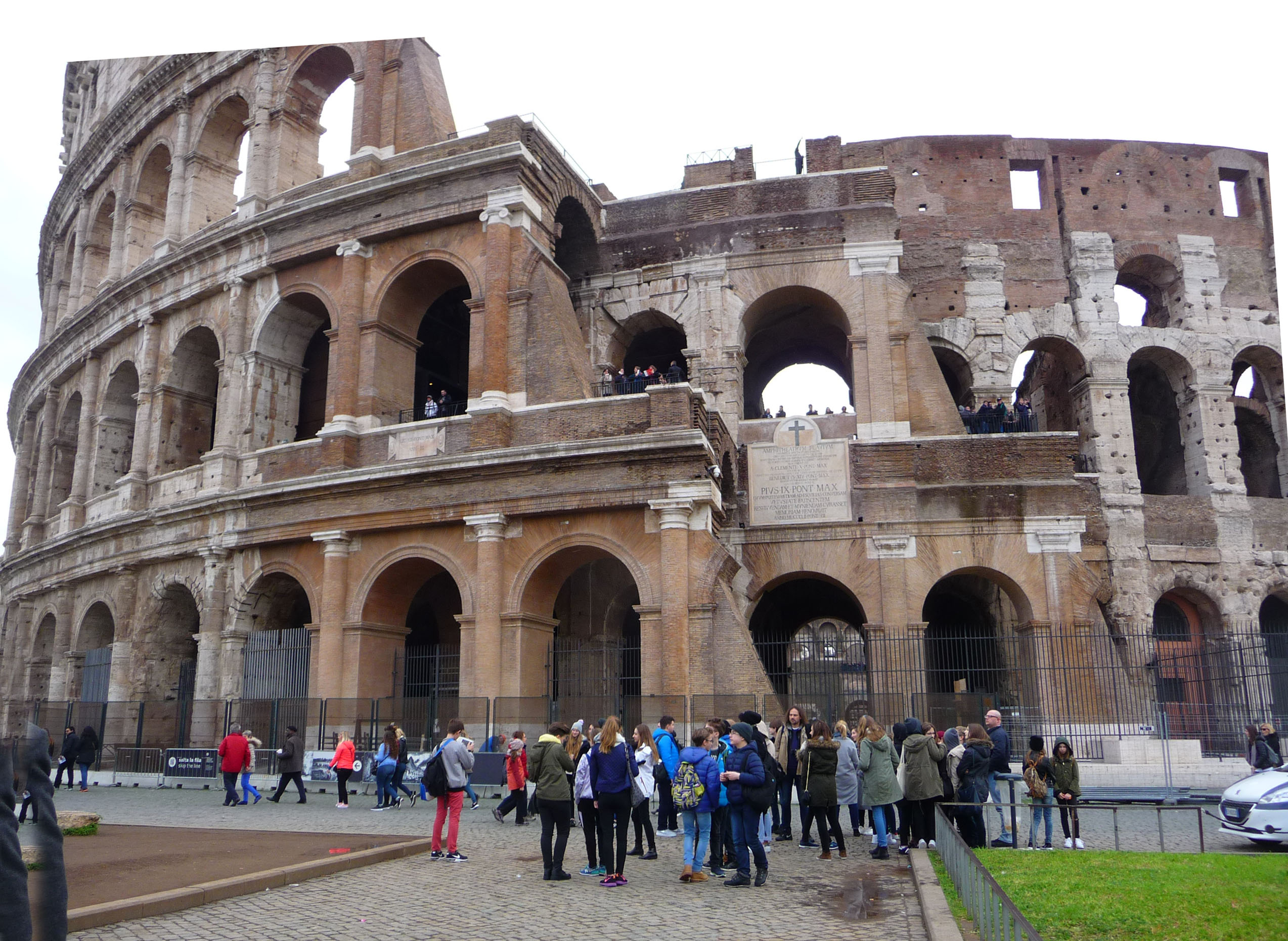
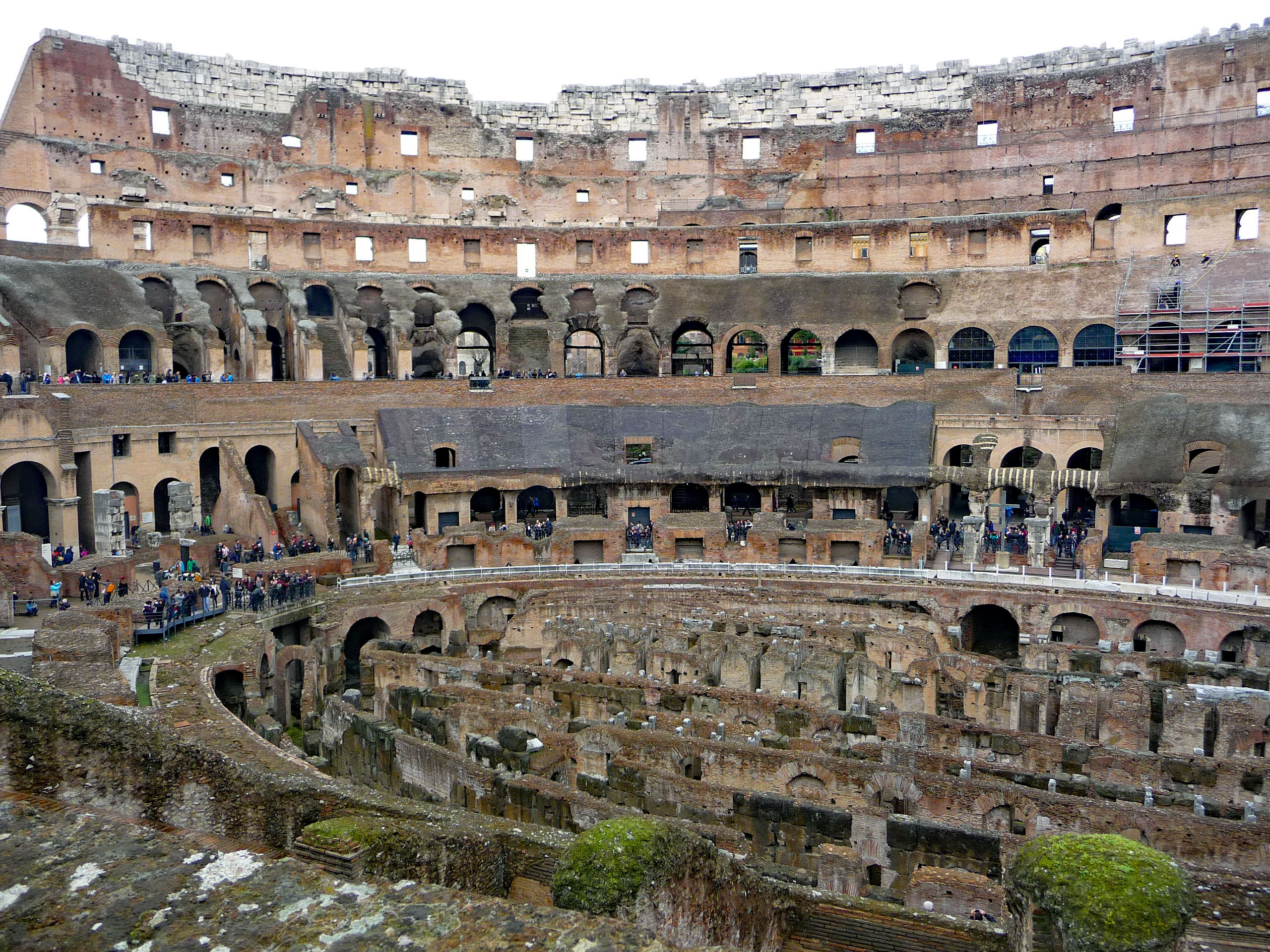
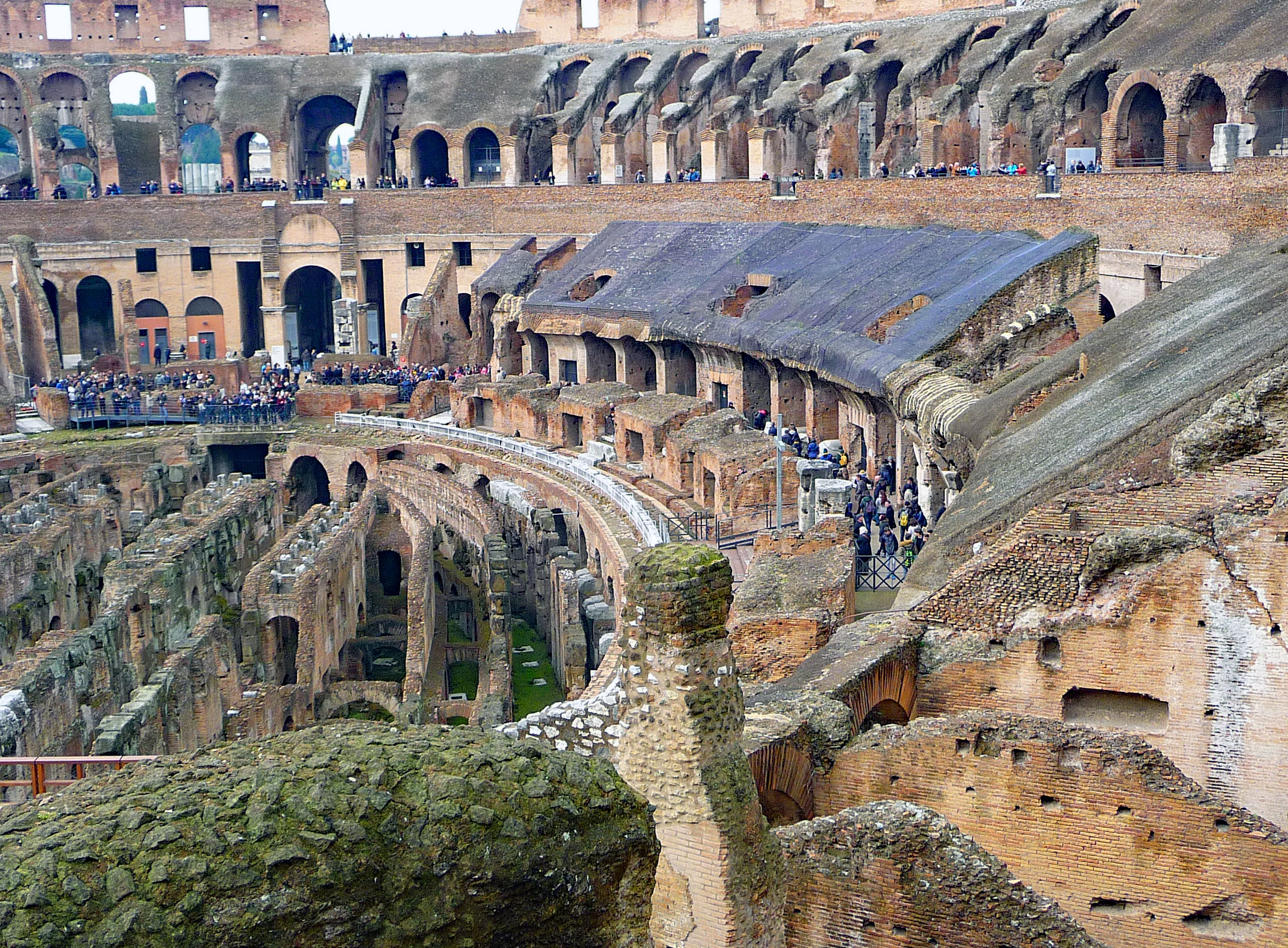
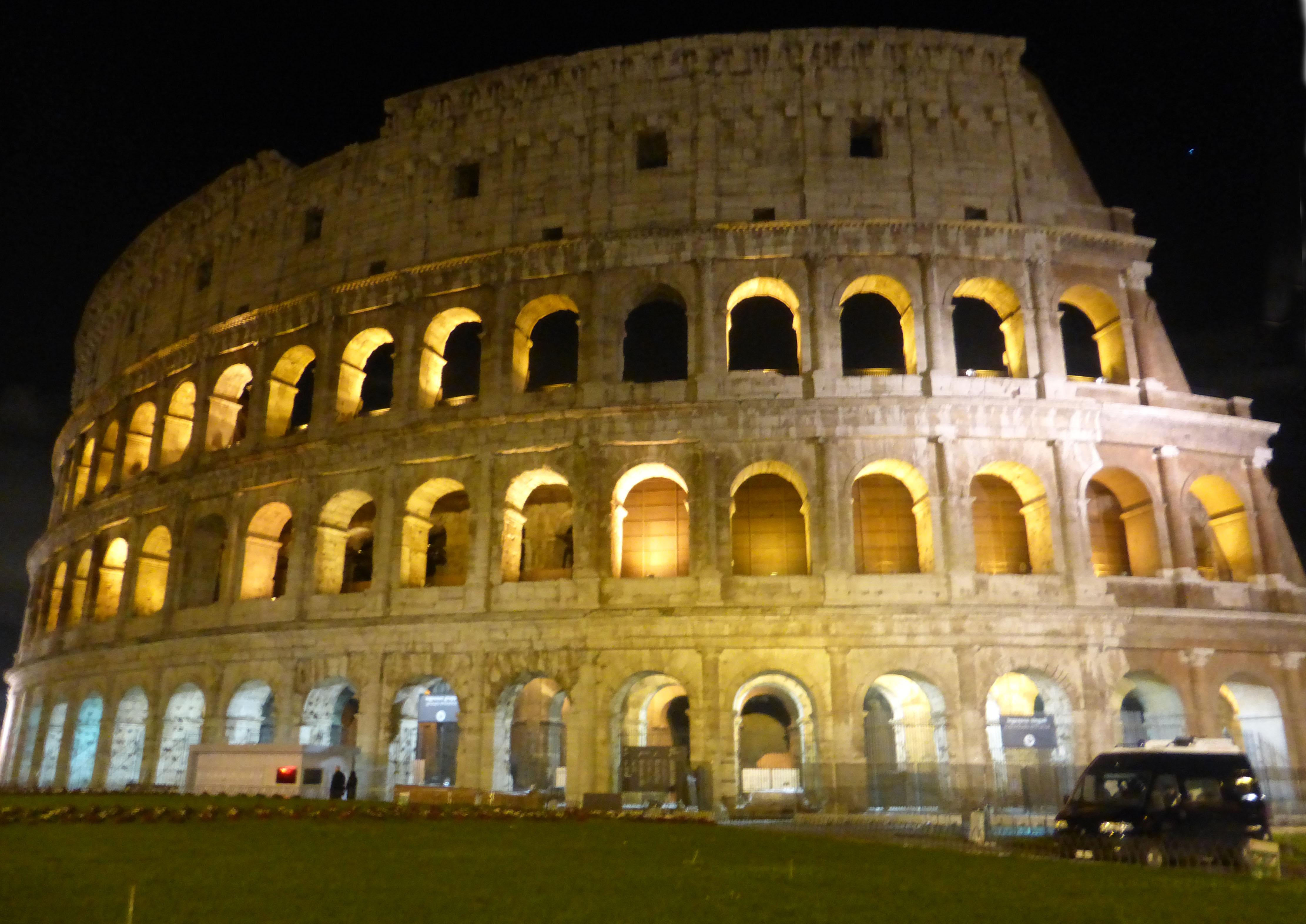
    I have just returned from Rome and when I saw BIG, the one thing that sprang to mind was the Colosseum, that massive elliptical shaped theatre of blood lust and killing, where in the first hundred days of the inauguration games in 81 AD, it is said that over 9,000 wild animals were slaughtered.  During another festival in 240 AD 2,000 gladiators, 70 lions, 40 wild horses, 30 elephants, 30 leopards, 20 wild asses, 19 giraffes, 10 antelopes, 10 hyenas, 10 tigers, 1 hippopotamus and 1 rhinoceros were slaughtered.  In fact, so many wild beasts were killed in the Roman arenas that some exotic animals became virtually extinct.

    Here are a few of my images of that iconic spot in Rome.  Maybe I haven’t covered point of view so well, but I hope you will enjoy the perspective anyway.

    Colosseum
    Exterior of part of the Colosseum, Rome – Photo Mari Nicholson
    Interior of Colosseum showing 5 levels
    Interior of part of Colosseum, five tiers to hold up to 80,000 spectators. The animal pits are on the basement level from which they were released to do battle with either the trained Gladiators or the early Christian martyrs – Photo Mari Nicholson
    View through entrance arch
    View through one of the entrances to the other side of the Colosseum – Photo M. Nicholson
    Part of Interior Colosseum
    A better look at the pits below the seating, where the wild animals were kept before they were released to do battle with the Gladiators. – Photo Mari Nicholson
    Colosseum by Night.
    Colosseum by Night – Photo Solange Hando

    N.B.   It is generally accepted that the Ridley Scott film The Gladiators is a very true depiction of what the Colosseum arena looked like in those days as the research was meticulous.

  • Photography 101: Connect

    Connections between rooms in castles are well documented, less well known is the connection between the Castel Sant’Angelo in Rome and the Vatican City.

    The Castel of Sant’Angelo, the massive fortress-like building on the right-hand side of the Tiber, was originally built by the Emperor Hadrian (117-13 AD), as a monumental tomb for himself and his successors, not far from the Mausoleum of Augustus near the edge of the Vatican fields.

    Castell Sant'Angelo, Rome
    Castel Sant’Angelo, Rome. Hadrian’s Mausoleum

    By the 5th Century, the Mausoleum had been included in the defensive system of the city walls, and from the 10th century onwards it had become a fortress, the Castel Sant’Angelo, its purpose being to defend the Vatican, to which it was linked by a special passageway (the Connect).  Originally the Mausoleum was surmounted by a gilt bronze statue of the emperor in a chariot.

    Below is a photograph taken from the cupola of St.Peter’s at the Vatican and the Castell is quite some way from it, on the left-hand side just beyond the patch of dark green trees that can be seen.

    Looking Down from the Cupula of St. Peter’s in the Vatican, towards the Castel S Angelo.  Photograph Copyright Solange Hando.

     The Mausoleum was incomplete when Hadrian died but he was buried there one year later in 139 AD.  The bridge connecting both sides of the Tiber had been built by Hadrian to facilitate direct access to the tomb, a more elaborate bridge than any other Roman bridge at that time: it survived until the end of the last century by which time it had become known as the Ponte Sant’Angelo. The two end spans were rebuilt at the end of the last century and only the three central arches are originals from the period 130-134.

    Ponte Sant'Angelo, Rome

    Ponte Sant’Angelo, Rome:  Photograph copyright Mari Nicholson