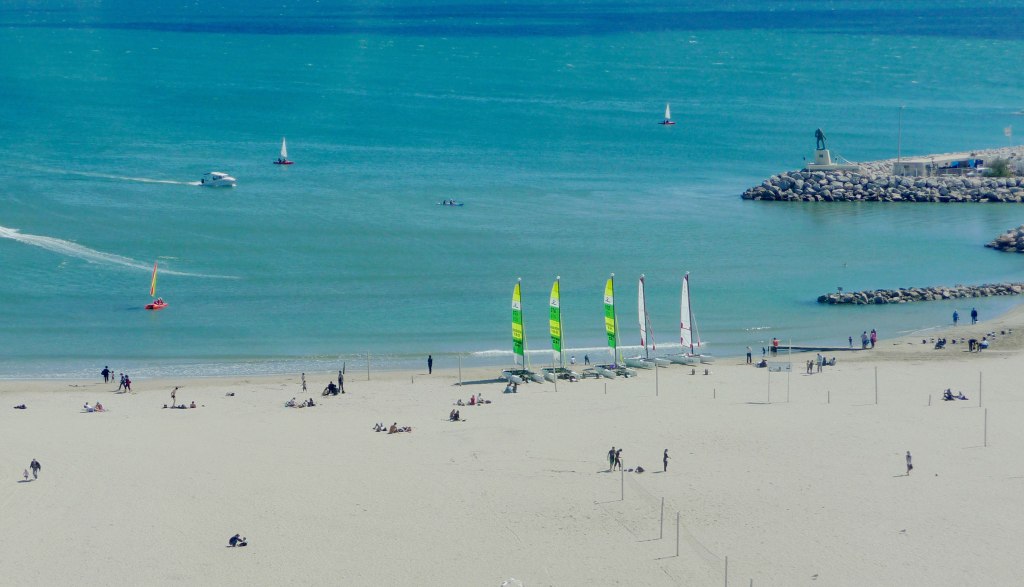
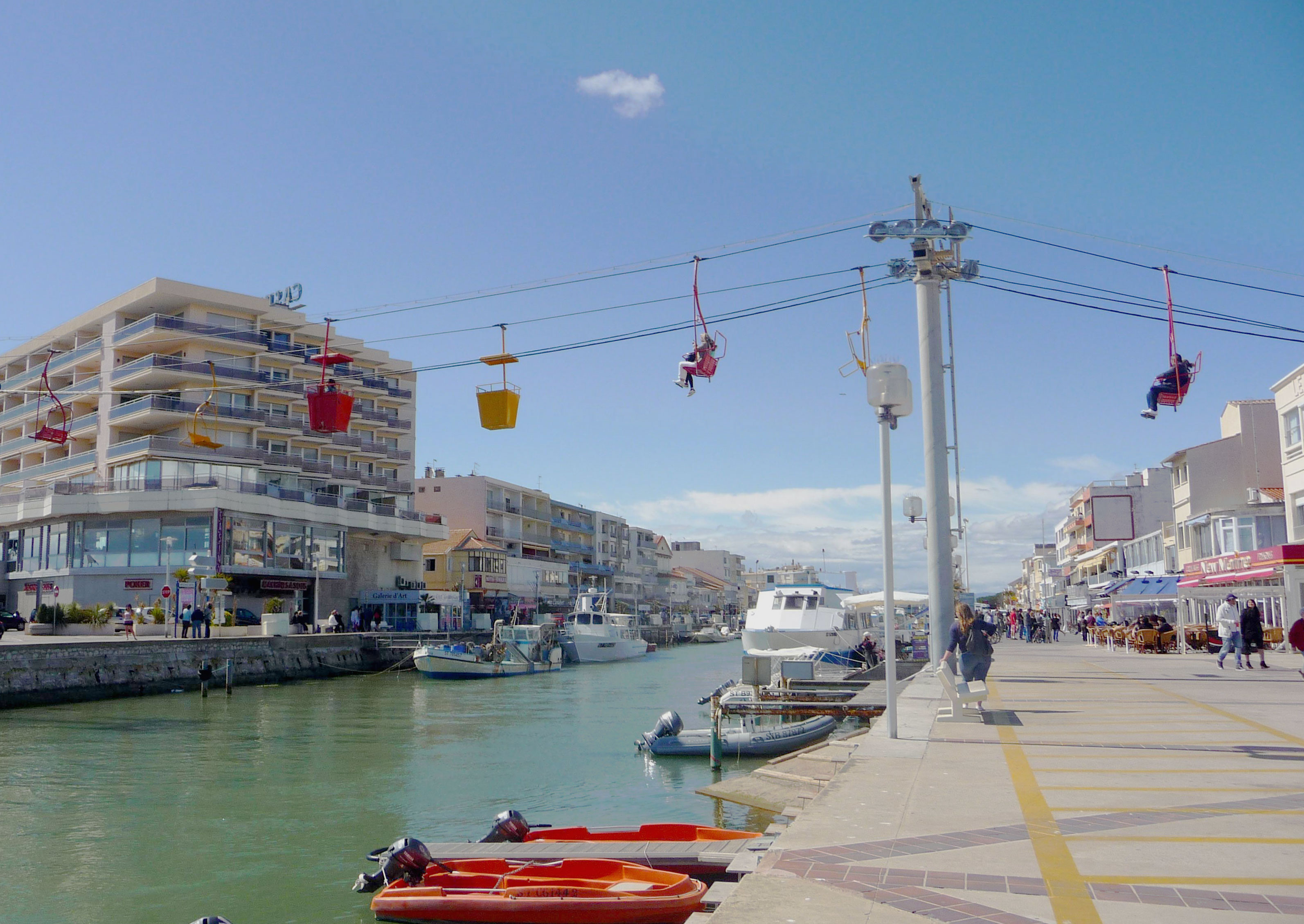
Just six kilometres south of Montpelier lies Palavas-les-Flots, a seaside town with some very fine seafood restaurants lining the canalised section of the River Lez that runs through the centre of the town just before it enters the sea. This has the effect of splitting the town into two sections, a Left Bank and a Right Bank, the names by which they are known.
See Palavas by Chair Lift- Mari Nicholson
In the centre of the town is the distinctive ‘lighthouse of the Mediterranean’ with its popular revolving restaurant: next to this stands the church of Saint Pierre with its attractive garden. There are few other sights to detain one in this seaside resort – it is a place for relaxation and enjoyment of the watersports and the facilities on hand. What is a charming sight, though, is the canalised section of the town on which the fishing fleet makes a fine picture on a sunny day as they get ready to set sail. And again, on their return, photographers line up to photograph the fishermen who sell the fish directly from the decks of their boats to customers from the nearby flats and even from towns beyond.
The restaurants that line the canal are a magnet for visitors from Montpelier, especially at weekends, and you should be prepared to wait a while for a table and again for the meal to be served once you have chosen a restaurant. The favourite meal is mussels , served n every imaginable style, and always in the traditional big, blue enamel pots beloved of French restaurants. They can be recommended.
Those who enjoy the fun of local markets should visit on the mornings of Monday, Wednesday and Friday when there is a market in the town.
Palabas-les-Flots, Montplier
The seafront is a short distance from the town centre and has a wide sandy beach, not what one would call a ‘golden beach’ but nevertheless, sandy and clean. It is seven kilometres long and with this massive stretch of seaside comes all the water-related sports activities you could wish for – kayaking, jet-skis, windsurfing, paragliding, swimming, snorkelling and diving. Most of the equipment can be hired from concessions on and around the beach.
The sprawl of apartment buildings that is a backdrop to the beach either side of the centre is not especially handsome but the little harbour is attractive and from the small concrete pier are some good views of the town and across the bay to La Grande Motte. And as I said, the good stretch of sandy beach is an ideal spot for families and couples to enjoy the facilities on offer.
Just outside Palavas, a short walk away, there are natural ponds that are home to an interesting selection of wildlife. What attracts most people to the area, however, are the flocks of flamingoes that live here and that make a visit to the ponds something rather special.
How to Get to Palavas-les-Flots from Montpelier
By Tram or Bus, but the tram is so quick and fun to ride that I recommend them. Purchase tickets before boarding, multi-lingual ticket machines at each tram stop. A day pass is recommended if you plan to use the tram much. Be sure to validate your ticket in the machines, being found without a valid ticket means an on-the-spot fine of around 30 euros. Not speaking French is not accepted as an excuse.
One-way tickets cost €1.40 round-trip €2.50. A 24-hour bus and tram ticket is €3.80. Line 28 runs to the beach at Palavas les Flots.
The “Navette des Plages” bus runs non-stop to the “Face a la Plage” beach, between Palavas les Flots and La Grande Motte. Bus 131 runs to Palavas-les-Flots.
If there’s a city in France that can offer more in the way of enjoyment, relaxation, places to visit outside the area than Montpelier, then I have yet to find it.
Known as the sunshine capital of France because of its 300 sunny days per year, Montpelier lies just 11 km from the Mediterranean coast and has its own wide sandy beach within an easy tram ride.
Montpelier combines recent history and old-fashioned elegance with a youthful feel, mostly due to its large student population and its university. It had the first medical school in France at which Nostradamus and Rabelais studied and is a delightful mix of old buildings in the centre, and major new-age industries in modern buildings around the edge. Lovely beaches are nearby at Palavas-les-Flots. What more could anyone want?
As easy town to get around, the places listed as ‘must-sees’ are more or less grouped together, the Place de la Comédie, the Peyrou garden, the Charles de Gaulle esplanade, t the Arc de Triomphe,.and the Saint-Roch church, all on the well-trodden tourist route. However, like European capital cities such as London, Madrid, or Paris, the city abounds with special neighbourhoods with individual identities, some specialising in artisan work, some in antiquities and others devoted to food and wine. Their social mix gives them a fascination lacking in other towns in the region.
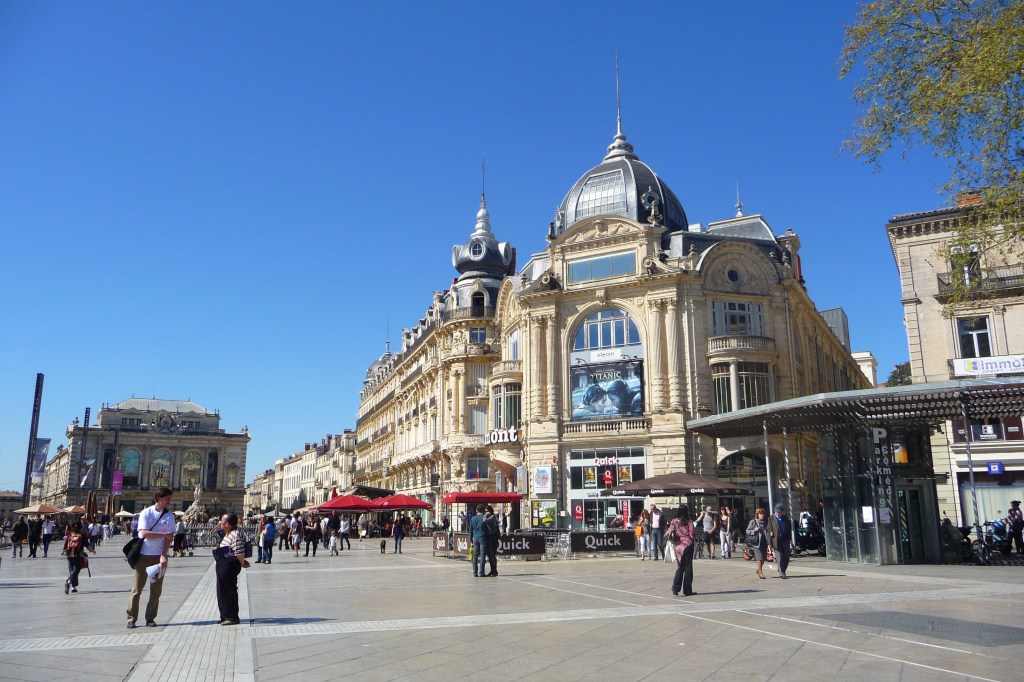
The Three Graces Statue, Montpelier
The centre of the action and the beating heart of the pedestrianised centre is the Place de la Comédie. During the morning there is a market at one side of the Place where the local farmers set up stalls and sell fresh fruit and vegetables: off to one side of this is the flower market, a static garden of jewel-coloured blooms and plants. During the season an old-fashioned carousel is stationed at the other end of the square near the Opera House (a useful place to arrange to meet someone as is the statue of the Three Graces). In the middle of the square street artists demonstrate their talents as magicians, living statues, cycle gymnasts, mime artists and break dancers. Passengers coming from the St. Roch railway station with their wheeled luggage skirt around them as they dodge the colourful trams that glide over the yellow paving while students watch from the nearby cafes, their books open before them.
The large student population makes it a lively spot all year round and gives the city a buzz. The cafés, bars, and bistros in the pedestrianised city square which spill out onto the street are one of the attractions of Montpelier and it can be difficult to find a table at certain times. One of the busiest cafés, the Café Riche, is also the most popular and dominates the square with a grand awning bearing the name and date of its foundation.
Couer de Bouef Tomatoes – a Speciality of the Region
The Montpelier region is known for its local produce, its excellent wine, its fine dining and its farmers’ markets. It has 3 Michelin-starred restaurants in addition to other excellent eating places and bistros. Being right in the heart of the Languedoc, the opportunity to sample the luscious wines of the region as well as those of nearby Roussillon shouldn’t be missed, and tastings at nearby vineyards are easy to arrange.
Restaurant in Montpelier
The old town with its medieval narrow streets is lined with upmarket boutiques and antique shops interspersed with restaurants and typical houses of the area fronted by private courtyards, a world that sits quite comfortably with cutting-edge design and architecture in other parts of the city. Check out the mock-Gothic Pavilion Populaire and compare it with the modern, glass-clad town hall. Even transport gets into the act, with designer trams from the hand of no less than Christian Lacroix!
Montpelier
Wander along Rue Foch, a road carved through medieval Montpellier to the Arc-de-Triomphe, a glorious golden stone arch which could only be in France and which was built to honour Louis XIV. Just beyond this point, you will come upon the king mounted on a horse on the magnificent Peyrou Promenade.
King Louis XIV on Horse
Antigone is Montpelier’s new modern part of the city, is located to the east of the historic centre and is the biggest single development to be built in France. This extraordinary development which extends the city to the banks of the River Lez, has been designed by Catalan architect Ricardo Bofill and was completed in the 1980’s.
Antigone
As it’s name implies, the area is based loosely on the architecture of Ancient Greece and a further link is apparent in the boulevards with names like Rue de L’Acropole and Rue de Thebes that open out and lead you into large squares with names redolent of famous Greek events, like Place de Marathon and Place de Sparte. The neoclassical design of the buildings, the sculptures, and the layout, are dramatically different to the architecture of the old town, and although on a larger than life scale, it is all well proportioned.
At the end of the Antigone district is the Place de Europe, a huge semi-circular area with a crescent of buildings. On the other side is the River Liz adding to the drama of the site and on the opposite bank the ‘Hotel de Region’ also built in the neo-classical style.
Palavas-les-Flots, Montpelier
The fishing port of Palavas-les-Flots is worth a trip even if it’s only for a bowl of mussels served with chips (French fries to some) or garlic and herb breads in any one of the ways in which they are served here. The port is making great efforts to turn itself into a seaside resort but despite the attempts of the many boat owners to entice you aboard for a sea trip, a fishing trip or a tour around the lagoons, it remains firmly a place to visit for its great food. Bars, bistros, and ice-cream parlours line the central canal and you can walk a few miles along the spit of land to the medieval Maguelone cathedral which stands between sea and lagoon.
Best Guide Book
Montpelier and Beyond Travel Guide is a pocket guide to the best of Montpellier, written by two award-winning travel experts Donna Dailey and Mike Gerard and published by the team behind the successful Beyond London Travel. Available from Amazon as an e-book or a download for Kindle.
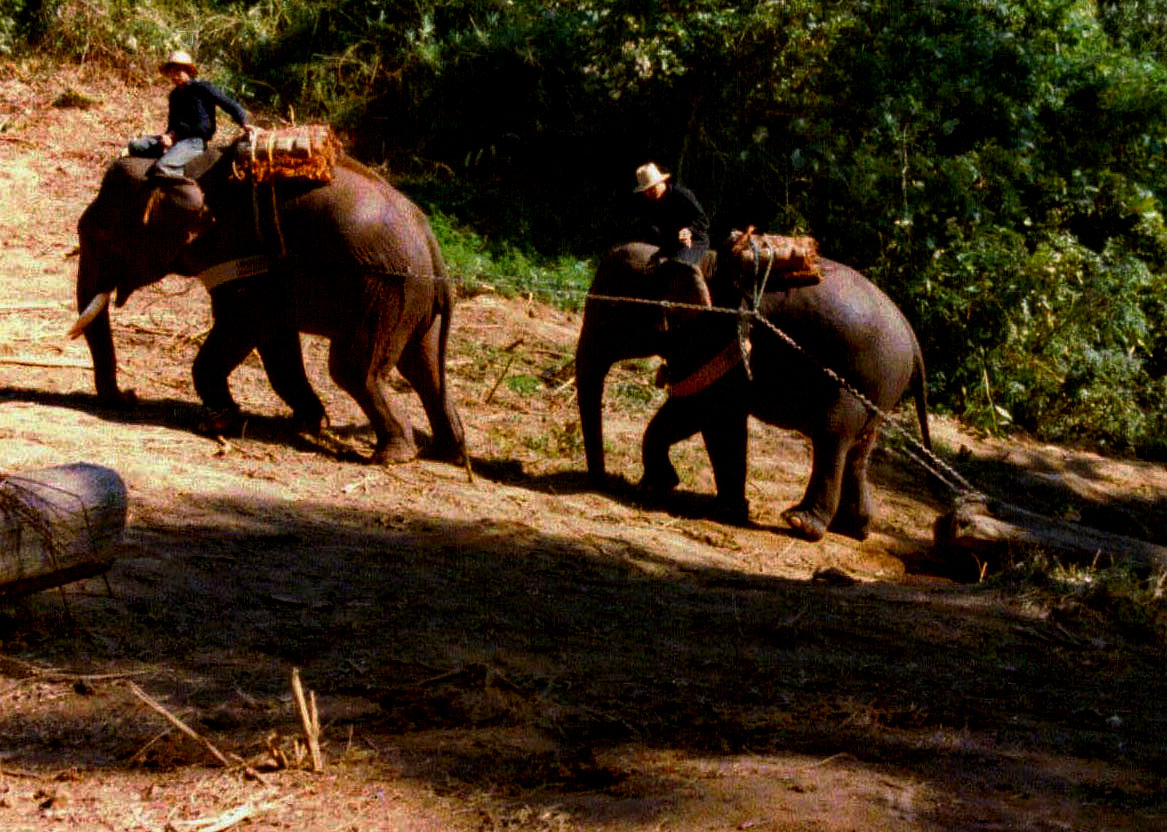
This is an old photograph from my collection, one I took way back in 1972 when the elephant was still known as “the tractor of Thailand”. Sadly, the lovely big animals no longer haul teak and this sort of thing is a rare occurrence now as they no longer live a happy life with their mahouts in the forests in the north of the country. Their habitat has been destroyed by logging, legal and illegal, and most of them have had to journey south with their mahouts, to the coastal areas where they are reduced to giving rides to tourists. In many cases they fall ill from diseases to which they have no resistance; the grasses along the sides of the road are sprayed with pesticides which harm them, and their young ones are often taken away from them and chained up outside a bar for the amusement of tourists.
If you see such a thing, tell the owner you don’t approve.
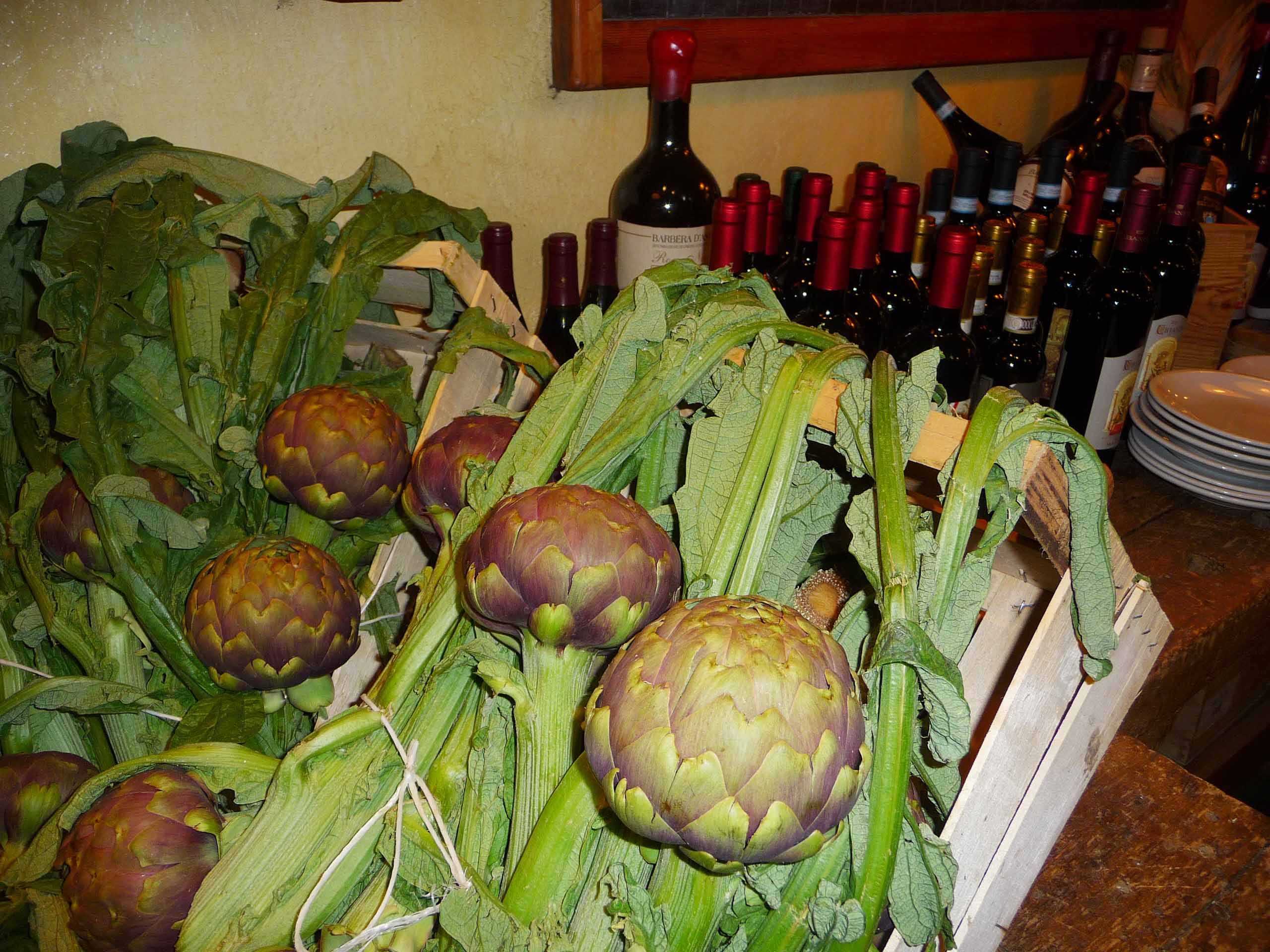
I’ve given up trying to cook artichokes as sampled in Rome and I’m feeling very cross with myself. I never fancied myself as a great cook but I am a fairly good one, but artichokes have beaten me.
I’ve always liked them but always bought them in tins or jars. Then I went to Rome in May when the artichoke season was at its height and every restaurant and trattoria was serving them in ways I’d never even thought of and I OD’d for a week on this king of the vegetable world. In fact, it’s called the 8th King of Rome in that city.
It’s scientific name is cynara acolymus and it was named after Zeus’s former lover who betrayed him and was transformed into a prickly plant in revenge, but its etymological root comes from the Arabic alkaharshῡf. As it grew in popularity from being a food of the poor to one much sought after by the rich, it’s shape was appropriated by architects who used it to adorn various buildings, Chartres Cathedral being one.
The Purple King of Vegetables for the Romans. A restaurant display – Mari Nicholson
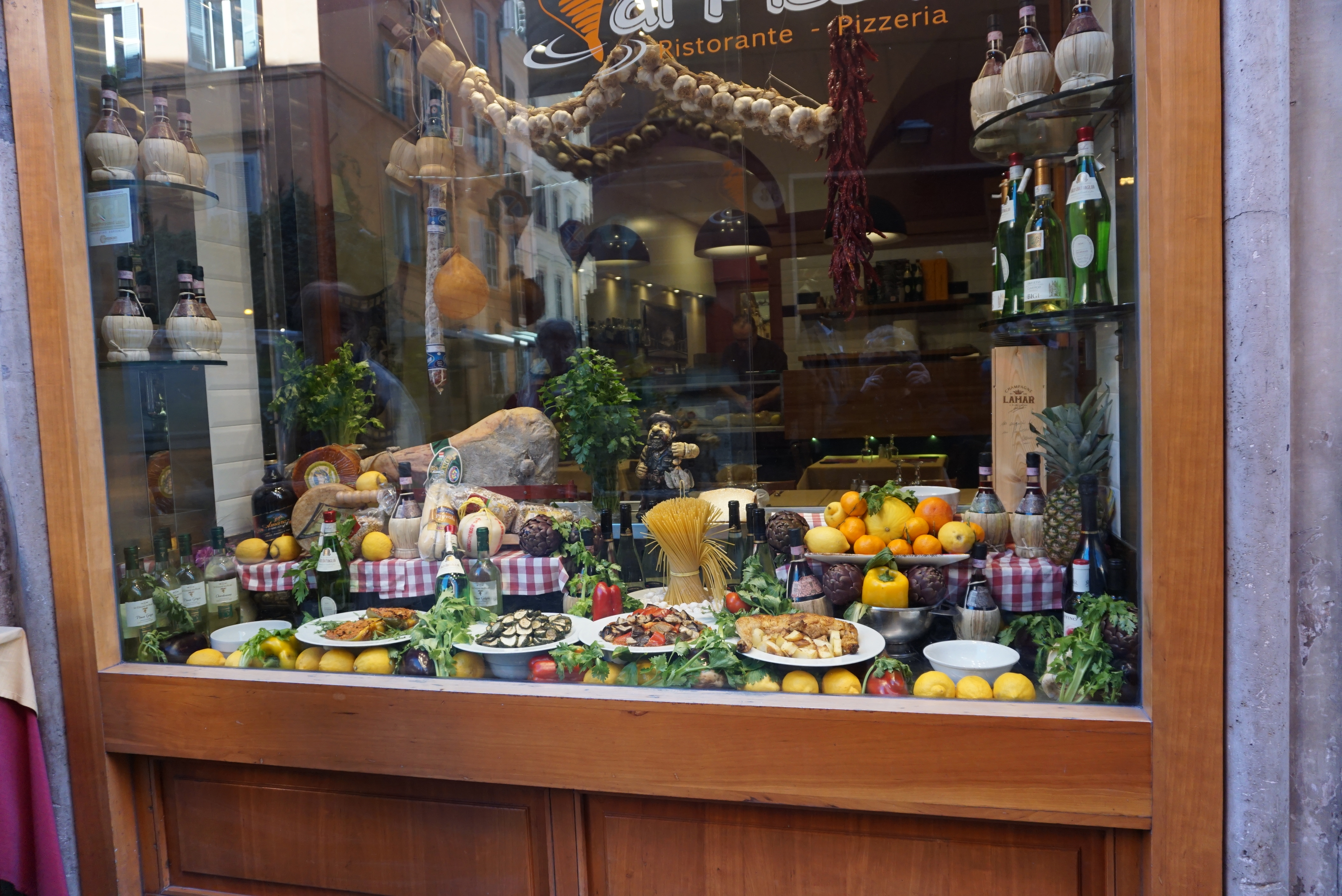
Outside one of Rome’s Artichoke Restaurants. A nice display of the offerings to be had inside – Mari Nicholson
The Italian artichoke usually has dark purple leaves and is eaten as an appetiser, in pastas, and as a vegetable with meats and fish. It can be boiled, fried, roasted, steamed, sautéed, or marinated and I will gladly eat it any which way! In Rome I usually had it “cariciofa alla giudia” which I was told is an ancient Jewish method from the 16th century and entails the vegetable being deep-fried twice. That flavoursome oil dripping down one’s chin. Decadent, I know, but delicious.
Restaurant Window in Rome – Mari Nicholson
My favourite restaurant for this appetiser (I reckon 3 makes a good starter) is Trattoria da Giggetto to which the concierge at my hotel directed me, saying that it had been serving up the artichoke for three generations. The secret, so the waiter told me, was to open the artichoke leaves like a flower and to cook it first in boiling oil before roasting it for a little and then deep-fryng again. Labour intensive, yes, but sheer heaven when you taste it.
Deep Fried Artichokes, Decadent but Delicious – Mari Nicholson
I tried. I deep-fried, then I roasted, then I deep-fried again and all I got was an oily vegetable that bore no resemblance to the ambrosia I had partaken of in Rome. There’s only one thing for it. I shall have to return next May and eat it every night as I did this year and try and wangle an invitation into the kitchen to see how it’s really done.
Prepared Artichokes for Sale from a Stall in Rome – Mari Nicholson
Miyajima is considered to be one of the three most scenic spots in Japan and I’m not going to argue with that. I was bowled over by it: besides, it is a World Cultural Heritage site and is regarded as a holy shrine of Shinto by the Japanese.
Part of the city of Hatsukaichi, Miyajima is located in the Seto Inland Sea and is easily reached by tram, train, and boat from Hiroshima for those wishing to experience a complete contrast to that city. The journey from Hiroshima takes approximately 1 hour.
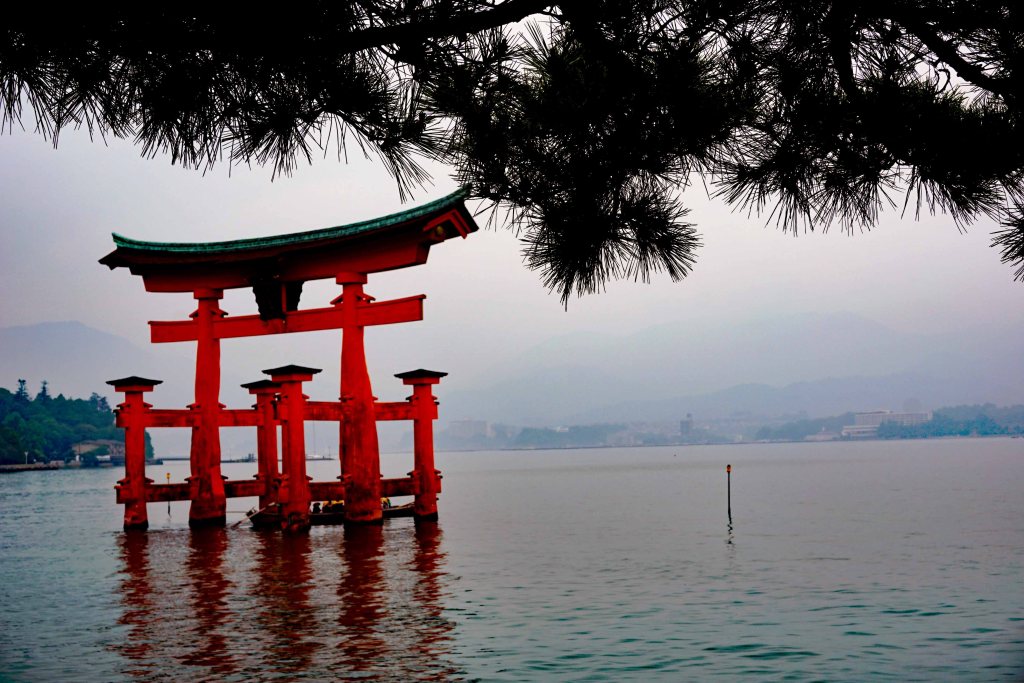
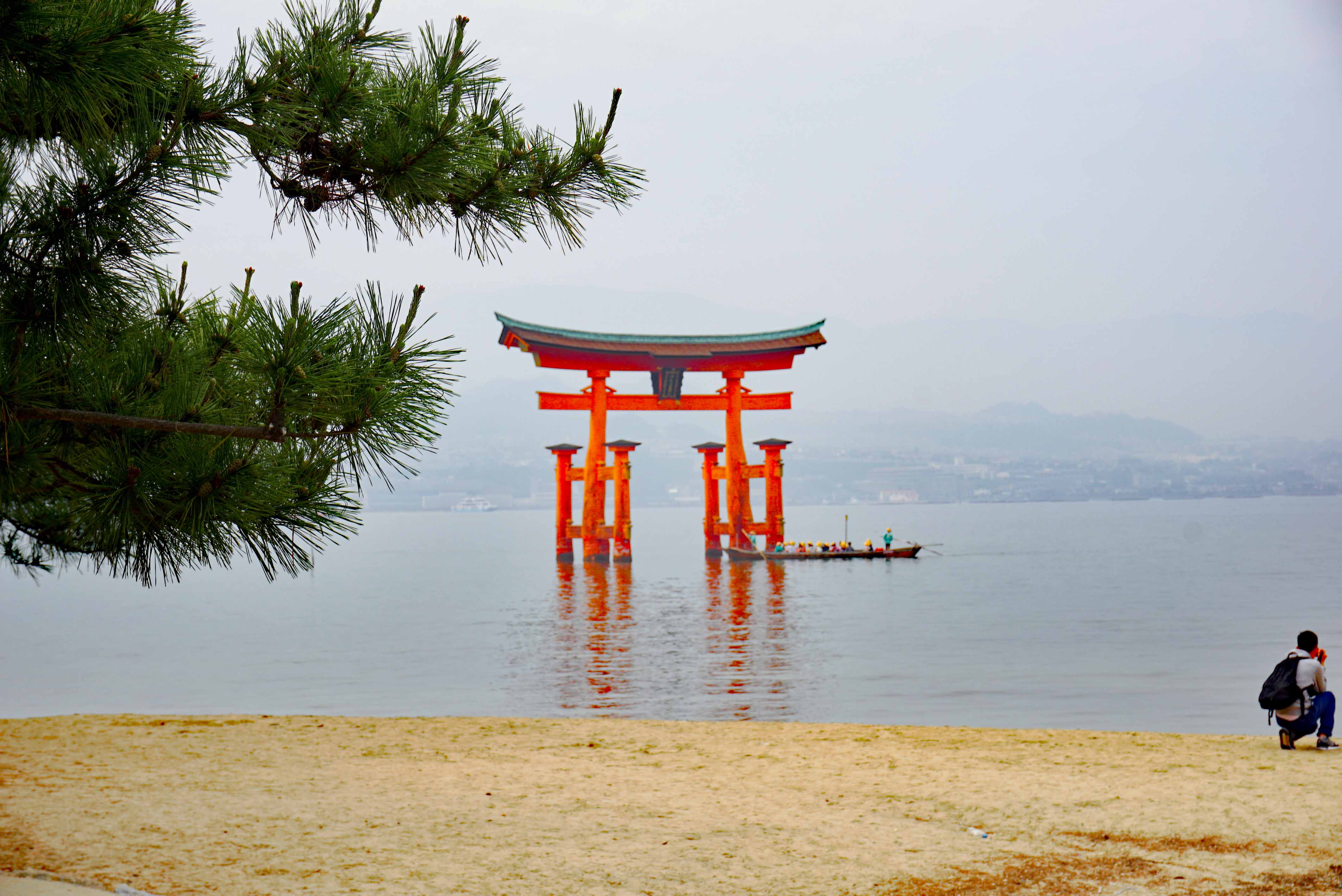
The Floating Red Torii from the Sea – Mari Nicholson
The island, for the Japanese, is a place of natural worship, stemming from its ancient history, the mountains in which Gods are still said to reside with Mt. Misen at its peak, and the primaeval forests which, even in daylight, appear dark and forbidding. As the entire island is an object of belief, it has remained untouched and in a natural state. Massive rocks are scattered along the coast and on the mountains of which no one knows the provenance and in the forests is a diversity of plants said to be the epitome of Japan.
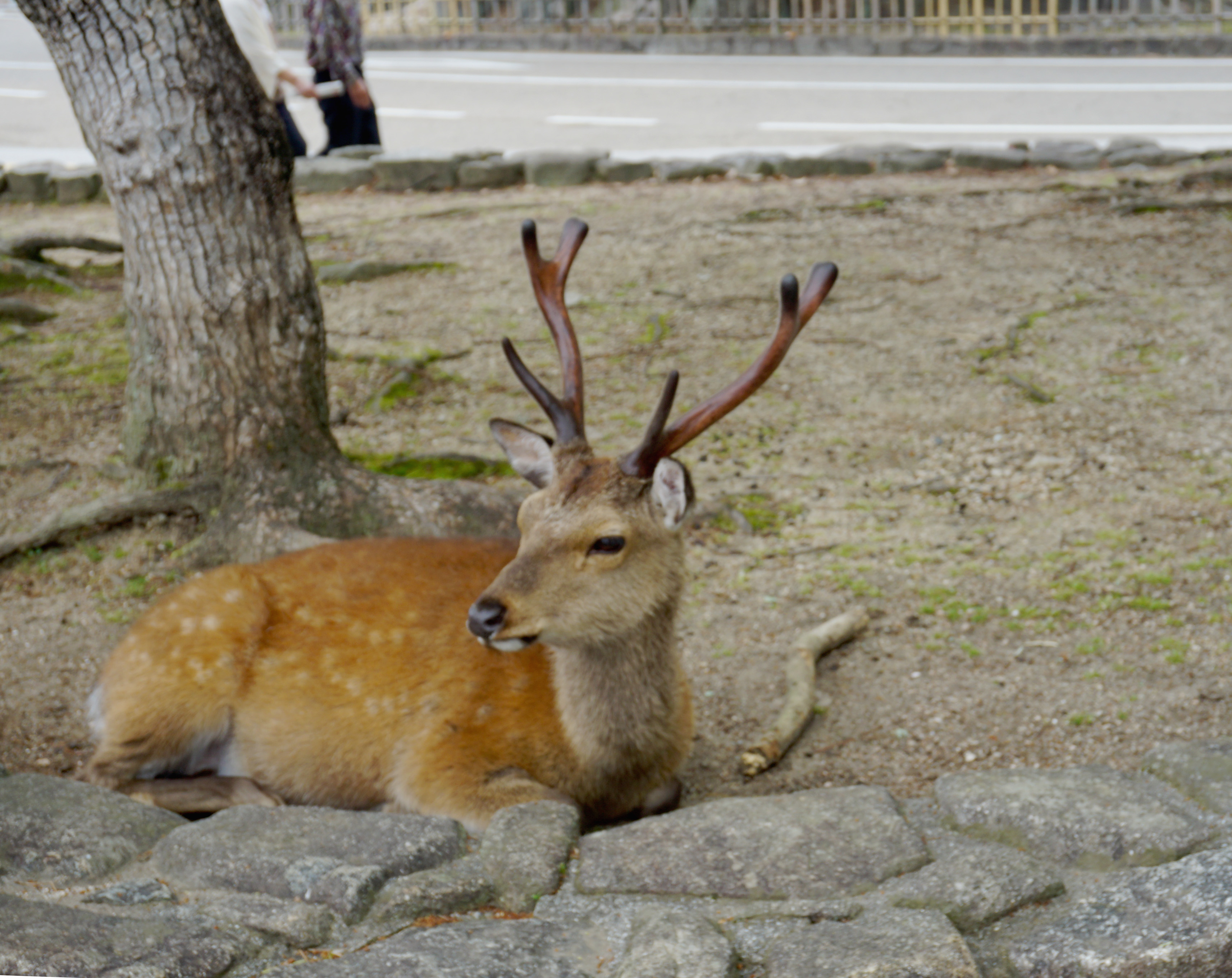
A Deer Takes its Rest in the centre of Miyajima – Mari Nicholson
From the forests and wooded slopes come the deer that one sees wandering through the town. Over the years they have become used to people and they are perfectly happy living in close proximity with humans. At night they sleep by the river that runs through the town.
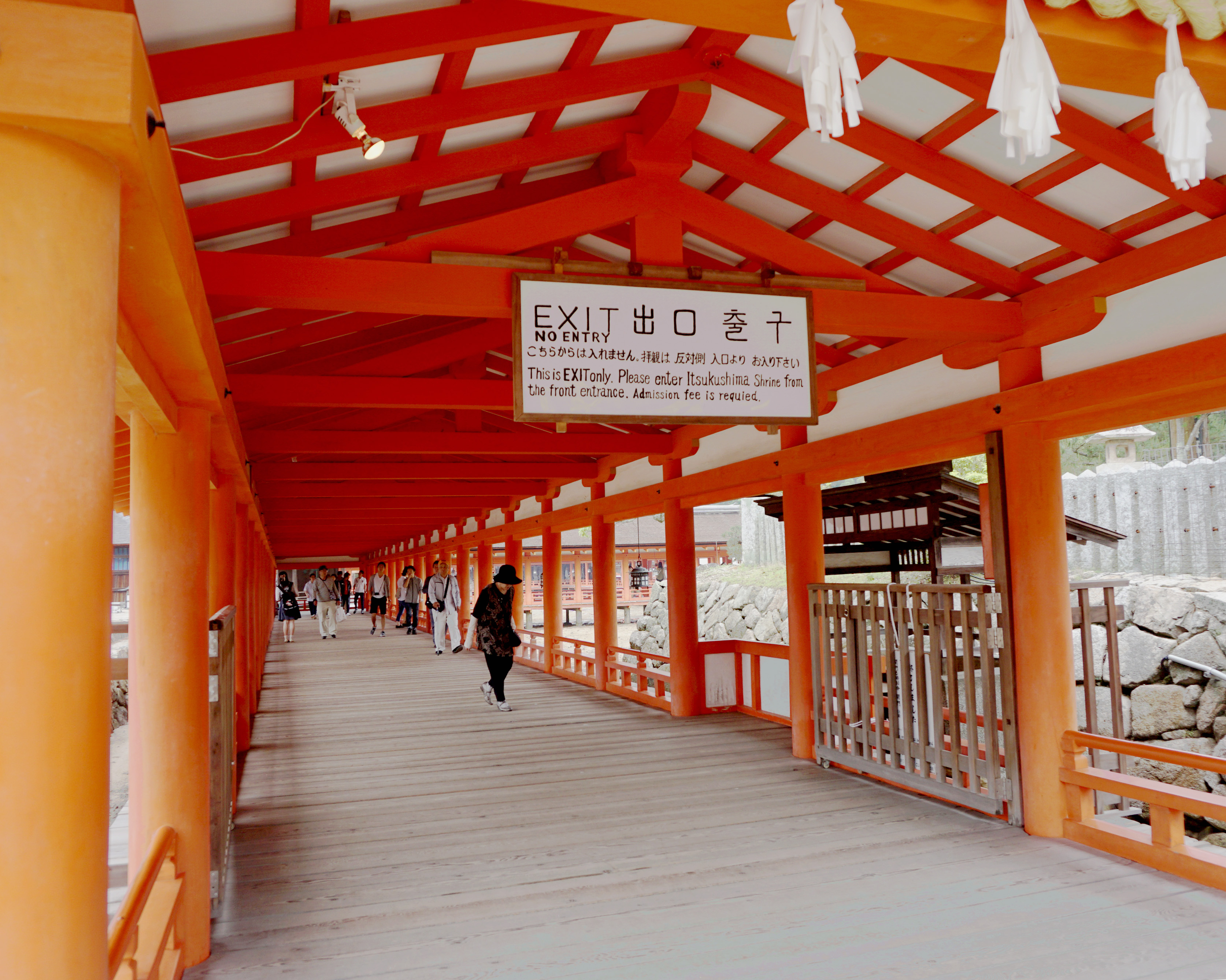
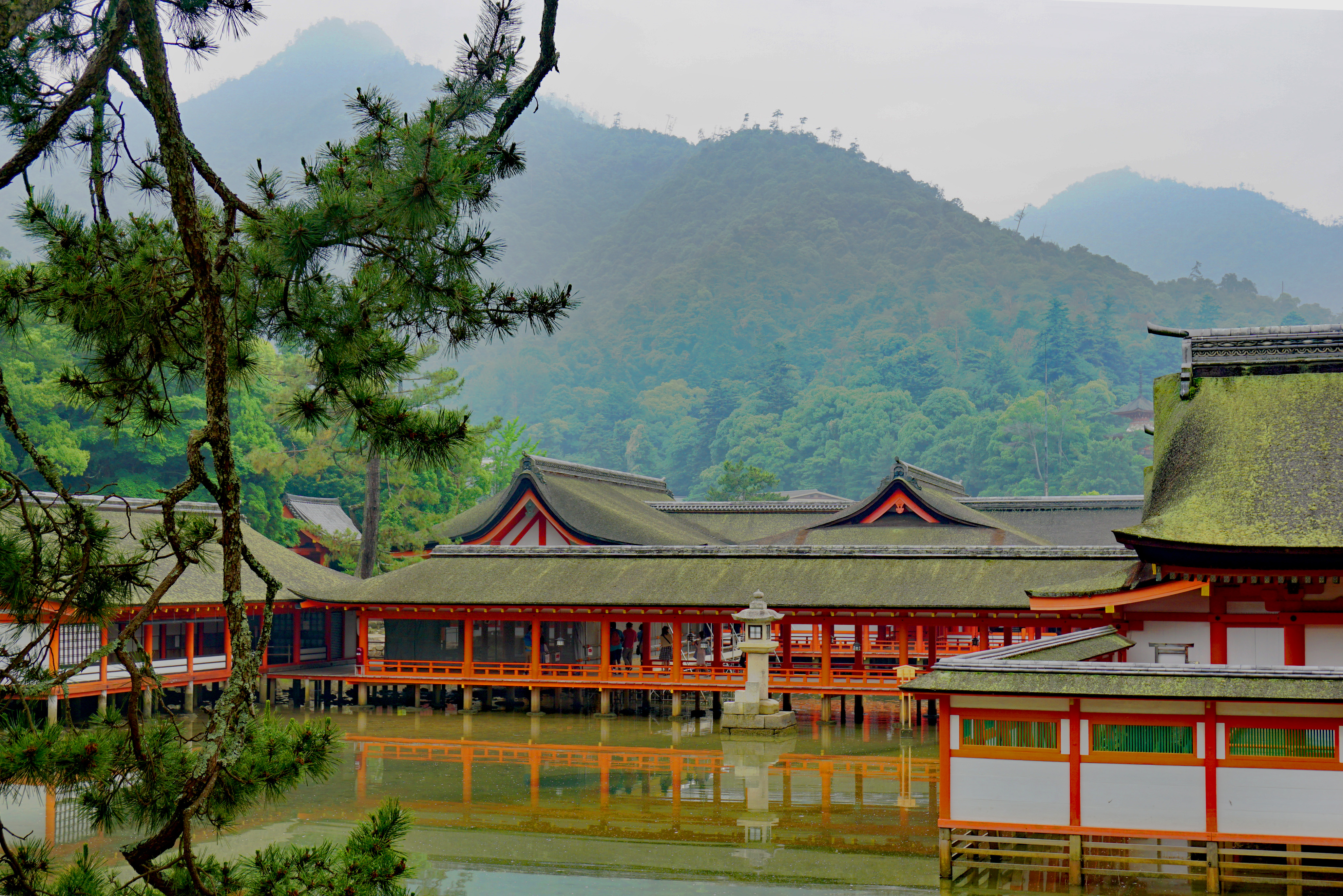
Itsukushima Shinto Shrine in Miyajima – Mari Nicholson
Itsukushima Shinto Shrine in Miyajima – Mari Nicholson
But what attracts most of the Japanese to Miyajima are are the several temples dotted around the island, one of which houses the eternal flame lit approximately 1,200 years ago and part of which was used as the pilot light for the eternal flame in the A-Bomb Cenotaph in the Peace Memorial Park in Hiroshima.
Temples, Miyajima – Mari Nicholson
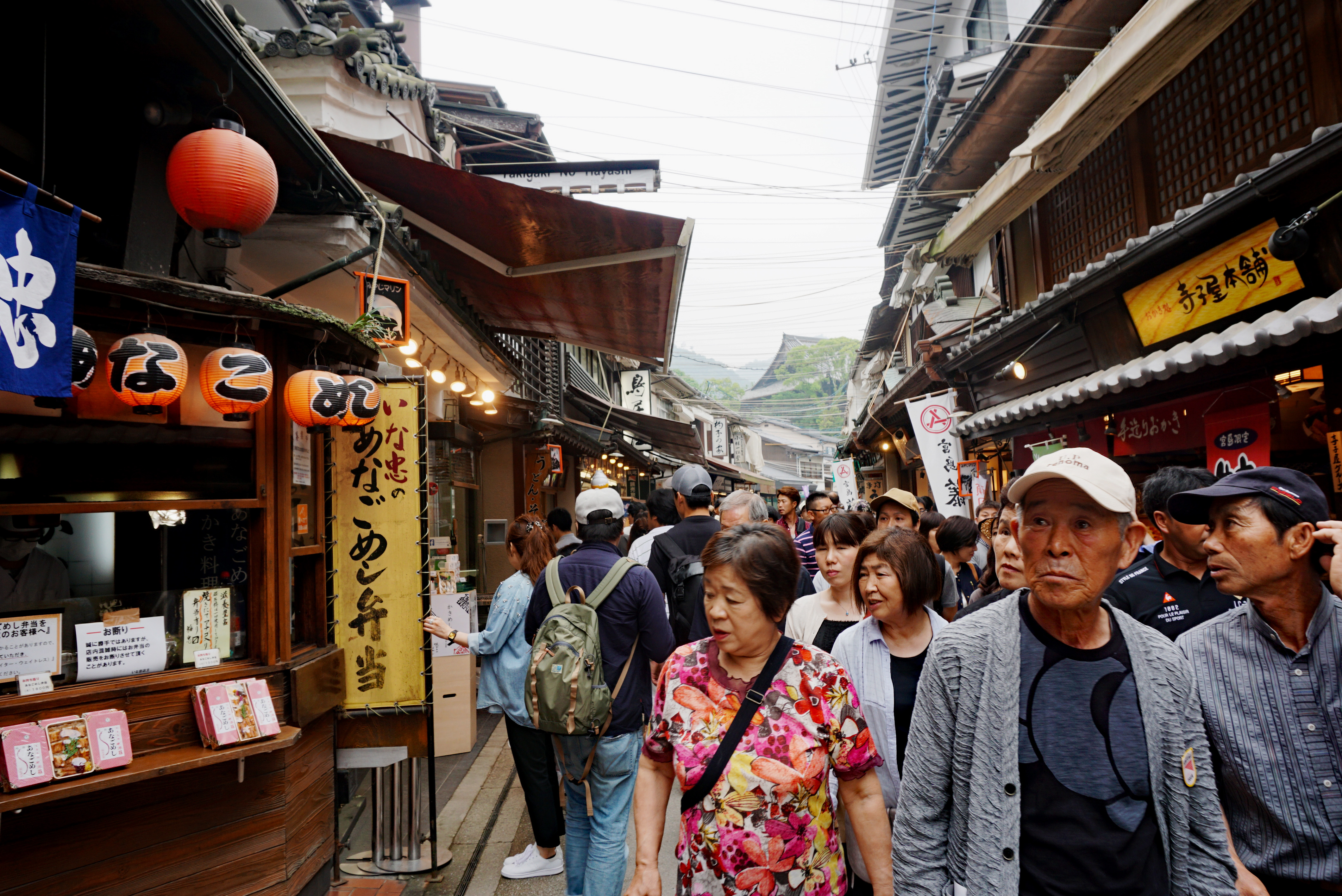
Street Scene, Miyajima – Mari Nicholson
Away from the quiet sea front with the amazing Torii gate and the gentle animals wandering around the paths around the inlet, lies the main tourist area. This is real tourist land, swarming with day trippers and weekenders, who surge up the main street lined with restaurants, noodle shops, ice-cream parlours, souvenir kiosks and shops specialising in kimonos, fans, artwork, and embroidery.
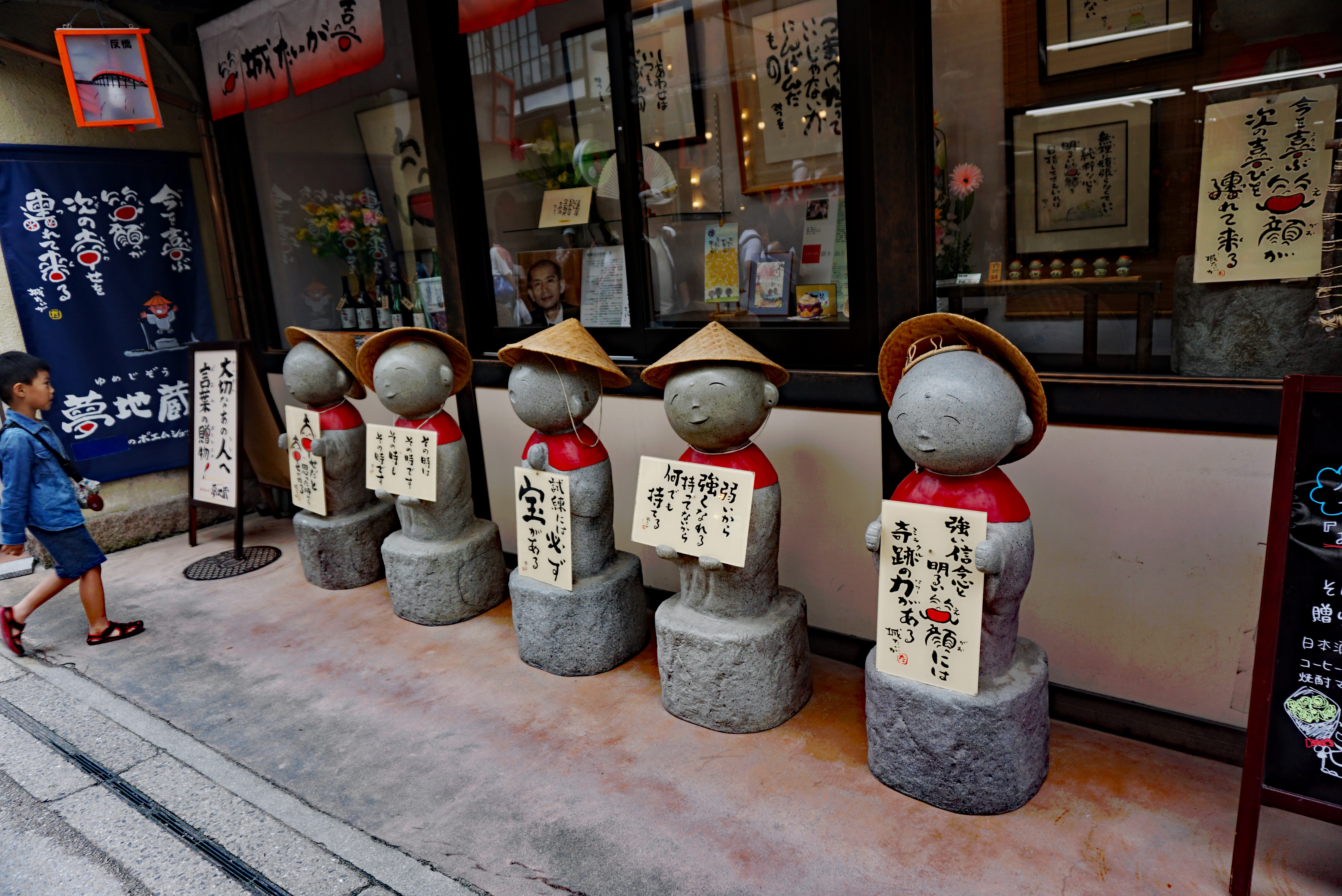
Fascinating shop with fascinating figures outside – Mari Nicholson
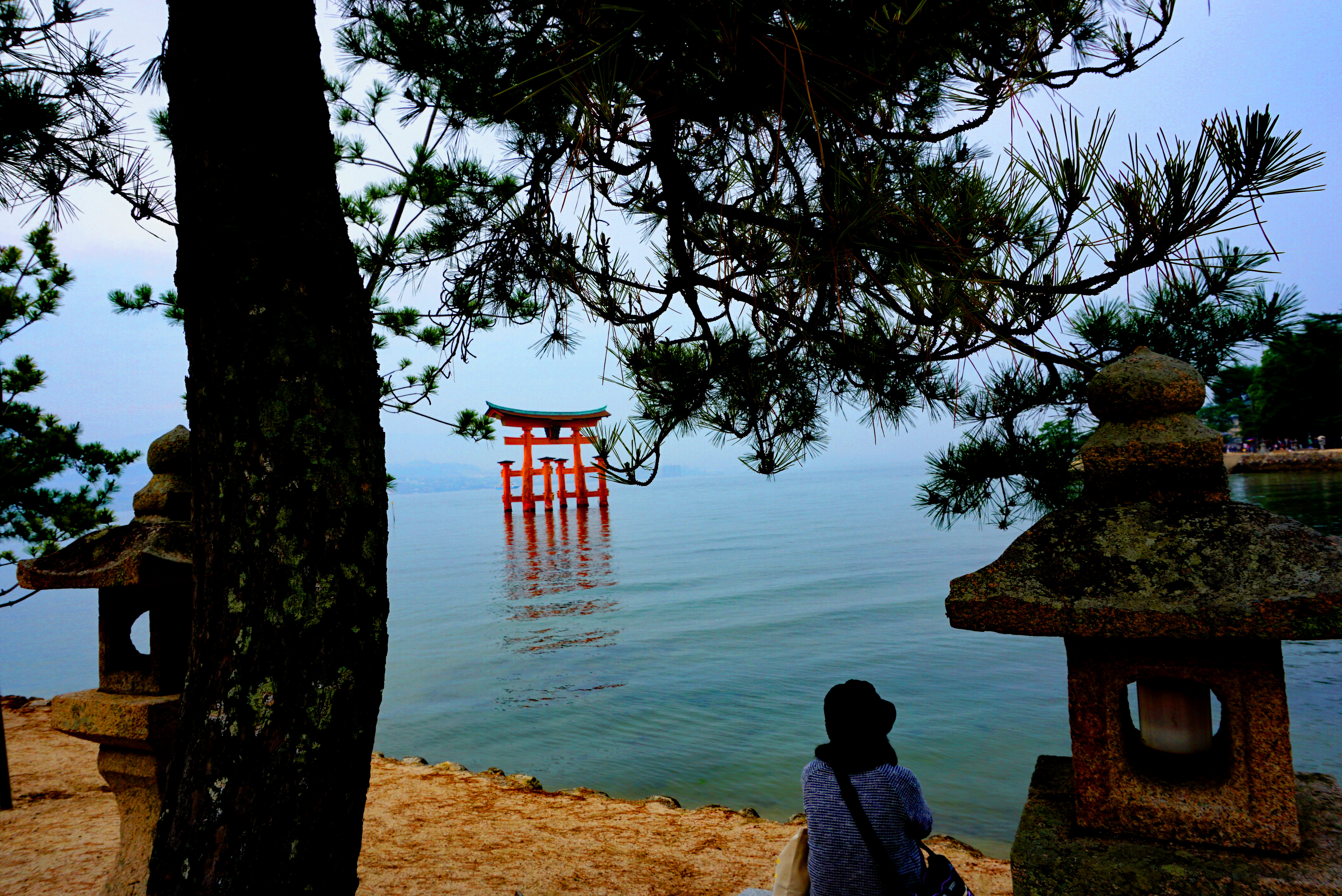
From the beach, boats ply for hire to take one around the famous giant torii gate which, at high tide, seems to float in the sea (a perfect photo-opportunity) but it is advisable to know the tides if you want to take advantage of this trip. A good photograph can be taken from the beach but with today’s digital use, selfie sticks and video cameras it can sometimes be difficult to take that perfect picture, and you may have to queue patiently while others take their time posing.
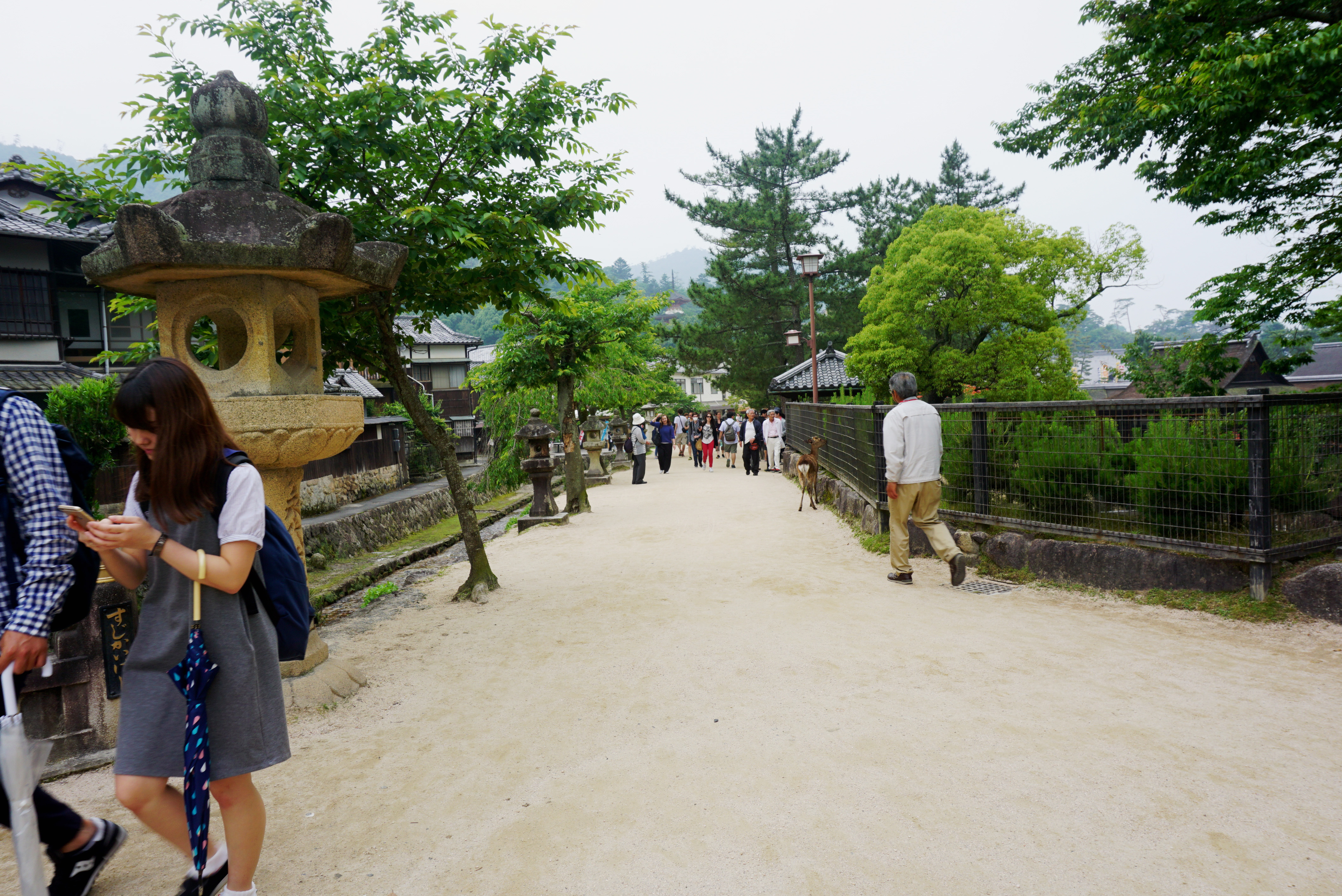
A Walk Around the Path that skirts the water and leads to the town – Mari Nicholson
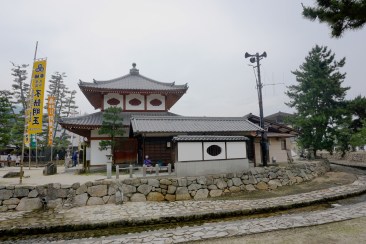
As well as temples and shrines within walking distance, the centuries old Itsukushima (the former name of the island) shrine in the small inlet where the ferry arrives, is one of the most popular on the island – and it includes a small Noh stage. Most of the shrines on Miyajima, like the famous red torii gate, are built over the water, lending the image an ethereal feel especially on a misty day – of which there are many in this area.
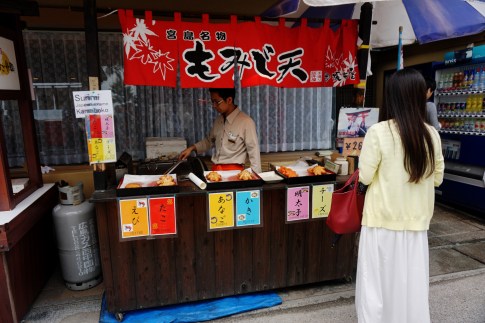
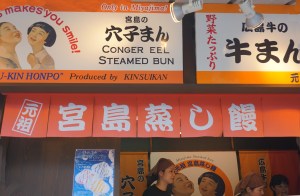
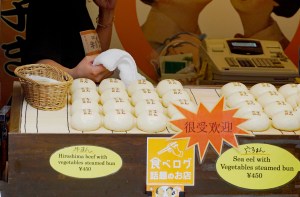
Decisions, decisions: food is everywhereConger Eel Buns for Sale – Mari Nicholson
Fancy a Sea eel bun, anyone? – Mari Nichoson
A visit to Miyajima is a perfect day out if you want to see a part of Japan that will overthrow preconceived ideas, and a place where you can sample as many different dishes as you can imagine. Bearing in mind that Miyajima is noted for its oysters, be sure to try these: they are served in many different ways.fried, boiled, grilled, and au naturel. Dumplings are another favourite on the island, as is the ice-cream served in a Brioche bun: western food from hamburgers to fish and chips is widely available, so everyone can find their particular comfort food.
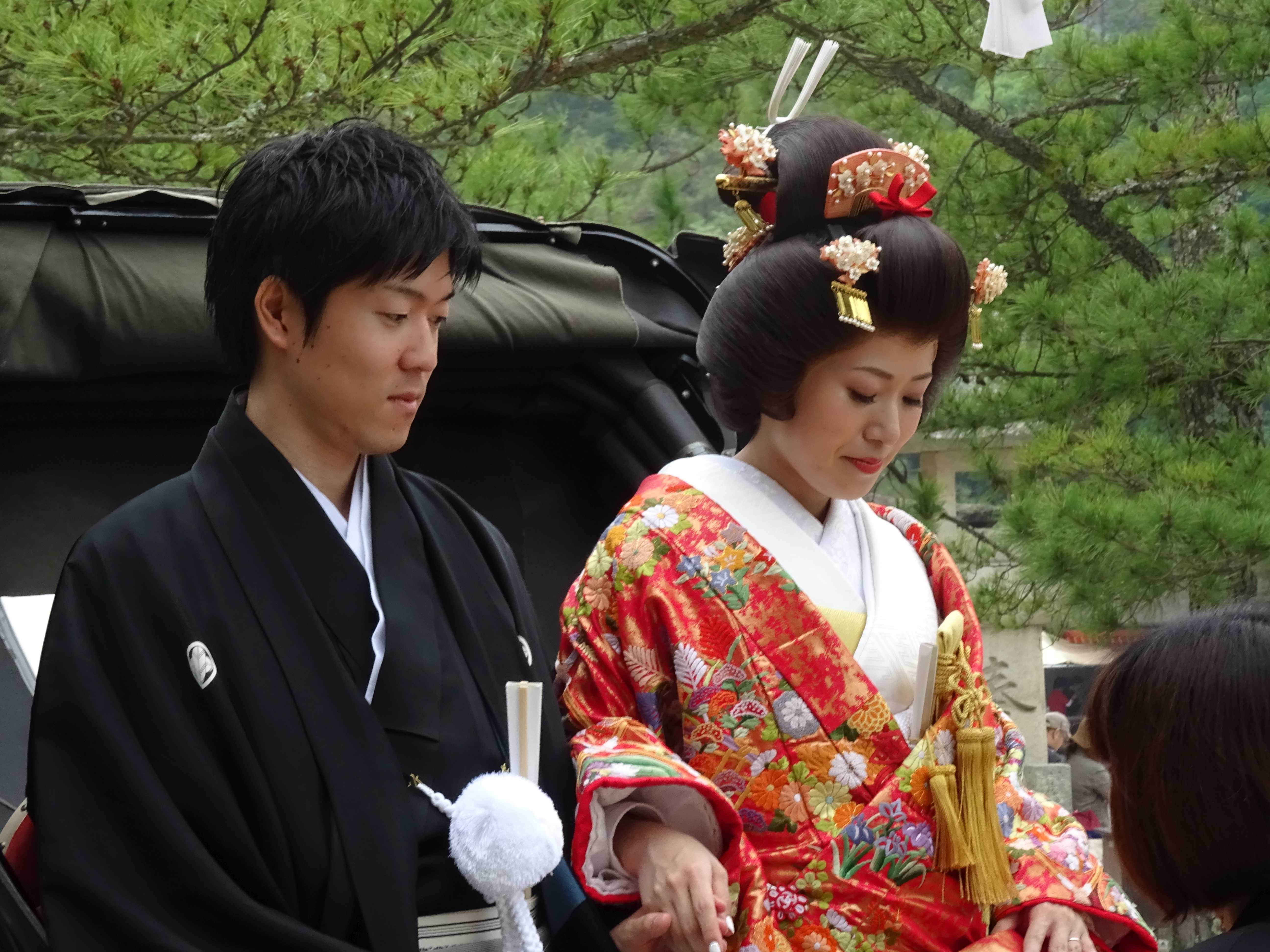
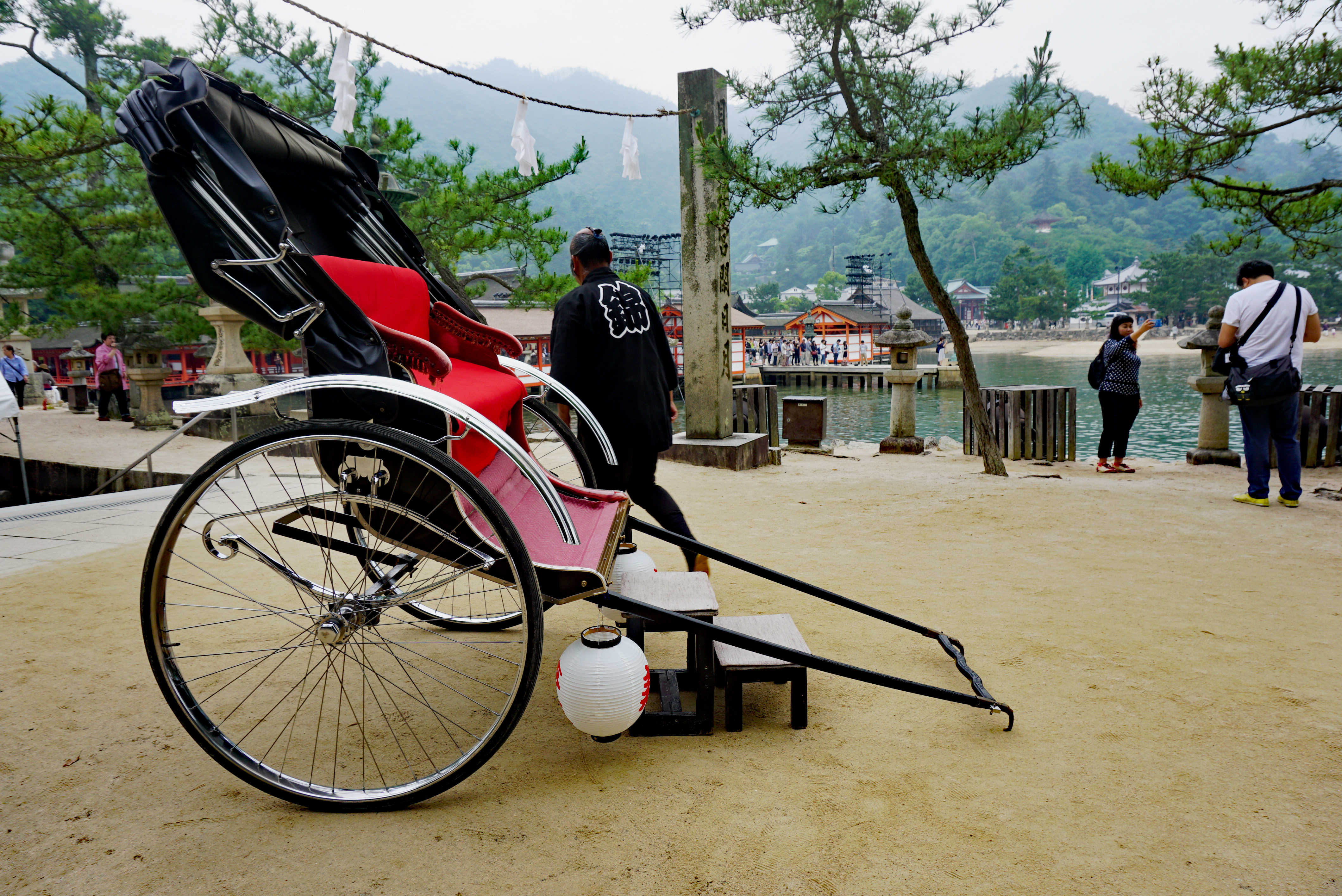
The Island is one of the most popular places for weddings and these are well worth seeing – and photographing – as the bride and her immediate entourage are dressed in the most elaborate kimonos, all of which will have cost many hundreds of pounds (or they may have been hired as we in the west hire morning suits and top hats) while the groom and his attendants are also dressed in the male equivalent. The transport too will be elegantly laid out, usually rickshaws in the lucky colours of red and gold – quite a sight.
Bride and Groom on Miyaima Island – Photo Steve Moore
A Rickshaw with Driver (in black) awaits the Bride – Mari Nicholson
If you can stay overnight it is even better because after sundown the shrine and gate are illuminated until nearly midnight, a perfect backdrop to a walk along the paths around the inlet.
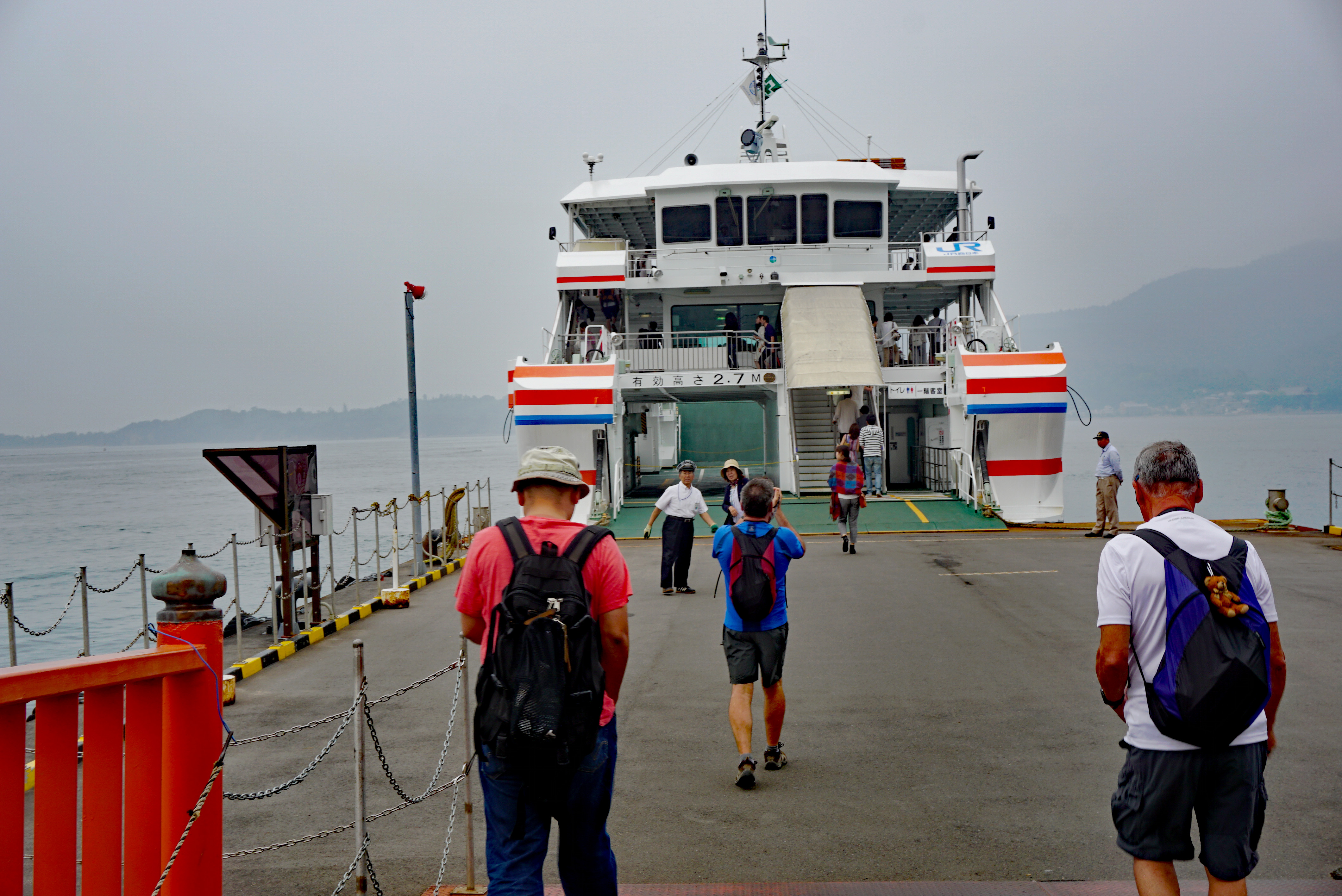
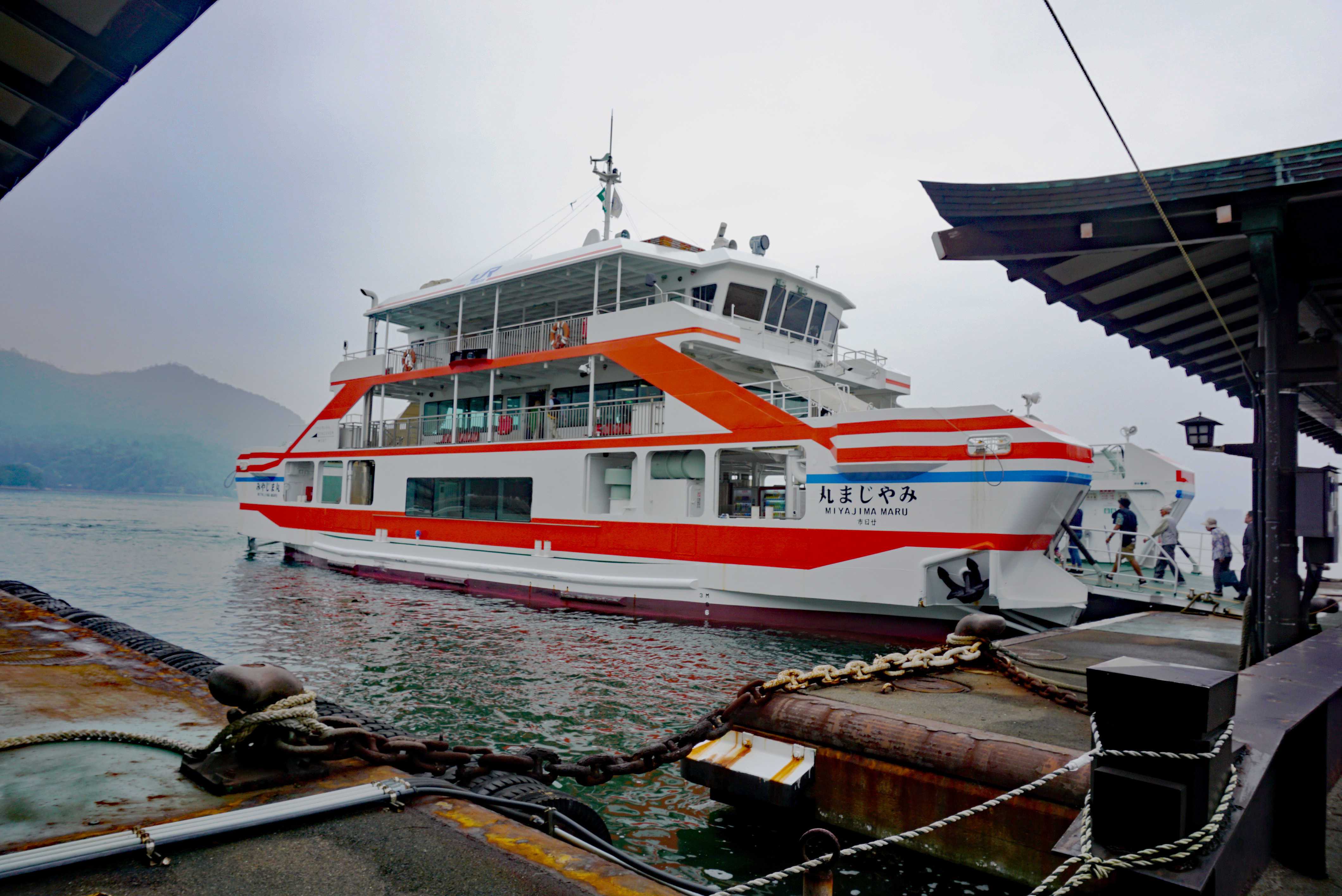
Ferry Departing Miyajma – Mari Nicholson
Ferry at Miyajima – Mari Nicholson
Strolling around Miyajima = Mari Nicholson
When the Tide is Out one can Walk out to the Torii but it looks perfect from here . Mari Nicholson
My favourite town in Thailand is in the news today for all the wrong reasons. A terrorist attack in this quiet, respectable, tourist town, two hours from Bangkok, has left one local street-seller dead and about ten wounded, some seriously. Of all the places I expected to be attacked in Thailand, Hua Hin is the last place I would have picked.
No one has claimed responsibility yet (12/08/2016) but it is being assumed that the terrorists are from the South of the country bordering on Malaysia where a group of insurgents has been causing problems for the past decade. Bombs and killings (usually of policemen) have almost attained normalcy there, but the terrorists had not moved further north, nor had they even ventured into the hot-spots of Phuket or Pattaya.
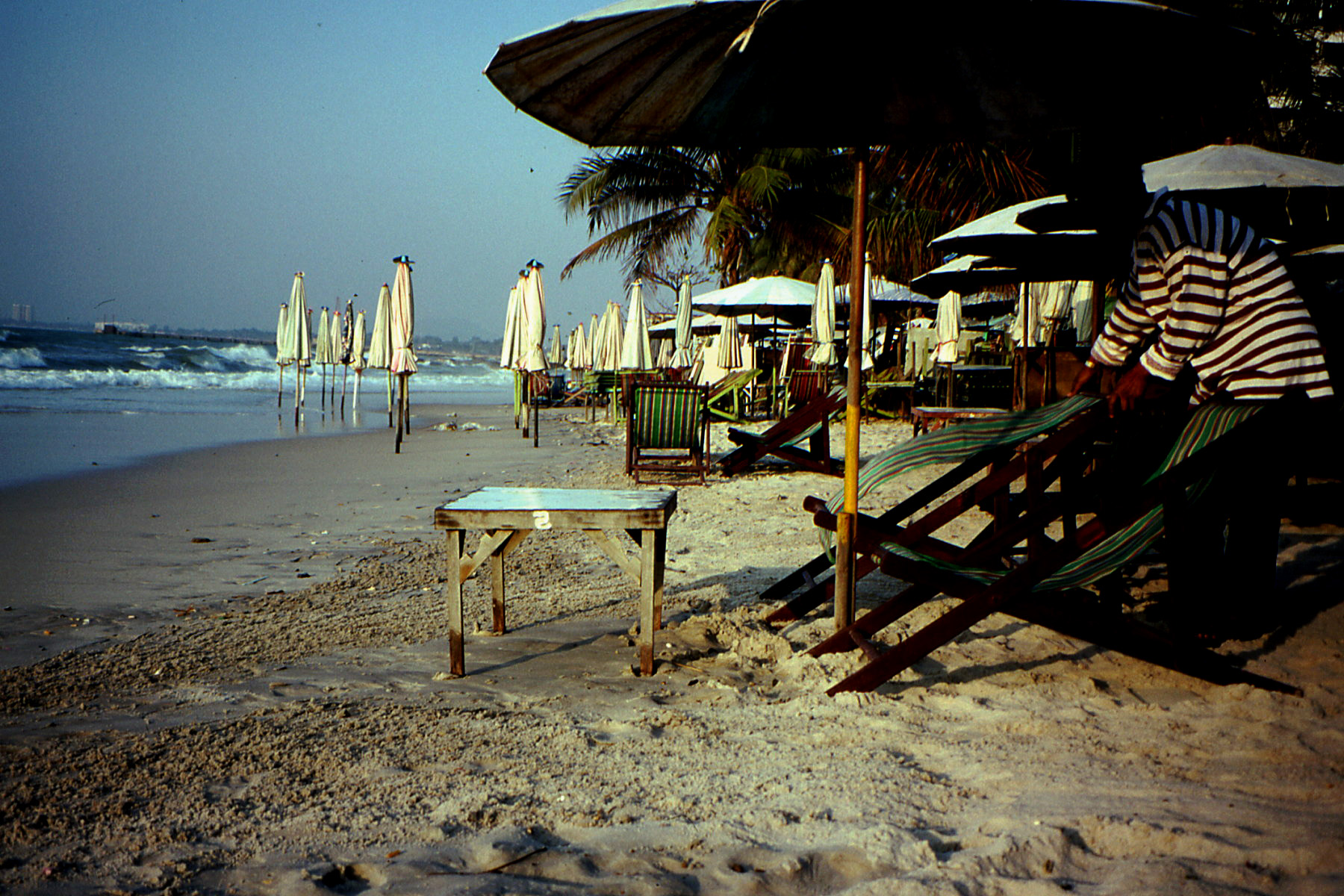
It’s 6.30 a.m. and the cafe owner is setting out the deck-chairs for the day ahead. An old-fashioned beach in Hua Hin. Thailand
The latter two I fully expected to be hit after Bali. Pattaya is a town of somewhat sleazy hedonism, and it has often been thought that the more disapproving members of society might one day be tempted to release a bomb there. Likewise, Patong in Phuket, another place of girlie bars, ladyboy bars, and a place where drunkenness is tolerated, was a town that could be considered in the same way.
But Hua Hin, the favourite resort of the Thai royal family whose Palace along the seafront brings the royals to the town on many occasions, a place which is regarded as a resort for the more mature holidaymaker, and one that is home to many Europeans and Americans who have retired there to take advantage of the seven superb golf clubs in the town? Never. And Hua Hin has much to offer.
The world is changing fast nowadays. Old certainties have gone and personal safety is now a worry for everyone. But I hope that I, and all the others who love Thailand and the lovely old town of Hua Hin, can continue to visit it and enjoy the friendliness, the hospitality and the very Thai way of doing things.
Terrorism will be defeated in the end. It may take time, but we must not let it alter our way of life. I, for one, certainly won’t allow it to alter mine and I hope to spend my next long-haul holiday in what is, still, the safest country to visit , bar none.
Ain’t nothin’ more fun than Second Lining in New Orleans behind some of the best jazz bands in the world. They usually happen on a Sunday morning, just for fun, or maybe to honour someone who has just died, to raise money for a family in need, or “to let the man know we here”!
A few of my favourite images from over the years seem to fit the Morning Challenge so here they are. It’s amazing how some places never change, and how they still attract customers to these old-fashioned deck-chairs.
Mornings in Thailand
Cows are permitted to access the beach before 8 a.m. in Pranburi Province, Thailand – Mari Nicholson
It’s a grey morning and the catch doesnt appear too good
It’s 6.30 a.m. and the cafe owner is setting out the deck-chairs for the day ahead. An old-fashioned beach in Hua Hin. Thailand
Making Merit at Dawn in Chiang Rai, Thailand – Mari Nicholson
Nuclear accidents seem to happen, or be avoided, on a regular basis these days; countries arm themselves with ever more terrible bombs, nuclear power is poised to replace coal and gas, and the world sails on as though the 1945 destruction of two Japanese cities had never happened.
It was Sunday, August 6, 1945, and the early morning sun shone from the blue sky over Hiroshima, Japan. It had been a night of constant alerts with sirens warning of planes overhead but early in the morning, the all-clear sounded. The streets were full of people, workers returning from night shifts, day workers on their way to take their place, military workers, factory watchmen, women shopping, secondary school children making fire breaks, all, we can suppose, weary after a sleepless night.
Shortly after 7 a.m. an urgent communique came to the Military Command at Hiroshima Central Broadcasting, cut short after just a few phrases by a blinding flash, a blast of searing heat and a roar that shook the earth from its orbit.
The Enola Gay, the ‘plane that dropped the first Atom Bond on Hiroshima
It was 8.15 a.m when the American bomber Enola Gay dropped a five-ton bomb over Hiroshima and a blast equivalent to the power of 15,000 tons of TNT reduced four square miles of the city to ruins, instantly killing 80,000 men, women, and children. People turned to charcoal there and then, limbless and headless bodies flew through the air, and on the ground writhed still living bodies, their flesh torn from their limbs. Tens of thousands more died in the following weeks from wounds and radiation poisoning. In total, it is said that 140,000 died from the effects of the bomb the Americans called “Little Boy”, 80,000 on the day and 60,000 from injuries and the combined effects of flash burns, trauma, radiation burns, and illness. Three days later, another bomb was dropped on the city of Nagasaki, killing nearly 40,000 more. A few days later, Japan announced its surrender.
Cenotaph at Night with Dome in Background, Hiroshima Peace Park – Steve Moore
In 1970, five countries had A & H bombs, the USA, the UK, the USSR, France and China, and they signed the Non-Proliferation Treaty designating themselves nuclear powers and prohibiting all other countries from possessing nuclear weapons for 25 years. As we know, other countries now possess the bomb, or the wherewithal to make a bomb, although the fact is often denied.
The Memorial Cenotaph in Hiroshima is located in the centre of the Peace Park, It is a saddle-shaped structure which was erected in 1952, the shape representing a sanctuary for the souls of the A-Bomb victims. Inside it holds a list of their names.
Clock in Hiroshima Museum showing how many days since the bomb was dropped and, below that, how many days since the last nuclear test.- Mari Nicholson
There is a Global Peace Watch Clock within the Museum in Hiroshima Memorial Park which displays the number of days since the A-bombing of the city which killed thousands and left thousands more to die painful deaths from radiation poisoning and still others to live with the effects of the poison. Below the clock is another number which shows the number of days since the most recent nuclear test. It can be surprisingly low as many underground tests are conducted which are low enough not to create a critical mass of fissile material and so does not attract publicity. One has to ask oneself why nations feel the need to continually increase the power of their bombs when just one or two set off from different sides of the world could end of our world and our civilisation.
The Museum is dedicated to telling visitors the history of the bombing of Hiroshima and Nagasaki and among the exhibits are a number of articles and remains damaged by the bomb, together with poignant pictures and sad memorabilia.
Hiroshima Dome, the only building left standing after the bomb was dropped – Mari Nicholson
Hiroshima is not like the rest of Japan. It was flattened when the Atomic Bomb was dropped on it. It has been re-built and is now a soulless place of dull, grey concrete, wide avenues, boulevards, shopping malls and all the accoutrements of a modern city. What is lacks is a soul. That was destroyed in 1945.
Visitors to the city will be moved by the World Heritage Site of the A-Bomb Dome, Hiroshima’s most famous site . It stands forlornly by the river across from the Peace Memorial Park, as a reminder of the power that rained down upon the city half a century ago and brought such terrible devastation to its people. On that fateful day it stood within 100 metres from what became ground zero. The A-Bomb Dome is a propped up ruin, the only building still standing. Try and visit it at night if possible, when it is lit from the interior as well as the exterior. It is quite eerie.
Children’s Peace Monument based on the story of Sasaki Sadako
The Children’s Peace Memorial in the Peace Park is continually covered in thousands of tiny folded paper cranes, a symbol of longevity and happiness in Japan, which come in by the busload from schools all over Japan on a regular basis. The Memorial was inspired by the story of leukaemia victim Sasaki Sadako, who, at age ten contracted the disease, after which she embarked on a task to make 1000 paper cranes in the belief that if she succeeded she would survive. Sadly she died having only completed 644 but her classmates completed the task, and so started a tradition that continues to this day.
School children learn the lessons of history on the banks of the river that guided the Atomic Bomb to Hiroshima – Mari Nicholson
The Peace Memorial Park is located across the Aioi-bashi Bridge and includes the Cenotaph which lists the name of all the known victims. The river is said to have been the bomber’s point of aim on that fateful morning. Beneath the Cenotaph burns a flame, set to burn until the last atomic bomb has been destroyed, at which point it will be extinguished. Thousands of sufferers from radiation burns threw themselves into the river in an effort to ease the pain but to no avail, and hundreds of corpses remained afloat in the water for days after the blast.
The Peace Memorial Museum is the place to find information. It delivers a simple anti-atomic warfare message with a power that can leave you in tears. The depiction of destruction and suffering is told with no pulling of punches and makes one think of what modern warfare, using these bombs, would be like.
Hiroshima Art Museum which has Dali’s Dream of Venus and works by the Japanese artist Hirayama Ikuo who was present during the bombing.
Shukkelen Garden. Located next to the Hiroshima Art Museum
Mitaki–Dera: the Three Waterfalls Temple, a quiet and secluded gem with a fine view over the city.
Photograph by Steve Moore
Red Torii Gate in Miyajima, outside Hiroshima – Mari Nicholson
Best trip outside the city – to Miyajima. The famous Red Torii gate of the Itsukushima Shrine (at least the one that is most photographed) can be seen here, in a very touristy town but one with great charm. While there, try the famed oysters, raw, deep-fried, or in hot pot dish, the savoury pancakes and the ice-cream sandwich in a brioche bun.
To Portsmouth Historic Dockyard on England’s south coast for the unveiling of the last stages of the restoration of Henry VIII’s favourite ship, The Mary Rose, after the Museum’s six-month closure to the public.
The date is especially significant because today, July 19th 2016, is the 471st Anniversary of the Tudor ship’s sinking off the coast of England. Over the years since her discovery on the bottom of the seabed and her subsequent raising from this watery grave in 1982 (an event watched by 60 million people worldwide) she has attracted and thrilled people in equal measure.
During the excavation project, 27,831 dives were made, and 22,710 hours of marine Archaeological work was needed on the seabed. The struggles and hardships endured by all who worked on this modern project is a story all by itself, but after decades of hard work and 437 years under water, the Mary Rose is now finally on view to the public in a spectacular Museum inside Portsmouth’s Historic Dockyard, home also, to Nelson’s ship The Victory.
It took 600 trees, mainly oak but some elm, to build the ship in 1510 and now one can see displayed, some of these wonderfully preserved timbers. The Mary Rose sank on the 19th July 1545, as it left Portsmouth with 500 men on board (of which only 35 survived) to take part in the 3rd French War, and it sank to the bottom of the Solent within sight of King Henry who was watching its departure from Southsea Castle. It lay there, at an angle of 60ᵒ, until excavations began in 1971. (Below is an image of cannon balls taken through the glass floor of the ship).
Since it’s recovery, TheMary Rose has been undergoing continuous conservation. First, the hull was sprayed with a mist of freshly chilled water and then, from 1994 to April 2013 when it entered a stage of controlled drying, with a water-soluble wax. Thanks to these methods, the hull is now in a stable condition which means that the black drying ducts which provided the necessary conditions for this, can now be removed and visitors can now have a clear and uninterrupted view.
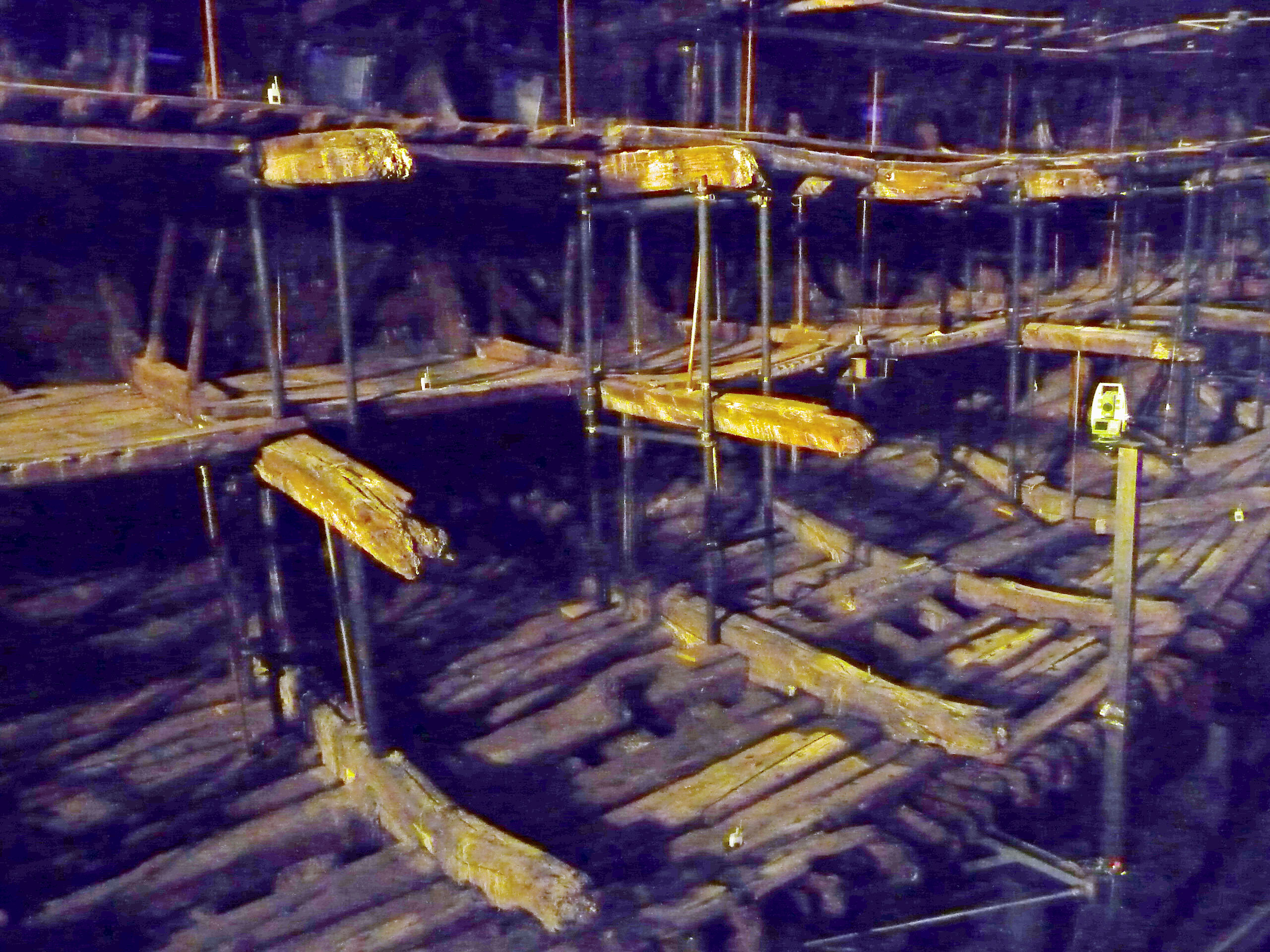
Close up of timbers of The Mary Rose – Mari Nicholson
To date, 19,000 artefacts have been recovered from the site, including
6,600 arrow bits
9 barrels containing bones of fully-grown cattle
1 full skeleton of a dog aged between 18 months and 2 years old.
The new look Mary Rose Museum provides stunning panoramic views of all nine galleries of the ship through floor to ceiling glazing on the lower and main decks, while on the upper deck visitors will enter via an airlock and are then separated from the ship by only a glass balcony. On the floor are glass panels through which they can view ‘below decks’ which holds cannon balls and work-rooms.
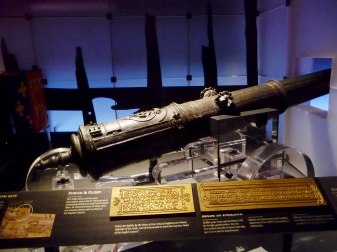
Gun from The Mary Rose – Mari Nicholson
A walk around the Museum gives food for thought as you see how life was lived below decks in the 16th century. Whole cabins can be seen, the carpenter’s cabin, the surgeon’s cabin, the captain’s cabin, the archers’ quarters and those of the deck-hands, as well as the everyday things that made life bearable for these sailors, dice (for illicit gambling), purses, sewing-kits, belts. It is a fascinating insight into history, and a couple of hours spent here can impart more knowledge than reading a treatise on naval life in the days of Henry VIII. The plaque on the gun boasts Made in England because most guns were made in other parts of Europe and imported.
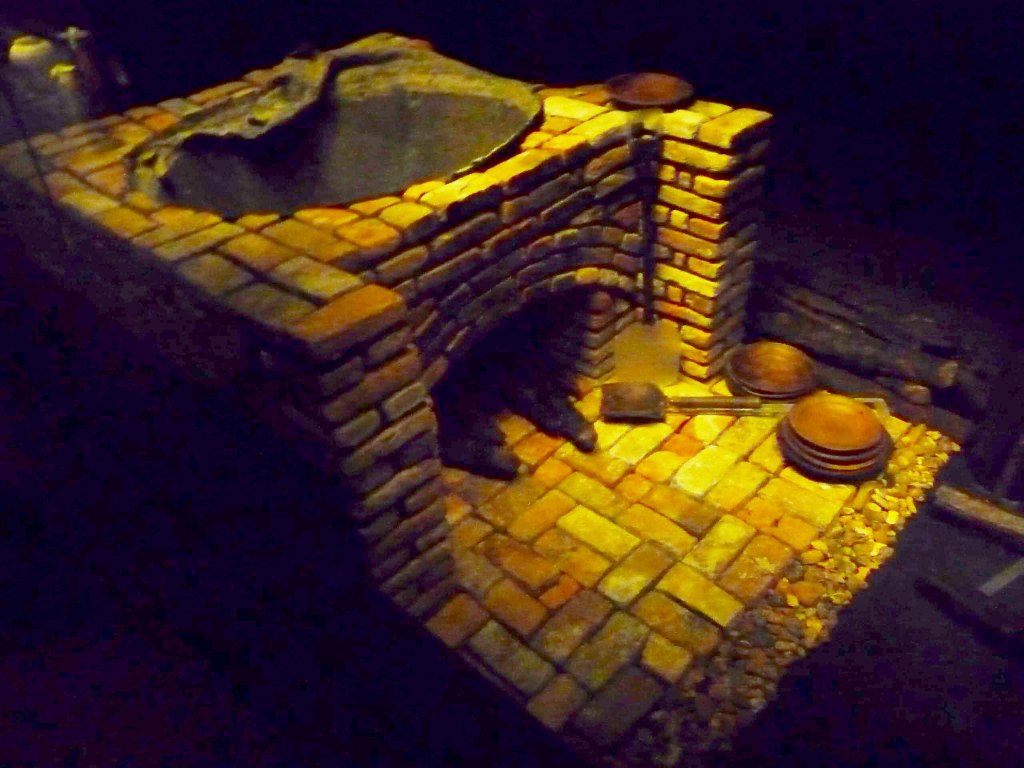
The baker’s oven that is pictured below is the original in every way, right down to the bricks used.
TV crews at Mary Rose Museum for the Unveiling, 19/06/16Mary Rose Timbers










 Miyajima is considered to be one of the three most scenic spots in Japan and I’m not going to argue with that. I was bowled over by it: besides, it is a World Cultural Heritage site and is regarded as a holy shrine of Shinto by the Japanese.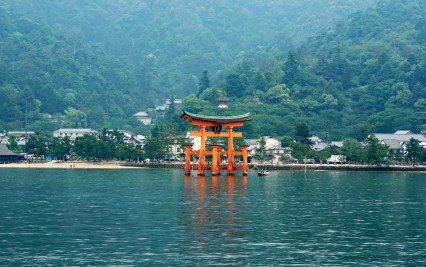









 MARI'S TRAVELS WITH HER CAMERA