Category: Uncategorized

  • DICKENSIAN: A LONDON TALE

    DICKENSIAN: A LONDON TALE

    Having watched every episode of Tony Jordan’s 20-part brilliant evocation of Charles Dickens’ world (Dickensian, BBC 1), it has whetted my appetite for the London of the novels, for the streets and alleyways that he populated with an array of the most colourful characters ever to leap from a page.

    Traitor's Gate at The Tower of London
    Traitor;s Gate at The Tower of London

    The series is a true celebration of a master story teller, where people like Miss Haversham, Nancy,  Bill Sykes, Fagin, Jaggers the lawyer, and the Cratchit family, are all cleverly interwoven into a Victorian tapestry, perfect for the small screen.  Dickensian carried with it a constant surprise, as there were no hints given as to who would pop up or from which book.  And as always, with a BBC production, the location, the settings and the atmosphere are pitch-perfect.  And it’s fun trying to remember in which book a character appeared, and in admiring the clever way Jordan has stitched together a new story using these familiar characters.

    Although Dickens wouldn’t recognize London should he return today, we are lucky enough to be able to suss out some of the haunts he mentions, the alleyways, streets, pubs and inns, many of which survive, although what the Blitzkrieg couldn’t destroy, the city planners have almost managed to accomplish.
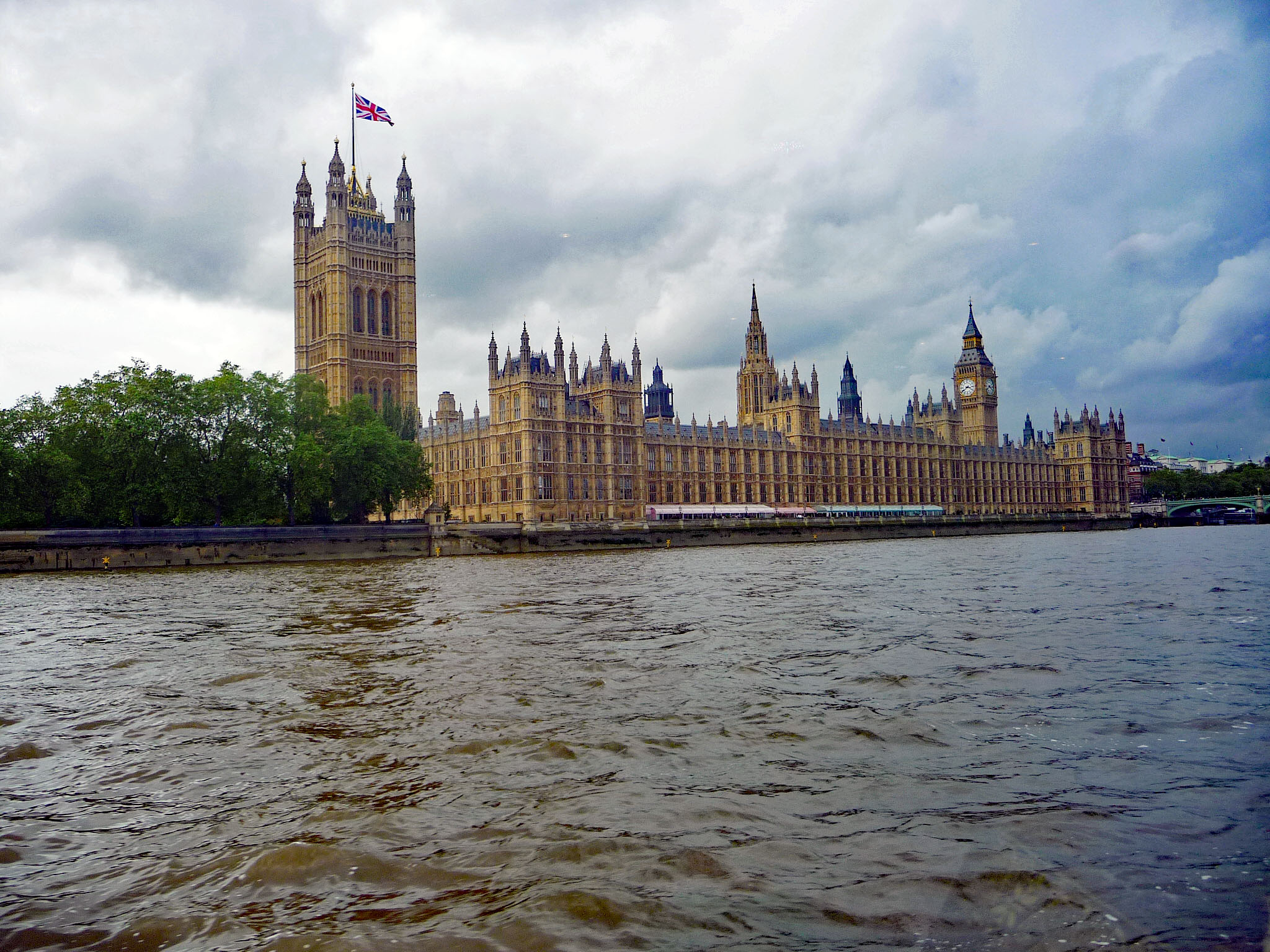
    Houses of Parliament, London
    Houses of Parliament- Photo Mari Nicholson

    The City of London was once a walled city covering a mere square mile, inside which the Guilds and Liveries reigned supreme – in fact they still do, along with the money merchants, the financiers, the major world Banks and the controllers of a shadowy world of high finance.  Established in around AD50, seven years after the Romans invaded Britain, the City, or Square Mile as it has become known, is the place from which modern-day London grew.  Walk through the surrounding areas, and with just a little imagination, you can begin to populate the streets with Dickens’ characters.   A good place to start from is  St. Paul’s Cathedral, built by Sir Christopher Wren, who, while his great church was being built, lived in a house on the other side of the River Thames from which rowed across the river daily, to check on its progress.

    A Familiar Sight at The Tower of London
    A Familiar Sight near the Tower of London


    The historian Dr. Ruth Richards claims to have discovered the workhouse, the Strand Union in Cleveland Street, that inspired Oliver Twist.  This was near where Dickens lived as a child, and it is thought  possible that he worked with a lot of the poor apprentices from that workhouse during his time at the blacking factory.  Most workhouse children were hired out, or apprenticed, to places like these, and if the young Dickens did work with the workhouse paupers, he would have heard tales of the hardship in that establishment, all of which were grist to the mill when it came to writing what is one of the best loved, and most often filmed, stories of all times.

    The Guildhall, London
    The Guildhall, City of London


    When Pip in Great Expectations arrived in ‘ugly, crooked, narrow and dirty’ London he got off the coach at the Cross Keys Inn on Wood Street, a posting Inn and a terminal for the coaches from the countryside bringing passengers and parcels to the City (read Great Expectations for his description of the nearby Cheapside market and ‘the great black dome of St. Pauls).   Little remains of the Cross Keys inn today save a paved area in the nearby churchyard in Wood Street, marked by railings with cross keys on them, the symbol of St Peter, keeper of the gates to Heaven.

    This is also the inn where the young boy, Charles Dickens, aged 12 and alone, arrived from Rochester in Kent after his spendthrift father had once again made the family destitute (Dickens senior subsequently spent time at the Wood Street Compter just a little bit further down the road from Cross Keys).  From Wood Street, Pip walked along London Wall to the offices of Mr. Jaggers, the lawyer, through narrow streets where the houses are crammed tightly together and jostle for space.  You are near Postman’s Park here so a detour to this delightful spot can be recommended and although nothing to do with Dickens, I would recommend a detour to see this very Victorian location.

    London Child Hero -
    One of the Tiles in Postman’s Park – Photo Mari Nicholson

    But it was Southwark, a less reputable area, that haunted Dickens and coloured his outlook and his novels ever afterwards.  A portion of the Marshalsea Debtors Prison wall still stands in St. George’s churchyard off Borough High Street, the prison in which the Dickens’ family languished, and his vivid description in Little Dorrit leaves the reader in no doubt of his intense loathing of the place.

    The George Inn, just off Borough High Street, has survived, one of the many “rambling queer old places” that the writer described in The Pickwick Papers.  A little further along is Lent Street where the writer lived and from where he walked to the hated job at the Blacking Factory in the Strand.  The factory that caused such grief to the young man but which gave him so much material for his novels is no longer there: on the site now stands Charing Cross Station.

    There is to be another series of Dickensian, and I urge anyone who has not seen the first series to catch up with it and then follow on with the second series.  Mr. and Mrs. Bumble we’ve met, Mrs. Gamp and Sarah Peggotty, but there are many characters yet to be given a backstory, characters who lived life on the edges of the tales, like Laura Badger, Ham Peggotty, Mrs. Ticket, and the one remembered by every child that saw the original black and white production of Oliver Twist  – Magwitch.

    Dickensian is not Tales from Dickens, it is a re-imagining of a Dickensian London peopled by the colourful characters from the novels of one of England’s greatest writers.  It is not to be missed
    London’s Hidden Gems (1)

  • An Illustrated Walk on the Beach, Isle of Wight


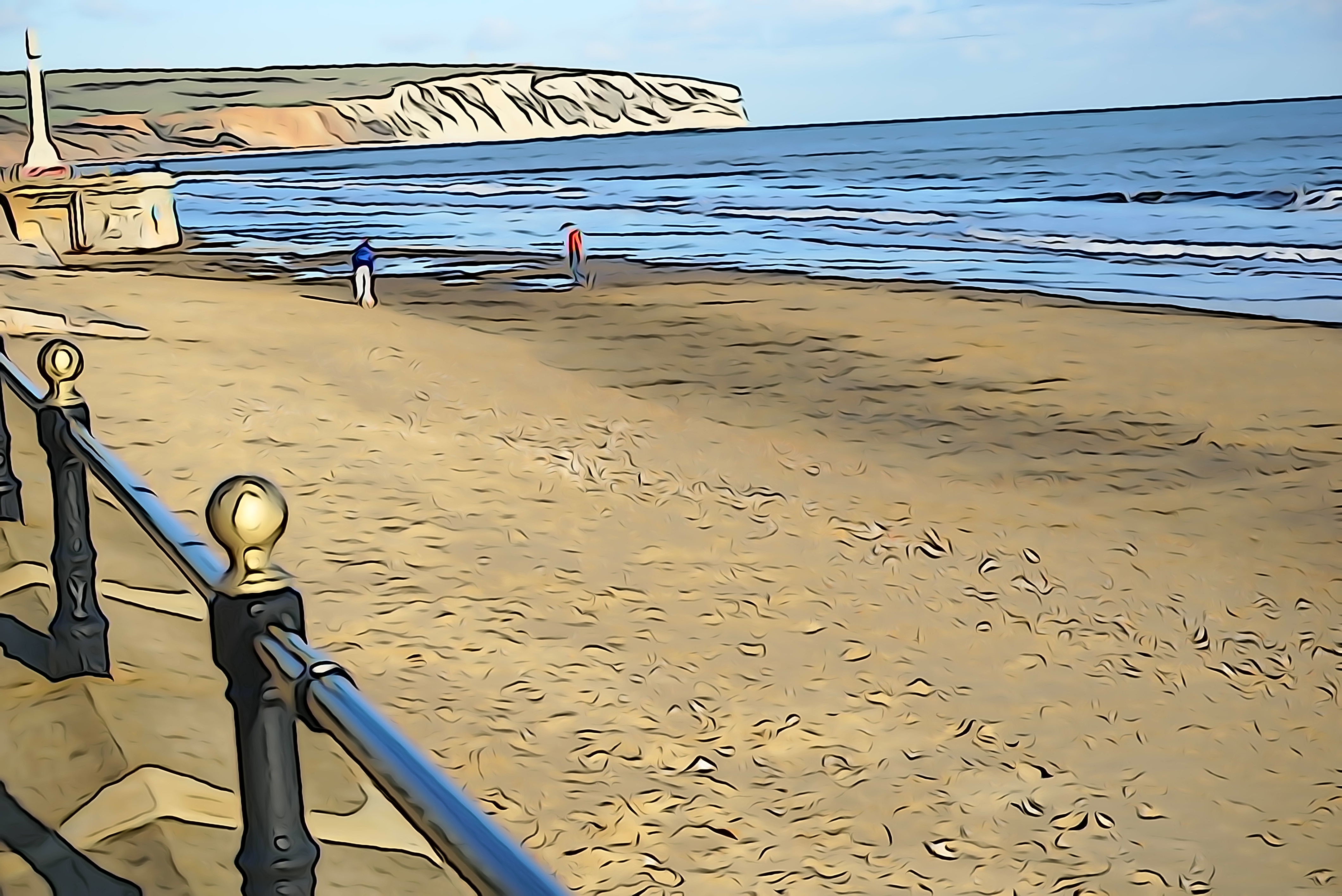
    My new camera, the Sony A6000, has a brilliant inbuilt programme that turns the image from a  basic photograph to one that can isolate one colour, say red or blue, leaving the remainder of the photograph in black & white; changes the image to one that looks like a water-colour with the tints bleeding into each other; and, my favourite, illustration which alters the photograph miraculously so that it looks like a graphic illustration.  It is tempting to embark on designing a comic strip, or to illustrate an article with an illustration instead of an image.

    Here I give you a few samples of Illustration, taken on a walk along my local beach the other day, a cold wintry day but with a blue sky lighting the day.  I hope they reproduce in the blog as they do on my screen, best viewed very large.

    DSC00753
    Beach and Cliffs with People, Sandown, Isle of Wight
    DSC00754
    Fishing Boat on Horizon at Sandown, Isle of Wight
    By the Pier a Young Man Kicks a Football and Children Play in the Sand, at Sandown, IoW on a wintry day.
    By the Pier a young lad kicks a football and two children play in the sand, at Sandown, IOW, on a wintry day.
    DSC00748 - Copy
    Blue skies, calm(ish) waters with the White Cliffs of Culver at Sandown, Isle of Wight.
  • Weekly Photo Challenge: Seasons

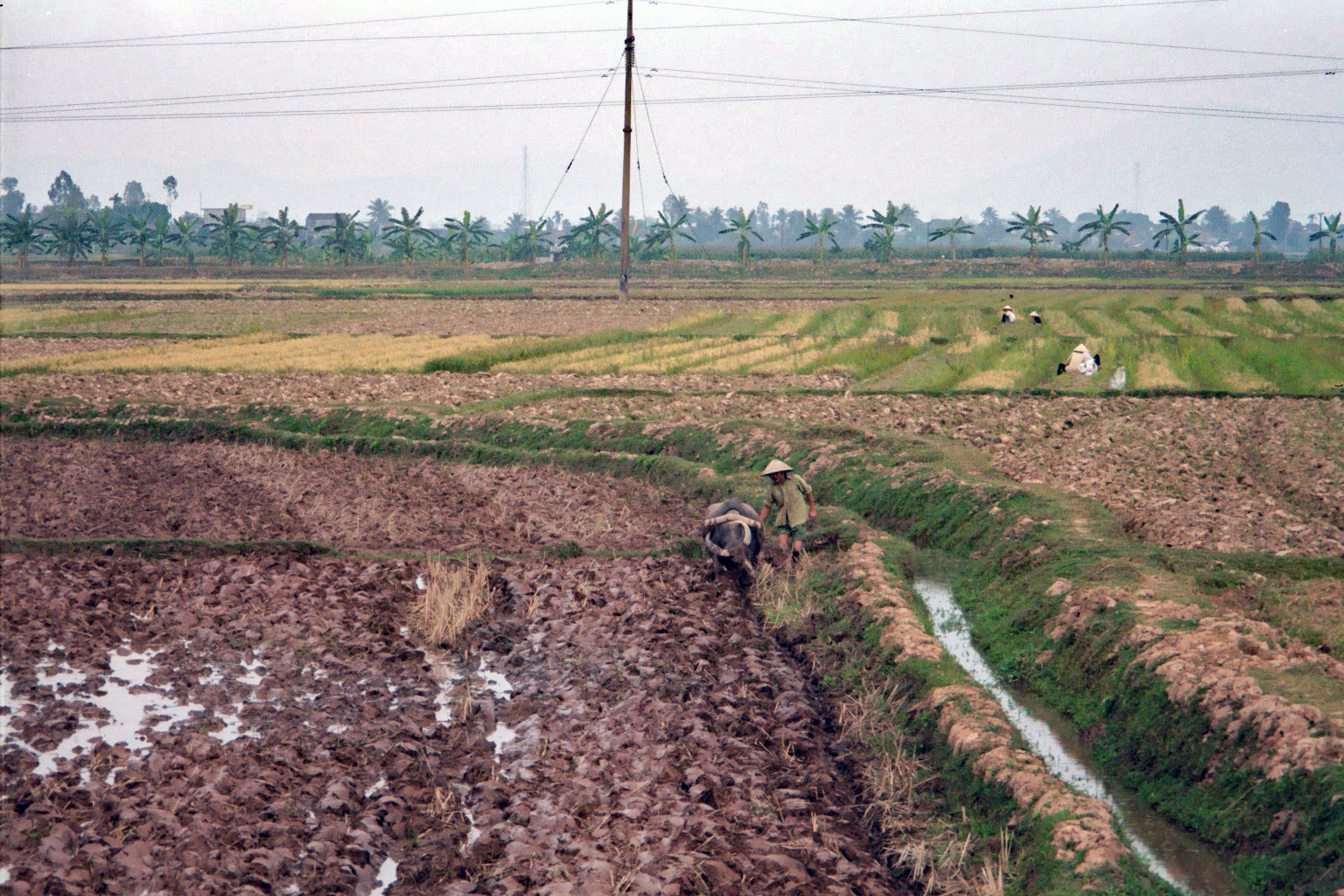
    There are two rice growing seasons in most of S.E. Asia but the romantic pictures we have of coolie-hatted rice farmers in the fields hides the back-breaking labour involved in this work.  Men and women share the work equally – well, mostly – and usually, work from dawn to dusk.  In areas where the ground is fertile and the water abundant, fish are also farmed in the waters, adding some additional protein to the rice diet, or being sold at market to buy other essentials.

    Preparing the ground for the delicate rice shoots
    Preparing the Ground for the Rice in Vietnam – Photo Mari Nicholson


    Ploughing the field for rice planting
    Ploughing the field reading for the rice planting, Vietnam – Mari Nicholson

    Planting the green shoots of rice

    Rice Growing in Vietnam – Mari Nicholson


  • Weekly Photo Challenge,Life Imitates Art

    Perhaps not the greatest interpretation of the challenge but I’ve lately been wanting to use one of the interesting tools in my imaging programme and thought this might be my opportunity.

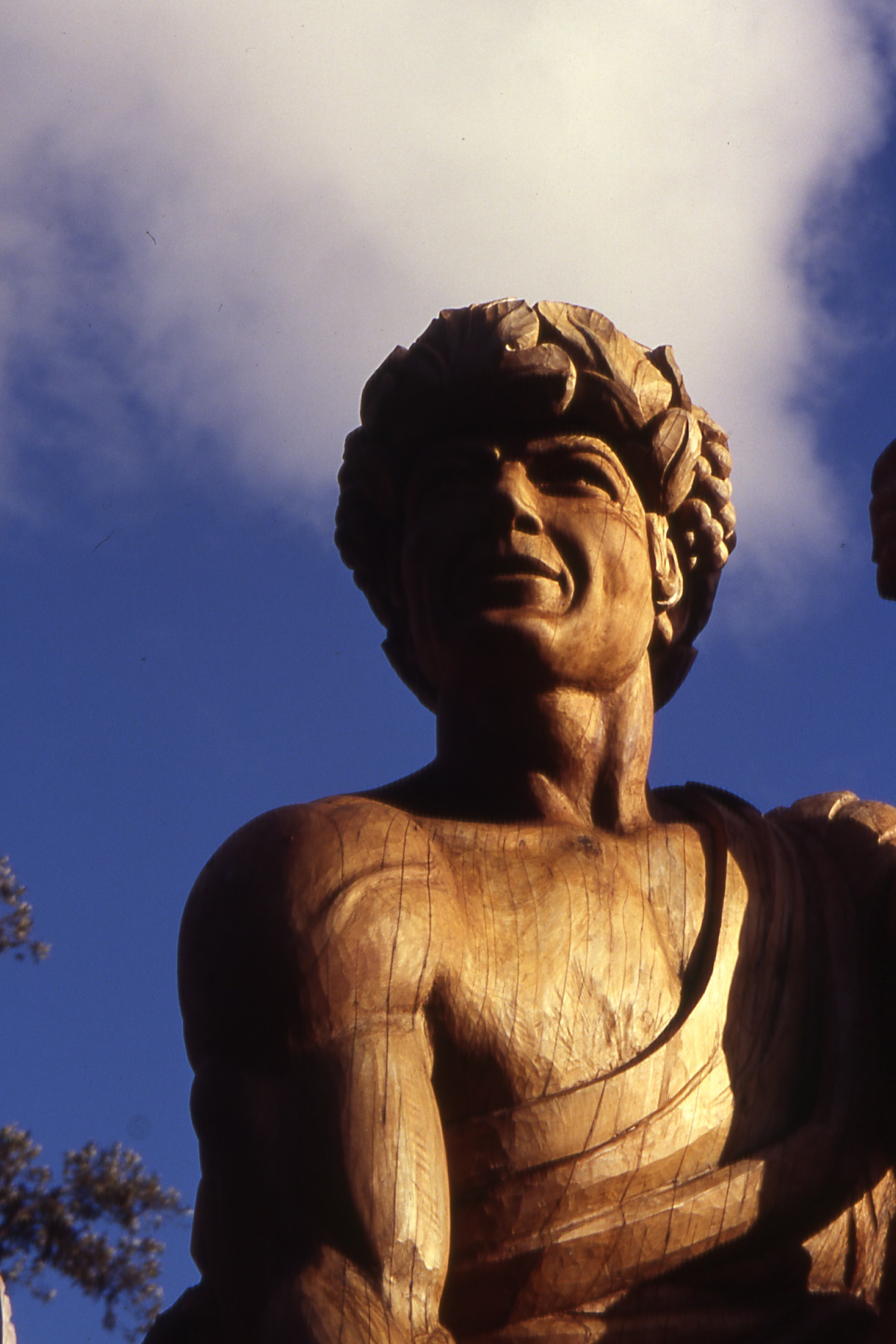
    This sculpture was done by marine woodcarver Norman Gaches, from a tree that was destroyed in the great storm of 1987, outside Barton Manor on the Isle of Wight, the then home of Impresario Robert Stigwood, who commissioned the work.   At that time Barton Manor was producing wine and he wanted something to represent the grape.  The result was a magnificent carving showing the family of Bacchus and these are just two of the photographs my husband took at the time.   We followed the progress of the work with the sculptor over the months it took to finish it, and then did our best to interpret the art with camera and prose. A resultant article appeared in Woodcarving magazine and was subsequently syndicated in two other magazines.

    Bacchus

    © Bacchus – Mari Nicholson

    Bacchus Litho

    Photo of Bacchus as Lithograph

    Zeus

    Zeus

    And Zeus as a pencil sketch.Zeus Pencil Sketch

  • Weekly Photo Challenge: Time


    This is the AFTER photograph.  I wasn’t there to take the BEFORE shot, but most of us will have seen the terrible pictures of the 1944 D-Day Landings in Normandy, France, even seen the film The Longest Day, in which the graphic images of the horrors of that day and the terrible happenings on the beaches code-named Utah, Omaha, Gold, Juno and Sword are now part of history.   It was a Time of heroism on a grand scale and a Time of mistakes on an equally grand scale.  It heralded the end of the beginning of the war that tore Europe apart, the one we call The Second World War, but it also heralded a Time of hope when it seemed that Peace might finally descend on Europe.

    To me, this Memorial to some of those who lost their lives on the beaches of Normandy signifies Time Past and Time Remembered.

     © Mari NicholsonD-Day Landings.  War Memorial on Normandy Beaches

  • Weekly Photo Challenge – TIME

    Quite literally, this is about time: a clock, no less.

    This is the Great Clock (Gros Horlogue) in Rouen, France, which dates from the 16th century and sits amoung the maze of narrow streets that make up the old part of town.  The half-timbered houses that line the streets seem to be always freshly painted and look smart.

    Rouen is, of course, Joan of Arc’s town, and the church dedicated to her is truly wonderful.  It is set near the market square which has stalls selling the most amazing cheeses – always a reason for visiting this area.

    Gros Horlogue (1527-15290 Rouen, France.

    Gros Horlogue (Great clock)  1527-1529.JPG

  • Weekly Photo Challenge – Vibrancy (2)

    Vibrant


    Well, Vibrancy again, and I think I’ve found the ultimate this time.

    Poppies©Steve Moore

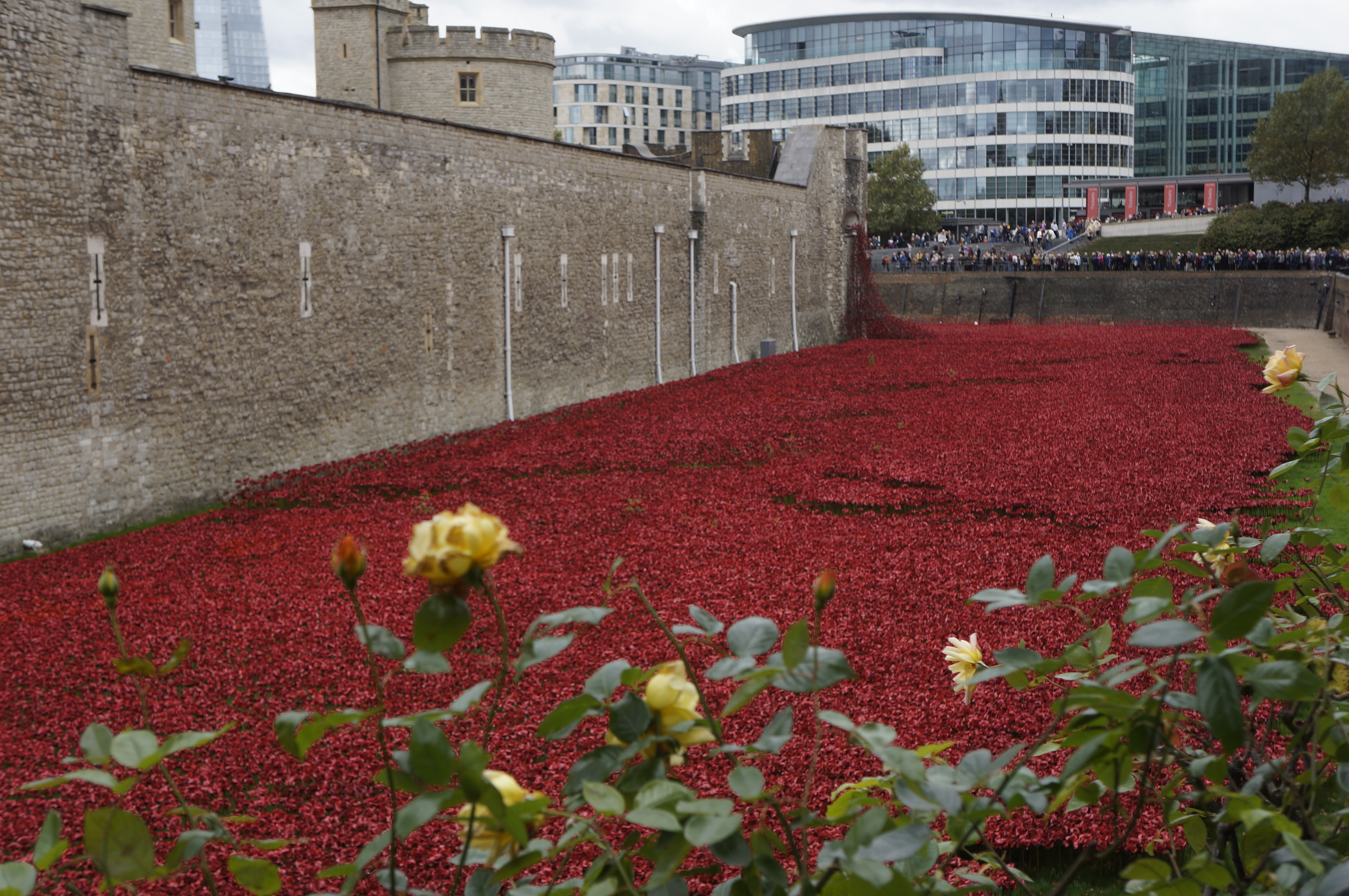
    Between July and November 2014, at the Tower of London, a magnificent display of 888,246 ceramic poppies filled the Tower’s famous moat to mark the centenary of the First World War.  The number of poppies represented one for each British and Colonial death during the conflict.

    Poppies and Moat, Tower of London, 2014©Steve Moore

    Created by artists Paul Cummins and Tom Piper, the installation, Blood Swept Lands and Seas of Red, attracted thousands, possibly millions, from all over the country and overseas, who queued for hours, often in the rain, to view the sea of scarlet progressively filling the Tower’s famous moat, between 17th July and 11th November 2014.  The poppies encircled the iconic landmark, creating a spectacular visual commemoration, and although thousands wound their way around the magnificent display, it was noticeable that most people were given to inward reflection rather than discussion.

    _DSC1945

    ©Steve Moore

    All the poppies that made up the installation were sold afterwards, raising millions of pounds, money which was shared equally amongst six service charities.

    Ceramic Poppies

    ©Steve Moore

    I was moved, as was everyone else who attended this magnificent tribute to the fallen, and the poppies that streamed from one of the windows or arrow slits in the wall of the Tower, recalled to mind the words of William Blake from Songs of Innocence and Experience:

    “And the hapless soldiers’ sigh, Runs like blood down palace walls.”

    Poppies from arrowslits

    ©Steve Moore

    These photographs were all taken by my friend, and London photographer, Steve Moore, who spent a couple of days there.  Steve gave me a CD of about 150 pictures – it was not easy choosing images to represent the Photo Challenge as my mind kept switching to the reason for the poppy display, but I hope you like them.  I wish I’d been there at night.  There is something about that night scene that  resonates deep within me.
    Tower with Shower of Poppies

    ©Steve Moore


    Night time at the Tower of London

    ©Steve Moore

    Night time at the Tower of London (2)

    ©Steve Moore

    Tower of London with stone Animals©Steve Moore

  • Photo Challenge – Vibrancy

    Vibrant

    road markings, Taiwan.jpg
    Road Markings in Taipei – © Mari Nicholson

    Trying to find just the right vibrancy is difficult if one decides to discard the “Fruit and Flower” file.  I nearly managed it but now one of the CDs on which there is an image or two I wanted to use has got stuck in the slot and I can’t remove it.  I’m losing patience so perhaps it’s best if I just pin a couple here and move off to the kitchen for a cup of coffee and come back later.

    So, something different from flowers I hope, road markings on a road in Taipei looking down from a window in, I think, a Museum.  The Yellow really stood out as did the soft green of the trees backed by a darker green (not much dark green showing on my image, unfortunately).

    Then it’s back to flowers again, I’m afraid, but the vibrancy of these exotic orange ones with their cushion of green leaves in a silver bowl struck me as I walked into a hotel in Khao Lak last year.  I’d like to take that flower arranger home with me.  Even thick-stemmed flowers always fall over when I try an arrangement like this.

    Vibrancy of tropical floweers.jpg
    Flower Arrangement in Khao Lak

    © Mari Nicholson


  • London’s Hidden Gems (1)

    London’s Hidden Gems (1)

    Postman’s Park in London contains a simple but evocative Memorial to unsung heroes of the 19th and early 20th century, in the form of a collection of glazed Doulton plaques on a wall protected from the elements by a loggia.  Each of these plaques commemorates someone who, in tragic circumstances, died a hero, trying to save the lives of others.

    What and where is Postman’s Park in the City of London?

    First the name:  the park acquired the Postman’s Park name because during it’s heyday in the 19th century and before it became the site of the Memorial, it was popular as a lunchtime retreat with workers from the General Post Office in nearby Clerkenwell, long since demolished.

    Situated between King Edward Street, Little Britain and Angel Street and just round the corner from St Paul’s Cathedral whose steps are normally crowded with tourists hugging backpacks and guitars and where the streets are full of bankers and financiers bursting with self-importance, it contains a gallery of tiled memorials to extraordinary people who were, nonetheless, just ordinary citizens.

    f129057084
    St. Paul’s Cathedral – Mari Nicholson

    The brainchild of the Victorian painter and philanthropist, G.F. Watts (1817-1904), a radical socialist who felt deeply about the dreadful conditions of the London poor, and who had twice refused a Baronetcy, it is now regarded as a Memorial to Watts who made no attempt to hide his dislike of the greed of the upper classes of the time.

    About the Tiled Memorials

    London Child Hero -
    Plaque to one of the child heroes on the Memorial of Heroic Self Sacrifice in Postman’s Park, London –   Photo Mari Nicholson

    A long, high wall covered with Royal Doulton ceramic plaques, decorated in burnt orange and blue, names, ages, occupations and means of death engraved on the tiles – this is a wall before which people have been known to stand with tears in their eyes.  Tragedy after tragedy told in a few simple phrases, bring to life drownings, raging fires, train disasters, and runaway horse accidents, in which these workers and children had saved someone’s life by giving their own.

    There is seating under the plaques and the garden area of the park is a restful place with bright flower beds and a gently trickling fountain, interesting shrubs and flowering plants. Of special interest are the large banana tree, musa basjoo, which flowers in late summer, and the dove tree, davidia involucrata.  In fact, Postman’s Park is a perfect place for a lunchtime picnic.

    In 1887, Watts wrote to The Times to suggest the creation of a park to commemorate ‘heroic men and women’ who had given their lives attempting to save others.  This, he said, would be a worthy way to mark Queen Victoria’s Golden Jubilee year.

    His letter to The Times did not stimulate any interest, however, but in 1898, St Botolph’s Church at Aldersgate purchased land that had previously been owned by the City Parochial Foundation, and they approached him regarding the Memorial.   So, on the site of the former churchyard of St. Bolophs, there was erected a 50ft long open gallery along the wall of which he planned to place glazed Doulton tablets commemorating acts of bravery, each one detailing a heroic act.

    One of Britain’s leading tile designers at that time, William de Morgan, agreed to work with Watts.  Their collaboration, first unveiled in 1900, is what you see on the early plaques when you visit Postman’s Park. 

    About the Tiles and Plaques

    London Hero = 60 yer old William Goodrum
    Plaque to William Goodrum, a 60-year-old Hero, honoured on the Memorial wall in Postman’s Park – Photo Mari Nicholson

    The plaques could easily be overlooked in the somewhat hidden corner of the park, but these beautiful hand-lettered tiles hand-painted at the Royal Doulton factory, when once you see them, live with you forever.  Each one tells the story of a boy or girl, man or woman, who died trying to save another at the expense of his own.   Told in a few poignant words, they nevertheless manage to paint a picture of a life unfulfilled that ended in tragedy.  Take, for instance,

    • the young Alice “daughter of a bricklayer’s labourer who by intrepid conduct saved 3 children from a burning house in Union Street Borough at the cost of her own young life”.   Or
    • William “drowned in the Lea trying to save a lad from a dangerous entanglement of weed”.

    The stories seem almost Dickensian until the very real tragedies these plaques represent hit home and one realises that this was real life, not fiction.  Life was harsh for those who didn’t own land or property of some sort in those days: violence and disease were everyday events.  Prostitution and child abuse were rife in late-Victorian London, and these children who died, many of them orphans or ‘indentured workers’, each and every one of them would have been working at some poorly paid job.

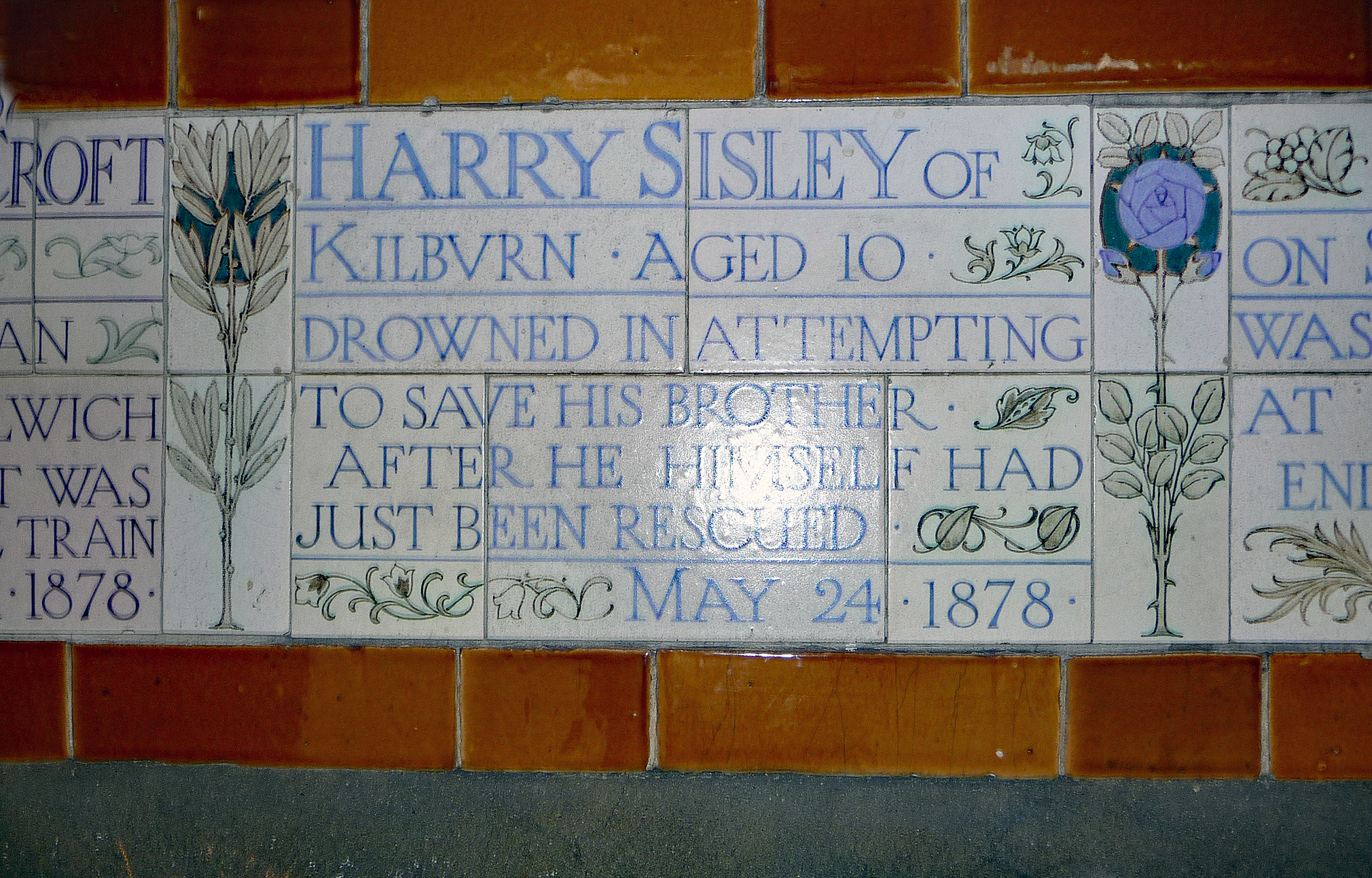
    Reading the tiles one is struck by the occupations that don’t exist any more and the causes of death that remind one of nothing so much as a Victorian engraving – a runaway carriage of four with a child trampled beneath the horses, a boy in the Thames (probably a mudlark) attempting to swim to land with his friend in his arms.

    Harry Sisley - London Child Hero
    London’s Child Heroes, 10-year-old Harry Sisley, honoured here in a Doulton plaque on the Memorial in Postman’s Park, London – Photo Mari Nicholson

    G.F. Watts and his Reasons for Erecting the Memorial

    GF Watts wanted to use his art as a force for social change and his intention was to build a memorial that honoured ordinary people, people who would not have had a burial tomb at Highgate, Brompton or even St. Pancras & Islington Cemetery.

    Watts had for many years collected newspaper reports of heroic actions and the plaques were based on these cuttings.

    London Worker Hero
    Royal Doulton Plaque for one of London’s Worker Heroes, showing the placement of the plaques side by side and on the row above.  ©  Mari Nicholson

    It was planned to have one hundred and twenty tiles in place for the opening, but sadly, it was only possible to erect four.  By this time Watts was too ill to attend the unveiling and only nine more were added during his lifetime.  His wife Mary, took over the work and added what she could before her death.  Then, 78 years later, in 2009, the Diocese of London added a new tablet to commemorate one Leigh Pitt who rescued a nine-year-old boy from drowning in a canal.  The plaque reads:

    • Leigh Pitt, Reprographic operator, aged 30, saved a drowning boy from the canal at Thamesmead, but sadly was unable to save himself.  June 7, 2007.

    Today you can see rows of blank spaces, although no doubt there were unsung heroes in the intervening years who were never commemorated.

    This wall of tiled plaques to these forgotten Londoners is one of the city’s most moving Memorials and in 1972, along with other key elements in the park, it was Listed as a Grade ll site.

    Postman’s Park in Recent Film

    The BAFTA and Golden Globe-winning film Closer which stars Natalie Portman, Julia Roberts, Jude Law and Clive Owen (based on the play of the same name by Patrick Marber) references Postman’s Park in that the character Alice Ayres (Natalie Portman) fabricates her identity based on Ayers’ tablet on the Memorial which the film character had read.

    How to get there:

    Tube –  Central St Paul’s

    Buses:  4, 8, 25, 56, 141, 100, 172, 521, 242


  • The Violin Makers of Cremona

    The Violin Makers of Cremona

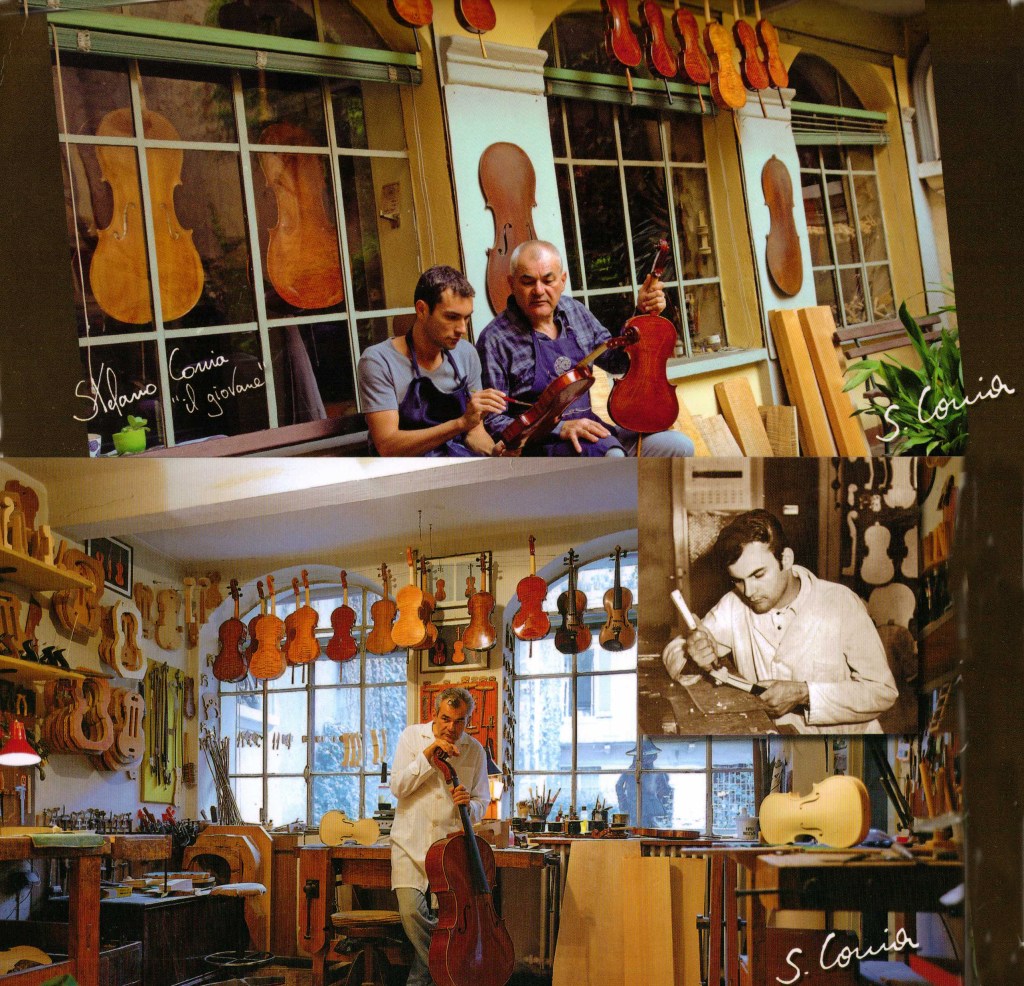
    I went to Cremona last winter and two things from that trip I remember clearly: one was how cold it was, so cold that I had to buy a woollen hat from a street trader who charged me an outrageous €20 for a very inferior product:  the second, but most important, was my meeting with violin maker, Stefano Conia, a master luthier, an intense young man who makes violins with passion, violins that are bought and played by some of the world’s finest musicians.

    Cremona has been important in Italy’s cultural life since Roman times, located as it is on the banks of the Po River, a major junction for trade and commerce.  The narrow streets of the city are rich in history, the red brick medieval towers and the Renaissance buildings shading the many statues of its famous sons, Antonio Stradivari and Claudio Monteverdi.

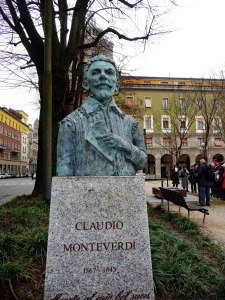
    Statue of Claudio Monteverdi, in Cremona
    Statue of Claudio Monteverdi, in Cremona
    Statue of Antonio Stradivari, in Cremona
    Statue of Antonio Stradivari, in Cremona

    Today the town has 147 luthiers who still make violins using the template of the great masters whose common bond was a tradition of classical techniques handed down from the middle of the 16th century.  It is this tradition that is still being practised by Stefano Conia and others like him.

    In his workroom/studio, Stefano explained the finer points of violin making to me as I took in all aspects of the space around me, the overpowering aromas of resin, varnish, wax, woods and other smells to which I couldn’t put a name.  His studio, evocative with smells from the pots of glue, wax and resin, is hung with violin parts awaiting varnishing or waxing, and the workbench is littered with tools of every description.  Juniper Gum tickled the nostrils and had a mind-clearing effect when I inhaled it.  Wood shavings littered the floor and had their own peculiar smell, violins hung from the ceilings and part-completed fronts, backs, and frets of as yet uncompleted instruments, sat awaiting his attention.

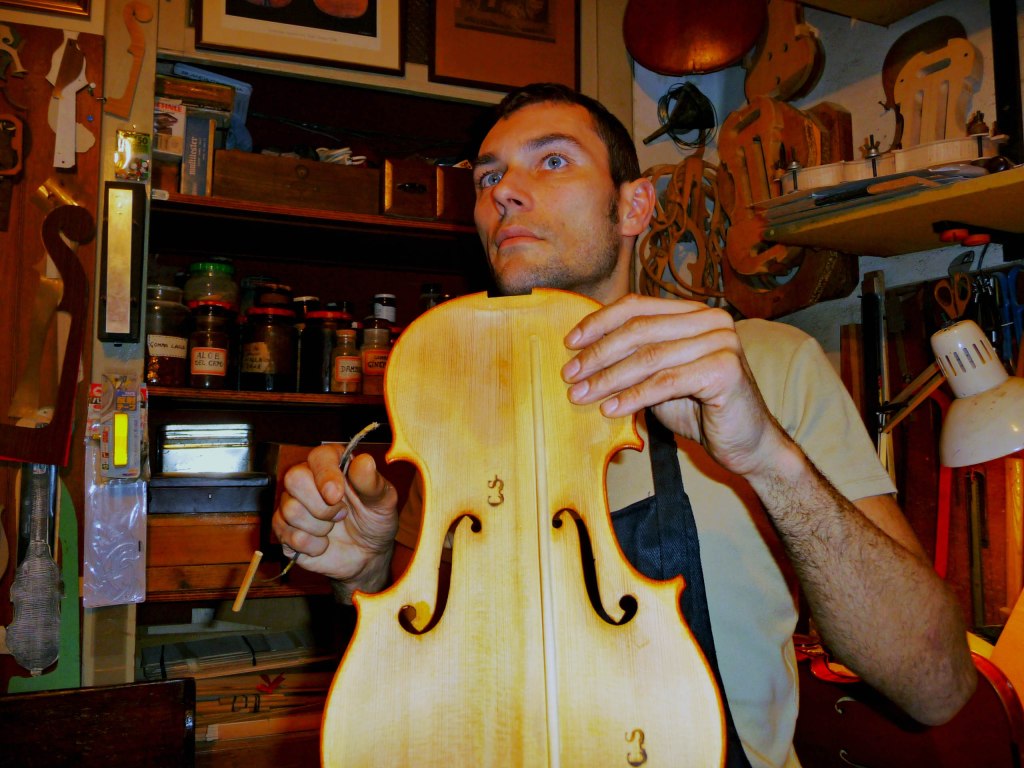
    Stefano demonstrates his method of violin making
    Stefano demonstrates his method of violin making

    Earlier I’d had an insight into the history of the violin and its unique acoustic characteristics at the Violin Museum, one dedicated to Cremona’s sovereign musical instrument.  In this impressive building, there is a stunning collection of stringed instruments (violins, cellos and a viola) made by the most renowned violin makers.  I was also privileged to hear a skilled young musician play Meditation by Massenet and a Paganini violin concerto, on an original Stradivari for a small audience in the auditorium of the museum.  I do not exaggerate when I say that the playing brought tears to my eyes and I know, beyond doubt, that my emotion stemmed from the lush, rich sounds that came from the Stradivari violin as the music penetrated the skin and found the pleasure centres of the brain.

    The Museum boasts a collection of the most ancient instruments – including one dating back to 1556, made by Andrea Amati for Carlo IX of France, and the original “Cremonese” made by Stradivari in 1715.  Museum pieces they may be but they must be played every day to preserve their purity.  One elderly musician described a Stradivari to me as being like an old wine that gets better with age.

    At his workshop, Stefano told me that creating an instrument with such depth of character relies on centuries of tradition being handed down from father to son.  In his own family, his uncle is also a violin maker and he has hopes that at least one of his two sons will follow in his footsteps although they are too young yet to even consider it.

    Stefano in his workshop
    Stefano in his workshop

    Stefano is obsessed with wood because apart from the craftsmanship, it is the wood from which the instrument is made that gives the violin its unique sound. Over the course of our conversation, I learned that the wood for the front of the violin comes from the spruce trees found in the Dolomites, the Northern Italian Alps.  Stefano often goes himself to choose the tree to be cut as sometimes he feels the need to be totally hands-on, but usually, he is happy to leave it to the experts who know exactly what he is looking for. The wood for the back of the violin is Maple and has to be imported from the mountains of Bosnia-Herzegovina in the Balkans. The search for the perfect wood is an ongoing pursuit and although he owns valuable stocks of old wood, there will always be a need for more.

    Awaiting assembly in Stefanos' studio.
    Awaiting assembly in Stefanos’ studio.
    Violin parts awaiting assembly in the workshop of Stefano Conia
    Violin parts awaiting assembly in the workshop of Stefano Conia

    A violin will take approximately two months to make from start to finish but with time in between for resting and drying the varnish, he reckons to make possibly 12 violins per year each of which will sell for approximately 12,000 Euros.

    Stefano plays the violin himself as do all luthiers.  “How do you feel when you part with one of your violins, given that you have devoted so much time to making it the best you can,” I asked.   He smiled.  “Each violin is like my baby, but I have to let it go.”

    As yet unvarnished, violin making in Cremona
    As yet unvarnished, violin making in Cremona

    There is some concern in the town that the East Asians are now making violins and may make inroads on the trade.  In China, violins and cellos are mass-produced for a fraction of the cost of those made in Cremona and nowadays, many of the craftsmen in the town are Asian.  In the town’s international Violin Making School, it is estimated that 80% of the students are foreigners, Koreans, Japanese and Taiwanese predominating.  Most will return home but some will stay to continue the learning process and to open their own workshops.

    The name Cremona is synonymous with the work of the great violin makers and it is said that there are few investments like a Cremonese violin and that a buyer can expect a 20%-30% return on the money invested.  That is why the luthiers of Cremona will survive despite the competition from the East.  As a Rolls Royce is to a car enthusiast, so a Cremona violin is to an instrumentalist.

    Stefano’s sons, it is hoped, will follow him into the workshop in which their grandfather worked, producing exquisite violins for the world’s great musicians, the floor will still be covered in shavings and the ripe smells of gums and resins will still waft out through the doorway of the studio in Corso Garibaldi in Cremona.

    POSTSCRIPT:

    Nearly 80 years ago on June 13th, 1937, at the Ponchielli theatre in Cremona, a concert took place which is still spoken of with awe. The music of Corelli, Bach, Vivaldi and Boccherini was played using twenty-four Stradivarius, nine Guarneri and one Amati. I cannot imagine the effect on listeners but musicians to whom I’ve told the story have almost wept that they were not there.

    The founder of the Ponchielli Theatre in Cremona
    The founder of the Ponchielli Theatre in Cremona
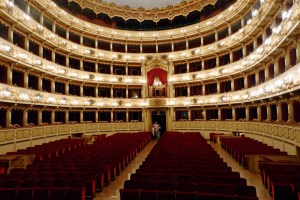
    Ponchielli Theatre, Cremona
    Ponchielli Theatre, Cremona

    Following that, Cremona launched a violin-making school in September 1938 but with the coming of the Second World War it was closed.  Not until the 1950s did it pick up momentum and begin to inspire the passion for making violins in the tradition of the original luthiers.  The handful of violin-makers with which they started has grown and now there are some 150 workshops where instruments are made and restored and where students practice their craft.  Most work is commissioned and the waiting list can be as long as one year.

    Oh, and you want to buy a Stradivari?  You’ll have to find something in the region of €200,000, I was told.

    To hear a Stradivarius being played, try the Palazzo Comunale at midday, or ask at the Violin Museum.

    Information on Cremona and Milan: http://www.turismo.milano.it/wps/portal/tur/en

    Information on Cremona:  http://www.officeoftourism.org/europe/italy/Lombardy/cremona.asp

    Daily life in Cremona is like any other Italian town or city
    Daily life in Cremona is like any other Italian town or city


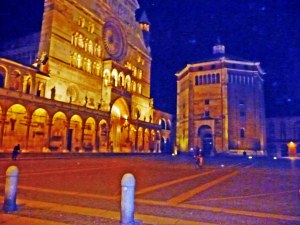
    Night time in Cremona
    Night time in Cremona
    Just a short distance away  is Milan with its famous Cathedral
    Just a short distance away is Milan with its famous Cathedral