I can’t resist posting this which I’ve just received. As someone who uses social media but seldom, I find it so true.

I can’t resist posting this which I’ve just received. As someone who uses social media but seldom, I find it so true.
It is always sad to see deserted villages and town and even though they are being given status by UNESCO, they still harbour a feeling of meloncholy.
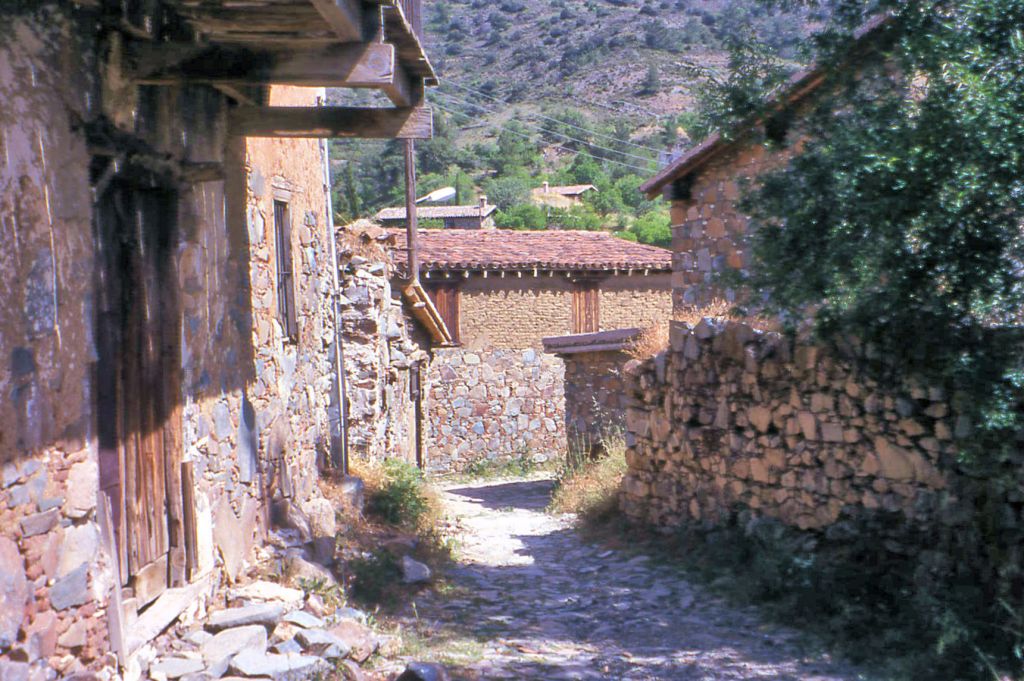
There is no escaping the fact that young people will no longer work at back-breaking, low-paying jobs on farms, and abandoned villages like these are a familiar site all over the Mediterranean. Even when some houses are restored by a local who works abroad, they are then used only as holiday homes. The greatest cause for concern then becomes the elderly left to fend for themselves when all the young people have fled to coastal towns for work.
It’s not that I don’t like the blocks themselves, it’s that the script offering them runs across what I’m trying to write, causing frustration and annoyance. For a while back I was coping but now WP seems to have put a gremlin in the works. Instead of the block for Image showing up, I get a list of blocks I don’t need or use (for business, mostly) so I have to find ways to get the image block up which means time spent searching. If I only use paragraph and image can’t the Blocks intuitively sense this? Why offer me blocks I’ve never used?
Today I was uploading a Sculpture Saturday post and the tools down the right-hand side disappeared, leaving me with a page which held my text and image but nothing else. I couldn’t find categories, tags, slugs, anything like that so I had to add these via the list of Posts. Then I wanted to defer this posting until Saturday, but that button wasn’t there either. I thought if I hit Publish it might give me the chance to put a date in but no, I hit publish and guess what, it’s published it!
And now, for something completely different (thank you Monty Python).
(this was still in my Drafts folder so I’m re-posting it as I’m unsure what is happening. Another mix-up with Blocks?)
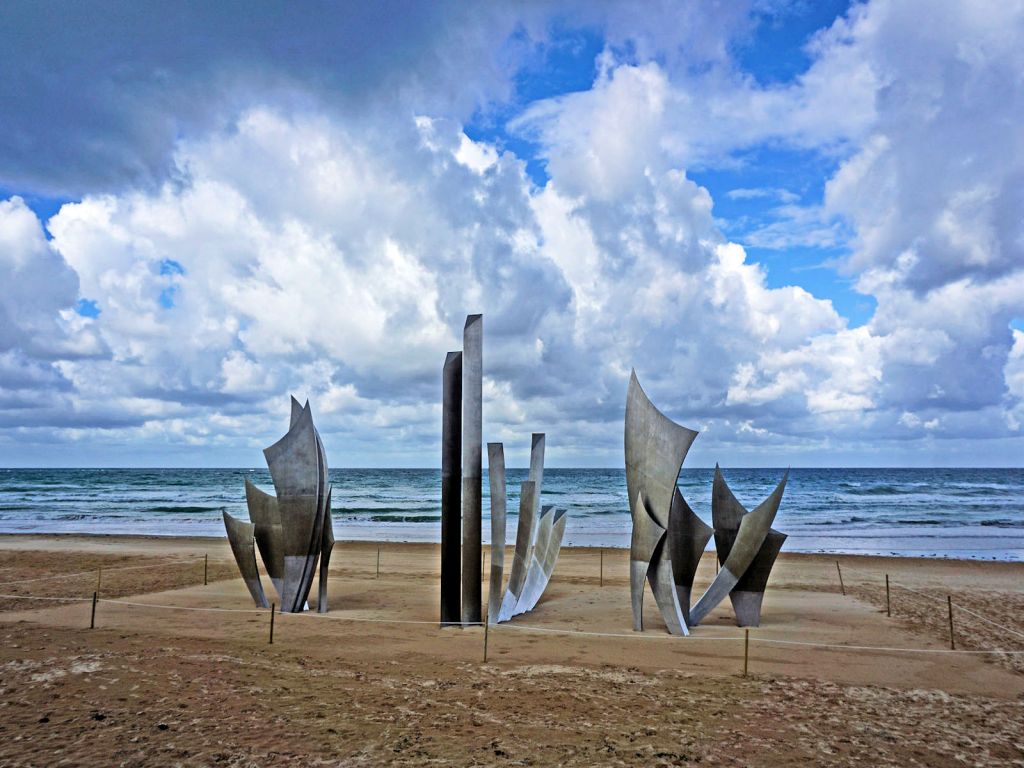
Commissioned by the French government on the 60th Anniversary of WWll and erected in 2004 as a monument to the Americans who helped liberate France, this moving sculpture stands at the centre of Omaha Beach.
The beach today is an place of calm and tranquillity but 76 years ago it was an inferno of noise, smoke and slaughter. Here, along a five-mile stretch of shoreline, the men of the American 1st and 29th Divisions, caught off-guard as they had not expected to meet such opposition, battled their way through fierce German defences.
Thousands of Allied troops were killed in the D-Day battle of Omaha Beach on June 6, 1944, but it was perhaps the single greatest turning point of World War II.t.
Sculpture Saturday is hosted by Mind Over Memory
As my sculpture of Dionysus uploaded a couple of few weeks ago only showed part of the work I thought I’d add a few more pictures to show the whole carving. It shows some members if the family of Bacchus.
Father: Zeus (supposedly the face of Robert Stigwood who commissioned the piece).

Wife Aphrodite

Some of the symbols of Dionysus are also found in the sculpture.


The Grapes and Goblet: The symbol of the Grapes and Goblet relate to his role as the god of wine. He taught mortals how to plant and tend the grapevine, press the juice and make it into wine.
The ram signifies more the decadent side of Dionysus and is more often associated with the Roman version of the myth in which Dionysus is called Bacchus.
Ivy: Ivy or holly vines were a symbol of immortality and decadent indulgence, Dionysus was often depicted wearing this type of wreath which was associated with merry making and celebrations

Link to Mind Over Memory to add Post.

A sunny, hot, Sunday afternoon and the beach should be full of families with children playing on the sands, buckets and spades, and the sounds of bat hitting ball. Beach cafes closed, ice-cream parlours boarded up, and the pier locked up. How are the families coping who have no access to outdoor facilities, no gardens, no nearby parks? We who have must be grateful – we are the lucky ones.
Link to Words Visual and Lucid Gypsy
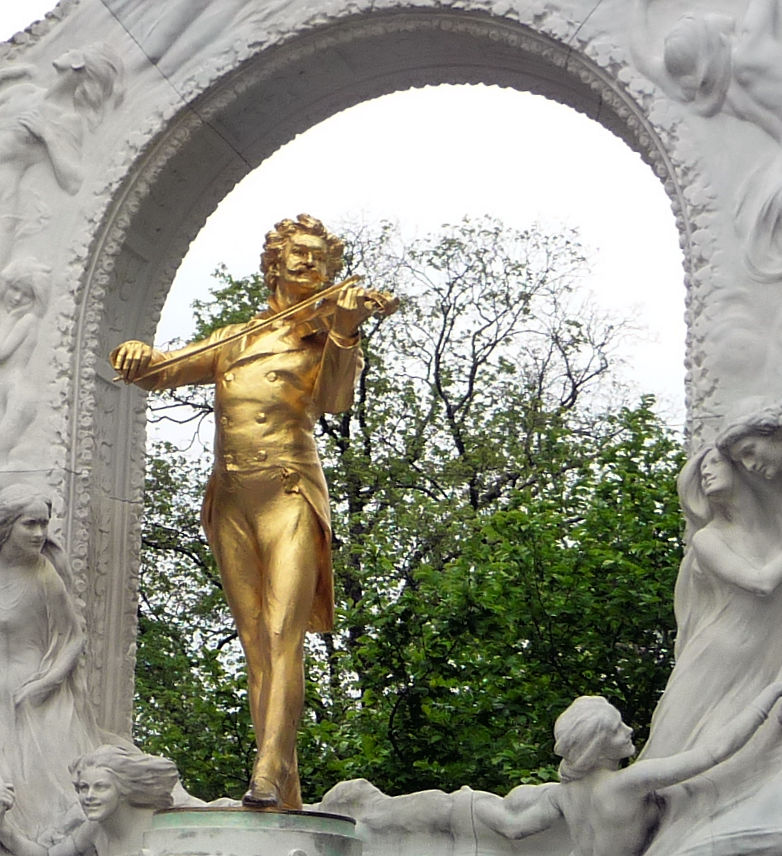
Prior to taking a tour through the Vienna Woods I took a walk in the Stadt Park which is full of statues to musicians. Pride of place, of course, goes to the favourite son, Johann Strauss.
Link to Mind Over Memory who hosts this challenge.

Link with Lucid Gypsy and Words Visual – Silent Sunday
This weekly challenge is hosted by Mind Over Memory
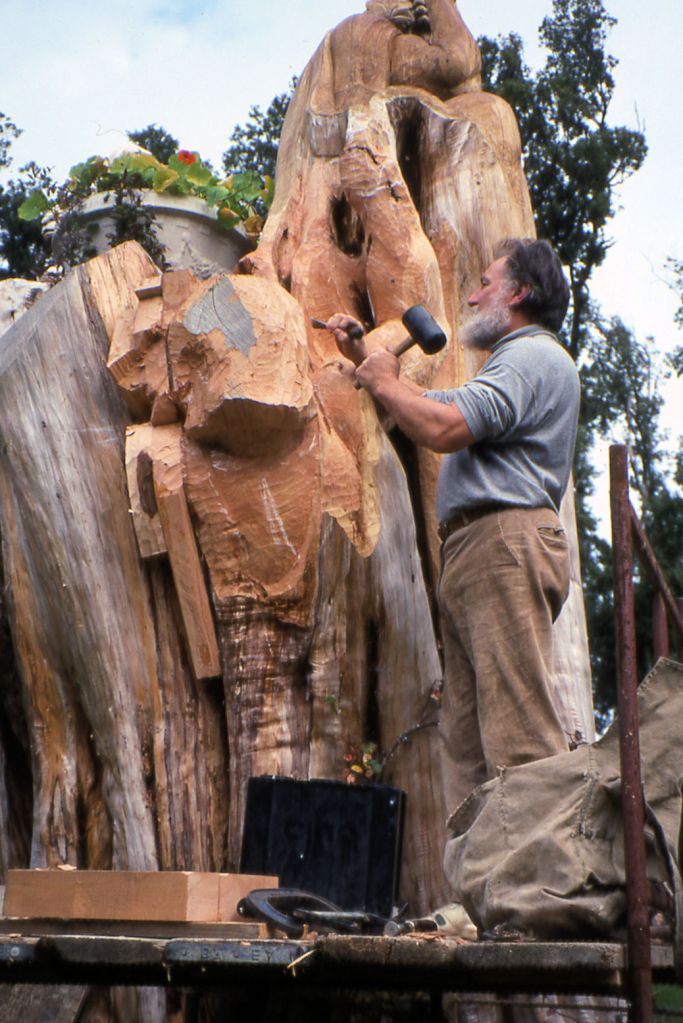
When the great storm of 1987 raged across the country, one of the old trees in the grounds of Barton Manor on the Isle of Wight, blew down. The then owner, film producer and impresario, Robert Stigwood, best known for theatrical productions like Hair and Jesus Christ Superstar, and film productions like Grease and Saturday Night Fever, asked the local marine carver and expert in wood, Norman Gaches to make something from the remains of the tree. As Barton Manor was then producing wine, it was decided to go with the theme of Dionysus the Greek God of wine (or Bacchus if you are looking at the Roman version) and his family, and here is part of the result, a golden Dionysus (Bacchus) rising from the tree.
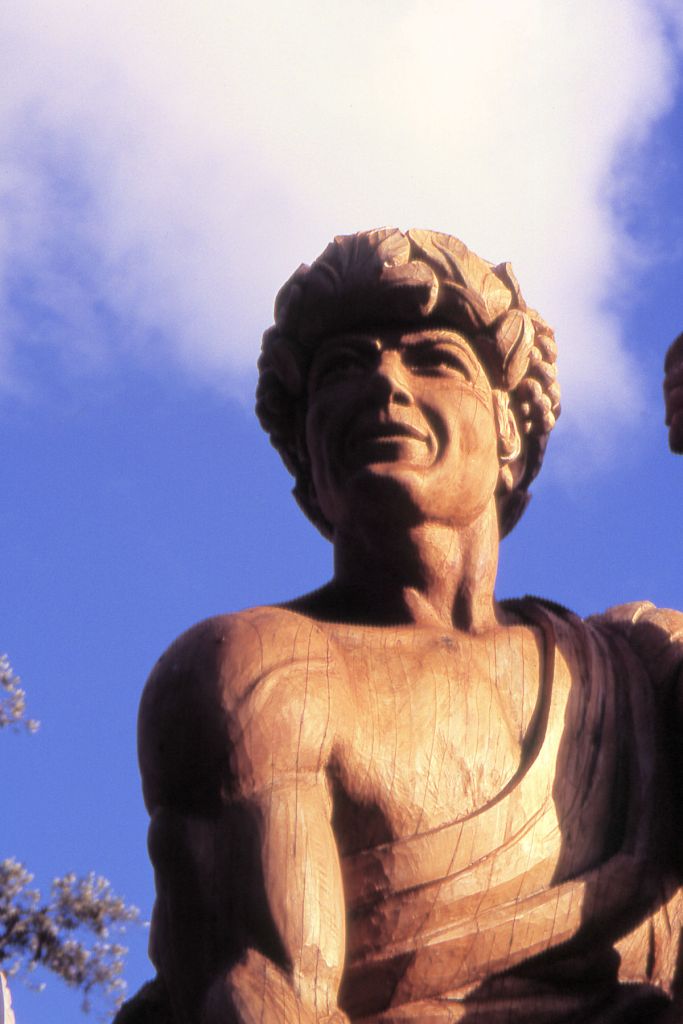
And here is a picture of the talented Norman Gaches working on the tree at the time.
Bacchus was the Roman name for the Greek god Dionysus, the god of agriculture and wine and the son of Jupiter (Zeus in Greek mythology). He wandered the earth, showing people how to grow vines and process the grapes for wine, until he took his place as a God on Olympus. Somewhere along the way the name – and the God – Bacchus became associated with intoxication and around 200 BC a wild and mystic festival, The Bacchanalia, notorious for its sexual character, was introduced in Rome. Stick to the Greek version, the story of Dionysus, and you have a less decadent young god, more interested in the production of wine than in wild women and song.
Link to Mind Over Memory to add Post.
 MARI'S TRAVELS WITH HER CAMERA