Category: Europe – Mediterranean

Spain, Italy, P:ortugal & France

  • Rome: The Spanish Steps and The Trevi Fountain

    The Spanish Steps

    I’ve often wondered why people flock to the Spanish Steps, a stairway composed of 135 of the widest steps in Europe, but they are an institution in Rome so never one to miss out on an institution, I took myself off there.   I know the popularity of the steps has a lot to do with the William Wyler film A Roman Holiday which starred Audrey Hepburn and Gregory Peck, just as The Trevi Fountain owes much of its popularity to Fellini’s La Dolce Vita and its stars Anita Eksburg and Marcello Mastroioni, but nevertheless, I struggle to see the attraction here when the nearby gardens of the Villa Borghese are almost empty.

    Built in the 18th century, this ultra-wide staircase was called the Spanish Steps because although designed by an Italian architect and financed by a French diplomat, it took the name from the Piazza di Spagna at their foot, in turn named after the nearby Spanish Embassy.  The steps were built to connect the Embassy with the Trinita dei Monti church which stands in the Piazza at the top of the steps.

    The English poet John Keats once lived in the building at the bottom of the steps in what is now the Keats & Shelley Museum to the left of which is Babington’s, the famous tea-house serving homesick Brits since 1893.

    The steps may seem the perfect place to tuck into a takeaway, a sandwich or an ice-cream but this is something you must not do. Roman regulations forbids consuming anything on these steps, part of an effort to keep them looking pristine. After the latest restoration this rule is being vigorously enforced.

    Rome city buses are too big to negotiate the narrow streets around the Spanish Steps so if you are not going to walk to it, take Linea A (red line) on the Metro and exit at Spagna. The station is right next to the Spanish Steps.

    The Trevi Fountain

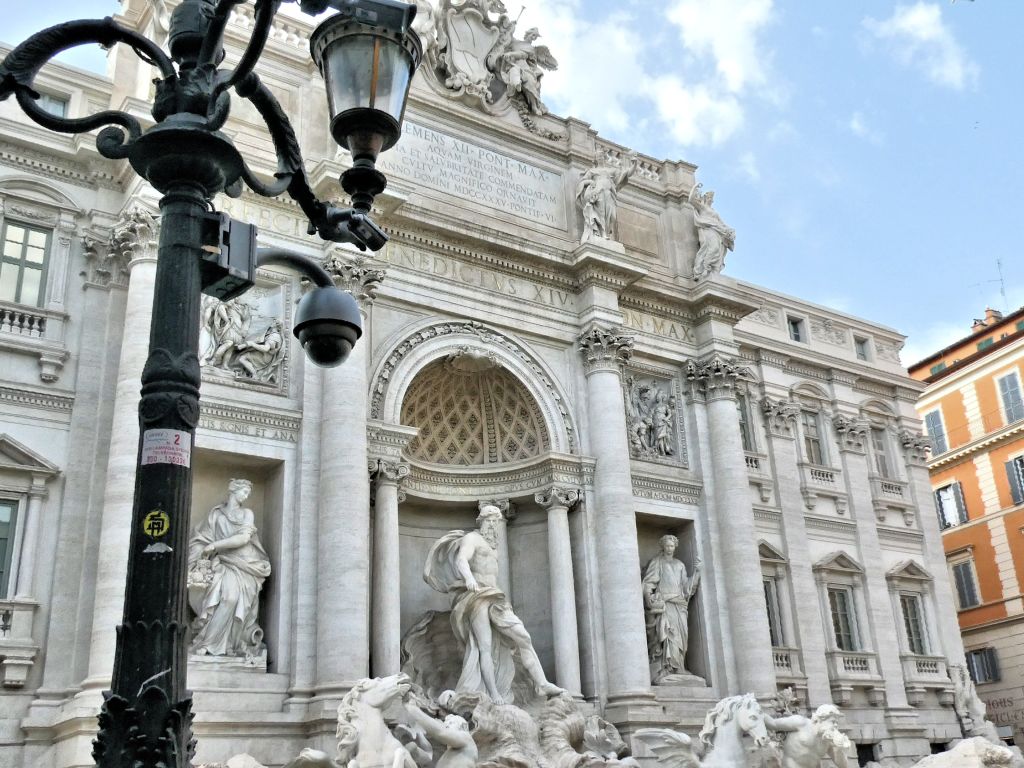
    The Trevi Fountain in June, so crowded impossible to get near

    The Trevi Fountain is the largest Baroque fountain in Rome and one of the most famous fountains in the world having been featured in several notable films, including the above-mentioned Roman Holiday, Federico Fellini’s La Dolce Vita, the eponymous Three Coins in the Fountain, and Sabrina Goes to Rome.  It is a non-stop photo opportunity from early morning until well after midnight, with a never-ending mass of people milling about, most of them with huge selfie-sticks and a disinclination to make room for others.  If you need peace and quiet plan to visit very early in the morning.
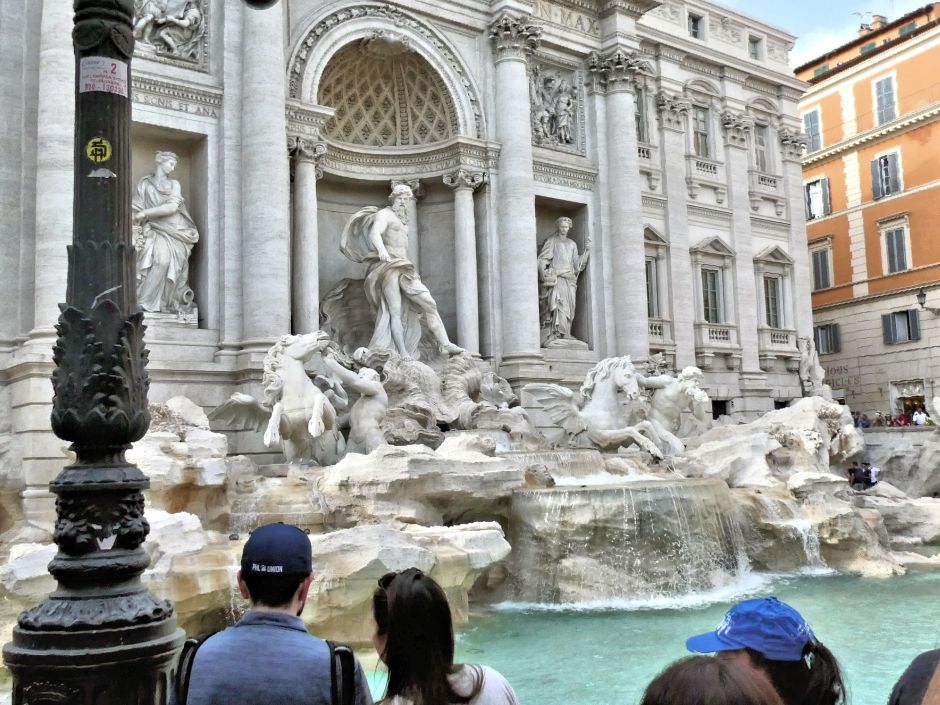
    The fountain is said to date back to ancient Roman days, to the 19th century BC in fact, when the Aqua Virgo Aqueduct that provided water to the Roman baths and the fountains of central Rome was constructed, at the junction of three roads (tre vie) which give the Trevi Fountain its name.

    It is is almost 50 metres across and heavily adorned with sculptures of Roman gods, tritons and horses, and is packed with visitors from morning till night. 
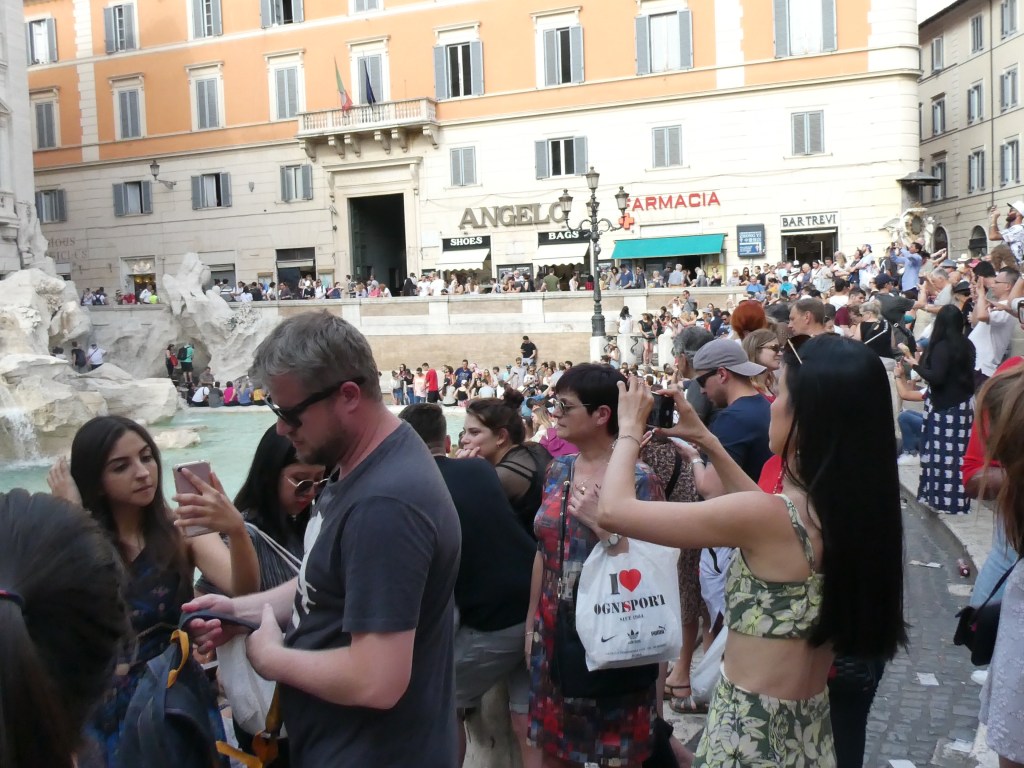
    The Trevi Fountain is alwlays crowded with people, difficult to get near.

    The Trevi Fountain

    Approximately €3,000 is thrown into the fountain every day as people follow the tradition of throwing in coins. Legend has it that a coin thrown into the fountain will ensure a return to Rome, a legend that dates back to the ancient Romans who threw coins in water to ensure the water gods would bring them safely home. 

    The coins are collected every night and given to the Italian charity Caritas which has a supermarket program giving rechargeable cards to Rome’s needy to help them get groceries.

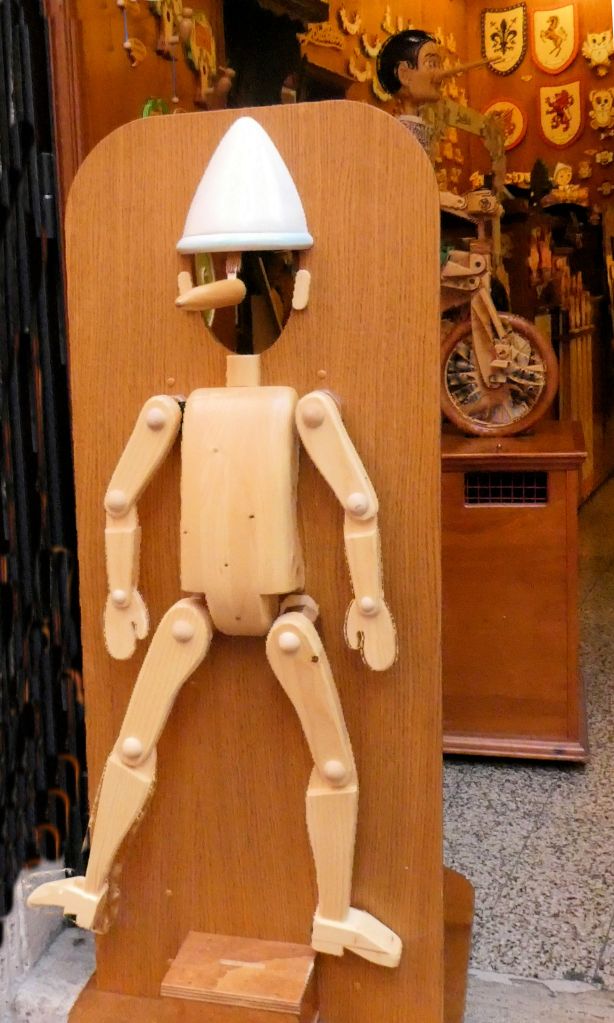
    The streets around the area are lined with trattorias, gelaterias and restaurants, most serving food and drink at reasonable  prices, despite its touristic position. Many shops sell wooden toys of the sort we don’t see nowadays, including Pinocchios from miniature to life-size.   Nearby Via di San Vincenzo and Via della Dataria will lead you to the Quirinal Palace, as well as the Piazza del Quirinale with its obelisk and fountain of Castor and Pollux.

    Most of Rome’s famous sights are within walking distance of the centre but there is a hop-on hop-off bus that leaves from the left-hand side of Vittorio Emmanuel ll every 20 mintues or so and this is an excellent way of getting to know where things are. Vittorio Emmanuel ll and The Colosseum are quite near each other, so can be visited at the same time and the Spanish Steps and the Trevi Fountain can be reached in about an hour from there, taking it at a leisurely pace.
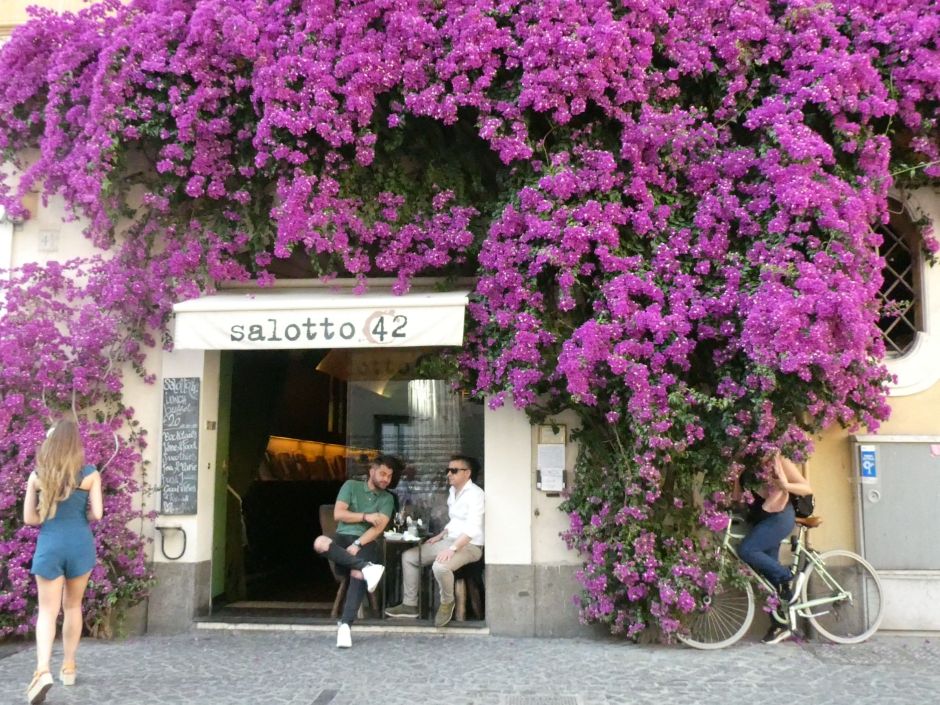
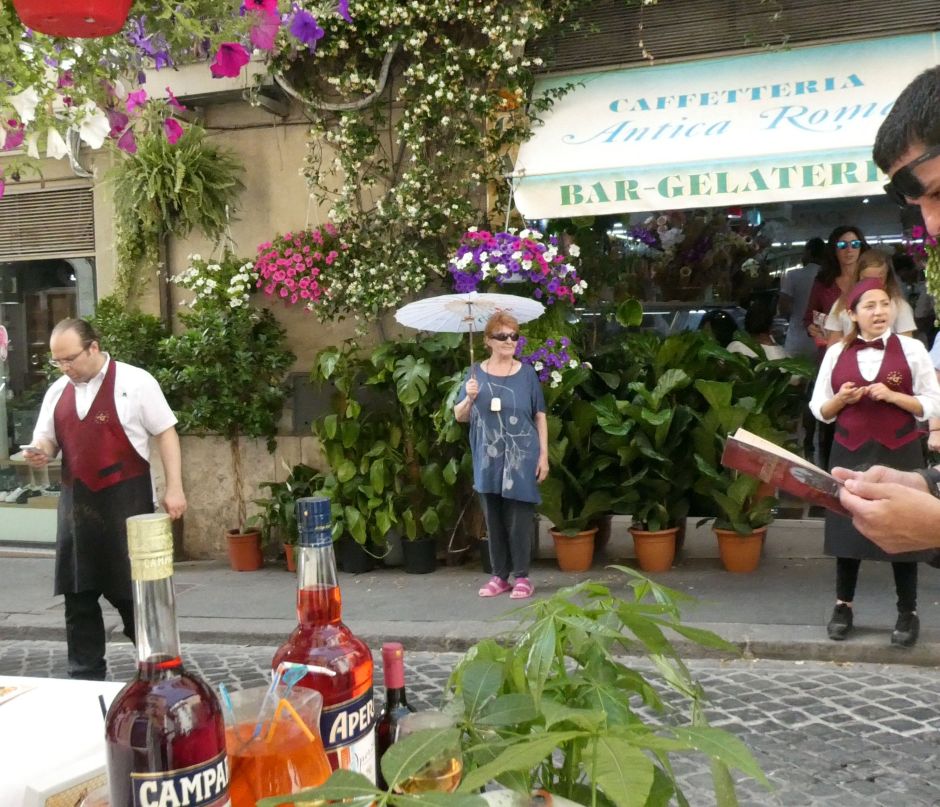
    Bougainvillea, a bike, a pretty girl and a bottle of wine: Italy.
    Busy Trattorio
    Pinocchio
  • ROME – STILL ETERNAL

    ROME – STILL ETERNAL

    My trip to Rome coincided with the heat wave which, although welcome in that it meant I didn’t need to carry a shower-proof jacket (just in case), did mean I had to carry a paper umbrella bought from a street trader, He must have thought his birthday and Christmas had come along on the same time, so many were the customers queuing up to buy his parasols.

    Rome is wonderful in any weather but walking in 34ᵒ heat this time made sight-seeing a trifle difficult.  It did, however, allow for many more granitas and gelato stops, even as it cut down on the photography.

    Part of the Forum

    We stayed at the wonderful Forum Hotel, so named because it faces the Forum.  To wake up every morning and look out on the sprawl of ancient pillars and stones glowing from the rising sun, was magical.  We had the same view from the breakfast terrace on the rooftop, so although I usually forego breakfast, in this case it was a must. 

    Part of the Forum

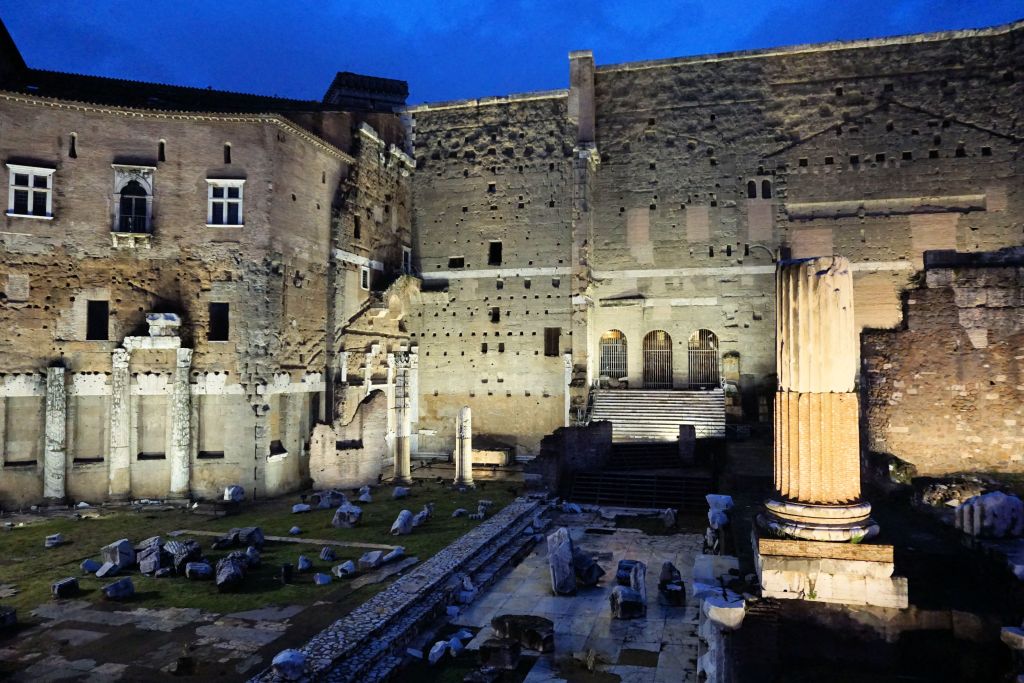
    The Forum was ancient Rome’s showpiece centre, a site originally developed in the 7th century BC from a marshy burial ground which grew into the social, commercial and political hub of the Roman Empire.   It was a handsome district of temples, basilicas and bustling public spaces which, with a little imagination is easy to people with toga-clad inhabitants going about their business accompanied by their slaves.

    Forum by Night

    Part of the Forum is open for wandering around but to see it all one needs to pay.  However, I would say leave this until the end of your stay, because a) you can see some of it without charge and b) there is so much else to see in Rome and you can always return to it if you wish.

    The Colosseum by Night (Photo Solange Hando)

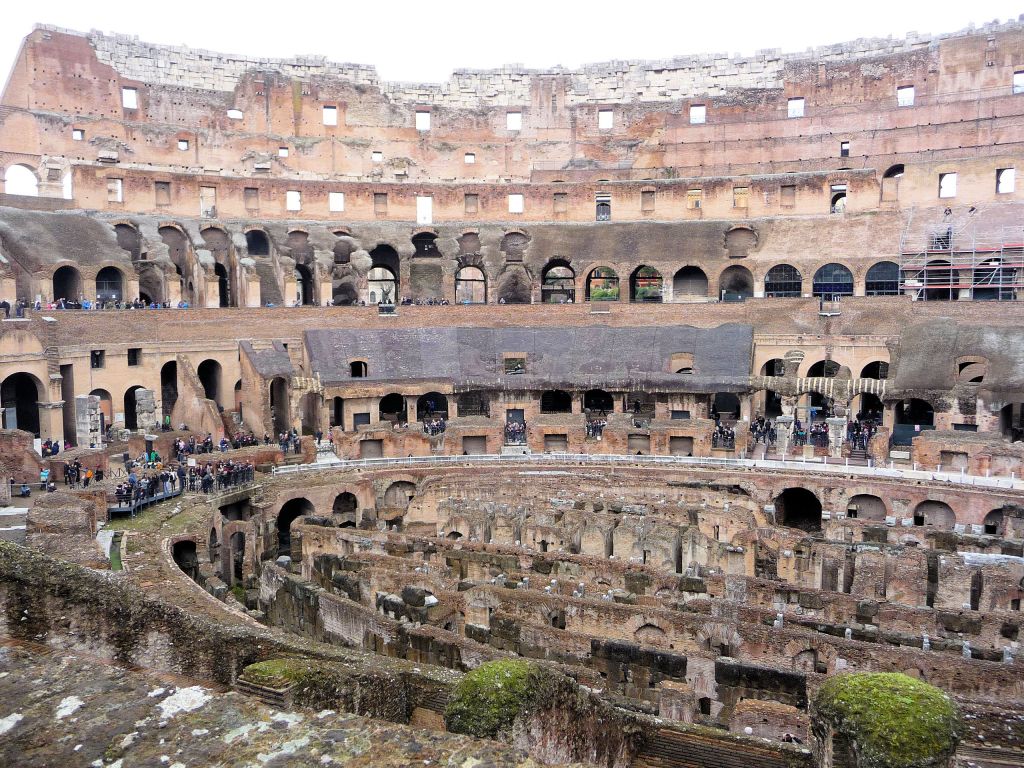
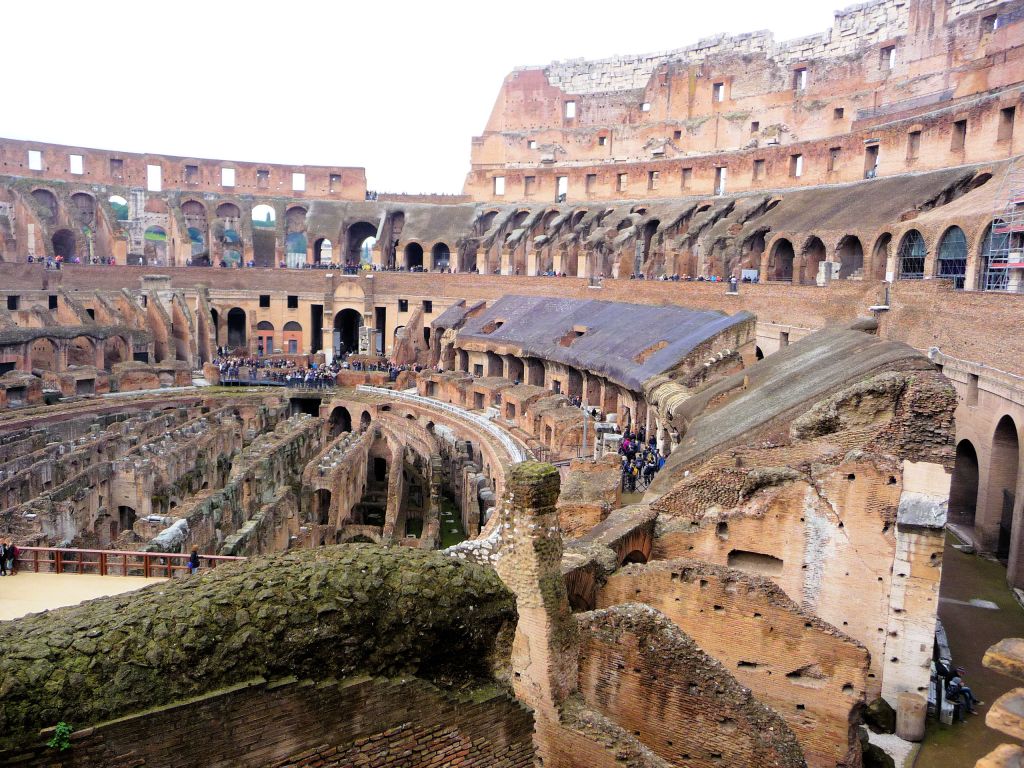
    It is but a short walk from the Forum to the Colosseum, the hugely impressive, troubling monument to Roman imperial power and cruelty.  Inside this emblem of Rome, behind the serried ranks of Tuscan, Iconic and Corinthian columns, and three storeys of superimposed arches, Romans for centuries cold-bloodedly killed thousands of people for amusement, and sent gladiators to their death as they fought wild animals like lions, tigers and leopards for the amusement of the rulers and the populace.
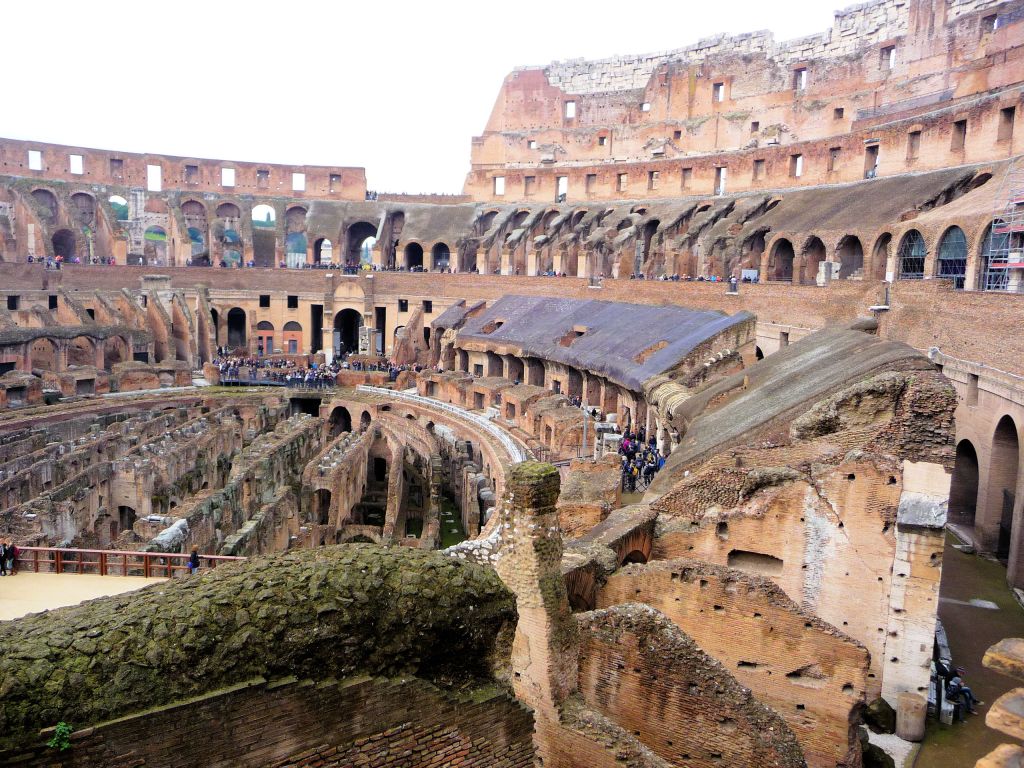
    Inside the Colosseum

    The Colosseum is now a mere shadow of its former self as only about one-third of the original building still stands, its glistening marble and stone having been carried away and used in the building of palaces and churches by Roman popes and aristocrats who coveted it. Nearby Palazzo Venezia and the Tiber’s river defences are just two examples of this.

    Looking down at the pits from which the animals would emerge

    Originally the largest amphitheatre in the Roman world, a pleasure palace built for the people by the emperor Vespasian (69-79) to a design worked out before the building began, it was capable of holding 50,000 spectators,  

    It is difficult not to quote sizes and quantities in such an undertaking, suffice to say that drains were built 8m beneath the structure to take away the streams that flow from the valleys and hills that surround Rome: the foundations under the outer walls and seating are 12-13m deep while under the inner part of the arena they are only 4m deep.  The spoil dug from the foundations was used to raise the surround level by over 6m. 

    Sometimes quoting facts and figures like these can take away from the brooding power of the Colosseum, but I never fail to be moved by an atmosphere still inside those walls. 

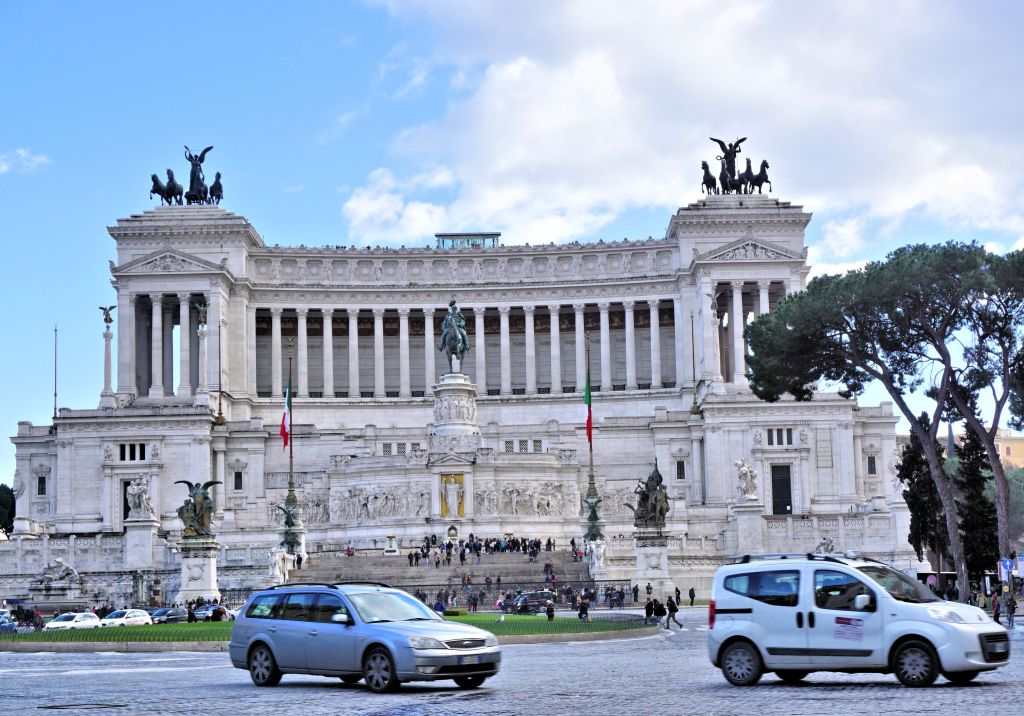
    The Victor Emmanuel Palace. 

    Vittorio Emmanuel ll Palace

     Also known as ‘Il Vittoriano’ and sometimes referred to as The Wedding Cake Palace by the locals, this monument to King Victor Emanuel II, is a bombastic monument of sparkling white marble decorated with numerous allegorical statues, reliefs and murals.  At the center of the monument is the colossal equestrian statue of Victor Emmanuel, and on either side are fountains representing the seas that border Italy, the Adriatic Sea and the Tyrrhenian Sea.  At the foot of the statue Guards of honor, selected from the marine, infantry and air divisions, guard the Tomb of the Unknown Soldier day and night.

    The Vittorio Emmanuel ll Palace

    Inside the monument is the Museo Centrale del Risorgimento, which charts the events that led to the unification of Italy, with a display of paintings, documents, photographs and memorabilia, the entrance to which is to the left of the monument, at the Via di San Pietro in Carcere.
    During the 1930’s, the Italian dictator, Mussolini, delivered his speeches to the populace from the terraces and balconies of this building.
    The Victor Emmanuel Monument cannot be considered one of Rome’s most beautiful buildings and its stark whiteness does not fit well into the soft ochre color of the surrounding buildings.  Nevertheless, it is well worth the visit if only for the great views from the top (which is also connected to the Capitoline Square which may also be on your list).

    A useful tip for visitors:  You will see lots of advertisements – everywhere – to buy tickets that “skip-the-queues” and indeed you do skip the line for tickets.  But unfortunately, after many years of this, the queue for the “skip-the-queue” line is much longer than the normal one to buy tickets at the office, so take my advice, ignore this (and ignore the touts who will offer you tickets for immediate entry), join the queue for tickets and you’ll be through in no time.

    Next post:  Piazza Navona, The Pantheon, Spanish Steps and Trevi Fountain.

  • Spanish Basque Country:   My Pyreneean Experience

    Spanish Basque Country: My Pyreneean Experience

    Just back from a trip to the Spanish Pyrenees, staying in a village high in the mountains where I endeavoured to improve my Spanish and conquer my fear of the subjunctive in the company of 5 other like-minded people!  My once good grasp of the language was getting rusty and when I read about a course in the Basque area (Navarre), I signed up.  The Pyrennean Experience promised mountain walks, good company, magnificent scenery and total immersion in the language and it delivered on all counts.

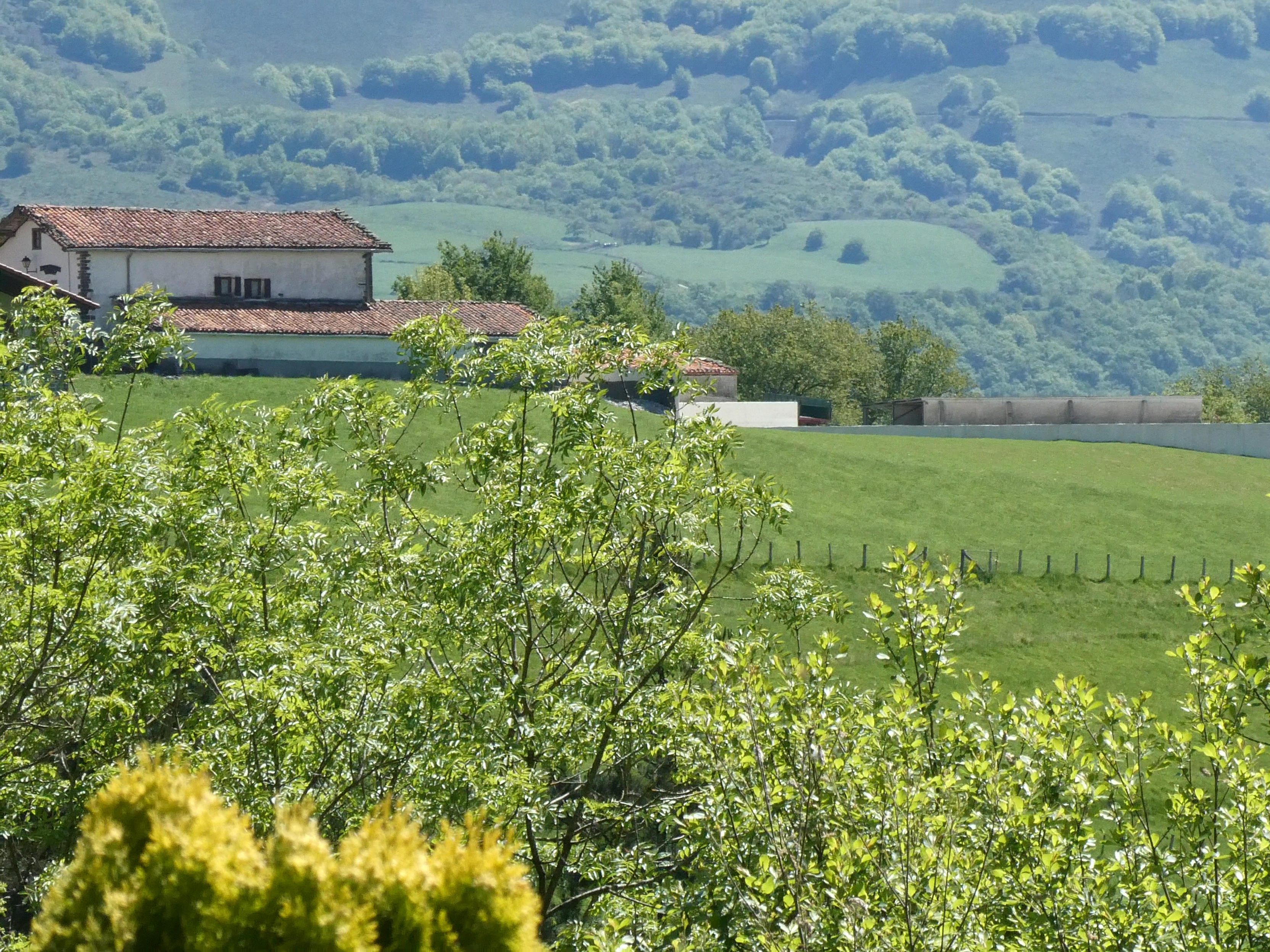
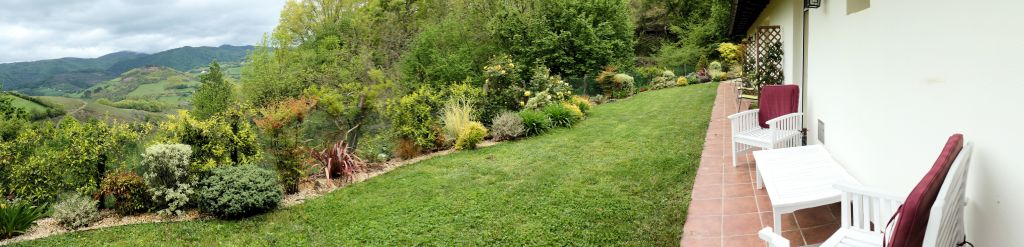
    View from the Terrace of the Farmhouse

    Our home for the period was in a farmhouse in the hamlet of Ameztia, 4km from the quintessentially Basque village of Ituren in the valley of Baztan nestled in the foothills of the Spanish Pyrenees. It was about an hour from the smart city of San Sebastian, approximately the same from Bilbao, and Biarritz on the French side was only 90 minutes away. 

    Landscape in the vicinity of our home from home

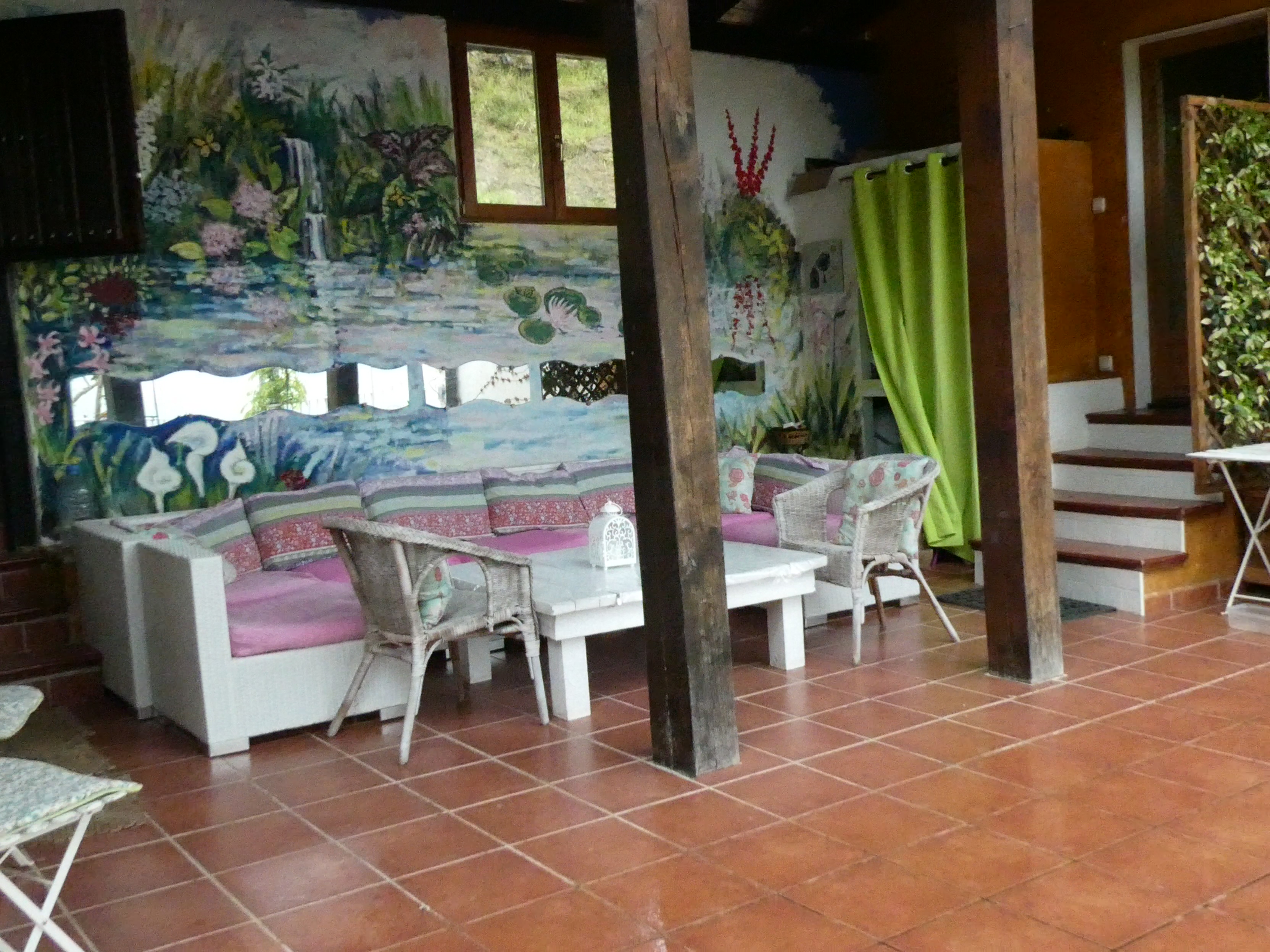
     Located on a hill encircled by white-washed villages and ringed by mountain ridges, there was nothing near the farmhouse to distract from the learning process or the bonding of the six mature students, two teachers, and the owner and organizer of the Pyrenean Experience, Georgina.

    A Bucolic Scene repeated everywhere one looked.

    What was a distraction was the constantly changing scenery, the glow of the bracken, the shadows on the beech and chestnut woods, and the intense green of the surrounding fields cropped to a velvety smoothness by flocks of sheep, the muffled sound of whose bells was the only sound to punctuate the silence of the valley.

    Clouds nestle in the valley early morning

    To describe the views from the house as stunning is an understatement.  From dawn till dusk the changing views from the terrace of my room were a constant delight.   In the early morning, clouds nestled in the valleys below the mountains as the rising sun edged the clouds pink and the warmth of the red tiled roof attracted the house cats to snooze there for most of the day.  In the evenings we watched the distant mountains darken and eagles wheeling in slow motion in the sky above.

    Those nights looking out on the mountains and watching the birds overhead made it all too possible to believe in the Basque myths, a belief that helps keep alive the tradition of appeasing witches. Most of the houses in the vicinity will have pinned to their door one of the symbols said to repel witches (see image below).

    Belief in witches in the villages of Navarre has existed for many years. Once socially functional, a means of explaining why strange things occurred, acting to discourage undesirable behaviour and used as a form of social control, it has a long history. Douglas Gifford in his book Witchcraft and the Problem of Evil in a Basque Village (1979) tells us that the phrase ‘bad neighbours‘ (malos vecinos) in the Basque region was synonymous with ‘bruja’, meaning ‘witch’, a belief that seems to have followed on from the witch hunts in the area during the Inquisition and from the 17th century influx of refugees from France who brought stories of the witches’ Sabbath and devil worship.

    Church with modern metal sculpture
    Buying fresh milk and yoghurt from a vending machine, bring your own bottle!

    Quiet street in a quiet village in Navarre

    Back to the mountains! Daily circular walks were guided by Georgina, sometimes accompanied by one of the teachers, but we spoke Spanish at all times – an essential part of the teaching.   The walks were graded from moderate to intermediate level, from lazy walks from village to village to high level ridge walks at over 1,000 metres.  To walk in this virtually unexplored medieval landscape of the Basque Pyrenees is humbling: it is both beautiful and awe-inspiring, the hospitality of the people is unbelievable, and the flora will have you reaching for your camera every few minutes.

    Ituren, the nearest inhabited spot, is a delightful village with a school, 2 bars, 3 restaurants, a village shop, a butcher, a chemist and a hairdresser.   Hand-made bracken stacks along the road are a feature of the area as are the dry-stone walls which enclose the fields.    

     There was a wine tasting one evening, courtesy of a Navarre wine producer, an informal musical evening by a professional guitarist, and lots of late night conversations over unlimited bottles of wine.

    One of our terraces at Georgina’s (and yes, it did rain – once).
    One of our terraces at Georgina’s

    Trips to other villages were made, visits to neighbouring farmhouses where we ate home-made cheese and drank home-made cider (the local tipple), and delightful lunches were laid on in outlying villages to coincide with walks and sight-seeing. 

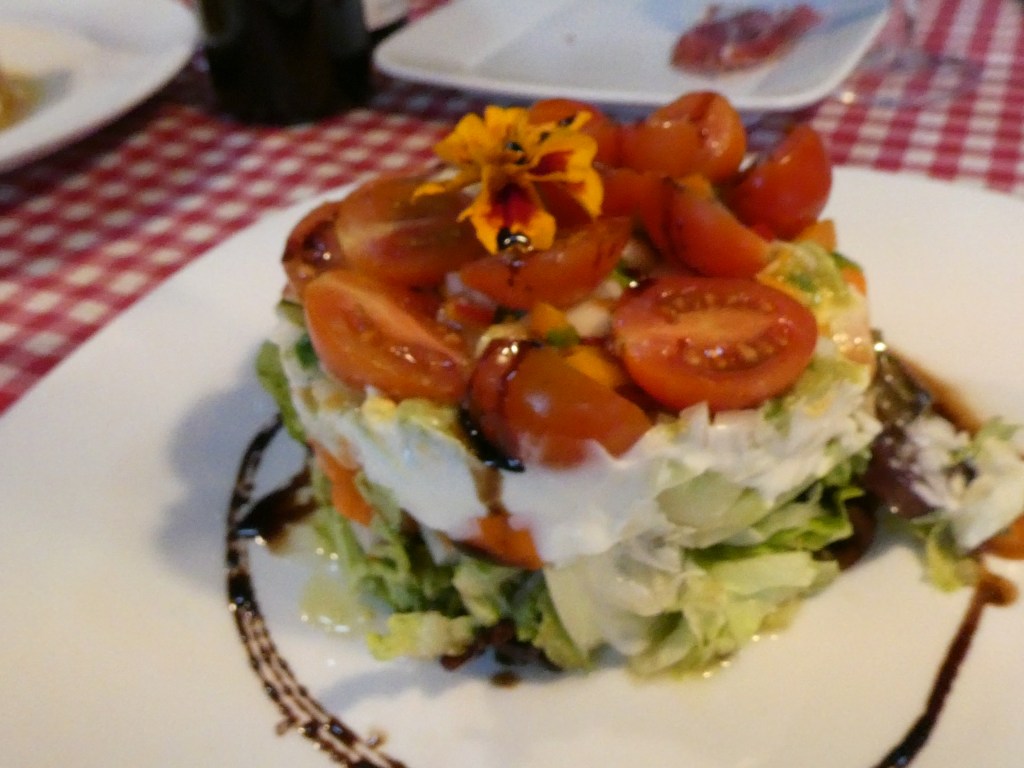
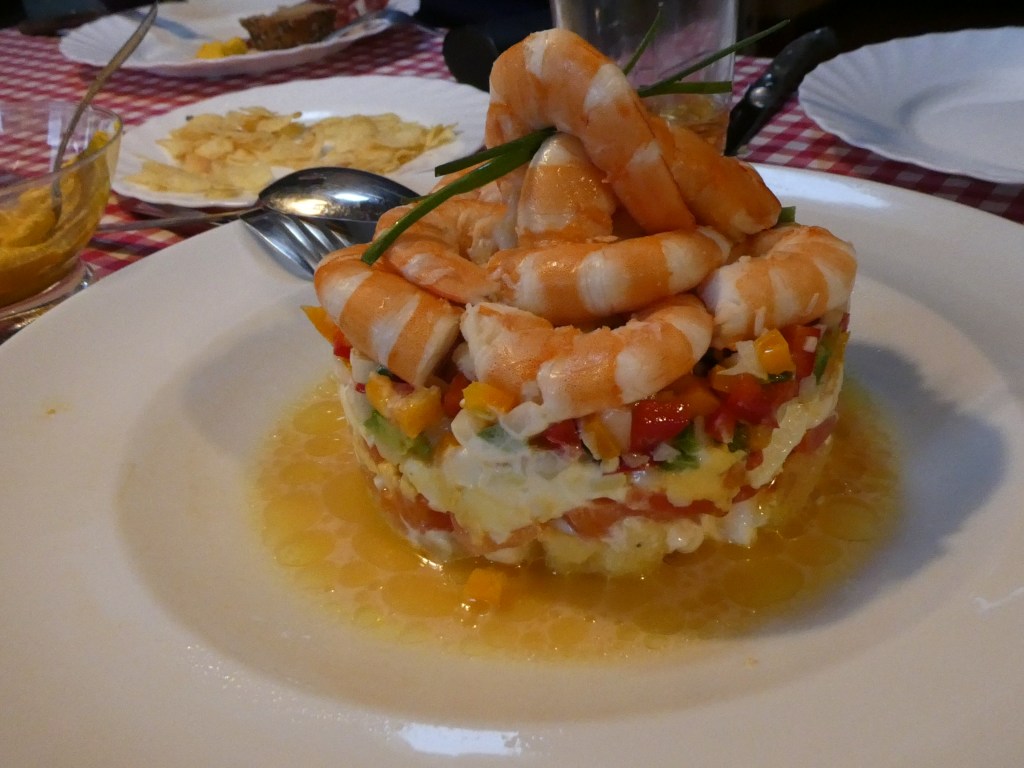
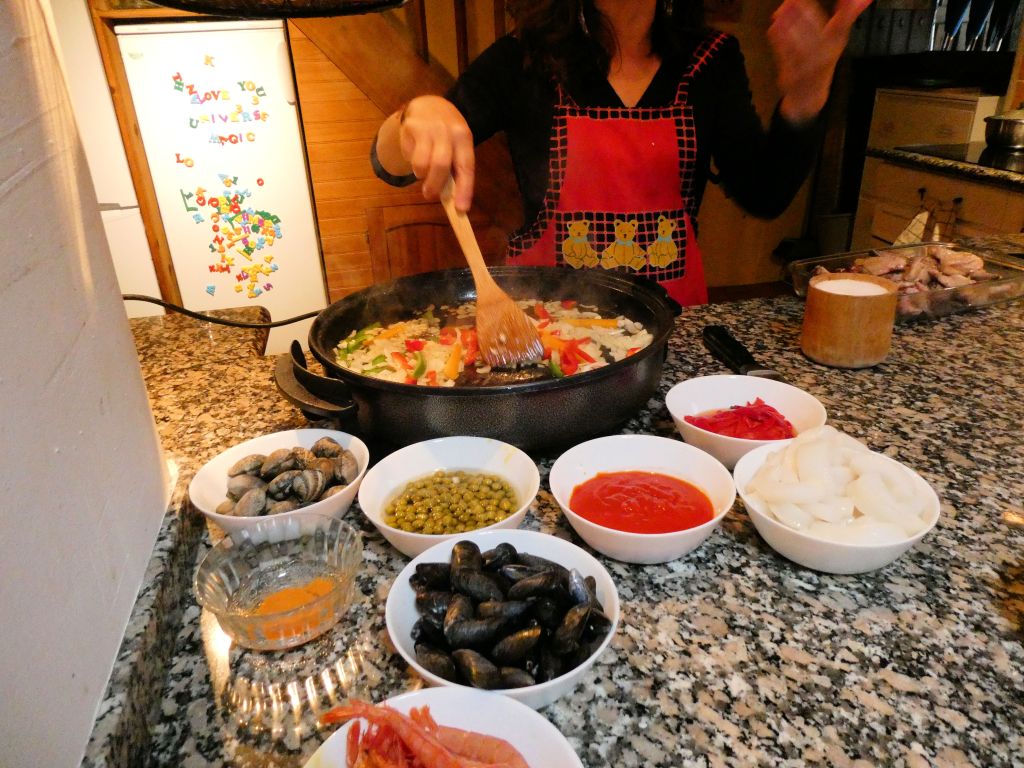
    Meals were taken together, breakfasts being a ‘help yourself to whatever you want from the kitchen when you get up’, and Begoña, our cook, produced meals that satisfied everyone and even let us help sometimes! 

    Making the Paella
    One of Begoña’s creations
    One of Begoña’s creations

    The Basque area has been side-lined for decades and starved of budgets to promote itself.  The dairy cattle industry has collapsed, as it has in a lot of other countries, and the farmers have now turned to sheep farming to survive.   Artisans, artists, millers, and Michelin-recommended restaurants struggle to make a living because the world is hardly aware of the existence of this region of peace and tranquility with scenery to rival anything that Europe has to offer.  Nearby San Sebastian hosts world-renowned restaurants, Bilbao has the Guggenheim Museum, and Biarritz has trendy shops so the area really offers everything. 

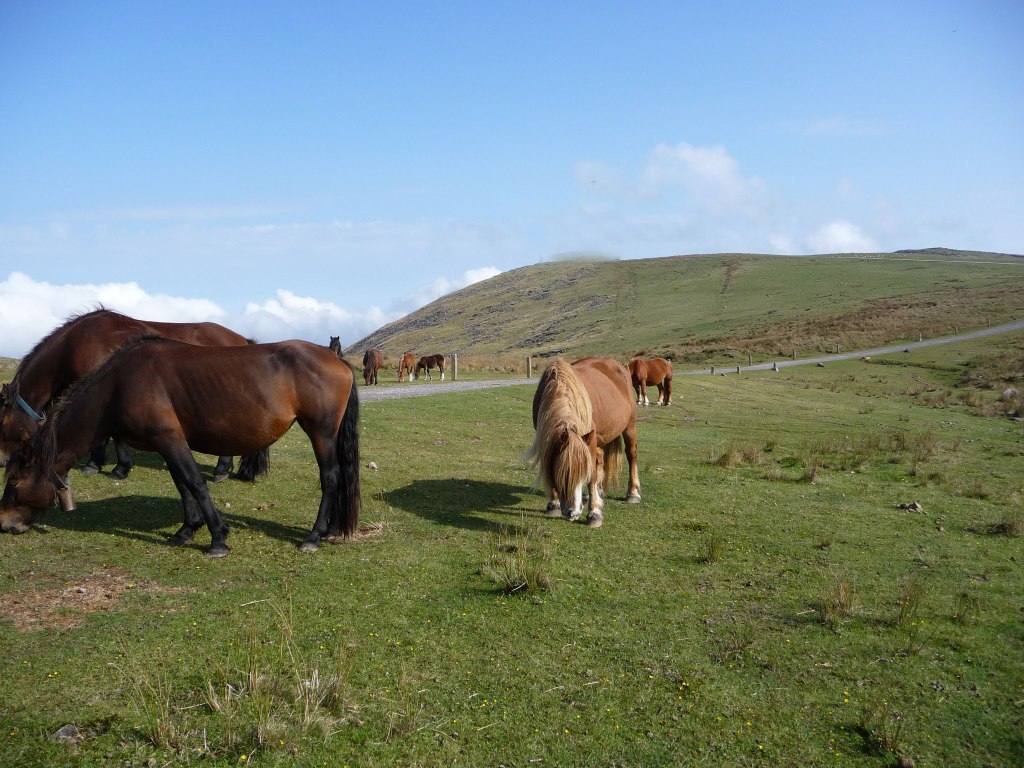
    What will take me back to that area again will be the sense of time-unchanging, the slow tempo of life, a dozen or more children coming together to play on the community Pelota Court, and above all, the silence of the mountains, the only sound the distant bells of the sheep in the fields or the horses coming home from the fields. 

    My Pyrenean Experience was a house-party like no other I’ve experienced, a room with a view to die for, and the chance to walk on paths only traversed by animals and a few intrepid humans.   What more is needed to heal the soul?

    Check out the website to get an idea of what’s on offer. The photographs tell the whole story. If you like walking in the mountains, you’ll love this. No need to learn Spanish, you can just go for the walking, the camaraderie and a Spanish experience you won’t forget. www.pyreneanexperience.com   Tel: 34 6507 13759

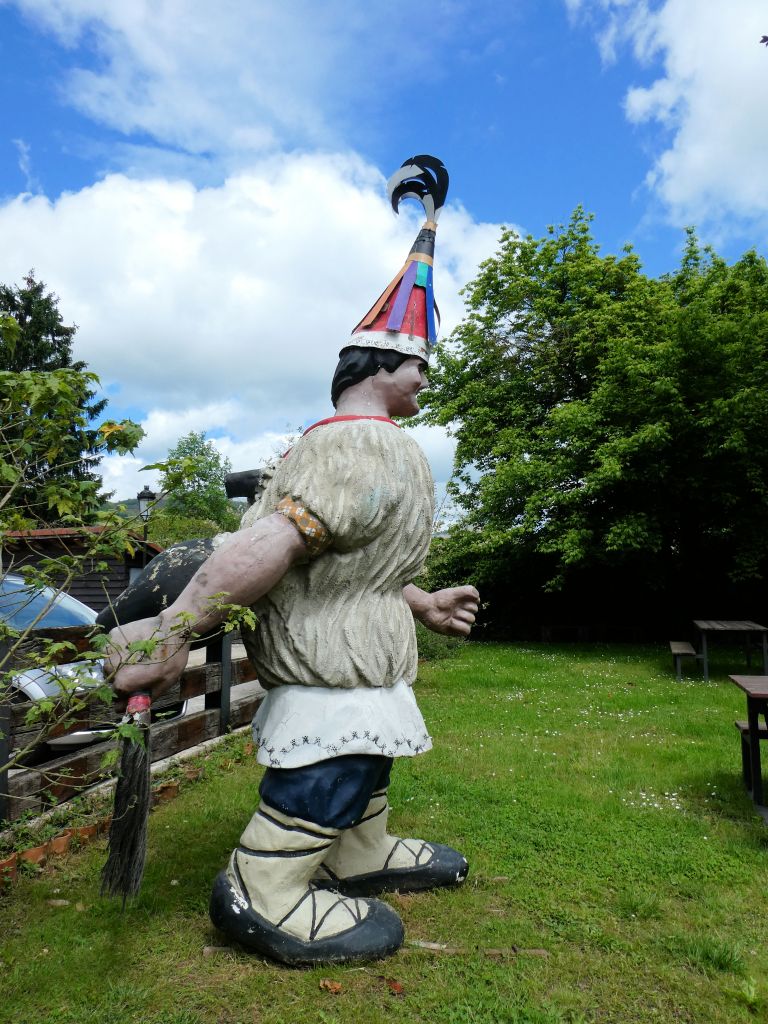
    What a surprise to find this metal sculpture on the edge of town

  • PROVENCE – Villages & Towns

    PROVENCE – Villages & Towns

    I have an urge to go to Provence again.  I think it’s because my lavender is thriving this year and that the rosemary, thyme, sage and oregano are flourishing as never before that makes me want to immerse myself in the pungent scent of wild herbs crushed underfoot and the juniper, golden broom, and cistus that cover the hills of Provence.

    I like the journey there too, on the Eurostar from London (less than 6 hours): with a change at Paris, there is enough time to enjoy a leisurely meal to get the trip off to a good start.   The views from Paris down to Avignon of tiny, half-deserted medieval villages perched on steep hillsides, red geraniums and lime-green ferns tumbling over balconies, fertile valleys of yellow corn and wheat, occasionally highlighted with a blaze of red poppies like a Van Gogh landscape, and the occasional field of wild irises and lavender, always make me happy that I’ve taken the train to this corner of France.

    Palais du Pape

    Avignon:  The best viewpoint is from the Gardens of Rocher des Doms above the Palais des Papes.  The gardens are not worth the trip for themselves, but there are benches on which to sit to take in the peacocks and the panoramic views over the entire city and the surrounding areas. 

    If you visit only one monument, make it the Papal Palace, the Palais des Papes, which includes the Popes’ private apartments with some fabulous frescoes, and is one of the musts of Avignon.  This emblem of the city, an awe-inspiring monument to the importance of Avignon in the Christian world of the Middle Ages was built in the 1300s by two popes – Benedict XII and his successor, Clement V.   Avignon 10It was to become the biggest gothic edifice in all of Europe and is listed as a World Heritage Site by UNESCO, along with the episcopal buildings and the Saint Bénézet Bridge.  Palais du Pape, Golden Madonna

    Next to the palace is the Notre-Dame des Doms Cathedral, built in 1150, with the statue of the Virgin Mary, entirely covered in gold, 6 metres high and weighing 4500 kilos, protecting the city from the bell tower.

    The historic centre radiates from the Place de l’Horloge, a popular square bordered by cafés and restaurants. Just like the Place du Palais higher up you could spend the day just watching the street performers.  Here is the City Hall built in the mid 19th century over a former cardinal’s palace.  Next to it is the 19th-century municipal theatre which houses the Avignon opera.

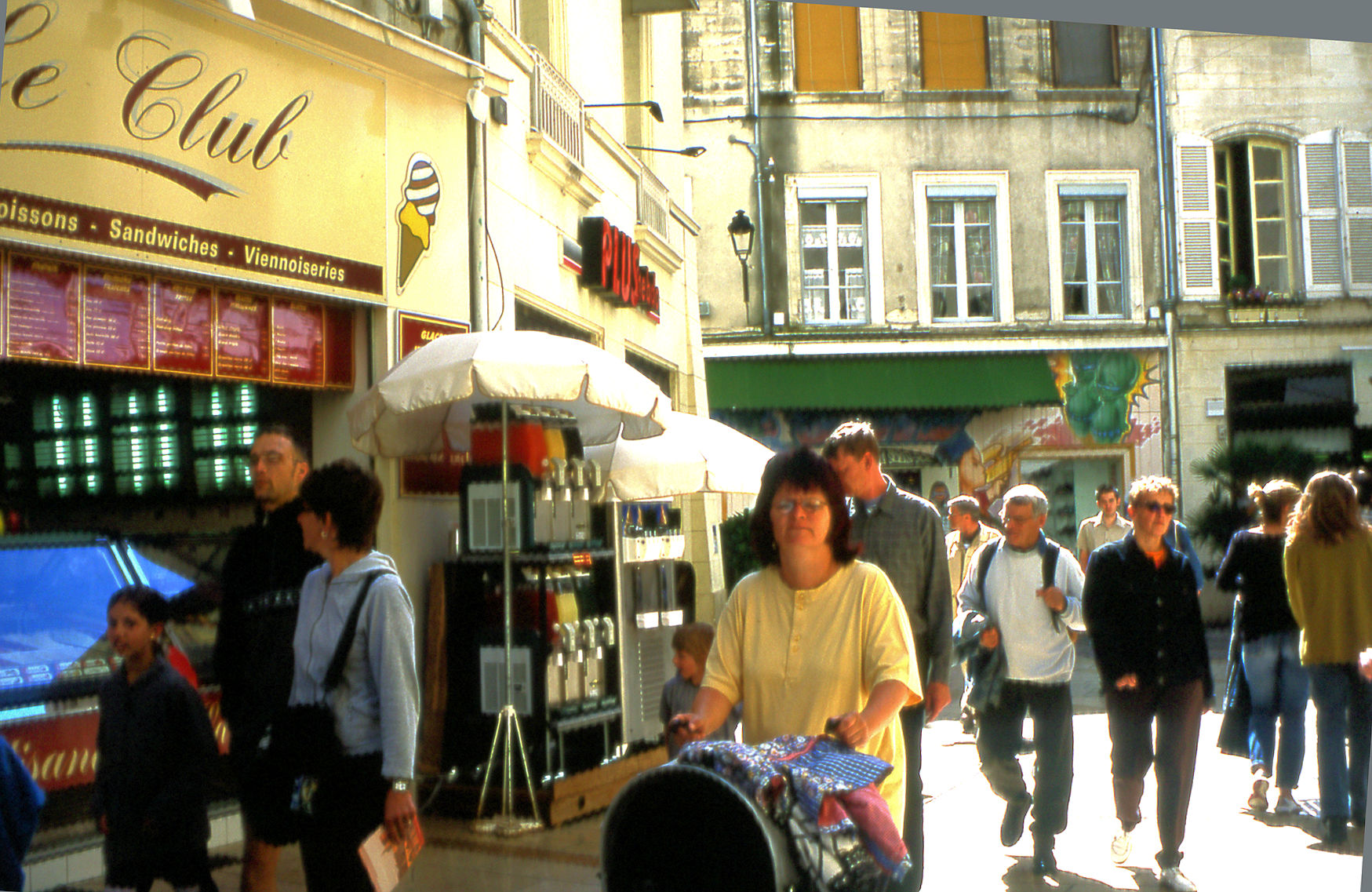
    Avignon street scene

    Avignon is a city full of ancient dwellings, museums, churches, chapels and art galleries and you can easily fill a week here without leaving the city but it also has a hippy, boho area.  In the Rue des Teinturiers, a delightful cobblestone street dating from the Middle Ages, the street is lined with wine bars and small restaurants, and artists and musicians mingle here in a village-like ambience.  Then there is bourgeois Avignon on one side of the main avenue, the Rue de la Repúblic, a chic designer clothing and luxury shops area.  The other side of Repúblicc leads to the Place Pie and the Halles, the famous covered market and meeting place for the people of Avignon.

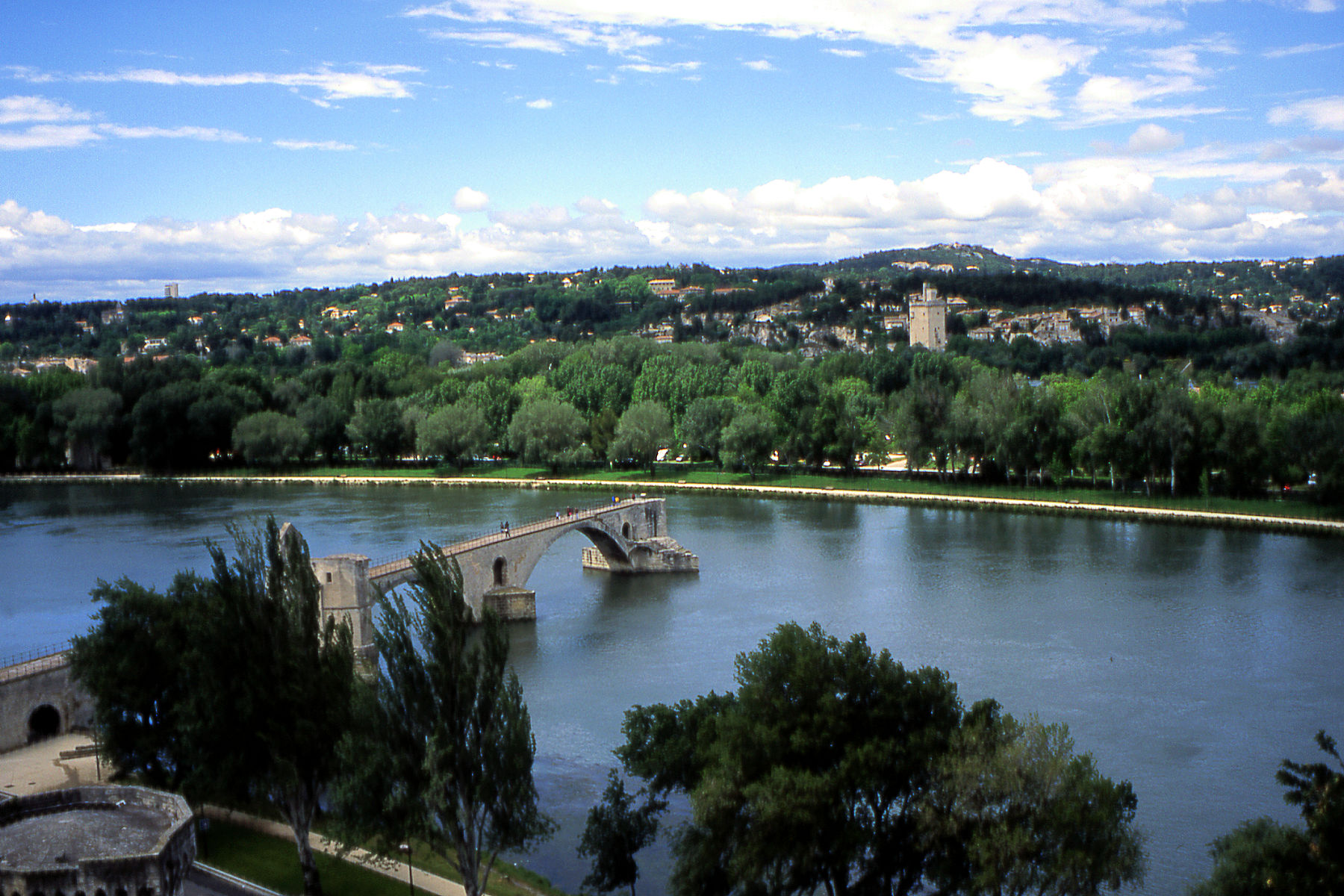
    Sur le Pont de Avignon on a windy day.

    But most people come to Avignon to see the famous bridge, the St. Bénézet Bridge, built around 1180 (by a simple shepherd, or so goes the story) to link the city to Villeneuve-les-Avignon.  Over the years, war and flooding took their toll on the bridge and today, the 12th-century St. Nicholas chapel along with four arches of the bridge are all that remain of the original structure. 

    Avignon Bridge 2

    The historic region (Luberon) between Aix-en-Provence and Avignon is often cited as being the most beautiful in France, rolling hills streaked with lavender and medieval villages perched on craggy rocks.

    Gordes 3

    Villages like Gordes, a compact hilltop town at the foot of the Vaucluse Mountains which is one of the trendiest places to live in Provence.  The ancient Borie village, an impressive complex of stone houses which was once the homes of shepherds and agricultural workers before the industrial revolution, was lovingly restored in the 1970s by a team of archaeologists and locals.  There are 300 of these in Gordes.

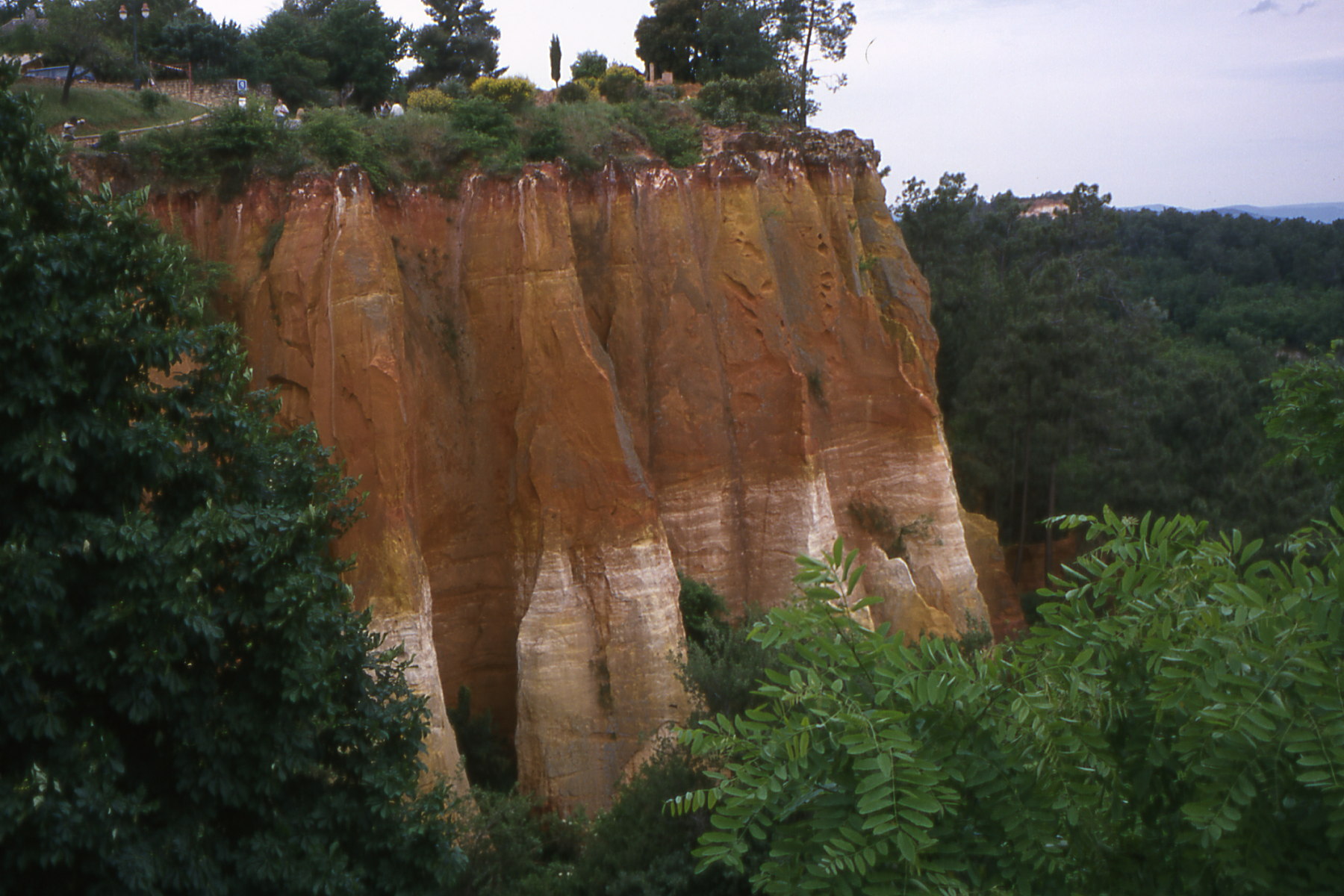
    Rousillon with its distinctive ochre earth

    Roussillon:  This area has to be visited, if only for the startling ochre colour of the earth as it is located in the very heart of the biggest ochre deposits in the world.  These natural pigments are used throughout the village, the walls of the houses being washed with the traditional ochre rendering, the many different oxides in the ochre sands combining in countless shades.

    Rousillon cemetery (ochre tombs)
    Rousillon cemetery

    The hills are streaked with it, and an Ochre Trail has been laid out and marked.

    Ochres was mined by the Romans

    Rousillon, the village
    A Village in the Luberon

    during their settlement of Provence but only became a widespread, industrial product in the late 18th century when Jean-Etienne Astier had the idea of washing the ochre-laden sands to extract the pure pigment. Today, though natural ochre faces strong competition from synthetic pigments, it remains unrivalled for use in certain applications.

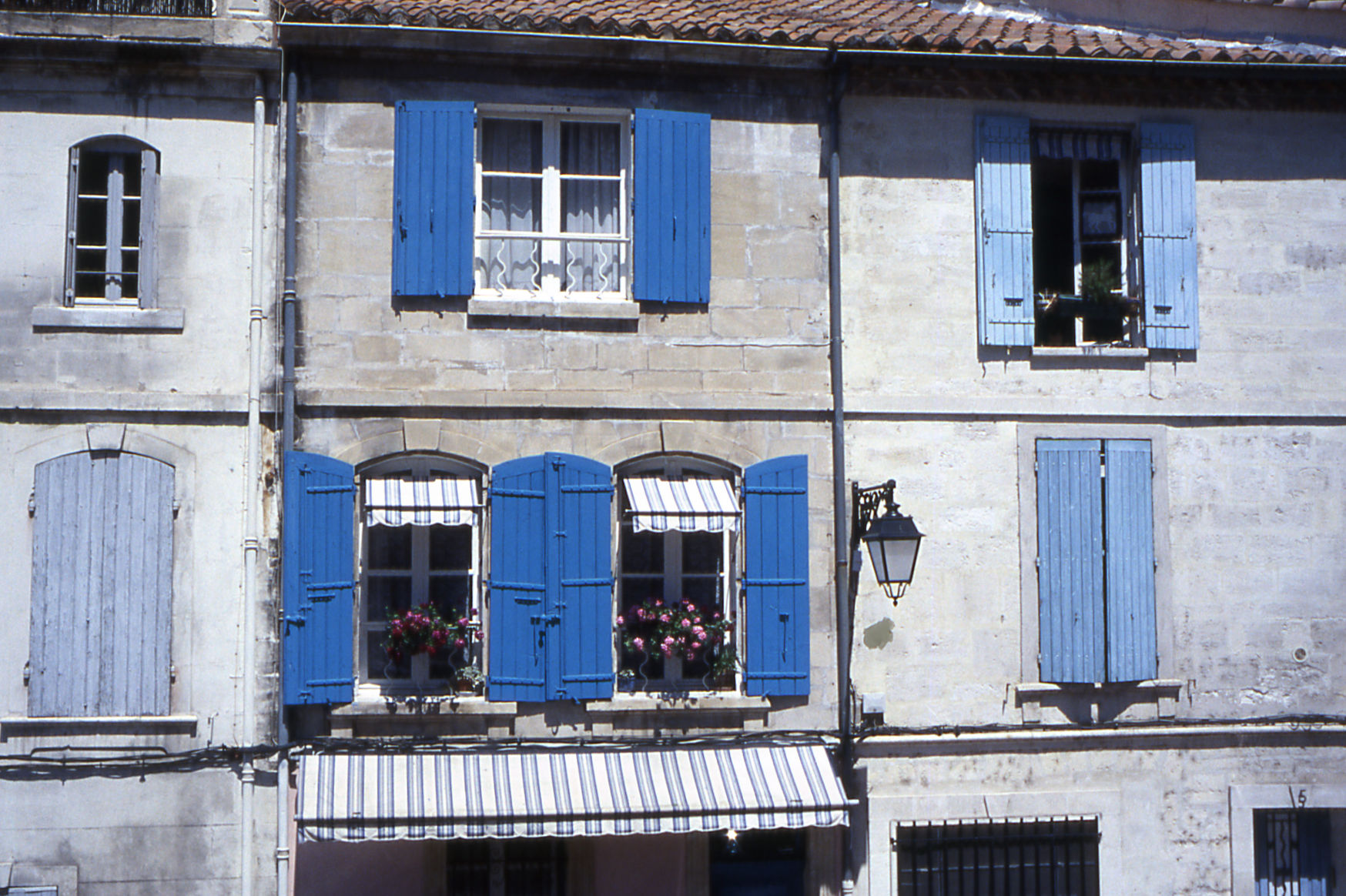
    Blue shutters on house in Arles

    Arles and Aix de Provence.  More like Spain or Italy with narrow streets and shady squares it is the gateway to the Camargue.   Arles has a Roman theatre ringed by cobbled, medieval streets and is one of the most interesting towns in France. Arles, street scene

    It was home to Van Gogh in the 1880’s and because of this the town now has a flourishing artistic centre.  Buy books on Van Gogh and postcards here which you won’t find anywhere else.  The elegant spa town of Aix is Cezanne’s own town where you can visit his workshop and take a guided tour of landmarks in the life of the painter and that of the writer, Emile Zola.

    After Arles, Van Gogh went to the pretty little town of St. Remy which nestles at the foot of the magnificent Massif des Alpilles, now classified as the Parc Naturel Régional des Alpilles. St. Remy, craft shop Stroll along the boulevards under the shade of century-old plane trees in the evening and raid the boutiques and art galleries for bargains (well, perhaps not, the Provencals are not as slow as Peter Mayle made them out to be and they strike a hard bargain).

    And then there is Baux de Provence, officially classified and labelled as “one of the most beautiful villages in France” (by the French).

    Les Baux de ProvenceAbout 15 Kl from Arles this is a village high up in the limestone-mountains of Les Alpilles, located on a 245m. rocky plateau from where magnificent views of Arles and the Camargue can be had.  It is rich in cultural treasures, with 22 architectural monuments classified as “Historic”, including the church, chateau, town-hall, hospital, chapels, houses, doorways and many items of furniture.
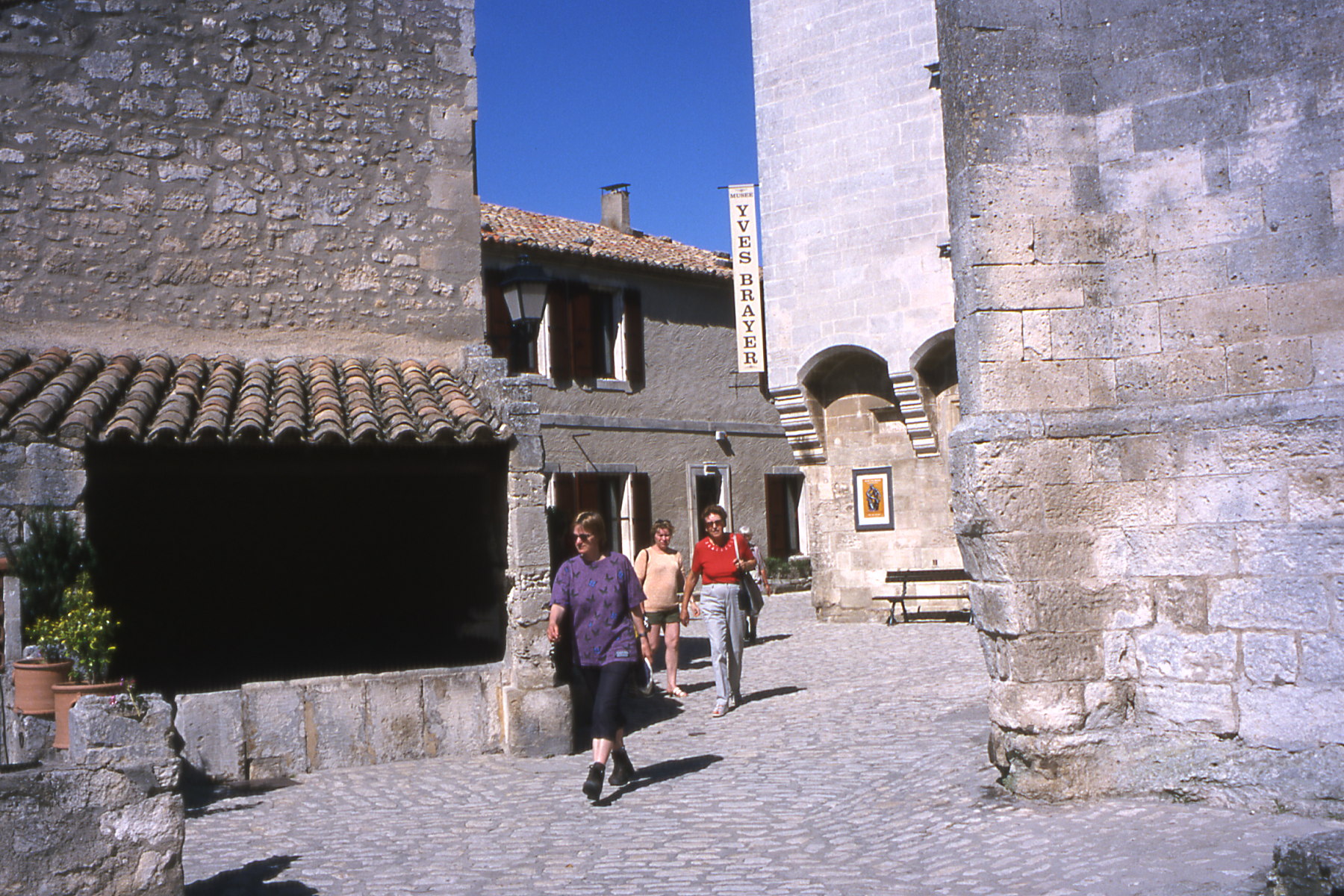
    Les Baux de Provence 3

    The village (pop. 400) has been painstakingly restored, beautiful Renaissance façades and ‘hôtels particuliers’today serving as art galleries and museums, visited by more than one-and-a-half-million tourists a year, even though the visits must be made on foot.

    Les Baux villageThe narrow streets leading up to the Citadelle des Baux are lined with bistros and restaurants with terraces hanging over the cliffs – all with views to die for.   Many of these restaurants have international reputations and offer high quality dining.

    I’ve probably missed off your favourite village: this is just a sample of what you can see comfortably within a week using local buses.  Many years ago we toured the area by car but I found the local transport both easy to understand and very efficient.

    Terrace cafe in Le Baux (sheer drop other side)
    View to die for but below this terrace is a sheer drop. Magnificent if you have a head for heights.

  • Plaza de España, Seville

    Plaza de España, Seville

    In Seville last week I had my camera stolen on the third day of my four-day break, a major blow as this time it was my zoom camera so the images I took were different to those I’d taken on my last visit and, I like to think, better.

    However, after an evening of crying into my Rioja, I just had to get on with things and determine to be more careful in future.  The loss was my own fault.  I had the camera on a table at the Casa de Las Teresas bar, probably the most famous bar in Seville, moved to look at some pencil drawings on the wall in front of me which left the opening for an opportunist to walk by and whip the camera away.  My travelling companion had been sitting there too but was looking out through the door at something happening in the street.  It was a daring move to grab the camera from under our eyes like that.

    We still had four glorious days in Seville which is a genuinely over-the-top city of bulls and flamenco, dark-eyed beauties and white-washed alleys, a blazing sun beating down from a dark blue sky and never-ending late nights.  It’s the place to go if you’ve fallen for the romance of Carmen, Hemingway’s Toreros, and the lure of castanets and cante hondo, and if you want to drink manzanilla in a white-washed bodega late at night, or ride through the dappled park in a horse and carriage.  Seville is Spain’s party town and I love it.  I was seduced by its magic a long time ago and have never recovered.

    We spent most of our time wandering the old streets of Santa Cruz, but we also managed to spend one afternoon at the Plaza de España, one of Seville’s show-offy bits, built for the Ibero-American Exhibition of 1929 (Expo 29) and located in Maria Luisa Park.  The following photographs were all taken 3-5 years ago.

    18 10_0601

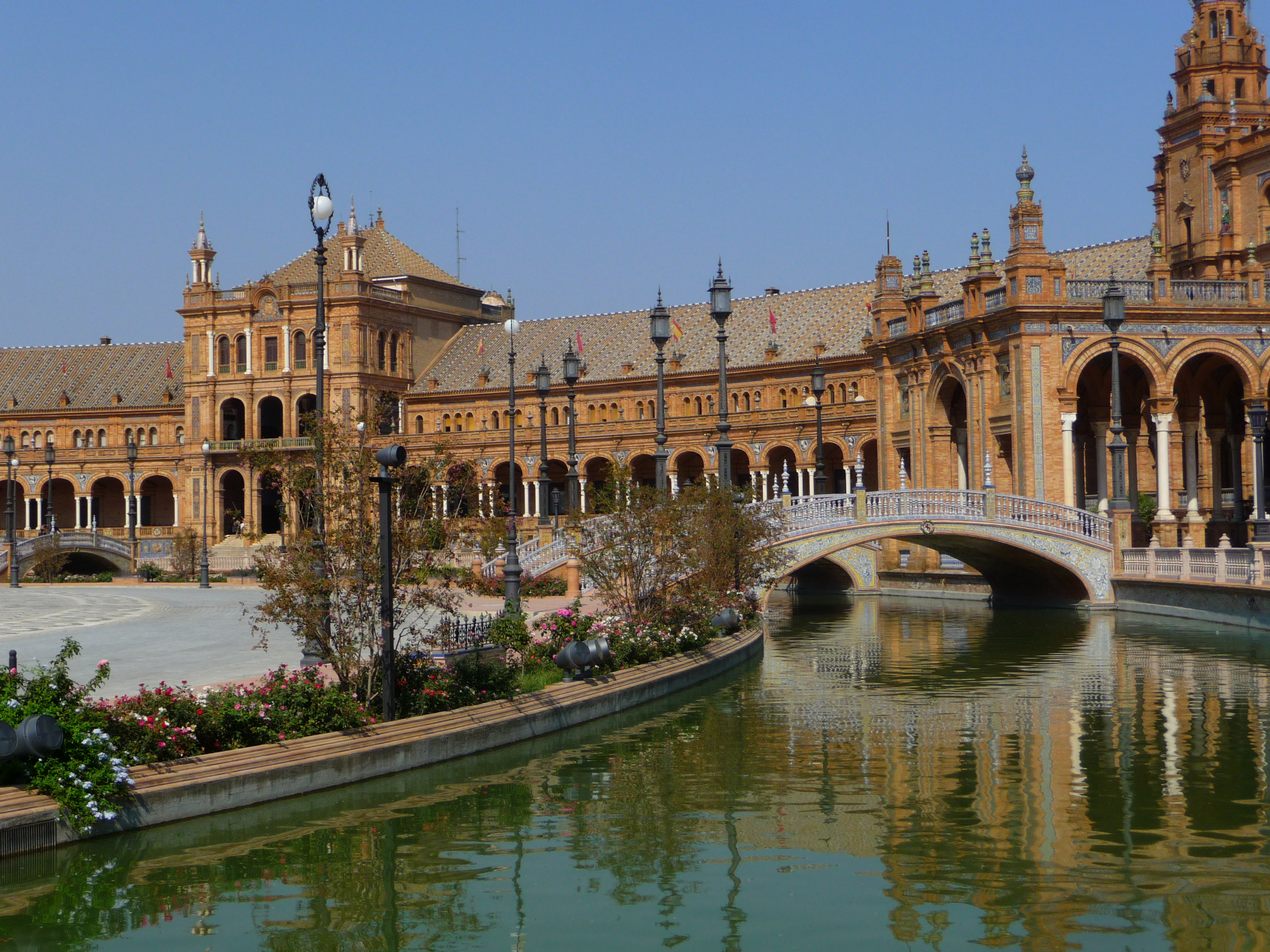
    This massive building is the city’s most impressive edifice – after the cathedral – for its sheer grandeur.  Some people hate it, thinking it overblown and ornate, a blot on the older Seville, but I love it.  What is certain is that no one should miss it on a trip to Andalucia’s capital, along with the many pavilions in and around the Parque Maria Luisa.

    18 10_0605

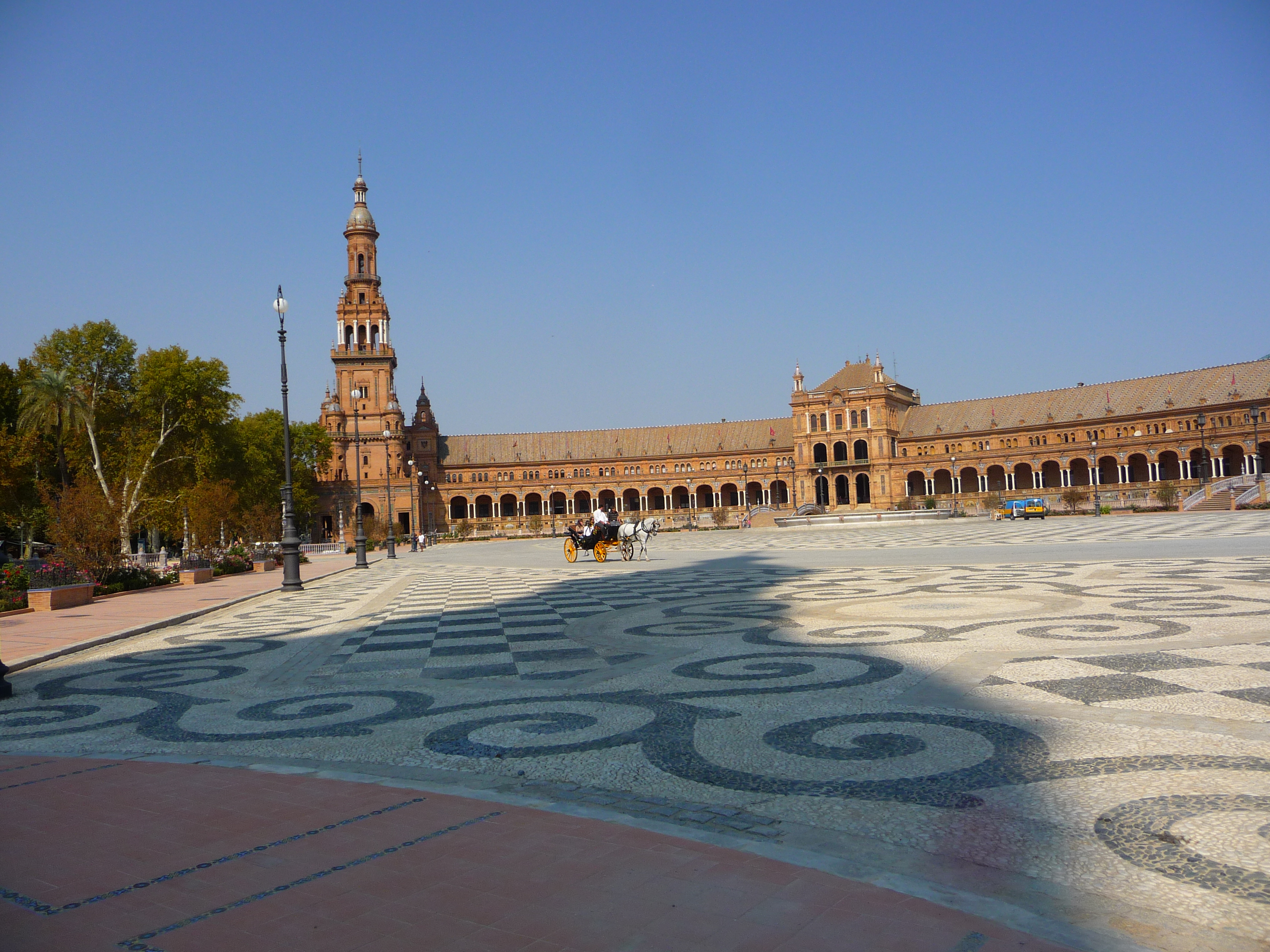
    The Plaza de España is a lavish Renaissance/neo-Moorish semi-circular brick building with a tower at either end, major landmarks as they are tall enough to be visible throughout the city, and it is said to be the size of five football pitches.  In front of the building, following the curve of its façade, runs a 515-metre canal forming a moat on which hired boats can be gently rowed, a real pleasure when the heat is intense.

    18 10_0603 Elegantly curving over the moat are four bridges representing the four ancient kingdoms of Spain, Castille, Aragon, Navarre and Leon.  18 10_0604

    Their supports are made of brightly painted ceramic tiles, which add an extra zing to the architecture, and in the centre of it all is the Plaza itself.

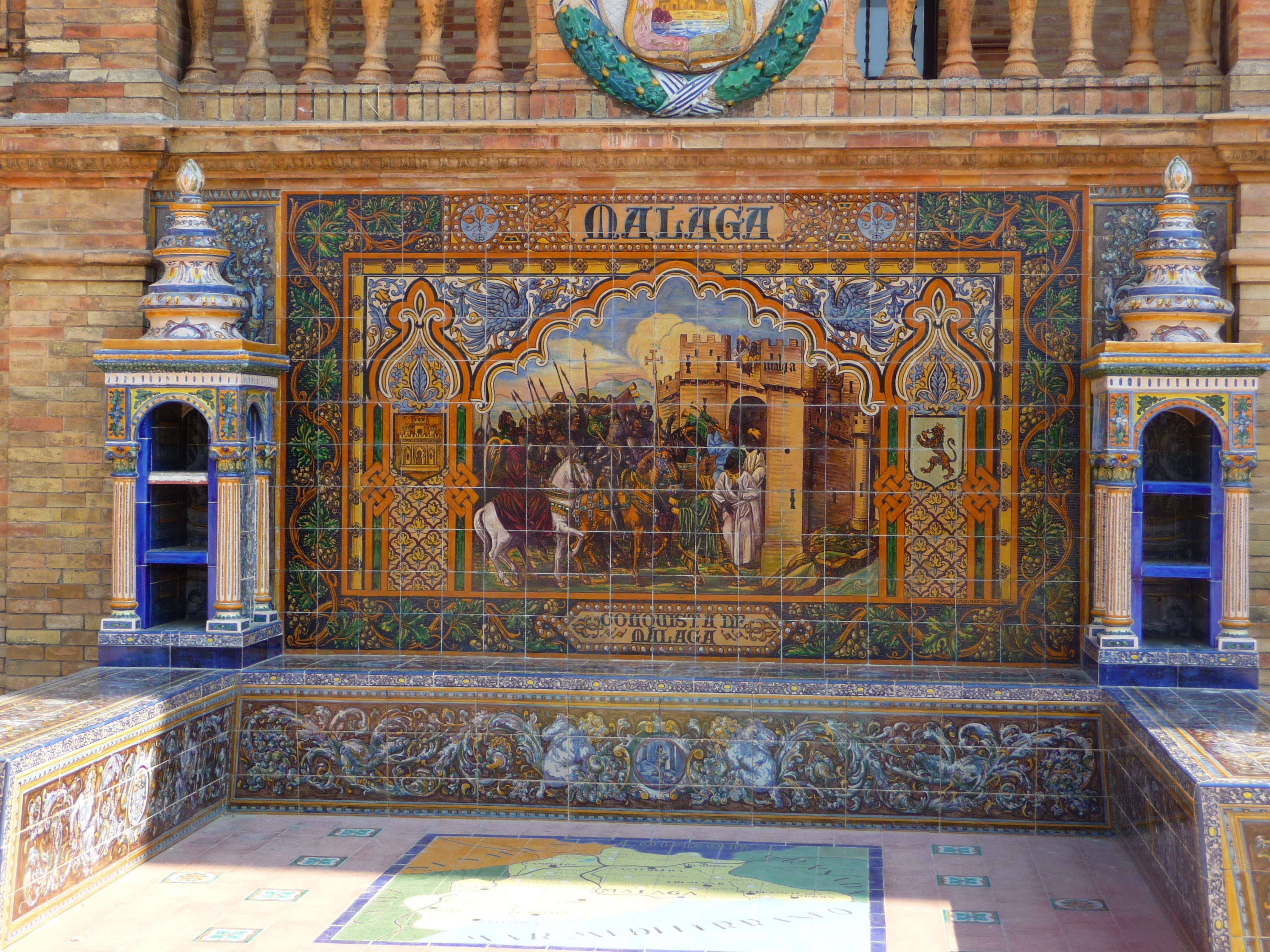
    On top of the ground level portico there is a first-floor balustrade with balconies stretching along its length. Along the wall by the canal are 48 alcoves with tiled benches, one for each province of Spain, each with a relevant tableau and map designed on colourful azulejos, the painted ceramic tiles so popular in this part of Andalucia.

    Malaga Pavilion
    Malaga Pavilion

    In fact, coloured ceramics feature heavily around Plaza de España –  the provincial alcoves, the walls, ornate bridges and balustrades being all covered in painted tiles.

    18 10_0599

    The architect of this amazing building which swings around the plaza in a large semi-circle was Anibal Gonzalez who designed the Plaza to wow the Expo’s visitors and in order to showcase Seville’s talents in industry and crafts.  Only this semi-circular pavilion remains from Expo ’29, the others are now used as museums: the Pabellon de Bellas Artes is now the Archaeological Museum, and the Pabellon Mudejar now houses the Museo de Artes y Costumbres Populares.

    18 10_0600

    For me, the best way to approach the Plaza de España is by horse and carriage.  Touristy, I know, but a ride through Maria Louisa Park to this lavish display of Spanishness, is very Sevillana and highly recommended. Pick a carriage up near the Cathedral, or the bull-ring, and fix your price.  It’s not too expensive (a 75 minute trip around the main sights of the city will only cost you €40 so you could do that and get off at the Plaza España: if there are two or three of you that makes it very reasonable).

    18 10_0591

    And then it will be time for tapas again, a manzanilla or a fino.  Losing my camera didn’t make me stop going to La Casa de las Teresas because the tapas were wonderful, slivers of acorn-fed jamón serrano draped over morsels of bread, little coquinas (clams), skewers of garlicky prawns and pungent tomatoes in a garlicky sauce, washed down with Manzanillo, the delicate wine from Sanlucar de Barrameda.  I’ll be back.

    N.B.  The Plaza de España is situated inside Maria Luisa Park, near the Teatro Lope de Vega and the University.  It is also near the Torre del Oro, embarkation point for trips on the River Guadalquivir (also highly recommended) and the Hop on Hop Off bus.

  • Syracuse – The Other Bits

    Syracuse – The Other Bits

    After my earlier Post on the Greek and Roman theatres in Syracuse, I thought I’d like to show you a few of the more colourful parts of the city.   I hope you’ll enjoy the photographs that follow of the transparent seas around the island, Piazza Archimede and its magnificent fountain, the food market, a few more ruins – for how could one not include them as they are part of the street furniture.

    Just to recap.  In the 5th century, when Dionysus reigned, Syracuse was one of the biggest and most powerful cities in the Mediterranean, embellished by gardens, fountains, palaces and temples.   Plato called it “an ideal city”, one of enormous military power capable of withstanding the might of Athens and Carthage. 

    With your back to the sea, you can walk either straight ahead to the old town and the Duomo, or to the left through the Porto Marina and into the old town and Ortygia.  Either way, strolling around Syracuse at your leisure is sheer pleasure.

    This slideshow requires JavaScript.

    Although the image of the fishermen mending their nets is captioned, I hope you notice the massive cruise ship in the background, the old and the new side by side, the old struggling to make a living, the new a disaster, or a dividend to a city?  The jury is still out on that one in Sicily.

    As you leave the ruins of the 7th-century Temple of Apollo you will find yourself in the Corso Matteotti with its 14th-century Greek palace, and from here it is a short walk to the Piazza Archimede, opened in 1878 and dedicated to the Greek mathematics and physics genius, Archimedes (287-212 BC), and one of Syracuse’s most illustrious sons.   

    In the centre of the Piazza is the beautiful Artemis Fountain by Giulio Moschetti (1906) dedicated to Diana the goddess of the Hunt (Diana was the Roman name of the Goddess, Artemis the Greek).  Appalled by the erotic pursuit of Alpheus the river god, Arethusa had asked the Goddess Diana for help: Diana then transformed Arethusa into a fountain which emerged on the nearby island of Ortygia, the core and oldest part of the Sicilian city, where you will find the spring named after Arethusa.  In the fountain, Alpheus peers from behind the goddess while the nymph is about to slip into the water below where, as the tale goes, she will blend with the stream before re-emerging in Ortygia.  Charging horses, Tritons and nymphs splash in the waters of the fountain and a good hour can be spent just walking around the admiring the work.

    This slideshow requires JavaScript.

     If you choose to go through the Porta Marina you will find yourself surrounded by fading Baroque Villas and Palaces facing the sea and hidden in the narrow alleyways, secretive dwellings with shades of a once glorious past still clinging to them.  Along this long, narrow promenade you will pass the Church of the Holy Spirit which is worth a visit if time allows (but remember you have the Duomo and Santa Lucia alle Badia to explore as well).

    Despite the lack of beach facilities the area around here is popular with swimmers, and often you will see people diving off the rocks into the near transparent waters or sunbathing in what looks like dangerous places along this rocky foreshore.  

    There is another church right by the Duomo, often missed by visitors because of the wonderful golden-coloured Duomo with its complex history which stands beside it, and this is the Santa Lucia alla Badia church which houses The Burial of Santa Lucia by Caravaggio, above the altar.  Caravaggio had arrived in Messina from Malta in December 1608 where he was commissioned to paint the Burial of Santa Lucia for the church of the same name: he completed this in less than a month.

    It is difficult to see this picture because the church is kept fairly dark – I presume to preserve the painting – and no photography is allowed.  

    And with all the sight-seeing, don’t forget to stop occasionally for a snack at one of the many good cafes and restaurants around (very much cheaper in the modern part of the city, by the way), and make sure to have an ice-cream and that Sicilian favourite, a Granita.


  • SYRACUSE, SICILY

    SYRACUSE, SICILY

    My recent trip to Syracuse gave me lots of material for posts but as I have written before about this Sicilian city I thought that this time I would hone in on the Archaeological Park of Neapolis which holds Syracuse’s most important Greek and Roman remains.  The Park covers approximately 240 square metres and the Greek and Roman periods are divided by a green, tranquil oasis in the midst of the ruins, called Viale Paradiso.

    p1030461
    Between the two cultures, through the Viale Paradaiso.

    The Park came into being between 1952 and 1955 with the idea of bringing together all the monuments, pillars and stones which previously had been located on various private properties and were not accessible to the public.  The result has been an outstanding success.

    The Roman part dates back to the 3rd century AD and the Amphitheatre (seen below) is the largest in Sicily at 140 x 190 metres, and it is recorded that the first performance of Aeschylus’ Etnean Women was performed here in 476 BC.  To avoid this turning into a history lesson, I shall leave the images, with captions, to speak for themselves.

    Not only was the amphitheatre used for drama: political life was played out here too, especially the assemblies in which all citizens participated.

  • Castelmola, Sicily – Medieval Village

    Castelmola, Sicily – Medieval Village

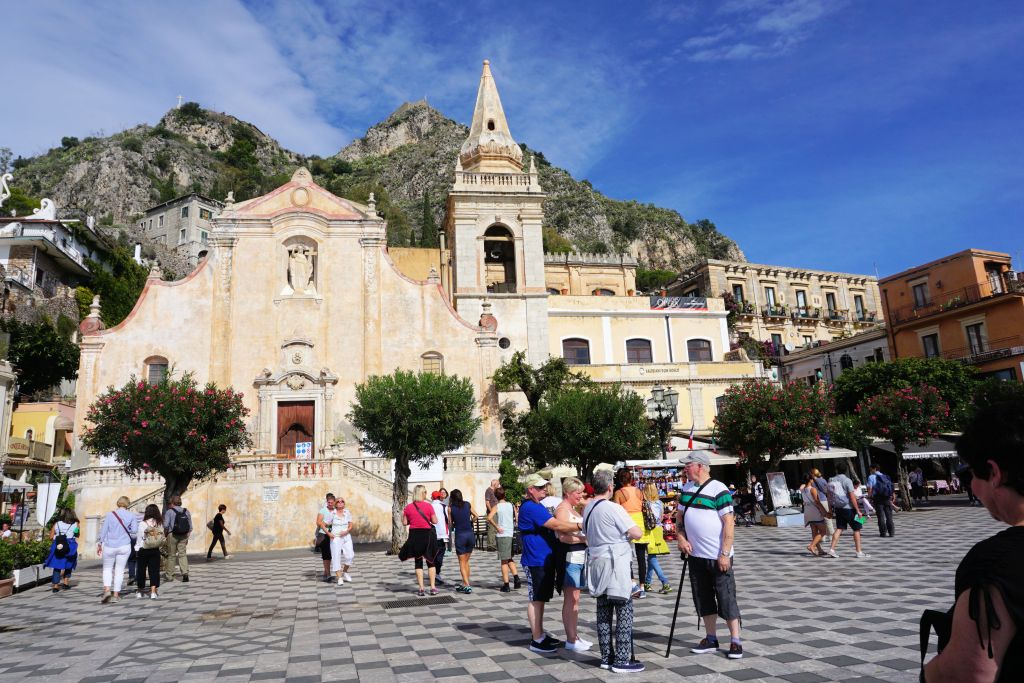
    From the natural terrace built around the ruins of a Norman castle, you have a spectacular view of the Ionian coast, majestic Etna, Taormina, the Bay of Giardini-Naxos, the straits of Messina, and the Calabrian coast:  on a clear day you can even see way beyond Catania, as far as Syracuse.  You are nearly 2,000 feet above sea level, you are in Castelmola in Sicily.

    Castelmoro from below

    Part of the attraction of Castelmola is gazing up at it from Taormina (as in the featured photo taken from the main square in Taormina,  and above from another part of the town) and wondering how on earth you can get up there.  It looks like the top of the world, this tiny village perched on a craggy hilltop above Taormina.  Not so long ago the village was inaccessible, visited only by a few intrepid travellers who hiked up the seriously uphill mountain paths for about 90 minutes, or drove up the curving, almost perpendicular road, to the top.  Nowadays a bus makes the 15-minute journey every hour from Taormina and things are changing, although slowly.


    The result of this remoteness is that the people of the village have kept their dialect, their customs and their lives entirely to themselves.

    Casteldemoro

    Founded in the 8th century BC it was first conquered by the Greeks and afterwards by Saracens and its interesting mix of customs and traditions reflect this history.  The entrance to the village is marked by an ancient arch of Greek-Roman origin, built in 900 BC, and this dominates the Piazza S. Antonino, the main square of the village.  In earlier times the entry was through a gate carved into the rock which was moved to the front of the castle in 1927.


    This relatively modern Piazza Sant’Antonio, built in 1954, is one of the main squares of the town and attracts the local elders who like to sit on the benches in the square to watch the village activity and the arrival and departure of the buses.  From this Piazza of white and black lava stone, bordered by a white balustrade and tree-lined sidewalks, there is a panoramic view of Taormina, its town, beaches and islands.


    From the Piazza, roads lead off to other parts of the village, every corner offering more spectacular views whether it’s over the velvety green mountains with their trails delineated as though someone had poured them in swirling patterns on the slopes or the craggy peaks of the barren side.  The street names, numbers and signs are locally crafted in stone and wrought iron, and the pastel-coloured houses range from palest primrose to sky blues and apple greens.  In fact, it is a typical Sicilian village, better preserved than most, as it has not lost all its inhabitants as have most of those in the interior of the island.


    That said, a fair number of the inhabitants depart in the winter for the slightly warmer temperature along the coast but during the rest of the year, they man the restaurants, bars and lace and embroidery shops for which the village is famed.

    One of the most famous and most eccentric attractions is the Turrisi Bar which has a bizarre display of phalluses in wood, clay and ceramic – a sign of abundance and a good omen as per the Hellenic tradition – in every size, from large stone sculptures to bathroom taps, paintings and wooden carvings.  This ancient emblem of fertility is celebrated here in flamboyant style, and among the gifts available from the shop is the locally produced almond wine in phallic-shaped bottles, referred to, of course, as the “elixir of love”.

    As so often in Sicily one passes from the profane to the sacred in the blink of an eye and in just a few steps you arrive at the Cathedral which dates back to the 16th century (rebuilt in 1935), known otherwise as the Church of St. Nicholas of Bari, in the Piazza Duomo. There isn’t a lot to hold your attention here but it has a rather beautiful pulpit and a wooden statue of Mary Magdalene which, I am told, is of the school of Bagnasco.   I confess I had no knowledge of this sculptor but I found a reference to one Rosario Bagnasco who worked mainly in wood, and who was active mainly in Palermo, so I presume it is his work. Looking towards the Bell Tower Before you leave, look to the beautiful bell tower which offers a wonderful frame for a photograph of Mount Etna in the distance behind it.

    CASTEL DEL MOLA

    So if you find yourself with a day, or even a half day to spare when you are in Taormina, or if you want to see one of Sicily’s loveliest medieval villages, then be sure to visit Castelmola where you will find narrow streets and quiet solitude in a community of just over one thousand residents.  In fact, if you visit out of season and find your way up the mountain to Castelmola you may feel that you have the entire town to yourself.


  • Rain in Sicily

    Marooned in my very nice hotel in Syracuse where it has rained now for 3 days.  And when I say rain, I mean torrential rain falling from the sky non-stop.  As most of what I’ve come here to see is outdoors, like the Roman and Greek theatres, that’s not good news, although I did manage some of the smaller sights before the deluge.  I’ve been here before so it’s not too bad for me but my travelling companion is very disappointed.

    We were luckier in Taormina where, although we had heavy rain there too, we managed on the good days to do the essential sights.

    To those bloggers with whom I usually keep in touch this is the reason for my silence.

    To compound matters I left my ‘phone in the security section at the airport (now awaiting collection when I get back), my IPad locked me out, and as I can’t retrieve its text code on my mobile OR landline, it asked me the usual security questions like mother’s maiden name, first pet and first school: no probs.  Then it asked me when I opened my Google Account!  Can anyone remember when they opened theirs?  So I’m still locked out.

    I always carry my little Kindle in my pocket for convenience and it has been my saviour.  It never asked me daft security questions and it just logged on to the hotel internet like a pro. when I remembered this morning that it also does emails.  WordPress needed my password which I couldn’t remember so it I’ve had to get another, but that’s OK, I’m online now and have read a few blogs.

    I don’t think I can upload photos though, so will not be posting until I’m home again.

    Meantime, here’s to the Kindle, much better value for money in my opinion, and a definite thumbs down for the IPad.  This is the second time the IPad has done this to me so I should have known better than to rely on it.


  • CYPRUS – Aphrodite’s Island

    CYPRUS – Aphrodite’s Island

    Once bitten forever smitten, they say of Cyprus, and I can vouch for that.  Lying at the crossroads of Europe, Asia and Africa, this island of Aphrodite, Goddess of Love, offers a magical blend of romance and relaxation in a landscape untouched by time – away from the coastal resorts that is.

    I fell for its charms many years ago when a Zorba-like boat captain whisked us off in his boat for a seafood picnic on an offshore island, later to watch the most glorious sunset I’d ever seen.  In retrospect, the colours of the setting sun and the purple and pink skies probably owed a lot to the wine consumed on deck but that was the start of my love affair with the island.

    Aphrodite's Rocks (Limassol to Paphos
    Aphrodite’s Rock, Cyprus

    The legendary birthplace of the Goddess is a golden yellow rock that juts into the sea on the coastal road between Limassol and Paphos, and 4,000 years on from her tempestuous birth from the foamy ocean, her legacy of love is still attracting young and old.  Swim around the rock three times and you will retain your youthful looks, I was told!

    Unfortunately I didn’t have time to test this offer as we were on the way to Paphos to visit the ruins of the nearby ancient city-state of Koúrian, wonderfully situated on the cliffs above the sea, where we sat on the steps of the amphitheatre imagining ourselves as 5th century theatregoers, before wandering off to a nearby site to admire the still discernable central heating system and bath-houses and the well-preserved mosaics of fighting Gladiators.

    Four thousand years of civilization and priceless cultural treasures are visible in Paphos where the harbour, still used by the local fishermen, is the focal point of the town, and cafés, bistros and bars line the waterfront.  As the sun sets and the fishing boats chug out to sea for the night’s trawl the medieval fort on the edge of the sea turns honey coloured, lovers stroll up and down the promenade and from bars and restaurants, the musical sounds of Zorba the Greek can just be heard above the tinkle of ice in glasses.   And yes, I know Zorba wasn’t a Cypriot, but the music is everywhere and everyone seems to like it.

    If time allows, it is a good idea to alternate days on the beach with days in the mountains, and in this case, Limassol, Cyprus’s second city, is your best base.   You’ll eat well in this town, and cheaply, whether you like chips with everything (Cyprus is big on chips – a boon for those with children) or want to try some of the local dishes like kleftiko (lamb cooked in the oven until it falls off the bone), stifado (a sort of beef stew) Afelia (pork marinated in red wine) or the famous meze (a selection of meat and fish dishes).   With hotels from budget to 5-star, a public beach with changing tents, sun-loungers, jetties on which to stroll, and that always sparkling sea, there is something for everyone.

    f29888252

    Some of the beaches are man-made and the long 8-mile strip of development may appear bland but don’t dismiss Limossol too quickly: the old town makes up for the modernity of the new. There is a daily market that shouldn’t be missed, where soft velvety peaches nudge scarlet cherries, and melons and apricots tumble in perfumed profusion.  And buying a pint of freshly squeezed orange juice for 1 Euro just has to be a bargain.  At night the Tavernas by the Old Harbour offer great seafood and in many of the restaurants you can join in the Greek dancing – to Zorba the Greek, of course – if you have the courage.

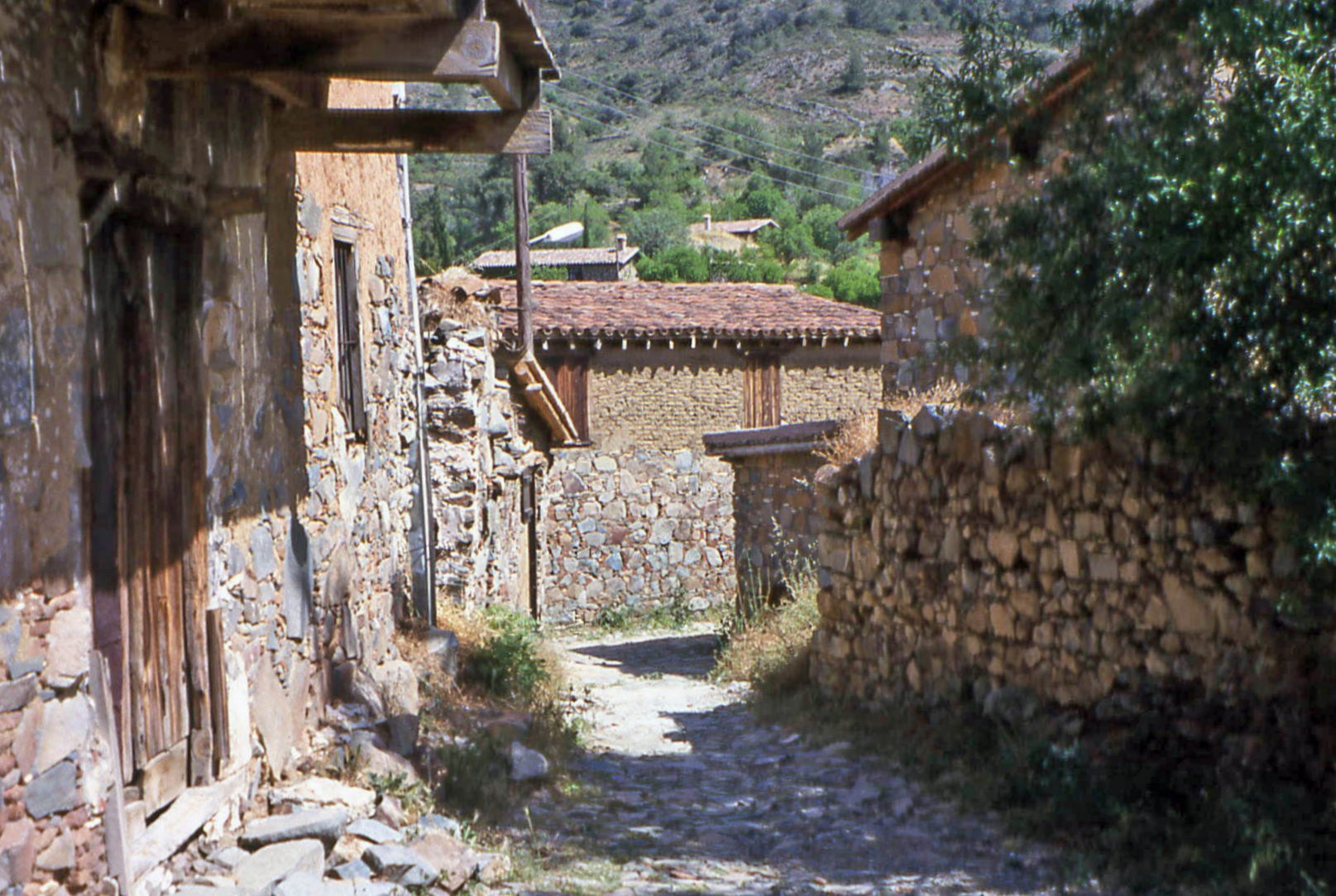
    Mountain Village, CyprusIf you like driving, Cyprus is one place you should avail yourself of a 4WD.  Up in the Troodos mountains, steep hairpin bends and the lush green mountain backdrop gives way to ancient cobbled trails that lead to peaceful villages nestling on the slopes of 6,500-foot Mount Olympus.

    In the fields round about, brown and black goats chomp the grasses among the rosemary and thyme.  Lizards and butterflies vie for your attention and during the mild winter, almond trees blossom and lemon and orange trees perfume the air, but in the summer flowering pink oleander and broom cover the hillsides, a magnet for the bees that produce the exquisite Cyprus honey.  At certain times of the year, birds from Africa, Asia and Europe swoop overhead in compelling formations as they migrate to their various homes.

    Most of the villages have an ancient monastery displaying time-worn frescoes and rare icons, and a familiar sight is a monk in full black robes sitting outside his tiny chapel, usually with a mobile ‘phone clasped to his ear.  In the afternoon the only sound is the slap of counters as old men play backgammon in the inky-dark bars of the villages.

    Kakopetria set in the northern foothills of the Troodos is one of the loveliest mountain villages.  It straddles two fast-flowing streams in the middle of which lies the old village, lovingly brought back to life by local craftsmen.  Wooden houses with ornate verandahs filled with lemon geraniums and perfumed roses line the narrow streets and the village women making lace shelter from the sun under vine trellises.

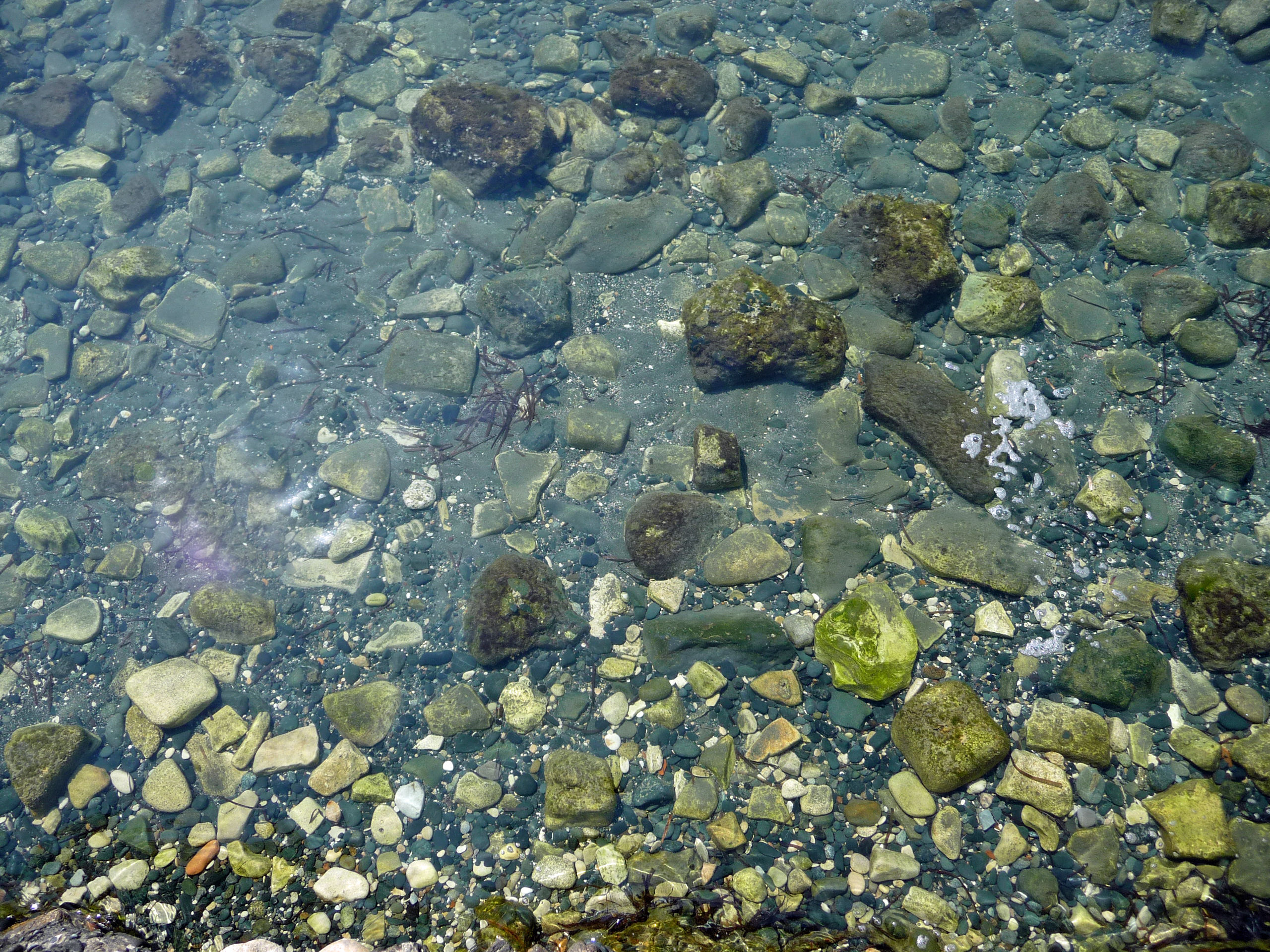
    Amazingly clear waters surround Cyprus

    In complete contrast is Aiya Napa where you’ll find the island’s best beaches, soft golden sands leading to gently shelving seas.  But, Ayia Napa is not for everyone: this is clubbers’ paradise, the “new Ibiza” the so-called “Garage-music capital of Europe” with lighting and sound systems to equal anything London has to offer.  Top UK DJ’s are resident during the summer, the clubs are mega with most having a capacity for over 2,500, and none of them open before midnight.  Those still awake during the day can shop till they drop from designer to downright dodgy goods and for the kids, there is a Waterworld theme park based on the Greek Myths, more family fun than white-knuckle, from April to mid-November.

    EPSON scanner image
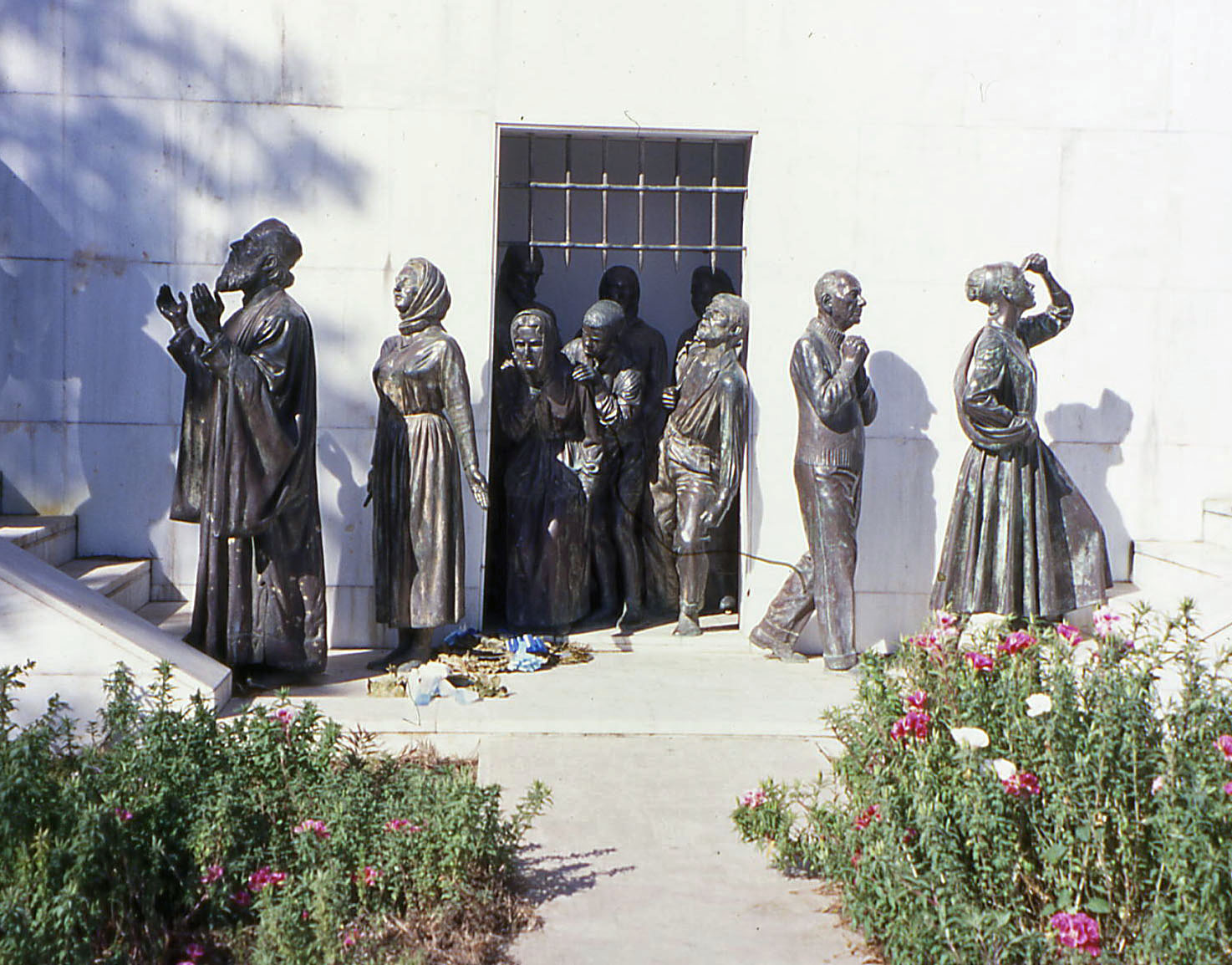
    Statuary depicting the suffering endured during the wars

    Inland from here is the island’s capital, Nicosia, and a visit to the old walled city is worthwhile if just for the walk back in time through the narrow streets of The Folk Neighbourhood – Laïki Geitonia – a renovated pedestrian area of bargain-filled artisan’s shops.  And if borders fascinate you, you can walk to the ‘Green Line’ and from a platform look over to the Turkish side of the island.

    Larnaca seafront has an air of sleepy charm with cafes and tavernas lining the palm-fronted promenade but it has little to recommend it apart from its good museums and interesting monasteries but if you want the best seafood in Cyprus then head for MacKenzie Beach just outside the town, where the restaurants along the seafront are outstanding   Reservations are needed if you want Sunday lunch as this is the day Cyprus’s extended families eat out, just like in France.

    Village Lacework

    Cyprus is one of those blessed islands that can cater for those wanting antiquities and those who want nothing more than to soak up the relentless sun and bathe in the warm, azure sea.  It feels very familiar to visitors from the UK with familiar British chain stores, driving on the left and English being widely spoken, but the 340 days of sunshine and the laidback atmosphere leaves you in no doubt that you are abroad.

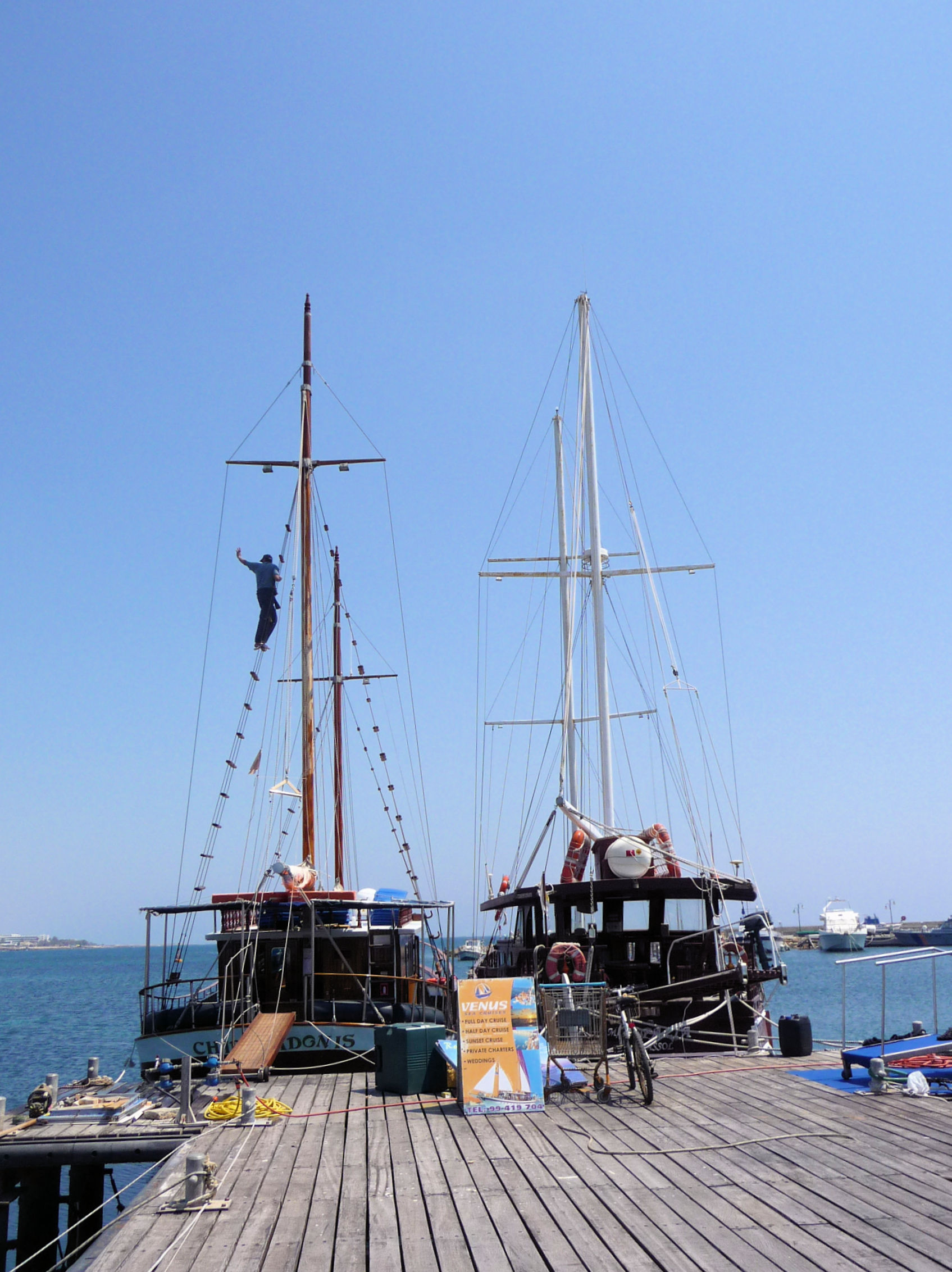
    Climbing the Rigging in Paphos Harbour
    Climbing the rigging