Category: Uncategorized

  • A Walk for Edward Thomas

    I can no longer walk the distances or climb the hills that would warrant inclusion in Restless Jo’s Monday Walks but looking through my photographs today I came across one of me beside the Memorial Stone to the poet, Edward Thomas, taken about 30 or more years ago, way back in the days when I walked long distances and climbed hills with abandon.   It started me thinking about the poet, and the walk from Steep to the Memorial Stone, about 4 miles over bridle paths and stiles, through beautiful wooded countryside to the final stretch up a steep, chalky slope to the Stone.
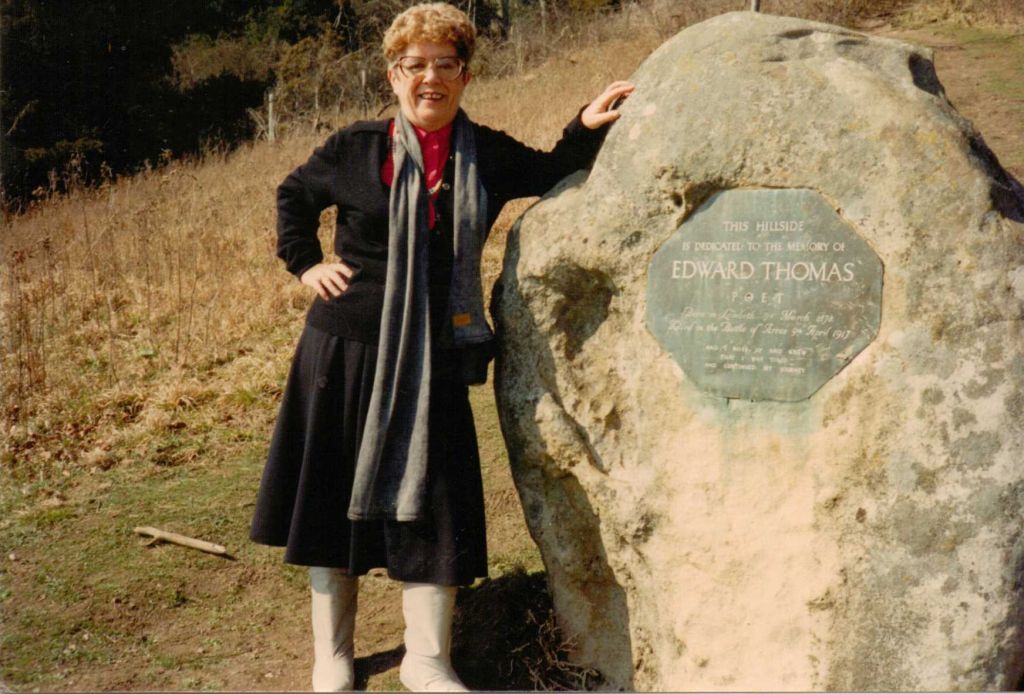
    Mari at the Edward Thomas Memorial on top of Shoulder of Mutton Hill in Hampshire

    The Sarsen stone and the octagonal bronze plaque designed by Professor Sir Patrick Leslie Abercrombie and erected in 1937, stands on top of the Shoulder of Mutton Hill in Hampshire. Lord Horder of Ashford Chace owned the land when the stone was erected and he dedicated the hillside in perpetuity to Edward Thomas. It is now Listed Grade II. 

    The plaque reads: This Hillside is Dedicated to the Memory of Edward Thomas Poet, Born in Lambeth 3rd March 1878 Killed in the Battle of Arras 9 April 1917 And I Rose up and Knew That I was Tired and Continued my Journey.                                                                                                           

    Note that the whole hillside has been dedicated to the poet. 
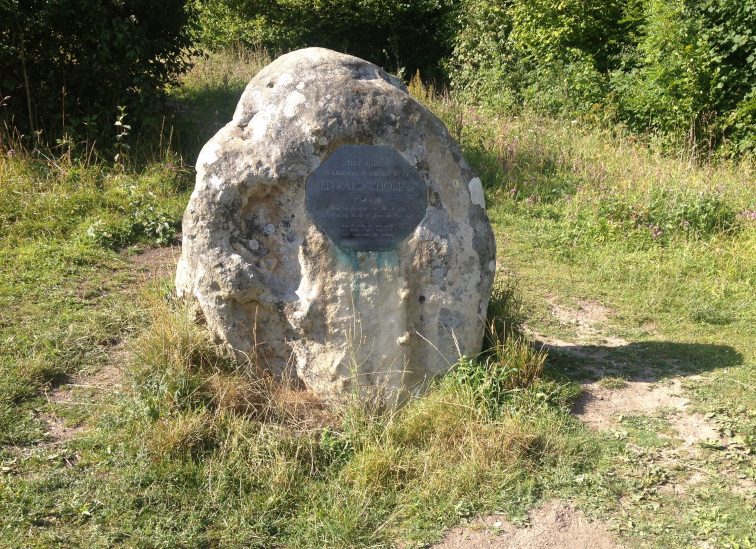
    Edward Thomas Memorial
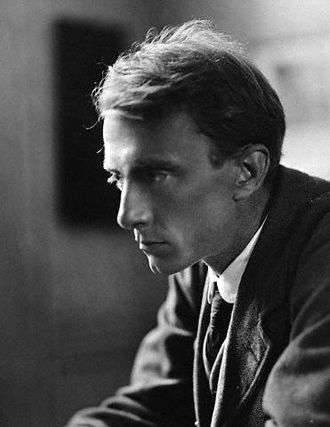
    Edward Thomas, Poet
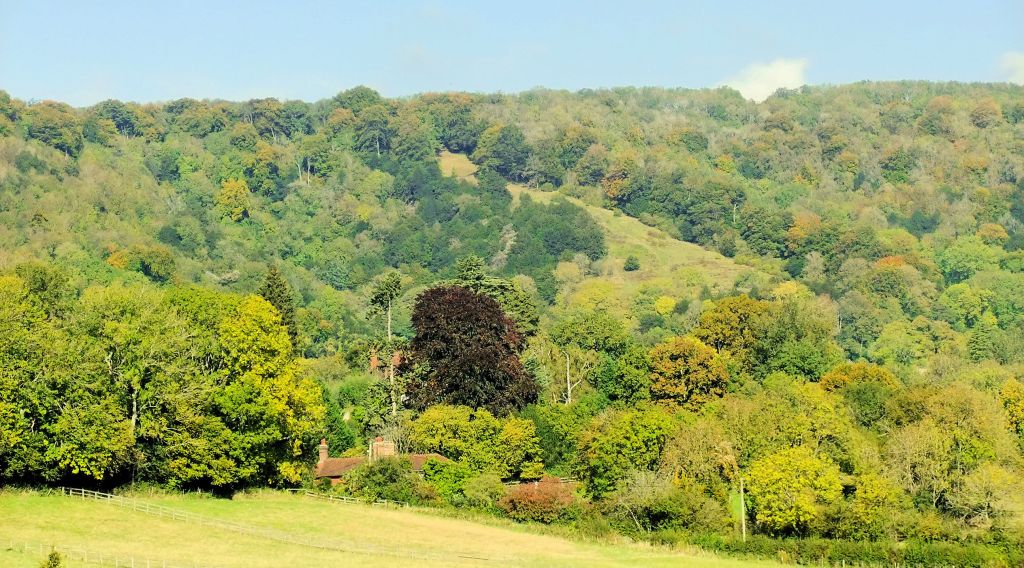
    Shoulder of Mutton Hill

    You may know the poem Adlestrop, a poem most of us learned at school and one of Edward Thomas’s most famous poems. I’ve loved his poetry since I first read Adlestrop.

    ……… Yes. I remember Adlestrop—

    The name, because one afternoon

    Of heat the express-train drew up there

    Unwontedly. It was late June………

    It was when I began to take a deep interest in War Poetry however, that I found Thomas again, and although he didn’t write about war and his poetry as his contemporaries were doing, I felt that his experiences in the trenches influenced his poetry of the English countryside.  His poetry was lyrical, was tied to his rural home and displayed a profound love of natural beauty and of the area in which he lived.

    My walk to the Memorial Stone was inspired by possibly, the best known poem of one of my favourite Second World War Poets, Alan Lewis – All Day It Has Rained.   It depicts the dreariness and boredom of a soldier’s life on a slow Sunday at a military training camp in Edward Thomas country mixed with foreboding about what will follow when they go overseas. I give you just the closing few lines that took me to “Sheet and Steep and up the wooded scree”
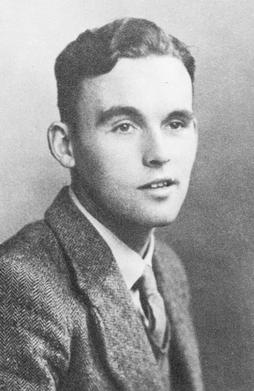
    Alun Lewis, 2ns World War Poet

    Or the shaggy patient dog who followed me

    By Sheet and Steep and up the wooded scree

    To the Shoulder o’ Mutton where Edward Thomas brooded long

    On death and beauty – till a bullet stopped his song.

    Edward Thomas was killed at the first Battle of Arras on April 9th, 1917.
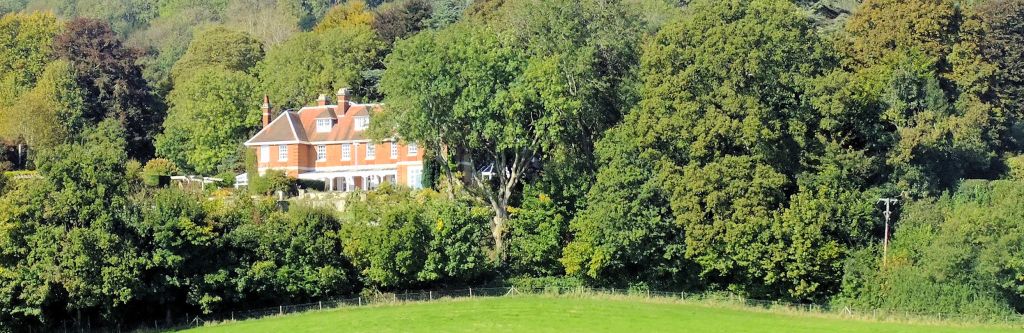
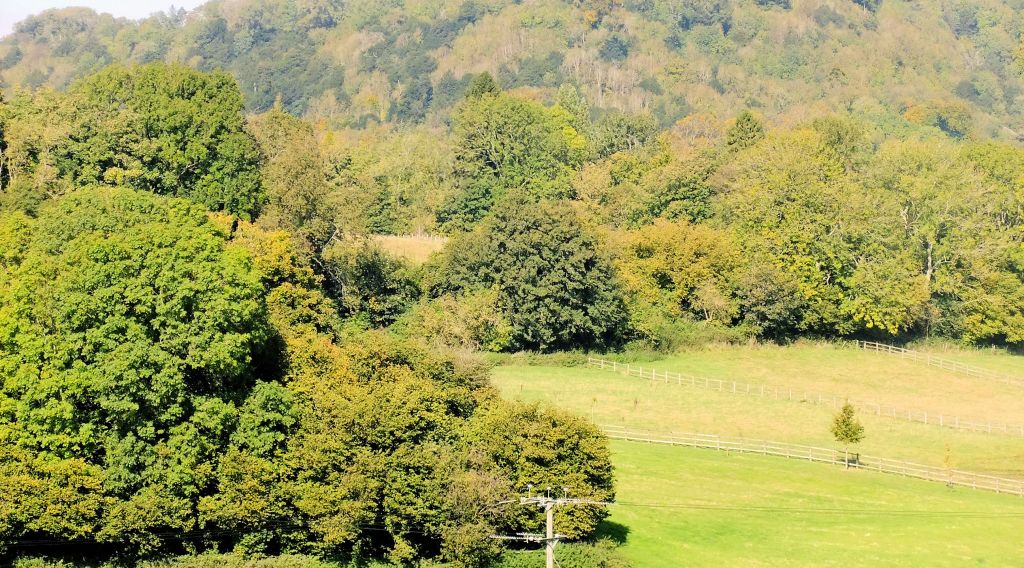
    The poet lived in the village of Steep (near Petersfield) at the bottom of The Shoulder of Mutton Hill and it was this landscape, the fields and the hills, that informed his poetry. 
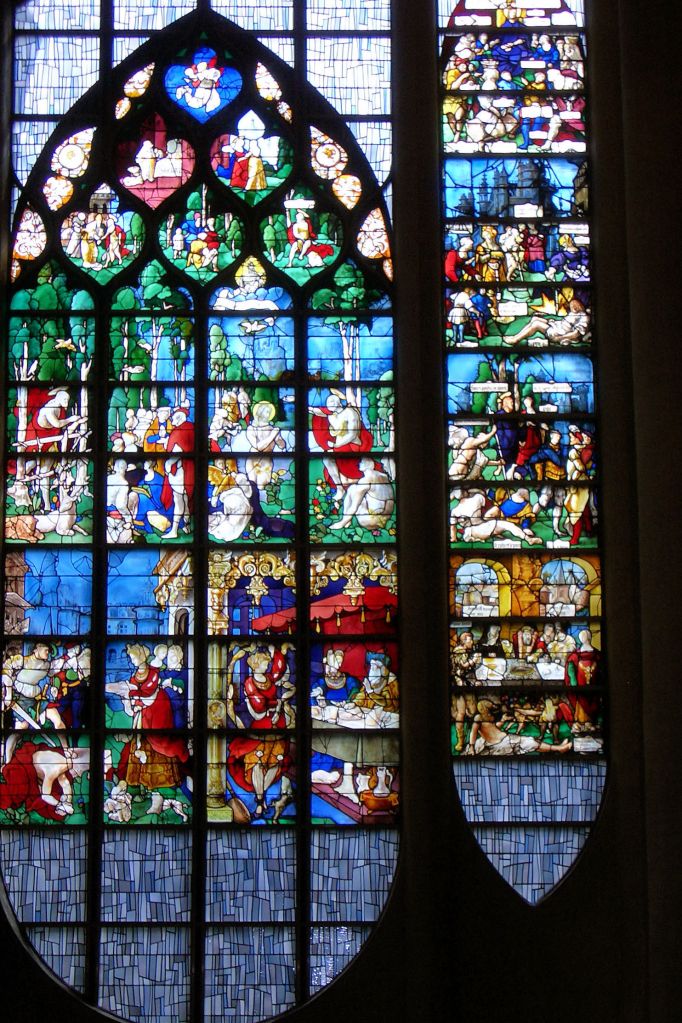
    In the village of Steep stands All Saints Church in which was installed in 1978 two beautiful glass windows engraved by Sir Lawrence Whistler and dedicated to the poet.  The left window depicted a road across hills bordered by yew and flowering may.  The poet’s jacket hangs on a branch and his pipe and stick are beside it with landscape and sky in the background. The right hand window has one of his poems engraved on it with above it, in the mist, his house on the hill above Steep.  Below this is a sequence of doors the last one opening onto a Flanders battlefield from which the sun rises and then turns into the door latch he has just closed behind him in the poem.

    Copy of a Postcard of the Whistler windows in All Saints’ Church

    Sadly, in 2010 the windows were smashed in a burglary and I understand there are no plans to replace them. Indeed, how could they replace such priceless work? 
    Further reading:

    Collected Poems by Edward Thomas:  Published by Faber & Faber

    Collected Poems by Alun Lewis:  Published by Seren Books

    There are many biographies about both Alun Lewis and Edward Thomas but the two I have on my bookshelves are:

    Now All Roads Lead to France by Matthew Hollis, which is about the last six years of Thomas’s life.   Published by Faber & Faber

    Alun Lewis. A Life  by John Pikoulis   Published by Poetry Wales Press

    Below is a reading of Adlestrop by the late Geoffrey Palmer.

  • Challenge your Camera: Steps and Stairs.

    Steps and Stairs Challenge linked to Dr. B’s challenge at Dr. B’s Challenge your Camera.

    What better place to start Steps and Stairs with than The Spanish Steps in Rome.

    The Spanish Steps, Rome

    Still in Italy, it’s a steep walk to the top of the amphitheatre in Verona during the Opera Festival there but that’s where the budget seats are, obviously. I’ve sat up there – when I was much younger – but I’ve also had the luxury of the lower seats too, and I know which I prefer!

    The Amphitheatre, Verona

    And now for something completely different, as they say. Ad hoc steps for swimmers in Syracuse in Sicily, used as sun-bathing platforms as well and looking pretty dangerous to me.

    Steps for Swimmers in Syracuse in Sicily

    Still in Sicily, below is the Teatro Massimo in Palermo, the 3rd largest Opera House in Europe. Film buffs will know these steps as the setting for the scene in The Godfather, Part III, where the godfather’s beloved daughter is shot dead, one of Al Pacino’s great moments among many in the series. The interior of the theatre was also the setting for the closing scenes and backstage tours are on offer.

    Teatro Massimo, Palermo, Sicily

    Across now to Japan, to Hiroshima, where we see school-children on the steps of the Motoyasu River that runs through the Peace Park. They are having a history lesson on the bombing of the city and the consequences for the world.

    Schoolchildren in the Peace Park at Hiroshima, Japan

    And lastly, there may be many more of Angkor Wat but I never tire of looking at the shrines here and remembering the 3 days I spent in and around the site, loving every minute I was there.

    One of the many shrines at Angkor Wat, Cambodia

  • Pick a Word: January

    Linked with Lost in Translation’s Thursdays Special: Pick a Word

    Ethnicity

    Padaung Child, Hill Tribes, Chiang Rai

    Itinerant

    Sticky Rice & Mango Seller – Hua Hin, Thailand

    Quintessentials

    Quintessential Foods Offered to Lord Buddha on Special Occasions

    Multifarious

    Shoreline

    The Mumbles, Wales
  • Sculpture Saturday: Mons, Belgium

    Just behind the Town Hall in Mons, lies the Jardin du Mayeur (the Mayor’s Garden) a little haven of tree-lined peace right in the heart of the city. It was designed between 1930 and 1936 and was once a private garden but is now a park accessible to all.

    Apart from the design and the century-old trees including copper beeches, lime trees, paulownia, horse-chestnut trees and other attractive plants, it contains Gober’s sculpture called The Ropieur (1937). The “Ropieur” (cheeky Mons street urchin) represents a child who splashes the water of its fountain on the passers-by, symbolising the rebellious attitude of the town’s children.

    The Ropieur, Mons

    Also in the garden is also a bust of Marcel Gillis, singer, poet and painter and the town’s favourite son. The sculpture is by Raoul Godfroid (1896-1977), also Belgium.

    Marcel Gillis, Poet & Painter, Mons

    The sculpture features a triangular rock with the bust of Gillis attached to the front. Under-neath the bust and etched on the rock is the name of the artist, his dates of birth and death, and his surname, etched to match his signature.

  • Spring just around the corner

    Hush, hush, whisper who dare, plants are a-budding and spring’s in the air.

    Sorry about that paraphrasing but with everything springing into life in my garden today I couldn’t resist it.

    I think these may have been out for a couple of days but the weather has been so inclement that I just couldn’t face it, but today I went to check what was happening to the last rose to keep flowering (and to take a picture of it). I found it had been blown away by the strong winds. Branches of my camellias had broken off, but there are great signs of spring with daffodil bulbs, snowdrops, crocuses, Daphne and Camellias all showing signs of bursting forth any minute now.

    I can forget Covid19, just for a little while.

  • Challenge your Camera # Churches

    Linked to Dr. B at Challenge your Camera here

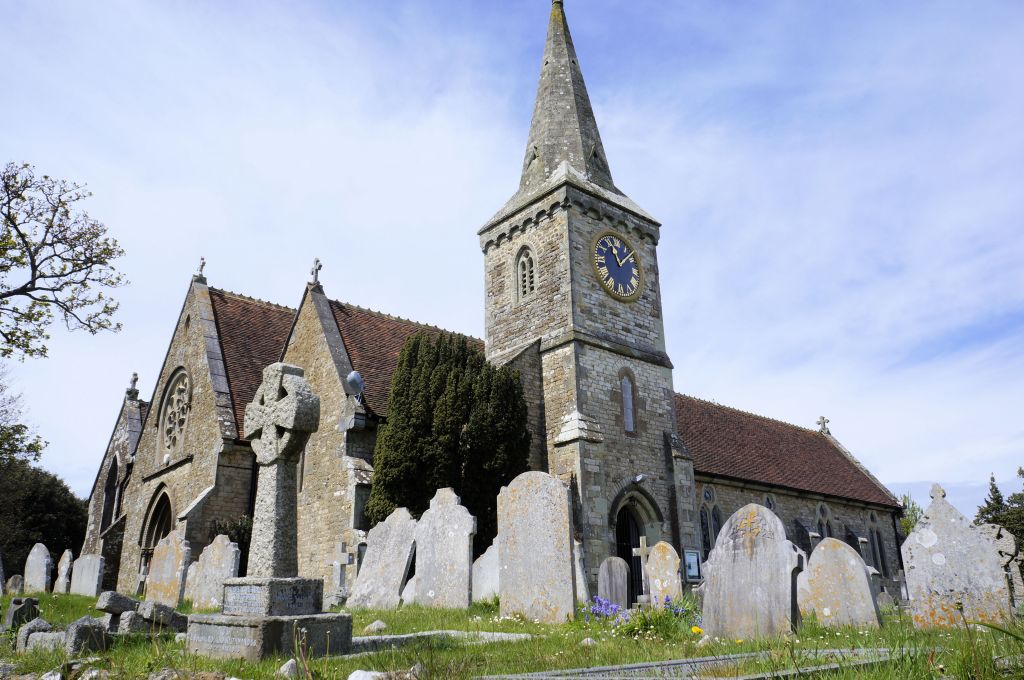
    The Victorian Christchurch, Sandown, Isle of Wight, UK (consecrated 1847)
  • Lens-Artists Photo Challenge 132: Stripes and Plaids

    Linked to Lens-Artists Photo Challenge here

    My stripes seem to be ‘lines’ and I can’t find any plaids, but here we go.

    Stripes on what is regarded as the busiest crossing in the world, Tokyo.
    Stripey effect of the Prayer Poles, Kyoto, Japan
    Lines going every whichway in Tokyo
    Lines delineating the tiles on the roof of St. Matthias Church, Budapest