
Blog
-
Six Word Saturday
Linked to https://travelwithintent.com/2020/11/21/beauties-once-soaring-fir-tree-
Not Yet Christmas, Here Comes Spring.
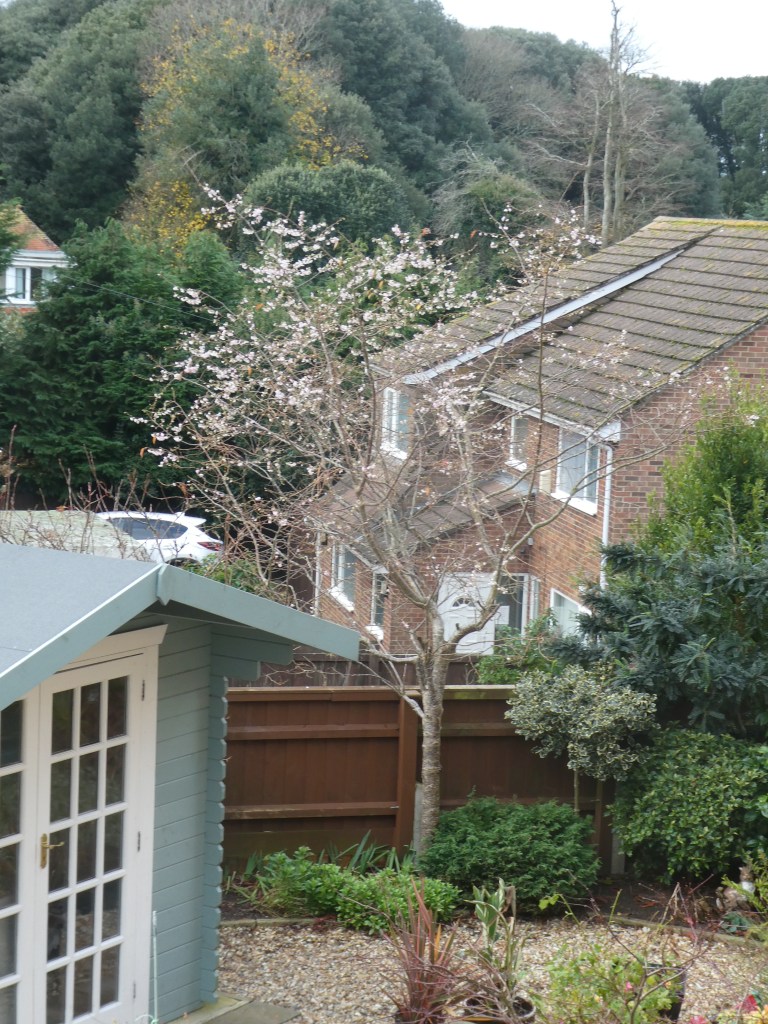
Not yet Christmas, here comes spring. This wasn’t here yesterday. Seen from my balcony this morning my neighbour’s tree has burst into blossom. Maybe not ‘burst’ but showing the flag anyway.
-

Sculpture Saturday in Pézenas
Hosted at https://nofixedplans5.wordpress.com/2020/11/14/sculpture-.saturday-9/

Statue to the 17th century French playwright Moliėre by Jean-Antoine Injalbert This statue to the great French playwright Moliėre, one of the great comic-writers of all time and described by Stendahl as “Molière, the great painter of man”, is to be found in the town of Pézenas in the Langudoc-Rousillon area of France, where he lived for many years. He had an acting troupe which worked in both Paris and Pézenas and had as patron, the brother of the King, the Duke of Orleans.
He led an extraordinary life and his death became legend; he died on stage, while performing his final play, Le Malade Imaginaire, or rather, he collapsed on stage, and died a few hours later at his home. At that time, the Catholic church in France condemned the theatre as a school for scandal, held all actors to be ipso facto excommunicated, and forbade their burial in consecrated ground – which included every cemetery in Paris. Two priests refused to visit him to administer the sacraments and the third arrived too late.

The white marble statue was sculpted by Jean-Antoine Injalbert in 1897 and it shows the maid Lucette from Moliere’s play Monsieur de Pourceaugnac paying tribute to the master playwright with a goat-footed satyr representing Satire sitting at the bottom of the statue. Masks of the actors Coquelin Cadet and Jeanne Ludwig are on the back of the monument

Moliėre In 1792 his remains were brought to the Museum of French monuments and in 1817 transferred to Le Père Lachaise Cemetery, Paris.
Further challenges over at https://nofixedplans5.wordpress.com/2020/11/14/sculpture-.saturday-9/
-
My Whatchamacallit:
Linked to Debbie’s challenge here
I’ll follow Debbie’s example and post a holiday photo also in a Bodega, this one in Arcos de la Frontera, one of the White Villages in Andalucia.

Typical Bar in Arcos de la Frontera We spent more time than we perhaps should have in this delightful bodega, mainly because they had a big selection of Manzanilla and the olives were a product of the owner’s parents who cured them with a secret recipe which made them irresistible.
-
Silent Sunday in Crete
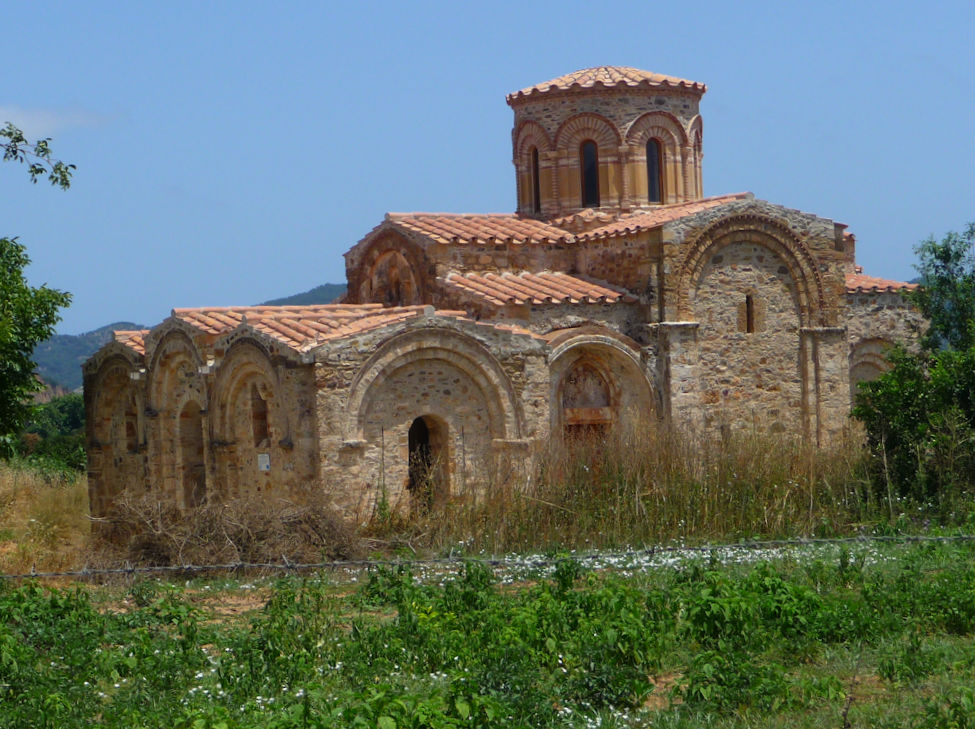
The Oldest Byzantine Church in Crete It definitely was a silent Sunday when we came across this deserted Byzantine church which we later found to be the oldest in Crete. Overgrown with grasses and weeds, it still has charm and I remember well the smell of the herbs underfoot as we explored the near-ruined building.
-
Remembering WWll Convoys

ALAN ROSS, Poet When I posted my Saturday Sculpture last week (the Memorial to the men of the Merchant Navy who left on the Arctic convoys from Cardiff in Wales) it set me thinking of one of the poets of the Second World War, Alun Ross, whose name seldom crops up in anthologies but whose poems I feel should be more widely known.
‘Where are the war poets’, the newspapers asked on the outbreak of the Second World War. Cyril Connolly answered them with a curt “Under your nose”. And indeed they were, although the poems they were writing were very different from those written in and of The Great War. The new style was nonchalent, laconic and cool, poetry that came from disillusion, a war spawned by what Auden called ‘the low dishonest decade’.
Alas Ross, who served on the minesweepers and then the destroyers that accompanied the Arctic convoys safely through the seas to Russia, wrote poems of immense power, less well known than they should be, but then the Arctic Convoy servicemen always said they were overlooked in the war. If there is anger in them, it would appear to be anger more against nature than the human enemy but unlike the more famous World War ll poets Keith Douglas and Alun Lewis, he is not laconic, nor is he nonchalant. He ended his service in Germany overseeing the break-up of the German fleet, de-nazification, the identifying of war criminals, and the Belsen Trials. We cab say that he saw the worst of everything that man could do to man.

Alus Ross, Poet Ross was a man of letters, a journalist, editor and publisher, and it is often said that from the detail in the poems, his journalistic roots are obvious: they paint a picture as vivid as a newspaper headline but his anger appears to be more against nature than the human enemy.
… The white faces float like refuse…. they clutch with fingers frozen into claws the lifebelts …. (Survivors) is a sentence that sear the mind, as does his longer poems describing the fears they lived with daily, the dark, heavy, seas, the perpetual cold and the fear of a torpedo attack leading to an icy grave.

On a convoy ship 
On 30th December 1942 Ross was in a convoy when it was attacked by German surface raiders in an action known as the Battle of the Barents Sea. From this came the epic poem J.W.51B – Convoy, a poem that describes the horrifying minutes when Alan was trapped below decks on the destroyer HMS Onslow with only the dead bodies of his comrades for company: ‘…Heads floating like lilies/ Pulled under by the currents..’ Alan somehow survived that day. Two-hundreds and fifty of his shipmates did not. The experience haunted him until the day he died in 2001.
Here are a few lines from that poem.
‘A’ and ‘B’ Guns unable to fire, Radar destroyed, aerials ripped,
And, forward, the sea stripping The Mess decks, spilling over tables, Fire and water clinching like boxers As the ship listed, sprawling them. Tamblin, his earphones awry, like a laurel wreath Slipped on a drunken god, gargled to death In water with a noise of snoring.
To read more I would recommend his short collected poems, Open Sea (London Magazine Editions)
I think I am correct in saying that the Government has still to produce a medal for these brave men who risked so much in terrible conditions. Last I heard some years ago the Arctic Medal was still a dream in the heads of a few good men. There are only about 200 of these veterans left now. Surely it is time they were rewarded?
-
MILANO-MARITTIMA Weekend
Once upon a time when the world was a different place, when travel meant discovering new people and places and life was more carefree, we took time off from a hectic round of sight-seeing in Ravenna, Faenza and Bologna and booked ourselves into a gorgeous hotel in one of Italy’s smart resorts.
Grand Hotel Gallia, Milano-Marittima The idea was to relax completely and recharge our batteries ready for another few days of treading the cobble stoned alleyways of the towns and villages of Emilia-Romagna – and it worked. Milano-Marittima, smart and ultra-cool, was so unlike our normal holiday destinations that we were able to put aside our pursuit of historical remains and sink into a few days of mindless enjoyment. Time to sit on the beach and read the novels we’d brought along for the ‘down-time’.
And you know what? If I ever get to travel again I’m going to do more of that!
Gardens in Town and Chic Window-dressing Milano-Marittima is the beach resort to which the fashionistas of Milan take themselves for a spot of r and r. where among flower-filled roundabouts and tree-lined avenues they can be tempted by high-end shopping and lush living.
It’s also perfectly placed for a week-end trip from the UK, flying into Bologna or Rimini and despite its de luxe lifestyle, surprisingly reasonable for a few days because, let’s face it, you are not going to be buying one-off haute couture from Dior or Armani or if you are, then you won’t worry about budgetting.
Milano-Marittima lies on the Adriatic coast, just 30 Kl. from Rimini and 90 Kl from Bologna. Surrounded by lush green pinewoods, it combines the best of all possible worlds with sporting activities, a clean sandy beach, crazy nightlife, and fantastic shopping. Cycling and walking paths through the pinewoods lead to the Natural Park, home to a rich wildlife and flora typical of coastal pinewoods.

Beach at Milano-Marittimo Beaches are immaculate, as is usual in Italy, and as usual, the sands nearest the sea are free to everyone by law (a path from the esplanade to the beach area must be negotiable, again by law), and the rest of the beach is controlled by the hotels and other concessionaires.
There are some magnificent hotels along the front and in the streets off the beach, and if you are a resident of one of these you will, in most cases, be offered a discount on the basic beach package. This entitles you to two loungers, a table, an umbrella, use of a changing room and a locker. Prices vary depending on how far from the sea you want to sit. For instance, the Grand Hotel Gallia where I stayed charged €25 per day for the area nearest the sea. This is for two people and although it may seem a lot, it isn’t if you work out what you get for this.
There is usually a café or a snack bar on the site, the wooden walkway is swept regularly and kept clear of sand, and with a locker for your wallet and keys you can relax without worries. If you are only there for a day, or if you fancy a spot that belongs to another owner, you will pay the full price. And yes it’s a bit crowded, and yes you can overhear your neighbours, but for the denizens of Milano-Marittima, it is less about relaxing with a book and more about mingling and checking out la bella figura so join in and enjoy the fun.
The Beach, the Walkway to the Beach and there’s always a handbag seller somewhere! Nightlife is exuberant, people spilling out of bars and restaurants, eating al fresco some of the best food in the area and generally enjoying life. Believe me, it’s good.
Tearing yourself away from the beach, the shopping or window-shopping in Milano-Marittima is almost equal to that of Milano itself, the opportunities ranging from glamourous boutiques to shops that are very much on trend. Most of the top fashion houses have outlets on the wide avenues of the town and attract as many lookers as they do buyers, who come to enjoy the art of window dressing which, as in most of Italy’s towns and cities, is a delight in itself.

There is nothing in the way of historical monuments to interrupt the relaxation in Milano-Marittima, but it is well placed for sight-seeing in the nearby town of Cervia, famous as the repository of the precious salt but visited nowadays for its palaces, churches and the castle; Ravenna for the glorious Byzantine mosaics housed in 5th and 6th century perfectly preserved buildings; and Faenza for the medieval streets and alleys of the town, its piazzas and palaces, and the ceramic workshops and factories where they produce the world-famous Majolica items.


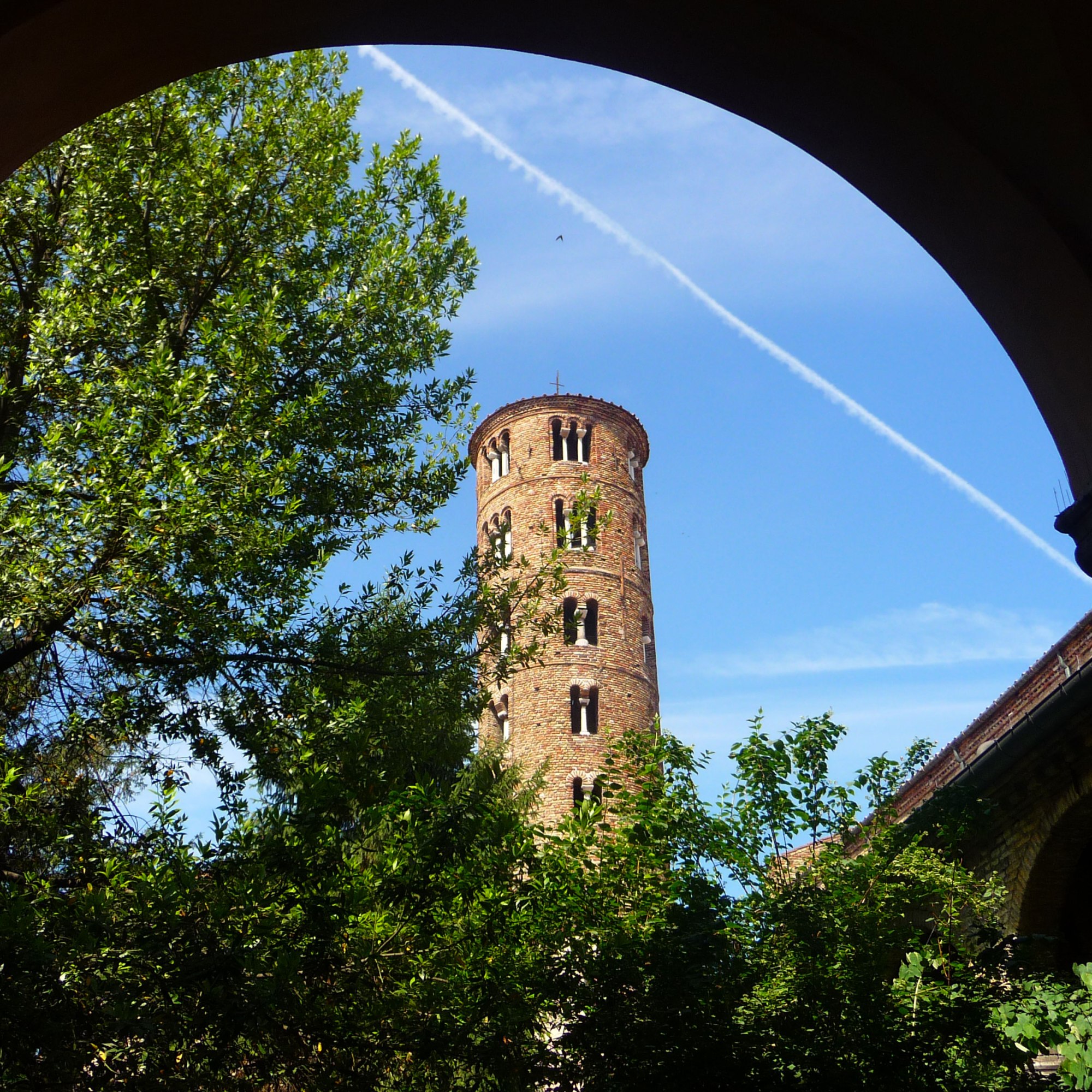
Magnificent Mosaics at Ravenna, Faenza, Dante’s Tomb, I Populi
If you want nothing to do and to do it in comfort and style, I can’t recommend Milano-Marittima enough, and the Grand Hotel Gallia for peace and tranquillity in the midst of a busy town plus outstanding cuisine.
-
Silent Sunday on the Gota Canal

The Göta Canal which links Sweden’s two cities Stockholm and Gothenburg, runs through the heart of Sweden. A one-way trip on one of the historic ships that plies the route takes 6 days; it is like a journey into another world.
Cruising through archipelagos with thousands of small islands, one river, eight lakes, two seas and three canals with 66 locks (in one case ascending 91 metres) the ship makes several stops at places of interest along the way.
The ships used were built between 1874 and 1831 and are considered historically important. Furnished in a period style there is neither radio nor TV on board any of the ships, and the use of mobile phones is discouraged. Between 40-50 guests are accommodated in small cabins about the size of a sleeping compartment on a train with bunk beds and a wash basin with hot ad cold water. Communal showers only, I’m afraid, but the food makes up for it.
Fresh lake fish every day, game from the forest, the freshest of vegetables and saladings, lots of the berries for which Scandinavia is famous and of course that marvellous coffee and cake.
This journey along one of the world’s great canals is an experience like no other but is only available during the summer months. And in those cabins you really get to experience what travelling was like in the 19th century on board these ships that carried immigrants from rural Sweden out to America.
The 190 kilometres of the Göta Canal were dug out by hand between 1810 and 1832 and it runs from Sjötorp in the west to Mem in the east, it is three metres deep and approximately 14 metres wide.



 MARI'S TRAVELS WITH HER CAMERA
