Author: maristravels
-
Sculpture Saturday: Basel
Linked to Mind Over Memory who hosts this challenge.
It was just a few hours stopover in Basel – a town in which I hope to spend more time on my next trip to Switzerland. Neat, tidy, like all Swiss towns yet with a quirkiness that is all its own. I particularly remember some very lovely small shops and even in the short time I spent there I managed to pick up some interesting souvenirs.
Then I looked up and saw it.
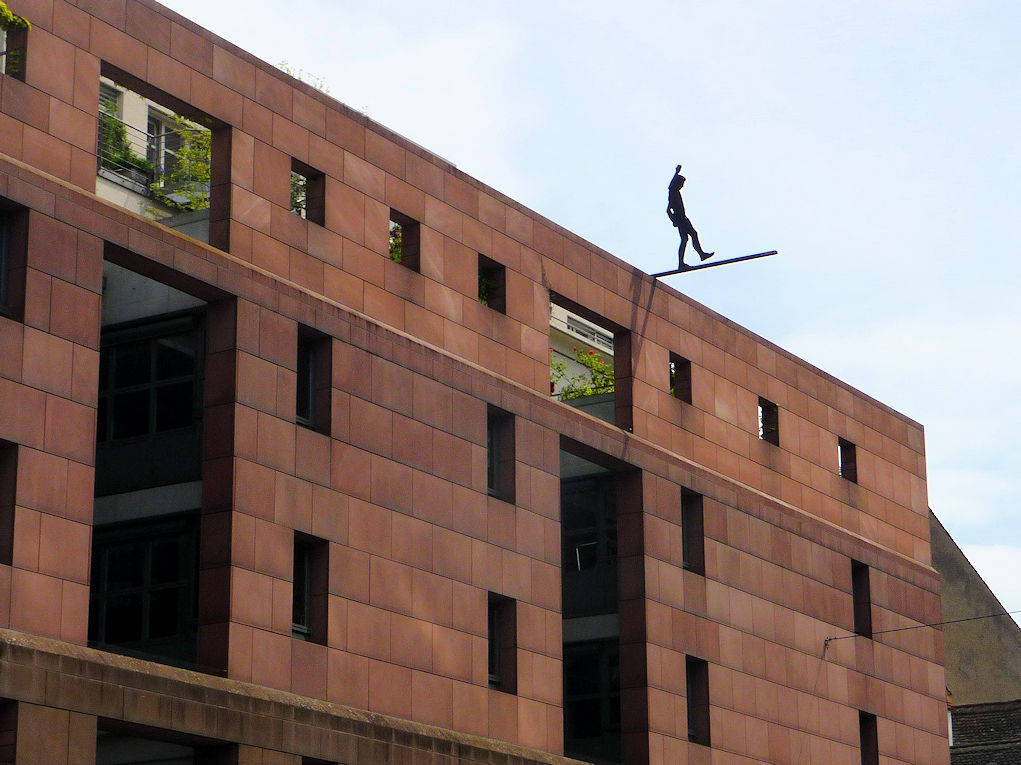
The building is called the Rosshof and the sculptor of this work is Hubertus von der Goltz. I knew nothing about him until I saw this work but since then I’ve enjoyed seeing his installations and his work online. His website is worth a visit.
-
Sculpture Saturday: Gormley
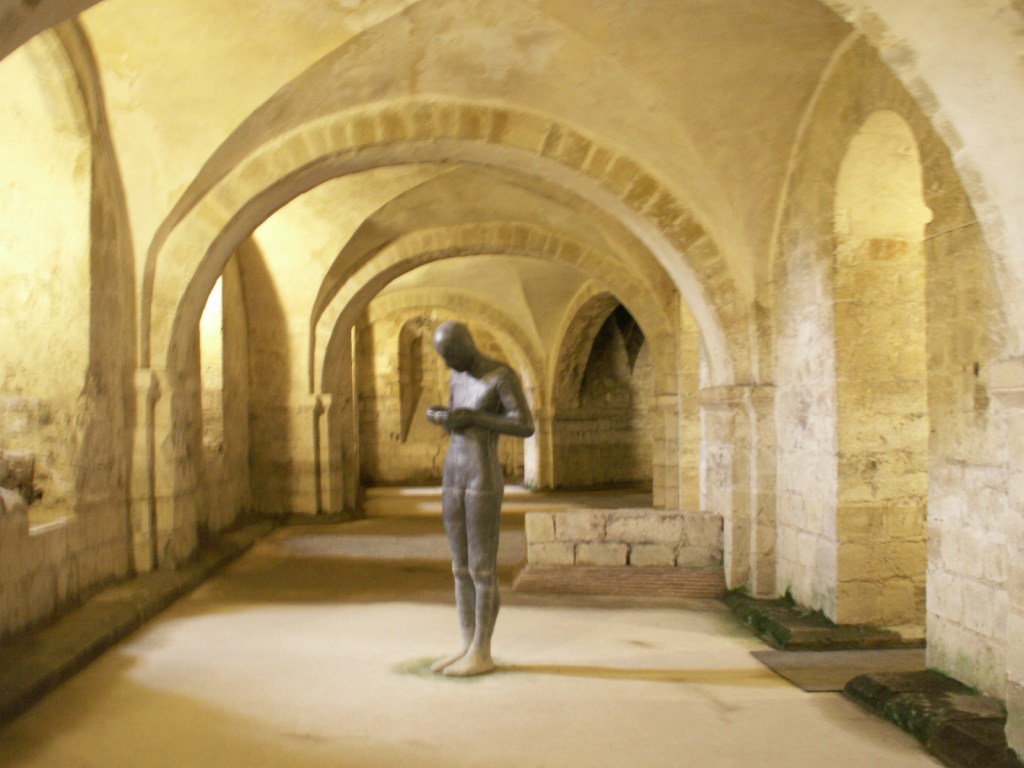
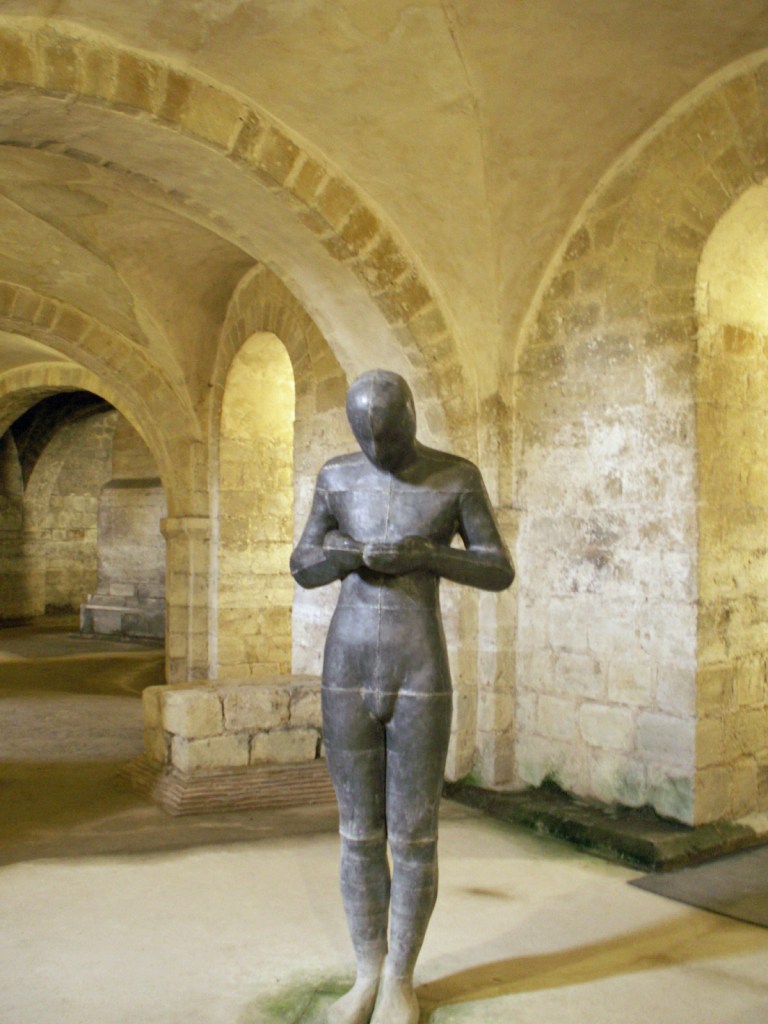
Antony Gormley at Winchester – SILENT II
“Sound II” stands like a gently glowing sentry beneath the nearly 1,000-year-old stone mass of Chichester Cathederal. It was installed sometime in the late 1980’s, part of an effort by the cathedral to introduce contemporary art into the Gothic masterpiece.
Antony Gormley’s Sound II in Winchester Cathederal Crypt This life-size statue of a man contemplating the water held in his cupped hands is fashioned from lead out of a plaster cast of the artist’s own body and stands in the crypt of Winchester Cathedral. During the rainy months, the crypt floods and as the water level rises gradually to his knees, the statue acquires an even more moody air as it stands in silent contemplation of its cupped hands. There is a tube mechanism through the body, so as the water rises it fills his cupped hands
Hosted at https://nofixedplans5.wordpress.com/2020/11/14/sculpture-.saturday-9/
-

A Ticket to Ryde – and Then a Walk
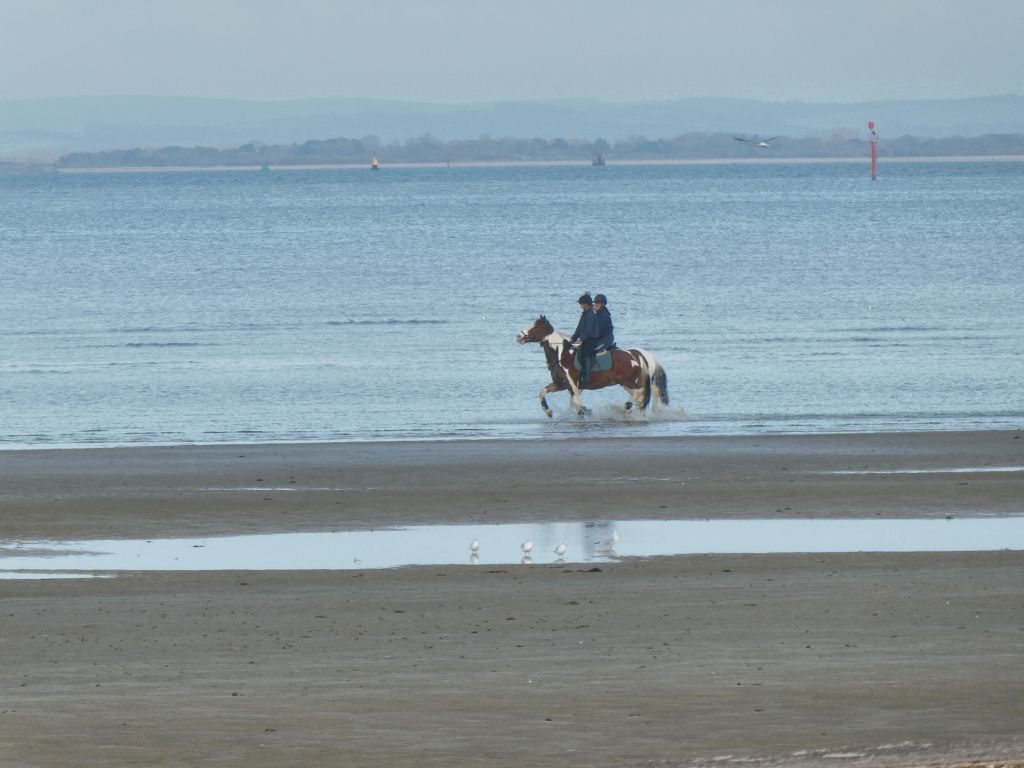
A bus to Ryde (Isle of Wight) through villages and towns, down country lanes and across high Downs, to take a coastal walk along the sands at Appley Beach, a walk full of interest, from dogs on the beach (my favourite was the Caucasian Shepherd which refused to stand still to be photographed) to horses being exercised in the waters and even to a group of hardy folk picnicking on the sands! And on a crisp November day we had a marvellous view across the water to the Portsmouth skyline, dominated by the Spinnaker Tower.

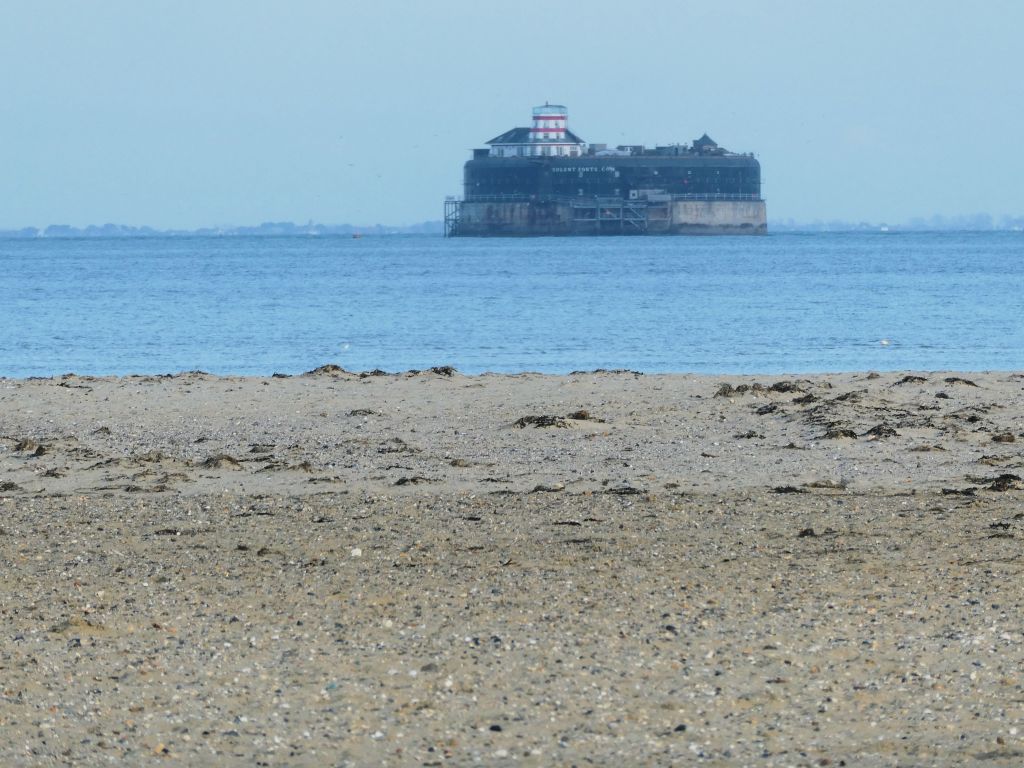
Portsmouth from Ryde, Isle of Wight, car ferry on the right The distance between Ryde and Portsmouth is approximately six miles. In the middle of the sea are the armour-plated Palmerston Forts commissioned by Prime Minister Lord Palmerston in 1859 to defend Portsmouth dockyard at a time when the country feared invasion by Napoleon III.
Palmerston Forts in the Solent Heavy guns were installed on the forts during the two world wars and it is said that the troops stationed there were chosen for their inability to swim as the damp, dark, and lack of all but the most basic facilities made this a very arduous posting. Although the forts were armed and re-armed as technology advanced, apart from training their guns on French ships in the harbour after the fall of France in 1940, the forts were never used and in the 1960’s they were de-activated. One has been retained by the MoD and three were sold to private buyers in the 1980’s, one of which is now a super luxury hotel and spa, another a museum and the other in private hands.
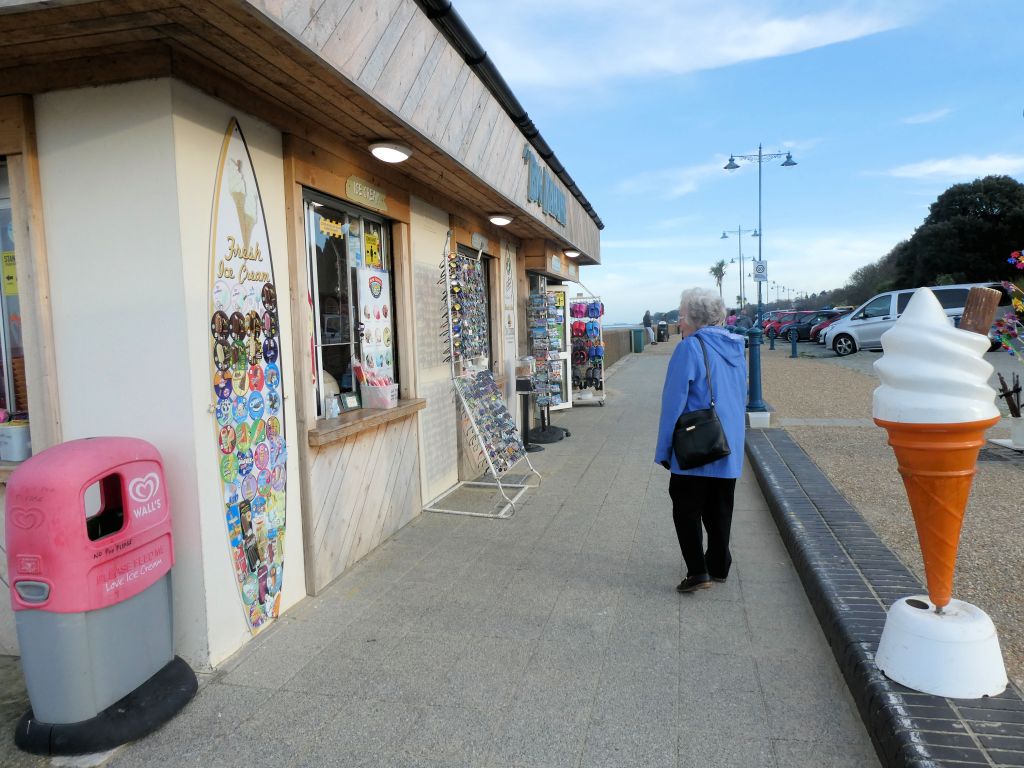
Boats at Ryde: Horse exercising in the water: Kiosk open for ices and teas Continuing along the sea-front we enter Appley Park, a green oasis on the sea-front where the beach huts are set among the trees but with a view of the Solent and easy access to the beach: a snack bar and restaurant caters for walkers and site-owners alike.

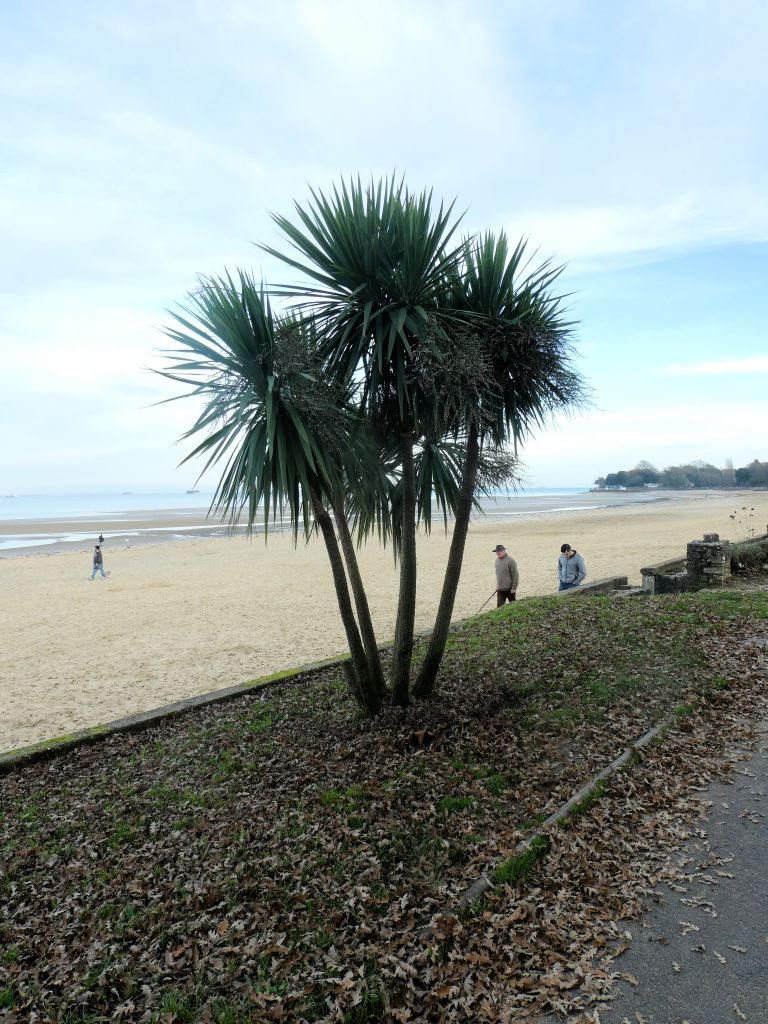
Appley Park with Beach Huts The Solent as a whole supports 13% of the entire world population of Brent Geese and 30% of the UK population of same, and the beach at Apply is one of the most protected areas in the world. When the tide is out the mudflats are rich in winter-feeding nutrients, worms, molluscs, invertebrates and other creatures needed by the Geese as well as bar-tailed godwit and other birds who rest over here on their way to Siberia. Further out to sea at low tide you can see the rare eel grass – it looks like bright green meadow grass – where seahorses, pipe fish and sea urchins make their home.
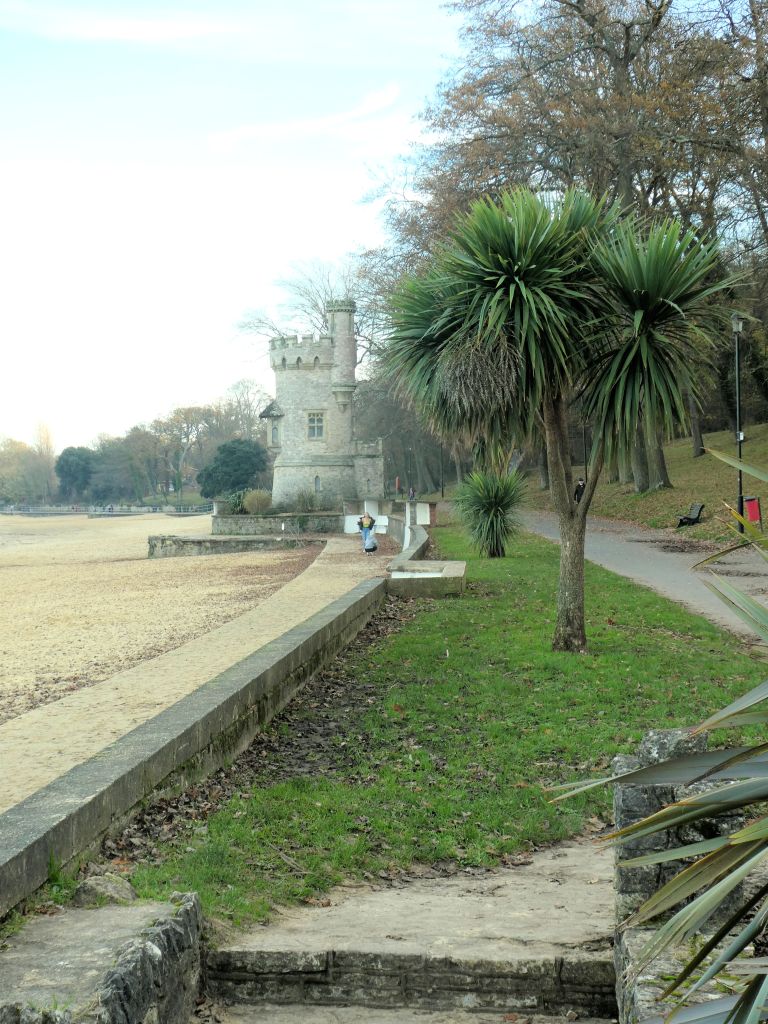
Appley Park has two especial points of interest. Appley Tower which is a rare coastal folly is one. Most follies were built in inland private parks and gardens, but in 1875 Sir William Hutt had the tower erected which he called his watchtower. It is a delightful building and has withstood the test of time.
Appley Beach: Appley Tower: Door to the Tower Beyond the tower is a fascinating monument to an event linking the Isle of Wight to Australia, a monument to HMS Sirius, the principal Naval Consort of the First Fleet which sailed to Australia from the Motherbank just off the shore on 13th May 1787. The First Fleet carried the convicts and soldiers who were sent to start a penal colony there so the Monument celebrates the start of the European settlement in Australia. The ship arrived in Sydney on 26th January 1788 then subsequently went for repairs to Mosman Bay before sailing to Norfolk Island with personnel and where she ran aground in March 1789.
The bas relief of HMS Sirius, erected on 29th June, 1991, is one of 3 commissioned by Mosman Council from sculptor Alex Kolozsy to commemorate the 200th Anniversary of the arrival of Europeans at Mosman Bay and Norfolk Island where the other two memorials have been installed.

Monument to the HMS Sirius and the first Australian settlers in 1788. Beyond this point and round the corner and you are just a short distance from Seaview, one of the nicest little towns on the island, but with a pebbly beach, quite different from that in Ryde.
The views across the Solent on a sunny day can be stunning, the white chalk cliffs of Portsdown Hill (where U.S. General Dwight D. Eisenhower established his HQ during the D-Day invasions) shimmering across the Solent, matching the white tower of the Spinnaker that looms over Portsmouth’s waterfront.
I confess to spending too many days here just watching the ever changing traffic on the waters of the Solent, one of the busiest waterways in the world. The Catamaran from Ryde runs twice hourly to Portsmouth on its 12 minute journey linking the island to the mainland and the fast train to London; double-decker car ferries sail between Fishbourne and Portsmouth and the Hovercraft runs from early morning to dusk, carrying passengers and small freight to Southsea. Sometimes there are naval vessels, gunships and battleships in Portsmouth Harbour, some visiting, some home-grown, and always, of course, the huge ocean liners that sail majestically over the waters of the Solent, past the Isle of Wight to destinations unknown.
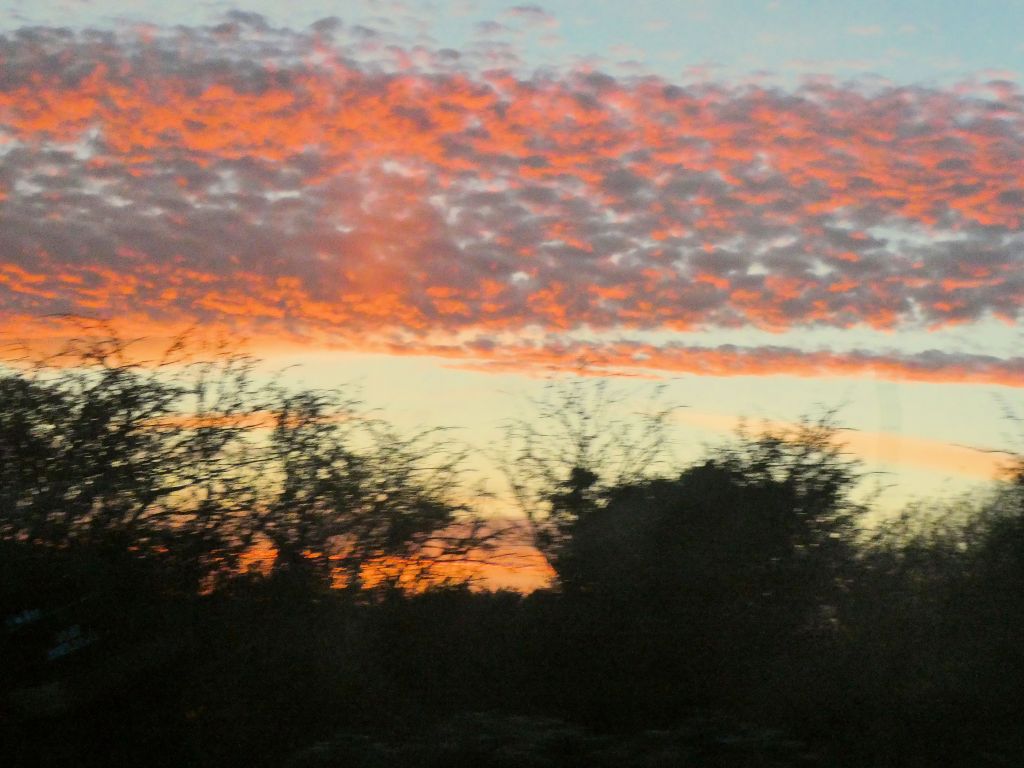
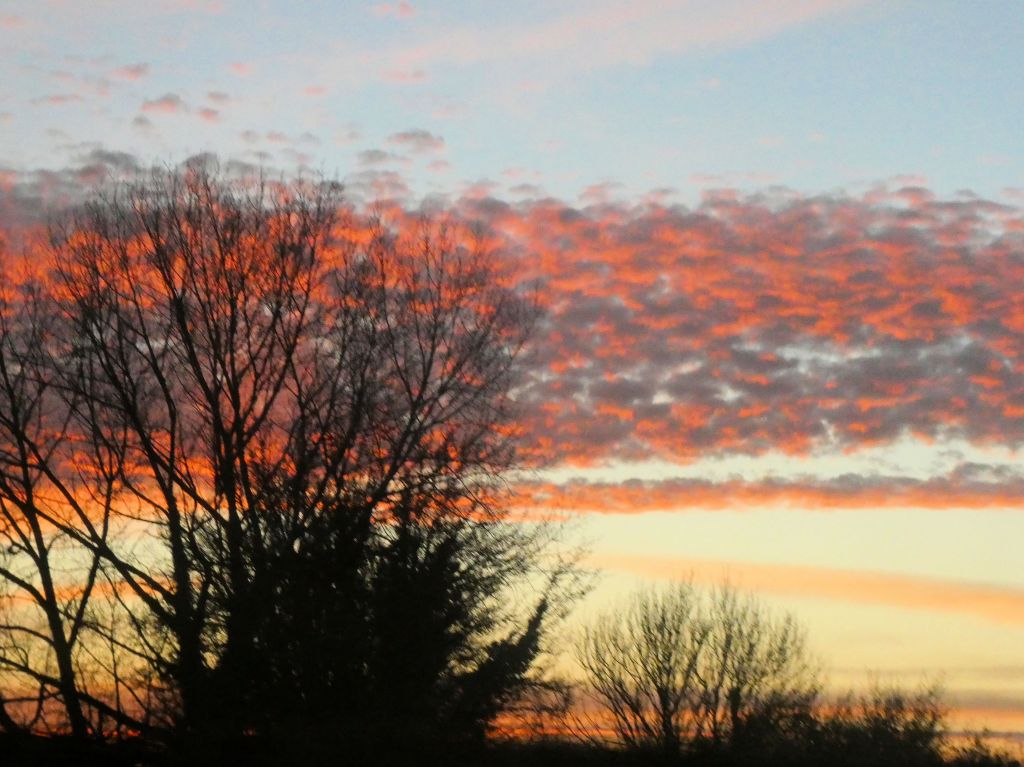
Car ferry: Carvings from fallen trees in Appley Park: Zoom photo of Luxe Hotel on Fort: Portsmouth: Round that far corner lies Seaview: The sunset came as I was on the bus home but how lucky to see such colours even through the window> -
Six Word Saturday
Linked to https://travelwithintent.com/2020/11/21/beauties-once-soaring-fir-tree-
Not Yet Christmas, Here Comes Spring.
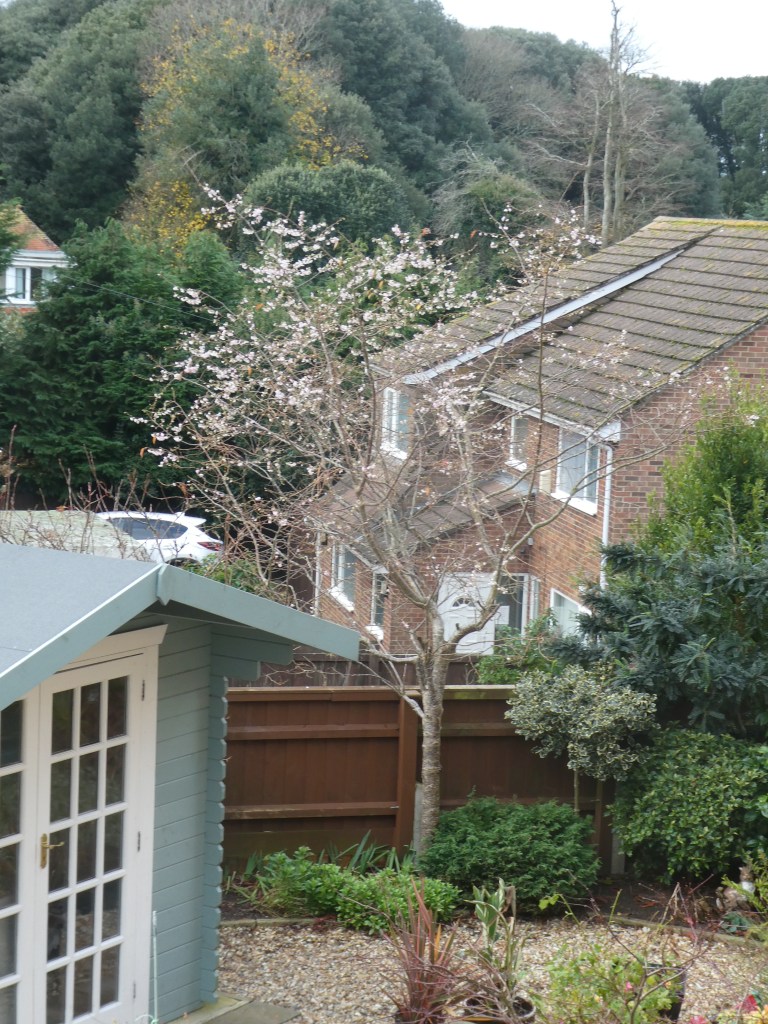
Not yet Christmas, here comes spring. This wasn’t here yesterday. Seen from my balcony this morning my neighbour’s tree has burst into blossom. Maybe not ‘burst’ but showing the flag anyway.
-

Sculpture Saturday in Pézenas
Hosted at https://nofixedplans5.wordpress.com/2020/11/14/sculpture-.saturday-9/

Statue to the 17th century French playwright Moliėre by Jean-Antoine Injalbert This statue to the great French playwright Moliėre, one of the great comic-writers of all time and described by Stendahl as “Molière, the great painter of man”, is to be found in the town of Pézenas in the Langudoc-Rousillon area of France, where he lived for many years. He had an acting troupe which worked in both Paris and Pézenas and had as patron, the brother of the King, the Duke of Orleans.
He led an extraordinary life and his death became legend; he died on stage, while performing his final play, Le Malade Imaginaire, or rather, he collapsed on stage, and died a few hours later at his home. At that time, the Catholic church in France condemned the theatre as a school for scandal, held all actors to be ipso facto excommunicated, and forbade their burial in consecrated ground – which included every cemetery in Paris. Two priests refused to visit him to administer the sacraments and the third arrived too late.

The white marble statue was sculpted by Jean-Antoine Injalbert in 1897 and it shows the maid Lucette from Moliere’s play Monsieur de Pourceaugnac paying tribute to the master playwright with a goat-footed satyr representing Satire sitting at the bottom of the statue. Masks of the actors Coquelin Cadet and Jeanne Ludwig are on the back of the monument

Moliėre In 1792 his remains were brought to the Museum of French monuments and in 1817 transferred to Le Père Lachaise Cemetery, Paris.
Further challenges over at https://nofixedplans5.wordpress.com/2020/11/14/sculpture-.saturday-9/
-
My Whatchamacallit:
Linked to Debbie’s challenge here
I’ll follow Debbie’s example and post a holiday photo also in a Bodega, this one in Arcos de la Frontera, one of the White Villages in Andalucia.

Typical Bar in Arcos de la Frontera We spent more time than we perhaps should have in this delightful bodega, mainly because they had a big selection of Manzanilla and the olives were a product of the owner’s parents who cured them with a secret recipe which made them irresistible.