They must have run out of plaques when they erected this sitting man statue on the walls in Salamanca but a student told me it was the writer Unomuno. It’s not shown among the 20 most famous statues in that city of many statues, but I loved it.
Lock down helps remind us of old friends. It also reminds me of when I used to send and receive a lot of postcards, and I remembered also the blog I wrote some years ago. Maybe now is the time to re-blog (and as it’s such a lovely day I can relax outdoors without feeling I should get on with sorting out my photographs for a new blog)!
Today I got a postcard from abroad! So what? you may think.
So absolutely fantastic that I did an impromptu jig in the hallway when I picked it up before reverently placing it in a prominent position so that I could look at it and admire it for a few more days.
THE AZORES
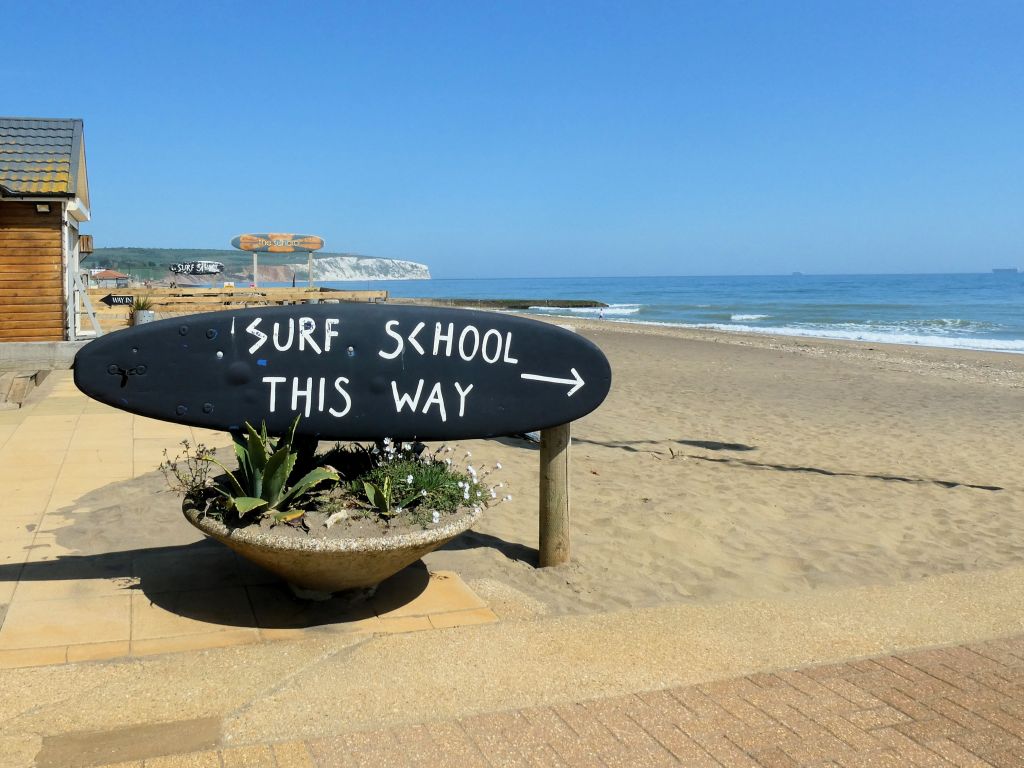
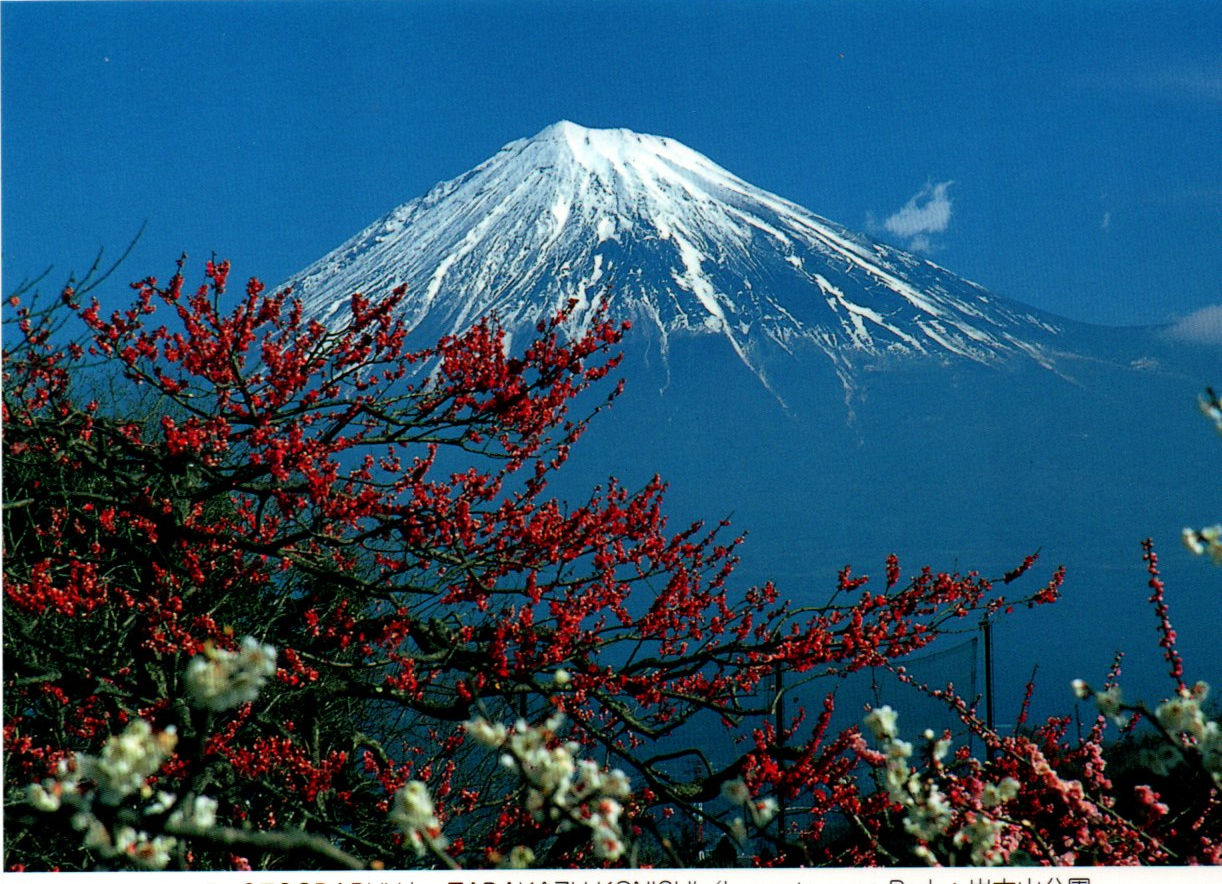
Do you remember how exciting it was to receive a postcard in the days when people sent you postcards? Those mountain views, seascapes, hotels with the X placed just where the sender’s room was? The whiff of abroad that unsettled you as you sweltered in a stuffy office or maybe dreamed in your kitchen or garage as the evenings grew shorter and the winter light faded? You remember it now?
Mount Fuji, Japan
Next time you’re away from home, put away your smartphone, pack up the tablet, venture out and into the touristy gift shops and…
Day something in the great lock down and my place is tidier than a monk’s cell so while I’m thinking of what past travels to write about, I’m sorting half a lifetime’s accumulation of trivia, travel books, cards and pamphlets kept from the last great tidying session when I downsized six years ago. It’s been hard, but hey, I’ve managed to throw out two books, and at least five pamphlets I’ll never read again and I have put some of the postcards aside to send to friends! The rest will have to stay put until the next national crisis. More I cannot do!
So here are just a few pictures that remind me of happy times.
This Can Only be Bondi Beach
Sunset: Fisherman in Fiji
Me in Cuba 1981
Midsummer in Stockholm
Negotiating Locks in France
Memories are Made of photos like these
Sifting through my memory box I relive and recall trips which have slipped to the back of my mind. These in turn encourage me to look out photographs, some prints, some transparencies which I must get down to converting to digital images one of these days. Black and white prints, slides, then coloured prints and finally digital prints and computer discs. And then there are the old family photos and my husbands wartime photos in Burma to be sorted through one day.
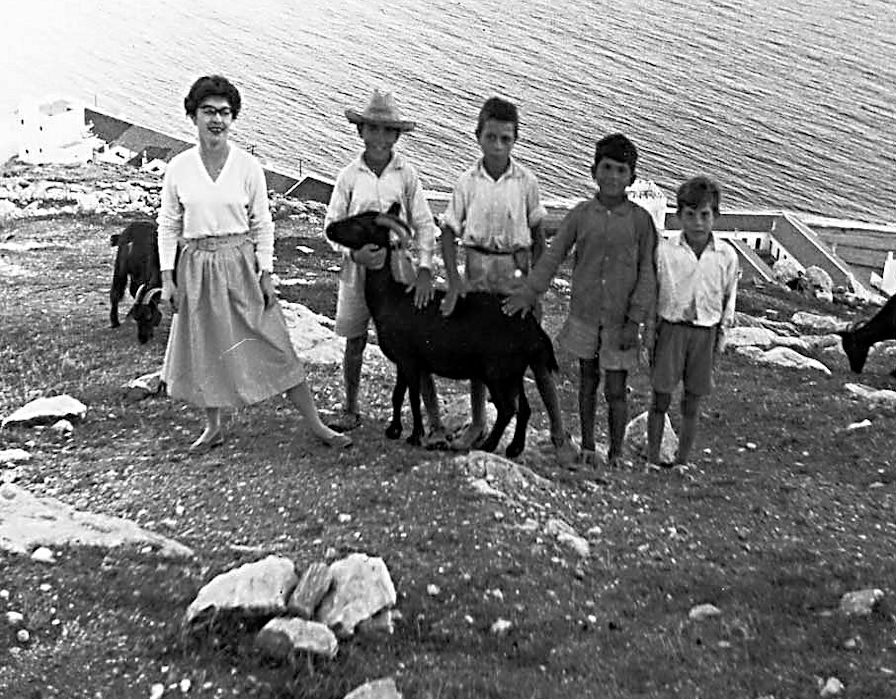
Mari & Goatherds at Castel de Ferro
Breakdown on road to Granada
Castel de Ferro
Avenida Hotel, Benidorm
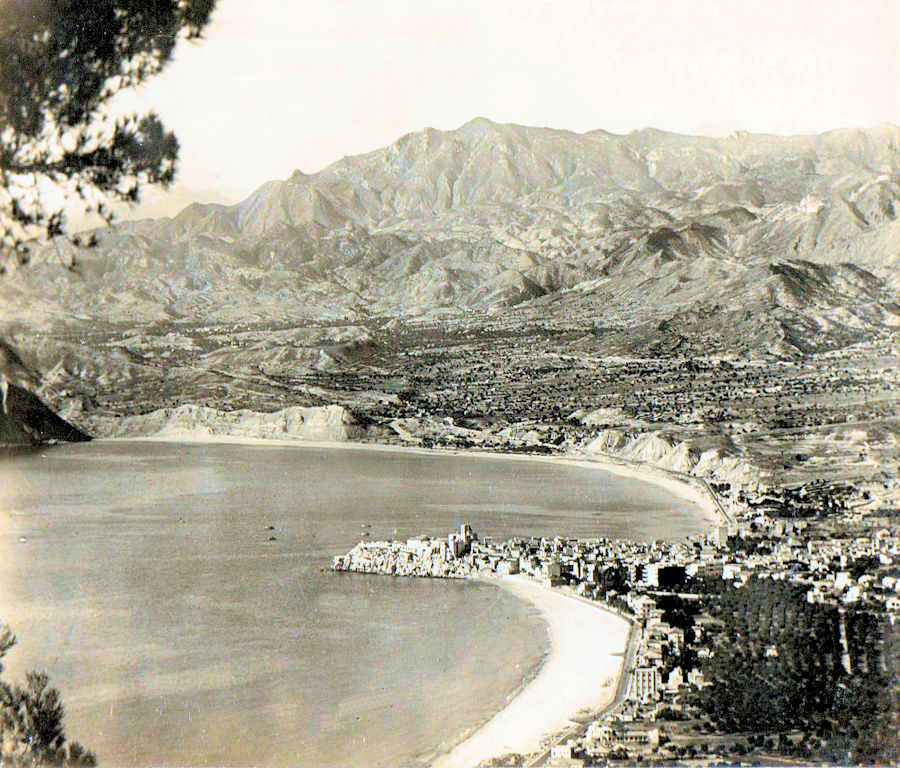
Benidorm before Mass Tourism
Late Fifties, early sixties Spain
It was the early sixties when we discovered a little village called Castel de Ferro when the son of the owner of the only hotel there jumped out in front of our car to stop us and invite us in to see the new swimming pool. Those were innocent days when we politely stopped and they actually thought it was a good way to get tourists to stay with them.
And stay we did, for two weeks or so, during which time the local boy-goatherds followed me around wherever I went. They had never seen a ‘foreigner’ before and when my husband took them all for a ride in the green Austin van we had in those days, their giddy pleasure knew no bounds. We spent many hours with them and we’d supply a picnic as they were on the mountains from dawn till dusk with only a few scraps to eat, caring for the skinny goats. On the day we left all the little boys were crying and it near broke my heart.
Spain opened to tourism sometime in the fifties, and those of us who went then were greeted with warmth and friendliness. Franco had kept Spain out of World War Two (it was a broken country after the Civil War 1936-39 anyway) but as he leaned heavily towards the Axis’ powers help was not forthcoming to re-structure the country. Until the advent of the Cold War and the West’s fear of Russia that is, when the need for strategic military basis and airports ushered in the Marshall Plan, and Spain, along with other countries in Europe received aid, mainly from the USA, which helped it get back on its feet again.
It took a long time though, for the infrastructure to get into place. For many years the roads throughout Spain bore the chalked message “Franco, Mas Arboles, Mas Agua, Mas Carreteras” (more trees, more water, more roads). Not only were the existing roads in dire states but there were few of them. The above photo of the car breakdown took place on the main road between Valencia and Granada. Our car hit a rock or stone in the middle of the road and combined with driving on many untarmacked roads throughout our trip, it brought us to a halt. Local farm-workers helped move it and we managed to limp on until we came to a repair shop/garage.
Nowadays Spain has some of the best roads in Europe.
The photo of Benidorm is of the town before it became the biggest thing in tourism and the Avenida Hotel (still there) was one of only a handful in 1959. We stayed there in a room where our balcony looked on to the open air cinema which showed mainly very old, heavily censored films, but with a cheap bottle of wine and some nibbles to enjoy, it made for a fun night. I say ‘night’ because the cinema didn’t start until midnight or later – no-one worried about the possibility of people not being able to sleep. You either slept or you went to the cinema. What? You want another option?
Typical scene in Southern Spain
Orchids always remind me of Thailand
I drank lots of Manzanilla in this bar in Arcos de la Frontera
Serrano Ham & Garlic
Still in Spain, but one photo of orchids in Thailand has crept in.
I think I’d better stop there as the post is getting too long. I’ve still got a bunch of photographs on the computer which I hope to downsize and caption and I’ll put a few more up after I’ve tussled with the garden where the weeds are in a defiant mood. I’ve got to get them under control before they master me.
I don’t know if anyone out there can help me. I’ve been unable to Post for 2-3 weeks now because I cannot upload images. Last year I Upgraded in order to have the extra space for images along with other facilities and I have the receipt for this and account shows that it is not due for renewal until October 2020 when it will be taken from my account.
When I changed my theme accidentally a few weeks ago, it reverted to a Free theme and I think this is why it will not allow me to add more images, although why it should have reverted I cannot imagine.
I have put 5 Help messages up on the Forum but although my query is acknowledge and I am told someone will get back to me I have never heard again from anyone. After delving into the murky innards of my account with WP I discovered that the email address there was an old one which I discarded over two years ago. I re-validated this to ensure they had my current email address even though I receive regular notifications from them at this current address.
I don’t know what else to do except to discard the whole thing and start all over again with a new WP site but I am loathe to go down this road. There seems to be no way of contacting them other than putting a message on the Forums (done) and sending a message to the Helpline (done). I gave them my current email address and also pointed out that my WP is travelswithmycamera.blog not travelswithmycamera.com which is the only site showing.
Hey, I hadn’t realized I had changed my blog theme!
I had ‘lost’ my blog, something I’d also done six years ago, and it’s taken me 2-3 days to get it sorted out with the help of the nice people on the WP Help Forum. Meantime, passing the time I was looking at other Themes and clicking on them to see what they looked like. I hadn’t meant to change my theme, but obviously, I have done so – even using one of their header photos. It’s not a bad theme, but when I have more time I shall have to come back and change it again, either to what I had before or something different.
When I have more time, that’s a joke isn’t it? but it seems that the more time I have on lock-down the less time I seem to have to do essential things. Mind you, I’ve done a lot of sorting out, (bags full of stuff for the charity shops when they re-open), tidying up in general, and fulfilling those halfhearted resolutions I made at New Year. Half my day seems to be spent making lists for the grocery slots I might get!
April, 2020: I miss a lot during these days of lock-down, of isolation and no contact with friends, but what I’m missing more than I thought I would is the work I and a group of other volunteers have been doing with our County Archaeologist, Dr. Ruth Waller.
“The past is another country “said J.P. Hartley, but I don’t think he had in mind the 13th or 14th centuries when he said that. It is something very obvious to me however, as a volunteer with the Brading Community Archive Group, when I open a centuries-old Rate Book, a Fee Farm Rent Book or a Poor Rate Book. For over a year now we have been working on unlocking the past through old documents, books, paintings and photographs from the village of Brading on the Isle of Wight, a project made possible by a Grant from the Heritage Lottery Fund and without which the project would not be possible.
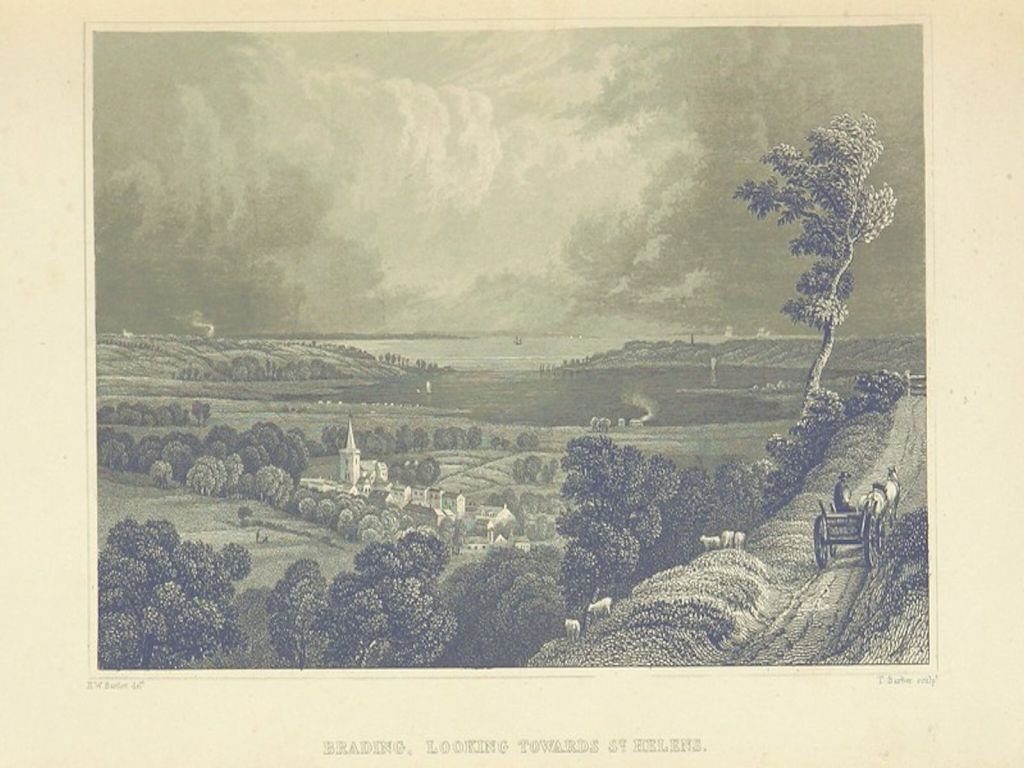
Old Brading – British Library Print from Villages & Geographical Maps
The end result will be that books and documents which have been hidden away for centuries will be transcribed and available online to researchers. The original documents will be seen side by side with the transcribed documents and will also be available in paper form for researchers.
Charles lst gave this once thriving seaport as security for a loan from the City of London. Today Brading is no longer a coastal seaway: after failed attemps in the 16th century the marshes were finally drained and the embankment completed on 1881 which enabled the railway system to progress.
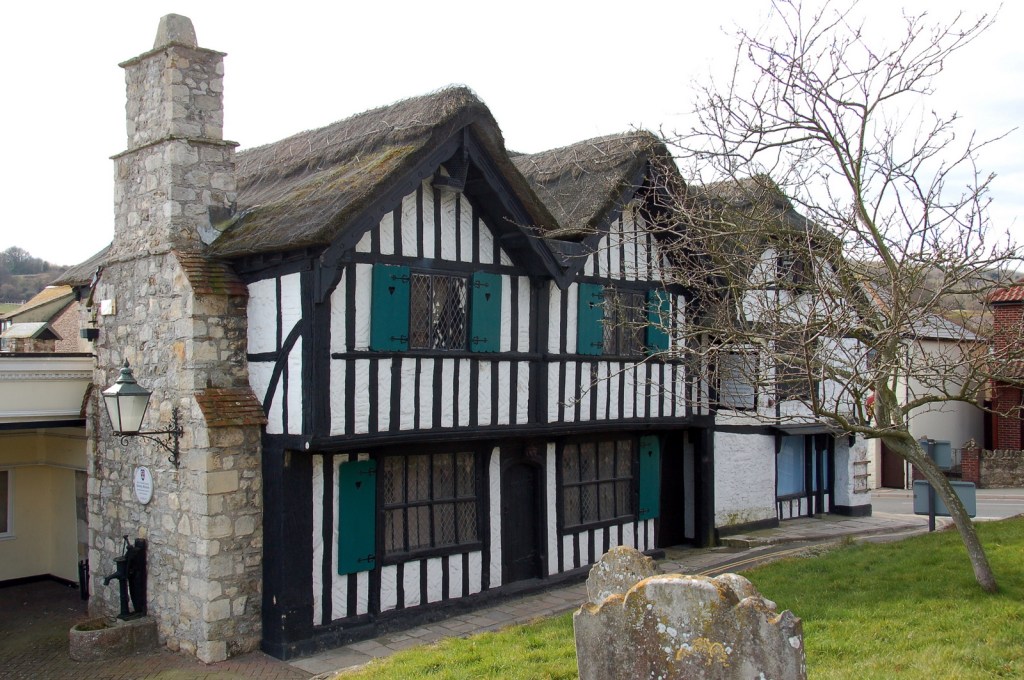
Brading Norman Church, Old Town Hall with Stocks Below – Photo Mari Nicholson
Brading’s history is apparent from the Norman Church at the top of the incline to the well-preserved 16th and 17th century houses that line both sides of the High Street with their eclectic range of windows, roofs and chimneys. Next to the church is the old town hall, a stone and brick building with an open arcade housing the stocks and whipping post, once the site of the butchers’ shambles for the market first held in 1285.
It is here that we work, in the Old Town Hall, a musty room over the stocks, a cold place in the winter as we can’t have heating because of the fragility of the books.
As bacteria, acids, oils and dirt on our hands can be transferred to the materials we are working on, disposable rubber gloves are worn at all times, no food or drink is allowed on the premises and it goes without saying that no pens are allowed anywhere near the documents or books (all notes must be taken using pencils). Working on the books is done according to prescribed rules: opening them at 1800 could cause irreparable damage (1200 is the maximum opening) and tightly bound books should be opened no more than 900. To prevent damage to the spine they are opened in a box made into a sort of cradle and as fragile surfaces must not be touched pages must never to be turned by the corners, and more …. And I haven’t got to photographs and pictures yet!
Before we got to the transcribing stage we had to carefully clean the books with special brushes which wouldn’t damage the paper, first the front, back and spine, then each page. When I say this was boring, believe me, I’m not exaggerating. After that, each book was wrapped in special acid-free paper, tied up with acid-free cotton tape, given a number which was attached to it and then placed carefully on shelves ready for the next stage.
Original Stocks, under the Old Town Hall – Photo Mari Nicholson
In the midst of all this ancient paraphanalia we sit among modern technology, overhead scanners, laptops, computer storage devices etc.
Once the transcribing began the brain was engaged and the fascination with ancient ways and history meant that even two cold winters in the Old Town Hall could be coped with – just! As well as remembering that 1752 was the first year in England to begin on January 1st (until then the New Year began officially on March 25th, Lady Day) there was the fact that two centuries earlier, in 1582, Pope Gregory XIII had reformed the Julian calendar because it did not conform to the solar system, and cut 10 days from the year. England did not follow other European countries in this and remained ten days behind until an adjustment was made in 1752 and these days removed. Then there are Regnal years versus calendar years and other hazards for the careless transcriber, one of the trickiest being documents written in the reign of Charles ll who came to the throne in May 1660 although he calculated his regnal year as beginning on 30 January 1649 the date of his father’s execution. These anomalies do not interfere with the actual transcription of the documents but they have to be kept in mind for dating purposes.
The actual transcription has to retain the original spelling and as spelling in English was not standardised until the 18th century this can create difficulties. Before then phonetic spelling was used and people wrote in the local dialect so when transcribing it is often necessary to say the word aloud as it appears on the page to get a sense of what the word might be. It is useful to know where the document was written or by whom as a word written by someone who spoke in a Somerset dialect say, could differ in spelling from that of a Londoner.
Old Brading – British Library Print from Villages & Geographical Maps
The books and documents themselves are fascinating and sometimes one can spend too long reading about the fines for allowing a pig to roam in the street, money requested for footware for a shoeless child of the village, for a cart to take an old woman to the Workhouse, or for bread for a hungry family. One is made aware of the importance of policing certain trades by the weights and measures being strictly kept under lock and key and checked and signed for each year, and made to wonder at the many pubs the village supported. There are many sad tales and one is grateful beyond words to have been born in this present day and age where despite its failings, there is a safety net to catch all but the most vulnerable in our society.
We shall be working on the books for another year at least, but once away from the ancient past and into the 20th century it will get easier, and I dare say, less interesting. Coronation street parties, the coming of street lighting and the contract to the lamp-lighter (£16 a year), are still fascinating but I shall miss the dark, old days, when life was ruled by the rising and setting of the sun and when having the price of a candle meant that a woman could wear her eyes out doing sewing to make an exra few pennies to feed the family.
When the lock-down is over and things return to normal, our little band of volunteers will return once more to our job of unlocking the past so that future generations will be able to research the history and times of Brading, Isle of Wight. Although it is but a small town on an island, the broad outlines of how it was run apply equally to towns and villages all over the country and the knowledge gained by looking at this one small town gives an insight into England’s governance at a micro level.
I haven’t posted for some weeks now as I’ve been tied up trying to recover virtually my entire photographic collection. I had a serious mishap with my computer and everything disappeared. Most of the documents I managed to recover but they are now in a different format and with the expenditure of quite a sum of money I got most of them back. Some were originally in an older version of Windows but had been converted but have now reverted to the former version.
The photographs are a different problem though. I managed to get quite a lot back but they are all mixed up. Not only are they in a jumble of dates but the captions have disappeared completely, leaving me at a loss as to where some were taken, when, and for what reason. Imagine trying to differentiate 100 churches or more, all taken at different periods in different countries and landscapes without any defining features, and you’ll have an idea of my problem.
My back-up went the same way and neither of the two computer experts I’ve had looking at it can understand why. Maybe because it is kept plugged in to my desktop all the time, to make a backup?
My older photographs I always put on DVDs (or CDs in the earlier days) and these are OK, but since I bought the Iomega backup machine I haven’t bothered. Lesson learned.
I am just about to put up a blog post but it won’t have the photographs I had planned to use of the volunteers working together on our project at Brading, Isle of Wight, and this after I’d got everyone’s permission to use the images!
And now to continue my search through thousands of images to try and re-caption them, date them (vaguely) and otherwise restore them.
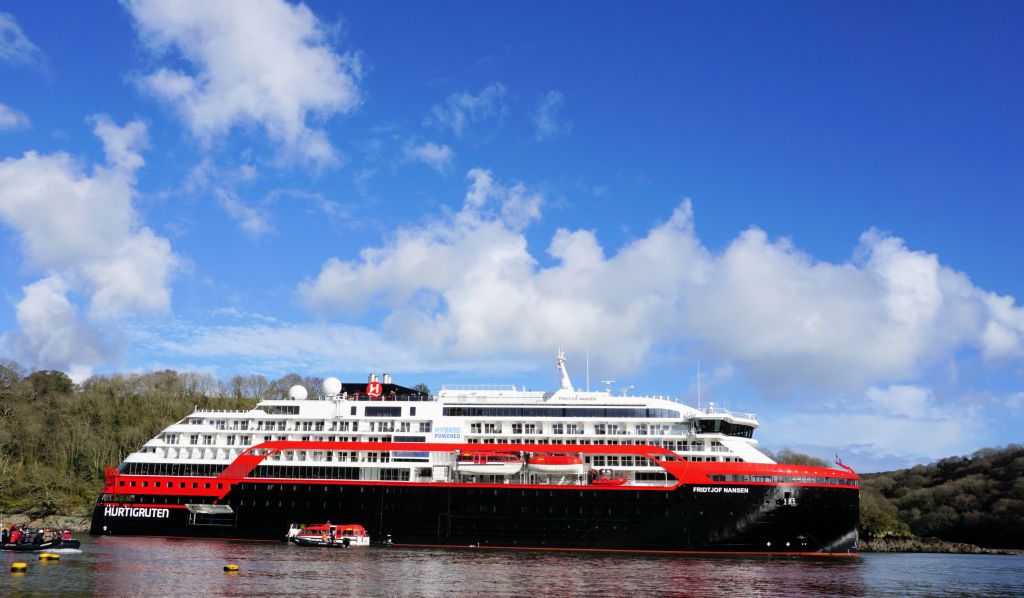
Back from the 5-day trial run of the new Hurtigruten ship MS Fridtjof Nansen which left Liverpool on Thursday last 12th March for Dublin, Cardiff, Fowey (Cornwall) and Dartmouth (Devon) before disembarking its passengers at Portsmouth on Tuesday morning 17th.
MS Friedtjof Nansen at anchor
Those who’ve read my blogs will know I’m no fan of cruising but this trip was exceptional and I’m now a big fan of, not cruising, but the Hurtigruten fleet and their way of presenting a cruise. So much so that I would have signed up immediately for another trip with them but for the Coronavirus situation which makes forward planning difficult.
Hurtigruten has long been in the forefront of ecological travel and the MS Friedtjof Nansen, being the latest ship in the fleet, has a very sophisticated operating system. In line with their ecological profile is the cutting-edge hybrid engine system which consists of large battery packs with extra electric power that allows the engines to function at optimal levels: these, in tu, substantially lower fuel usage and CO2 emission. In addition, the ship has the option to run just on battery power for limited periods of time which means no fuel spent and zero emissions.
Pool on Upper Deck – Photograph Agurtxane Concellon/www.hurtigruten.com
Our cabin was spacious and well-furnished in cool Nordic fashion with blissfully comfortable beds and duvets, plus thick Scandinavian blankets should they be needed (they weren’t). A good-sized bathroom with super rain-shower led off the hall, but the cherry on the cake was the large balcony with a hot-tub which steamed away throughout the voyage – available for use day or night. A giant TV screen was both television and information display for temperatures, maps, up-coming talks, lectures, films, restaurants and menus, and just about everything one wanted, or needed to know on the voyage. A state-of-the-art coffee machine and tea-maker well-supplied with the necessary makings, meant we had all we needed should we want to spend time in our cabin.
A choice of talks from onboard professionals throughout the day (all enthusiasts with sense of humour) meant that we were immersed in an experience second to none, and difficult though it was to draw oneself away from the hot tub on the balcony (or the hot jacuzzi on the top deck for those who wanted a more social immersion) I found it hard not to attend as many as possible.
The Nansen Science Centre is the onboard HQ for the expedition team, an edutainment venue where guests and crew meet. This Centre will come into its own when the ship voyages to the polar areas that the Hurtigruten fleet have made their own, equipped as it is with VR goggles which will allow passengers to use Pioneer BluEye underwater drone cameras.
Large cube screens in the Science Center showcase engaging content and it is equipped with advanced microscopes to examine samples from the field, offering a perspective on the natural world. Although we were sailing in UK waters, we were able to see and handle many exciting finds from polar regions, like Narwahl tusks, killer whale teeth, walrus tusks, polar bear skulls and dolphin fin skeletons which resemble nothing so much as a human hand.
Sperm Whale Tooth
Walrus Tusk
Narwahl Tusks on Wall
Dolphin Fin
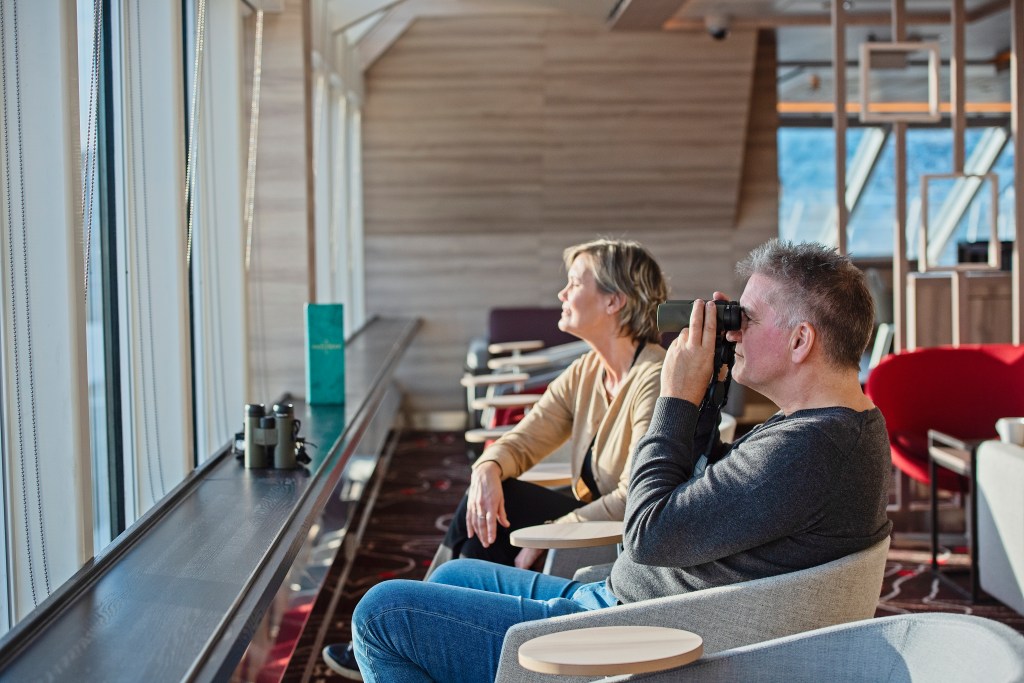
Explorer Lounge Bar – Photographs Agurtxane Concellon/www.hurtigruten.com
Disembarkation in Dublin was cancelled because it was in lockdown so our first port of call was Cardiff.
Arriving at the Port, the life-size statue of Ivor Novello sitting atop a plinth of red granite took me back to my teens when we danced to the music of this favourite son of Cardiff. Or did we? I can remember my mother singing We’ll Gather Lilacs so perhaps it’s the mind playing tricks.
CARDIFF BAY
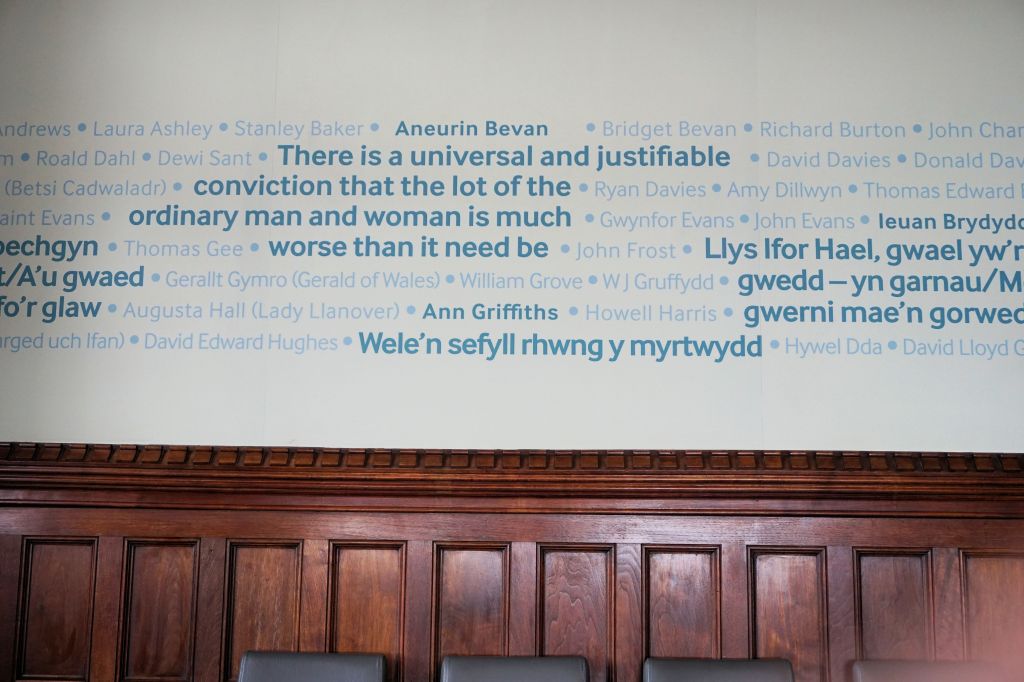
Quotations such as these adorn the walls of the Welsh History MuseumTitles of Novello Songs
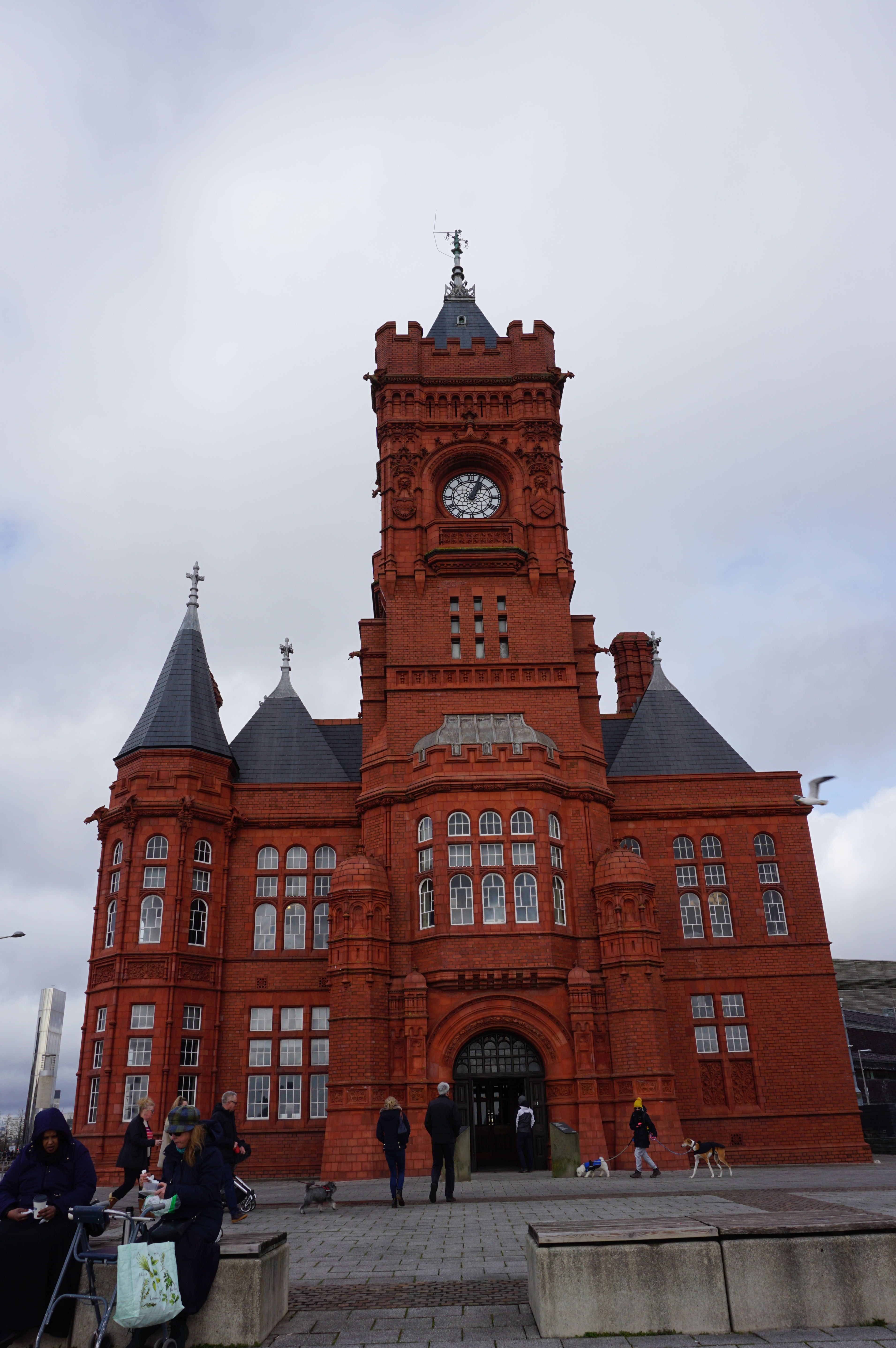
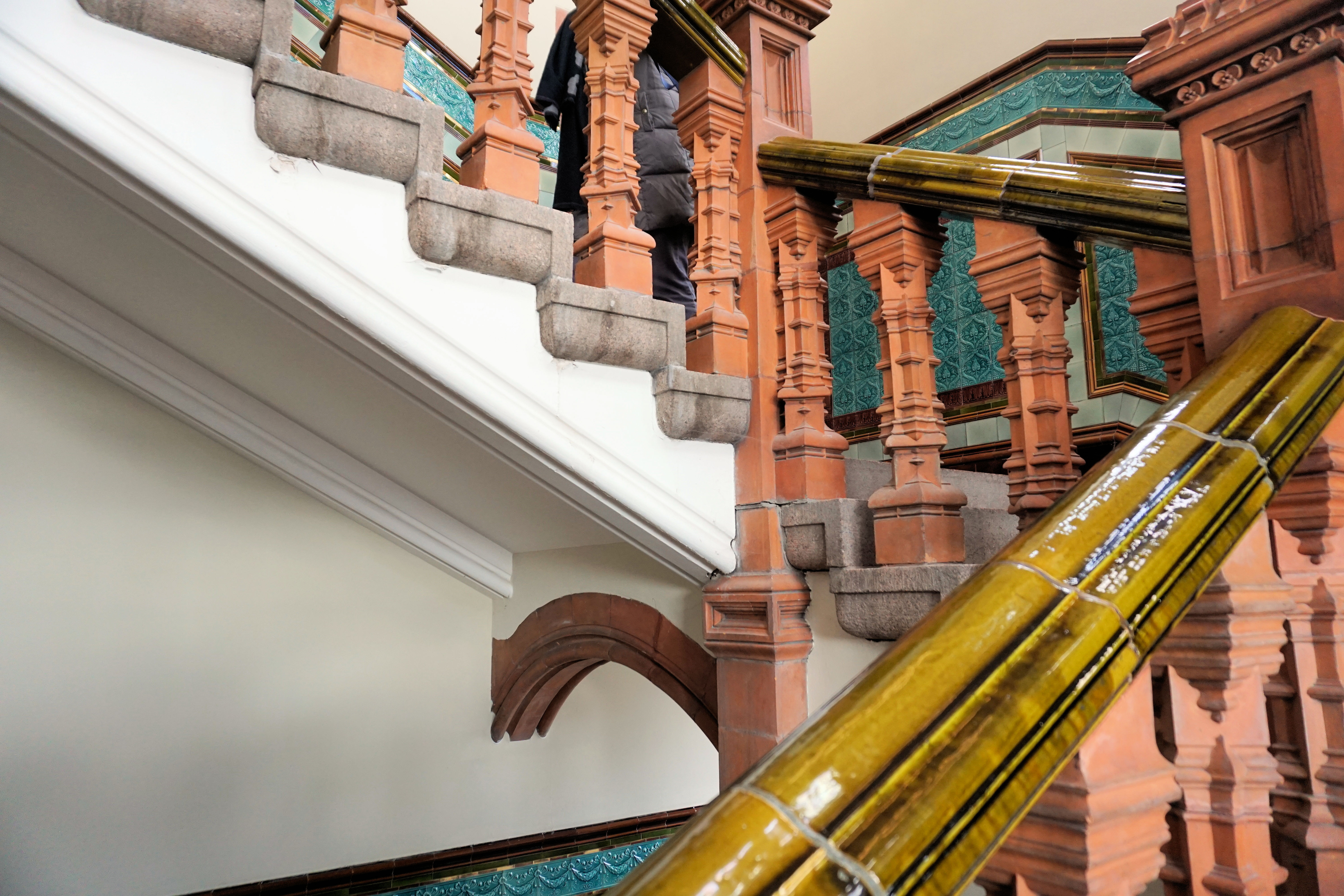
Outstanding architecture and great use of space made the area a very agreeable place in which to saunter before popping into the Millennium Building for a tour of the theatre (the acoustics are very impressive) and the lush red terracotta Pierhead Building (now the Welsh History Museum) built of glazed terracotta blocks from Wrexham. The interior is no less startling in its use of terracotta and locally produced ceramic tiles. It houses a terracotta fireplace, a terracotta staircase the balusters of which are made of terracotta, and a banister of glazed ceramic that echoes the lovely tiles that line the walls.
Interior Welsh History Museum
Much has been made of the waterfront development in Cardiff and with its many cafes and restaurants we experienced a very Welsh welcome wherever we went. We even sampled Welsh cakes and Bara Brith with our morning coffee.
Nordic Church built to honour the Norwegian sailors who docked here
FOWEY
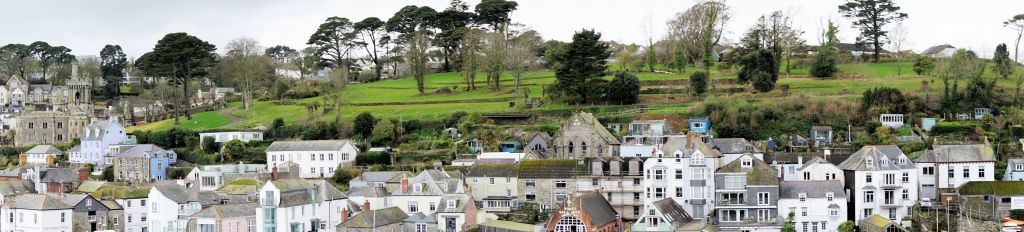
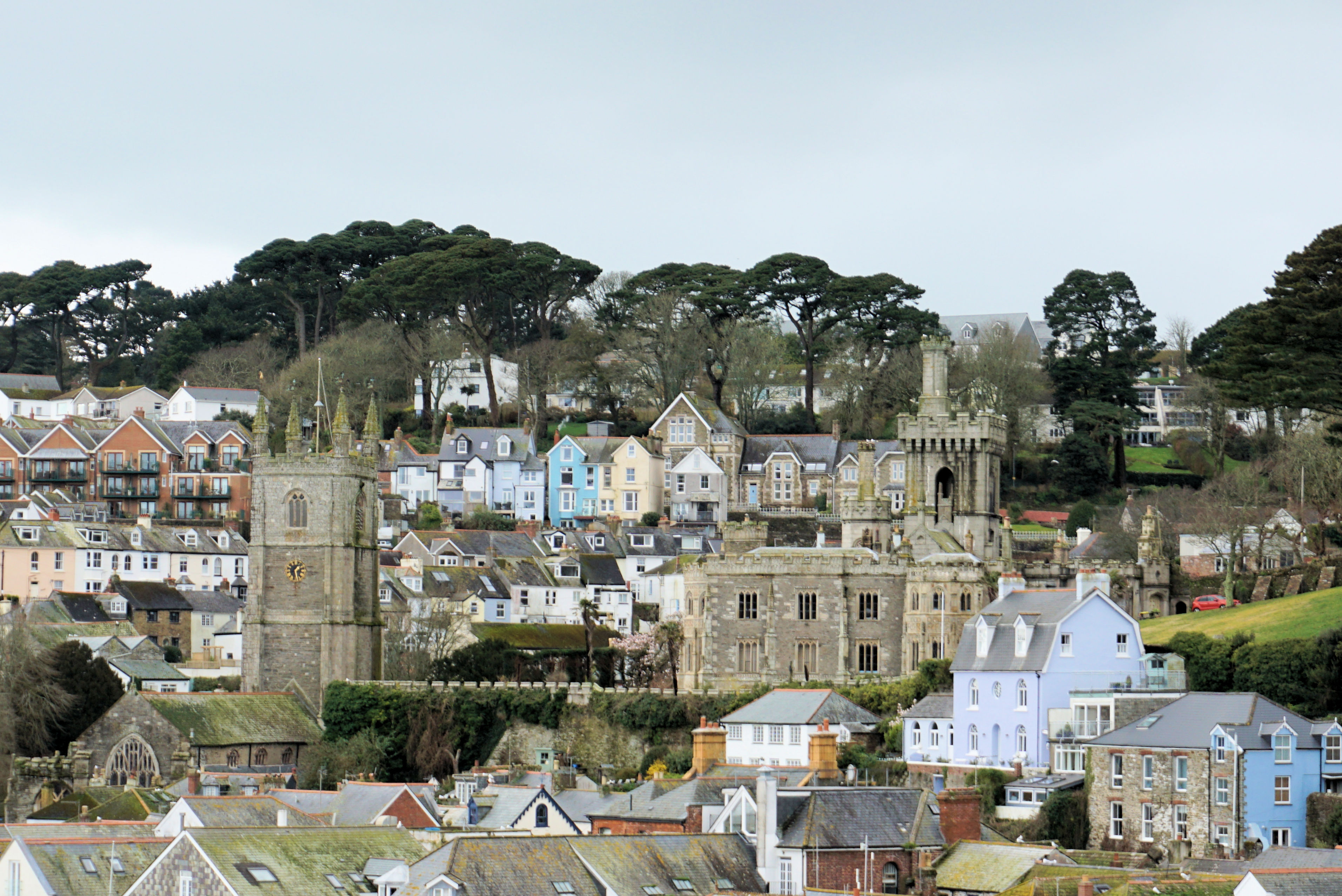
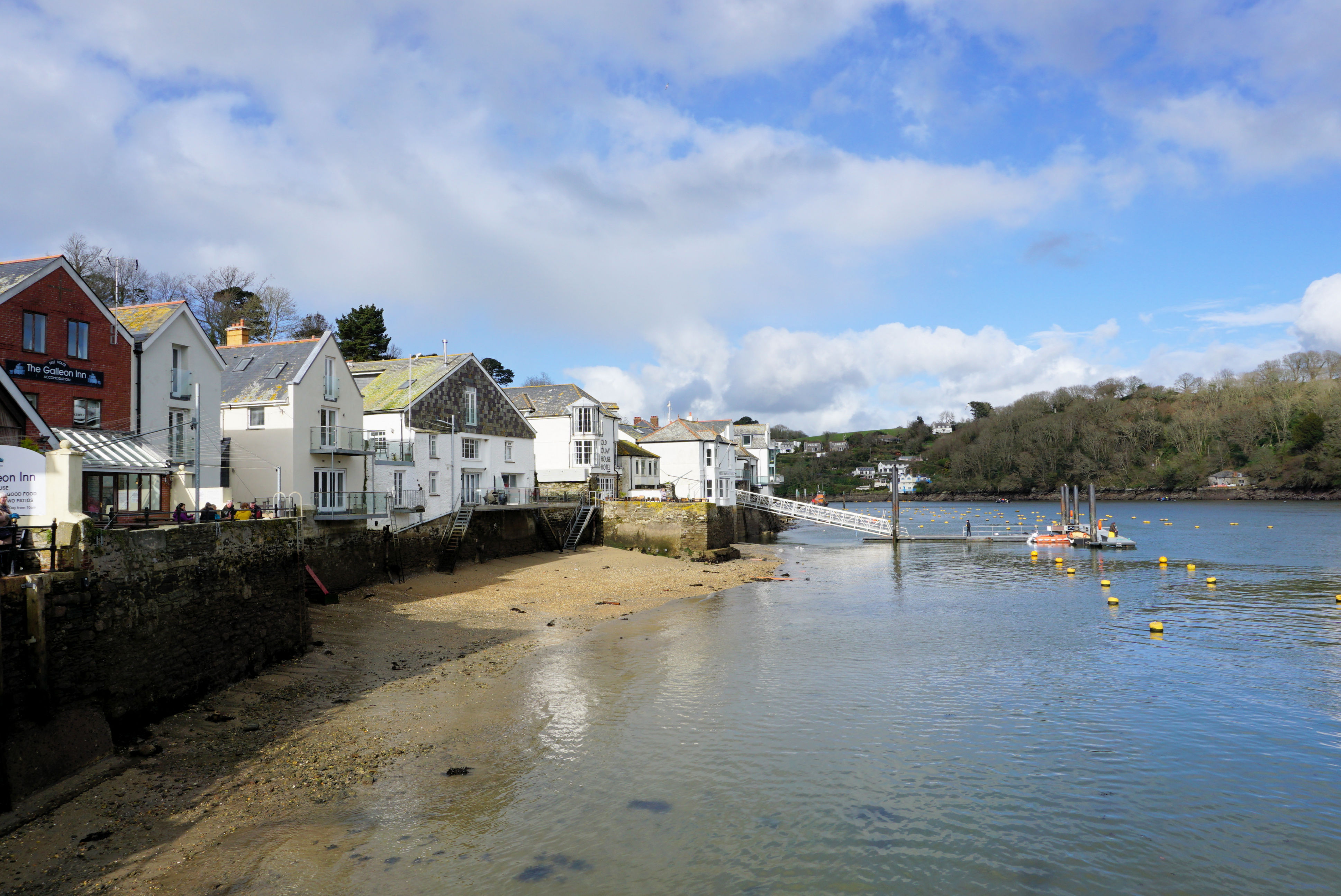
Fowey (which I learned to pronounce Foy) in Cornwall was a pretty little place and as there was an optional river trip up the estuary many people opted for that but I spent the day in the village and was rewarded by some delightful sights as I strolled around the village.
Fowey
The light rain persisted for most of the day so although it was possible to take photograhs, the effect on the final images was to make them all look a bit misty. In fact, a typical day in an English seaside resort in spring.
DARTMOUTH
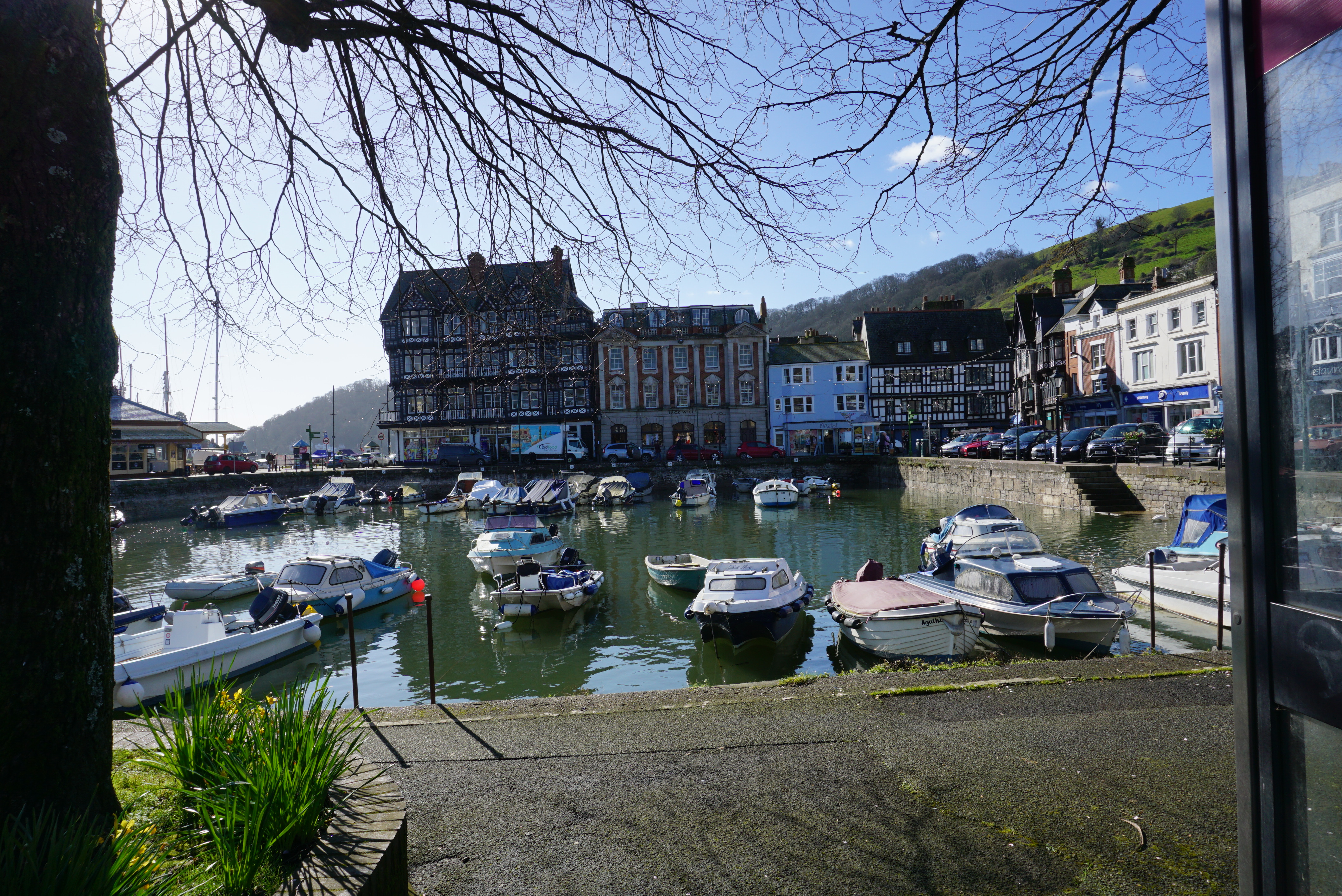
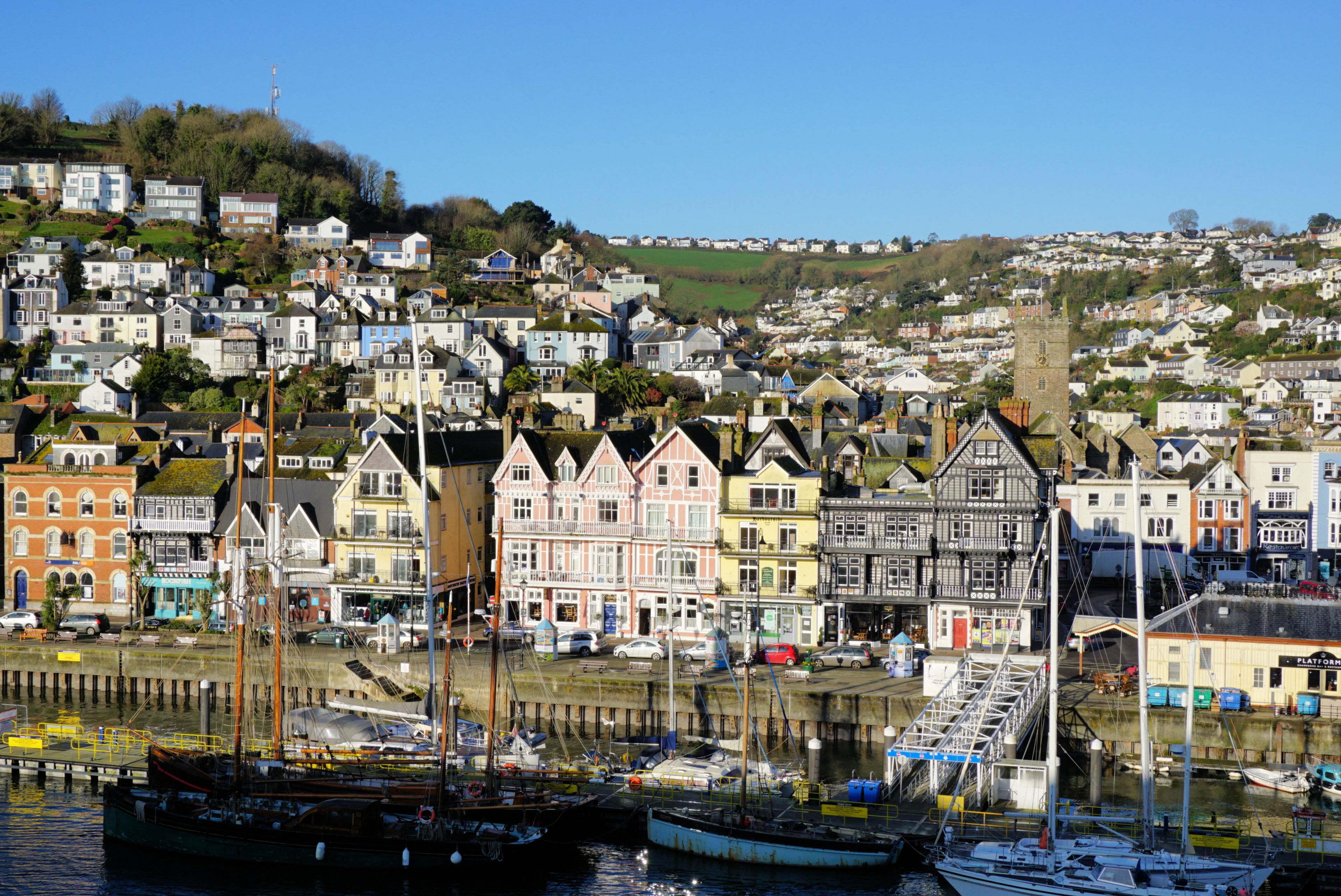
Dartmouth I completely fell in love with. I was entranced by the medieval buildings still being used as dwelling houses, the narrow cobbled alleyways, the parks, the sense of history everywhere, and the absence of big stores.
Victorian Bandstand in Dartmouth’s Royal Park
Independent shops, boutiques, and providers of food, wine and butchery, serve the local population from 17th and 18th century merchants’ houses. It is said that Dartmouth has the best collection of these merchant houses of this period, but it must also be said that it has some exuberant imitations. The Butterwalk is the most impressive block. It consists of four timber framed houses built between 1628-1640 and beautifully restored after bomb damage during the Second World War.
We took a trip up the river Dart, passing Sir Walter Raleigh’s boathouse, to Greenway House, the former home of Agatha Christie and now a National Trust property. The house overlooks stunning views of the River Dart and the 30-minute cruise, operated exclusively for the National Trust, is a perfect way to approach Christie’s mansion and superb grounds.
Agatha Christie’s House and grounds looking towards River Dart
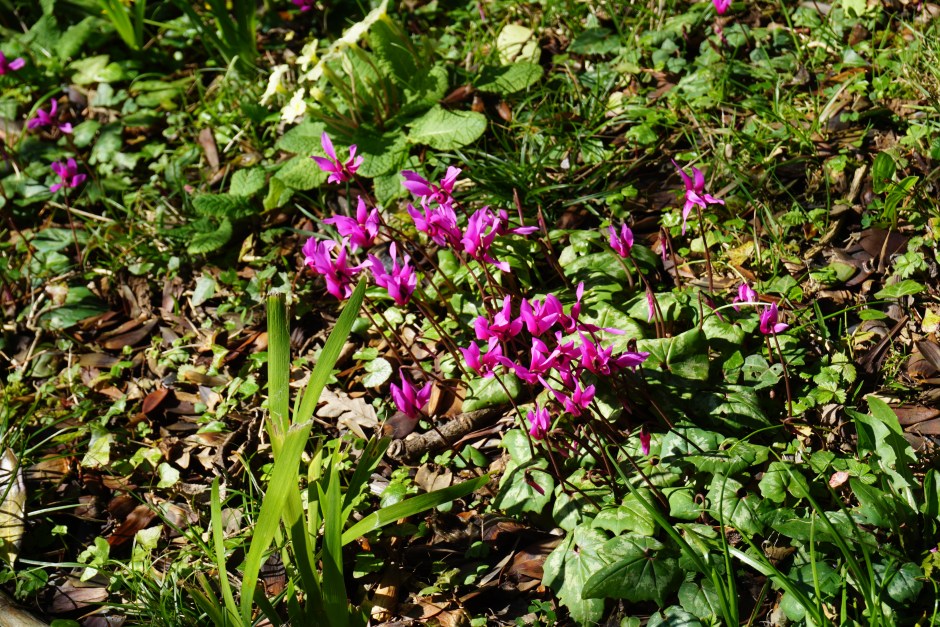
We didn’t go inside Greenway but spent a lovely sunny afternoon walking the extensive grounds and woodland, admiring the wild cyclamen, bluebells, primroses and irises growing under the trees and along the edges of the paths, and inhaling the perfume of the magnolia trees, magnificently in bloom. Do rhododendrons smell? I can’t remember but in their full glory of crimson, yellow and pink blossom they were a sight to behold.
Ring the Bell for the Ferryman and he comes from the other side.
A quick ferry across the river to Dittisham, an exceptionally beautiful riverside settlement on the Dart and one of the most attractive villages in South Devon. Famous for its plums at one time, it is now a relaxing day-trip from many places in the county and an ideal spot for a short break – or even a day trip.
Our ship at anchor in DartmouthColuldn’t resist it!
And then it was back to our Norwegian home for our last night on board. It had been a wonderful five days, much better than I had imagined it would, and I put it all down to the Hurtigruten staff who made sure everything ran smoothly, the comfort of the cabins with their cool Norwegian décor, and the simple yet wonderful food. I even bought a stuffed huskie to take home and I wasn’t even in the arctic!
Posted in answer to Wander Essence’s prompt to pick a book, turn to page 79, 4th line down and write a travel piece based on that. The book is New Finnish Grammar (a novel) by Diego Marani trans. by Judith Landry and the sentence is: She was pressing her hands together desperately thinking of something to say.
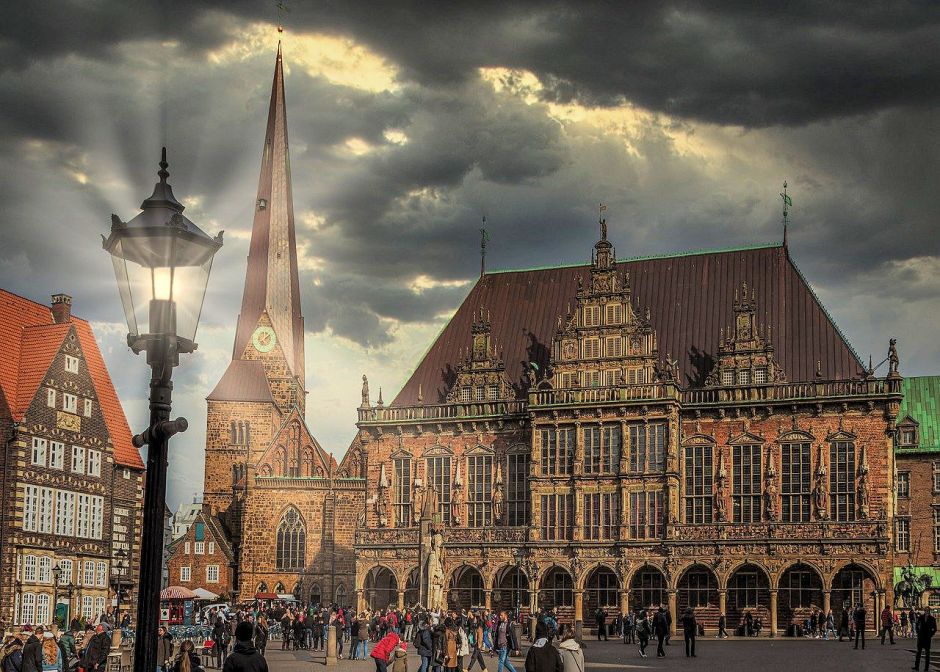
Marketplace, Bremen: Photo by SofiLayla at Pixabay
‘Don’t mention the war’ they said, when I told them I was off to Bremerhaven. But Max behaved impeccably when the subject came up.
‘Shame the old cobble stones were dug up’ I said, as he showed off his immaculate town. ‘Oh, we didn’t dig them up,’ he said, casually, ‘They were destroyed by bombing during the war.’ Oops. I couldn’t think of a thing to say.
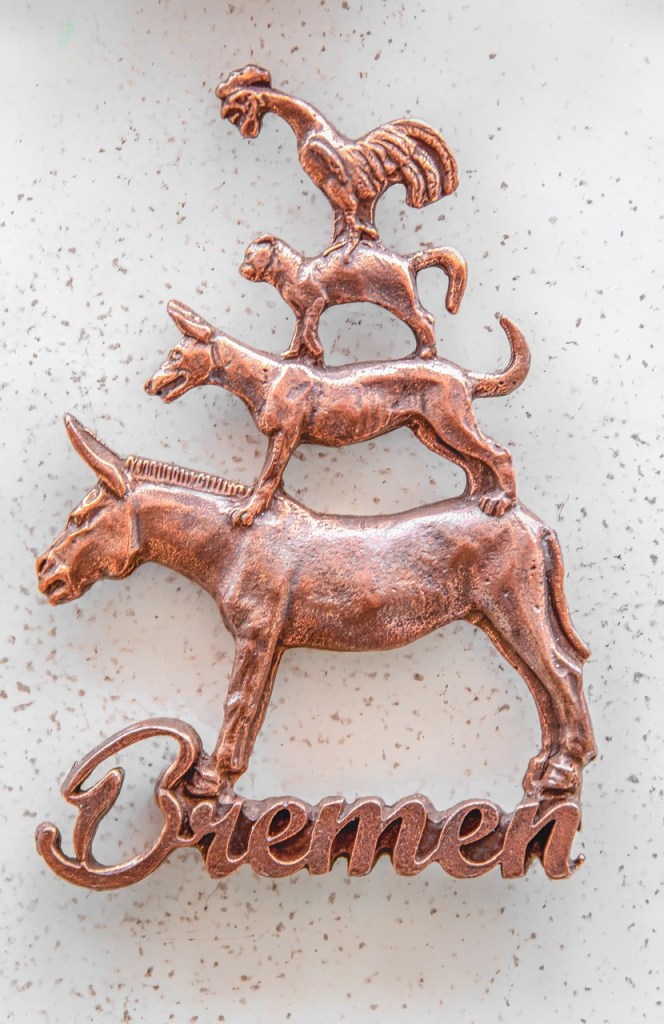
Town Musicians: Photo by SofiLayla at Pixabay
I’d come to Bremerhaven to visit Max and to see for myself if a port could be as pretty as it looked in the photographs he kept sending me.
It’s the largest fishing port in Europe and a major seaport for world trade, but it’s also a fun place. Art Nouveau styled houses with brightly coloured façades lend a cheery air to the serious merchant area. Street musicians, a pedestrianised shopping paradise along the waterfront, sleepy cafes and tree lined boulevards, – all this plus beaches!
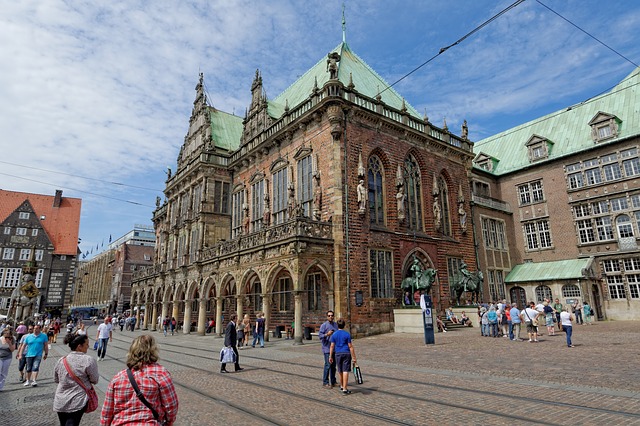
Town Hall, Bremen: Photo by analogicus at Pixabay
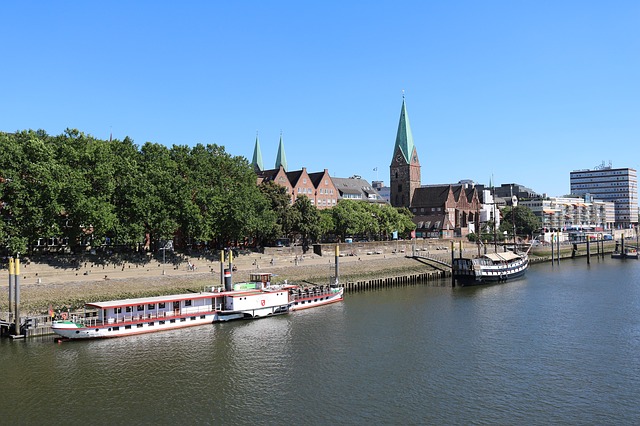
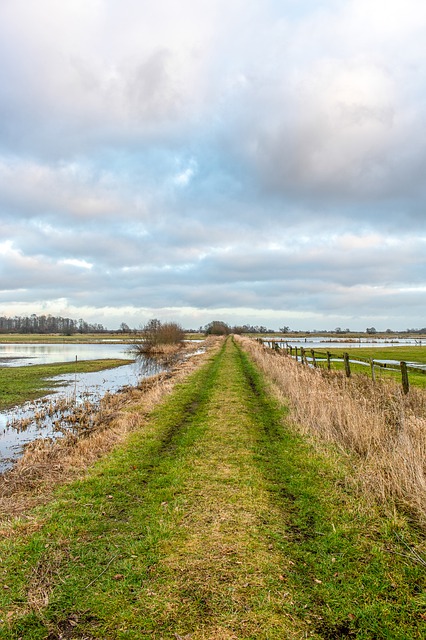
In this flat land, somewhat reminiscent of Holland, even I could look proficient on a bike and it wasn’t long before Max and I were mounted on comfortable cycles. The banks of the River Geeste and the surrounding forests are ideal for hiking and cycling and large parks within the city are havens of quiet when you want a rest. We sat on the banks of the Weser for a while and watched the ships go by and then we took ourselves off to Bremerhaven’s own beach, the Weser Lido, for a spot of sunbathing with the locals.
The Weser: Photo by Nicole Pankalla at Pixabay
Just a short train ride away was the Free Hanseatic City of Bremen, the pulsating heart of Northwest Germany. With more than 1200 years of history in its streets and buildings there is enough architecture here to keep the hungriest culture vulture well satisfied.
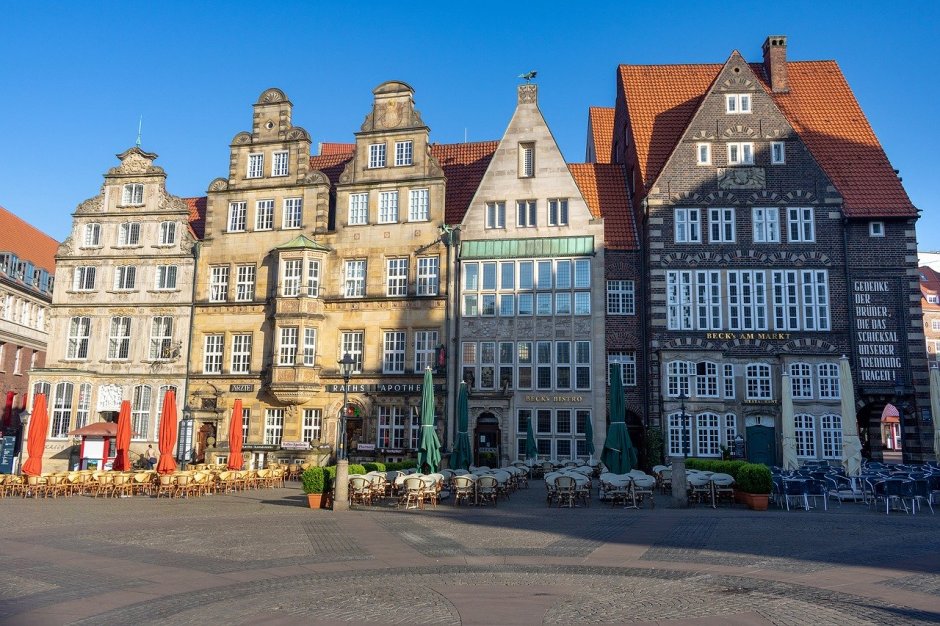
Centre of the city is Market Place, where the Schutting, seat of Bremen’s merchants for four centuries, St. Peter’s Cathedral whose towers give stunning views over the city, and the The Rathaus, dating back to 1405, are a reminder of Bremen’s glorious past.
Marketplace, Bremen: Photo by Peter Hauschild at Pixabay
We lunched in the Town Hall cellar (the Ratskeller), which has served as an eating place for more than 500 years, sitting under a low barrel-vaulted ceiling in a cloister-like atmosphere and choosing a wine from one of over 600 fine German wines they keep in stock. Dark wooden cubicles lined one wall (doors kept open by law!) and huge crested barrels dominate the centre of the room. I decided on the pigs knuckle with sauerkraut, fried potatoes and pickled cucumber but I wish I had been forewarned about the size of the pig’s knuckle. German pigs are BIG!
Snoor House: Phoro by Nicole Pankalla at Pixabay
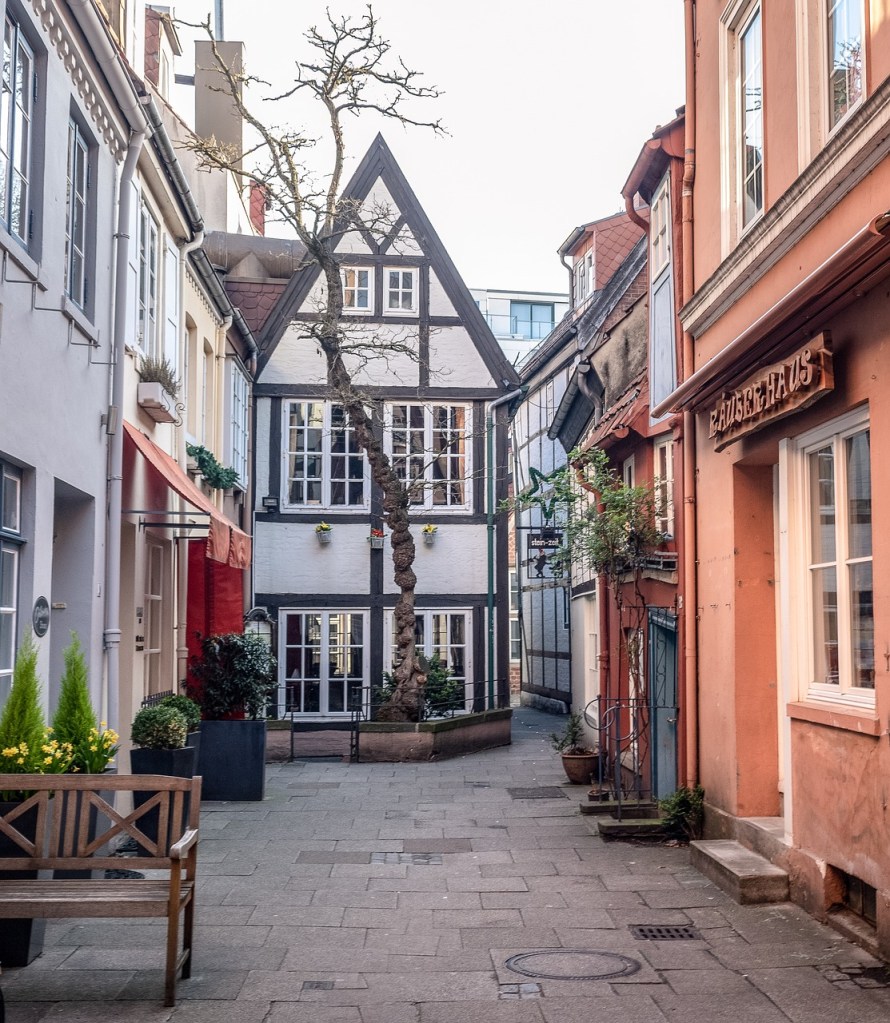
Max suggested a visit to the vaults beneath the Cathedral to see the mummified bodies but post lunch squeamishness made me refuse. Instead we wandered through Bremen’s oldest area, the medieval Schnoor district, once home to fishermen and sailors but now housing artists’ studios and craft shops selling unusual things like life size puppets, designer kites and dolls’ houses. Also worth noting are the top class restaurants and shops that crowd the area. The district was renovated in the late 1950’s, but fortunately the developers didn’t destroy the medieval charm of the district or make the place into a Museum.
There were craft shops too, in nearby Bottcherstrasse, where the zany house fronts with carved wall panels brought a smile to my face and the carillon made of Meissen porcelain made me marvel. The inventor of decaffeinated coffee, one Ludwig Roselius, commissioned these buildings on the tumbledown alley he had purchased early in the 19th century.
Evening saw us in Das Viertel, the centre of Bremen’s nightlife and cafe society, the like of which I’d only seen before in old Montemartre. Moroccan and Turkish snack bars vied with beer joints and shady looking clubs, and Dali-esque people in designer clothes clogged the pavements. Too rich a mix for me after such a hard day’s sightseeing, so we wandered back to a quiet tavern in Schnoor for a satisfying tankard of Bremen’s best.
Blockland, Bremen: Photo by SofiLayla at Pixabay
Yes, Bremen was different. ‘You know, Hitler never came here’ Max said as he saw me off at the station. ‘We were always anti-fascist and he knew that.’
That’s how different they were: they mentioned the war.
Details:
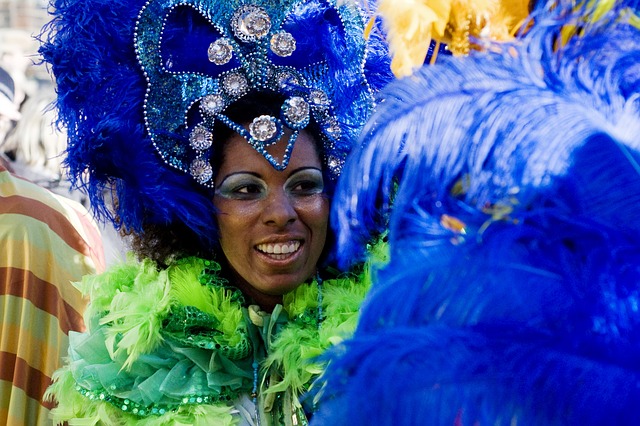
Best time to go is for the Freimarkt in October, Bremen’s answer to Munich’s Octoberfest, a huge celebration of food and drink, beer tents and sausage kiosks. Be warned, outrageous behaviour is the order of the day.
Carnival, Bremen: Photo by SofiLayla at Pixabay
Beck’s inn Snoor is the place to sample the local draught beer. They also serve good seafood. There are plenty of snack bars round and about and the food is always good and plentiful.
Restaurants: Do keep enough dosh to eat at Natusch Fischerihafen Restaurant in Bremerhaven for great fish served almost straight from the boat. The place is full of hearty eaters, and they often come around to ask if you want more. Fish dishes from €25 Euros, Grills from €21. Table d’hote Menu from €31.50 for 3 courses. Very large portions so check what other are eating and maybe settle just for one course. Wines by the glass very reasonable.