Statue of Jimi Hendrix in Freshwater, Isle of Wight.
The Isle of Wight Festival had rightly taken its place at the pinnacle of music festivals by 1970. On this small island off the south coast of the UK the August 1970 event welcomed over more than 600,000 people to tune in and freak out. It caused an uproar on what was, until then, a sedate holiday resort and divided opinion on the island like nothing before or since. Letters to The Telegraph and The Times (mostly from people who weren’t there) fuelled the debate and there was a definite sense that this was the end, or the beginning, of something. Along with Bob Dylan, Joan Baez, Joni Mitchell, Donovan, Jethro Tull, Miles Davis, The Doors, The Who, The Moody Blues, Procol Harum and more, they rocked the island. A weekend ticket would have set you back £3: in comparison, next year’s prices run from £264 to £362 per adult for the weekend.
Just a few days later, Jimi Hendrix died from a drug overdose.
Tales from the Vienna Woods by Johann Srauss was playing in the background as I worked and my thoughts drifted to the trip I’d had a few years ago through that lovely green space outside Vienna, designated a Biosphere Reserve by UNESCO. The Woods are not as portrayed in the two films I’ve seen: rather than trees and birdsong, it is more like rolling lawns and parkland, but it is, indisputably green, and I know there are copses or woods around if I’d had more time to explore.
If you are not self-driving, the tours can be recommended. The Vienna Woods tour includes visits to Heiligernkreuz Abbey, a Cistercian monastery founded in the 12th century, and Mayerling Hunting Lodge where Crown Prince Rudolph committed joint suicide with his fiancee. These are followed by a choice of the picturesque town of Baden, or a visit to Seegrotte, the largest underground lake in Europe.
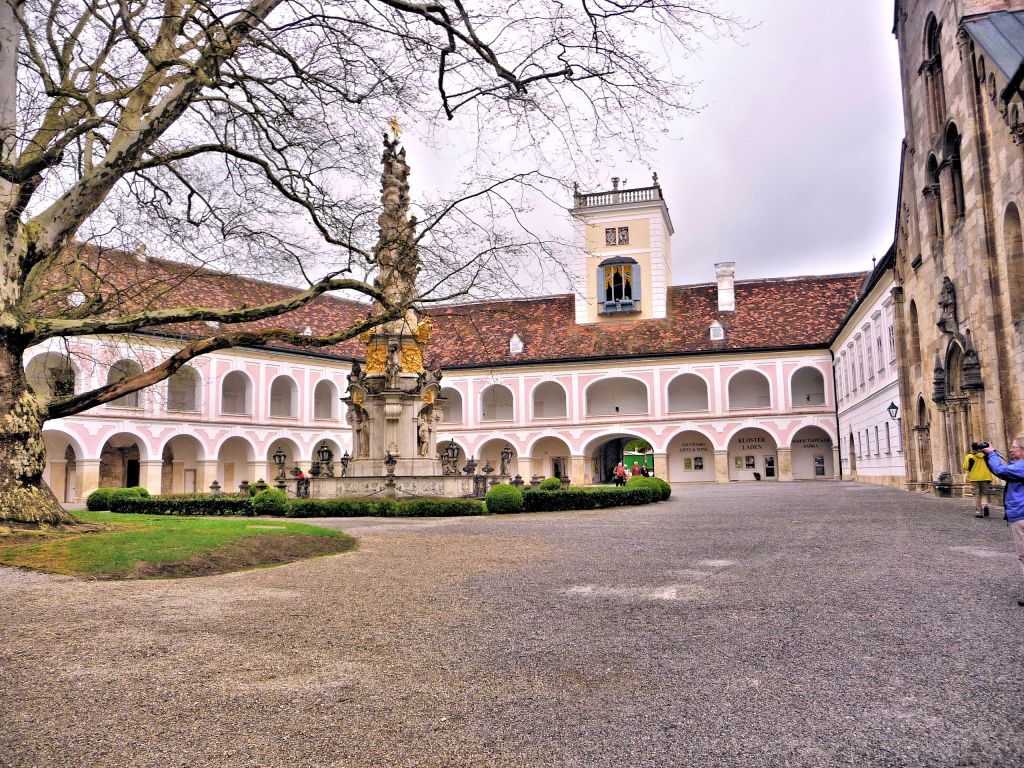
Mayerling from the road, the Plaque commemorating the suicides, the Monastery
I opted for the latter, knowing only that it was a lake so big that the trip actually incorporated a cruise on its waters. The lake is in Hinterbrühl, a 6,000-year-old town a mere 27 kl from the centre of Vienna and we were told that during WWll the Nazis built fighter planes there in the old underground gypsum mine that dates back to 1848.
And what a contrast to the magic of the Vienna Woods that was.
Old picture of fuselage taken from stills at Seegrotte
In a blasting accident in 1912, miners accidentally broke through some rock on the lower level (of 3) and 20 million litres of water flooded in creating the lake. The mine was then closed and forgotten about until sometime in the 1930’s when the huge lake, 66,240 square foot and four feet deep on the lower floor of the mine was re-discovered and opened as a tourist attraction.
We entered the mine through a 230m narrow, brick-lined passage and from there into a small room where our guide pointed out the broken fuselage of a jet fighter along the side of a wall: this was the HE162, the first jet fighter developed by the Nazis towards the end of the war – and the one Hitler thought would win it for him.
When the HeinkelWerke took over in 1944 and began manufacuring, they used labour from the nearby sub-camp of the Mauthausen concentration camp. From this camp 1800 slave laborers, primarily from Poland and Russia, were drafted in to build a secret underground factory in the mine. After pumping the water out of the lower floor the slave labourers, along with 300 other skilled workers, began producing fuselages for the He-162 fighter jet.
During late autumn 1944 and spring 1945, they built sub-assemblies and BMW 003 turbojet engines for the He162 – the People’s Fighter (Volksjäger) – an extremely fast plane, cheap enough to be discarded if it suffered any damage. Other factories were also making parts for the jet, sending them to Hinterbruhl for final assembly and onward shipment to airbases.
I wondered how many underground factories the Nazis had during WWll because this one, Seegrotte, reminded me very much of the one on the Channel Island of Jersey which I’d visited a few years ago, right down to the misuse of the prisoners working there.
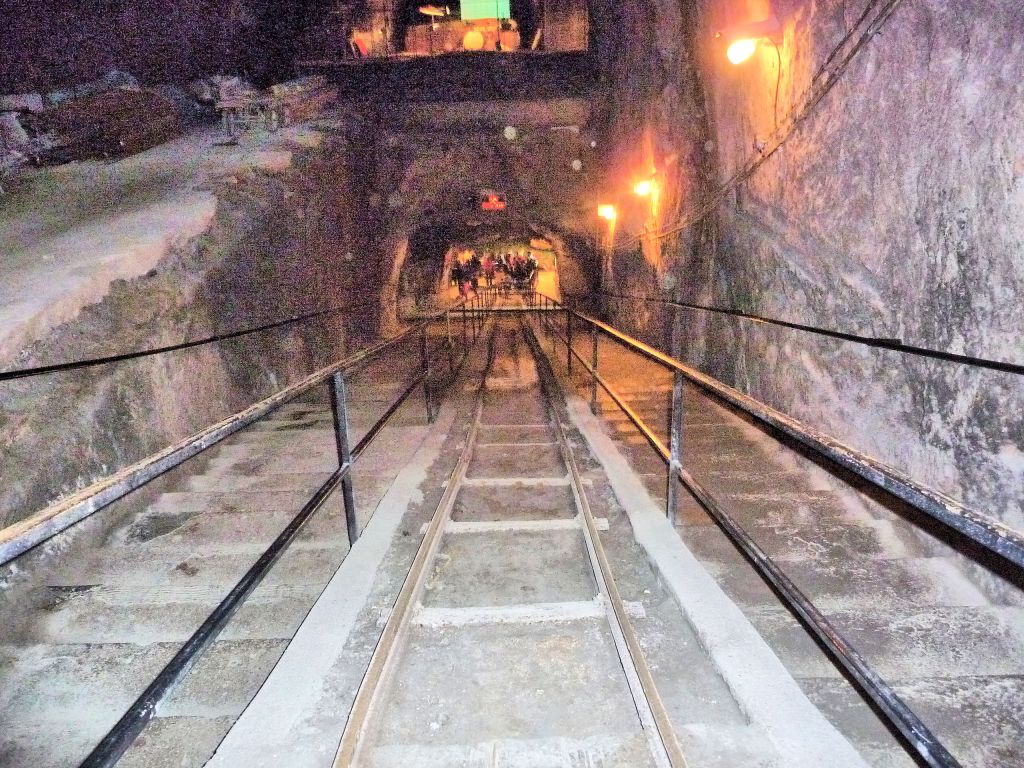
It wasn’t all about the fuselage factory though: we learned something about the original miners and their work in the 19th century. The original railway tracks on which the horse-drawn wagons moved the goods, still run along the floor. We were introduced to the life of the miners as the guide pointed out the niches in the walls displaying models of the horses, artifacts and tools which gave an idea of the mining techniques and of the life they led in those days.
Artefacts used in the old days of the mines, Plaque to those who died, and the old railway tracks
We passed stables that once housed up to 25 horses, horses intentionally blinded before they worked the mines to make them easier to control in the dark bowels of the earth. The shock of the blinding of the horses was followed by tales of more brutality. Of the more than 2,000 slave labourers and others from nearby concentration camps who worked in these damp, dark caves, only a few survived.
From further research carried out on my return home and some information I gleaned at the Third Man Museum in Vienna I learned that in the last months of the war, the remaining inmates were forced on a 200 km-long march to Mauthausen concentration camp. Many of these were Austrian Jewish citizens and 51 of them were killed by the SS with gasoline injections before the march began. Few of the remainder survived.
The 18th century miners had a particular devotion to St. Barbara and we were shown a large room with candles and a religious icon, one of several Catholic shrines to the saint within the mine. The Vienna Boys Choir occasionally sings there and apparently up to 2,000 people attend the concert (by coincidence about the same number as that of the prisoners who worked in the mine). A monument honouring the massacred men was erected in 1998 and has a place near the Saint Barbara shrine. The Holocaust Memorial on the former site of the concentration camp marks the site of the mass grave of these 51 slave labourers executed by the Nazis.*
Plaque to those who died working in the mines
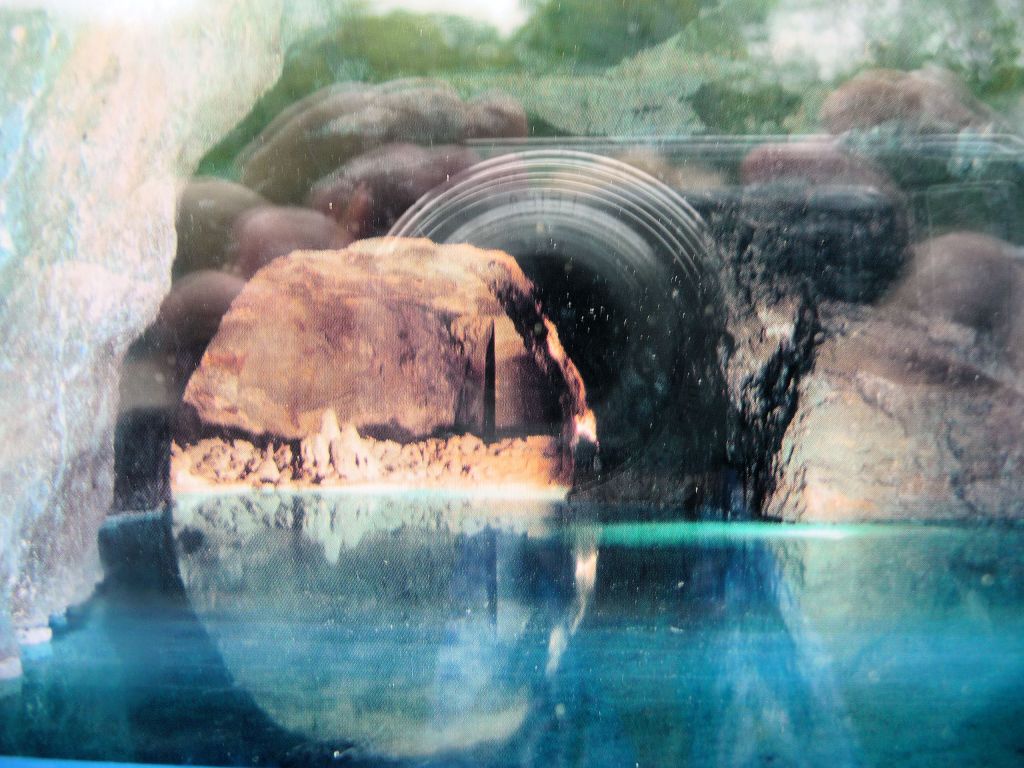
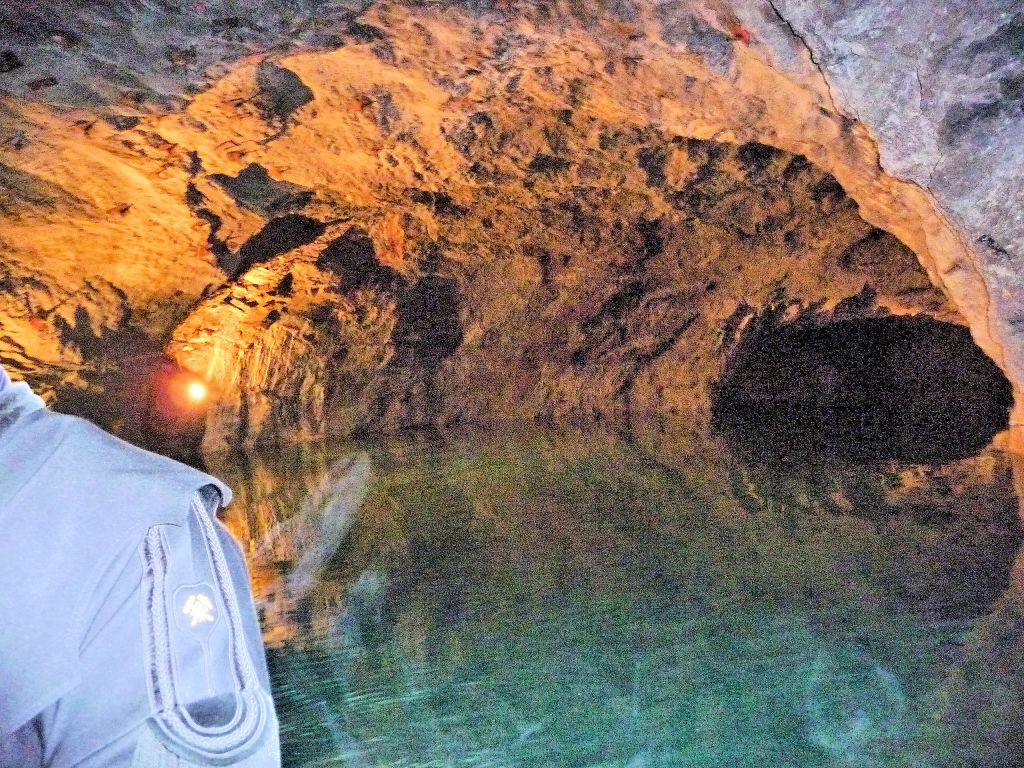
I almost forgot. The main reason for visiting this cave, the Seegrotte, was to take the trip on the lake on which was anchored the golden dragon boat used in the 1993 “Three Musketeers” movie which was shot here. We took the 20 minute glide across the Lake (but not in the Three Musketeers boat much to the disappointment of one little boy) lit by the soft glow of the cave lamps as the guide pointed out the wall through which the water had come back in 1912, and answered a few innocuous questions. The lake is placid and pure and we drifted in and out of ‘rooms’, skirting overhanging roofs, lulled by the silence and the magic that caves and water always produce.
The stories I’d just learned took something away from the trip. I think it’s probably an age thing as no one else seemed at all put out by it. Although it was enjoyable, I just felt it was a long way away from Tales from the Vienna Woods birdsong and waltzes. It certainly dispelled the sweetness of the Strudl and Strauss I’d been indulging in over the past three days.
Postscript: The mine closed in Spring 1945 by which time the Nazi prison workers had produced 198 fuselages which had been sent to the Vienna International Airport in Schwechat to be assembled. As WW2 came to an end, the Nazis tried to destroy the entire underground factory but they only managed to destroy the water removal pumps. Without the water being pumped out the mine quickly flooded again.
In Spring 1949, it reopened to the public as Seegrotte, the boat trips started then and continue to this day as a major attraction in the Vienna Woods.
* The WW2 holocaust memorial is located on Johannesstrasse, a few blocks from the Seegrotte.
Silent, if you ignored the scoldings of the howler monkeys from the river banks, the splash of nutrias as they slipped into the river and the background clicks of cicadas, but these noises being way outside normality for me, I took it for silence.
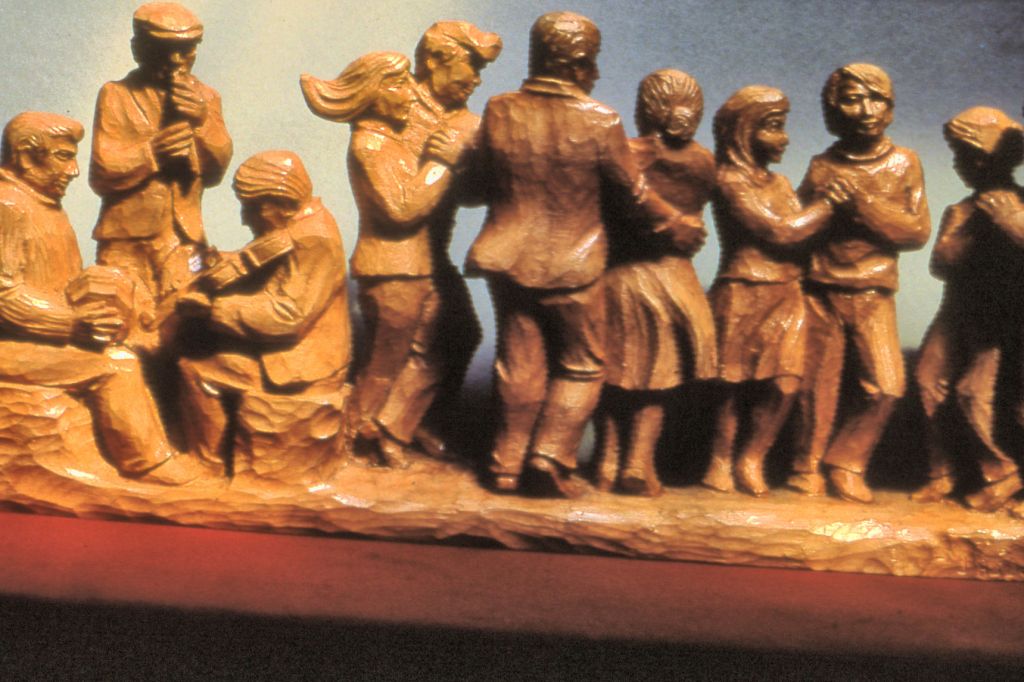
The Irish wood-carver John Haugh is not much known outside his own country but he has exhibited and sold many works in the USA. I was privileged to interview him many years ago and this sculpture “Dancing at the Crossroads” is one of my favourites of the many I saw in his studio in Carlingford, Co. Louth.
Dancing at the Crossroads by John Haugh
I especially liked the roughness of the carving which lends the work a rustic quality in keeping with the subject. This particular work dates to sometime in the late 1990’s
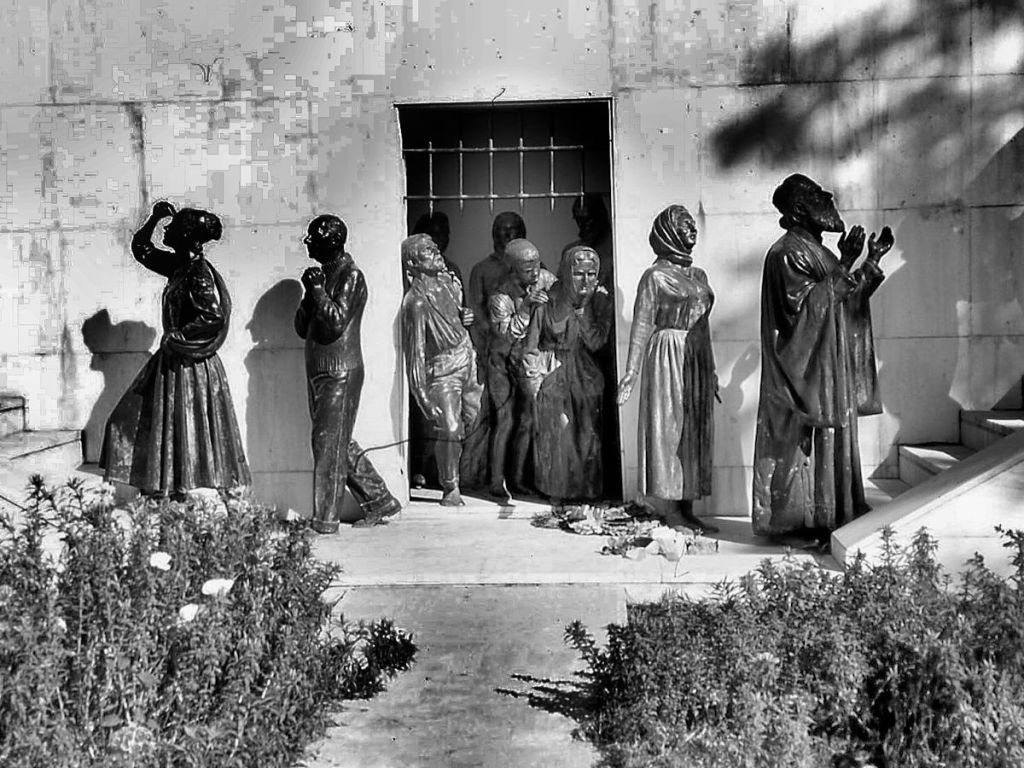
This group of bronze statues shows the release of Greek Cypriot prisoners, peasants and clergy, from British colonial rule during the fight for independence on the island of Cyprus. The statue is in Nicosia but I was unable to find a date for it. I photographed it sometime in the 1970’s and I think it was fairly new then.
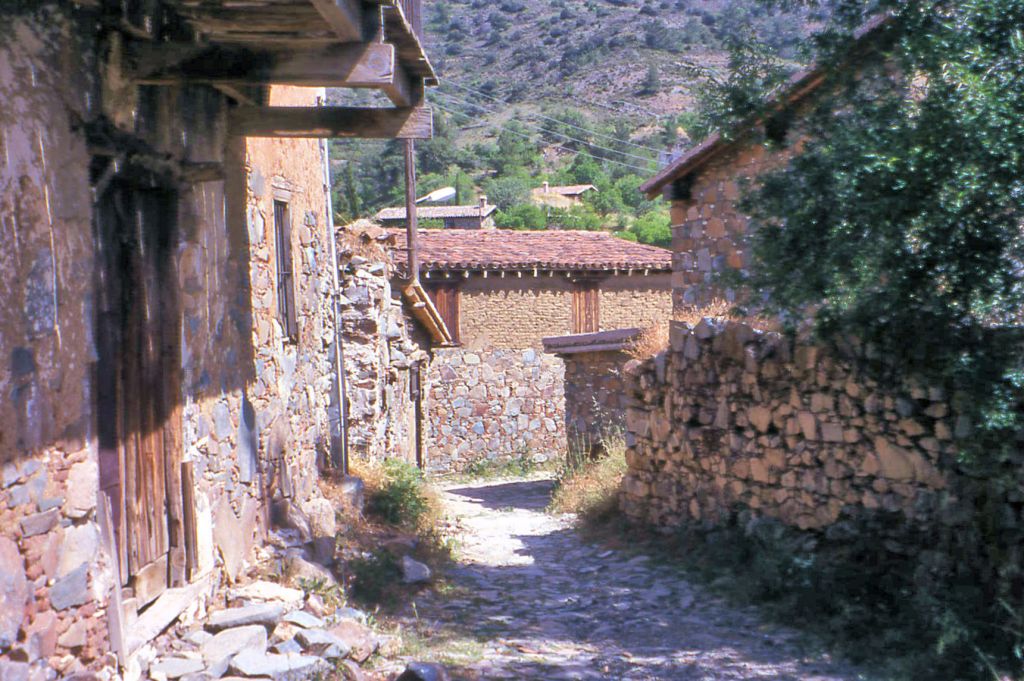
It is always sad to see deserted villages and town and even though they are being given status by UNESCO, they still harbour a feeling of meloncholy.
Fikardou Village – a Unesco Heritage Site in Cyprus
There is no escaping the fact that young people will no longer work at back-breaking, low-paying jobs on farms, and abandoned villages like these are a familiar site all over the Mediterranean. Even when some houses are restored by a local who works abroad, they are then used only as holiday homes. The greatest cause for concern then becomes the elderly left to fend for themselves when all the young people have fled to coastal towns for work.
It’s not that I don’t like the blocks themselves, it’s that the script offering them runs across what I’m trying to write, causing frustration and annoyance. For a while back I was coping but now WP seems to have put a gremlin in the works. Instead of the block for Image showing up, I get a list of blocks I don’t need or use (for business, mostly) so I have to find ways to get the image block up which means time spent searching. If I only use paragraph and image can’t the Blocks intuitively sense this? Why offer me blocks I’ve never used?
Today I was uploading a Sculpture Saturday post and the tools down the right-hand side disappeared, leaving me with a page which held my text and image but nothing else. I couldn’t find categories, tags, slugs, anything like that so I had to add these via the list of Posts. Then I wanted to defer this posting until Saturday, but that button wasn’t there either. I thought if I hit Publish it might give me the chance to put a date in but no, I hit publish and guess what, it’s published it!
And now, for something completely different (thank you Monty Python).
(this was still in my Drafts folder so I’m re-posting it as I’m unsure what is happening. Another mix-up with Blocks?)
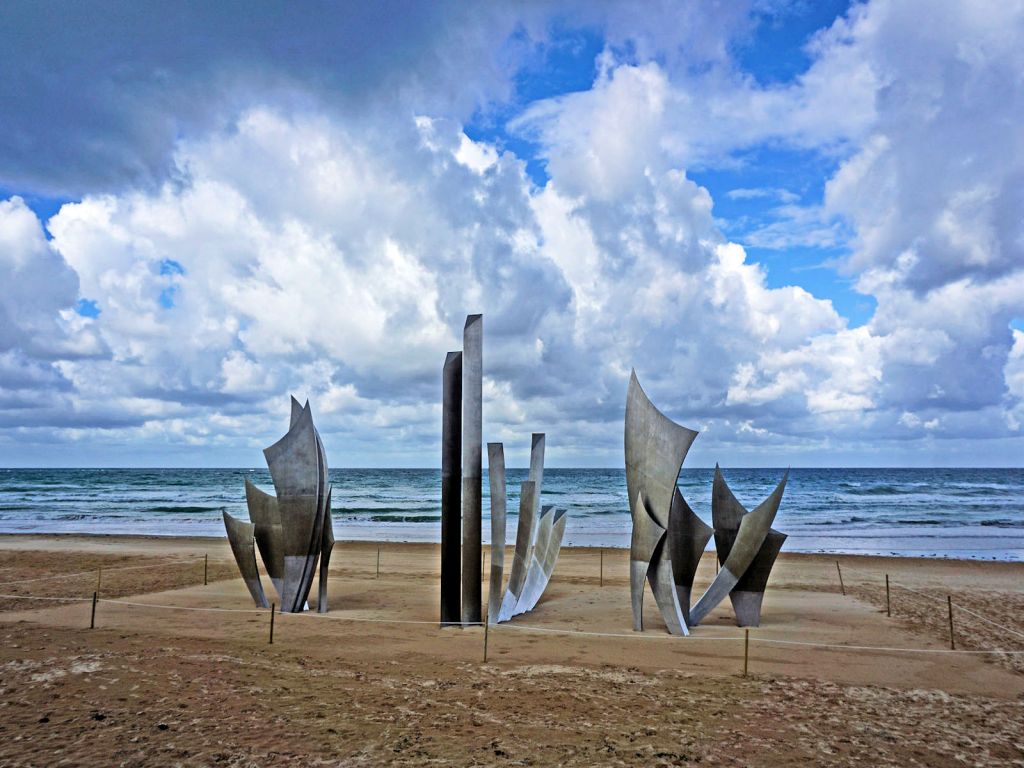
Les Braves by Anilore Banonon on Omaha Beach, Normandy
Commissioned by the French government on the 60th Anniversary of WWll and erected in 2004 as a monument to the Americans who helped liberate France, this moving sculpture stands at the centre of Omaha Beach.
The beach today is an place of calm and tranquillity but 76 years ago it was an inferno of noise, smoke and slaughter. Here, along a five-mile stretch of shoreline, the men of the American 1st and 29th Divisions, caught off-guard as they had not expected to meet such opposition, battled their way through fierce German defences.
Thousands of Allied troops were killed in the D-Day battle of Omaha Beach on June 6, 1944, but it was perhaps the single greatest turning point of World War II.t.