Category: Europe – Mediterranean

Spain, Italy, P:ortugal & France

  • The Italian Lakes, Maggiore, Como & Orta

    The Italian Lakes, Maggiore, Como & Orta

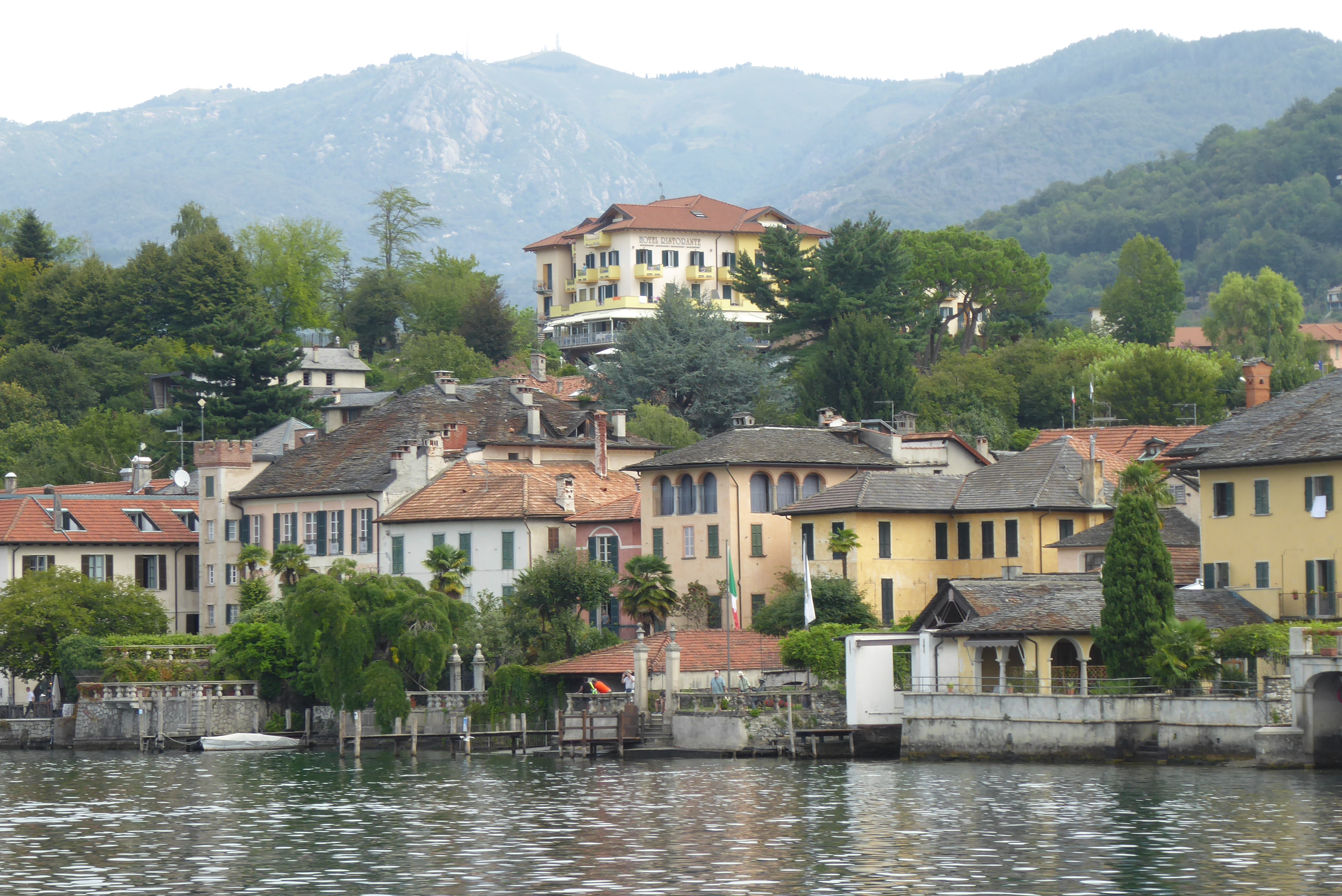
    When Queen Victoria travelled to The Italian Lakes in 1879 it took four days to reach Lake Maggiore, where she stayed at the magnificent Villa Clara in Stresa.  I visited the Lakes a few weeks ago and it took me just three hours from London to my hotel in the same town on Lake Maggiore.

    The Queen had to journey from London to Portsmouth, then cross to Cherbourg by boat where she boarded the waiting 9-carriage Royal train, on to Paris for an overnight stop at the British Embassy before travelling to Stresa by yet another train.  I flew from Heathrow, a two-hour trip over the Italian Alps, snow glinting in the early morning light, de-planed in Milan and then a quick one-hour run through to Stresa.

    Once again, I think how lucky I am to live in this century.

    en oute

    The Italian Lakes didn’t become part of the Grand Tour until the 19th century.  In the 17th and 18th centuries, this traditional trip to Europe was mainly a search for the roots of Western civilization through Greek and Roman remains, and the journey served as a rite of passage for the British nobility, landed gentry, and artists and literati who could find a sponsor.  A few women managed it – usually widows of sufficient means.

    In 2008, the New York Times described the Grand Tour as something that could last from several months to several years.  The Queen couldn’t spare the time for such a long trip, and financially, I couldn’t afford it.

    In my eight days, however, I did manage to cover a lot of ground.  I took in the area of Lake Maggiore and the town of Stresa, enjoyed meals along the lakefrontL I took the cable-car to the peak of nearby Monte Mottorone – a natural balcony offering magnificent views over the Alps and lakes – and walked the trails, delighting in the views from the 1,492 metres high plateau.

    I took a boat to the stunning Isola Bella (I won’t translate as it is much too prosaic) and wandered through the gardens of the 17th century Borromeo Palace and I spent a day at Lake Como where I rode the Funicular to Brunate, enjoying stunning views and an incredible panorama over the larch covered hillsides that swept down to the lake which lay 500 metres below.  Another day was spent in Medieval San Giulio on Lake Orta where I visited the offshore island of the same name and walked around the perimeter of the island on a cobble-stoned path called The Silent Walk, a walk which encouraged an appreciation of the island’s beauty.

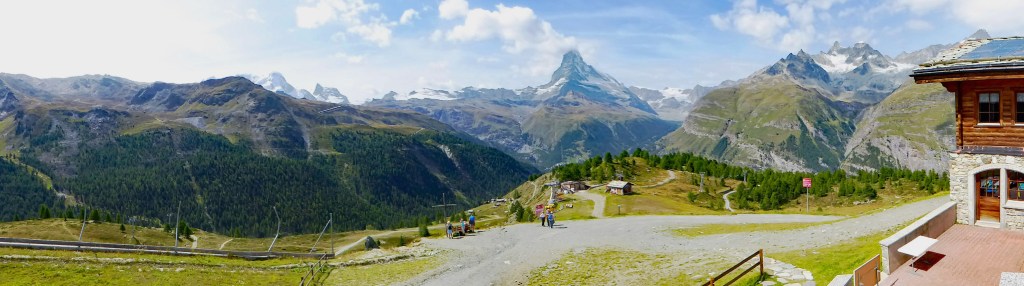
    Locarno, a Swiss town on the Italian/Swiss border was another interesting day trip from Stresa by train and coach, and across the border and into Switzerland was Zermatt, a town which turned out to be completely different to what I’d thought it would be.  I had imagined sophistication and high rises but instead, I got a villagey atmosphere – rustic wooden houses and hotels but with high-end prices.  The highlight of my visit to Zermatt was the trip on the funicular to the top of the Rothorn from where I had a spectacular view of the Matterhorn, sadly not covered in snow, but with plenty of snow-covered mountains around me over which hang-gliders hovered, and plenty of hiking and walking trails to keep me occupied.


    If I add my Italian Lakes experiences to my travels around Italy I guess I can say I’ve completed my own Grand Tour which has included plenty of Roman and Greek remains from Rome to Ragusa.
    P1010019

    I’m still in that post-holiday mood that makes me just want to look at my photographs and read the many guidebooks I bought, but I’ll get around to posting about the individual lakes soon.   With any luck, I should manage to link to this post today.
    P1010006


  • CIVITA: A ‘dying village’ born again

    CIVITA: A ‘dying village’ born again

    Another lazy Sunday afternoon, thinking I should be gardening, blogging or doing something more useful, and then I opened The Observer, my Sunday paper of choice, to find a picture of a village I’d visited back in 2004, and I shot awake.

    Citava 4

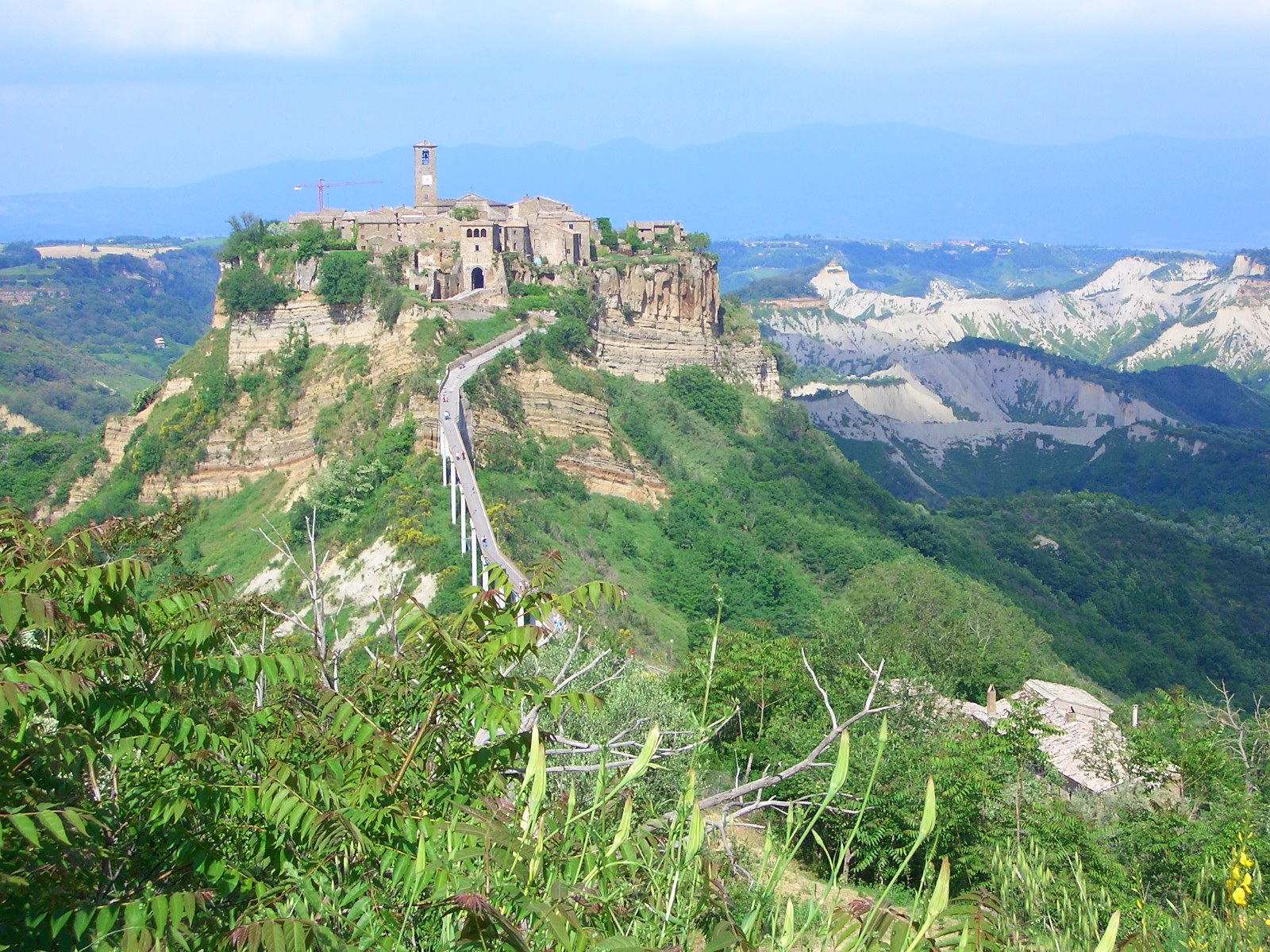
    The village was Civita di Bagnoregio and there was a whole page article (well, almost a whole page) about the place which, when we’d been there was deserted, save for a few cats and the charming owner of a small, inky-dark, Bodega into which we’d wandered.  It was June and there were blazing logs in the open fireplace.  Deserted wasn’t the word to describe the village.  It was the sort of place you felt you would want to leave come sundown as ghosts seemed to haunt its medieval streets.

    What has brought about the article in today’s paper is the fact that Civita has become the first area in Italy to charge tourists for visiting.  Venice, where marches against tourism are a regular event, may care to take a lesson from the Mayor, Francesco Bigiotti, who made the decision to charge visitors for accessing the footbridge to the town in 2013 when the charge was 1.50 Euros, raised to 3 Euros this year with 5 Euros on Sundays.

    Not only does this small fee enable the mayor to monitor the numbers entering the hamlet, it has also meant that communal taxes have been abolished in Civita and nearby Bagnoregio (pop.3,650) of which he is also Mayor, but it has provided much-needed employment.  In fact, the town has zero unemployment now.  Four hundred jobs have been created via two hundred new tourism-linked businesses that have emerged in the past few years.  And there’s more: there is now transport for disabled local people and an improved health service.  With an estimated 850 visitors due this year, the charge has obviously not had a detrimental effect on tourism.

    Citiva 6

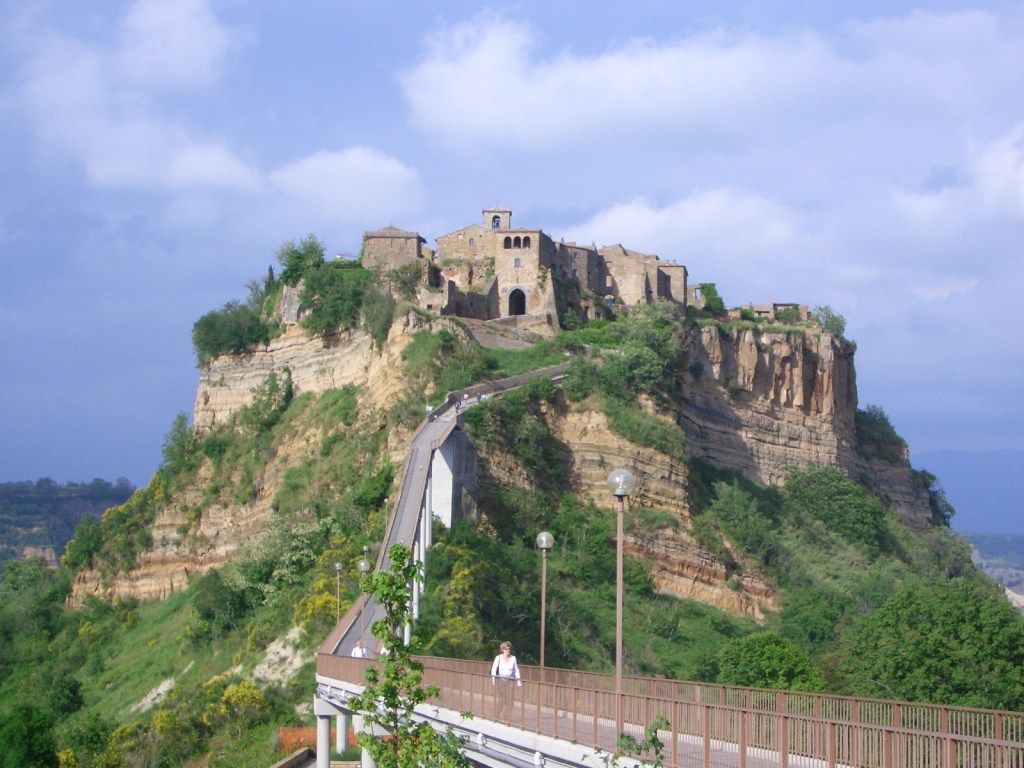
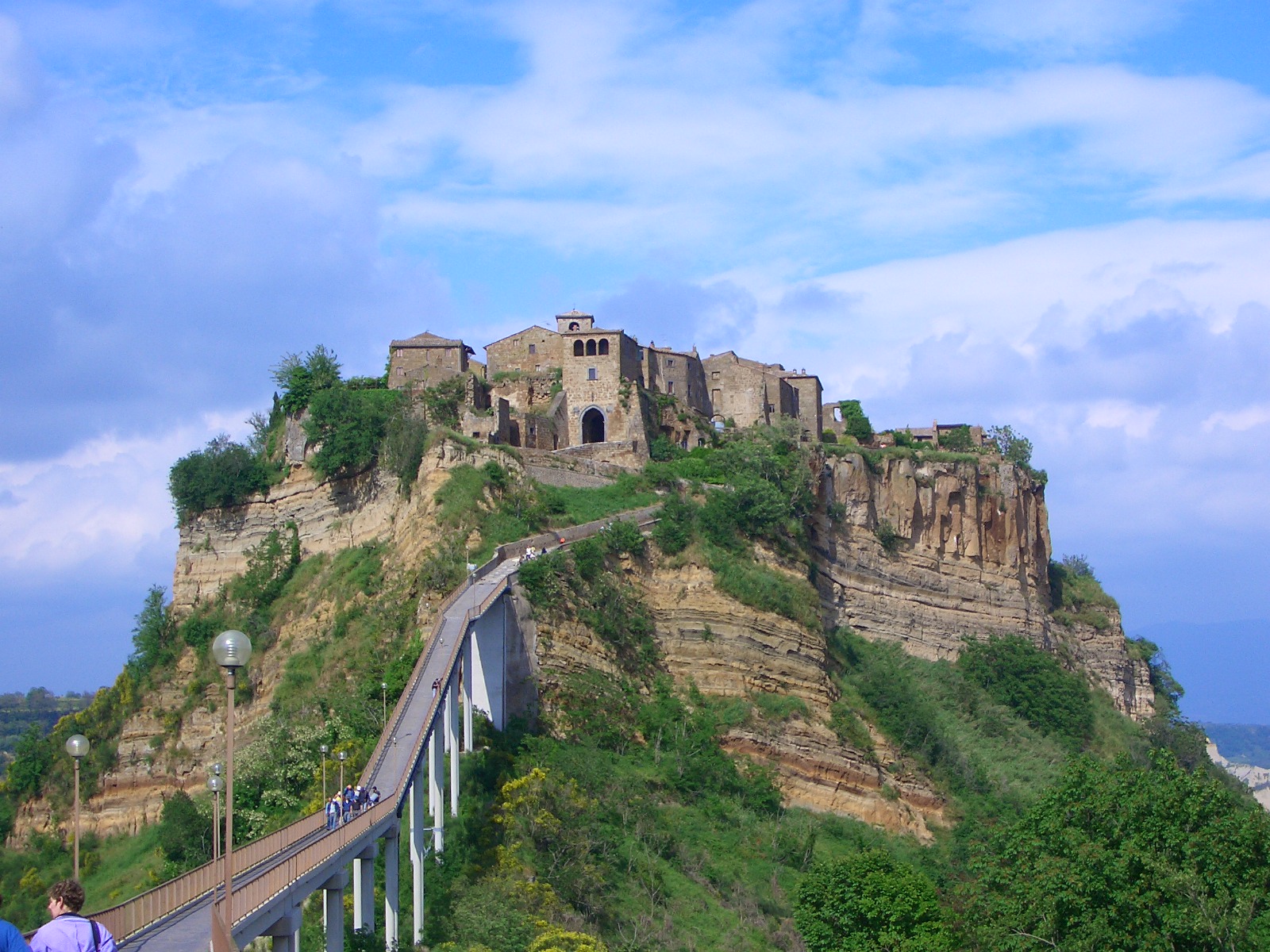
    Back in 2004, our party of nine people had been staying at a nearby agriturismo farmhouse in Aquapendiente in Italy’s Lazio region, and one of the places recommended for a visit with our hire car had been Civita.  There is no access for cars so visitors must be prepared for the walk across the sloping footbridge.  We’d visited Orvieto, Siena and other surrounding towns and this fascinating cobble-stoned village built high on a plateau of volcanic rock surrounded by steep ravines promised to be a complete contrast.

    Lying approximately 74 miles north of Rome Civita was founded by the Etruscans nearly 2,500 years ago and its year-round population is only 10 people.   It was known as ‘the dying town’ due to floods, landslides and earthquakes that constantly threaten its survival.  In 2014 and 2015, some of the old properties plunged into the ravine when the sides of the outcrop on which they were built gave way.

    Cappella-in-CitivaOnce at the top of the footbridge, you are faced with a huge stone gateway, the entrance, through which you arrive at the main Piazza which contains a 12th-century church with a bell tower.   Off this are meticulously maintained streets of old stone houses, some of which have now been turned into holiday homes.  At sunset the stones glow golden, softening the aspect of what could seem fortress-like.

    I have no hesitation in recommending Civita as a perfect day-trip from any of the neighbouring towns, Siena, Orvieto, even Rome or Florence, if you have transport and are willing to hike up to the village, but remember, there is no post office, supermarket, chemist, doctor or hospital.


    Road to CitivaThe site is under consideration to be given world heritage status by UNESCO and two important names from the world of cinema are backing this, Oscar-winning composer Ennio Morricone and director Bernardo Bertolucci.  But even if it is not successful, the outlook seems positive for Civita which will live once again, thanks to a tax on tourism.
    Now, let’s see Venice do likewise.

    Citiva 5

    I acknowledge, with thanks, the information on the Mayor’s initiatives which I got from the article by Angela Giuffrida in The Observer of 20th August 2017, on p.21

    The photographs are mine all dating from 2004.


  • A CRETAN VILLAGE WITH 2 MUSEUMS

    A CRETAN VILLAGE WITH 2 MUSEUMS

    Crete is the largest island in Greece, a place of dramatic mountain ranges and gorges dotted with ancient ruins and architecture from the medieval period onwards.  Known as the cradle of civilisation and the birthplace of Zeus, the island provides the backdrop for many of the Greek myths and legends we are familiar with.

    P1140226

    Throughout the island are scattered hamlets and villages and high in the dramatic White Mountains not far from Chania, lies the village of Therissos, which has not just one, but two museums.  One would be unusual in a place of this size (pop. just over 100) but to find two is extraordinary.

    The-Modern-Resistance-Museum-at-Therissos
    The Modern Resistance Museum

    I visited the village two years ago when I was staying at Malarme on the coast, mainly to visit the Museum dedicated to the Greek resistance in World War II which I had heard about in the course of my studies in war history.

    Saviour-of-Crete

    Home-of-the-great--Eleftherios-Venizelos
    Home of the great patriot Eleftherios Venizelos

    Sadly, my interest in the wars in which my own country had been involved had led me to neglect local Greek history.  I had a lot to learn about the resistance of Therissos over many decades, centuries one might say.

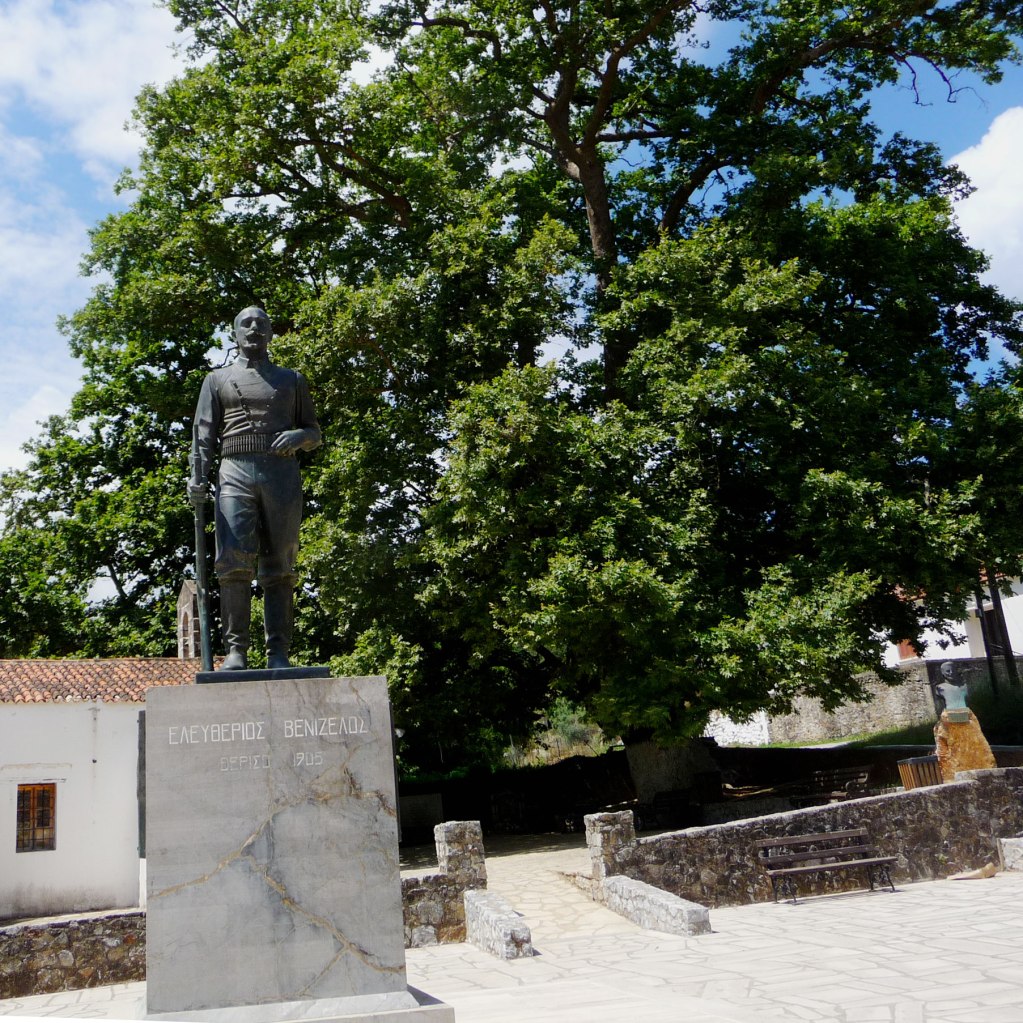
    Talking to local people, I soon realized that the important museum for them was the one dedicated to the great Greek patriot and politician, Eleftherios Venizelos who fought for Cretan independence from the Ottoman Empire in 1887, who became the island’s first independent Prime Minister in 1905 and then Prime Minister of Greece in 1910.   Of more importance to the locals, however, was the fact that Venizelos was actively involved in the drafting of the Cretan constitution, that he took part in the armed uprising in 1905 which deposed Prince George, and that he negotiated the unification of Crete with Greece.

    He lived in Therissos and his house is now a museum dedicated to Venizelos and other local people who were involved in the struggles for freedom from the Ottomans.

    The other museum, one dedicated to World War ll, is a purpose built modern space with few artefacts but many pictures and letters.  Unfortunately, not many of these are translated but sometimes a volunteer is on hand who can help with this.  Entry is so cheap I felt duty bound to leave a large donation as it is purely self-supporting.  It is very local to the young men who died fighting the Germans in the mountains, a bloody conflict that is known for the savagery on both sides.

    Photo from Resistance Museum in Therissos

    Some of the pictures are harrowing and deal with the war on the mainland as well as the war on Crete, pictures of starving children, scenes from the village of Kandonos which was burned to the ground in retaliation for the killing of 50 Germans, and pictures of the terrible life lived by the villagers during the harsh winters.

    The savagery on both sides was legendary, from the locals shooting parachutists out of the sky in cold blood to the occupying forces, shooting whole families and villages on what often seemed a whim. It is difficult to take all this in, surrounded as one is by a landscape of such beauty.

    War Memorial in Maloliopoulo

    The-Dotto-Train-navigates-the-Therisso-Gorge I journeyed up from the coast on the little ‘Dotto’ train with which most of us are familiar in cities and resorts, but in this case, it traversed the famous Therisso Gorge.  It surged up the hill in under an hour, through magnificent scenery, the air heady with the scent of herbs, great swathes of wild thyme, rosemary, pine, marjoram, oregano, and fennel. Many of the olive trees along the side of the road are hundreds of years old and behind the rocky caves can be glimpsed walnut, almond, hazelnut and chestnut trees.

    p1140493.jpg
    Mountain Goats

    In the village itself, red, white and pink oleander trees bloomed, the scent mingling with the smell of cooking from the little tavernas that were operating, some with open wood fires and all serving delicious Greek salads and fresh fish, alongside local dishes infused with the scent of pine seeds, olive oil and fennel.

    The little Dotto train allowed about two or three hours for a visit, long enough to wander around the village, have some lunch and still have to time visit both museums.

    I enjoyed the trip so much I went back a second time a few days later and spent more time in the museums, reading the letters with the help of a student and trying to come to grips with what had happened here where the resistance hid out for many years during the second world war, harried and hunted like animals, during bitter winters of extreme cold, and parched summers of unbearable heat.

    The photographs tell a tragic tale and I am haunted by them still.

    This slideshow requires JavaScript.

    Best books on the history of the Battle of Crete:

    Crete:  The Battle and the Resistance by Antony Beevor (John Murray, Paperback – a division of Hodder Headline (1991).  Still regarded as the best history of Crete during WW11

    The Cretan Runner by George Psychoundakis (trans. by Patrick Leigh Fermor):  John Murray, Paperback (first published 1955).  A first-hand account by one of the partisans from the mountains.

  • Weekly Photo Challenge – Bridges

    Weekly Photo Challenge – Bridges

    Just literally bridges.  I thought of all sorts of ways in which to interpret the challenge, but when I started looking through my photos I decided to go with the obvious.  It’s too hot for serious thinking today, so here is a selection of some of my favourite bridges.

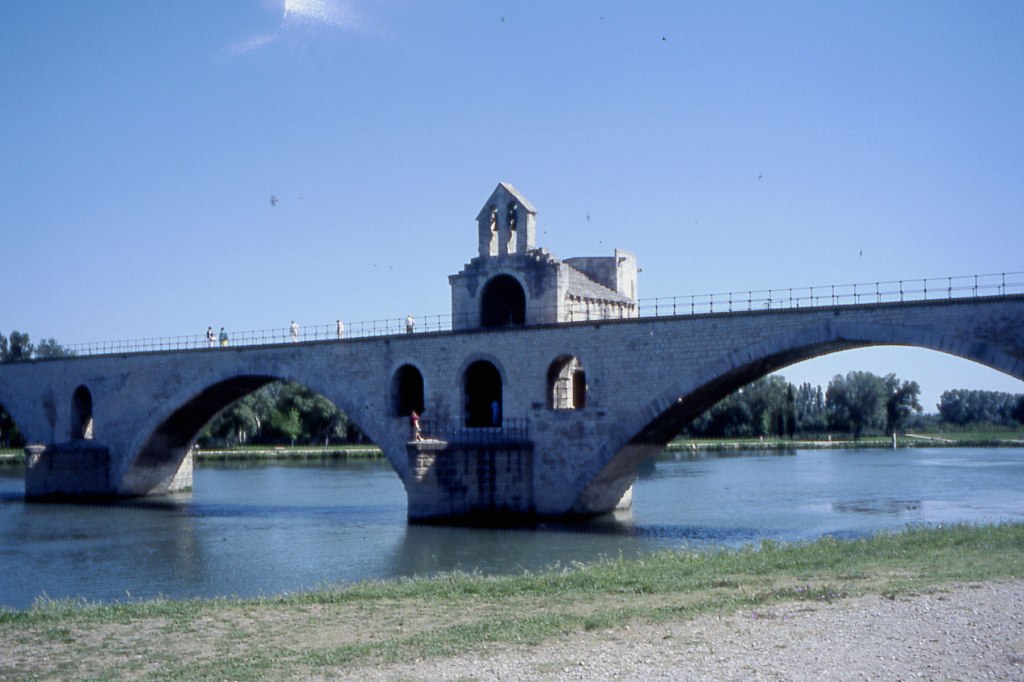
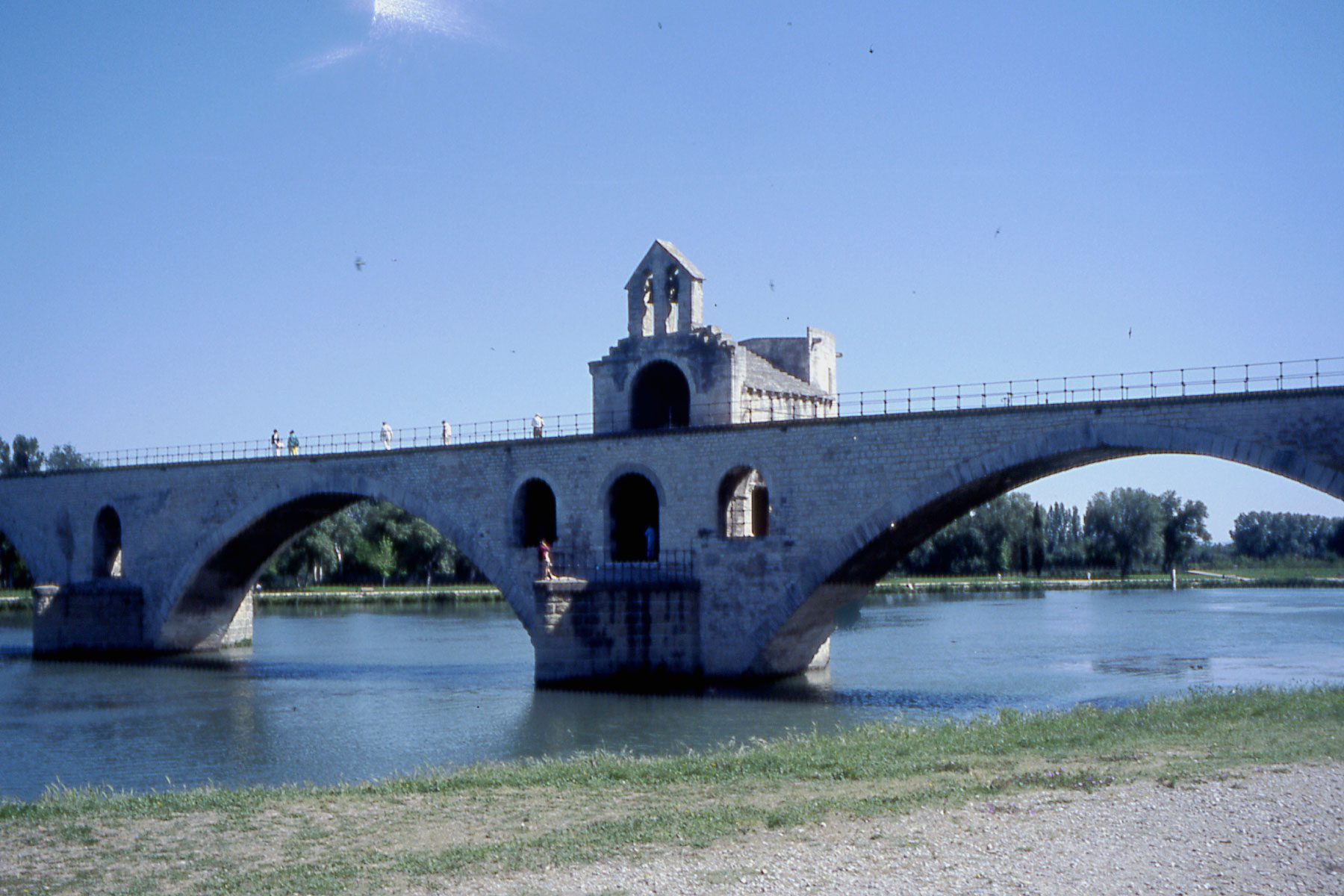
    Above – Sur le Pont d’Avignon

    Amsterdam, Triana Bridge Spain, and Ponte Vecchio Florence, Italy

    Rome, Italy:  Pisa, Italy: and the famous painted bridge at Lucerne, Switzerland

    La Somail, France, Linked houses in Strasboug, Williamstad, Curaco from our cargo boat.

    Sur-le-Pont-d'Avingnon,-France

    The Daddy of them all – the bridge at Avignon, France.


  • A Sandwich on the Bosphorus

    A Sandwich on the Bosphorus

    Looking through photographs taken in Istanbul some years ago, I came across some images of the fishermen selling their catch from boats on the Bosphorus and was overwhelmed by feelings of nostalgia.  Nostalgia for those simpler days in Turkey when Kemal Ataturk was revered by everyone, the secular state was praised and remarked on with pride by the Turks we met, and the food, hospitality, and people were second to none.

    In fact, I wondered as I ate dinner every night, why people raved so much about French cooking.  I thought the Turks had them licked.

    Galactica-Bridge-Sandwich-Making

    But, to the sandwich.   I’d joined the Istanbul locals as they queued by the Galactica Bridge where a couple of fisherman in a bobbing boat with nothing more than a primus stove, a frying pan, a heap of freshly caught fish, crusty bread, and big, yellow, lemons, provided the best takeaway I’d ever had.   I pointed to my choice of fish, it was fried, slapped between two pieces of bread, and a gourmet sandwich worthy of at least one Michelin star was handed up to me as I stood on the bridge.

    Impossible to eat elegantly.  This sandwich demanded two hands wrapped around it, and with the absence of napkins, the oil did make rather a mess, covering mouth and chin in a scented, herby, grease, that encouraged one to lick fingers clean.

    Istanbul is a great place for snacking and the food is fresh, tasty and clean.  Apart from the open charcoal grills where succulent marinated meats are singed before your eyes, there are shops selling simple dairy dishes like herb yoghurt with sweet garlic and a very tasty rice pudding.  Over 1000 bakeries in the city sell freshly made baklavas, almond cakes and melt in the mouth pastries (it was the Turks who introduced the Austrians to strudel pastry as they hammered on the gates of Vienna in the 17th century).

    A short post today, brought about by a bit of time-wasting as I took a stroll down memory lane.

    Bazaar in Istanbul - Carpets

  • BIRD WATCHING IN MALAGA

    BIRD WATCHING IN MALAGA

    I never thought I’d find myself on a bird-watching walk as although I’m fond of all feathered creatures, spending time in their contemplation is not something that I ever imagined I would do on holiday.  Yet on my recent trip to Malaga with SilverSpain.com I became just as enthusiastic as any died-in-the-wool bird-watcher when I joined the walk through the wetlands of the Desembocdura del Guadalhorce Natural Park.

    The name is quite a mouthful (it means river mouth of the Guadalhorce), but the simplicity of the place, the peace and tranquillity to be found just 20 Km. outside the city was something I hadn’t expected: nor had I expected the series of lagoons or man-make lakes, beautiful in the light of the setting sun.  I had always imagined wetlands to be marshy, boggy areas, with tufted grasses being the main feature of the landscape.

    How wrong I was.  This area of five permanent lakes populated with fish and eels, supports a variety of plants that enjoy the presence of water and salt, the banks yielding tamarisks, giant reeds and rushes, with here and there scattered poplars.

    SilverSpain.com had organized an expert in the field to guide us on the walk, Luis Alberto Rodriguez from BIRDAYTRIP.  Luis was just perfect both in the pace he set and in his ability to spot birds before we did.  SilverSpain.com had found someone who embraced their concept of the over-55s living an active life, enjoying varied and interesting activities often outside their comfort zone, and his enthusiasm for the area and its inhabitants infected us all.

    Silver Spain - Birdwatching 2

    The area is one of the most important stopover places for coastal migratory birds in the province and it is said that you can spot any bird at the river mouth during the passage periods.  The Guadalhorce river estuary is on one of the main Mediterranean-crossing routes between Europe and Africa but there is no sure way to guarantee what birds you are likely to see as much depends on winds, storms, rains, predators – and our old friend, climate change.

    bird-2052981_640

    The snowy plover breeds in the wetlands and at different times of the year you will see glossy ibis, flamingo, spoonbill, black stork, Caspian tern and coots.  Present all year are the endangered white-headed ducks which have been successfully breeding in the estuary since 2003, little egrets, grey herons, Kentish plovers, hoopoes (above), and Cetti’s warblers.  In summer the bitterns, Audouin’s Gulls and bee-eaters are welcome visitors and in winter the short-eared owl puts in an appearance.  Ospreys, kestrels, buzzards and sparrowhawks wheel in the sky and the marsh harrier can often be seen among the reeds.

    Of 350 bird species that have been recorded in Andalucia, 260 have been spotted in this Rio Guadalhorce Nature Reserve which covers 67 hectares of prime wetland.  The Park’s five lagoons are backed by palm, willow, tamarisk, eucalyptus and poplar trees and in this woodland and by the lagoon’s edges five comfortable birding hides have been erected.

    Silver Spain - river in Guadalahorce Natural Parque

    The area is also a popular place for mountain-bikers, hikers and those just looking to escape the hustle and bustle of Malaga for a few hours.  Like these seasoned sportspeople, always make sure to carry water with you as there are no facilities nearby and you can de-hydrate quickly in the heat.  Depending on the season, an anti-mosquito repellent would also be a good idea.

    MALAGA

    This bird-watching walk was only one event organized by SilverSpain.com during the week in which we ate healthy, but delicious, meals in restaurants and hotels, visited bodegas and bars dating from 1840, watched an equestrian show, a flamenco show and had a session of mindfulness in a tranquil retreat.  Their website gives full details.

  • Walking in the Desfiladero de los Gaitanes Natural Park, Spain

    Walking in the Desfiladero de los Gaitanes Natural Park, Spain

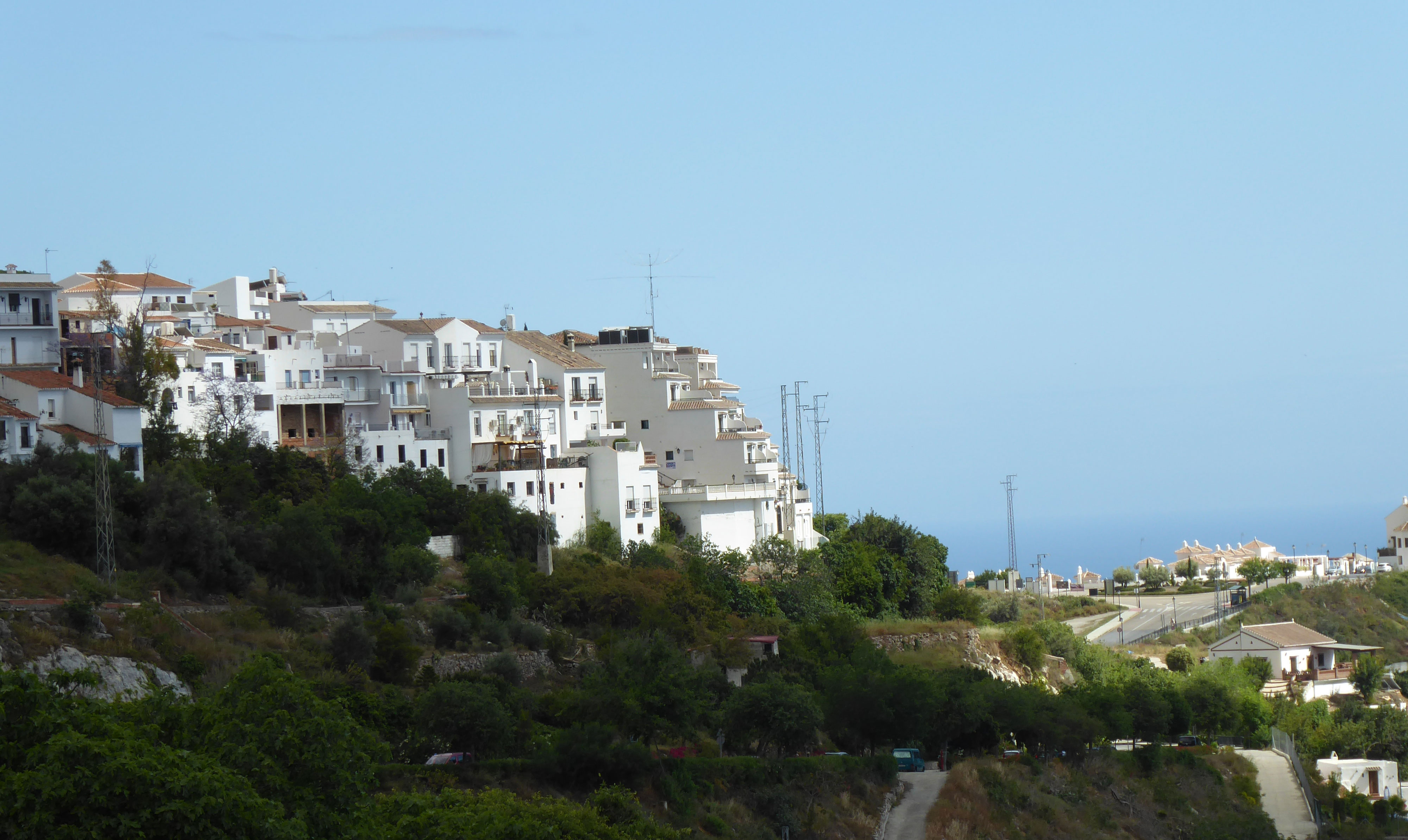
    In the Andalusian region of Spain alone, there are a total of 22 Natural Parks and 9 Biosphere Reserves, but few can beat the accessibility and beauty of the Desfiladero de los Gaitanes (also known as the Garganta del Chorro), located not far from Malaga on the Costa del Sol.  Just 50km northwest of that city and you are in another world.

    Walking

    This walk through the Gorge which is accessed from the village of Ardales is one of the activities on offer from a new company that is dedicated to helping the over 55s enjoy an active and healthy life, focusing on walking, exercising, a Mediterranean diet, and companionship.   The holidays organized by SilverSpain.com will be available from October of this year but I’ve been lucky enough to have had a taster of what’s on offer.  (Get Active & Healthy with Silver/Spain).

    Walkway

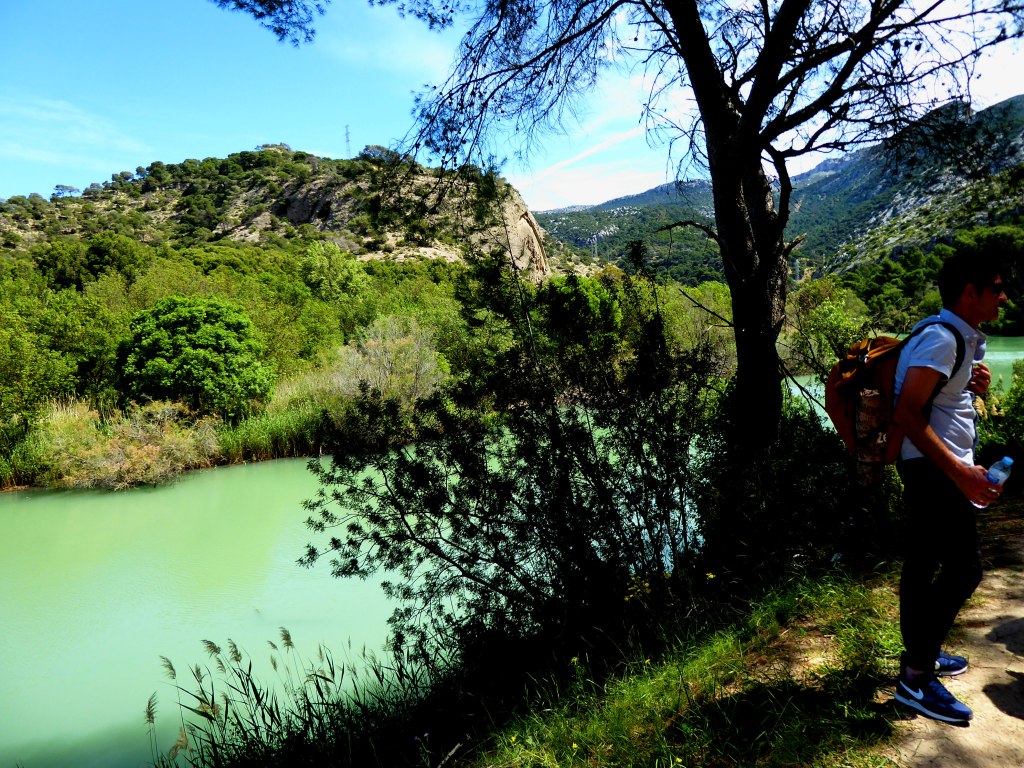
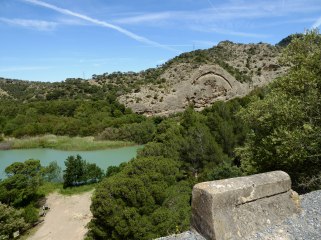
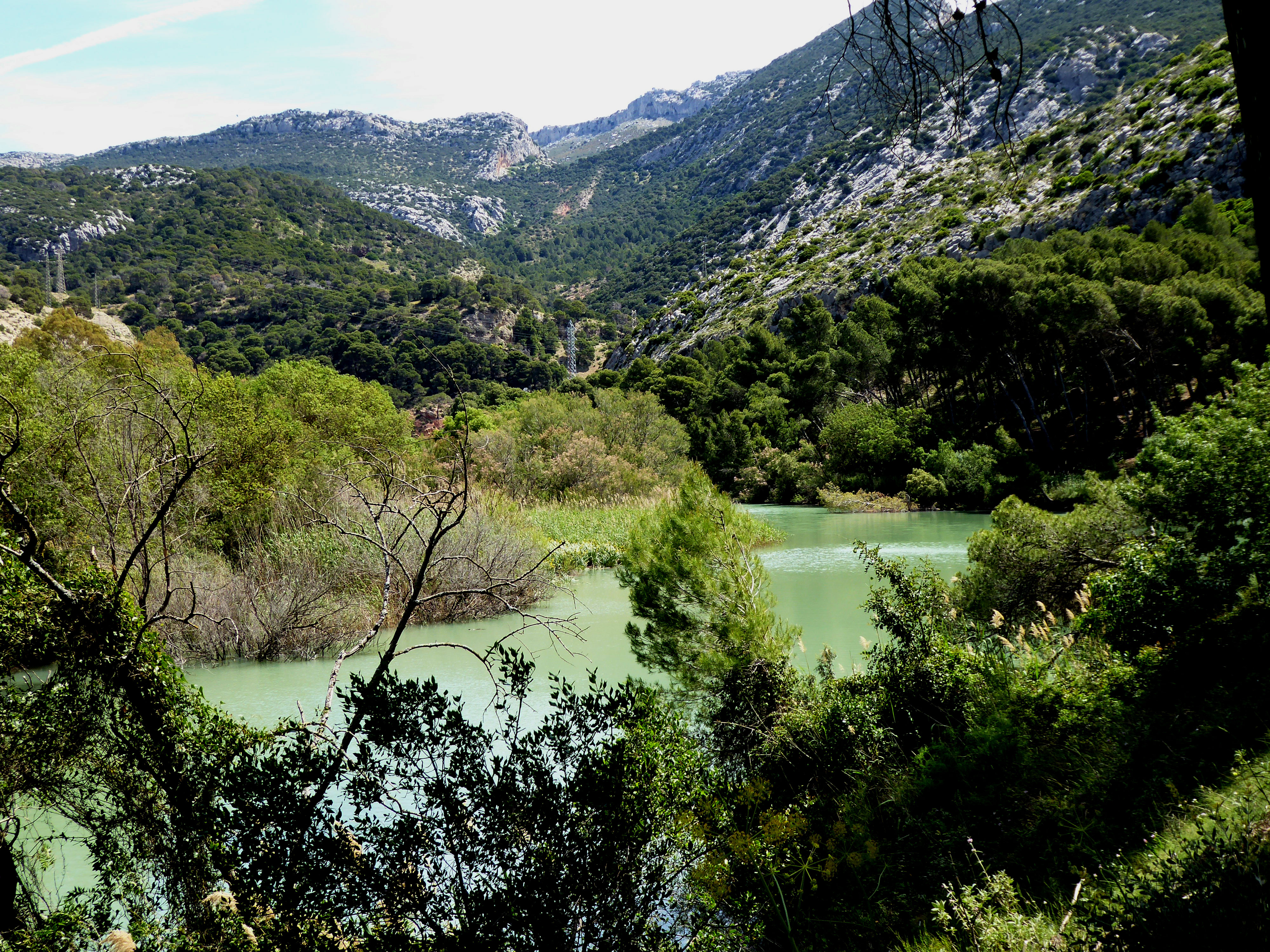
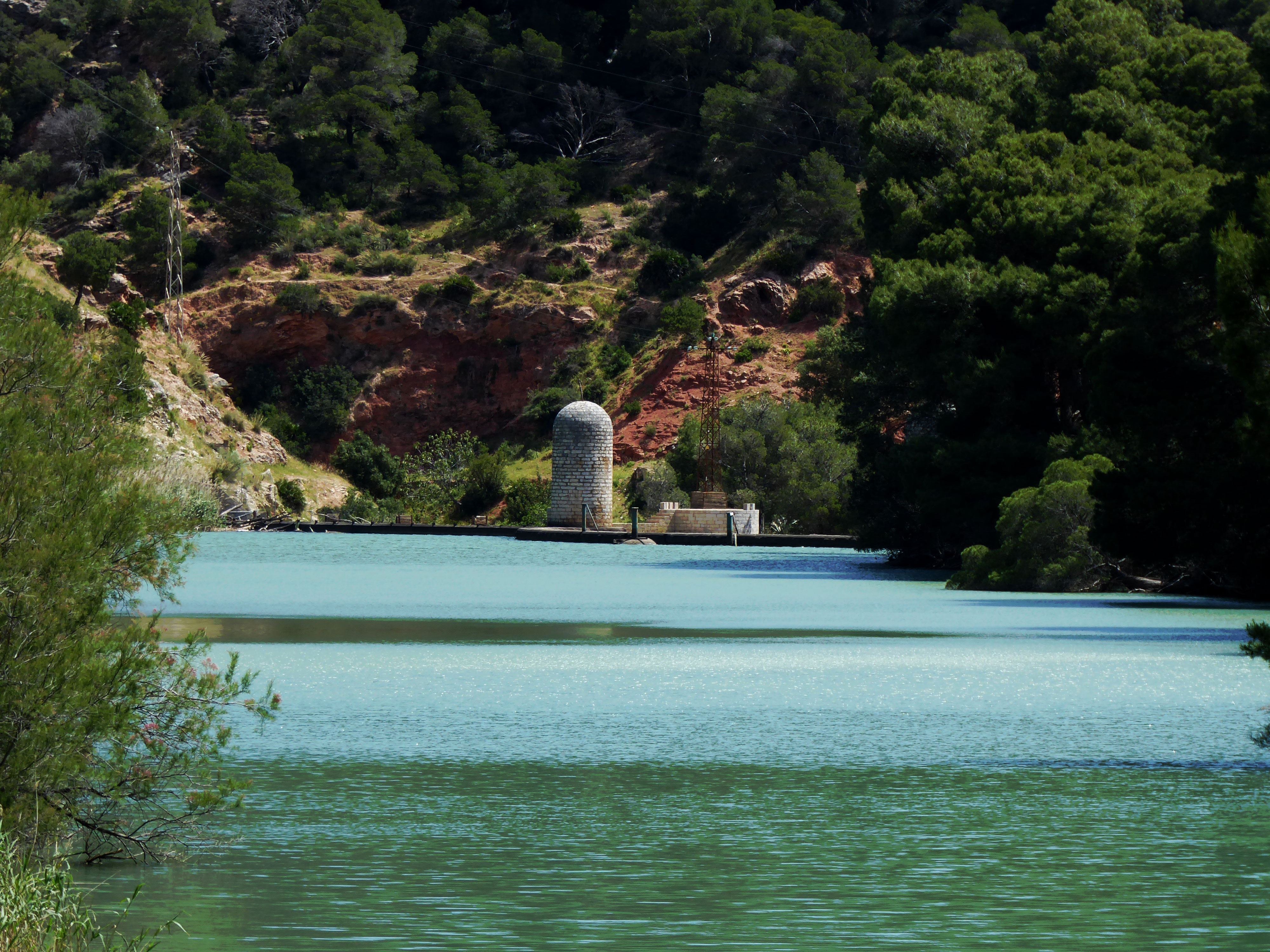
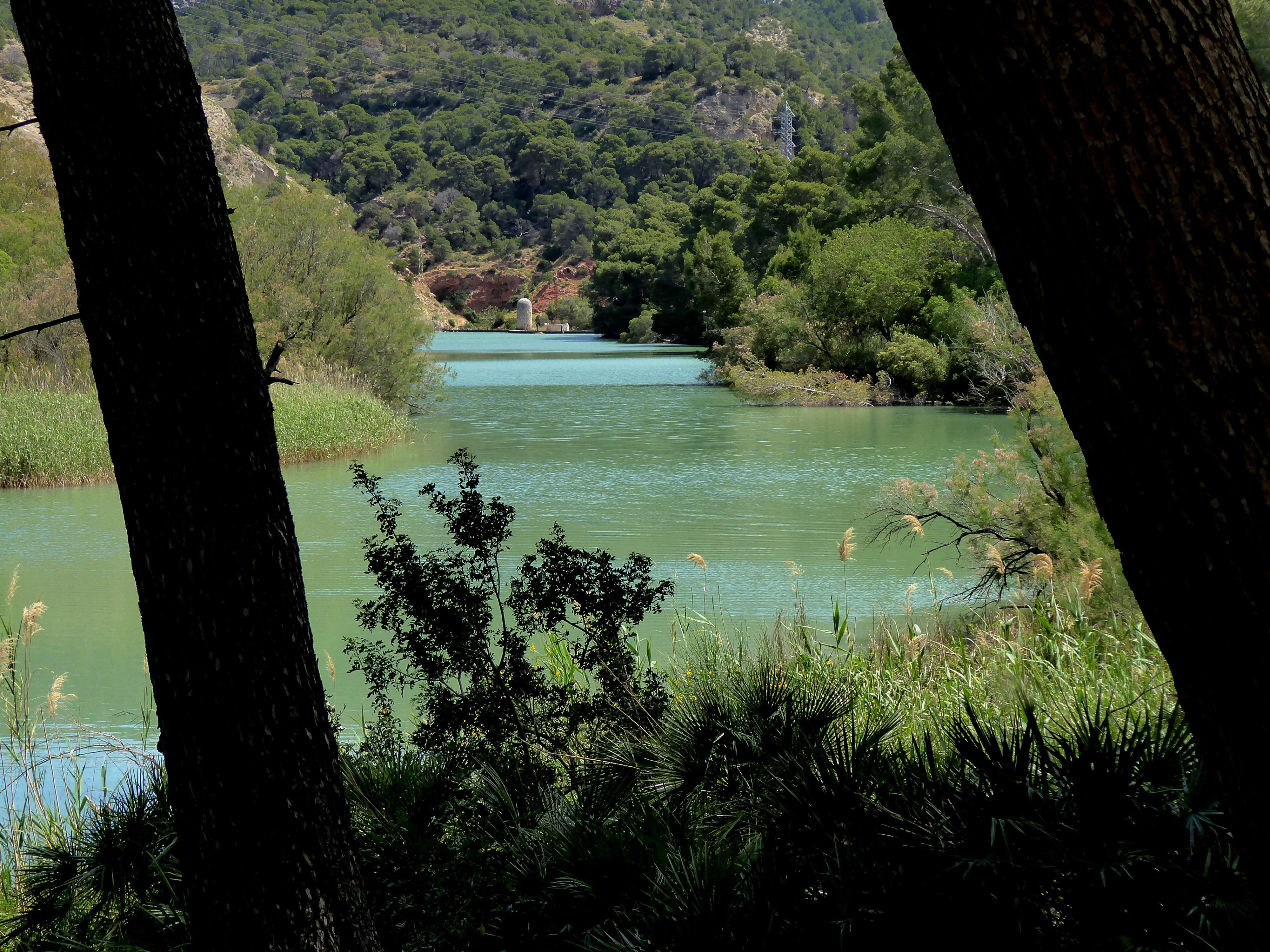
    Here in the 2,016 hectares of the Desfiladero de los Gaitanes, the Guadalhorce river has sliced through slabs of Jurassic limestone and dolomite to create a 3 km long gorge with sheer walls that tower up to more than 300 metres in places.   The Desfiladero de los Gaitanes is one of the most spectacular landscapes in the Subbetica mountains of Malaga famous for the Caminito del Rey, a vertigo-inducing, cliff hugging pathway, located some kilometres above the floor of the gorge and one of Malaga’s best attractions.

    River-and-Cliffs

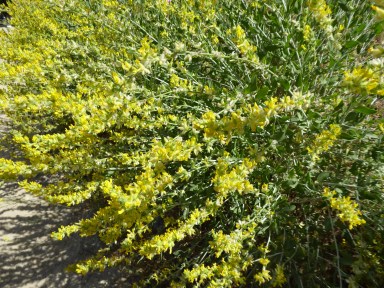
    Your senses are assailed by the perfume from the rosemary,  thyme and fennel growing beneath the Aleppo pines, willow, eucalyptus, poplar and olive trees.  Overgrown pink and white oleander  vie with rock roses, yellow gorse and pink broom to colour the landscape, and closer to the river are rushes and reeds among which butterflies dance.
    P1000087

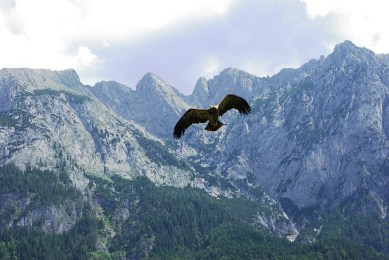
    Wheeling in the sky above the high gorge walls are golden eagles, kestrels, peregrines and griffon vultures, just a few of the wide variety of birds (nearly 150 known species) which nest here.  Smaller birds to look out for are red-billed choughs, crag martins, blue rock thrushes, owls, herons and crested tits, and in spring and summer the ubiquitous swifts make a return.

    raptor-1495198_640

    Keeping an eye peeled, it is possible to spy rabbits, Iberian hares,  foxes, bobcats, and wild boars and it is said that Spanish ibex inhabit the gorge’s more inaccessible parts, so the shy animals are usually only seen by climbers.

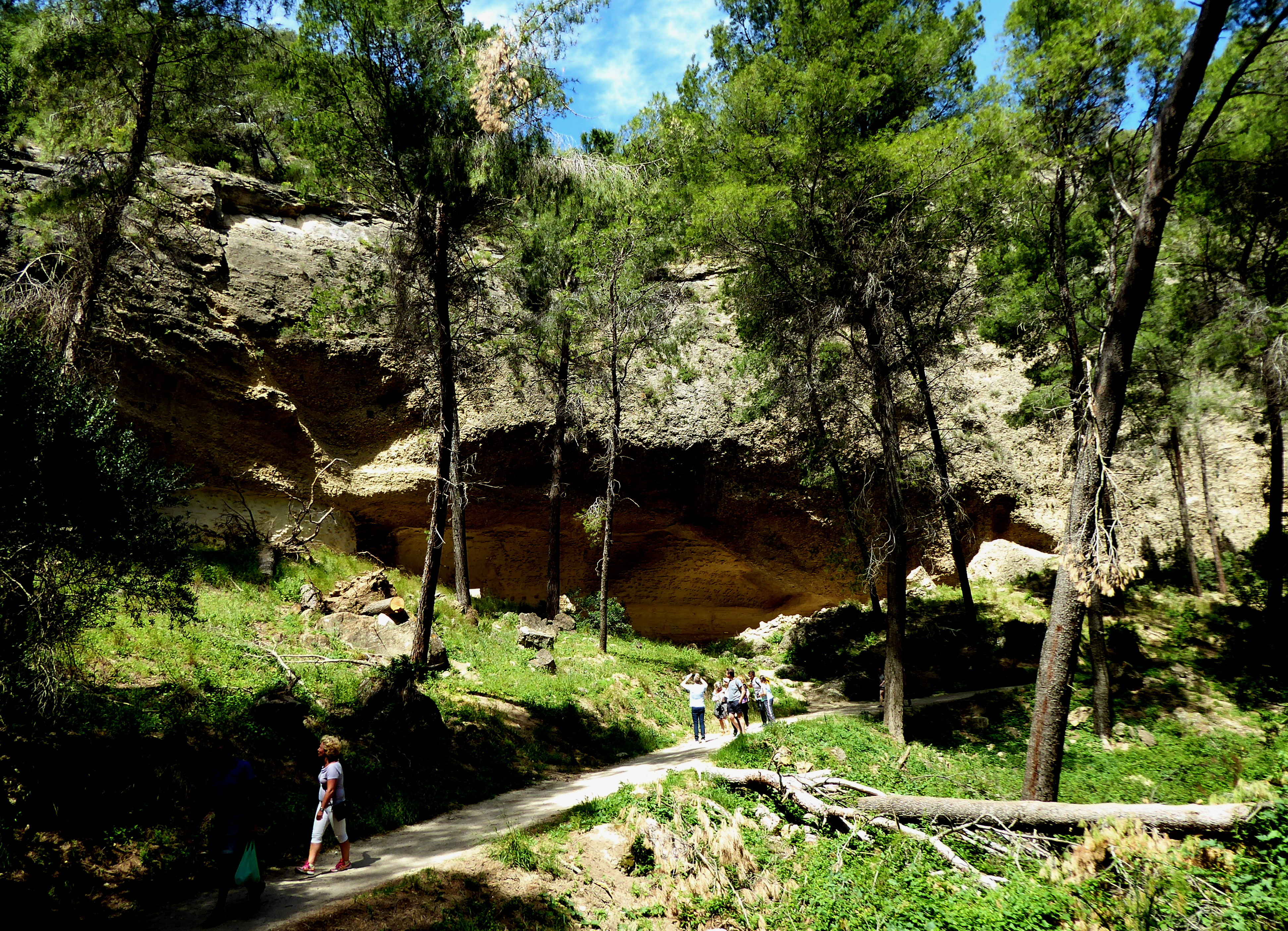
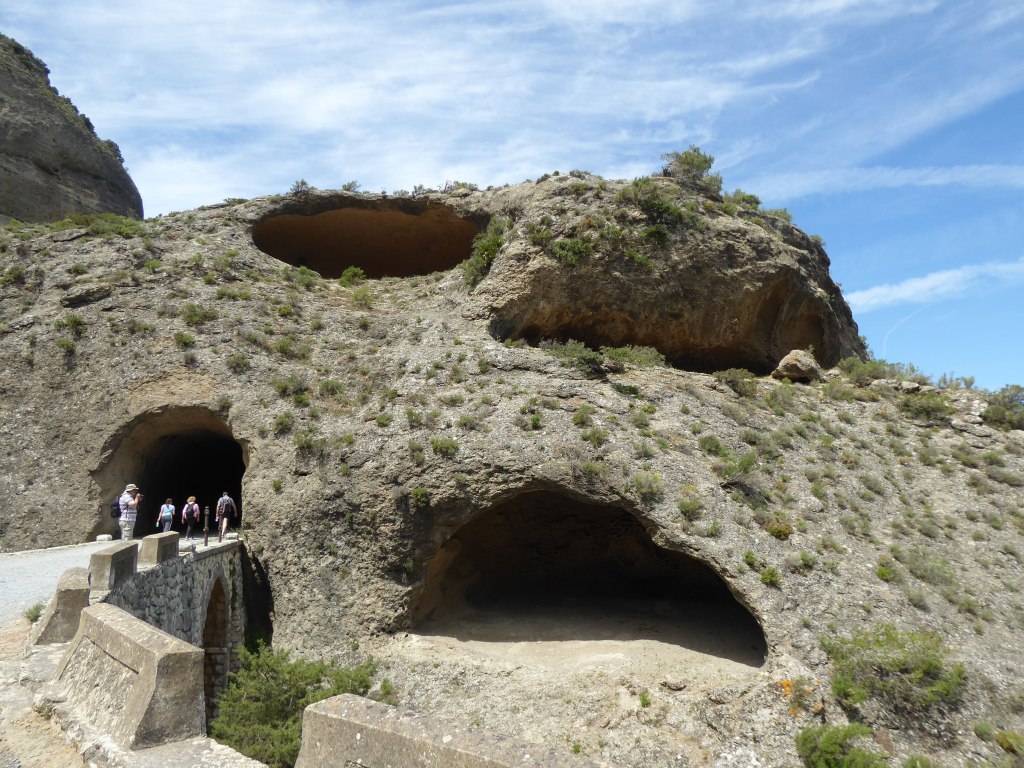
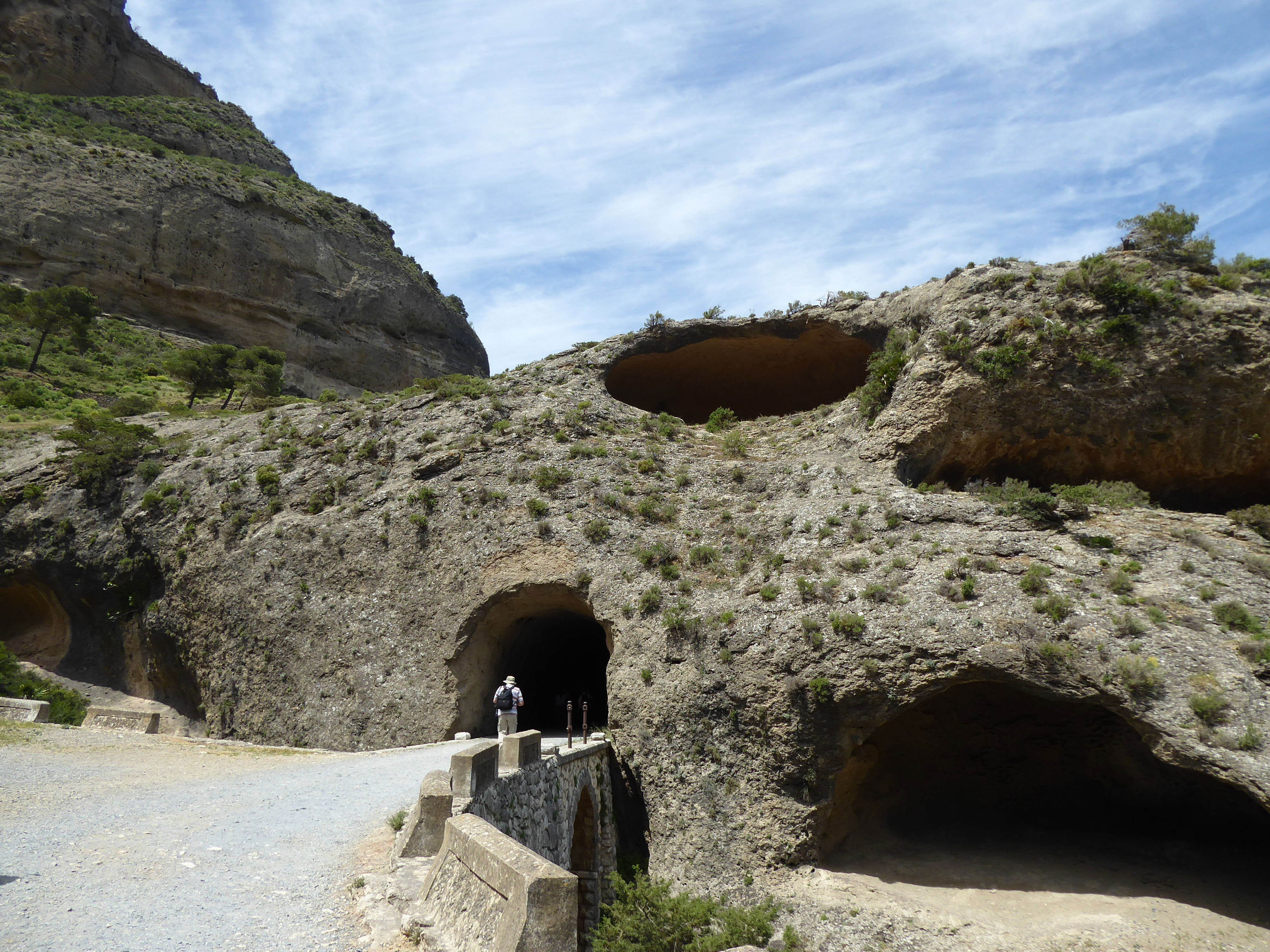
    Writing-on-cliff-faceIn addition to the massive slabs of limestone that form the walls, the river has carved caves and chasms in the gorge.  There are over 20 caves in the area, and in nearby Ardales, paleolithic rock art can be seen in more than 1,600 meters of galleries.
    Caves-2-XX

    But forget the history, the archaeology and the paleolithic past, and just enjoy the sheer beauty that surrounds you on this walk through the park.   The pathway is easy to negotiate (but perhaps not after heavy rains) but do wear sensible shoes.  Look around you, smell the forest scents, look above you to see if you can spy the golden eagles, and look down at the turquoise river flowing below and marvel at this natural landscape.

    Bend-in-the-River

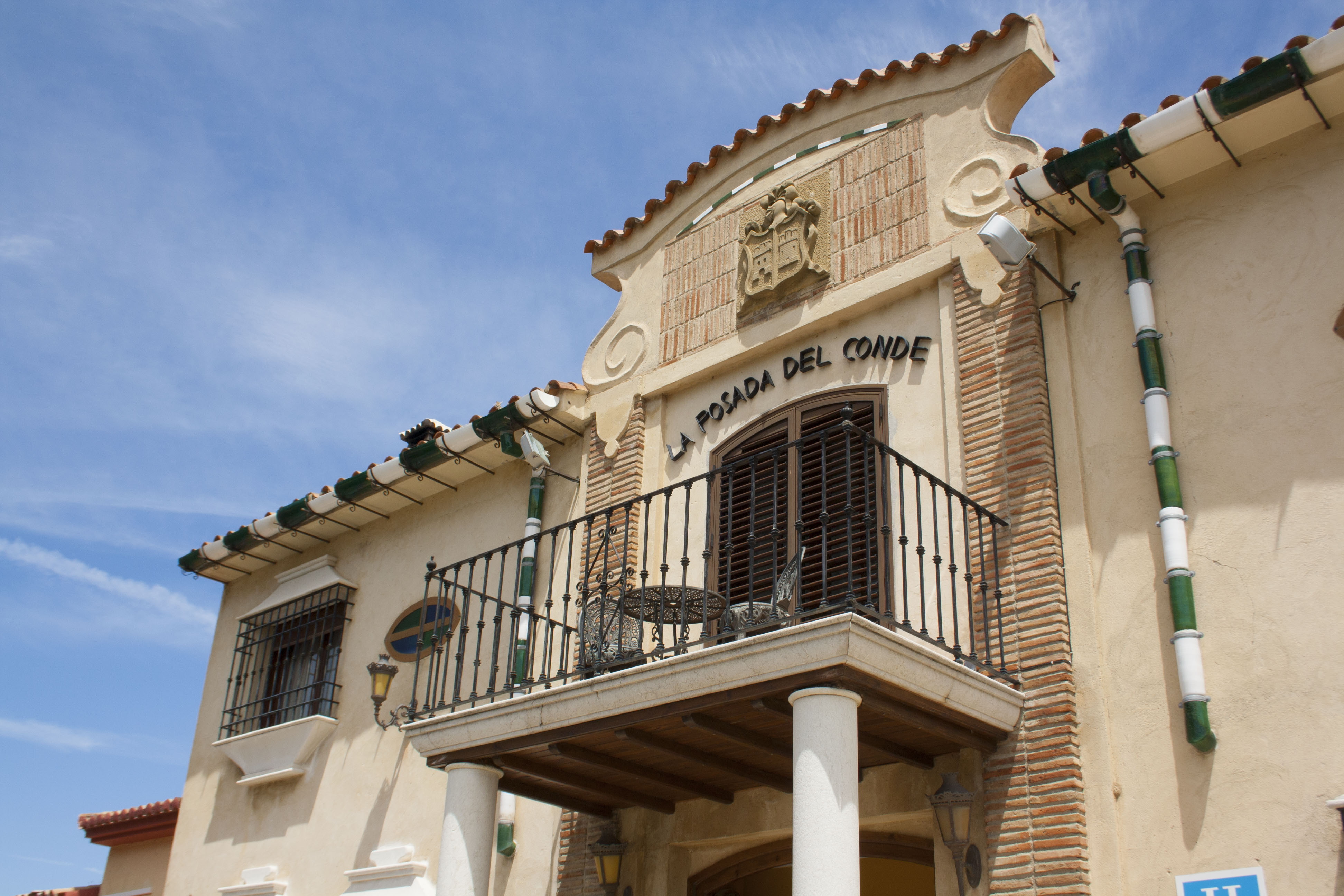
    Afterwards stop off at Mesón la Posada del Conde for a meal of locally sourced items,         Restaurant_PosadadelConde (or you can reserve rooms here if you wish to spend a few days in the area) which you will enjoy with local wines. Their salads are huge and the ingredients so fresh that I would have been content with only this but I worked my way through some delicious plates of chicken, jamón, vegetables and dessert.  Another walk through the gorge was called for!
    Bend-in-River-2.jpg

    Postscript:  Von Ryan’s Express  Starring Frank Sinatra and others, used the limestone gorge and the area around the Camineto del Rey to film the railway sequence at the film’s conclusion.  As Michael Caine would say, “Not many people know that”.

    Caves

  • Get Active and Healthy with Silver/Spain

    Get Active and Healthy with Silver/Spain

    New kid on the block for holidays in the sun, SilverSpain.com, is launching its programme of healthy body, healthy mind, and healthy eating holidays for the over 55s, holidays that also focus on companionship and relationships.  For people who want to improve their lifestyles, or who are in retirement and want to keep fit and healthy, these holidays for the more mature traveller, of 5 to 7 days duration with an option to extend the holiday,  are a welcome addition to those currently on offer.

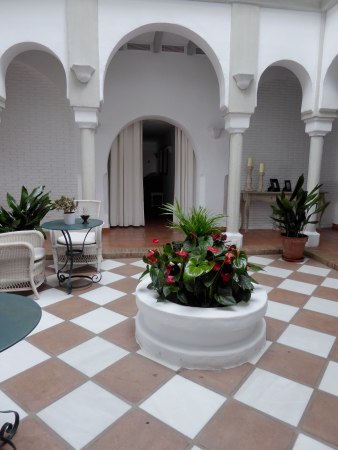
    Patio-of-Cortijo-Bravo-Hotel

    Based in Malaga on the Costa del Sol, SilverSpain is ideally placed for sussing out the perfect restaurants, walks, events and foodie trips that are included in the holidiay, and guests are based in a selection of luxury, top-end hotels both in Malaga itself and in stunning locations on the outskirts of the city, most with spas and flower-filled gardens. Exterior-Hotel-Vinuela,-Malaga


    I’ve just had a trip to Spain to sample what they are offering later in the year (at the moment, from October) and I absolutely loved it, from the early morning exercises to the specially made morning smoothie followed by the healthy buffet breakfasts.  And, the smoothies were always luscious fresh local fruits with no green kale or spinach mixes in sight!  Plus, eggs, cheeses, hams and other foods were on the buffet table.

    Walking in the National Parks and valleys in the area I found to be a special treat as these are activities I wouldn’t normally be able to do by myself.  Everyone walked at their own pace, some slowing down to take photographs, some striding out with vigour and others just ambling along and smelling the flowers, but it all served to keep us active and moving.Walking

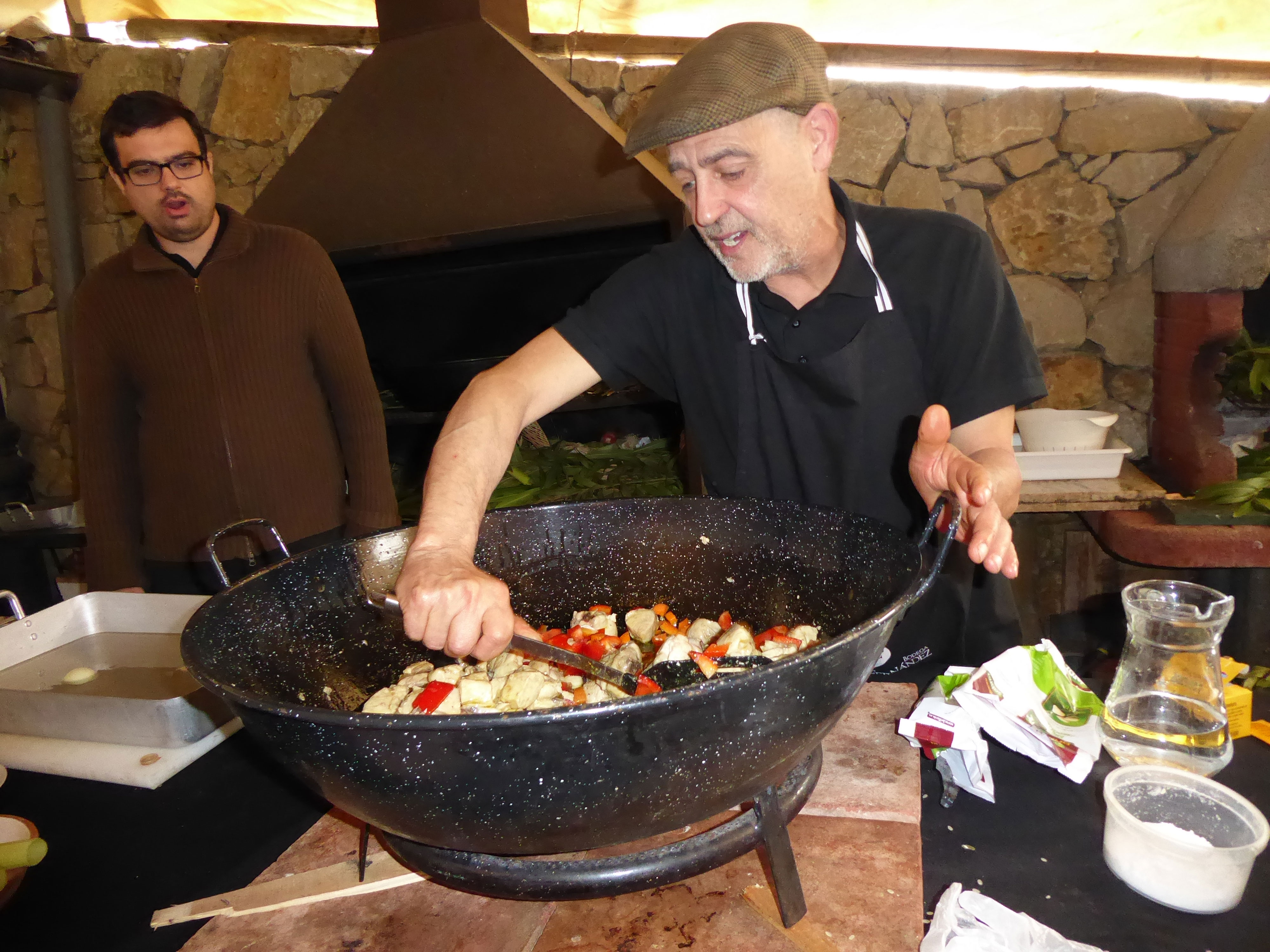
    Other events consist of  visiting vineyards, learning to cook paella and then having it for lunch,

    Paella-chefbird-watching, a visit to a meditation centre, sight-seeing trips to places like Ronda, Nerja, and the famous white villages, a few hours spent in a Haman (with massage), seafood lunch on the beachfront at Malaga, and an Equestrian show with flamenco (this one not to be missed).

    Dancers

    All these ‘extras’ are included in the price of the holiday and together, make up a very attractive package.

    Although these trips and walks are all taken at a leisurely pace, if anyone feels like opting out of them they can do so – it is a holiday after all.  Equally, for those who want more regular exercise, specialist breaks are planned, as well as specialist weeks for clients who may want to spend more time studying mindfulness and gaining insights into their life.

    P1000401

    P1000418Life expectancy continues to increase and holidays like these, organized by people who are dedicated to the philosophy of a healthy, active life and happy relationships as we grow older, are a breakthrough in advancing the cause of living better while we live longer lives.
    Don’t think this is some freakish ‘alternative’ lifestyle holiday where you deny yourself the good things of life.  Great food and great wines, sunshine and blue skies are all there, just as you’d expect, but the added value is the feeling at the end when you find yourself fitter, healthier, and possibly happier, for the experience.

    P1000425


    So, get ready for a Spanish-style pub crawl on a Tapas evening in Malaga when you will enjoy whitebait, anchovies, patatas bravas, and other Spanish delicacies, washed down with a few glasses of wine in a Bodega in operation since 1840.  You don’t believe me? Ask SilverSpain about it.

    Abanicos,-Seville--(3).jpg


  • Weekly Photo Challenge – ORANGE

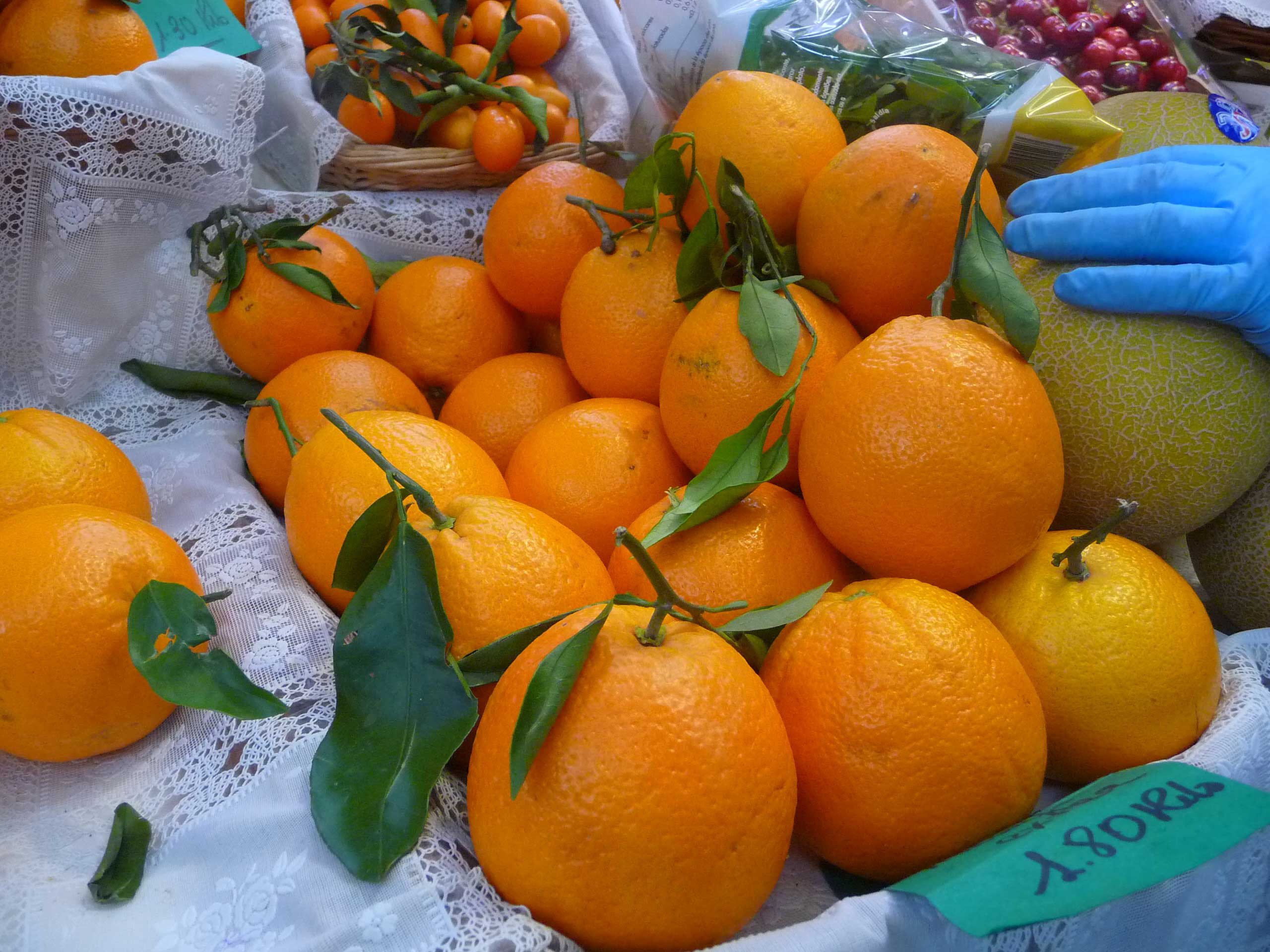
    Spanish oranges
    Spanish Oranges – Photo Mari Nicholson

    What cold be more orange that these gorgeous Spanish oranges.  The very sight of them makes me salivate remembering how they tasted.  How come we never seem to get really juicy oranges these days?

    Young monka change their robes on the street outside temple
    Young monks changing their robes – Photo Mari Nicholson

    I never did find out why these young monks were changing their robes in the street by the Grand Palace in Bangkok, but they did it discreetly and looked decidedly pleased when they had accomplished the task.

    Pottery-im-VALENCIA
    Pottery for Sale on a Valencia street – Photo Mari Nicholson

    I’m a sucker for anything that looks ‘local’ even though I know I shall never use it when I get home, but in my minds eye I can see me producing succulent food smelling of rosemary and garlic, mint and oregano, the whole resting on a bed of peppery olive oil and maybe some ciabbata.  Dream on.  I get home, realize it’s another foolish buy and it ends up at the back of the cupboard.  But I love the orange colour of these dishes and yes, I did buy some.

  • Gathering in the Mussels & Scallops

    Gathering in the Mussels & Scallops

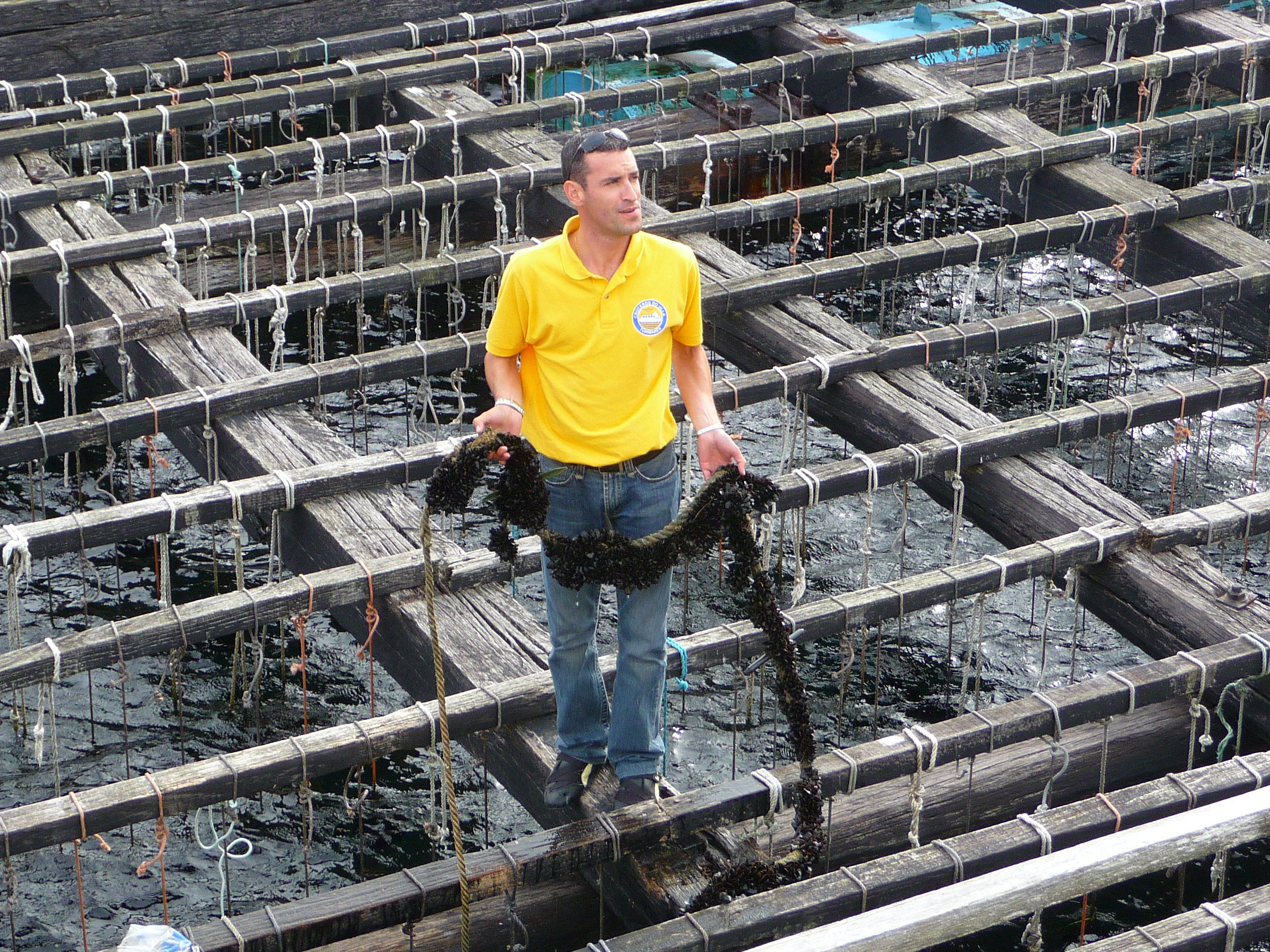
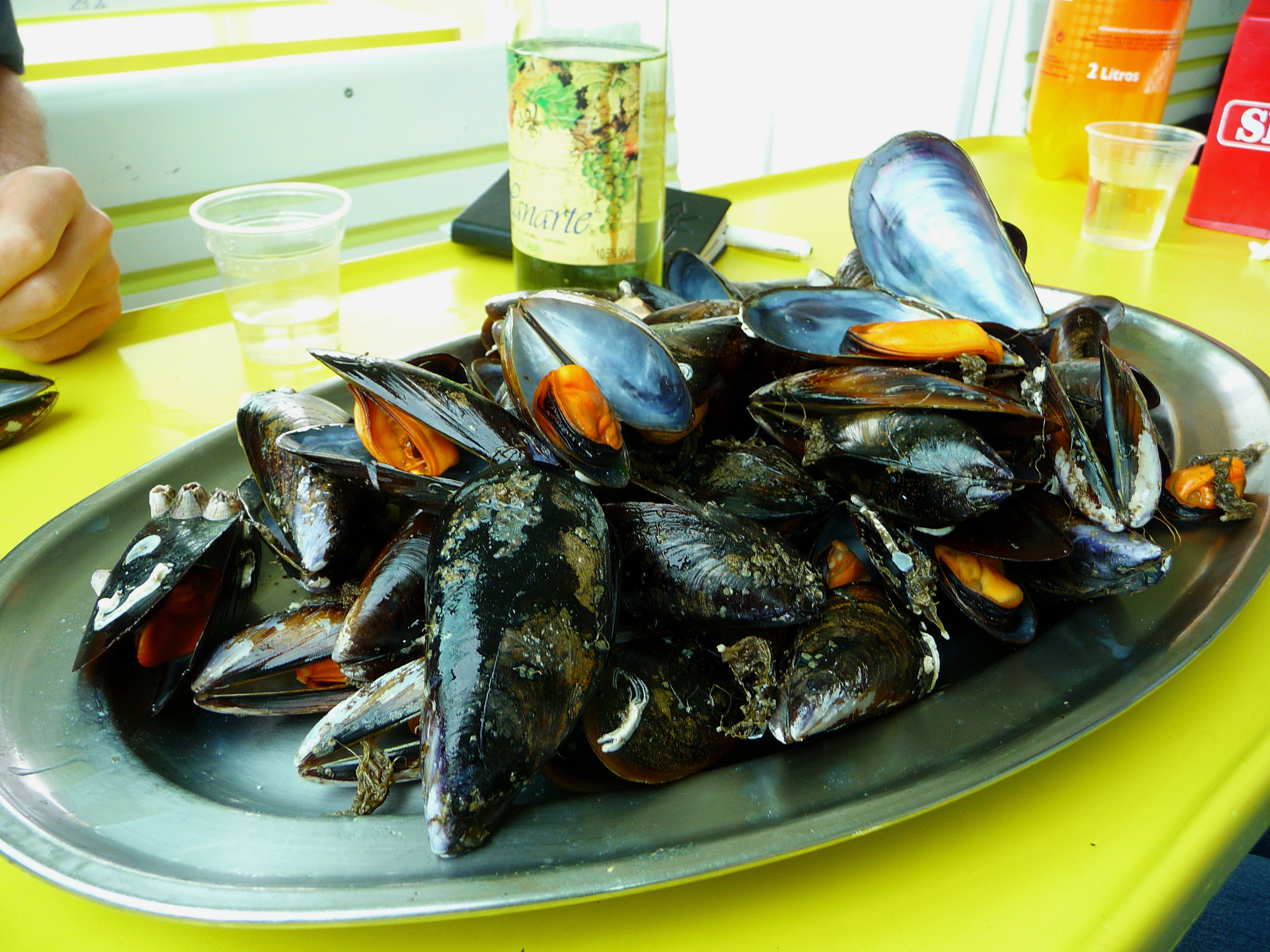
    At one of Brighton’s seafood restaurants yesterday I had some amazing mussels, the like of which I hadn’t expected to find in the UK.  They reminded me of the time I was in Galicia in Northern Spain and my trip out to the mollusc beds to see them being collected, and an even better recollection, the meal we had on the return boat journey of mussels cooked simply in wine and garlic in a traditional enamel pot and served with fresh crusty bread and bottles of unnamed, in fact unlabelled, wine, which nevertheless tasted like nectar.


    vigo-from-the-hill
    Vigo, Galicia

    Galicia in Spain’s green north is a far cry from the Costas and is nowhere as well known as the southern provinces, yet it is probably the most beautiful part of Spain with really white sand beaches, fragrant pine trees perfuming the air, beautiful buildings, great hotels, and wines produced in small quantities and kept for local sale only.  If you think only of sun, sand and Sangria, think again and head for Galicia for seafood, shellfish and the road to Santiago.


    mussells-being-hauled-on-to

    Gathering in the mussels – Photo Mari Nicholson

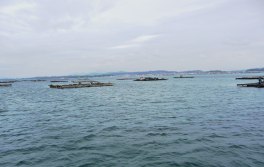
    O Grove was once an island but today it is joined to the mainland thanks to the winds from the south-west, which have caused the surrounding sands to form an isthmus and it now sits on the mouth of the Arousa estuary, a stone’s throw away from the luxury Parador Pontevedra.  As well as shellfish gathering and shallow-water fishing, the local population of approximately 12,000, lives from the farming of mussels, oysters and scallops.


    bateas-on-the-sea-at-o-grove
    Bateas in the Sea


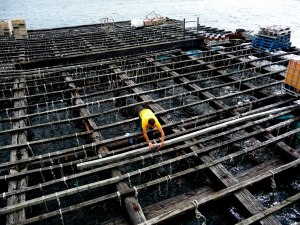
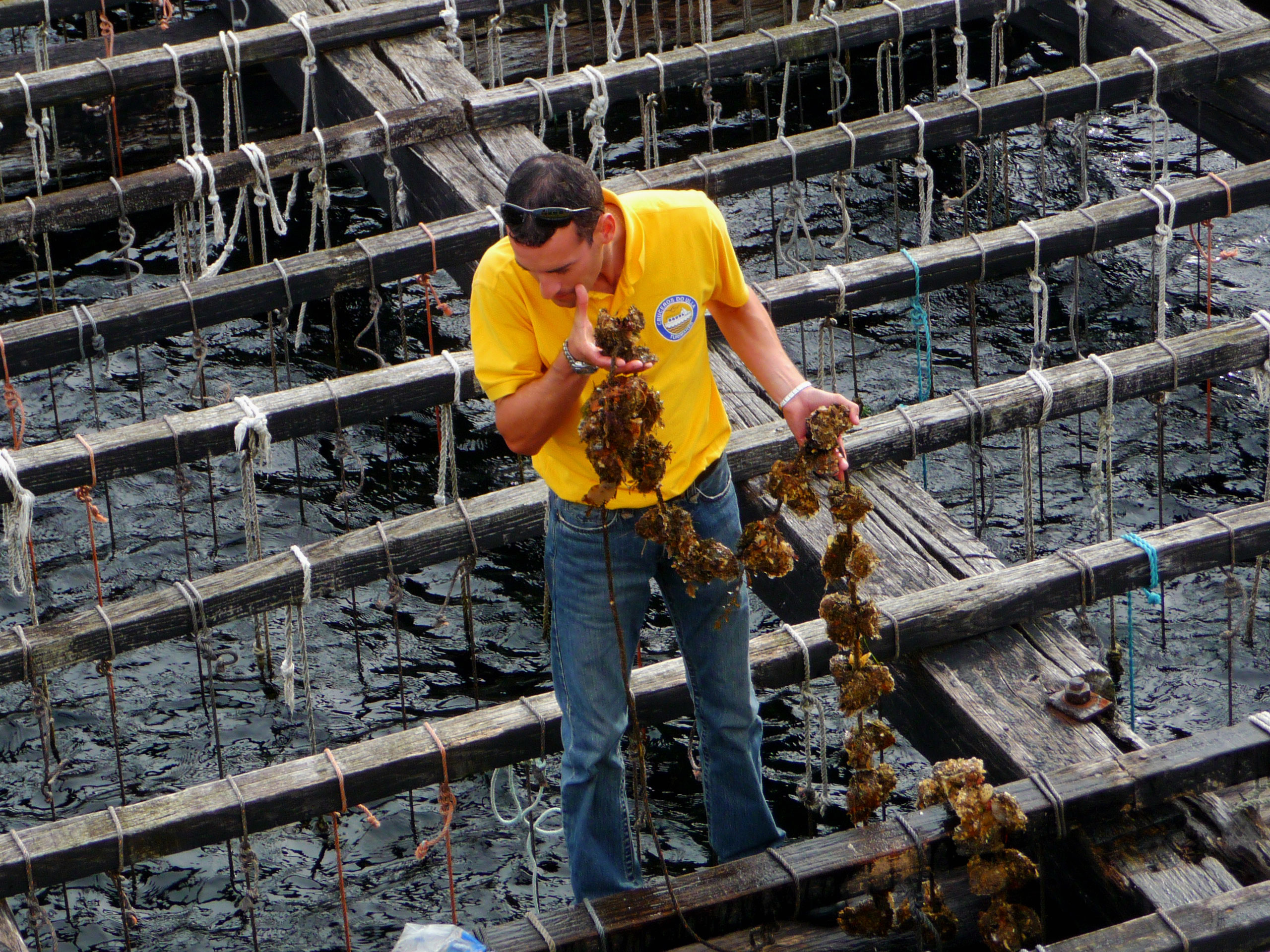
    Ropes, on which the molluscs grow, are hung from bateas, wooden platforms in the water, and these heavy ropes which can weigh up to half a ton when the mussels are fully grown, are checked out and collected daily.

    re-arrangig-the-ropes
    Re-arranging the Ropes – Mari Nichol


    From your boat you can watch the men drag up the heavy ropes of scallops and mussels as they stand on wooden rafts in the water, the bateas.

    Since 1963, the port of O Grove has staged a yearly festival which takes place over several days during the first two weeks in October.  Many excellent local wines are available but it is almost compulsory to drink the local “Rías Baixas”  as an accompaniment to the wide variety of seafood but, believe me, it is easy to get a taste for this little-known wine (little known outside of the area that is).

    orange-beauties

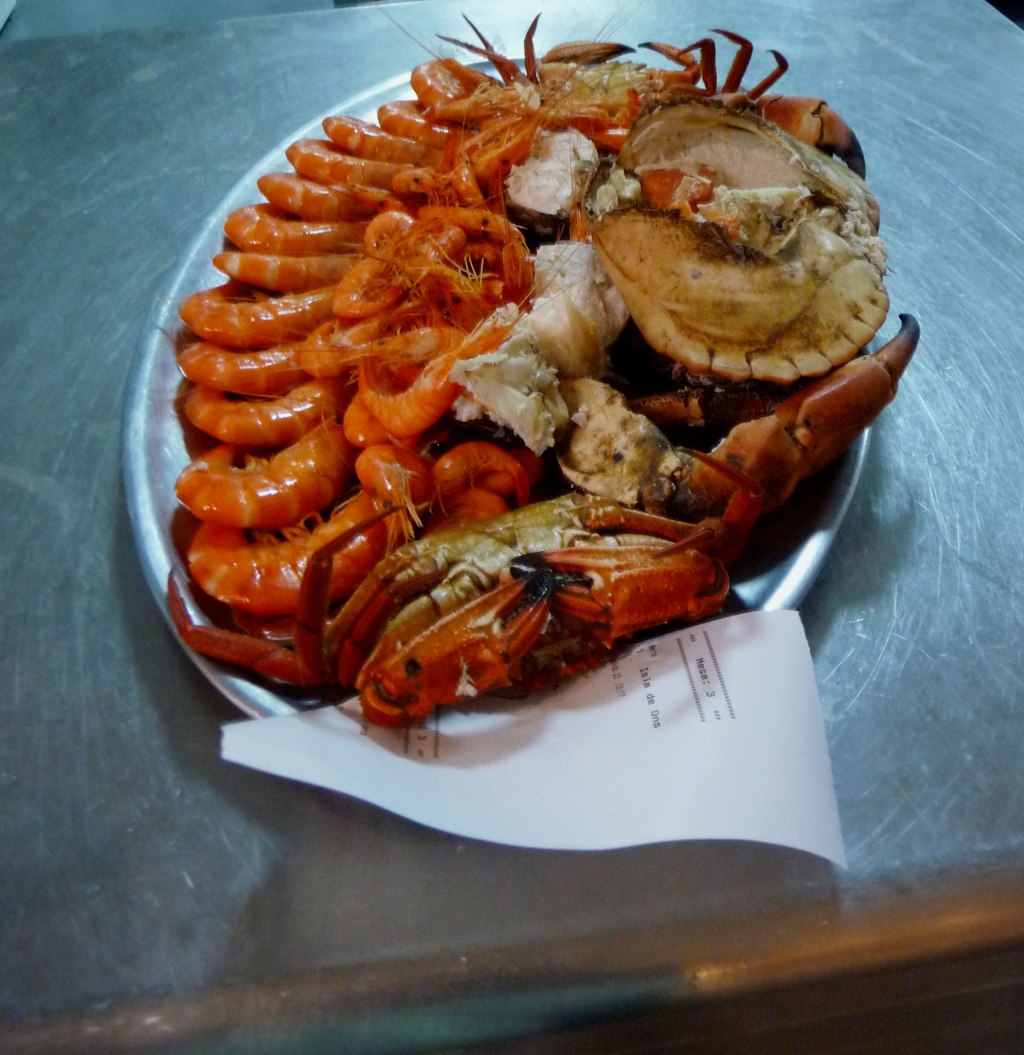
    At the festival, visitors can wander among the food stalls, sampling delicious seafood cooked by locals, dishes that exploit the riches of the surrounding Atlantic Ocean including mussels and turbot, for which the region is famous, oysters, clams, shrimp, scallops, velvet crabs, crawfish and goose barnacles.  O Grove’s seafood festival also comes with music and dancing.  Every day different bands play traditional Galician folk music which includes a lot of Galician bagpipes, and there is the usual folkloric content in singing and dancing.

    scallops-being-taken-from-the-sea-in-o-grove

    Collecting the Scallops – Photo Mari Nicholson

    Local boats make trips out to the mussel and scallop beds and these can be booked at any of the agencies around the port.

    Should you want to do some local sightseeing there are a couple of local towns worth visiting, and the busy city of Vigo is an hour or so on the train.  You can even visit Santiago de Compostela for a day.

    What to see nearby

    Illa de AToxa, whose fame is derived from its medicinal mineral waters and mud, the therapeutic properties of which for the skin and respiratory passages as well as the salts and soaps which are made from them, have turned the island into a major spa resort.  AToxa is the biggest of the half dozen islands, which emerge with the ebb and flow of the tides on the O Vao mud flats.

    st-sebastians-church-of-shells-2side-of-st-sebastians-shell-church

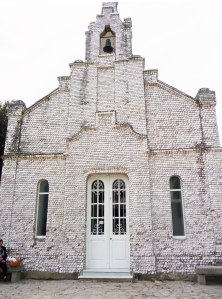
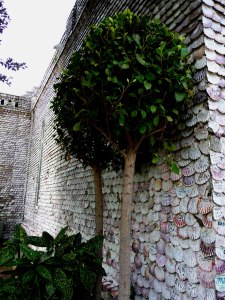
    Isla de La Toja or Isla de la Atoxa where the main building to visit and to photograph is the hermitage church of San Sebastian dating from the XII century.  It is completely covered with scallop shells to protect the façade – quite an amazing sight.