Well, I finally bit the bullet and bought the new computer (HP All-in-one 27″ dazzler) which, of course, had to have Win 10 and the new MS 365 so I have two new systems to get used to. The computer itself is great and I’m spending hours in the day just looking at my photographs which show up so well – even the bad ones – on this great screen. I bought it direct from HP which turned out to be the cheapest in the end as they gave me a good discount.
I haven’t read or commented on any of the people whose blogs I follow as I just haven’t had the time nor have I posted anything,. It is taking so much longer to transfer everything over than I thought it would, plus there are the everyday problems that life throws at one to contend with as well. This is sort of a round-robin apology to those whose posts I read and comment on but I will be back soon.
At least I hope so, as I haven’t managed to get WP up on the new computer. I can’t log-in because it won’t recognise my email address – which has been the same now for about 8 years – and without access to my blog I can’t do anything. I have put a query on the site but as it isn’t coming from my own blog site I don’t know how long it will take them to sort out the problem. I know it’s probably my fault – most things like this are – but I find that coping with the new machine, the new systems and having to work with the two computer screens on the desk is not helping. I could do a blog on this old computer which is still working but I have to get the other one up and running so feel I must concentrate on that.
Linked to Just One person from around the World at Cady Luck Leedy
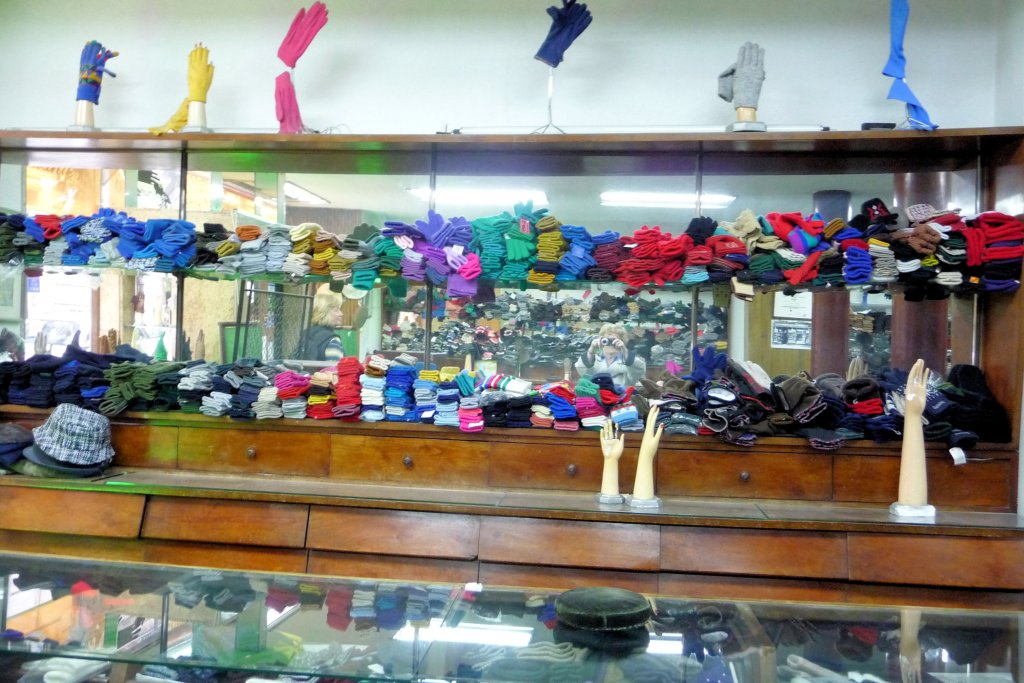
I was reminded of this man and his 100-year-old leather glove-making shop when I read a recent post of Cady’s so I dug out my photographs and scanned them in. I have no dates on them, no details, but I know it was a long time ago. I still have the gloves I bought from him and I remember the shop so well because it was a very extravagant purchase: they are in very unserviceable colours but I’m a glove nut and just had to have them.
I can’t remember the address but I could take you there if we were in Madrid. There are a few famous glove shops in this area but this one was just a few steps away from the Puerta del Sol and the 4th generation member of the family who attended to me, told me that it moved to its current location in the early 20th century from its first location in the famous Plaza itself
The proprietor and some of his hand-made stock
See that shocking pink pair on the top shelf, and the blue ones on the right? Well, I bought those two pairs, plus a burnt orange pair and a navy and white pair – my entire spending money gone in one purchase! The orange, pink and blue gloves are still wrapped in tissue paper, still pristine, as they are not the sort of gloves you wear very often but the navy and white ones have seen a lot of service since that spend-up day in Madrid.
Many hundreds of pairs of glove in drawers
Why I bought them I’ll never know. I think it was just the excitement of seeing so much beautiful leather worked into gloves and, as I said, I love gloves – even if I never get to wear them. They are a bit like books to me, to have and to hold is reward enough. And can you imagine the smell of soft leather in that shop? It probably softened my brain a bit!
The working part of the shop, sewing-machine on table
My burnt-orange gloves are in the middle of the bottom shelf and they fit like a dream. Soft, pliable, luxurious leather lined with silk. I like buying gloves in Spain because they stock small sizes and as I take a size 6 I find it nearly impossible to buy them in the UK.
This shop, where time seems to have stood still, retains the mirrors, the counter, the old cash register and the sewing machine – everything is the same as it was in the mid-20th century. Above all, the attention to detail, the understanding of the customer’s needs and the very personal service is what makes this place special.
When this Covid thing is over and I can return to Madrid, I will seek out this shop again and get full particulars, then come back and insert the details in this Post.
Swinburne is not one of the poets one hears much quoted today but in his time he was a force to be reckoned with as he upset the status quo being both a rebel and a radical.
Swinburne’s last resting place, Bonchurch, Isle of Wight
Swinburne was a radical character and an alcoholic, with leanings towards sado-masochism, who incensed many of his fellow Victorians, but the main problem for the Vicrorians was that he was an atheist. The poet’s funeral at Bonchurch on the Isle of Wight was also controversial as he left instructions that there was to be no Christian ceremony. However, against his wishes, some of the normal prayers were read out.
As a poet he was a skilful exponent of French verse forms and obscure poetic metres but he was frequently criticised for his concentration on musicality at the expense of sense. (Similar complaints were later levelled at Dylan Thomas.) Browning famously referred to his work as being: ‘a fuzz of words’.
One of his supporters was Thomas Hardy who was much influenced by Swinburne’s atheism, and who in 1910 wrote A Singer Asleep whilst sitting next to Swinburne’s grave.
A short excerpt from one of Swinburne’s poems.
From too much hope of living, From hope and fear set free, We thank with brief thanksgiving Whatever gods may be That no life lives for ever; That dead men rise up never; That even the weariest river Winds somewhere safe to sea.
Linked to Just One person from around the World at Cady Luck Leedy
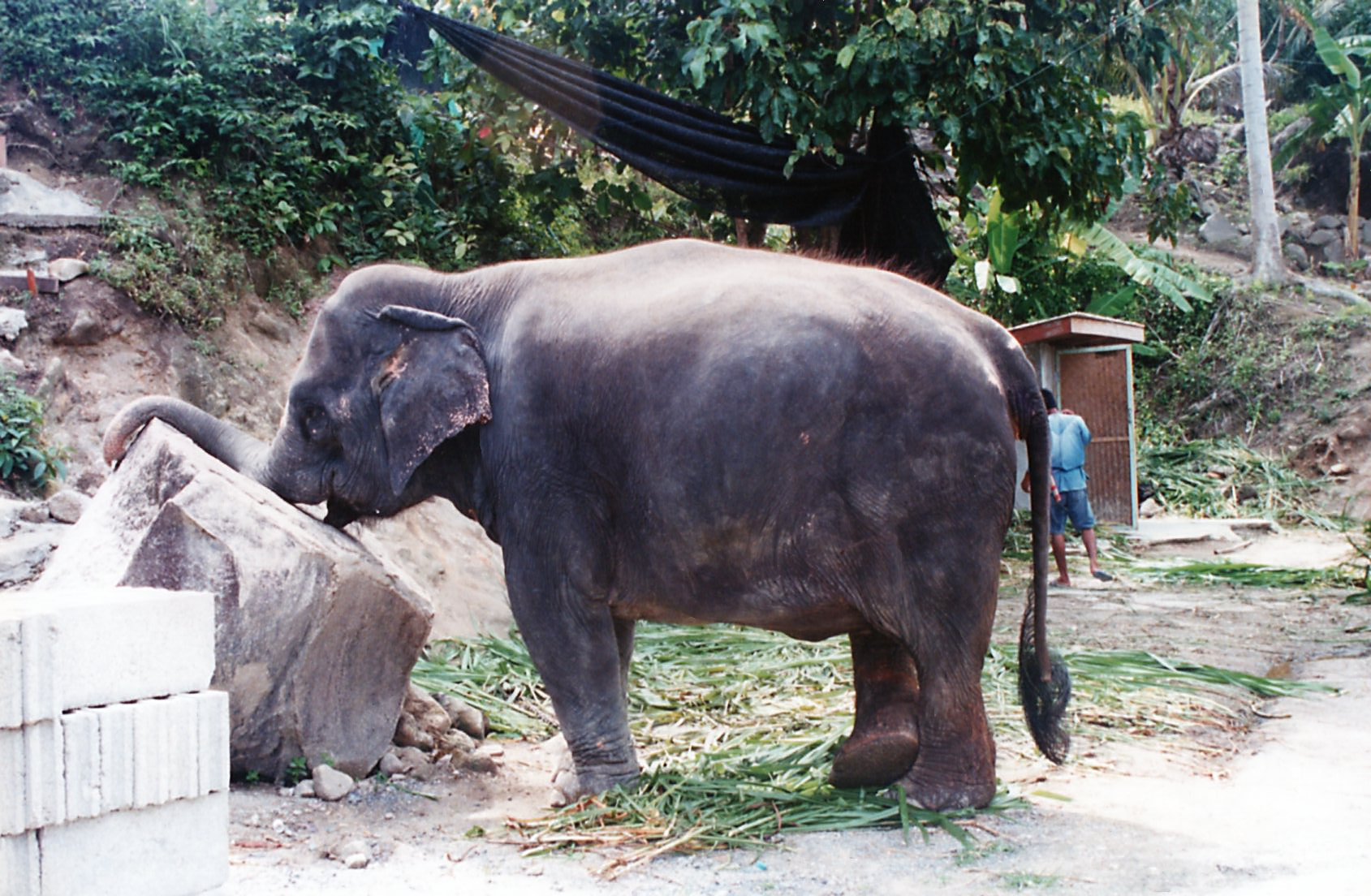
Elephans roam the area
We were spending a few days at the Floatel near Hellfire Pass on the River Kwai in Thailand, a peaceful sojourn in a place that was once hell for POWs of the Imperial Japanese Army during WWll. The Floatel was in a Mons village and we arrived there after a drive of about an hour from Kanchanaburi then another hour’s ride in a fast-moving longboat.
Our stay was memorable for many things, the novelty of our accommodation on a boat that swayed throughout the night as water buffaloes and elephants swam past, the noise from the monkeys in the trees around and the cold-water shower that came from a tank perched precariously on a wooden structure in our ‘bathroom’ – a curtained off partition in the bedroom where the outlet for the water was through the floorboards into the river.
Khun Lek Dressed for his Mountain Walk
But my memory of that time is of one person – the greatest football supporter I’ve ever met. It was January 24th, 1999, and Khun Lek, the waiter (who did all meals plus the bar), had to leave early that night because his team, Liverpool FC, was playing Manchester United FC. But this wasn’t just popping home to his house in the village. He was going to walk over two mountains to another valley, a lone walk that would take him approximately 5 hours with only the moon to light his way – and a head torch to help him catch some frogs as he walked! There was a satellite in the valley to which he was heading that was capable of receiving the programme and fans would gather there from miles around. After the game he would walk 5 hours back over the mountains to work
This was when I fully realised what football meant to the fans beyond Europe. The memory came back to me this week as UK fans protested against the hijacking of the game by the current owners of the top teams who are trying to cash in on this international support. These international fans, who don’t even speak the language of their favourite teams, be they Chelsea, Real Madrid, Juventas or Benfica, will do anything to watch a game: they have their favourite teams, they know each player and what position they play in, they know the managers, the coaches and the names of the stadia. (I gained Brownie points because I was able to add something to Khun Lek’s knowledge. I knew what The Kop stood for and the story fascinated him).
When he appeared, ready for his marathon walk, he was a sight to behold. It is cold on the mountains at night so over his clothes he wore a duvet and on his head he had a tightly bound scarf. Strapped around his forehead he had a torch to help guide his way but also, he told me, to catch some of the mountain frogs which were a delicacy in that part of the world. Underneath a striped tee shirt he wore his Liverpool strip and his Liverpool FC hat was in his backpack along with other paraphernalia for the game.
One meets many memorable characters on holiday but I can honestly say that Khun Lek was one of the most memorable – a happy, happy man and Liverpool’s No. 1 Fan – he told me so himself. And what was his hope for the future? To one day stand on The Kop and cheer his team. If I could grant his wish I would.
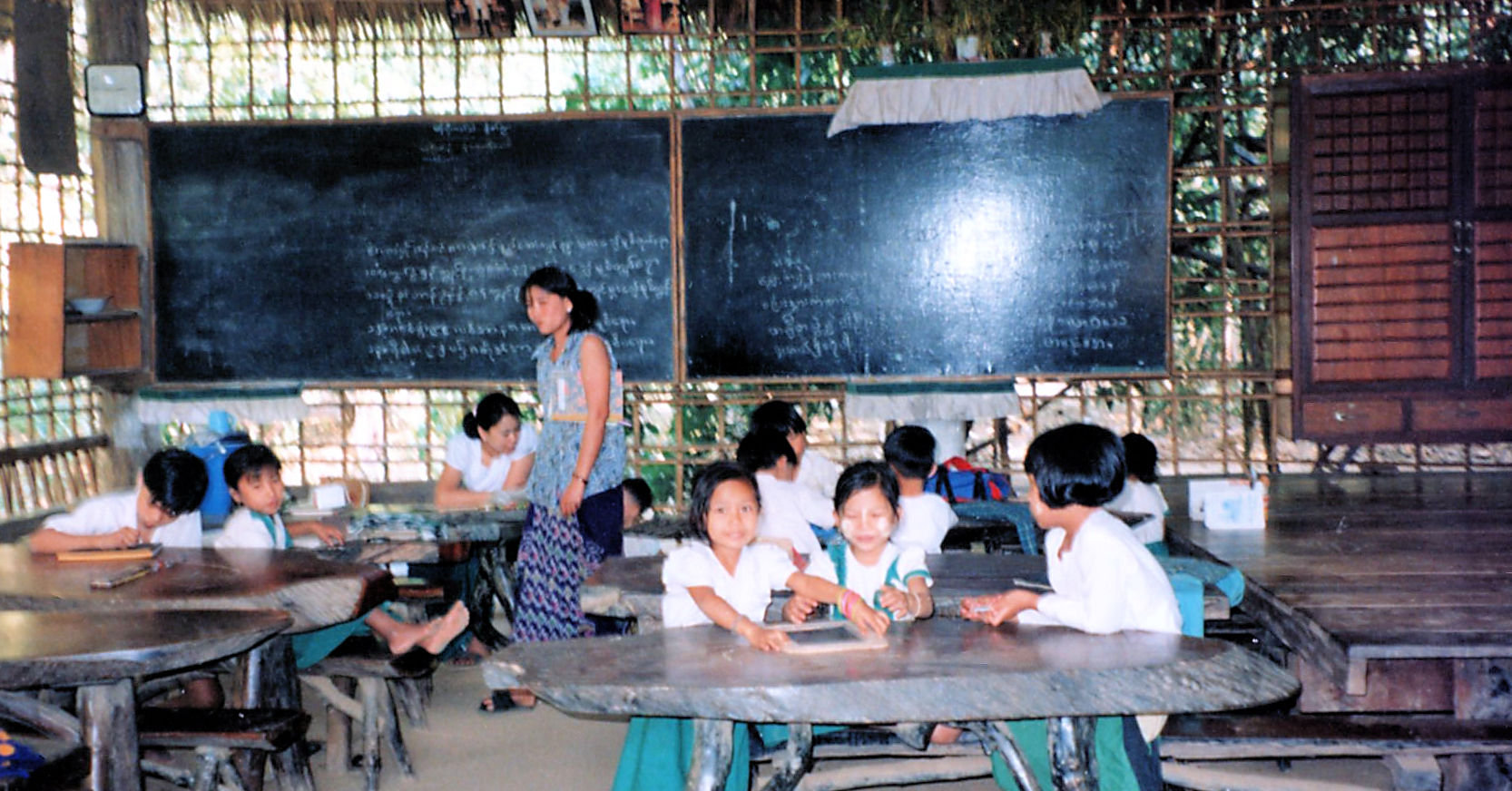
Photos above are of the Floatel and surroundings, a baby elephant foraging for food behind the kitchens, the accommodation, the bar, the local schoolroom (one room), a place for hanging out, and Mari and Thai friend Suchada at breakfast.
Unable to post at the moment because my computer keeps on crashing and giving me the Big Blue so it’s Write a Cheque Time again as I look around. I’ve been lucky (so I’ve been told) as this one has lasted nine years but I’m loathe to let it go. I have an iPad but I don’t like working on it, especially the fact that they ask you to sign in every time you log off for a minute or two. Also, I can’t make the print large enough to work on comfortably and as I have bad macular degeneration I really need my desktop.
I’m a bit shocked at how the prices have gone up. My current model has almost doubled in price, one now has to pay for Microsoft, which normally came bundled with the computer and All-in-Ones (which I want) no longer come with a CD/DVD slot on the aside – another extra.
I only have the dominant computer superstore in my area (good at selling, bad at giving unbiased advice) as all our small shops have been swallowed up but I want to buy from someone else, or even direct from the makers, but it is proving impossible to compare models as each store seems to have a different number for the models. Deliberate? To confuse the buye? Yes, I think so. In the same price range and same model and make, one offers 1TB (brilliant for photo storage) while another offers 512 MB and one has the new all-singing, all dancing NA instead of SSD – quicker it is said and “if you’re going to buy a new computer make sure it has NA” – according to a recent computer magazine article).
If anyone in the UK has any advice, I’m listening, but meantime, if I’m not around for a while, you know the reason.
Last Thursday I watched The Third Man, possibly for the 4th time, the film that in 1999 was voted by the British Film Institute to be the film of the century: I have no argument with that decision. This British film noir starring Orson Welles, Joseph Cotton, Alida Valli and Trevor Howard has attained cult classic status in many countries, with its hypnotic theme tune played on the zither by Anton Karas, its atmospheric photography and its gritty screenplay.
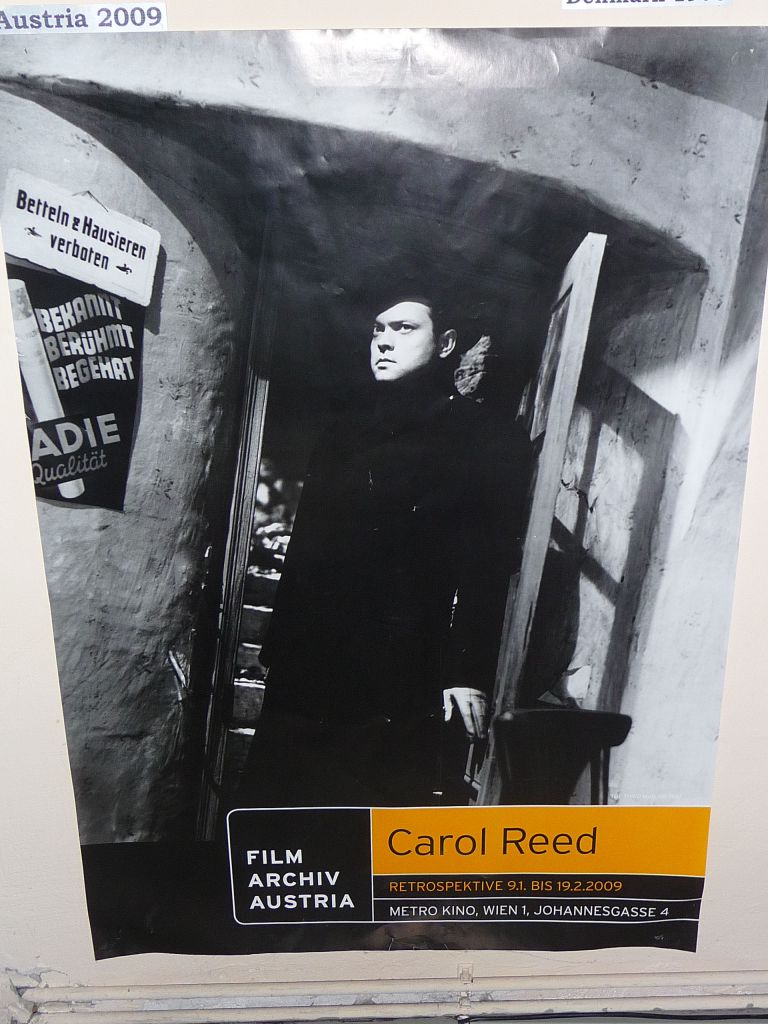
Directed by Carol Reed from a Graham Greene script, the real star of this 1949 film is post-war Vienna. Kim Philby, the UK’s most famous espionage agent who worked for the Russians along with Guy Burgess and Donald Maclean, had been resident in Vienna in the early thirties and it was this that gave Graham Greene the idea for the screenplay – or so it is said. Greene’s Vienna reveals the murky post-war underbelly of the city, the squalor and black-marketeering and the ambiguities of living in that world – the world of Harry Lime played by Orson Welles in the film.
Alida Valli, Joseph Cotton and Orson Welles
It portrays a burnt out Vienna in the immediate aftermath of the Second World War, a city divided into four zones governed by Britain, France, Russia and the USA, a city that created a world of criminals and black marketeers.
I found this other Vienna in a little museum hidden down a residential side-street in the Margareten neighbourhood – The Third Man Museum. The sole focus of this private exhibition which exists without sponsors and without subsidies is Carol Reed’s now-legendary film and Vienna’s pre and post-war history. It is the perfect antidote to the sugariness of Vienna’s palaces and pastries.
A Wall Covered in Posters for the Film
Gerhard Strassgschwandtner, 51, a ceramic artist and part-time city guide and his translator wife, Karin Hoefler, are responsible for this amazing collection. It is their consuming passion and they have designed the displays of 3000 original exhibits and documents and 420 cover versions of the Harry lime Theme in over fifteen rooms. Being unsubsidised they have to work at other jobs to support their passion so it is only open on Saturdays – and by appointments on other days.
Gerhard began collecting “Third Man” artifacts many years ago when he was trying to understand Vienna’s history. His idea at the beginning was to curate the history of Austria in the 1930s and 1940s, but as The Third Man encapsulates that history, the museum incorporates both Viennese history and the film. The museum is a trove of original film artifacts – from location stills and posters in foreign languages to clips of the stars and flea-market uniforms of Occupation soldiers. Dominating a corner of one room is a still functioning 1936 Ernemann 7b projection which was used when the film was first shown in Vienna and which is now used to play back a short film sequence. It was provided by Karin’s father who worked as a studio sound engineer. A whole wall is taken up with records that Anton Karas made of his moment of musical fame, including the zither with which he improvised the score as he watched the movie on the screen.
Original Camera used in Shooting of film
There are over 2,000 original film posters, costumes, sheet music, sound and film recordings, autographed photos, zithers, CDs, books, and numerous cover versions of the music, including one from the Beatles. It even has Little Hansel’s cap!
The entrance to the museum is at street level and after you’ve spent time there, you are escorted outside and down the street to another building which houses, among other things, Trevor Howard’s original script and the actual zither on which the haunting theme music was recorded.
Interior of Museum
Iconic Poster
Museum Entrance
But The Third Man Museum is more than a film archive. Fascinating though the exhibits are, the rooms in the basement housing pre and post-war artefacts which are less about the film and more about the period in which it is set, are just as interesting: more so to historians of the period. Here, in these rooms, the murky world of post-war Vienna with its four sectors a barrier to movement and free speech, the black marketeers and the hunger of citizens fearful of the future, are brought to life, setting the film firmly in time and place.
Revealed here are tales of the clerical dictatorship that preceded Hitler and of Vienna’s enthusiasm for Nazism. There are sections covering the early thirties when Austria was ripe for a takeover by Hitler, the days of the 1938 Anschluss and the Nazi annexation of Austria, and the reality of 1.7 million displaced persons in post-war Austria. One set of photographs shows a day in the life of a Vienna street: defended in the morning by Germans, open for shopping in the afternoon, then watching as Russians marched through at dusk.
The post-war is covered extensively by displays marking the occupation by American, British, Russian and French forces. Ration books, newspaper cuttings, photographs, and video recordings of survivors, bring this harsh period to life and as background to The Third Man it is an invaluable historical source.
Not many locals visit this museum: the dark days of the 1930’s are seldom spoken of in today’s Vienna which prefers to think of itself as the city of Strauss and strudl, waltzes and weiner schnitzel. The portrayal of the city in ruins after the war with a population mostly involved in smuggling, black marketeering, or just looking the other way, is not one that the good people of Vienna want to remember.
Gerhard was quoted in an article as saying ““Nobody teaches it in schools. The Americans invented a myth of Austrian innocence. It is not up to me to challenge that fiction. Graham Greene does it all in the film.”
The famous zither of Anton Karas
You may not see the Museum listed in local guides: don’t think this is because it is not worth it. It is very much worth a good part of a Saturday spent in Vienna. On an average weekend you can still enjoy high-calorie kaffee und kuchen, spend time in palaces, churches and art galleries and nights at the opera – even take a drive through the Vienna Woods, but don’t miss The Third Man Museum.
It is closed at the moment but will open as soon as Covid subsides and things return to normal. When I visited in 2019 the entrance fee was €8.90 (€2 off with the Vienna Card) and it opened from 2.00-6.00pm on Saturdays (private visits can be arranged with the owner). Watch the website for news of opening. https://www.3mpc.net/
The Third Man Museum, Corner Pressgasse / Muehlgasse, Pressgasse 25, Vienna 1040
Tel: 0043 1568 4872 (Have the address with you. My taxi driver had to telephone for directions).
Precis of the film for anyone who hasn’t seen it.
Briefly, The Third Man is a story about writer Holly Martins (Joseph Cotton) who arrives in Allied-occupied Vienna looking for his friend Harry Lime (Orson Welles). Told that Lime has been killed in a car accident he attends his funeral where Major Calloway (Trevor Howard) informs him that Lime is a criminal engaged in the blackmarket sale of essential medicines and currently wanted by the occupying army and the police. Martins refuses to believe this, and is convinced that Lime was murdered, as does Harry’s girlfriend (Alida Valli), a refugee from the Russian sector who is fearful of being returned there. In the most iconic shot of the film he sees Lime’s face illuminated in a car’s headlights and there follows a cat and mouse game played out in the sewers of Vienna when Lime is hunted down by the army and his one-time friend, Holly Martins.
For those few who may not have seen it, the American version had to be altered for USA distribution as the powers-that-be felt they weren’t shown in a very good light!
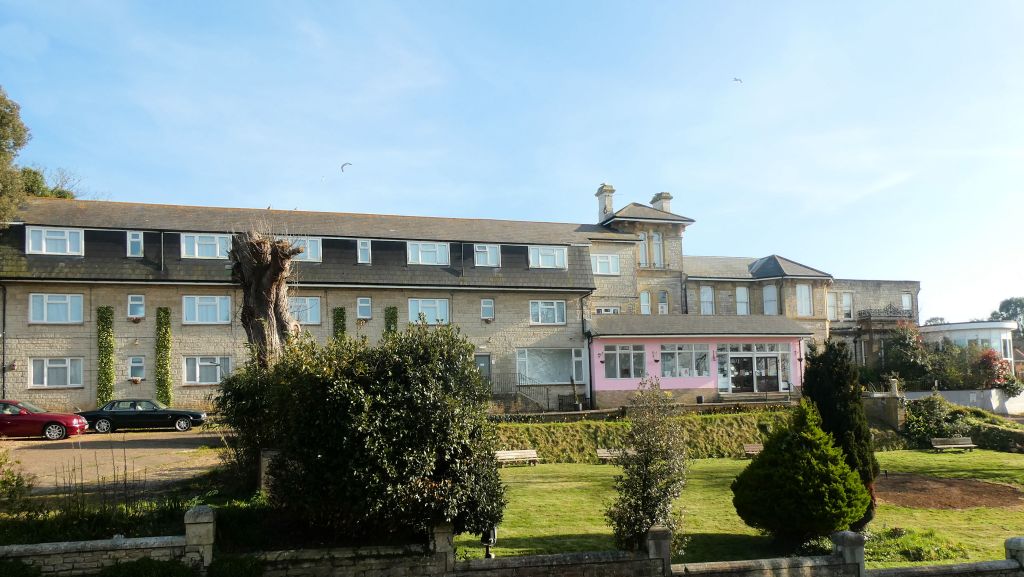
I think I’ve found mine. A hotel in my vicinity changed hands recently and for some reason they decided to paint the front extension pink. So here you have it. My pink-fronted hotel.
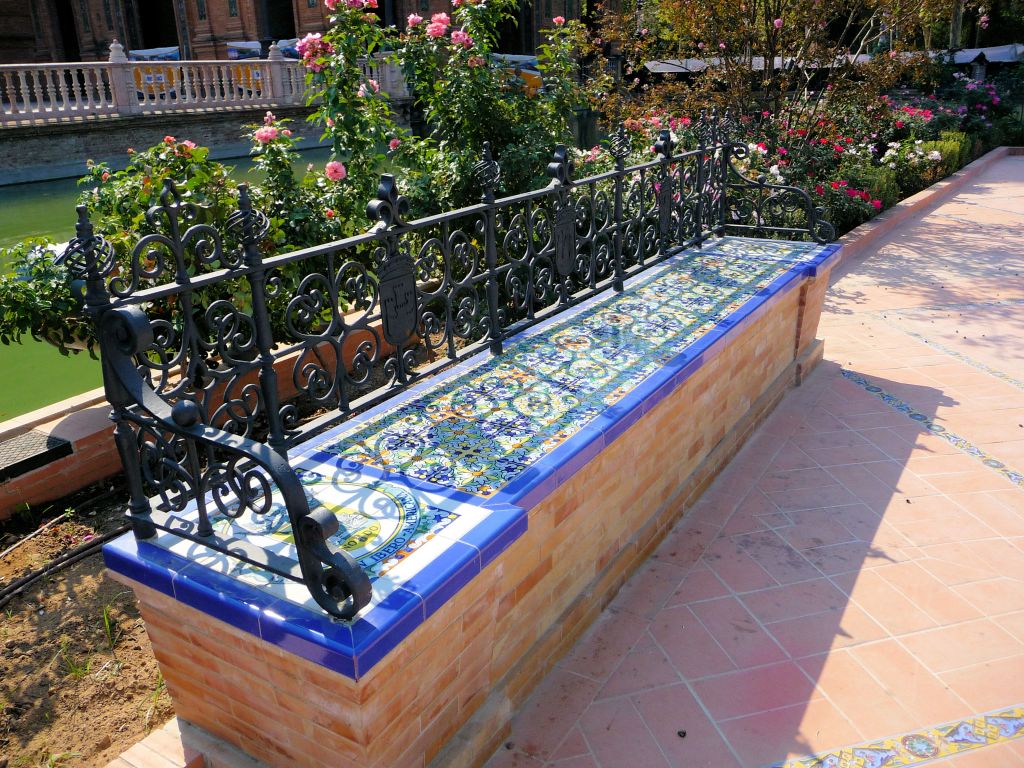
We are in Seville for both of my seats, the first one a lovely tiled seat in the Plaza de España which I’ve mentioned in another post here, a gorgeous extravagance of tiles, walkways, streams, bridges, more tiles, all within the Parque de Doña Maria Luisa.
A very elegant tiled bench in Plaza de España, Seville.
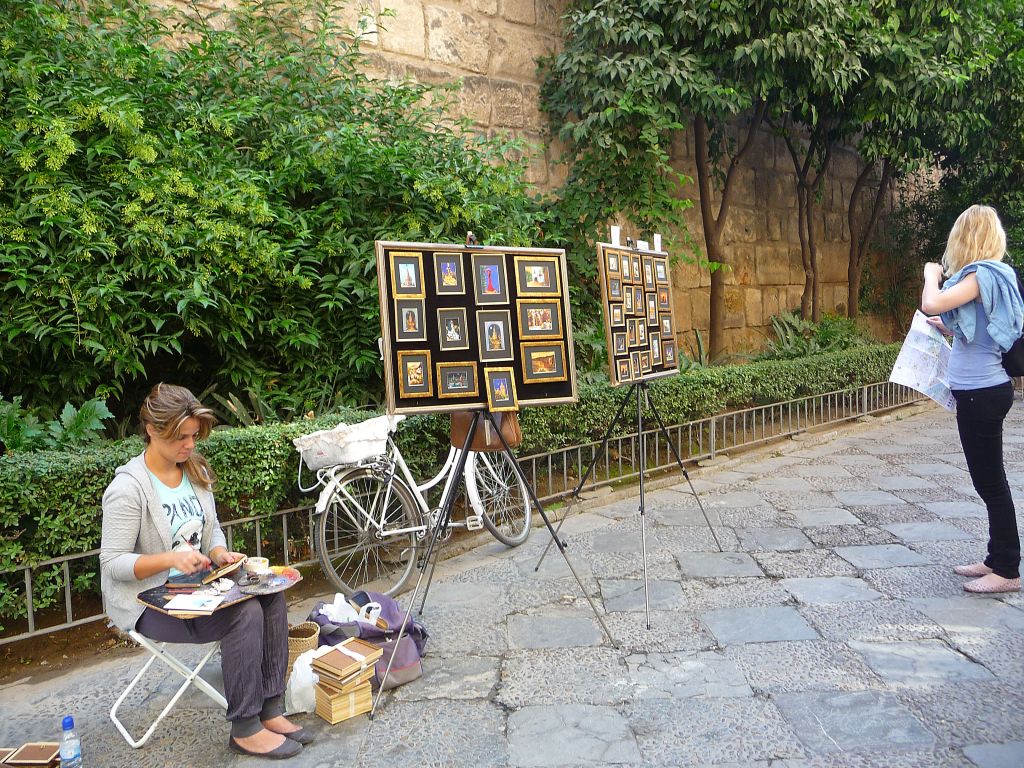
And still in Seville we are on our way to the Alcazar when we came across this painter, oblivious to the passersby who photographed her and walked around her as she sat on a flimsy white stool. She worked quickly and the paintings looked good, good enough for her to sell quite a few while we stood admiring the finished pictures. By her feet she had different types of frames and she offered to change the frames of any on display if needed. I liked her bicycle behind the finished pictures, it made the whole thing seem so casual and a long way from high-art.









 MARI'S TRAVELS WITH HER CAMERA