New Orleans Philanthropist Malcolm Woldenberg in conversation with young boy
Once lined with crumbling warehouses Woldenberg Park (opened in 1984 for the World Fair) is now a pleasant walkway along the Mississippi offering scenic views of the river. It’s a great place for people watching as it attracts tourists and locals alike and a steady stream of street musicians. The Promenade gets its name from philanthropist Malcolm Woldenberg whose life-size bronze is one of many sculptures dotting the riverfront.
Posted in connection with Debbie’s One Word Sunday – Arches
Arches are hard to avoid anywhere with ancient Roman or Greek architecture but I managed to find a ‘natural’ arch to supplement the two historic ones from Sicily/
Cave of the Nymphaen at Syracuse, SicilyArch in the rocks off the coast of Lipari, Aeolian IslandsGreek Theatre, Taormina, Sicily
If I had to choose a favourite it would be the Greek Theatre one, through which one can see a snow-covered Etna during the winter or on a still, calm, day, perhaps smoke erupting from the still-active volcano, at all times a perfect background to the play being enacted.
Posted in connection with Debbie’s One Word Sunday – Arches
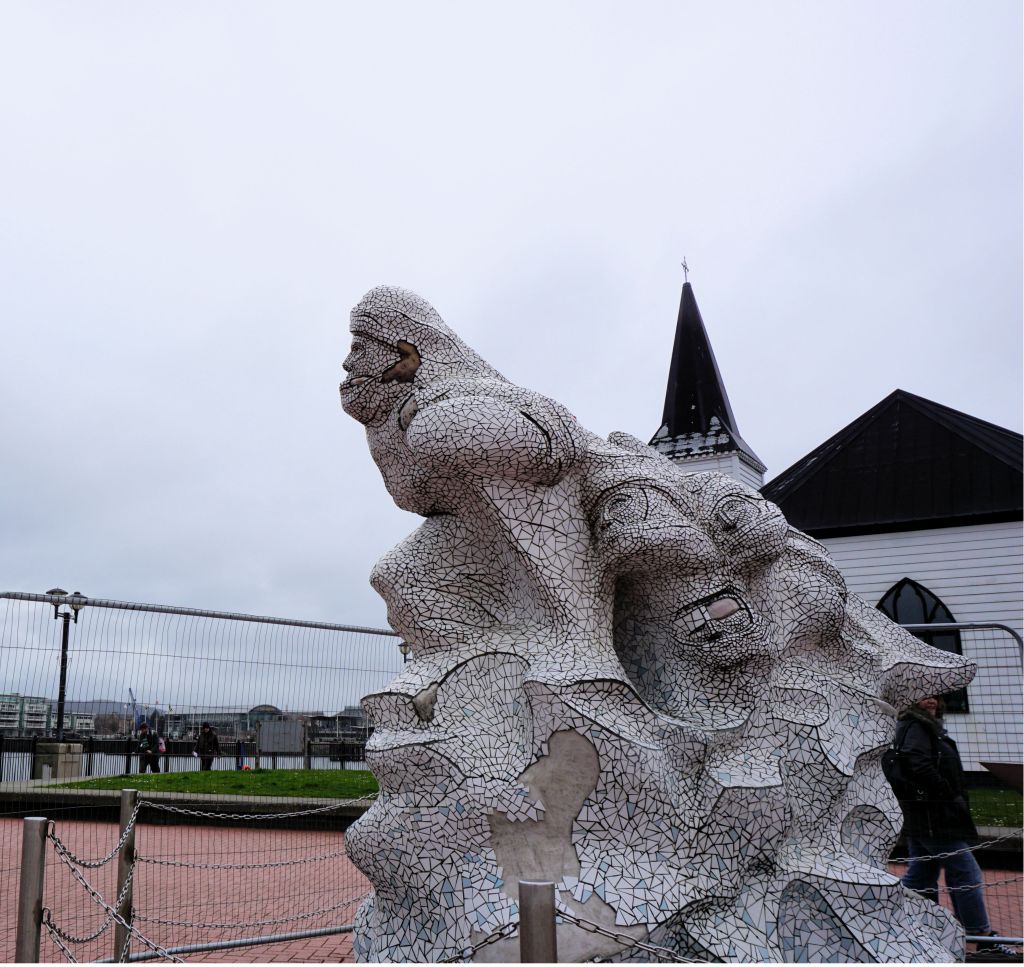
Mosaic sculpture Antarctic 100 erected in Waterfront Park, Cardiff, to celebrate the 100th Anniversary of the polar expedition which left from Cardiff in 1910 led by Captain Scott. The sculpture is by Jonathan Williams and it was erected in 2003.
It is perhaps fitting that this sculpture stands in front of the Nordic Church which once tended to the needs of the Norwegian sailors who sailed into and out of Cardiff Bay.
It was difficult to get a good picture of this sculpture because it had been surrounded by metal gates as a security measure and there was no way to get into the compound.
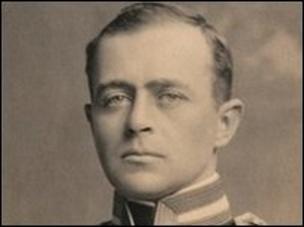
Captain Robert Scott’s trip to the South Pole which claimed his life and that of four more explorers left from Cardiff 110 years ago. His ship, the Terra Nova, sailed from the city’s docks laden with 100 tonnes of coal, 300 tonnes of fuel made from coal dust mixed with bitumen, as well as pots and plans from the Llanelli tin works.
His ship was cheered on by thousands when it set sail from the Welsh capital on the afternoon of 15 June, 1910. Three years later, thousands joined Scott’s widow Lady Kathleen and young son Peter to welcome her back.
Caption Captain Scott
In March 1912, Scott and his companions died just 11 miles from a supply depot having made it to the South Pole in January of that year only to find that Norwegian explorer Roald Amundsen had beaten them to it. Edgar Evans and Captain Titus Oates had earlier lost their lives.
I must apologise to the bloggers who follow me and those I follow: my computer has been out of action now for nearly two weeks, during which time I had no option but to delete all the emails that poured in daily. I find it impossible to work on a phone (I gave up on the IPad last trip when it insisted on me signing in every time I opened it up) not just because my eyesight is bad, but because I find it such an inconvenience, enough to take all pleasure away from reading and writing.
It all started when my WiFi went down and after hours trying to get online and waiting for more hours on the ‘phone (COVID is a great excuse for companies these days not to answer the phones) I was informed by my server, BT, that it was the router that was at fault but that they would send me a new – and better – one immediately. I believed them, fool that I am.
Three days later I tried phoning them without success. After nearly 3 hours I decided that life was too short to hand around like this and that I would just await the router’s arrival in a state of reasonable calmness. A week later I got a ‘phone call from a charming young man at BT who was querying what sort of SIM card I had ordered. Moi? SIM card? Sorry, Madam, it must have been a mix-up. So I explained at length what had happened, he promised to get a router off to me asap but, as the weekend was upon us it wouldn’t now be sent until Monday.
It arrived late on Tuesday. After unpacking it from its box I nearly lost hope and called for an engineer but I had come so far so decided to just get on with it and install it myself. I managed it, WiFi on, computer up-and-running again, me unbearably smug at my technical prowess, but then … no TV. I had done something wrong. I re-read all the instructions, then decided to give it up and read a book instead.
Yesterday dawned fair and I started the next stage late afternoon as I had appointments in the morning. I managed to get the TV working again but although I could get all the paying channels and Catch-UP, I couldn’t get live TV. I should mention that at the same time I was disengaging my You View box for return to BT as I’m giving this up. After a telephone consultation with my tech-savvy friend, he decided I had detached the aerial from the You View Box – which I had – and after I’d put all the wires back in their right places, by 10 pm last night I had a fully functioning WiFi, Computer and TV.
As I said above, I had to just delete everyone’s blogs as they came through but I’ll have a quick shuftie at recent postings and catch up eventually but I won’t add any comments. For anyone wondering why I haven’t been commenting, you now know why.
One surprisingly good outcome is that without any prompting from me, BT has offered a substantial credit which should take care of my bill for the next two months. I’m quite mollified now.
I look forward to re-joining the blogosphere at the weekend. Right now I have to attend to the emails!
It’s been a tough week one way and another so I thought that rather than tax what’s left of my brain looking for images and thinking up words to accompanying them, I’d just wish everyone a Happy Weekend, and CHEERS!
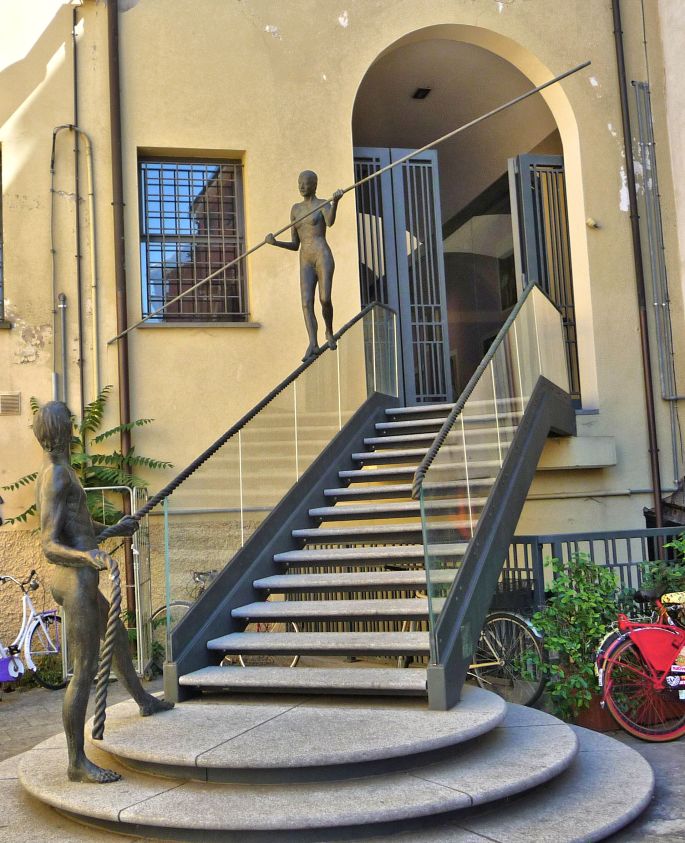
This unusual pairing of bronzes is Gli Equilibristi by sculptor Leonardo Lucchi. I took the photograph with a cheap throwaway instant camera in Cesena, Emilio Romagno in Italy, two years ago but unfortunately, my notes did not survive the trip (not a good one from the point of view of losing stuff).
Gli Equilibristi de Leonardo Lucchi
I stood before this amazing balancing figure with the corresponding male figure at the foot of the stairs for a long time, returning a few days later to try and get a better picture. I could never find a time when there were no bikes or cars or wheelbarrows parked in the space under the stairs and my efforts at removing them were not professional enough so I’ve left them in.
The sculptor lives and has his studio in Cesena, a town I an keen to return to as I only had a few hours there over two days and I wasn’t able to explore enough. Lucchi’s work is so energetic, his figures depict strong movement and I just have to see some more. If you’d like to see some more of his work, check out his website below:
It was featured in the classic 1969 film, Easy Rider, and one of the over 700 tombs there has been reserved by actor Nicholas Cage as his final resting place. Founded in 1789 the cemetery houses over 100,000 deceased, including the grave of Voodoo Queen Marie Laveau.
It was the first cemetery in New Orleans designed for above ground burial and it is claimed that it was modelled after Paris’s famous Père-Lachaise cemetery but as Père-Lachaise wasn’t used as a cemetery until 1804, that seems a bit fanciful. Also there is a significant difference in that in the Paris cemetery the bodies are usually placed in vaults in the floors of the tombs but in New Orleans the bodies are placed inside the walls of the tombs. Because of the subtropical climate, the tomb then effectively becomes an oven, the intensity of the heat causes the body to decompose in a process similar to a slow cremation and within a year only the bones are left.
This allows the tombs in New Orleans cemeteries to be used again and again. Depending on the family’s needs, after about a year the bones of the departed are swept into an opening in the floor of the tomb, now ready for its next occupant or occupants, as it is common practice to bury all the members of a family in the same tomb.
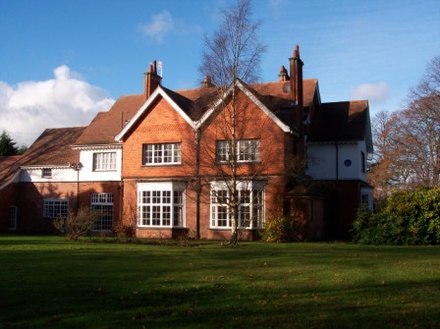
Clive Staples Lewis (known as Jack), the author of The Chronicles of Narnia, was born in Belfast on November 29th, 1898 to the comfortably off Albert James and Flora Augusta Hamilton. He grew up happily in a house called Little Lea, a house that is generally credited as the one from which he derived the inspiration for the stories which have given pleasure to so many people. It was a large, gabled house overlooking the River Lagan, with dark, narrow passages and a library that was crammed with books including two of his favourites, Treasure Island by Robert Louis Stevenson and The Secret Garden by Frances Hodgson Burnett.
Little Lea (photo Wikkiwand)
During the second world war many London evacuee children were sent to live in Belfast’s supposedly fresh country air to avoid the bombing and the air-raids (despite the fact that the Northern Ireland capital was also subject to severe bombing). Like the Pevensie children in The Lion, the Witch and the Wardrobe, several groups of children stayed with Lewis at his country home and they played with Jack and his brother in the large overgrown garden in a Northern Ireland not then plagued by bitter civil strife, although there were always tensions.
Entrance to Little Lea – photo Mari Nicholson
The first Narnia book was published in 1950, since when they have sold more than 100 million copies and been translated into over 30 languages, opening up a world of magic to children who have lapped up the stories of the mythical world found behind the wardrobe.
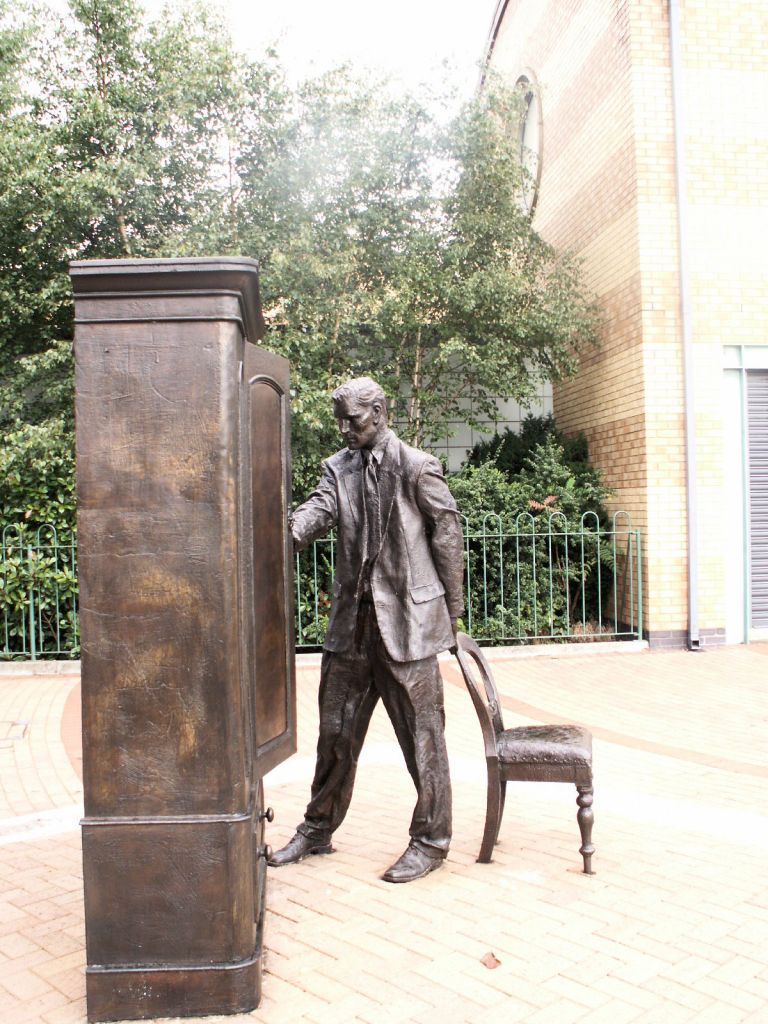
Bronze Statue by Ross Wilson in Belfast – photo Mari Nicholson
As a child, C. S. Lewis constanrtly made up stories about a place he called “Animal-Land“, a land inhabited by animals, mice and rabbits who rode out to kill cats. These stories he related to his brother as they sat among the coats in their grandfather’s old wardrobe. He even created detailed maps of the fantasy world.
The Narnia story
By chance, four young children from wartime England discover a magic land called Narnia, lying beyond and through an ordinary wardrobe. Once through the wardrobe and into the mythical land, Edmund, one of the children, betrays his siblings to a wicked witch who has been holding the world of Narnia in thrall to winter. Spring can only come to Narnia and the betrayal be forgiven when the lion, Aslan, agrees to die at the witch’s hand.
Little Lea, C.S. Lewis’s home in Belfast
Looking around the area in which he grew up, it is not hard to believe that his surroundings inspired the mythical land of Narnia. The craggy, heather-draped Mourne Mountains just a few miles away, Belfast’s own Black Mountain, and the lakes, rivers, forests and ruined castles with which the area abounds played their part as sure as the tales of hobgoblins and giants from Irish folklore and the Norse sagas which were, apparently, Lewis’s favourite reading.
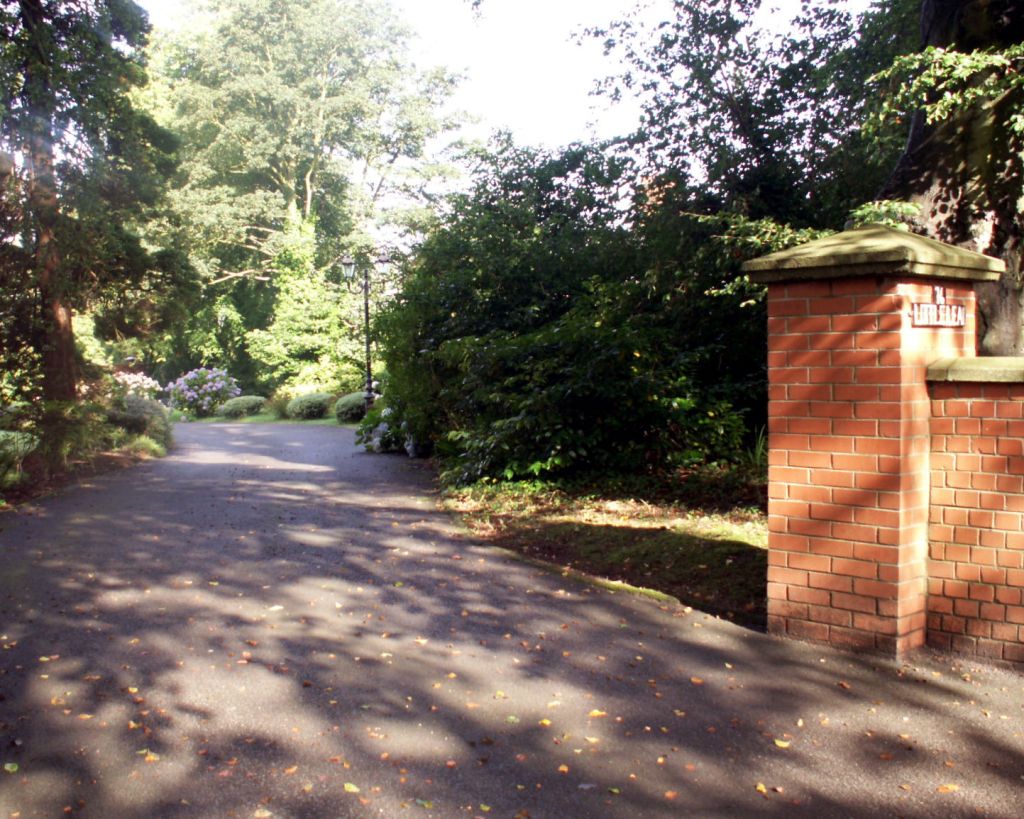
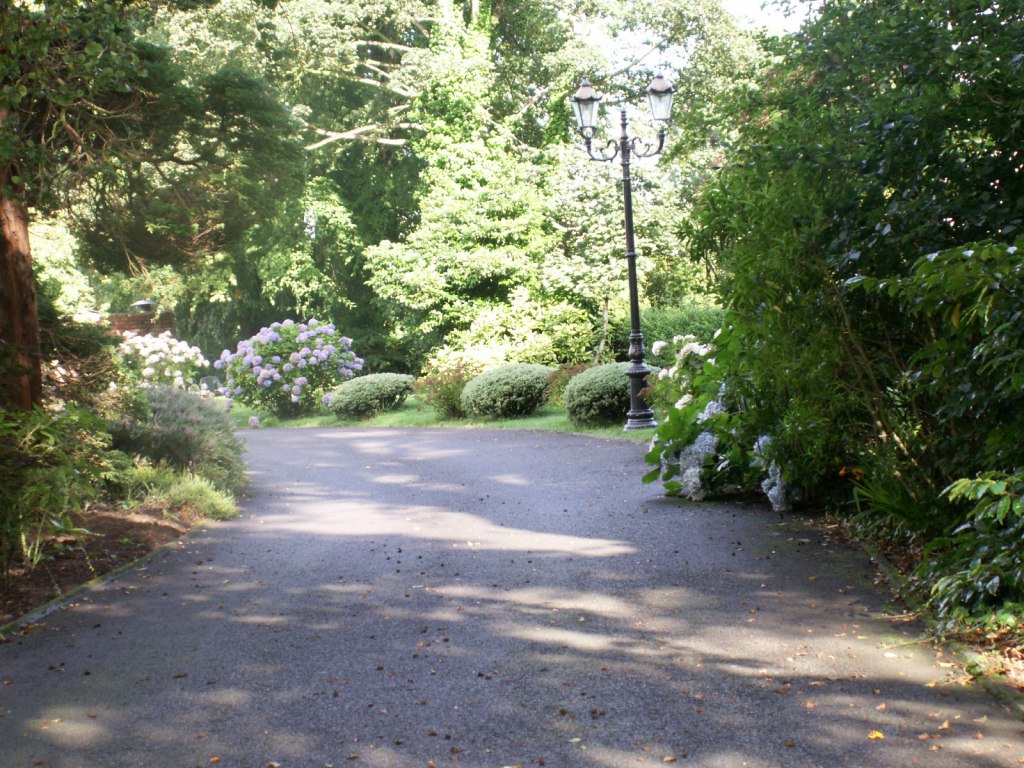
The Drive at Little Lea – photo Mari Nicholson
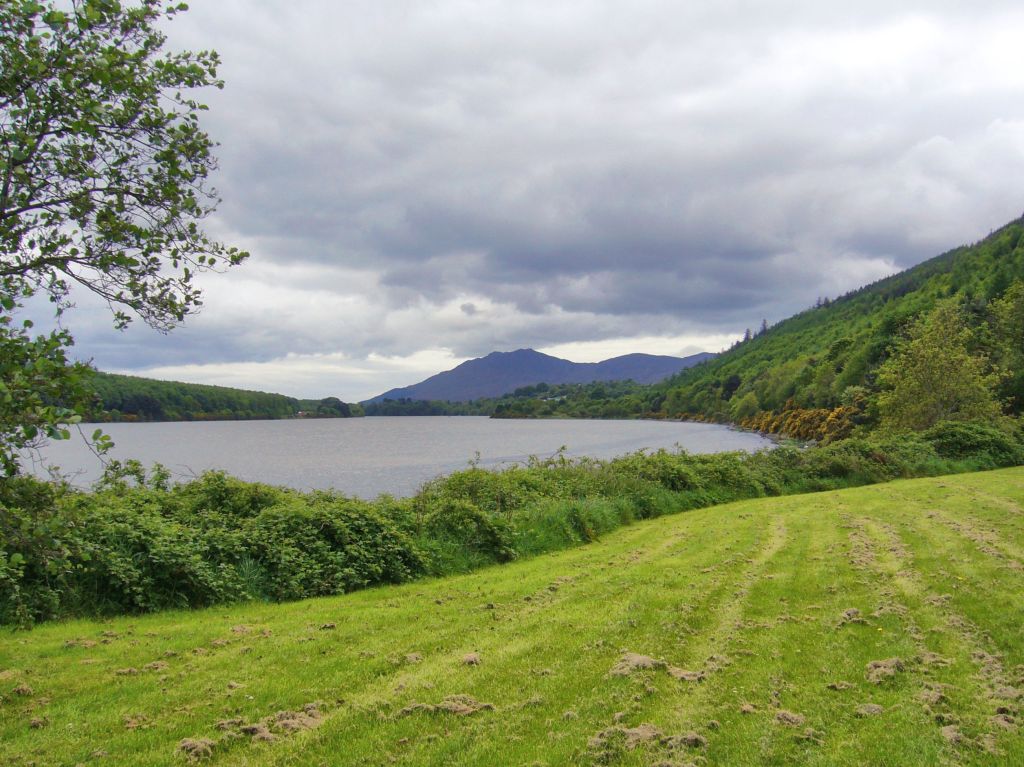
CS Lewis spent his childhood holidays in Rostrevor, a small seaside town about 50 miles from Belfast which faces across the Lough to Carlingford in the Republic of Ireland. In one of his letters to his brother Lewis wrote that the mountains that loom above it (the Mournes) made him feel “that at any moment a giant might raise its head over the next ridge”.
Looking towards the Mournes from Warrenpoint
At Kilbroney Park in Rostrevor, a Narnia trail will bring you into the world of Lewis’s chronicles., meeting Tree People and beavers along the way. The walk starts and finishes within Kilbroney Park and the trail is entered, like the magical world of Narnia itself, through a ‘Wardrobe Door’ and along the way you’ll find features like Tree People, The Lamp Post, The Beaver’s House and Aslan’s Table.
Enter at your peril though, as the curse of the White Witch lies upon the land. It is always winter and Christmas never comes and you run the risk of being turned into stone especially if you eat the forbidden sweets.
If there is time and if you are fit, climb the mountain to Cloughmore (trans. big stone) the granite boulder that stands 1,000 metres above Rostrevor – a perfect model for Aslan’s altar – where the final chapters of The Lion, the Witch and the Wardrobe come to life. With a little suspension of disbelief you can imagine the creatures that worship there – the Well Women, centaurs and unicorns – and, of course, the great Aslan.
Before you go. The jury is still out on some of the places that inspired Narnia but the 17th century Dunluce Castle on the Antrim Coast is believed to be the basis for Cair Paravel, the royal fortress in Narnia.
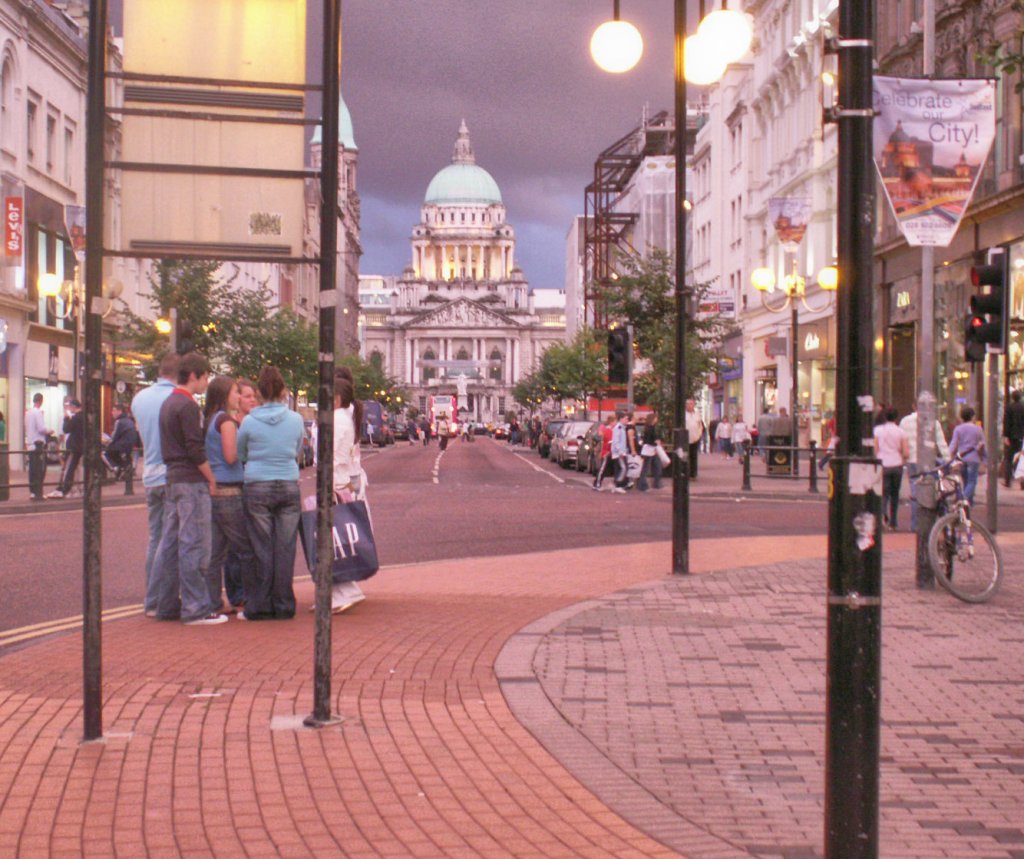
Belfast at dusk – photo Mari Nichiolson
NOTES; Unfortunately, it is not permitted to enter Little Lea, Lewis’s former home, as the house is privately owned but fans of the book seem satisfied to stand outside and gaze at the one-time family home.
Any tour of Lewis’s Belfast must encompass the magnificent bronze of The Wardrobe (called “The Searcher”) by Ross Wilson which has been erected in central Belfast and the many murals on Belfast’s walls which refer to the man and his work. However, Belfast today is one of the most vibrant cities in Europe and murals are changing rapidly. CS Lewis wouldn’t recognise today’s Belfast were he to return, from the magnificent Waterfront Concert Halls and Visitor Attractions to the Titanic Museum, but he would recognise that the soul of the city is still intact.
A private taxi tour is an excellent way of seeing the area and the Belfast Tourist Board will be happy to advise on this.