I didn’t dash out today with my camera to find a subject that would fit the title of Mystery because as soon as I saw the subject I remembered this photograph taken some years ago on a trip to Switzerland. There was no time to think about lighting effects, or exposure, or ISO ratings. It was enough that I had the presence of mind to take the photograph.
It was September and we had been driving with our Swiss friend, Werner, in the Bernese Oberland, searching for a farmhouse he’d heard about, where the mountain cheese was the best in the Canton – if not in the country – and which would be perfect for the planned supper.
The mist was heavy in the mountains, deadening all sound, and we could only see a few yards ahead at this point. We had parked the car and got out to peer over the barricade at the side of the road and to listen to the distant sound of falling water. No other sound broke the stillness, no dogs barked, no cowbells jingled, no birds sang: then came the faint, ghostly clip-clop, clip-clop of horses’ hooves and out of the mist that swirled around us, came the Victorian carriage and horses you see in the photograph below, four horses and two coachmen. Neither the horses nor the coachmen appeared to notice the three mesmerized people who stood by the side of the road, and it passed by, silently, and turned the corner.
My husband, a born sceptic, decided it was some actors from a film set, but I’m not so sure. We were, after all, just by the ReichenbachFalls…………
Switzerland – by the Reichenbach Falls
Photo by Mari Nicholson
This story is true and I remember it well. The recollection and telling of it can still send shivers down my spine.
Having difficulty in keeping up with the daily stint and due to other work commitments am not free to wander out and about with camera. Frankly, even if I were, the bitter cold is enough to prohibit my photography excursions, as I find cold hands do not for good photos make!
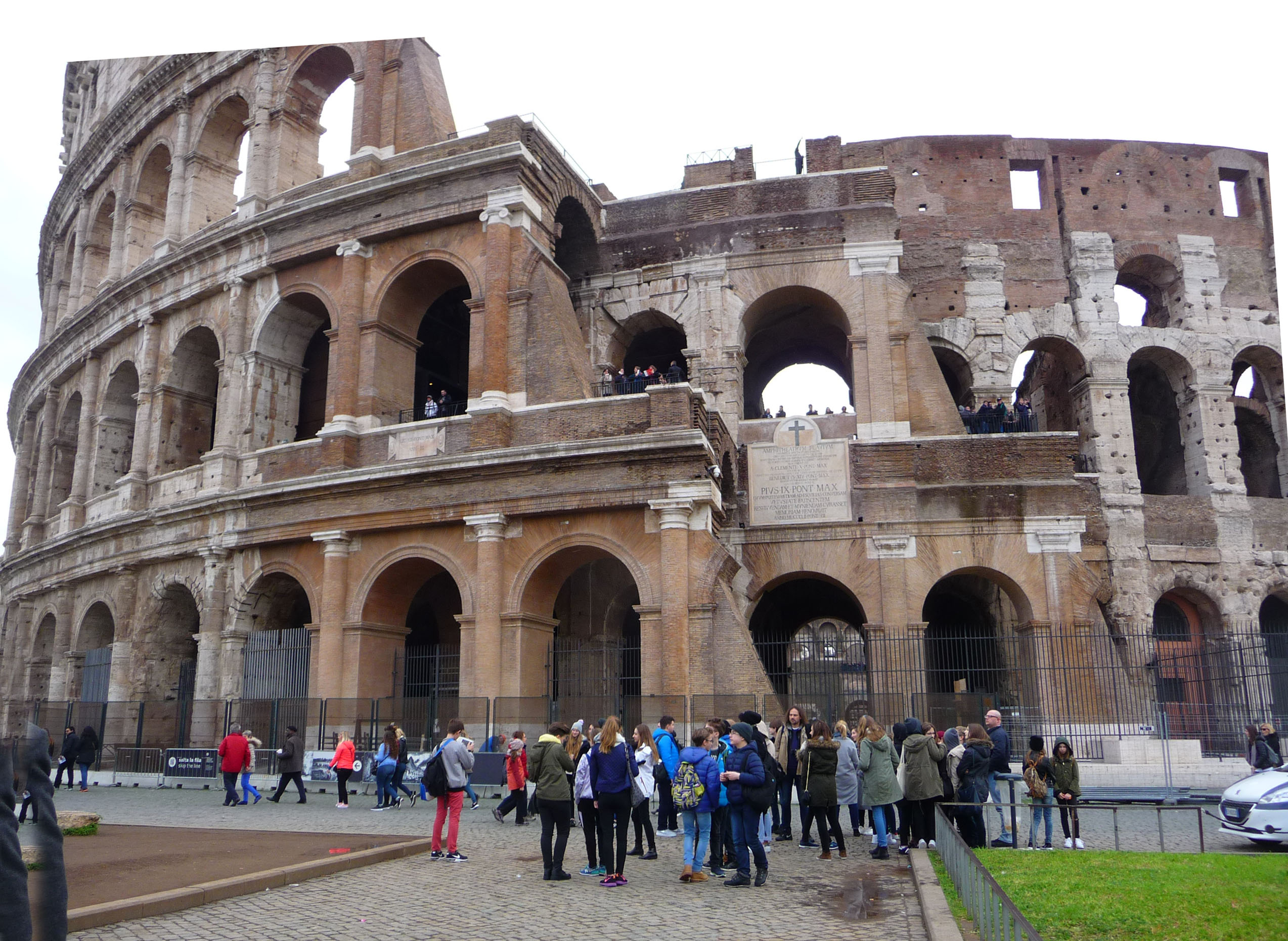
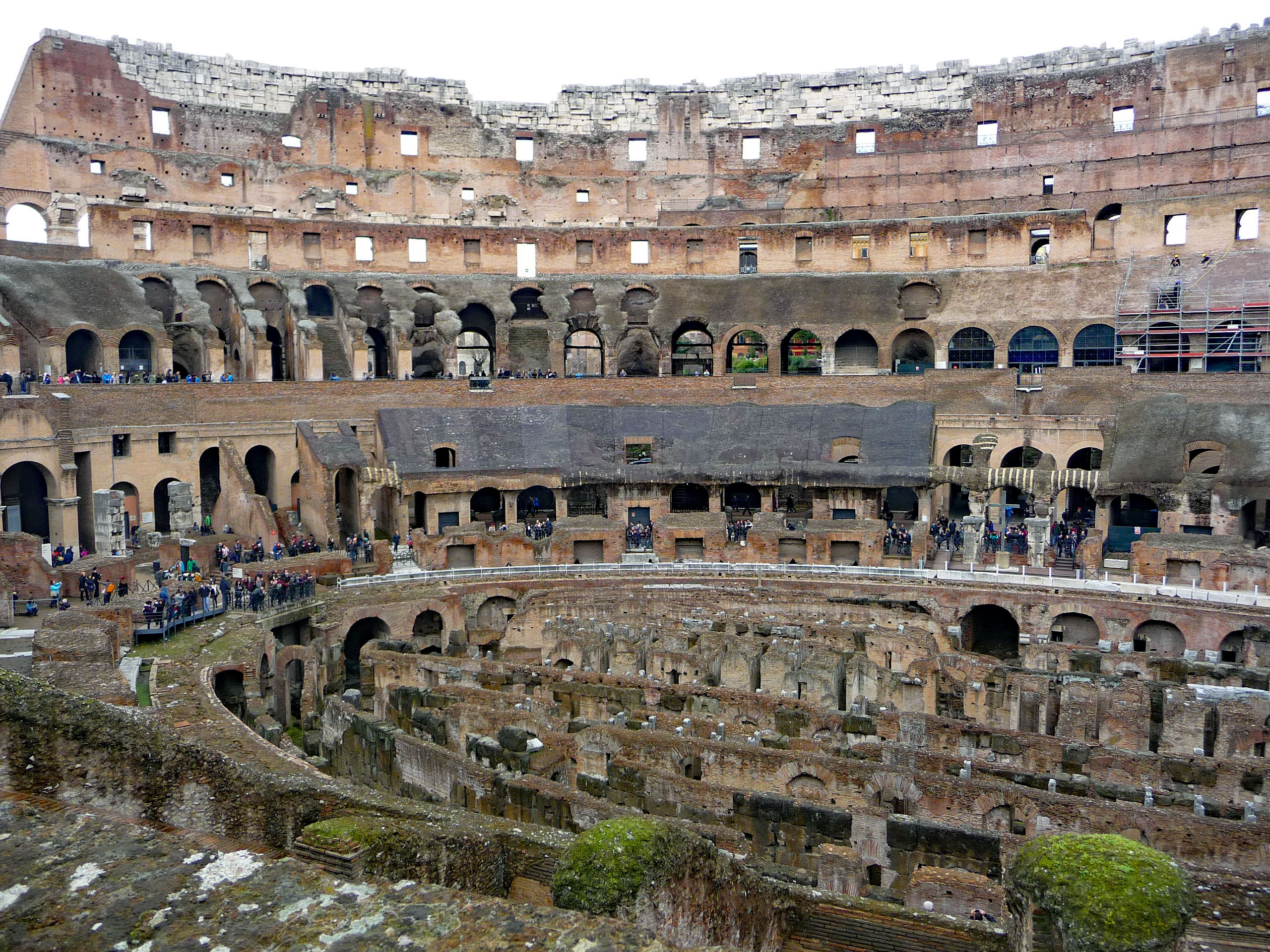
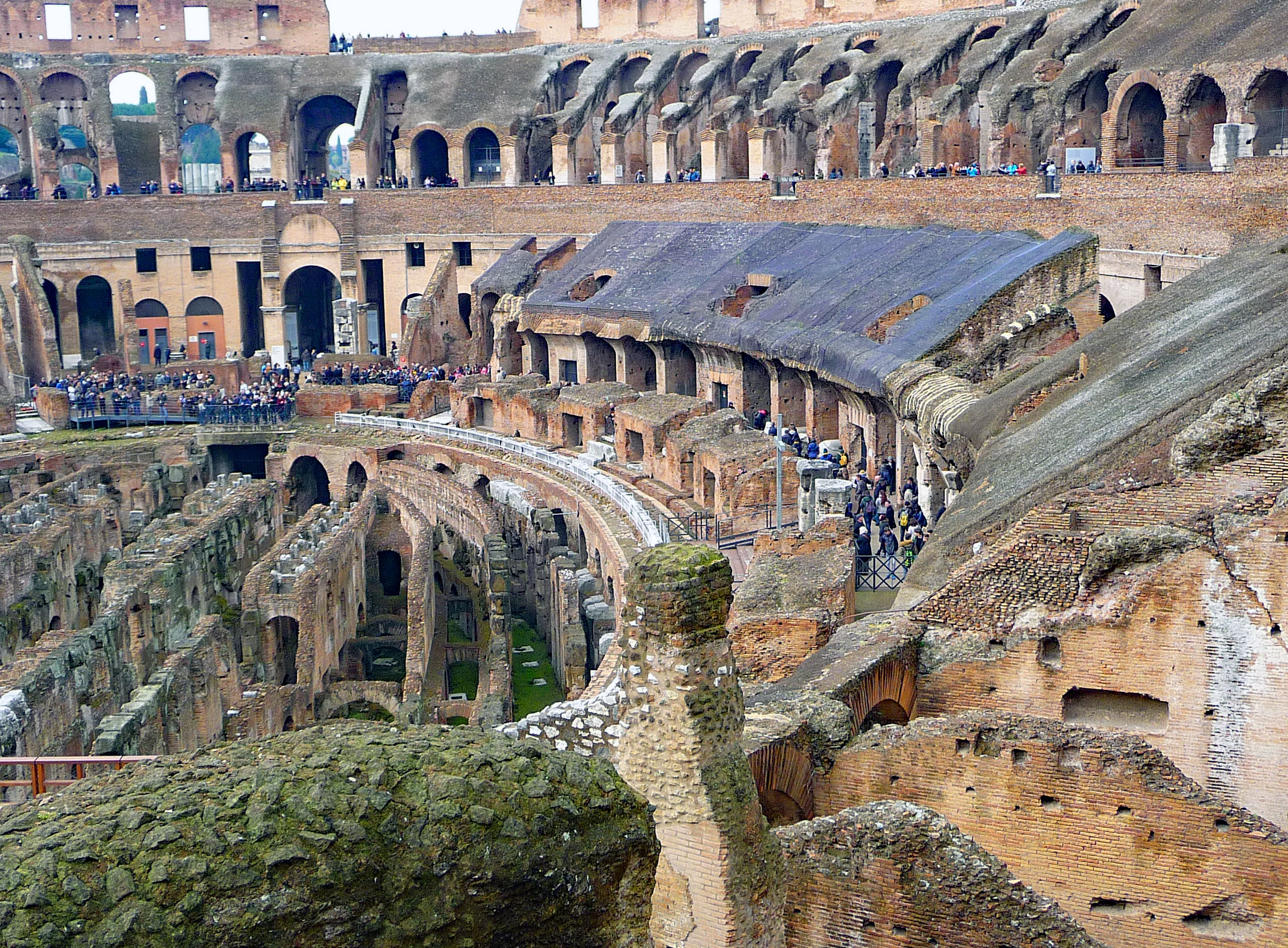
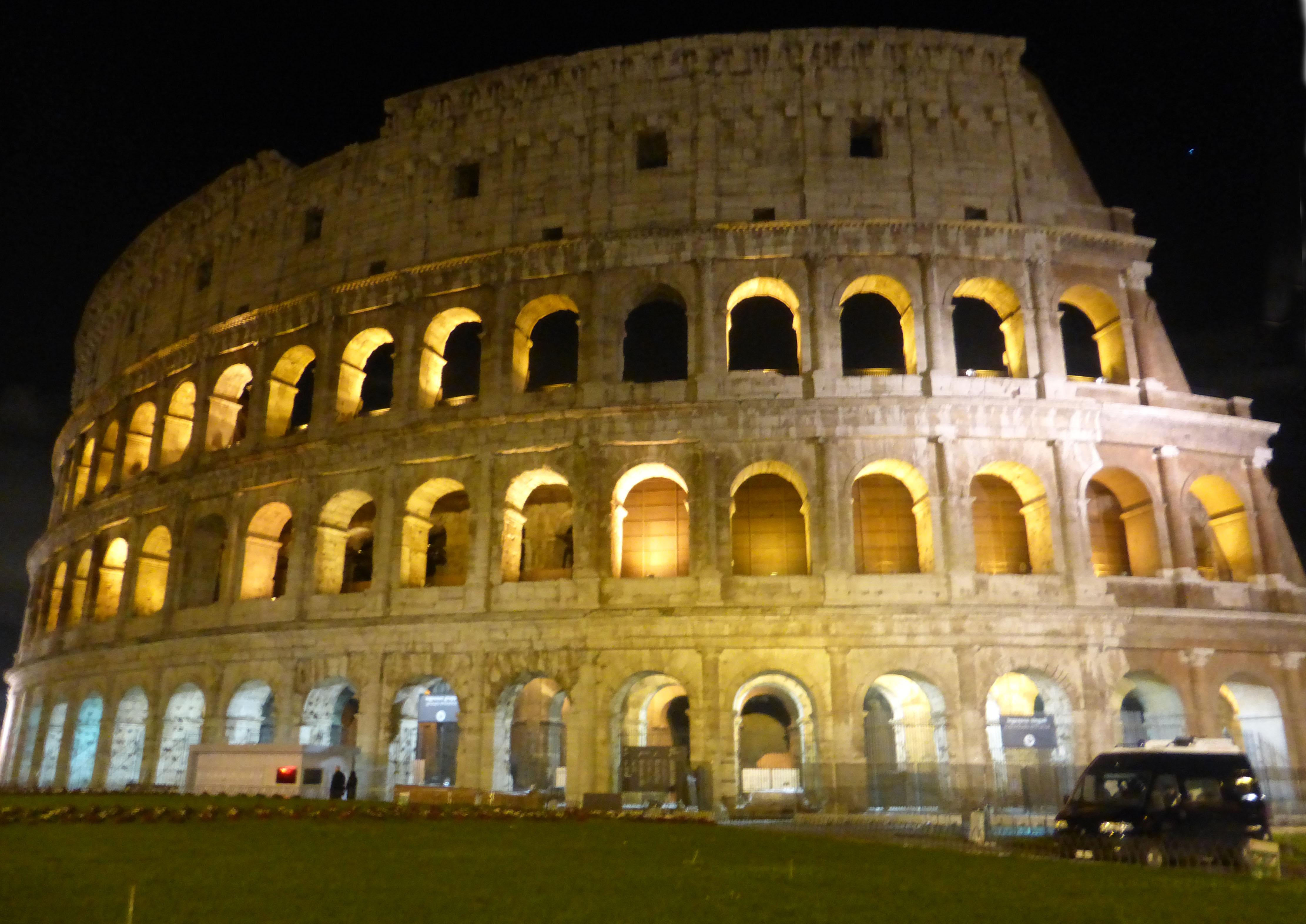
I have just returned from Rome and when I saw BIG, the one thing that sprang to mind was the Colosseum, that massive elliptical shaped theatre of blood lust and killing, where in the first hundred days of the inauguration games in 81 AD, it is said that over 9,000 wild animals were slaughtered. During another festival in 240 AD 2,000 gladiators, 70 lions, 40 wild horses, 30 elephants, 30 leopards, 20 wild asses, 19 giraffes, 10 antelopes, 10 hyenas, 10 tigers, 1 hippopotamus and 1 rhinoceros were slaughtered. In fact, so many wild beasts were killed in the Roman arenas that some exotic animals became virtually extinct.
Here are a few of my images of that iconic spot in Rome. Maybe I haven’t covered point of view so well, but I hope you will enjoy the perspective anyway.
Exterior of part of the Colosseum, Rome – Photo Mari NicholsonInterior of part of Colosseum, five tiers to hold up to 80,000 spectators. The animal pits are on the basement level from which they were released to do battle with either the trained Gladiators or the early Christian martyrs – Photo Mari NicholsonView through one of the entrances to the other side of the Colosseum – Photo M. NicholsonA better look at the pits below the seating, where the wild animals were kept before they were released to do battle with the Gladiators. – Photo Mari NicholsonColosseum by Night – Photo Solange Hando
N.B. It is generally accepted that the Ridley Scott film The Gladiators is a very true depiction of what the Colosseum arena looked like in those days as the research was meticulous.
Connections between rooms in castles are well documented, less well known is the connection between the Castel Sant’Angelo in Rome and the Vatican City.
The Castel of Sant’Angelo, the massive fortress-like building on the right-hand side of the Tiber, was originally built by the Emperor Hadrian (117-13 AD), as a monumental tomb for himself and his successors, not far from the Mausoleum of Augustus near the edge of the Vatican fields.
Castel Sant’Angelo, Rome. Hadrian’s Mausoleum
By the 5th Century, the Mausoleum had been included in the defensive system of the city walls, and from the 10th century onwards it had become a fortress, the Castel Sant’Angelo, its purpose being to defend the Vatican, to which it was linked by a special passageway (the Connect). Originally the Mausoleum was surmounted by a gilt bronze statue of the emperor in a chariot.
Below is a photograph taken from the cupola of St.Peter’s at the Vatican and the Castell is quite some way from it, on the left-hand side just beyond the patch of dark green trees that can be seen.
Looking down from St. Peter’s, Vatican City.
Looking Down from the Cupula of St. Peter’s in the Vatican, towards the Castel S Angelo. Photograph Copyright Solange Hando.
The Mausoleum was incomplete when Hadrian died but he was buried there one year later in 139 AD. The bridge connecting both sides of the Tiber had been built by Hadrian to facilitate direct access to the tomb, a more elaborate bridge than any other Roman bridge at that time: it survived until the end of the last century by which time it had become known as the Ponte Sant’Angelo. The two end spans were rebuilt at the end of the last century and only the three central arches are originals from the period 130-134.
Ponte Sant’Angelo, Rome: Photograph copyright Mari Nicholson
I was away last week but managed to log on to my tablet and saw that the subject was Street. I hope I’ve got this right because I cannot now remember how to get the rest of the week’s Photo Challenge words up. I thought they were to be emailed to me, obviously I’ve got it wrong. I’ve gone into Photograph 101 but all I see there is the Weekly Photo challenge and Daily Prompt Word, so if anyone can steer me in the right direction I’d be obliged.
So, hope I’m right about last Tuesday’s subject being Street, and here are two from Rome.
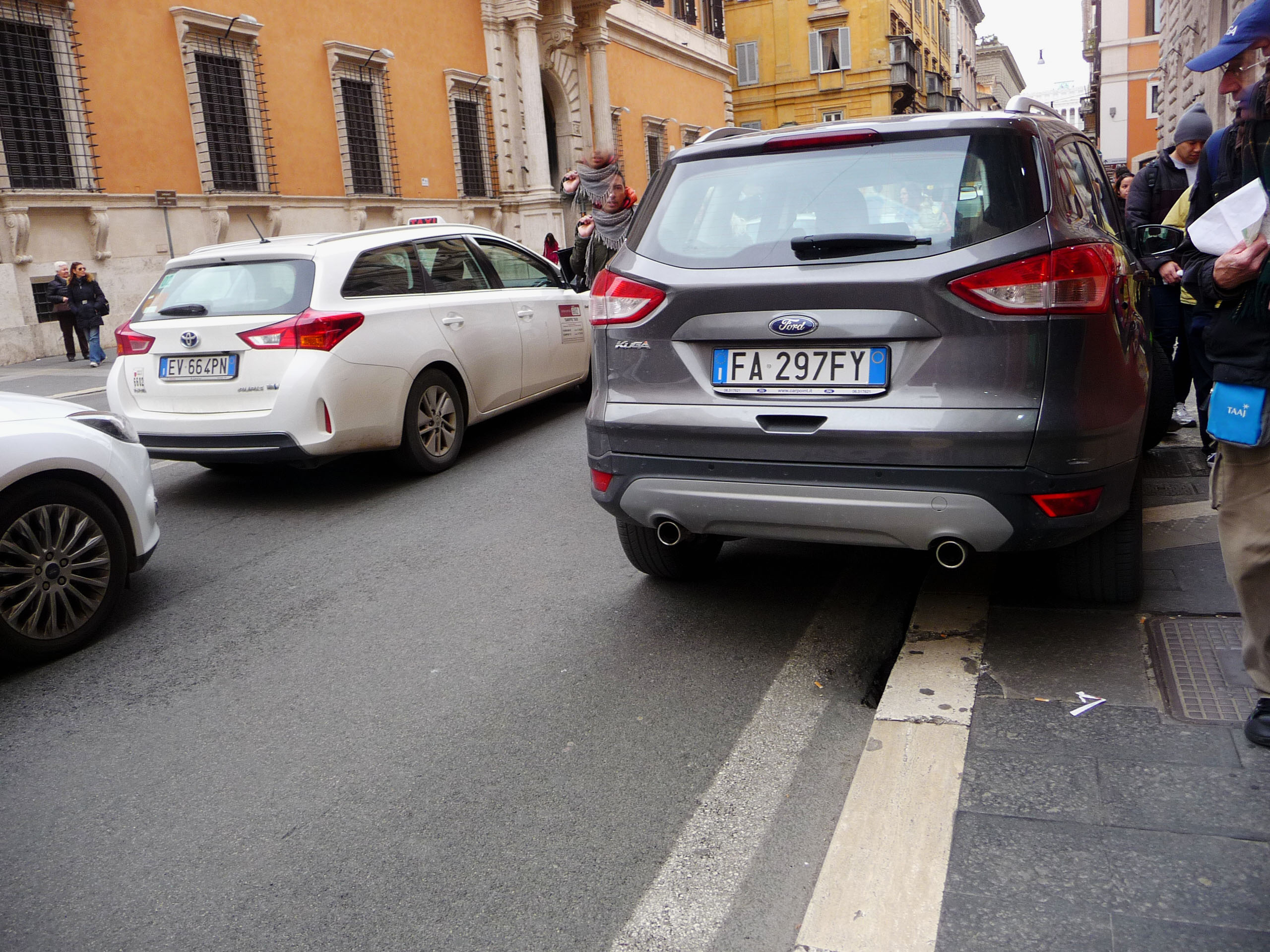
Italy, where the Vespa still reigns supreme
Parking> Not my problem. I’ve just gone off for a coffee..
I’m not sure if I’m posting in the right place. I had the email about the start of the new course this morning but it seems to have disappeared from my computer, completely! I seem to remember reading however, that the post should go as a Post in the normal site and would then be removed to a Photography 101 site. Am I right?
Anyway, in great rush as I am off on a short trip today until next Saturday when I’ll pick it up again. I will be able to take photographs but not post while I am away.
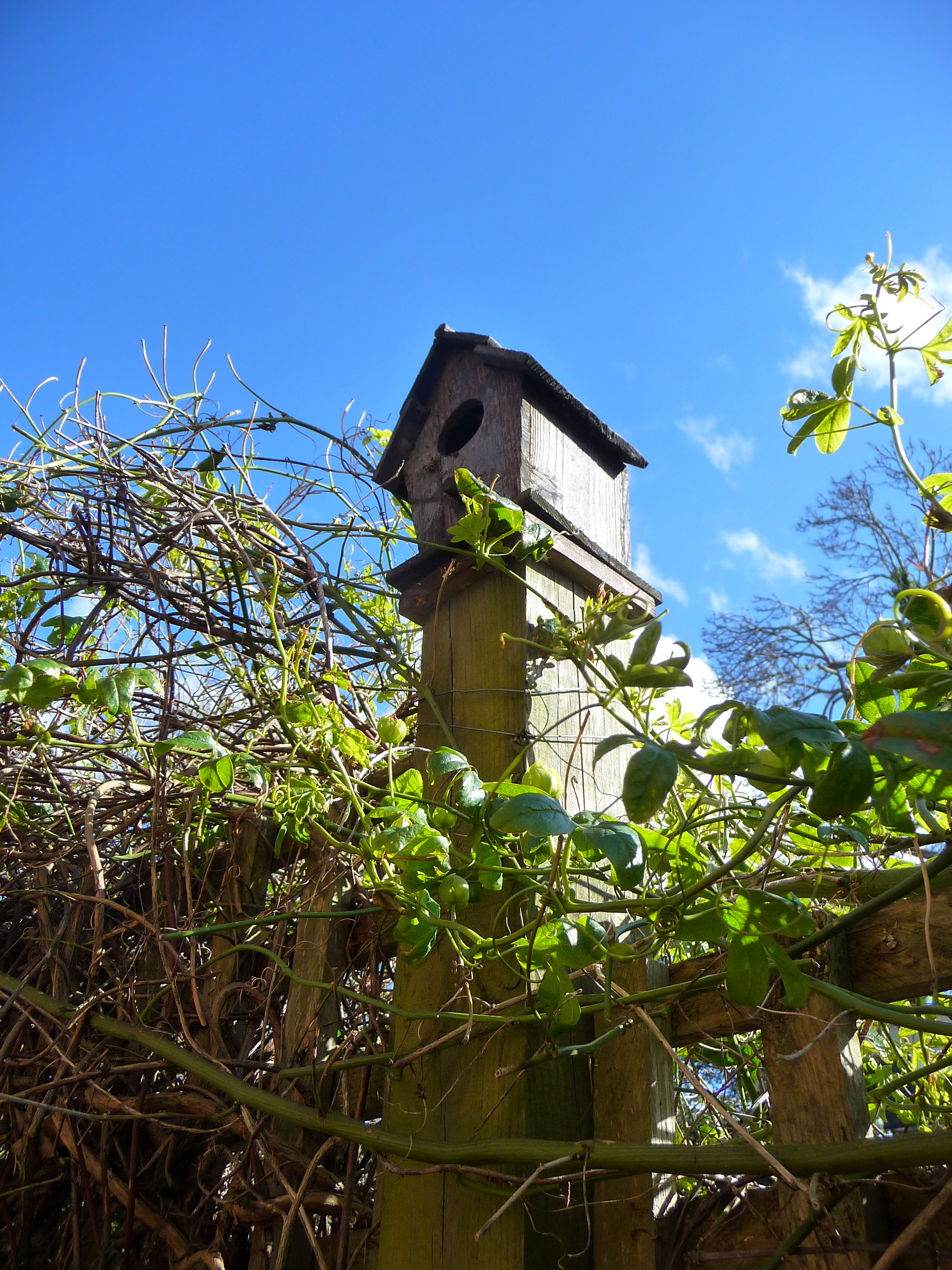
Meantime, this was home to some young birds during the winter but they have now flown away to warmer climes I presume. I have cleaned the birdhouse out and now it awaits a new family.
Bird House in my garden, home to winter birds and now awaiting a new family
Bird House in my garden, home to a family of over-wintering birds.
Life is hard if you have a disability in most of S.E. Asia, probably a bit worse in Cambodia which is still a poor country, but this group of blind musicians are making the best of things by performing close harmony songs by the roadside and collecting money from passers-by.
Blind Musicians by the Roadside in Cambodia
HALONG BAY, VIETNAM:
One of the lovliest places in Vietnam, a short drive from the capital Hanoi. It is peaceful and harmonious, massive karsts thrusting up out of the sea and junks and smaller boats moving slowly on the calm green waters in and out between them. Inside some of these karsts are caves full of stalactites and stalagmites, well worth a visit, but do take a guide because they can also be dangerous.
The calm waters of Halong Bay, Vietnam – Photo Mari Nicholson
On the calm waters of Halong Bay, the junks and the Karsts make for a very harmonious image. Despite the storm clouds there is a sense of harmony here and as night falls the boat people cook their meals on deck and the smell of spices and fish roll across the waters.
Junk in Halong Bay, Vietnam – Photo Mari Nicholson
Having watched every episode of Tony Jordan’s 20-part brilliant evocation of Charles Dickens’ world (Dickensian, BBC 1), it has whetted my appetite for the London of the novels, for the streets and alleyways that he populated with an array of the most colourful characters ever to leap from a page.
Traitor;s Gate at The Tower of London
The series is a true celebration of a master story teller, where people like Miss Haversham, Nancy, Bill Sykes, Fagin, Jaggers the lawyer, and the Cratchit family, are all cleverly interwoven into a Victorian tapestry, perfect for the small screen. Dickensian carried with it a constant surprise, as there were no hints given as to who would pop up or from which book. And as always, with a BBC production, the location, the settings and the atmosphere are pitch-perfect. And it’s fun trying to remember in which book a character appeared, and in admiring the clever way Jordan has stitched together a new story using these familiar characters.
Although Dickens wouldn’t recognize London should he return today, we are lucky enough to be able to suss out some of the haunts he mentions, the alleyways, streets, pubs and inns, many of which survive, although what the Blitzkrieg couldn’t destroy, the city planners have almost managed to accomplish.
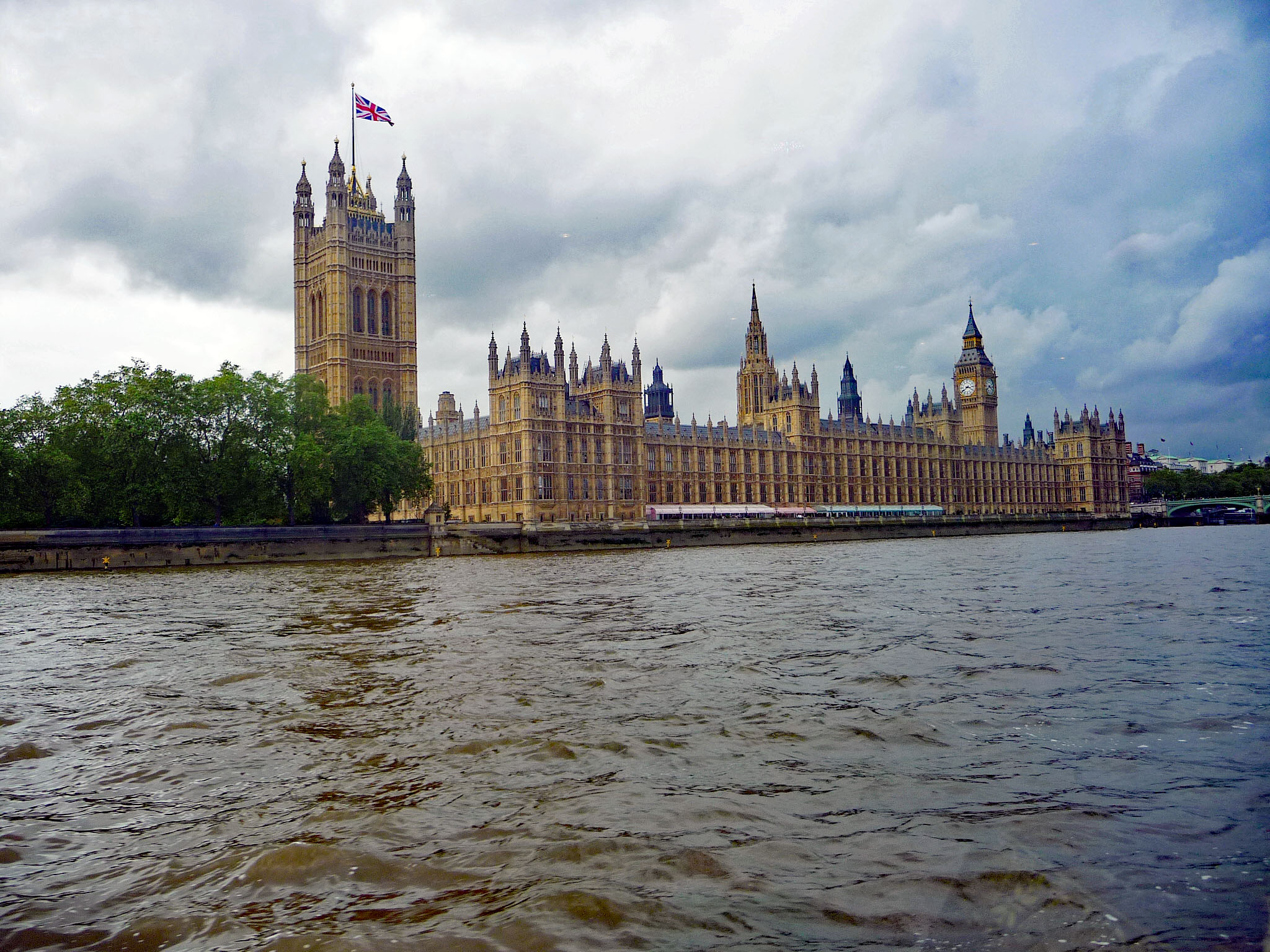
Houses of Parliament- Photo Mari Nicholson
The City of London was once a walled city covering a mere square mile, inside which the Guilds and Liveries reigned supreme – in fact they still do, along with the money merchants, the financiers, the major world Banks and the controllers of a shadowy world of high finance. Established in around AD50, seven years after the Romans invaded Britain, the City, or Square Mile as it has become known, is the place from which modern-day London grew. Walk through the surrounding areas, and with just a little imagination, you can begin to populate the streets with Dickens’ characters. A good place to start from is St. Paul’s Cathedral, built by Sir Christopher Wren, who, while his great church was being built, lived in a house on the other side of the River Thames from which rowed across the river daily, to check on its progress.
A Familiar Sight near the Tower of London
The historian Dr. Ruth Richards claims to have discovered the workhouse, the Strand Union in Cleveland Street, that inspired Oliver Twist. This wasnear where Dickens lived as a child, and it is thought possible that he worked with a lot of the poor apprentices from that workhouse during his time at the blacking factory. Most workhouse children were hired out, or apprenticed, to places like these, and if the young Dickens did work with the workhouse paupers, he would have heard tales of the hardship in that establishment, all of which were grist to the mill when it came to writing what is one of the best loved, and most often filmed, stories of all times.
The Guildhall, City of London
When Pip in Great Expectations arrived in ‘ugly, crooked, narrow and dirty’ London he got off the coach at the Cross Keys Inn on Wood Street, a posting Inn and a terminal for the coaches from the countryside bringing passengers and parcels to the City (read Great Expectations for his description of the nearby Cheapside market and ‘the great black dome of St. Pauls). Little remains of the Cross Keys inn today save a paved area in the nearby churchyard in Wood Street, marked by railings with cross keys on them, the symbol of St Peter, keeper of the gates to Heaven.
This is also the inn where the young boy, Charles Dickens, aged 12 and alone, arrived from Rochester in Kent after his spendthrift father had once again made the family destitute (Dickens senior subsequently spent time at the Wood Street Compter just a little bit further down the road from Cross Keys). From Wood Street, Pip walked along London Wall to the offices of Mr. Jaggers, the lawyer, through narrow streets where the houses are crammed tightly together and jostle for space. You are near Postman’s Park here so a detour to this delightful spot can be recommended and although nothing to do with Dickens, I would recommend a detour to see this very Victorian location.
One of the Tiles in Postman’s Park – Photo Mari Nicholson
But it was Southwark, a less reputable area, that haunted Dickens and coloured his outlook and his novels ever afterwards. A portion of the Marshalsea Debtors Prison wall still stands in St. George’s churchyard off Borough High Street, the prison in which the Dickens’ family languished, and his vivid description in Little Dorrit leaves the reader in no doubt of his intense loathing of the place.
The George Inn, just off Borough High Street, has survived, one of the many “rambling queer old places” that the writer described in The Pickwick Papers. A little further along is Lent Street where the writer lived and from where he walked to the hated job at the Blacking Factory in the Strand. The factory that caused such grief to the young man but which gave him so much material for his novels is no longer there: on the site now stands Charing Cross Station.
There is to be another series of Dickensian, and I urge anyone who has not seen the first series to catch up with it and then follow on with the second series. Mr. and Mrs. Bumble we’ve met, Mrs. Gamp and Sarah Peggotty, but there are many characters yet to be given a backstory, characters who lived life on the edges of the tales, like Laura Badger, Ham Peggotty, Mrs. Ticket, and the one remembered by every child that saw the original black and white production of Oliver Twist – Magwitch.
Dickensian is not Tales from Dickens, it is a re-imagining of a Dickensian London peopled by the colourful characters from the novels of one of England’s greatest writers. It is not to be missed
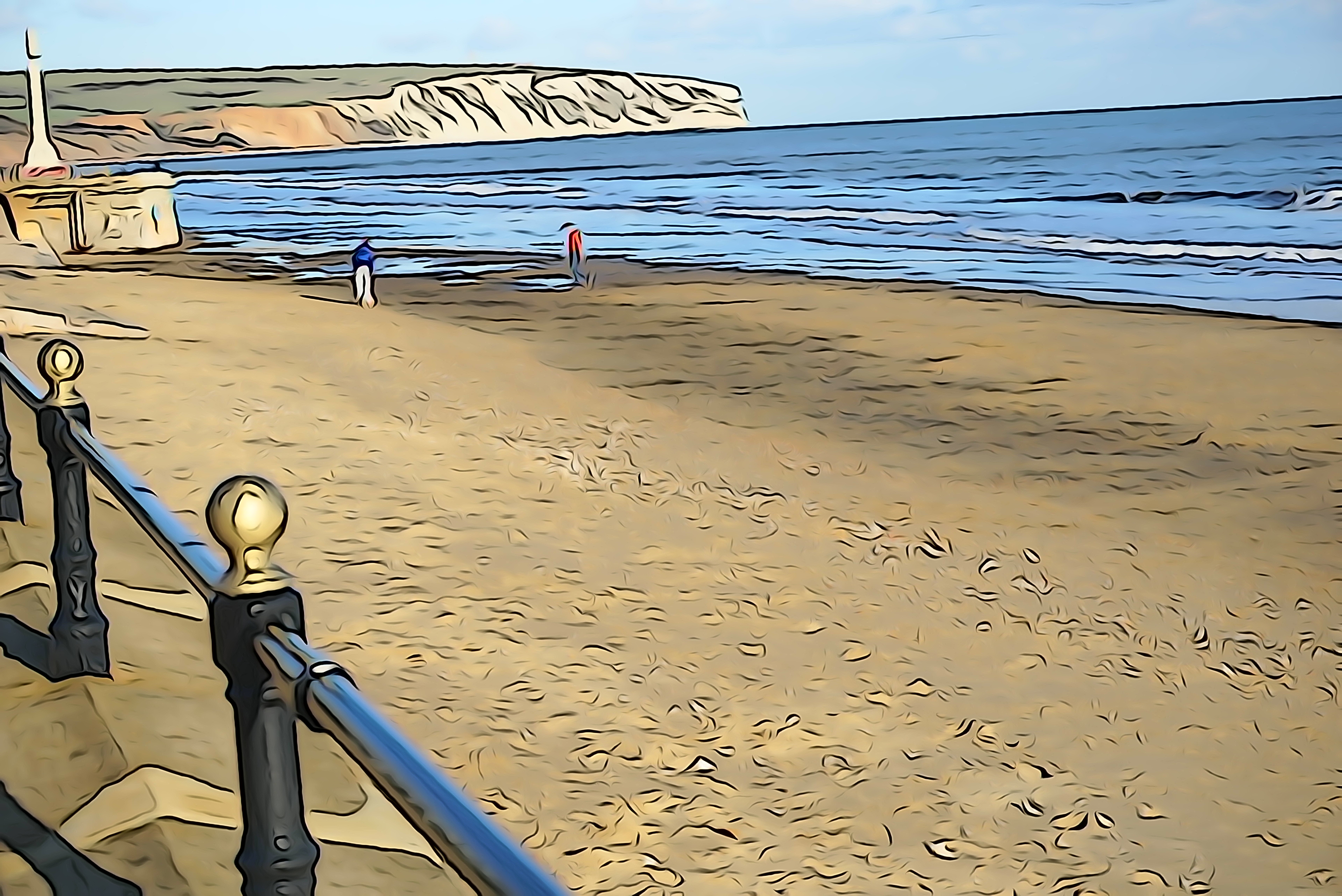
My new camera, the Sony A6000, has a brilliant inbuilt programme that turns the image from a basic photograph to one that can isolate one colour, say red or blue, leaving the remainder of the photograph in black & white; changes the image to one that looks like a water-colour with the tints bleeding into each other; and, my favourite, illustration which alters the photograph miraculously so that it looks like a graphic illustration. It is tempting to embark on designing a comic strip, or to illustrate an article with an illustration instead of an image.
Here I give you a few samples of Illustration, taken on a walk along my local beach the other day, a cold wintry day but with a blue sky lighting the day. I hope they reproduce in the blog as they do on my screen, best viewed very large.
Beach and Cliffs with People, Sandown, Isle of WightFishing Boat on Horizon at Sandown, Isle of WightBy the Pier a young lad kicks a football and two children play in the sand, at Sandown, IOW, on a wintry day.Blue skies, calm(ish) waters with the White Cliffs of Culver at Sandown, Isle of Wight.
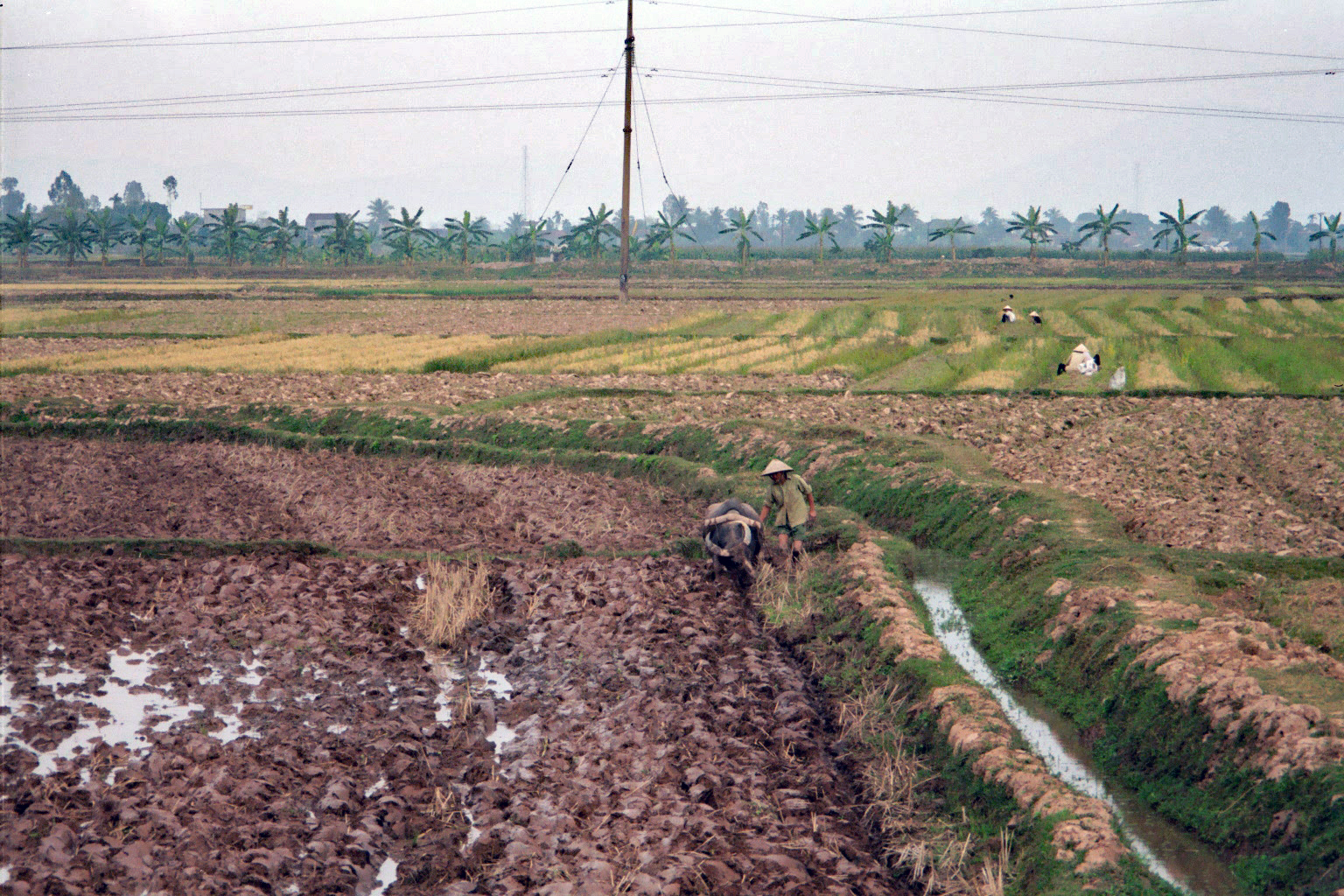
There are two rice growing seasons in most of S.E. Asia but the romantic pictures we have of coolie-hatted rice farmers in the fields hides the back-breaking labour involved in this work. Men and women share the work equally – well, mostly – and usually, work from dawn to dusk. In areas where the ground is fertile and the water abundant, fish are also farmed in the waters, adding some additional protein to the rice diet, or being sold at market to buy other essentials.
Preparing the Ground for the Rice in Vietnam – Photo Mari Nicholson
Ploughing the field reading for the rice planting, Vietnam – Mari Nicholson
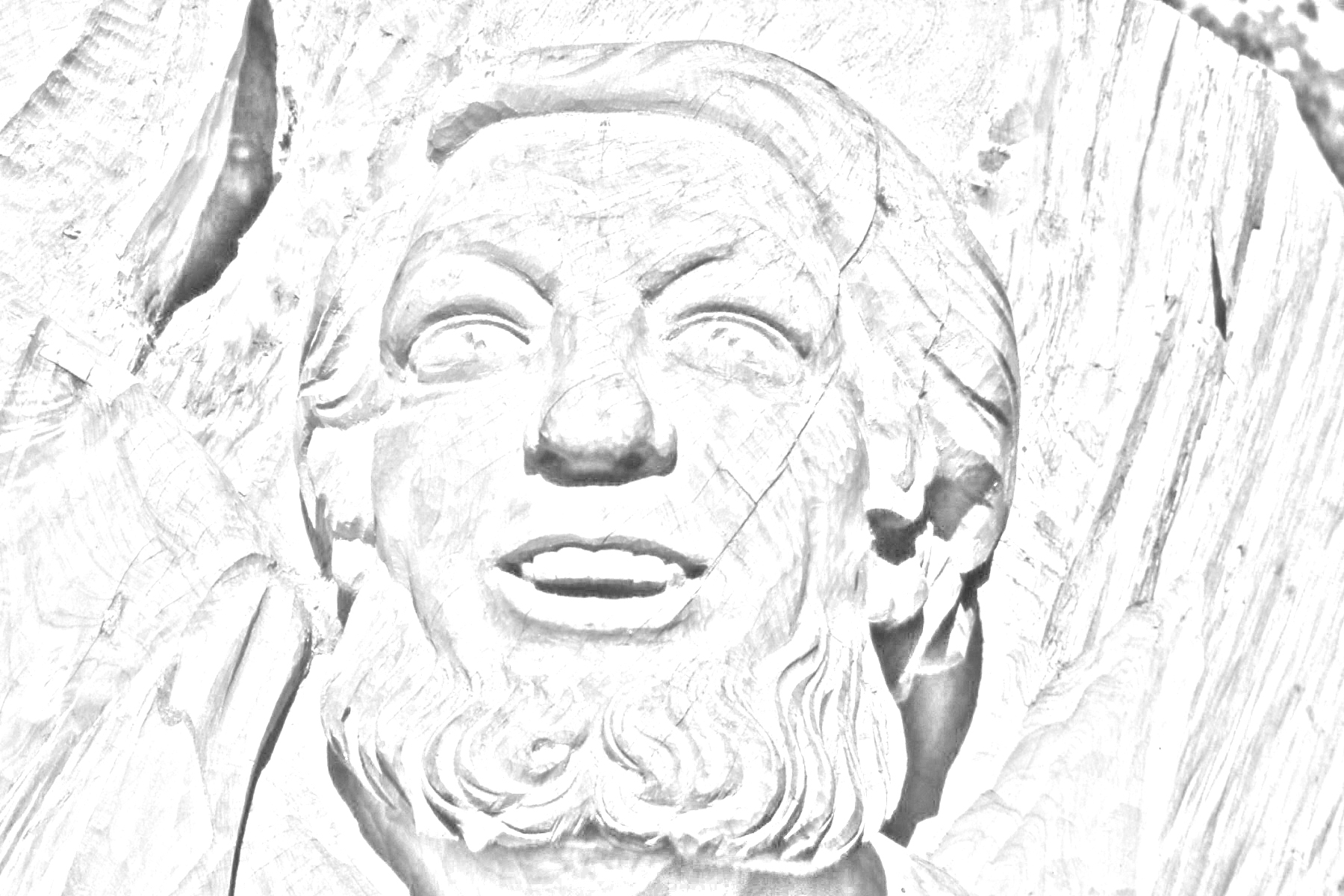
Perhaps not the greatest interpretation of the challenge but I’ve lately been wanting to use one of the interesting tools in my imaging programme and thought this might be my opportunity.
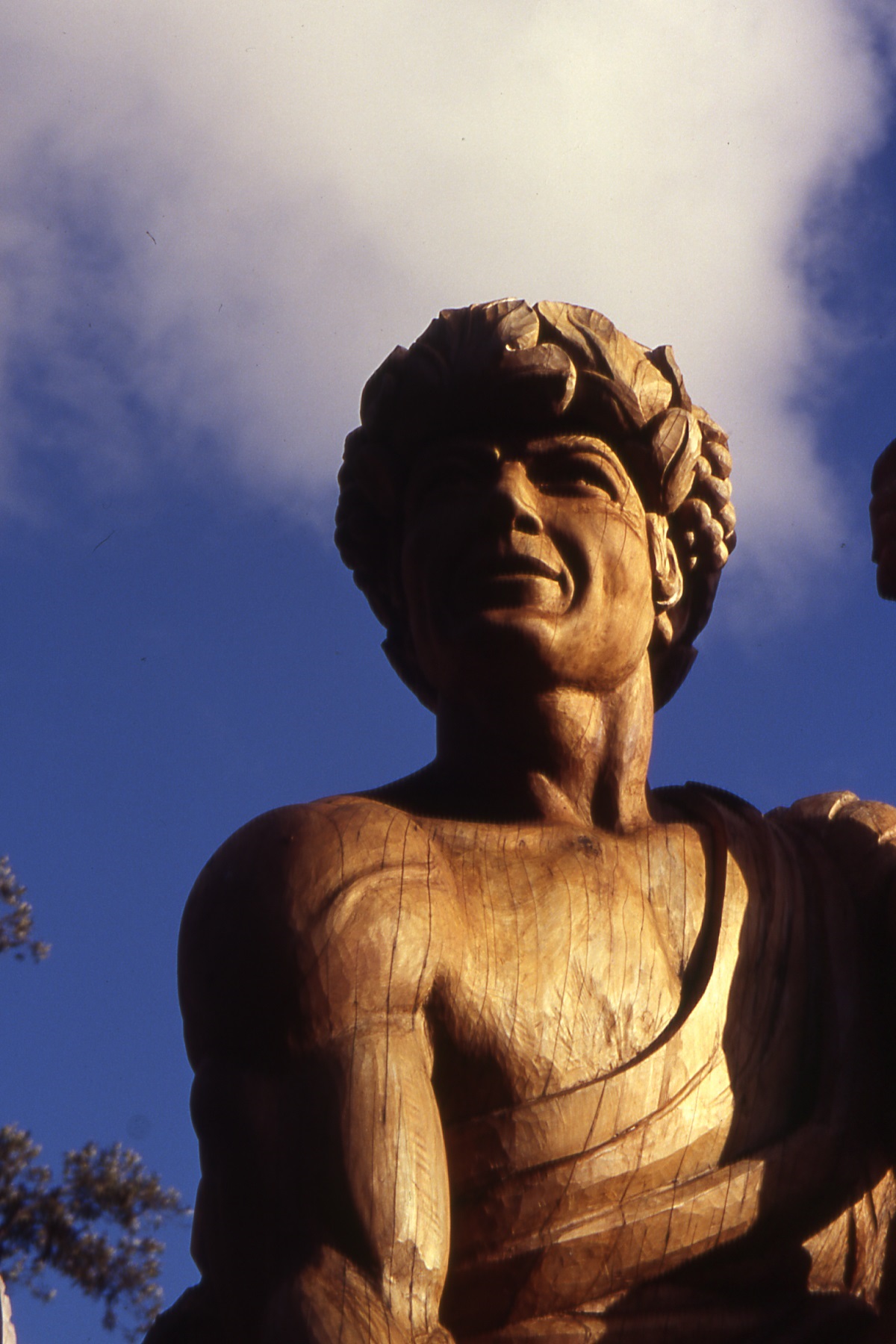
This sculpture was done by marine woodcarver Norman Gaches, from a tree that was destroyed in the great storm of 1987, outside Barton Manor on the Isle of Wight, the then home of Impresario Robert Stigwood, who commissioned the work. At that time Barton Manor was producing wine and he wanted something to represent the grape. The result was a magnificent carving showing the family of Bacchus and these are just two of the photographs my husband took at the time. We followed the progress of the work with the sculptor over the months it took to finish it, and then did our best to interpret the art with camera and prose. A resultant article appeared in Woodcarving magazine and was subsequently syndicated in two other magazines.












 MARI'S TRAVELS WITH HER CAMERA