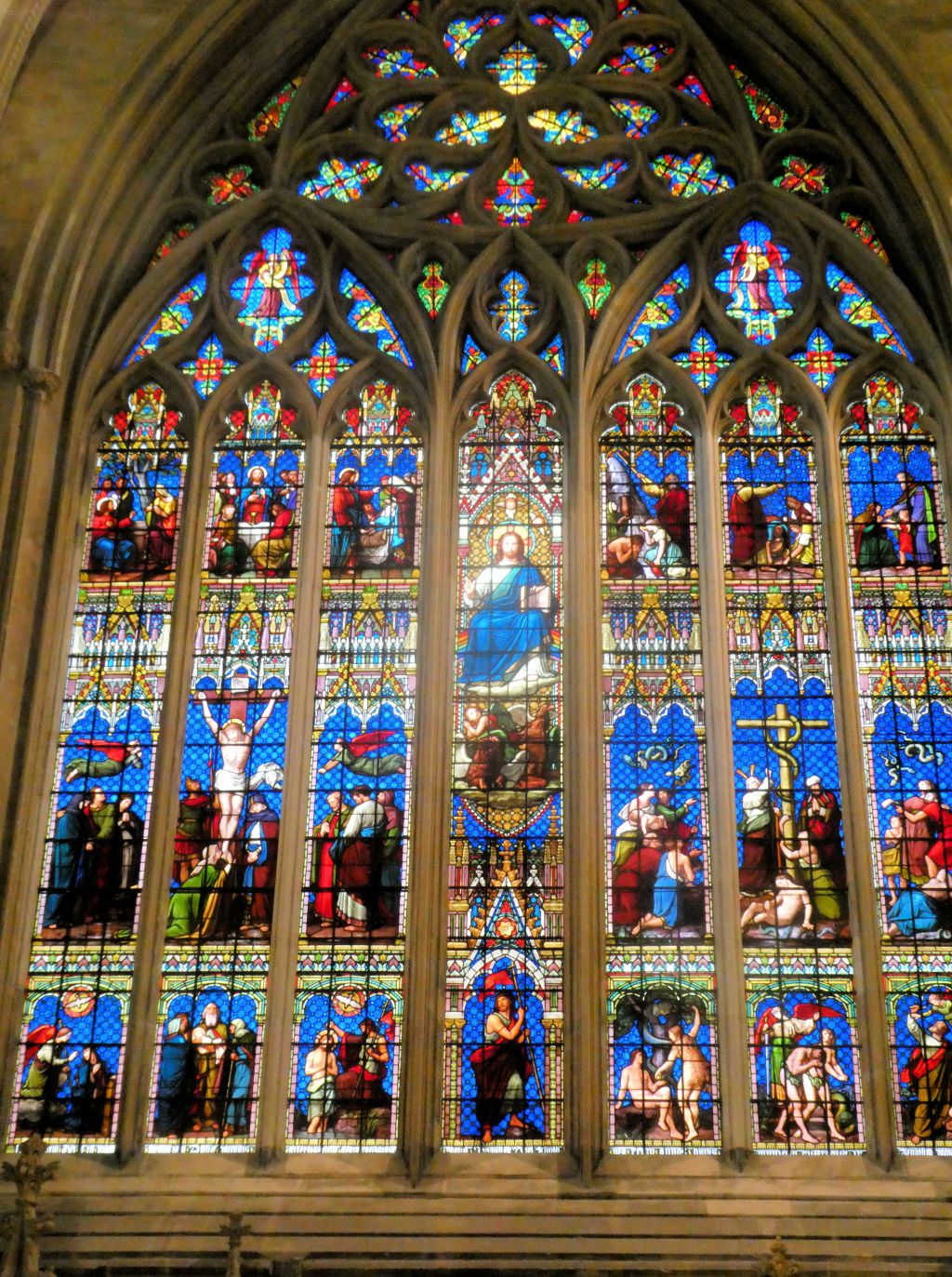
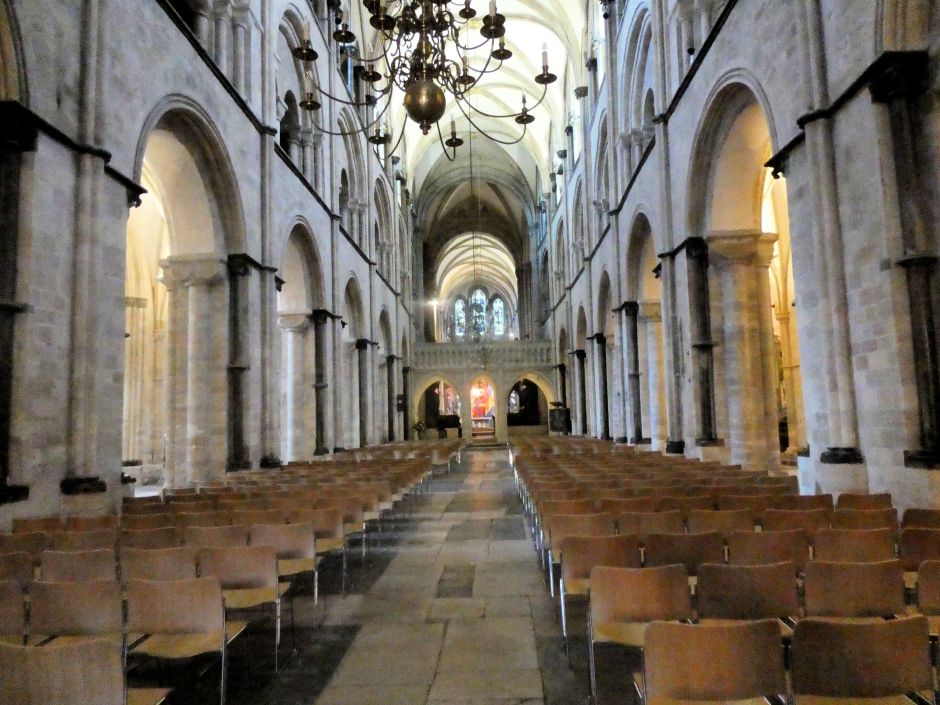
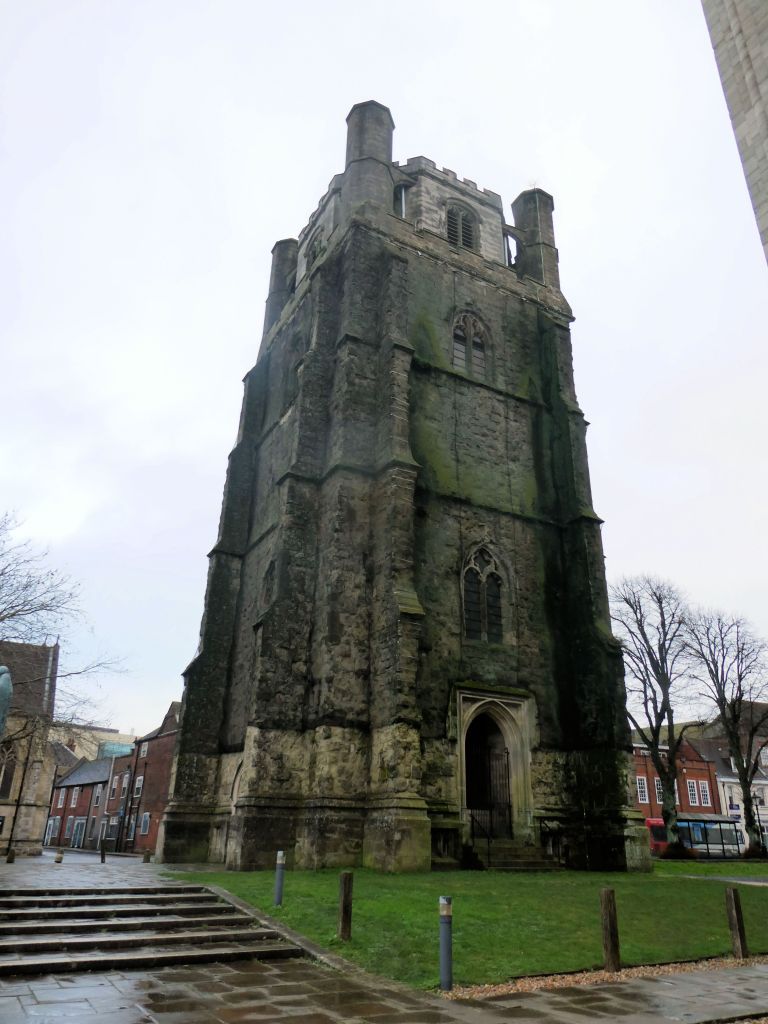
I am not a frequent visitor to churches and cathedrals but I make an exception for the 7thCentury Chichester Cathedral because it contains art that speaks to me. The Cathedral is a classic Norman building with round arch windows and west facing twin towers and is the only English Cathedral with a surviving detached medieval Bell Tower dating back to 681 when Saint Wilfred brought Christianity to Sussex.
It was raining heavily on the day after the theatre performance so we spent most of the time before lunch and our departure, in the Cathedral. I wanted to re-visit the Arundel Tomb, subject of a poem by one of my favourite poets, Philip Larkin. I have been re-reading Larkin recently and that particular poem has being going round and round in my head and I knew I could only dislodge it by visiting the tomb.
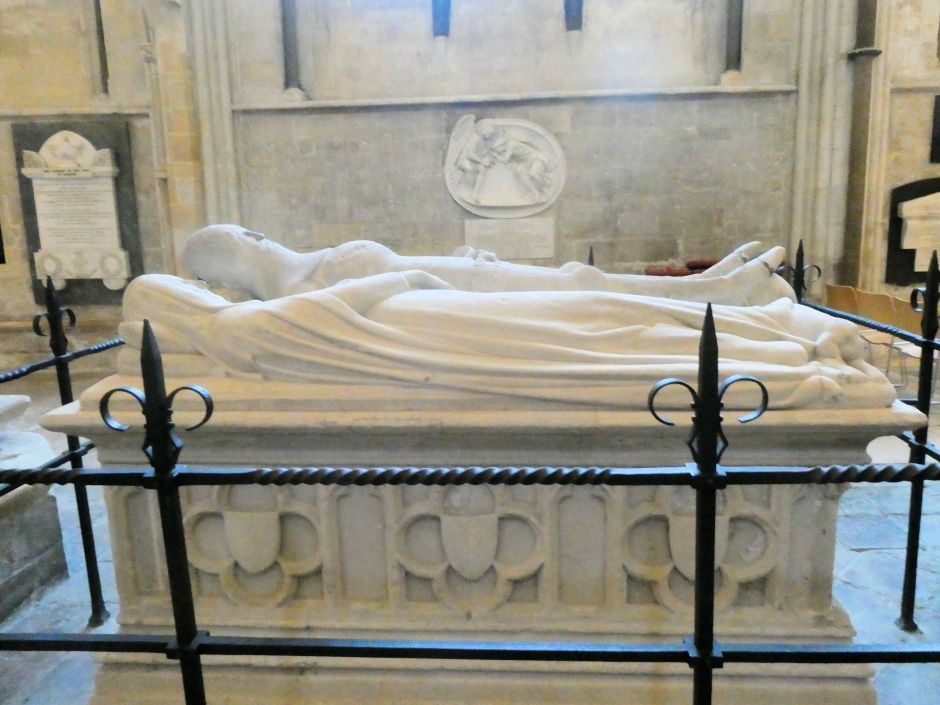
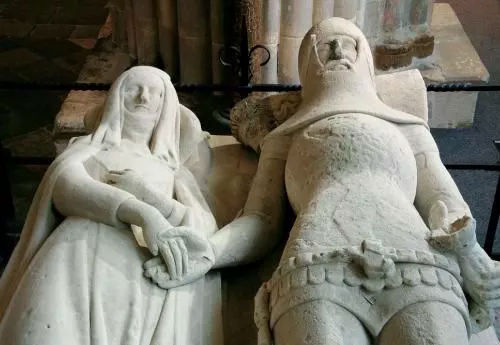
The Arundel Tomb was brought from Lewes Priory sometime after its dissolution in 1537. On top of the carved stone tomb lie the figures of Richard Fitzalan, Earl of Arundel, and his second wife, Eleanor of Lancaster. The tomb was restored at the beginning of the 19th century by Edward Richardson, a well-known sculptor of the day.
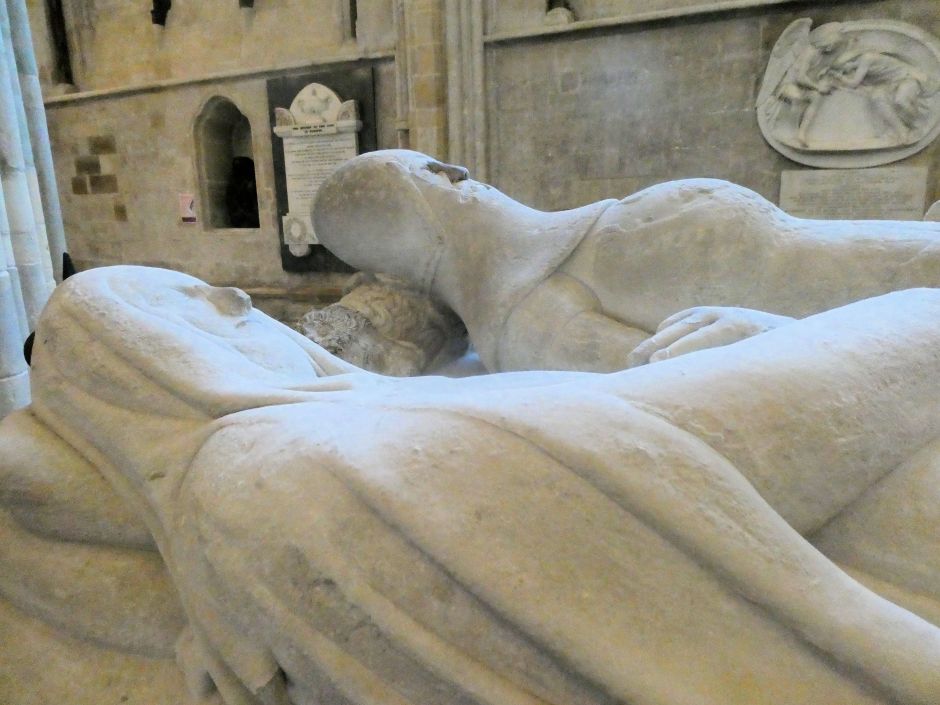
I know the poem off by heart and I was able to sit there for a long time and listen to the music of the words in my head and ‘see’ what Larkin saw when he wrote the poem. Without his words, I would have walked by this tomb and missed what he saw “what will survive of us is love”. If copyright allowed, I would have liked to add the poem here, but it wasn’t possible.
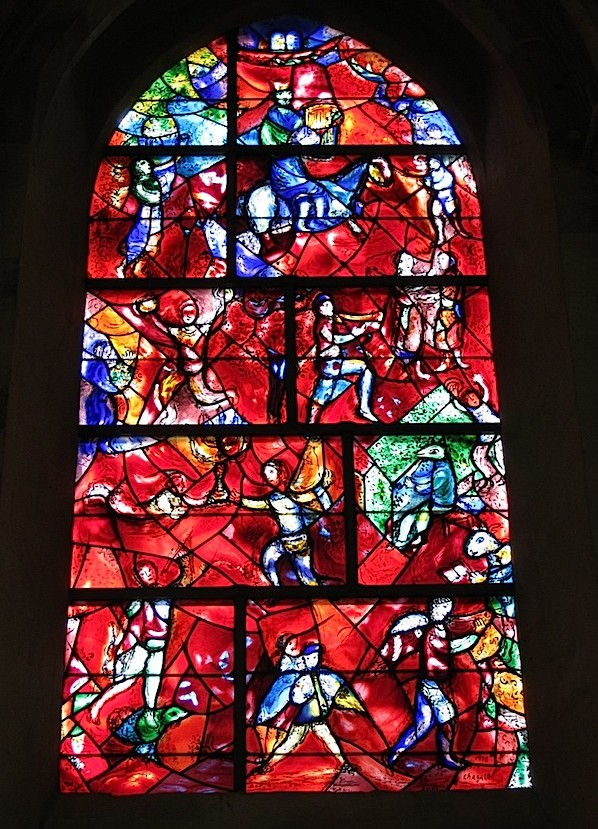
I also wanted another chance to see the Chagall stained-glass window and the Gustav Holst plaque. The Chagall window, installed in 1978, is unusual in that the glass is predominantly red when Chagall usually worked in blue. It is absolutely gorgeous and I could have stayed longer just drinking in the beauty of the luminous jewel cololurs.
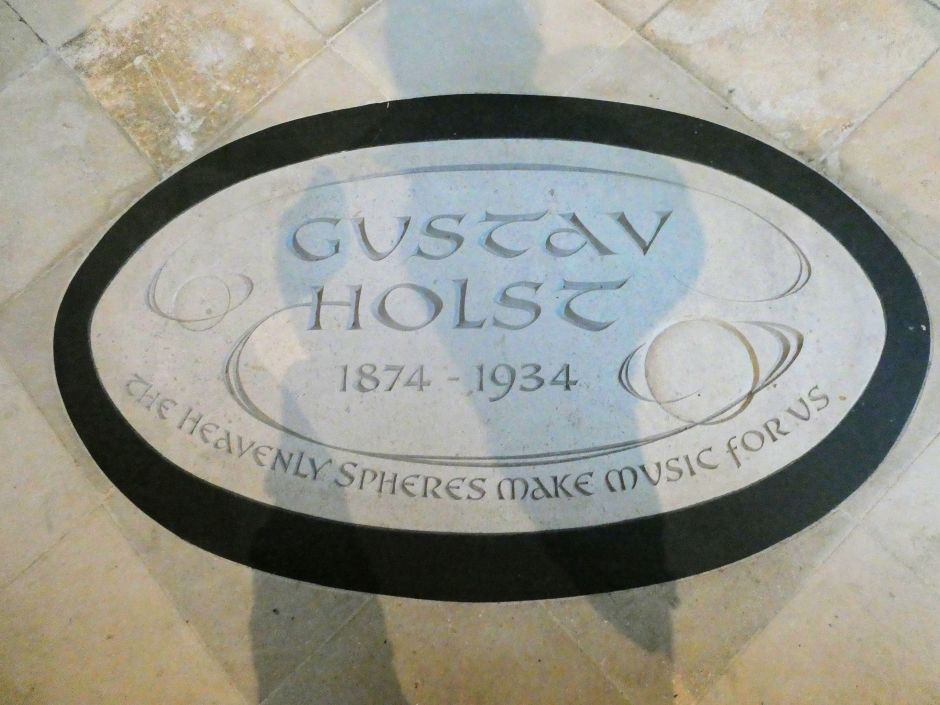
Gustav Holst, composer of The Planets Suite, one of the greats in British 20th century music, had a special connection to Chichester Cathedral having worked with Bishop Bell on the Whitsuntide Festivals. On his death on 25th May, 1934, aged 59, his ashes were interred in the Cathedral under the plaque on the floor in the North Transept near to a memorial to his favourite Tudor composer, Thomas Weelkes.
I shall no doubt visit again on my next trip to Chichester because there is more art to be seen in the cathedral. There is a John Piper tapestry on the High Altar, a vividly coloured work which I have yet to take to: there is a Graham Sutherland painting and there are various sculptures worth searching out.


 MARI'S TRAVELS WITH HER CAMERA
Leave a reply to Chichester – Cathedral City – Mari's Travels with her Camera Cancel reply